Get 20% OFF All Premium 3D & STL Models!

In today’s fast-paced digital landscape, the demand for high-fidelity 3D assets is insatiable, particularly within the automotive sector. From blockbuster video games to cutting-edge architectural visualizations, and from immersive virtual reality experiences to intricate 3D prints, precision-engineered 3D car models form the backbone of countless projects. They are more than just digital representations; they are fundamental tools that empower designers, developers, and artists to bring their visions to life with unparalleled realism and efficiency.
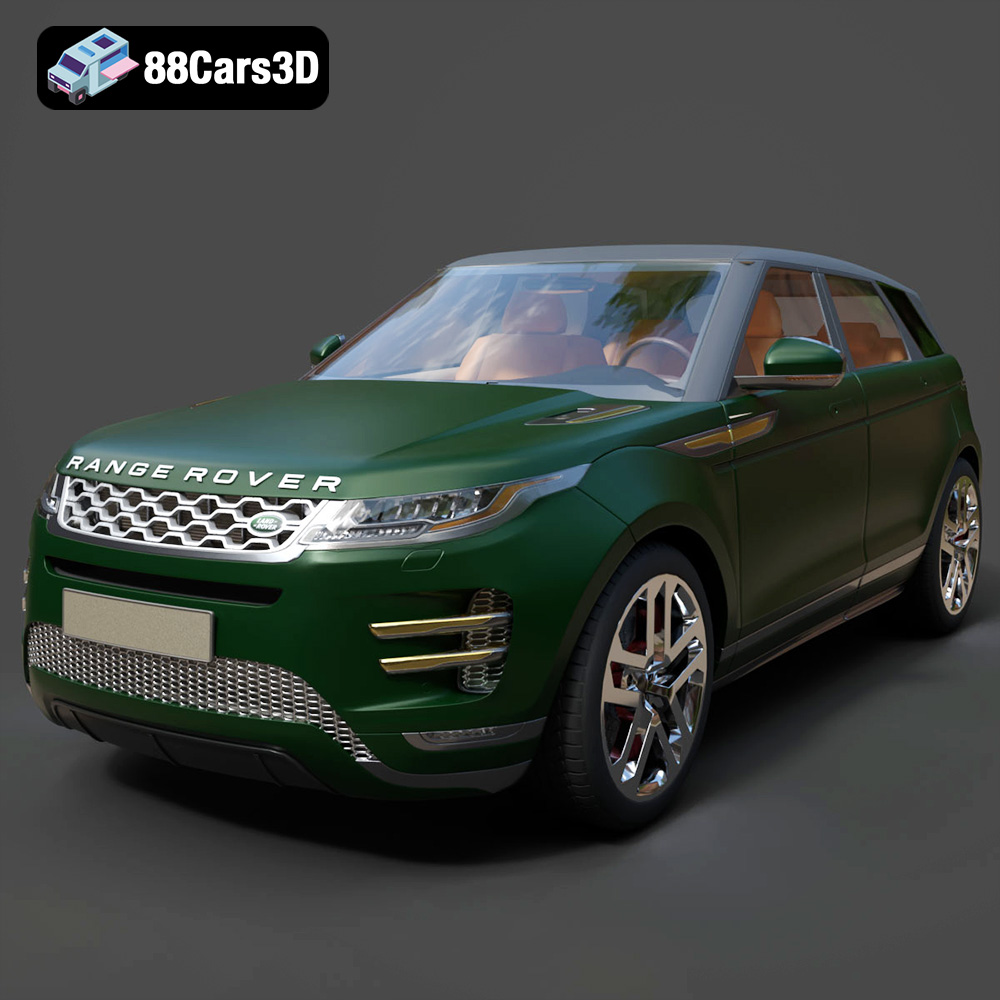
The transition from concept sketch to photorealistic render or real-time playable asset relies heavily on the quality and versatility of the underlying 3D model. A superior model not only captures the aesthetic essence of a vehicle but also incorporates the technical specifications necessary for seamless integration across diverse platforms and applications. This meticulous attention to detail is precisely what defines a premium asset like the Range Rover Evoque R-Dynamic 2019 3D Model. Representing the pinnacle of compact luxury SUVs, this model brings the striking modernity, distinct coupe-like roofline, and aggressive R-Dynamic styling of its real-world counterpart into the digital realm, ready for immediate deployment in urban racing games, architectural visualization, virtual showrooms, and high-end automotive rendering.
The utility of a 3D model is often defined by its compatibility, which in turn is dictated by the file formats it supports. Professional projects demand flexibility, ensuring that an asset can transition effortlessly between different software environments, engines, and intended uses. A comprehensive suite of file formats transforms a good 3D model into an indispensable resource, significantly streamlining workflows and expanding creative possibilities. Let’s delve into the core formats included with the Range Rover Evoque R-Dynamic 2019 3D Model and their specific applications:
The .blend format is native to Blender, a powerful and increasingly popular open-source 3D creation suite. When a 3D model is provided in .blend, it signifies a complete Blender scene, often including cameras, lighting, and crucially, all materials and textures correctly set up within Blender’s node system. This format offers maximum editability, allowing users to modify geometry, tweak materials, adjust UVs, and even re-rig components with ease. For artists and studios heavily invested in Blender, a .blend file is the most direct and efficient way to access and customize an asset without needing to re-import or re-configure fundamental elements, making it ideal for in-depth scene integration and bespoke modifications.
FBX (Filmbox) is a proprietary file format owned by Autodesk and is widely considered the industry standard for exchanging 3D data between different software applications and real-time game engines like Unreal Engine and Unity. An .fbx file can encapsulate a vast array of 3D data, including mesh geometry, materials (though often simplified, requiring re-setup in the target engine), textures, animations, skinning, and camera data. Its strength lies in its robustness and wide adoption, making it the go-to format for exporting animated characters, vehicles, and complex scenes into game development pipelines where performance and smooth integration are paramount. The Evoque model’s .fbx ensures seamless transition to game environments.
OBJ (or .obj) is one of the oldest and most universal 3D file formats, known for its simplicity and broad compatibility across almost all 3D software. It primarily stores geometry data, including vertices, normals, UV coordinates, and faces, often referencing external .mtl (material template library) files for basic material properties and texture paths. While .obj doesn’t typically support animation or rigging, its widespread support makes it an excellent choice for static mesh exchange, especially when moving assets between disparate software packages or when working with less common applications that might not support newer, more complex formats. It’s the ultimate fallback format for ensuring access to the core mesh.
GLB (GL Transmission Format Binary) is the binary version of glTF, a royalty-free specification for the efficient transmission and loading of 3D scenes and models by applications. .glb files are self-contained, embedding all textures and associated data directly within a single file, which makes them incredibly efficient for web-based 3D applications, augmented reality (AR), and virtual reality (VR) experiences. Its optimization for real-time rendering and small file size, while maintaining visual quality, makes it perfect for interactive web viewers, social media 3D posts, and mobile AR applications where quick loading and performance are critical. For the Evoque model, this means immediate integration into virtual showrooms or AR experiences.
STL (STereoLithography) is the de facto standard file format for 3D printing. It represents a 3D model as a series of connected triangles, forming the surface geometry without any color, texture, or material information. While simple, this format is universally accepted by 3D printers and slicing software, which convert the triangular mesh into printable layers. For the Range Rover Evoque model, providing an .stl file means it’s ready for physical manifestation, allowing hobbyists and professionals to create tangible scaled replicas, making it a crucial addition for display-scale projects or prototyping.
PLY (Polygon File Format) is another format used to store 3D data, particularly useful for scanned data and academic applications. It can store various properties for each vertex (like color, normal vectors, or transparency) and face (like color), offering more flexibility than .obj in representing attribute-rich data. While less common in general animation or game development, .ply is valuable in scientific visualization, CAD/CAM workflows, and when working with high-precision mesh data derived from 3D scanning or engineering simulations. It ensures that the Evoque model’s precise geometry can be analyzed or integrated into specialized engineering software.
The .unreal format implies a file specifically prepared or packaged for direct import into Unreal Engine projects. While Unreal primarily uses .fbx for importing individual assets, an “.unreal” file or a package containing such files typically refers to assets already structured, potentially with pre-configured materials, collision meshes, LODs (Levels of Detail), and even basic blueprints ready to drop into an Unreal project. This dramatically reduces the setup time for developers, offering an “out-of-the-box” solution tailored for the engine’s ecosystem. It signals a product designed for immediate utility within a professional game development pipeline.
The .max format is native to Autodesk 3ds Max, one of the leading software packages for 3D modeling, animation, and rendering. Like .blend for Blender, a .max file typically contains the complete scene, including the model’s geometry, modifiers, materials (often V-Ray, Corona, or Arnold specific), lighting setups, cameras, and animation data. This format provides the highest level of editability and customization for 3ds Max users, allowing them to leverage all the powerful features of the software for high-end rendering, complex scene construction, and detailed animation sequences. For automotive designers and visualization specialists using 3ds Max, this is the most flexible and powerful way to integrate the Evoque model into their projects.
The inclusion of such a comprehensive array of file formats with the Range Rover Evoque R-Dynamic 2019 3D Model underscores its professional-grade quality and unparalleled versatility. It ensures that no matter the workflow or target application, users have the appropriate data at their fingertips, minimizing conversion headaches and maximizing creative freedom. This commitment to compatibility is a hallmark of the high-quality 3D car models available at 88cars3d.com.
Automotive rendering has evolved into a highly specialized discipline, merging technical precision with artistic flair to create images and animations indistinguishable from reality. For brand campaigns, product launches, or even design reviews, the ability to produce photorealistic visuals before a physical prototype exists is invaluable. High-quality 3D car models are the bedrock of this process.
Photorealism isn’t just about high polygon counts; it’s about the interplay of accurate geometry, physically based rendering (PBR) materials, sophisticated lighting, and meticulous attention to surface imperfections. A model like the Evoque R-Dynamic 2019, with its optimized topology and detailed interior/exterior, provides the perfect canvas. Artists can leverage powerful rendering engines like V-Ray or Corona Renderer within 3ds Max or cycles/Eevee in Blender to simulate real-world light interactions. The detailed R-Dynamic grille, Matrix LED headlights, and accurate alloy wheels mean that reflections, refractions, and specular highlights behave as they would on a physical vehicle. Furthermore, the inclusion of premium perforated Windsor leather-style seating details and the Touch Pro Duo dual-screen infotainment system ensures that interior shots maintain the same level of realism, crucial for a luxury brand.
The automotive industry has fully embraced virtual showrooms and interactive configurators. These digital experiences allow potential buyers to explore vehicles, customize options, and even “drive” them in virtual environments, all before visiting a dealership. The Range Rover Evoque R-Dynamic 2019 3D model is perfectly suited for such applications. Its real-world scale accuracy and proper pivot setups for steering and wheel rotation enable dynamic interaction. Marketing campaigns benefit immensely from the flexibility of 3D assets; without the need for expensive photoshoots or physical vehicles, studios can generate limitless marketing collateral, adjusting body colors (Firenze Red, Nolita Grey, Fuji White), material finishes, and environmental lighting to create bespoke visuals for different markets or promotions. This agility and cost-effectiveness make high-quality 3D car models, such as those from 88cars3d.com, a strategic asset for any automotive brand.
In game development, the challenge lies in striking a delicate balance between visual fidelity and real-time performance. Game assets must be detailed enough to be believable but optimized to run smoothly on various hardware configurations. This is where truly game-ready 3D car models shine.
The Range Rover Evoque R-Dynamic 2019 3D model boasts a game-ready and optimized ~500,000 triangle count. This figure represents a sweet spot: high enough to maintain excellent visual realism for close-up shots and cinematic sequences, yet optimized to perform efficiently within modern real-time engines like Unreal Engine and Unity. Achieving this balance involves careful topology design, efficient UV mapping, and often the use of normal maps to simulate high-frequency details without adding excessive geometry. For game developers, this means less time spent on optimization and more time on gameplay mechanics and environmental design. The separate wheels, suspension, and steering components are not just for visual accuracy but are essential for implementing realistic vehicle physics and animation within a game engine.
The immersive nature of Augmented Reality (AR) and Virtual Reality (VR) applications demands highly optimized and accurate 3D models. Whether it’s a virtual car configurator accessible via a smartphone AR app, an interactive VR showroom, or a professional driving simulator, the Range Rover Evoque R-Dynamic 2019 3D model is an ideal candidate. Its optimized geometry is perfect for first-person POV in gaming, crucial for simulators where the driver’s perspective is paramount. The .glb format, included with the model, is specifically optimized for AR/VR and browser-based display, facilitating seamless integration into mobile or web-based immersive experiences. The accurate real-world scale and proper pivot setup for suspension travel ensure that the virtual experience mirrors the physical reality, enhancing immersion and user engagement.
Beyond digital rendering and real-time experiences, 3D models offer the unique ability to transcend the screen and become physical objects through 3D printing. This capability opens doors for prototyping, collectible models, and educational tools, bridging the gap between virtual design and tangible reality.
3D printing requires specific considerations regarding model integrity, scale, and print settings. The Range Rover Evoque R-Dynamic 2019 3D model is provided with an .stl format, specifically tailored for 3D printing, and comes with detailed print recommendations. For enthusiasts looking to create a physical replica, recommended scales of 1:12, 1:18, or 1:24 are provided, aligning with common model car sizes. Critical parameters like layer height (0.04–0.12 mm) emphasize the importance of high resolution, with resin printing often recommended for capturing the fine details like the aggressive R-Dynamic grille, flush deployable door handles, and intricate wheel designs. Wall thickness (1.2–2.0 mm) and infill (20–30%) are specified to ensure structural integrity, while the necessity for supports on complex parts like exhaust systems, mirrors, and door handles is clearly outlined. Even print orientation is considered, with the frame printed angled for strength and wheels separately for optimal detail and articulation.
The journey from a raw 3D print to a display-worthy model often involves a meticulous post-processing phase. Sanding, priming, and painting are crucial steps to achieve a professional finish. Enthusiasts can apply authentic factory colors with metallic finishes, mimicking the luxurious appearance of the real Evoque. This physical customization mirrors the digital options available within the 3D model, where users can easily change body colors, modify tire textures, and adjust material finishes for digital renders. The ability to translate these digital choices into a physical object makes the Evoque 3D model an exceptional resource for both digital artists and physical modelers, offering a complete creative pipeline.
The Range Rover Evoque R-Dynamic 2019 3D Model available on 88cars3d.com is a testament to meticulous craftsmanship and technical excellence. It’s not just a generic car model; it’s a detailed digital twin designed to meet the rigorous demands of professional production.
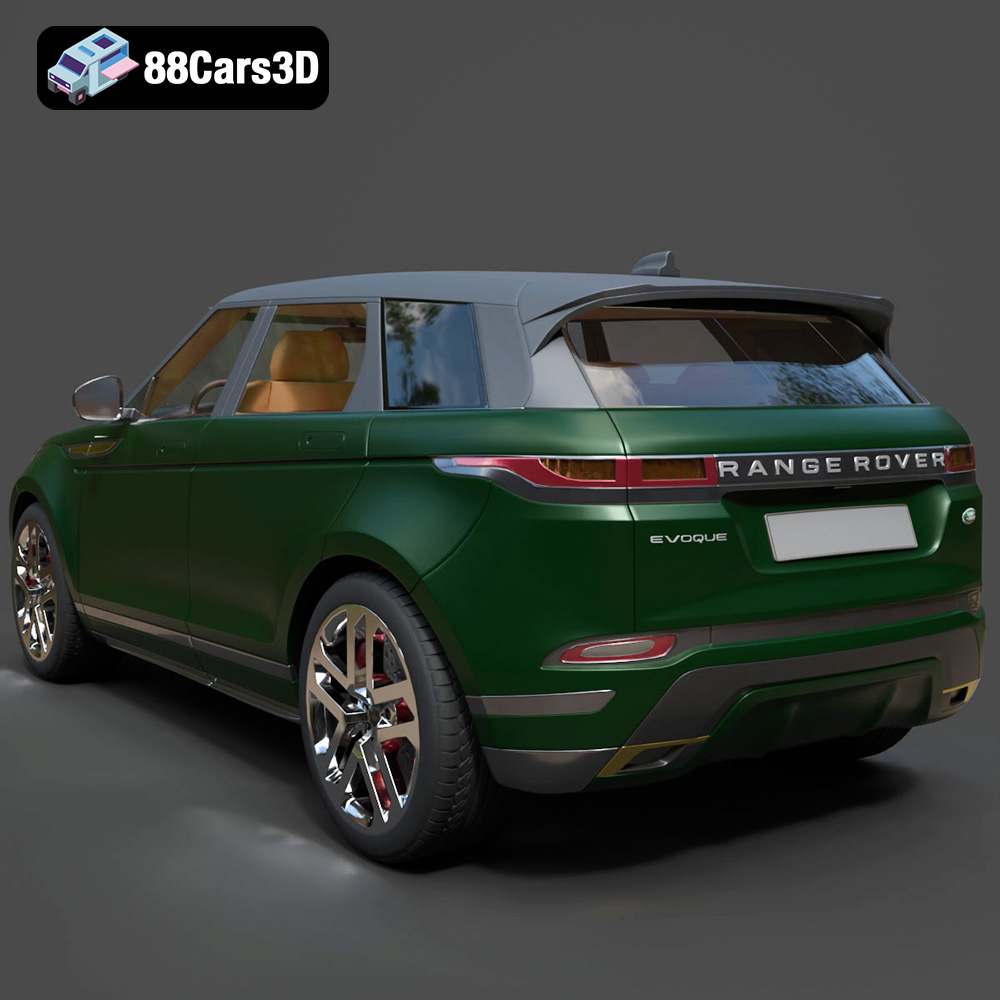
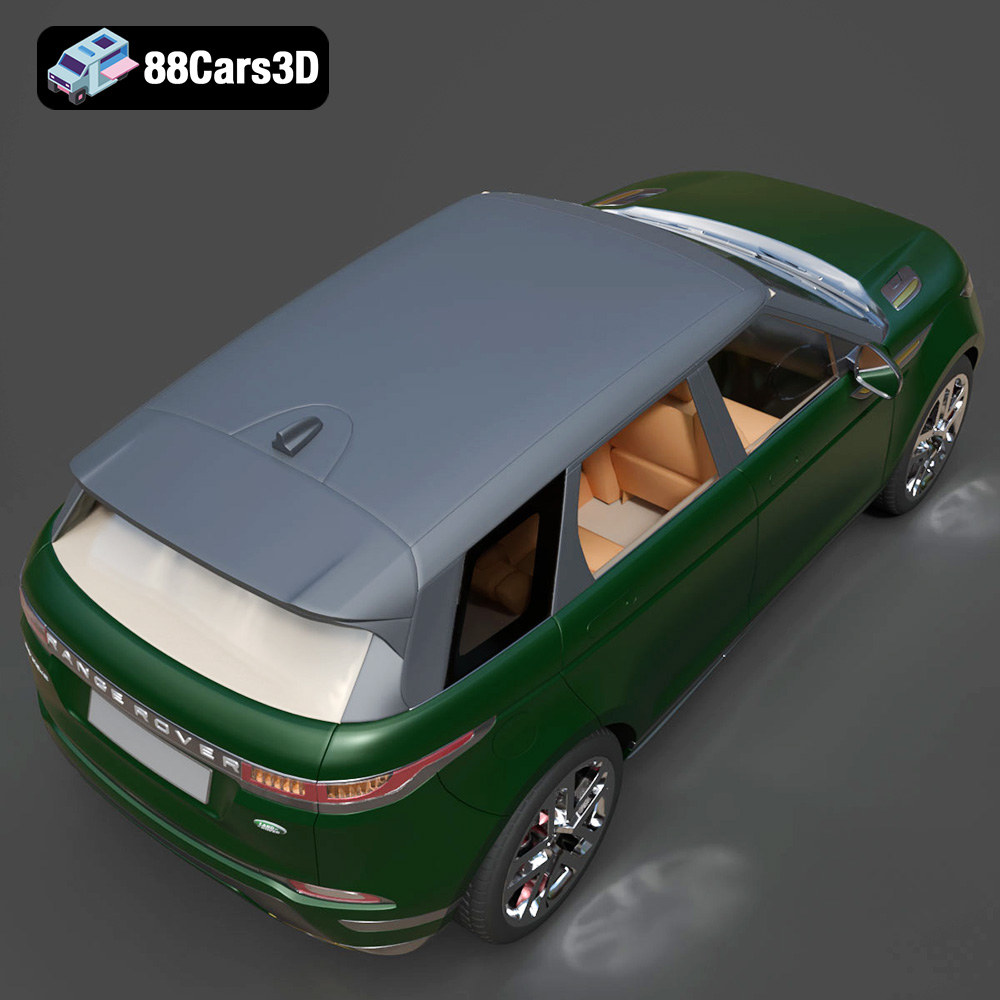
Every curve and contour of the actual Range Rover Evoque R-Dynamic 2019 has been faithfully recreated. The model boasts accurate frame geometry and proportions, capturing the distinct coupe-like roofline and aggressive R-Dynamic styling. Key exterior features include the detailed R-Dynamic specific grille and front bumper vents, an integrated dual exhaust system with a rear diffuser, and highly detailed Matrix LED headlights and signature taillights that illuminate realistically in renders. The accurate 20-inch split-spoke alloy wheels with low-profile tires are rendered with precision, and even the suspension components and basic undercarriage have been included. Crucially for animation and interactive applications, the wheels, suspension, and steering components are separated, allowing for independent movement and realistic articulation.
The attention to detail extends seamlessly into the cockpit. The model features premium perforated Windsor leather-style seating details, an accurate R-Dynamic steering wheel with capacitive switches, and a highly detailed Touch Pro Duo dual-screen infotainment system. The precision center console, complete with an electronic gear selector and climate controls, provides an immersive experience, especially important for first-person POV in gaming or virtual showrooms. From a technical standpoint, the model is game-ready and optimized with approximately 500,000 triangles, striking an ideal balance between visual fidelity and real-time performance. Its real-world scale accuracy, based on actual vehicle chassis data, ensures precise integration into any scene. Furthermore, the proper pivot setup for steering, wheel rotation, and suspension travel simplifies animation and physics implementation, making it a truly versatile asset for any demanding project.
The true value of a premium 3D asset lies in its ability to seamlessly integrate into established professional pipelines, saving time, reducing costs, and enhancing the final output. The Range Rover Evoque R-Dynamic 2019 3D model is engineered with this versatility in mind.
For an automotive advertising agency tasked with creating a photorealistic render of the Evoque for a new campaign, the .max file provided by 88cars3d.com is a game-changer. The artist can immediately open the model in 3ds Max, often finding pre-configured materials that only require minor tweaks to match specific branding guidelines. With a high-quality model, the focus shifts from fixing geometry or optimizing topology to creative endeavors: setting up studio lighting environments using V-Ray or Corona Renderer, composing dynamic camera angles, and rendering out high-resolution stills or animation sequences. The clean topology of the Evoque model ensures smooth subdivision for extreme close-ups, while the detailed interior allows for engaging shots of the infotainment system or steering wheel, all without the need for complex modeling from scratch.
Consider a game development studio building a modern driving simulator. The .fbx or .unreal file for the Evoque R-Dynamic 2019 is invaluable. Upon importing into Unreal Engine, the game-ready mesh and optimized UVs mean minimal processing time. Developers can quickly set up PBR materials, using the provided textures, and then focus on implementing vehicle physics using Unreal’s Chaos or existing vehicle blueprints. The separate wheels, suspension, and steering components are critical for creating an authentic driving experience, allowing for accurate simulation of handling, suspension compression, and steering input. This pre-optimized asset significantly accelerates the development cycle, allowing teams to deliver immersive and high-performance simulators more rapidly. The quality of assets from 88cars3d.com directly translates into efficiency and superior end products in demanding real-time environments.
The digital realm’s ever-growing sophistication places an increasing premium on the quality and versatility of 3D assets. For professionals in automotive rendering, game development, AR/VR experiences, and even 3D printing, a meticulously crafted 3D car model is more than a convenience—it’s a fundamental requirement. The Range Rover Evoque R-Dynamic 2019 3D model exemplifies this standard, offering an unparalleled blend of aesthetic accuracy, technical optimization, and multi-format compatibility.
From its striking R-Dynamic exterior to its luxurious interior, and from its game-ready polycount to its 3D printability, this model provides an exhaustive solution for a multitude of professional applications. It empowers artists and developers to achieve photorealism in rendering, deliver immersive experiences in real-time, and even bring digital designs into the physical world. By providing such a comprehensive suite of file formats and adhering to industry-leading technical specifications, the Range Rover Evoque R-Dynamic 2019 3D model stands as a prime example of the high-quality 3D car models available at 88cars3d.com, driving innovation across various industries and accelerating creative potential.
The Range Rover Evoque R-Dynamic 2019 represents the pinnacle of compact luxury SUVs, boasting a strikingly modern silhouette, distinct coupe-like roofline, and aggressive R-Dynamic styling cues. Characterized by its flush deployable door handles, sweeping directional indicators, and exclusive burnished copper bumper accents, this vehicle combines urban sophistication with legendary all-terrain heritage.
This premium 3D model is meticulously crafted with an optimized topology and triangle count, ensuring it is fully game-ready without sacrificing high-end visual fidelity. Designed for seamless integration into modern real-time engines, it is highly detailed inside and out, delivering outstanding performance for close-up shots and interactive experiences alike.
Perfect for urban racing games, architectural visualization, virtual showrooms, and high-end automotive rendering.
$19.99
.2019
.blend
.evoque
.fbx
.glb
.luxury suv
.max
.obj
.ply
.r-dynamic
.range-rover
.rendering
.stl
.unreal
car-3d-model
compact-suv
game asset
game-ready
low-poly
optimized
SUV
VR/AR