Get 20% OFF All Premium 3D & STL Models!

The call of the wild, the thrill of untamed landscapes, and the spirit of adventure have always held a powerful allure. In the world of digital creation, capturing this essence requires meticulous attention to detail and a profound understanding of both the vehicle and the medium. Whether you’re a game developer crafting an immersive open-world experience, an architectural visualiser rendering a dynamic lifestyle scene, or a product designer showcasing a cutting-edge concept, the quality of your 3D assets can make or break your project. This is especially true for specialized vehicles that embody ruggedness and exploration.
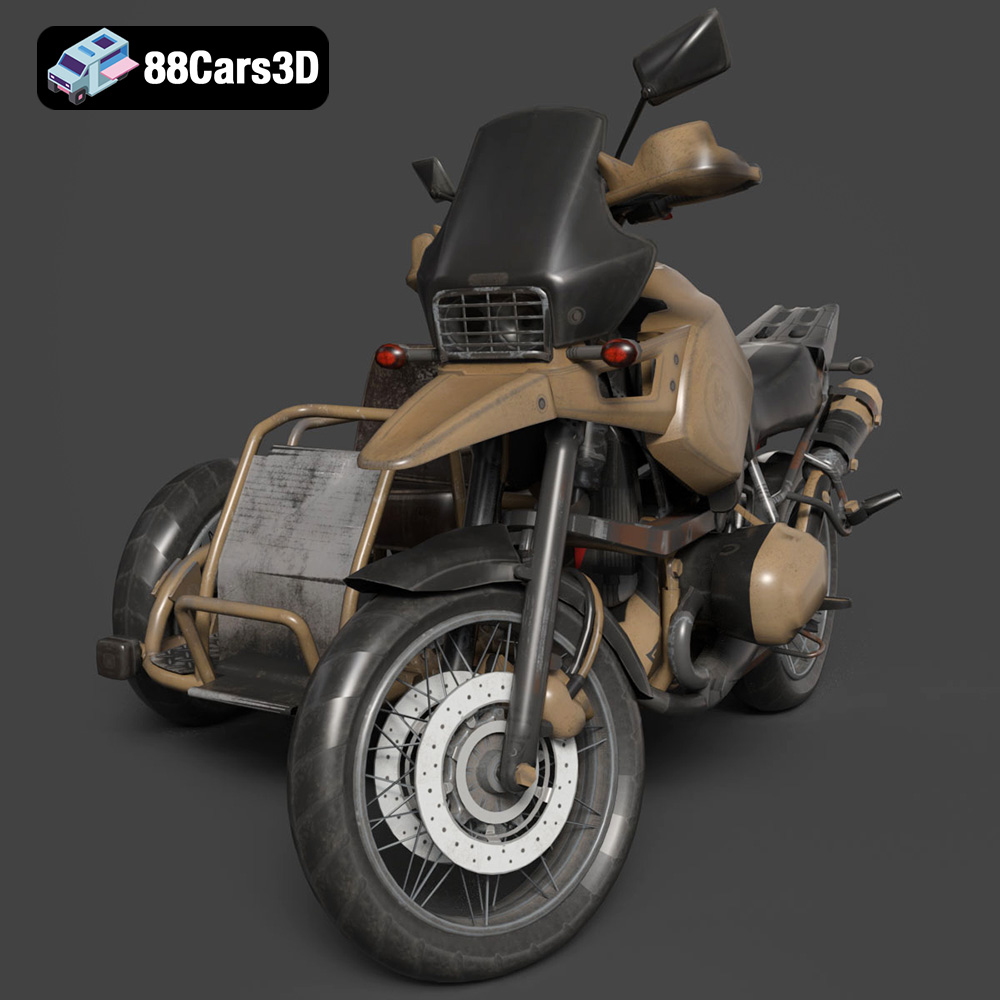
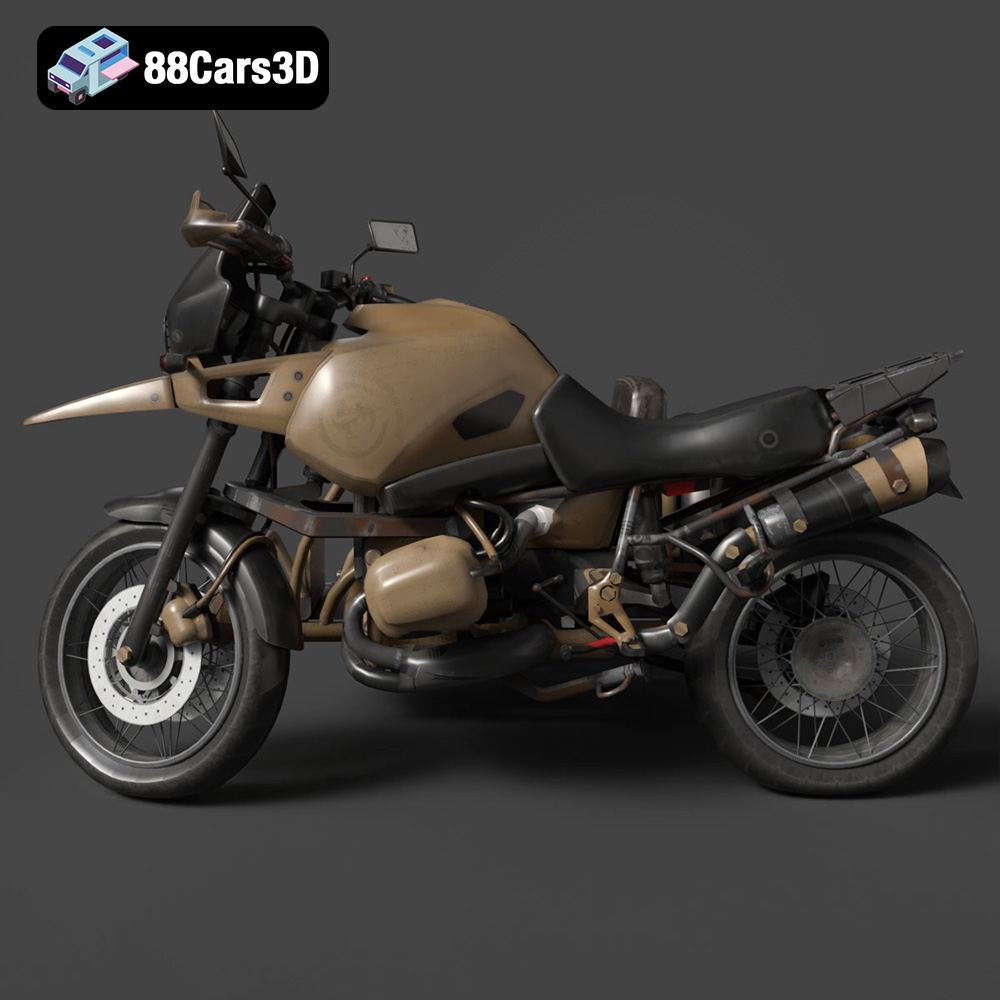
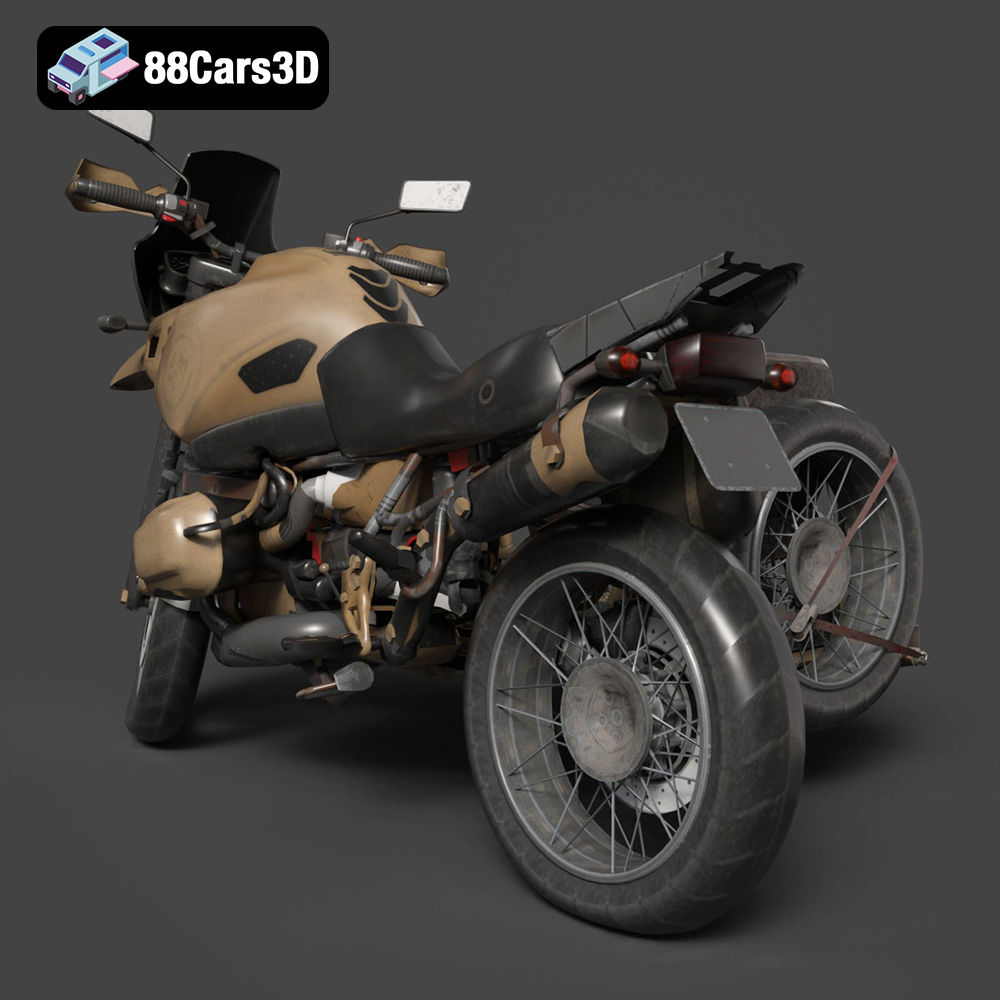
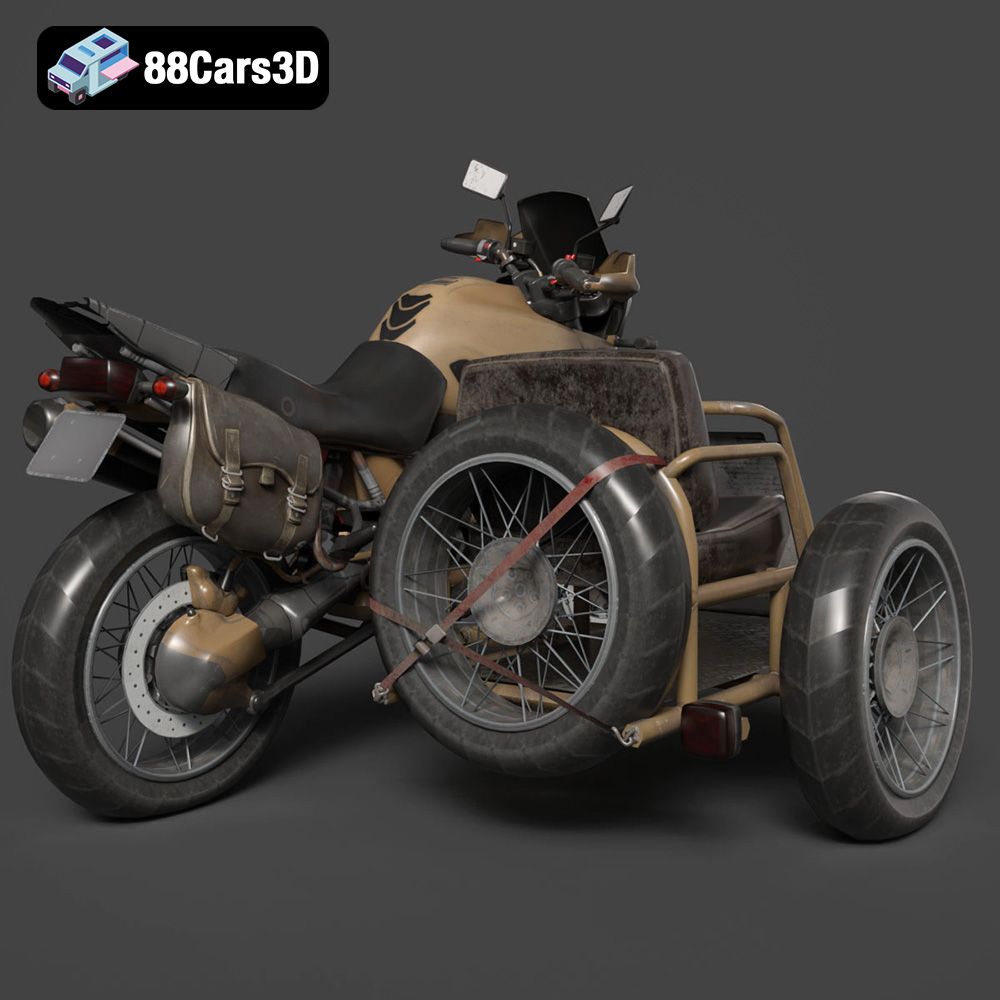
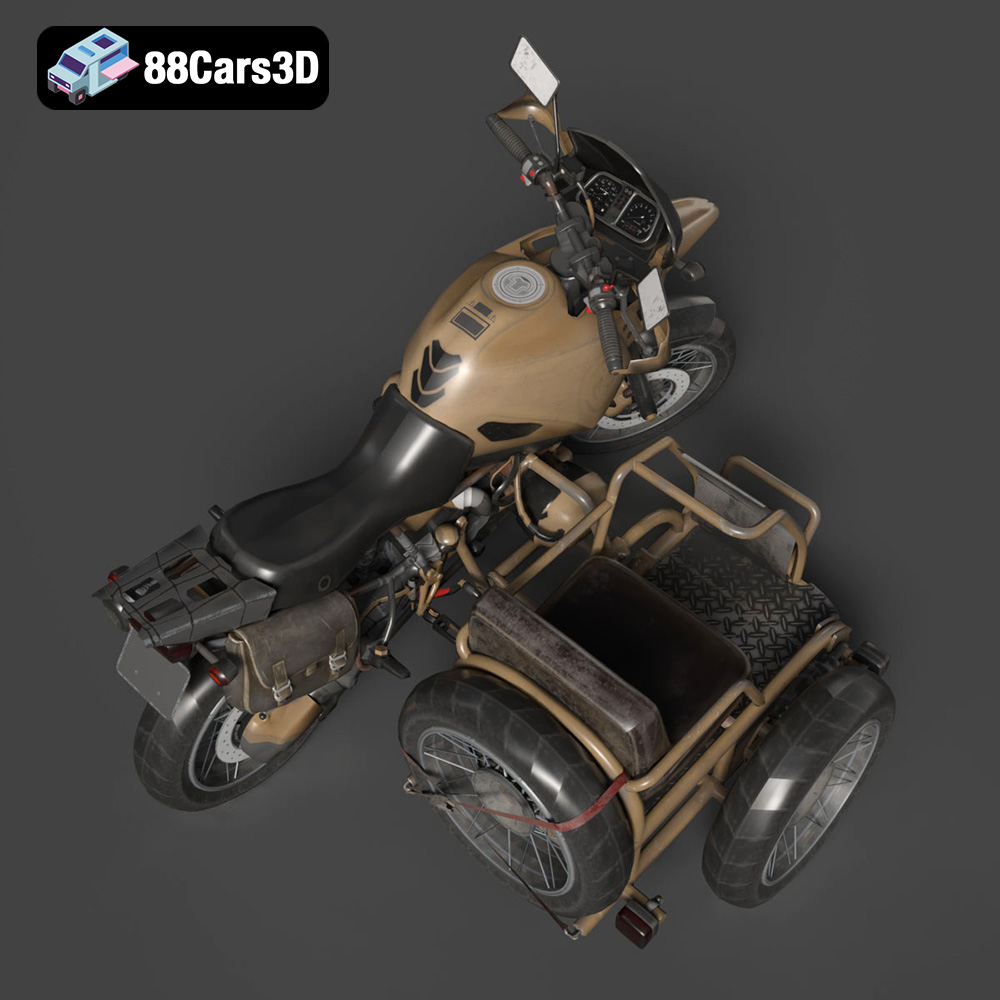
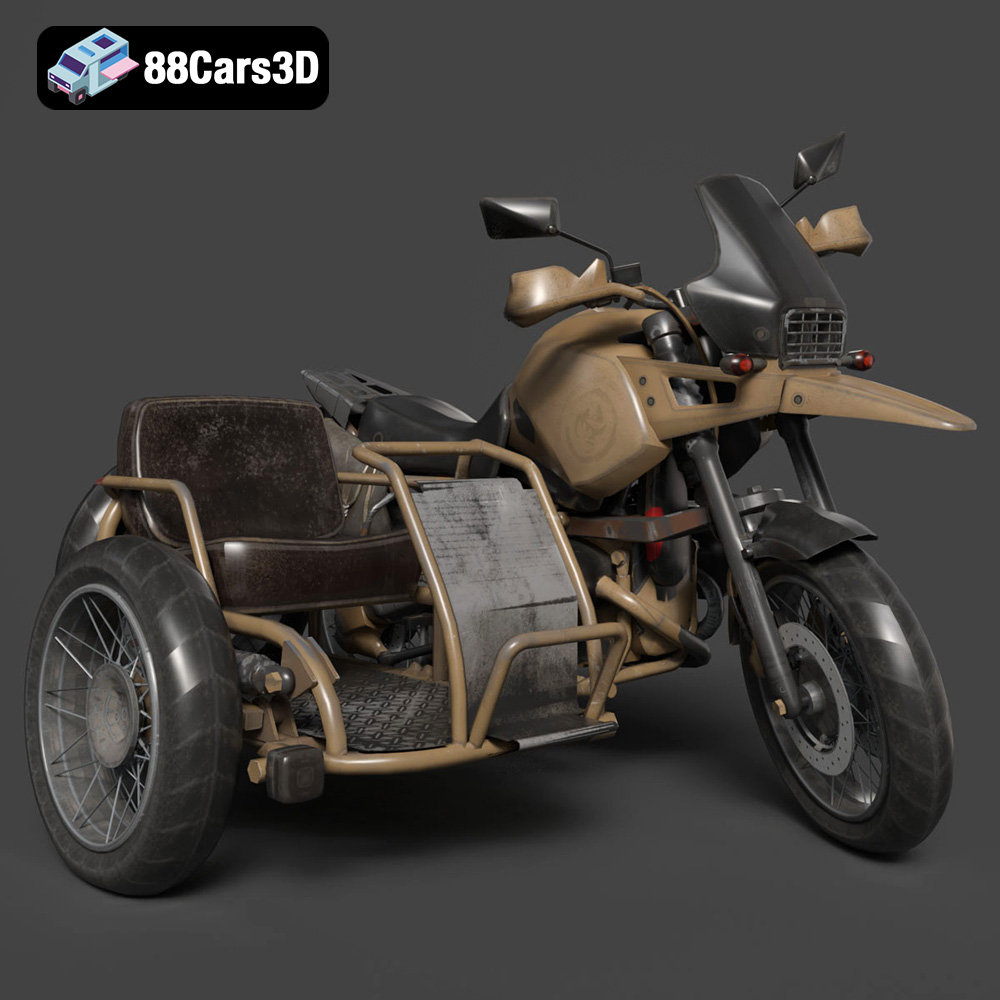
Today, we delve into the intricate world of high-fidelity 3D car models, exploring how they empower creative professionals across various industries. We will unpack the technical nuances, workflow considerations, and artistic possibilities that come with leveraging expertly crafted digital assets. As a prime example of excellence in this domain, we’ll frequently reference the extraordinary Custom Off-Road BMW R1150GS Adventure Sidecar 3D Model, an asset that truly encapsulates the spirit of overland exploration and rugged dual-sport capability in a meticulously rendered digital format, available on 88cars3d.com.
Navigating the landscape of 3D software and real-time engines requires a solid grasp of various file formats. Each format serves a specific purpose, offering unique advantages for different stages of the 3D pipeline, from initial modeling to final rendering or real-time deployment. The comprehensive Custom Off-Road BMW R1150GS Adventure Sidecar 3D Model download, for instance, comes equipped with a versatile array of formats, ensuring seamless integration into virtually any professional workflow. Understanding these is crucial for maximizing efficiency and compatibility.
The .blend format is the native file type for Blender, the powerful open-source 3D creation suite. When you acquire a .blend file, you’re getting a fully editable Blender scene, complete with materials, textures, lighting setups, and even animation rigs. This format is ideal for users who primarily work in Blender and require the flexibility to modify every aspect of the model, from geometry adjustments to material tweaks and scene composition. It allows for deep customization, making it perfect for artists who want to integrate the Custom Off-Road BMW R1150GS Adventure Sidecar 3D Model into a larger Blender project and tailor it precisely to their needs.
As Autodesk’s proprietary format, .fbx (Filmbox) has become an undisputed industry standard for exchanging 3D data, especially for animated characters and scenes. It supports mesh geometry, materials, textures, animation, and rigging, making it the go-to choice for game development (Unreal Engine, Unity), film VFX, and architectural visualization. The .fbx version of the Custom Off-Road BMW R1150GS Adventure Sidecar is ideal for pipelines requiring robust animation support and efficient integration into real-time environments, ensuring that features like separate wheels, suspension, and steering components can be dynamically animated.
The .obj (Wavefront Object) format is a widely adopted, universal standard primarily for exchanging 3D geometry data. It’s a simple, text-based format that defines polygon meshes, UV coordinates, and vertex normals, often accompanied by a separate .mtl (material library) file for basic material properties. While it doesn’t typically support animation or rigging, its widespread compatibility across almost all 3D software makes it excellent for cross-platform static model transfers. If you need a clean mesh of the BMW R1150GS Adventure Sidecar for sculpting, re-topologizing, or importing into a less common application, .obj is a reliable choice.
.glb (GL Transmission Format Binary) is the binary version of glTF, a royalty-free specification for 3D scenes and models. Designed for efficient transmission and loading in web-based applications, AR, and VR, .glb bundles all model data (geometry, materials, textures, animations) into a single file. This optimization makes it perfect for displaying the Custom Off-Road BMW R1150GS Adventure Sidecar in a browser-based configurator, an AR experience on a mobile device, or within a lightweight VR environment where performance and file size are critical.
.stl (Stereolithography) is the de facto standard for 3D printing. It represents 3D models as a series of connected triangles, defining only the surface geometry without color or texture information. For hobbyists or professionals looking to bring the BMW R1150GS Adventure Sidecar into the physical realm, the .stl format is essential. It provides the necessary data for slicing software to prepare the model for additive manufacturing, ensuring dimensional accuracy and printability, as highlighted by the detailed 3D print settings for the model.
The .ply (Polygon File Format or Stanford Triangle Format) is a versatile format often used for storing 3D data from 3D scanners, CAD software, and other analytical tools. It can store a wide range of properties, including color, transparency, surface normals, and even confidence values, for each vertex and face. While less common for general rendering, it offers precision for applications where the exact spatial data of the Custom Off-Road BMW R1150GS Adventure Sidecar is paramount, such as reverse engineering or detailed technical analysis.
The .unreal format, or more accurately, assets packaged for Unreal Engine, are specifically configured to drop directly into an Unreal Engine project. This means the model is often pre-optimized, has proper material instances, collision meshes, and potentially even LODs (Levels of Detail) already set up, saving significant development time. For anyone working with Unreal Engine to create a game or visualization featuring the BMW R1150GS Adventure Sidecar, this format offers the most streamlined and performant integration.
Similar to .blend for Blender, .max is the native file format for Autodesk 3ds Max, a cornerstone application in architectural visualization, automotive design, and animation. A .max file contains the complete scene data, including geometry, modifiers, materials, lights, cameras, and animation keyframes. It’s the preferred format for users deep within the 3ds Max ecosystem who need full creative control over the Custom Off-Road BMW R1150GS Adventure Sidecar model for complex rendering setups, detailed animations, or integration into existing Max projects.
Having access to such a diverse range of formats, as provided with the Custom Off-Road BMW R1150GS Adventure Sidecar 3D Model on 88cars3d.com, is a testament to its value and the consideration given to various professional pipelines. It ensures that regardless of your software of choice or your project’s specific requirements, you have the right tool for the job.
Creating a truly convincing 3D vehicle model is a balancing act between visual fidelity and performance. A model might look stunning in a static render, but if it cripples frame rates in a game engine or overburdens an AR application, its utility is severely limited. The mark of a premium 3D asset lies in its meticulous engineering, ensuring it excels in both aesthetics and technical efficiency. The Custom Off-Road BMW R1150GS Adventure Sidecar 3D Model exemplifies this principle.
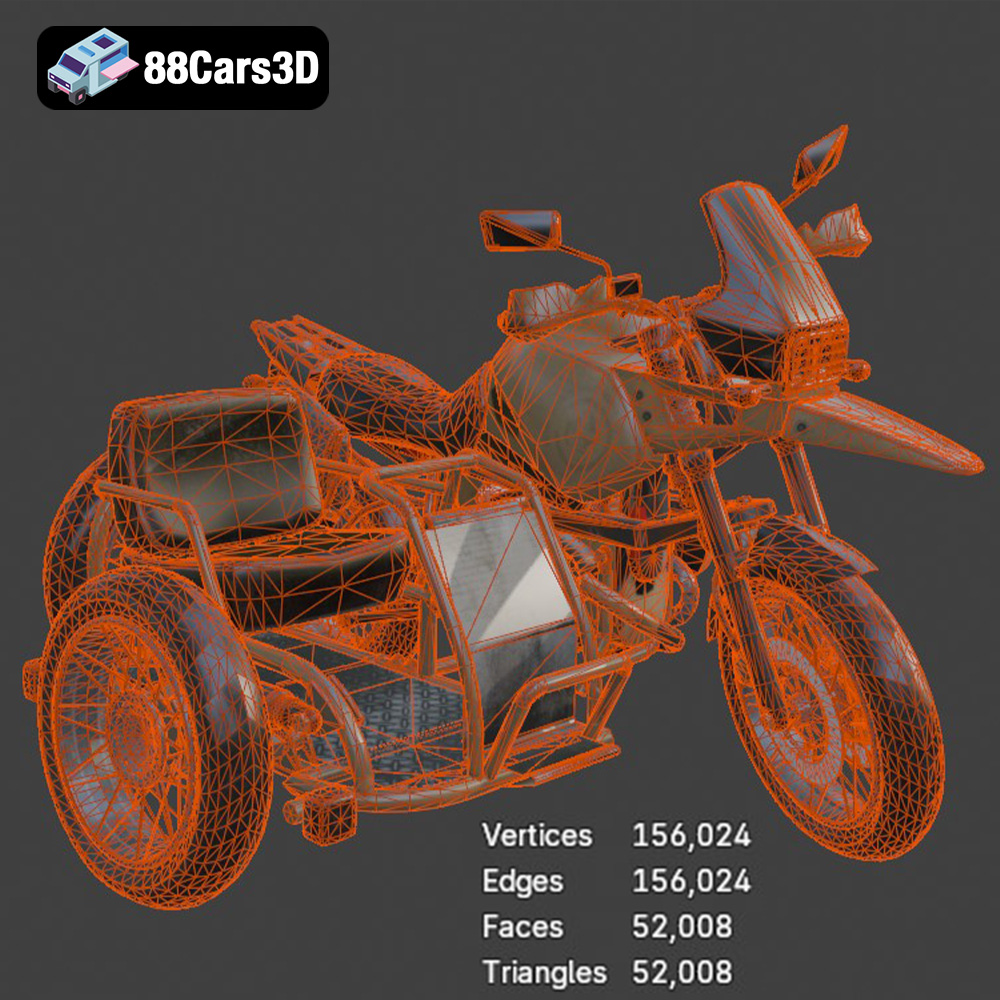
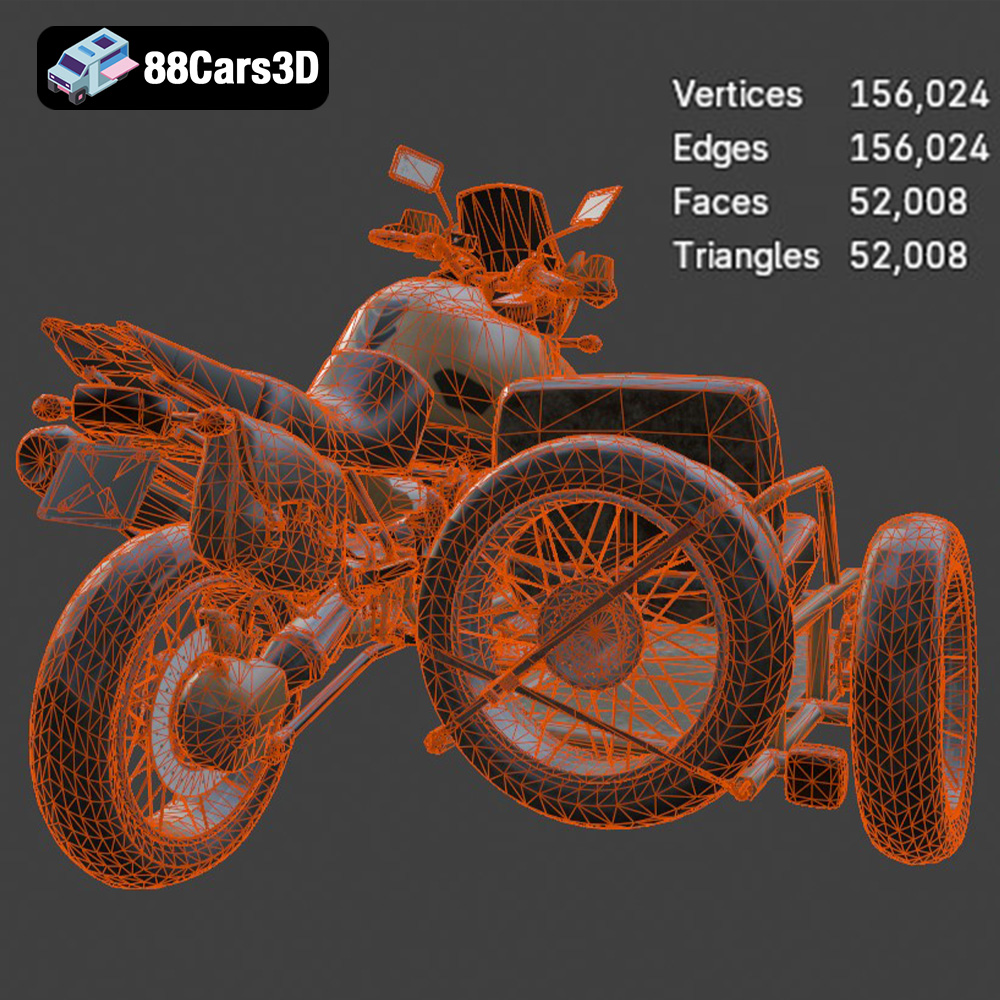
One of the first technical considerations for any 3D model, especially for real-time applications, is its polygon count. The BMW R1150GS Adventure Sidecar 3D Model boasts an approximate 180,000 triangles. This figure represents a sweet spot in modern game development and real-time rendering. For context, high-end game assets can range from tens of thousands to a few hundred thousand triangles. 180,000 triangles allow for significant visual detail – capturing the intricate engine block, the robust crash bars, and the distinctive asymmetric headlights – without becoming excessively heavy for modern game engines like Unreal or Unity. This optimization ensures that players can experience high-quality real-time rendering without sacrificing crucial frame rates, making it an ideal game asset for demanding open-world games or racing simulators.
Beyond raw polygon count, the quality of textures and materials is paramount for achieving photorealism. The Custom Off-Road BMW R1150GS Adventure Sidecar model features “carefully mapped textures” and “realistic material finishes.” This means that the UV mapping – the process of flattening the 3D surface into a 2D space for texture application – has been expertly executed. Good UVs prevent stretching or distortion of textures and allow for efficient texture packing. The realistic material finishes go a step further, utilizing Physically Based Rendering (PBR) workflows. This involves maps for albedo (base color), roughness, metallic, normal, and ambient occlusion, which accurately simulate how light interacts with different surfaces, whether it’s the matte finish of the crash bars, the metallic sheen of the engine, or the weathered rubber of the aggressive knobby tires. This level of detail elevates the model from merely a shape to a visually convincing object.
A static model can be beautiful, but a dynamic one breathes life into a scene. For vehicles, this means proper articulation. The Custom Off-Road BMW R1150GS Adventure Sidecar 3D Model is designed with animation in mind, featuring “separate wheels, suspension, and steering components.” Crucially, it also includes “proper pivot setup for steering, wheel rotation, and suspension travel.” This is a significant technical advantage. Correct pivot points ensure that when a developer or animator rotates a wheel, it spins accurately around its true axle, rather than off-center. Similarly, suspension components will compress and extend naturally. This pre-configured setup saves countless hours of rigging and allows for immediate implementation of realistic vehicle dynamics, essential for automotive rendering in animations or interactive game environments.
The true value of a premium 3D model, such as the Custom Off-Road BMW R1150GS Adventure Sidecar, lies in its versatility and seamless integration into diverse professional pipelines. Its inherent quality and optimization make it a powerful tool for creators across various industries.
For game developers, finding optimized yet visually rich game assets is a constant challenge. The BMW R1150GS Adventure Sidecar 3D Model is “game-ready & optimized,” with an appropriate polycount (approx. 180,000 triangles) that strikes a perfect balance for real-time engines like Unreal and Unity. Its pre-set pivots for animation mean it can be quickly integrated into a vehicle blueprint, allowing players to instantly experience realistic steering, suspension, and wheel rotation. Imagine this rugged sidecar navigating a post-apocalyptic wasteland, conquering treacherous terrain in an off-road racing title, or serving as a unique expedition vehicle in an open-world survival game. Its robust design and high-fidelity textures make it perfect for creating compelling gameplay experiences and cinematic cutscenes within these environments.
Augmented Reality (AR) and Virtual Reality (VR) demand efficient, high-quality models that can render smoothly on a variety of devices, often with stringent performance budgets. The “game-ready” optimization and inclusion of formats like .glb make this model ideal for AR/VR applications. Picture a virtual showroom where potential customers can explore the Custom Off-Road BMW R1150GS Adventure Sidecar in 360 degrees, customize its paint scheme, and even virtually “sit” in the sidecar. For mobile AR, users could place the model in their driveway, examining its intricate details from all angles. Its realistic materials and accurate scale contribute significantly to the sense of presence and immersion, elevating the user experience in virtual configurators or educational AR tours.
In the realm of automotive rendering and product visualization, photorealism is the ultimate goal. The Custom Off-Road BMW R1150GS Adventure Sidecar 3D Model excels here, thanks to its “meticulously crafted” details, realistic material finishes, and accurate geometry. Designers and marketers can use this asset in 3ds Max, Blender, or other rendering software to create stunning marketing visuals, lifestyle scenes, or product showcases. Whether illustrating the bike in a dramatic studio lighting setup, cruising through a picturesque mountain pass, or parked beside a campfire under a starry sky, the model’s fidelity ensures captivating results. This asset empowers agencies and brands to produce compelling visual content for advertising campaigns, brochures, or online portfolios without the need for expensive physical photoshoots.
The digital world can often bridge the gap to the physical, and 3D printing is the technology that makes this possible. With its inclusion of the .stl format and detailed “3D Print Settings,” the Custom Off-Road BMW R1150GS Adventure Sidecar 3D Model can be brought to life as a tangible object. Hobbyists can print display-scale models (e.g., 1:12 or 1:18 scale), appreciating the intricate details of the engine, suspension, and sidecar in their hands. The recommended settings – such as resin printing for fine details, specific layer heights, and support requirements – guide users to achieve high-quality physical replicas. This opens up possibilities for custom dioramas, model collecting, or even as a unique desk display, offering a tangible connection to the digital design.
A truly valuable 3D asset offers more than just fidelity; it provides flexibility. The ability to customize and adapt a model to specific project requirements is crucial for creative professionals. The Custom Off-Road BMW R1150GS Adventure Sidecar 3D Model provides ample customization options, ensuring it can seamlessly integrate into various aesthetic and functional contexts.
The visual impact of any vehicle can be dramatically altered by its color and material finishes. The Custom Off-Road BMW R1150GS Adventure Sidecar model allows for easy modification of “body/tank colors,” letting artists switch between authentic factory colors, custom matte finishes, or glossy metallic paints to match a brand identity or specific scene mood. Beyond paint, the “material finishes” can be adjusted to convey different levels of wear, cleanliness, or specific material properties. Furthermore, the option to “modify tire textures” is a subtle yet powerful customization. While it comes with aggressive off-road knobby tires perfect for its adventure persona, one could hypothetically switch to street variants for a different narrative, expanding its application beyond purely rugged scenes. This adaptability ensures the model remains relevant across diverse visualization needs.
The way a 3D model interacts with its environment is fundamental to achieving realism. A high-quality model like this BMW R1150GS Adventure Sidecar is designed to respond accurately to various lighting conditions. Artists can “adapt lighting for different environments,” ensuring the model looks convincing whether it’s bathed in harsh desert sunlight, shrouded in the soft glow of twilight, or illuminated by a post-apocalyptic urban setting. This involves adjusting reflections, refractions, and shadows to match the scene’s mood and atmosphere. Such flexibility is paramount for automotive rendering specialists who need to integrate the model into pre-existing scenes or create entirely new environments around it, maintaining visual consistency and believability.
Let’s explore a practical application of the Custom Off-Road BMW R1150GS Adventure Sidecar 3D Model within a professional game development context, specifically utilizing Unreal Engine. This scenario highlights how a meticulously prepared game asset translates into an efficient and visually stunning real-time experience.
Our hypothetical scenario begins with a game developer needing a hero vehicle for an open-world survival game set in a vast, overgrown wilderness. The developer chooses the Custom Off-Road BMW R1150GS Adventure Sidecar 3D Model from 88cars3d.com for its robust design and game-ready optimization. The process starts by importing the .fbx or .unreal file into Unreal Engine. Unreal’s robust import pipeline handles the mesh, basic materials, and UVs seamlessly. The developer then proceeds to set up the PBR materials. This involves creating Material Instances for the various components – the metallic engine block, the rubber tires, the plastic handguards, and the painted fuel tank. Using the provided textures (albedo, normal, roughness, metallic, ambient occlusion), the developer fine-tunes parameters like color, metallic intensity, and roughness values to achieve photorealistic surface properties that respond accurately to Unreal’s physically based lighting system. For the aggressive knobby tires, subsurface scattering might even be added to simulate the slight translucency of rubber in strong light, enhancing realism.
With the materials correctly applied, the next step is to make the sidecar functional. Leveraging the “proper pivot setup for steering, wheel rotation, and suspension travel,” the developer integrates the model into a custom Unreal Engine Vehicle Blueprint. This blueprint uses physics constraints and input bindings to control the bike. The separated components – wheels, forks, sidecar swingarm, and handlebars – are linked to the physics system. Wheel rotation is driven by the physics engine’s torque, while the suspension components are tied to the vehicle’s spring and damper forces, realistically compressing and extending as the bike traverses uneven terrain. The handlebars are animated to turn in sync with the front wheel’s steering input, providing visual feedback to the player. For the sidecar, additional constraints are applied to ensure it follows the bike’s movement while allowing for realistic bounce and tilt, essential for convincing off-road dynamics. This pre-rigged structure significantly accelerates development, allowing artists to focus on environmental design rather than tedious rigging.
Finally, to showcase the Custom Off-Road BMW R1150GS Adventure Sidecar in a cinematic game trailer, the developer focuses on lighting and post-processing. A combination of a directional light (simulating the sun), skylight (for ambient outdoor light), and volumetric fog is used to create a dusty, atmospheric wilderness scene. Area lights might be added around the engine block to highlight intricate details. Post-processing volumes are then employed to fine-tune the visual output. This includes adjusting exposure, color grading to evoke a rugged, desaturated look, adding screen space reflections for wet puddles, and incorporating depth of field to draw attention to the sidecar in close-up shots. Lens flares are added for the distinctive asymmetric headlights, giving them a realistic glow, especially important for night-time scenes. The result is a stunning, high-performance vehicle asset that looks incredible and functions flawlessly within a demanding real-time environment, underscoring the immense value of quality 3D car models like those found on 88cars3d.com.
In the dynamic landscape of 3D visualization and real-time content creation, the demand for high-quality, meticulously crafted 3D car models is ever-present. From game development to cinematic rendering, AR/VR experiences, and even physical 3D prints, the right digital asset can serve as the cornerstone of a compelling project. The Custom Off-Road BMW R1150GS Adventure Sidecar 3D Model stands out as a prime example of such an asset, embodying detailed realism, game-ready optimization, and unparalleled versatility through its comprehensive suite of file formats.
Its technical prowess, from the balanced polycount and expertly mapped PBR textures to the animation-ready pivots, ensures seamless integration and exceptional performance across various platforms and applications. The ability to customize colors, materials, and integrate it effortlessly into complex scenes further enhances its value, making it a powerful tool for any creative professional seeking to bring their visions of adventure and rugged exploration to life. Investing in premium automotive rendering assets like this not only saves valuable time but also elevates the final product, delivering a level of fidelity and immersion that truly captivates audiences. Explore this exceptional model and a wide range of other high-quality 3D car models at 88cars3d.com, and unlock new possibilities for your next digital adventure.
The Custom Off-Road BMW R1150GS Adventure Sidecar represents the pinnacle of overland exploration and rugged dual-sport capability. Renowned for its iconic boxer twin engine and indestructible shaft drive, this customized adventure rig integrates a heavy-duty passenger sidecar, transforming it into an ultimate all-terrain expedition vehicle. Key visual elements include the massive dual-sport fuel tank, aggressive knobby tires, robust crash bars, and the distinctive asymmetric headlights that define the GS lineage.
This premium 3D model is meticulously crafted to deliver exceptional visual fidelity while maintaining optimal performance. With a well-balanced topology and game-ready optimization, it ensures high-quality real-time rendering without sacrificing frame rates. The model boasts carefully mapped textures, realistic material finishes, and accurately modeled mechanical components, making it an outstanding asset for game development, AR/VR applications, animation, and digital visualization.
Perfect for post-apocalyptic survival games, off-road racing simulators, overland expedition visualizations, and immersive VR garage environments.
.blend, .fbx, .obj, .glb, .stl, .ply, .unreal, .max
Tags:
bmw, r1150gs, adventure, sidecar, off-road, custom, motorcycle-3d-model, game-ready, low-poly, optimized, game-asset, rendering, vr-ar, blend, fbx, obj, glb, stl, ply, unreal, maxMercedes Benz CLS 500 3D Model 3D Printable STL
$39.99
.adventure
.blend
.bmw
.custom
.fbx
.glb
.max
.obj
.ply
.rendering
.sidecar
.stl
.unreal
game asset
game-ready
low-poly
motorcycle-3d-model
off-road
optimized
r1150gs
VR/AR