Get 20% OFF All Premium 3D & STL Models!

In the expansive digital landscape of today, where virtual worlds and simulated realities are becoming increasingly indistinguishable from our own, the demand for highly realistic and meticulously crafted 3D assets has never been higher. From blockbuster video games to cutting-edge architectural visualizations and immersive AR/VR experiences, the authenticity of a scene often hinges on the quality of its individual components. Among these, automotive 3D models stand out as particularly challenging and rewarding assets, requiring a unique blend of artistic vision and technical precision.
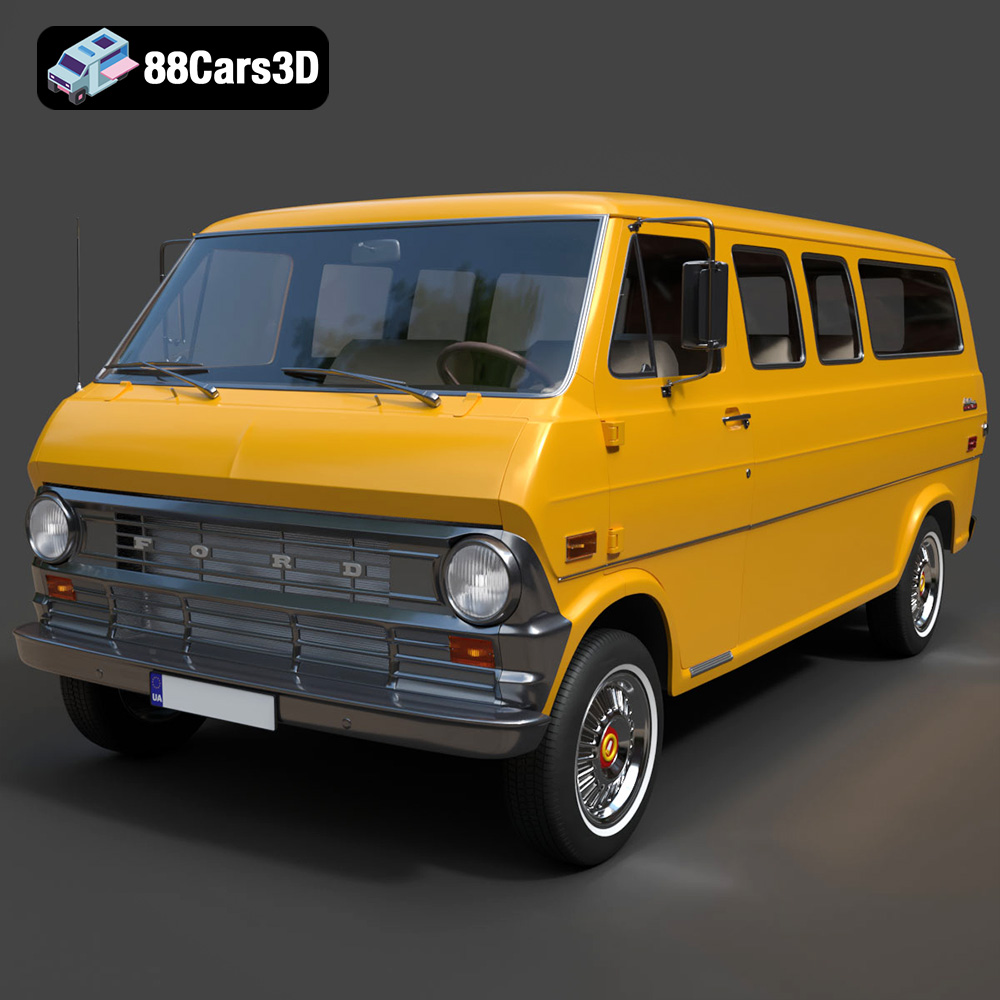
There’s a special charm to classic vehicles, a nostalgia that transports us to a different era. Capturing this essence in a digital format requires not just accurate modeling but also an understanding of the vehicle’s historical context and design philosophy. Consider, for example, the iconic 1971 Ford E-Series Econoline Club Wagon. This isn’t just a van; it’s a symbol of American road trips, family adventures, and a bygone era of utilitarian design. Recreating such a vehicle in 3D is a monumental task, one that demands attention to every curve, every detail, and every historical nuance. A premium 3D model of this classic vehicle, like the one available at 88cars3d.com, doesn’t just provide polygons and textures; it delivers a piece of history ready to be integrated into modern digital projects.
This comprehensive guide delves into the intricate world of automotive 3D modeling, exploring the technical considerations, diverse applications, and professional workflows that transform raw data into stunning digital representations. We’ll specifically highlight how meticulously crafted assets, such as the Ford E-Series Econoline Club Wagon 1971 3D Model, serve as invaluable resources for creators across various industries.
The allure of classic cars extends far beyond the asphalt, deeply influencing digital realms. For 3D artists and developers, vintage vehicles offer a unique blend of design heritage and storytelling potential, enriching projects with character and authenticity.
Classic automotive designs are a testament to industrial artistry and engineering innovation from their respective eras. Unlike many contemporary vehicles with their sleek, often aerodynamic uniformity, vintage cars boast distinctive silhouettes, bold chrome accents, and unique mechanical expressions that are inherently more visually interesting. This richness in design provides fertile ground for 3D artists, allowing them to explore complex surface treatments, historical material finishes, and period-specific details that add depth and realism to any scene. A vehicle like the 1971 Ford E-Series Econoline Club Wagon, with its “short-nose” forward-control design and utilitarian aesthetic, immediately anchors a scene in the early 1970s, providing immediate context and visual appeal.
Integrating classic automotive 3D models into modern projects serves multiple purposes. In game development, they can populate open-world environments, creating a believable historical backdrop or offering unique driving experiences. For film and animation, they are crucial for period accuracy, setting the scene for a nostalgic sequence or a historical drama. Architectural visualization benefits from their inclusion by lending a sense of life, scale, and specific temporal context to rendered buildings and urban landscapes. Furthermore, the inherent aesthetic appeal of classic cars often evokes a strong emotional response from audiences, capitalizing on nostalgia and a fascination with design evolution. High-quality assets, such as those found on 88cars3d.com, ensure that this emotional connection is supported by flawless technical execution.
The choice of file format for a 3D model is often as crucial as the model’s design itself, dictating compatibility, functionality, and performance across different software and platforms. Each format serves a specific purpose, optimized for various stages of the 3D pipeline—from initial modeling and animation to real-time rendering and 3D printing. The Ford E-Series Econoline Club Wagon 1971 3D Model, for instance, is offered in a comprehensive suite of formats, ensuring its versatility for virtually any project.
The .blend format is Blender’s native file type, encompassing an entire scene with all its elements: geometry, materials, textures, lighting, cameras, animations, and even physics simulations. This makes it an ideal choice for artists who primarily work within Blender, offering full editability and seamless integration with Blender’s powerful toolset. When you download a .blend file, you’re getting a complete, ready-to-work project file, allowing for intricate adjustments to the model’s topology, material nodes, or animation curves. It’s particularly useful for those who want to leverage Blender’s Cycles or Eevee render engines to create stunning visualizations or further customize the vehicle.
.fbx (Filmbox) is arguably the most widely adopted interchange format in the 3D industry. Developed by Autodesk, it’s designed to transfer a vast amount of data, including mesh geometry, textures, material properties, rigging, skinning, and animation data, between different 3D software packages and game engines. Its robustness and broad compatibility make it ideal for pipelines involving multiple applications, such as modeling in 3ds Max, texturing in Substance Painter, and then importing into Unreal Engine or Unity. The binary nature of FBX makes it efficient for large datasets, critical for complex 3D car models like the Ford Econoline, ensuring smooth import and performance in real-time environments.
The .obj (Wavefront OBJ) format is a venerable and highly compatible file type, often considered a universal standard for basic 3D model exchange. It primarily stores geometric data (vertices, normals, UV coordinates, and faces) and can reference external material files (.mtl) for color and texture information. While it lacks support for animation or rigging, its simplicity and widespread acceptance make it excellent for static mesh transfers between almost any 3D software. It’s an excellent fallback option when more advanced formats present compatibility issues, providing a clean, unencumbered representation of the model’s geometry.
.glb is the binary version of the GL Transmission Format (glTF), an open standard for 3D scenes and models. It’s specifically optimized for efficient transmission and loading in web applications, augmented reality (AR), and virtual reality (VR) environments. A .glb file is self-contained, bundling all necessary assets—geometry, materials, textures, animations—into a single, compact file. This makes it incredibly convenient for sharing 3D content directly within web browsers, mobile AR apps, or WebGL-based experiences, ensuring fast load times and consistent visual quality across diverse platforms. For showcasing a 3D car model interactively on a website, .glb is often the superior choice.
The .stl (Stereolithography) format is the de facto standard for 3D printing. It represents a 3D object as a series of connected triangles, describing only the surface geometry without any color, texture, or material information. While not suitable for rendering or animation in the traditional sense, its simplicity makes it perfect for additive manufacturing, where slicing software translates the mesh into printable layers. For hobbyists and professionals looking to bring the 1971 Ford E-Series Econoline Club Wagon into the physical world, the .stl file provides the necessary blueprint for successful 3D printing, especially with the detailed print settings provided with the model.
The .ply (Polygon File Format) is another format for storing 3D data, often used for representing scanned 3D data. Unlike .stl, .ply can store a wider range of properties beyond just geometry, including color, transparency, surface normals, texture coordinates, and even reliability information for each polygon. This makes it particularly useful for scientific, engineering, and architectural applications where precise mesh data, often originating from 3D scanning, is critical for analysis or reconstruction. While less common for general 3D model distribution than FBX or OBJ, its ability to store rich attribute data makes it invaluable for specific technical pipelines.
The .unreal format, or more accurately, an Unreal Engine-ready asset package (often derived from FBX imports), signifies that the model has been specifically prepared and configured for optimal performance within Epic Games’ Unreal Engine. This typically means the asset comes with pre-configured materials using Unreal’s PBR (Physically Based Rendering) system, proper collision meshes, Level of Detail (LODs) set up for performance scaling, and potentially even blueprint integrations for interactive elements. This format drastically reduces setup time for game developers and real-time visualization artists, allowing them to drag and drop a fully optimized asset into their projects with minimal additional work.
The .max format is Autodesk 3ds Max’s native scene file. Similar to .blend for Blender, it contains all the information about a 3ds Max project: geometry, modifiers, materials, textures, lighting, cameras, animation, and scene setup. This format is essential for professional studios relying on 3ds Max for high-fidelity rendering (often with V-Ray or Corona Renderer) and complex animation pipelines. Receiving a .max file provides the utmost flexibility for customization, allowing artists to modify anything from the model’s structure to its intricate material networks and elaborate animation sequences, making it a cornerstone for high-end automotive rendering.
The journey from a historical vehicle to a high-fidelity 3D model is fraught with technical challenges, but when executed with precision, the result is an invaluable asset for any digital project. The 1971 Ford E-Series Econoline Club Wagon 3D Model is a prime example of this meticulous craftsmanship.
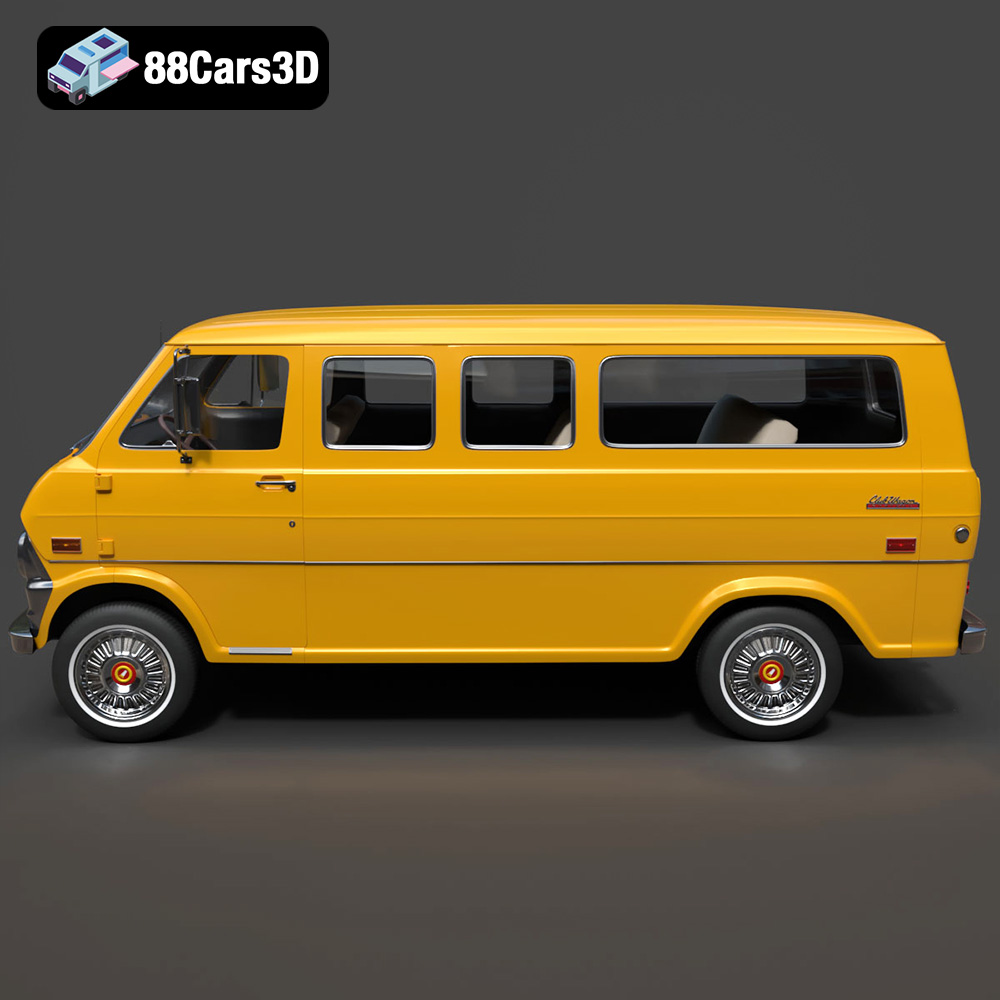
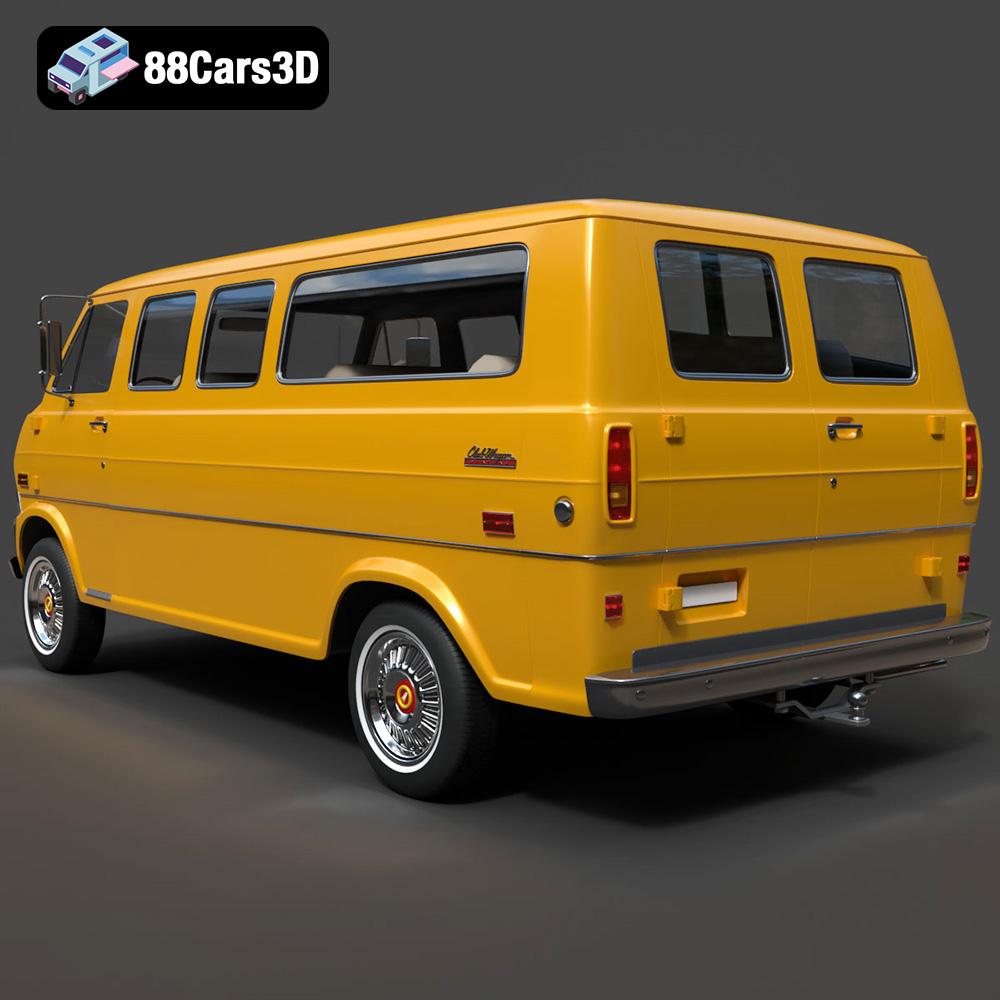
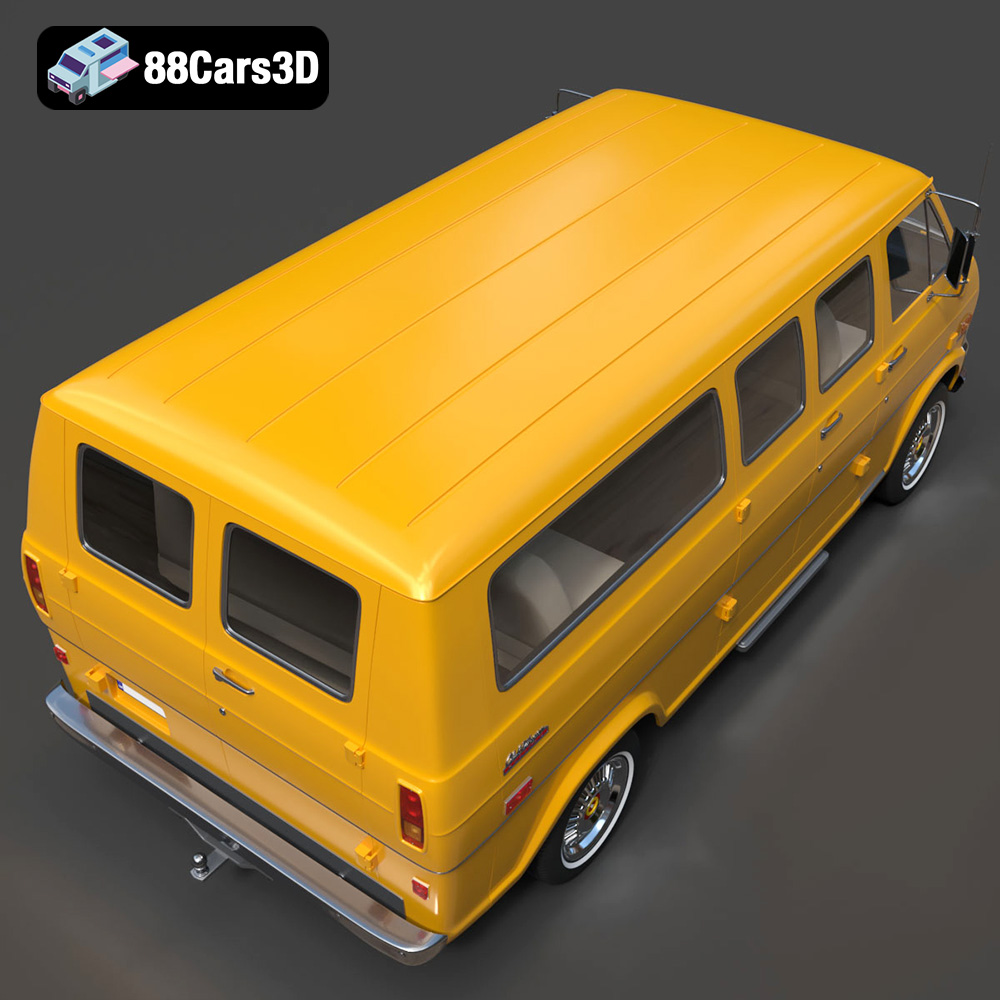
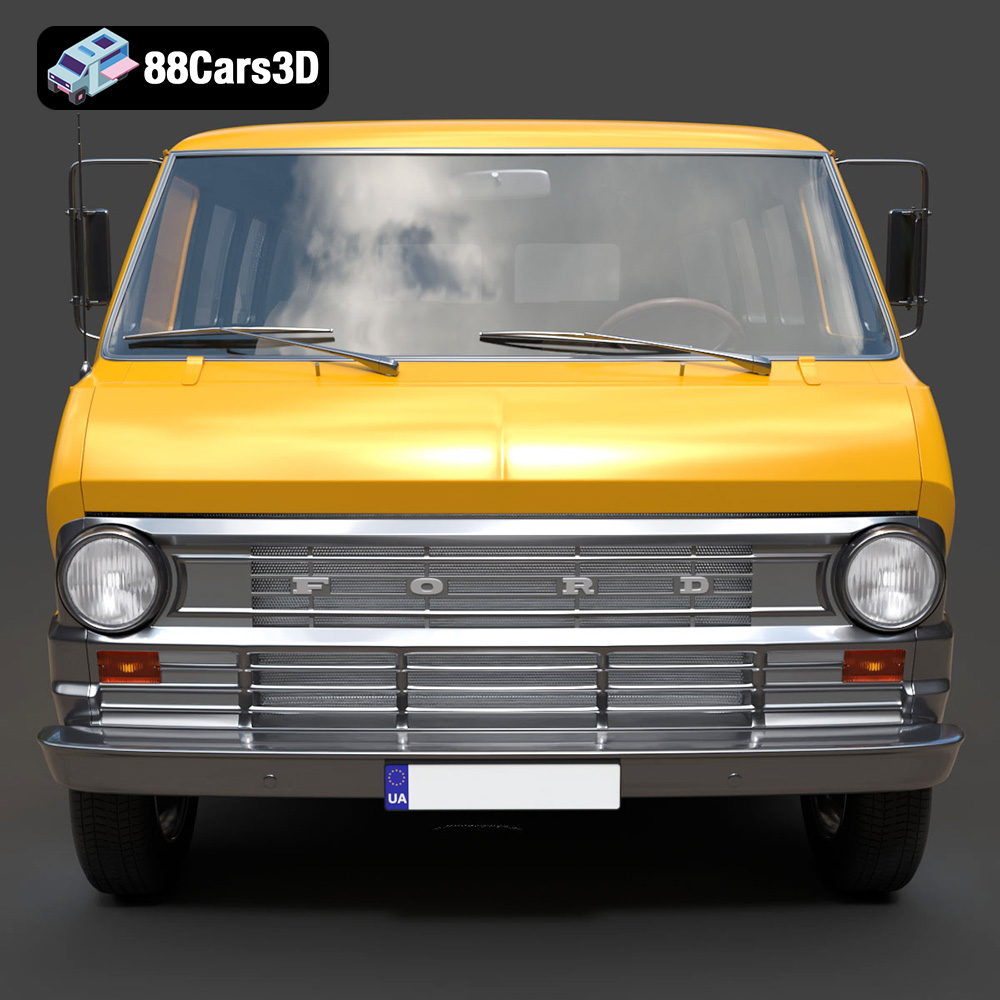
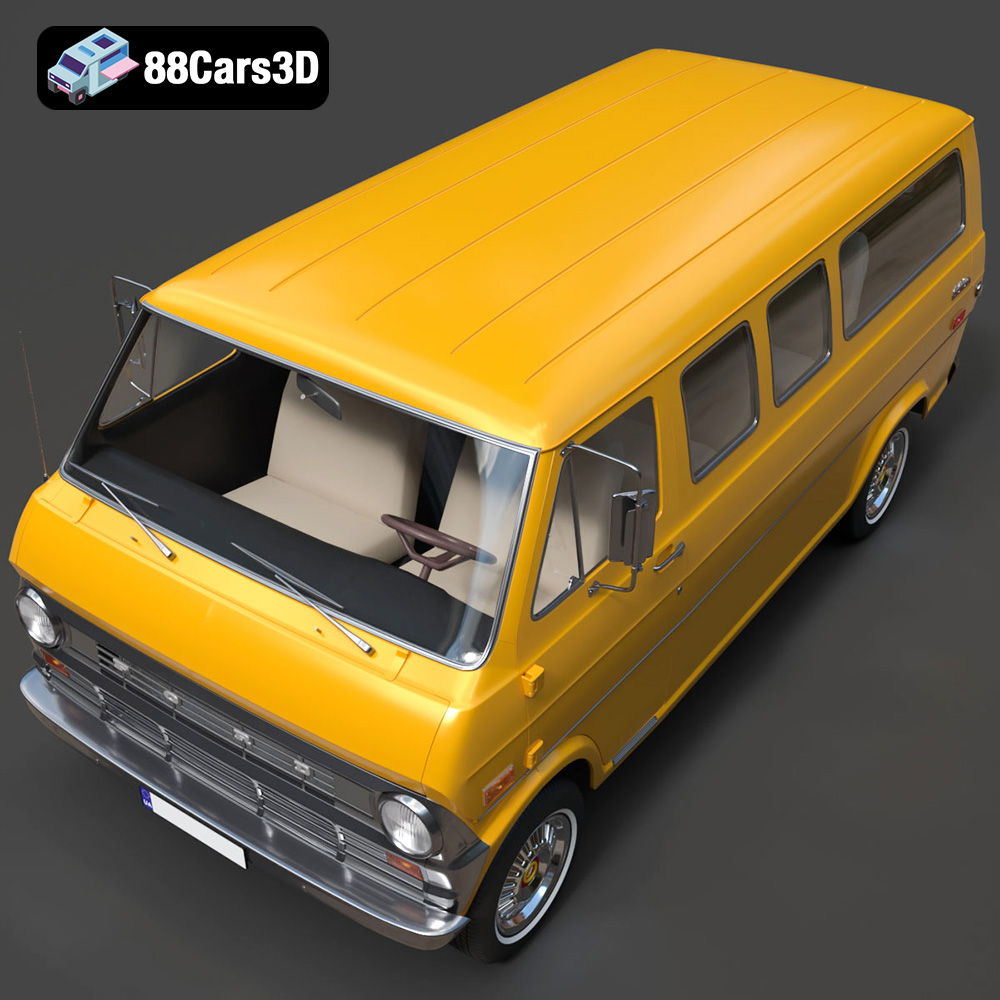
Authenticity is paramount when recreating classic vehicles. The Ford E-Series model captures the quintessential retro styling of the early 70s with remarkable accuracy. This includes the distinctive “short-nose” forward-control design, which was a hallmark of the era, the bold utilitarian front grille, and the signature round headlights that instantly place the vehicle in its time. Beyond the surface, the model faithfully represents the elongated body with expansive passenger windows and the classic steel wheels with chrome hubcaps and period-correct high-profile tires. Even the undercarriage features structural representations of its robust chassis and the classic Ford V8 or inline-six engine placement, complete with period-correct exhaust routing. These intricate details are not merely aesthetic; they provide the basis for realistic physics and interaction in simulations and games.
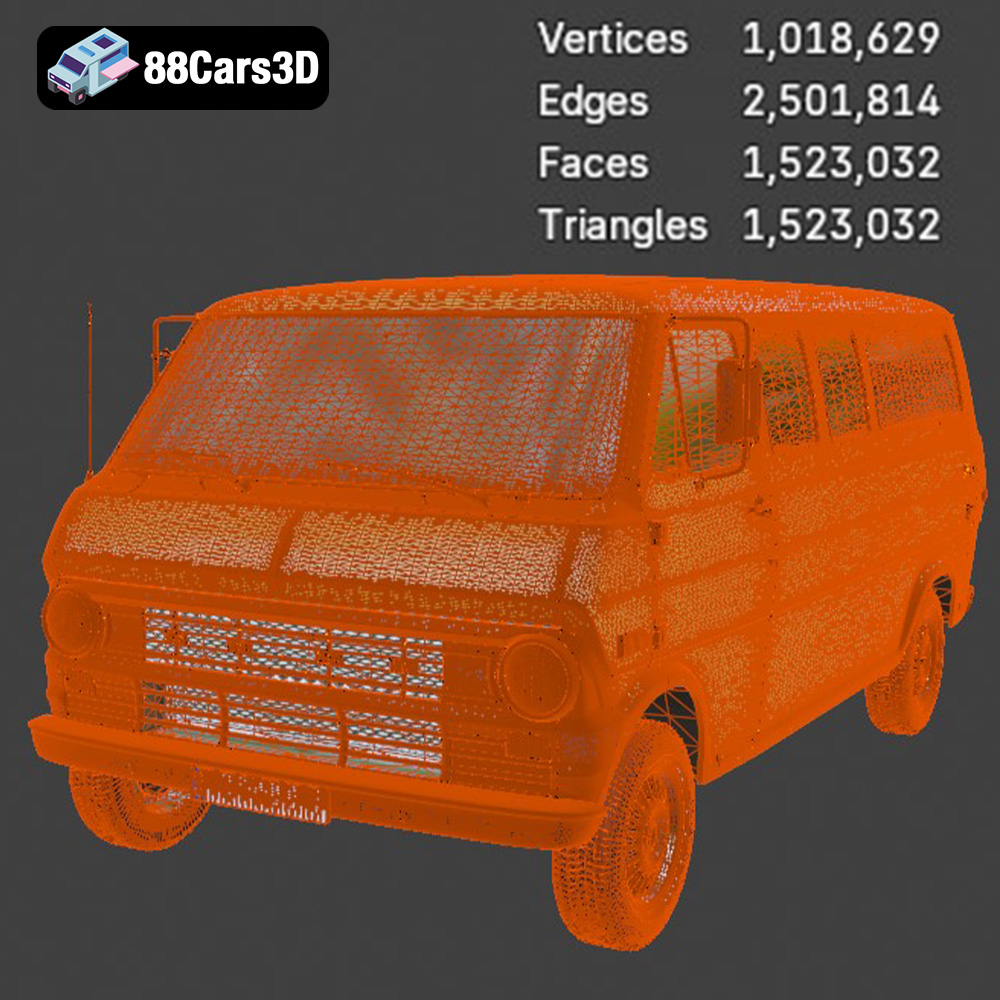
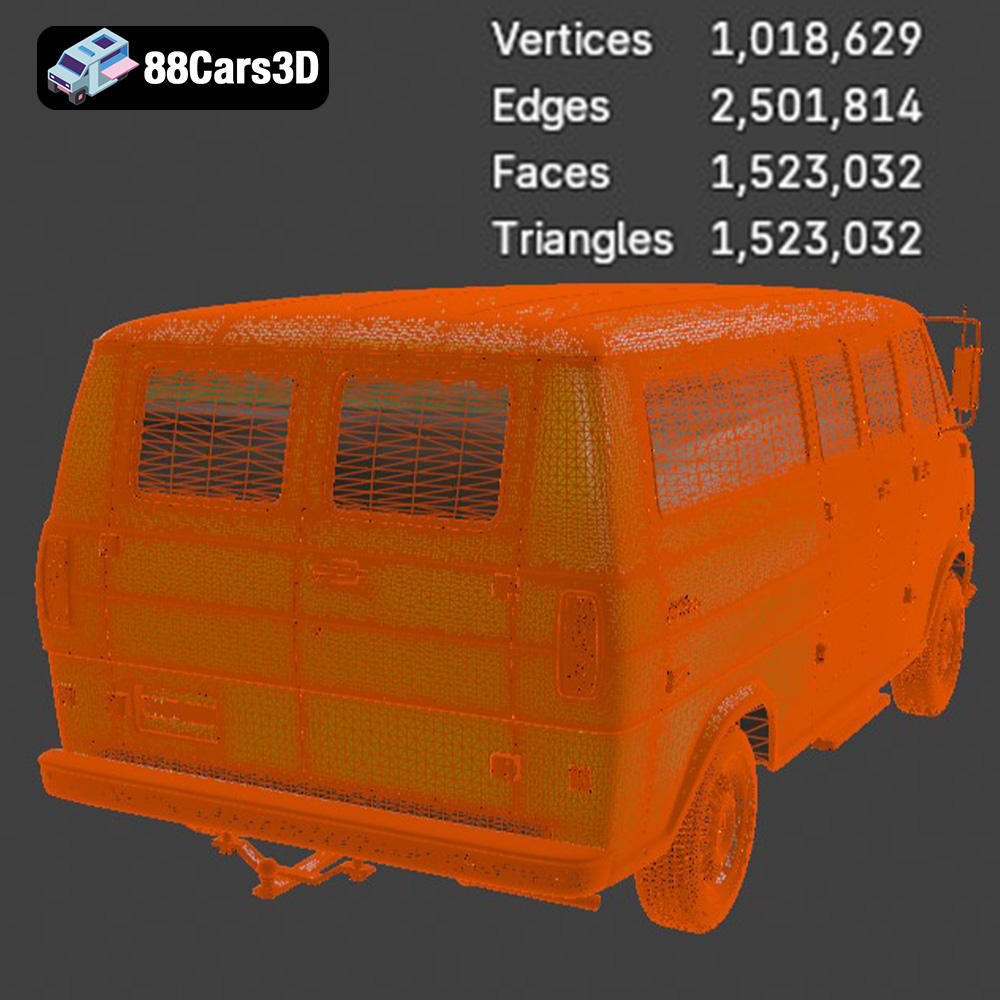
One of the most significant technical advantages of this 3D model is its optimized topology, boasting approximately 250,000 triangles. This figure represents a crucial balance: enough polygons to maintain high-end visual fidelity and smooth shading for realistic reflections, yet efficient enough to ensure game-ready performance in real-time engines like Unreal Engine and Unity. This careful optimization means the model can be deployed in interactive VR showrooms, complex animated sequences, or heavy open-world game environments without sacrificing frame rates or visual quality. Every surface has been meticulously modeled to ensure accurate reflections, making it perfect for both high-resolution offline rendering and demanding real-time applications.
A truly comprehensive automotive 3D model goes beyond the exterior, extending into the often-overlooked interior. The Ford Econoline model features a spacious multi-row passenger seating arrangement, complete with classic vinyl texture detailing that evokes the period. The cockpit is equally detailed, boasting an authentic two-spoke steering wheel with a realistic steering column, a retro utilitarian instrument cluster with analog dials, and an accurate dashboard layout. Critical control details like floor pedals, levers, and the column shifter are also meticulously modeled. This level of interior fidelity is crucial for first-person POV experiences in gaming, allowing players or users to feel truly immersed within the classic vehicle.
The versatility of a high-quality 3D car model, such as the 1971 Ford E-Series Econoline Club Wagon, extends across a myriad of digital industries, empowering creators to bring their visions to life with unparalleled realism and efficiency.
For game developers, game-ready 3D car models are essential assets. The optimized polycount of the Ford E-Series Econoline model (around 250,000 triangles) makes it ideal for integration into open-world games, racing titles, and vehicle simulators. Its real-world scale accuracy, coupled with proper pivot setup for steering, wheel rotation, and suspension travel, ensures that the vehicle handles realistically within a game engine’s physics system. Imagine this classic van cruising through a meticulously crafted 1970s American landscape in a retro-themed driving game, or as a key vehicle in a historical simulation. The detailed engine block representation and undercarriage elements also add layers of authenticity for those who appreciate mechanical realism, even if not directly visible to the player.
In architectural visualization (arch-viz), context is everything. Placing a vehicle like the 1971 Ford Econoline Club Wagon within a rendering of a mid-century modern home, a vintage gas station, or a bustling urban scene from the 70s immediately grounds the architecture in a specific time and lifestyle. These 3D car models are not just props; they are storytelling elements that breathe life into static architectural renders, adding scale, human activity, and a touch of nostalgic charm. Their high visual fidelity ensures they stand up to close-up shots and high-resolution output, perfectly complementing detailed architectural models.
The burgeoning fields of Augmented Reality (AR) and Virtual Reality (VR) thrive on high-quality, optimized 3D assets. The Ford Econoline model is perfect for immersive virtual showrooms, where users can walk around, inspect, and even “sit inside” the vintage van in a virtual space. For AR experiences, it can be projected into real-world environments, allowing users to see the classic vehicle parked in their driveway or sitting on their desk. The inclusion of the .glb format is particularly beneficial here, offering a streamlined, compact file optimized for these interactive, real-time applications, and enabling mobile AR experiences without performance hitches.
Beyond digital screens, the Ford E-Series Econoline Club Wagon 1971 3D Model is also designed for physical manifestation through 3D printing. The inclusion of the .stl format, alongside detailed print settings, caters to hobbyists and collectors who wish to create tangible replicas. Whether at a 1:12, 1:18, or 1:24 scale, the model is prepared for high-quality output. Recommendations for resin printing for fine details, specific layer heights, infill percentages, and support placement ensure successful prints. Post-processing suggestions, such as sanding, priming, and applying authentic factory colors, empower enthusiasts to craft display-worthy models that bridge the gap between digital design and physical craftsmanship.
The true power of a versatile 3D asset lies in its seamless integration into various professional design and development pipelines. The 1971 Ford E-Series Econoline Club Wagon 3D Model is engineered to fit effortlessly into industry-standard workflows, enhancing productivity and creative potential.
For artists working in leading 3D software like Autodesk 3ds Max and Blender, the model’s availability in native .max and .blend formats, as well as universal .fbx and .obj, ensures maximum flexibility. In 3ds Max, users can leverage the full scene data to manipulate textures, set up complex lighting scenarios with V-Ray or Corona Renderer, and even integrate the van into intricate animation sequences. The separate wheels, suspension, and steering components are pre-configured with proper pivots, making animation setup straightforward for anything from simple rotations to full vehicle dynamics. Similarly, Blender users benefit from the .blend file’s node-based material system, allowing for deep customization of shaders and textures using Cycles or Eevee, and enabling advanced rendering or game asset preparation.
Game developers and real-time visualization artists primarily rely on Unreal Engine and Unity. The Ford Econoline model is explicitly game-ready and optimized for these platforms. By utilizing the .fbx format, or even the specialized “.unreal” package (representing an optimized, pre-configured asset), developers can import the model with PBR materials, collision meshes, and LODs already in place. This significantly reduces the time typically spent on asset preparation, allowing artists to focus on level design, gameplay mechanics, or interactive experiences. The model’s balanced polycount and real-world scale ensure it performs efficiently within these engines while maintaining a high degree of visual realism, critical for creating immersive environments.
A key aspect of professional workflow is the ability to customize assets to fit specific project needs. The Ford E-Series model provides extensive customization options. Artists can easily change body colors to classic 70s two-tone factory paint jobs or custom finishes, adapting the vehicle’s appearance to match any scene or brand aesthetic. Material finishes can be adjusted from matte to gloss, chrome, or even a weathered rusty patina, adding character and narrative. Tire textures can be swapped between whitewall and standard blackwall variants, and lighting setups can be adapted for different environments—whether it’s a sunny outdoor scene, a moody garage interior, or a dynamic night sequence. This level of adaptability ensures the model remains a versatile asset across countless creative endeavors.
In the competitive world of digital content creation, the difference between a good project and a great one often lies in the quality of its assets. Investing in premium 3D car models like those found on 88cars3d.com is not just about aesthetics; it’s a strategic decision that impacts efficiency, realism, and overall project success.
Developing a complex 3D car model from scratch is an incredibly time-consuming and resource-intensive process. It requires specialized skills in modeling, UV unwrapping, texturing, rigging, and optimization. By leveraging a pre-made, high-quality asset such as the 1971 Ford E-Series Econoline Club Wagon 3D Model, studios and individual artists can significantly cut down on production time and costs. Instead of dedicating hundreds of hours to modeling a single vehicle, that time can be reallocated to other critical aspects of the project, such as environmental design, character development, or interactive features. This efficiency is invaluable for meeting tight deadlines and staying within budget, without compromising on visual quality.
The level of detail and optimization present in a premium 3D model translates directly into a higher degree of realism in the final output. Every meticulously crafted surface, accurate proportion, and optimized mesh contributes to photo-realistic renders and believable real-time experiences. For automotive rendering, game assets, and visualizations where authenticity is crucial, low-quality or poorly optimized models can quickly break immersion. High-quality assets are built with industry best practices, ensuring clean topology, efficient UV layouts, and PBR-ready materials that react accurately to light, resulting in stunning visuals that elevate any project to a professional standard. With the Ford Econoline model’s approximately 250,000 triangles and detailed features, achieving visual excellence is not just possible, but expected.
The digital realm continues to expand, offering boundless opportunities for creativity and innovation. At the heart of many compelling digital experiences lie meticulously crafted 3D assets that bridge the gap between imagination and reality. Automotive 3D models, in particular, demand a harmonious blend of historical accuracy, artistic vision, and technical prowess to truly stand out.
The 1971 Ford E-Series Econoline Club Wagon 3D Model is a testament to this principle. It embodies the vintage charm of a classic era while being engineered for the demands of modern digital production. Whether you’re a game developer seeking an optimized asset for your next open-world adventure, an architect visualizing a period-specific scene, an AR/VR creator building immersive experiences, or a hobbyist looking to 3D print a piece of automotive history, this model offers unparalleled versatility and quality. Its comprehensive file format support, from .blend and .max for advanced DCC work to .fbx and .unreal for game engines, and even .stl for physical printing, ensures it’s ready for any challenge.
Investing in high-quality 3D car models like the Ford Econoline isn’t just about acquiring an asset; it’s about empowering your projects with authenticity, saving invaluable development time, and achieving professional-grade realism that captivates audiences. Explore the possibilities and elevate your digital creations with premium 3D models available at 88cars3d.com, where quality meets innovation.
Experience the vintage charm of the 1971 Ford E-Series Econoline Club Wagon with this highly accurate 3D model. Known for its iconic “short-nose” forward-control design, this classic passenger van represents a golden era of American road trips and family travel. The model captures the quintessential retro styling cues of the early 70s, including the bold, utilitarian front grille, distinct round headlights, classic steel wheels with chrome hubcaps, and the elongated body design fitted with expansive passenger windows. Underneath, it features structural representations of its robust chassis and classic Ford V8 or inline-six engine placement, complete with period-correct exhaust routing. Crafted with an optimized topology of approximately 250,000 triangles, this 3D model offers the perfect balance between high-end visual fidelity and game-ready performance. Every surface has been meticulously modeled to ensure accurate reflections and smooth shading, making it an ideal asset for real-time engines like Unreal Engine and Unity, as well as high-resolution offline rendering. Whether deployed in an interactive VR showroom, an animated sequence, or a heavy game environment, the model maintains its structural integrity without sacrificing frame rates. Perfect for 1970s period-piece films, retro lifestyle visualizations, classic car garage scenes, and open-world vintage driving games.
$19.99
.blend
.e-series
.fbx
.ford
.glb
.max
.obj
.ply
.rendering
.stl
.unreal
1971
car-3d-model
classic-van
club-wagon
econoline
game asset
game-ready
low-poly
optimized
passenger-van
retro-vehicle
van-3d-model
VR/AR