Get 20% OFF All Premium 3D & STL Models!

In the dynamic world of 3D visualization, automotive design, and game development, the demand for high-fidelity 3D car models is ever-present. From crafting breathtaking cinematic renders to populating sprawling open-world games, the quality and versatility of your digital assets can significantly impact the final product. Today, we’re taking a comprehensive look at an iconic piece of American automotive heritage, the Ford Mustang GT, and how its meticulously crafted 3D model stands as a prime example of professional-grade digital artistry available to creators.
The Ford Mustang GT is more than just a car; it’s a symbol of power, style, and an enduring legacy. Translating such an icon into a digital asset requires a blend of artistic vision and technical precision. This is precisely what you get with a premium offering like the Ford Mustang GT 3D Model Download STL FBX OBJ GLB Blend, designed to meet the rigorous demands of various digital pipelines. Whether you’re an architect visualizing a scene, a game developer building a racing title, or an automotive designer showcasing concepts, understanding the nuances of such an asset is crucial for maximizing its potential.
Before diving into the specifics of any 3D model, it’s essential to grasp the various file formats that govern how these complex digital objects are stored, shared, and utilized across different software and platforms. Each format serves a specific purpose, offering unique advantages for particular workflows. The Ford Mustang GT 3D Model download comes equipped with a comprehensive suite of formats, ensuring broad compatibility and flexibility for professionals.
The .blend format is the native file type for Blender, the popular open-source 3D creation suite. A .blend file typically contains not just the raw mesh data, but an entire scene, including materials, textures, lighting, cameras, animations, rigging, and even internal scripts. This makes it an incredibly powerful format for Blender users, as it preserves all aspects of the original project setup. When you download a .blend file, you gain full access to the artist’s original workspace, allowing for deep customization, material tweaking, and direct integration into ongoing Blender projects without any loss of data fidelity. It’s ideal for those who primarily work within Blender and require maximum editability.
.fbx (Filmbox) is arguably the most widely adopted interchange format in the 3D industry, particularly popular for game development and animation pipelines. Developed by Autodesk, FBX is excellent at preserving geometric data, material assignments, animation curves, rigging, and camera information across different software packages like 3ds Max, Maya, Blender, Unity, and Unreal Engine. Its robust nature makes it the go-to choice for exporting assets from a modeling application to a game engine. Technical details include its ability to embed texture paths and support for complex hierarchical transformations, crucial for animated vehicles. While highly versatile, users should always check import settings in their target software to ensure all data translates correctly.
.obj (Wavefront OBJ) is a foundational and highly compatible 3D file format that has been around for decades. It primarily stores geometric data – vertices, normals, UV coordinates, and faces – and can reference external material files (.mtl) for basic material properties. The strength of .obj lies in its near-universal support across virtually all 3D software. While it doesn’t typically support animation or rigging, its simplicity and widespread compatibility make it an excellent choice for static mesh exchange, especially when you need a clean, basic mesh to start texturing and shading from scratch in your preferred application. It’s a reliable fallback for cross-software compatibility.
.glb (GL Transmission Format Binary) is a modern, efficient, and increasingly popular format, especially for real-time applications, augmented reality (AR), virtual reality (VR), and web-based 3D experiences. GLB is the binary version of glTF, bundling all necessary assets—geometry, textures, materials, and animation—into a single, self-contained file. This “all-in-one” approach makes it incredibly easy to load and render quickly in browsers and mobile AR/VR viewers. Its optimization for runtime delivery ensures smooth performance, making it perfect for interactive applications like virtual showrooms or social media filters where the Ford Mustang GT 3D Model could be showcased.
.stl (Stereolithography) is the de facto standard file format for 3D printing. It represents a 3D object as a series of connected triangles, essentially describing the surface geometry of a model. STL files do not contain color, texture, or material information, focusing solely on the object’s shape. For hobbyists or professionals looking to physically manifest the Ford Mustang GT 3D Model, converting it to an .stl and preparing it for slicing software is the essential step. The quality of the print depends heavily on the mesh resolution and integrity of the STL file, which is why a well-optimized source model is crucial.
.ply (Polygon File Format) is another format for storing 3D data, often used in scientific applications, 3D scanning, and CAD. While it can store geometry, color, and even texture coordinates, it’s known for its ability to store additional information like normal vectors, transparency, and even properties for individual vertices or faces. It’s a less common choice for general 3D asset exchange compared to FBX or OBJ but can be valuable for workflows requiring highly precise mesh data for analysis or specific engineering applications.
The .unreal designation typically refers to assets packaged specifically for Unreal Engine, though it might not be a standalone file extension in the same way .fbx or .obj are. Instead, it implies an asset that has been properly imported, set up, and optimized within an Unreal Engine project. This could mean an FBX file that has been imported and had its materials, collision meshes, LODs (Levels of Detail), and blueprint logic configured for immediate use within the engine. Such assets are invaluable for game developers, as they significantly reduce the time and effort required to integrate a new vehicle model into a real-time environment, ensuring it’s “engine-ready” right out of the box.
Similar to .blend for Blender, .max is the native project file format for Autodesk 3ds Max. It contains an entire 3ds Max scene, including all 3D geometry, lights, cameras, materials, textures, animations, and render settings. For users of 3ds Max, having the .max file provides the highest level of editability and allows access to the original scene setup, modifiers, and intricate animation controls. This is particularly useful for studios working primarily with 3ds Max for architectural visualization, product rendering, or cinematic animation, offering full control over the Ford Mustang GT 3D Model’s digital representation.
Capturing the essence of a legendary vehicle like the Ford Mustang GT in a digital format is no small feat. It requires meticulous attention to detail, optimized geometry, and a deep understanding of how such an asset will be used across various digital pipelines. This particular Ford Mustang GT 3D Model download excels in these areas, offering a robust foundation for a multitude of creative endeavors.
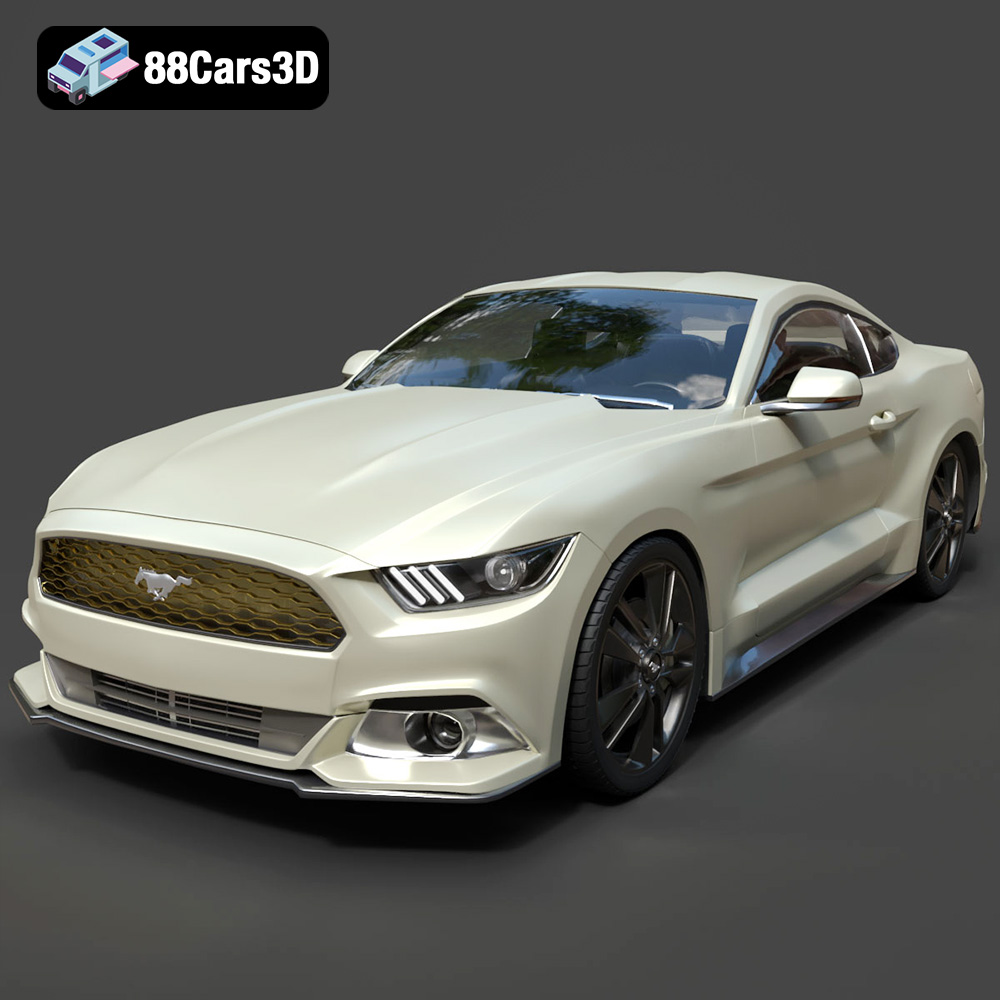
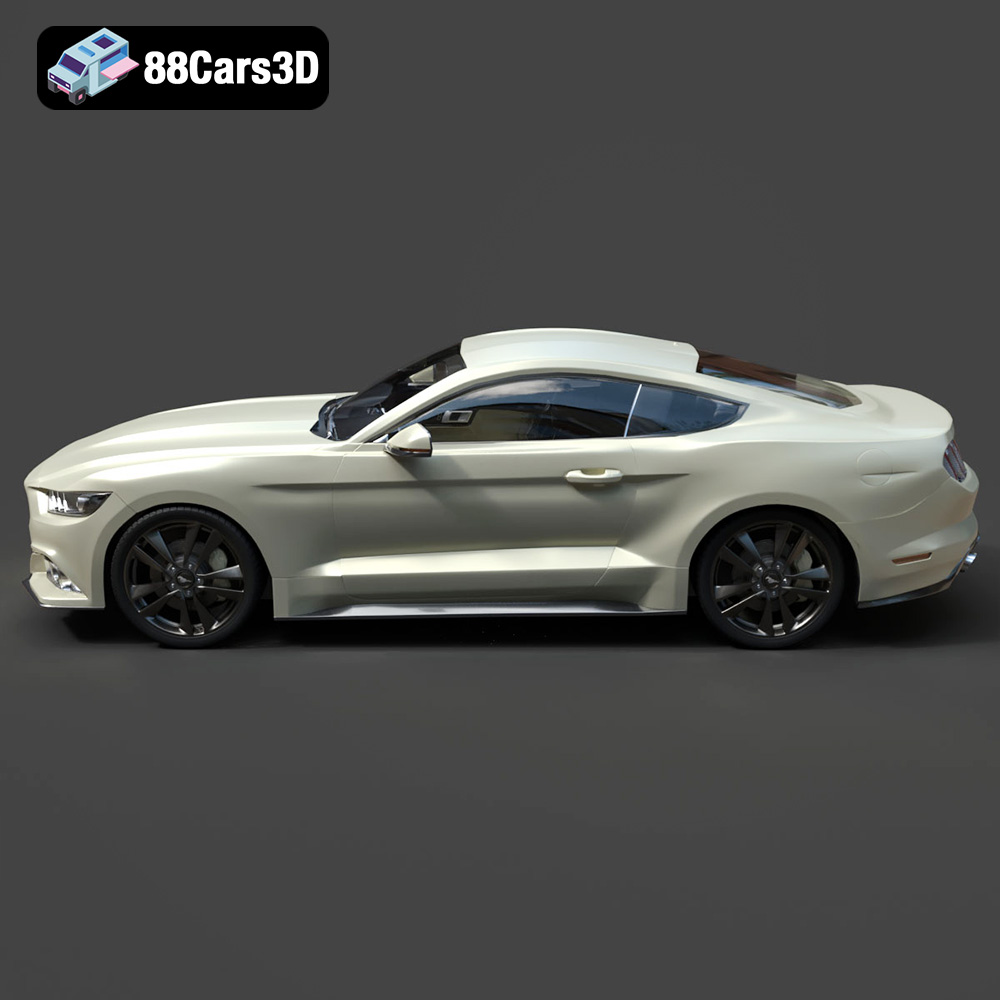
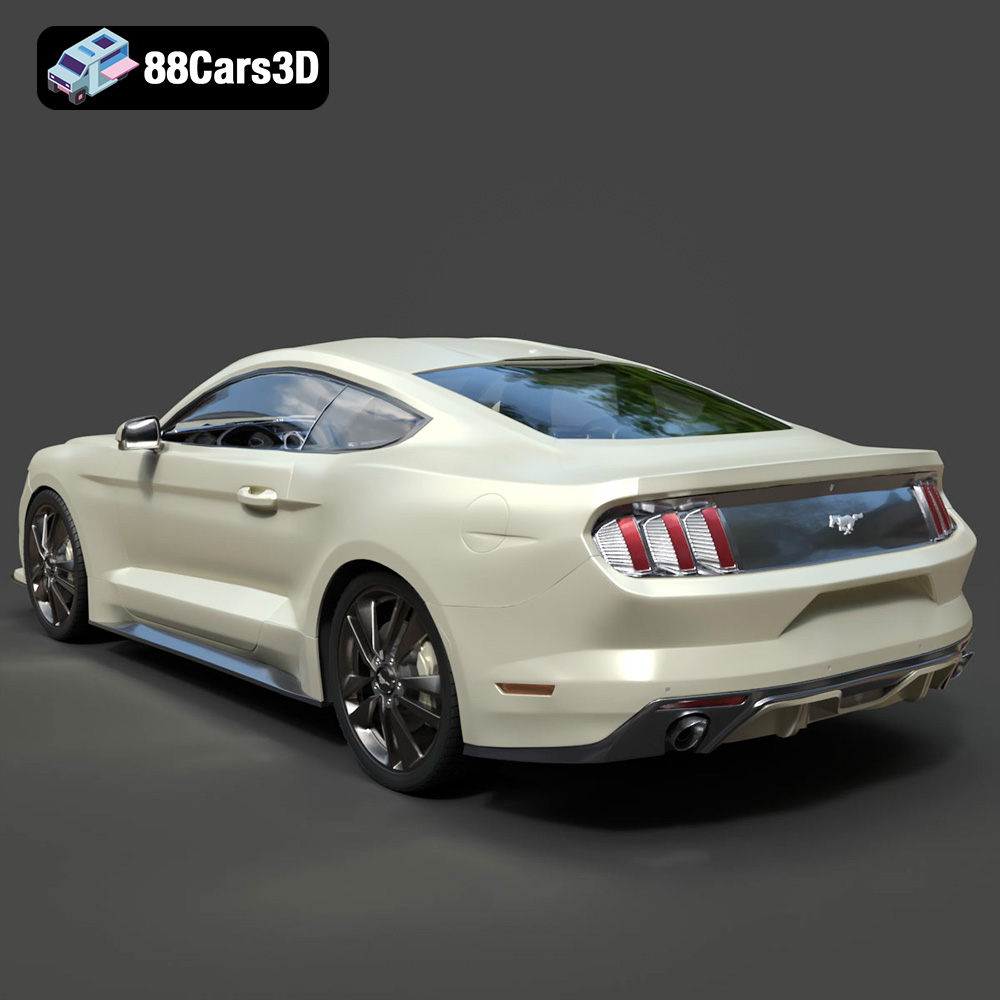
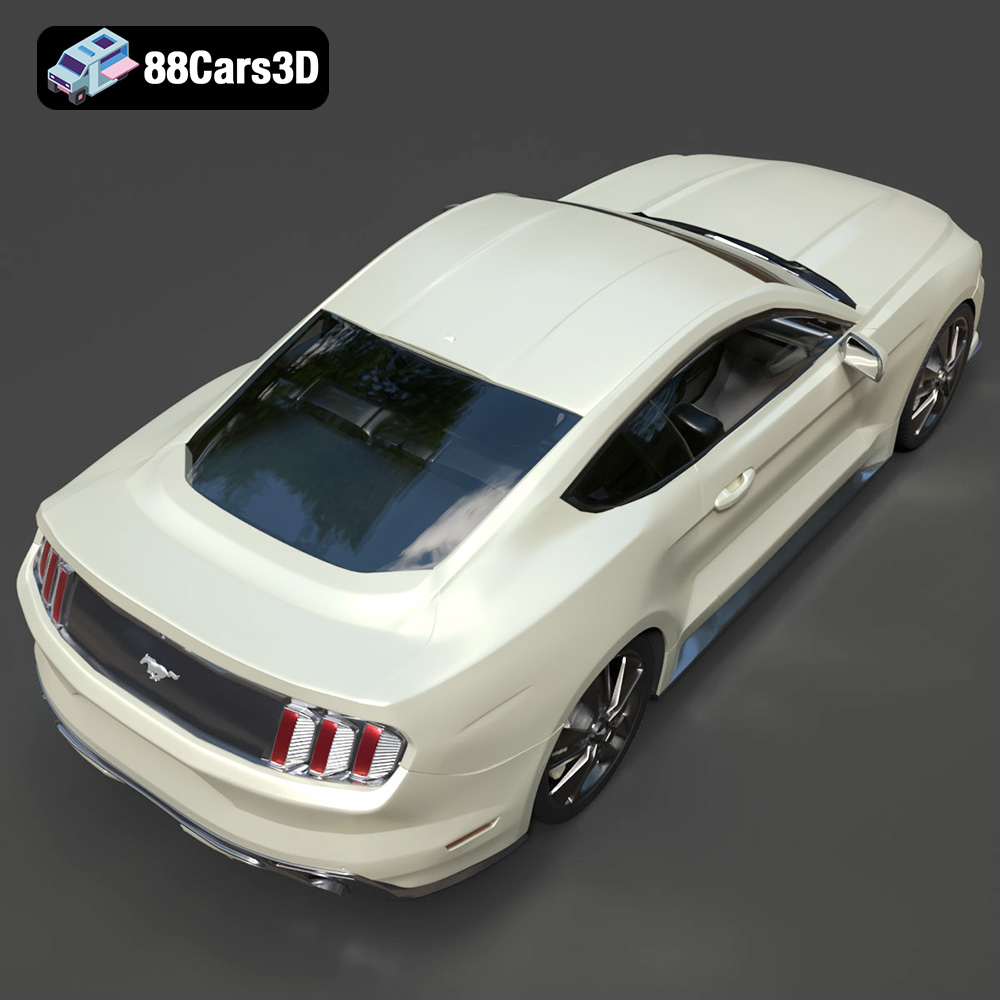
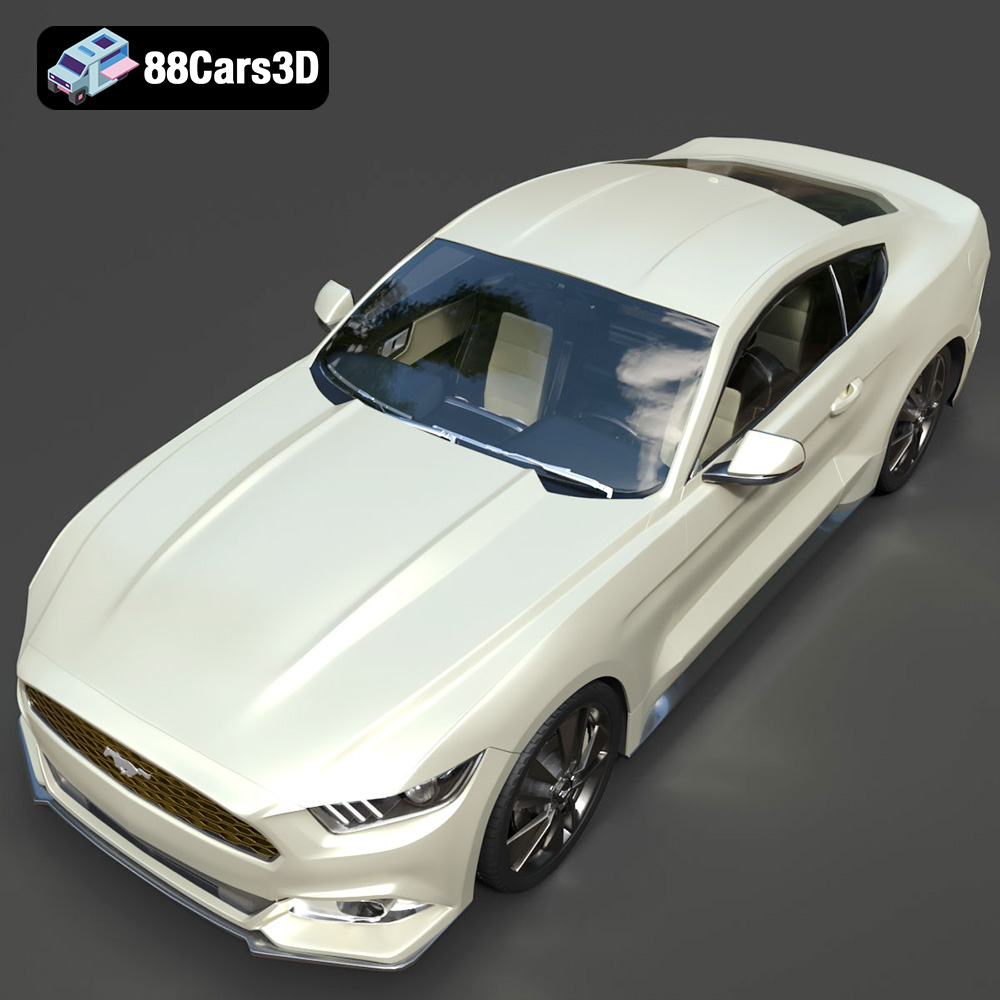
The model’s exterior is a testament to accurate replication. It features the unmistakable frame geometry and proportions of the modern Mustang GT, from its signature long hood and aggressive fastback roofline to the imposing front grille. Crucial details like the quad-tip performance exhaust system and signature tri-bar LED headlights and sequential taillights are faithfully reproduced, ensuring authenticity. Beyond static representation, the model incorporates high-performance alloy wheels with detailed tire tread patterns, accurate brake calipers, and performance suspension components. What truly sets it apart for animation purposes is the separation of wheels, suspension, and steering components. This allows animators to easily articulate these parts for realistic driving sequences, drift animations, or dynamic showroom presentations.
The interior of a vehicle 3D model is often as critical as the exterior, especially for applications like racing games, virtual tours, or high-end configurators where the user might experience the car from a first-person perspective. This Ford Mustang GT 3D Model features a highly detailed cockpit, including sport bucket seats with realistic stitching lines, a leather-wrapped multifunction steering wheel, and a modern digital instrument cluster and infotainment screen. The accurate center console, climate controls, pedals, and shifter complete the immersive experience. The optimized geometry ensures that even from a close-up, first-person POV in gaming, the interior maintains a high level of visual fidelity without overburdening real-time rendering engines.
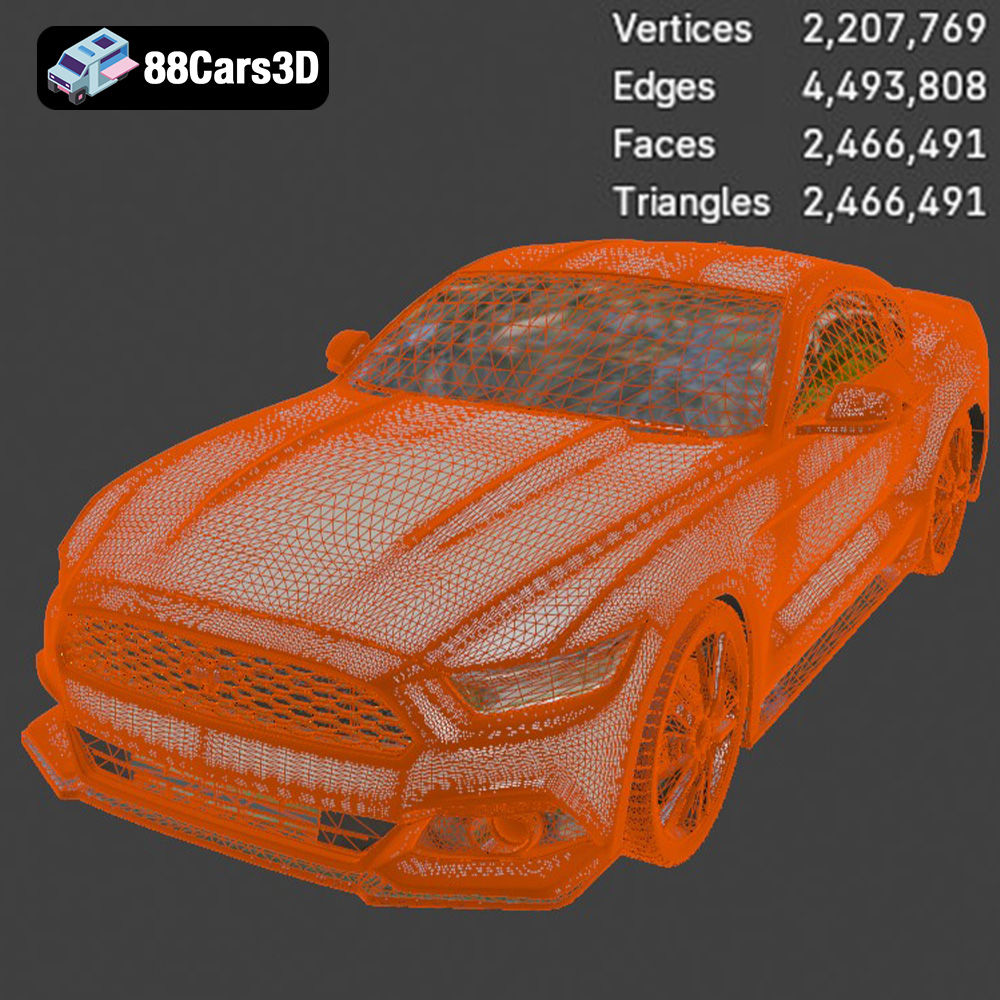
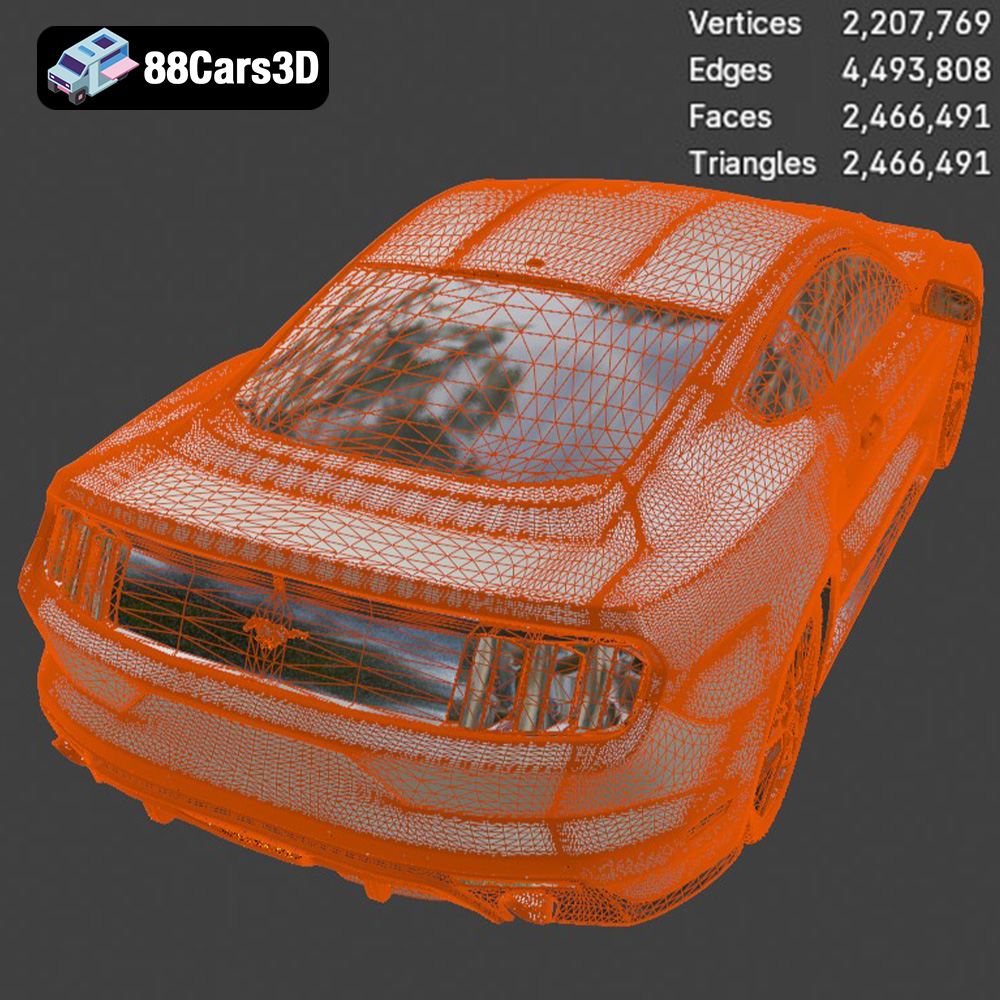
One of the most significant technical advantages of this model is its game-ready optimization. With approximately 200,000 triangles, it strikes an excellent balance between visual realism and performance efficiency. This poly count is perfect for real-time engines like Unreal Engine and Unity, allowing for smooth frame rates in demanding game environments while still delivering high-end visual fidelity for close-up shots. Furthermore, the model adheres to real-world scale accuracy, based on the actual vehicle chassis, which is critical for consistent scene integration and realistic physics simulations in games. Proper pivot setups for steering, wheel rotation, and suspension travel are included, greatly simplifying the integration process for vehicle dynamics systems.
The versatility of a 3D asset is measured by how seamlessly it integrates into various professional pipelines. Thanks to its multiple file formats and optimized structure, the Ford Mustang GT 3D Model can be a cornerstone for diverse projects, from photorealistic renders to interactive gaming experiences.
For those focused on creating stunning visual content, whether for advertising, product showcases, or film, the model offers an exceptional base. In 3ds Max, artists can import the .max or .fbx file, leveraging its editable geometry. Using industry-standard renderers like V-Ray or Corona, the model’s detailed topology and well-defined UVs allow for the application of advanced physically based rendering (PBR) materials. Artists can experiment with various car paints—metallic flakes, clear coats, and pearlescent finishes—and set up realistic studio or environmental lighting. The separate components (wheels, suspension) facilitate dynamic studio turntable animations or intricate camera moves around the vehicle.
Similarly, Blender users benefit from the native .blend file, which often includes pre-configured materials and a scene setup, serving as an excellent starting point. With Blender’s Cycles or Eevee renderers, artists can achieve incredible photorealism. The ability to manipulate every aspect of the model within Blender means easy customization of body colors, tire textures, and material finishes (matte, gloss, metallic). Placing the Ford Mustang GT 3D Model into a custom environment, such as a futuristic cityscape or a serene landscape, becomes a straightforward process, allowing for endless creative possibilities in automotive rendering.
Game developers will find the optimized nature of this 3D model invaluable. Importing the .fbx or the Unreal-specific asset into Unreal Engine provides a robust foundation for a game-ready vehicle. The ~200,000 triangle count ensures it performs efficiently even in complex open-world scenarios. Developers can take advantage of Unreal Engine’s advanced material system to apply high-quality PBR textures, creating realistic paint, glass, and rubber shaders. The model’s proper pivot setup simplifies integrating it with Unreal’s Chaos Vehicle physics system, allowing for authentic handling, suspension travel, and wheel rotation. Setting up Levels of Detail (LODs) further enhances performance, ensuring the car renders efficiently at varying distances.
In Unity, the process is similar. Importing the .fbx allows for quick integration into racing games, simulators, or even simple car configurators. Unity’s Universal Render Pipeline (URP) or High Definition Render Pipeline (HDRP) can be utilized to achieve visually stunning results optimized for real-time performance. Developers can create custom scripts for vehicle control, attach sound effects, and implement damage models based on the robust geometry of the Ford Mustang GT 3D Model. The low-poly nature, without sacrificing visual appeal, makes it an ideal candidate for mobile game development where performance is paramount.
The utility of a high-quality 3D car model extends far beyond traditional rendering and game development. With advancements in augmented reality, virtual reality, and 3D printing, these digital assets are now bridging the gap between the virtual and physical worlds.
For AR/VR applications, the Ford Mustang GT 3D Model is exceptionally well-suited. The inclusion of the .glb format is a significant advantage here. GLB files are optimized for fast loading and efficient rendering on mobile devices and VR headsets, making them perfect for creating immersive virtual showrooms, interactive car configurators, or engaging mobile AR experiences. Imagine a customer using their smartphone to place a full-scale Ford Mustang GT in their driveway via AR, able to walk around it, change colors, and even peek inside. For VR, the optimized mesh ensures a smooth, nausea-free experience within virtual environments, allowing users to interact with the vehicle in a truly spatial way. The model’s detailed interior is particularly beneficial here, providing an authentic sense of being inside the car.
The inclusion of the .stl format, alongside specific 3D print settings, opens up a fascinating avenue for hobbyists, collectors, and designers: physically producing the model. Converting the highly detailed digital model into a tangible object requires careful preparation. The recommended scales (1:12, 1:18, 1:24) are ideal for display models. Key technical considerations for successful 3D printing include choosing the right layer height (0.04–0.12 mm, with resin printing recommended for fine details), ensuring adequate wall thickness (1.2–2.0 mm), and utilizing supports for complex parts like the exhaust system, side mirrors, and aerodynamic splitters. Printing the frame angled for structural integrity and wheels separately ensures the best possible outcome. Post-processing, involving sanding, priming, and applying authentic factory colors with metallic finishes, can transform a raw print into a stunning miniature replica of the iconic muscle car.
A high-quality base model from a reputable source like 88cars3d.com provides more than just a ready-made asset; it offers a foundation for boundless creativity and customization. The Ford Mustang GT 3D Model is designed with this flexibility in mind, empowering artists and developers to tailor it to their specific project needs.
The ability to easily change body colors is fundamental. Artists can apply any factory color, custom paint job, or even experimental finishes to the Mustang GT. This customization extends to material properties; whether you need a matte, gloss, or hyper-metallic look, the model’s clean UVs and material zones facilitate these adjustments. Tire textures can be swapped to reflect different performance requirements, from slick track tires to aggressive street treads. Furthermore, adapting the lighting to suit various environments – from a sun-drenched desert highway to a neon-lit urban street, or a sterile white studio – profoundly impacts the vehicle’s presentation. This level of creative control ensures that the Ford Mustang GT can seamlessly integrate into any scene or brand narrative.
Investing in a professionally created 3D car model from 88cars3d.com significantly reduces development time and costs. Instead of building a car from scratch, which can be an incredibly time-consuming and technically challenging endeavor, creators can immediately focus on the creative aspects of their project. This Ford Mustang GT 3D Model allows designers to add custom livery, integrate aftermarket modifications, or even create conceptual variants. Game developers can use it as a foundation for physics-based destruction, unique power-ups, or vehicle-specific quests. For advertising agencies, it means rapidly prototyping different visual campaigns. The quality and optimization embedded in the model mean less troubleshooting and more time for innovative design and storytelling, ultimately delivering a superior final product.
The Ford Mustang GT 3D Model download is a prime example of a meticulously crafted digital asset that transcends mere representation. Its detailed exterior and interior, optimized geometry for real-time performance, and a comprehensive suite of file formats (including .blend, .fbx, .obj, .glb, .stl, .ply, .unreal, and .max) make it an indispensable tool for a wide range of professionals. From breathtaking automotive rendering and engaging game assets to immersive AR/VR experiences and even tangible 3D prints, this model offers unparalleled versatility and quality.
In an industry where efficiency and fidelity are paramount, having access to such a high-caliber 3D car model can significantly elevate your projects. Whether you are building the next big racing title, creating stunning visualizations for a client, or exploring the frontiers of immersive technology, the Ford Mustang GT 3D Model provides the robust, flexible foundation you need. Explore this exceptional asset and many more at 88cars3d.com, where quality meets creativity, empowering you to bring your automotive visions to life.
The Ford Mustang GT is an enduring icon of American muscle, celebrated for its aggressive aesthetic, legendary heritage, and raw power. This incredibly detailed 3D model captures the unmistakable styling cues of the modern Mustang GT, from its signature long hood and fastback roofline to the imposing front grille, quad-tip exhaust system, and raw 5.0L V8 engine bay details.
Engineered for premium digital performance, this model features an optimized topology with approximately 200,000 triangles, delivering exceptional game-ready performance without sacrificing visual fidelity. The meticulously crafted geometry ensures seamless integration into game development workflows, high-end AR/VR experiences, cinematic animations, and professional automotive visualization.
Perfect for open-world racing games, virtual automotive showrooms, cinematic renders, and high-performance car configurators.
.blend, .fbx, .obj, .glb, .stl, .ply, .unreal, .max
Tags:
ford, mustang-gt, muscle-car, sports-car, game-ready, low-poly, optimized, car-3d-model, game-asset, rendering, vr-ar, blend, fbx, obj, glb, stl, ply, unreal, maxMercedes Benz CLS 500 3D Model 3D Printable STL
$19.99
.blend
.fbx
.ford
.glb
.max
.obj
.ply
.rendering
.sports car
.stl
.unreal
car-3d-model
game asset
game-ready
low-poly
muscle-car
mustang-gt
optimized
VR/AR