Get 20% OFF All Premium 3D & STL Models!

In the vibrant world of digital design and interactive media, automotive assets stand as a cornerstone, embodying both aesthetic allure and engineering precision. From the sleek lines of a supercar gracing a game engine to the intricate components meticulously rendered for a marketing campaign, the demand for high-fidelity 3D car models is ever-growing. These digital masterpieces are more than just visual representations; they are complex data sets optimized for diverse applications, pushing the boundaries of realism and interactivity.
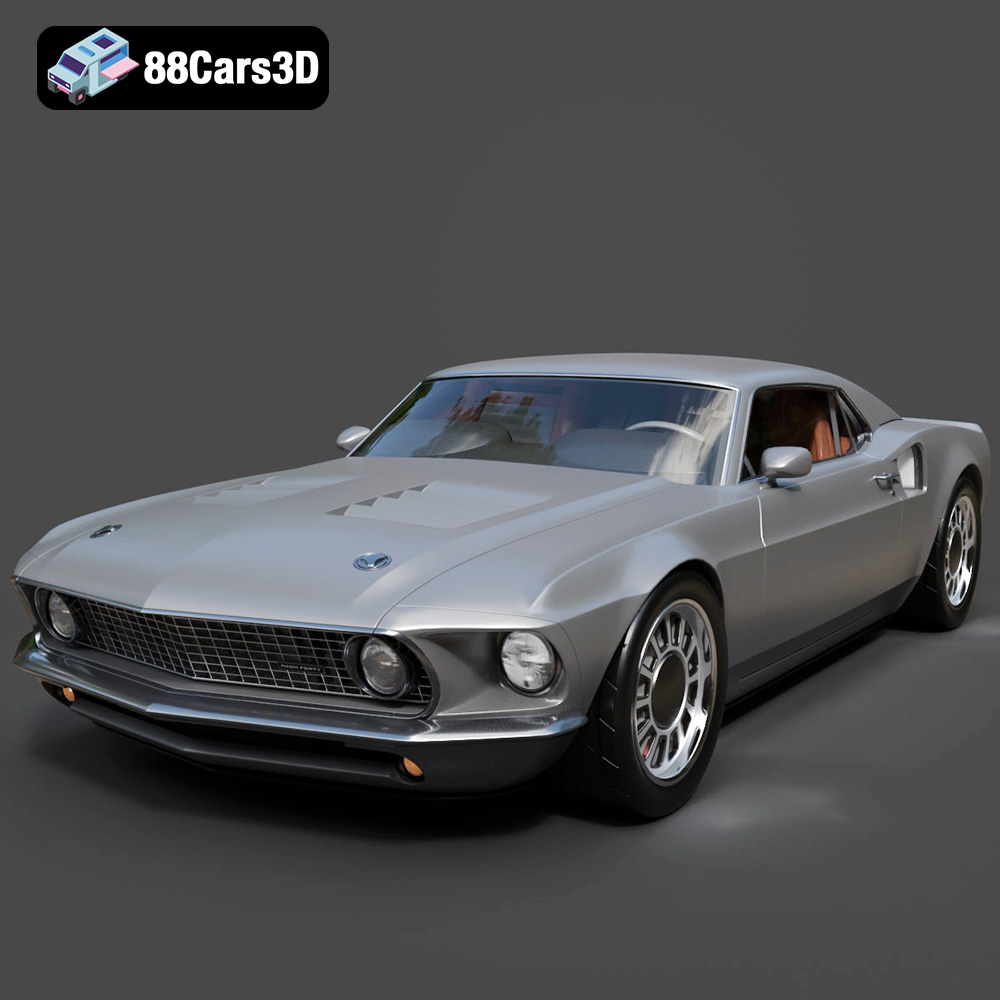
At the intersection of classic automotive passion and cutting-edge digital craftsmanship lies a truly remarkable creation: the Ford Mustang Mach 40. This breathtaking custom restomod flawlessly merges the aggressive, iconic aesthetics of a 1969 Mustang Mach 1 with the revolutionary mid-engine supercar layout of the legendary Ford GT40. It’s a vehicle that sparks conversation and inspires awe, and its digital counterpart, available on 88cars3d.com, is no less impressive. This 3D model captures every dramatic curve, every custom detail, and every ounce of its powerful presence, making it an indispensable asset for professionals across multiple industries.
The allure of custom vehicles like the Ford Mustang Mach 40 lies in their ability to reimagine automotive history with modern engineering. This philosophy extends directly into 3D modeling. Creating a digital twin of such a specialized vehicle requires an understanding of both its historical lineage and its contemporary modifications. The digital model must reflect the dramatically widened stance, the massive supercharged 5.4-liter V8 engine visibly mounted behind the cockpit, and the sleek, retro-futuristic styling cues that define the physical car. Artists need to pay homage to the original Mach 1’s shark-nose front fascia and classic lighting while accurately representing the custom dual exhaust system and performance modifications that make the Mach 40 a modern marvel.
For professionals in game development, architectural visualization, advertising, and AR/VR experiences, premium 3D car models are not just an advantage; they are a necessity. These assets serve as the backbone for creating immersive environments, engaging marketing content, and realistic simulations. A model like the Ford Mustang Mach 40 offers unparalleled detail and optimization, ensuring that projects can achieve top-tier visual fidelity without compromising on performance. Whether for cinematic renders, real-time racing simulations, or interactive virtual showrooms, the quality of the 3D model directly impacts the final product’s perceived value and the user’s experience. It’s about leveraging digital assets to tell compelling stories and create believable worlds.
The versatility of a high-quality 3D asset like the Ford Mustang Mach 40 is significantly amplified by its availability in a wide array of file formats. Each format serves a distinct purpose, catering to specific software, engines, or end-use applications. Understanding these formats is crucial for any professional working with 3D car models, ensuring seamless integration into diverse workflows and maximizing the utility of purchased assets from marketplaces like 88cars3d.com.
The .blend format is Blender’s native file type, encapsulating an entire scene with all its data, including meshes, materials, textures, animations, cameras, lighting, and even modifiers and physics simulations. For artists who primarily work within Blender, the .blend file provides the most comprehensive and editable version of the Ford Mustang Mach 40 3D model. It allows for full control over every aspect of the model, from tweaking PBR material properties to adjusting topology or modifying lighting setups. This format is ideal for deep customization, animation rigging, and further development within the Blender ecosystem.
.fbx (Filmbox) is arguably the most widely adopted proprietary file format for 3D content interchange, especially prevalent in game development (Unreal Engine, Unity) and animation pipelines. Its strength lies in its ability to store a wide range of 3D data, including mesh geometry, materials, textures, animations, and rigs, in a relatively efficient manner. For assets like the game-ready Ford Mustang Mach 40, .fbx is often the go-to for exporting to real-time engines, ensuring that pivots, hierarchical structures, and basic material assignments translate correctly. Its robust nature makes it an excellent choice for transferring assets between different DCC (Digital Content Creation) software and game engines.
The .obj (Wavefront Object) format is a universal standard for storing 3D geometry. While it primarily stores mesh data (vertices, normals, UV coordinates, and faces), it can reference external material (.mtl) files for color and basic texture information. .obj is highly compatible across almost all 3D software applications, making it an excellent fallback or starting point for cross-software workflows. Although it doesn’t support advanced features like animation or complex material graphs directly, its widespread support ensures that the raw geometric data of the Ford Mustang Mach 40 can be accessed and manipulated in virtually any 3D program.
.glb (GL Transmission Format Binary) is a relatively newer format optimized for efficient transmission and loading of 3D scenes and models in web and AR/VR applications. It’s a binary version of glTF (GL Transmission Format), which means it bundles all necessary assets (geometry, materials, textures, animations) into a single, compact file. This makes .glb perfect for immersive virtual showrooms, online configurators, and mobile AR experiences where quick loading times and broad compatibility are paramount. For showcasing the Ford Mustang Mach 40 in an interactive web viewer or an augmented reality app, .glb provides an optimal, streamlined solution.
.stl (STereoLithography) is the standard file format for 3D printing and CAD (Computer-Aided Design) software. It represents a 3D model as a series of connected triangles, defining only the surface geometry without color, texture, or material information. While this simplifies the data, it’s precisely what 3D printers need. Converting the Ford Mustang Mach 40 3D model to .stl allows hobbyists and professionals to physically materialize the digital design, creating intricate display models. Its simplicity ensures broad compatibility with slicing software, enabling precise physical replication for scale models or rapid prototyping.
The .ply (Polygon File Format or Stanford Triangle Format) is a file format for storing 3D data from 3D scanners. It can store not only the geometry but also properties like color, transparency, texture coordinates, and even reliability information for each vertex and face. While less common for general 3D asset exchange compared to .fbx or .obj, .ply is valuable in scientific, engineering, and CAD applications where precise mesh data, potentially with additional attribute information, is critical. For analytical purposes or integrating the Ford Mustang Mach 40 into a precise engineering simulation, .ply can offer a robust and detailed representation.
The inclusion of a native .unreal asset file means the Ford Mustang Mach 40 3D model is provided in a format directly compatible and often optimized for Unreal Engine. This typically implies that the asset is already set up with proper materials, textures, collision meshes, LODs (Levels of Detail), and potentially even basic physics assets, saving significant setup time for game developers. This level of direct engine integration ensures that the model can be dropped into an Unreal project with minimal fuss, ready for real-time rendering, gameplay, or cinematic sequences, leveraging Unreal Engine’s powerful rendering capabilities instantly.
Finally, the .max file format is the native project file for Autodesk 3ds Max, a leading software in architectural visualization, animation, and game asset creation. Similar to .blend for Blender, a .max file provides the most complete and editable version of the Ford Mustang Mach 40 model within the 3ds Max environment. It includes all scene data, modifiers, animation setups, and rendering settings, giving 3ds Max users full flexibility for complex animations, high-resolution renders, and further customization of the model’s components and materials. This is ideal for studios heavily invested in the Autodesk ecosystem.
The Ford Mustang Mach 40 3D model from 88cars3d.com is a testament to meticulous digital craftsmanship. It goes beyond mere aesthetics, offering a robust and flexible asset designed for a multitude of professional applications. Its detailed specifications and carefully considered construction make it a powerhouse for any creative project.
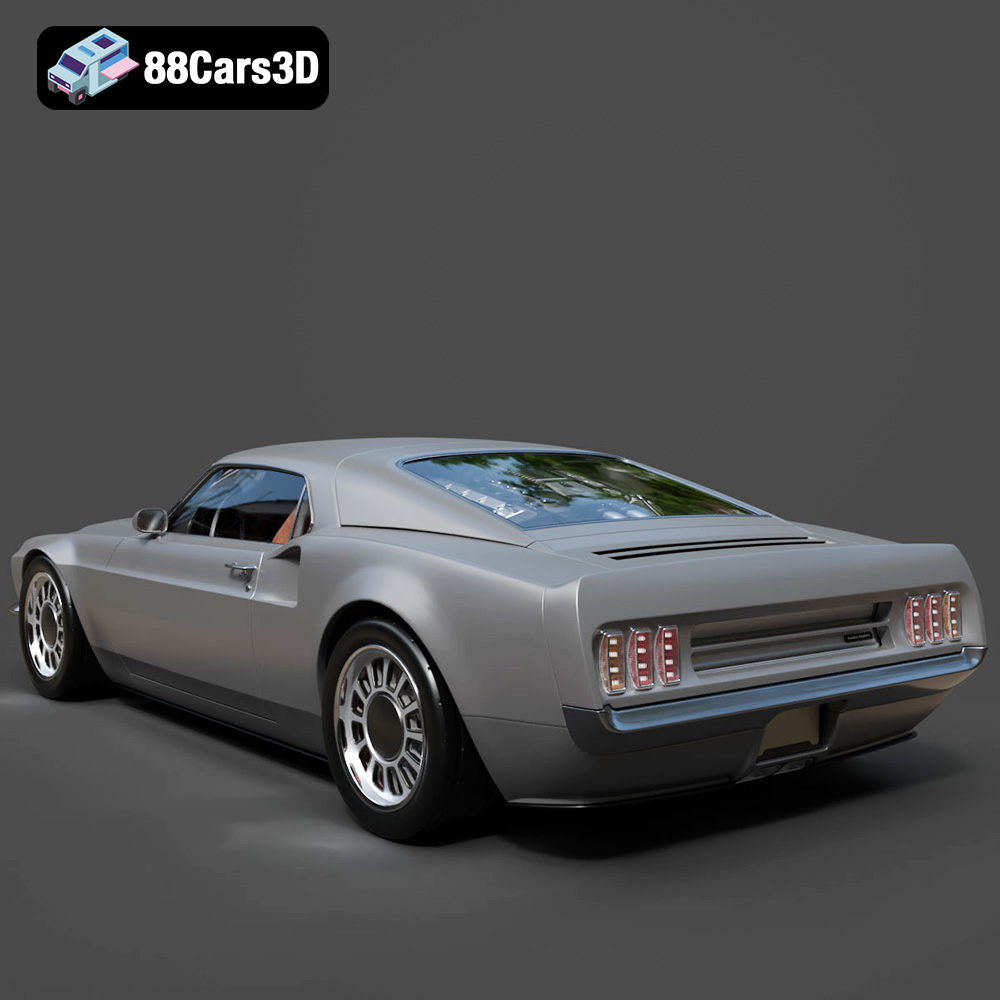
The essence of the Mach 40 lies in its bold synthesis of two automotive legends. The 3D model accurately captures the vehicle’s unique custom frame geometry and proportions, which are crucial for its dramatic visual impact. From the authentic retro-styled headlights and sequential taillights that evoke the Mach 1’s heritage, to the aggressively wide custom alloy wheels and low-profile performance tires, every exterior detail has been faithfully recreated. The exposed, supercharged mid-mounted 5.4-liter V8 engine block is a central feature, rendered with impressive detail, as is the custom performance dual exhaust system, both contributing to the model’s visual dominance. Even the cockpit and interior features like custom bucket racing seats with harnesses, the classic 3-spoke retro sport steering wheel, and GT40-inspired analog instrument cluster are meticulously modeled, perfect for first-person perspectives in games or detailed interior renders.
Technical specifications are paramount for professional 3D car models. The Ford Mustang Mach 40 3D model boasts an optimized triangle count of approximately 250,000. This “game-ready” polycount strikes an excellent balance, providing exceptional visual fidelity suitable for cinematic close-ups while remaining lightweight enough for real-time engines like Unreal and Unity. This careful optimization means developers don’t have to sacrifice detail for performance. Furthermore, the model features accurate PBR (Physically Based Rendering) materials, ensuring flawless body reflections, realistic paint finishes, and distinct separation of mechanical components under any lighting condition. The real-world scale accuracy, based on the actual vehicle chassis, is crucial for seamless integration into existing scenes and for maintaining visual consistency across projects.
A static model can only go so far. For dynamic automotive visualizations, game physics, or cinematic sequences, an asset needs to be built for motion. This Mach 40 model excels in this area, featuring separate wheels, suspension, and steering components. Crucially, it has a proper pivot setup for steering, wheel rotation, and suspension travel. This means animators can quickly and easily create realistic vehicle movements, from sharp turns and bumpy rides to full-blown drifts, without needing to spend valuable time rigging the basic components. This pre-rigged structure is a significant advantage for accelerating production workflows in game development and animation studios.
The true value of a premium 3D asset like the Ford Mustang Mach 40 lies in its seamless integration into diverse professional workflows. It’s designed to be a time-saving, quality-enhancing tool for artists, designers, and developers.
In the realm of game development, the Ford Mustang Mach 40 3D model is an ideal game asset. Its optimized triangle count (~250,000) makes it perfectly suited for real-time rendering, ensuring smooth performance in open-world racing games, high-octane action titles, and realistic driving simulators. Developers can leverage its accurate PBR materials for stunning visual fidelity, bringing vibrant reflections and realistic surface interactions to their virtual environments. The pre-separated and properly pivoted components for wheels, suspension, and steering drastically reduce the rigging time, allowing physics engines to interact realistically with the model from the outset. Imagine this custom Mustang Mach 40 tearing through a photorealistic track in Unreal Engine, or serving as a coveted unlockable vehicle in an expansive open-world title – its quality elevates the entire gaming experience.
For advertising agencies, automotive design studios, and visualization artists, the Ford Mustang Mach 40 3D model is a dream asset for high-fidelity automotive rendering. Its meticulous topology and accurate representation of the custom frame, engine, and interior details allow for breathtaking studio renders and dynamic lifestyle scenes. Using software like 3ds Max or Blender with advanced renderers such as V-Ray, Corona, or Cycles, artists can create photorealistic images and animations for brand campaigns, product launches, or architectural visualizations where a premium vehicle is required to set the scene. The model’s distinct separation of mechanical components also allows for exploded views or detailed cutaways, showcasing the engineering marvel that is the Mach 40 in stunning clarity.
The applications extend beyond traditional screen-based media. For AR/VR experiences, the optimized geometry and included .glb format make the Ford Mustang Mach 40 perfect for immersive virtual showrooms, interactive configurators, and mobile augmented reality apps. Users can explore the vehicle in a 360-degree environment, customize its paint, or even place it realistically in their own driveways via AR. Furthermore, for enthusiasts and professionals in manufacturing or design, the model is convertible to the .stl format, opening doors to 3D printing. Hobbyists can produce display-scale models (recommended scales: 1:12, 1:18, 1:24) with fine details, while designers can use it for rapid prototyping or physical mock-ups, bringing a tangible dimension to their digital projects. The detailed 3D print settings provided with the model ensure successful physical reproduction, from layer height recommendations to support requirements.
A truly versatile 3D model offers more than just stunning visuals; it provides a canvas for creative customization and optimization. The Ford Mustang Mach 40 3D model from 88cars3d.com is built with this flexibility in mind, empowering users to tailor it to their specific project needs.
The beauty of working with a premium 3D model is the ability to infuse it with your own creative vision. For the Ford Mustang Mach 40, customization options are extensive. Artists can easily change body colors, experimenting with a spectrum of finishes from classic factory colors to bespoke metallic or matte looks. Tire textures can be modified to reflect different environments—imagine rugged off-road variants for a rally game, or sleek street performance tires for a track-day scene. Adjusting material finishes on various components, such as the chrome accents, interior leather, or engine block, allows for fine-tuning the vehicle’s character. Furthermore, adapting the lighting setup for different environments—a bright sunlit desert, a moody urban night, or a pristine studio—can dramatically alter the vehicle’s presentation, allowing it to seamlessly integrate into any scene or narrative.
Integrating a complex 3D car model into real-time engines like Unreal or Unity requires more than just importing the .fbx file. For optimal performance, techniques such as creating LODs (Levels of Detail) are crucial. The Ford Mustang Mach 40’s optimized base mesh provides an excellent starting point for generating lower-polygon versions that swap in at greater distances, maintaining performance without noticeable visual degradation. Setting up proper collision meshes, often simplified versions of the main mesh, ensures realistic physical interactions within the game world. Texture atlasing and packing can further optimize material calls, while advanced material graphs in engines can leverage the PBR textures for even greater realism, including wear and tear, dirt accumulation, or dynamic paint effects. Leveraging the included .unreal file specifically streamlines this process for Unreal Engine users, as much of this setup may already be configured.
Converting the Ford Mustang Mach 40 for 3D printing demands attention to specific details to ensure a successful physical output. The provided 3D print settings are invaluable. For instance, using resin printing (SLA/DLP) is highly recommended for achieving the fine details of the Mach 40’s body lines, engine components, and interior. Layer height settings (0.04–0.12 mm) are critical for surface smoothness. Considerations for wall thickness (1.2–2.0 mm) and infill (20–30%) affect structural integrity and material usage. Strategic support placement is essential for delicate parts like the exhaust system, mirrors, and thin chassis elements, and print orientation (e.g., printing the frame angled) can significantly reduce the need for supports and enhance overall strength. Post-processing, including sanding, priming, and applying authentic factory colors with metallic finishes, is where the printed model truly comes to life, mirroring the digital asset’s stunning appearance.
The decision to invest in premium 3D assets, particularly for complex subjects like custom automobiles, has a profound impact on the success and efficiency of creative projects. The Ford Mustang Mach 40 3D model exemplifies how a high-quality asset can elevate an entire production.
Realism is often the benchmark for quality in game development, visualization, and AR/VR. A highly detailed 3D car model with accurate proportions, meticulously crafted PBR materials, and realistic lighting interactions directly contributes to a project’s immersive quality. When players or viewers encounter the Ford Mustang Mach 40 in a digital environment, its visual fidelity convinces them of its presence, drawing them deeper into the experience. The flawless body reflections, the intricate engine details, and the realistic interior elevate the perception of quality, making the digital world feel more tangible and believable. This level of realism is crucial for captivating audiences and delivering truly memorable digital experiences.
Creating a highly detailed, game-ready 3D car model like the Ford Mustang Mach 40 from scratch is an incredibly time-consuming and resource-intensive endeavor. It requires specialized skills in modeling, UV mapping, texturing, material creation, and optimization. By utilizing a pre-made, professionally crafted asset from 88cars3d.com, studios and individual artists can drastically cut down on development time and costs. The time saved can be reallocated to other critical aspects of a project, such as level design, gameplay mechanics, animation, or interactive features. This efficiency is invaluable for meeting tight deadlines and managing budgets, allowing creators to focus on innovation rather than recreating fundamental assets.
For aspiring and established 3D artists, having access to premium assets can significantly enhance their professional portfolios. Demonstrating the ability to integrate and customize high-quality models into stunning renders, animations, or interactive demos showcases an artist’s skill and understanding of industry-standard workflows. Utilizing a distinctive and visually appealing model like the Ford Mustang Mach 40 provides a unique subject matter that captures attention. It allows artists to focus on demonstrating their rendering expertise, lighting skills, and compositing abilities, rather than being bogged down by the complexities of modeling the primary asset itself. This can be a significant boost for career development and securing future projects.
The digital automotive landscape is constantly evolving, driven by an insatiable demand for realism, immersion, and interactive experiences. At the heart of this evolution are meticulously crafted 3D car models that serve as the foundation for everything from blockbuster video games to cutting-edge AR/VR applications and captivating marketing campaigns. The Ford Mustang Mach 40 3D model stands as a prime example of this digital excellence, offering an unparalleled blend of iconic design, technical optimization, and incredible versatility.
With its game-ready polycount, accurate PBR materials, detailed interior, and animation-friendly components, this model empowers professionals to achieve stunning results across various platforms. Its availability in a comprehensive suite of file formats—from .blend and .max for full editable control, to .fbx and .unreal for seamless game engine integration, and .glb for web/AR/VR, even .stl for tangible 3D prints—ensures it fits effortlessly into virtually any pipeline. Whether you’re a game developer seeking the ultimate racing asset, a visualization artist aiming for photorealistic renders, or a designer exploring the potential of 3D printing, the Ford Mustang Mach 40 offers a robust and inspiring solution.
Investing in such high-quality 3D car models from trusted sources like 88cars3d.com is not just about acquiring an asset; it’s about acquiring efficiency, elevating quality, and pushing the boundaries of what’s possible in digital creation. The Ford Mustang Mach 40 is more than just a model; it’s a gateway to bringing your most ambitious automotive visions to life.
The Ford Mustang Mach 40 is a breathtaking custom restomod that perfectly marries the classic, aggressive aesthetics of a 1969 Mustang Mach 1 with the mid-engine supercar layout of the legendary Ford GT40. This iconic vehicle features a dramatically widened stance, a massive supercharged 5.4-liter V8 engine visibly mounted behind the cockpit, and sleek, retro-futuristic styling cues. From its signature shark-nose front fascia and classic lighting to its custom dual exhaust system, the Mach 40 represents the absolute pinnacle of custom automotive engineering and visual dominance. This highly detailed 3D model boasts meticulous topology with an optimized triangle count (~250,000), making it exceptionally game-ready without compromising on top-tier visual fidelity. Crafted for maximum performance and realism, it features accurate PBR materials, flawless body reflections, and distinct separation of mechanical components. It is the perfect digital asset for game development, AR/VR experiences, high-resolution animations, and professional automotive visualizations. Perfect for open-world racing games, virtual automotive showrooms, cinematic car renders, and high-octane action animations.
$19.99
.blend
.fbx
.ford
.glb
.max
.obj
.ply
.rendering
.restomod
.stl
.unreal
car-3d-model
custom-car
game asset
game-ready
low-poly
muscle-car
mustang-mach-40
optimized
VR/AR