Get 20% OFF All Premium 3D & STL Models!

In the rapidly evolving world of 3D visualization, the demand for high-fidelity, meticulously crafted assets is paramount. Whether for blockbuster game titles, cutting-edge augmented reality experiences, immersive virtual configurators, or breathtaking architectural renderings, a premium 3D model can elevate a project from ordinary to extraordinary. Nowhere is this more evident than in the automotive sector, where precision and aesthetic appeal converge. Today, we delve into the technical brilliance of a standout asset: the Mercedes-Benz GLB-Class Mk1 AMG Line 2019 3D Model, a versatile and robust offering designed to meet the rigorous demands of professional workflows.
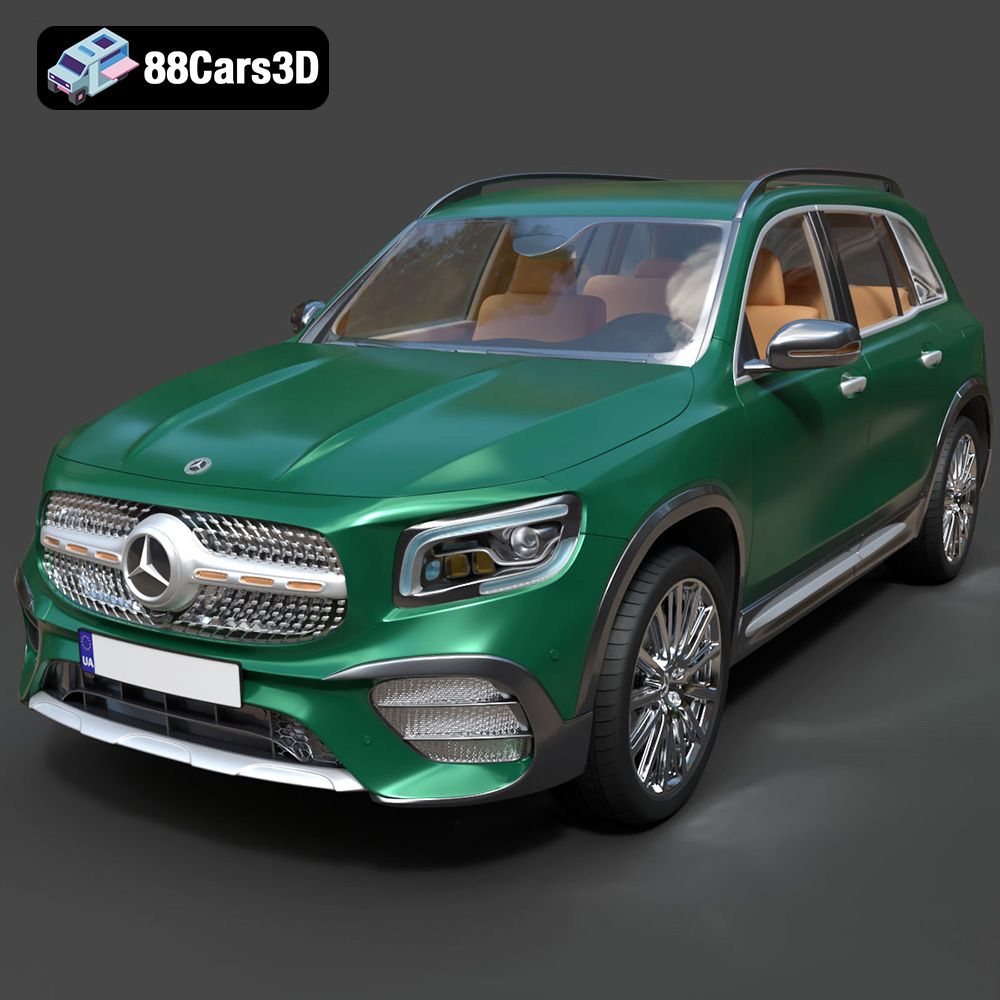
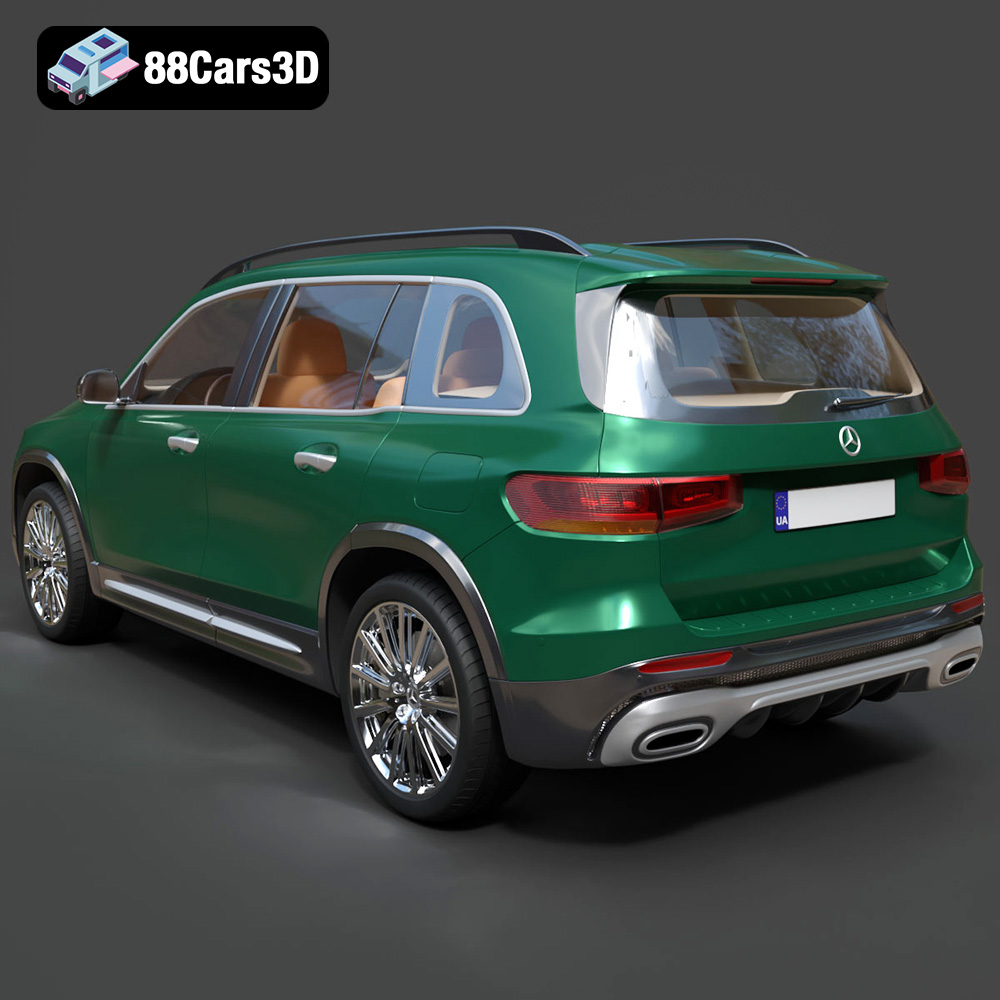
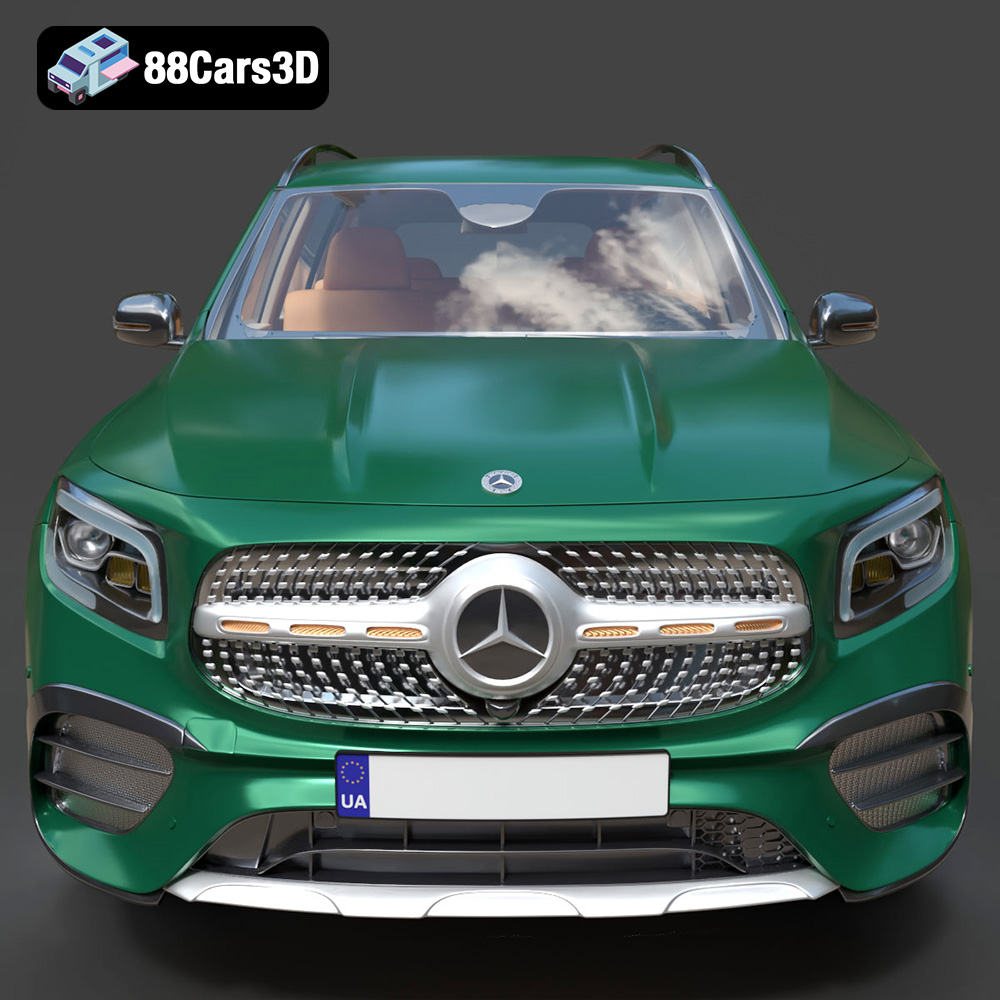
This particular model, available on 88cars3d.com, encapsulates the rugged versatility and premium luxury that defines the GLB-Class, enhanced by the distinctive AMG Line styling. From its commanding stance and signature diamond radiator grille to the sporty front aprons and prominent dual exhaust system, every aspect has been digitally replicated with stunning accuracy. More than just a visual treat, this 3D model is a technical marvel, optimized for diverse applications ranging from real-time game engines to high-resolution offline rendering, making it an indispensable tool for designers, developers, and artists.
Creating a truly exceptional 3D car model is a delicate balance between artistic vision and stringent technical engineering. It requires an understanding of vehicle design, material science, and computational efficiency. The goal is to produce an asset that not only looks photorealistic but also performs flawlessly within its intended environment, whether that’s a cinematic sequence or a dynamic game engine.
Realism in 3D automotive models hinges on several critical factors. Accurate frame geometry and proportions, based on actual vehicle chassis data, form the bedrock. For the Mercedes-Benz GLB-Class Mk1 AMG Line 2019 3D Model, this means precisely replicated lines, curves, and panel gaps that mirror its real-world counterpart. Beyond the basic shape, intricate exterior features demand meticulous attention. This model boasts detailed engine block and undercarriage components, aggressive AMG specific dual exhaust systems and rear diffusers, and high-detail LED High Performance headlamps that genuinely capture the sophisticated lighting arrays of modern vehicles. Even the authentic AMG 5-twin-spoke light-alloy wheels and performance tires are faithfully recreated, along with sport-tuned suspension detailing, all contributing to an uncompromised visual experience.
Furthermore, the application of Physically Based Rendering (PBR) texturing is crucial for achieving photographic realism. PBR materials accurately simulate how light interacts with surfaces, ensuring that the model looks correct under various lighting conditions, just like a real car. This includes nuanced reflections, accurate metallic sheen, and realistic roughness, vital for high-end automotive rendering.
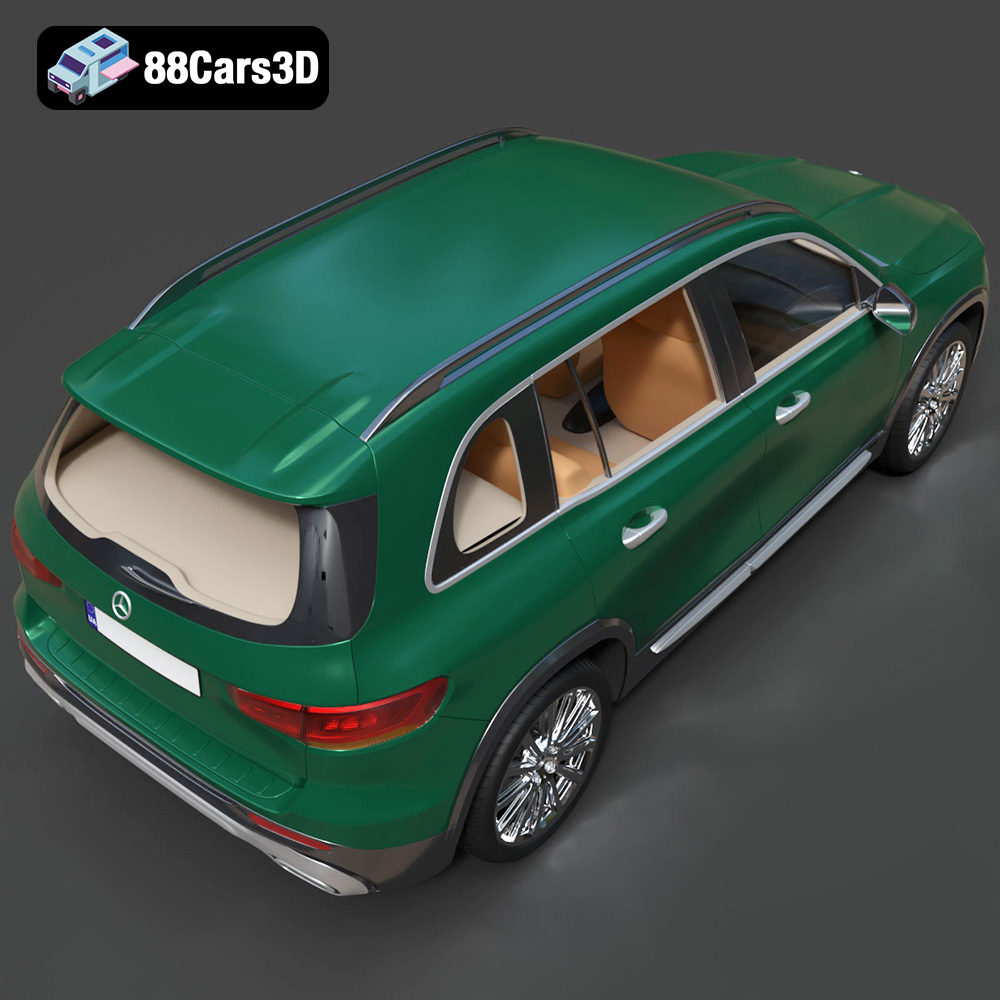
While the exterior often grabs initial attention, a high-quality interior is what truly grounds a 3D car model in realism, especially for applications like virtual showrooms, configurators, or first-person driving games. The Mercedes-Benz GLB-Class model excels here, featuring detailed sport seating with intricate stitching and contouring. The Nappa leather multifunction sports steering wheel, complete with precise switchgear, feels authentic, while the accurate MBUX dual-screen digital instrument cluster and infotainment system are fully rendered, capturing the essence of the vehicle’s cutting-edge technology. The central console, air vents, and pedals are all meticulously detailed, providing a complete and immersive cockpit experience. This level of interior fidelity is especially important for virtual reality (VR) simulations where users can directly interact with or experience the vehicle from a first-person perspective, making the digital environment feel tangible and believable.
The versatility of a 3D model often lies in the range of file formats it supports. Each format serves specific purposes, catering to different software ecosystems, project requirements, and delivery platforms. Understanding these formats is crucial for any professional working with 3D assets, allowing for seamless integration and optimal performance. The Mercedes-Benz GLB-Class Mk1 AMG Line 2019 3D Model offers a comprehensive suite of formats, ensuring maximum compatibility across various pipelines.
The
Developed by Autodesk, the
The
The
The
The
While ‘.unreal’ isn’t a single file extension in the same vein as .fbx or .obj, it represents an asset that has been specifically prepared and optimized for import and use within Unreal Engine. This typically means an .fbx file that has been correctly exported with compatible materials and textures, often packaged within an Unreal Engine project structure, or even as a pre-imported asset. Such assets are meticulously set up with proper scaling, collision meshes (if required), and PBR material graphs that translate perfectly into Unreal’s rendering pipeline. This ensures a drag-and-drop experience for developers, minimizing setup time and maximizing performance for the Mercedes-Benz GLB-Class in real-time environments.
The
Integrating a high-quality 3D car model like the Mercedes-Benz GLB-Class Mk1 AMG Line 2019 into a professional workflow requires strategic planning and an understanding of different software ecosystems. The goal is to leverage the model’s inherent quality to achieve stunning results efficiently.
For many automotive visualization studios, 3ds Max remains a cornerstone. Its robust modeling, animation, and rendering capabilities, especially when paired with powerful renderers like V-Ray or Corona, make it ideal for creating photorealistic imagery and sophisticated animations. The included .max file for the GLB-Class model means artists can directly open the scene, ready for immediate integration. They can easily adjust lighting, environment settings, and camera angles to craft bespoke marketing materials, cinematic sequences, or detailed product showcases. The separate wheels, suspension, and steering components facilitate complex vehicle animations, allowing for realistic driving simulations or dynamic product reveals.
Blender has emerged as a formidable contender in the 3D space, offering a comprehensive suite of tools for modeling, sculpting, animation, rendering, and even basic game development. Its open-source nature and powerful feature set make it a favorite among indie developers and artists seeking a flexible and cost-effective solution. With the .blend file of the Mercedes-Benz GLB-Class, Blender users gain full access to the model’s structure and materials. This allows for extensive customization – from altering body colors and material finishes to adapting the model for specific game logic or stylized rendering outputs. The PBR textures provided are fully compatible, ensuring seamless material setup within Blender’s Cycles or Eevee render engines.
Unreal Engine stands at the forefront of real-time rendering, powering everything from AAA games to architectural visualizations and virtual production. The Mercedes-Benz GLB-Class model is explicitly designed as a game-ready asset, optimized for engines like Unreal. The .fbx and .unreal formats are critical here. The .fbx provides a robust transfer of geometry, PBR materials, and animation pivots, allowing developers to import the car with minimal fuss. The ‘engine-ready’ nature, indicated by the .unreal file or optimization, means the asset is often prepared with correct scale, efficient UVs, and potentially even collision meshes, accelerating development. Developers can quickly integrate the GLB-Class into virtual environments, utilize Unreal’s advanced lighting and reflection systems, and implement realistic vehicle physics for an engaging interactive experience.
The success of a 3D car model in a real-time application like a video game hinges on a delicate balance: achieving visual fidelity without sacrificing performance. This is where the term “game-ready” becomes critical, and the Mercedes-Benz GLB-Class Mk1 AMG Line 2019 3D Model truly shines.
The key to real-time optimization lies in intelligent polycount management and efficient texturing. The GLB-Class model boasts approximately 250,000 triangles. This polycount strikes an impeccable balance, providing enough geometric detail to maintain exceptional visual realism – capturing those distinct curves and sharp lines of the AMG Line – while remaining performant enough for modern game engines like Unreal and Unity. A higher polycount would burden performance, while a lower one would compromise visual quality. This optimized topology ensures smooth frame rates, even in complex scenes with multiple vehicles.
Beyond geometry, PBR texturing plays a crucial role. The model utilizes PBR workflows, ensuring that its materials react realistically to dynamic lighting within a game engine. Efficient UV mapping is also paramount, preventing texture stretching and allowing for optimal texture atlas packing, which further aids performance by reducing draw calls. Every surface, from the metallic paint to the intricate tire tread, is designed to look stunning without taxing the GPU excessively.
For game developers, a static model simply isn’t enough. Realistic vehicle dynamics and animations are essential for an immersive driving experience. The Mercedes-Benz GLB-Class model addresses this by having its components meticulously separated and properly pivoted. This includes individual wheels, the full suspension system, and the steering components. This crucial technical detail allows for seamless animation:
These features are not merely aesthetic; they are functional necessities for implementing physics-based vehicle systems in games, allowing for the creation of truly dynamic and responsive driving experiences. This attention to mechanical detail saves countless hours for game developers, as they don’t have to re-rig or restructure the model from scratch.
The utility of a high-quality 3D car model extends far beyond traditional screen-based rendering and gaming. Emerging technologies and specialized applications demand versatile assets capable of adapting to various physical and virtual manifestations.
Augmented Reality (AR) and Virtual Reality (VR) are transforming how we interact with digital content, offering immersive experiences that blur the lines between the real and virtual. The Mercedes-Benz GLB-Class model is ideally suited for these applications. Its optimized geometry and PBR materials translate beautifully into VR environments, allowing users to explore the car in a virtual showroom or even take it for a simulated drive. For AR experiences, especially on mobile devices, the efficient .glb format is a game-changer. Users can project the GLB-Class into their real-world environment via their smartphone camera, interact with it, change colors, and even walk around it as if it were truly there. This is invaluable for virtual showrooms, interactive product configurators, and engaging marketing campaigns that leverage the power of immersive technology.
The ability to transform a digital model into a tangible object through 3D printing is a testament to the model’s underlying geometric integrity. While primarily designed for digital rendering, the Mercedes-Benz GLB-Class model is convertible to the .stl format, making it suitable for 3D printing hobbyists and professionals alike. The product description provides precise 3D print settings, recommending scales like 1:12, 1:18, or 1:24, and suggesting resin printing for optimal detail retention. It also outlines critical parameters such as layer height, wall thickness, infill, and the necessity of supports for intricate parts. The advice on print orientation and post-processing (sanding, primer, authentic factory colors) further empowers users to create stunning physical replicas, truly bridging the gap between the digital and physical worlds.
Even with a highly detailed base model, the ability to customize and adapt it to specific project requirements is crucial. The Mercedes-Benz GLB-Class 3D model offers significant flexibility. Users can easily modify body colors, choosing from authentic Mercedes-Benz finishes like Mountain Grey or Cosmos Black, or applying custom hues to match a unique brand identity. Tire textures can be swapped to represent different conditions, from sleek street variants to rugged winter treads. Material finishes can be adjusted, moving between matte, gloss, metallic, or integrating carbon fiber accents for a sportier look. Furthermore, the model’s robust material setup allows for easy adaptation of lighting scenarios, enabling the creation of realistic daytime, night-time, or studio lighting environments, ensuring the car always looks its best, regardless of the scene.
In a saturated market of 3D assets, discerning professionals understand the invaluable difference that a premium, high-quality model makes. Sourcing exceptional assets from reputable marketplaces is not just a convenience; it’s an investment in the efficiency and ultimate success of a project. 88cars3d.com stands out as a marketplace dedicated to providing precisely such high-caliber 3D car models.
When you choose a 3D model from 88cars3d.com, you are opting for a curated selection of assets that meet stringent quality standards. This means optimized topology, accurate PBR texturing, real-world scale, and a comprehensive range of file formats to suit virtually any pipeline. The Mercedes-Benz GLB-Class Mk1 AMG Line 2019 3D Model is a prime example of this commitment to excellence. Instead of spending valuable time on modeling complex vehicles from scratch, artists and developers can instantly access a production-ready asset, allowing them to focus on creative direction, animation, and rendering.
The availability of multiple file formats – .blend, .fbx, .obj, .glb, .stl, .ply, .unreal, and .max – eliminates compatibility headaches and ensures that the model can be seamlessly integrated into diverse software environments, from industry-standard DCC applications to cutting-edge real-time engines. This versatility is a hallmark of the assets offered on 88cars3d.com.
The true cost of a 3D asset isn’t just its purchase price; it’s the time saved, the quality achieved, and the consistency it brings to a project. A professionally crafted 3D model like the Mercedes-Benz GLB-Class minimizes the risk of technical issues, ensures visual consistency, and provides a solid foundation for any automotive visualization, game development, or AR/VR initiative. It’s an investment that pays dividends in streamlined workflows, superior end results, and the ability to meet demanding deadlines with confidence. By choosing premium 3D car models, you are equipping your team with the tools necessary to produce world-class content.
The Mercedes-Benz GLB-Class Mk1 AMG Line 2019 3D Model is a testament to the power of meticulously crafted digital assets in modern creative pipelines. Its detailed exterior and interior, combined with optimized geometry and versatile file format support, make it an exceptional choice for a multitude of applications – from captivating automotive rendering and immersive game assets to innovative AR/VR experiences and even tangible 3D prints. Whether you’re a seasoned professional or an aspiring artist, this model provides the precision, realism, and flexibility needed to bring your automotive visions to life.
In an industry where visual fidelity and technical efficiency are paramount, investing in high-quality 3D car models from trusted sources like 88cars3d.com is a smart strategic move. The GLB-Class model is more than just a digital replica; it’s a foundation for innovation, a catalyst for creativity, and a guarantee of professional-grade results across every project.
Experience the perfect blend of rugged versatility and premium luxury with our meticulous 3D model of the Mercedes-Benz GLB-Class (Mk1) AMG Line 2019. This compact crossover SUV stands out with its distinctive boxy silhouette, commanding stance, and aggressive AMG Line styling cues, including the signature diamond radiator grille, sporty front aprons, and prominent dual exhaust system. Designed to encapsulate the modern elegance and muscular heritage of the Mercedes-Benz brand, this digital replica captures every striking curve and sophisticated detail.
This high-fidelity, game-ready 3D model is meticulously crafted with optimized topology (~250,000 triangles), striking an impeccable balance between exceptional visual realism and efficient real-time performance. Designed for maximum versatility, the model features PBR texturing and precise structural proportions, making it a premium asset for game engines, high-end rendering, and immersive interactive media.
Perfect for urban racing games, luxury vehicle configurators, architectural visualizations, and mobile AR experiences.
.blend, .fbx, .obj, .glb, .stl, .ply, .unreal, .max
Tags:
mercedes-benz, glb-class, amg-line, 2019, compact-suv, luxury-suv, game-ready, low-poly, optimized, car-3d-model, game-asset, rendering, vr-ar, blend, fbx, obj, glb, stl, ply, unreal, maxVespa VNB 125-B 3D Model 3D Printable STL
$39.99
.2019
.blend
.fbx
.glb
.luxury suv
.max
.obj
.ply
.rendering
.stl
.unreal
amg-line
car-3d-model
compact-suv
game asset
game-ready
glb-class
low-poly
mercedes-benz
optimized
VR/AR