Get 20% OFF All Premium 3D & STL Models!

The roar of a finely tuned engine, the gleam of polished chrome, the graceful curve of a fender – these are the hallmarks of classic automotive design. Few vehicles capture this spirit with as much charm and historical significance as the Vespa GS 150. Revered as the “Gran Sport,” this iconic scooter transcended mere transportation, becoming a symbol of post-war Italian elegance, freedom, and a vibrant new lifestyle. Its aerodynamic curves, distinctive styling, and the unmistakable hum of its 150cc two-stroke engine defined a generation and continue to captivate enthusiasts worldwide.
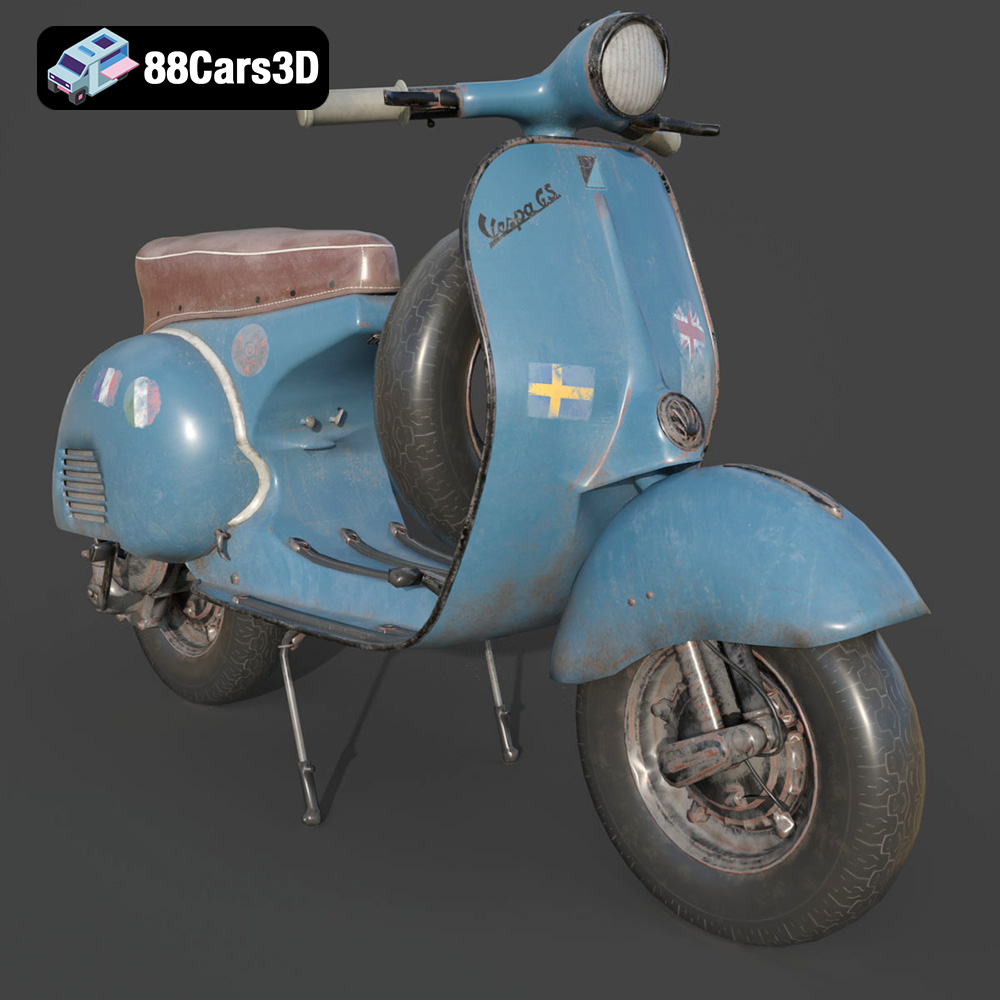
For 3D artists, game developers, automotive renderers, and AR/VR creators, bringing such a timeless piece of engineering into the digital realm presents both a challenge and an immense opportunity. It requires meticulous attention to detail, optimized geometry, and a deep understanding of how these digital assets will perform across diverse platforms. This is precisely where a high-quality 3D model like the Vespa GS 150 from 88cars3d.com proves invaluable. This model isn’t just a static representation; it’s a meticulously crafted asset, ready to integrate into your next project, whether it’s populating a detailed European street scene, starring in a retro racing game, or serving as the centerpiece of an immersive virtual showroom.
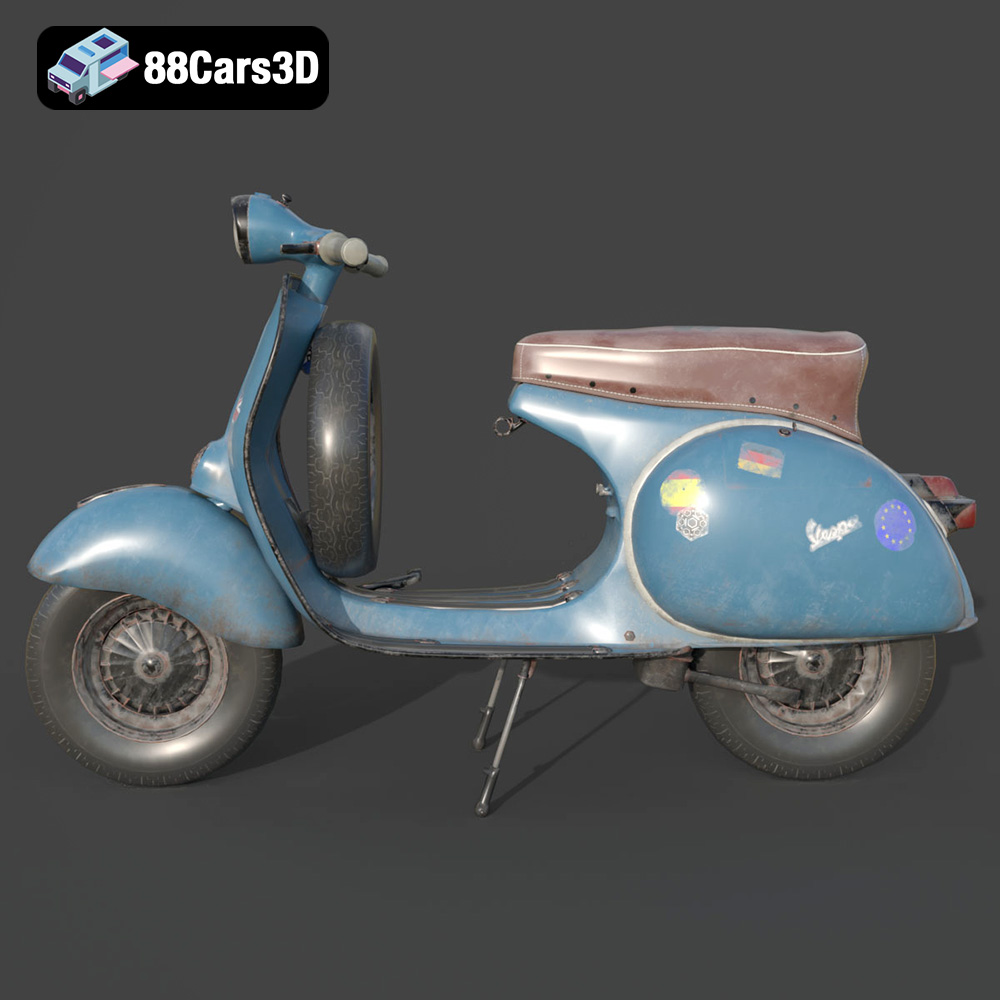
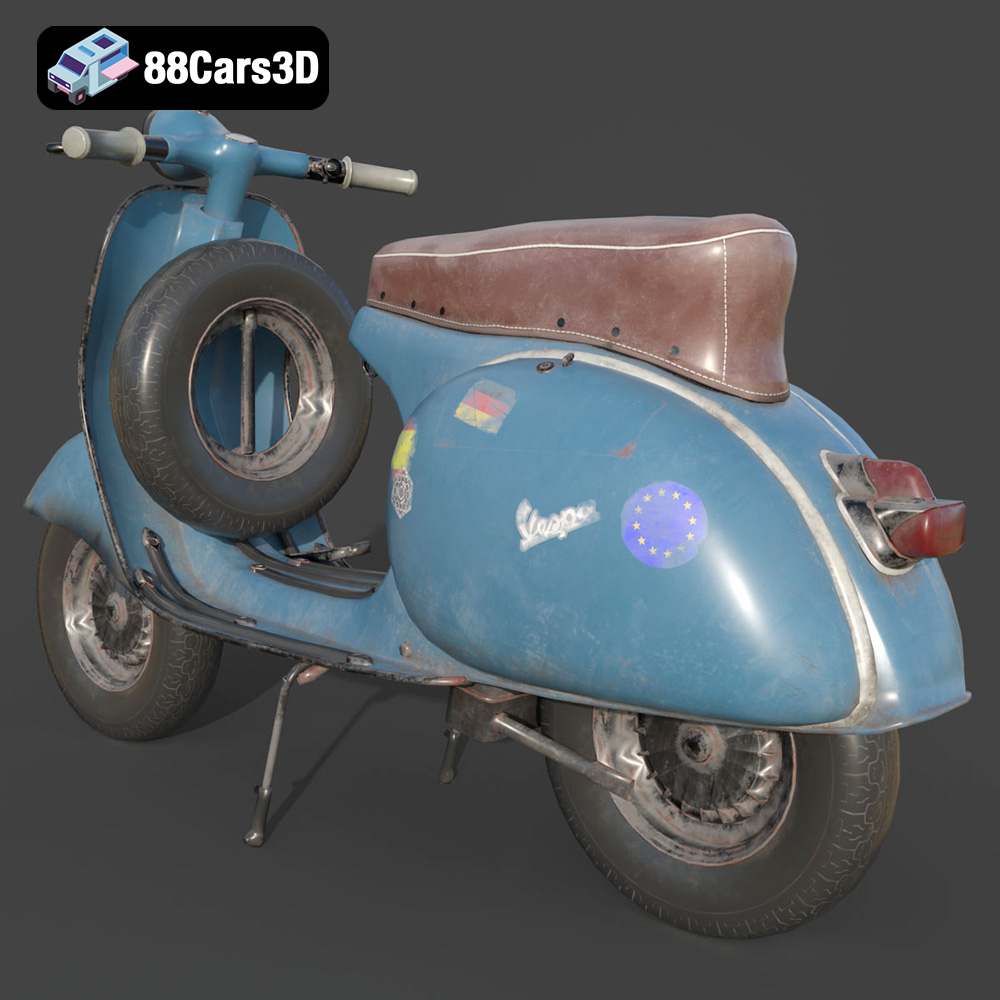
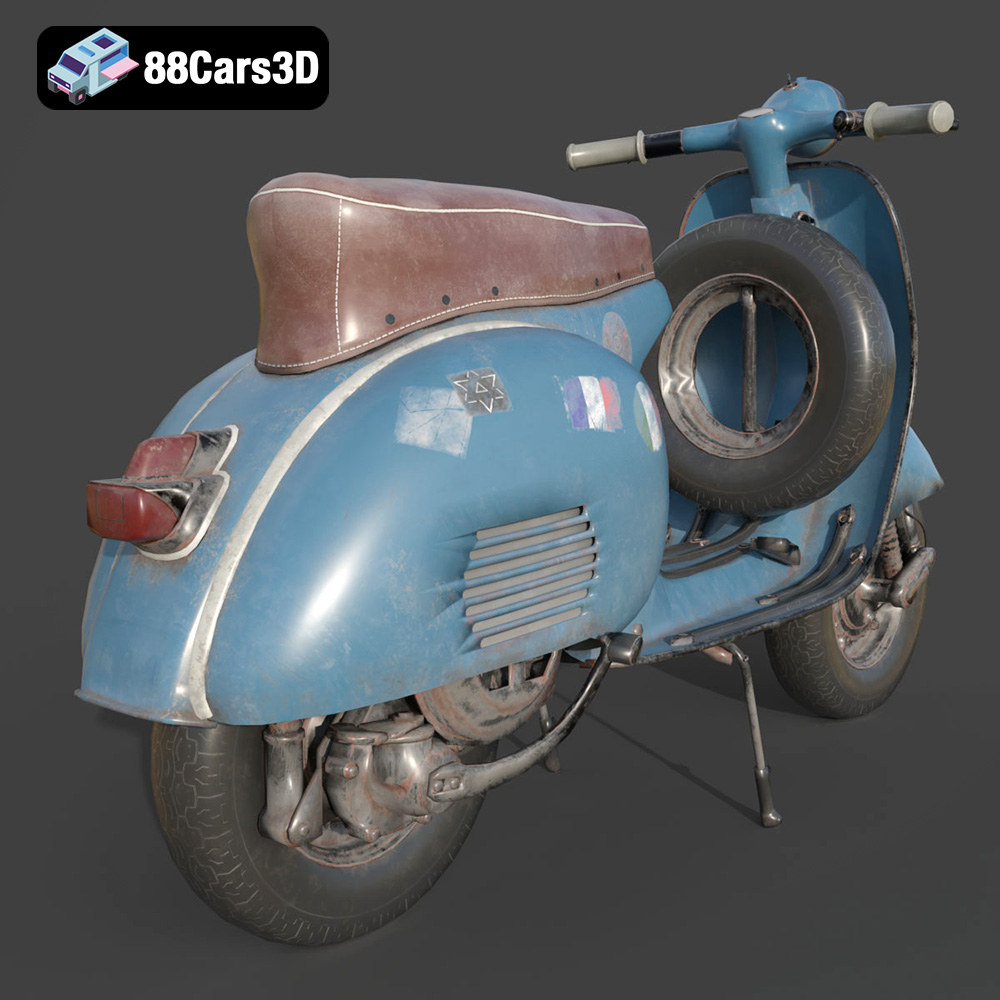
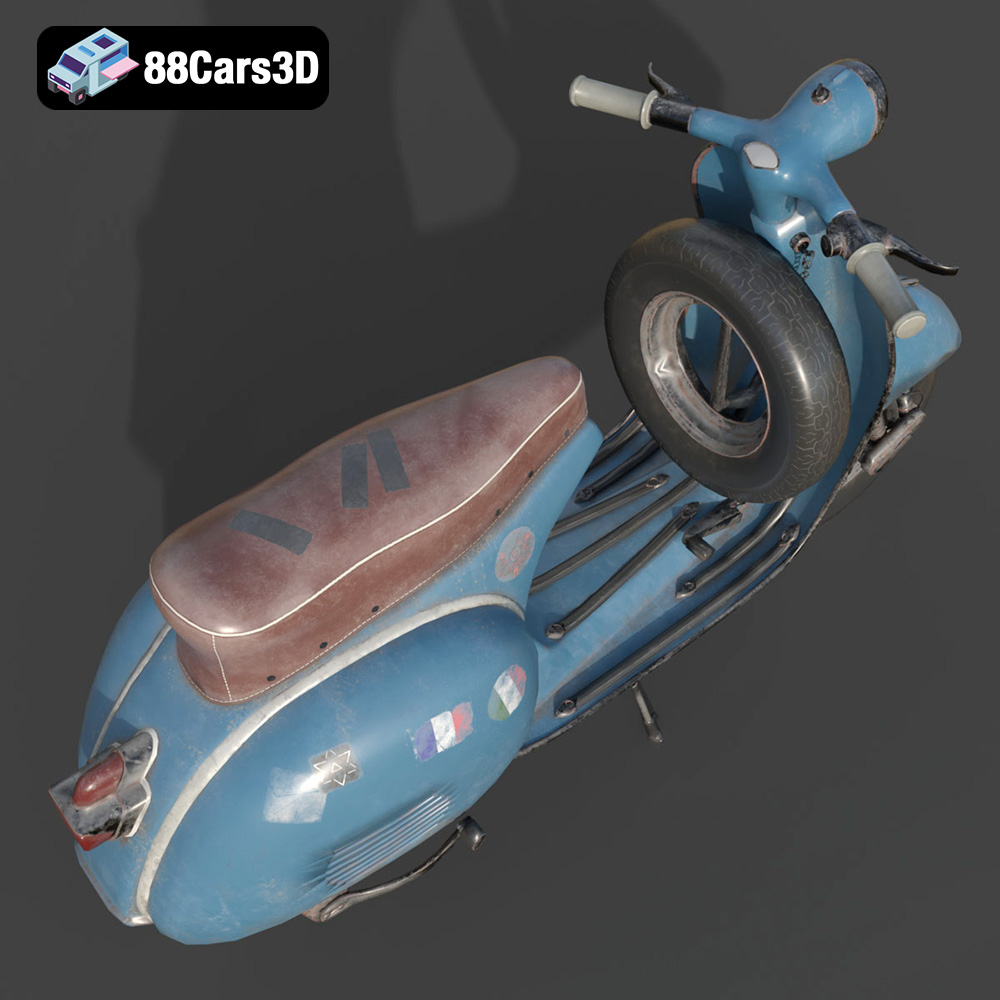
The essence of any classic vehicle lies in its unique visual and mechanical characteristics. The Vespa GS 150 is no exception, with its signature swept-back leg shield, rounded side panels, and the exposed engine block. A premium 3D model must honor these details, translating the physical artistry into accurate digital geometry. The Vespa GS 150 3D model delivers on this promise, featuring precise unibody frame geometry, authentic proportions, and the nuanced details of its exhaust system and suspension. This level of accuracy is critical for any project aiming for realism, from cinematic renders to historically accurate simulations.
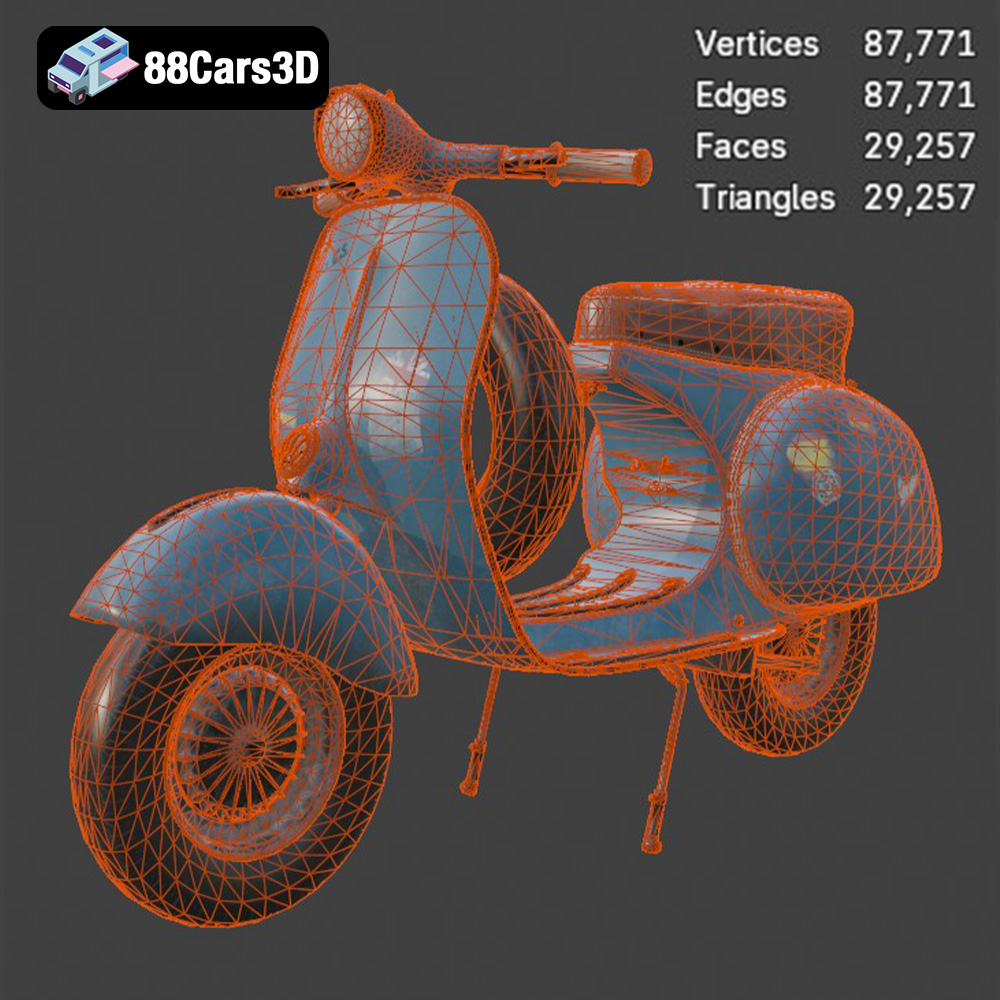
Beyond visual accuracy, the true power of a professionally created 3D asset lies in its versatility. Imagine a game developer needing a period-accurate vehicle for an open-world setting, or an architect seeking to add a touch of retro cool to a visualization. The Vespa GS 150 3D model, with its optimized topology and comprehensive features, is designed to meet these varied demands. Its “game-ready” optimization, around 200,000 triangles, strikes a perfect balance between high-end visual fidelity for close-up renders and efficient performance for real-time engines like Unreal and Unity. This careful optimization ensures that artists aren’t bogged down by overly complex geometry, allowing for smoother workflows and faster rendering times without sacrificing detail.
Navigating the world of 3D modeling often involves choosing the right file format for your specific needs. Each format has been developed with particular strengths, catering to different stages of the 3D pipeline – from initial creation and editing to rendering, game development, and even physical fabrication. Understanding these formats is crucial for seamless integration into various software ecosystems and achieving optimal results. The Vespa GS 150 3D model, for instance, comes in a comprehensive array of formats, ensuring maximum compatibility and utility for any project.
The `.blend` format is the native file type for Blender, one of the most popular open-source 3D creation suites. When you download a `.blend` file like the one for the Vespa GS 150, you’re getting a fully editable Blender scene. This includes not just the mesh geometry, but also materials, textures, lighting setups, cameras, animation data, and even physics simulations. This format is ideal for users who work primarily in Blender, offering the most comprehensive and flexible starting point for customization. You can easily modify the model’s topology, adjust UVs, tweak materials, or animate its components directly within Blender, leveraging all of the software’s powerful features.
`.fbx` (Filmbox) is a proprietary file format developed by Autodesk, widely regarded as the industry standard for exchanging 3D data between different software applications. Its strength lies in its ability to store a vast amount of information, including geometry, materials, textures, animations, and camera data, in a highly compatible manner. For the Vespa GS 150, an `.fbx` file is perfect for importing into game engines like Unreal Engine and Unity, or other 3D software such as Maya, 3ds Max (its native environment), Cinema 4D, and Substance Painter. It’s particularly favored in real-time pipelines due to its robust support for animation and skeletal data, making it a reliable choice for animated vehicles in games or interactive experiences.
`.obj` (Wavefront OBJ) is one of the oldest and most universally supported 3D file formats. It’s a simple, text-based format primarily used to store 3D geometry (vertices, normals, texture coordinates, and faces) and references to external material files (.mtl). While it doesn’t typically store animation or rigging data, its widespread compatibility makes it an excellent choice for cross-software transfers when you primarily need the mesh itself. If you’re importing the Vespa GS 150 into a rendering package or a 3D modeling tool that might struggle with more complex formats, `.obj` provides a clean, reliable foundation for further work. It’s an essential fallback for maximum compatibility.
`.glb` (GLB File) is the binary version of the glTF (GL Transmission Format) format. glTF is an API-neutral runtime asset delivery format designed for the efficient transmission and loading of 3D scenes and models by applications. `.glb` specifically packages everything – model data, textures, and animations – into a single, self-contained binary file, making it incredibly efficient for web-based 3D, augmented reality (AR), and virtual reality (VR) applications. For showcasing the Vespa GS 150 in a web browser, embedding it in an AR experience on a mobile device, or streaming it in a VR environment, the `.glb` format offers superior performance and ease of use, often with smaller file sizes and faster load times.
`.stl` (Stereolithography) is almost exclusively used for 3D printing. This format represents a 3D model as a collection of unconnected triangles, defining only the surface geometry without color, texture, or material information. While this might seem basic, it’s precisely what 3D printers need to understand the shape of an object for fabrication. The Vespa GS 150 3D model, converted to `.stl`, becomes a printable blueprint, allowing hobbyists and professionals to bring the digital scooter into the physical world. It requires careful preparation and manifold geometry for successful printing.
`.ply` (Polygon File Format) is another format that stores 3D data, often including color, transparency, and sometimes even scanner information. While less common than `.obj` or `.fbx` for general 3D asset exchange, `.ply` is particularly strong in applications involving 3D scanning, CAD software, and scientific analysis where precise mesh data, including vertex properties, is crucial. It can store both triangular meshes and point clouds, making it valuable for specific engineering or reverse-engineering workflows with the Vespa GS 150.
The `.unreal` format (or more accurately, assets pre-packaged for Unreal Engine) signifies that the model has been optimized and potentially even set up within Unreal Engine itself. This often means textures are properly applied, materials are configured using Unreal’s physically based rendering (PBR) system, and sometimes even collision meshes or LODs (Levels of Detail) are included. For developers using Unreal Engine, an asset in this format, such as the Vespa GS 150 3D model from 88cars3d.com, offers a direct, plug-and-play solution, significantly reducing setup time and ensuring optimal performance within the engine.
Finally, `.max` is the native file format for Autodesk 3ds Max, a leading software in architectural visualization, automotive design, and animation. A `.max` file contains the entire 3ds Max scene, including geometry, materials, textures, lighting, cameras, animation, and any modifiers or plugins used. For artists working in 3ds Max, the `.max` file for the Vespa GS 150 offers the most comprehensive editing capabilities, allowing full access to the original project structure, render settings, and potential animation setups, making it ideal for high-end rendering and detailed customization within its native environment.
Creating a 3D model of an iconic vehicle like the Vespa GS 150 that is both visually stunning and technically optimized for performance is a meticulous process. It requires not just artistic skill, but a deep understanding of 3D geometry, texturing, and real-time engine constraints. The Vespa GS 150 3D model exemplifies this balance, offering a premium asset that caters to a wide range of professional applications.
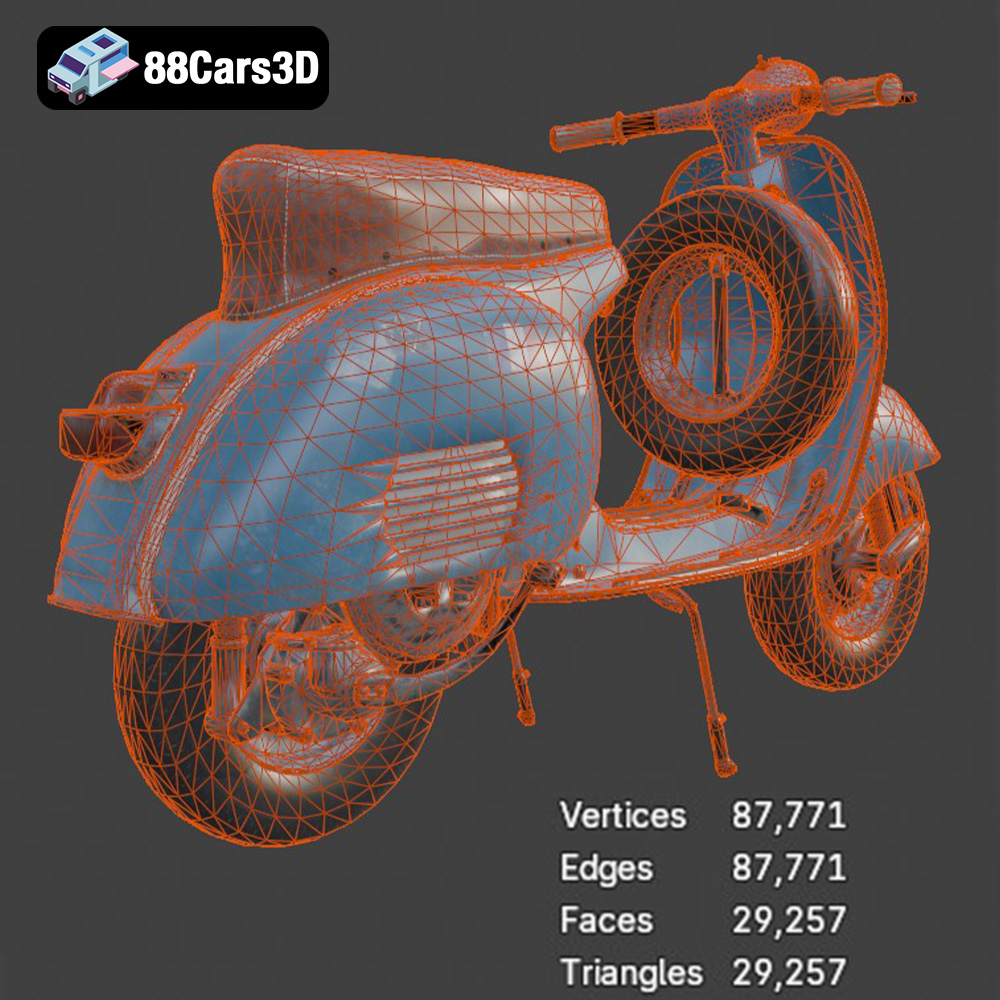
The backbone of any high-quality 3D model is its topology. The Vespa GS 150 model boasts an optimized topology of approximately 200,000 triangles. This figure is a carefully chosen sweet spot, ensuring exceptional visual fidelity for close-up renders while maintaining game-ready performance. For comparison, some high-end cinematic models might feature millions of polygons, while extremely low-poly mobile assets might be in the low thousands. 200,000 triangles allow for smooth curves and intricate details like the cooling fins on the engine block and the subtle contours of the unibody frame, without overburdening a game engine’s rendering budget. This means faster frame rates in games and quicker render times in visualization projects.
Every curve and component of the Vespa GS 150 has been faithfully reproduced. This includes:
Crucially, components like the wheels, suspension, and steering are separate entities within the model. This modularity is vital for animation, allowing artists to rig and articulate the scooter for realistic movement in games or animated sequences. Imagine the Vespa GS 150 navigating a winding Italian road, its suspension absorbing bumps, and wheels turning – all possible due to thoughtful model breakdown.
While often overlooked for non-driver views, the cockpit and interior details elevate a model from good to excellent, especially for first-person perspectives in gaming or detailed virtual showrooms. The Vespa GS 150 model includes:
This level of interior detail is optimized for first-person POV in gaming, making the experience of “riding” the digital Vespa as authentic as possible. It ensures that even when the camera is close, the illusion of reality is maintained.
The true value of a versatile 3D asset from 88cars3d.com lies in its seamless integration into diverse professional pipelines. The Vespa GS 150 3D model is designed with this in mind, offering features that streamline workflows across game development, architectural visualization, AR/VR experiences, and high-end rendering.
For game developers, the Vespa GS 150 3D model is a ready-to-deploy asset. Its optimized polycount (~200,000 triangles) is crucial for maintaining frame rates in demanding game environments.
The model, especially in `.fbx` or `.unreal` formats, can be directly imported into Unreal Engine or Unity. The separate components (wheels, suspension, steering) are ideal for rigging with vehicle physics systems. Developers can easily:
Imagine the Vespa GS 150 as a collectible vehicle in a retro-themed open-world game, or a background prop adding character to a bustling city street. Its versatility makes it perfect for both.
Architectural visualizers, product designers, and advertising agencies can leverage the Vespa GS 150 for photorealistic rendering. The model’s high fidelity allows for stunning close-up shots and integration into detailed scenes.
Using the `.max` file for 3ds Max or the `.blend` file for Blender provides the most comprehensive starting point.
This makes the model perfect for brand campaigns, lifestyle scenes, and creating a sense of nostalgic atmosphere in various visualizations.
The demand for immersive experiences is growing, and the Vespa GS 150 3D model is perfectly suited for AR/VR applications.
The `.glb` format is particularly useful here, optimized for efficient loading and display in mobile AR apps or VR environments.
Its “game-ready” optimization ensures smooth performance even on less powerful mobile or standalone VR devices, critical for maintaining immersion.
The versatility of a well-crafted 3D model extends beyond digital displays, reaching into the realm of physical creation through 3D printing. For enthusiasts of classic vehicles or those looking to create tangible prototypes and display models, the Vespa GS 150 3D model, specifically in its `.stl` format, offers an exciting pathway to bring this iconic scooter to life.
Converting a high-quality rendering asset into a successful 3D print requires careful consideration of the model’s geometry and the capabilities of 3D printing technology. While the `.stl` format simplifies the mesh for printers, the underlying design of the Vespa GS 150 3D model from 88cars3d.com is robust enough to facilitate this transformation effectively.
To achieve optimal results when 3D printing the Vespa GS 150, several technical aspects need to be addressed:
This comprehensive approach ensures that the digital Vespa GS 150 can be flawlessly translated into a beautiful physical collectible, perfect for display in a home office, a virtual reality experience, or as a reference piece for traditional model makers.
In the fast-paced world of 3D content creation, time is a precious commodity. Building a highly detailed, optimized 3D model from scratch, especially one as iconic as the Vespa GS 150, can consume hundreds of hours of a skilled artist’s time. This is where premium 3D car models from marketplaces like 88cars3d.com offer an undeniable advantage, providing immediate value to professionals across various industries.
The most significant benefit of utilizing pre-made, high-quality 3D models is the massive saving in development time and associated costs. Instead of allocating resources to model, texture, and optimize a vehicle, artists and studios can simply acquire a ready-to-use asset. This allows them to:
This model’s real-world scale accuracy and proper pivot setup are further examples of thoughtful design that directly translate to saved setup time in your chosen software.
While pre-made, this Vespa GS 150 3D model is far from static. Its design incorporates robust customization options, making it adaptable to almost any creative vision:
This adaptability ensures that the initial investment in the model yields a versatile asset that can be reused and re-imagined across multiple projects, offering excellent long-term value. For any professional seeking to enhance their automotive rendering, game development, or visualization projects with a touch of timeless class, the Vespa GS 150 3D model is an indispensable tool.
The Vespa GS 150 is more than just a scooter; it’s a piece of history, a symbol of unparalleled Italian design, and a testament to the enduring appeal of classic automotive artistry. In the digital realm, this legacy continues through meticulously crafted 3D models that bring its charm and technical sophistication to life for a new generation of artists, developers, and enthusiasts.
The Vespa GS 150 3D model stands out as a prime example of a premium digital asset. Its optimized topology strikes the perfect balance between visual fidelity and real-time performance, making it suitable for everything from cinematic renders to immersive game environments and interactive AR/VR experiences. The detailed exterior and interior features, coupled with thoughtful technical specifications like real-world scale and animatable components, ensure that it’s not just an accurate representation, but a versatile tool. Furthermore, its availability in a comprehensive suite of file formats – from `.blend` and `.max` for native editing, to `.fbx` for broad compatibility, `.glb` for web and AR/VR, and `.stl` for 3D printing – guarantees seamless integration into virtually any professional workflow.
Whether you’re populating a bustling retro street scene, designing a historically accurate racing game, or creating a virtual showroom that evokes timeless elegance, this model from 88cars3d.com offers unparalleled value. It empowers creators to bypass the time-consuming process of scratch modeling, allowing them to focus on innovation and artistic expression. The ability to customize colors, materials, and lighting means the Vespa GS 150 can be adapted to perfectly fit any creative vision.
Embrace the blend of history and technology. Leverage the power of a high-quality 3D asset to elevate your projects and immerse your audience in the iconic world of the Vespa GS 150.
The Vespa GS 150 (Gran Sport) is an iconic scooter, celebrated for its elegant aerodynamic curves and historical significance. This high-quality 3D model captures its essence with optimized topology (~200,000 triangles) for exceptional visual fidelity and game-ready performance. Perfect for classic European street scenes, retro visualizations, virtual showrooms, and historic racing games. Includes detailed exterior, cockpit, and separated components for animation, offered in various formats for versatile application across rendering, game development, AR/VR, and 3D printing.
$39.99
.blend
.fbx
.glb
.max
.obj
.ply
.rendering
.scooter
.stl
.unreal
.vespa
classic-scooter
game asset
game-ready
gs-150
low-poly
motorcycle-3d-model
optimized
retro-scooter
scooter-3d-model
VR/AR