Get 20% OFF All Premium 3D & STL Models!

In the high-stakes world of automotive design, game development, and photorealistic rendering, precision and aesthetic fidelity are paramount. Every curve, every reflection, and every intricate detail must be captured with absolute accuracy to convey the true spirit of a vehicle. This demand for perfection is particularly acute when dealing with legendary marques and limited-edition masterpieces, where authenticity translates directly into visual impact and emotional resonance.
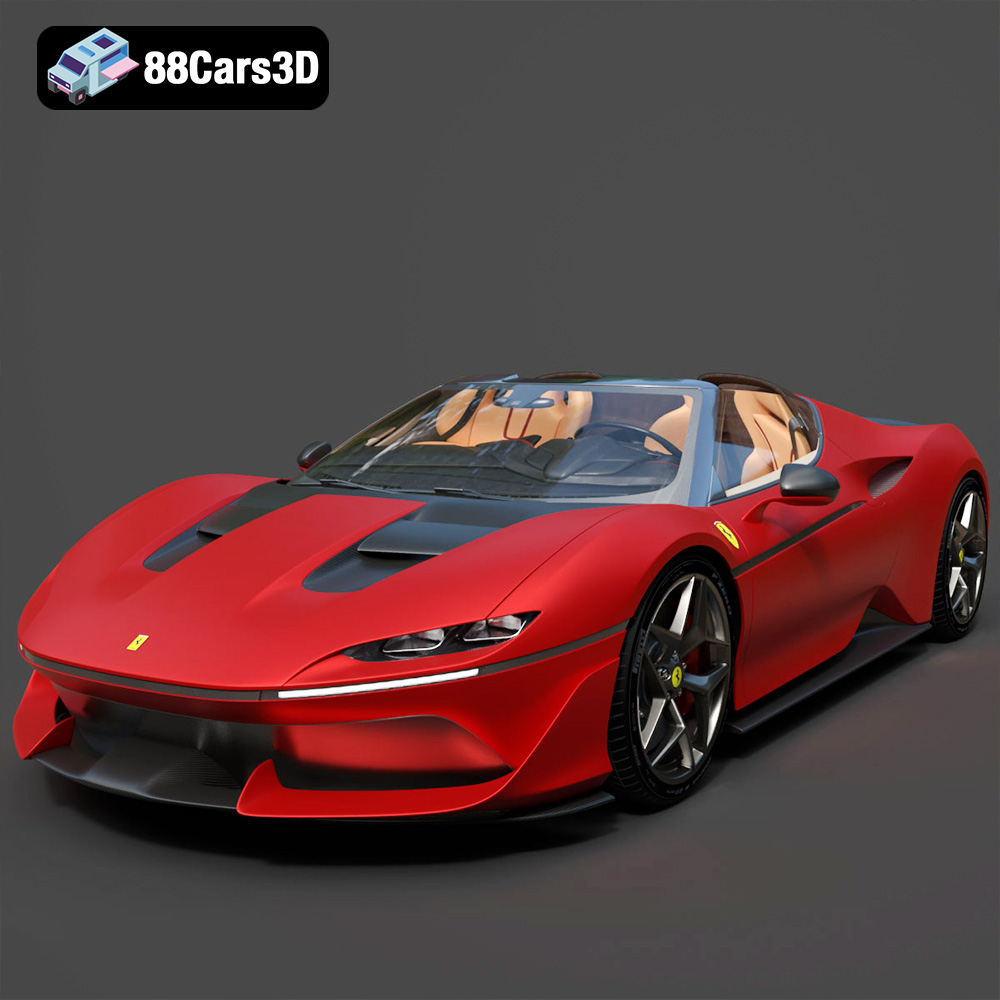
Imagine needing to integrate a stunning, ultra-rare supercar into a cutting-edge racing simulator, an immersive AR/VR experience, or a breathtaking marketing campaign. Building such an asset from scratch is a monumental task, requiring hundreds of hours of expert modeling, texturing, and optimization. This is where a meticulously crafted 3D model becomes an invaluable resource, serving as the digital foundation for diverse professional applications. One such exceptional asset, epitomizing this blend of artistry and technical excellence, is the Ferrari J50 2017 3D Model. This digital rendition of the limited-edition masterpiece, created to celebrate 50 years of Ferrari in Japan, offers a potent blend of visual fidelity and technical optimization, ready to elevate any project.
Creating a truly outstanding 3D car model is a complex dance between artistic interpretation and rigorous technical execution. It’s not just about replicating shapes; it’s about capturing the essence, the spirit, and the engineering marvel of the real-world counterpart. For a vehicle as distinctive as the Ferrari J50 2017, this challenge is amplified, requiring an obsessive attention to detail that only seasoned 3D artists can provide.
The first pillar of a premium 3D car model is authenticity. For the Ferrari J50, this means accurately reproducing its “radically distinct, futuristic bodywork,” its “sleek targa roof,” and its “aggressive aerodynamic front fascia.” Every panel gap, every ventilation slat, and every subtle curvature must align perfectly with the original design. This often involves extensive research, utilizing official blueprints, high-resolution photographs, and even physical scans of the actual vehicle. The goal is to create a digital twin that is indistinguishable from the real thing in any virtual environment. For the Ferrari J50 2017 3D model, this commitment to accuracy extends to its signature sleek LED headlights and classic quad circular taillights, ensuring instant recognition and visual impact.
While authenticity demands intricate detail, practical application often requires efficiency. This leads to the crucial balance between detail and performance. A model destined for high-end cinematic rendering might tolerate millions of polygons, but a “game-ready asset” needs careful optimization. The Ferrari J50 2017 3D Model exemplifies this balance with approximately 350,000 triangles. This polycount is sufficiently detailed to hold up under close-up scrutiny in high-resolution renders, yet optimized enough to maintain smooth frame rates in real-time game engines like Unreal Engine or Unity. Achieving this balance involves clean topology, efficient edge flow, and intelligent use of normal maps and texture details to simulate finer geometry.
The journey from a vehicle concept to a high-fidelity 3D model begins long before any polygons are pushed. It starts with comprehensive data gathering, followed by meticulous hard-surface modeling. This foundational stage lays the groundwork for all subsequent processes, including UV unwrapping for texture application, material setup for realistic surface properties, and rigging for animation. For a complex vehicle like the J50, even minute components like the “exclusive custom-designed multi-spoke wheel and high-performance tire details” or the “detailed brake calipers and suspension geometry” require dedicated modeling efforts, each contributing to the overall realism and utility of the final 3D car model.
The versatility of a 3D model hinges significantly on the file formats it supports. Different formats are optimized for different applications, software environments, and performance needs. Understanding these distinctions is crucial for anyone working with 3D car models, ensuring seamless integration into various pipelines. The Ferrari J50 2017 3D Model from 88cars3d.com is provided in a comprehensive suite of formats, catering to virtually any professional requirement.
The .blend format is the native file type for Blender, one of the most powerful and widely used open-source 3D software suites. When a model is supplied as a .blend file, it means you’re getting the complete scene, including the raw mesh data, modifiers, materials (often set up with advanced PBR shaders), lighting, and even camera setups. This format is ideal for users deeply embedded in the Blender ecosystem, offering maximum flexibility for modifications, animations, or integration into existing Blender projects. Artists can easily adjust topology, tweak materials, or leverage Blender’s extensive toolset for rendering with Cycles or Eevee.
.fbx (Filmbox) is an industry-standard 3D asset exchange format, widely recognized for its excellent compatibility across various 3D applications and game engines. It supports not only mesh data but also animations, skinning, camera, and lighting information. For game developers working with Unreal Engine or Unity, .fbx is often the go-to format. Its ability to maintain hierarchical structures, pivot points, and basic material assignments makes it incredibly efficient for importing complex assets like a detailed 3D car model directly into a real-time environment. The Ferrari J50 2017 in .fbx is prepped for direct integration, ensuring minimal setup time.
The .obj (Wavefront OBJ) format is one of the oldest and most universally supported 3D file formats. It’s a simple, text-based format primarily used for geometric data (vertices, normals, texture coordinates, and faces). While it doesn’t typically carry animation, rigging, or advanced material properties (materials are usually defined in a separate .mtl file), its widespread compatibility makes it a safe bet for basic geometry transfer between almost any 3D software. If you need a clean, universal mesh for static renders, archival, or importing into less common 3D applications, the .obj version of the Ferrari J50 is an excellent choice.
.glb (GL Transmission Format Binary) is a relatively newer format specifically designed for efficient transmission and loading of 3D scenes and models in web-based applications, augmented reality (AR), and virtual reality (VR) experiences. It’s a binary version of the glTF format, which bundles mesh data, materials (PBR ready), textures, animations, and scene graph information into a single, compact file. This “all-in-one” characteristic makes .glb incredibly convenient for sharing 3D assets online or embedding them directly into web pages, ensuring fast loading and consistent appearance. For showcasing the Ferrari J50 in a virtual showroom or an AR app, the .glb format is indispensable.
.stl (Stereolithography) is the de facto standard file format for 3D printing. It represents a 3D model as a collection of unconnected triangular facets, without any color or texture information. The primary concern for .stl files is “manifoldness” – ensuring the mesh is completely watertight and has no holes or inverted normals, which are critical for successful physical fabrication. The Ferrari J50 2017 3D Model, when converted to .stl, becomes a tangible object, perfect for hobbyists or professionals creating physical prototypes and display models, as detailed in its 3D print settings.
The .ply (Polygon File Format) is often used for storing 3D scanner data and CAD models. Like .obj, it primarily stores geometric information, but it can also include additional properties such as color, transparency, normals, texture coordinates, and even reliability information for each vertex. It’s particularly useful for high-precision models or point cloud data and finds applications in scientific visualization, reverse engineering, and quality control. For detailed analysis or specialized CAD workflows involving the Ferrari J50, the .ply format offers robust data integrity.
While “.unreal” isn’t a native file format like .fbx or .obj, its inclusion implies an asset specifically prepared and optimized for seamless integration into Unreal Engine. This typically means the model (often originally an .fbx) has undergone a series of pre-configurations: proper scale, pivot points, collision meshes, material instances setup (using Unreal’s PBR system), LODs (Levels of Detail) for performance, and potentially even blueprint integrations for basic functionalities. An “Unreal-ready” Ferrari J50 asset dramatically reduces import and setup time for game developers, allowing them to drop the model directly into their scenes with minimal fuss, benefiting from its “game-ready & optimized” ~350,000 triangles and proper pivot setup.
The .max format is the native file type for Autodesk 3ds Max, a leading software for 3D modeling, animation, rendering, and visualization. Similar to .blend, a .max file contains the entire scene, including geometry, materials, textures, lights, cameras, animations, and all scene settings. This format provides the ultimate flexibility for 3ds Max users, allowing them to access the full modeling history, modifiers, and rendering setups. It’s perfect for studios that use 3ds Max as their primary pipeline for high-end automotive rendering and cinematic animations, offering complete control over the Ferrari J50 3D model.
The true power of a meticulously crafted 3D car model, such as the Ferrari J50 2017, lies in its ability to be integrated into diverse professional workflows. From interactive experiences to cinematic productions, these assets serve as cornerstones for digital creation.
For game developers, the demand for high-quality, performant assets is constant. The Ferrari J50 2017 3D Model, with its “game-ready & optimized” ~350,000 triangles, is perfectly suited for modern racing titles, open-world games, and simulators. Its “real-world scale accuracy” and “proper pivot setup for steering, wheel rotation, and suspension travel” are critical for realistic physics and animation in engines like Unreal Engine and Unity. Artists can quickly import the .fbx or .unreal version, set up collision meshes, and implement LODs (Levels of Detail) to ensure optimal performance across various hardware configurations. The “separate wheels, suspension, and steering components for animation” further enable dynamic gameplay mechanics.
High-end studios require models that can withstand intense scrutiny for photorealistic advertisements, concept visualizations, and digital films. In workflows utilizing 3ds Max or Blender, the .max or .blend formats of the Ferrari J50 provide full artistic control. Artists can leverage advanced PBR (Physically Based Rendering) materials, intricate lighting setups, and complex render layers to achieve breathtaking realism. The model’s “dynamic lines” and “sculpted mid-engine profile housing the potent twin-turbo V8” truly shine under a skilled renderer’s touch, allowing for dramatic close-ups of exterior features like the “dual exhaust system details” and interior elements such as the “F1-style flat-bottom steering wheel.” The rich detail of this 3D car model ensures that every reflection and shadow contributes to a compelling visual narrative.
Augmented Reality (AR) and Virtual Reality (VR) are transforming how we interact with products, offering immersive experiences that transcend traditional media. For luxury automotive brands, virtual showrooms and configurators are becoming essential. The Ferrari J50 2017, with its optimized geometry and .glb format, is an ideal candidate for such applications. Its “optimized geometry for first-person POV in gaming and VR” makes it perfect for users to explore the interior with stunning clarity, from the “highly detailed two-tone sport seat details” to the “high-resolution instrument cluster.” This allows potential buyers or enthusiasts to virtually “step inside” and customize the vehicle, experiencing its presence in a way static images cannot convey, making it a powerful asset for AR/VR applications.
Beyond its striking appearance, the true value of the Ferrari J50 2017 3D model lies in its robust technical specifications. These details dictate its versatility, performance, and ease of use across various professional platforms.
The foundation of any high-quality 3D model is its geometry and topology. The Ferrari J50 3D model boasts a “clean mesh structure,” which is paramount for smooth deformations, accurate lighting, and efficient UV unwrapping. With approximately “350,000 triangles,” it strikes an optimal balance: detailed enough for close-up renders, yet efficient enough for real-time applications. Clean topology also ensures that if subdivision surfaces are applied in rendering workflows, the model will maintain its smooth curves without pinching or artifacts, accurately reflecting the J50’s aerodynamic design and precision engineering.
The devil is in the details, and this model delivers. Externally, it features “accurate Ferrari J50 frame geometry and targa-top proportions,” capturing the essence of its limited-edition design. Crucially, the “detailed mid-mounted twin-turbo 3.9L V8 engine block visible under the rear cover” adds a layer of authenticity rarely found in game-ready assets. The interior is equally impressive, with “highly detailed two-tone sport seat details,” an “F1-style flat-bottom steering wheel,” and “high-resolution instrument cluster and infotainment screens.” This comprehensive detailing ensures that whether seen from afar or up close in a first-person perspective, the model holds up to scrutiny, reflecting its “real-world scale accuracy.”
For dynamic visualizations, animation capabilities are non-negotiable. This model features “separate wheels, suspension, and steering components for animation,” allowing for realistic movement, turns, and suspension compression. Furthermore, its “proper pivot setup for steering, wheel rotation, and suspension travel” dramatically simplifies the rigging and animation process. Artists can easily link these components to control systems in their chosen 3D software or game engine, creating lifelike driving sequences, car configurators, or even full-blown cinematic automotive animations with minimal additional setup.
The versatility of a premium 3D model extends beyond digital screens. The inclusion of the .stl format means the Ferrari J50 2017 3D model can transcend the virtual realm and become a physical object, allowing enthusiasts and collectors to own a tangible representation of this rare supercar.
3D printing requires a specific approach to model preparation. The .stl format is the industry standard, translating the intricate curves and surfaces of the Ferrari J50 into a triangulated mesh suitable for additive manufacturing. Ensuring a “watertight” mesh without any internal errors or disconnected surfaces is critical for successful printing. While the original digital model is highly detailed, some slight adjustments might be necessary for different printing technologies to ensure structural integrity and capture fine details at smaller scales. The product’s recommended “wall thickness: 1.2–2.0 mm” is a crucial guideline for ensuring the printed model is robust enough.
The provided 3D print settings are invaluable for anyone looking to bring this Ferrari J50 to life. “Recommended scale: 1:12 / 1:18 / 1:24” offers flexibility for desktop display. A “layer height: 0.04–0.12 mm” indicates a preference for high-resolution output, suggesting “resin printing recommended for fine details” for capturing the delicate nuances of the J50’s bodywork. “Supports: Required for detailed parts like exhaust, mirrors, splitters” is a standard practice to prevent overhangs from collapsing during printing. Finally, “post-processing: sanding, primer, and authentic factory colors with metallic finishes” highlights the potential for a stunning, showroom-quality physical replica, transforming raw plastic into a miniature automotive work of art.
A high-quality 3D model is not just a static representation; it’s a dynamic canvas for creative expression and adaptation. The Ferrari J50 2017 3D model offers significant opportunities for customization, empowering artists to make it their own and future-proofing its utility.
The ability to “change body colors (e.g., factory Rosso Corsa, custom finishes)” is fundamental for any automotive visualization. Artists can experiment with different paint schemes, from classic Ferrari reds to bespoke metallic or matte finishes, to match specific project requirements or client visions. Beyond paint, options to “modify tire textures (track vs. street variants)” and “adjust material finishes (matte, gloss, metallic, carbon fiber)” allow for a profound level of aesthetic personalization, letting the J50 adapt seamlessly to any desired style or narrative. This flexibility makes the model an incredibly versatile asset for diverse visual campaigns and creative explorations.
A supercar should look stunning whether it’s on a race track, cruising through a bustling city, or parked in a minimalist showroom. The ability to “adapt lighting for different environments” is crucial. By adjusting lighting setups, reflections, and material properties, artists can seamlessly integrate the Ferrari J50 3D model into any scene. Whether it’s bathed in the golden hour glow, under harsh studio lights, or rendered within a stormy cityscape, the model’s robust material definitions ensure it will react realistically to its surroundings, maintaining its visual integrity and enhancing the overall realism of the scene.
Investing in a premium 3D car model from a reputable source like 88cars3d.com is an investment in longevity. The clean topology, optimized geometry, and comprehensive file format support ensure that the Ferrari J50 2017 3D model remains relevant and usable for years to come. As game engines evolve, rendering technologies advance, and new visualization platforms emerge, a well-built base model can be easily adapted and re-purposed. This reusability not only saves significant development time and resources in the long run but also provides a consistent, high-quality asset that can underpin multiple projects and future innovations.
The world of 3D modeling demands a unique blend of technical expertise and artistic vision, especially when it comes to the intricate details of automotive design. As we’ve explored, a premium 3D car model like the Ferrari J50 2017 3D Model is far more than just a digital replica; it’s a versatile, optimized asset ready to power professional workflows across game development, cinematic rendering, AR/VR experiences, and even physical 3D printing.
From its meticulously crafted exterior and detailed interior to its game-ready optimization and extensive file format support, this model represents the pinnacle of 3D automotive asset creation. The ability to seamlessly integrate it into various software environments, leverage its robust technical specifications, and customize its aesthetics makes it an invaluable tool for any digital artist or studio.
For those seeking to elevate their projects with unparalleled realism and efficiency, investing in such a high-quality asset is a strategic decision. The Ferrari J50 2017 3D model stands as a testament to what’s possible when passion for automotive excellence meets cutting-edge 3D artistry. Explore this and many other exceptional 3D car models at 88cars3d.com, where quality and versatility meet the demands of modern digital production.
The Ferrari J50 2017 is a limited-edition masterpiece created to celebrate 50 years of Ferrari in Japan. Based on the 488 Spider, it boasts radically distinct, futuristic bodywork with a sleek targa roof, aggressive aerodynamic front fascia, and quad taillights that evoke iconic retro styling. The model perfectly captures the dynamic lines, the sculpted mid-engine profile housing the potent twin-turbo V8, and the striking visual balance of this exceptionally rare supercar.
This premium 3D model is meticulously crafted to deliver stunning visual fidelity while maintaining excellent topology. With a well-balanced triangle count, it is highly optimized as a game-ready asset without compromising on high-end rendering quality. The mesh structure is clean, making it incredibly versatile across major workflows like game development, immersive AR/VR experiences, animation, and high-resolution visualization.
Perfect for high-end racing simulators, virtual showrooms, architectural visualizations, and cinematic automotive animations.
.blend, .fbx, .obj, .glb, .stl, .ply, .unreal, .max
Tags:
ferrari, j50, 2017, supercar, sports-car, game-ready, low-poly, optimized, car-3d-model, game-asset, rendering, vr-ar, blend, fbx, obj, glb, stl, ply, unreal, max
$19.99
.2017
.blend
.fbx
.ferrari
.glb
.max
.obj
.ply
.rendering
.sports car
.stl
.supercar
.unreal
car-3d-model
game asset
game-ready
j50
low-poly
optimized
VR/AR