Get 20% OFF All Premium 3D & STL Models!

In the rapidly evolving world of digital visualization, from blockbuster video games to cutting-edge augmented reality applications and photorealistic marketing campaigns, the quality of 3D assets is paramount. Automotive design, in particular, demands an exceptional level of detail, accuracy, and technical sophistication. Professionals across various industries, including game development, architectural visualization, and product design, constantly seek high-fidelity 3D car models that can seamlessly integrate into their diverse projects.
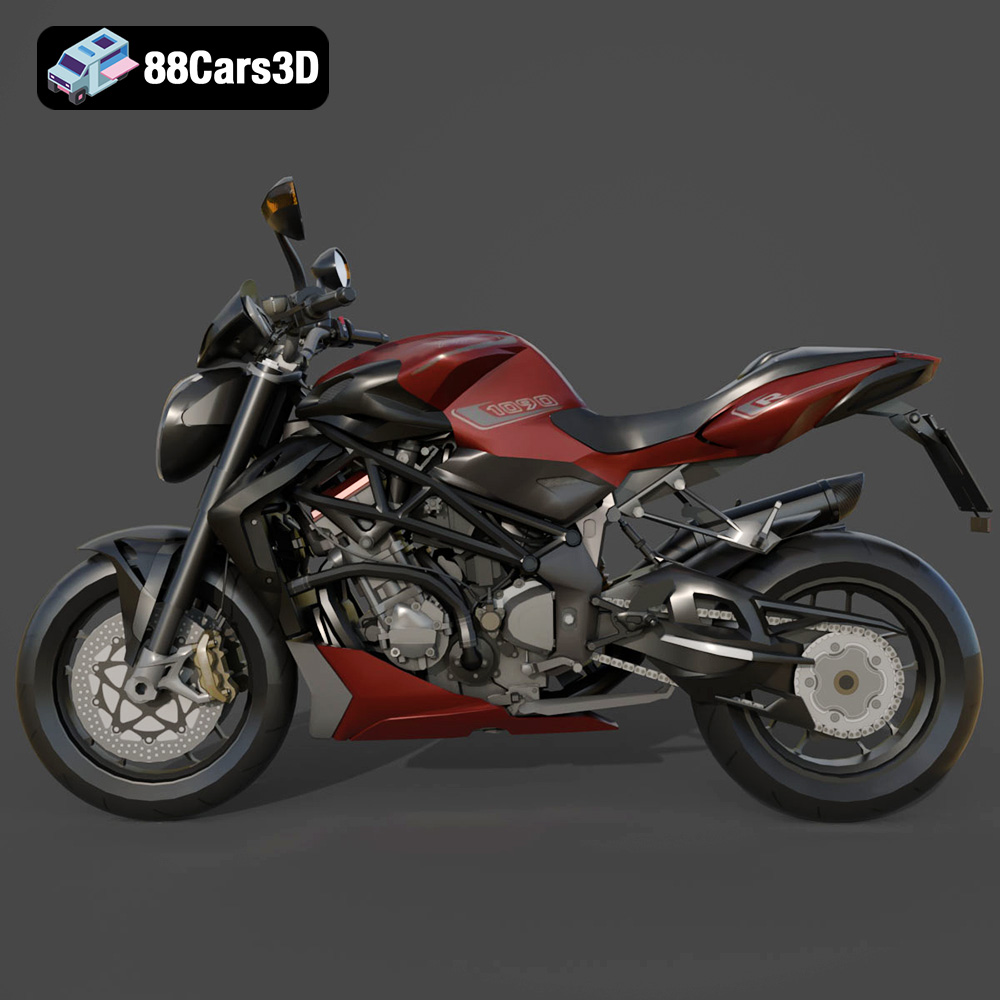
Imagine recreating the visceral thrill of a high-performance motorcycle, not just in static renders, but in a fully interactive, real-time environment. This is where truly optimized and detailed 3D models shine. Take, for instance, the MV Agusta Brutale 1090 R 3D Model – a prime example of an asset engineered to meet the stringent demands of modern digital production. This isn’t just a model; it’s a meticulously crafted digital twin of a legendary machine, ready to be dropped into your next project and elevate it with its Italian engineering prowess and aggressive aesthetic.
This blog post will delve into the critical aspects of utilizing professional 3D car models and vehicle assets, focusing on technical considerations, workflow integration, and the specific advantages offered by a premium asset like the MV Agusta Brutale 1090 R 3D model. We’ll explore how such assets empower creators to achieve stunning visuals and fluid performance across a multitude of platforms, ensuring your digital ventures accelerate past the competition.
Navigating the landscape of 3D modeling often begins with understanding the myriad of file formats available. Each format serves a specific purpose, catering to different software, workflows, and end applications. Selecting the correct format is crucial for maintaining data integrity, optimizing performance, and ensuring seamless collaboration. The MV Agusta Brutale 1090 R 3D model, for instance, offers a comprehensive suite of formats, enabling maximum flexibility for any professional workflow.
The .blend format is native to Blender, the powerful open-source 3D creation suite. When you receive a .blend file, you’re getting a fully editable Blender scene, complete with materials, textures, lighting, cameras, and even animations. This format is ideal for artists who primarily work within Blender, offering direct access to modifiers, node-based shaders, and a non-destructive workflow. For the MV Agusta Brutale 1090 R, the .blend file provides a solid foundation for deep customization, allowing users to modify geometry, tweak materials, or even re-rig components with ease, all within a familiar environment.
Autodesk’s .fbx (Filmbox) format has become an industry staple for exchanging 3D data between different software applications. It excels at preserving complex scene information, including geometry, materials, textures, animations, and even skeletal deformation. .fbx is particularly robust for game development, making it the go-to format for importing assets into game engines like Unreal Engine and Unity. Its ability to maintain animation data means that the MV Agusta Brutale’s separate wheel, suspension, and steering components can be imported with their pivot points and hierarchical structures intact, ready for rigging and animation within a game engine or DCC (Digital Content Creation) tool.
The .obj (Wavefront OBJ) format is one of the oldest and most universally supported 3D file formats. It’s a simple, text-based format primarily used for transferring geometry data (vertices, normals, UVs, and faces). While it lacks support for advanced features like animation or complex material definitions (these are usually handled by an accompanying .mtl file), its broad compatibility makes it an excellent choice for cross-software transfers when you only need the raw mesh. For the MV Agusta Brutale, the .obj provides a clean, portable mesh that can be opened in virtually any 3D software for basic viewing or re-texturing, serving as a reliable fallback or starting point.
.glb (GL Transmission Format Binary) is an increasingly popular format, especially for web-based 3D applications, augmented reality (AR), and virtual reality (VR). It’s a binary version of glTF, which is designed for efficient transmission and loading of 3D scenes and models by engines and applications. .glb packages geometry, materials, textures, and even animations into a single file, making it incredibly convenient for deploying interactive 3D content online or in mobile AR/VR experiences. The MV Agusta Brutale 1090 R, delivered in .glb, is perfectly suited for immersive virtual showrooms or mobile AR configurators, offering fast loading times and optimized performance.
The .stl (Stereolithography) format is synonymous with 3D printing. It represents a 3D model as a collection of unconnected triangular facets, defining only the surface geometry of an object. While it doesn’t store color or texture information, its simplicity and widespread adoption make it the universal language for additive manufacturing. For hobbyists or product designers looking to bring the MV Agusta Brutale 1090 R into the physical world, the .stl file is essential. As detailed in the product description, specific print settings like recommended scale, layer height, and support requirements are crucial when preparing this format for accurate physical replication.
.ply (Polygon File Format) is a versatile format often used for storing 3D scanner data and meshes. It can store a wider range of properties than .obj or .stl, including color, transparency, and normal vectors for each vertex, as well as metadata like camera positions and scale. While less common for general asset exchange than .fbx, .ply offers a robust solution for applications requiring high precision or complex data associated with each mesh element, such as CAD, engineering analysis, or advanced visualization where fidelity to captured data is paramount.
The inclusion of an .unreal file (often meaning a pre-packaged Unreal Engine asset, or a .uasset file, or a project file optimized for Unreal) indicates an asset that’s truly “game-ready.” This format, or more accurately, a dedicated Unreal Engine project or content package, means the model has likely been imported, had its materials set up, collisions defined, and potentially even LODs (Levels of Detail) generated within the Unreal Editor. For the MV Agusta Brutale 1090 R, having an Unreal-optimized asset dramatically accelerates development time, allowing game developers to drop the motorcycle directly into their environments with minimal setup, benefiting from its optimized polycount and real-time performance.
Autodesk’s .max format is the native file type for 3ds Max, a leading software for 3D modeling, animation, and rendering. Like .blend, a .max file preserves the entire scene, including all modifiers, cameras, lights, materials, and animation data specific to 3ds Max. This format is invaluable for professionals whose primary DCC tool is 3ds Max, enabling complete artistic freedom and access to all the software’s powerful features. For those working on high-end architectural visualizations or cinematic renders using 3ds Max and V-Ray or Corona, the .max file of the MV Agusta Brutale provides a fully editable and render-ready starting point, making it easy to integrate into complex scenes and manipulate for intricate animations.
A high-quality 3D model isn’t just about looking good; it’s about being technically sound and versatile enough to perform across different platforms and pipelines. The MV Agusta Brutale 1090 R 3D model stands out due to its thoughtful engineering, ensuring it meets the demanding criteria of professional digital artists and developers.
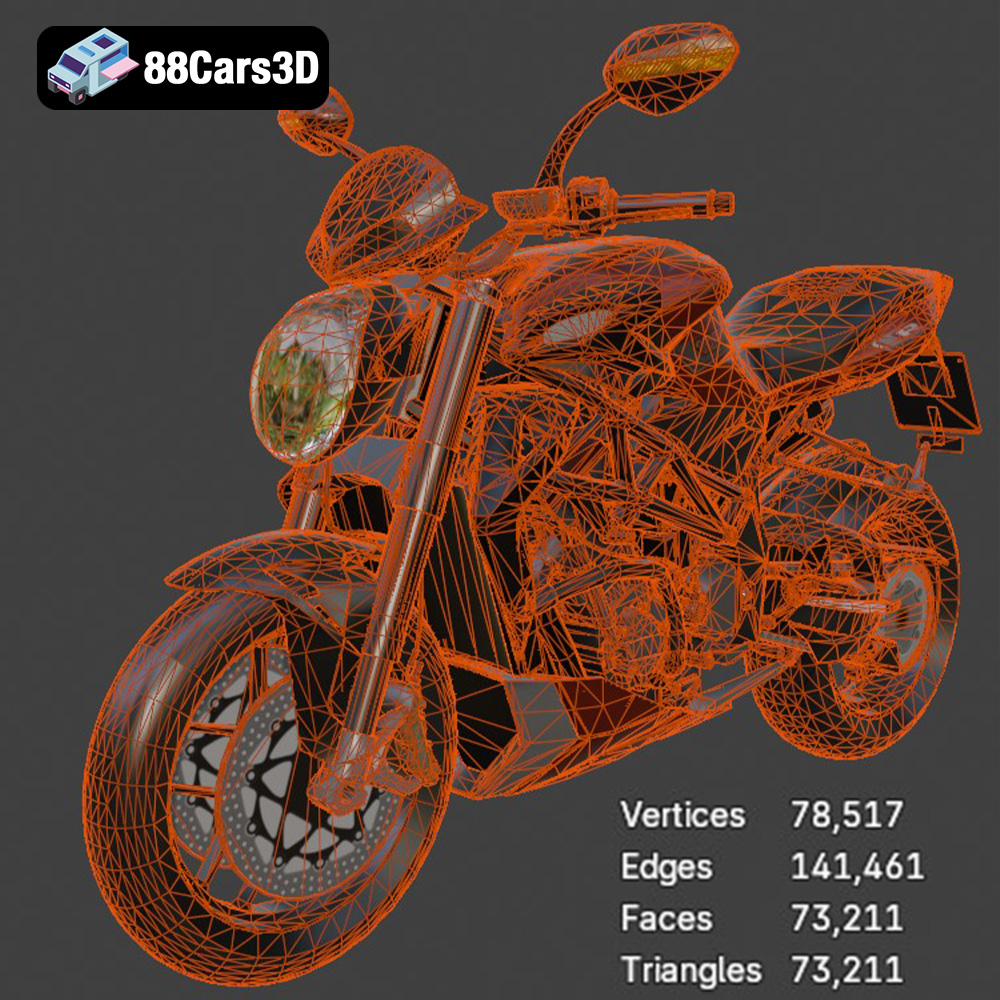
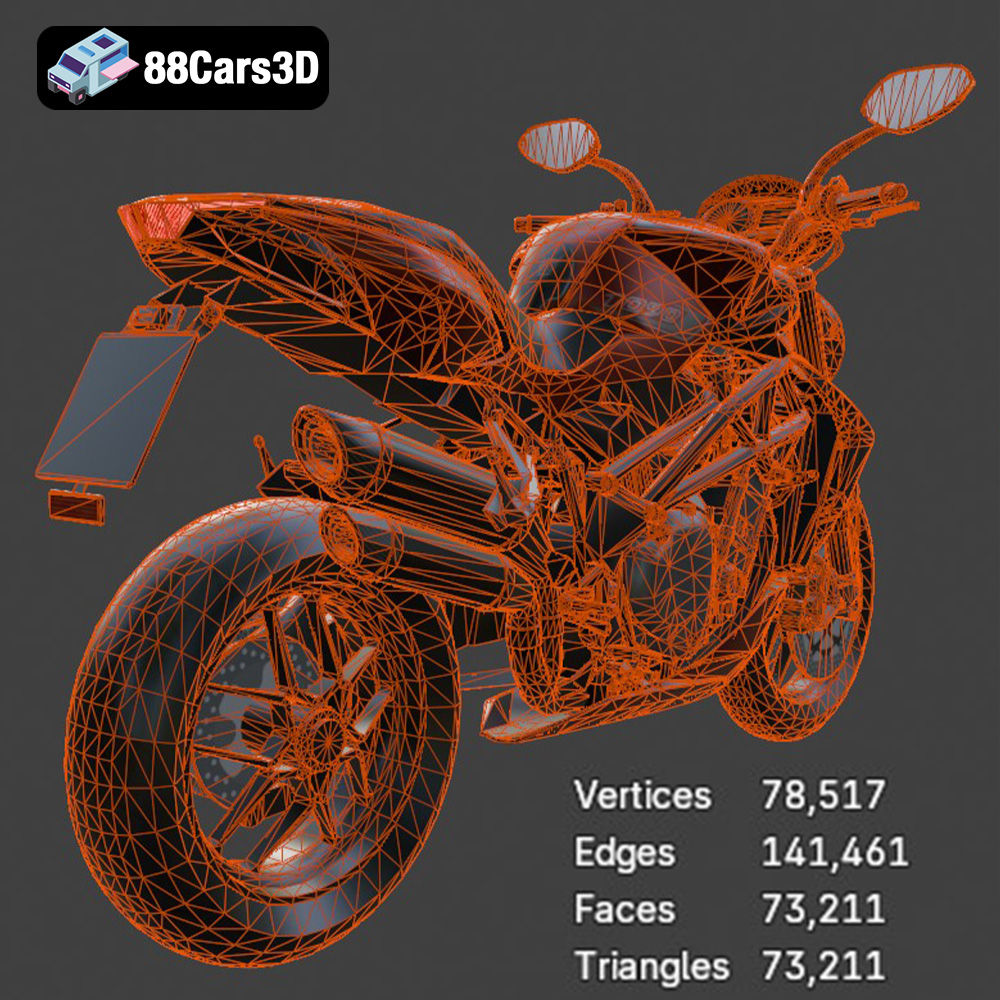
At the core of any successful real-time asset is its topology. The MV Agusta Brutale 1090 R model boasts an optimized topology with approximately 200,000 triangles. This figure represents a crucial balance: it’s detailed enough to capture the intricate curves and mechanical elements of the real motorcycle for stunning visual fidelity, yet streamlined enough to ensure excellent performance in real-time environments like game engines. This “game-ready” optimization means developers can integrate the model into high-speed racing simulations, open-world games, or interactive configurators without significant performance overhead, preserving frame rates and ensuring a smooth user experience.
The clean mesh and efficient polygon distribution are testaments to expert craftsmanship, preventing common issues like shading artifacts or excessive memory consumption. This level of optimization is often what distinguishes a professional asset from generic, unoptimized models, making it a valuable time-saver for any project.
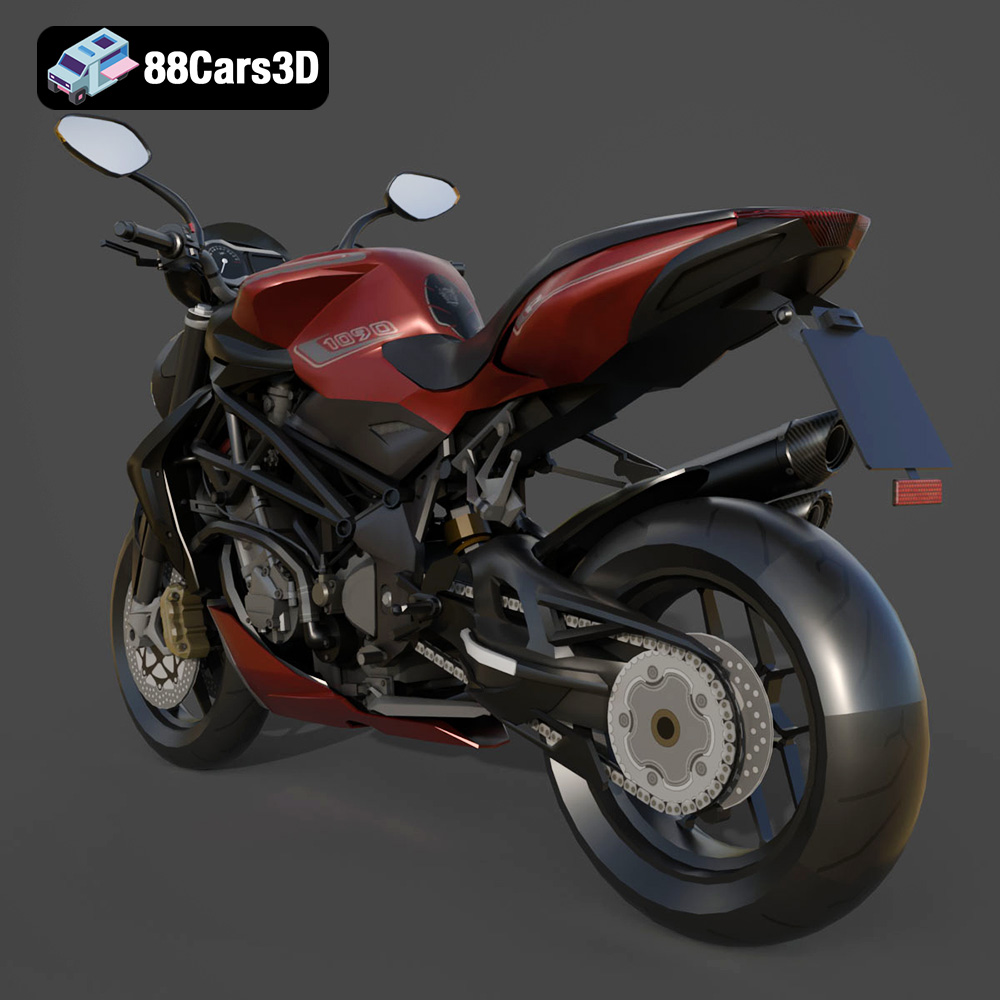
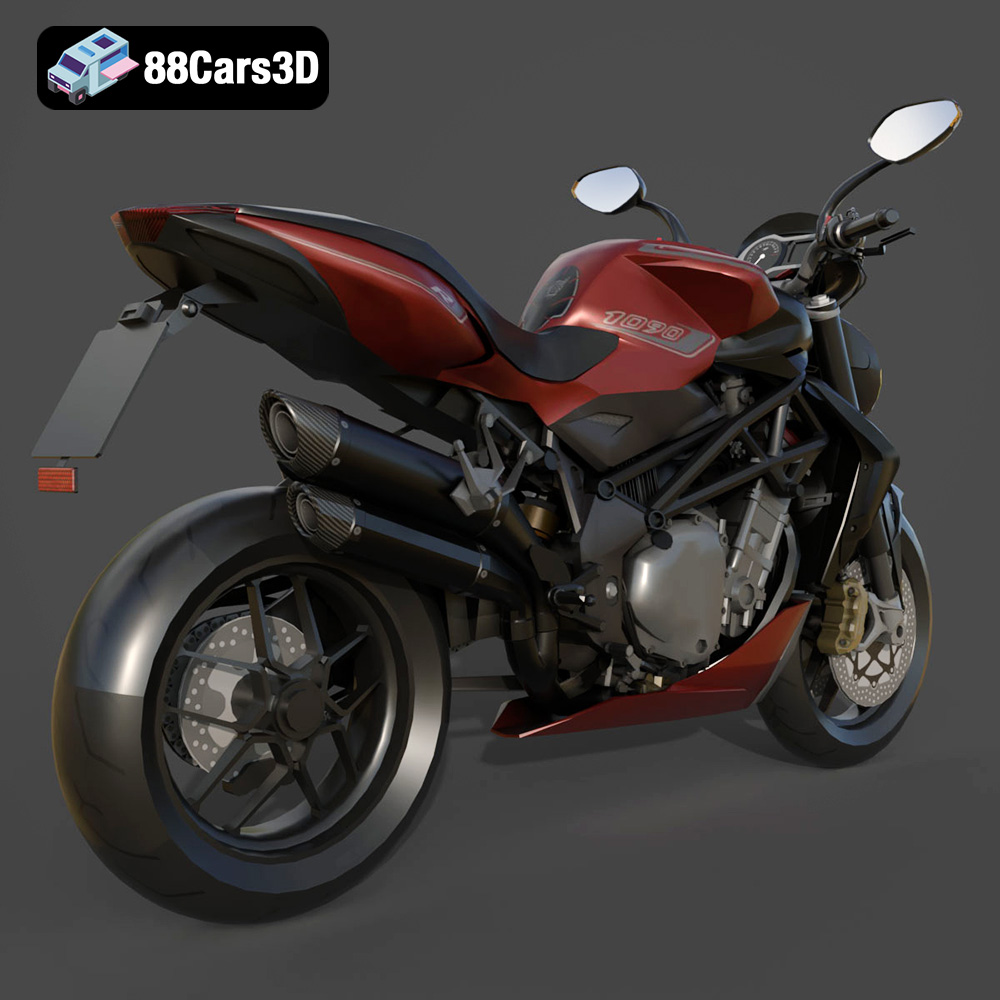
The product description highlights meticulous attention to detail, replicating the Brutale 1090 R’s aggressive naked bike styling, from its muscular fuel tank to the distinctive teardrop headlight and the raw mechanical beauty of its 1078cc inline-four engine. Key exterior features like the signature dual-pipe stacked exhaust, intricate alloy wheels with high-performance street tires, and detailed suspension components (front upside-down fork and rear single-sided swingarm) are all faithfully recreated. Furthermore, the inclusion of separate wheels, suspension, and steering components is a critical technical advantage for animators and game developers. It allows for accurate vehicle dynamics, realistic turning, suspension compression, and wheel rotation, bringing the model to life in dynamic scenes or driving simulations.
Beyond the exterior, the cockpit’s details, including the ergonomically sculpted seats, aggressive handlebars, digital instrument cluster, and accurate control levers, are modeled with a view towards first-person POV in gaming. This ensures that even from the rider’s perspective, the immersive quality is maintained, contributing to a more believable and engaging experience for the end-user.
Accuracy extends beyond visual detail to real-world scale and proper technical setup. The MV Agusta Brutale 1090 R 3D model is built to real-world scale, based on the actual vehicle chassis. This is not just a cosmetic feature; it’s fundamental for seamless integration into existing scenes, especially in architectural visualization, automotive rendering, or simulation environments where objects must interact realistically with their surroundings. Correct scaling prevents discrepancies when combining the model with other assets or real-world measurements.
Equally important is the proper pivot setup for crucial components. With pivots correctly placed for steering, wheel rotation, and suspension travel, the model is inherently prepared for rigging and animation. This saves countless hours of setup time for character technical artists and animators, allowing them to focus on crafting realistic movement rather than fixing fundamental geometric properties. This foresight in preparation makes the MV Agusta Brutale 1090 R model an extremely efficient and production-ready asset right out of the box.
The true value of a premium 3D asset lies in its ability to integrate smoothly into professional workflows across various software and disciplines. The MV Agusta Brutale 1090 R 3D model, with its diverse file formats and technical specifications, is designed to be a versatile workhorse for different creative pipelines.
For game developers, the MV Agusta Brutale 1090 R is a compelling choice. Its “game-ready” designation and optimized ~200,000 triangle count mean it can be directly imported into popular engines like Unreal Engine and Unity without significant performance bottlenecks. The .fbx and .unreal formats are particularly beneficial here, often including pre-configured materials or even basic skeletal setups.
For artists focused on high-end automotive rendering and visualization, whether for marketing, product showcases, or concept art, the MV Agusta Brutale model offers immense potential. The .max and .blend files provide fully editable scenes within industry-standard DCC applications.
Augmented Reality (AR) and Virtual Reality (VR) are transforming how we interact with products. The MV Agusta Brutale 1090 R 3D model is particularly well-suited for these immersive applications, thanks to its optimized geometry and the inclusion of the .glb format.
The utility of a comprehensive 3D model extends far beyond traditional screen-based rendering and game development. The MV Agusta Brutale 1090 R 3D model’s versatility is highlighted by its suitability for physical replication through 3D printing and its optimized design for interactive AR/VR experiences, opening up new avenues for engagement and tangible results.
For enthusiasts, designers, or educators, transforming a digital model into a physical object offers a unique form of engagement. The inclusion of the .stl format for the MV Agusta Brutale 1090 R is a testament to its comprehensive design for multi-purpose use. However, preparing a 3D model for printing requires specific technical knowledge and careful consideration of print settings, which are helpfully detailed in the product description.
The product’s optimization for AR/VR applications speaks to its forward-thinking design. Beyond simple viewing, the MV Agusta Brutale 1090 R 3D model is tailored for interactive, immersive experiences that can revolutionize sales, training, and entertainment.
In the competitive digital landscape, sourcing high-quality, reliable 3D car models and vehicle assets is a strategic decision. Websites like 88cars3d.com specialize in providing the meticulously crafted assets that professionals need to deliver exceptional results and gain a significant advantage in their projects. The MV Agusta Brutale 1090 R 3D Model exemplifies the commitment to quality and versatility found on the platform.
The hallmark of a premium marketplace like 88cars3d.com is the emphasis on technical precision. As demonstrated by the Brutale 1090 R model, assets are developed with optimized topology, real-world scale, accurate geometry, and thoughtful pivot setups. This attention to detail ensures that every model is not just visually appealing but also functionally ready for demanding professional pipelines. Whether it’s the ~200,000 triangle count balanced for performance and detail, or the accurate representation of the 1078cc inline-four engine, the technical specifications are designed to meet, and exceed, industry standards.
One of the most significant advantages offered by 88cars3d.com is the comprehensive range of included file formats. Providing .blend, .fbx, .obj, .glb, .stl, .ply, .unreal, and .max formats means that users, regardless of their preferred DCC software or target application (game engine, AR/VR, 3D printing), will find an immediately usable asset. This eliminates the need for time-consuming format conversions, potential data loss, or troubleshooting compatibility issues, allowing artists and developers to jump straight into their creative work. This robust multi-format support ensures that the MV Agusta Brutale 1090 R 3D model can seamlessly integrate into virtually any professional workflow.
The models available on 88cars3d.com are not niche assets; they are designed for broad application. The MV Agusta Brutale 1090 R is described as “game-ready,” “ideal for open-world games, racing titles, and simulators,” and “perfect for immersive virtual showrooms, configurators, and mobile AR experiences.” It also excels in “rendering & visualization” for brand campaigns and lifestyle scenes, and even offers full “3D printing” capabilities. This versatility means that investing in assets from 88cars3d.com provides maximum return, enabling their use across diverse projects without requiring significant rework, making it a go-to resource for anyone needing high-quality 3D car models.
In the dynamic world of 3D content creation, the difference between good and great often lies in the quality and technical robustness of your assets. Whether you’re a game developer striving for immersive realism, an automotive designer pushing visual boundaries, or an AR/VR innovator crafting the next interactive experience, premium 3D vehicle models are indispensable. They save countless hours of modeling and optimization, allowing creative professionals to focus on storytelling, interaction, and visual polish.
The MV Agusta Brutale 1090 R 3D Model serves as an excellent case study in what a high-quality asset can deliver: optimized topology for game-ready performance, meticulous detailing for photorealistic renders, versatile file formats for seamless workflow integration, and comprehensive support for diverse applications from 3D printing to AR/VR. Its ability to transition effortlessly between different software and platforms, coupled with its technical accuracy, makes it a powerful tool for any digital project. For those seeking to elevate their automotive rendering, game assets, or interactive visualizations, sourcing such precisely engineered 3D car models from reputable platforms like 88cars3d.com is a clear path to achieving superior results.
The MV Agusta Brutale 1090 R is a masterpiece of Italian motorcycle engineering, renowned for its aggressive naked bike styling, thrilling performance, and iconic exposed trellis frame. This 3D model perfectly captures the essence of the Brutale lineage, featuring its signature muscular fuel tank, distinctive teardrop headlight assembly, and the raw mechanical beauty of its 1078cc inline-four engine. This meticulously crafted 3D model boasts an optimized topology of approximately 200,000 triangles, ensuring a perfect balance between stunning visual fidelity and real-time performance. It is fully game-ready and ideally suited for high-end rendering, animation, virtual reality (VR), and augmented reality (AR) applications. Perfect for high-speed racing simulations, urban lifestyle visualizations, virtual showroom experiences, and dynamic action animations.
$39.99