Get 20% OFF All Premium 3D & STL Models!

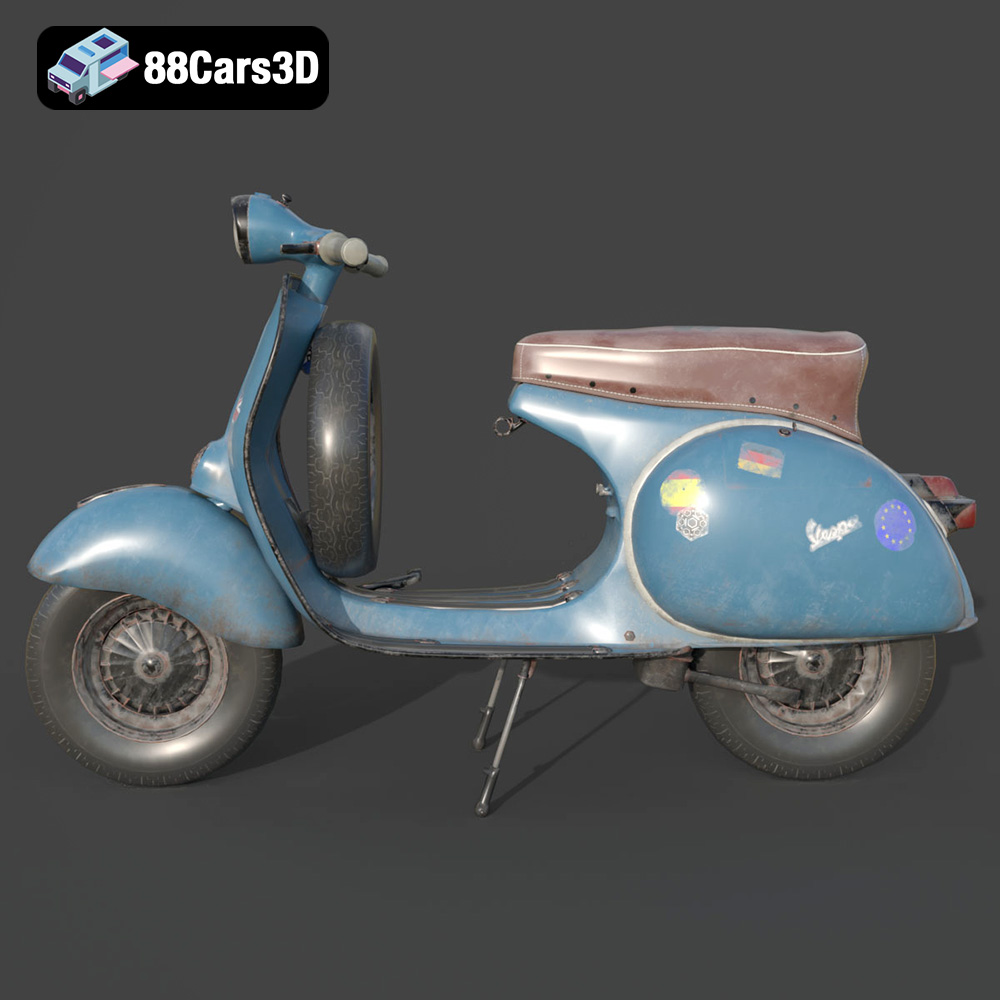
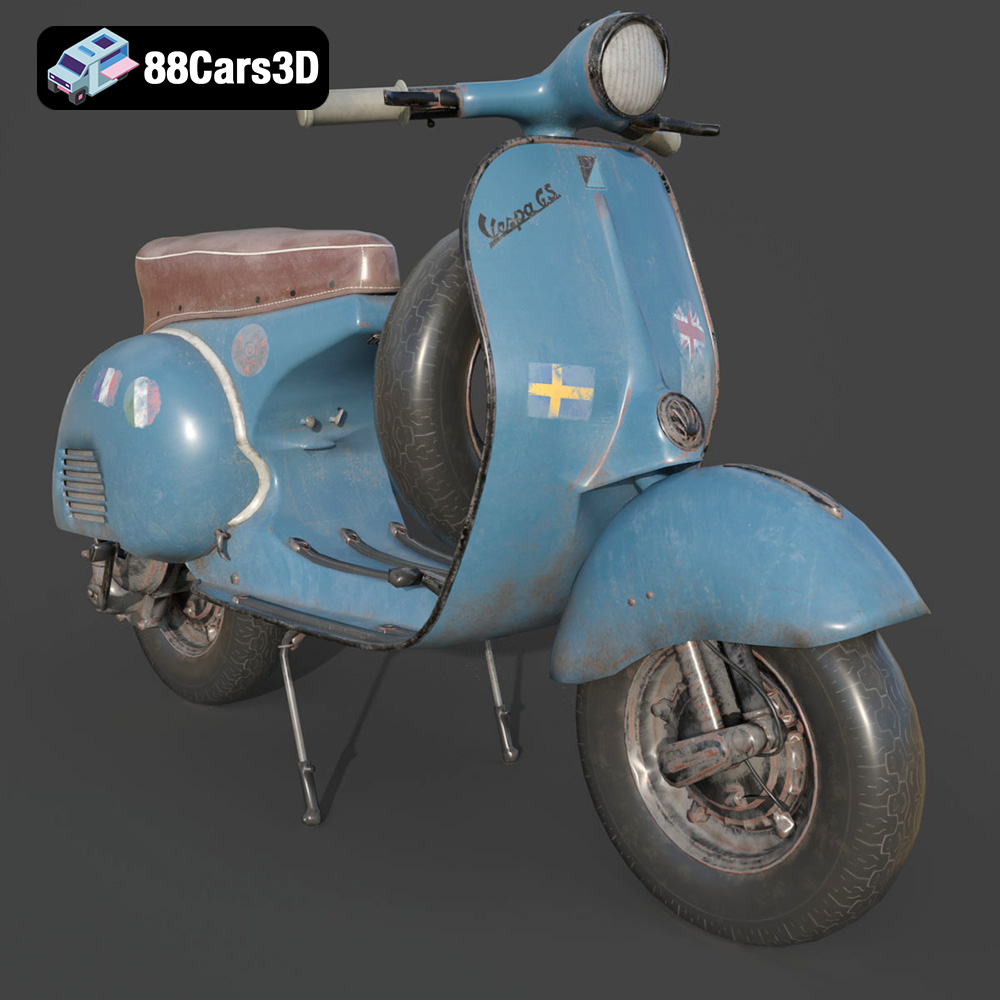
There are few vehicles that transcend mere transportation to become cultural icons, and the Vespa GS 150 (Gran Sport) stands proudly among them. With its sleek, aerodynamic curves, pioneering spirit as the first mass-market sports Vespa, and undeniable Italian flair, this classic scooter isn’t just a machine; it’s a statement. For designers, game developers, architects, and visualization artists, capturing the essence of such a legend in the digital realm is paramount. This isn’t just about recreating shapes; it’s about preserving history, evoking emotion, and delivering unparalleled realism.
Today, the demand for high-fidelity 3D car models and vehicle assets is at an all-time high, driving innovation in how we create and utilize digital content. Whether for breathtaking automotive rendering, immersive game environments, or cutting-edge AR/VR experiences, the quality of your base assets dictates the final output. This is precisely where a meticulously crafted asset like the Vespa GS 150 3D model from 88cars3d.com shines. It offers the perfect blend of historical accuracy, aesthetic appeal, and technical optimization, making it an indispensable tool for any serious professional.
The original Vespa GS 150 wasn’t just a scooter; it was a symbol of post-war Italian design ingenuity and youthful freedom. Its distinctive silhouette, from the swept-back leg shield to the rounded side panels and the iconic 150cc two-stroke engine layout, made it instantly recognizable. Translating this organic, flowing design into a high-quality 3D model requires a deep understanding of both automotive history and advanced digital artistry.
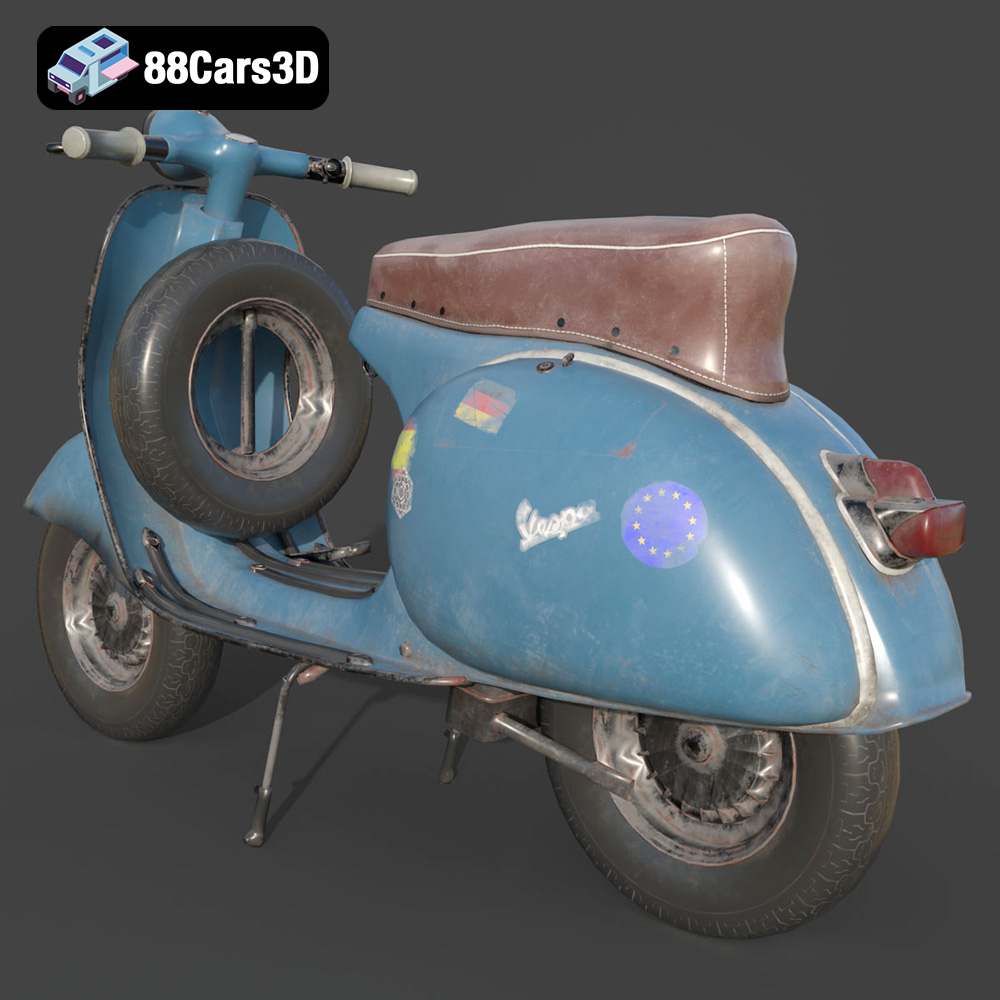
A true-to-life 3D representation must go beyond simple measurements. It needs to convey the “feel” of the original. The Vespa GS 150 3D model achieves this by meticulously replicating the unibody frame geometry and proportions, ensuring every curve and angle reflects the original’s elegance. Details like the classic sweeping exhaust system with authentic muffler details, the round headlamp, and the sleek teardrop taillight are not merely approximations but faithful reproductions. This attention to detail is crucial for projects where historical accuracy is paramount, such as documentaries, period films, or museum-grade virtual exhibits.
Recreating a classic vehicle like the Vespa GS 150 in 3D is a testament to the blend of technical skill and artistic vision. It involves careful study of blueprints, historical photographs, and often, physical examination of the vehicle itself. The goal is to build a digital twin that not only looks correct but behaves correctly within various digital environments. This includes ensuring accurate scale based on the actual vehicle chassis, proper pivot setups for animated components like steering, wheel rotation, and suspension travel, and logical grouping of parts for easy manipulation. For instance, having separate wheels, suspension, and steering components allows animators to bring the scooter to life with realistic motion, whether it’s navigating a virtual street or performing a cinematic camera move.
When acquiring 3D car models or any other digital asset, understanding the various file formats is critical. Each format serves specific purposes, offering different advantages for compatibility, performance, and feature retention across diverse software and engines. The Vespa GS 150 3D model from 88cars3d.com is offered in a comprehensive range of formats, ensuring maximum flexibility for any creative workflow.
The `.blend` format is native to Blender, the powerful open-source 3D creation suite. When you download a `.blend` file, you’re getting a fully editable Blender scene, complete with materials, textures, lighting, and any scene-specific setups like animation or rigging. This format is ideal for Blender users who want full control over the asset, allowing them to easily modify topology, adjust materials using Blender’s node-based shading system, or integrate the model seamlessly into existing Blender projects without any loss of data. It’s the most comprehensive option for those working within the Blender ecosystem.
Autodesk’s Filmbox (`.fbx`) format is a widely adopted proprietary file format for 3D content, particularly favored in the game development and visual effects industries. Its strength lies in its ability to store a broad range of 3D data, including geometry, materials (with texture references), animations, and skeletal information, in a relatively compact package. This makes `.fbx` ideal for importing into real-time engines like Unreal Engine and Unity, where efficiency and consistent data transfer are paramount. Most professional game pipelines rely on `.fbx` for its robust support of animation and compatibility across major 3D software.
The Wavefront Object (`.obj`) format is one of the oldest and most universally supported 3D file formats. It’s a simple, text-based format that primarily stores 3D geometry (vertices, normals, texture coordinates, and faces) and references to external material files (`.mtl`). While it doesn’t support animation or advanced scene data, its widespread compatibility makes it an excellent choice for cross-software transfers. If you need to import the Vespa GS 150 3D model into a niche 3D application or simply require a clean mesh for sculpting or retopology, `.obj` is a reliable option.
The GL Transmission Format Binary (`.glb`) is the binary version of glTF, a royalty-free specification for the efficient transmission and loading of 3D scenes and models by applications. `.glb` files package all necessary data—geometry, textures, animations, and materials—into a single file, making them highly optimized for web-based 3D, augmented reality (AR), and virtual reality (VR) applications. Its compact size and ease of integration into browsers and mobile platforms make it perfect for interactive configurators, virtual showrooms, or displaying 3D models directly on websites, showcasing the Vespa GS 150 in an interactive context.
Stereolithography (`.stl`) is the de facto standard file format for 3D printing. It represents a 3D model as a collection of unconnected triangular facets, defining the surface geometry of an object without any color, texture, or material information. The Vespa GS 150 3D model can be converted to `.stl` for display-scale hobbyists, allowing them to bring the classic scooter into the physical world. This format is processed by slicing software to generate toolpaths for 3D printers, making it essential for anyone looking to fabricate a physical replica.
The Polygon File Format (`.ply`), often referred to as the Stanford Polygon Format, is designed to store 3D data from 3D scanners or 3D modeling software. It can store a variety of properties, including color, transparency, surface normals, and range data, making it a robust format for precision meshes used in CAD, engineering analysis, or capturing detailed real-world objects. While less common for direct rendering, it offers a high-fidelity representation of the mesh for technical applications.
When a model is provided in an `.unreal` format, it signifies an asset package specifically optimized and pre-configured for direct use within Unreal Engine. This often means textures are correctly linked, materials are set up with PBR (Physically Based Rendering) principles, and sometimes even basic blueprints or collision meshes are included. This “engine-ready” asset for real-time environments drastically reduces import and setup time, allowing developers to drop the Vespa GS 150 directly into their projects with minimal fuss, maximizing efficiency in demanding game development pipelines.
The `.max` file format is the native file type for Autodesk 3ds Max, a leading software for 3D modeling, animation, rendering, and compositing. Similar to `.blend` for Blender, a `.max` file provides an editable 3ds Max project, preserving all scene information including geometry, materials, textures, lights, cameras, and animation data. Professionals working within a 3ds Max environment will find this format invaluable for its complete fidelity to the original scene setup, enabling complex animations and high-resolution renders with all original project components intact.
In the world of 3D, high fidelity often comes at the cost of performance. The true artistry lies in striking a balance, especially for assets destined for real-time applications like video games or AR/VR. The Vespa GS 150 3D model exemplifies this balance, offering both visual splendor and technical efficiency.
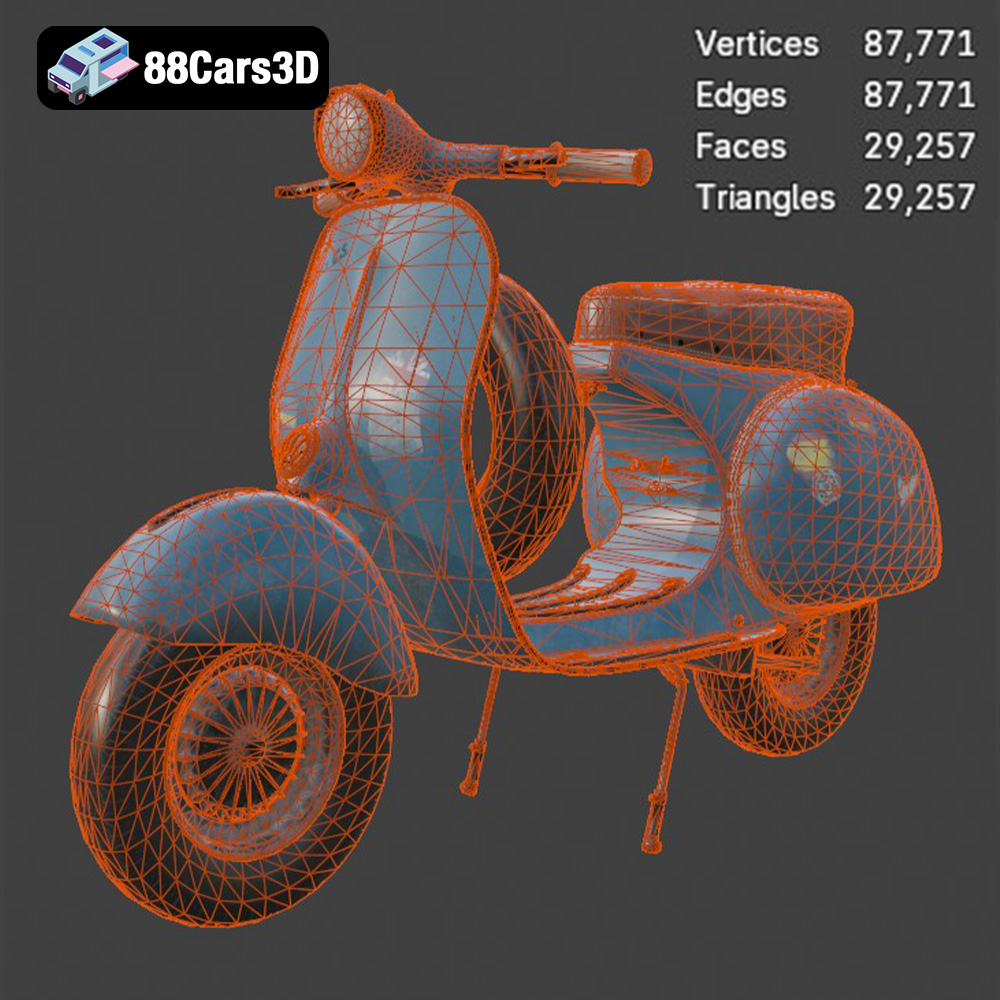
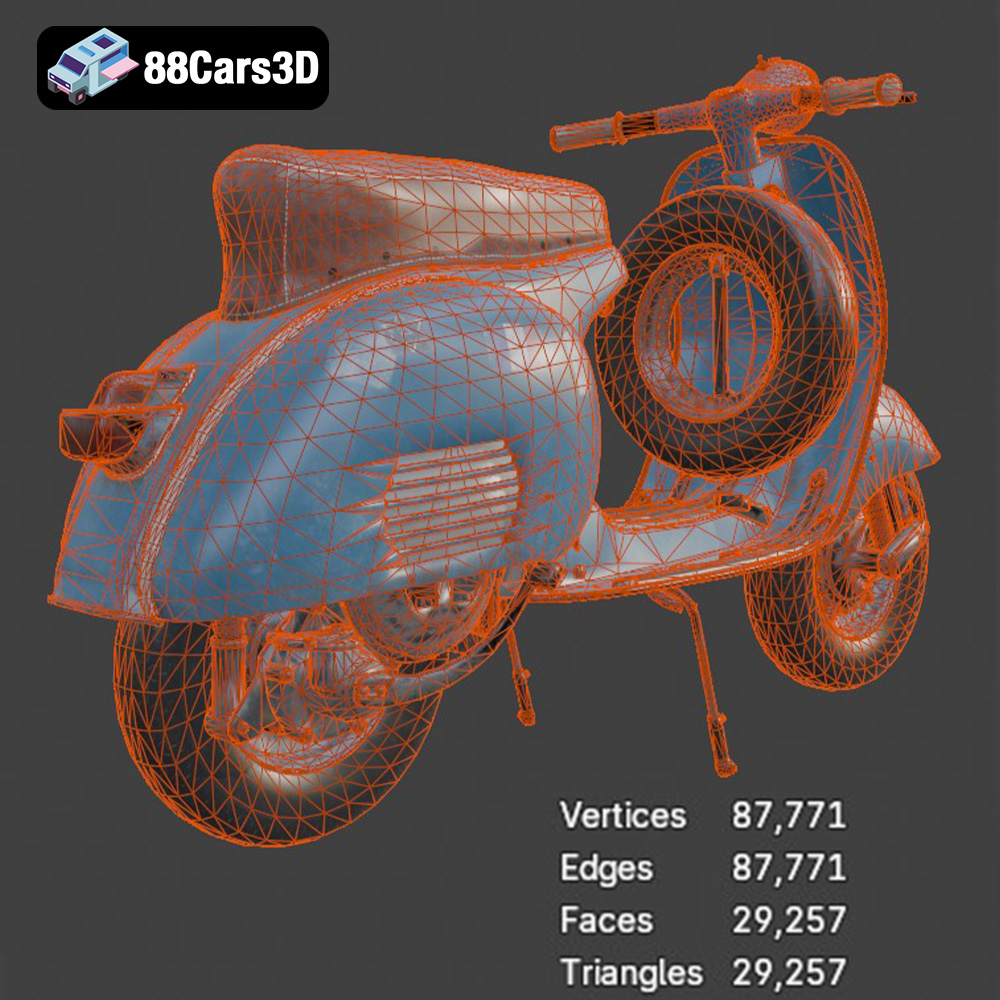
The Vespa GS 150 3D model boasts a well-optimized topology, clocking in at approximately 200,000 triangles. This polycount is a carefully chosen sweet spot. It’s high enough to ensure exceptional visual fidelity, allowing for smooth curves and detailed components, making it perfect for close-up renders and cinematic shots. Simultaneously, it’s optimized enough to maintain game-ready performance in real-time engines like Unreal and Unity. This means developers can populate expansive open-world games or create dynamic racing titles without significantly impacting frame rates, ensuring a fluid and immersive user experience.
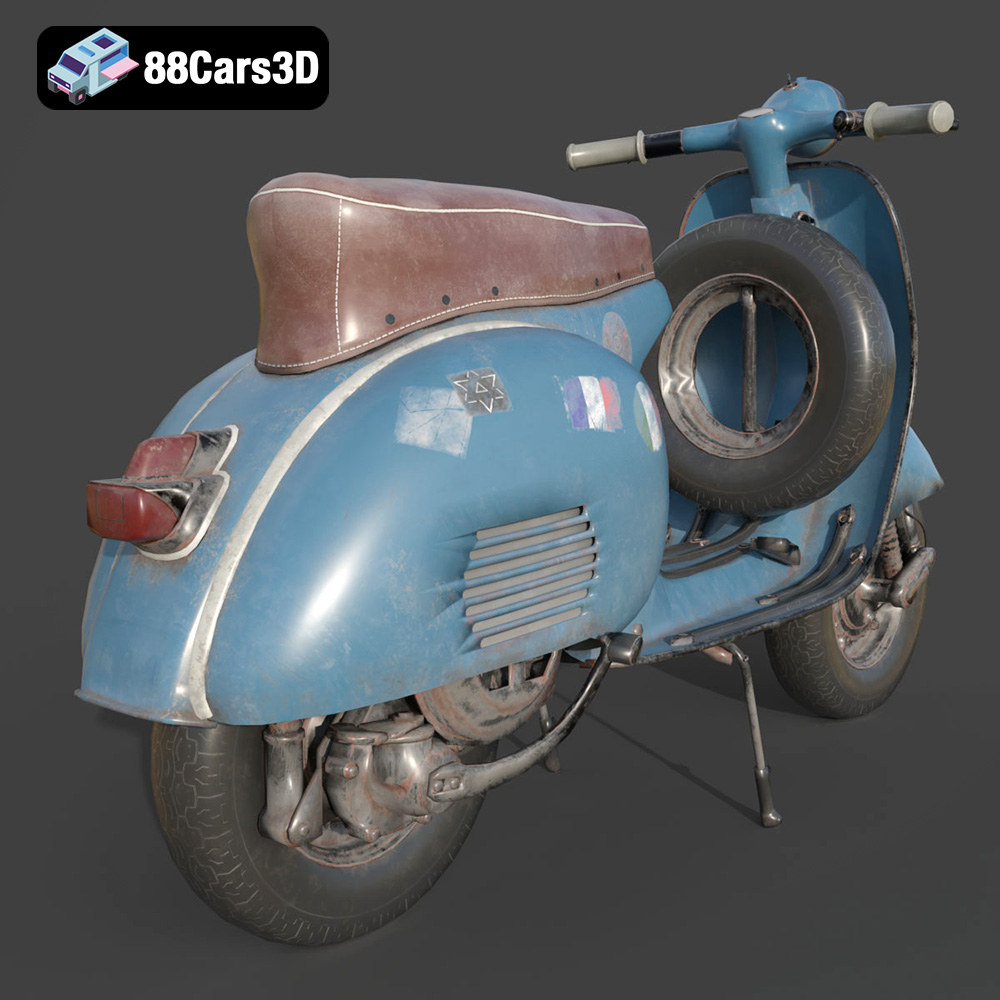
Beyond the raw polycount, the model’s precision extends to its real-world scale accuracy, based on actual vehicle chassis dimensions. This attention to detail is critical for believable integration into any scene. Furthermore, the model is designed with practical application in mind: it features proper pivot setups for crucial components such. The wheels, suspension, and steering components are all separate entities, allowing for realistic animation of turning, braking, and traversing uneven terrain. The detailed engine block, featuring the 150cc 2-stroke casing and cooling fins, and the cockpit details like the tubular handlebars, integrated speedometer, and original Piaggio-style instrument cluster, are not just static meshes but functionally organized elements ready for interactive features.
The versatility of a well-engineered 3D car model like the Vespa GS 150 extends across numerous creative and professional disciplines. Its robust design and multiple file format options make it an invaluable asset for various high-demand applications.
For game developers, authentic and optimized vehicle assets are a cornerstone of immersive experiences. The Vespa GS 150 3D model is ideal for open-world games where players might cruise through virtual European streets, racing titles that require classic vehicles with accurate physics, or even simulation games needing historically significant props. Its optimized polycount ensures smooth performance, while features like separate components for animation and optimized geometry for first-person POV in gaming provide crucial building blocks for engaging gameplay mechanics and cinematic sequences.
Augmented Reality (AR) and Virtual Reality (VR) are transforming how we interact with digital content. The Vespa GS 150 3D model is perfect for immersive virtual showrooms, allowing potential customers to explore the scooter from every angle, customize colors, or even “sit” on it in a VR environment. For mobile AR experiences, its `.glb` format ensures efficient delivery and high-quality rendering on various devices, enabling users to place the classic scooter in their real-world surroundings, perhaps for a nostalgic photo op or a dynamic product showcase.
In the realm of automotive rendering and visualization, the Vespa GS 150 offers unparalleled aesthetic appeal. Marketing agencies and automotive brands can leverage this model for high-resolution brand campaigns, creating stunning lifestyle scenes that evoke a sense of freedom and retro charm. From studio lighting setups that highlight its elegant lines to dynamic renders within bustling cityscapes, the model’s detailed geometry and potential for material customization (matte, gloss, metallic finishes) allow for boundless creative expression in advertising and product visualization.
The digital world can seamlessly merge with the physical through 3D printing. This Vespa GS 150 3D model is convertible to `.stl` format, making it accessible for display-scale hobbyists and collectors. Imagine holding a finely detailed replica of this iconic scooter, perhaps at 1:12, 1:18, or 1:24 scale. This application provides a unique opportunity to own a piece of automotive history, tangible and customizable, suitable for desk display or intricate diorama scenes. The blend of digital design and physical craftsmanship opens up a whole new dimension of engagement for enthusiasts.
Integrating a high-quality 3D car model like the Vespa GS 150 into a professional pipeline requires understanding specific software workflows and technical considerations. The versatility of the included file formats simplifies this process across major platforms.
For artists focused on stunning visuals, the `.max` and `.blend` files provide native access within 3ds Max and Blender, respectively. In 3ds Max, you can leverage advanced rendering engines like V-Ray or Corona to create photorealistic images. This involves setting up complex studio lighting, applying custom PBR materials, and fine-tuning camera angles to showcase the Vespa’s iconic design. Animators can utilize 3ds Max’s robust toolset to create sophisticated sequences, like the scooter cruising down a scenic road with dynamic camera movements. Similarly, Blender users can harness Cycles or Eevee for equally impressive results, utilizing its powerful shader editor to dial in paint imperfections, metallic flairs, and tire wear to achieve hyper-realism. The separate, animatable components of the model are crucial here, allowing for precise control over motion blur and dynamic interactions.
Game developers and real-time visualization specialists will find the `.fbx` and `.unreal` formats particularly useful for Unreal Engine. Importing the `.fbx` file allows for straightforward setup of materials within Unreal’s robust material editor, where you can assign high-resolution textures for Albedo, Normal, Roughness, Metallic, and Ambient Occlusion. The `.unreal` format further streamlines this, often providing pre-configured assets ready to drag and drop into your scene. Once in Unreal, you can leverage Lumen for global illumination, Nanite for optimized geometry rendering, and implement vehicle physics blueprints to make the Vespa driveable and interactive within your game or virtual experience. Collision meshes can be automatically generated or custom-designed for realistic interactions with the environment.
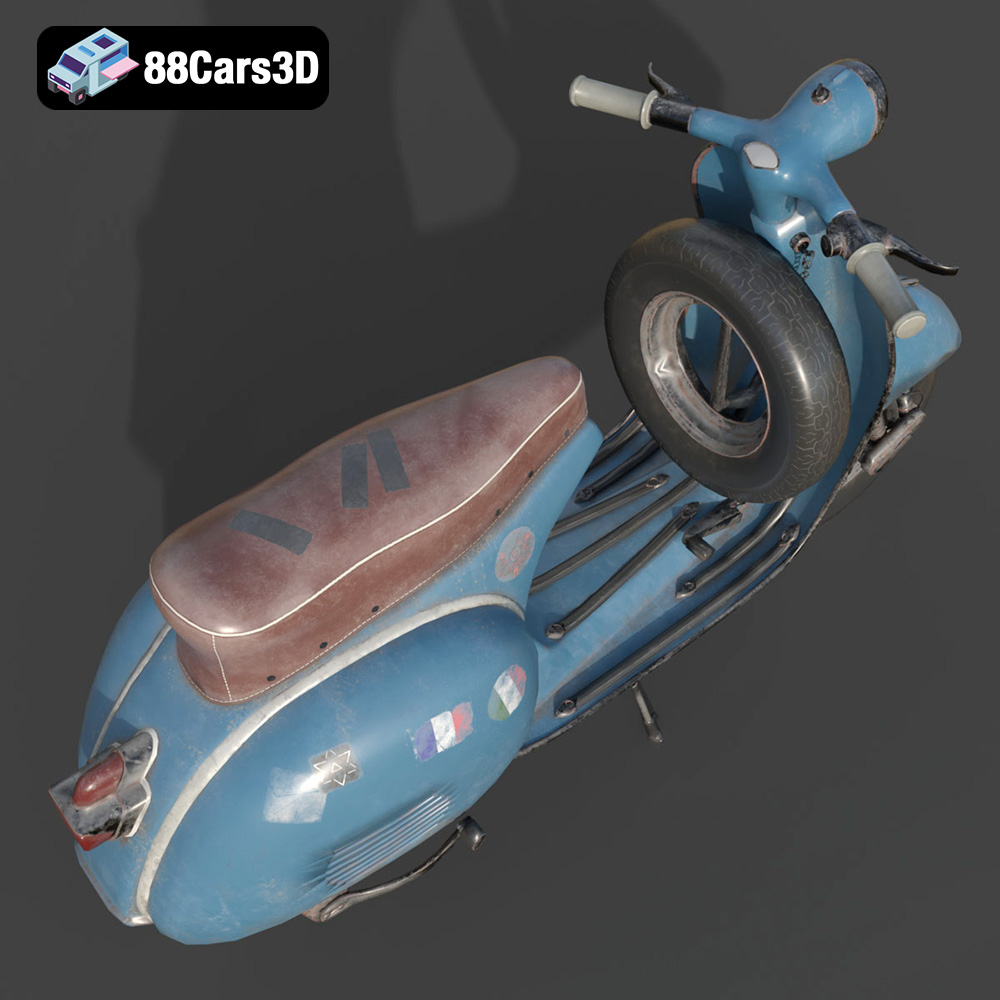
The Vespa GS 150 3D model is designed for extensive customization. Regardless of your chosen software, a PBR (Physically Based Rendering) workflow is essential for achieving realistic materials. This involves creating or modifying textures for various channels: Base Color (for body paint, seat leather, chrome), Normal (for subtle surface details like stitching or engine fins), Roughness (to control specularity from matte to glossy), Metallic (for metallic components like chrome or engine parts), and Ambient Occlusion (for subtle self-shadowing). Artists can easily change body colors, adjust material finishes (matte, gloss, metallic), or even modify tire textures to create off-road or street variants, adapting the model to diverse project needs. This level of flexibility ensures that the Vespa GS 150 isn’t just a static model but a dynamic asset capable of evolving with your creative vision.
The journey of a 3D model doesn’t always end on a screen. For enthusiasts and collectors, the ability to 3D print a physical replica of the Vespa GS 150 adds an exciting dimension. The digital model is perfectly suited for this, with specific considerations to ensure a successful print.
For desktop display and hobbyist projects, scales such as 1:12, 1:18, or 1:24 are recommended. These scales provide a good balance between manageable print size and the retention of fine details. When it comes to materials, resin printing (SLA/DLP) is highly recommended over FDM (Fused Deposition Modeling) for the Vespa GS 150. Resin printers excel at reproducing the model’s intricate details, such as the engine fins, handlebar controls, and spoke patterns on the wheels, with superior precision and smoother surface finishes. An optimal layer height of 0.04–0.12 mm will capture even the subtlest nuances of the design.
Successful 3D printing of complex models like the Vespa requires careful attention to support structures. Parts with overhangs or delicate features, such as the exhaust system, mirrors, and handlebars, will necessitate supports to prevent deformation during printing. The frame is best printed angled for structural integrity, while wheels should be printed separately to ensure their circularity and detail. After printing, post-processing is crucial. This typically involves removing supports, curing resin prints, and then a series of sanding steps to smooth surfaces. Finally, priming and painting with authentic factory colors, perhaps with metallic finishes for chrome parts, will bring your physical Vespa GS 150 model to life with a professional, showroom-quality look.
The Vespa GS 150 is more than just a scooter; it’s a timeless design icon, and bringing its essence into the digital realm offers limitless creative possibilities. The Vespa GS 150 3D model from 88cars3d.com provides a meticulously crafted, highly optimized asset that seamlessly integrates into a myriad of professional workflows. From generating stunning automotive rendering for marketing campaigns and populating immersive game worlds with authentic game assets, to creating interactive AR/VR experiences and even tangible 3D-printed collectibles, this model serves as a versatile foundation.
With its balanced polycount, real-world scale, separated animated components, and extensive file format support (from `.blend` to `.fbx`, `.obj`, `.glb`, `.stl`, `.ply`, `.unreal`, and `.max`), it empowers artists and developers to achieve their creative visions without compromise. Whether you’re a seasoned professional seeking high-quality 3D car models for your next blockbuster project or an enthusiast looking to immortalize a classic, this Vespa GS 150 3D model is an investment in quality, performance, and unparalleled realism. Explore this and many other premium 3D models available at 88cars3d.com to elevate your digital creations.
The Vespa GS 150 (Gran Sport) is widely regarded as one of the most beautiful and iconic scooters ever produced. Known for its elegant aerodynamic curves, historical significance as the first mass-market sports Vespa, and unparalleled Italian styling, this classic masterpiece defined a generation. It features the signature swept-back leg shield, rounded side panels, and the distinctive 150cc two-stroke engine layout. This high-quality 3D model features a well-optimized topology (~200,000 triangles), ensuring exceptional visual fidelity while maintaining game-ready performance. The model is meticulously crafted to capture the essence of the classic scooter, making it a perfect asset for close-up renders, real-time engines, and detailed environment populating. Perfect for classic European street scenes, retro lifestyle visualizations, virtual showrooms, and historic racing games.
$39.99
.blend
.fbx
.glb
.max
.obj
.ply
.rendering
.scooter
.stl
.unreal
.vespa
classic-scooter
game asset
game-ready
gs-150
low-poly
motorcycle-3d-model
optimized
retro-scooter
scooter-3d-model
VR/AR