Get 20% OFF All Premium 3D & STL Models!

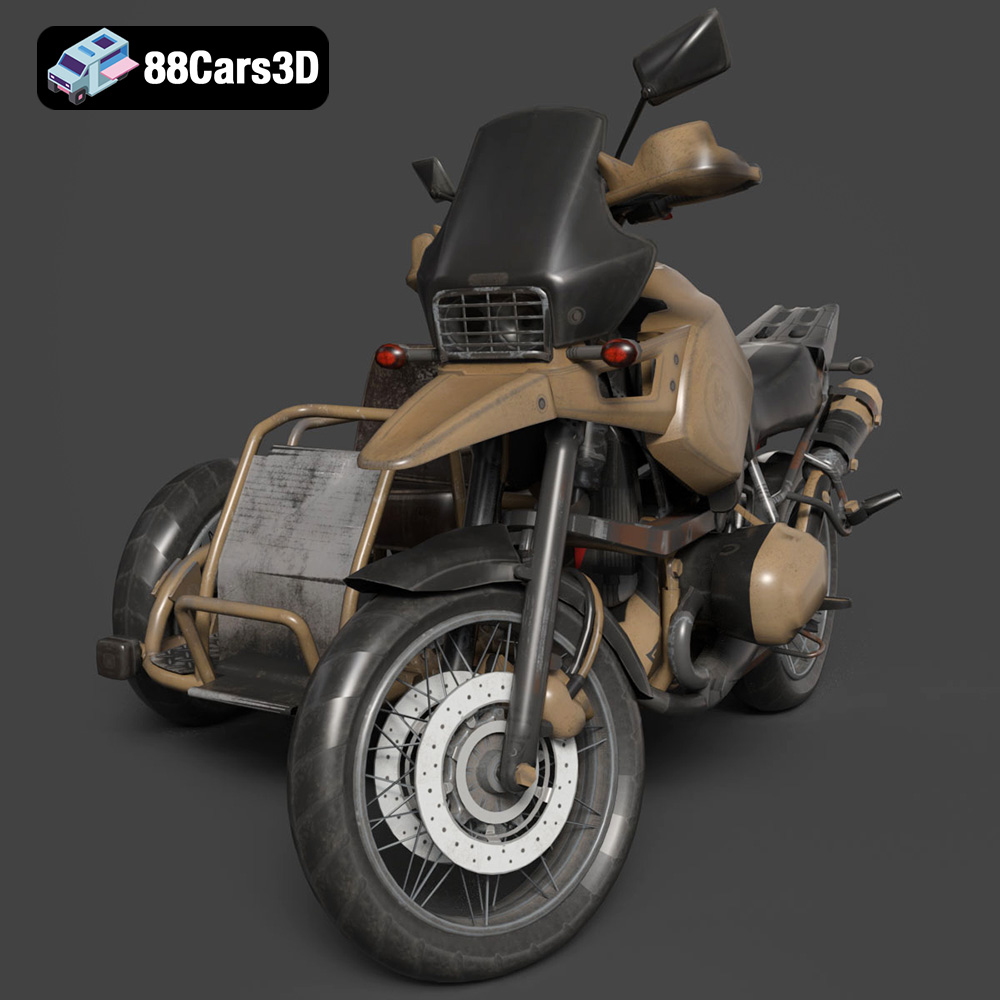
The landscape of digital creation is ever-evolving, driven by an insatiable demand for realism, immersion, and performance. From blockbuster video games to cutting-edge architectural visualizations, the quality of 3D assets forms the bedrock of any successful project. Automotive models, in particular, stand as a testament to the intricate balance of artistry and engineering, bringing vehicles to life in virtual realms. This is especially true for specialized assets like the Custom Off-Road BMW R1150GS Adventure Sidecar 3D Model, a remarkable example of how detailed craftsmanship elevates digital content.
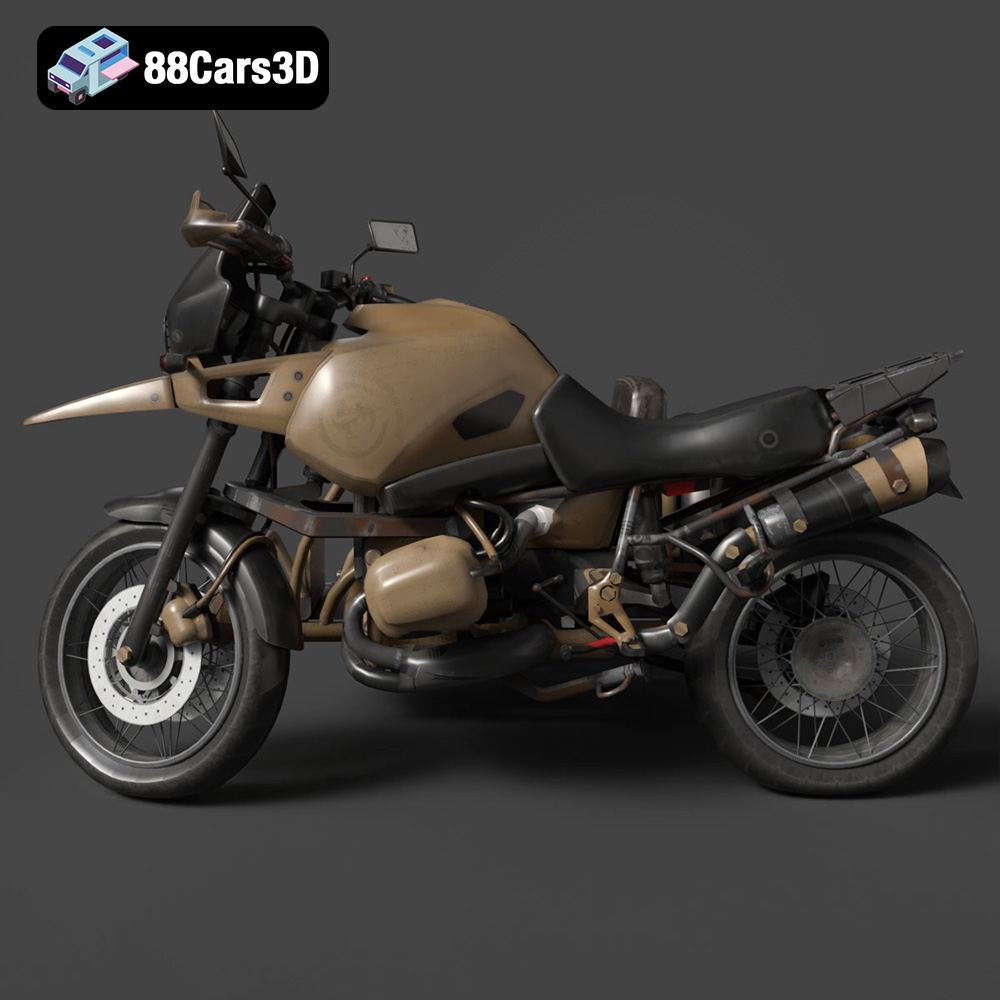
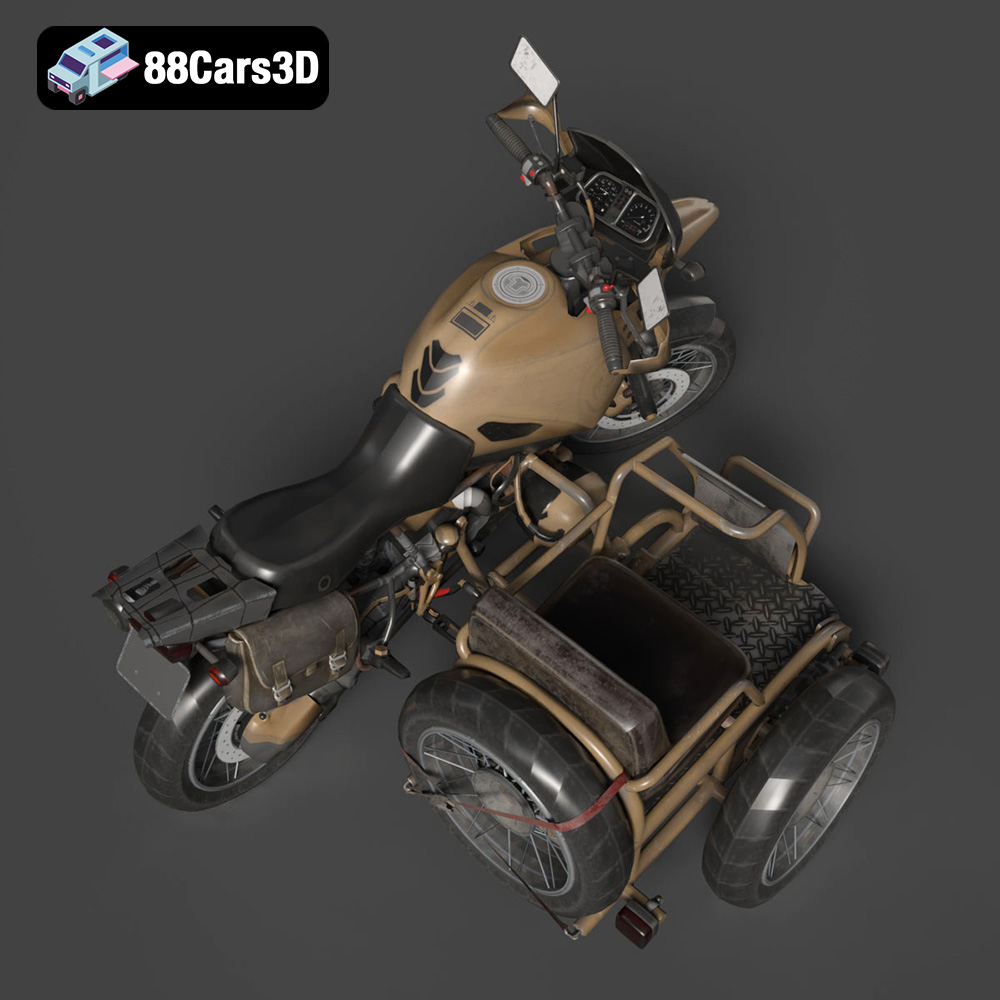
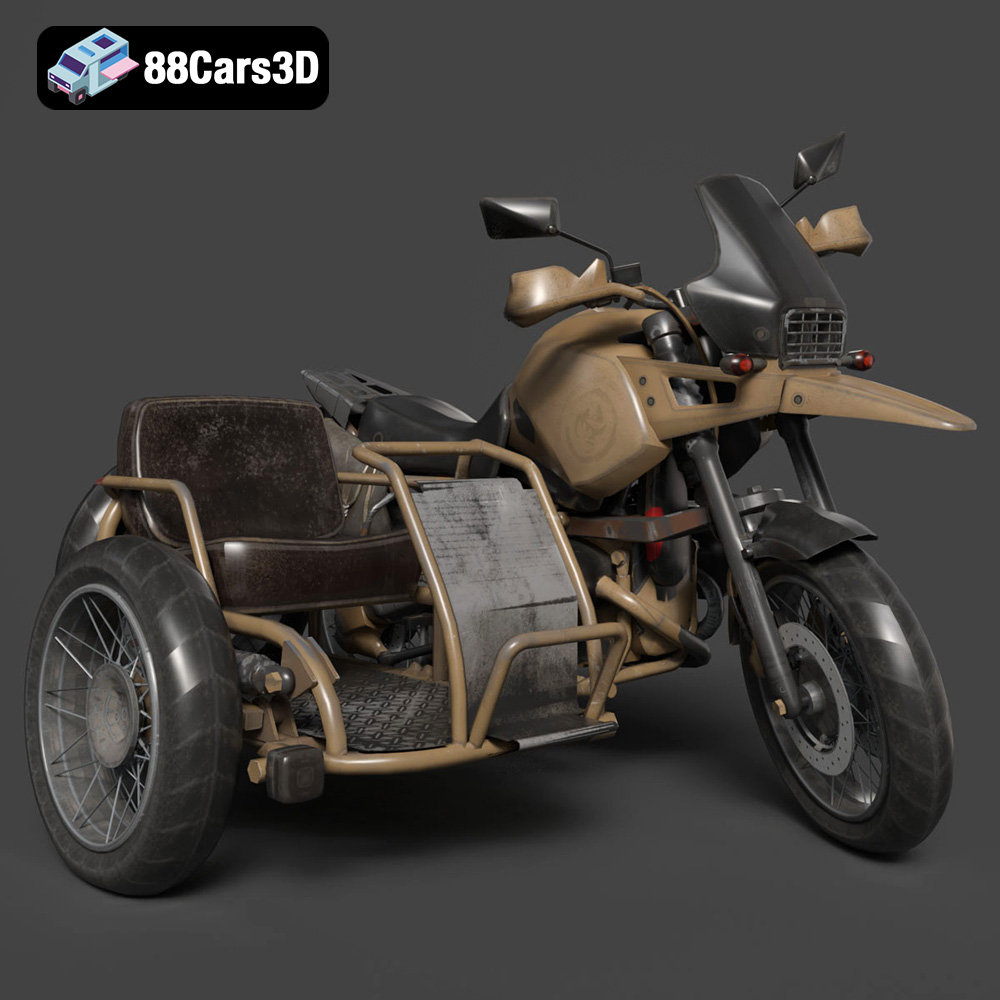
At 88cars3d.com, we understand that creators, developers, and designers require more than just a pretty model; they need a robust, optimized, and versatile asset that seamlessly integrates into diverse pipelines. The Custom Off-Road BMW R1150GS Adventure Sidecar 3D Model is precisely that – a meticulously crafted digital replica of an iconic overland expedition vehicle, ready to tackle any virtual terrain. Its distinct features, from the massive dual-sport fuel tank and aggressive knobby tires to the indestructible shaft drive and integrated heavy-duty sidecar, are all faithfully rendered, offering unparalleled visual fidelity for rendering, game development, AR/VR, and beyond. This model isn’t just a static object; it’s a foundation for countless digital stories and experiences.
Navigating the diverse world of 3D modeling often begins with understanding the various file formats available. Each format serves a specific purpose, offering unique advantages for different stages of a project, from initial modeling to final rendering or real-time deployment. The Custom Off-Road BMW R1150GS Adventure Sidecar 3D Model, for instance, is offered in a comprehensive suite of formats, ensuring maximum compatibility and utility for professionals across various industries.
The `.blend` file format is Blender’s native project file. It encapsulates an entire Blender scene, including not just the mesh data, but also materials, textures, lighting, cameras, animations, physics simulations, and even custom scripts. This makes it an incredibly powerful and self-contained format for Blender users, offering full editability. When you download the Custom Off-Road BMW R1150GS Adventure Sidecar 3D Model in `.blend` format, you’re getting the complete, editable scene file, allowing for deep customization of its topology, UVs, materials, and potential animation setups within Blender, making it ideal for artists who wish to dissect and re-purpose every aspect of the model.
`.fbx`, or Filmbox, is a proprietary file format owned by Autodesk, widely recognized as the industry standard for 3D data interchange. Its strength lies in its ability to store a vast array of 3D data, including geometry, materials (with basic properties), textures, rigging, skinning, and animations. This makes `.fbx` an invaluable bridge between different 3D software applications like 3ds Max, Maya, Blender, and game engines such as Unreal Engine and Unity. For the Custom Off-Road BMW R1150GS Adventure Sidecar, the `.fbx` version is optimized for real-time pipelines, ensuring that its approximately 180,000 triangles and PBR materials translate efficiently into game environments, making it perfect for rapid prototyping and deployment.
The `.obj` (or Wavefront OBJ) format is one of the oldest and most universally supported 3D file formats. It primarily stores 3D geometry – vertices, faces, normals, and UV coordinates – and references external `.mtl` (material library) files for material properties. While it doesn’t support rigging or animation, its simplicity and wide compatibility make it an excellent choice for basic mesh transfer between virtually any 3D software. For the Custom Off-Road BMW R1150GS Adventure Sidecar, the `.obj` file ensures that anyone, regardless of their primary software, can import and work with the core geometric data of this intricate model.
`.glb` (GLB File Format) is the binary version of glTF (Graphics Library Transmission Format), designed for efficient transmission and loading of 3D scenes and models by applications. It’s particularly optimized for augmented reality (AR), virtual reality (VR), and web-based 3D applications because it packages all necessary assets – geometry, materials, textures, animations – into a single, self-contained file. This means faster load times and simpler integration into web browsers or mobile AR/VR experiences. The `.glb` version of the BMW R1150GS Adventure Sidecar 3D Model is perfect for showcasing this rugged vehicle in an immersive web configurator or an interactive mobile AR app.
`.stl` (stereolithography) is the de facto standard file format for 3D printing. It represents a 3D model as a series of connected triangles, defining only the surface geometry of an object without color, texture, or other CAD attributes. While simple, this triangular mesh is exactly what 3D printers need to interpret and build a physical object layer by layer. The Custom Off-Road BMW R1150GS Adventure Sidecar is convertible to `.stl`, allowing hobbyists and professionals to bring this digital masterpiece into the physical world, printing intricate display models at recommended scales like 1:12 or 1:18, leveraging resin printing for fine details.
`.ply` (Polygon File Format, or Stanford Triangle Format) is another format used to store 3D data, particularly from 3D scanners. It can store various properties beyond just geometry, such as color, transparency, and normal vectors per vertex or face, offering more detail than `.obj` for certain applications. `.ply` is often used in scientific and engineering contexts for CAD, reverse engineering, and analyzing complex geometries. While less common for direct asset exchange in entertainment, its inclusion for the BMW Sidecar model speaks to its versatility for precision applications where detailed mesh data is paramount.
The `.unreal` format (often packaged as `.uasset` files within an Unreal project) signifies an asset specifically prepared for direct import and optimal performance within the Unreal Engine. This typically means the model has been rigorously checked for topology, UVs, material setup (PBR workflow), collision meshes, and LODs (Levels of Detail) to meet Unreal’s stringent real-time requirements. While not a direct file download in the same sense as `.fbx` or `.obj`, its mention implies that the Custom Off-Road BMW R1150GS Adventure Sidecar 3D Model is delivered with all necessary configurations for a drag-and-drop experience in Unreal, saving countless hours of optimization.
`.max` is the native file format for Autodesk 3ds Max, a powerful 3D modeling, animation, rendering, and compositing software. Similar to `.blend` for Blender, a `.max` file contains the entire scene, including geometry, modifiers, materials, lights, cameras, animation timelines, and plugins. It offers full editability and access to all the advanced features of 3ds Max. For artists whose primary DCC (Digital Content Creation) tool is 3ds Max, the `.max` version of the Custom Off-Road BMW R1150GS Adventure Sidecar provides the highest level of control and flexibility for animation, complex rendering setups, and integrating the model into existing 3ds Max projects.
Understanding these formats is crucial for selecting the right tool for the job. The availability of the Custom Off-Road BMW R1150GS Adventure Sidecar 3D Model in such a wide array of formats from 88cars3d.com ensures that it is a truly versatile and future-proof investment for any digital project.
Creating a high-quality 3D automotive model, especially one as complex and feature-rich as the Custom Off-Road BMW R1150GS Adventure Sidecar, involves a meticulous blend of artistic skill and technical precision. It’s not merely about replicating a vehicle; it’s about understanding its essence, optimizing its digital footprint, and preparing it for diverse interactive environments.
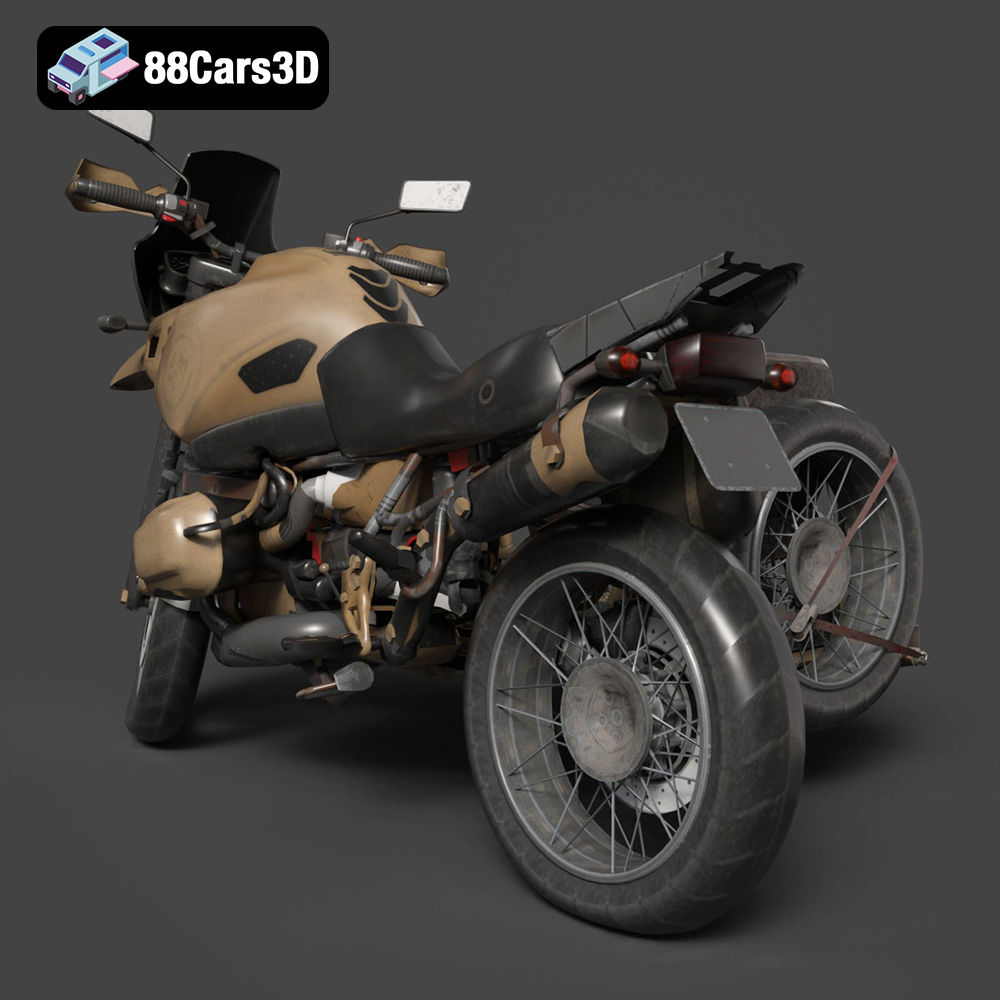
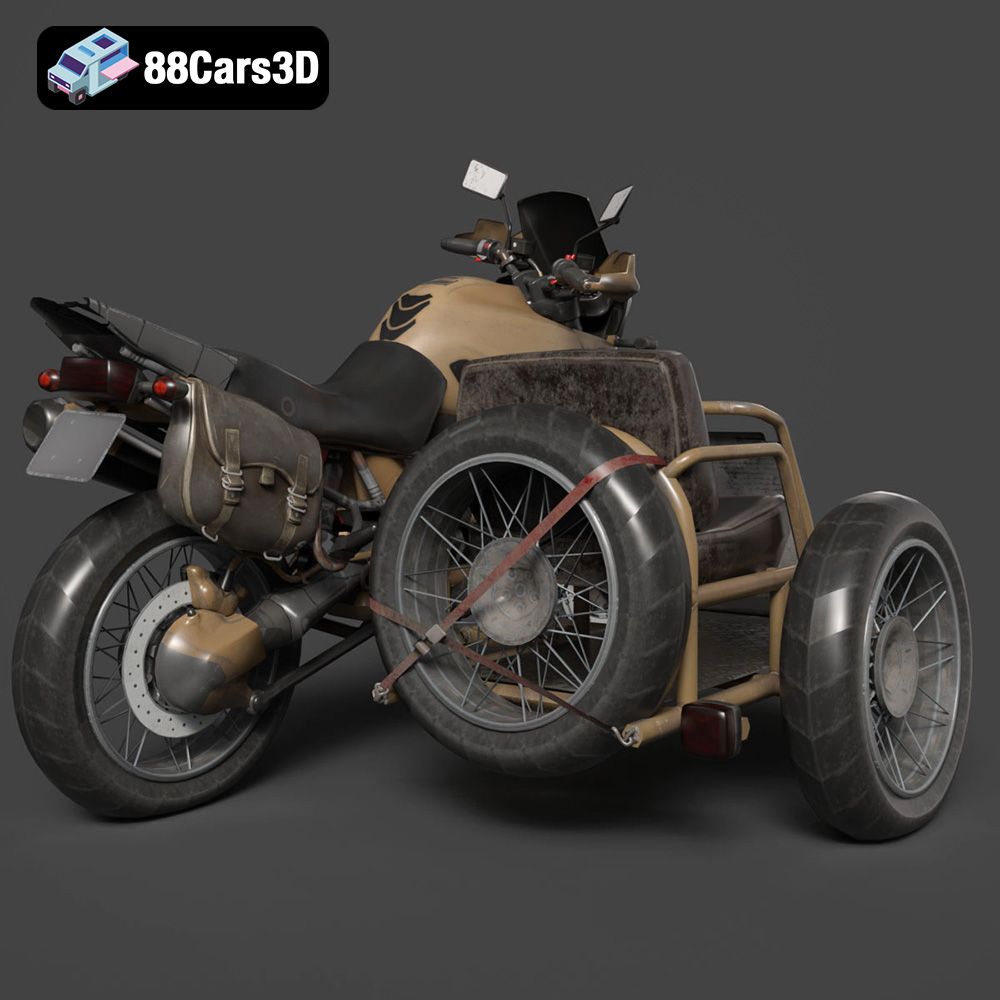
The foundation of any exceptional 3D model lies in its geometry. For the Custom Off-Road BMW R1150GS Adventure Sidecar, this means starting with accurate real-world scale and proportions. Every curve of the frame, the distinctive asymmetric headlights, the robust crash bars, and the detailed 1,130cc horizontally opposed boxer twin engine block must be faithfully sculpted. This attention to detail extends to the high-clearance exhaust system, wire-spoke wheels with aggressive knobby tires, and the intricate Telelever front and Paralever rear suspension systems, complete with sidecar integration. Such granular modeling ensures that the digital asset holds up under close scrutiny, from cinematic renders to first-person gaming perspectives. The cockpit, too, receives significant attention, featuring an ergonomic dual-stepped adventure saddle, wide enduro handlebars, and a detailed analog instrument cluster, all optimized for immersive experiences.
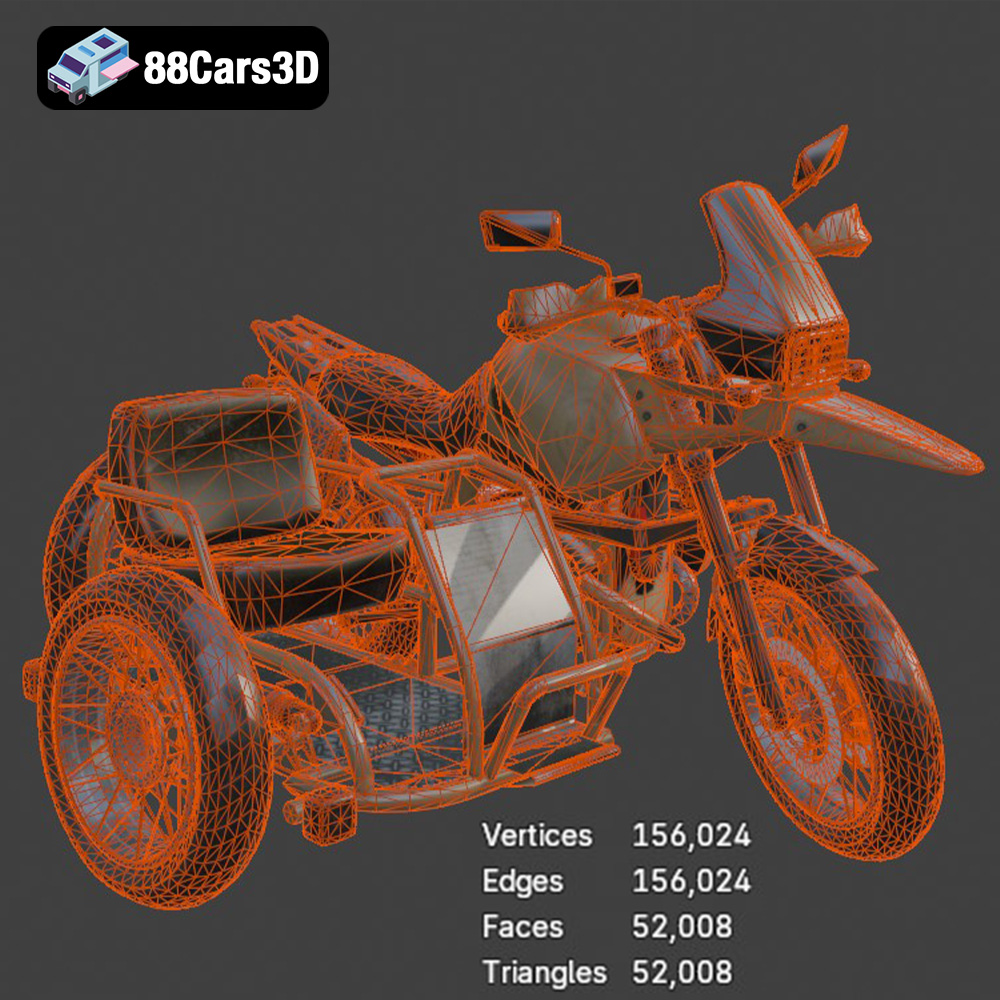
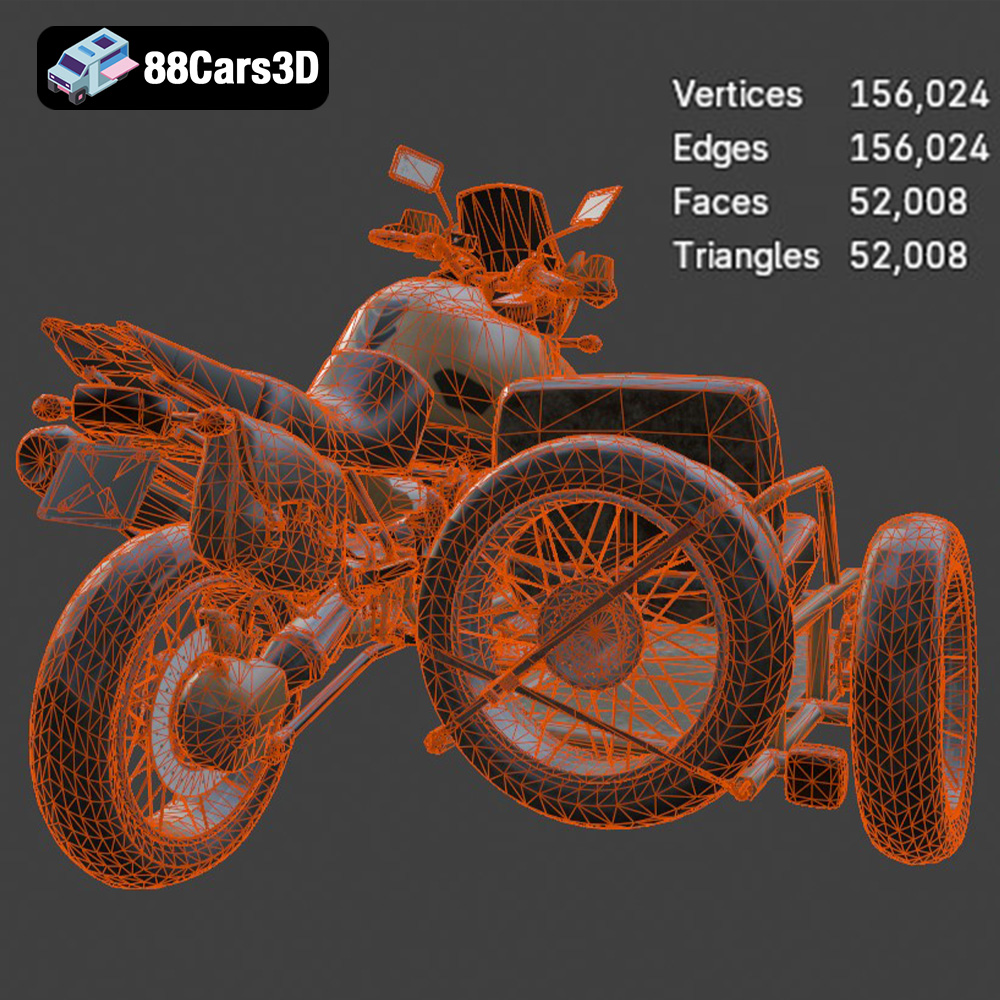
While detail is paramount, performance in real-time applications like games and AR/VR is equally critical. This is where “game-ready optimization” comes into play. The Custom Off-Road BMW R1150GS Adventure Sidecar 3D Model boasts an approximate 180,000 triangles. This specific polycount is a carefully chosen balance, providing high-end visual realism without unnecessarily taxing the GPU, ensuring smooth frame rates in demanding engines like Unreal and Unity.
Optimization goes beyond just triangle count. It includes clean, efficient topology (quad-based meshes are preferred), proper UV mapping for texture efficiency, and the correct setup of pivot points for animatable parts like wheels, suspension, and steering. This allows developers to easily animate the vehicle’s mechanics, enhancing realism in driving simulations or interactive sequences.
Textures and materials are the skin and soul of a 3D model. For a vehicle like the BMW R1150GS Adventure Sidecar, realistic material finishes are crucial – from the metallic gleam of the engine components to the matte finish of the plastic guards and the rugged texture of the knobby tires. Physically Based Rendering (PBR) workflows are essential here, ensuring that materials react accurately to light, whether in a studio rendering environment or a dynamic game world. This involves meticulously crafted albedo, normal, roughness, metallic, and ambient occlusion maps that contribute to the model’s overall visual authenticity.
A truly professional 3D asset is one that integrates seamlessly into existing creative pipelines. The Custom Off-Road BMW R1150GS Adventure Sidecar 3D Model is designed with this principle in mind, offering unparalleled flexibility for artists and developers working in various industry-standard software packages.
For those working within Autodesk 3ds Max, the `.max` file format provides complete control. Artists can leverage 3ds Max’s robust modeling tools for further customization, perhaps adding unique accessories or battle damage for a post-apocalyptic scenario. The model’s separated components – wheels, suspension, steering – are ideal for setting up complex rigging systems using 3ds Max’s animation tools, allowing for realistic driving mechanics, suspension compression, and steering articulation. V-Ray or Corona Renderer can then be used to achieve photorealistic automotive rendering, showcasing the BMW’s intricate details under various lighting conditions, perfect for marketing campaigns or high-end visualizations.
Blender, as a powerful open-source solution, is widely adopted by indie developers and studios alike. The `.blend` file for the Custom Off-Road BMW R1150GS Adventure Sidecar is a complete scene, allowing Blender artists to immediately dive into modifying the model. They can adjust materials using Blender’s Cycles or Eevee render engines, integrate the model into custom environments, or even port it directly to game engines via Blender’s export options. Its game-ready optimization ensures that even a small team can integrate this high-quality asset without significant performance overhead, accelerating development for open-world games or racing titles.
Unreal Engine is at the forefront of real-time rendering and interactive experiences. The Custom Off-Road BMW R1150GS Adventure Sidecar 3D Model, with its “game-ready” optimization and `.fbx` (or implied `.unreal` asset) format, is a perfect fit. Developers can import the model, apply its PBR textures, set up physics assets for realistic vehicle dynamics, and even create interactive blueprints for driveable gameplay. Its balanced polygon count (approx. 180,000 triangles) ensures it performs optimally within Unreal’s demanding environments, whether it’s a vast open-world map or a detailed VR garage. This makes it an ideal choice for game development, virtual production, and high-fidelity real-time visualization projects.
The utility of a high-quality 3D model extends far beyond traditional screen-based rendering. Advanced assets like the Custom Off-Road BMW R1150GS Adventure Sidecar 3D Model are becoming indispensable for emerging technologies such as Augmented Reality (AR), Virtual Reality (VR), and even physical fabrication through 3D printing.
Augmented and Virtual Reality demand highly optimized and visually compelling assets to create believable immersive environments. The `.glb` format, included with this BMW Sidecar model, is specifically engineered for these applications, bundling all necessary data into a single, efficient file. Imagine placing this rugged motorcycle in a real-world setting through a mobile AR application, allowing potential customers to visualize its scale and detail in their driveway, or experiencing it in a full VR simulation, perhaps exploring its mechanics in an interactive showroom. Its optimized geometry ensures smooth performance on AR-capable devices and VR headsets, making it a powerful tool for virtual showrooms, configurators, and immersive training simulations.
The ability to transition a digital asset into a tangible object is a significant advantage. The Custom Off-Road BMW R1150GS Adventure Sidecar 3D Model is convertible to `.stl` format, making it suitable for 3D printing. Hobbyists and collectors can print their own scaled replicas of this unique vehicle, with recommended scales like 1:12, 1:18, or 1:24 allowing for impressive detail.
For successful 3D printing, specific considerations are provided:
Post-processing, including sanding, priming, and applying authentic factory colors or custom finishes, can bring these printed models to life, creating stunning display pieces for enthusiasts and collectors.
The Custom Off-Road BMW R1150GS Adventure Sidecar 3D Model isn’t just an asset; it’s a solution that caters to a wide array of professional needs. Its versatility is its strength, making it relevant across multiple creative industries.
Consider a developer working on a post-apocalyptic survival game. The Custom Off-Road BMW R1150GS Adventure Sidecar could be a central vehicle, customized with makeshift armor and scavenged parts, serving as the player’s primary mode of transport through a ruined landscape. Its game-ready optimization ensures that it integrates seamlessly into the game engine, maintaining high frame rates even amidst complex environments and other interactive elements. For an off-road racing simulator, the model’s accurately separated and pivot-set components allow for realistic physics and animation, providing an authentic driving experience over challenging terrains.
While not an architectural element itself, a vehicle like the BMW Sidecar can dramatically enhance architectural visualizations. Imagine a luxury cabin nestled deep in a mountainous wilderness, rendered with this adventure rig parked outside. It instantly adds a narrative, suggesting a lifestyle of exploration and rugged elegance, grounding the architectural design in a compelling human story. Designers can use this model in renders to convey a sense of adventure, freedom, and connection with nature, elevating the emotional impact of their presentations.
For BMW Motorrad itself, or related adventure gear brands, this 3D model offers immense potential for digital marketing. High-quality renders can be used for online advertisements, social media campaigns, or interactive product showcases. Imagine a 360-degree interactive viewer on a website, allowing potential buyers to explore every angle of the customized sidecar, or an animated sequence showcasing its capabilities in a dynamic virtual environment. The model’s customizability – from changing body colors to adjusting material finishes – allows brands to tailor content to specific campaigns and target audiences.
Investing in a premium 3D model like the Custom Off-Road BMW R1150GS Adventure Sidecar from 88cars3d.com is about more than just immediate utility; it’s about future-proofing your projects and maximizing creative potential through customization.
The inherent design of this model allows for extensive customization, empowering artists to adapt it to their specific vision without needing to start from scratch.
These customization options mean the single asset can serve multiple purposes across various projects, providing excellent value.
The Custom Off-Road BMW R1150GS Adventure Sidecar 3D Model is built with modularity and clean topology, making it a robust foundation for further development. Artists can easily add custom accessories, integrate it with other vehicles or characters, or even break it down for detailed component studies. Its real-world scale and accurate geometry make it a reliable reference for any automotive design project, ensuring that it remains a valuable asset for years to come, evolving alongside your creative needs.
In the fast-paced world of digital content creation, the demand for high-quality, optimized, and versatile 3D assets is paramount. The Custom Off-Road BMW R1150GS Adventure Sidecar 3D Model stands as a prime example of an asset that excels in all these areas, offering exceptional visual fidelity, game-ready performance, and broad compatibility across professional workflows. From its meticulous detailing and thoughtful optimization for real-time engines to its comprehensive suite of file formats, it’s a tool designed to empower creators in game development, architectural visualization, AR/VR experiences, and even 3D printing.
Whether you’re building an immersive game world, crafting a photorealistic render for a marketing campaign, or bringing a digital concept to life through physical fabrication, this BMW Sidecar model provides the technical foundation and creative flexibility required. It’s more than just a model; it’s a testament to the blend of art and engineering that defines modern 3D creation. Discover this exceptional asset and many more at 88cars3d.com, your premier destination for high-quality 3D car models and game assets that drive digital innovation.
The Custom Off-Road BMW R1150GS Adventure Sidecar represents the pinnacle of overland exploration and rugged dual-sport capability. Renowned for its iconic boxer twin engine and indestructible shaft drive, this customized adventure rig integrates a heavy-duty passenger sidecar, transforming it into an ultimate all-terrain expedition vehicle. Key visual elements include the massive dual-sport fuel tank, aggressive knobby tires, robust crash bars, and the distinctive asymmetric headlights that define the GS lineage.
$39.99
.adventure
.blend
.bmw
.custom
.fbx
.glb
.max
.obj
.ply
.rendering
.sidecar
.stl
.unreal
game asset
game-ready
low-poly
motorcycle-3d-model
off-road
optimized
r1150gs
VR/AR