Get 20% OFF All Premium 3D & STL Models!

In the rapidly evolving landscape of digital media, the demand for photorealistic and highly optimized 3D car models has never been greater. From cinematic automotive rendering to immersive game assets and interactive AR/VR experiences, the quality of a vehicle model can make or break a project. Crafting a truly exceptional 3D car model requires a deep understanding of geometry, materials, optimization, and real-world automotive design principles.
At the intersection of luxury and performance lies the Mercedes-Benz AMG GLE 63 2021, a vehicle renowned for its commanding presence and aggressive styling. Recreating such a masterpiece in the digital realm is a testament to precision and artistry. This comprehensive guide will delve into the technical nuances of professional 3D car models, using the Mercedes-Benz AMG GLE 63 2021 3D Model as a prime example of what constitutes a top-tier asset. We will explore everything from file formats and detailed features to integration into diverse professional workflows, ensuring your projects achieve unparalleled visual fidelity and performance.
The choice of file format for a 3D model is not merely a technicality; it’s a strategic decision that dictates compatibility, functionality, and performance across different platforms and applications. For professional-grade 3D car models like the Mercedes-Benz AMG GLE 63 2021 available on 88cars3d.com, supporting multiple formats is crucial for versatility. Understanding the strengths and weaknesses of each is paramount for any digital artist or developer.
The .blend file format is the native format for Blender, a powerful and free open-source 3D creation suite. A .blend file is a fully editable Blender scene, containing not just the mesh data, but also materials, textures, lighting, cameras, animations, rigging, and even scene settings. This makes it ideal for artists who primarily work within Blender and require full control over every aspect of the model. When you download a .blend file of a high-quality asset like the AMG GLE 63, you’re getting a meticulously organized project ready for direct manipulation, material adjustments, or scene integration within Blender’s robust ecosystem.
Autodesk’s .fbx (Filmbox) format has become an unofficial industry standard for exchanging 3D data between various software applications and game engines. It supports geometry, materials, textures, animations, and skeletal data, making it incredibly versatile. For real-time pipelines such as Unreal Engine and Unity, .fbx is the go-to format due to its robust support for game-ready assets. The Mercedes-Benz AMG GLE 63 2021 3D model in .fbx format ensures that all its intricate details, including the optimized topology and PBR materials, transfer seamlessly into game development environments, requiring minimal setup.
The .obj (Wavefront OBJ) format is one of the oldest and most widely supported 3D formats, known for its simplicity and cross-software compatibility. It primarily stores geometry (vertices, normals, texture coordinates, and faces) and references external .mtl (material) files for color and basic shading information. While it doesn’t support animations or advanced material properties like PBR out of the box, its universal nature makes it excellent for general mesh transfer between almost any 3D software. For simple static renders or as a fallback option, the .obj version of the AMG GLE 63 offers reliable geometry.
.glb (GL Transmission Format Binary) is the binary version of .gltf, an open standard for 3D scenes and models. Designed for efficient transmission and loading of 3D scenes, .glb is optimized for AR, VR, and browser-based display. It packages all necessary data—geometry, materials, textures, and animation—into a single file, making it incredibly portable and fast to load on the web or in mobile AR/VR applications. This format is crucial for showcasing 3D car models like the GLE 63 in virtual showrooms or interactive web configurators, ensuring a smooth, high-fidelity experience.
.stl (Stereolithography) is the most common file format for 3D printing. It represents a 3D model as a collection of unconnected triangles (a tessellated surface). While it lacks color, texture, or material information, its simplicity makes it universally compatible with 3D printers and slicing software. For hobbyists or professionals looking to create a physical scale model of the Mercedes-Benz AMG GLE 63, the .stl format provides the necessary data for fabrication, allowing for tangible display pieces.
The .ply (Polygon File Format or Stanford Triangle Format) is another format for storing 3D data, particularly useful for high-resolution scan data. It can store more complex properties than .stl, including color, transparency, and often normal information for each vertex, making it a precision mesh format suitable for CAD, reverse engineering, or analytical purposes where mesh integrity and specific vertex data are critical. While less common for everyday artistic exchange, it’s valuable for specific technical workflows.
The .unreal format, often packaged as a native Unreal Engine project asset, provides an engine-ready model specifically configured for real-time environments. This typically means the asset is already imported, has its materials correctly set up with PBR shaders, potentially has LODs (Levels of Detail), collision meshes, and proper pivot points. For game developers using Unreal Engine, an .unreal package for the AMG GLE 63 significantly streamlines the integration process, saving hours of manual setup and ensuring optimal performance within the engine.
The .max file format is the native project file for Autodesk 3ds Max, a leading software in architectural visualization, rendering, and animation. Like .blend, a .max file encapsulates the entire scene, including all model data, materials (often V-Ray or Corona specific), lighting, cameras, and animations. For professionals working in rendering studios or architectural firms, having the Mercedes-Benz AMG GLE 63 in .max format means direct compatibility with their established workflows, allowing for high-end studio renders and complex scene compositions.
Creating a 3D model that captures the essence of a high-performance luxury SUV like the Mercedes-Benz AMG GLE 63 2021 requires meticulous attention to detail and a profound understanding of automotive design. The model available at 88cars3d.com exemplifies this dedication, offering a blend of aesthetic accuracy and technical optimization.
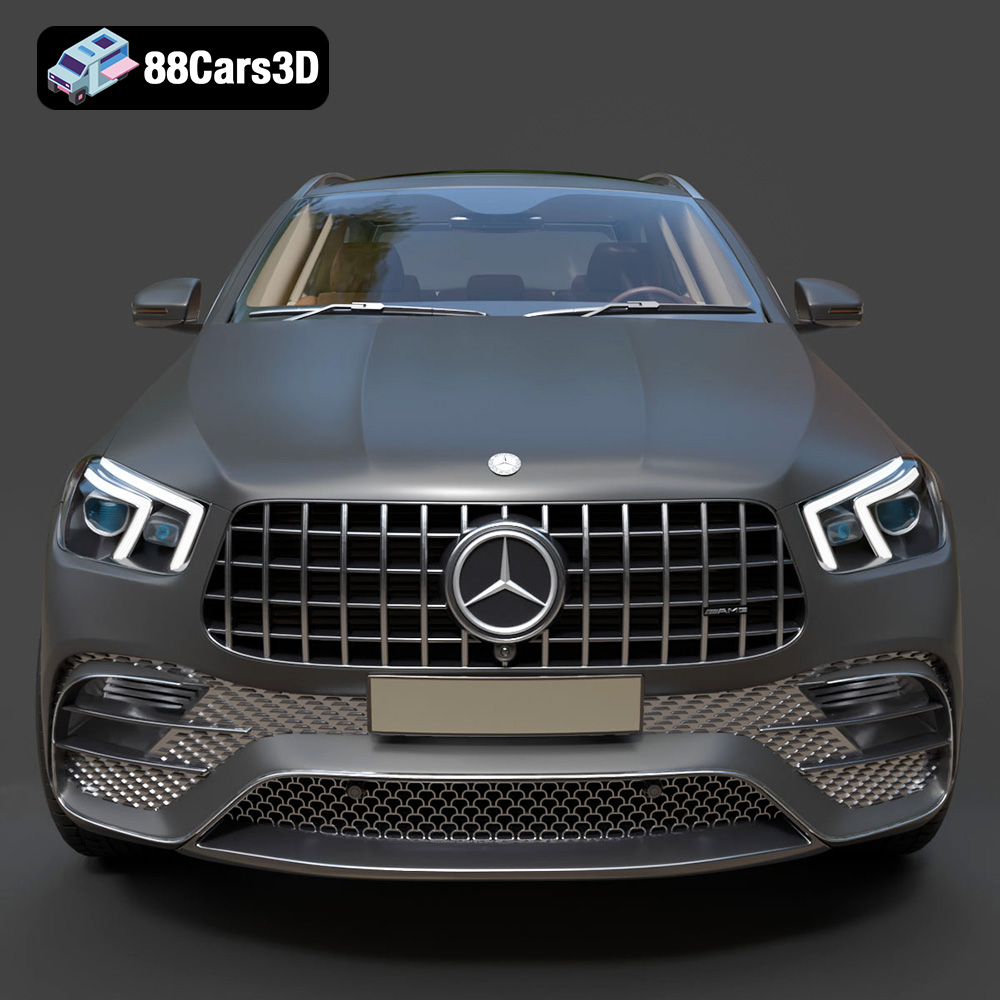
The exterior of the AMG GLE 63 is its most striking feature, and this 3D model meticulously replicates every curve and aggressive line. The accurate Mercedes-Benz AMG GLE 63 2021 frame geometry and proportions are based on real-world chassis dimensions, ensuring authenticity. Key design elements, such as the unmistakable Panamericana front grille, are recreated with precision, along with the massive air intakes that define the AMG aesthetic. The distinctive AMG quad-trapezoidal exhaust system, intricate LED High-Performance headlamps, and 3D geometric taillights are all individually modeled, adding depth and realism to any scene. Furthermore, high-fidelity AMG-specific alloy wheels, performance tires, and drilled brake rotors with calipers are not merely textured but fully modeled, providing exceptional detail even in extreme close-ups. The inclusion of accurate air suspension and chassis undercarriage details, along with separate wheels, suspension, and steering components, is critical for realistic animation and physics in game engines or detailed visualizations.
The interior of a Mercedes-Benz AMG is a sanctuary of luxury and technology, and the 3D model doesn’t disappoint. It features luxurious AMG sport seats with precise diamond-stitch detailing, an essential aspect for conveying high-end craftsmanship. The highly accurate AMG performance steering wheel with paddle shifters is fully modeled, as is the detailed dual-screen MBUX digital instrument cluster and infotainment system. Every intricate center console control, climate vent, pedal, and gear selector is present, contributing to an immersive experience. This level of interior detail is particularly important for virtual reality applications or first-person POV in gaming, where the user directly interacts with the cockpit.
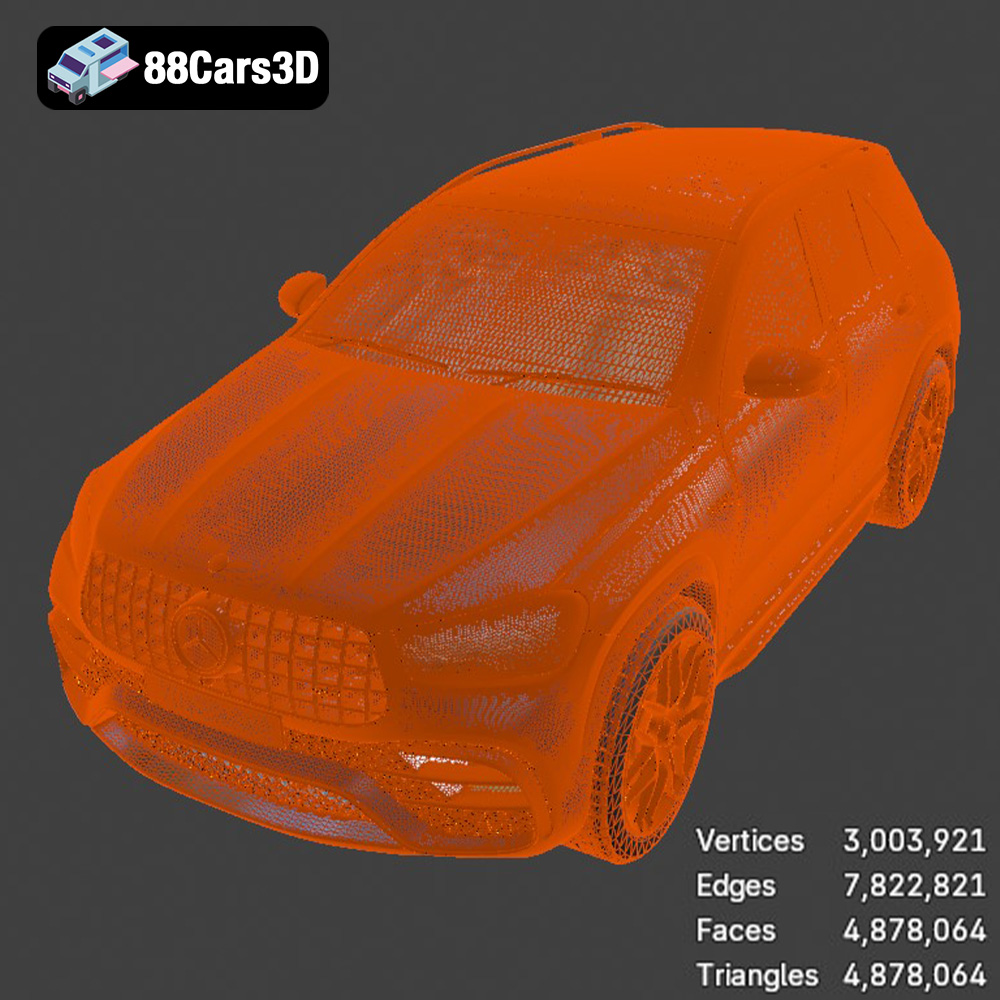
One of the standout technical advantages of this Mercedes-Benz AMG GLE 63 3D model is its optimization. With an approximate triangle count of 450,000, it strikes an impeccable balance between being game-ready for real-time engines like Unreal and Unity, while still maintaining high-end visual realism for photorealistic rendering. This “sweet spot” polycount means developers don’t have to spend valuable time decimating high-poly models or adding detail to low-poly ones. The real-world scale accuracy, coupled with proper pivot setup for steering, wheel rotation, and suspension travel, ensures that the model behaves correctly in simulations and animations, making it a truly versatile asset for both demanding rendering pipelines and interactive applications.
High-quality 3D car models like the Mercedes-Benz AMG GLE 63 are indispensable tools across various professional domains. Their versatility allows them to be seamlessly integrated into diverse workflows, enhancing everything from interactive experiences to cinematic presentations.
For game developers, performance and fidelity are constant balancing acts. The optimized Mercedes-Benz AMG GLE 63 3D model, especially in .fbx or .unreal format, is a perfect game asset. Developers can import the model directly into Unreal Engine or Unity, leveraging its pre-configured materials and optimized topology. The proper pivot setup for wheels and steering means it’s ready for vehicle physics systems with minimal tweaking. Implementing LODs (Levels of Detail) can further optimize performance for open-world games or racing titles, ensuring smooth framerates even with multiple vehicles on screen. Collision meshes can be generated or pre-provided to ensure realistic interactions within the game environment. This model’s balance of detail and optimization makes it an ideal candidate for creating immersive driving experiences or populating virtual worlds.
In the realm of automotive rendering, stunning visuals are paramount for marketing, advertising, and design visualization. Utilizing the .max or .blend versions of the AMG GLE 63 model, artists can leverage the full power of rendering engines like V-Ray, Corona, Octane, or Cycles. The workflow typically involves setting up a studio lighting environment using HDRI (High Dynamic Range Image) maps for realistic reflections and global illumination. PBR (Physically Based Rendering) materials, which come pre-configured with the model, are crucial for achieving photorealism, accurately simulating how light interacts with paint, glass, rubber, and chrome. Artists can experiment with different camera angles, depths of field, and post-processing effects to highlight the vehicle’s luxurious contours and aggressive stance, producing breathtaking brand campaigns or lifestyle scenes.
The future of automotive sales and engagement lies in interactive experiences. The .glb format of the Mercedes-Benz AMG GLE 63 2021 3D model is perfectly suited for AR/VR applications and virtual car configurators. Imagine a customer exploring the GLE 63 in their driveway through an AR app on their phone, or stepping into a VR showroom to customize the vehicle’s color, wheels, and interior. The optimized geometry and efficient texture packing of the .glb format ensure smooth, responsive performance on mobile devices and VR headsets. This allows for immersive virtual tours, real-time customization options, and dynamic showcasing of luxury vehicles, transforming how consumers interact with automotive brands.
While digital visualization is powerful, the ability to bring a 3D car model into the physical world offers a unique dimension for prototyping, collectibles, and educational tools. The inclusion of the .stl format in the Mercedes-Benz AMG GLE 63 3D model package opens up this exciting avenue.
Converting a detailed 3D model for 3D printing requires specific considerations. The .stl format provides the necessary mesh data, but scale is crucial. Recommended scales like 1:12, 1:18, or 1:24 offer a good balance between manageable print size and retained detail. Parameters like layer height (0.04–0.12 mm, with resin printing recommended for fine details) and wall thickness (1.2–2.0 mm) must be carefully set in the slicing software to ensure structural integrity and capture intricate features. Infill percentages (20–30%) help with model strength without excessive material use. Crucially, supports will be required for detailed parts like the exhaust, mirrors, and steering wheel, as well as for overhangs. Proper print orientation, such as printing the frame angled and wheels separately, can enhance structural integrity and reduce the need for excessive supports, ultimately leading to a cleaner print.
Once printed, the physical model undergoes a crucial post-processing stage to achieve a professional finish. This typically involves sanding to smooth layer lines, applying a primer for an even surface, and then meticulously painting the model. For an authentic replica of the Mercedes-Benz AMG GLE 63, using factory colors with metallic finishes would elevate the realism. Details like brake calipers, interior accents, and grille elements can be hand-painted or airbrushed. This entire process transforms a digital asset into a tangible display piece, perfect for hobbyists, collectors, or even as a physical prototype for design studios.
In the competitive digital landscape, efficiency, quality, and versatility are paramount. Sourcing pre-made, high-quality 3D car models offers a strategic advantage that can significantly impact project timelines and budgets. 88cars3d.com stands as a reliable marketplace for such assets, providing professionals with immediate access to meticulously crafted models like the Mercedes-Benz AMG GLE 63 2021.
Developing a high-fidelity 3D car model from scratch is an incredibly time-consuming and expensive endeavor, often requiring hundreds of hours from skilled 3D artists. By acquiring a pre-made, game-ready, and render-ready asset from 88cars3d.com, studios and individual artists can bypass the entire modeling and optimization phase. This immediately translates into substantial time savings, allowing teams to focus on core project development, scene composition, animation, or rendering. The cost of purchasing a premium model is a fraction of the expense involved in bespoke development, making it a highly cost-effective solution for tight deadlines and limited budgets.
The Mercedes-Benz AMG GLE 63 2021 3D model is a prime example of the uncompromising quality offered. Its highly optimized topology, detailed exterior and interior features, and real-world scale accuracy ensure that it performs flawlessly in both real-time engines and photorealistic rendering scenarios. The inclusion of multiple file formats (.blend, .fbx, .obj, .glb, .stl, .ply, .unreal, .max) provides unparalleled versatility, guaranteeing compatibility with virtually any professional workflow. This means you’re not just buying a model; you’re investing in a flexible, production-ready asset that meets diverse project requirements, from game development to architectural visualization and even 3D printing.
While these models are production-ready, they also offer extensive customization options. Users can easily change body colors (e.g., Obsidian Black, designo Diamond White, custom wraps), modify tire textures to suit different environments (street performance vs. all-season), and adjust material finishes (matte, gloss, metallic, carbon fiber accents). The separate components for wheels, suspension, and steering also allow for dynamic animation and adaptation to specific scene needs. This adaptability ensures that while you start with a premium base model, you can still infuse your unique artistic vision, making the Mercedes-Benz AMG GLE 63 3D model truly your own within any digital environment.
The creation and integration of high-quality 3D car models are central to modern digital content creation. Whether you’re crafting immersive game assets, producing breathtaking automotive rendering for marketing campaigns, or developing interactive AR/VR experiences, the foundational quality of your 3D vehicle models is paramount. The Mercedes-Benz AMG GLE 63 2021 3D model stands as an exemplary asset, demonstrating the perfect blend of aesthetic fidelity, technical optimization, and multi-format versatility required by today’s demanding production pipelines.
Its meticulously detailed exterior, luxurious interior, and game-ready optimization make it an invaluable resource for professionals across various industries. By understanding the nuances of different file formats and leveraging professionally crafted assets, artists and developers can significantly enhance their workflows, save time, and achieve superior results. For those seeking to elevate their digital automotive projects, exploring the premium selection of 3D car models available at 88cars3d.com is a strategic step towards achieving unparalleled digital excellence.
Experience the perfect fusion of luxury and raw performance with this highly detailed 3D model of the 2021 Mercedes-Benz AMG GLE 63. Renowned for its commanding presence, this performance SUV features the unmistakable aggressive Panamericana front grille, massive air intakes, and the distinctive AMG quad-trapezoidal exhaust system. The dynamic styling cues perfectly capture the essence of Affalterbach’s engineering, ensuring your virtual scenes exude both prestige and power. Crafted with an uncompromising focus on quality, this model boasts a highly optimized topology with an approximate triangle count of 450,000. It strikes an impeccable balance between game-ready performance and photorealistic visual fidelity. Whether you are deploying this asset in a high-octane real-time racing engine, an interactive AR/VR showroom, or a high-end architectural visualization, the meticulous detailing holds up seamlessly under extreme close-ups. Perfect for open-world racing games, luxury lifestyle visualizations, virtual car configurators, and modern architectural rendering scenes.
$19.99
.blend
.fbx
.glb
.luxury suv
.max
.obj
.ply
.rendering
.stl
.unreal
amg-gle-63
car-3d-model
game asset
game-ready
low-poly
mercedes-benz
optimized
performance suv
SUV
VR/AR