Get 20% OFF All Premium 3D & STL Models!

In the rapidly evolving landscape of digital creation, the ability to visualize and interact with future concepts is paramount. From blockbuster cinematic productions to immersive virtual reality experiences, and cutting-edge automotive design studios, high-fidelity 3D models serve as the bedrock of innovation. They allow designers, developers, and artists to transcend the limitations of physical prototypes, bringing intricate ideas to life with unparalleled detail and flexibility. The demand for premium, meticulously crafted 3D car models has never been higher, driving forward industries that constantly push the boundaries of what’s possible.
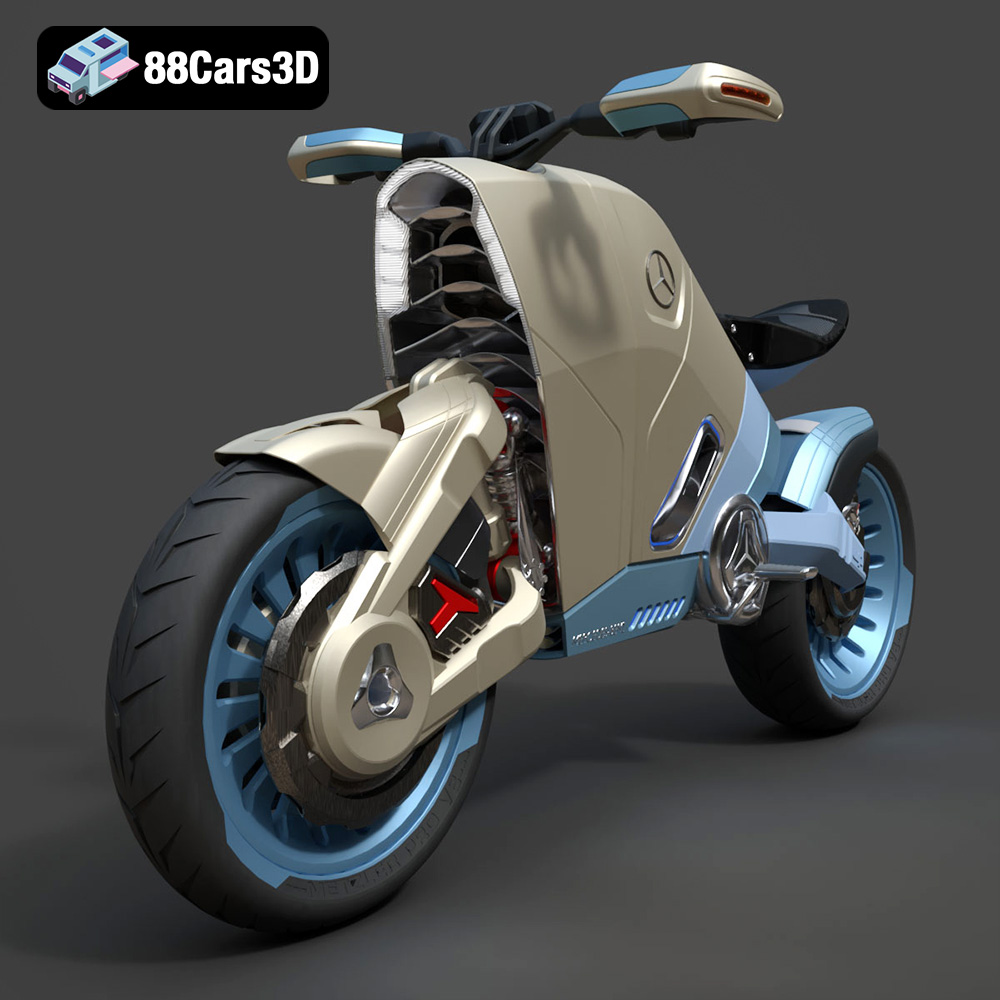
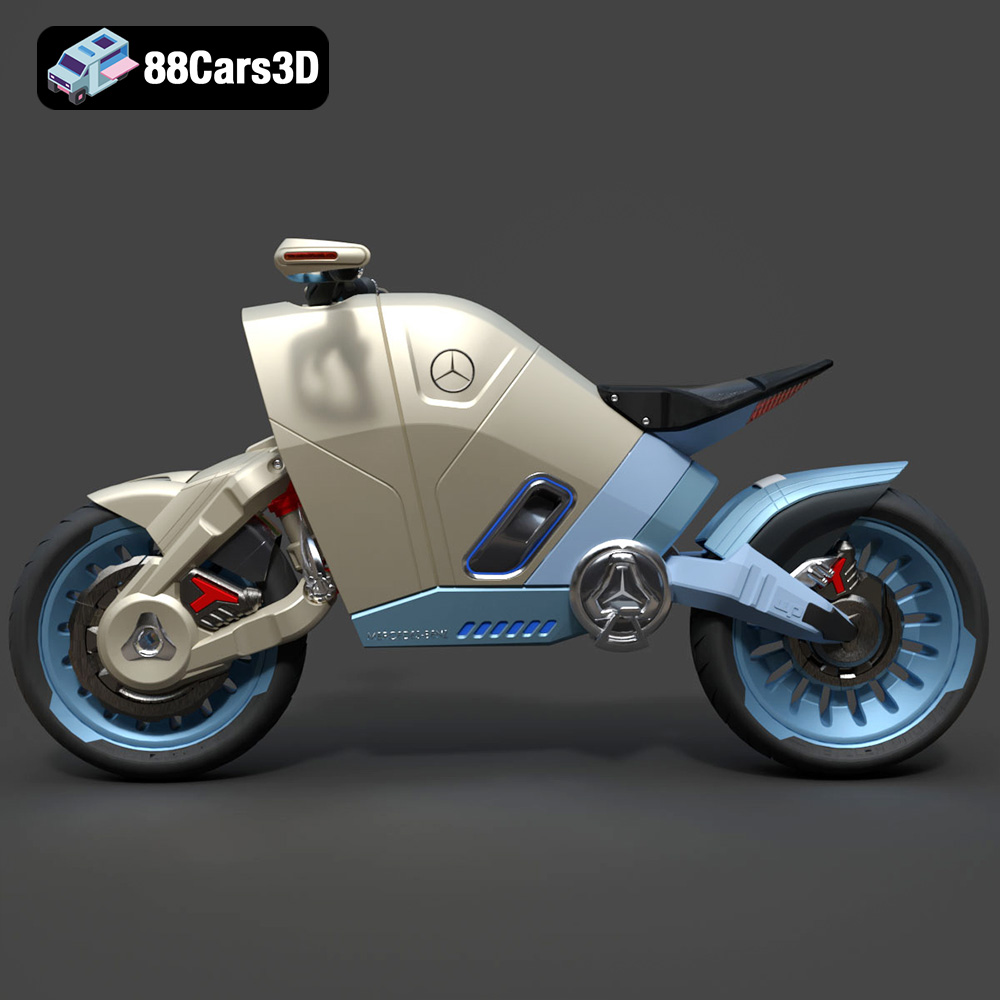
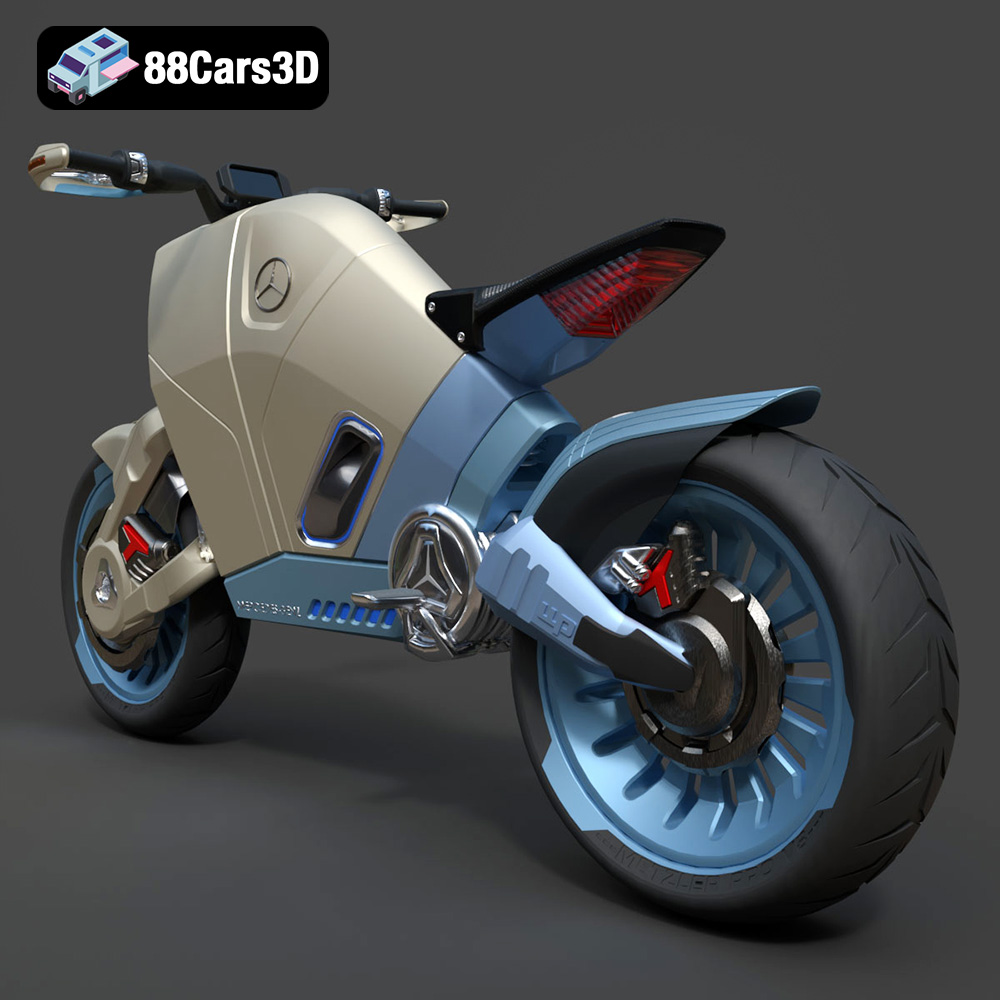
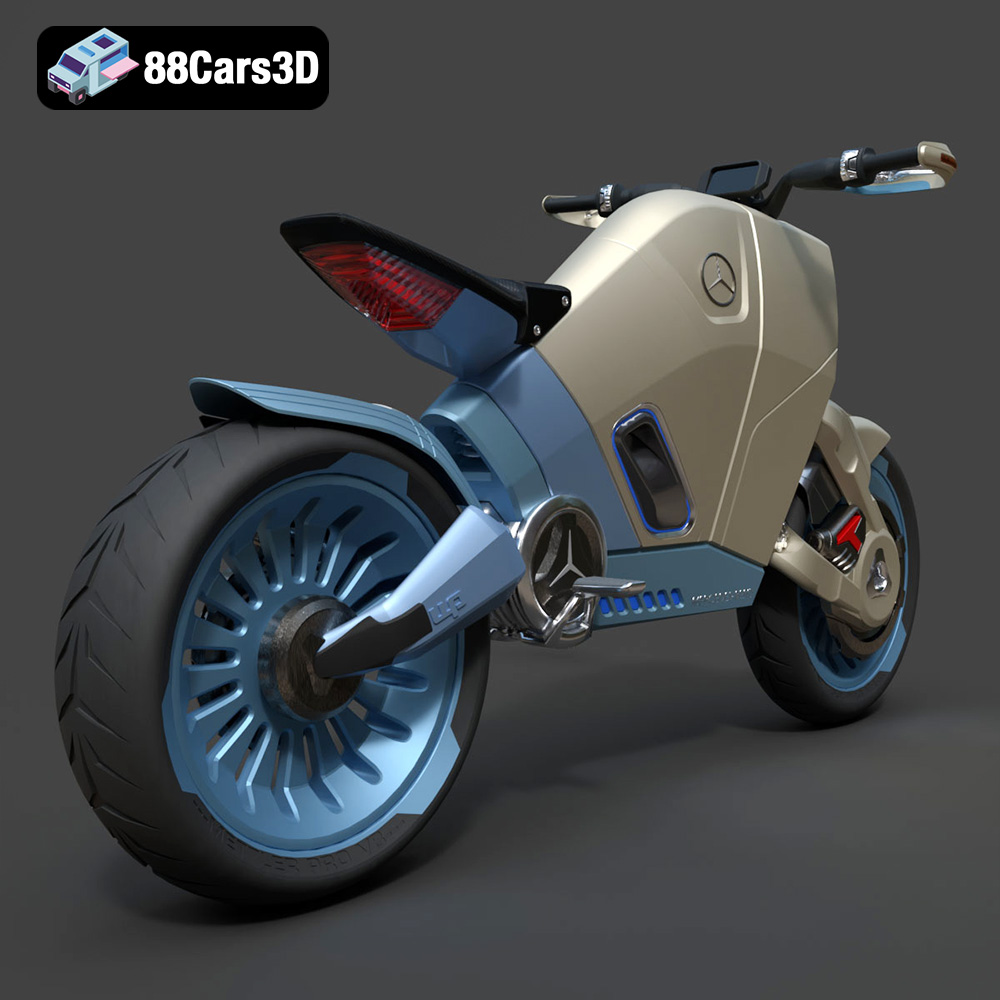
Among the most captivating visions emerging from this digital forge are concept vehicles that redefine mobility. Imagine a motorcycle that not only boasts breathtaking aesthetics but also hints at a sustainable, electric future. This is precisely the allure of models like the SMARANZA Mercedes Concept Electrical Motorcycle 3D Model, a truly exceptional asset designed to empower creators across diverse platforms. Its sleek lines, futuristic features, and meticulous optimization make it a prime example of what modern 3D modeling can achieve, offering a tangible glimpse into tomorrow’s roads, rendered today.
The automotive industry has long been at the forefront of technological adoption, and its embrace of 3D modeling is no exception. Before a single component is fabricated, every curve, every panel, and every interior detail of a new vehicle is painstakingly sculpted in a digital environment. This process is not merely about aesthetics; it’s about engineering, aerodynamics, ergonomics, and branding, all converging in a virtual space where iterations are swift and costly physical errors are avoided.
For designers, 3D models are the ultimate sketchpad. They provide a three-dimensional canvas where concepts can be explored, refined, and presented with photorealistic accuracy. This translates into significant advantages: shorter development cycles, reduced material waste from physical prototyping, and the ability to solicit feedback on designs that feel incredibly real, even if they only exist as pixels. The SMARANZA Mercedes Concept Electrical Motorcycle 3D Model perfectly embodies this capability, offering a fully realized vision of a futuristic vehicle that can be rotated, examined, and rendered from every angle, long before it ever touches a manufacturing plant.
In professional pipelines – be it for automotive rendering, game development, or AR/VR applications – the quality of 3D assets directly impacts the final output. Subpar models with messy topology, inefficient poly counts, or inaccurate scaling can lead to performance bottlenecks, visual glitches, and a general lack of realism. Conversely, assets built with precision, optimized for various uses, and provided with comprehensive file format support, like those found on 88cars3d.com, become invaluable tools. They save countless hours of rework, ensure seamless integration into diverse projects, and ultimately elevate the standard of the final product. The SMARANZA Mercedes Concept Electrical Motorcycle 3D Model, with its detailed geometry, optimized triangle count, and clean topology, exemplifies this commitment to quality, ensuring it performs flawlessly in real-time engines and renders beautifully in high-fidelity scenes.
Navigating the world of 3D content often involves a multitude of file formats, each designed with specific purposes and offering unique advantages. Understanding these formats is crucial for ensuring compatibility, optimizing workflows, and achieving the desired outcome for any project, whether it’s automotive rendering, game asset integration, or 3D printing. The SMARANZA Mercedes Concept Electrical Motorcycle 3D Model, like many premium 3D car models available on 88cars3d.com, is offered in a comprehensive range of formats to cater to virtually any professional need.
The .blend format is the native file type for Blender, the powerful open-source 3D creation suite. A .blend file typically encapsulates an entire scene, including not only the mesh data but also materials, textures, lighting, cameras, animations, physics simulations, and even custom scripts. This makes it an incredibly versatile format for Blender users, offering full editability and preserving all scene information. When you download a .blend file, you gain access to the creator’s exact setup, allowing for deep customization and understanding of the model’s construction. It’s ideal for those who wish to modify, animate, or render the model within Blender’s ecosystem.
Autodesk’s .fbx (Filmbox) format is perhaps the most widely adopted interchange format in the 3D industry. It excels at transferring 3D models and their associated data – including mesh, materials, textures, animations, and rigging – between different software applications. Its robust support for animation data makes it particularly ideal for game development pipelines (Unreal, Unity) and cinematic production. While it might not retain every native feature of the originating software, .fbx ensures a high degree of compatibility and is often the go-to format for exporting animated assets or complex scenes for real-time environments.
The .obj (Wavefront Object) format is one of the oldest and most universally supported 3D file formats. It’s a simple, text-based format that primarily stores geometric data (vertices, normals, texture coordinates, and faces) and can reference an accompanying .mtl (Material Template Library) file for basic material properties and texture maps. While .obj typically doesn’t support animation or rigging, its widespread compatibility across virtually all 3D software makes it an excellent choice for static mesh transfers, especially when a clean, fundamental geometry is needed for cross-software collaboration.
.glb (GL Transmission Format Binary) is a modern, compact, and efficient format designed for the web and real-time rendering. It’s the binary version of glTF, packaging all model data – geometry, materials, textures, and animation – into a single file. This “all-in-one” approach makes .glb incredibly efficient for streaming and displaying 3D models in browsers, AR (Augmented Reality), VR (Virtual Reality), and mobile applications. It’s rapidly becoming the standard for 3D content on the internet, offering optimized performance and reduced file sizes, making it perfect for interactive web viewers or AR experiences of a concept motorcycle.
The .stl (Stereolithography) format is the de facto standard for 3D printing. It represents a 3D model as a collection of unconnected triangular facets, defining only the surface geometry of an object without color, texture, or other CAD attributes. While it lacks rich data, its simplicity is its strength for manufacturing. Most 3D printers and slicing software accept .stl files directly. For models like the SMARANZA Mercedes Concept Electrical Motorcycle 3D Model, the .stl variant allows enthusiasts and professionals to bring the digital design into the physical world, creating display-scale models or prototypes.
The .ply (Polygon File Format or Stanford Triangle Format) is a file format for storing 3D data, particularly from 3D scanners. It can store a variety of data including color, transparency, surface normals, and range data, making it more versatile than .stl for complex data sets. While not as universally used as .fbx or .obj for general model exchange, .ply is often preferred in applications requiring high precision or complex data for CAD, engineering analysis, or scientific visualization.
The inclusion of a native .unreal or Unreal Engine-specific asset often means the model has been specifically prepared and exported for optimal performance within the Unreal Engine. This could involve pre-configured material instances, collision meshes, LODs (Levels of Detail), and a proper hierarchy ready for immediate import and use in game levels, cinematics, or interactive applications. This significantly streamlines the workflow for Unreal Engine developers, as much of the setup work is already completed, allowing them to focus on integration rather than conversion.
The .max format is the native file type for Autodesk 3ds Max, a leading software for 3D modeling, animation, rendering, and compositing. Similar to .blend, a .max file saves the entire scene, including geometry, materials, textures, lights, cameras, animation keyframes, and plugins. It provides full editability within 3ds Max, making it invaluable for professionals who use this software for high-end visualization, architectural rendering, or complex character animation. Having the .max file for the SMARANZA Mercedes Concept Electrical Motorcycle allows for deep customization and integration into existing 3ds Max projects.
The true power of a versatile 3D asset lies in its adaptability across various creative pipelines. The SMARANZA Mercedes Concept Electrical Motorcycle 3D Model, with its detailed design and multi-format availability, is an exceptional example of an asset that can drive innovation in multiple sectors. Let’s explore how this cutting-edge model integrates into professional workflows.
In the fast-paced world of game development, efficiency and visual quality are paramount. The SMARANZA Mercedes Concept is explicitly designed as a game-ready asset, boasting an optimized triangle count and clean topology crucial for real-time performance. For developers working with engines like Unreal Engine or Unity:
For artists and studios focused on high-end visualization and cinematic rendering, the SMARANZA Mercedes Concept offers a wealth of possibilities. Whether utilizing 3ds Max, Blender, or other rendering suites, the model’s meticulous detail shines:
The burgeoning fields of Augmented Reality (AR) and Virtual Reality (VR) demand highly optimized assets that deliver compelling experiences on diverse hardware. The SMARANZA Mercedes Concept is perfectly suited for these applications:
The difference between a mediocre 3D model and a truly professional-grade asset lies in its technical underpinnings. The SMARANZA Mercedes Concept Electrical Motorcycle 3D Model exemplifies best practices in its construction, ensuring it delivers both stunning visual realism and robust performance across various platforms.
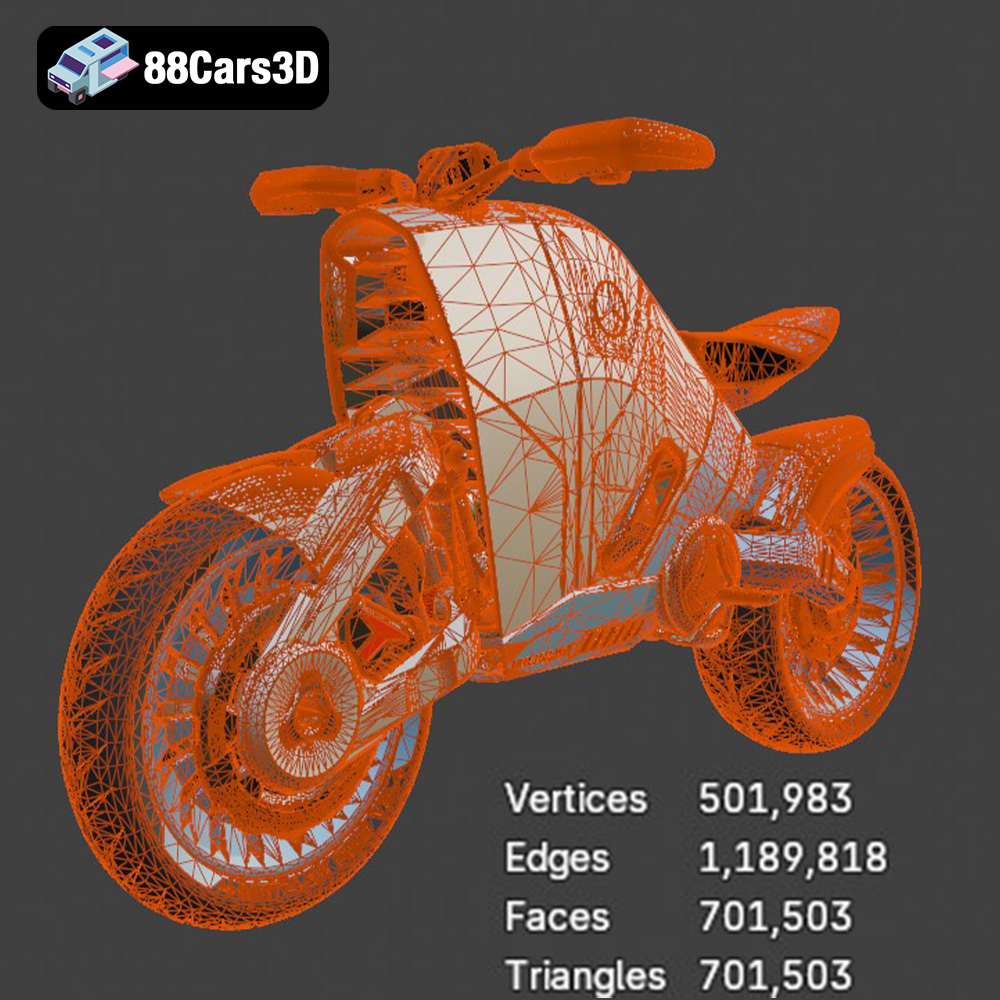
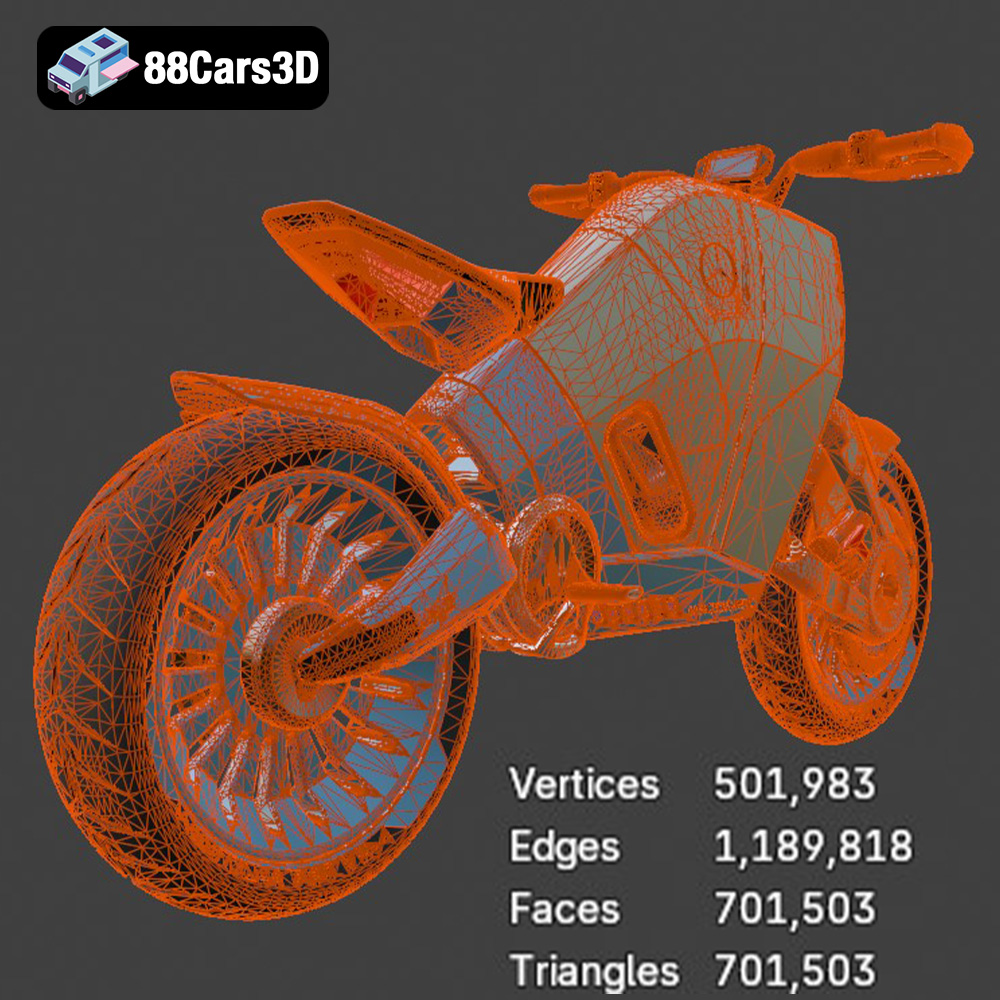
A “clean topology” isn’t just a buzzword; it’s fundamental to a model’s integrity and usability. The SMARANZA Mercedes Concept is built with an “optimized triangle count” and well-structured mesh, meaning:
For any vehicle, dynamic movement is a core expectation. The SMARANZA Mercedes Concept Electrical Motorcycle is built with animation in mind:
A professional asset offers flexibility. The SMARANZA Mercedes Concept provides robust customization:
The realm of 3D modeling isn’t confined to digital screens alone. With the advent of accessible and high-resolution 3D printing, complex digital designs can be brought into the physical world, creating tangible representations of virtual concepts. The SMARANZA Mercedes Concept Electrical Motorcycle 3D Model offers an exciting opportunity for enthusiasts and professionals to do just that, thanks to its optimized .stl format.
Converting a high-detail rendering model into a 3D printable object requires careful consideration, and the .stl format is the industry standard for this. The SMARANZA Mercedes Concept is already prepared to facilitate this transition. The provided .stl file acts as a universal blueprint for 3D printers, defining the model’s surface geometry as a mesh of triangles. However, simply having the .stl is only the first step. Understanding the model’s structure and the nuances of 3D printing is crucial for a successful print.
Successful 3D printing of a complex model like a concept motorcycle requires adherence to certain best practices:
In the dynamic world of 3D content creation, access to a reliable source of high-quality assets is invaluable. 88cars3d.com stands out as a premier online marketplace specializing in just that – offering a meticulously curated selection of 3D car models that meet the rigorous demands of professional artists, developers, and designers. The SMARANZA Mercedes Concept Electrical Motorcycle 3D Model is a prime example of the caliber of assets available, representing both cutting-edge design and technical excellence.
Every model featured on 88cars3d.com is selected for its visual fidelity, technical optimization, and versatility. This commitment to quality means that whether you’re working on a high-stakes automotive rendering project, developing a next-generation game, or crafting an immersive AR/VR experience, you can trust that the assets you acquire will perform. The detailed product descriptions, which highlight features like “game-ready & optimized” and “real-world scale accuracy,” empower creators to make informed decisions, ensuring the purchased model aligns perfectly with their project requirements. This dedication to quality significantly reduces the time and effort typically spent on asset preparation and optimization.
Time is a critical resource in any creative endeavor. By providing 3D car models in a multitude of essential file formats – from .blend and .max for comprehensive editing to .fbx and .unreal for game engine integration, and .glb for web/AR/VR deployment, plus .stl for 3D printing – 88cars3d.com streamlines the entire workflow. Instead of spending hours converting or fixing models from disparate sources, creators can immediately import and integrate their chosen assets into their preferred software. This efficient approach allows more time for creative exploration and project development, ensuring that innovative visions, like that of the SMARANZA Mercedes Concept Electrical Motorcycle, can be realized with unprecedented speed and ease.
The journey from concept to captivating reality in the digital realm is paved with high-quality 3D assets. The SMARANZA Mercedes Concept Electrical Motorcycle 3D Model serves as a testament to the power of advanced 3D modeling, offering a meticulously crafted vision of future mobility. Its blend of stunning design, technical optimization, and multi-format compatibility makes it an indispensable tool for game developers, cinematic artists, visualization specialists, and even 3D printing enthusiasts. From empowering immersive VR experiences to enhancing photorealistic automotive rendering, this model is built to perform.
By leveraging assets like the SMARANZA Mercedes Concept, creators can push the boundaries of their projects, achieving levels of detail and realism that resonate with audiences. Platforms like 88cars3d.com provide direct access to these premium resources, ensuring that creative professionals have the tools they need to bring their most ambitious ideas to life. Whether you’re designing the next big racing title or conceptualizing a brand new era of transportation, investing in high-quality 3D car models is the foundation for success. Explore the possibilities and accelerate your creative projects by discovering the future of mobility, today.
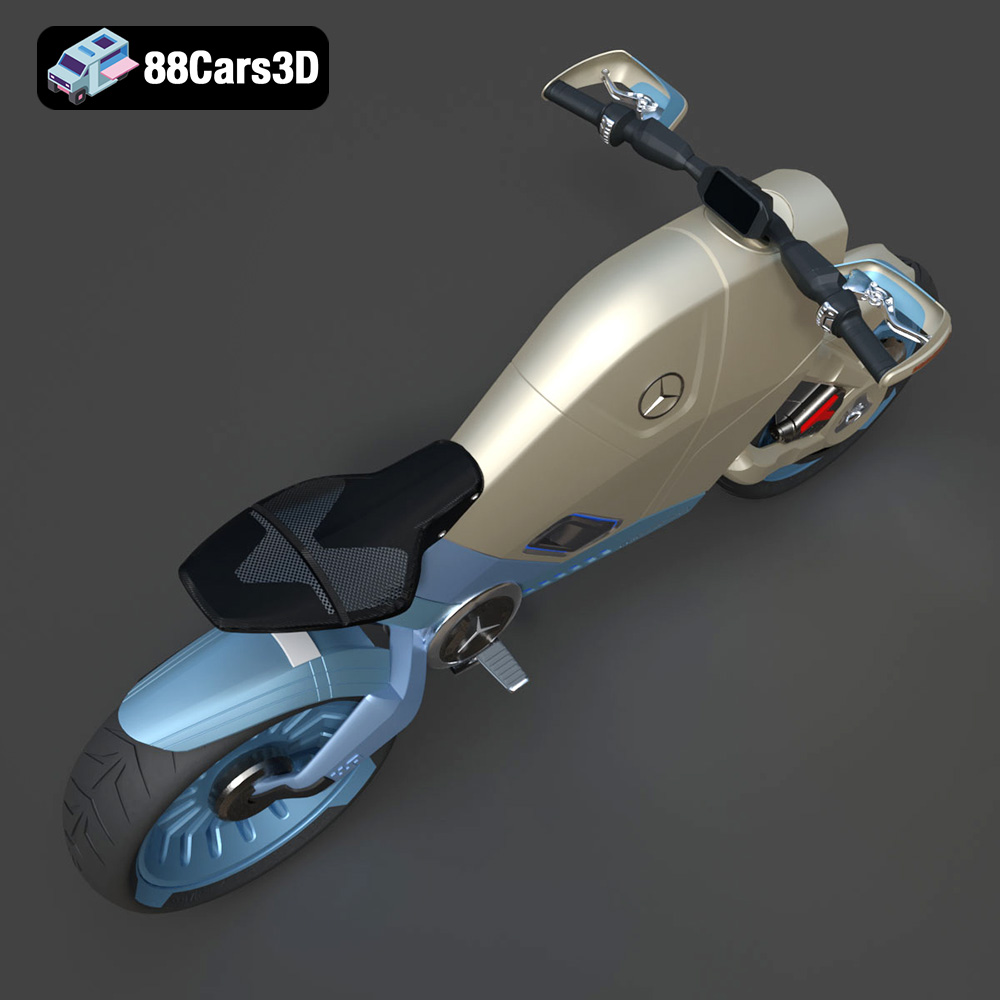
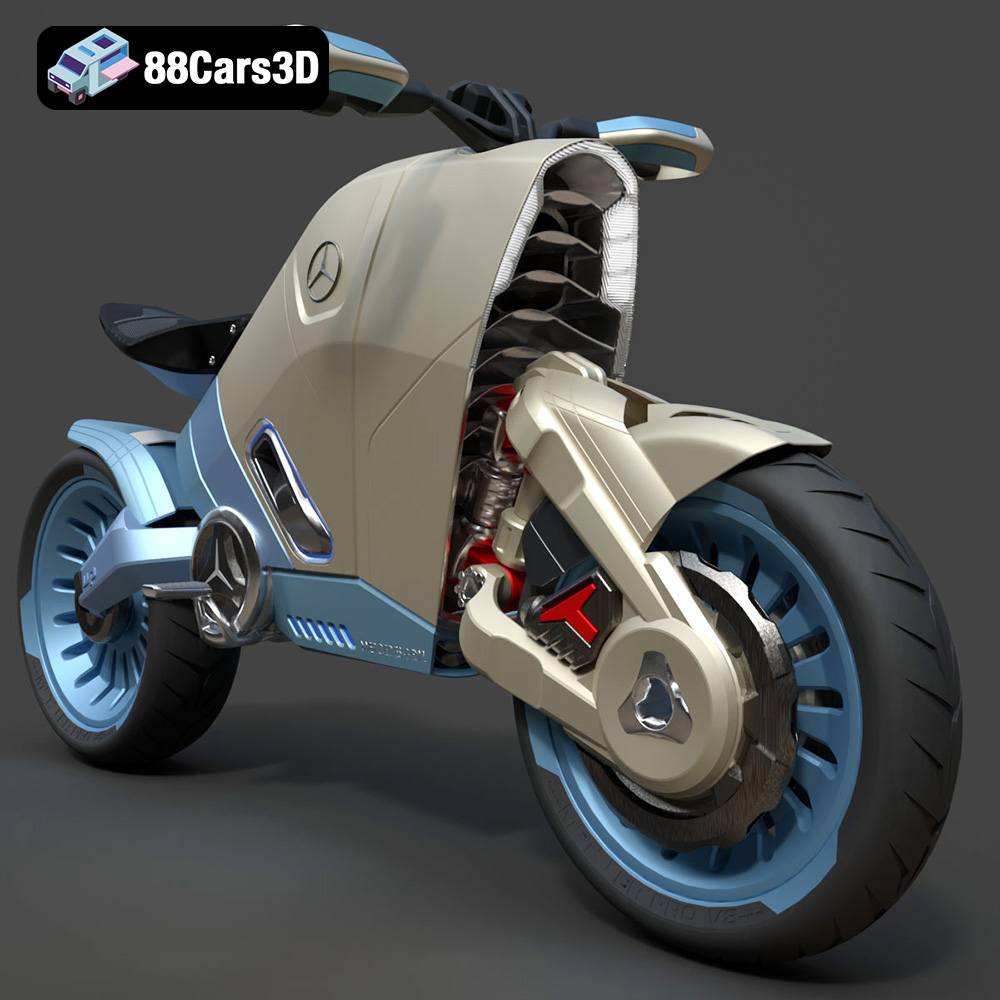
The SMARANZA Mercedes Concept Electrical Motorcycle is a breathtaking vision of the future, blending iconic Mercedes-Benz luxury and aerodynamic precision with next-generation electric mobility. This striking concept vehicle features an ultra-sleek, streamlined fairing, a state-of-the-art electric drivetrain housing, and futuristic LED signature lighting that redefines two-wheeled transport. Its seamless integration of high-performance styling and eco-conscious engineering makes it a standout piece for any sci-fi or modern automotive digital environment.
Meticulously modeled with exceptional visual fidelity and an optimized triangle count, this 3D model delivers striking realism while remaining fully game-ready. Its clean topology ensures flawless performance in real-time engines, making it an invaluable asset for interactive applications such as game development, AR/VR experiences, animation, and high-end visualization.
Perfect for futuristic racing titles, cyberpunk cityscapes, virtual automotive showrooms, and sci-fi cinematic animations.
$39.99
.blend
.fbx
.futuristic
.glb
.max
.obj
.ply
.rendering
.smaranza
.stl
.unreal
concept-motorcycle
electric-motorcycle
game asset
game-ready
low-poly
mercedes-benz
motorcycle-3d-model
optimized
sci-fi
VR/AR