Get 20% OFF All Premium 3D & STL Models!

In the rapidly evolving landscape of digital media, the demand for hyper-realistic and performance-optimized 3D assets is at an all-time high. From blockbuster video games to cutting-edge virtual reality experiences and cinematic automotive rendering, the foundation of any compelling visual project lies in the quality of its core assets. Automotive design, in particular, benefits immensely from meticulously crafted 3D car models that capture every nuance of a vehicle’s aesthetic and engineering.
Today, we’re taking a deep dive into an exquisite example of such an asset: the Mercedes-Maybach Vision 6 2018 3D Model. This breathtaking electric concept car, a stunning homage to the glorious age of aero coupes, represents a pinnacle of luxury and futuristic vision. In its digital form, this model offers a versatile and high-fidelity solution for professionals across various industries. It stands as a testament to the level of detail and optimization available on platforms like 88cars3d.com, providing creators with the tools to push the boundaries of their digital automotive rendering and interactive experiences.
This comprehensive guide will explore the technical intricacies, practical applications, and professional workflows enabled by such a high-quality 3D car model, demonstrating why precision and versatility are paramount for success in today’s demanding digital environment.
The choice of a 3D model file format is far more than a mere technicality; it’s a strategic decision that dictates compatibility, performance, and the scope of manipulation within your chosen software and pipeline. When acquiring a sophisticated asset like the Mercedes-Maybach Vision 6 2018 3D Model, understanding the nuances of each included format is crucial for maximizing its utility across diverse applications, from game development to advanced automotive rendering.
The .blend format is the native file type for Blender, an open-source 3D creation suite renowned for its versatility. When you download a .blend file, you’re not just getting the mesh; you’re receiving a complete Blender scene. This includes all materials, textures, lighting setups, cameras, animation data, and even modifiers. For artists and studios primarily working within Blender, this offers unparalleled flexibility for customization, animation, and high-quality rendering using Cycles or Eevee. It allows for deep iterative changes without data loss, making it ideal for projects that require significant modification or integration into existing Blender-based pipelines.
Autodesk’s .fbx (Filmbox) format has become an undisputed industry standard, especially for game development and animation. Its robust support for geometry, material properties (including PBR workflows), textures, skeletal animations, and scene hierarchies makes it ideal for seamless data exchange between different 3D software applications. For importing car models into real-time engines like Unreal Engine and Unity, FBX is the go-to format. It efficiently transfers complex assemblies, such as the Mercedes-Maybach Vision 6’s separate wheels and suspension components, ensuring that your animated rigs translate correctly and efficiently for interactive experiences or cinematic sequences.
The .obj (Wavefront OBJ) format is one of the oldest and most universally supported 3D file formats. While it primarily stores geometric data (vertices, normals, UV coordinates) and references to external material files (.mtl), its simplicity is its strength. Almost every 3D software package can import and export OBJ files, making it an excellent choice for basic mesh transfer and cross-software compatibility. If you need a reliable “fallback” format to ensure your model can be opened and worked on in virtually any 3D environment, OBJ is an indispensable option, particularly for architectural visualization and general rendering tasks where complex animation data isn’t the primary concern.
.glb is the binary version of the glTF (Graphics Language Transmission Format), specifically designed for efficient transmission and loading of 3D scenes and models by engines and applications. GLB bundles the 3D model, textures, and animations into a single file, making it incredibly streamlined for web-based 3D viewers, augmented reality (AR), and virtual reality (VR) applications. Its optimization for real-time rendering means that models like the Vision 6 can be quickly displayed in browser-based configurators, immersive showrooms, or mobile AR experiences without extensive loading times or performance overhead.
The .stl (Stereolithography) format represents a 3D model as a collection of triangulated surfaces, forming the outer shell of the object. It’s the most common file format used for 3D printing. While it doesn’t carry color or texture information, its focus on geometric integrity makes it perfect for additive manufacturing. For hobbyists and professionals looking to physically manifest the Mercedes-Maybach Vision 6 3D model, the STL file provides the precise, watertight mesh necessary for successful 3D printing, enabling the creation of intricate physical replicas.
The .ply (Polygon File Format) is often used for storing 3D data from 3D scanners, CAD systems, and scientific applications. It can store not only geometry but also properties like color per vertex, transparency, and even confidence values. While less common for general rendering than FBX or OBJ, PLY is valued for its precision and ability to represent complex point cloud data or high-density meshes. It’s particularly useful in scenarios requiring accurate analysis or when integrating models with engineering or architectural design software.
While not a universal file format in the same vein as FBX or OBJ, the inclusion of an .unreal specific file (often referring to a pre-packaged Unreal Engine asset or project file, or an FBX specifically prepped for Unreal’s import pipeline) signifies a model optimized and ready for immediate integration into Unreal Engine projects. This can mean correctly scaled assets, pre-configured materials, and optimized meshes that significantly reduce setup time for game developers and real-time visualization artists. It streamlines the workflow, ensuring the model performs optimally within Unreal’s advanced rendering capabilities.
The .max format is the native file type for Autodesk 3ds Max, a powerful software widely used for architectural visualization, animation, and game development. A .max file contains the complete 3ds Max scene, including all geometry, materials, lighting, cameras, animation keyframes, and modifiers. For professionals working in 3ds Max, this format provides full editability and control, allowing for complex rigging, advanced V-Ray or Corona renders, and intricate scene setups. It’s an invaluable asset for those deeply embedded in the Autodesk ecosystem, offering the highest degree of flexibility for customization and rendering within that environment.
The Mercedes-Maybach Vision 6 is more than just a car; it’s a statement, a fusion of classic elegance and radical futurism. Translating such an iconic design into a high-fidelity 3D model requires meticulous attention to every curve, every reflection, and every proportion. The 88cars3d.com Mercedes-Maybach Vision 6 2018 3D Model excels in this regard, offering a digital twin that’s both visually stunning and technically sound.
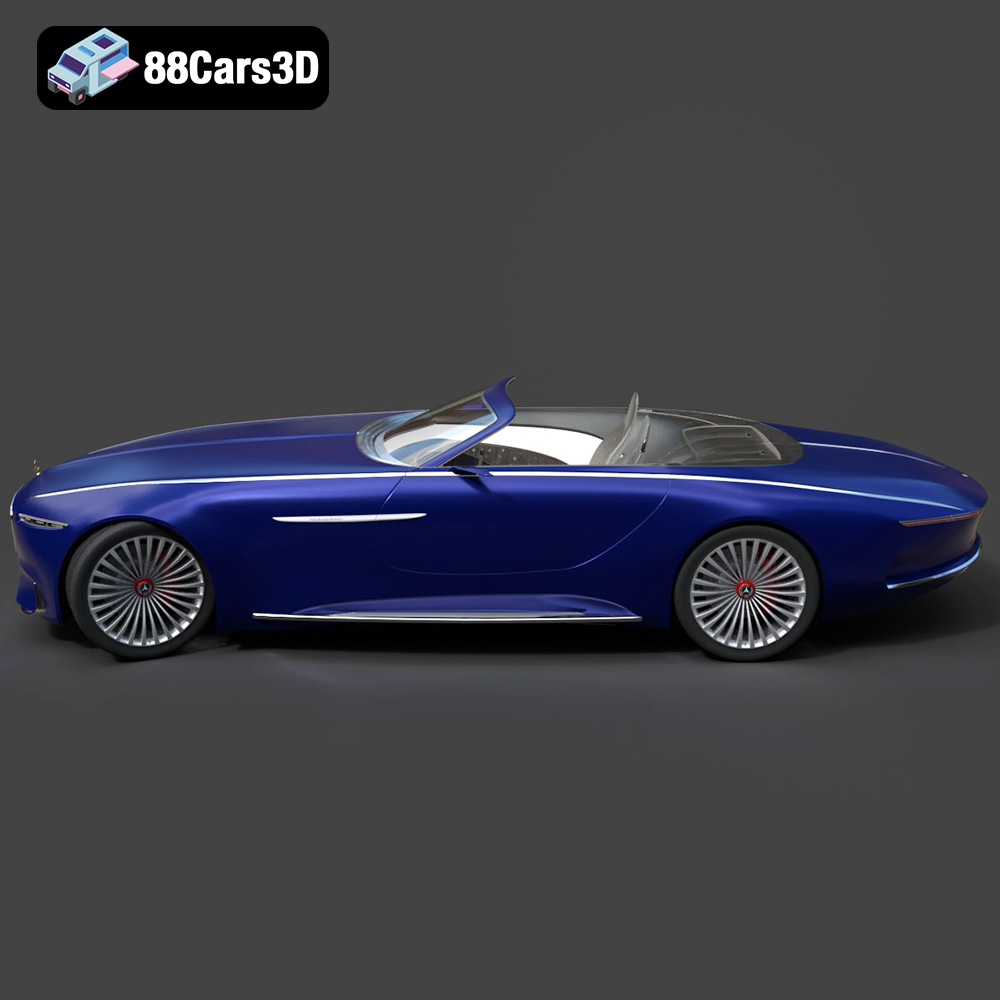
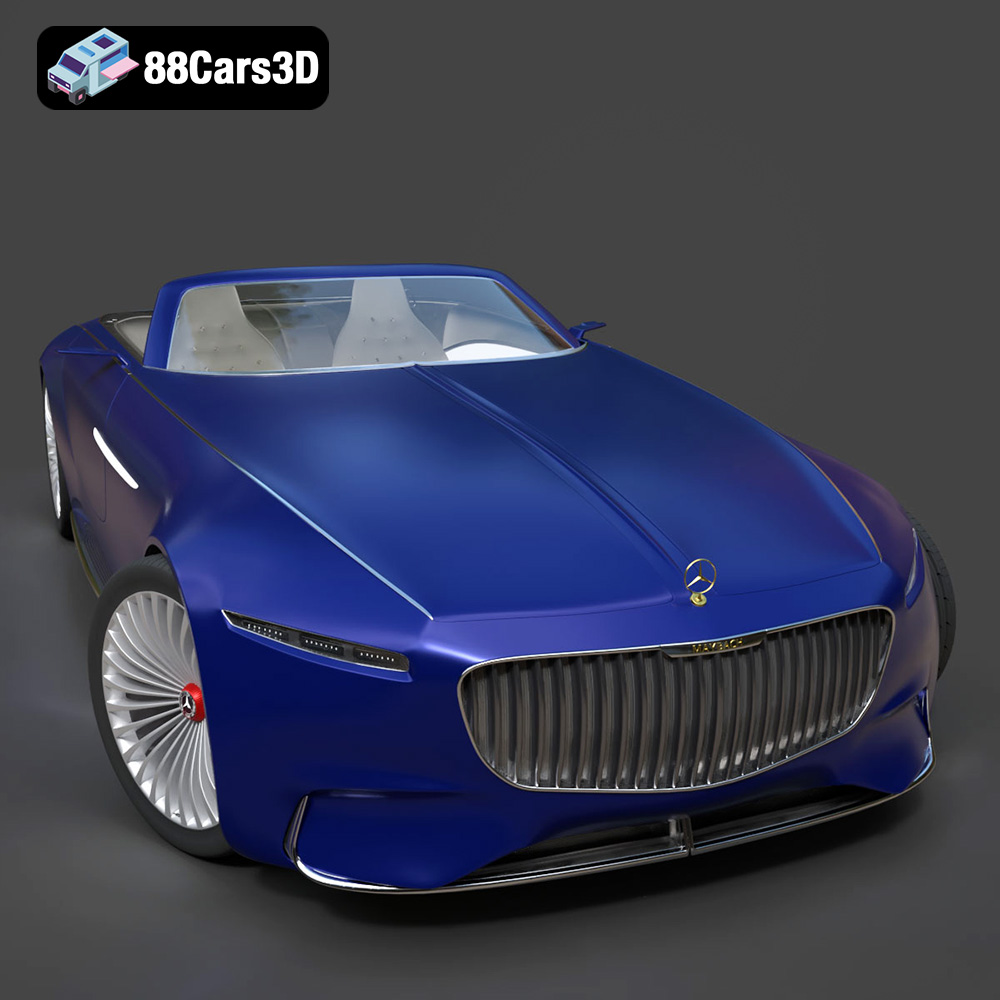
The Vision 6’s exterior is characterized by dramatic, extreme proportions. The 3D model faithfully captures the massive elongated hood, sweeping low roofline, and the iconic vertical strut grille, reminiscent of a pinstriped suit. These elements are not merely suggested but rendered with precise geometry, ensuring that the car’s formidable presence translates accurately in any digital scene. The ultra-slim LED headlights and taillight strips are meticulously modeled, capable of emitting realistic light in a rendering engine, enhancing the car’s futuristic appeal. A key highlight, the aerodynamic boat-tail rear design with its split rear window, is perfectly articulated, showcasing the car’s flowing lines and aerodynamic efficiency. Even the stunning 24-inch aerodynamically optimized wheels are not just textures but detailed 3D geometry, complete with accurate tires, adding significant realism. For animators, the inclusion of accurate gullwing door geometry setup, along with separate wheels, suspension, and steering components, is a game-changer. This modularity allows for complex animations – from opening doors to dynamic driving sequences – without the need for extensive rigging from scratch, saving valuable production time.
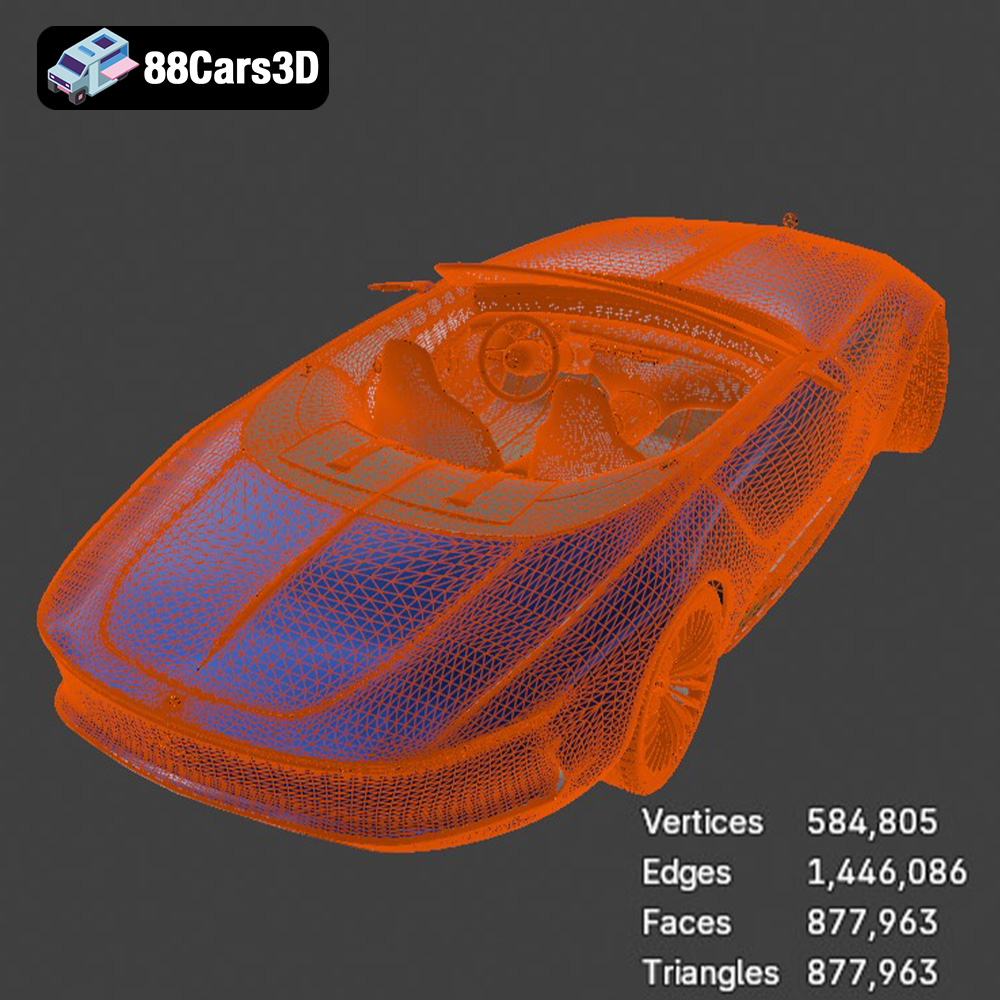
Stepping inside the virtual cabin of the Vision 6 reveals a 360-degree lounge-like luxury interior design. The model’s cockpit features a futuristic minimalist steering wheel and a continuous digital display, all rendered with sufficient detail for close-up shots and first-person perspectives. The transparent center tunnel, with its simulated fiber optic styling, is a particular highlight, adding to the sense of advanced technology and luxury. Premium contoured seat geometry with authentic luxury texturing ensures that the interior feels as plush and sophisticated as the real concept car. For game developers, this level of interior detail is crucial for immersive experiences, especially in VR or titles where players can enter and interact with the vehicle. Optimized geometry for first-person POV ensures that even with a detailed interior, performance remains smooth in demanding real-time environments.
Beyond visual fidelity, the true value of a professional 3D car model lies in its technical specifications and underlying optimization. The Mercedes-Maybach Vision 6 2018 3D Model from 88cars3d.com is engineered to deliver a perfect balance between stunning visuals and game-ready performance, making it a powerful asset for a wide range of applications.
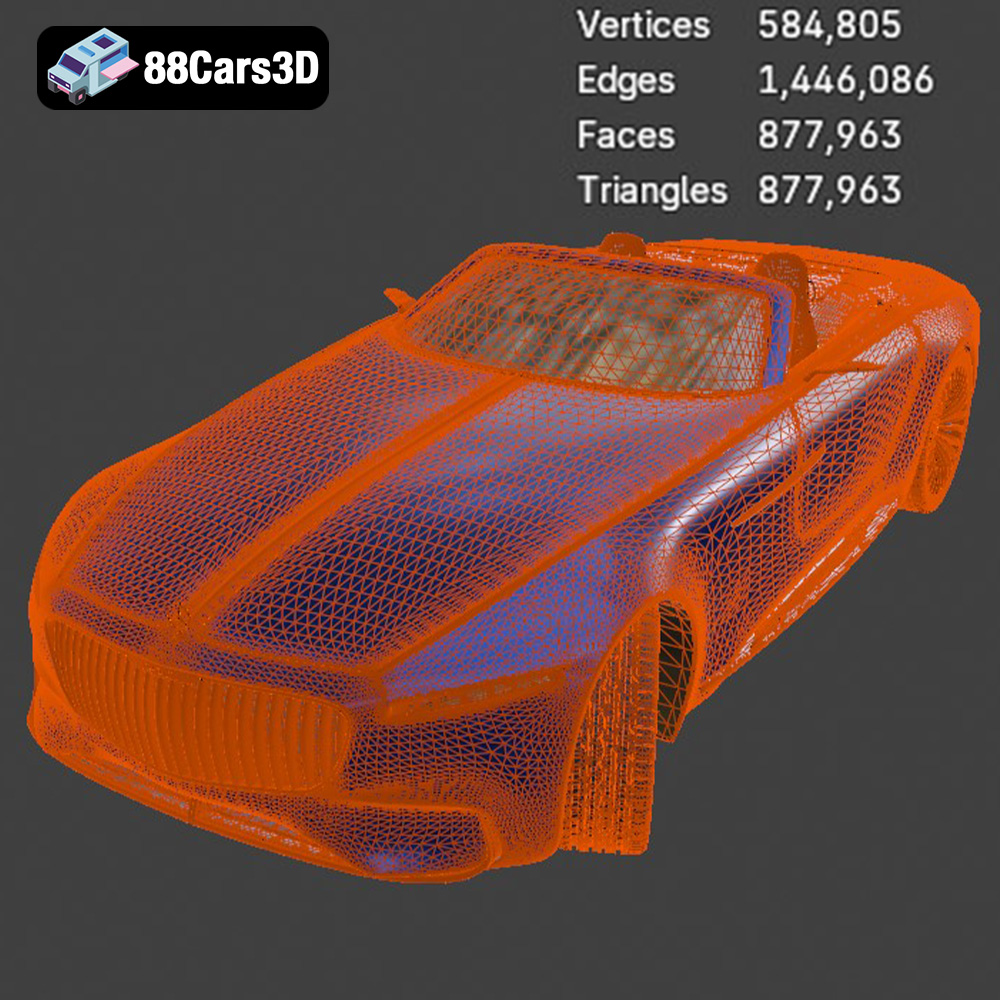
One of the most critical aspects for any 3D asset, especially for real-time applications, is its polygon count and topology. This model boasts an optimized topology with approximately 250,000 triangles. This ‘sweet spot’ triangle count is a deliberate engineering choice. It’s high enough to deliver exceptional visual realism, capturing intricate details and smooth curves without visible faceting, yet low enough to ensure efficient rendering speeds in demanding real-time engines like Unreal and Unity. For game developers, this means the model can be integrated into open-world environments or racing simulations without significantly impacting frame rates, providing a fluid and immersive user experience. For cinematic rendering, it ensures quick render times while maintaining the desired level of detail.
Accuracy in scale is paramount for integrating 3D car models into existing scenes or environments, whether for architectural visualization, virtual production, or game levels. This Mercedes-Maybach Vision 6 model is built with real-world scale accuracy, based on the actual vehicle chassis, ensuring seamless integration and correct proportions relative to other assets in your project. Furthermore, its animation readiness is a significant advantage. The model features proper pivot setups for steering, wheel rotation, and suspension travel. This pre-configured rigging allows animators to immediately start creating dynamic sequences without the laborious process of setting up pivots and hierarchies, accelerating production workflows for game cinematics, car commercials, or interactive vehicle configurators.
The model’s materials are designed for flexibility and high-quality rendering. The ability to change body colors, adjust material finishes (matte, gloss, metallic), and modify tire textures and wheel transparencies empowers artists to tailor the vehicle to specific project requirements. Imagine showcasing the Vision 6 in various factory colors or custom concept finishes, adapting its interior fiber-optic lighting for different ambient environments, or experimenting with unique paint effects for a futuristic advertisement. These customization options, combined with the model’s robust PBR (Physically Based Rendering) ready materials, ensure that it can achieve photo-realistic results under various lighting conditions, making it an invaluable tool for brand campaigns and high-end visualizations.
The versatility of the Mercedes-Maybach Vision 6 2018 3D Model makes it an indispensable asset across numerous professional disciplines. Its support for multiple file formats ensures seamless integration into diverse production pipelines.
For game developers, the Mercedes-Maybach Vision 6 3D Model is a ready-to-use gem. Its optimized polycount (~250,000 triangles) is perfect for modern game engines. Using the .fbx or .unreal format, developers can easily import the model into Unreal Engine or Unity. The proper pivot setup for wheels, steering, and suspension saves significant rigging time, allowing for quick implementation of vehicle physics and animation blueprints. Developers can then focus on creating compelling gameplay, such as integrating the Vision 6 into a futuristic racing title, an open-world exploration game, or even a vehicle combat simulator. The detailed interior, optimized for first-person POV, further enhances immersion for players.
When it comes to creating stunning marketing materials, lifestyle scenes, or studio lighting setups, high-quality 3D car models are essential. Utilizing the .max or .blend files, architectural visualization and product rendering artists can leverage the full power of their preferred software like 3ds Max or Blender. This allows for advanced rendering with V-Ray, Corona, or Cycles, producing cinematic-quality images and animations. The model’s intricate details, customizable materials, and accurate scale make it perfect for showcasing luxury properties, advertising campaigns, or even creating concept art for future urban environments. Artists can easily change body colors, modify material finishes, and adjust lighting to achieve any desired aesthetic.
The immersive nature of Augmented Reality (AR) and Virtual Reality (VR) demands highly optimized assets. The inclusion of the .glb format makes the Mercedes-Maybach Vision 6 an ideal candidate for creating cutting-edge AR/VR experiences. Developers can build interactive virtual showrooms where potential buyers can explore the car in a 360-degree environment, customize its features in real-time, or even place the digital car in their physical space via AR on a mobile device. The GLB format’s efficiency ensures smooth performance, enabling compelling and responsive user interactions without compromising visual quality, essential for luxury car configurators and brand experiences.
The journey of a 3D model doesn’t always end on a screen. For enthusiasts, designers, and collectors, the ability to transition a digital asset into a tangible object through 3D printing offers a unique and rewarding experience. The Mercedes-Maybach Vision 6 2018 3D Model comes with an .stl format, specifically tailored for 3D printing, alongside comprehensive guidelines to ensure a successful physical rendition.
The .stl file converts the intricate digital geometry into a watertight, triangulated mesh, the universal language for 3D printers. The recommended scales (1:12, 1:18, 1:24) cater to various display preferences, allowing for a desktop model or a larger, more detailed piece. For optimal results, particularly with the Vision 6’s fine details, resin printing is highly recommended over FDM, enabling a layer height between 0.04–0.12 mm. This precision ensures that ultra-narrow LED strips, the iconic grille, and the sophisticated interior elements are accurately reproduced. Crucially, supports will be required for detailed parts like mirrors, the minimalist steering wheel, and aero elements, preventing deformation during the printing process. Print orientation is also advised: printing the frame angled enhances structural integrity, while wheels are best printed separately for cleaner results and ease of assembly.
Once printed, the physical model truly comes to life through post-processing. Sanding is often necessary to smooth layer lines, especially with FDM prints, followed by applying a primer to create a uniform surface. The true magic happens with painting. Replicating the authentic factory colors or experimenting with custom concept finishes, perhaps with metallic paints to mimic the car’s luxurious sheen, elevates the model from a printed object to a miniature masterpiece. This hands-on process allows creators to add their personal touch, transforming a high-quality digital asset into a unique, display-worthy collectible that perfectly encapsulates the grandeur of the Mercedes-Maybach Vision 6.
The digital realm offers unprecedented opportunities for creativity and innovation, particularly in automotive design and visualization. The Mercedes-Maybach Vision 6 2018 3D Model stands as a prime example of a meticulously crafted 3D asset that empowers professionals across various industries. Its exceptional attention to detail, optimized topology for game-ready performance, and extensive support for multiple file formats make it an incredibly versatile tool.
Whether you are developing next-generation game assets, producing stunning automotive rendering for a luxury brand campaign, creating immersive AR/VR experiences, or bringing a concept car to life through 3D printing, this model provides the foundational quality you need. Its ability to seamlessly integrate into workflows using software like Blender, 3ds Max, Unreal Engine, and Unity, coupled with dedicated formats for specific applications, streamlines production and elevates the final output.
Investing in high-quality 3D car models like the Mercedes-Maybach Vision 6 from 88cars3d.com means investing in efficiency, realism, and creative freedom. It’s about having the right tools to turn ambitious visions into breathtaking realities, pushing the boundaries of what’s possible in the digital and physical worlds.
The Mercedes-Maybach Vision 6 2018 is a breathtaking electric concept car that pays a stunning homage to the glorious age of the aero coupes. It features dramatic, extreme proportions with a massively elongated hood, a sweeping low roofline, and an iconic vertical strut grille inspired by a pinstriped suit. Key visual elements include the striking gullwing doors, ultra-slim LED headlights, an aerodynamic boat-tail rear design, and massive 24-inch transparent aerodynamically optimized wheels. This 3D model boasts exceptional quality with optimized topology (approximately 250,000 triangles), delivering a perfect balance between high visual fidelity and game-ready performance. Whether you are developing a next-gen racing game, creating an interactive AR/VR luxury showroom, or producing cinematic animations, this model provides pristine detailing without compromising rendering speeds.
$39.99
.2018
.blend
.fbx
.glb
.max
.obj
.ply
.rendering
.stl
.unreal
car-3d-model
concept-car
game asset
game-ready
low-poly
luxury car
mercedes-maybach
optimized
vision-6
VR/AR