Get 20% OFF All Premium 3D & STL Models!

In the dynamic world of 3D visualization, from cinematic blockbusters to immersive game environments and highly realistic simulations, the demand for meticulously crafted assets is perpetually high. Professionals across industries continually seek models that offer not just visual appeal, but also technical robustness and versatility. Whether you’re a game developer building an expansive open-world scenario, an architect visualizing complex urban landscapes, or an animator bringing intricate scenes to life, the quality of your foundational 3D models dictates the success of your final output.
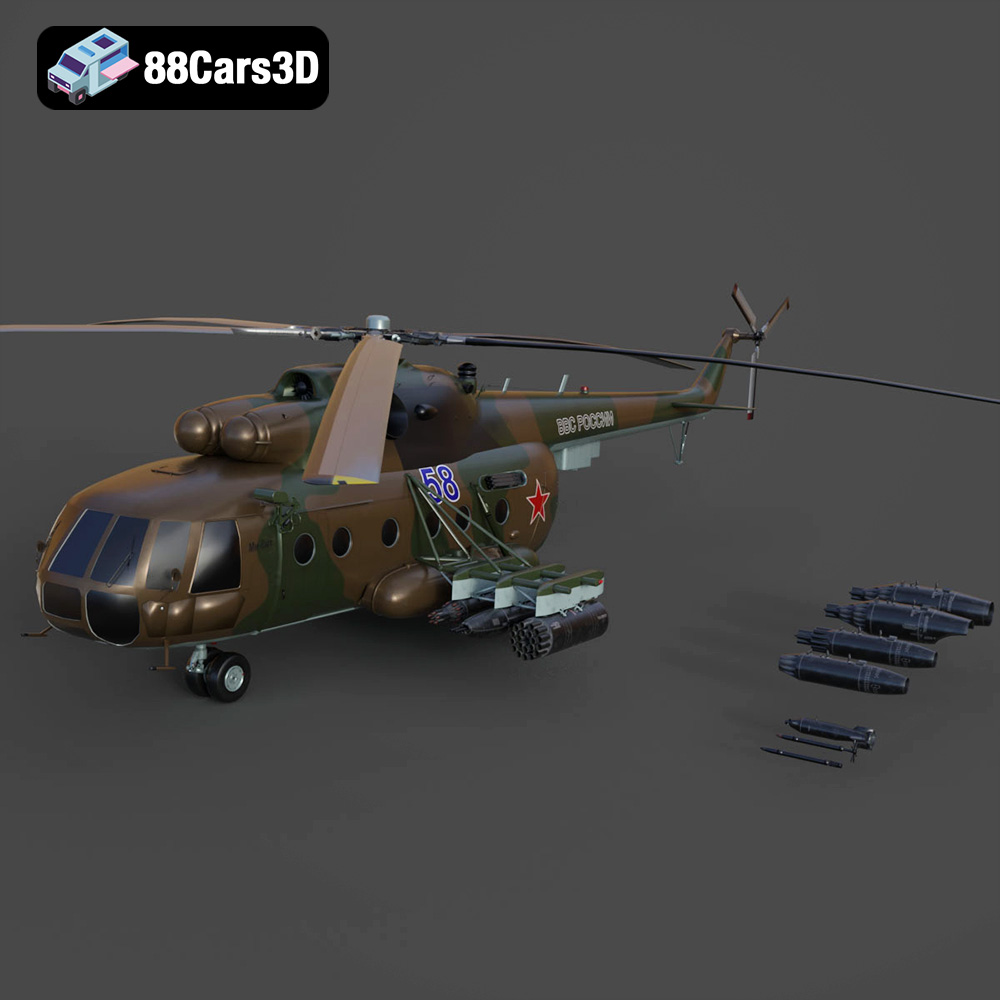
Amidst this pursuit of excellence, specialized marketplaces like 88cars3d.com emerge as invaluable resources, providing a curated selection of premium 3D models. While the name might suggest a focus on high-fidelity 3D car models, their catalog extends to other complex vehicles, delivering the same standard of precision and optimization. Today, we delve into an exceptional example of such an asset: the Mil Mi-8MT Helicopter 3D Model. This iconic Russian transport helicopter, renowned for its formidable presence and extensive operational history, has been faithfully recreated as a high-quality 3D asset designed to integrate seamlessly into a multitude of professional pipelines. Its blend of historical accuracy, optimized geometry, and comprehensive file format support makes it an indispensable tool for anyone aiming to elevate their 3D projects.
The journey of any 3D model, from its creation to its deployment in a game engine, render farm, or even a 3D printer, is heavily influenced by the file formats it supports. Each format is engineered for specific purposes, carrying different types of data and offering unique advantages. Understanding these distinctions is crucial for seamless integration into your workflow and for maximizing the utility of a high-quality asset like the Mil Mi-8MT Helicopter 3D Model, which is available in a comprehensive suite of formats from 88cars3d.com.
The .blend file is the native format for Blender, a powerful open-source 3D creation suite. When you download a .blend file, you’re not just getting a mesh; you’re receiving a complete Blender scene. This includes the model’s geometry, materials, textures, lighting setups, cameras, animation data, rigging, and even scene organization. For the Mil Mi-8MT model, the .blend file offers full editability, allowing artists to delve deep into its construction, modify materials, adjust lighting, or even refine its animation rigs directly within the Blender environment. It’s ideal for those who use Blender as their primary DCC (Digital Content Creation) tool and require maximum flexibility for further development or customization.
.fbx (Filmbox) is arguably the most widely adopted proprietary file format for 3D data exchange, developed by Autodesk. Its strength lies in its ability to store not just mesh data, but also complex animation, rigging, materials, lights, and camera information in a single package. This makes it an ideal choice for transferring models between different 3D software applications (like 3ds Max, Maya, Blender) and, critically, into game engines such as Unreal Engine and Unity. For the Mil Mi-8MT, the .fbx format ensures robust compatibility, allowing game developers to import the helicopter with its proper hierarchy, pivots, and basic material assignments ready for real-time pipelines.
The .obj (Wavefront OBJ) format is a cornerstone of 3D modeling due to its universal compatibility. It’s a simple, text-based format primarily used for transferring geometric data, including vertices, normals, UV coordinates, and faces. While it doesn’t typically store advanced features like animation or complex material definitions (it uses an accompanying .mtl file for basic material properties), its widespread support across virtually all 3D software makes it incredibly versatile. When you need to ensure a model like the Mil Mi-8MT can be opened and worked on in almost any 3D application, .obj is your go-to format for the core mesh.
.glb (GL Transmission Format Binary) is an increasingly popular format, especially for web-based 3D, augmented reality (AR), and virtual reality (VR) applications. It’s a compact, self-contained format that bundles 3D models, textures, and animations into a single file, making it highly efficient for streaming and rapid loading. The binary nature of .glb reduces file size and parsing time compared to its JSON-based predecessor (.gltf). For showcasing the Mil Mi-8MT in a browser-based configurator, an AR app on a mobile device, or an interactive VR experience, the .glb format provides optimal performance and ease of deployment.
.stl (Stereolithography) is the de facto standard for 3D printing and CAD software. It represents a 3D model as a series of connected triangles (a tessellation of the surface geometry) without color, texture, or other CAD attributes. While simple, this format is universally understood by 3D slicer software, which converts the model into printable layers. The Mil Mi-8MT model’s availability in .stl means hobbyists and professionals can bring this legendary aircraft to life as a physical scale model, demonstrating the true versatility of digital assets.
.ply (Polygon File Format) is another format for storing 3D data, particularly useful for scanned data and applications requiring precise geometric analysis or CAD integration. It can store a wider range of properties than .obj, including color, transparency, and sometimes even normal vectors per vertex. While less common for general asset exchange than .fbx or .obj, its use in scientific visualization, reverse engineering, and advanced modeling scenarios makes it a valuable inclusion for a comprehensive asset like the Mil Mi-8MT.
The .unreal format, or more accurately, assets packaged and optimized specifically for Unreal Engine, signifies a model that has undergone specific preparation for real-time rendering. This might involve optimized material setups (PBR), collision meshes, LODs (Levels of Detail), and a proper asset hierarchy ready for immediate integration into an Unreal Engine project. For the Mil Mi-8MT, this means that the model is already structured to leverage Unreal’s advanced rendering capabilities, ensuring maximum performance and visual quality straight out of the box for game developers and simulation creators.
Finally, the .max file is the proprietary format for Autodesk 3ds Max, a leading software for 3D modeling, animation, rendering, and visualization. Similar to the .blend file for Blender, a .max file contains a complete scene, including all geometric data, materials, textures, lighting, cameras, animation, and modifiers. For users of 3ds Max, this format offers unparalleled flexibility, allowing for full modification, re-texturing, animation, and high-fidelity rendering using powerful renderers like V-Ray or Corona. The Mil Mi-8MT in .max format provides professional animators and visualization artists with the ultimate control over the asset in a high-end production environment.
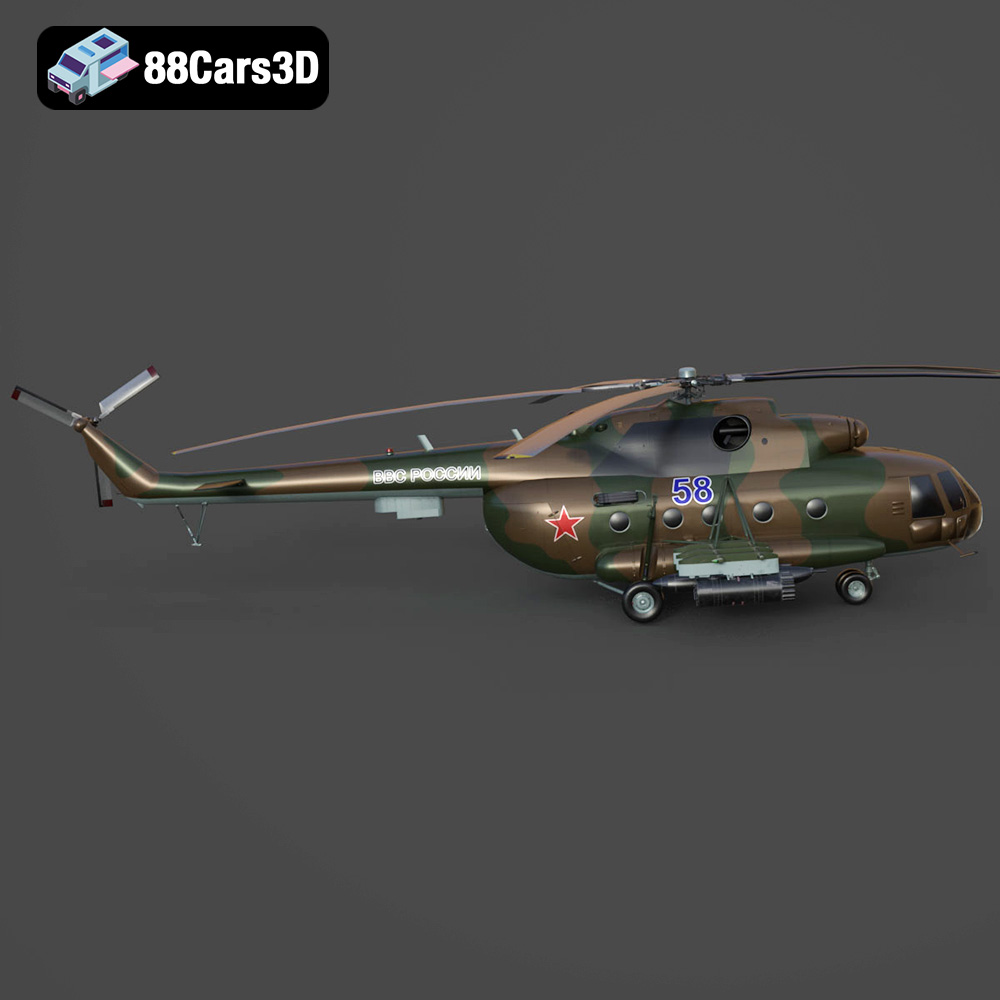
The Mil Mi-8MT is more than just a model; it’s a meticulously engineered digital twin of an aviation legend. Known for its ruggedness, versatility, and widespread deployment in both military and civilian roles, the real Mi-8MT has earned its place in history. This 3D model from 88cars3d.com captures that legacy with extraordinary precision, translating the helicopter’s iconic silhouette and complex mechanical details into a game-ready, render-optimized asset.
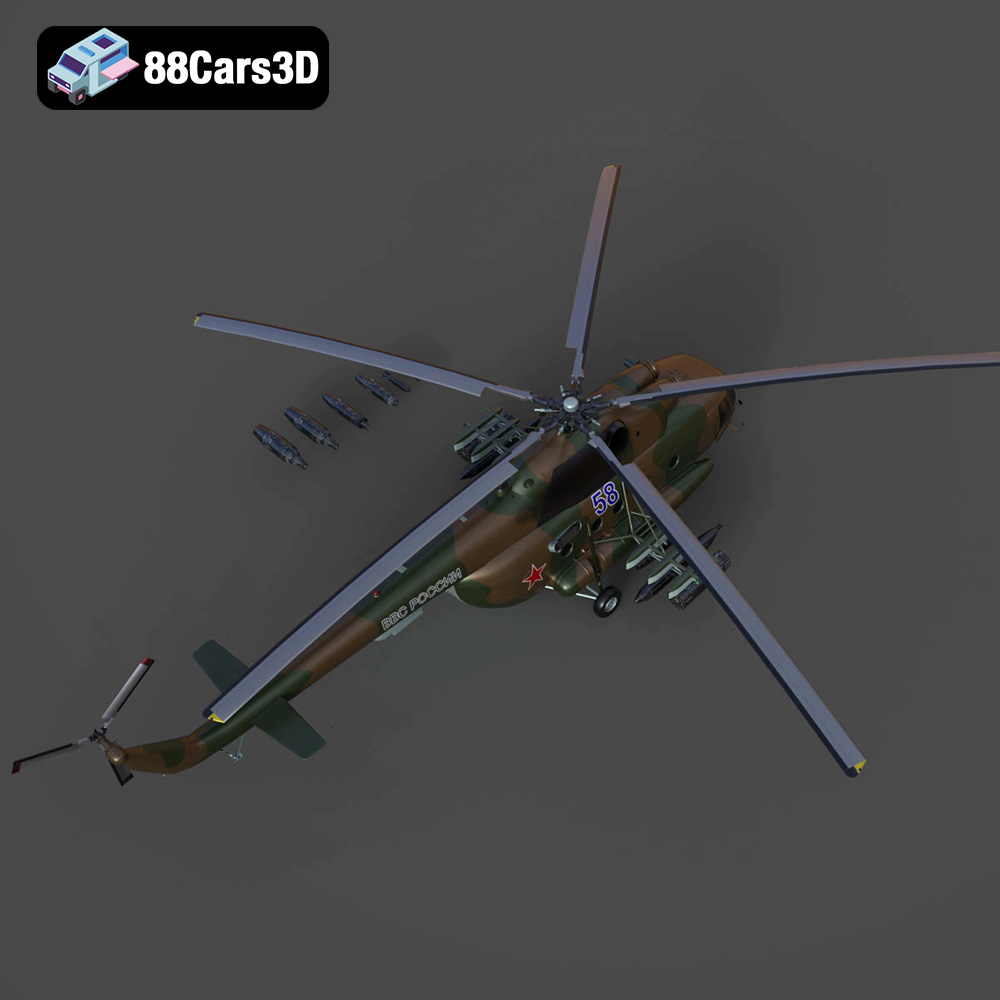
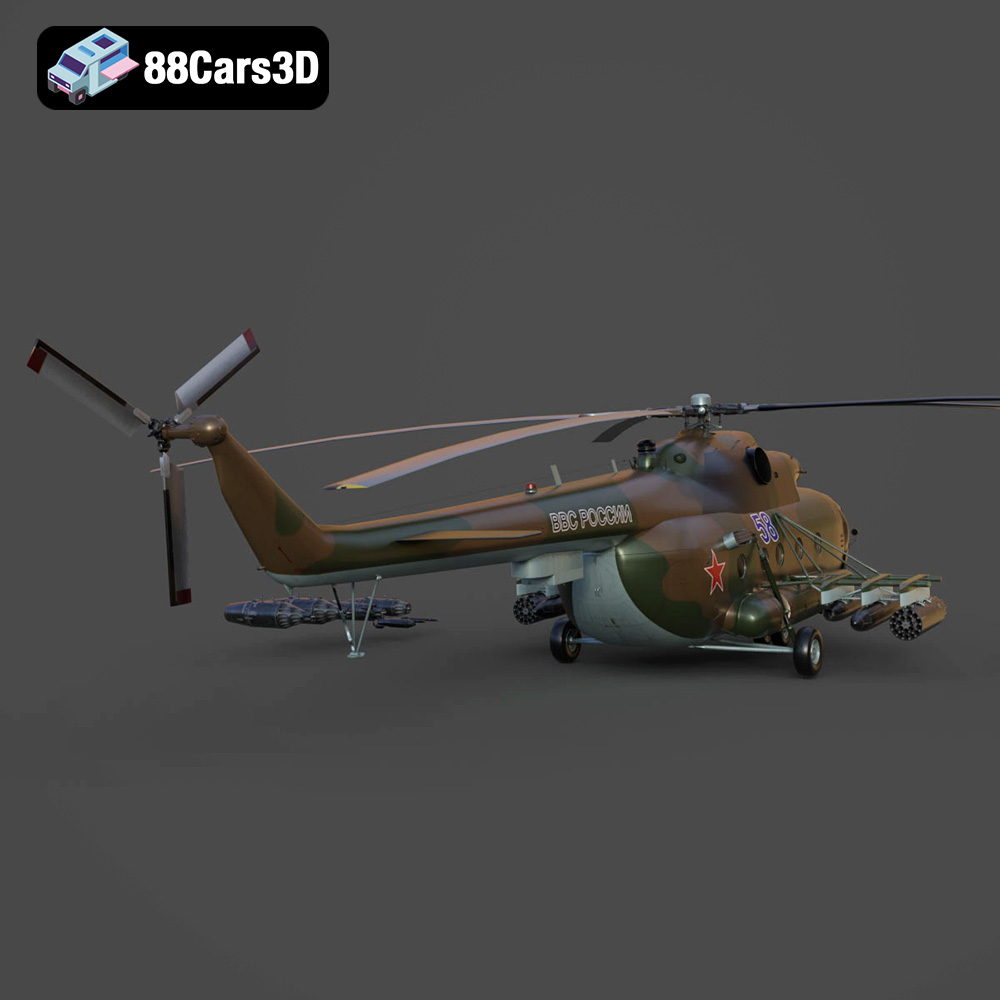
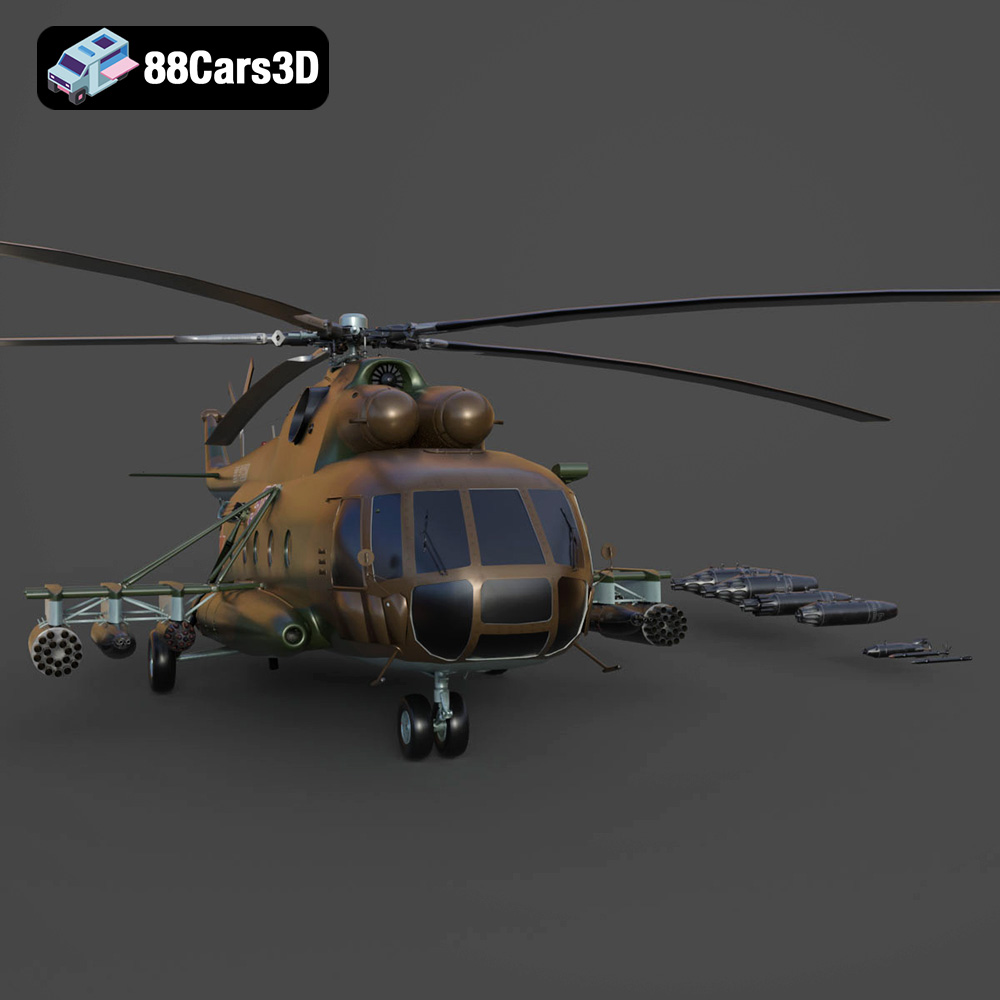
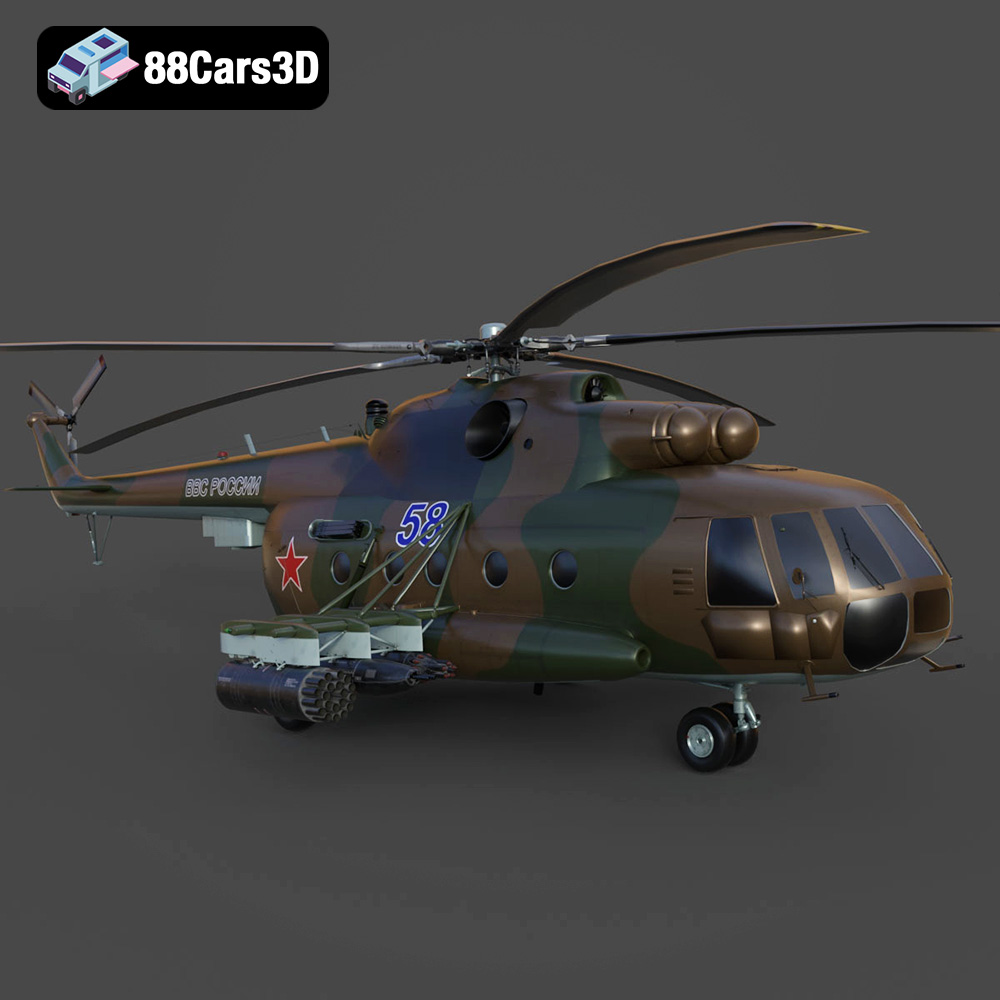
From the unmistakable five-blade main rotor to the distinctive top-mounted TV3-117MT turboshaft engines, every exterior feature of the Mil Mi-8MT has been faithfully recreated. Artists and developers will appreciate the accurate fuselage geometry and proportions, which are crucial for maintaining realism in simulations and close-up renders. The model boasts precise exhaust deflectors, ventilation grids, authentic navigation lights, and exterior landing beacons, adding layers of authenticity that bring the digital aircraft to life. The landing gear is not just static; it includes detailed tires and strut compression, suggesting potential for realistic animation and interaction within engine environments. Such attention to detail ensures that whether viewed from afar or scrutinized up close, the model holds up to the highest visual standards, making it a compelling choice for any project requiring high-quality 3D car models and other vehicle assets.
The immersion factor often hinges on the interior details, and the Mil Mi-8MT model excels here too. The cockpit features detailed pilot and co-pilot seating, complete with authentic harnesses. The complex flight control systems, including the cyclic, collective, and anti-torque pedals, are all accurately modeled. Perhaps most impressive for real-time applications is the accurately mapped analog instrument cluster and overhead panels, complete with detailed switches, levers, and avionics bays. Crucially, the geometry is specifically tailored and optimized for first-person POV in gaming. This means developers can drop players directly into the pilot’s seat, offering an unparalleled level of immersion without encountering performance bottlenecks, a critical consideration for modern game asset development.
In the world of 3D, especially for interactive applications like games and AR/VR, visual fidelity must always be balanced with performance. The Mil Mi-8MT Helicopter 3D Model strikes this balance expertly, delivering high-end realism without sacrificing the efficiency required for real-time engines.
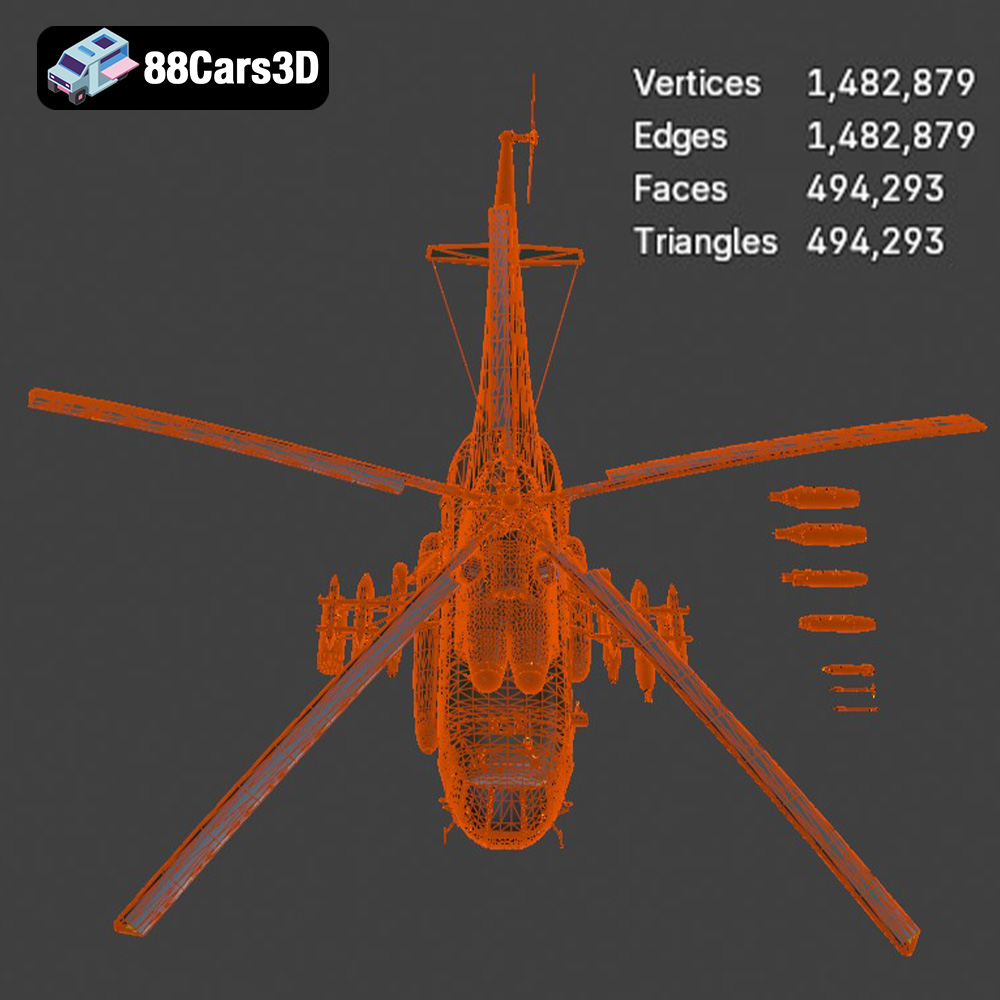
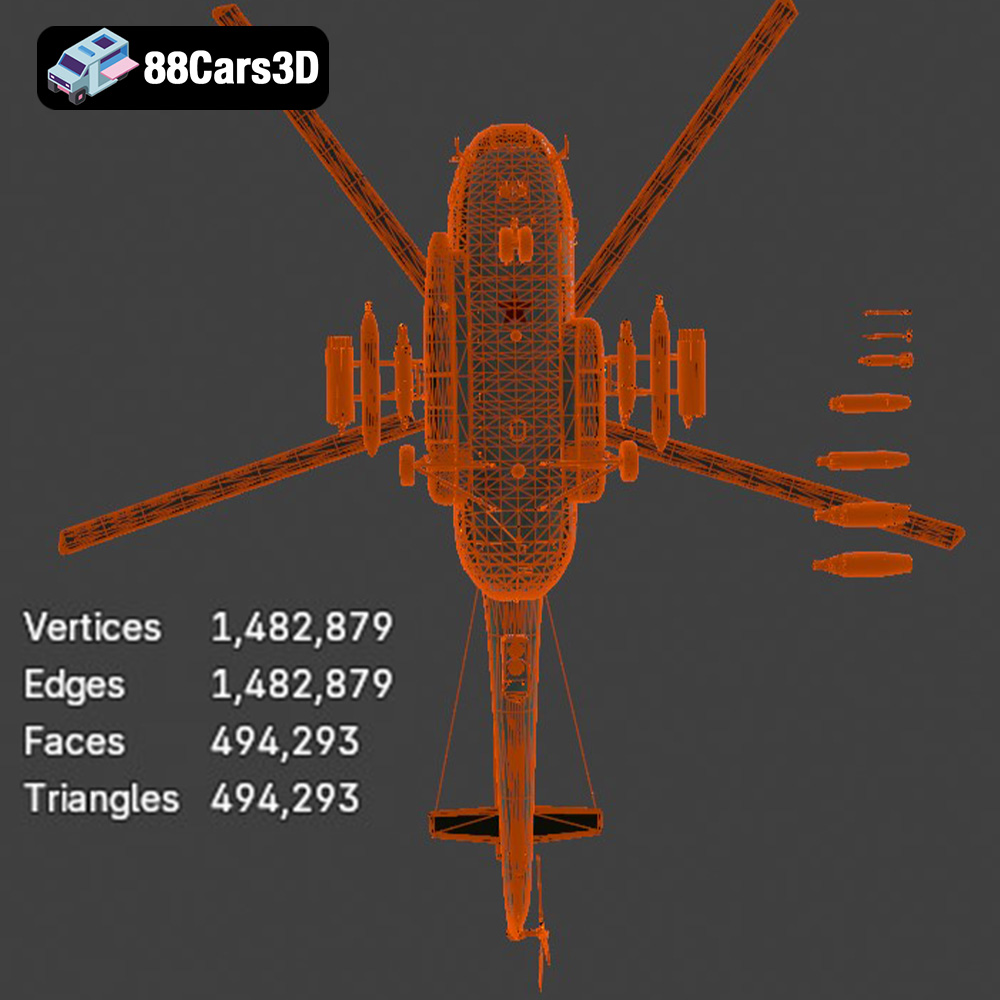
One of the most critical aspects of any game asset is its polygon count. The Mil Mi-8MT model boasts an optimized ~120,000 triangle count. This isn’t a random number; it’s a carefully considered balance. For real-time engines like Unreal Engine and Unity, this polycount allows for impressive visual realism – capturing the intricate details of the helicopter’s exterior and cockpit – while remaining highly efficient. This means the model can be integrated into large open-world environments or complex scenes without unduly impacting frame rates, ensuring a smooth and responsive user experience. It avoids the excessive polygon density of purely cinematic models, which can cripple performance, while still providing more than enough detail for compelling close-ups and dynamic camera work.
Accuracy extends beyond just visual detail; it encompasses scale and functional hierarchy. The Mil Mi-8MT model is built to real-world scale accuracy, based on actual airframe blueprints. This ensures that when the model is imported into any 3D software or game engine, it will fit seamlessly within existing environments and maintain correct proportions relative to other assets, including other 3D car models or buildings. Furthermore, proper pivot setup is crucial for animation. The model features correctly established pivots for main and tail rotor rotation, door hinges, and even suspension travel. This ‘rigging foundation’ significantly streamlines the animation process, allowing animators to quickly set up realistic motion for take-offs, landings, and flight sequences without manual recalibration of pivot points.
While not explicitly detailed in the product description, any high-quality game-ready asset implicitly comes with well-executed UV mapping and an optimized material workflow, typically utilizing Physically Based Rendering (PBR) textures. The balanced polycount of the Mil Mi-8MT implies efficient UV layouts, allowing textures to be applied without distortion and maximizing pixel density where it matters most. PBR materials ensure that the helicopter’s surfaces react realistically to light, providing accurate reflections, diffuse colors, and metallic/roughness properties, regardless of the lighting environment. This foundational work by the creators at 88cars3d.com ensures that whether you’re rendering in Blender’s Cycles, 3ds Max’s V-Ray, or Unreal Engine’s real-time renderer, the Mil Mi-8MT will look consistently stunning and true to life.
The Mil Mi-8MT Helicopter 3D Model’s robust design and multi-format availability open up a world of possibilities across various professional domains. Its versatility makes it a valuable asset for scenarios far beyond simple static renders.
For game developers, the Mil Mi-8MT is a treasure trove. Its optimized ~120,000 triangle count makes it ideal for integrating into a wide array of game genres. In combat flight simulators, its accurate geometry and detailed cockpit provide an immersive experience, allowing players to feel truly in command. For open-world games and tactical shooters, it can serve as a central player vehicle, an AI-controlled transport, or even environmental dressing that adds depth and realism to military zones. The .fbx and specific .unreal formats are critical here. A typical workflow involves importing the .unreal package directly into Unreal Engine, where developers can quickly set up physics, collision meshes, and integrate it into a vehicle control system. For Unity users, the .fbx acts as the primary import, allowing for similar scripting and interaction development. The model’s separate rotor heads, doors, and landing gear components are pre-configured for seamless animation, drastically cutting down development time.
The immersive nature of AR/VR demands highly optimized yet visually rich assets, a niche where the Mil Mi-8MT excels. Educational institutions and military contractors can leverage this model for virtual hangars, maintenance training simulations, or even tactical scenario planning. Imagine a pilot-in-training walking around a full-scale virtual Mi-8MT, inspecting components, or practicing pre-flight checks in VR. The .glb format is particularly potent for mobile AR experiences, allowing users to place the helicopter in their real-world environment with ease. For high-fidelity VR simulations, the optimized polycount ensures smooth framerates on VR headsets, critical for preventing motion sickness and enhancing realism. Developers using engines like Unreal or Unity can import the model, set up interactive elements for doors, controls, and instruments, creating a truly engaging learning or operational environment.
Beyond interactive mediums, the Mil Mi-8MT 3D model is perfectly suited for high-end cinematic rendering and visualization. Marketing agencies, film studios, and historical aviation enthusiasts can use it to create stunning visuals for documentaries, concept art, or promotional materials. Its accurate details and robust material setup mean it holds up under close scrutiny and studio lighting. Workflow in a package like 3ds Max or Blender would involve importing the .max or .blend file, setting up advanced lighting using renderers like V-Ray, Arnold, or Cycles, and animating complex camera paths. The ability to customize liveries, wear, and material finishes (as offered by 88cars3d.com) allows artists to adapt the model for specific narrative needs, from a pristine factory-fresh look to a battle-worn veteran of countless missions. This versatility is on par with premium 3D car models used in automotive advertising, offering the same level of visual sophistication.
A truly professional 3D asset provides not just a finished product, but also a foundation for creative expression and adaptation. The Mil Mi-8MT Helicopter 3D Model offers extensive customization options, allowing artists and developers to tailor it to specific project requirements and integrate it seamlessly into their unique production pipelines.
The product description highlights several key customization avenues that empower users to make the Mil Mi-8MT their own. The most obvious is changing the fuselage livery. Imagine the helicopter draped in authentic military camouflage for a combat simulator, stark UN white for a humanitarian aid scenario, or even a vibrant civilian transport paint scheme for an adventure game. This often involves swapping out texture sets or creating new ones based on the existing UV maps, which can be done efficiently in software like Adobe Substance Painter or directly within your chosen 3D DCC application.
Further enhancing realism, artists can modify texture wear and tear. A battle-damaged, weathered Mi-8MT tells a story of arduous service, while a factory-fresh model speaks of new beginnings. Adjusting material finishes – from matte military paint to gloss or even metallic sheens – dramatically alters the model’s appearance under different lighting conditions. Finally, adapting lighting for night-ops or daylight environments is crucial for mood and atmosphere, and the model’s clean topology and material setup make it responsive to various lighting setups, whether global illumination in a renderer or real-time light sources in a game engine.
The strength of the Mil Mi-8MT model lies in its designed compatibility with major 3D software platforms and real-time rendering engines. For a project relying on 3ds Max, the native .max file provides direct access to all scene elements, allowing for immediate modification and rendering. Blender users benefit from the .blend file, offering the same level of native control within the open-source ecosystem. When it comes to game development, the .fbx and .unreal formats ensure a smooth transition into Unreal Engine or Unity. Developers can import the model, apply specific game-ready materials, set up collision geometry, and configure LODs (Levels of Detail) to ensure optimal performance across different viewing distances.
In a large-scale production, this model acts as a time-saving backbone. Instead of spending weeks on modeling and optimizing a complex vehicle, teams can leverage this pre-built, high-quality asset from 88cars3d.com, freeing up valuable resources for other critical tasks like level design, character animation, or shader development. The proper pivot setup for animating rotors, doors, and suspension further accelerates the animation pipeline, making it a truly ‘drop-in’ solution for vehicle assets.
The versatility of the Mil Mi-8MT Helicopter 3D Model extends beyond digital screens, offering a tangible connection to this iconic aircraft through 3D printing. The inclusion of the .stl format specifically caters to hobbyists, model makers, and educators looking to physically manifest this detailed digital asset.
Converting a high-detail digital model into a successful 3D print requires careful consideration of print settings. The product’s recommendations provide an excellent starting point:
Understanding these parameters is key to translating the digital fidelity of the Mil Mi-8MT into a high-quality physical model. The creators at 88cars3d.com have clearly considered the practicalities of physical fabrication.
Once printed, the journey continues with post-processing. This typically involves removing supports, sanding to smooth out layer lines (especially on FDM prints), and applying a primer. The real magic happens with painting. Hobbyists can delve into the world of authentic military camouflage patterns, replicate UN white liveries, or experiment with civilian transport finishes. This stage allows for immense creativity and personal touch, transforming a raw 3D print into a display-worthy replica. The availability of this model in .stl format opens up a new dimension for interaction with 3D assets, bridging the gap between digital creation and physical craftsmanship, much like how detailed 3D car models are often brought to life as physical prototypes.
The Mil Mi-8MT Helicopter 3D Model stands as a testament to the power of high-quality, meticulously engineered digital assets in today’s demanding creative industries. From its historically accurate exterior and detailed, game-ready cockpit to its optimized geometry and extensive file format support, this model is a robust solution for a wide range of professional applications.
Whether you are developing an immersive flight simulator, crafting cinematic visualizations, populating a vast open-world game, or even bringing a physical replica to life through 3D printing, the Mil Mi-8MT offers unparalleled versatility and performance. Its availability in formats like .blend, .fbx, .obj, .glb, .stl, .ply, .unreal, and .max ensures seamless integration into virtually any professional pipeline, providing flexibility and saving invaluable development time.
Investing in such a high-fidelity asset from a reputable source like 88cars3d.com not only enhances the visual quality of your projects but also streamlines your workflow and empowers your creative vision. The Mil Mi-8MT Helicopter 3D Model is more than just a collection of polygons; it’s a gateway to new levels of realism and engagement in your digital endeavors, offering the same standard of excellence found in their premium 3D car models. Take your projects to new heights with this exceptional digital asset.
The Mil Mi-8MT is a legendary medium twin-turbine transport helicopter, renowned for its ruggedness, versatility, and widespread military and civilian use across the globe. This iconic rotorcraft features distinctive top-mounted TV3-117MT turboshaft engines, a robust airframe, an intricate exhaust system, and its recognizable five-blade main rotor. This high-quality 3D model boasts exceptional topological flow and a balanced ~120,000 triangle count, ensuring game-ready optimization without sacrificing visual fidelity. Engineered for diverse real-time and offline applications, it is built to deliver top-tier performance for game development, AR/VR simulations, animation, and high-end cinematic visualization. Perfect for military flight simulators, action-adventure game environments, cinematic rendering, and historical aviation visualizations.
$39.99
.blend
.fbx
.glb
.helicopter
.max
.obj
.ply
.rendering
.stl
.unreal
game asset
game-ready
helicopter-3d-model
low-poly
mi-8mt
mil
military-helicopter
optimized
transport-helicopter
VR/AR