Get 20% OFF All Premium 3D & STL Models!

In the expansive and ever-evolving landscape of 3D visualization, the demand for meticulously crafted digital assets continues to soar. From blockbuster game titles and immersive virtual reality experiences to intricate architectural visualizations and detailed engineering simulations, the backbone of any compelling digital world is its assets. Nowhere is this more apparent than with vehicle models, which require an exceptional blend of artistic fidelity and technical precision to truly shine. These aren’t just static objects; they are often central interactive elements, demanding optimized geometry, realistic texturing, and robust compatibility across various platforms. The art of creating high-quality 3D car models and other complex vehicles lies in striking a perfect balance between visual realism and performance efficiency.
Today, we embark on a journey into the specifics of what makes a 3D vehicle model truly outstanding, using a prime example from the diverse offerings at 88cars3d.com: the Mil Mi-8MTV-UN 3D Model. This iconic, multi-role transport helicopter, globally recognized for its extensive service under the United Nations, represents a pinnacle of detailed 3D asset creation. It’s not just a model; it’s a versatile tool engineered for demanding professional workflows, whether you’re developing the next big flight simulator, crafting a cinematic sequence, or even preparing for physical 3D printing. Understanding its construction, file formats, and application empowers creators to push the boundaries of their digital projects.
The Mil Mi-8MTV-UN is more than just a helicopter; it’s a global workhorse synonymous with humanitarian aid and peacekeeping missions. Its rugged design, twin Klimov turboshaft engines, and distinctive five-blade main rotor system have made it an instantly recognizable figure in skies across the world. Translating such a significant real-world machine into a high-fidelity 3D model requires not just artistic skill, but also a deep understanding of the aircraft’s mechanics and historical context.
The 3D model available on 88cars3d.com meticulously captures this essence. It’s a digital twin that brings the integrity and robust nature of the Mil Mi-8MTV-UN to life, making it an invaluable asset for a myriad of projects. Whether you’re aiming for historical accuracy in a documentary, dynamic realism in a game, or immersive detail in a VR training scenario, this model provides an unparalleled foundation.
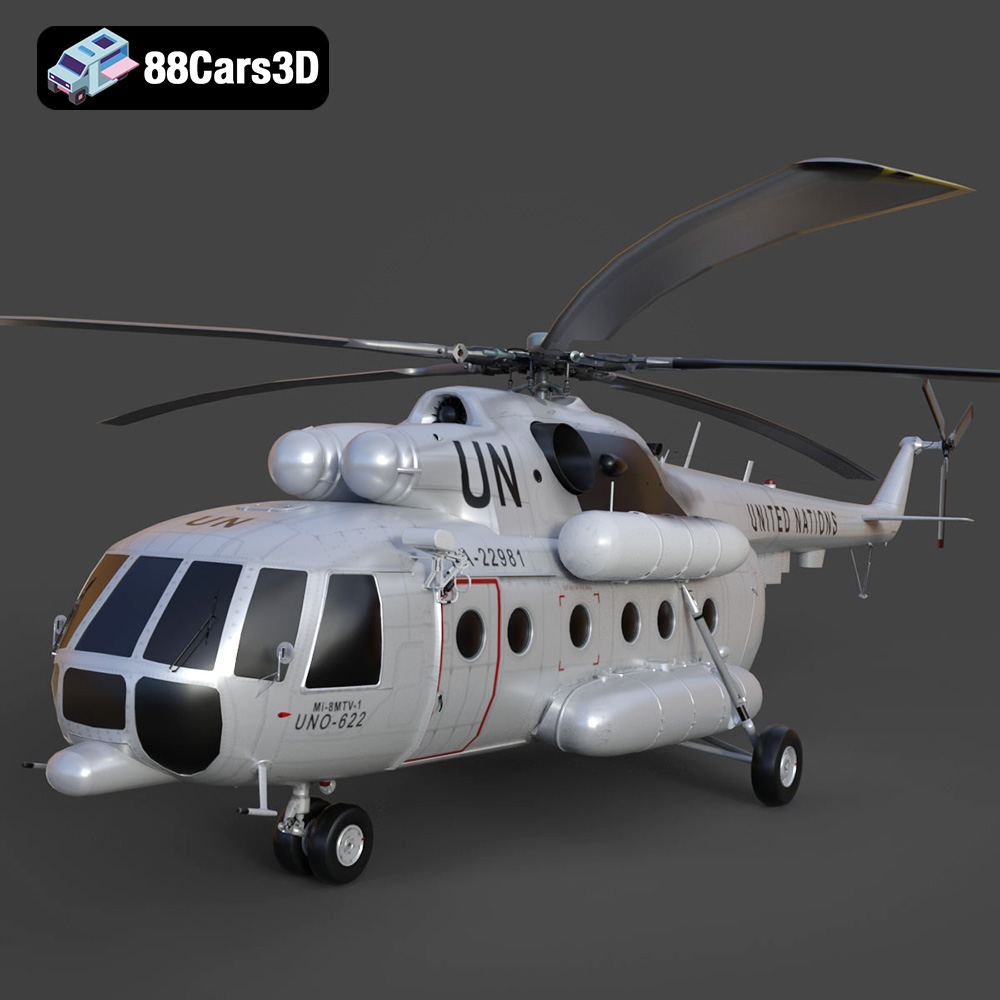
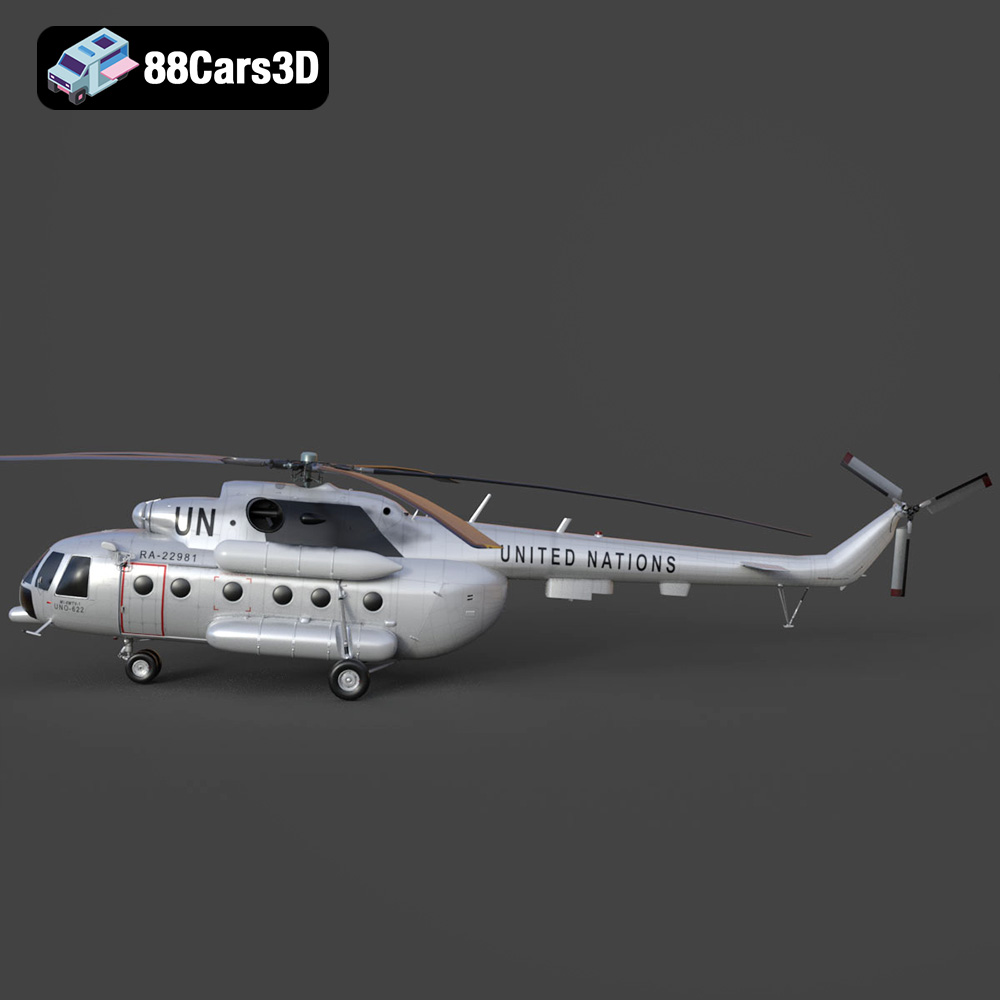
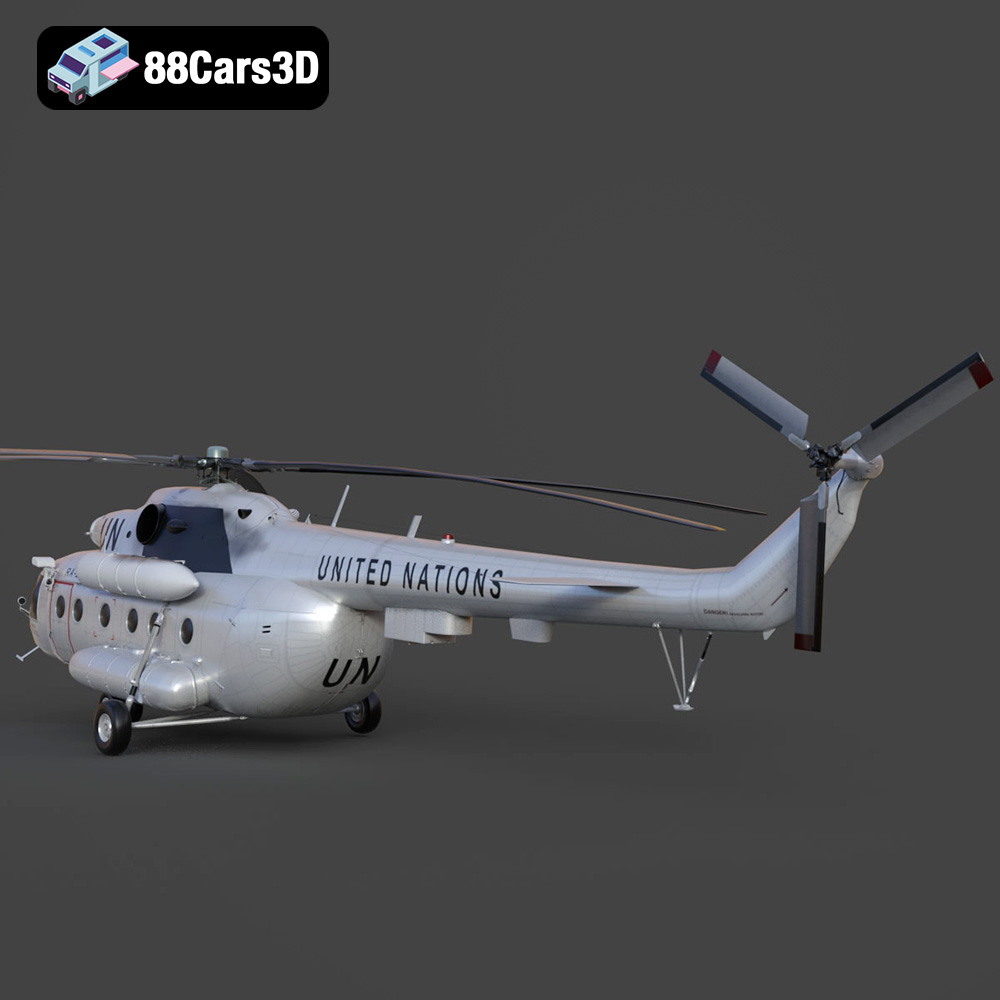
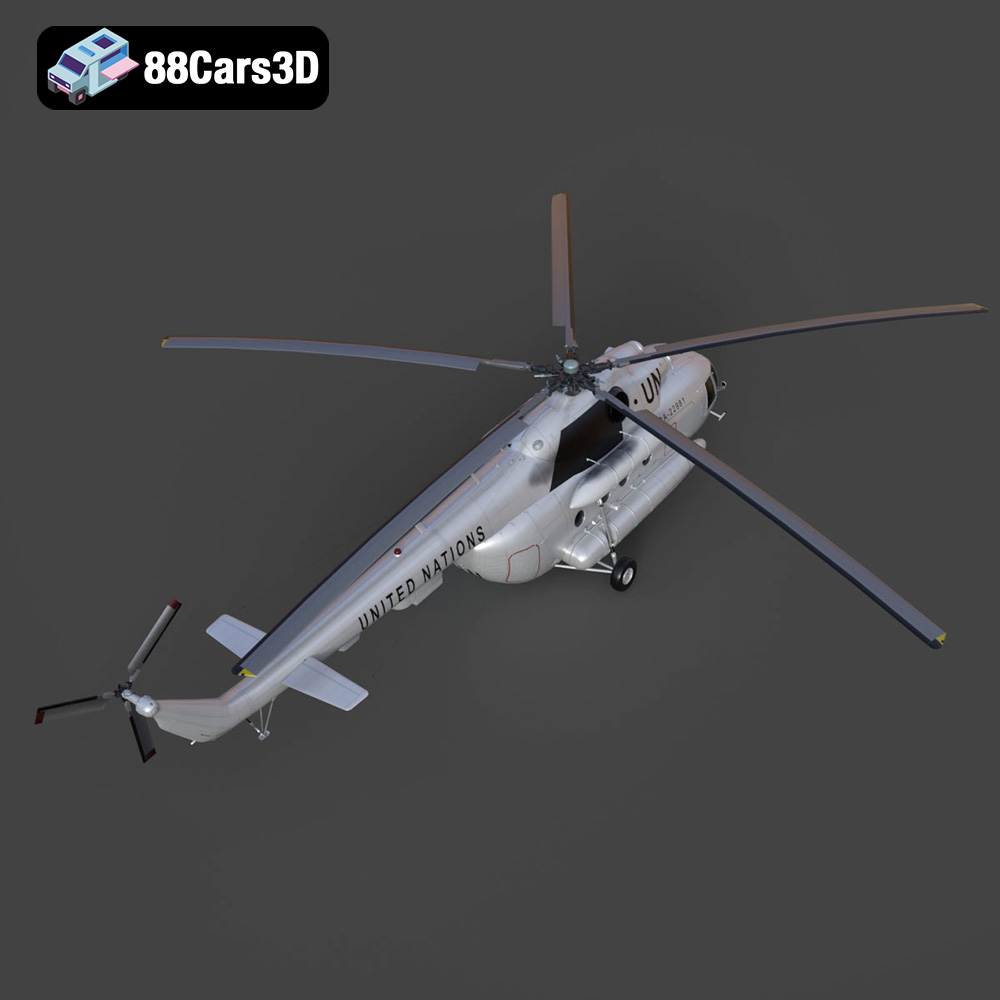
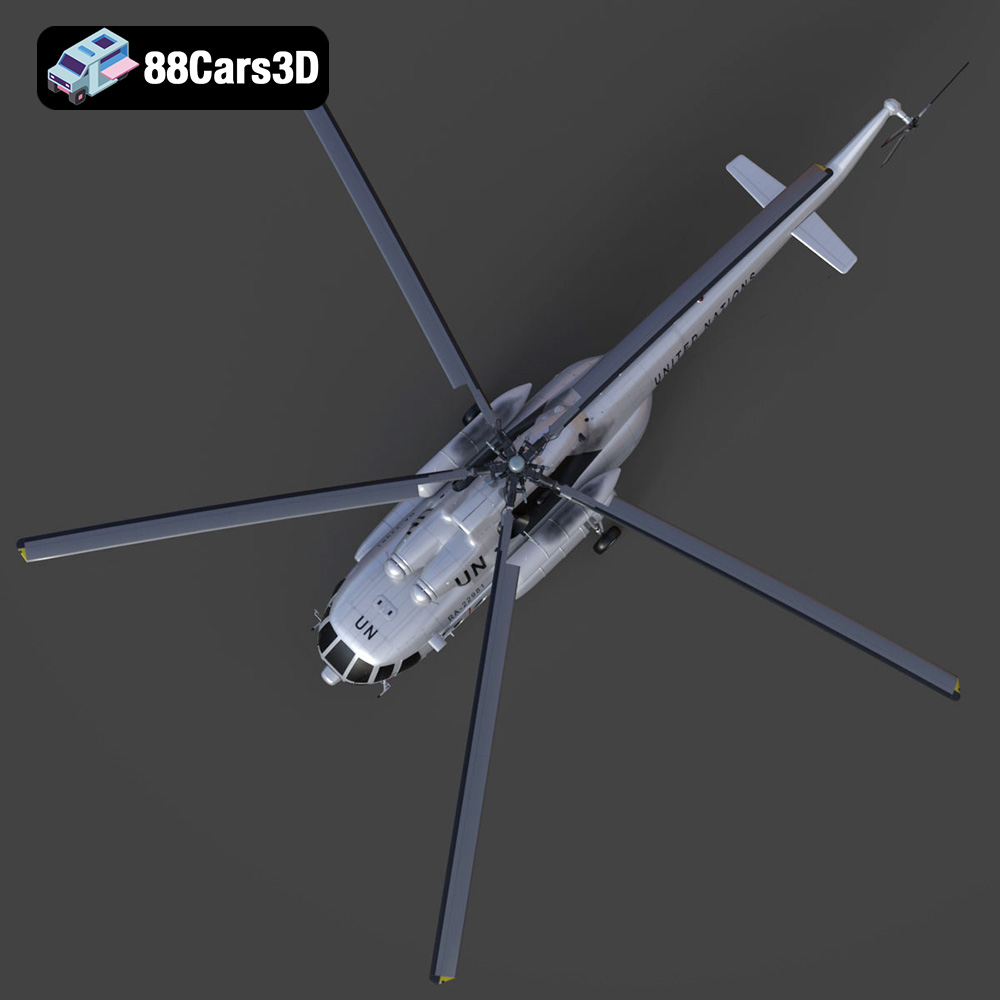
The exterior of the Mil Mi-8MTV-UN 3D model is a testament to meticulous research and execution. The accurate fuselage geometry and aerodynamic proportions immediately convey the helicopter’s authentic silhouette. Every critical component, from the detailed twin turboshaft engine housings and distinctive exhaust deflectors to the rugged tricycle landing gear with accurately modeled tires and struts, has been carefully replicated. The authentic United Nations white livery, complete with high-resolution tactical decals and prominent markings, ensures immediate recognition and adds a layer of realism vital for historical or mission-based contexts. Furthermore, exterior lighting elements, including anti-collision lights and landing beacons, are faithfully represented, crucial for realistic rendering in varying light conditions and for game-engine integration where dynamic lighting is key.
Beyond the impressive exterior, the Mil Mi-8MTV-UN 3D model delves into the often-overlooked interior, providing a comprehensive and functional cockpit and a spacious cargo/troop compartment. The pilot and co-pilot seating arrangements, complete with safety harnesses, are modeled with precision. The dual-control flight sticks, pedals, collective pitch levers, and the comprehensive analog instrument panel, center console, and overhead switches are all authentically represented. This level of detail is paramount for flight simulators, where first-person perspective (POV) realism is essential for immersion. For AR/VR experiences, a fully realized interior allows users to truly feel present within the aircraft. The cargo and troop compartment also features accurate interior paneling, enabling creators to stage complex scenes, whether it’s loading humanitarian aid, deploying troops, or simply showcasing the aircraft’s impressive internal volume.
The versatility of a professional 3D model is often defined by its compatibility and the range of file formats it supports. Different formats are optimized for distinct purposes, from full editability within native software to streamlined performance in real-time engines, or even precise output for physical manufacturing. The Mil Mi-8MTV-UN 3D Model exemplifies this versatility by offering an extensive suite of file types, ensuring it can seamlessly integrate into virtually any professional pipeline. Understanding these formats is crucial for optimizing workflows and achieving desired outcomes in various applications, from automotive rendering to game asset development.
The .blend format provides a fully editable Blender scene, complete with all materials, textures, lighting, and scene setups. For artists and studios working within the Blender ecosystem, this is the most flexible option. It allows for comprehensive modifications, such as altering mesh topology, adjusting UV layouts, reconfiguring material nodes, or even adding new animations. Similarly, the .max format is the native project file for Autodesk 3ds Max. This offers a complete 3ds Max scene, providing access to all modifiers, animation data, and rendering settings. Both .blend and .max are invaluable for projects requiring extensive customization or integration into existing scene files, particularly for high-end rendering and animation tasks where specific software features are leveraged.
.fbx (Filmbox) stands as a cornerstone in the 3D industry for data exchange, especially for game development. It’s ideal for Unreal Engine, Unity, and real-time pipelines due to its robust support for mesh data, skeletal animations, blend shapes, and PBR material assignments. FBX maintains a good balance between data fidelity and file size, making it a go-to for transferring animated assets between different software packages. The .obj (Wavefront Object) format is another universal exchange standard, highly valued for its simplicity and wide compatibility. It’s excellent for static mesh data and basic material assignments, making it suitable for cross-software transfers where only geometry and UVs are primarily needed. While it doesn’t carry animation data, its ubiquity makes it a safe fallback. .glb (GL Transmission Format Binary) is optimized for AR, VR, and browser-based display. It’s a compact, single-file format that includes geometry, materials, textures, and animation, making it perfect for rapid deployment on web platforms and mobile devices, requiring minimal processing power. Lastly, .ply (Polygon File Format) is a precision mesh format often used for CAD, 3D scanning, or scientific analysis. It’s known for storing point cloud data and vertex colors, making it suitable for applications where exact geometric representation and data integrity are paramount, though less common for general game assets or rendering.
The .stl (Standard Tessellation Language) format is the industry standard for 3D printing output. It represents a 3D model as a series of connected triangles, defining only the surface geometry. While it lacks color or texture information, its simplicity makes it universally compatible with 3D printing slicer software. For enthusiasts looking to physically manifest the Mil Mi-8MTV-UN, the .stl conversion is crucial. Finally, the .unreal format signifies an engine-ready asset specifically tailored for real-time environments within Unreal Engine. This often implies optimized mesh data, pre-configured materials, collision meshes, LODs (Levels of Detail), and sometimes even basic blueprints or integrated logic, ensuring maximum performance and ease of use directly within the engine. This makes the Mil Mi-8MTV-UN 3D model a true game asset, ready for immediate implementation in high-performance interactive experiences.
Creating a high-quality 3D model, whether for automotive rendering or a detailed vehicle, involves a delicate balance of artistic vision and technical precision. The Mil Mi-8MTV-UN 3D Model exemplifies this balance, offering specifications that cater to both visual fidelity and optimal performance across various digital platforms. It’s engineered not just to look good, but to integrate seamlessly into demanding production environments.
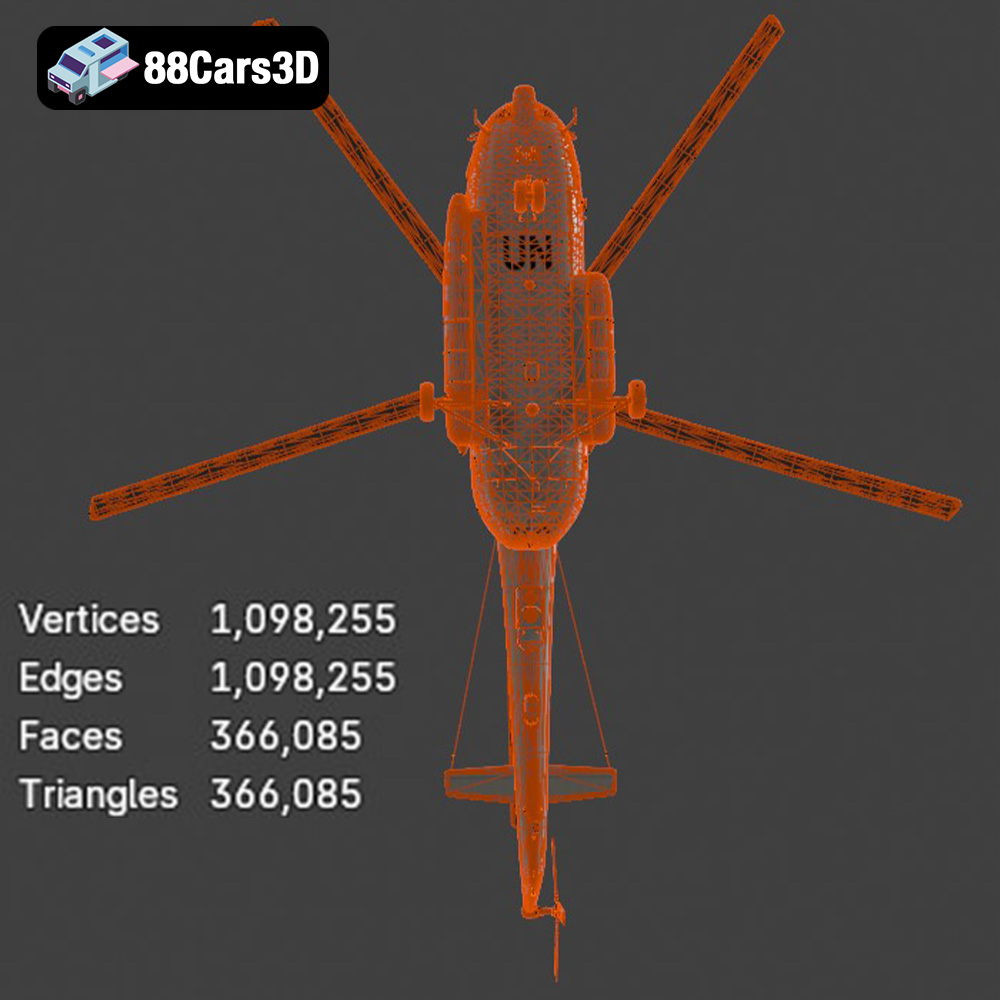
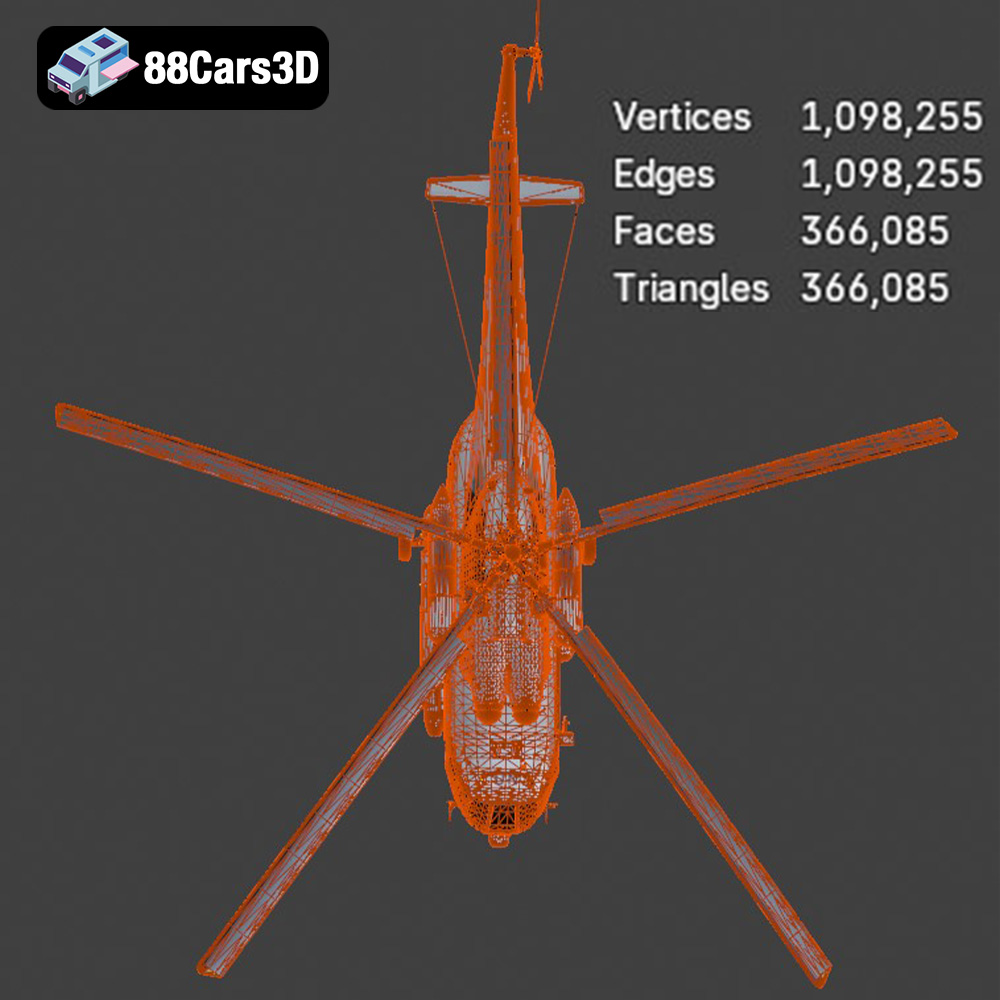
One of the most critical technical aspects for any 3D game asset or real-time visualization is its polygon count. The Mil Mi-8MTV-UN 3D model is designed with an optimized topology of approximately 150,000 triangles. This figure represents a carefully chosen sweet spot. It’s detailed enough to convey the intricate forms and mechanical elements of the helicopter, providing high-end visual realism without appearing blocky or simplistic. At the same time, 150k triangles is a “game-ready” count, meaning it’s highly efficient for real-time engines like Unreal Engine and Unity. This optimization ensures that the model can be rendered smoothly even in complex scenes, minimizing performance overhead and allowing for a higher frame rate in interactive applications. This careful polycount management is a hallmark of professional 3D car models and other vehicle assets designed for modern digital platforms.
Visual realism in modern 3D rendering heavily relies on Physically Based Rendering (PBR) textures. The Mil Mi-8MTV-UN model features high-resolution PBR textures that accurately simulate how light interacts with the helicopter’s surfaces. This includes details like the metallic sheen of the fuselage, the weathered paint, the rubber texture of the tires, and the subtle wear and tear characteristic of a working aircraft. PBR textures use multiple maps (albedo/base color, metallic, roughness, normal, ambient occlusion) to provide a physically accurate representation of materials. This approach ensures that the model will look consistent and realistic under various lighting conditions, whether it’s a bright sunny day, a gloomy evening, or an artificial studio lighting setup, making it ideal for high-quality cinematic renders and realistic game environments.
For any dynamic vehicle model, proper pivot setup and modularity are essential for animation. The Mil Mi-8MTV-UN 3D model is engineered with precise pivot points for all its movable components. This includes the main and tail rotors, which are correctly positioned for realistic spinning animations. Doors, landing gear components, and other articulated parts also have their pivots accurately defined, allowing for seamless animation of opening/closing doors, landing gear compression, and other mechanical movements. The inclusion of separate rotor hubs, doors, and landing gear components means these parts can be easily isolated, animated independently, or even removed if a project requires a simplified version. This modular design significantly reduces the time and effort required for rigging and animation, making it a highly efficient game asset for interactive experiences or cinematic sequences.
A truly versatile 3D model, like the Mil Mi-8MTV-UN from 88cars3d.com, is one that seamlessly integrates into a diverse array of professional workflows. Its technical integrity and detailed construction make it an invaluable asset across multiple industries, from entertainment to simulation and visualization.
The Mil Mi-8MTV-UN 3D model is an ideal candidate for game development due to its “game-ready” optimization. Its ~150k triangle count strikes a perfect balance, allowing it to be featured prominently in open-world games and flight simulators without bogging down performance. In a flight simulator, the accurate exterior geometry, detailed cockpit, and proper pivot setups for rotors and landing gear are crucial for delivering an authentic user experience. Players can interact with realistic controls and witness accurate flight dynamics. For tactical shooters or military strategy games, the helicopter can serve as a vital transport, a static background element in a military base, or even a destructible objective. The high-resolution PBR textures ensure it looks fantastic in cinematic cutscenes or real-time gameplay, making it a robust game asset for diverse genres.
Augmented Reality (AR) and Virtual Reality (VR) demand highly optimized yet visually rich assets to create truly immersive experiences. The Mil Mi-8MTV-UN model excels here. Its balanced polycount and PBR textures are perfect for virtual hangars, allowing users to explore the helicopter in a 1:1 scale with stunning fidelity. For training simulations, such as pilot training or maintenance instruction, the detailed cockpit and interior features offer an unprecedented level of realism. Trainees can interact with virtual controls and learn procedures in a safe, controlled environment. Furthermore, its compatibility with .glb format makes it an excellent choice for mobile AR experiences, enabling users to place a virtual Mi-8MTV-UN in their real-world surroundings, driving engagement and education.
For high-quality cinematic scenes, historical documentaries, and studio lighting setups, the Mil Mi-8MTV-UN 3D model offers exceptional visual potential. Its accurate geometry and high-resolution PBR textures allow for stunning close-up shots and realistic material rendering. In animation software like Blender or 3ds Max, artists can leverage its modular design and pre-set pivots to create complex flight sequences, emergency landings, or humanitarian aid drops with relative ease. The ability to adjust material finishes and lighting allows creators to adapt the model to specific artistic directions, from a pristine, factory-fresh look to a heavily weathered and battle-hardened appearance. This makes it an invaluable asset for visual effects artists and motion graphics designers aiming for photorealism.
Even the most detailed 3D models benefit from a degree of customization, allowing creators to tailor assets to the specific needs and aesthetic of their projects. The Mil Mi-8MTV-UN 3D model is designed with this flexibility in mind, offering numerous avenues for personalization, ensuring it can fit a wide range of scenarios beyond its iconic UN livery.
One of the most impactful ways to customize a vehicle model is by changing its paint scheme. While the Mil Mi-8MTV-UN model comes with its distinctive UN white livery, its underlying UV mapping and PBR texture system allow for easy modification. Creators can swap out textures to apply standard military camouflage patterns, civilian transport liveries, or entirely custom variations to suit specific fictional narratives. Beyond the base color, the weathering and dirt textures can also be adjusted. Imagine swapping out desert dust for jungle mud variants to match a specific environment, or even adding battle damage and grime for a more distressed look. This adaptability extends the model’s utility significantly, transforming it from a specific historical aircraft into a versatile platform for diverse storytelling.
The aesthetic appeal of any 3D asset is heavily influenced by its environment and lighting. The Mil Mi-8MTV-UN 3D model’s robust material setup allows for easy adaptation to different lighting conditions. Its PBR textures react realistically to various light sources, from a bright midday sun to the subtle glow of a moonlit night. Artists can adjust global illumination, add volumetric fog, or integrate environmental lighting to achieve a specific mood or time of day. This flexibility is crucial for cinematic rendering and game environments, where consistent visual quality across varied settings is paramount. For instance, adapting materials for night-ops scenarios might involve emphasizing reflective elements and integrated lights, while a stormy weather setup could involve adjusting roughness maps to simulate wet surfaces, enhancing realism in any context.
Beyond digital rendering and interactive experiences, the Mil Mi-8MTV-UN 3D model also offers the exciting possibility of physical manifestation through 3D printing. This capability transforms a digital asset into a tangible collectible, perfect for aviation hobbyists, diorama builders, or educational display. The model’s design, particularly its optimized geometry, makes it well-suited for conversion to the .stl format, which is universally compatible with 3D printers.
For successful 3D printing, careful consideration of settings is key. The Mil Mi-8MTV-UN model is recommended for printing at scales like 1:48 or 1:72, which balance detail with manageable print times and material consumption. For achieving the finest details, such as antennas, rotor blades, and delicate struts, resin printing is highly recommended over FDM (filament) printing. Resin printers offer superior resolution (layer heights between 0.04–0.12 mm), capturing the intricate geometry more faithfully. Regardless of the printer type, specific settings should be adhered to: a wall thickness of 1.2–2.0 mm ensures structural integrity, while an infill of 20–30% provides sufficient strength without excessive material use. Supports will be required for detailed parts like the exhaust ports, undercarriage, and the extensive rotor assemblies, to prevent sagging during the printing process.
The print orientation is also crucial; the fuselage should ideally be printed horizontally or angled to maximize structural integrity and minimize visible layer lines. Rotors and other delicate components are best printed separately to ensure their slender forms are reproduced accurately and can be attached post-print. After printing, post-processing steps are essential to achieve a museum-quality finish. This typically involves careful sanding to smooth out any layer lines or support marks, followed by the application of primer for an even paint base. Finally, authentic factory colors and weathering techniques – such as dry-brushing, washes, and airbrushing for matte or weathered finishes – can be applied to bring the physical model to life, mirroring the digital realism of the original 3D asset. This blend of digital precision and physical craftsmanship truly bridges the gap between the virtual and real worlds.
In the dynamic world of 3D content creation, the difference between a good project and a great one often lies in the quality of its assets. The Mil Mi-8MTV-UN 3D Model stands as a shining example of what a premium 3D vehicle model should embody: exceptional detail, meticulous optimization, and broad compatibility across a multitude of platforms and workflows. From its game-ready polycount and high-resolution PBR textures to its accurate real-world scale and animation-ready pivots, every aspect is engineered to empower digital artists and developers.
Whether you are designing an immersive flight simulator, crafting a compelling cinematic sequence, developing the next generation of AR/VR training experiences, or even fabricating a physical scale model, this helicopter asset provides an unparalleled foundation. It underscores the value of investing in high-quality 3D car models and other complex vehicles that not only look fantastic but also perform efficiently and integrate seamlessly into your pipeline. For professionals seeking such excellence, 88cars3d.com offers a curated collection of digital assets, including this versatile Mil Mi-8MTV-UN model, ensuring your projects achieve the highest standards of realism and technical sophistication.
The Mil Mi-8MTV-UN is an iconic, multi-role transport helicopter, globally recognized for its extensive service in humanitarian and peacekeeping missions under the United Nations. This highly detailed 3D model captures the rugged essence of the legendary aircraft, featuring its distinctive white UN livery, prominent markings, robust twin Klimov turboshaft engines, and the signature five-blade main rotor system that has made it a workhorse of international aviation. Built with exceptional attention to detail, this 3D model features optimized topology (approximately 150,000 triangles) that delivers a premium game-ready asset without sacrificing visual fidelity. It is engineered with accurate geometry and high-resolution PBR textures, making it a highly versatile asset for flight simulators, military and rescue game development, immersive AR/VR experiences, and high-quality cinematic animations.
$39.99
.aviation
.blend
.fbx
.glb
.helicopter
.max
.obj
.ply
.rendering
.stl
.unreal
game asset
game-ready
helicopter-3d-model
low-poly
mi-8mtv-un
mil
optimized
transport-helicopter
united-nations
vehicle-3d-model
VR/AR