Get 20% OFF All Premium 3D & STL Models!

In the rapidly evolving landscape of digital content creation, the demand for exceptionally detailed and versatile 3D models has never been higher. From immersive video games and cutting-edge architectural visualizations to dynamic AR/VR experiences and high-fidelity product showcases, the authenticity and quality of 3D assets are paramount. Automotive design, in particular, stands as a testament to this need, where capturing the intricate curves, precise engineering, and distinctive character of a vehicle is crucial for compelling digital storytelling.
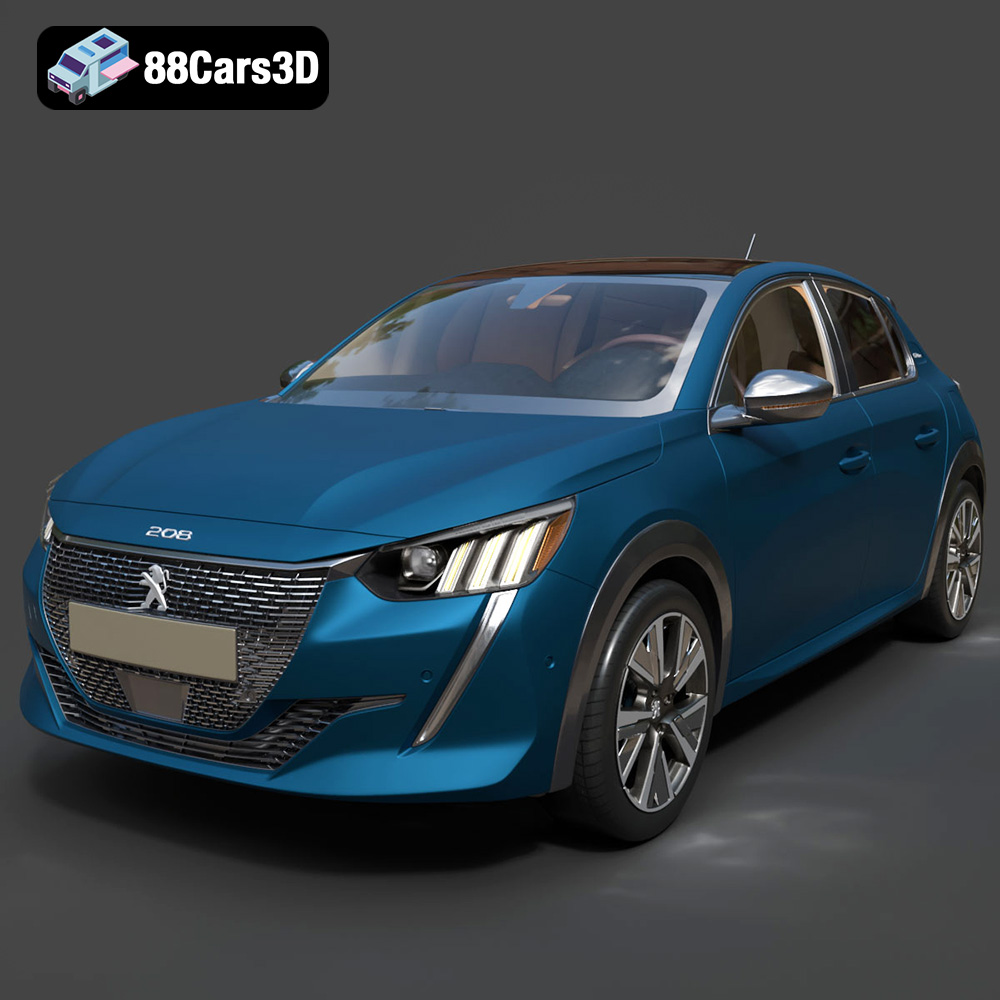
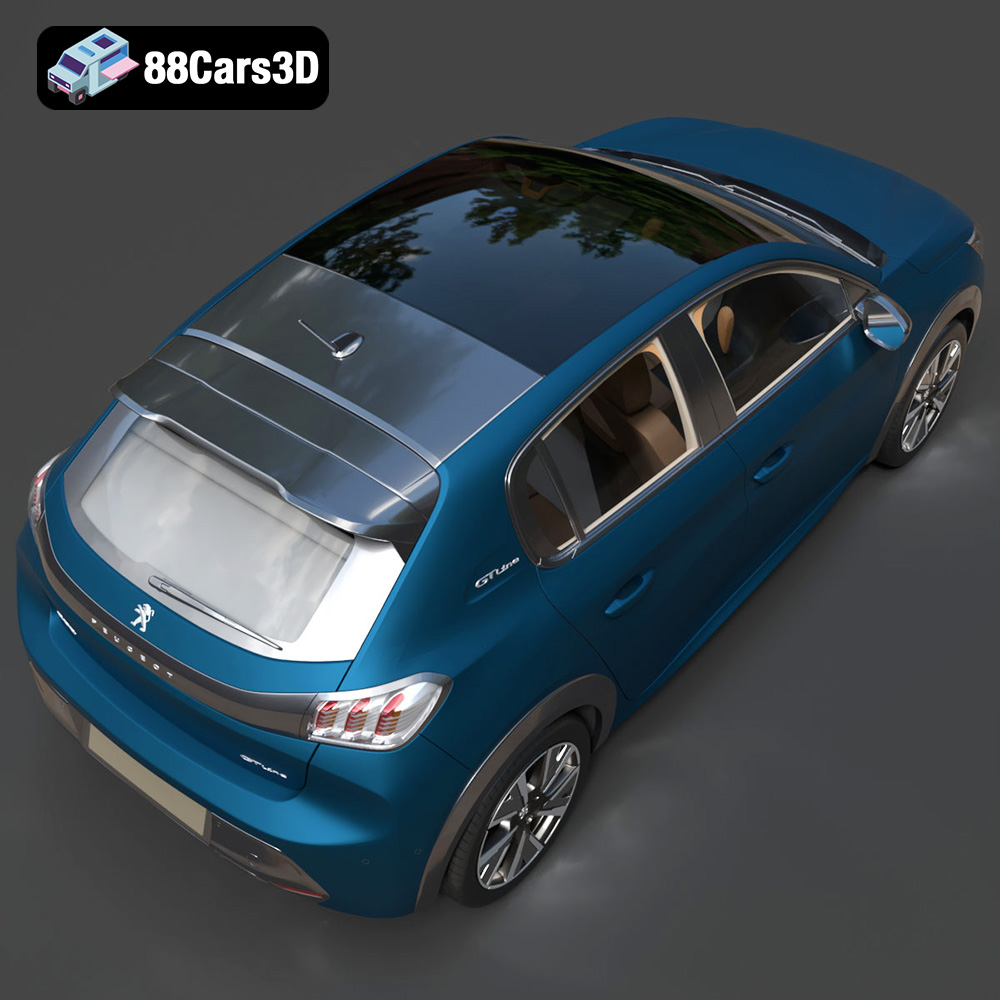
Among the myriad of vehicles that have captured public imagination, the 2020 Peugeot 208 redefined the modern compact hatchback segment with its bold, aggressive styling and sporty proportions. Its striking ‘saber-tooth’ LED daytime running lights, muscular sculpted hood, and elegant gloss-black rear light cluster fascia make it an instant standout. For 3D artists and developers, having access to a meticulously crafted 3D model of such an iconic vehicle is invaluable. This is precisely where a high-quality asset, like the Peugeot 208 2020 3D Model available on 88cars3d.com, becomes an indispensable tool, enabling seamless integration into diverse projects ranging from demanding real-time simulations to breathtaking cinematic renders.
Creating a truly professional 3D car model is a sophisticated process that marries artistic vision with rigorous technical execution. It’s not merely about replicating a vehicle’s shape; it’s about understanding its underlying design philosophy, engineering nuances, and how it interacts with light and environment. A premium 3D car model acts as the digital twin of its real-world counterpart, ready to perform across a spectrum of digital platforms and applications.
The first step in crafting an exceptional 3D car model is an exhaustive study of the vehicle’s design. This involves meticulous referencing of blueprints, photographs, and even direct observation to understand every curve, panel gap, and stylistic flourish. For the Peugeot 208 2020, this means accurately translating its distinctive ‘fang’ LED DRLs, the nuanced curvature of its doors, and the integrated rear light cluster into precise digital geometry. Such details are critical for brand campaigns, lifestyle scenes, and studio lighting setups, where the model needs to evoke the same emotional response as the physical car.
Beyond the primary bodywork, every external feature must be rendered with equal care. This includes the intricate front grille with the prominent Peugeot lion emblem, the high-resolution headlight and taillight housings with realistic reflectors, and the aerodynamic alloy wheels complete with detailed brake calipers and disc rotors. Even the tire treads are realistically mapped for city and highway driving, demonstrating a commitment to authentic visualization.
Once the aesthetic forms are established, the technical challenge shifts to optimizing the model’s geometry and topology. This involves balancing visual fidelity with performance, especially for real-time applications like game development or AR/VR. The Peugeot 208 2020 3D Model exemplifies this balance with an optimized topology of approximately 120k triangles. This polycount is perfectly suited for modern game engines like Unreal and Unity, ensuring flawless performance without compromising visual realism. The clean polygon flow ensures accurate ambient occlusion and crisp reflections, which are vital for believable rendering.
Moreover, a professionally built model features separate components for animation, such as wheels, suspension, and steering. This level of segmentation allows for dynamic interactions and realistic physics in simulations or animated sequences, transforming a static object into a functional, interactive asset. Real-world scale accuracy, based on actual vehicle chassis, further enhances its utility, providing a dependable foundation for any project.
The versatility of a 3D model is often defined by the range of file formats it supports. Different formats are optimized for distinct purposes, software environments, and performance requirements. Understanding which format to use and why is crucial for any professional working with 3D assets. The Peugeot 208 2020 3D Model from 88cars3d.com comes with a comprehensive suite of formats, ensuring maximum compatibility and utility across various workflows.
The .blend format is the native file type for Blender, a powerful open-source 3D creation suite. When a 3D model is provided in .blend, it means the entire working scene, including geometry, materials, textures, lighting, cameras, and even animation data, is preserved. This offers unparalleled flexibility for Blender users, allowing for deep customization, modification of modifiers, adjustments to node-based materials (PBR setups are common), and integration into existing Blender projects. It’s the ideal format for artists who want to delve into the model’s construction, adapt its shaders, or animate its components within Blender’s ecosystem.
Autodesk’s .fbx format is arguably the most widely adopted proprietary 3D exchange format, especially dominant in game development and animation pipelines. FBX excels at transferring complex scene data, including meshes, materials, textures, skeletal animations, and cameras, between different 3D software applications and game engines like Unreal Engine and Unity. Its robust support for embedded data and its ability to maintain hierarchies make it the go-to choice for importing dynamic assets into real-time environments, ensuring that the Peugeot 208 can be quickly set up with its pivots and basic materials for immediate integration.
The .obj (Wavefront OBJ) format is a universal, open-standard geometry definition file. It’s a simpler format compared to FBX, primarily storing vertex data, faces, normals, and UV coordinates. While it can reference external material files (.mtl), it doesn’t embed them or support animations. This makes .obj highly compatible across virtually all 3D software packages, serving as a reliable choice for transferring static mesh data when complex scene information isn’t required. It’s perfect for ensuring the Peugeot 208’s core geometry can be accessed by any artist, regardless of their preferred software.
.glb (GL Transmission Format Binary) is a modern, royalty-free format optimized for efficient transmission and loading of 3D scenes and models in web-based, AR, and VR applications. It’s a self-contained single file that bundles geometry, materials (often PBR-ready), textures, and animation data, making it incredibly easy to deploy and view. The .glb format is perfect for showcasing the Peugeot 208 in interactive virtual showrooms, mobile AR experiences, or directly within a web browser, delivering rich visual fidelity with minimal loading times.
The .stl (Stereolithography) format is the industry standard for 3D printing. It represents a 3D model as a collection of unconnected triangles that describe the surface geometry, without any color, texture, or material information. This format is essential for converting the digital Peugeot 208 3D model into a physical object. While it requires specific considerations for printability (like wall thickness and supports), the inclusion of an .stl file means the model is ready for display-scale hobbyists or for physical prototyping applications.
The .ply (Polygon File Format) is another widely supported format often used in 3D scanning, scientific visualization, and CAD applications. It can store more complex information than .obj, including color, transparency, and sometimes even higher-order surfaces. While less common for general 3D asset exchange than FBX or OBJ, its robustness for precision mesh data makes it valuable for detailed analysis or specific manufacturing processes, offering an alternative for specialized applications of the Peugeot 208 model.
The .unreal format signifies an asset specifically pre-configured for direct import and optimal performance within Unreal Engine. This often means that the asset has already undergone a pipeline optimization process, including proper material assignments, LOD (Level of Detail) setups, collision meshes, and pivot point configurations, ready to be dropped into an Unreal project with minimal further work. For game developers using Unreal, this dramatically streamlines the integration of the Peugeot 208, saving significant development time.
The .max format is the native file type for Autodesk 3ds Max, a leading software in architectural visualization, animation, and game development. Similar to .blend, a .max file contains the complete scene, including all geometric data, textures, lighting, cameras, and animation curves. This format provides full editability for 3ds Max users, allowing them to leverage all of Max’s powerful modeling, rendering (e.g., V-Ray, Corona), and animation tools to adapt the Peugeot 208 to their specific project requirements for high-end rendering and detailed animation.
The true measure of a high-quality 3D model lies in its seamless integration into diverse professional pipelines. The Peugeot 208 2020 3D Model is engineered for this flexibility, offering artists and developers a robust foundation for a multitude of creative endeavors.
For game developers, the primary concern is performance without sacrificing visual quality. The Peugeot 208’s optimized ~120k triangle count strikes this balance perfectly, making it ideal for open-world games, racing titles, and simulators. Using the provided .fbx or .unreal formats, developers can efficiently import the model into engines like Unreal Engine or Unity.
When it comes to advertising, architectural visualization, or cinematic sequences, visual fidelity is paramount. The Peugeot 208 3D model excels in these scenarios, particularly when utilizing the .max or .blend files for comprehensive scene control, or .fbx/.obj for broad compatibility with other renderers like V-Ray, Corona, or Cycles.
The rise of augmented and virtual reality demands assets that are both visually rich and performant in real-time. The .glb format of the Peugeot 208 3D model is specifically designed for these applications.
While digital visualization is powerful, there’s often a need to bring 3D models into the physical world. The inclusion of the .stl format for the Peugeot 208 2020 3D Model opens up exciting possibilities for 3D printing, moving from virtual pixels to tangible objects.
Converting a high-detail rendering model into a successful 3D print requires careful consideration of physical constraints. The Peugeot 208 model, when prepared for .stl, allows for physical replicas at various scales, such as 1:12, 1:18, or 1:24. Key considerations include:
3D printed car models serve a variety of practical and creative purposes:
Post-processing, including sanding, priming, and painting with authentic factory colors and metallic finishes, transforms the raw print into a stunning, faithful representation of the digital model.
Investing in pre-made, high-quality 3D car models like the Peugeot 208 from a reputable marketplace like 88cars3d.com offers significant advantages for individuals and studios alike. It represents a strategic decision that impacts project timelines, budget, and final output quality.
Building a highly detailed and optimized 3D car model from scratch is an incredibly time-consuming and expensive endeavor. It requires expert modelers, texture artists, and a significant investment in research and development. By purchasing a ready-to-use asset, studios can drastically reduce development cycles and allocate resources to other critical aspects of their projects, such as scene building, animation, or interactive programming. The cost savings can be substantial, making high-quality content more accessible.
A major benefit of acquiring professional 3D car models is the assurance of quality. The Peugeot 208 2020 3D Model, for instance, boasts:
This attention to detail means fewer issues in production, leading to smoother workflows and higher quality end results.
A single, well-crafted 3D car model can serve multiple purposes across an entire project’s lifecycle. The Peugeot 208 3D model, with its multiple file formats and optimized structure, is ideal for:
This versatility maximizes the return on investment for each asset, making it a valuable addition to any professional’s library of 3D car models.
While pre-made assets offer convenience, a truly professional 3D model also provides ample scope for customization, allowing artists to inject their unique creative vision into any project. The Peugeot 208 2020 3D Model is designed with this flexibility in mind, offering numerous avenues for personalization.
The foundational materials and textures of the model are expertly crafted, but they serve as an excellent starting point for further artistic expression. Users can easily:
The thoughtful segmentation of the Peugeot 208 3D model, with separate components for its wheels, suspension, and steering, unlocks extensive animation and interactive possibilities:
This level of customization ensures that the Peugeot 208 3D model isn’t just a static representation but a dynamic and adaptable asset ready for any creative challenge.
The world of 3D visualization is a demanding one, requiring assets that are not only aesthetically pleasing but also technically robust and highly versatile. The Peugeot 208 2020 3D Model stands as a prime example of what a premium automotive asset should be: a meticulously detailed, game-ready, and multi-format solution for a vast array of digital applications. From its accurate recreation of the iconic ‘saber-tooth’ DRLs and ergonomic i-Cockpit to its optimized ~120k triangle count and comprehensive file format support, it is engineered to excel in everything from high-end automotive rendering to immersive game development, AR/VR experiences, and even precision 3D printing.
By providing crucial formats like .blend, .fbx, .obj, .glb, .stl, .ply, .unreal, and .max, this model ensures that professionals across various disciplines can integrate it seamlessly into their workflows, saving invaluable time and resources while guaranteeing top-tier quality. Whether you are crafting a cinematic advertisement, building an open-world racing game, or developing an interactive virtual showroom, the Peugeot 208 2020 3D Model offers the technical foundation and creative freedom you need to bring your vision to life.
Explore this exceptional asset and many other high-quality 3D car models designed for professional use by visiting 88cars3d.com. Elevate your projects with assets that truly stand out.
The 2020 Peugeot 208 redefined the modern compact hatchback segment with its bold, aggressive styling and sporty proportions. Featuring the striking ‘saber-tooth’ LED daytime running lights, a muscular sculpted hood, and an elegant gloss-black rear light cluster fascia, this vehicle stands out in any urban setting. Its dynamic stance and streamlined profile perfectly capture the essence of contemporary European car design. This meticulously crafted 3D model boasts an optimized topology of approximately 120k triangles, ensuring flawless game-ready performance without compromising visual fidelity. Designed for high-end rendering and real-time engines, it delivers crisp reflections, accurate ambient occlusion, and an immaculate flow of polygons tailored for both performance and close-up cinematic shots. Perfect for modern city driving games, architectural visualization street scenes, VR automotive showrooms, and commercial lifestyle rendering.
$39.99
.2020
.208
.blend
.fbx
.glb
.hatchback
.max
.obj
.peugeot
.ply
.rendering
.stl
.unreal
car-3d-model
city-car
compact-car
game asset
game-ready
low-poly
optimized
VR/AR