Get 20% OFF All Premium 3D & STL Models!

In the expansive realm of 3D content creation, the demand for authentic, high-quality automotive assets is constant. Whether you’re a game developer crafting an immersive open world, a visualization artist rendering a nostalgic scene, or an architect populating a sprawling urban environment, the right vehicle model can elevate a project from good to exceptional. The appeal of classic cars, in particular, transcends generations, offering a unique blend of historical charm and aesthetic character that modern vehicles often lack. It is within this spirit that we explore the profound utility and intricate detail of a standout asset: the 1971 Ford E-Series Econoline Club Wagon 3D Model. This isn’t just a digital replica; it’s a meticulously engineered piece of digital artistry, ready to integrate seamlessly into a myriad of professional workflows. Sourced from a curated marketplace like 88cars3d.com, such a model embodies the commitment to quality and versatility that today’s creators demand.
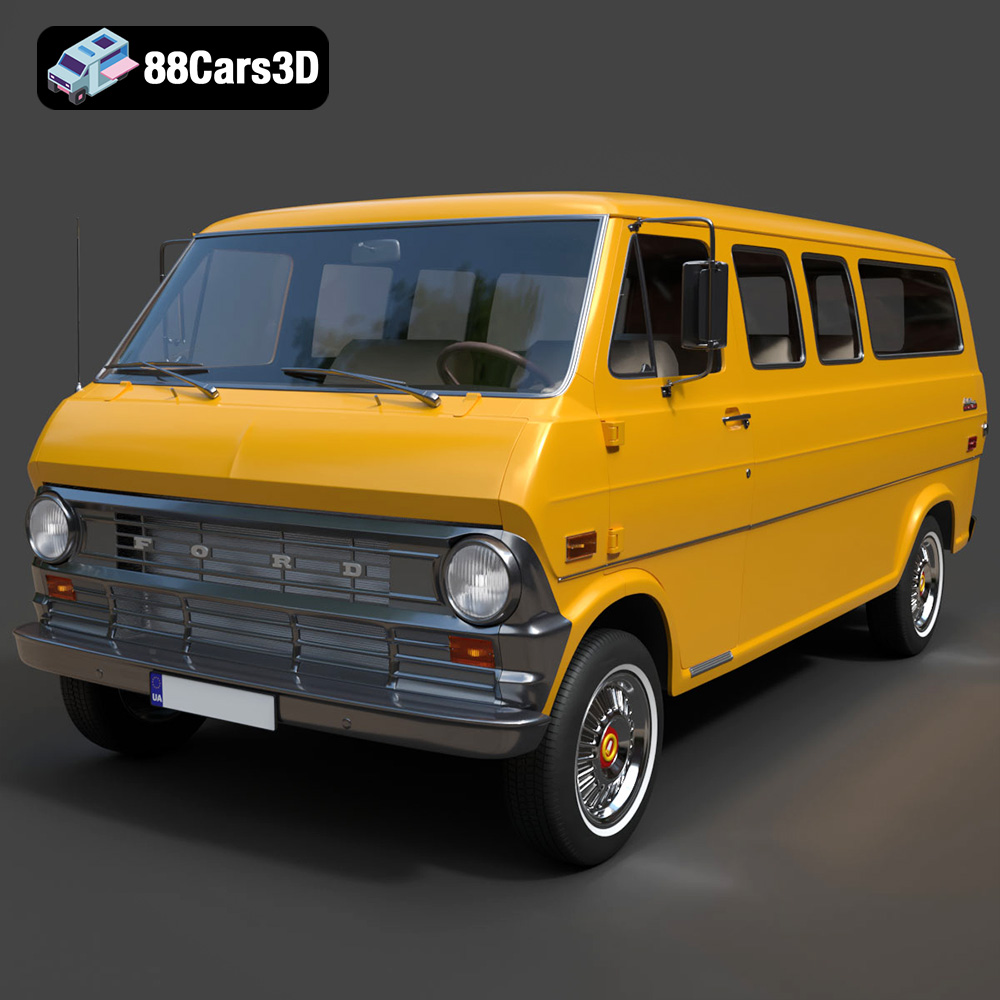
The 1971 Ford Econoline Club Wagon, with its iconic “short-nose” forward-control design, instantly evokes a sense of bygone eras – the freedom of the open road, family adventures, and a distinct utilitarian aesthetic. Translating this real-world charm into a digital format requires precision, technical expertise, and an understanding of diverse application needs. This particular 3D model goes beyond mere visual representation, offering a balanced topology of approximately 250,000 triangles, meticulously detailed exterior and interior features, and a suite of pre-configured options for animation and customization. It stands as a testament to how specialized 3D car models can become invaluable accelerators for creative projects.
One of the most critical aspects of any professional 3D asset, especially complex automotive models, is its flexibility across various software and platforms. The Ford E-Series Econoline Club Wagon 1971 3D Model excels in this regard by offering an exhaustive list of file formats, each serving a distinct purpose in the vast landscape of 3D production. Understanding these formats is key to maximizing efficiency and ensuring seamless integration into your specific pipeline.
The provision of such a comprehensive array of formats for the 1971 Ford Econoline Club Wagon 3D Model by 88cars3d.com demonstrates a profound understanding of diverse industry needs. It means that whether you’re building a game, rendering an advertisement, creating an AR experience, or even 3D printing a collectible, you have the exact file type necessary to hit the ground running, saving countless hours in conversion and optimization.
Crafting a compelling 3D car model is a delicate balance between artistic interpretation and technical precision. It demands an eye for detail, an understanding of real-world vehicle design, and the technical prowess to optimize the digital asset for various applications. The 1971 Ford E-Series Econoline Club Wagon 3D Model exemplifies this synergy.
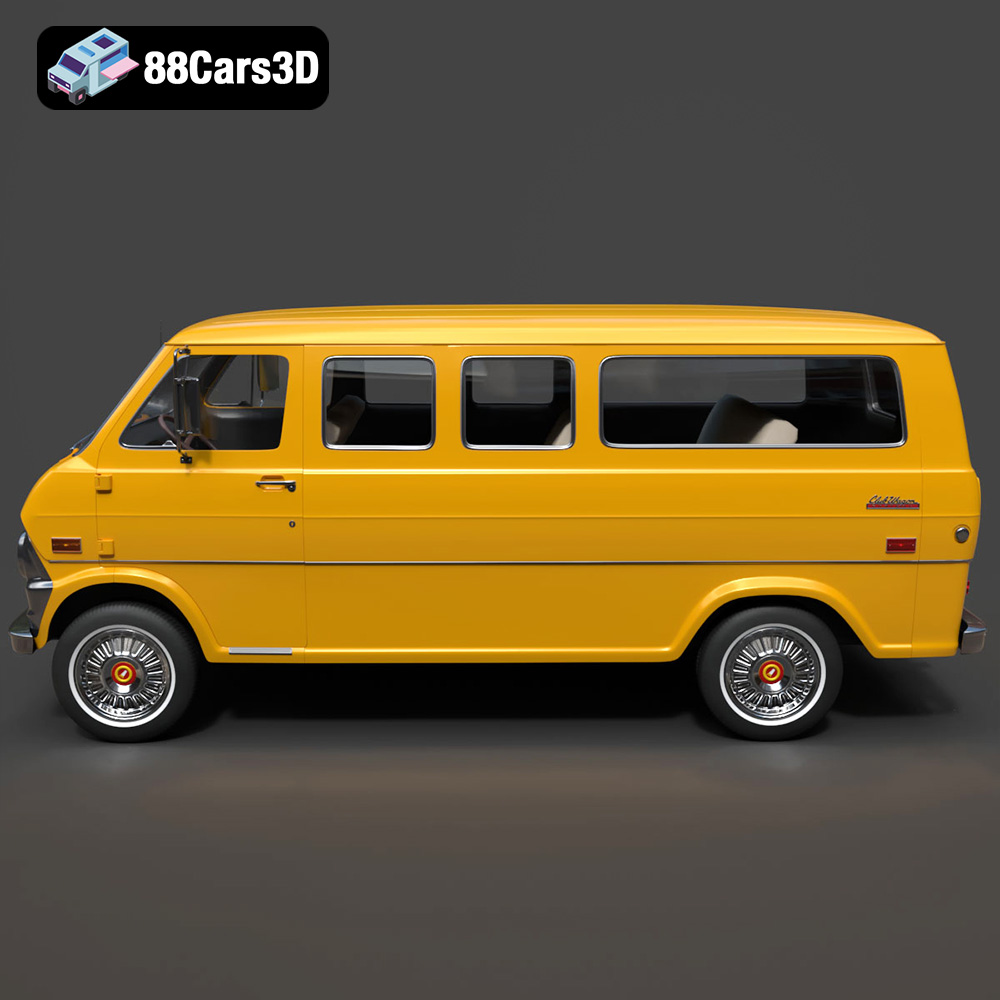
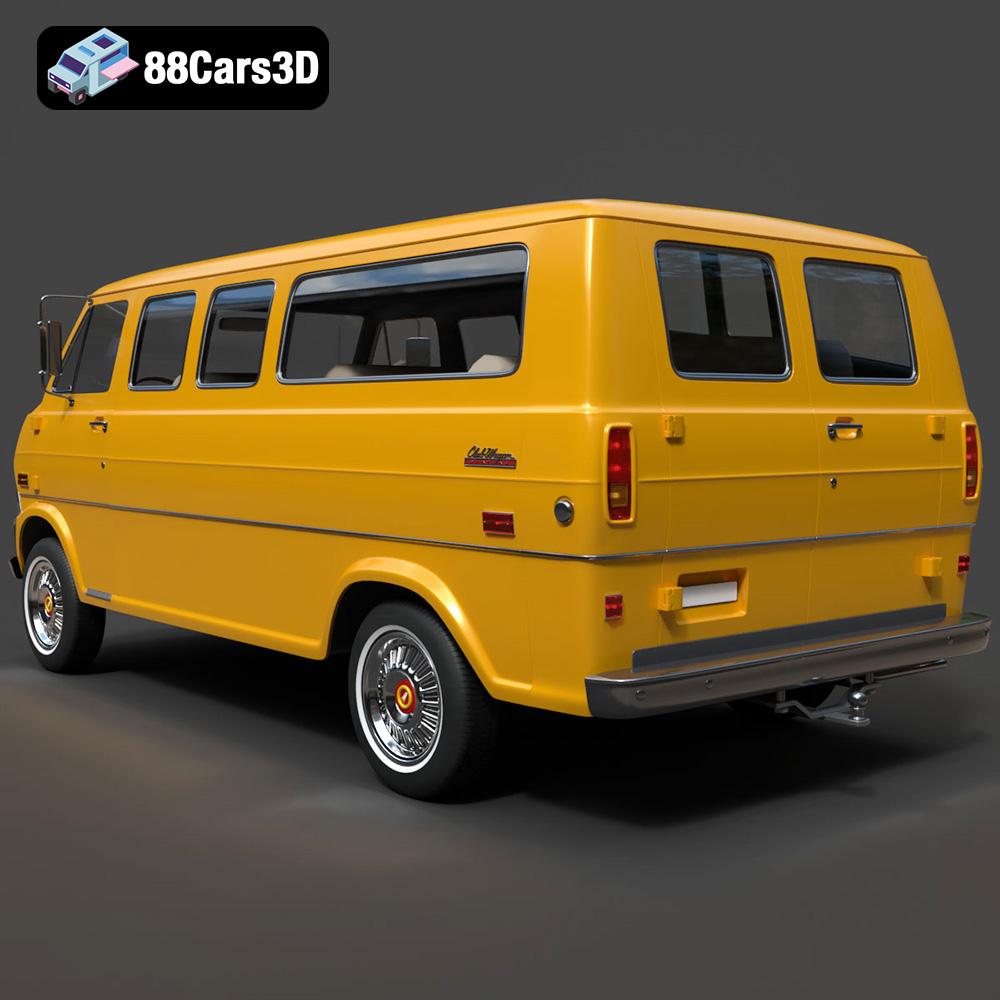
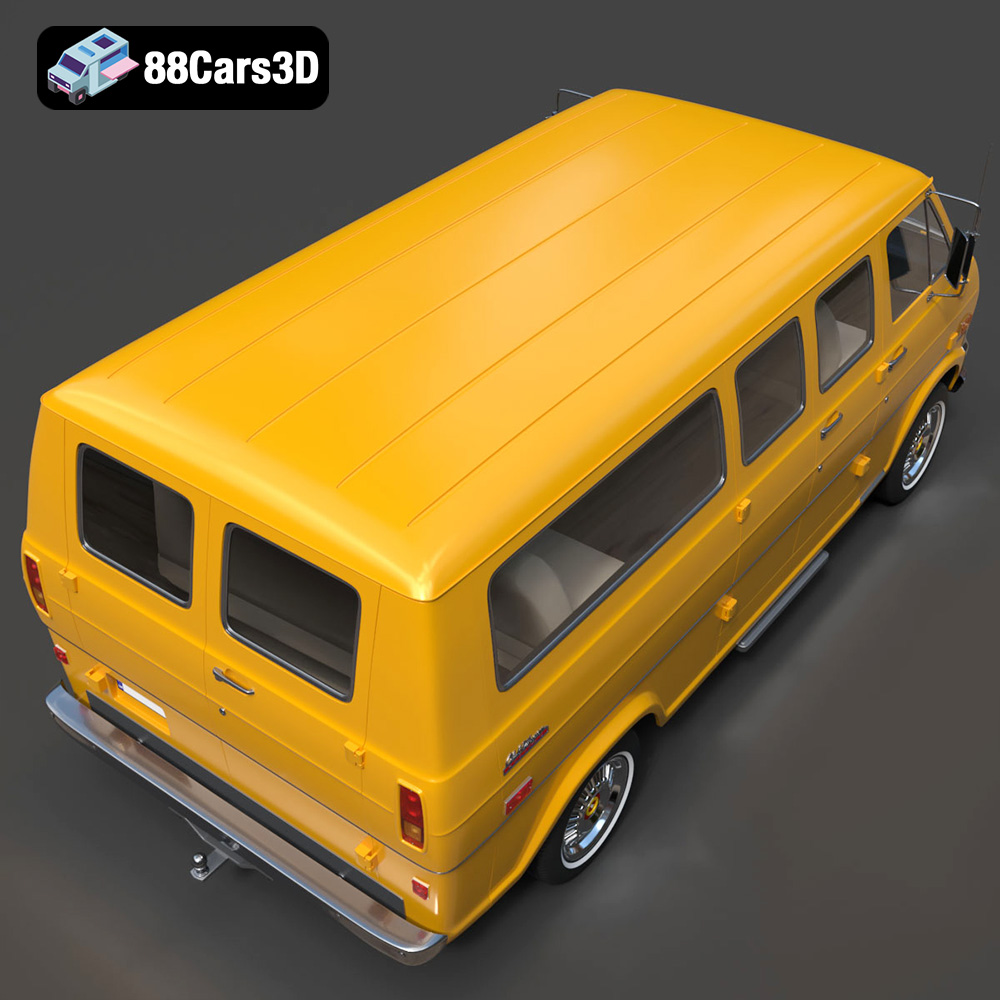
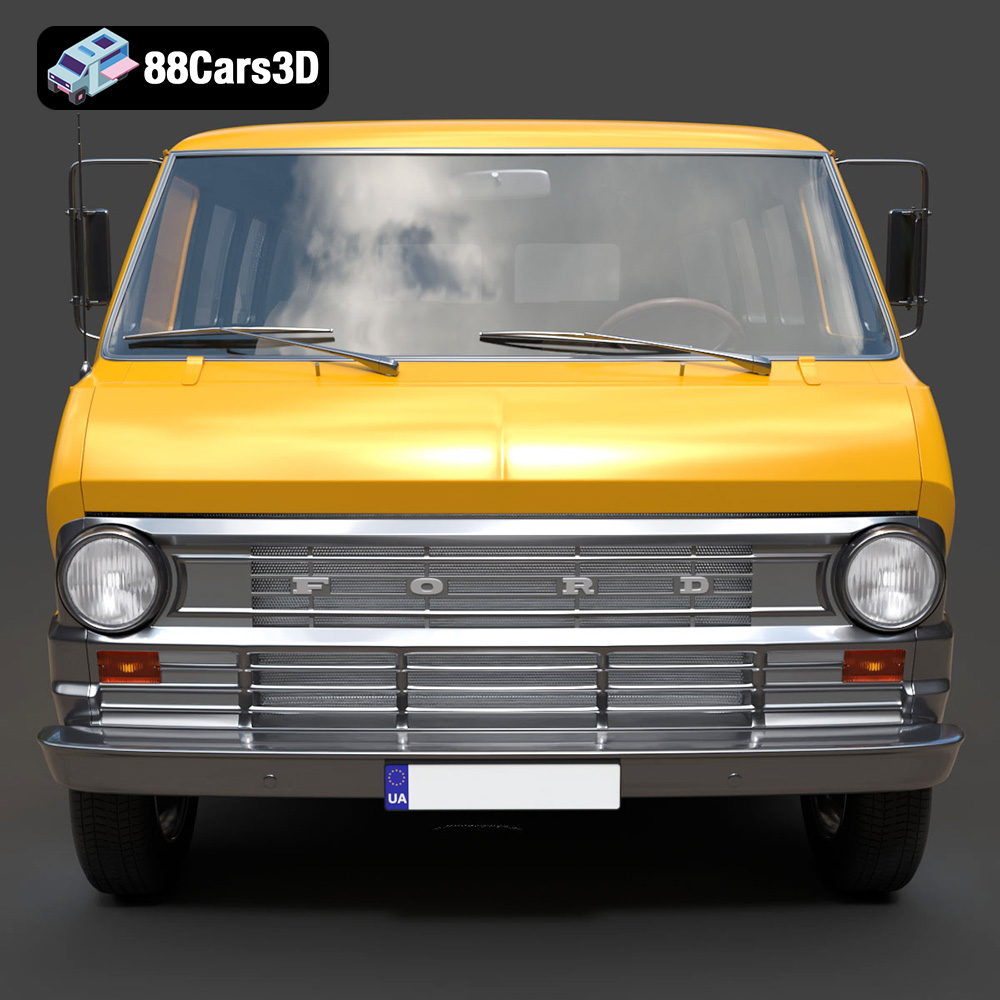
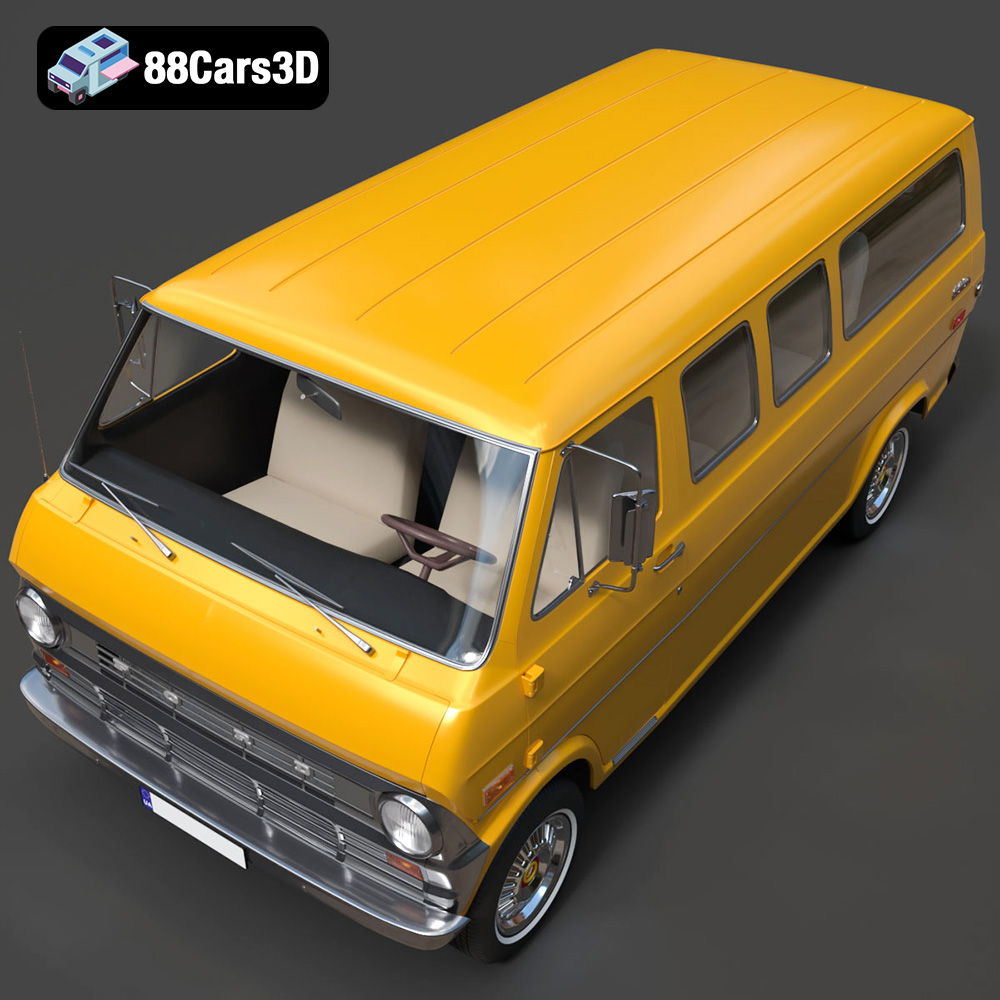
The essence of a classic vehicle lies in its unique characteristics. For the 1971 Econoline, this includes its distinctive “short-nose” forward-control body, the robust, utilitarian front grille, and the iconic round headlights that define its era. A high-quality 3D model must replicate these elements with uncanny accuracy. This model features precise geometry that mirrors the original vehicle’s proportions, from the elongated passenger windows to the classic steel wheels with chrome hubcaps. The attention extends to subtle yet critical features like the period-correct undercarriage, exhaust routing, and detailed leaf-spring suspension and heavy-duty axles. Inside, the “spacious multi-row passenger seating with classic vinyl texture detailing,” the authentic two-spoke steering wheel, and the retro instrument cluster are all meticulously recreated, ensuring that even in a first-person perspective for gaming, the experience remains immersive and genuine.
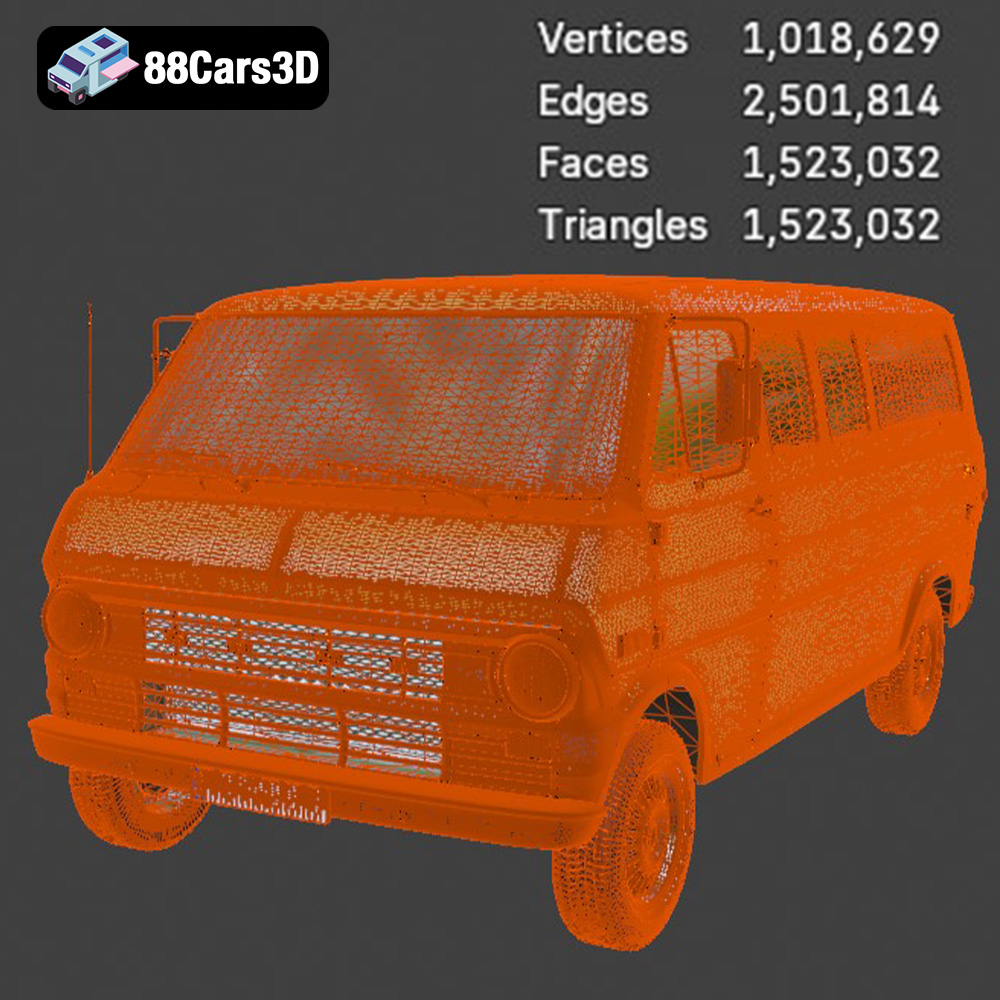
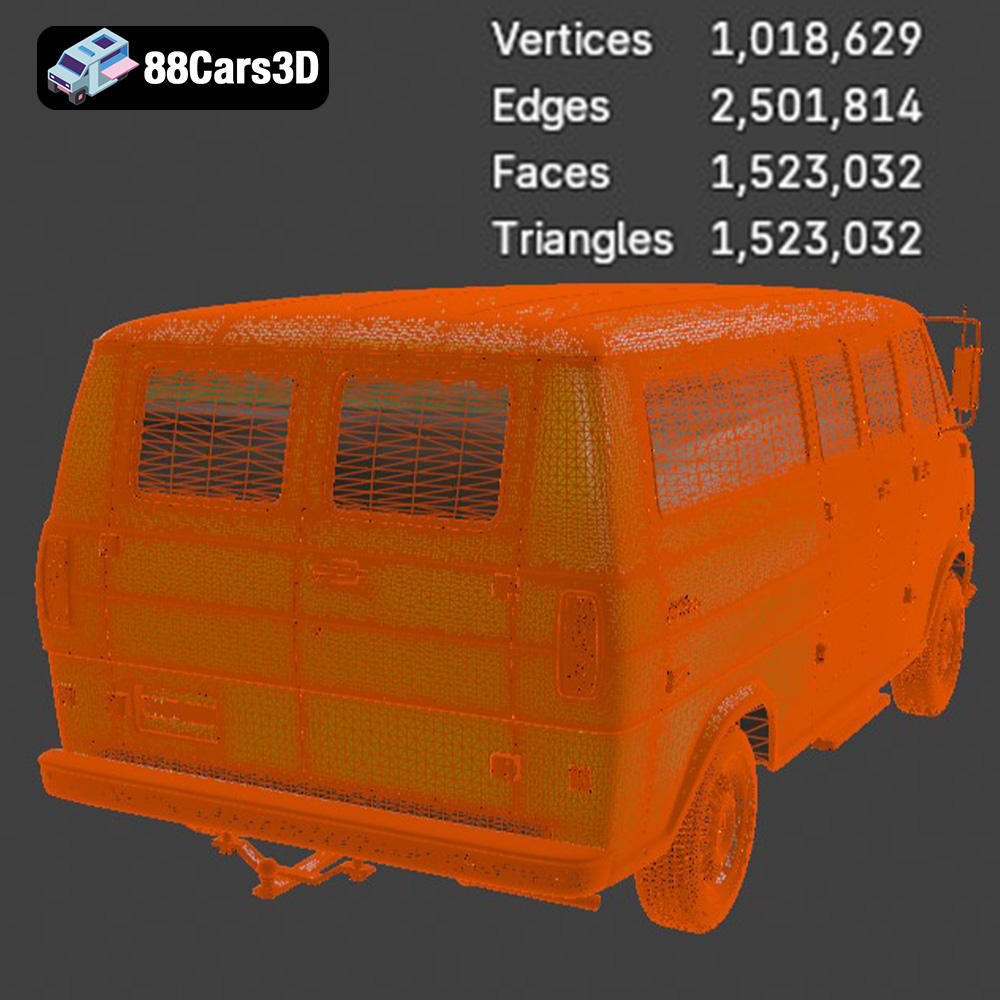
While visual fidelity is paramount, a truly professional 3D car model also prioritizes performance. This is where the “science” of 3D modeling comes into play. The Ford Econoline model boasts an “optimized topology of approximately 250,000 triangles,” which is a sweet spot for balancing high-end visual realism with game-ready performance. Clean, efficient mesh topology is crucial for smooth shading, accurate reflections, and efficient rendering in both real-time engines and offline renderers. Furthermore, the model is built with “real-world scale accuracy” and “proper pivot setup for steering, wheel rotation, and suspension travel.” These technical details are not just conveniences; they are foundational requirements for animators and game developers, allowing for believable movement and interaction without needing extensive post-import cleanup or re-rigging. This thoughtful engineering saves valuable development time and ensures the asset performs flawlessly across various demanding applications.
The versatility of the 1971 Ford Econoline Club Wagon 3D Model extends across numerous professional pipelines, thanks to its robust design and multiple file formats. From cinematic rendering to interactive game environments, this asset is built to perform.
For artists focused on photorealistic rendering, the .max and .blend formats offer the most control. In a 3ds Max workflow, for instance, a visualizer can import the .max file, which often includes V-Ray or Corona Renderer-ready materials. This allows for immediate iteration on lighting setups, material adjustments (think custom 70s two-tone paint jobs or a rusty patina), and camera angles. Imagine creating a stunning vintage advertisement set in a sun-drenched garage, where every chrome reflection and paint imperfection tells a story. The separate components like wheels, suspension, and steering make it straightforward to set up complex animations, such as a vehicle driving down a winding road, its suspension reacting realistically to bumps. Similarly, Blender users can leverage the .blend file to tap into Cycles or Eevee, achieving breathtaking renders for architectural visualization, product showcases, or short film sequences.
The “game-ready & optimized” nature of the Econoline model shines brightest in real-time engine environments like Unreal Engine and Unity. The .fbx and .unreal formats are specifically tailored for this. Developers can import the model, which is already optimized for polycount (~250,000 triangles) to maintain high frame rates. Crucially, the “proper pivot setup for steering, wheel rotation, and suspension travel” simplifies the integration into vehicle blueprints and physics systems. Creating a driveable version in Unreal Engine involves assigning physical materials, setting up collision meshes (often automatically generated or provided), and connecting the steering and wheel rotation pivots to the engine’s vehicle physics system. For an open-world game set in the 1970s, this model provides a highly authentic and performant vehicle that players can drive, customize, and interact with, significantly reducing the art team’s workload on asset creation.
The rise of Augmented Reality (AR) and Virtual Reality (VR) necessitates highly optimized and efficiently delivered 3D assets. The .glb format is tailor-made for these applications. Imagine a virtual showroom where customers can explore the 1971 Ford Econoline in full 3D, changing paint colors or viewing the interior in a VR headset. The compact nature of .glb ensures fast loading times and smooth performance on mobile devices or web browsers. For a museum exhibit, an interactive AR experience could allow visitors to “place” the classic van in their physical space, scaling it, and walking around it to appreciate its historical design. This model, with its balanced polycount and included .glb format, is an excellent candidate for such immersive and interactive experiences, bridging the gap between digital content and real-world interaction.
The utility of high-quality 3D car models extends beyond digital screens, venturing into the tangible world of physical fabrication. The 1971 Ford E-Series Econoline Club Wagon 3D Model is not only a digital marvel but also a meticulously prepared asset for 3D printing, opening up new avenues for creators and enthusiasts alike.
For anyone looking to bring the digital Econoline into physical existence, the inclusion of .stl and .ply formats is indispensable. The .stl format is the industry standard for 3D printing. It represents the model’s surface geometry as a watertight mesh of triangles, ensuring that there are no gaps or holes that would confuse a 3D printer. This makes it ideal for hobbyists who wish to print scale replicas of the classic van for display or customization. The .ply format, on the other hand, often provides a more precise and detailed mesh, which can be beneficial for specific engineering analysis or for use with highly accurate industrial 3D printers where precise geometry and surface integrity are paramount. Both formats empower users to move from virtual design to physical object with confidence, relying on the clean topology of the original model.
Converting a digital 3D model into a successful physical print requires careful consideration of printing parameters, and the product description for the Ford Econoline model provides excellent guidance. Recommended scales like 1:12, 1:18, or 1:24 offer a range of display options, allowing for varying levels of detail and print time. For achieving the fine details of components like the exhaust, mirrors, or the intricate steering wheel, “resin printing is recommended” with a “layer height of 0.04–0.12 mm.” This ensures a smooth finish and captures the nuances that make the model truly authentic. Practical advice on “wall thickness,” “infill” (20–30% for a good balance of strength and material usage), and the necessity of “supports” for complex overhangs like the undercarriage details are crucial for a successful print. Furthermore, “print orientation” suggestions, such as angling the frame for structural integrity and printing wheels separately, are invaluable tips for optimizing print quality and minimizing support structures.
Beyond the printing process, post-processing is where the model truly comes to life. “Sanding, primer, and authentic factory colors with metallic finishes” are essential steps to achieve a showroom-quality finish. Imagine a hand-painted, perfectly scaled replica of the 1971 Ford Econoline, sitting proudly on a desk or as part of a diorama. This tactile extension of the digital asset provides a unique way to interact with and appreciate the model’s craftsmanship, making it a truly versatile offering from 88cars3d.com.
A superior 3D asset provides a solid foundation, but true creative power comes from the ability to customize and adapt it to an endless array of scenarios. The 1971 Ford E-Series Econoline Club Wagon 3D Model is built with this flexibility in mind, making it a dynamic tool for any artist or developer.
The product description highlights several compelling customization options that empower artists to make the model truly their own. Imagine a scenario where a client requires a specific vintage look:
These options transform a single asset into a multitude of possibilities, ensuring it remains relevant and adaptable across diverse projects without requiring artists to start from scratch.
The detailed design and robust technical specifications of the Ford Econoline 3D model allow it to excel in a broad spectrum of applications. In the realm of period films and animations, it serves as an authentic backdrop or a key narrative element, accurately representing the aesthetics of the early 1970s. For game developers, its optimized polycount and real-world scale make it a perfect fit for open-world titles, racing simulators, or even historical reconstruction games, providing both visual fidelity and performance efficiency.
Marketing and advertising campaigns can leverage this model for stunning lifestyle visualizations, creating aspirational imagery that resonates with a nostalgic demographic. Imagine a modern campaign for a travel company featuring this classic van, symbolizing freedom and adventure. In AR/VR, the model facilitates immersive virtual showrooms, allowing potential buyers or enthusiasts to explore the vehicle interactively, breaking down geographical barriers and enhancing engagement. Even in educational contexts, the model can be used for virtual tours of historical vehicles or for teaching automotive design principles. This wide range of applications underscores the profound value of investing in meticulously crafted 3D car models like the 1971 Ford Econoline Club Wagon, readily available on platforms such as 88cars3d.com.
The 1971 Ford E-Series Econoline Club Wagon 3D Model is far more than just a collection of polygons and textures; it’s a meticulously engineered digital asset designed to empower creators across every facet of the 3D industry. Its commitment to authenticity, from the iconic “short-nose” design to the detailed interior, ensures a high level of visual realism that will elevate any project. Coupled with its optimized topology of approximately 250,000 triangles and robust technical specifications, including precise pivot setups, it guarantees seamless performance in demanding real-time environments and high-fidelity rendering scenarios.
The comprehensive suite of included file formats – .blend, .fbx, .obj, .glb, .stl, .ply, .unreal, and .max – underscores its unparalleled versatility, catering to specific workflows in game development, film production, architectural visualization, AR/VR experiences, and even physical 3D printing. This dedication to cross-platform compatibility and ease of integration significantly streamlines production pipelines, saving invaluable time and resources for professionals and hobbyists alike.
Whether you’re populating a bustling 1970s street scene in an open-world game, rendering a vintage advertising campaign, creating an immersive AR showroom, or fabricating a scale model for your collection, this Ford Econoline 3D model stands ready as a powerful, flexible, and authentic solution. Assets of this caliber are a cornerstone of efficient and high-quality 3D production, and you can find this exceptional 3D car model, along with many others, on 88cars3d.com, a dedicated marketplace for premium 3D vehicle assets.
Experience the vintage charm of the 1971 Ford E-Series Econoline Club Wagon with this highly accurate 3D model. Known for its iconic “short-nose” forward-control design, this classic passenger van represents a golden era of American road trips and family travel. The model captures the quintessential retro styling cues of the early 70s, including the bold, utilitarian front grille, distinct round headlights, classic steel wheels with chrome hubcaps, and the elongated body design fitted with expansive passenger windows. Underneath, it features structural representations of its robust chassis and classic Ford V8 or inline-six engine placement, complete with period-correct exhaust routing. Crafted with an optimized topology of approximately 250,000 triangles, this 3D model offers the perfect balance between high-end visual fidelity and game-ready performance. Every surface has been meticulously modeled to ensure accurate reflections and smooth shading, making it an ideal asset for real-time engines like Unreal Engine and Unity, as well as high-resolution offline rendering. Whether deployed in an interactive VR showroom, an animated sequence, or a heavy game environment, the model maintains its structural integrity without sacrificing frame rates. Perfect for 1970s period-piece films, retro lifestyle visualizations, classic car garage scenes, and open-world vintage driving games.
$19.99
.blend
.e-series
.fbx
.ford
.glb
.max
.obj
.ply
.rendering
.stl
.unreal
1971
car-3d-model
classic-van
club-wagon
econoline
game asset
game-ready
low-poly
optimized
passenger-van
retro-vehicle
van-3d-model
VR/AR