Get 20% OFF All Premium 3D & STL Models!

In the dynamic realm of digital design, the demand for exceptionally crafted 3D car models continues to accelerate. From immersive game environments and breathtaking cinematic renders to intricate architectural visualizations and cutting-edge AR/VR experiences, high-fidelity automotive assets are the driving force behind compelling visual narratives. Professionals across industries seek models that not only capture aesthetic brilliance but also offer technical precision and seamless integration into complex pipelines.
Imagine a vehicle that effortlessly marries the graceful lines of a coupe with the practical sophistication of a four-door sedan. The Mercedes Benz CLS500, with its iconic sweeping roofline and powerful V8 engine, stands as a testament to visionary automotive design. A premium 3D representation of such a car needs to echo this duality, delivering both artistic elegance and robust technical performance. The Mercedes Benz CLS500 3D Model is engineered precisely for this purpose, offering an unparalleled level of detail and optimization for a myriad of professional applications, setting a new benchmark for what high-quality digital assets can achieve.
The journey from concept sketch to a fully realized 3D automotive model is a meticulous process, requiring a blend of artistic vision and engineering precision. Today’s digital artists and developers are under immense pressure to deliver realism that blurs the lines between the virtual and the physical. This pursuit of verisimilitude drives the demand for assets that are not just visually appealing but also technically sound, optimized for performance, and adaptable to diverse platforms.
Whether it’s a new car configurator allowing customers to explore every angle, a racing simulator demanding accurate physics and visual feedback, or a product launch video showcasing intricate design details, realism is paramount. Achieving this requires more than just high polygon counts; it demands accurate proportions, intricate material definitions, precise lighting interaction, and an understanding of the vehicle’s underlying engineering. A premium 3D model like the Mercedes Benz CLS500 3D Model goes beyond superficial aesthetics, providing a foundation for truly believable digital experiences.
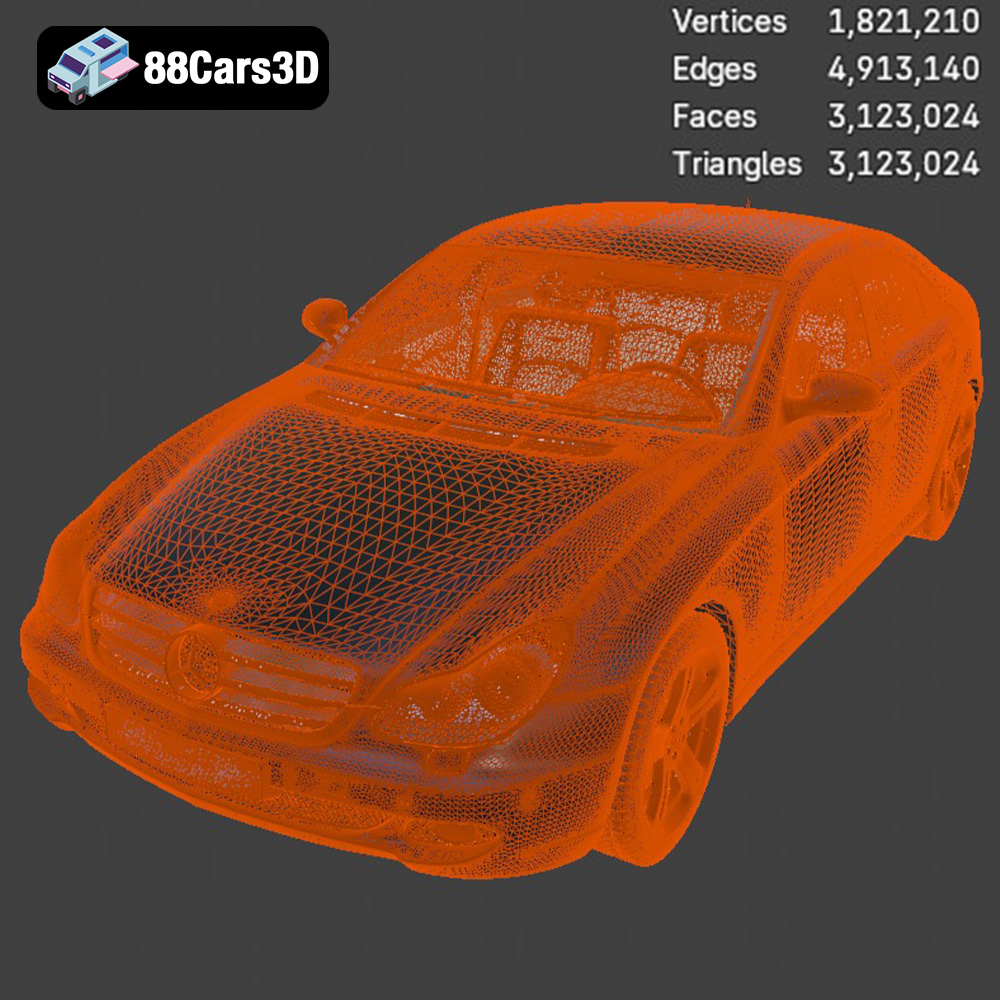
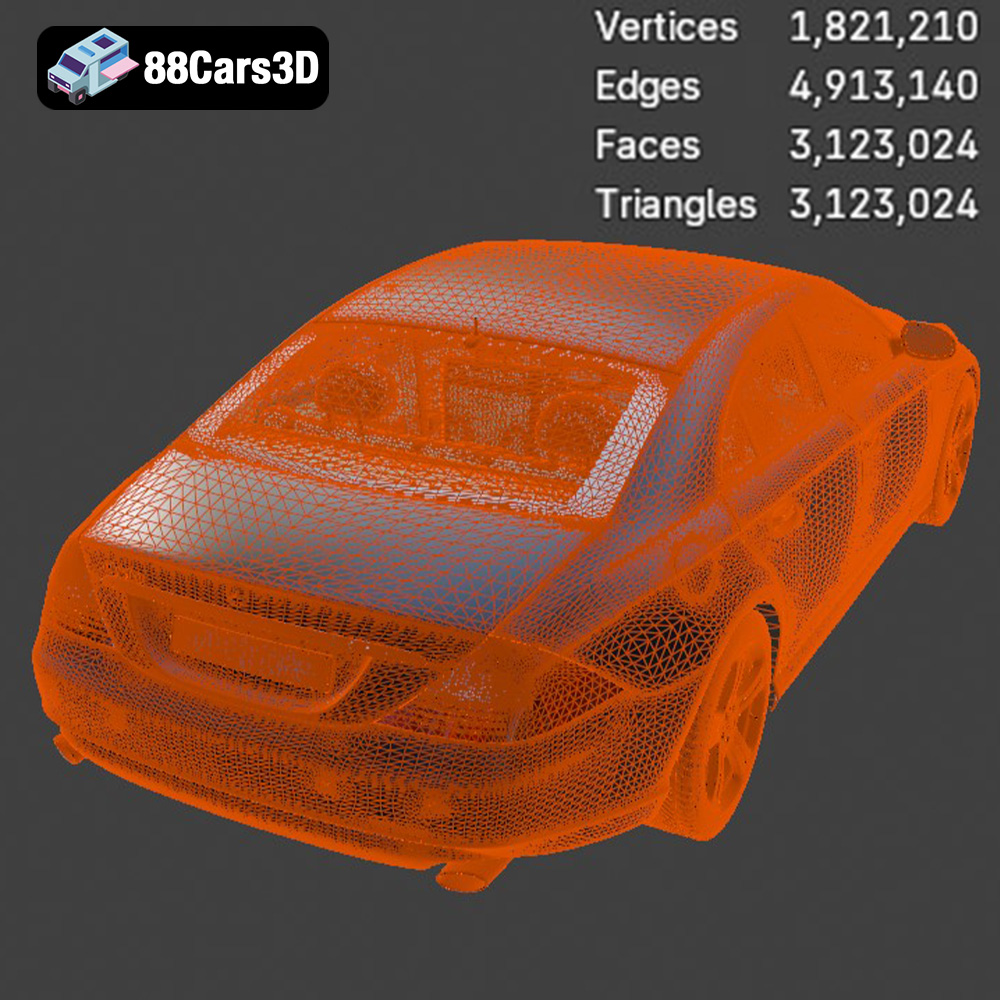
For game developers, the challenge is amplified: stunning visuals must coexist with optimal performance. Every polygon, every texture, and every shader must be carefully considered to ensure smooth frame rates without sacrificing visual fidelity. Game-ready 3D car models are a delicate balance of artistry and technical wizardry, optimized for real-time rendering engines like Unreal Engine and Unity. This involves intelligent topology, efficient UV mapping, and a judicious triangle count – around 350,000 for the Mercedes Benz CLS500 3D Model, striking that critical balance for high-end game development without bogging down the engine.
The world of 3D modeling is rich with various file formats, each serving specific purposes and workflows. Choosing the correct format is crucial for compatibility, efficiency, and maintaining the integrity of your 3D asset across different software and applications. A premium 3D car model, such as the Mercedes Benz CLS500 3D Model available on 88cars3d.com, typically comes with a wide array of formats to ensure maximum utility.
Understanding these formats ensures that whether you’re rendering an animation, developing a game, or preparing for 3D printing, you have the right tool for the job. The versatility of the Mercedes Benz CLS500 3D Model, available in all these formats, underscores its value to professionals.
A truly exceptional 3D car model goes beyond a simple likeness; it encapsulates the essence and technical specifications of the real-world counterpart. The Mercedes Benz CLS500 3D Model exemplifies this philosophy, meticulously crafted to deliver both visual fidelity and functional robustness.
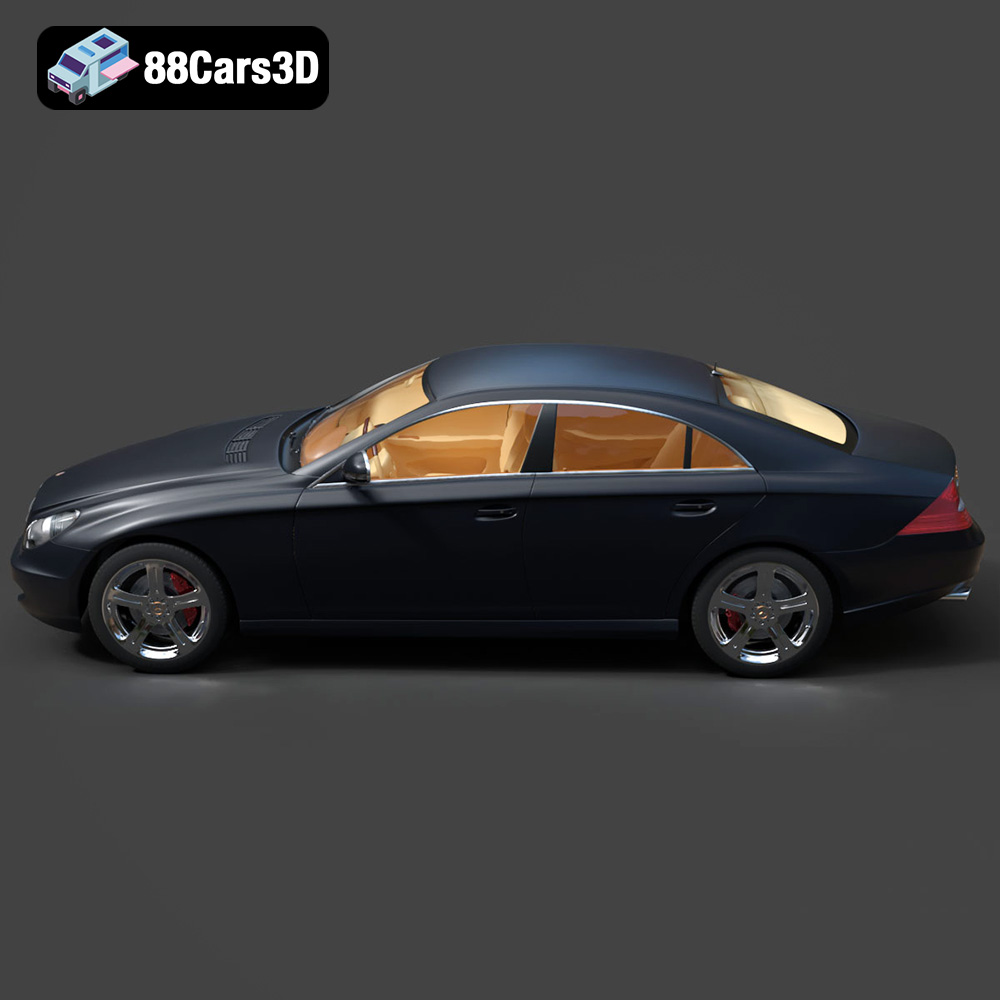
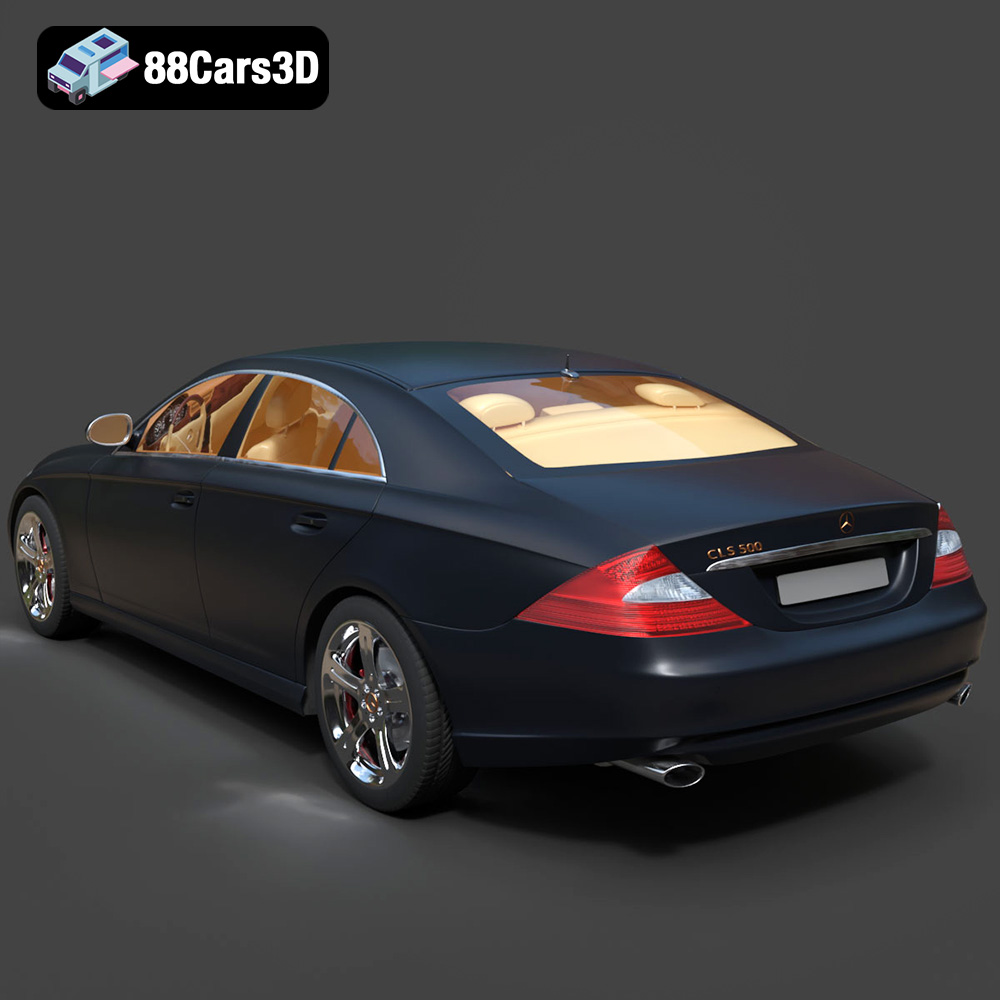
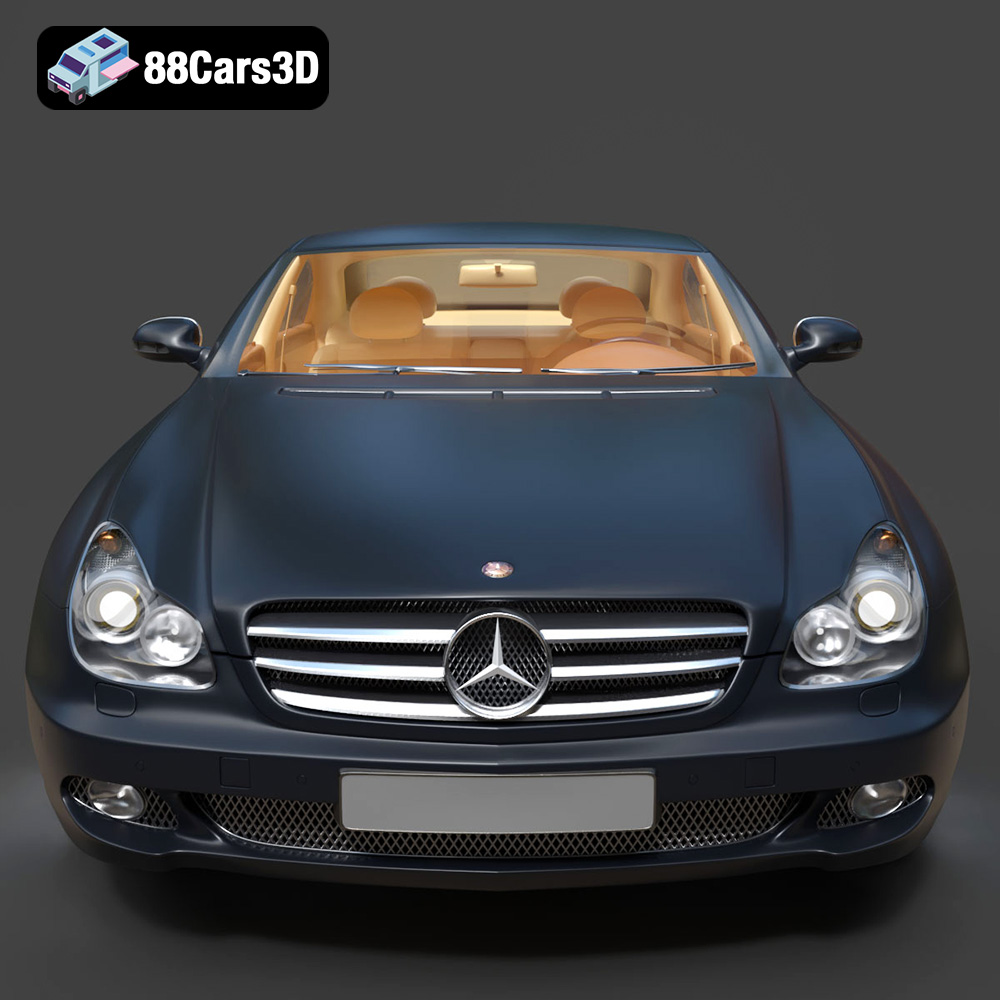
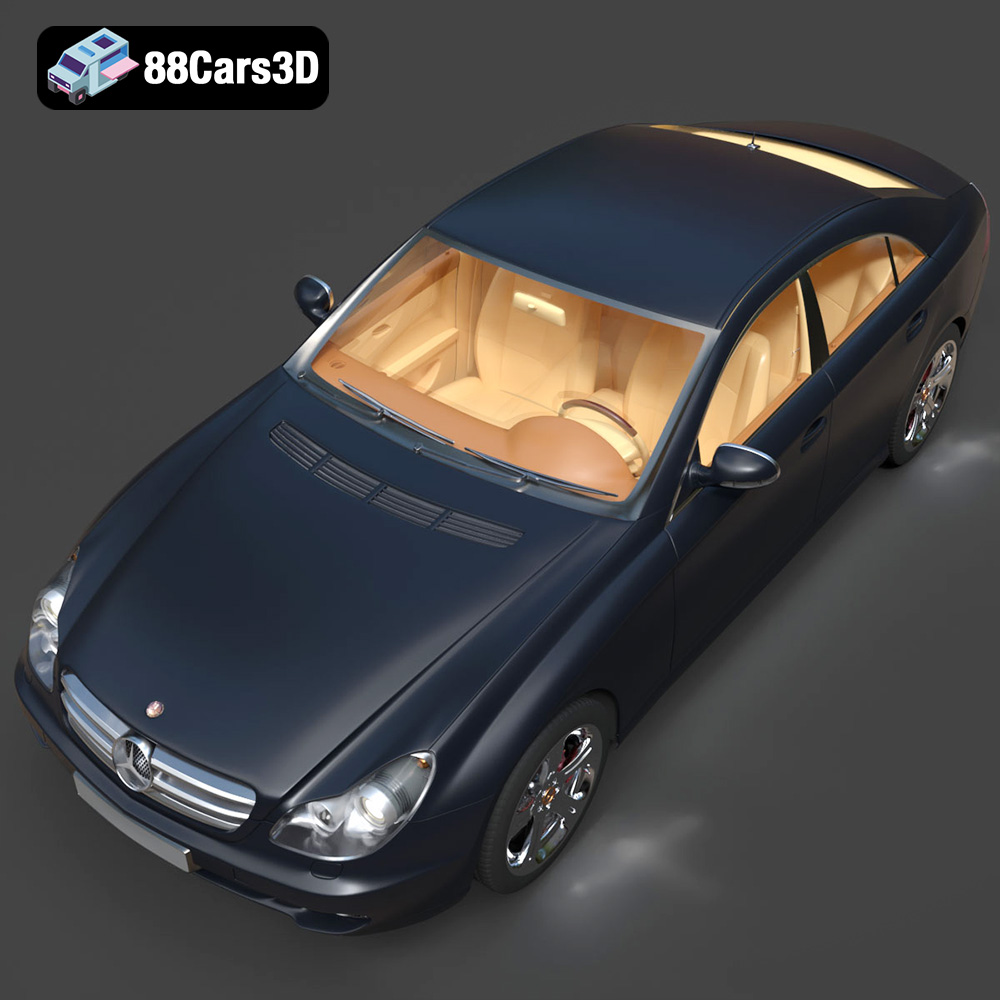
The distinctive silhouette of the CLS500, with its groundbreaking four-door coupe proportions and muscular stance, is faithfully reproduced. Every curve of the body, the aggressive front fascia, and the elegant sweeping roofline are accurately represented. Details such as the twin-pipe dual exhaust system with polished tips are captured with precision, alongside high-resolution lighting details including the signature bi-xenon headlights and LED taillights. Furthermore, the model boasts authentic premium alloy wheels, detailed tire tread patterns, realistic suspension details, and precisely modeled brake calipers. Crucially, the wheels, suspension, and steering components are separated, enabling realistic animation and simulation of driving dynamics.
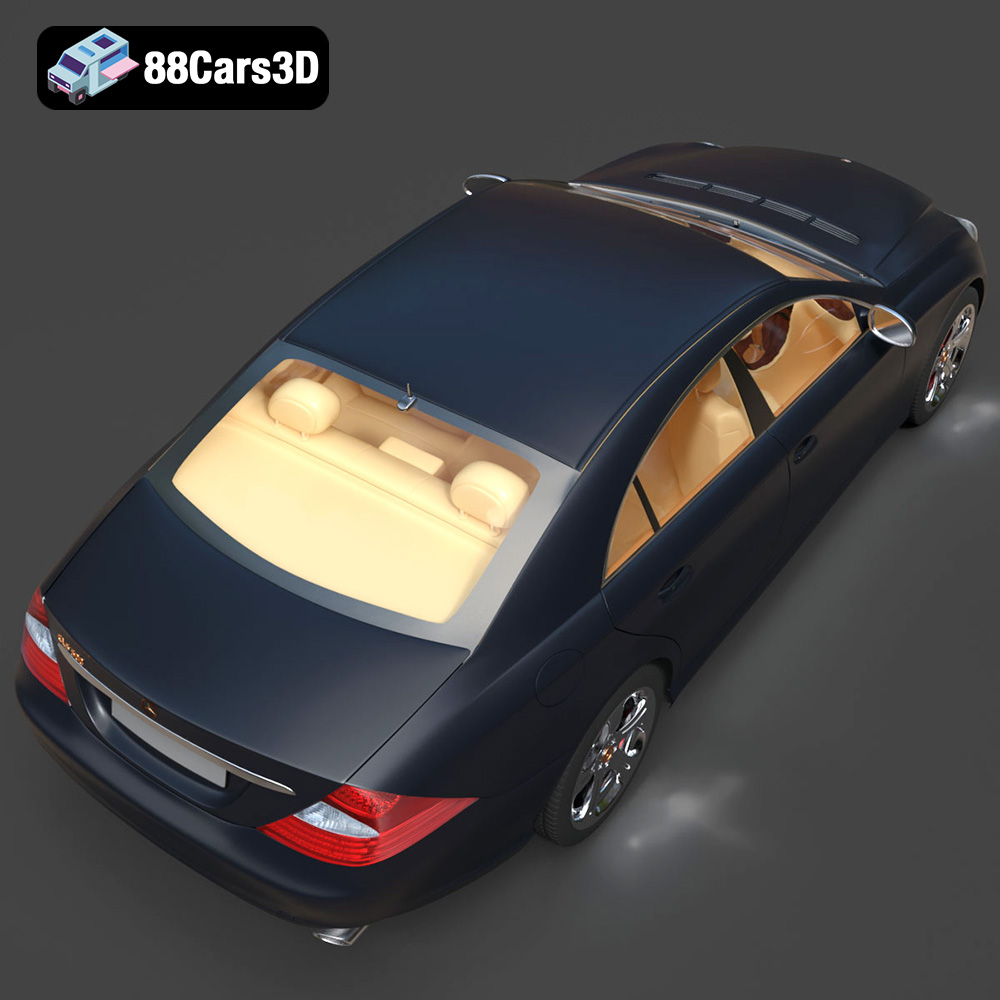
The luxury doesn’t stop at the exterior. The Mercedes Benz CLS500 3D Model extends its meticulous detail to the cockpit, offering a rich environment for virtual experiences. Luxurious multi-contour leather seating details, an accurate premium steering wheel and steering column, and a detailed instrument cluster with characteristic wood-trim accents on the center console are all present. Precision control details, including pedals, levers, and the automatic shifter, are modeled for authenticity. This optimized geometry is invaluable for first-person perspective (POV) in gaming and virtual driving simulations, offering an immersive and believable interior experience.
Beyond visual accuracy, the model boasts significant technical advantages. It is fully game-ready and optimized, featuring approximately 350,000 triangles. This poly count is a deliberate choice, striking a perfect balance for real-time engines like Unreal and Unity, ensuring high-end visual realism without compromising performance. Real-world scale accuracy, based on actual vehicle chassis specifications, guarantees correct proportions in any scene. Proper pivot setups for steering, wheel rotation, and suspension travel are included, which are vital for animating realistic vehicle movement. This comprehensive technical groundwork makes the Mercedes Benz CLS500 3D Model an incredibly versatile asset for professional workflows.
High-quality 3D car models are more than static assets; they are foundational elements that integrate into complex production pipelines, enabling diverse professional outcomes. From cinematic rendering to interactive real-time experiences, the adaptability of assets like the Mercedes Benz CLS500 3D Model is paramount.
For artists and studios focused on producing photorealistic automotive renders for advertising, product showcases, or film, 3ds Max remains a cornerstone. Starting with the .max file, designers can leverage its robust modeling and animation tools. The Mercedes Benz CLS500 3D Model can be easily integrated, allowing for advanced lighting setups using V-Ray or Corona Renderer. Material properties, such as metallic paint flakes, reflective chrome, and the subtle sheen of leather, can be fine-tuned using PBR (Physically Based Rendering) workflows, achieving breathtaking realism. The separated components allow for intricate camera animations, showcasing suspension compression or steering movements in close-up shots.
Game developers, often working against tight deadlines, benefit immensely from game-ready assets. Using the .fbx or the Unreal-optimized file for the Mercedes Benz CLS500 3D Model, developers can efficiently import the car into Unreal Engine. The optimized triangle count of ~350,000 ensures smooth performance within open-world environments or racing simulations. The correctly set up pivots for wheels and steering facilitate straightforward integration with vehicle physics systems, allowing for realistic driving mechanics. Developers can easily apply custom PBR materials, set up dynamic lighting reactions, and even implement damage models, transforming the static mesh into an interactive game asset that enhances gameplay and visual immersion.
The immersive nature of AR/VR demands lightweight yet visually rich models. The .glb format of the Mercedes Benz CLS500 3D Model is perfectly suited for these applications. Its optimized structure allows for quick loading times and smooth interaction in mobile AR apps or high-fidelity VR showrooms. Imagine a potential buyer exploring the CLS500 in their driveway via AR, opening doors, peering into the detailed interior, or changing exterior colors in real-time. The optimized geometry and PBR materials translate well into these interactive environments, providing a compelling and engaging user experience that transcends traditional marketing.
The versatility of high-quality 3D car models like the Mercedes Benz CLS500 3D Model translates into a wide array of practical applications across various industries, driving innovation and enhancing user engagement.
Consider a leading racing game franchise striving for unparalleled realism. Integrating a meticulously optimized car asset such as the Mercedes Benz CLS500 3D Model allows developers to rapidly populate their virtual garages with iconic vehicles. Its balanced polycount ensures that players can experience high visual fidelity even in high-speed, multi-car races, without performance bottlenecks. The separate, animatable components mean that dynamic camera angles capturing suspension travel over bumps or precise steering input are not just visually impressive but technically accurate, providing a truly immersive driving simulation. This drastically reduces development time and costs compared to building assets from scratch, while guaranteeing professional-grade quality.
Architectural visualization studios frequently utilize 3D car models to breathe life into their renderings of new developments or luxury properties. Placing a luxurious vehicle like the Mercedes Benz CLS500, rendered with exquisite detail, immediately elevates the perceived value and lifestyle associated with the architectural project. For automotive marketing campaigns, the 3D model becomes an indispensable tool. Instead of costly physical photoshoots, artists can create limitless studio lighting setups, change environments, or even simulate extreme weather conditions for marketing visuals, all from the comfort of their workstation. The ability to customize colors and finishes means endless variations for brand campaigns or lifestyle scenes, showcasing the car in its best light for diverse target audiences.
Beyond digital screens, 3D car models are making a significant impact in physical production. For enthusiasts and hobbyists, the .stl format of the Mercedes Benz CLS500 3D Model offers the exciting opportunity to 3D print a physical replica. While requiring careful attention to print settings – recommended scales like 1:12 or 1:18, layer heights between 0.04-0.12 mm (with resin printing often preferred for fine details), and the strategic use of supports – the end result is a tangible representation of the digital asset. This application extends to rapid prototyping for automotive designers, allowing them to quickly iterate on physical models and explore design elements before committing to expensive manufacturing processes. The precision of the 3D model ensures that these physical outputs retain the integrity of the original design.
A truly professional 3D asset provides more than just a static representation; it offers a canvas for creative expression and adaptation. The Mercedes Benz CLS500 3D Model is designed with customization at its core, empowering artists to tailor the model to their specific project needs.
The flexibility to change body colors is essential for any automotive project. Whether it’s applying classic factory colors, exploring custom metallic finishes, or experimenting with matte textures, the model’s material setup supports easy modification. This extends to tire textures, allowing for a swift swap between street variants for asphalt racing or more rugged off-road patterns for adventurous scenes. Adjusting material finishes – from high-gloss to subtle matte – can dramatically alter the perception of the vehicle, integrating it seamlessly into diverse lighting environments. This level of granular control over appearance ensures the Mercedes Benz CLS500 3D Model can be a chameleon in any scene, adapting its aesthetic to match the desired mood or brand identity.
The careful separation of components like wheels, suspension, and steering, coupled with proper pivot setups, makes the Mercedes Benz CLS500 3D Model inherently animation-ready. Artists can animate realistic steering maneuvers, independent wheel rotations, and authentic suspension travel, bringing a dynamic sense of motion to the vehicle. Imagine a virtual commercial where the CLS500 gracefully navigates a winding road, its suspension absorbing every bump, or a cinematic sequence showcasing a smooth parking maneuver. This foundational readiness for animation significantly reduces the rigging and setup time for animators, allowing them to focus on creative storytelling rather than complex technical preparation.
The journey through the intricate world of 3D automotive modeling reveals that the true value of an asset lies in its blend of artistic fidelity and technical excellence. A premium 3D car model is not just a digital sculpture; it’s a versatile tool capable of elevating game development, enhancing architectural visualizations, enriching AR/VR experiences, and even bridging the gap to physical 3D prints.
The Mercedes Benz CLS500 3D Model exemplifies this synthesis. From its meticulously recreated exterior and immersive interior details to its game-ready optimization and extensive file format compatibility, it stands as a testament to professional-grade asset creation. Whether you’re a game developer seeking an iconic vehicle for your next title, a visualization artist crafting a luxurious scene, or an enthusiast keen on 3D printing a masterpiece, this model provides the foundation for success.
For designers and developers who demand nothing but the best, investing in high-quality 3D car models is a strategic decision that pays dividends in both efficiency and visual impact. Explore this exceptional model and a wide range of other professional-grade assets at 88cars3d.com, where quality meets unparalleled versatility.
The Mercedes Benz CLS500 is a pioneering luxury vehicle that redefined the automotive landscape by seamlessly blending the elegance and dynamism of a coupe with the comfort and functionality of a four-door sedan. Known for its iconic sweeping roofline, muscular stance, and powerful V8 engine, this visionary vehicle exudes sophistication. The 3D model meticulously captures its distinctive side profile, aggressive front fascia, dual exhaust system, and premium detailing. This 3D model offers exceptional quality with an optimized topology and carefully managed triangle count, ensuring maximum visual fidelity without compromising real-time performance. Designed to be fully game-ready, the geometry is structured to support advanced lighting and reflections. It is the perfect asset for high-end game development, interactive AR/VR applications, architectural visualizations, and detailed animations.
$19.99
.blend
.cls500
.fbx
.glb
.max
.obj
.ply
.rendering
.sedan
.stl
.unreal
car-3d-model
classic-car
four-door-coupe
game asset
game-ready
low-poly
luxury car
mercedes-benz
optimized
VR/AR