Get 20% OFF All Premium 3D & STL Models!

In the vibrant and ever-evolving landscape of digital content creation, high-quality 3D models are no longer just an advantage—they are a fundamental necessity. From blockbuster video games and immersive virtual reality experiences to photorealistic architectural visualizations and precision 3D printing, the demand for meticulously crafted assets is at an all-time high. Automotive design, in particular, stands out as a field where precision, realism, and optimization converge, driving innovation across multiple industries.
The ability to acquire and integrate top-tier 3D car models can dramatically accelerate project timelines, enhance visual fidelity, and open up new creative avenues for artists, designers, and developers alike. Imagine bringing a bustling urban street scene to life with realistic traffic, populating a game world with authentic vehicles, or showcasing a product in a stunning virtual showroom. These endeavors all rely on access to expertly modeled assets.
This article delves into the intricate world of 3D car models, exploring their technical nuances, diverse applications, and the critical role they play in modern digital pipelines. We’ll uncover the secrets behind creating and utilizing game-ready assets, understanding various file formats, and integrating them into professional workflows across platforms like Blender, 3ds Max, and Unreal Engine. As a prime example of versatility and quality, we will frequently reference the Toyota Camry 2018 3D Model Download STL FBX OBJ GLB Blend, a stellar asset available at 88cars3d.com, showcasing how such a model serves as a cornerstone for a myriad of creative projects.
Navigating the world of 3D modeling often begins with understanding the myriad of file formats available. Each format serves specific purposes, catering to different software, platforms, and project requirements. Choosing the right format is crucial for ensuring compatibility, preserving data integrity, and optimizing performance. The Toyota Camry 2018 3D Model, for instance, comes in a comprehensive suite of formats, each offering unique advantages.
The .blend file is Blender’s native format and represents a complete Blender scene. This is a powerful format for anyone working within the Blender ecosystem, as it stores everything: meshes, materials, textures, animations, lights, cameras, modifiers, and even scene settings. For artists who want full editability, the .blend file is indispensable. It allows for deep customization of the Toyota Camry 2018 model, from adjusting its detailed suspension system to tweaking the stitching on the ergonomic bucket seats, ensuring maximum flexibility for creative control and future modifications within Blender.
Autodesk’s .fbx (Filmbox) format is a de facto industry standard for 3D data exchange, particularly between different software applications and real-time engines like Unreal Engine and Unity. It supports complex scenes, including geometry, materials, textures, bones, skinning, and animations. When importing the Toyota Camry 2018 into a game engine, .fbx is often the go-to choice due to its robust support for animated components like separate wheels, suspension, and steering, which are vital for realistic driving simulations. Its ability to maintain hierarchical data makes it perfect for animated vehicle rigs.
The Wavefront .obj format is one of the most widely supported and truly universal 3D file formats. It primarily stores geometry data, including vertices, normals, UV coordinates, and faces, and can reference an accompanying .mtl (material) file for basic material properties. While it doesn’t support animation or rigging as comprehensively as .fbx, it excels in cross-software compatibility for static mesh data. For architectural visualization or simple rendering setups of the Toyota Camry 2018 where animation isn’t the primary focus, .obj provides a clean, reliable mesh that can be easily imported into virtually any 3D software.
GL Transmission Format (GLTF), especially its binary counterpart .glb, is an open standard designed for the efficient transmission and loading of 3D scenes and models by engines and applications. It’s often referred to as the “JPEG of 3D” due to its optimization for web-based, AR, and VR applications. A single .glb file contains geometry, materials (often PBR-ready), textures, and animations, making it highly portable and ideal for immersive virtual showrooms or mobile AR experiences featuring the Toyota Camry 2018. Its compact size ensures faster loading times and smoother performance in browser-based viewers.
The .stl (Stereolithography) format is the standard for 3D printing. It represents only the surface geometry of a 3D object using a collection of interconnected triangles, devoid of color, texture, or material information. While not suitable for rendering or animation, it’s essential for bringing digital models into the physical world. The Toyota Camry 2018 model, convertible to .stl, allows hobbyists and professionals to fabricate physical prototypes or display models with recommended print settings for scale, layer height, and supports, capturing its accurate frame geometry and proportions in tangible form.
The .ply (Polygon File Format) is another popular format for storing 3D data, particularly useful in fields like 3D scanning, scientific visualization, and CAD/CAM. It can store not only geometric data but also color, transparency, and confidence values per vertex or face. While less common for general 3D asset exchange than .fbx or .obj, its ability to store detailed information makes it valuable for specialized applications where precision and additional data attributes of a model like the Camry are critical for analysis or manufacturing processes.
While not a traditional open file format like .fbx or .obj, “Unreal” in the context of file formats often refers to assets specifically pre-configured or prepared for seamless integration into Unreal Engine. This typically means an .fbx file that has been optimized with proper material assignments, UV mapping, collision meshes, and pivot points, all ready to be imported and become native Unreal Engine assets (.uasset files). This optimization ensures that the Toyota Camry 2018 model will perform optimally in Unreal-based games, simulations, and virtual productions, leveraging the engine’s advanced rendering capabilities without extensive post-import setup.
Similar to .blend for Blender, .max is the native file format for Autodesk 3ds Max. It encapsulates an entire 3ds Max scene, including all geometry, textures, materials, lighting, cameras, animation, and scene configurations. For users deeply integrated into the 3ds Max workflow, having the .max file for the Toyota Camry 2018 provides the highest level of editability and control, allowing for complex animation setups, advanced V-Ray or Corona rendering, and seamless integration into existing 3ds Max projects. It preserves all the detailed engine block and interior features with full fidelity.
Creating a compelling 3D car model is a delicate balance of artistic vision and technical precision. It requires an understanding of real-world automotive design principles combined with mastery of 3D software and optimization techniques. The goal is always to achieve visual fidelity while ensuring the model is functional and performant across its intended applications.
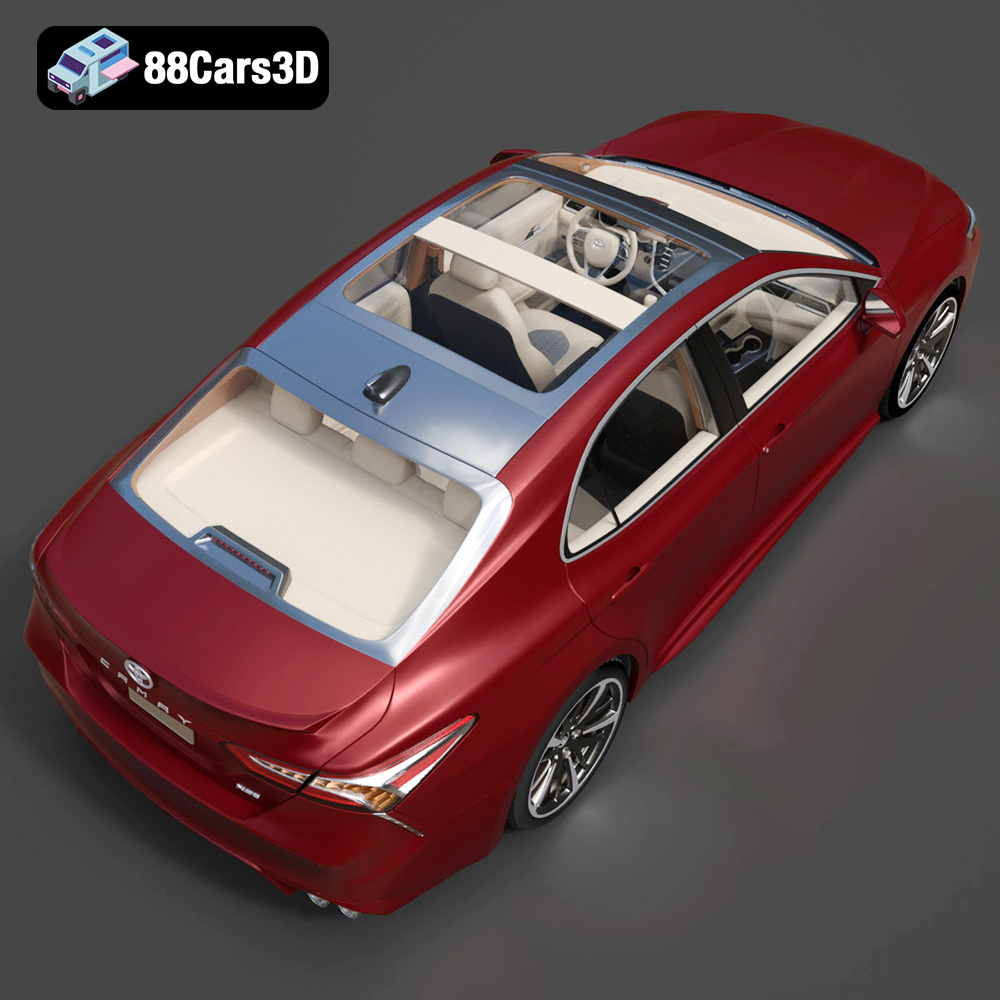
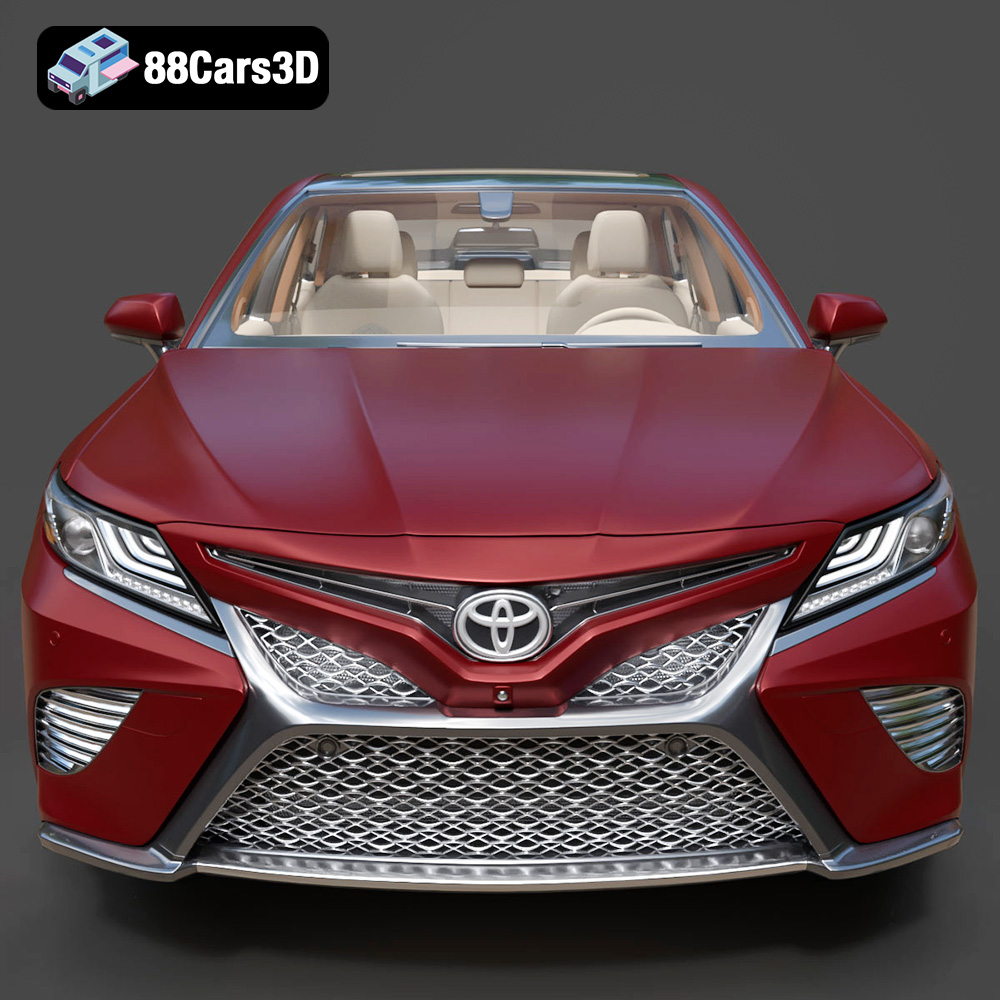
Authenticity begins with meticulous attention to detail and real-world references. For a model like the Toyota Camry 2018, this means accurately replicating its distinctive design language: the aggressive lines, sportier stance, and prominent front grille that defined the eighth generation. Every curve, panel gap, and ventilation detail must be carefully sculpted. This extends to the smallest elements: the highly detailed bi-LED headlights, the sleek taillight assemblies, the authentic dual exhaust system, and the precisely modeled multi-spoke alloy wheels with realistic tire treads. Such fidelity ensures the model is instantly recognizable and visually impactful.
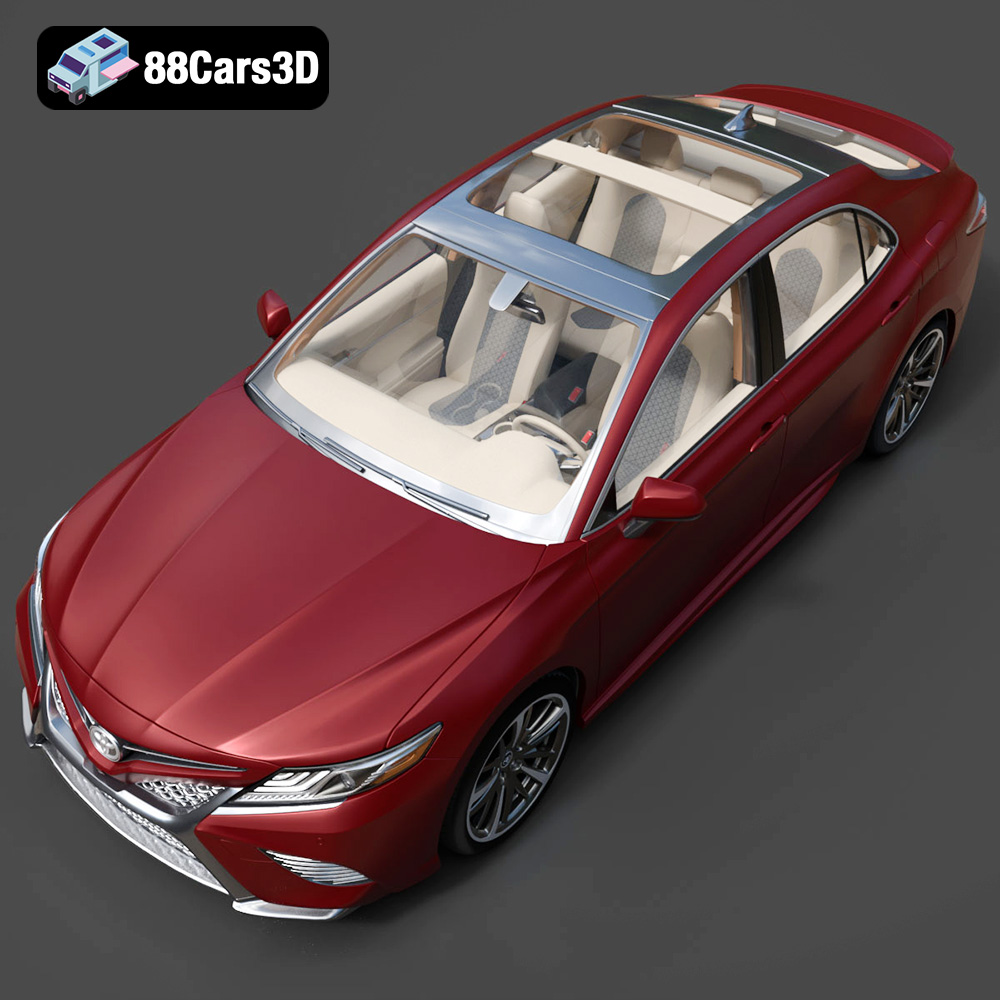
A truly high-quality automotive 3D model doesn’t just look good from the outside. The interior and often the engine bay are equally crucial, especially for immersive experiences like VR or detailed rendering. The Toyota Camry 2018 model exemplifies this with its detailed ergonomic bucket seats, accurate leather-wrapped steering wheel, and high-fidelity Entune 3.0 infotainment screen. Even the pedals, levers, and automatic shifter are precisely rendered, providing a rich environment for first-person POV in gaming or detailed close-up renders. The inclusion of a detailed engine block based on the 2.5L Dynamic Force inline-four design adds another layer of realism, satisfying the most discerning eye.
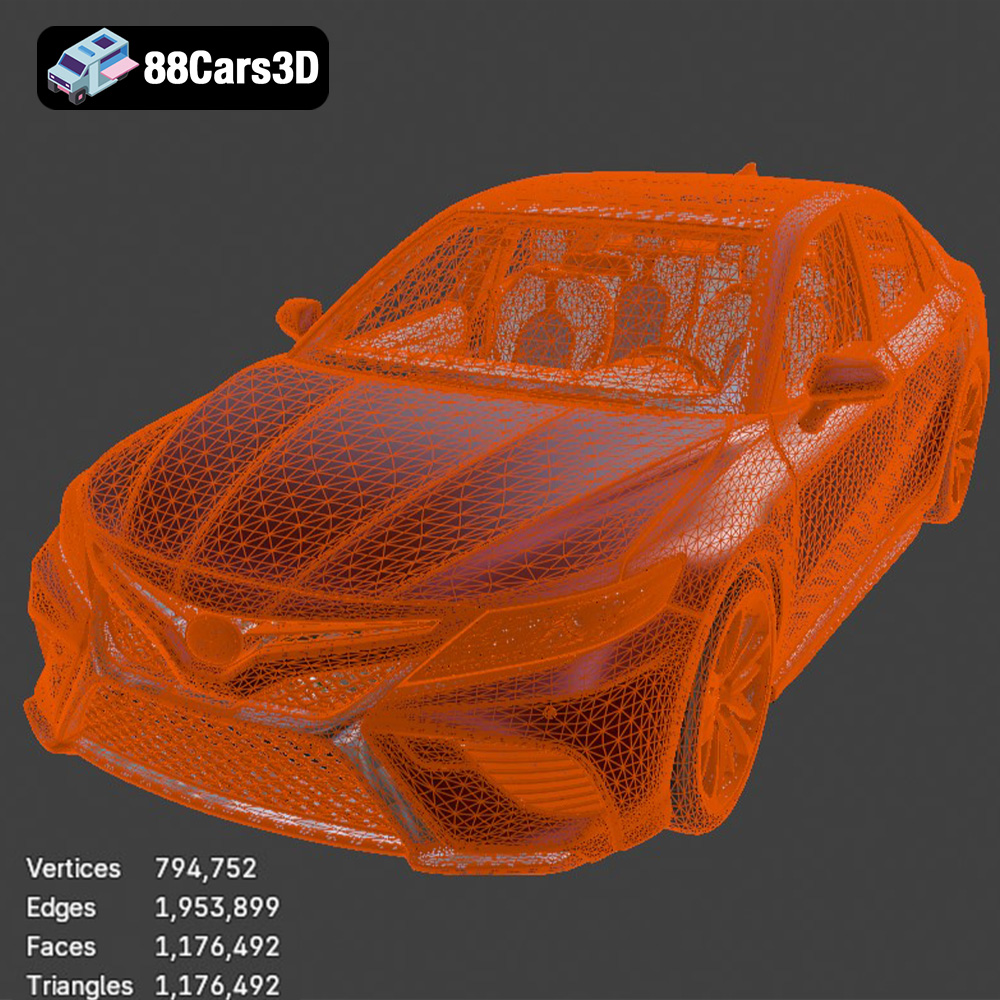
While detail is paramount, performance cannot be sacrificed, particularly for game development and AR/VR. This is where optimization becomes a science. A “game-ready” model, such as the Toyota Camry 2018 from 88cars3d.com, strikes a perfect balance. With an approximate triangle count of 150,000, it maintains excellent visual fidelity without overburdening real-time engines. This involves clean topology—a well-organized mesh structure that allows for smooth deformations and efficient rendering—and thoughtful UV mapping for textures. Proper pivot setups for steering, wheel rotation, and suspension travel are also critical for realistic animation and physics simulations within engines like Unreal and Unity.
Integrating a 3D car model into a professional pipeline involves several stages, often leveraging different software tools for specialized tasks. High-quality assets, like the Toyota Camry 2018 model, are designed to seamlessly fit into these diverse workflows, empowering artists and developers to bring their visions to life efficiently.
For initial setup, refinement, and custom modifications, native project files are invaluable. The inclusion of .blend and .max formats for the Toyota Camry 2018 model means artists can open the project directly in their preferred 3D software. In Blender, a user might refine the material finishes, add custom decals, or set up a complex animation rig. The .blend file offers full editability, allowing adjustments to the detailed independent MacPherson strut front and multi-link rear suspension for custom animation sequences. Similarly, in 3ds Max, professionals can leverage its robust rendering capabilities with V-Ray or Corona Renderer to create photorealistic still images or elaborate cinematic animations, fully utilizing the detailed exterior and interior geometry.
Unreal Engine stands at the forefront of real-time rendering and game development. Importing a high-quality 3D car model into Unreal Engine typically begins with the .fbx format. The game-ready optimization of the Toyota Camry 2018 model, with its ~150,000 triangle count and clean topology, makes this process incredibly efficient. Once imported, artists can utilize Unreal’s powerful material editor to create physically based rendering (PBR) materials, adjusting body colors to factory specifications or custom metallic finishes, and modifying tire textures. The model’s separate wheels, suspension, and steering components are crucial here, enabling the setup of realistic vehicle physics and control systems within the engine. This allows the Camry to be driven, crashed, or interact with its environment dynamically, making it ideal for open-world games and simulators.
Beyond real-time applications, 3D car models are essential for high-end rendering and visualization. Architectural visualization studios might place the Toyota Camry 2018 in an urban scene to add realism and scale, or integrate it into a virtual showroom for a client presentation. Using software like 3ds Max with a powerful renderer, artists can manipulate lighting, reflections, and camera angles to produce stunning, photorealistic images or animations. The accurate real-world scale and detailed features of the model ensure that it looks convincing under any studio lighting setup, making it perfect for brand campaigns, lifestyle scenes, and product marketing.
The versatility of a well-crafted 3D car model extends across a multitude of industries, proving its indispensable value in modern digital creation.
In game development, authentic vehicles are crucial for immersion. The Toyota Camry 2018 3D Model is an ideal game asset, optimized for performance without sacrificing visual realism. Its ~150,000 triangle count makes it suitable for integration into open-world environments where many vehicles might be present, or for detailed racing titles and simulators. The separate animated components (wheels, suspension, steering) allow for realistic driving mechanics, physics interactions, and damage systems, enhancing gameplay authenticity for players. From background traffic to drivable player vehicles, high-quality 3D car models form the backbone of believable virtual worlds.
Augmented Reality (AR) and Virtual Reality (VR) are transforming how we interact with digital content. For automotive applications, this translates into virtual showrooms, interactive configurators, and immersive training simulations. A model like the Toyota Camry 2018, especially in a .glb format, is perfectly suited for these applications. Users can explore the vehicle from every angle, customize colors and finishes in real-time, or even place the car in their own driveway using AR on a mobile device. The optimized geometry ensures smooth performance on various VR headsets and mobile AR platforms, providing a truly engaging and interactive experience.
Architects and urban planners frequently use 3D car models to contextualize their designs. Placing realistic vehicles in architectural renders helps visualize scale, traffic flow, and overall aesthetic. The Toyota Camry 2018, with its accurate proportions and modern LED lighting signature, can enhance the realism of any urban scene or architectural visualization. It helps clients envision how a new building or development will integrate into its surroundings, making renders more believable and impactful. Furthermore, for urban traffic simulations, having a diverse library of realistic cars like the Camry is essential for accurately modeling city dynamics.
The journey of a 3D model doesn’t always end on screen. For hobbyists, designers, and manufacturers, 3D printing offers a way to bring digital creations into the physical realm. The Toyota Camry 2018 3D Model can be easily converted to the .stl format, allowing for physical fabrication. With recommended settings for scale (e.g., 1:12, 1:18, 1:24), layer height, and support structures, enthusiasts can print highly detailed replicas. Resin printing, in particular, is recommended for capturing the fine details of the frame geometry, engine block, and interior features. Post-processing with sanding, primer, and authentic factory colors can result in stunning display-scale models.
Behind every visually stunning 3D car model lies a foundation of technical excellence. Optimization isn’t just about reducing poly count; it’s a holistic approach to ensuring the asset performs flawlessly across diverse platforms while maintaining its aesthetic appeal.
The polygon count (or triangle count) is a primary determinant of a model’s performance in real-time environments. The Toyota Camry 2018 model, with its approximately 150,000 triangles, hits a sweet spot. This allows for rich detail—from sculpted doors to intricate suspension components—without causing frame rate drops in demanding applications. Crucially, the model boasts “clean topology,” meaning the mesh is structured logically with well-distributed quads (which are then triangulated for rendering). Clean topology ensures smooth deformations during animation, efficient UV unwrapping, and easy modification, making the asset versatile for various stages of a professional pipeline.
UV mapping is the process of flattening the 3D surface of a model onto a 2D plane, allowing textures to be applied accurately without stretching or distortion. For a car model, meticulous UV mapping is essential for realistic paint finishes, tire treads, and interior fabric patterns. Paired with Physically Based Rendering (PBR) materials, this creates unparalleled realism. PBR materials simulate how light interacts with surfaces in the real world, accounting for properties like roughness, metallicness, and normal maps. This enables artists to replicate the glossy sheen of factory paint, the subtle texture of leather seats, or the reflection of chrome accents, making the Toyota Camry 2018 look lifelike under any lighting condition, whether in Unreal Engine or a high-end offline renderer.
Accuracy extends beyond visual detail to physical properties. A professional 3D car model must adhere to real-world scale. The Toyota Camry 2018 model is built with precise real-world scale accuracy, ensuring it fits seamlessly into architectural scenes, traffic simulations, or game environments without needing manual scaling adjustments. Equally important are proper pivot setups. The pivot point for an object defines its center of rotation and scaling. For a car, this means the wheels have pivot points at their centers for accurate rotation, suspension components pivot correctly for travel, and the steering wheel pivots around its axis. These seemingly small details are critical for enabling realistic animation, vehicle physics, and interactive controls.
The Toyota Camry 2018 3D Model Download STL FBX OBJ GLB Blend from 88cars3d.com stands as a testament to what high-quality, game-ready 3D car models can achieve. It’s a comprehensive package designed to meet the rigorous demands of various professional workflows.
This model faithfully captures the essence of the eighth-generation Camry, which marked a dramatic shift in styling with its aggressive lines and sportier stance. From the accurate frame geometry and proportions to the detailed bi-LED headlights and sleek taillight assemblies, every external feature is meticulously rendered. Beneath the hood, a detailed engine block based on the 2.5L Dynamic Force inline-four design adds depth, while an authentic dual exhaust system completes the sporty aesthetic. Inside, the ergonomic bucket seats, leather-wrapped steering wheel, high-fidelity infotainment screen, and precise center console controls are all optimized for fidelity, making it perfect for both close-up renders and first-person perspectives in games.
The strength of this Camry model lies in its adaptability. For game developers, its ~150,000 triangle count and clean topology make it a performance-friendly asset for open-world games, racing titles, and simulators. AR/VR developers can leverage its optimized geometry and .glb format for immersive virtual showrooms or configurators. Visual artists and animators will find it an excellent choice for brand campaigns, lifestyle scenes, and studio lighting setups, thanks to its real-world scale and detailed features. Even 3D printing enthusiasts can create physical replicas, guided by specific print settings for optimal results. The inclusion of formats like .blend, .max, .fbx, .obj, .glb, .stl, and .ply ensures broad compatibility across the industry.
A truly professional asset offers room for customization. The Toyota Camry 2018 model provides extensive options for artists to tailor it to their specific project needs. Users can easily change body colors to match factory specifications or apply custom metallic finishes. Tire textures can be modified, material finishes adjusted (matte, gloss, metallic), and lighting adapted for different environments. This level of control, combined with the proper pivot setups for animation and the ability to work in native software like Blender and 3ds Max, ensures that the model isn’t just a static asset but a dynamic tool for endless creative possibilities.
The journey through the intricate world of 3D car models reveals a fascinating intersection of art, engineering, and digital technology. From the initial conceptualization and meticulous modeling to the rigorous optimization and diverse applications, each step is crucial in crafting assets that meet the demands of modern digital content creation. Whether it’s populating vast open-world games, creating immersive AR/VR experiences, producing photorealistic visualizations, or even bringing models to life through 3D printing, high-quality 3D car models are the silent workhorses that empower creators across industries.
Understanding the nuances of various file formats—from the editable depths of .blend and .max to the interoperability of .fbx and the web-friendliness of .glb—is fundamental for any professional. The focus on clean topology, optimized poly counts, accurate UV mapping, and PBR materials ensures that these digital assets not only look stunning but also perform flawlessly in real-time engines like Unreal Engine.
The Toyota Camry 2018 3D Model Download STL FBX OBJ GLB Blend exemplifies all these principles, offering a versatile, game-ready, and highly detailed asset perfectly suited for a wide array of professional projects. It stands as a prime example of the quality and versatility available today, allowing artists and developers to save invaluable time and resources while achieving superior results. For those seeking premium 3D car models that seamlessly integrate into any workflow, a visit to 88cars3d.com is a definitive step towards unlocking unparalleled creative potential.
The 2018 Toyota Camry, representing the eighth generation of this iconic mid-size sedan, brought a dramatic shift in styling with its aggressive lines, sportier stance, and prominent front grille. Known for its legendary reliability and comfort, this specific generation introduced the TNGA platform, elevating its driving dynamics while boasting striking visual elements like its sweeping roofline, sculpted doors, and modern LED lighting signature.
This high-quality 3D model features game-ready optimization with an approximate triangle count of 150,000, ensuring excellent performance without sacrificing visual fidelity. Designed for modern pipelines, it boasts clean topology perfect for real-time applications like game development, AR/VR experiences, architectural visualization, and high-end animation.
Perfect for urban traffic simulations, architectural renders, open-world driving games, and virtual showroom applications.
.blend, .fbx, .obj, .glb, .stl, .ply, .unreal, .max
Tags:
toyota, camry-2018, sedan, mid-size-car, family-car, car-3d-model, game-ready, low-poly, optimized, game-asset, rendering, vr-ar, blend, fbx, obj, glb, stl, ply, unreal, max
$19.99
.blend
.fbx
.glb
.max
.obj
.ply
.rendering
.sedan
.stl
.toyota
.unreal
camry-2018
car-3d-model
family-car
game asset
game-ready
low-poly
mid-size-car
optimized
VR/AR