Get 20% OFF All Premium 3D & STL Models!

In the expansive and demanding world of 3D visualization, game development, and immersive experiences, the quality of your assets dictates the fidelity of your final output. From the roar of an engine in a racing simulator to the gleaming reflections in an architectural visualization, every detail counts. Automotive models, in particular, require an exceptional level of precision, optimization, and versatility to meet the diverse needs of modern digital production pipelines.
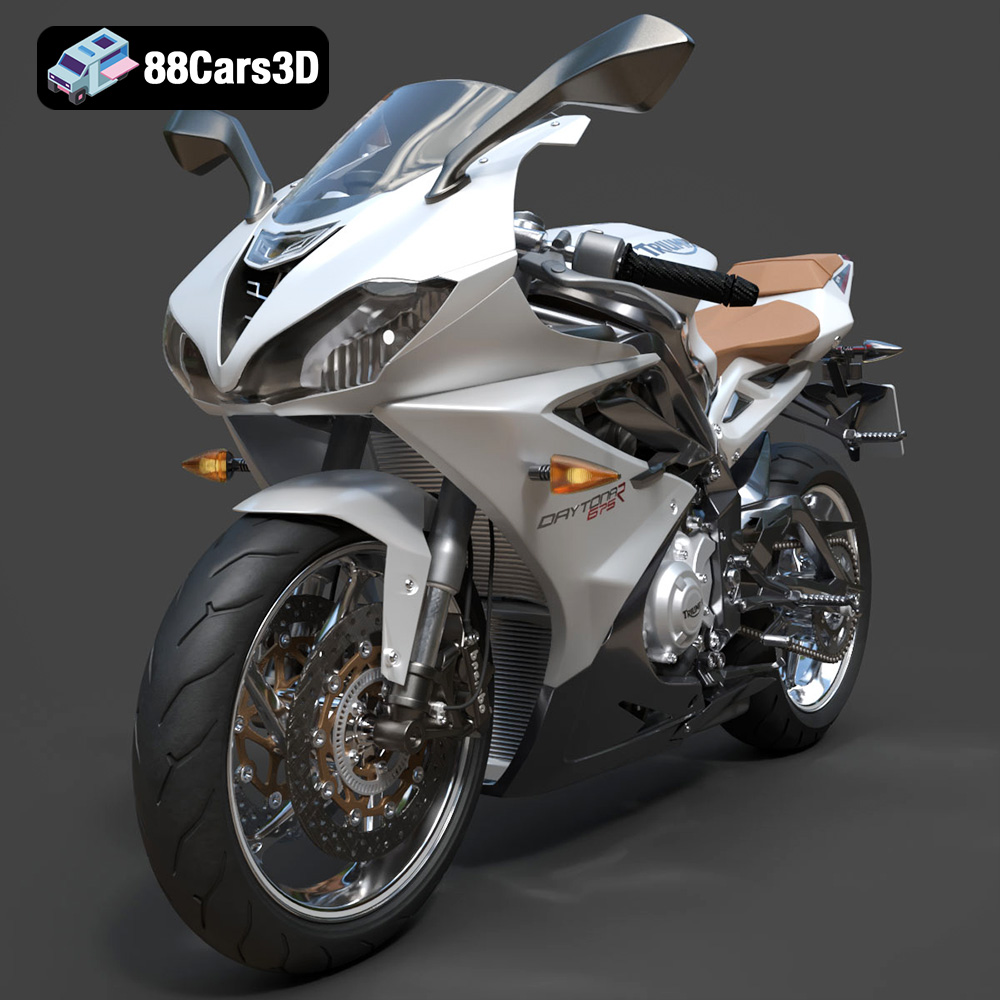
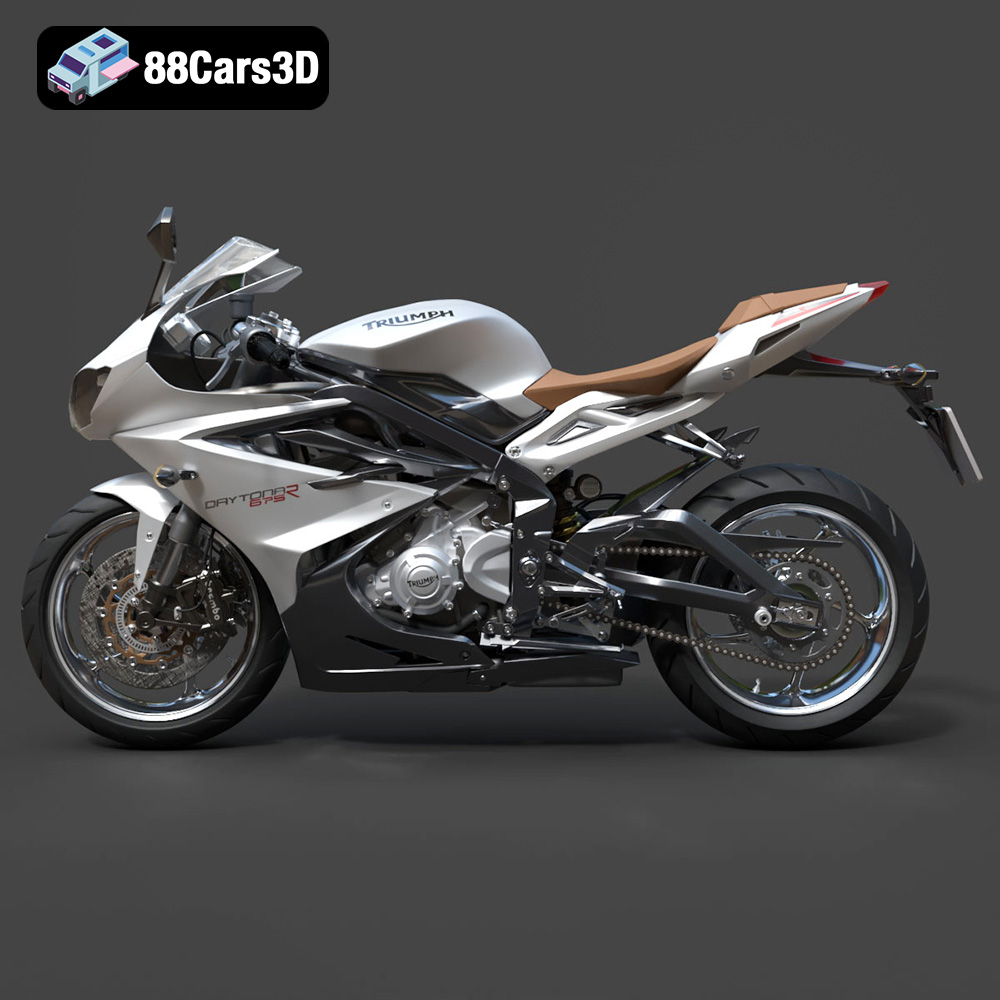
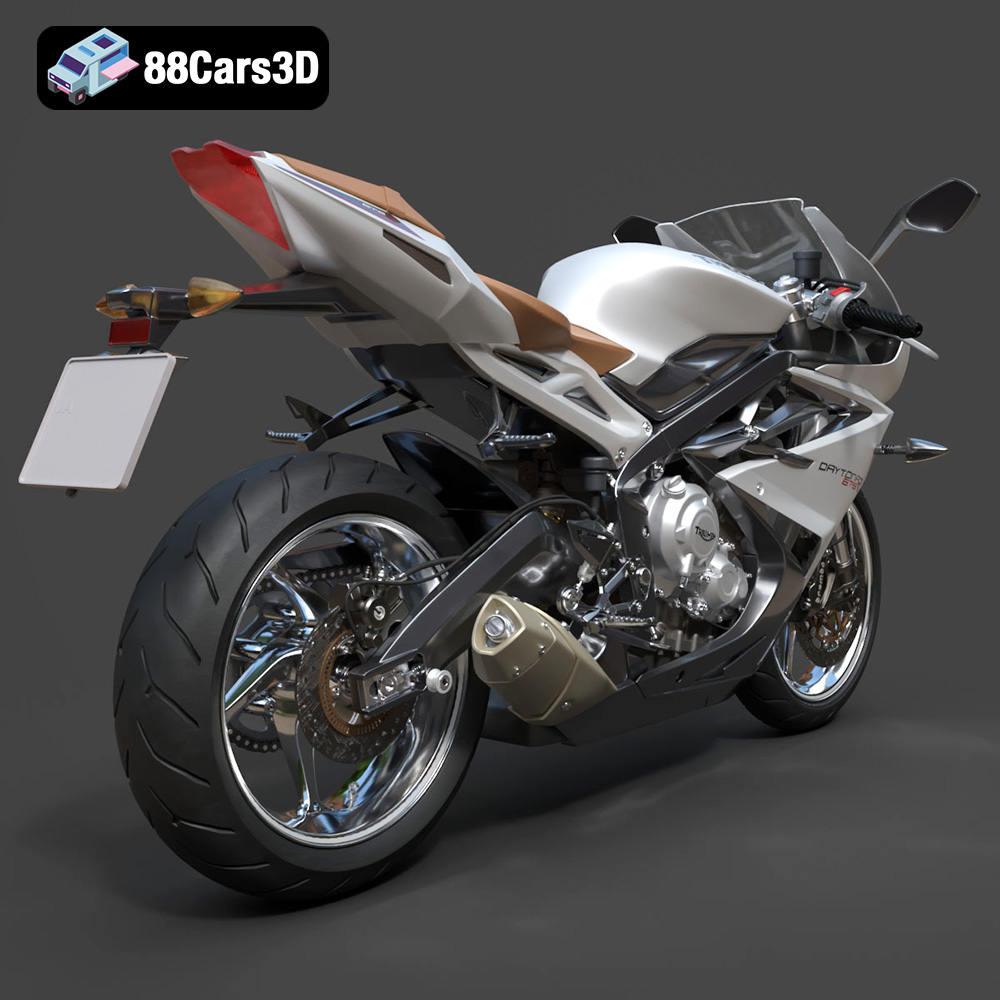
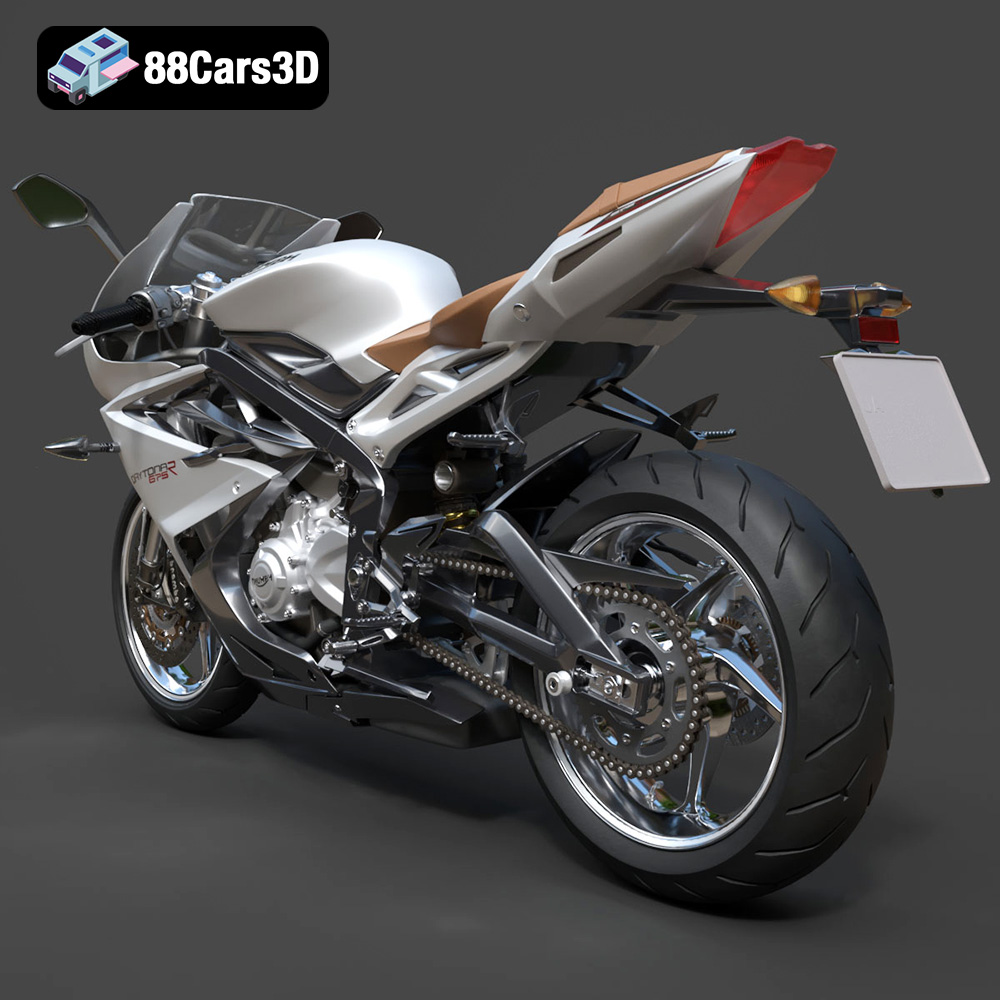
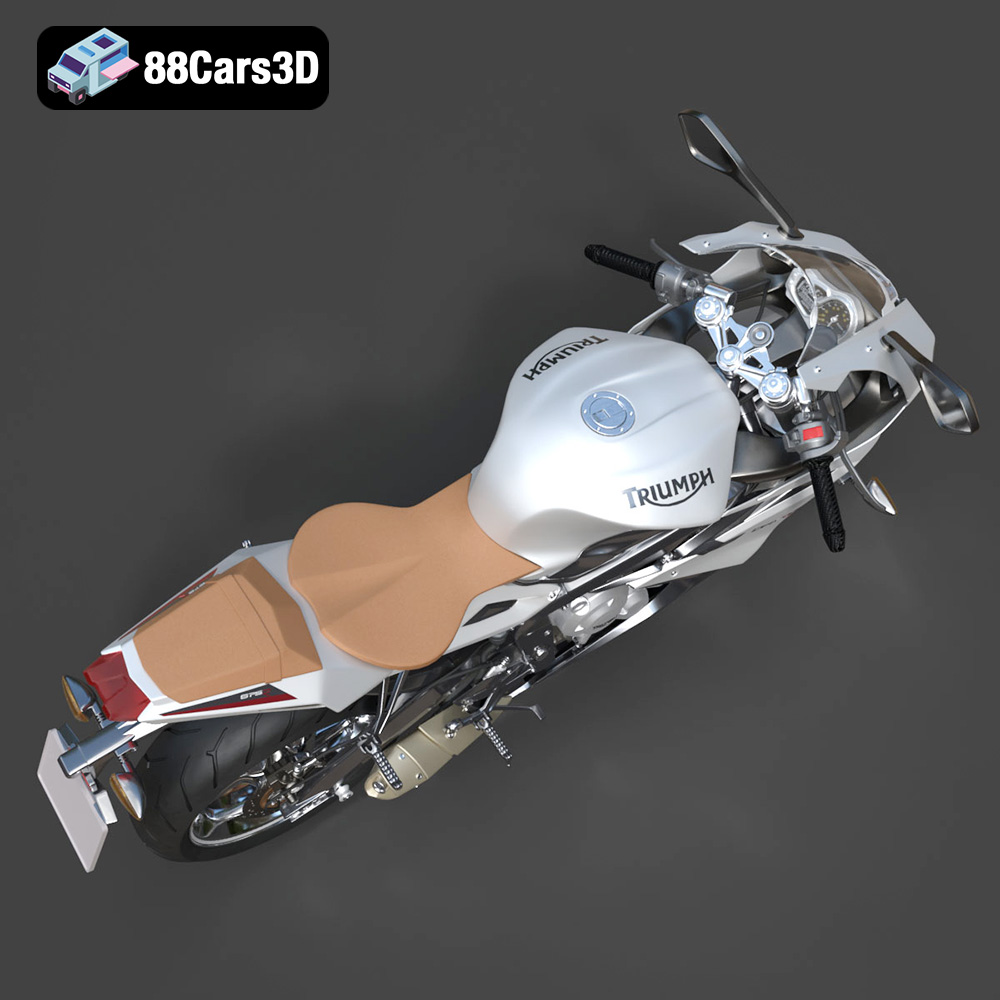
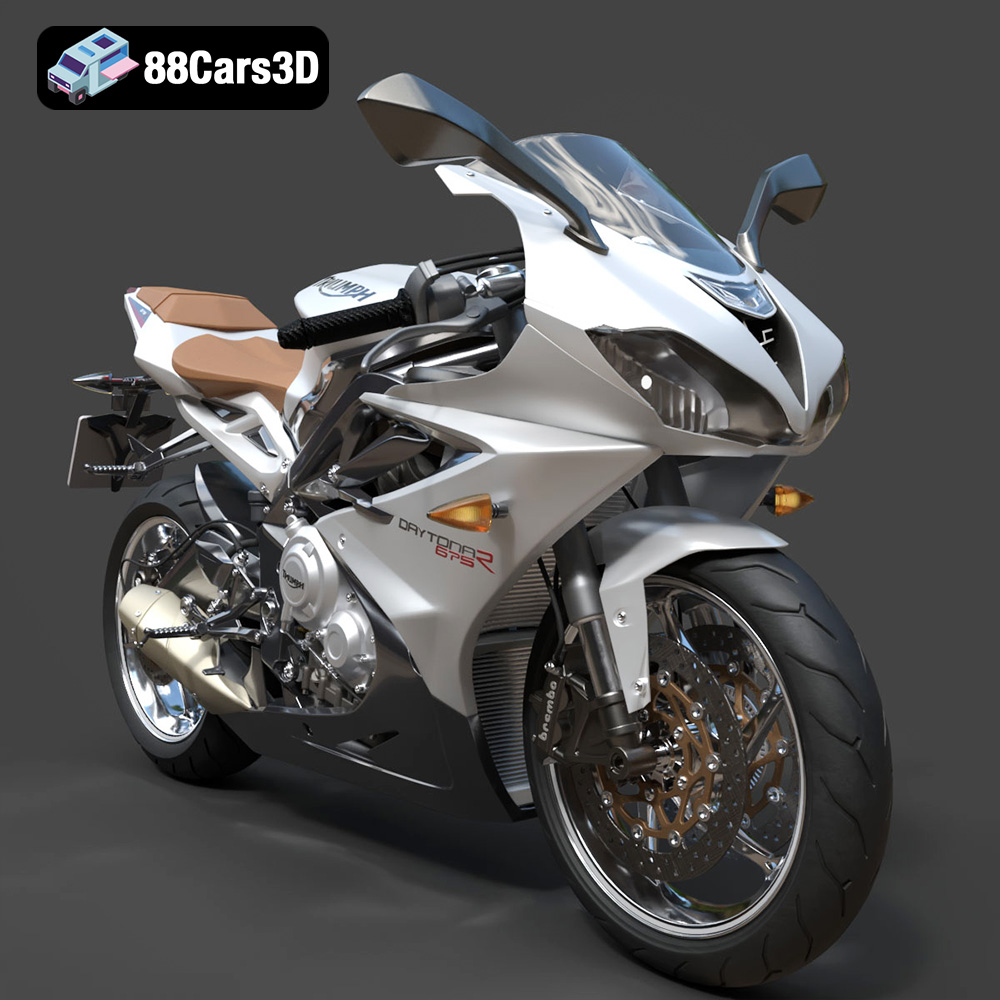
Motorcycles hold a special place in the hearts of enthusiasts and designers alike, embodying a unique blend of engineering prowess, aesthetic appeal, and raw power. The Triumph Daytona 675R ABS 2015 is a prime example, a legendary middleweight supersport celebrated for its track-focused performance, iconic triple-cylinder engine, and razor-sharp handling. Capturing this essence in a 3D model is no small feat, requiring meticulous attention to its aggressively styled aerodynamic fairings, sleek side-mounted exhaust system, striking red subframe, and premium Öhlins suspension components. A truly high-quality 3D model, such as the Triumph Daytona 675R ABS 2015 3D Model available on 88cars3d.com, encapsulates these details, making it an invaluable asset for any project.
Whether you’re an independent game developer aiming for a realistic racing experience, an automotive design studio creating compelling marketing visuals, or an AR/VR innovator building immersive virtual showrooms, the foundation of your project lies in robust 3D assets. This article will delve into the technical intricacies of leveraging high-quality vehicle models, explore essential file formats, discuss professional workflows, and showcase how a meticulously crafted model like the Triumph Daytona 675R ABS 2015 can accelerate your creative process and elevate your final product.
The choice of 3D model file format is far from trivial; it dictates compatibility, feature preservation, optimization, and ultimately, the efficiency of your workflow. For professional 3D car models and motorcycle assets like the Triumph Daytona 675R ABS 2015, understanding these distinctions is paramount. This particular model thoughtfully includes a comprehensive suite of formats, ensuring maximum utility across various applications.
The .blend format is Blender’s native file type, offering a complete, fully editable scene. When you download a .blend file, you’re not just getting the mesh; you’re getting the entire Blender project. This typically includes materials, textures, lighting setups, cameras, animation data, and even modifiers. For artists and studios deeply integrated into the Blender ecosystem, this is the gold standard. It allows for immediate and deep customization, enabling users to tweak everything from the subdivision surface levels to the node-based materials, making it perfect for custom renders, animations, or further optimization specific to a unique project’s needs.
.fbx (Filmbox) is arguably the most widely adopted interchange format in the 3D industry, particularly favored for game development and animation pipelines. Developed by Autodesk, FBX excels at preserving not just geometry but also materials, textures, rigging, skinning, and animation data across different software packages like Maya, 3ds Max, Blender, Unreal Engine, and Unity. Its robust nature makes it ideal for transferring complex, animated assets without significant data loss. For models like the Triumph Daytona 675R ABS 2015, an FBX ensures that its optimized topology, separated components for animation (wheels, suspension, steering), and even basic material assignments are retained, making it plug-and-play for many applications.
.obj (Wavefront OBJ) is a more fundamental and universal format. While it doesn’t typically store animation or rigging data, it is exceptionally good at preserving pure geometry (vertices, normals, UVs) and material references (.mtl file). Its simplicity makes it highly compatible with almost every 3D software on the market, serving as a reliable fallback when other formats encounter issues. For static renders, 3D printing preparation, or when you primarily need the mesh geometry to rebuild materials from scratch in a new environment, .obj is an excellent, stable choice.
.glb (GL Transmission Format Binary) is the binary version of glTF, a royalty-free specification for the efficient transmission and loading of 3D scenes and models by engines and applications. It’s often referred to as the “JPEG of 3D” due to its efficiency and widespread adoption in web-based AR/VR experiences, mobile apps, and browser-based viewers. GLB bundles the entire 3D model, including textures and animations, into a single, compact file, making it incredibly fast to load and ideal for lightweight, interactive applications. The Triumph Daytona model in GLB format is perfectly suited for showcasing in virtual showrooms or embedding directly into a web page for a dynamic product preview.
The .unreal format, or more accurately, assets packaged for Unreal Engine, typically refers to a collection of files (meshes, materials, textures, blueprints) organized within an Unreal project structure. While not a single file extension in the traditional sense, obtaining a model “unreal-ready” means it has been specifically prepared and optimized for Unreal Engine’s PBR (Physically Based Rendering) workflow, often including proper material instances, collision meshes, and LODs (Levels of Detail). This dramatically reduces setup time for game developers and real-time visualization artists, allowing them to drop the asset directly into their Unreal project and begin working immediately.
.stl (Stereolithography) is the de facto standard file format for 3D printing. It represents a 3D model as a series of connected triangles, defining only the surface geometry without color, texture, or material information. Its simplicity makes it universally compatible with 3D printers and slicing software. The Triumph Daytona 675R model, provided in .stl, is directly ready for hobbyists or professionals looking to physically manifest the motorcycle at scales like 1:12 or 1:18, as recommended. However, it requires careful preparation for printing, including support structures and optimal orientation, as outlined in the product description.
.ply (Polygon File Format, or Stanford Triangle Format) is similar to .obj but can store additional data beyond just geometry, such as color, transparency, and sometimes even data from 3D scanners. It’s often used in fields requiring precise mesh data for scientific analysis, reverse engineering, or CAD applications where capturing intricate surface details is crucial. While less common for direct rendering than FBX or OBJ, its capacity for richer data makes it valuable for specialized pipelines.
Finally, the .max format is Autodesk 3ds Max’s native scene file. Like .blend, it contains the full project data, including complex scene setups, advanced materials, lighting, and animation timelines. 3ds Max is a powerhouse in architectural visualization, broadcast animation, and high-end rendering. Providing the Triumph Daytona 675R ABS 2015 as a .max file caters directly to professionals using this software, allowing them to fully leverage its powerful renderers like V-Ray or Corona for photorealistic imagery and complex cinematic sequences.
In essence, the availability of these diverse formats for the Triumph Daytona 675R ABS 2015 3D model underscores its versatility and value, ensuring that users, regardless of their preferred software or end-use application, have the correct foundation to build upon. This thoughtful approach to file provision from 88cars3d.com streamlines professional workflows significantly.
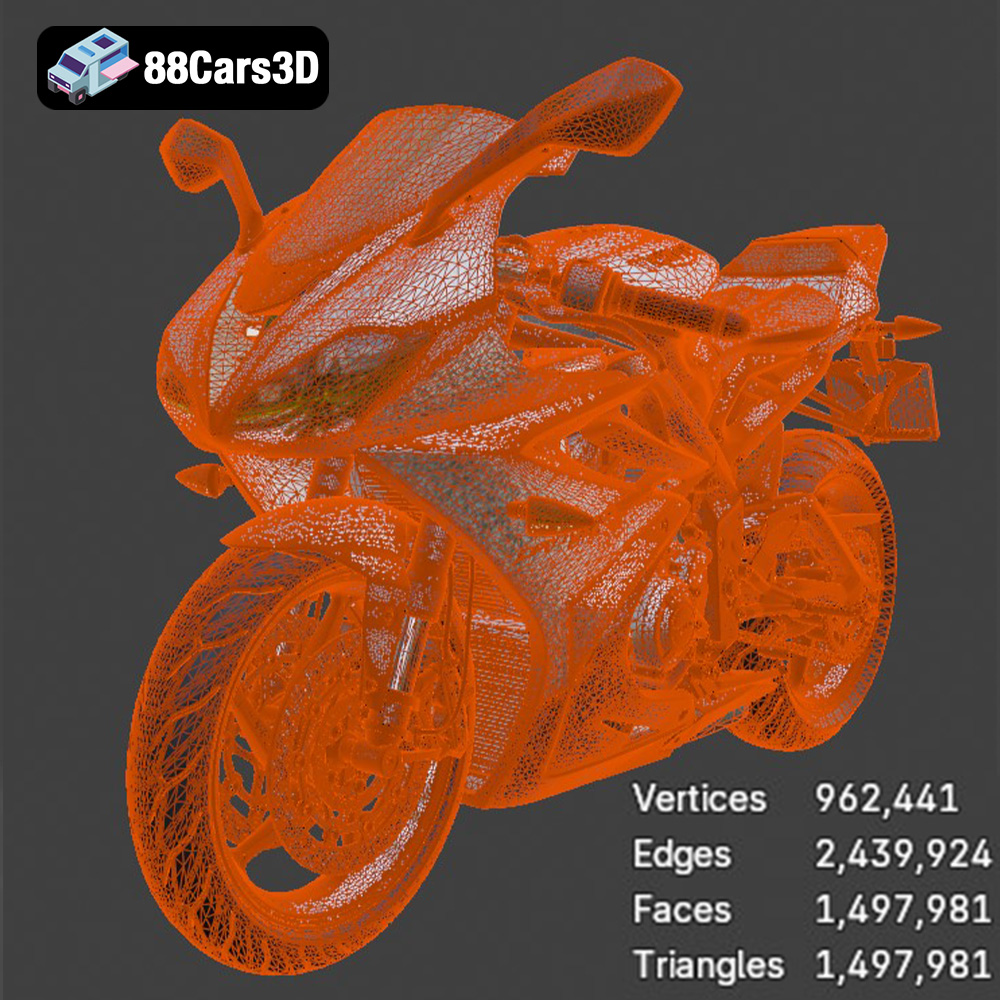
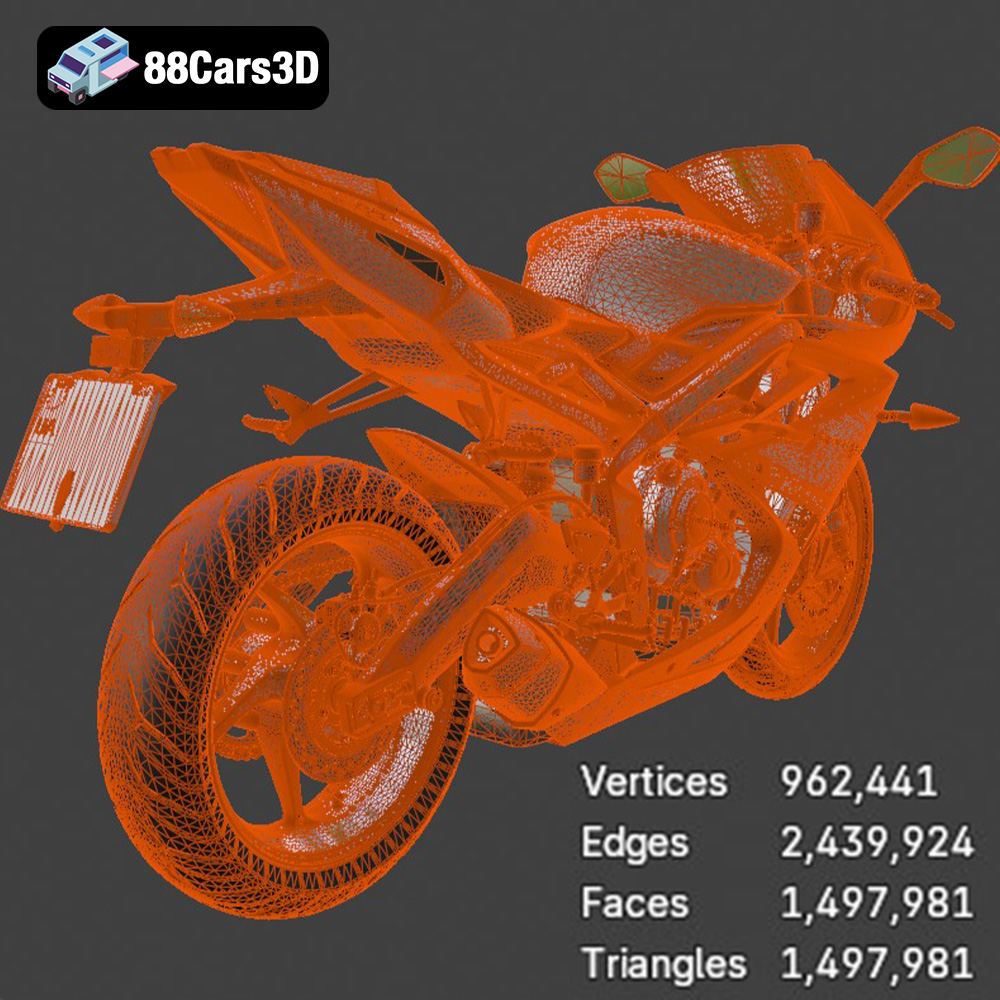
Game development demands a unique blend of visual fidelity and performance optimization. A high-quality 3D car model, or in this case, a motorcycle model like the Triumph Daytona 675R ABS 2015, must strike a perfect balance to be truly game-ready. The model’s ~150,000 triangles is a sweet spot, offering substantial detail without crippling real-time frame rates.
The core of a game-ready asset lies in its topology. The Triumph Daytona 675R model boasts optimized geometry, meaning its polygon count is efficiently distributed to areas that require detail (like the engine block, fairings, and suspension components) while keeping less critical areas streamlined. This ensures that the model renders smoothly even in dynamic, high-speed environments common in racing games or open-world titles. Proper UV mapping is also crucial, enabling efficient texture application and minimizing seams, which contributes to a polished, realistic appearance in real-time engines. The real-world scale accuracy further aids in seamless integration into game environments and physics systems.
For game developers, the availability of .fbx and .unreal formats significantly simplifies the integration process. In **Unreal Engine**, an .fbx import can bring in the mesh, materials, and basic animations with ease. Developers can then leverage Unreal’s powerful PBR material editor to fine-tune the shaders, adding realistic metallic finishes, glossy paint, and intricate tire textures. The “unreal-ready” nature implies much of this groundwork is already laid, including possibly pre-configured materials or even basic Blueprint classes. Similarly, in **Unity**, the .fbx file provides an excellent starting point. Developers can import the model, apply Unity’s Standard PBR materials, and integrate it into their vehicle physics systems. The separated wheels, suspension, and steering components are essential for creating realistic vehicle mechanics, allowing for independent rotation, compression, and steering animations.
Beyond static visuals, the Triumph Daytona 675R ABS 2015 3D model is designed with animation in mind. The proper pivot setup for steering, wheel rotation, and suspension travel is a critical technical advantage. Game developers can easily attach physics constraints and animation blueprints to these pivots, creating a believable and engaging riding experience. Imagine the front forks compressing under heavy braking or the swingarm reacting to terrain changes – these details elevate player immersion. For racing simulators, this precise component separation is non-negotiable, providing the foundation for accurate physics simulation and dynamic visual feedback, contributing to a truly competitive and enjoyable game.
High-end automotive rendering and visualization demand absolute photorealism, where every reflection, every surface imperfection, and every subtle highlight contributes to a believable image. The Triumph Daytona 675R ABS 2015 3D Model excels in this arena, offering the fidelity required for cinematic animations, marketing campaigns, and detailed product showcases.
Using the .max or .blend file, artists gain full control over the scene. In **3ds Max**, paired with renderers like V-Ray or Corona, the model’s detailed geometry becomes the canvas for exquisite materials. Artists can craft multi-layered car paint shaders with clear coats, metallic flakes, and subtle orange peel effects to perfectly mimic the real Triumph finish. Similarly, in **Blender’s Cycles or Eevee**, PBR shaders can be meticulously designed for the Öhlins gold anodized forks, the matte carbon fiber heat shield, or the polished Brembo calipers. The ability to customize body/tank colors, tire textures, and material finishes (matte, gloss, metallic) provides unparalleled artistic freedom, allowing for endless variations and brand-specific adaptations.
Beyond static beauty shots, the Triumph Daytona 675R ABS 2015 model is perfect for dynamic compositions. Imagine a high-speed cinematic animation where the motorcycle leans into a corner, its tires gripping the asphalt, and the suspension absorbing the bumps. The separated, animatable components (wheels, suspension, steering) are crucial here. Artists can choreograph precise movements, capturing the essence of the Daytona’s aggressive handling. Whether it’s rendered against a dramatic mountain backdrop, a gritty urban street, or a pristine race track, the model integrates seamlessly, becoming the focal point of a compelling visual narrative.
For automotive brands and dealerships, a high-quality 3D model is a game-changer. Virtual showrooms can allow potential buyers to explore the Triumph Daytona 675R from every angle, customize its colors and features in real-time, and even view it in an augmented reality environment. For marketing campaigns, these models provide a cost-effective and flexible alternative to expensive photoshoots and video productions. Stunning renders can be generated for brochures, websites, and social media, showcasing the motorcycle in ideal lighting and environments without logistical constraints. The precision and detail of models from 88cars3d.com ensure that the digital representation is indistinguishable from the real thing.
The utility of a robust 3D model extends far beyond traditional rendering and game development. With the rise of augmented and virtual reality, and the increasing accessibility of 3D printing, a versatile asset like the Triumph Daytona 675R ABS 2015 opens up exciting new possibilities for interaction and physical manifestation.
Augmented Reality (AR) and Virtual Reality (VR) are transforming how we interact with digital content. The Triumph Daytona 675R ABS 2015, particularly in its optimized .glb format, is a perfect candidate for immersive applications. In AR, users can project a life-sized virtual motorcycle into their living room via a smartphone or tablet, walking around it, inspecting details, and even changing colors in real-time. This is invaluable for virtual dealership experiences, allowing customers to “try out” a bike before visiting a physical showroom. In VR, the model can populate fully immersive virtual environments, from track simulators that put you directly on the seat to interactive configurators where users can customize the bike in a 360-degree virtual space. The optimized polycount ensures smooth performance, which is critical for preventing motion sickness and delivering a truly comfortable AR/VR experience.
The inclusion of the .stl format for the Triumph Daytona 675R ABS 2015 directly addresses the rapidly growing community of 3D printing enthusiasts and professionals. This allows hobbyists to create highly detailed physical replicas of the iconic motorcycle. The recommended scales (1:12, 1:18, 1:24) are popular for display models, while the technical specifications for printing—layer height, wall thickness, infill, and support requirements—provide a clear roadmap for successful output. Resin printing is specifically recommended for capturing the fine details of the exhaust, mirrors, and handlebars, ensuring that the physical model accurately reflects the digital precision. This capability bridges the gap between the virtual and tangible, allowing for unique collectibles, prototypes, or educational aids.
The flexibility offered by the 3D model extends to its physical manifestation. After 3D printing, post-processing techniques like sanding, priming, and painting are crucial. Artists can apply authentic factory colors, custom finishes, and metallic paints to bring the printed model to life with stunning realism. This iterative process of digital design, physical prototyping, and artistic finishing allows for a deeply engaging creative workflow. For product designers or engineers, 3D printing the model can also serve as a rapid prototyping tool, allowing for physical evaluation of certain components or aesthetic considerations before full-scale manufacturing, highlighting the multi-faceted value of such a detailed 3D asset.
In a marketplace saturated with digital assets, the discerning professional seeks quality, versatility, and reliability. 88cars3d.com distinguishes itself by offering meticulously crafted 3D car models and motorcycle assets that meet rigorous industry standards. The Triumph Daytona 675R ABS 2015 3D Model is a prime example of this commitment.
Every model from 88cars3d.com is developed with an unwavering focus on real-world accuracy. For the Triumph Daytona 675R, this means accurate frame geometry, detailed engine block replication, and faithful representation of its unique features like the Öhlins suspension and Brembo brakes. This level of authenticity is critical for projects where realism is paramount, ensuring that the digital asset holds up under close scrutiny, whether in a high-resolution render or an interactive VR experience. The commitment to technical specifications, such as a balanced triangle count and proper pivot setups, showcases an understanding of professional requirements.
Time is a valuable commodity in any production pipeline. By providing game-ready, optimized assets with clean topology and in a wide array of file formats (.blend, .fbx, .obj, .glb, .stl, .ply, .unreal, .max), 88cars3d.com significantly reduces the workload for developers and artists. Instead of spending countless hours modeling from scratch or cleaning up suboptimal assets, professionals can immediately integrate these models into their projects. This efficiency translates to faster turnaround times, reduced costs, and the ability to focus creative energy on other aspects of the project, knowing the core vehicle asset is robust and ready.
While this article focuses on the Triumph Daytona 675R, 88cars3d.com offers a diverse and growing portfolio of high-quality 3D car models and motorcycle assets. This variety ensures that studios, freelancers, and hobbyists can find the perfect vehicle for any scenario, from vintage classics to modern supercars, all built with the same commitment to detail and technical excellence. It serves as a reliable resource for consistently high-standard digital automotive assets, fostering creativity across various industries.
In the dynamic landscape of 3D content creation, the difference between a good project and a great one often hinges on the quality and versatility of its core assets. The Triumph Daytona 675R ABS 2015 3D Model exemplifies what a truly professional-grade automotive asset should be: meticulously detailed, performance-optimized, and universally compatible.
Whether you are developing a cutting-edge racing game, crafting photorealistic marketing visualizations, building immersive AR/VR experiences, or bringing a physical model to life through 3D printing, this model provides an exceptional foundation. Its balanced polycount, accurate real-world scale, and thoughtful component separation for animation make it a powerful tool for a multitude of applications. The comprehensive suite of file formats ensures seamless integration into virtually any 3D workflow, minimizing friction and maximizing creative potential.
By choosing high-quality 3D models like the Triumph Daytona 675R ABS 2015 from trusted sources like 88cars3d.com, you’re not just acquiring a digital file; you’re investing in efficiency, authenticity, and the capacity to elevate your projects to new heights of realism and engagement. Leverage these expertly crafted assets to fuel your creativity, streamline your production pipeline, and deliver stunning results that truly stand out in the competitive digital realm.
The Triumph Daytona 675R ABS 2015 is a legendary middleweight supersport motorcycle celebrated for its track-focused performance, iconic triple-cylinder engine, and razor-sharp handling. Distinctive features include its aggressively styled aerodynamic fairings, sleek side-mounted exhaust system, striking red subframe, premium Öhlins suspension components, and high-performance Brembo brakes. This high-quality 3D model boasts optimized topology with a balanced triangle count, making it a perfect game-ready asset without sacrificing visual fidelity. Built with precision for game development, AR/VR environments, dynamic animation, and high-end automotive visualization. Perfect for track racing simulators, high-speed cinematic animations, virtual dealership showrooms, and interactive motorcycle configurators.
$39.99
.blend
.fbx
.glb
.max
.obj
.ply
.rendering
.sportbike
.stl
.supersport
.triumph
.unreal
daytona-675r
daytona-675r-abs-2015
game asset
game-ready
low-poly
motorcycle-3d-model
optimized
VR/AR