Get 20% OFF All Premium 3D & STL Models!

The digital realm has opened up unprecedented possibilities for artists, designers, and developers to recreate and reimagine the world around us. Among the most challenging yet rewarding subjects is the automobile. From the sleek lines of modern supercars to the nostalgic curves of vintage classics, cars hold a special place in our collective imagination. Capturing their essence in three dimensions requires a meticulous blend of artistic skill and technical precision. This is where high-quality 3D car models become indispensable tools, bridging the gap between imagination and digital reality.
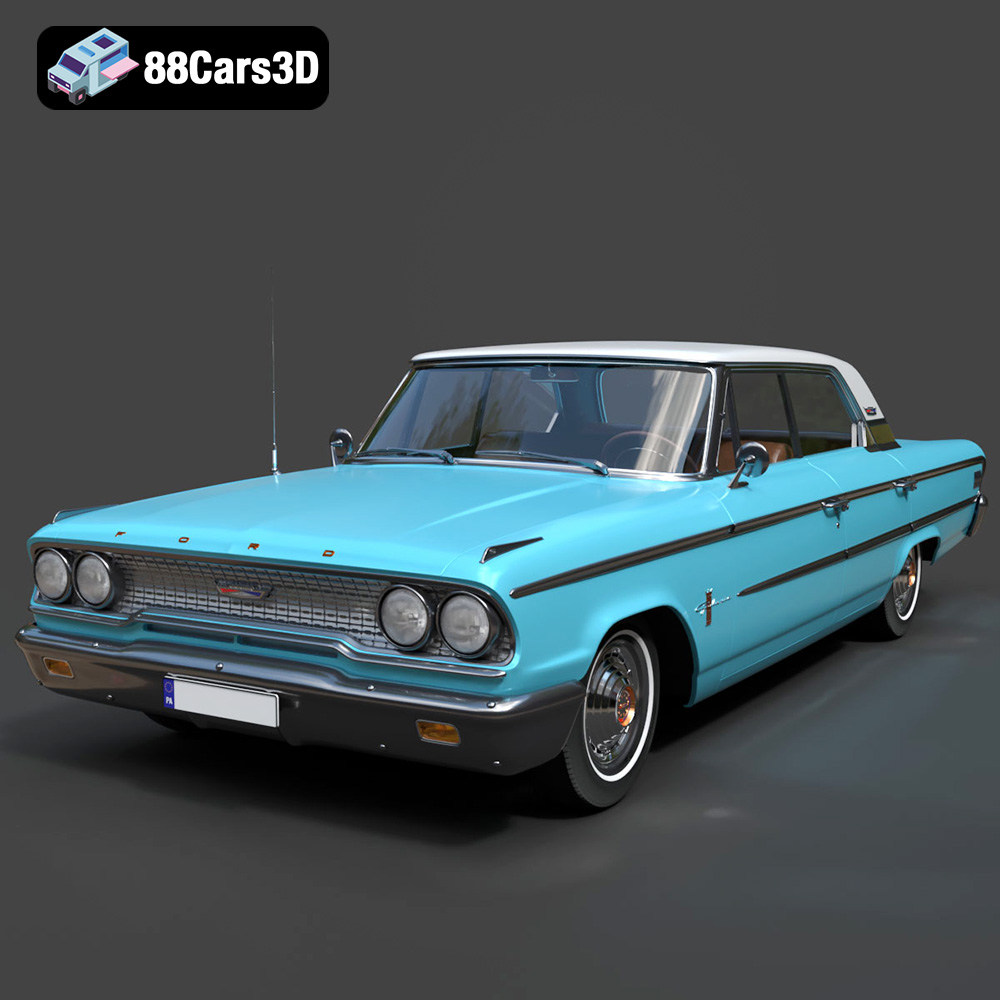
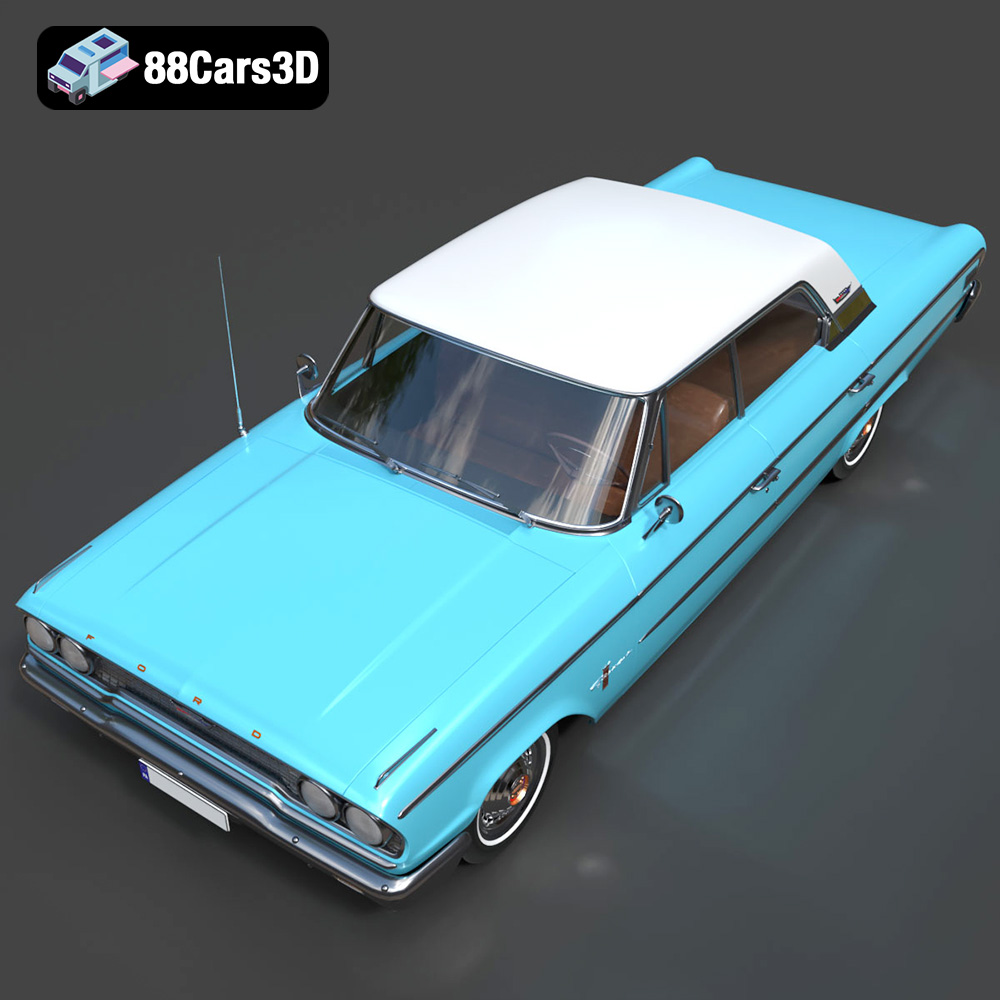
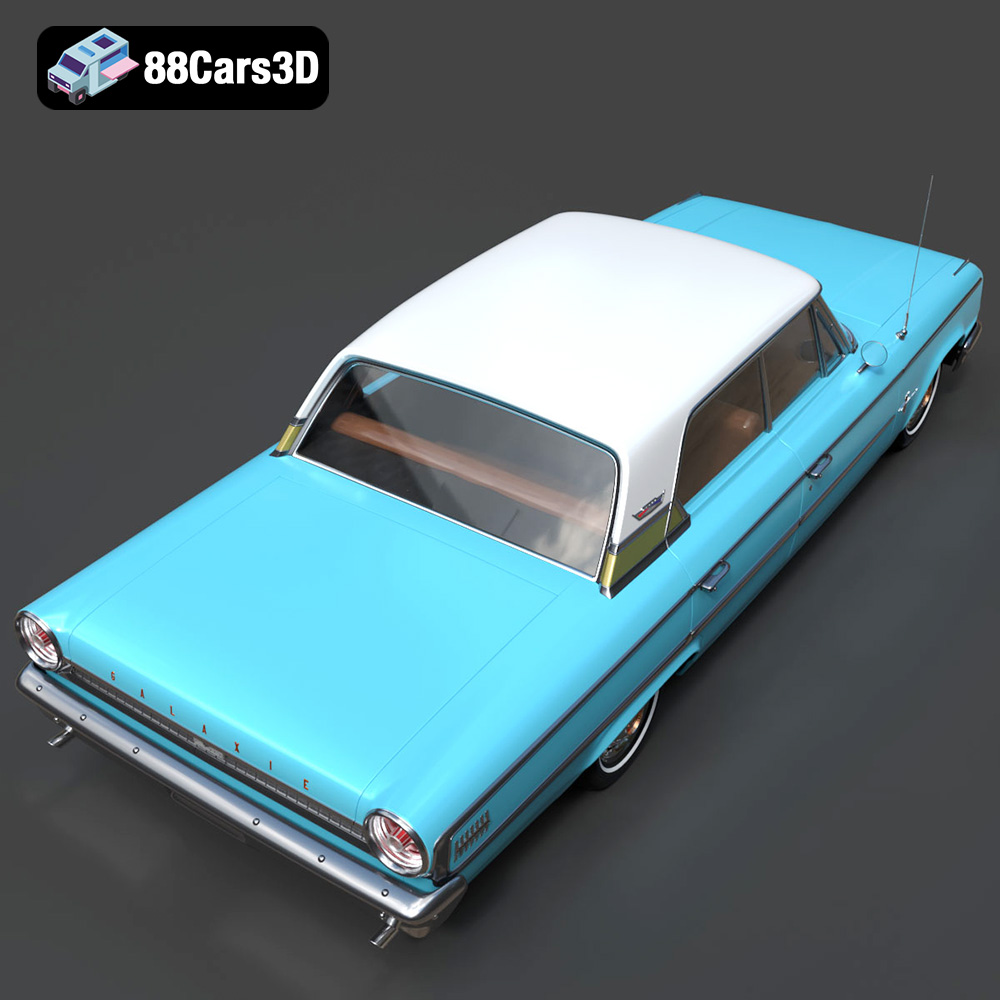
Imagine transporting a piece of automotive history, like the iconic 1963 Ford Galaxie 500 Hardtop, directly into your latest game, architectural visualization, or virtual reality experience. This legendary vehicle, with its distinctive fastback roofline and powerful presence, represents a golden era of American design and engineering. A meticulously crafted 3D model of such a car doesn’t just look good; it acts as a foundational asset, saving countless hours of development and ensuring accuracy. The Ford Galaxie 500 Hardtop 1963 3D Model, available on platforms like 88cars3d.com, exemplifies the pinnacle of ready-to-use digital assets, offering creators the fidelity and flexibility needed for diverse professional applications.
When working with 3D models, especially complex automotive designs like the Ford Galaxie 500, understanding the various file formats is crucial. Each format serves specific purposes, offering different levels of flexibility, compatibility, and optimization for various workflows. Choosing the right format can significantly impact your project’s efficiency, rendering quality, and overall performance.
The .blend format is the native file type for Blender, a powerful open-source 3D creation suite. A .blend file typically encapsulates an entire Blender scene, including the 3D model geometry, materials, textures, lighting setups, cameras, animations, and even physics simulations. For artists and studios primarily working in Blender, this format offers the most comprehensive and editable version of the model. It retains all non-destructive modifiers, custom properties, and internal data structures, allowing for full customization and iteration. When you download a .blend file for the 1963 Ford Galaxie 500, you’re getting a complete, editable project ready for deep dives into material adjustments, animation rigging, or scene integration.
The .fbx (Filmbox) format is a proprietary file format owned by Autodesk, widely regarded as one of the most robust and versatile formats for 3D data exchange between different software applications. It’s particularly ideal for real-time pipelines like Unreal Engine and Unity, as it efficiently stores 3D models, animations, cameras, and lighting information. FBX supports hierarchical structures, skinning, and blend shapes, making it perfect for animated assets. For game developers or those needing to move the Ford Galaxie 500 model between 3ds Max, Maya, Blender, and then into a game engine, .fbx is often the go-to choice due to its excellent compatibility and support for complex scene data. Its binary nature also makes it relatively compact.
The .obj (Wavefront Object) format is one of the oldest and most widely supported 3D file formats. It’s a universal format known for its simplicity and plain-text structure, making it highly compatible across virtually all 3D software. An .obj file primarily stores geometric data (vertices, normals, texture coordinates, and faces) and usually references an accompanying .mtl (Material Template Library) file for material definitions. While it doesn’t support animation or rigging, its widespread compatibility makes it excellent for static mesh exchange. If you need a clean, universal mesh of the Ford Galaxie 500 that can be imported into almost any software for further texturing or rendering, .obj is a reliable choice.
The .glb (GL Transmission Format Binary) is the binary version of glTF, an open-standard 3D file format developed by the Khronos Group. .glb files are highly optimized for efficiency and compactness, making them perfectly suited for AR (Augmented Reality), VR (Virtual Reality), and browser-based display. They embed all assets (geometry, textures, animations, materials) into a single binary file, simplifying distribution and loading times. This “delivery format” is becoming increasingly popular for interactive 3D content on the web and in mobile applications. For showcasing the Ford Galaxie 500 in a virtual showroom or an AR experience on a mobile device, a .glb file provides the necessary optimization and ease of use.
The .stl (Stereolithography) format is the de-facto standard for 3D printing. It represents a 3D model as a series of connected triangles, essentially describing the surface geometry of an object without color, texture, or material information. While it lacks visual fidelity data, its simplicity makes it ideal for additive manufacturing processes. When preparing the 1963 Ford Galaxie 500 for physical reproduction, the .stl format is essential. It provides the necessary watertight mesh for slicer software to generate print paths, enabling hobbyists and professionals to create tangible models.
The .ply (Polygon File Format) format is designed to store polygonal models, often generated from 3D scanners. It can store various properties beyond just geometry, such as color, transparency, surface normals, and range data for each vertex or face. While less common for general-purpose model exchange than .obj or .fbx, .ply excels in applications requiring precise mesh data, such as CAD, scientific visualization, or detailed 3D scanning projects. For specific engineering analysis or archival purposes of the Ford Galaxie 500’s geometry, .ply can be a robust choice.
The .unreal format, often referring to an asset structured specifically for Unreal Engine, implies an asset that has been prepared and possibly optimized for direct import into an Unreal Engine project. This might involve specific naming conventions, material setups, LOD (Level of Detail) variations, and collision meshes tailored for the engine’s requirements. While not a single file extension in the same way as .fbx, an “.unreal” asset pack usually contains an .fbx or similar model that is pre-configured to drop into Unreal. When a product description lists “.unreal,” it indicates a streamlined experience for developers using Epic Games’ powerful real-time engine, minimizing setup time for a model like the Ford Galaxie 500.
Similar to .blend for Blender, the .max format is the native file type for Autodesk 3ds Max, a leading software for 3D modeling, animation, rendering, and visualization. A .max file contains all scene data, including geometry, modifiers, materials, textures, lighting, cameras, and animation curves. For users of 3ds Max, this format provides the fullest editable version of the model, allowing for complete control over every aspect of the Ford Galaxie 500. It’s ideal for high-end rendering projects, detailed animation sequences, or integration into existing 3ds Max workflows.
Understanding these formats empowers you to select the best option for your project, ensuring seamless integration and optimal performance for any 3D car models you acquire.
Creating a truly high-quality 3D car model is an intricate process that demands both artistic vision and technical mastery. It’s not just about replicating shapes; it’s about capturing the soul of the vehicle, ensuring every curve, every reflection, and every component contributes to an authentic representation. This level of detail is paramount for professional applications, and it’s precisely what models like the Ford Galaxie 500 Hardtop 1963 3D Model deliver.
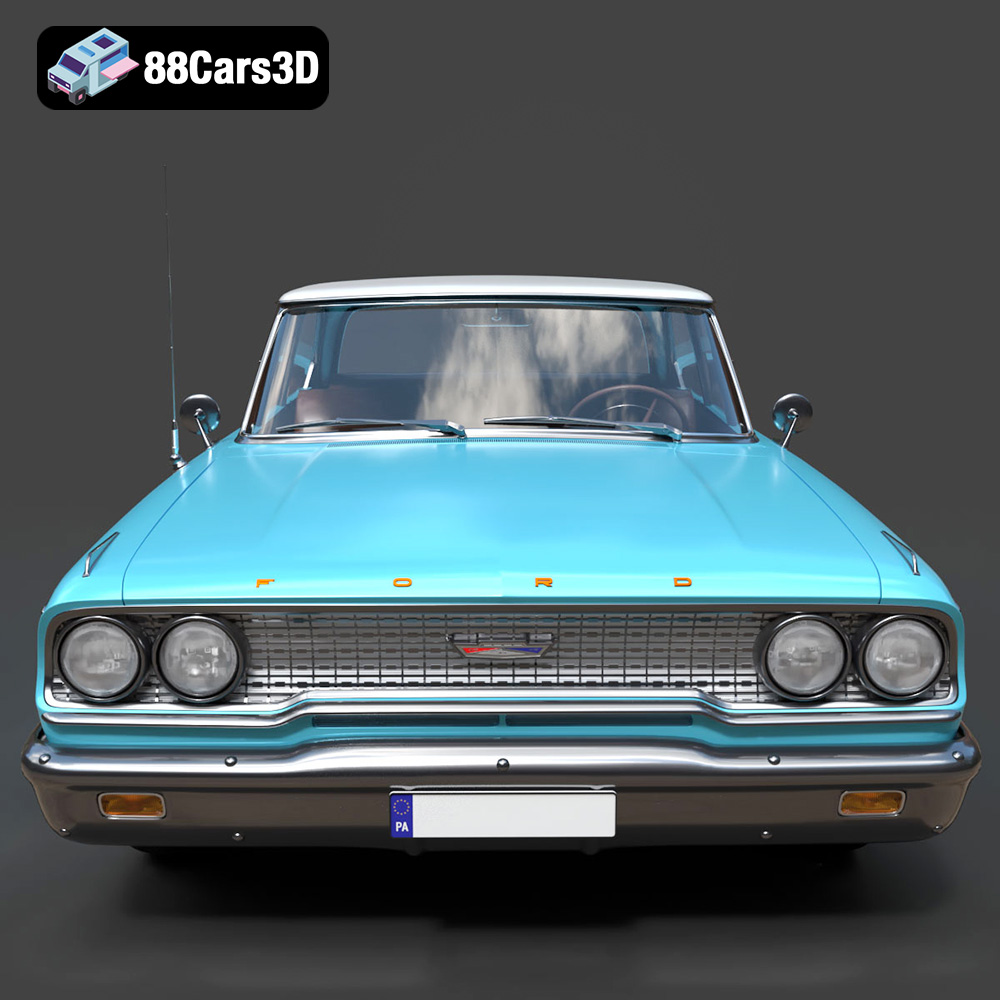
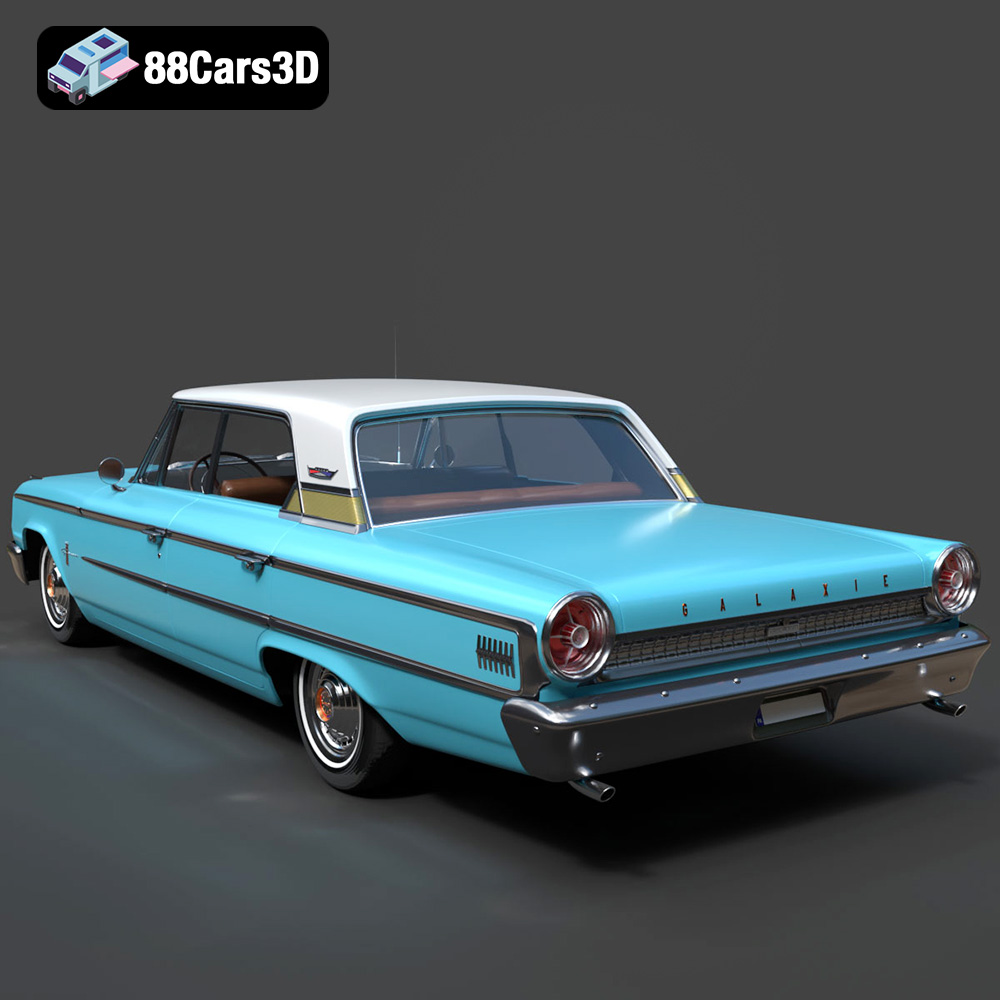
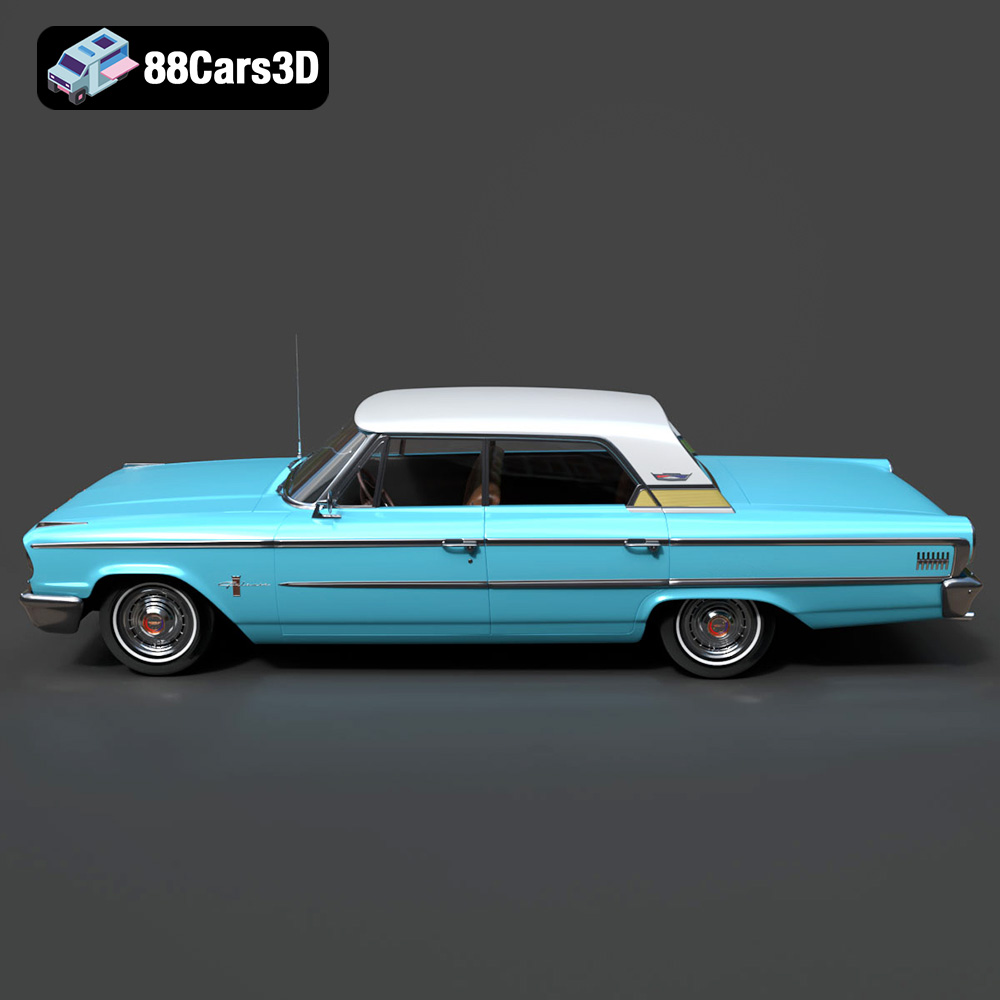
The exterior of any car model is its immediate calling card. For the 1963 Ford Galaxie 500, this means accurately reproducing its distinctive fastback proportions, the iconic dual-headlight grille, and those memorable jet-inspired round taillights. Achieving real-world scale accuracy is fundamental, ensuring the model fits seamlessly into scenes without looking out of proportion. Furthermore, the meticulous recreation of intricate chrome trim, bumpers, and badging adds layers of realism that distinguish a premium asset. The geometry must be clean and optimized to ensure flawless reflections across its expansive metal surfaces, responding realistically to various lighting conditions – a critical factor for convincing automotive rendering.
While often overlooked in favor of the exterior, a detailed interior significantly enhances the model’s versatility, especially for first-person perspectives in games or virtual reality experiences. The Ford Galaxie 500’s interior, with its authentic vinyl bench seating, classic stitching patterns, and the distinct mid-century instrument cluster featuring a horizontal speedometer, offers a journey back in time. Meticulously modeled control elements like pedals, the column shifter, and radio knobs add to the immersive quality. This attention to cockpit detail is crucial for projects aiming for full driver immersion or close-up interior shots, elevating the overall production value of any game or visualization.
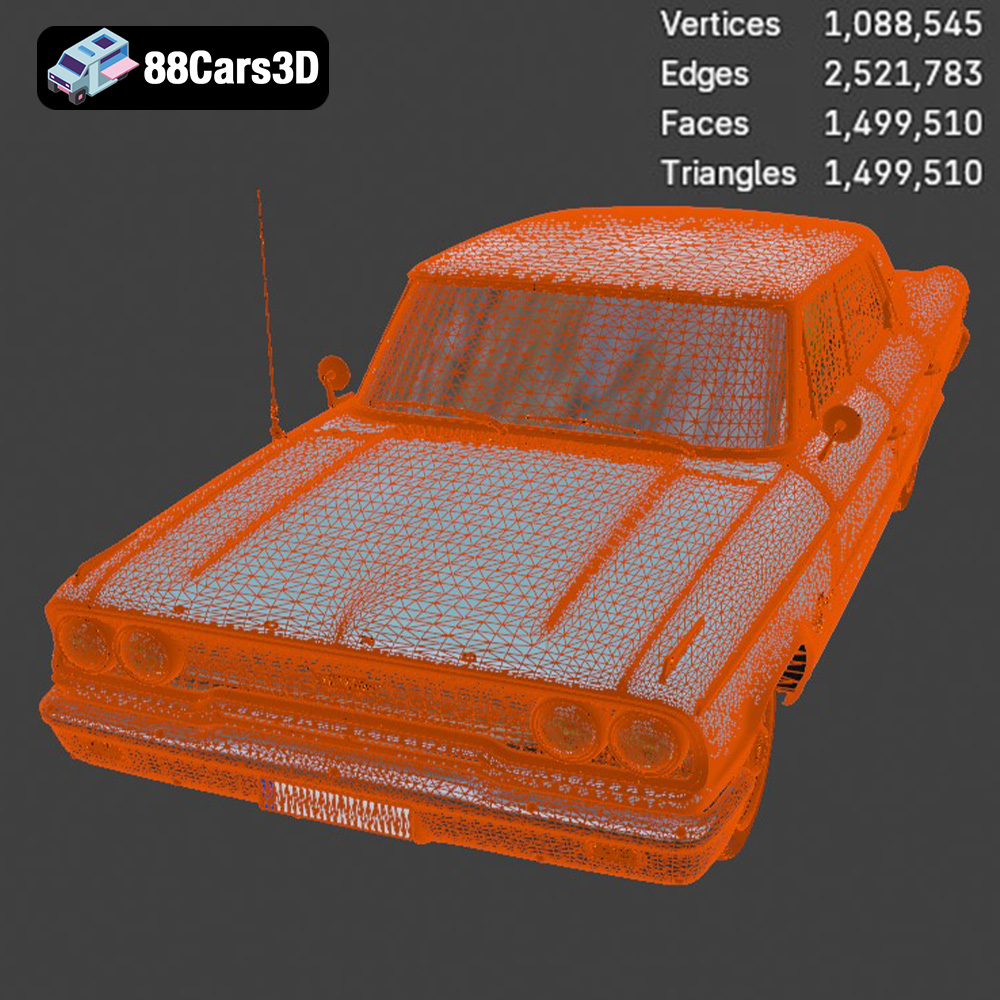
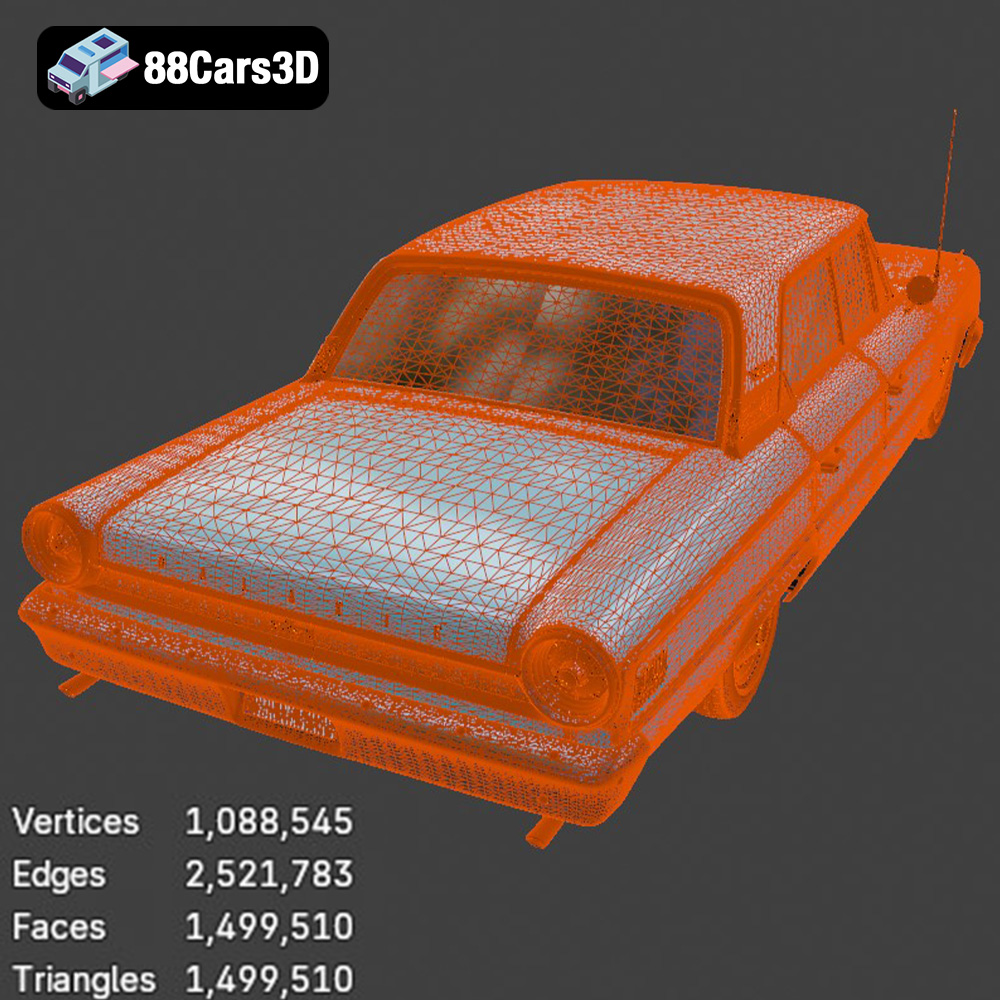
A beautiful model is only truly professional if it’s also optimized. The balance between visual fidelity and performance is critical, particularly for real-time applications. The Ford Galaxie 500 Hardtop 3D Model, with its efficient ~150,000 triangle count, perfectly illustrates this balance. This ‘game-ready’ optimization ensures that the model can be deployed in demanding environments like Unreal Engine or Unity without causing significant performance bottlenecks, while still maintaining high-end visual realism. Clean geometry, proper UV mapping, and a logical polygon flow are essential for efficient texturing, shading, and real-time rendering, preventing artifacts and ensuring smooth performance.
In the fast-paced world of game development, high-quality 3D car models are essential assets. They serve as the backbone for racing simulations, open-world adventures, and historical recreations. The Ford Galaxie 500 Hardtop 1963 3D Model is an exemplary game asset, ready to be dropped into various engines and pipelines.
For Unreal Engine developers, importing an asset like the Ford Galaxie 500 requires careful consideration of scaling, materials, and collision. An .fbx file, specifically tailored or an “.unreal” package, provides the optimal starting point. Materials are typically set up using Unreal’s physically based rendering (PBR) system, leveraging textures for diffuse, normal, roughness, metallic, and ambient occlusion maps. The model’s proper pivot setup for steering, wheel rotation, and suspension travel is critical for implementing realistic physics and animation. Collision meshes, either auto-generated or custom-made, ensure accurate interaction with the game world. With its optimized polycount and separate animatable components, this classic Ford streamlines the path to integrating a high-fidelity vehicle into an Unreal-powered title.
Unity, another prominent game engine, benefits similarly from well-optimized 3D car models. When deploying the Ford Galaxie 500 into a Unity project, developers would import the .fbx or .blend file, ensuring materials are correctly converted to Unity’s Standard Shader or URP/HDRP equivalents. For mobile games, the ~150,000 triangle count might still require Level of Detail (LOD) creation – simpler versions of the model that swap in when the car is further from the camera – to maintain target frame rates. Efficient texture atlasing and minimal material calls are also key for mobile performance. The inherent optimization of this model minimizes the need for drastic reductions, allowing for impressive visual quality even on constrained platforms.
Beyond visual integration, a superior 3D car model facilitates the creation of truly realistic driving mechanics. The accurate real-world scale and properly separated components (wheels, suspension, steering) of the Ford Galaxie 500 model are crucial. These elements allow for realistic suspension deformation, steering kinematics, and tire rotation, which are vital for immersive racing simulators. Developers can attach physics bodies to each component, simulating weight distribution, tire grip, and handling characteristics specific to a large, powerful American sedan from the 1960s. This foundation transforms the visual asset into a functional, dynamic vehicle within the game environment.
For cinematic projects, advertising, or product visualization, the goal shifts from real-time performance to achieving the highest possible photorealism. Here, 3D car models like the 1963 Ford Galaxie 500 Hardtop become digital sculptures, ready for breathtaking studio renders and dynamic scene placements.
In industry-standard software such as 3ds Max or Blender, the Ford Galaxie 500 model can be pushed to its photorealistic limits. Using the .max or .blend file, artists have full access to the original geometry, allowing for detailed material refinements. Advanced rendering engines like V-Ray, Corona Renderer (for 3ds Max), or Cycles and Eevee (for Blender) can leverage the model’s clean topology to produce stunning reflections and refractions on the paint, chrome, and glass. Customization options, such as changing body colors to authentic 1963 factory hues, modifying tire textures from white-walls to standard variants, and adjusting material finishes (matte, gloss, metallic), enable artists to create bespoke visualizations that are virtually indistinguishable from real photography.
The process of rendering a 3D car model is akin to virtual photography. Artists can place the Ford Galaxie 500 in carefully constructed virtual studios, utilizing high-dynamic-range image (HDRI) environments for realistic ambient lighting and physically accurate light sources to sculpt the vehicle’s form. This allows for controlled showcases, highlighting the model’s iconic dual-headlight grille and sweeping side trim. By adjusting the virtual camera’s focal length, depth of field, and aperture, artists can achieve cinematic compositions. The quality of the underlying 3D car models, such as those found on 88cars3d.com, directly translates into the realism and impact of these virtual photographs, making them invaluable for marketing campaigns, lifestyle scenes, and studio lighting setups.
The utility of a detailed 3D car model extends far beyond traditional screens and game engines. Emerging technologies like Augmented Reality (AR), Virtual Reality (VR), and 3D printing are unlocking new, immersive ways to interact with digital automotive assets.
Imagine being able to walk around the 1963 Ford Galaxie 500 Hardtop, inspect its interior, and even change its paint color in real-time, all within an AR or VR environment. Models optimized for these platforms, such as the .glb format, are perfect for creating immersive virtual showrooms, interactive configurators, and mobile AR experiences. The Ford Galaxie 500 model’s game-ready optimization ensures smooth performance in these demanding environments, allowing users to experience the classic car up close, rotate it, open doors, or even place it realistically within their own physical space using AR on a smartphone. This offers unparalleled engagement for enthusiasts, educators, and potential buyers.
For hobbyists, collectors, or designers looking for physical representations, the ability to 3D print a classic car model like the Ford Galaxie 500 is a significant advantage. The model’s inclusion of an .stl format makes it ready for additive manufacturing. While the digital model captures every curve and detail, the physical print brings it into the tangible world. Recommended print settings, such as a scale of 1:12 or 1:18, and layer heights between 0.04-0.12 mm (ideally with resin printing for fine details), ensure accuracy. Detailed parts like the exhaust, mirrors, and steering wheel will require supports, and post-processing with sanding, primer, and authentic factory colors can result in stunning, display-scale replicas, perfect for enthusiasts who appreciate the tactile experience of a classic automotive icon.
The journey of a 3D car model, from its intricate creation to its diverse applications, highlights the immense value it brings to various industries. Whether destined for the high-octane tracks of a racing game, the meticulous detail of an architectural visualization, the immersive experience of AR/VR, or the tangible output of a 3D printer, the quality of the underlying asset is paramount.
The Ford Galaxie 500 Hardtop 1963 3D Model stands as a testament to this commitment to quality, offering an exceptional blend of historical accuracy, visual fidelity, and technical optimization. Its comprehensive file format support, from editable .blend and .max scenes to game-ready .fbx and .unreal assets, and even .stl for 3D printing, ensures unparalleled versatility for any professional workflow. Assets like this empower creators to push the boundaries of digital realism and immersive experiences, providing robust foundations for their most ambitious projects. For those seeking premium 3D car models that stand the test of technical scrutiny and creative demand, exploring the curated selection at 88cars3d.com is an excellent starting point.
Experience the golden era of American automotive design with this highly detailed 1963 Ford Galaxie 500 Hardtop 3D model. Renowned for its jet-age styling and introduction of the aerodynamic sports hardtop fastback roofline, this classic full-size car dominated both the streets and NASCAR tracks. The model captures the iconic dual-headlight grille, signature afterburner taillights, and sweeping side trim, paired with a meticulously crafted engine bay to reflect its big-block V8 heritage. Constructed with optimized topology and an efficient triangle count, this model is fully game-ready without sacrificing visual fidelity. The clean geometry ensures flawless reflections and realistic lighting responses across its expansive metal surfaces. Whether deployed in a high-octane racing game or a sophisticated virtual showroom, this classic Ford delivers uncompromising quality.
$19.99
.1963
.blend
.fbx
.ford
.glb
.hardtop
.max
.obj
.ply
.rendering
.stl
.unreal
car-3d-model
classic-car
galaxie-500
game asset
game-ready
low-poly
muscle-car
optimized
vintage-car
VR/AR