Get 20% OFF All Premium 3D & STL Models!

In the rapidly evolving landscape of digital media, the demand for high-fidelity 3D assets is insatiable. From breathtaking cinematic renderings and immersive game worlds to interactive AR/VR experiences and even precision 3D printing, the humble 3D model is the backbone of virtual innovation. Automotive design, in particular, thrives on this digital frontier, allowing creators to explore concepts, visualize products, and deliver unparalleled realism to their audiences long before a physical prototype ever hits the asphalt.
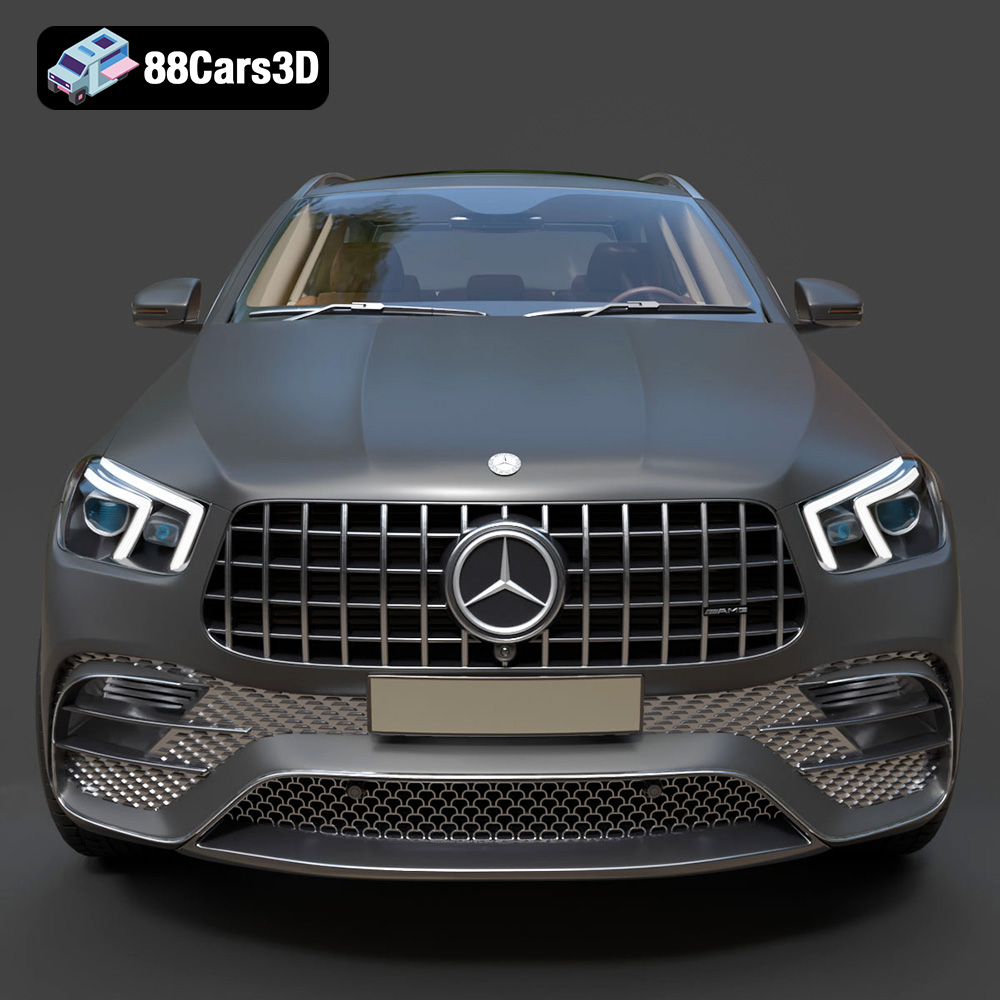
Today, we’re diving deep into the technical intricacies and creative potential offered by expertly crafted 3D car models. We’ll explore why a meticulously detailed asset, such as the Mercedes-Benz AMG GLE 63 2021 3D Model, isn’t just a digital replica, but a versatile tool capable of elevating projects across diverse industries. This powerhouse SUV, known for its commanding presence and aggressive performance, translates into a digital asset that embodies both luxury and power, providing an exceptional foundation for any virtual scene.
Whether you’re a game developer striving for photorealistic vehicle physics, an architect integrating high-end vehicles into your visualizations, or a marketing professional building an interactive car configurator, understanding the nuances of 3D car models is paramount. We’ll unpack the critical role of file formats, optimization techniques, and workflow considerations that define the difference between a passable asset and a truly professional one, all while showcasing how models like the AMG GLE 63 excel in meeting these stringent demands.
The first step in leveraging any 3D asset effectively is understanding its native format and its implications for your workflow. Different file formats are optimized for various purposes, from full editability within a specific software to universal compatibility or real-time engine performance. Choosing the right format is crucial for maintaining data integrity, optimizing performance, and ensuring seamless integration into your project pipeline. The Mercedes-Benz AMG GLE 63 2021 3D Model, available on 88cars3d.com, is a prime example of versatility, offered in a comprehensive suite of formats to cater to virtually any professional need.
The `.blend` file is Blender’s native format and a treasure trove for any user of this popular open-source 3D suite. It encapsulates the entire Blender scene, including mesh data, materials (Cycles/Eevee nodes), textures, lighting, cameras, animations, rigging, modifiers, and even custom scripts. This format offers maximum editability, allowing artists to delve deep into the model’s construction, modify its topology, adjust procedural textures, or even animate its components directly within Blender. For those who want complete control and flexibility over their automotive assets, a `.blend` file provides the most comprehensive starting point.
Autodesk’s `.fbx` (Filmbox) format has become the de facto standard for exchanging 3D data between various software applications and game engines. Its strength lies in its ability to store not just mesh data, but also animations, rigs, cameras, lights, blend shapes, and even PBR (Physically Based Rendering) materials. For game development with Unreal Engine or Unity, or for complex animation projects, `.fbx` is the format of choice due to its robust support for these advanced features. When importing, pay attention to scale, axis conventions, and material translation, as these can sometimes require minor adjustments in the target application.
The `.obj` (Wavefront OBJ) format is one of the oldest and most universally supported 3D file types. It’s excellent for static mesh geometry and UV mapping, making it a reliable choice for exporting models between different software packages when animation or rigging data isn’t required. While it can reference external `.mtl` (material) files for basic material properties, it doesn’t support complex modern materials or animation. For simple cross-software model sharing or as a fallback format, `.obj` remains an indispensable tool.
`.glb` is the binary version of the GL Transmission Format (`.gltf`), designed to be an efficient, single-file delivery format for 3D scenes and models. It bundles geometry, materials, textures, animations, and skeletal structures into one self-contained package. Its primary advantage is its optimization for web-based applications, AR (Augmented Reality), and VR (Virtual Reality), offering fast loading times and compact file sizes. For showcasing automotive models in interactive web viewers, mobile AR experiences, or light VR applications, `.glb` is the cutting-edge standard.
The `.stl` (Stereolithography) format is synonymous with 3D printing. It represents a 3D model as a collection of unconnected triangular facets, defining only the surface geometry without color, texture, or material information. While simplistic, its ubiquity in manufacturing and rapid prototyping makes it essential for physical output. For hobbyists or professionals looking to bring the detailed Mercedes-Benz AMG GLE 63 2021 3D Model into the physical world, an `.stl` export is the necessary bridge.
The `.ply` (Polygon File Format) is another format for storing 3D data, often used for 3D scanned data, CAD, and scientific applications. Unlike `.stl`, `.ply` can store additional properties like color per vertex, surface normals, transparency, and even texture coordinates, making it more versatile for displaying complex data. It’s less common for game assets but invaluable for applications requiring precise geometrical data and attribute-rich meshes.
While not a standalone file format in the same vein as FBX or OBJ, the inclusion of `.unreal` signifies an asset specifically optimized and configured for the Unreal Engine ecosystem. This typically means the model has been rigorously tested, had its materials set up using Unreal’s PBR workflow, collision meshes generated, LODs (Levels of Detail) implemented, and potentially even blueprint classes or animation assets prepared. Receiving an asset in an “Unreal-ready” state dramatically accelerates development, minimizing the time and effort required for integration and ensuring optimal performance within the engine.
The `.max` file is the native project file for Autodesk 3ds Max, a leading software in architectural visualization, animation, and game asset creation. Like `.blend` for Blender, a `.max` file contains the entire scene data, including geometry, materials, textures, lighting, cameras, rigging, and animation. For professionals working within the Autodesk ecosystem, particularly those involved in high-end automotive rendering or detailed scene composition, the `.max` file provides the most comprehensive and editable starting point.
Beyond file formats, the true value of a premium 3D car model lies in its meticulous construction. The Mercedes-Benz AMG GLE 63 2021 3D Model is an exemplary asset that demonstrates an uncompromising focus on technical quality and visual fidelity. This isn’t merely a rough approximation; it’s a digital twin crafted with precision, designed to withstand intense scrutiny in a variety of high-demand applications.
Accuracy is paramount when replicating real-world vehicles. This model boasts accurate frame geometry and proportions, directly based on the actual vehicle’s chassis. Every curve, panel gap, and design line of the 2021 AMG GLE 63 has been carefully translated into 3D, ensuring that the commanding presence of this luxury performance SUV is perfectly captured. This level of detail extends to the exterior features:
A vehicle’s interior is just as critical as its exterior, especially for interactive experiences or close-up renders. The Mercedes-Benz AMG GLE 63 2021 3D Model excels here with a fully realized cockpit:
The versatility of a well-crafted 3D car model is best demonstrated through its application in various professional workflows. The Mercedes-Benz AMG GLE 63 2021 3D Model, available at 88cars3d.com, is engineered to integrate seamlessly into diverse pipelines, from high-octane game development to sophisticated architectural visualization.
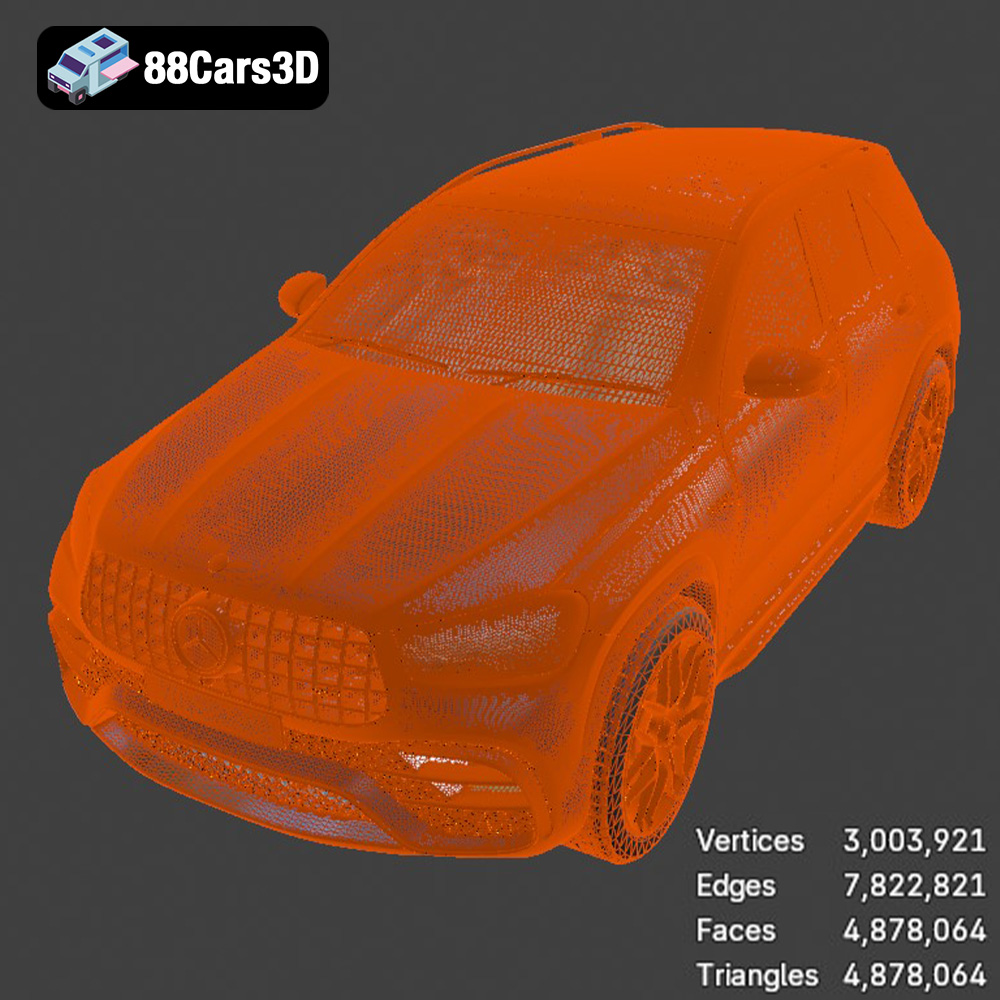
For game developers, performance is key. The model’s optimized topology, with an approximate triangle count of 450,000, strikes an impeccable balance between visual fidelity and game-ready performance. This polycount is ideal for current-generation racing titles, open-world games, and vehicle simulators where multiple high-detail assets need to render simultaneously without sacrificing frame rate.
The immersive nature of AR/VR demands both visual quality and optimized assets. The Mercedes-Benz AMG GLE 63 2021 3D Model is perfect for virtual showrooms, interactive car configurators, and mobile AR experiences due to its balance of detail and performance.
Architectural visualization (ArchViz) and product rendering demand photorealism. The Mercedes-Benz AMG GLE 63 2021 3D Model provides the necessary detail and quality for high-resolution stills and animations, serving as a powerful accent in luxury scenes.
Achieving both game-ready performance and photorealistic visual fidelity is a delicate balancing act. The Mercedes-Benz AMG GLE 63 2021 3D Model masterfully navigates this challenge, offering a solution that is both efficient and stunning.
The model’s 450,000 triangle count is a sweet spot for modern applications. It’s detailed enough to convey complex shapes and intricate design elements, yet optimized to perform smoothly in real-time engines. High-quality 3D car models like this are built with clean quad-based topology (even if triangulated upon export) which allows for smooth deformation and efficient unwrapping for UVs. Proper UV mapping ensures that textures are applied without stretching or distortion, maximizing visual quality while minimizing texture resolution requirements.
Beyond visual detail, functional accuracy is vital. The Mercedes-Benz AMG GLE 63 2021 3D Model adheres to real-world scale, which is essential for accurate physics simulations in games and realistic scene composition in visualizations. Furthermore, the intelligent setup of pivot points enhances its utility:
The utility of a high-quality 3D model isn’t limited to the digital realm. With the rise of accessible 3D printing, models like the Mercedes-Benz AMG GLE 63 2021 3D Model can transcend the screen and become physical objects, opening up possibilities for display models, rapid prototyping, and even hobbyist projects.
The inclusion of the `.stl` format makes this model directly compatible with most 3D printers. While `.stl` strips away color and material information, it perfectly preserves the geometric detail, allowing for a precise physical replica. For those interested in display-scale models, this capability is invaluable.
Once printed, the journey continues with post-processing. Sanding, priming, and applying authentic factory colors with metallic finishes can transform a raw 3D print into a stunning miniature. This blend of digital precision and physical craftsmanship provides a unique avenue for creators to engage with the model. From a rapid prototyping perspective, architects or designers could use a 3D print of the AMG GLE 63 to physically evaluate how the vehicle integrates into a scaled model of a driveway or garage, adding a tangible element to their design reviews.
A truly valuable 3D asset offers room for creative customization and ensures longevity in your digital library. The Mercedes-Benz AMG GLE 63 2021 3D Model provides extensive options for adaptation, making it a versatile foundation for countless projects.
The ability to easily modify visual attributes is a cornerstone of professional 3D asset design. This model allows for a wide array of stylistic changes:
Investing in a high-quality 3D car model from 88cars3d.com is an investment in future projects. Its clean topology, optimized performance, and broad file format support ensure that it remains relevant and easily integrable as software and hardware evolve. The consistent quality across formats means less time spent on troubleshooting and more time on creative development.
For example, a marketing agency might use the Mercedes-Benz AMG GLE 63 2021 3D Model first for a set of high-resolution print advertisements, then adapt it for an interactive web experience, and finally integrate it into a virtual reality product launch event, all from the same core asset. This multi-purpose utility underscores the value of purchasing well-prepared digital assets.
The digital automotive world is a realm of endless possibilities, fueled by exceptionally detailed and versatile 3D models. The Mercedes-Benz AMG GLE 63 2021 3D Model stands as a testament to the power of precision engineering in the virtual space, offering a robust foundation for professionals across game development, architectural visualization, AR/VR, and even 3D printing.
By understanding the nuances of different file formats—from the editable depth of `.blend` and `.max` to the universal compatibility of `.fbx` and `.obj`, the web-optimized `.glb`, and the print-ready `.stl`—creators can make informed decisions that streamline their workflows and elevate their output. This model exemplifies how optimized geometry, meticulous interior and exterior detailing, and thoughtful technical specifications translate into a superior asset, capable of delivering photorealistic results without compromising real-time performance.
Whether you’re rendering cinematic beauty, building an immersive virtual world, or bringing a digital design to life through 3D printing, the right 3D car model can be your greatest asset. Explore this outstanding Mercedes-Benz AMG GLE 63 2021 3D Model and a vast array of other high-quality 3D car models at 88cars3d.com, and unlock the full potential of your next digital project.
Experience the perfect fusion of luxury and raw performance with this highly detailed 3D model of the 2021 Mercedes-Benz AMG GLE 63. Renowned for its commanding presence, this performance SUV features the unmistakable aggressive Panamericana front grille, massive air intakes, and the distinctive AMG quad-trapezoidal exhaust system. The dynamic styling cues perfectly capture the essence of Affalterbach’s engineering, ensuring your virtual scenes exude both prestige and power. Crafted with an uncompromising focus on quality, this model boasts a highly optimized topology with an approximate triangle count of 450,000. It strikes an impeccable balance between game-ready performance and photorealistic visual fidelity. Whether you are deploying this asset in a high-octane real-time racing engine, an interactive AR/VR showroom, or a high-end architectural visualization, the meticulous detailing holds up seamlessly under extreme close-ups. Perfect for open-world racing games, luxury lifestyle visualizations, virtual car configurators, and modern architectural rendering scenes.
$19.99
.blend
.fbx
.glb
.luxury suv
.max
.obj
.ply
.rendering
.stl
.unreal
amg-gle-63
car-3d-model
game asset
game-ready
low-poly
mercedes-benz
optimized
performance suv
SUV
VR/AR