Get 20% OFF All Premium 3D & STL Models!

In the dynamic worlds of game development, automotive rendering, and immersive AR/VR experiences, the quality of your 3D assets can make or break a project. The quest for realism, optimization, and versatility is constant, pushing artists and developers to seek out resources that not only look stunning but also integrate seamlessly into complex pipelines. From the roar of an engine in a virtual world to the polished gleam of a vehicle in an advertising campaign, the foundation of every breathtaking scene begins with a meticulously crafted 3D model.
Among the pantheon of iconic vehicles, the Ford F-150 Raptor stands out as a symbol of rugged power and unparalleled off-road capability. Its aggressive stance, powerful lines, and distinctive features make it a dream subject for digital artists. Imagine harnessing that raw energy in your next project. This is precisely where a premium 3D model, such as the Ford F-150 Raptor 2017 3D Model available on 88cars3d.com, becomes an invaluable asset. Designed for a multitude of applications, this model offers the precision, optimization, and flexibility demanded by today’s leading professionals.
Choosing the correct 3D model file format is a critical decision that impacts workflow efficiency, compatibility, and the final output of any project, whether it’s for game development, high-end rendering, or 3D printing. A professional asset, like the Ford F-150 Raptor 2017 3D Model, typically comes with a suite of formats, each serving distinct purposes. Understanding their technical nuances is paramount.
The .blend format is native to Blender, a powerful and increasingly popular open-source 3D creation suite. When you receive a .blend file, you’re getting a fully editable Blender scene, complete with materials, textures, lighting setups, and even animation data. This format is ideal for artists who primarily work within Blender and require full control over the asset. It allows for advanced non-destructive workflows, easy modification of mesh data, material node adjustments (Cycles or Eevee), and quick iteration. For the Ford F-150 Raptor 2017 3D Model, the .blend file provides a perfect starting point for customizing every aspect of the truck’s appearance and behavior within a Blender-centric pipeline.
.fbx (Filmbox) is arguably the most widely used proprietary 3D file format for inter-application data exchange, particularly prevalent in game development. Developed by Autodesk, it supports geometry, materials, textures, animations, and skeletal deformation. Its strength lies in its robustness for transferring complex scene data between different software packages like 3ds Max, Maya, Blender, Unity, and Unreal Engine. For real-time pipelines, .fbx is often the go-to choice because it can encapsulate an entire animated asset ready for immediate import. The Ford F-150 Raptor 2017 3D Model’s .fbx version ensures seamless integration into major game engines, preserving crucial animation setups like wheel pivots and suspension travel.
The .obj (Wavefront OBJ) format is a universal, open-standard file format for 3D geometry. It’s a plain-text format that describes the geometric surface of an object, including vertices, normals, UV coordinates, and faces. While it doesn’t store animation or scene hierarchy, it’s highly compatible across virtually all 3D software. Its simplicity makes it an excellent choice for basic mesh transfer or when you need to import a clean model without extraneous data. For the Ford F-150 Raptor 2017 3D Model, the .obj file is perfect for cross-software compatibility, allowing users to import the core geometry into almost any 3D application for further texturing and setup.
.glb (GL Transmission Format Binary) is the binary version of glTF, a royalty-free specification for the efficient transmission and loading of 3D scenes and models by applications. It packages textures, animations, and other data directly into a single file, making it incredibly optimized for web-based 3D, AR (Augmented Reality), and VR (Virtual Reality) experiences. Its efficiency and compact size are crucial for mobile and browser-based applications where performance is critical. Using the .glb format for the Ford F-150 Raptor 2017 3D Model enables developers to easily deploy interactive models in virtual showrooms or AR car configurators.
The .stl (Stereolithography) format is the industry standard for 3D printing. It represents a 3D model as a series of connected triangles, describing only the surface geometry of an object without color, texture, or other attributes. It’s the language understood by most 3D printers and slicing software. While it sacrifices visual richness, it provides a robust, watertight mesh suitable for fabrication. The Ford F-150 Raptor 2017 3D Model’s .stl variant is specifically designed for physical output, allowing enthusiasts to bring a tangible version of this iconic truck to life.
.ply (Polygon File Format) is another format for storing 3D data, particularly known for its ability to store properties beyond just geometry, such as color, transparency, and even material properties per vertex or face. It’s often used in applications involving 3D scanning, scientific visualization, and CAD/CAM where precise mesh data and attribute storage are important. While less common for general game assets, its inclusion with the Ford F-150 Raptor 2017 3D Model signifies its high fidelity and suitability for engineering or analytical tasks.
The .unreal format, or more accurately, assets packaged and optimized specifically for Unreal Engine (often derived from .fbx), represents a pre-configured, engine-ready asset. This means the model has likely been imported, checked, had materials set up, and perhaps even collision meshes generated within Unreal Engine itself, ready for direct use. It saves significant setup time for developers working in Unreal, ensuring consistency and performance. The inclusion of an .unreal variant for the Ford F-150 Raptor 2017 3D Model is a testament to its game-ready optimization and caters directly to the massive Unreal development community.
Finally, the .max format is the native scene file for Autodesk 3ds Max, a leading software for 3D modeling, animation, rendering, and visual effects. Like .blend for Blender, a .max file provides a fully editable project, including all geometry, materials, textures, lighting, cameras, and animation data specific to 3ds Max. This is essential for professionals working in Autodesk environments who need to modify, animate, or render the Ford F-150 Raptor 2017 3D Model with full software functionality.
The provision of such a comprehensive suite of file formats ensures that the Ford F-150 Raptor 2017 3D Model from 88cars3d.com is not just a high-quality asset but also an incredibly versatile one, adaptable to virtually any professional pipeline.
Achieving true automotive realism in a 3D model goes beyond simply replicating shape; it demands meticulous attention to every curve, every vent, and every functional component. The 2017 Ford F-150 Raptor 3D Model exemplifies this dedication, delivering an asset that is both visually stunning and technically precise.
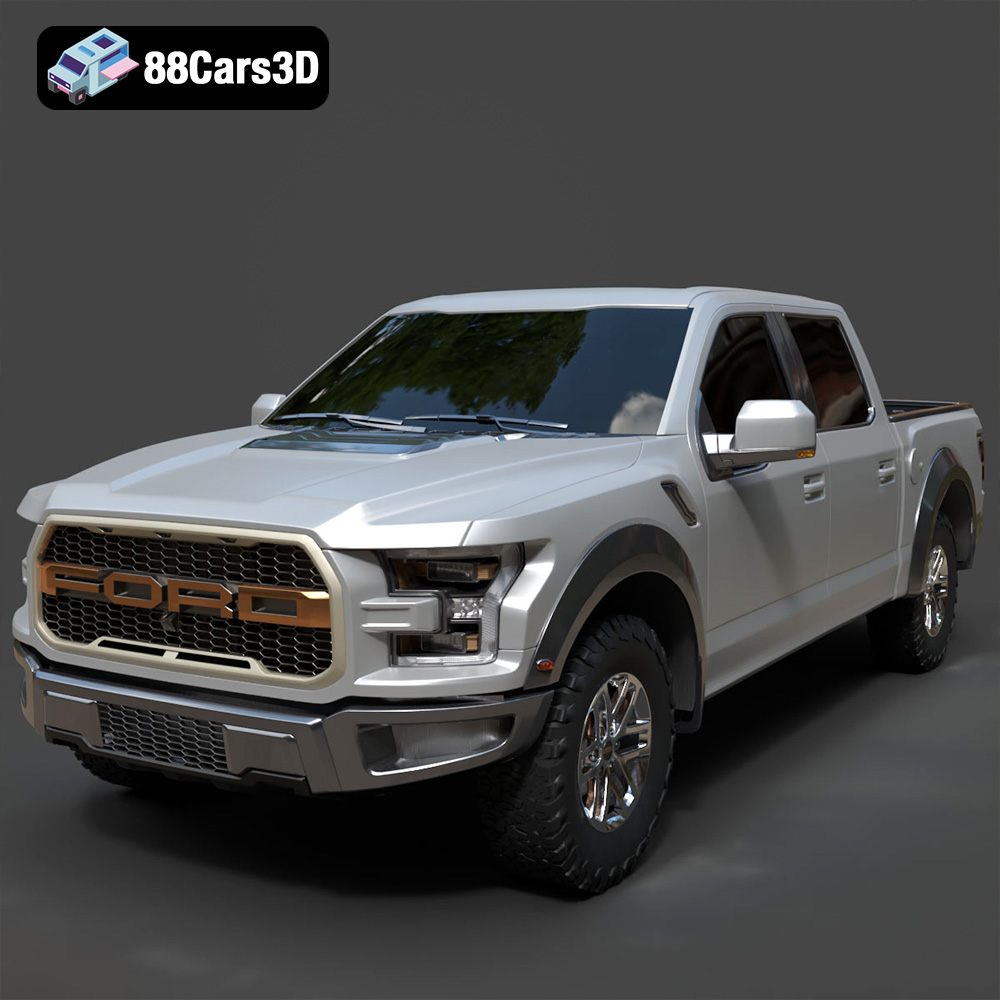
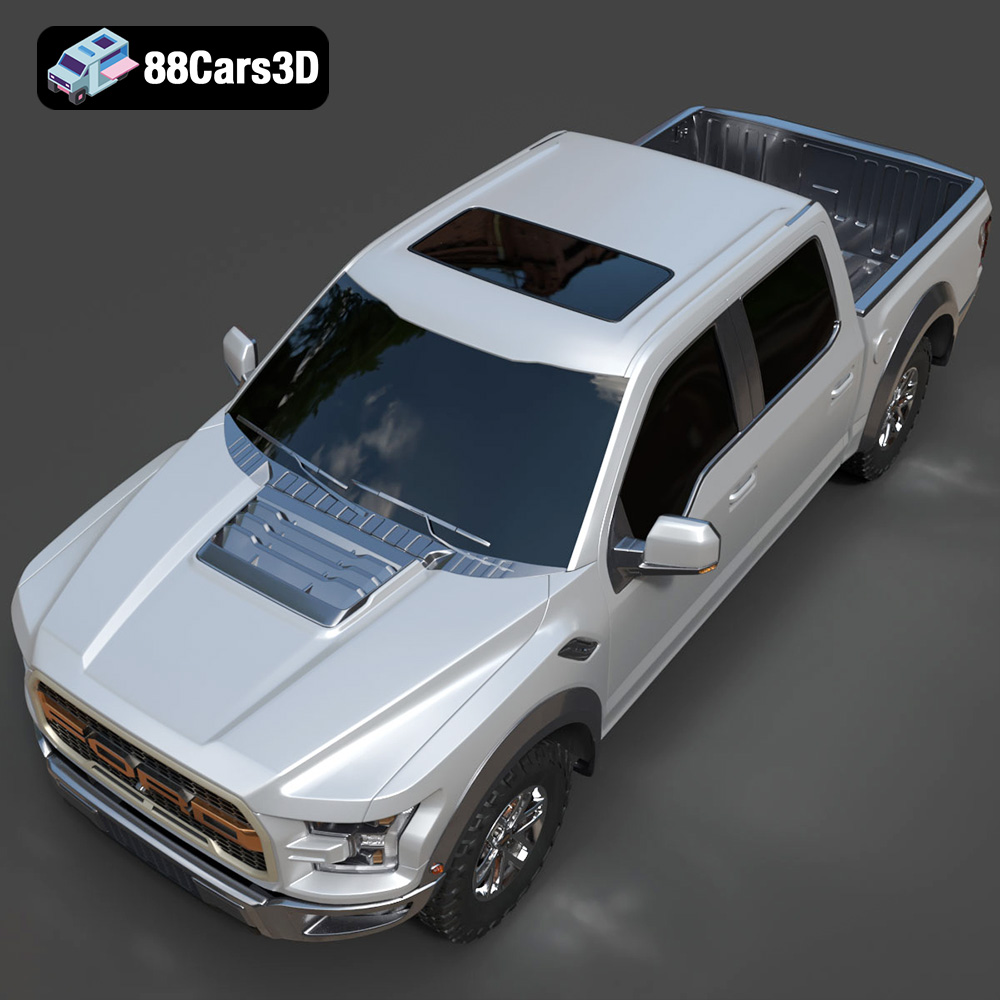
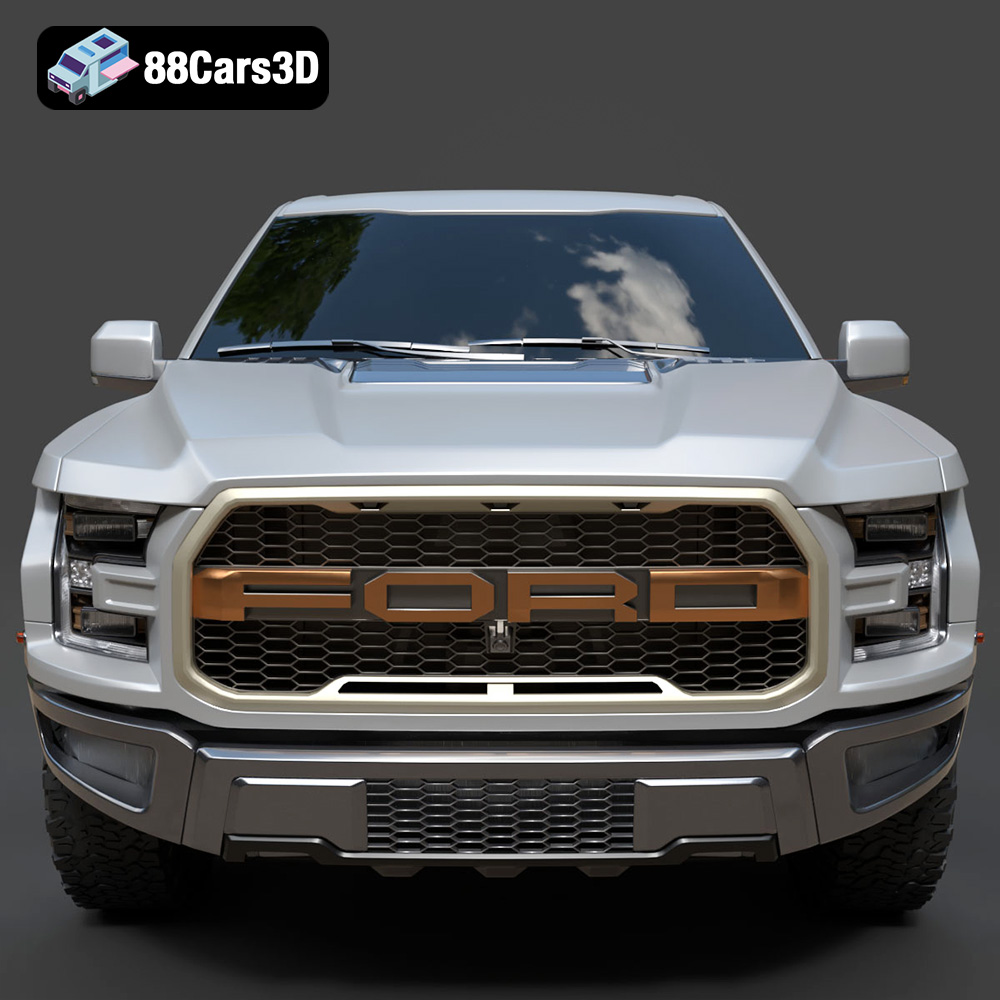
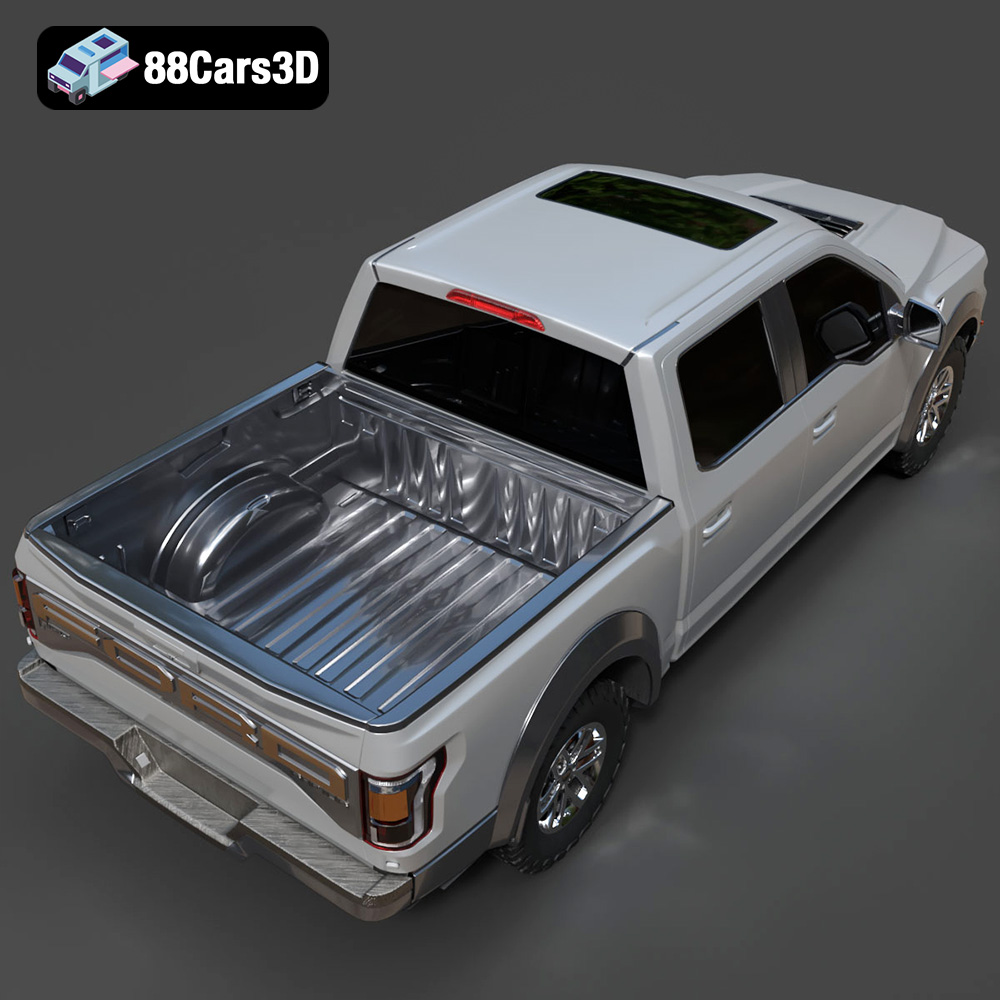
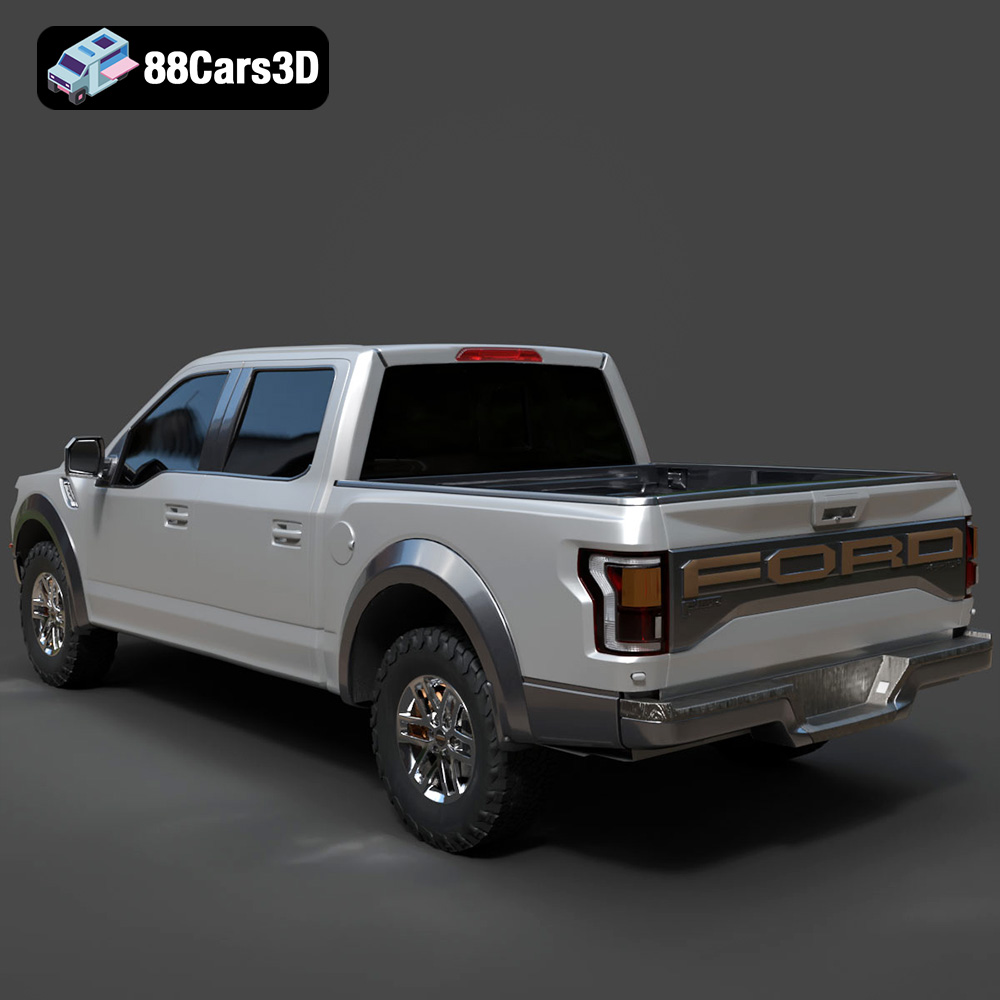
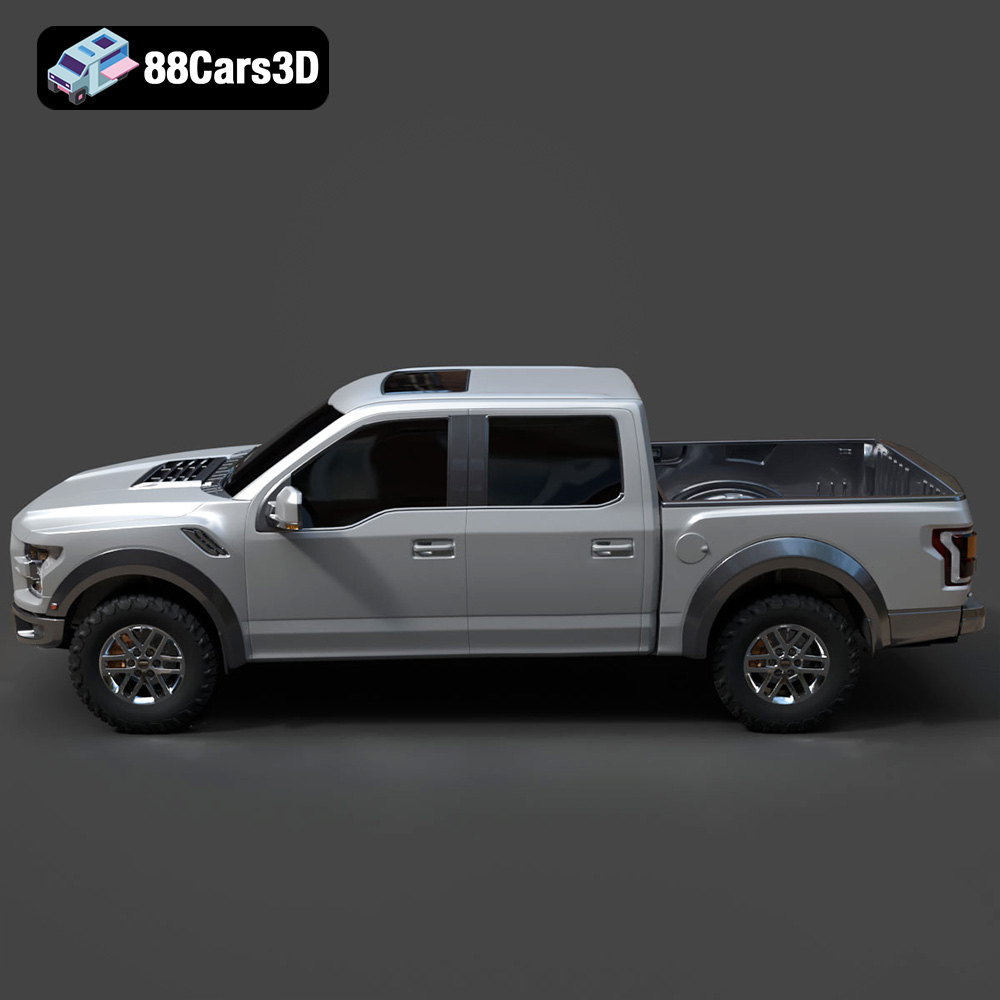
The aggressive stance of the 2017 Ford F-150 Raptor is instantly recognizable, and this 3D model captures its essence flawlessly. From the bold “FORD” lettering prominently displayed on the front grille to the distinctively flared fenders that house those massive wheels, every iconic detail is recreated with accuracy. The model features accurate aluminum-alloy body geometry and proportions, ensuring that whether viewed up close or from a distance, it retains the unmistakable profile of the real truck. Even subtle elements like the true-to-life dual exhaust system and the underbody skid plates are meticulously modeled, giving the impression of a vehicle ready to conquer any terrain. The signature LED headlights, taillights, and marker lights are also precisely integrated, ready to cast realistic illumination in any rendering or game engine.
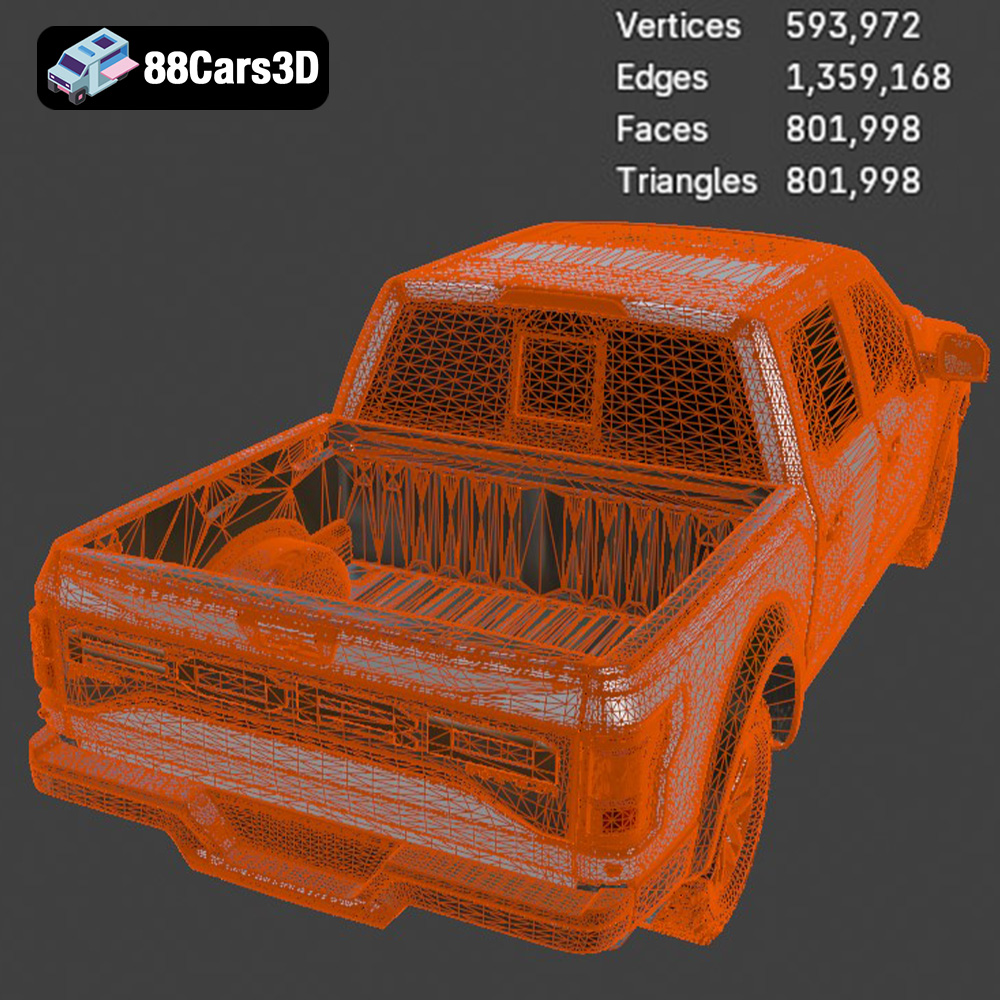
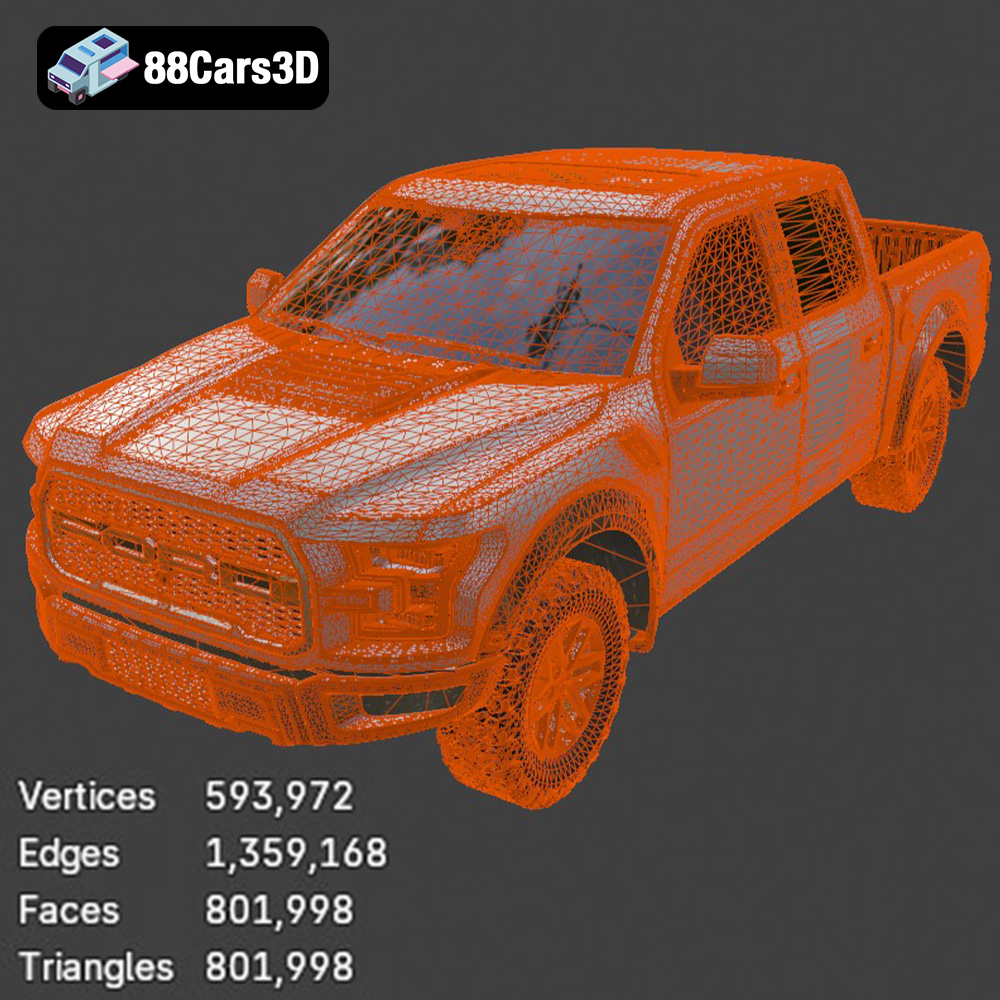
Crucially, the model boasts an optimized topology of approximately 350,000 triangles. This polycount strikes a perfect balance: high enough to convey exceptional visual fidelity and intricate details like the long-travel suspension featuring modeled FOX Racing shock absorbers, yet optimized to function efficiently as a game-ready asset without compromising real-time performance. This makes it an ideal choice for projects demanding both visual excellence and smooth frame rates.
The experience of driving a Ford F-150 Raptor isn’t just about its exterior prowess; the interior plays a significant role in creating a sense of immersion. This 3D model extends its detailed craftsmanship to the cockpit, ensuring that first-person perspectives in games or VR environments are as engaging as the exterior views. The model features accurate sport bucket seats with detailed bolsters, providing a realistic visual and hinting at the comfort and support found in the actual truck. The performance steering wheel with paddle shifters, the intricate digital and analog instrument cluster, and the accurate center console, pedals, and gear selector are all faithfully recreated. This level of interior detail is optimized for gaming, ensuring that players or virtual users feel truly connected to the vehicle, whether they’re navigating challenging terrain or simply admiring the craftsmanship in a virtual showroom.
In the realm of professional 3D content creation, a beautiful model is only truly valuable if it’s also technically sound. The Ford F-150 Raptor 2017 3D Model shines in this regard, built with a keen understanding of real-world production demands.
One of the primary challenges in game development is achieving maximum visual fidelity within strict performance budgets. The Ford F-150 Raptor 2017 3D Model is engineered precisely for this balance. With approximately 350,000 triangles, it offers a remarkable level of detail—enough to showcase intricate design elements like the suspension components and interior features—without overwhelming real-time rendering engines like Unreal Engine and Unity. This optimized polycount ensures that the truck can be integrated into open-world environments, racing simulators, or even mobile AR experiences without causing significant drops in frame rates. This careful optimization means developers can focus on gameplay and interaction rather than extensive asset cleanup, making it a truly game-ready asset from the moment of download.
For any vehicle model destined for animation or interactive use, properly articulated components are non-negotiable. This Ford F-150 Raptor model is designed with separate wheels, suspension, and steering components, making it incredibly flexible for dynamic simulations. It features a proper pivot setup for realistic steering, wheel rotation, and suspension travel. For instance, in 3ds Max or Blender, an animator can easily rig these components, applying constraints or drivers to simulate complex physics. Imagine driving over rough terrain in a game; the individual FOX Racing shocks compress and extend, the wheels articulate independently, and the steering wheel responds accurately to player input—all made possible by this intelligent asset structure. This attention to mechanical detail saves countless hours in the animation pipeline, allowing for immediate implementation of realistic vehicle dynamics.
Accuracy extends beyond visual detail to real-world scale, which is crucial for consistent scene composition and realistic physics simulations. The Ford F-150 Raptor 2017 3D Model is built to actual vehicle chassis dimensions, ensuring it fits perfectly into any scene or virtual environment without requiring tedious scaling adjustments. Furthermore, the model is designed for extensive customization. Artists can easily modify body and tank colors to match factory palettes or custom finishes. Tire textures can be swapped between aggressive off-road variants and smoother street versions, adapting the truck’s appearance to various scenarios. Material finishes—matte, gloss, or metallic—can be adjusted to achieve different lighting responses and visual styles. The ability to adapt lighting for various environments also means the truck can be rendered effectively in bright daylight, moody twilight, or dramatic studio setups, offering unparalleled versatility for diverse visual requirements.
The true measure of a high-quality 3D car model lies in its ability to seamlessly integrate into various professional workflows, enhancing projects and accelerating production. The Ford F-150 Raptor 2017 3D Model from 88cars3d.com is a prime example of such a versatile asset.
Game developers are constantly seeking highly optimized, visually rich assets that can be dropped directly into their engines. For an open-world driving game, imagine a vast desert landscape where players can explore and race. The Ford F-150 Raptor 2017 3D Model, with its optimized ~350,000 triangle count and articulated suspension, is perfectly suited for this. Developers using Unreal Engine or Unity can import the .fbx or .unreal formats, which come pre-configured with materials and correct pivot points. This allows level designers to populate environments with realistic traffic or feature the Raptor as a hero vehicle. Animators can immediately leverage the separate, animatable components for realistic physics and driving simulations, bringing the robust truck to life in a way that feels authentic and responsive to player input. Its detailed interior is a massive advantage for first-person driving sequences, enhancing player immersion significantly.
The growing demand for interactive and immersive experiences makes 3D models indispensable for AR/VR applications. Automotive brands, for instance, are increasingly using virtual showrooms or augmented reality configurators to showcase new vehicles. Imagine a customer wearing a VR headset, walking around the 2017 Ford F-150 Raptor, opening doors, and even sitting inside. Or, using an AR app on their phone, they could place the Raptor in their driveway. The .glb format of this model is specifically optimized for such scenarios, offering efficient loading and rendering on web and mobile platforms. Its high detail ensures a convincing presence, while its optimization prevents performance bottlenecks that can lead to motion sickness in VR or choppy AR experiences. The customization options, such as changing body colors and material finishes, are invaluable for interactive configurators, allowing users to personalize their virtual truck in real-time.
For advertising agencies, product visualization studios, and architectural visualization firms, photorealistic rendering is paramount. When depicting a rugged lifestyle, an outdoor adventure, or simply showcasing a vehicle’s design, the Ford F-150 Raptor 2017 3D Model provides an exceptional foundation. Artists working in 3ds Max, Blender, or other software with renderers like V-Ray, Corona, or Cycles can utilize the .max, .blend, or .obj files. They can apply advanced PBR (Physically Based Rendering) materials, set up intricate lighting scenarios—perhaps a dramatic sunset casting long shadows across its body, or a studio setup highlighting its powerful lines. The fine details of the suspension, the texture of the tires, and the intricate grille all contribute to a convincing render that captures the spirit of the F-150 Raptor. This model is a powerful tool for creating stunning brand campaigns or captivating cinematic sequences.
The utility of a high-quality 3D model extends beyond the digital realm. For hobbyists, collectors, or even designers needing physical prototypes, the ability to 3D print a digital asset is a significant advantage. The Ford F-150 Raptor 2017 3D Model is designed with this possibility in mind.
While the digital model is primarily optimized for real-time rendering and animation, it is also structured to be convertible to the .stl (Stereolithography) format, the industry standard for 3D printing. This means enthusiasts can transition from a virtual experience to a tangible collector’s item. The .stl file describes the raw surface geometry, creating a watertight mesh that can be directly fed into a 3D printer’s slicing software. This allows for the creation of display-scale models, perfect for desktop presentation or as a detailed reference piece. The inclusion of the .ply format also ensures that if further mesh analysis or specific attribute preservation is needed for more advanced fabrication methods, the data is available.
To achieve the best results when 3D printing the Ford F-150 Raptor 2017 3D Model, specific settings are recommended. A recommended scale of 1:12, 1:18, or 1:24 provides a good balance between detail and manageable print size. For fine details, especially for the intricate suspension and interior components, resin printing is highly recommended over filament-based FDM methods, as it allows for much finer layer heights (0.04–0.12 mm). Standard settings such as a wall thickness of 1.2–2.0 mm and an infill of 20–30% are suitable for structural integrity. Supports will be required for overhangs and detailed parts like the exhaust system, mirrors, and specific underbody components. To optimize for strength and detail, print orientation is key: the main frame should be printed at an angle, and wheels are best printed separately to preserve their circular integrity.
Post-processing is where the model truly comes to life. This can involve sanding to remove layer lines or support marks, applying primer for an even surface, and then painting with authentic factory colors, perhaps even metallic finishes, to replicate the real-world sheen of the F-150 Raptor. This process allows for a personalized, high-quality physical replica, bridging the gap between digital design and tangible craftsmanship.
In the highly competitive world of 3D content creation, the difference between a good project and a great one often lies in the quality and versatility of its core assets. The Ford F-150 Raptor 2017 3D Model is a prime example of an asset that rises to meet these professional demands. Its meticulously crafted exterior and interior, optimized topology for real-time performance, and intelligent articulation for dynamic animation make it an indispensable tool for game developers, automotive renderers, and AR/VR creators alike.
The comprehensive support for various file formats—from .blend and .max for native software integration to .fbx and .unreal for game engines, and even .stl for 3D printing—underscores its adaptability across diverse workflows. This model isn’t just a static representation; it’s a dynamic, customizable foundation that empowers artists and developers to bring their visions to life with unparalleled realism and efficiency. When you require high-quality 3D car models that seamlessly integrate into your professional pipeline, resources like this Ford F-150 Raptor 2017 3D Model from 88cars3d.com prove to be invaluable investments, driving creative excellence and technical sophistication in every project.
Experience the ultimate off-road powerhouse with this highly detailed 3D model of the 2017 Ford F-150 Raptor. Renowned for its aggressive stance, Baja-ready capabilities, and unmistakable rugged styling, this truck defined a new era of performance pickups. Our model captures every iconic detail, from the bold FORD lettering on the front grille and flared fenders to the dual exhaust system and intricate suspension components that mimic the real-world FOX Racing shocks. Crafted with an optimized topology of approximately 350,000 triangles, this game-ready asset delivers maximum visual fidelity without compromising real-time performance. Designed for versatility, it is structurally engineered for seamless integration into game engines like Unreal and Unity, making it a premium choice for game development, AR/VR experiences, animation, and high-end visualization. Perfect for open-world driving games, off-road racing simulators, rugged lifestyle rendering, and interactive virtual configurators.
$19.99
.2017
.blend
.fbx
.ford
.glb
.max
.obj
.ply
.rendering
.stl
.unreal
car-3d-model
f-150-raptor
game asset
game-ready
low-poly
off-road
optimized
pickup-truck
VR/AR