Get 20% OFF All Premium 3D & STL Models!

In the rapidly evolving landscape of digital content creation, the demand for exceptionally detailed and technically sound 3D car models has never been higher. From blockbuster video games and immersive virtual reality experiences to high-fidelity architectural visualizations and compelling marketing campaigns, a premium 3D vehicle asset serves as the cornerstone of visual excellence. Professionals across industries seek models that not only look stunning but are also engineered for seamless integration into diverse pipelines, ensuring both aesthetic impact and operational efficiency.
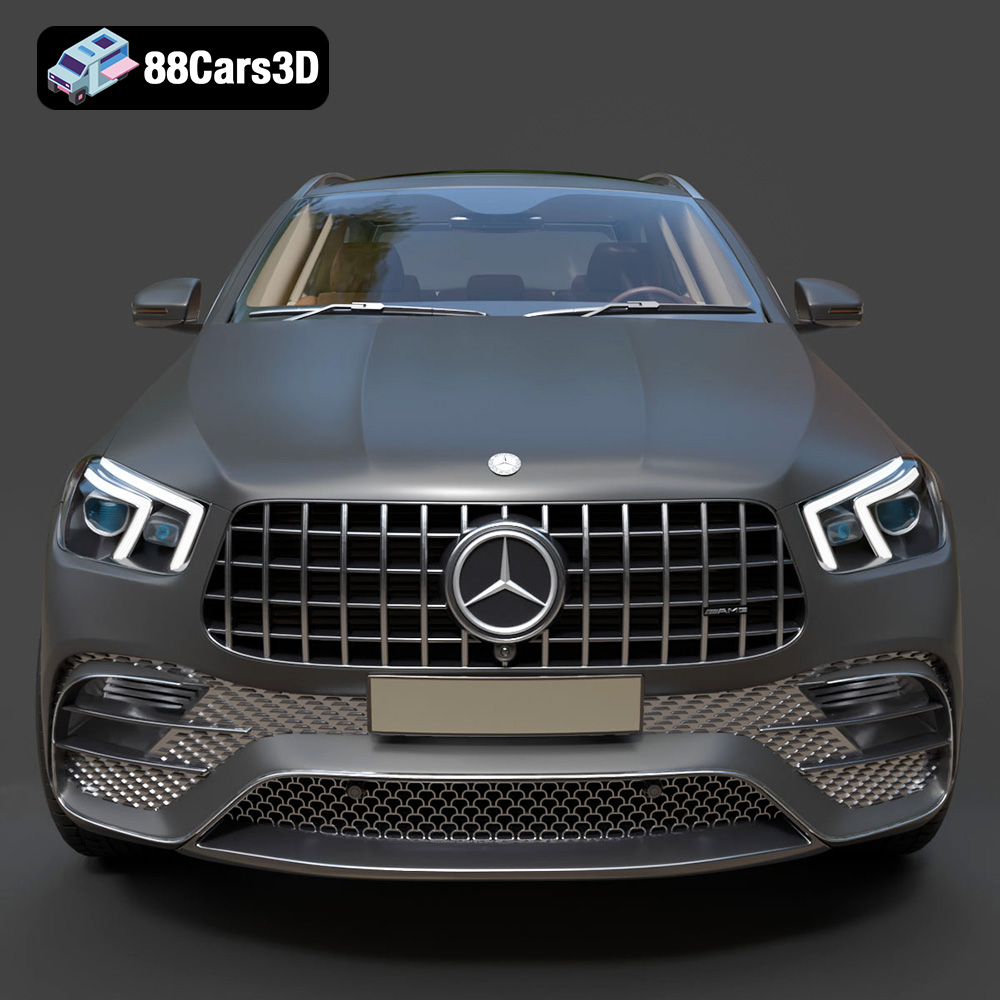
Today, we delve into the intricate world of automotive 3D modeling, exploring what sets a truly professional asset apart. We’ll examine the technical specifications, workflow considerations, and varied applications that define the pinnacle of digital craftsmanship. At the heart of this exploration is a standout example: the Mercedes-Benz AMG GLE 63 2021 3D Model, a prime offering from 88cars3d.com that epitomizes the fusion of luxury and performance in the virtual realm. This model isn’t just a digital representation; it’s a meticulously engineered asset designed to push the boundaries of realism and utility in your next project.
The choice of a 3D model’s file format is often as crucial as the model’s geometry itself. Each format is designed with specific use cases, software compatibility, and technical advantages in mind. Understanding these distinctions is paramount for any professional integrating 3D car models into their workflow.
The .blend format is native to Blender, the popular open-source 3D creation suite. When you download a .blend file, you’re getting a complete Blender scene, often including cameras, lighting setups, and a fully editable mesh with all its modifiers, materials, and textures packed within. This format is ideal for users who primarily work in Blender and require maximum flexibility for modifications. Artists can easily adjust topology, UVs, material nodes, or even animate components directly within the scene. For example, the Mercedes-Benz AMG GLE 63 2021 3D Model in .blend format allows artists to dissect its intricate interior, modify its luxurious AMG sport seats, or fine-tune its material finishes with Blender’s powerful Cycles or Eevee render engines.
.fbx (Filmbox) is arguably the most widely adopted proprietary file format for 3D data exchange, especially prevalent in game development and animation pipelines. Developed by Autodesk, FBX excels at preserving not just geometry, but also animation, rigging, skinning, camera data, and material assignments across different 3D software packages like Maya, 3ds Max, Blender, Unity, and Unreal Engine. It’s the go-to format for bringing a static 3D car model, such as our featured Mercedes-Benz AMG GLE 63, into a real-time environment, ensuring that its proper pivot setups for steering, wheel rotation, and suspension travel are maintained for accurate animation.
The .obj (Wavefront OBJ) format is a simple, universal geometry definition file that has been around for decades. It’s highly compatible with virtually every 3D software application. An OBJ file primarily stores mesh data (vertices, normals, texture coordinates, and faces) and typically references a separate .mtl (Material Template Library) file for basic material properties and texture maps. While it doesn’t store animation or advanced scene data, its simplicity makes it an excellent choice for basic cross-software mesh transfer, especially when detailed geometry is the priority. For the Mercedes-Benz AMG GLE 63 2021, an .obj export ensures that its precise frame geometry and proportions are accurately conveyed, ready for texturing and rendering in any preferred application.
.glb (GL Transmission Format Binary) is a modern, efficient, and versatile format designed for the web and real-time applications, particularly AR/VR experiences. It’s a binary container format that bundles 3D model data (geometry, materials, textures, animations) into a single file, making it incredibly easy to load and render quickly in browsers and mobile environments. This optimization is crucial for immersive virtual showrooms or mobile AR experiences of the AMG GLE 63, where load times and performance are critical. Its compact nature and ease of integration into web-based 3D viewers make it a powerful tool for showcasing interactive product models.
The .stl (Stereolithography) format is the standard for 3D printing. It represents a 3D model as a series of connected triangles, describing only the surface geometry without color, texture, or other advanced properties. While not suitable for rendering or animation, an STL file is precisely what a 3D printer needs to understand the shape it needs to fabricate. For hobbyists or professionals looking to create physical scale models of the Mercedes-Benz AMG GLE 63, the .stl variant provides the necessary data, allowing for physical prototyping or display models with recommended print settings for optimal detail.
The .ply (Polygon File Format) is another popular format for storing 3D data, particularly from 3D scanners or for CAD/analysis applications. Unlike STL, PLY can store more complex attributes like color per vertex, normal information, and even material properties. It’s often used where high precision mesh data is required for engineering analysis or reverse engineering. For highly accurate visualizations or industrial applications of the AMG GLE 63, the .ply format can offer a robust representation of its complex surfaces and structures.
The .unreal designation refers to assets specifically prepared and optimized for direct import and use within the Unreal Engine ecosystem. This often means the model has been pre-configured with appropriate materials, collision meshes, LODs (Levels of Detail), and pivot points, adhering to Unreal’s asset pipeline best practices. For game developers or architectural visualization artists working in Unreal Engine, an .unreal asset like the AMG GLE 63 offers a streamlined workflow, saving significant time on setup and optimization, allowing for immediate deployment in real-time scenes.
Similar to .blend for Blender, the .max format is native to Autodesk 3ds Max, a powerhouse for modeling, animation, and rendering in professional visualization. A .max file contains the entire 3ds Max scene, including geometry, lights, cameras, materials (often with V-Ray or Corona setups), animation data, and modifiers. It provides the highest level of editability and control within the 3ds Max environment, making it invaluable for artists who need to integrate the Mercedes-Benz AMG GLE 63 into complex architectural scenes, create high-end animations, or conduct detailed renders with advanced rendering engines.
The essence of a premium 3D automotive model lies in its ability to replicate the real-world vehicle with astonishing accuracy and detail. The Mercedes-Benz AMG GLE 63 2021 3D Model available at 88cars3d.com exemplifies this principle, offering a digital twin that captures the commanding presence and aggressive styling of its physical counterpart. It’s a testament to meticulous craftsmanship, ensuring that every curve, vent, and component is faithfully reproduced.
The exterior of this 3D model is a masterclass in precision. From the unmistakable aggressive Panamericana front grille, a signature of AMG performance, to the massive air intakes that hint at the formidable biturbo V8 engine beneath, every element is rendered with uncompromising focus. The distinctive AMG quad-trapezoidal exhaust system, intricately designed LED High-Performance headlamps, and 3D geometric taillights further enhance its photorealistic appeal. Even under extreme close-ups, the detailing holds up, showcasing the high-fidelity AMG-specific alloy wheels, performance tires, and drilled brake rotors with calipers. Furthermore, the model includes accurate air suspension and chassis undercarriage details, providing depth and realism even in scenes where the vehicle’s underside is visible. Crucially, separate wheels, suspension, and steering components are included, offering animators unparalleled flexibility to simulate realistic vehicle dynamics.
Stepping into the virtual cockpit of the Mercedes-Benz AMG GLE 63 2021 3D Model reveals an equally impressive level of detail. The luxurious AMG sport seats with their precise diamond-stitch detailing are faithfully recreated, inviting viewers into a world of high-performance comfort. The highly accurate AMG performance steering wheel, complete with paddle shifters, and the detailed dual-screen MBUX digital instrument cluster and infotainment system immerse the user in the vehicle’s sophisticated technology. Intricate center console controls, climate vents, pedals, and gear selector are all meticulously modeled, providing a truly comprehensive interior. This optimized geometry is perfect for first-person point-of-view shots in gaming or interactive virtual showroom experiences, allowing users to explore every luxurious detail.
The true value of a high-quality 3D car model, such as the Mercedes-Benz AMG GLE 63 2021, is its adaptability across diverse professional workflows. Whether you’re a visualization artist using 3ds Max for architectural scenes or a game developer crafting open-world environments in Unreal Engine, seamless integration and technical robustness are paramount.
For architectural visualization studios or advertising agencies, 3ds Max remains a dominant force, especially when paired with renderers like V-Ray or Corona. Importing the .max file of the AMG GLE 63 provides a ready-to-render asset with potentially pre-configured materials and lighting setups. Artists can effortlessly drop the SUV into a contemporary home exterior, an urban street scene, or a sleek studio environment. The model’s real-world scale accuracy ensures it fits perfectly within established architectural scales, and its clean topology allows for easy material adjustments. Imagine showcasing a luxury real estate development with this powerful SUV parked in the driveway – the impact is immediate and undeniable. The ability to manipulate individual components like wheels and suspension in 3ds Max also allows for dynamic camera angles and detailed close-ups, highlighting the intricate design of the AMG wheels or the LED headlights.
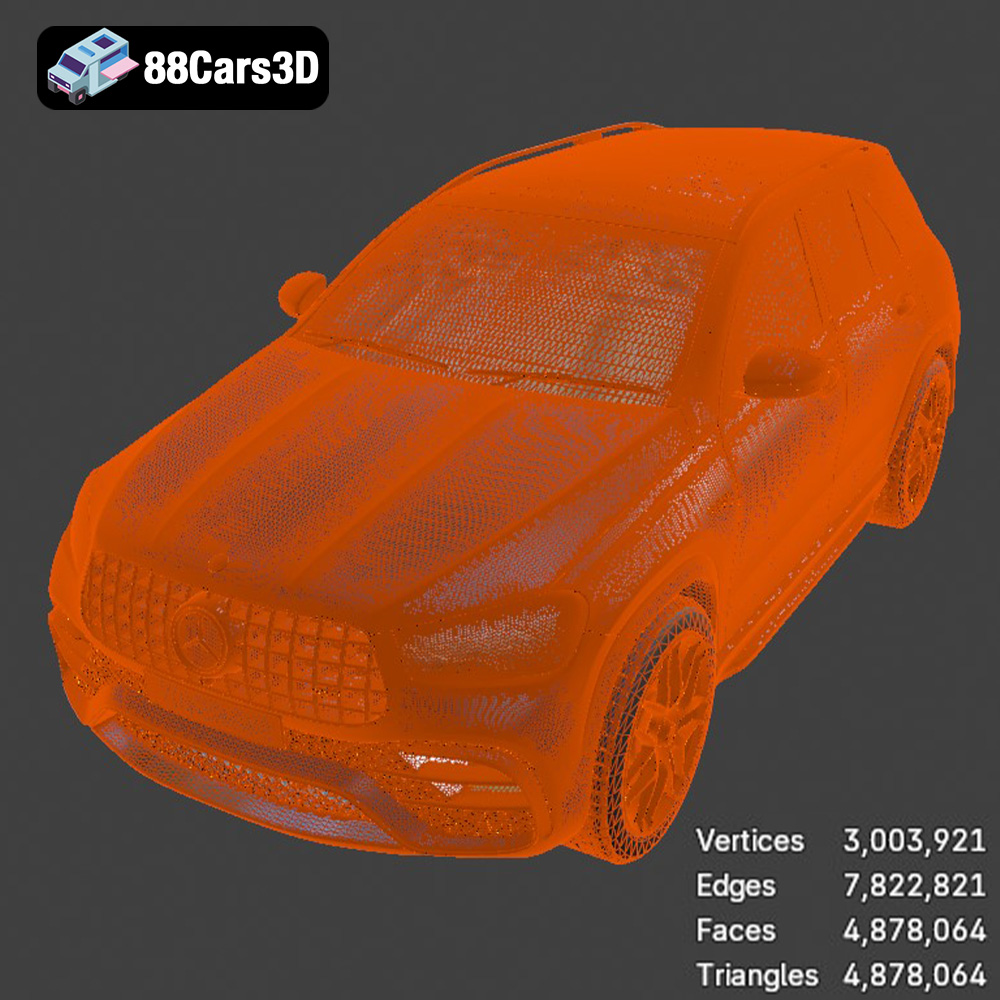
Game developers demand models that are not only visually appealing but also highly optimized for real-time performance. The Mercedes-Benz AMG GLE 63 2021 3D Model is designed with a game-ready and optimized topology, boasting an approximate triangle count of 450,000. This strikes a perfect balance, maintaining high-end visual realism without burdening the game engine. The .fbx and .unreal file formats are crucial here. Importing the .unreal asset into Unreal Engine provides an immediate, engine-ready asset. The proper pivot setup for steering, wheel rotation, and suspension travel is vital for implementing realistic vehicle physics and animations in a racing game or an open-world environment. Developers can easily integrate this model into vehicle blueprints, set up driving dynamics, and apply various customization options like changing body colors or tire textures directly within the engine, making it a powerful component for creating immersive and believable virtual worlds.
The utility of a versatile 3D car model extends far beyond traditional rendering and game development. With advancements in augmented reality (AR), virtual reality (VR), and 3D printing technologies, assets like the Mercedes-Benz AMG GLE 63 2021 3D Model are finding innovative applications that bridge the gap between digital and physical realms.
Augmented and Virtual Reality are transforming how consumers interact with products, especially in the automotive sector. The Mercedes-Benz AMG GLE 63 model is perfectly suited for creating immersive virtual showrooms, interactive car configurators, and mobile AR experiences. The .glb (GL Transmission Format Binary) file is particularly advantageous here, as it’s optimized for efficient loading and rendering in these real-time, often web-based, environments. Imagine a prospective buyer exploring the vehicle’s exterior in full 3D detail, walking around it as if it were in their living room via AR, or virtually sitting inside the luxurious AMG sport seats in VR, examining the MBUX system and dashboard controls from a first-person perspective. The optimized geometry for first-person POV in gaming directly translates to superior VR experiences, providing a sense of scale and presence that static images simply cannot achieve. This capability makes models from 88cars3d.com invaluable for automotive brands looking to offer cutting-edge digital customer engagement.
For enthusiasts, designers, or educators, the ability to physically hold a scale model of a complex vehicle is highly desirable. The Mercedes-Benz AMG GLE 63 2021 3D Model supports this through its .stl format, which is the industry standard for 3D printing. While 3D printing requires careful consideration of scale and detail, the robust geometry of this model provides an excellent foundation. Recommended scales like 1:12, 1:18, or 1:24 allow for various levels of detail, with resin printing often suggested for capturing the fine intricacies of the Panamericana grille or the AMG-specific alloy wheels. Detailed print settings, including layer height, wall thickness, infill, and support requirements, are provided, guiding users through the process. Post-processing, such as sanding, priming, and painting with authentic factory colors, can bring the printed model to life, creating a tangible representation of this magnificent performance SUV.
In the realm of 3D modeling, especially for complex subjects like automotive vehicles, striking the perfect balance between visual realism and performance optimization is a constant challenge. A professional-grade 3D car model, such as the Mercedes-Benz AMG GLE 63 2021, is distinguished by its meticulous engineering in this regard, ensuring it excels in both high-end rendering and real-time interactive environments.
The approximate triangle count of 450,000 for the AMG GLE 63 3D Model is a deliberate choice. This number represents a ‘sweet spot’ for a modern automotive asset: it’s high enough to capture the subtle curvatures, sharp edges, and intricate details like the distinctive AMG quad-trapezoidal exhaust system and the complex LED headlamp geometry without resorting to excessive tessellation that can cripple real-time performance. Good topology, characterized by clean edge flow and strategically placed polygons, is crucial. It ensures smooth deformations if the model is animated and facilitates clean UV mapping for texture application. This careful optimization means the model is “game-ready” for demanding open-world titles and racing simulators, yet sufficiently detailed for photorealistic rendering in advertising or visualization projects, where extreme close-ups are common.
Beyond visual fidelity, technical accuracy is paramount. The Mercedes-Benz AMG GLE 63 model is built to real-world scale, based on actual vehicle chassis dimensions. This ensures that when integrated into architectural scenes or compared against other real-world assets, its proportions are correct. Furthermore, the inclusion of proper pivot setups for steering, wheel rotation, and suspension travel is a critical advantage for animators and game developers. Without accurate pivot points, realistic vehicle animation becomes a time-consuming and often frustrating endeavor. These meticulously placed pivots allow for intuitive control over vehicle dynamics, enabling the creation of believable driving sequences, suspension compression, and precise steering movements that mirror the real car’s behavior. This level of technical consideration significantly reduces post-purchase setup time and enhances the overall quality of animated content.
A truly versatile 3D model offers extensive customization options. While the base model comes with optimized materials, the included file formats allow for deep modification. Users can easily change body colors—experimenting with everything from classic Obsidian Black to a vibrant custom wrap—or adapt material finishes between matte, gloss, and metallic. Modifying tire textures to represent street performance versus all-season variants is also straightforward. These capabilities are essential for virtual car configurators, where customers can personalize their dream vehicle, or for artists who need to match a specific brand aesthetic. The ability to adjust lighting for different environments further expands the model’s application, allowing it to seamlessly fit into any scene, whether it’s a sunny outdoor render or a dramatic studio setup.
In the competitive digital landscape, sourcing high-quality 3D assets can significantly impact a project’s success. For professionals seeking automotive models that combine exquisite detail with technical robustness, platforms like 88cars3d.com offer a compelling solution. The Mercedes-Benz AMG GLE 63 2021 3D Model stands as a prime example of the caliber of assets available, representing not just a purchase, but an investment in digital excellence.
Time is a valuable commodity in any production pipeline. By providing meticulously crafted, game-ready, and optimized 3D car models, 88cars3d.com empowers artists and developers to bypass the arduous and time-consuming process of modeling a vehicle from scratch. The immediate availability of a highly detailed asset, complete with accurate geometry, optimized topology, and multi-format compatibility, allows teams to focus on creative aspects like scene composition, animation, and unique storytelling. The technical specifications, such as the 450,000 triangle count and proper pivot setups, ensure that the model is ready for immediate deployment in engines like Unreal or for high-end rendering in 3ds Max or Blender, saving countless hours of optimization and troubleshooting.
The extensive range of included file formats (.blend, .fbx, .obj, .glb, .stl, .ply, .unreal, .max) for the Mercedes-Benz AMG GLE 63 2021 model underscores its versatility. This single asset can cater to diverse professional needs: a game studio can integrate it into a racing title, an architectural firm can use it to enhance a luxury property visualization, an AR/VR developer can build an interactive showroom, and even hobbyists can 3D print a physical replica. This multi-purpose utility ensures that the investment yields returns across various projects and applications, making it a valuable addition to any professional’s digital asset library. When you choose a model from 88cars3d.com, you’re not just getting a static mesh; you’re acquiring a dynamic tool capable of enhancing multiple facets of your digital production.
The world of 3D modeling is continuously pushing the boundaries of realism and interactive experience. At its core, the success of any digital project hinges on the quality of its foundational assets. The Mercedes-Benz AMG GLE 63 2021 3D Model exemplifies this principle, offering a meticulously crafted and technically robust asset that stands ready for the most demanding professional applications.
From its stunning exterior fidelity and luxurious interior detail to its optimized geometry and broad file format compatibility, this model provides an unparalleled foundation for automotive rendering, game development, AR/VR experiences, and even precision 3D printing. Understanding the nuances of each file format and leveraging the model’s technical specifications – from its balanced polycount to its accurate pivot setups – empowers creators to seamlessly integrate this digital masterpiece into their workflows. Whether you’re crafting the next generation of racing games, visualizing cutting-edge architecture, or building immersive virtual showrooms, this premium 3D car model from 88cars3d.com offers the power and prestige of the AMG GLE 63 in a package built for digital excellence.
Experience the perfect fusion of luxury and raw performance with this highly detailed 3D model of the 2021 Mercedes-Benz AMG GLE 63. Renowned for its commanding presence, this performance SUV features the unmistakable aggressive Panamericana front grille, massive air intakes, and the distinctive AMG quad-trapezoidal exhaust system. The dynamic styling cues perfectly capture the essence of Affalterbach’s engineering, ensuring your virtual scenes exude both prestige and power. Crafted with an uncompromising focus on quality, this model boasts a highly optimized topology with an approximate triangle count of 450,000. It strikes an impeccable balance between game-ready performance and photorealistic visual fidelity. Whether you are deploying this asset in a high-octane real-time racing engine, an interactive AR/VR showroom, or a high-end architectural visualization, the meticulous detailing holds up seamlessly under extreme close-ups. Perfect for open-world racing games, luxury lifestyle visualizations, virtual car configurators, and modern architectural rendering scenes.
$19.99
.blend
.fbx
.glb
.luxury suv
.max
.obj
.ply
.rendering
.stl
.unreal
amg-gle-63
car-3d-model
game asset
game-ready
low-poly
mercedes-benz
optimized
performance suv
SUV
VR/AR