Get 20% OFF All Premium 3D & STL Models!

In the rapidly evolving landscape of digital content creation, the demand for hyper-realistic and functionally robust 3D assets has never been higher. From blockbuster video games and cinematic visualizations to immersive augmented reality experiences and precise architectural pre-visualizations, high-quality 3D models form the bedrock of compelling digital worlds. Nowhere is this more apparent than in the automotive sector, where vehicles are not just props, but often central characters, requiring an unparalleled level of detail and fidelity.
Modern automotive design, rendering, and game development push the boundaries of realism, making the choice of 3D assets a critical decision for any project. Creators need models that strike a perfect balance between visual accuracy, technical optimization, and broad compatibility. This is particularly true for iconic and technologically advanced vehicles that resonate with a global audience. Few cars embody this spirit of innovation as powerfully as the Tesla Model S Plaid 2021 – a vehicle that redefined electric performance and luxury.
For professionals seeking to integrate this modern marvel into their digital projects, finding a meticulously crafted 3D rendition is paramount. This is where specialized marketplaces like 88cars3d.com become invaluable resources, offering expertly prepared 3D car models ready for immediate deployment. Our focus today is on one such exceptional asset: the Tesla Model S Plaid 2021 3D Model. This model encapsulates the aggressive aerodynamics, futuristic interior, and raw power of its real-world counterpart, engineered to seamlessly integrate into demanding production pipelines, from photorealistic automotive rendering to optimized game assets.
The versatility of a 3D model is often defined by the range of file formats it supports. Each format serves specific purposes, catering to different software, platforms, and stages of a project’s lifecycle. Understanding these distinctions is crucial for selecting the right asset and optimizing workflows. The Tesla Model S Plaid 2021 3D Model, for instance, offers a comprehensive suite of formats, ensuring maximum compatibility and utility across various professional applications.
The .blend format is the native file type for Blender, the popular open-source 3D creation suite. When you receive a .blend file, you are getting a fully editable Blender scene. This typically includes the mesh data, materials, textures, lighting setups, cameras, animation data, and even modifiers or rigging information. For artists deeply integrated into the Blender ecosystem, this format offers unparalleled flexibility. It allows for direct manipulation of the model’s geometry, easy adjustment of PBR (Physically Based Rendering) materials using Blender’s Cycles or Eevee renderers, and modification of any scene elements. The Tesla Model S Plaid 3D Model in .blend format means artists can effortlessly customize it, perhaps swapping out wheels, altering paint finishes, or creating bespoke animations directly within Blender.
.fbx (Filmbox) is a proprietary file format developed by Autodesk, widely regarded as the industry standard for 3D data interchange. Its strength lies in its ability to store a comprehensive array of 3D data, including geometry, materials, textures, animations, and skeletal rigging, all within a single file. This makes .fbx ideal for transferring assets between different 3D software packages (like 3ds Max, Maya, Cinema 4D, Blender) and, critically, for import into game engines such as Unreal Engine and Unity. When using the Tesla Model S Plaid 3D Model as an .fbx, developers can expect robust handling of its optimized mesh, PBR textures, and separate animated components (like wheels and doors), ensuring a smooth transition into real-time environments.
The .obj (Wavefront OBJ) format is one of the oldest and most widely supported 3D file formats. It is primarily used for storing 3D geometry – vertices, normals, UV coordinates, and polygons. While it can reference external material (.mtl) files for basic color and texture information, it does not support advanced PBR materials, animations, or rigging. Its universal compatibility makes it an excellent choice for simple mesh transfer between virtually any 3D software. For the Tesla Model S Plaid 3D Model, the .obj format serves as a reliable fallback for foundational mesh data, ensuring that the core sculptural details of the vehicle are accessible even in less common or older applications.
.glb (GL Transmission Format Binary) is a relatively newer format, gaining significant traction due to its efficiency and suitability for web-based 3D, augmented reality (AR), and virtual reality (VR) applications. It is a binary version of the glTF format, meaning it embeds all necessary data – geometry, materials, textures, and even animations – directly into a single file. This “self-contained” nature makes .glb incredibly efficient for streaming and display in web browsers or mobile AR/VR environments, eliminating the need for multiple external files. The Tesla Model S Plaid 3D Model in .glb format is perfectly optimized for interactive product viewers, virtual showrooms, and real-time mobile AR experiences, delivering high visual quality with minimal loading times.
.stl (Stereolithography) is the de facto standard file format for 3D printing. Unlike other formats that store various types of 3D data, .stl exclusively describes the surface geometry of a 3D object using a tessellated mesh of triangles. It contains no color, texture, or material information. For designers and hobbyists looking to physicalize the Tesla Model S Plaid 3D Model, the .stl format is essential. It provides the precise triangulated mesh needed by 3D printers to construct the object layer by layer. The availability of this format in the product ensures that enthusiasts can bring a tangible representation of the Model S Plaid into the real world, following specific print settings for optimal results.
The .ply (Polygon File Format) is another format primarily used for storing 3D scanner data and meshes. It can store a wider range of properties than .obj or .stl, including color, transparency, normals, texture coordinates, and even reliability information per vertex or face. This makes it suitable for applications requiring highly precise geometric data, such as CAD, scientific visualization, or detailed 3D scanning projects. For the Tesla Model S Plaid 3D Model, the .ply format offers an additional layer of precision, potentially useful for technical analysis or reverse engineering tasks where granular control over vertex data is beneficial.
While .fbx is a general interchange format for game engines, some asset providers, particularly marketplaces like 88cars3d.com, offer assets pre-optimized and packaged specifically for engines like Unreal Engine. The .unreal format (often referring to a .uasset file or a folder structure ready for direct import into an Unreal Engine project) typically means the model has been rigorously prepared. This includes proper material setups using Unreal’s PBR shader system, correct pivot points, potentially pre-configured LODs (Levels of Detail), and optimized collision meshes. For the Tesla Model S Plaid 3D Model, an .unreal package implies a streamlined workflow, saving developers significant time on asset preparation and integration within Unreal Engine projects, from cinematic cutscenes to interactive driving simulators.
The .max format is the native file type for Autodesk 3ds Max, a leading software for 3D modeling, animation, and rendering in architectural visualization, product design, and game development. A .max file contains the complete 3ds Max scene, including all geometry, textures, materials (often V-Ray or Corona Renderer materials for photorealism), lighting, cameras, animation, and scene settings. For professionals working within 3ds Max, having the Tesla Model S Plaid 3D Model in .max format offers the highest level of editability and integration. It allows for advanced rendering with powerful render engines, intricate animation setups, and seamless modification using 3ds Max’s extensive toolset, ensuring that the model can be fully leveraged for high-end automotive rendering projects.
The real-world Tesla Model S Plaid 2021 is a marvel of engineering and design, and replicating its essence in a digital format requires meticulous attention to detail. The Tesla Model S Plaid 3D Model available at 88cars3d.com stands out for its faithful reproduction of this iconic electric vehicle, delivering a balance of aesthetic accuracy and technical performance.
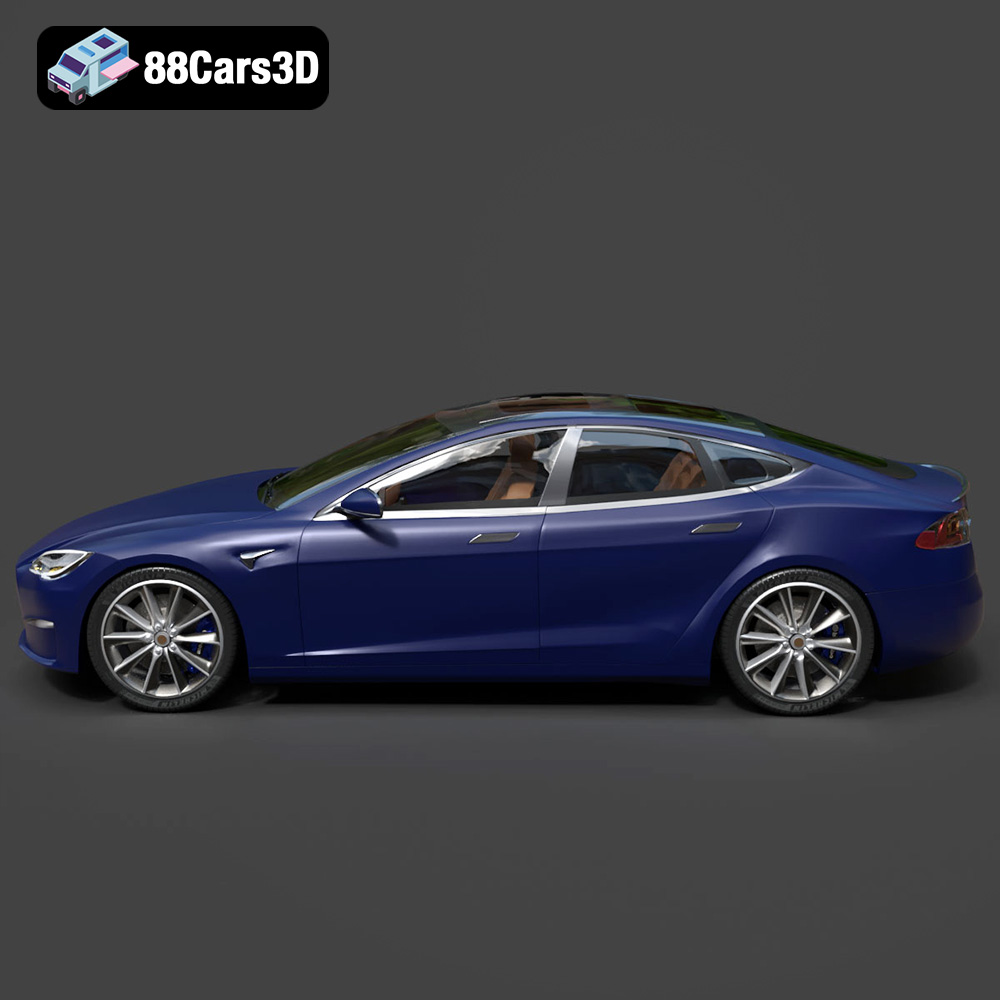
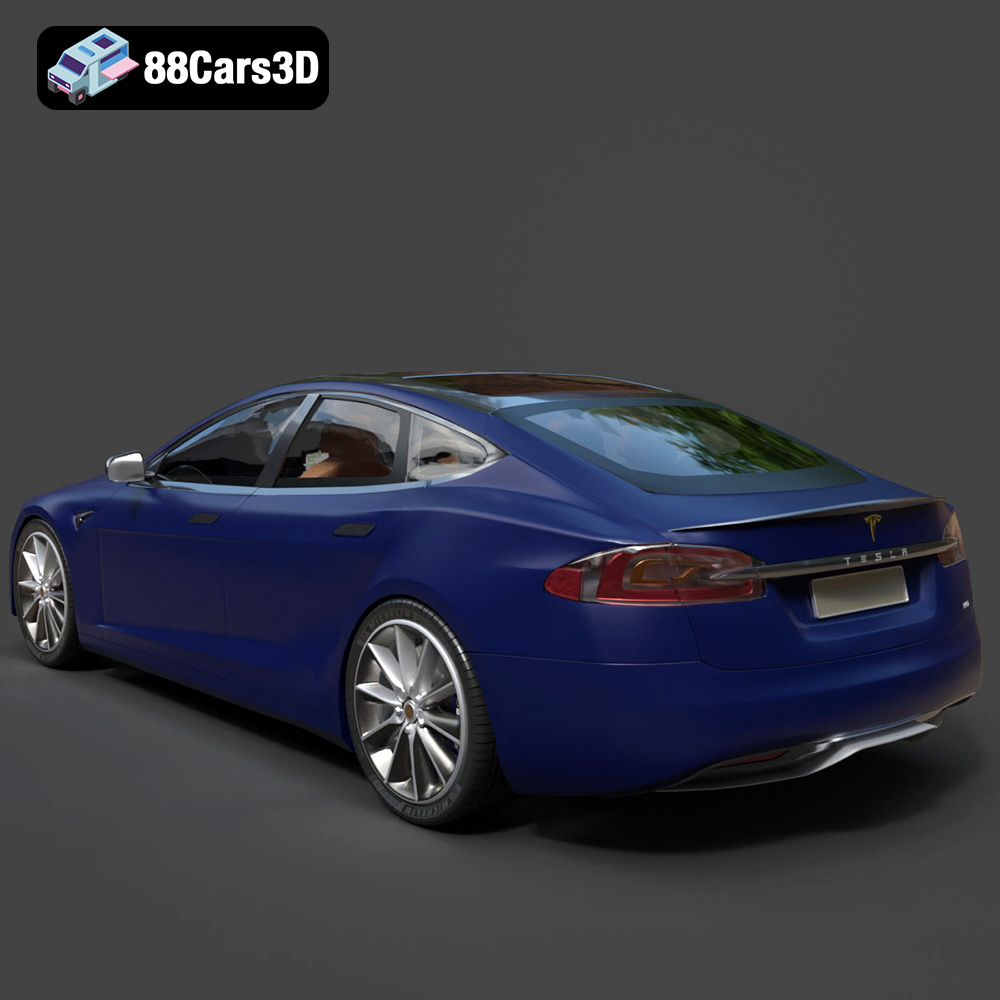
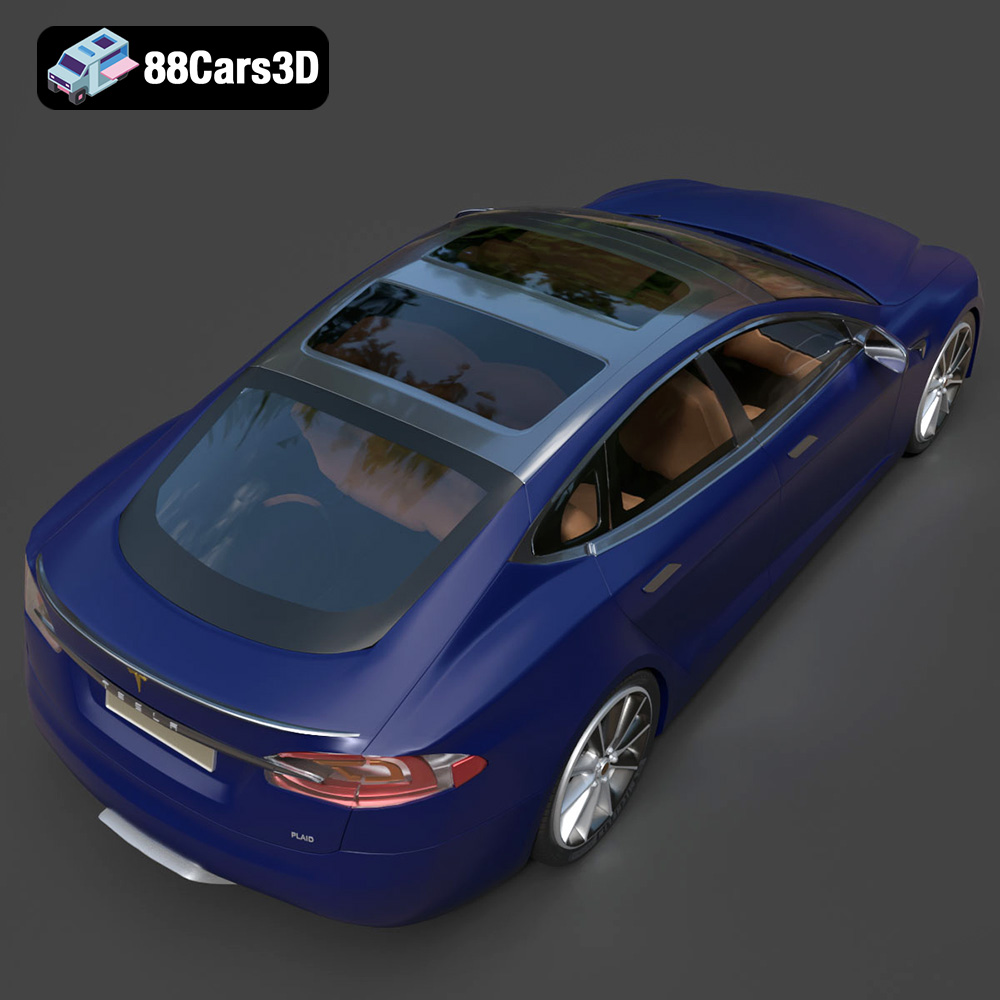
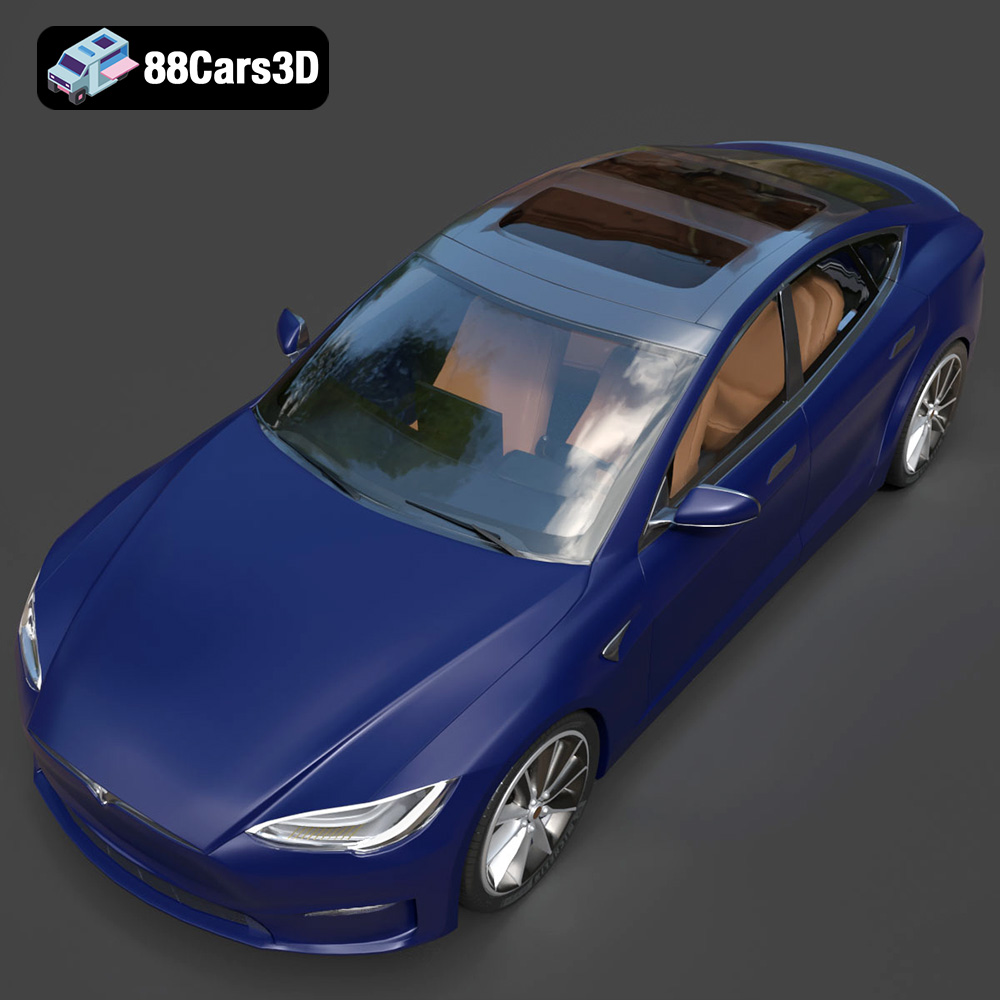
From its aggressive stance to its sleek, aerodynamic profile, the Model S Plaid is instantly recognizable. This 3D model meticulously captures every curve and contour. The accurate Tesla Model S Plaid aerodynamic body styling and proportions are immediately apparent, reflecting the car’s performance-driven design. Key exterior features, such as the detailed front bumper with aggressive air intakes and Plaid-specific trim, are rendered with precision, highlighting the unique visual cues that set the Plaid apart. The signature front and rear LED light clusters are not just placeholders; they include realistic internal reflectors, which are crucial for achieving photorealistic lighting in advanced rendering environments. Furthermore, the model boasts high-performance Arachnid-style wheels and detailed low-profile tires, complete with accurately modeled brake calipers and slotted rotors. These components are separate, allowing for dynamic animations such as wheel rotation and steering. Even subtle touches like the flush-mounted door handles and the expansive panoramic glass roof are faithfully reproduced, contributing to an authentic digital representation.
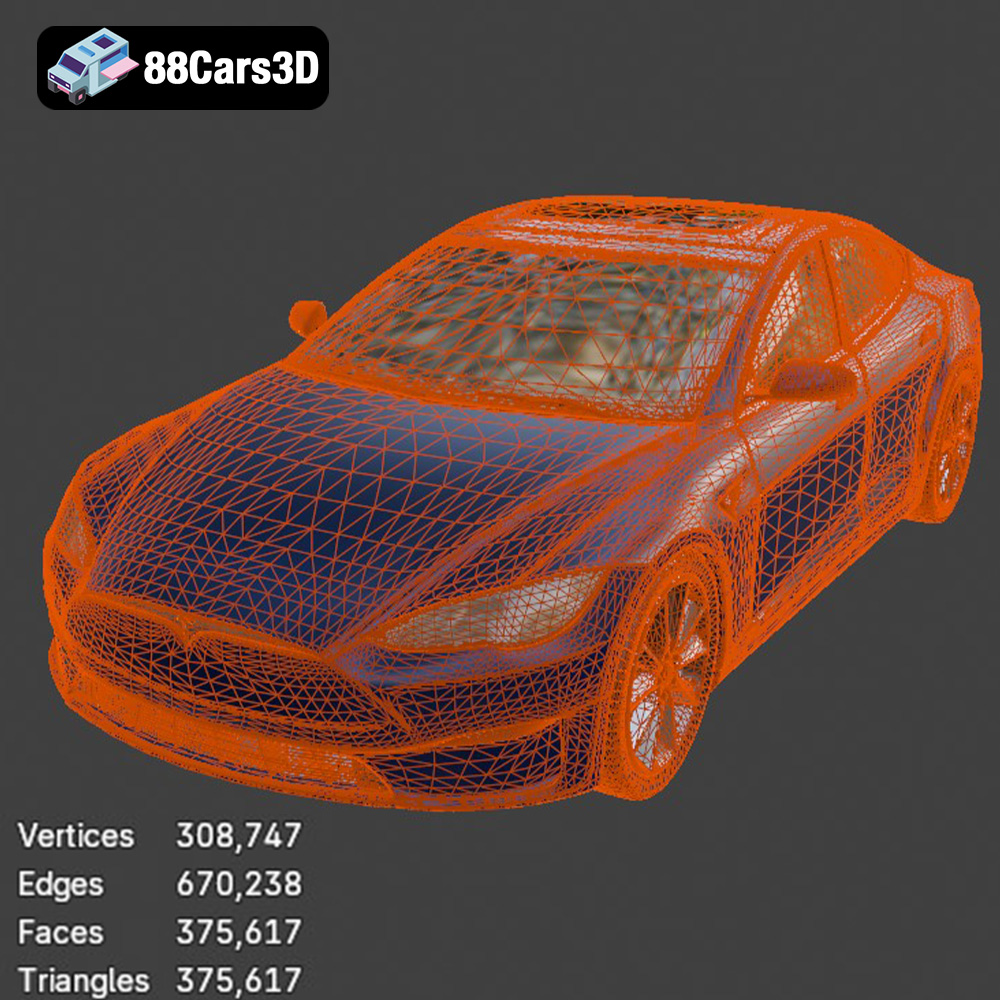
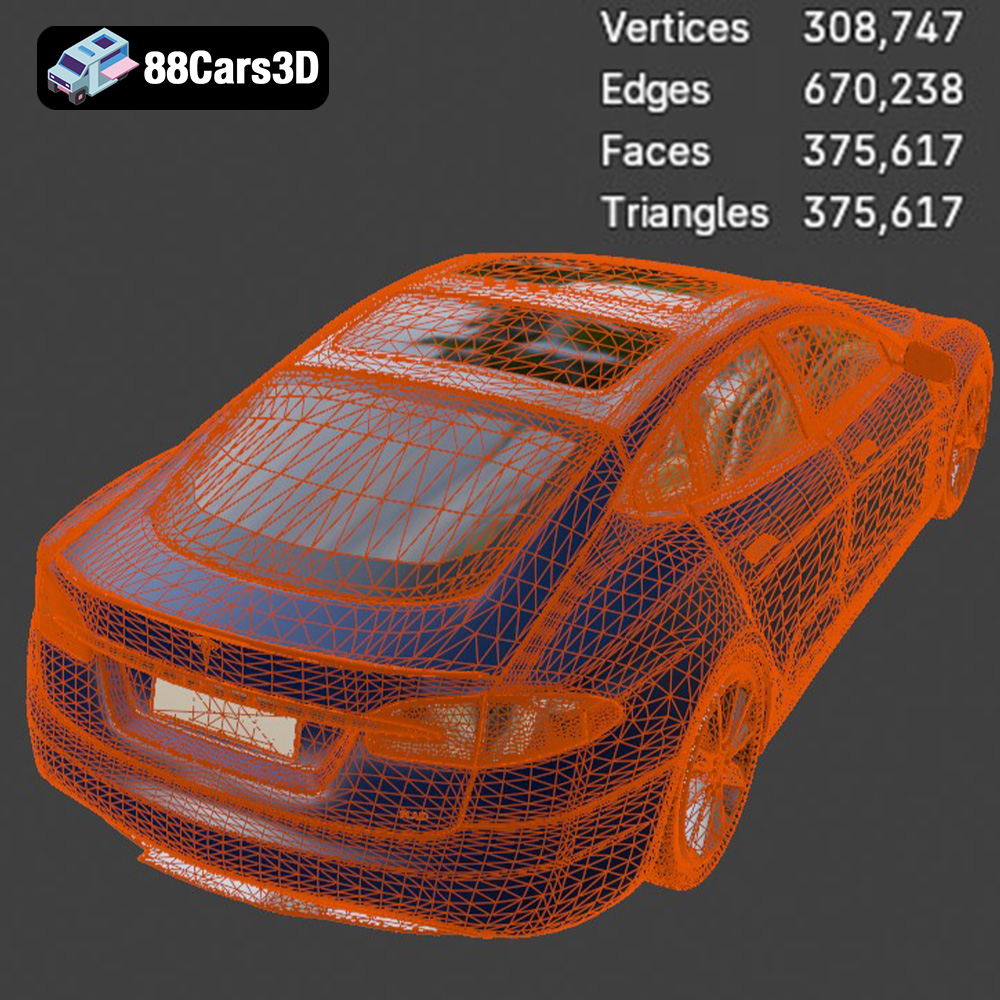
Technically, the model’s highly optimized topology with an efficient triangle count of approximately 500,000 triangles is a significant advantage. This polycount strikes a critical balance: it’s high enough to convey exceptional detail for close-up renders and visualizations, yet efficient enough to perform smoothly in real-time game engines like Unreal and Unity. This optimization means less processing power is needed, leading to higher frame rates in games and faster rendering times for still images and animations. The model’s real-world scale accuracy ensures it integrates seamlessly into virtual scenes without proportion issues.
The interior of the Tesla Model S Plaid is as revolutionary as its exterior, dominated by minimalist design and cutting-edge technology. The 3D model brings this to life with a highly detailed cabin featuring the revolutionary Yoke steering wheel, a defining characteristic of the Plaid. The center console includes the accurate 17-inch cinematic center touchscreen display and digital instrument cluster, providing a focal point for the digital interior. Attention extends to the rear, with detailed rear-seat entertainment display integration, enhancing the sense of luxury and technological sophistication.
The seating, often overlooked in 3D models, receives premium treatment with ventilated seat modeling and distinct Plaid pattern texturing, ready for physically based rendering (PBR) workflows. The interior geometry is optimized for immersive first-person POV in gaming, ensuring that players or viewers experience a truly realistic cockpit environment. This level of interior detail, combined with optimized geometry, makes the Tesla Model S Plaid 3D Model an incredibly versatile asset for virtual showrooms, driving simulators, or any application requiring a high degree of interior fidelity.
A premium 3D asset is defined not just by its visual quality but also by its ease of use and adaptability within various professional pipelines. The Tesla Model S Plaid 2021 3D Model is engineered to be a drop-in solution for a wide array of digital creation tasks, from cinematic rendering to interactive game development.
For automotive rendering artists, architects, and product visualization specialists, photorealism is the ultimate goal. The Tesla Model S Plaid 3D Model, with its detailed geometry, PBR compatibility, and availability in formats like `.max` and `.blend`, is perfectly suited for high-end studio setups. In 3ds Max, artists can leverage powerful renderers like V-Ray or Corona Renderer, utilizing the model’s pre-configured materials (if included in the .max file) or easily setting up custom PBR shaders to achieve stunning realism. The separation of wheels, doors, and steering components allows for intricate animation sequences, from driving shots to detailed product showcases. Similarly, Blender users can take advantage of the `.blend` file to manipulate the model directly within Cycles or Eevee, crafting exquisite renders for advertising campaigns, automotive configurators, or lifestyle scenes.
A typical workflow involves importing the model, setting up a realistic lighting environment (often using HDRI maps), fine-tuning materials to react accurately to light (e.g., metallic paint, reflective glass, rubber tires), and composing the final shot. Case studies abound where such detailed 3D car models are used to launch new vehicle lines, visualize custom modifications, or create immersive experiences for potential buyers long before a physical prototype exists. The Tesla Model S Plaid 3D Model’s accuracy and attention to detail ensure that any rendered output will be indistinguishable from real photography.
The demands of real-time rendering in game development are stringent, requiring assets that are both visually compelling and highly optimized for performance. The Tesla Model S Plaid 3D Model excels as a game asset, specifically designed with a game-ready & optimized ~500,000 triangle count. This optimization is crucial for open-world games, racing titles, and driving simulators where multiple high-detail vehicles might be on screen simultaneously without compromising frame rates.
Utilizing the `.fbx` or the specialized `.unreal` formats, game developers can seamlessly import the model into engines like Unreal Engine or Unity. The model’s proper pivot setup for steering, wheel rotation, and suspension travel is a huge time-saver, allowing animators and programmers to quickly integrate realistic vehicle dynamics. In Unreal Engine, for example, a developer would import the .fbx, set up materials using Unreal’s robust PBR system, apply physical assets for collision detection, and perhaps create Level of Detail (LOD) meshes derived from the main model to further optimize performance at varying distances. The Tesla Model S Plaid 3D Model’s efficient topology ensures that even without extensive LOD work, it performs admirably, offering a high-fidelity experience for players within virtual driving scenarios or immersive VR experiences.
The utility of a high-quality 3D asset extends far beyond traditional rendering and gaming. The diverse file formats offered for the Tesla Model S Plaid 3D Model unlock a world of possibilities across emerging technologies and physical fabrication.
Augmented Reality (AR) and Virtual Reality (VR) are revolutionizing how we interact with digital content, creating new avenues for product visualization, training, and entertainment. The Tesla Model S Plaid 3D Model is perfectly suited for these immersive applications, particularly with the inclusion of the .glb format. As discussed, .glb is highly optimized for web and mobile delivery, making it ideal for virtual showrooms where customers can explore the car’s interior and exterior in 360 degrees, or for AR configurators that allow users to place a life-sized Model S Plaid in their driveway via a smartphone camera. Imagine a virtual dealership experience powered by this model, offering potential buyers an unprecedented level of interaction before ever stepping foot in a physical showroom. The model’s optimized interior geometry is also a boon for VR, providing an incredibly realistic first-person perspective from the driver’s seat, allowing for virtual test drives or detailed examinations of the Yoke steering wheel and central touchscreen.
The ability to transform a digital model into a tangible object is a powerful capability for designers, engineers, and hobbyists. With the inclusion of the .stl format, the Tesla Model S Plaid 3D Model is ready for 3D printing. This opens up opportunities for creating physical scale models, display pieces, or even prototypes for custom accessories. The product description provides comprehensive 3D print settings, crucial for achieving optimal results:
This detailed guidance transforms the digital asset into a practical tool for physical creation, bridging the gap between virtual and real-world design.
Beyond its inherent quality and broad compatibility, the true value of a premium 3D asset lies in its flexibility. The Tesla Model S Plaid 2021 3D Model offers extensive customization options, enabling artists and developers to tailor the vehicle to specific project requirements and creative visions.
Creative projects often demand unique aesthetics, and the ability to easily modify a 3D model’s appearance is paramount. This Tesla Model S Plaid asset provides robust customization opportunities: artists can effortlessly change body colors to match real-world options like Pearl White Multi-Coat, Red Multi-Coat, or Solid Black, or even invent entirely new hues to suit a fantastical setting. Similarly, modifying tire textures and wheel finishes (e.g., gunmetal, silver, matte black) allows for significant aesthetic variation, from a pristine showroom look to a rugged, off-road style. The model also supports adjustments to glass tint and panoramic roof opacity, allowing for control over interior visibility and overall mood. Furthermore, adapting interior and exterior LED lighting for different environments—whether a bright daytime scene, a moody night drive, or a stylized game level—enhances the model’s adaptability and visual impact.
This level of customization means that a single high-quality 3D car model can serve multiple roles across different projects, saving significant development time and resources. Instead of modeling a new variant for each scenario, artists can quickly re-texture and re-materialize the existing asset, maintaining consistent quality.
While the Tesla Model S Plaid 3D Model is already optimized with its ~500,000 triangle count, professional workflows often demand further performance tuning. For extremely demanding real-time applications or mobile experiences, artists can use the high-fidelity base mesh to generate various Levels of Detail (LODs). These progressively lower-polygon versions of the model are swapped in as the camera moves further away, drastically reducing the computational load without noticeable visual degradation. Conversely, for ultra-high-resolution close-up renders, the robust mesh allows for additional detail displacement or subdivision without breaking the model’s integrity. The proper pivot setup for animatable parts (wheels, doors, steering) further streamlines the process of integrating custom animations or interactive elements, ensuring that any modifications or optimizations can be implemented efficiently and effectively.
The digital frontier of automotive design, visualization, and interactive experiences is continuously expanding, driven by the relentless pursuit of realism and performance. Premium 3D assets are no longer a luxury but a fundamental requirement for professionals aiming to create compelling and high-fidelity content. The Tesla Model S Plaid 2021 3D Model stands as a prime example of an asset meticulously crafted to meet these rigorous demands.
Its accurate representation of the iconic electric vehicle, combined with optimized topology and comprehensive file format support (including .blend, .fbx, .obj, .glb, .stl, .ply, .unreal, and .max), makes it an incredibly versatile tool. Whether your project involves cinematic automotive rendering, developing an immersive racing game, creating interactive AR/VR experiences, or even fabricating a physical replica through 3D printing, this model provides the foundation for success. It offers the flexibility for extensive customization, ensuring that it can be seamlessly integrated and adapted to virtually any creative vision.
Investing in high-quality 3D car models like the Tesla Model S Plaid 2021 3D Model from 88cars3d.com significantly accelerates production workflows, enhances visual fidelity, and empowers creators to push the boundaries of what’s possible in the digital realm. It’s more than just a model; it’s a gateway to innovation in your next project.
The Tesla Model S Plaid 2021 represents the pinnacle of electric performance and modern automotive luxury. Boasting an aggressively refined exterior with enhanced aerodynamics, a wider stance, and signature Plaid styling cues, this tri-motor powerhouse redefined the hyper-sedan segment. Our meticulously crafted 3D model captures the essence of this revolutionary vehicle, from its sleek silhouette and flush door handles to its high-performance wheels and distinct front fascia. Engineered for maximum visual fidelity and performance, this model features highly optimized topology with an efficient triangle count. It bridges the gap between ultra-realistic rendering capabilities and real-time game engine performance, making it an incredibly versatile digital asset. Whether deployed in cutting-edge game development, interactive AR/VR applications, or high-end animation projects, the model maintains perfect detail with physically based rendering (PBR) compatibility. Perfect for modern urban game environments, realistic driving simulators, virtual dealership showrooms, and high-end automotive visualizations.
$19.99
.2021
.blend
.fbx
.glb
.max
.obj
.ply
.rendering
.stl
.tesla
.unreal
car-3d-model
electric-car
game asset
game-ready
low-poly
luxury-sedan
model-s-plaid
optimized
VR/AR