Get 20% OFF All Premium 3D & STL Models!

In the fast-paced world of digital content creation, the demand for high-quality, authentic 3D assets is paramount. From photorealistic architectural visualizations to immersive gaming experiences and cutting-edge AR/VR applications, a detailed 3D vehicle can be the cornerstone of a compelling project. Artists, developers, and designers are constantly seeking models that strike the perfect balance between visual fidelity and technical optimization, ensuring seamless integration into diverse pipelines.
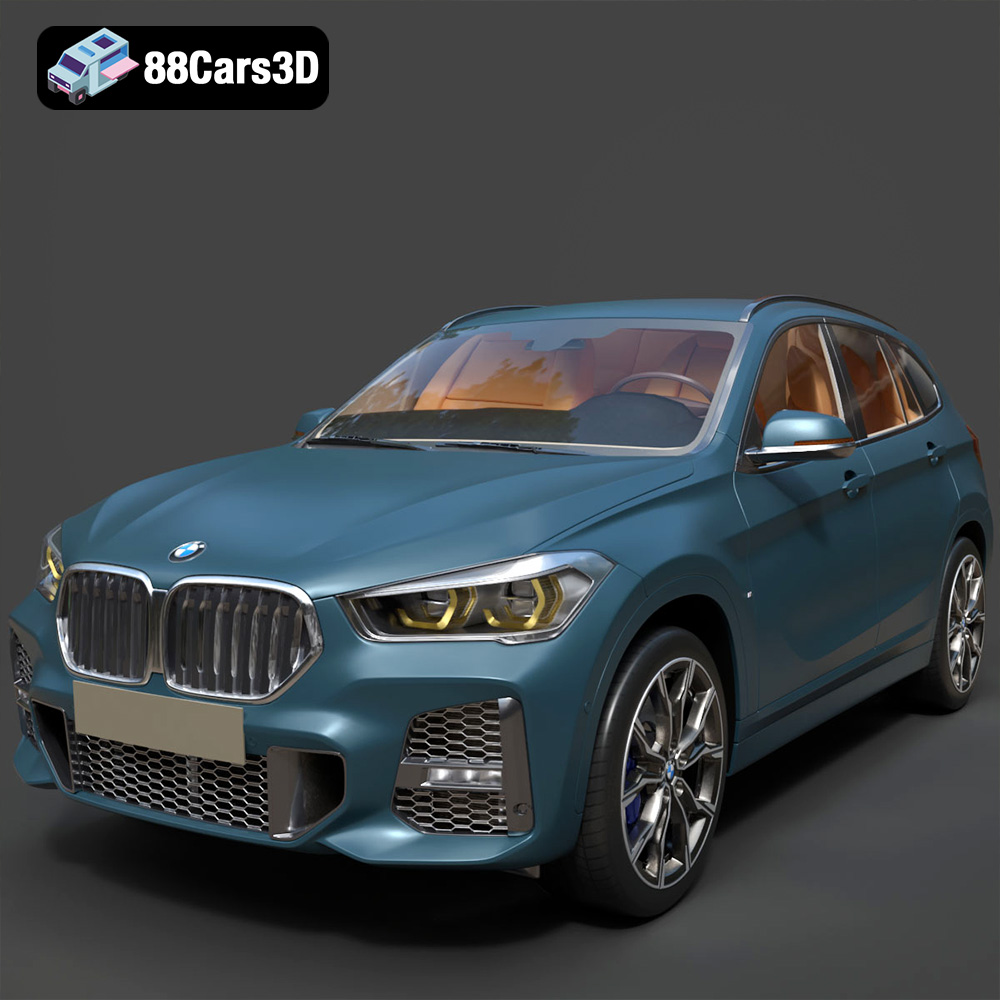
This quest for excellence often leads to models like the BMW X1 M-Sport 2020 3D Model – a prime example of a meticulously crafted asset designed to meet the rigorous demands of professional production. This premium compact SUV, renowned for its athletic performance and sophisticated design, translates beautifully into the digital realm, offering a versatile foundation for countless creative endeavors. Whether you’re aiming for a stunning marketing render or a dynamic in-game vehicle, understanding the nuances of such an asset is key to unlocking its full potential.
The true versatility of a high-quality 3D car model, such as the BMW X1 M-Sport 2020 3D Model, lies not just in its visual appeal but also in the array of file formats it supports. Each format serves a specific purpose, catering to different software environments, project types, and desired outcomes. Navigating these options is crucial for any professional working with 3D assets, as selecting the right format can dramatically streamline workflows and ensure optimal performance.
The .blend format is the native file type for Blender, the popular open-source 3D creation suite. When you download the BMW X1 M-Sport 2020 3D Model as a .blend file, you gain access to a fully editable Blender scene. This means not just the mesh geometry, but also materials, textures, lighting setups, cameras, animation data (if present), and even physics simulations, are preserved within a single file. For users whose primary workflow revolves around Blender, this offers unparalleled flexibility for customization, rigging, animation, and rendering directly within their preferred environment. It’s the ideal choice for artists wanting to dive deep into modifying the model’s structure, applying custom shaders with Cycles or Eevee, or integrating it into a complex Blender project.
.fbx (Filmbox) is a proprietary file format developed by Autodesk, widely regarded as the industry standard for 3D data exchange, particularly between different software applications and real-time engines. Its strength lies in its ability to encapsulate a wide range of 3D data, including mesh geometry, materials, textures, animation, skeletal systems, and blend shapes. For the BMW X1 M-Sport, an .fbx file is invaluable for its seamless transfer into game engines like Unreal Engine and Unity, or other DCC (Digital Content Creation) software such as Maya, 3ds Max, or Cinema 4D. It’s optimized for performance and ensures that hierarchical relationships (like wheels attached to axles) and pivot points for animation are correctly maintained, making it perfect for dynamic game assets or animated sequences.
The .obj (Wavefront Object) format is one of the oldest and most universally supported file types for 3D geometry. It’s a simple, text-based format that primarily stores mesh data (vertices, normals, texture coordinates, and faces) and references external material files (.mtl). While it doesn’t support animation or complex scene data, its widespread compatibility makes it an excellent choice for basic static mesh transfers between almost any 3D software. If you need to import the BMW X1 M-Sport into an obscure 3D application or simply require a clean, raw mesh for modeling or sculpting, .obj is a reliable fallback. Its simplicity ensures maximum compatibility, albeit with less advanced features than .fbx or .blend.
.glb (GL Transmission Format Binary) is the binary version of glTF, an open-standard 3D file format developed by the Khronos Group. It’s specifically designed for efficient transmission and loading of 3D scenes and models in web browsers, AR (Augmented Reality), and VR (Virtual Reality) applications. A .glb file packages all necessary assets – geometry, materials, textures, and even animations – into a single, self-contained binary file. This makes the BMW X1 M-Sport 2020 3D Model ideal for interactive virtual showrooms on websites, mobile AR experiences, or light VR simulations, where file size and quick loading times are critical.
.stl (STereoLithography) is the de facto standard file format for 3D printing. It represents a 3D model as a series of connected triangles, defining only the surface geometry without color, texture, or material information. When preparing the BMW X1 M-Sport for physical fabrication, converting it to .stl is the essential step. The product description for this model specifically highlights its suitability for 3D printing, recommending scales, layer heights, and support structures, which is a testament to the model’s clean mesh and print-ready potential. It’s solely focused on providing the necessary data for additive manufacturing.
.ply (Polygon File Format or Stanford Triangle Format) is another widely used format for storing 3D data. It can store a variety of properties including color, transparency, normals, texture coordinates, and even data from 3D scanners. While less common for general animation or game development compared to .fbx, .ply files are often utilized in scientific applications, CAD (Computer-Aided Design), and 3D scanning where precise mesh data with specific attributes is crucial. For the BMW X1 M-Sport, its inclusion offers an avenue for highly detailed analysis or specialized engineering workflows.
The inclusion of an .unreal file (often a .uasset or an optimized package for Unreal Engine) signifies that the BMW X1 M-Sport 2020 3D Model is specifically tailored and prepped for direct integration into Unreal Engine projects. This can mean optimized materials, proper collision meshes, LODs (Levels of Detail), and a pre-configured Blueprint or Static Mesh asset ready to be dropped into a scene. This significantly reduces setup time for game developers and real-time visualization artists using Unreal, ensuring the model performs optimally within the engine’s ecosystem.
Finally, the .max format is the native scene file for Autodesk 3ds Max, a powerful 3D modeling, animation, and rendering software. Similar to a .blend file for Blender, a .max file provides a complete 3ds Max scene, including all geometry, materials, textures, lighting, cameras, animation, and renderer-specific settings (like V-Ray or Corona). For users deeply entrenched in the 3ds Max ecosystem, this offers maximum flexibility for advanced rendering setups, complex animations, or integrating the BMW X1 M-Sport into a detailed architectural visualization project without loss of any scene data.
By offering this comprehensive suite of formats, the BMW X1 M-Sport 2020 3D Model demonstrates its commitment to professional versatility, ensuring that designers and developers can seamlessly integrate this high-quality asset into virtually any pipeline, from realistic renders to interactive experiences.
Automotive visualization is an intricate blend of technical skill and artistic vision, where the goal is to create images and animations so real they blur the line with photography. The BMW X1 M-Sport 2020 3D Model from 88cars3d.com provides an exceptional starting point for such endeavors, offering the meticulous detail required for stunning results.
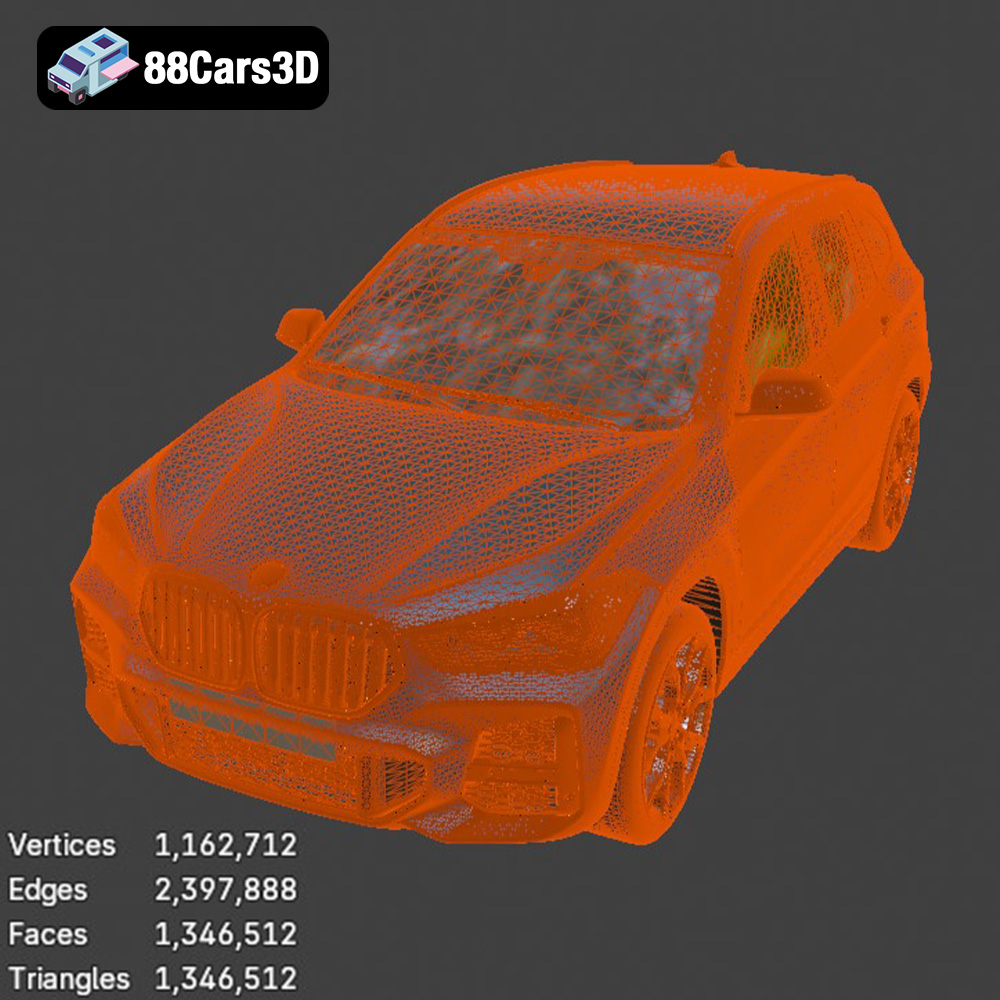
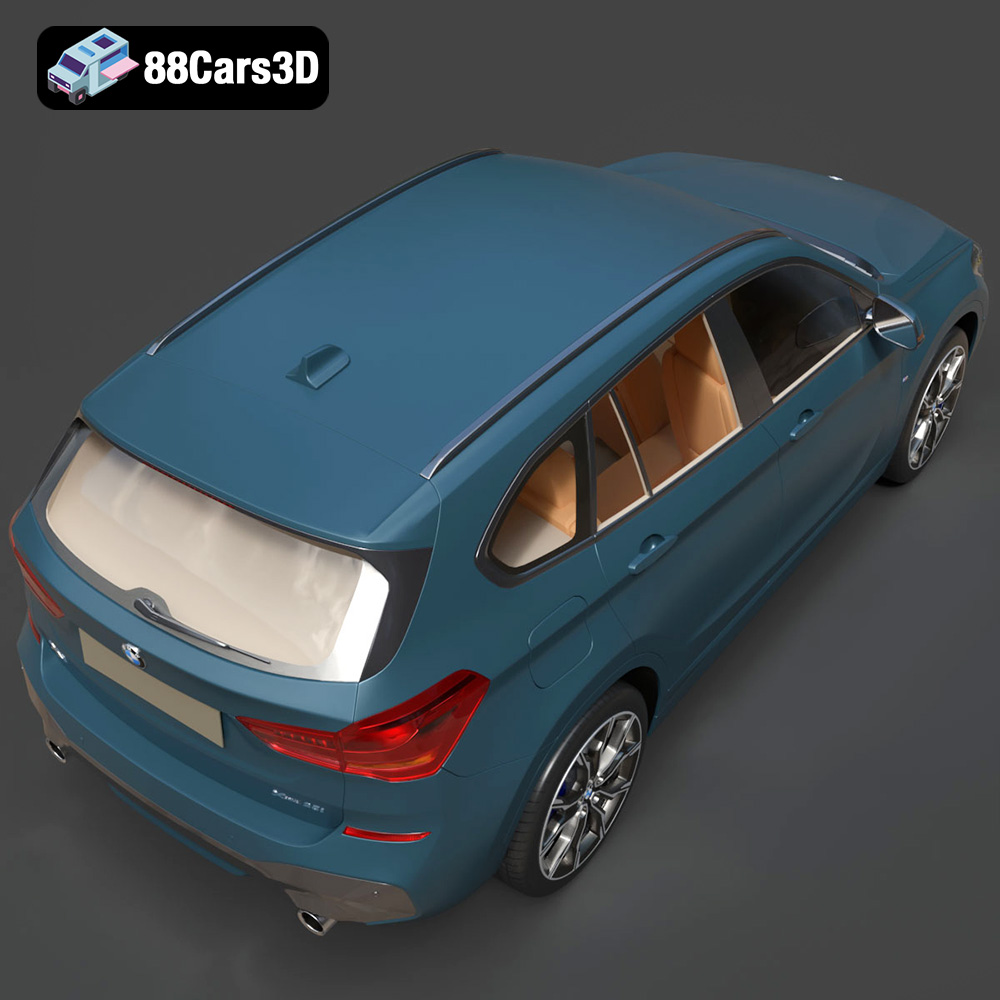
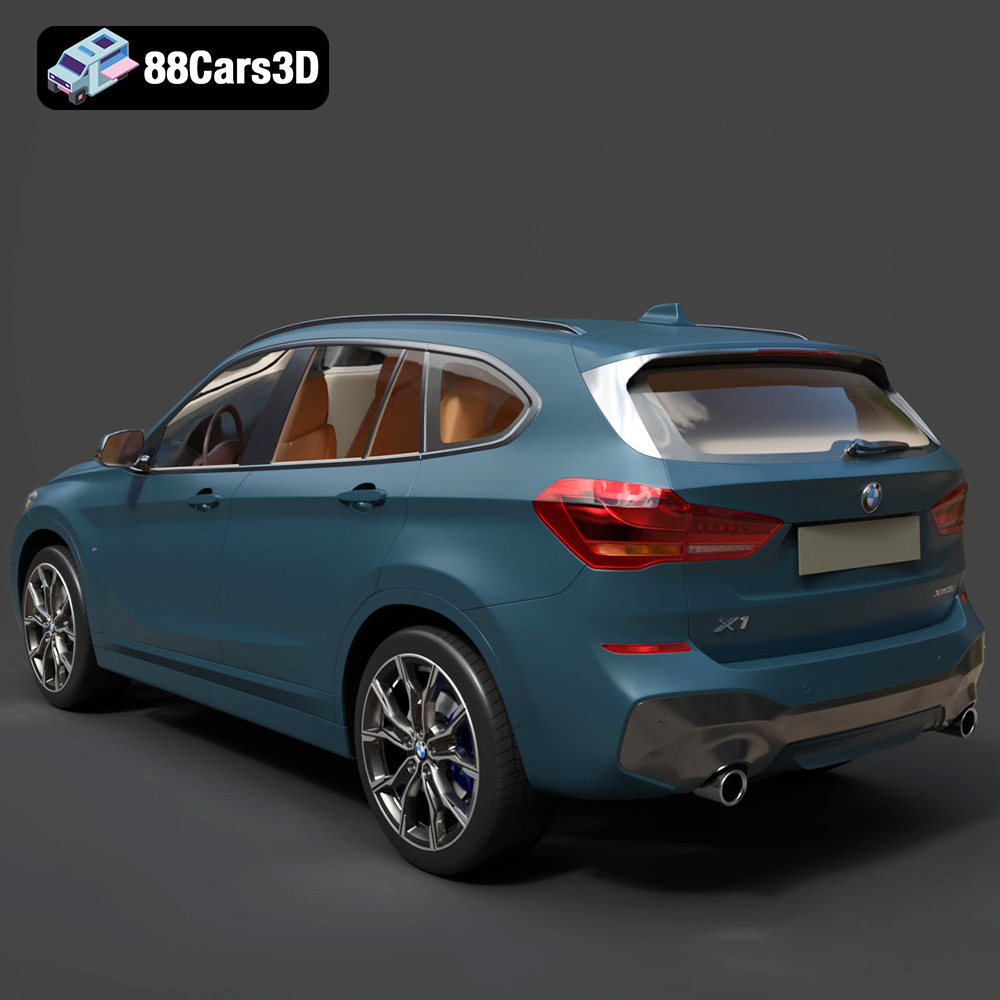
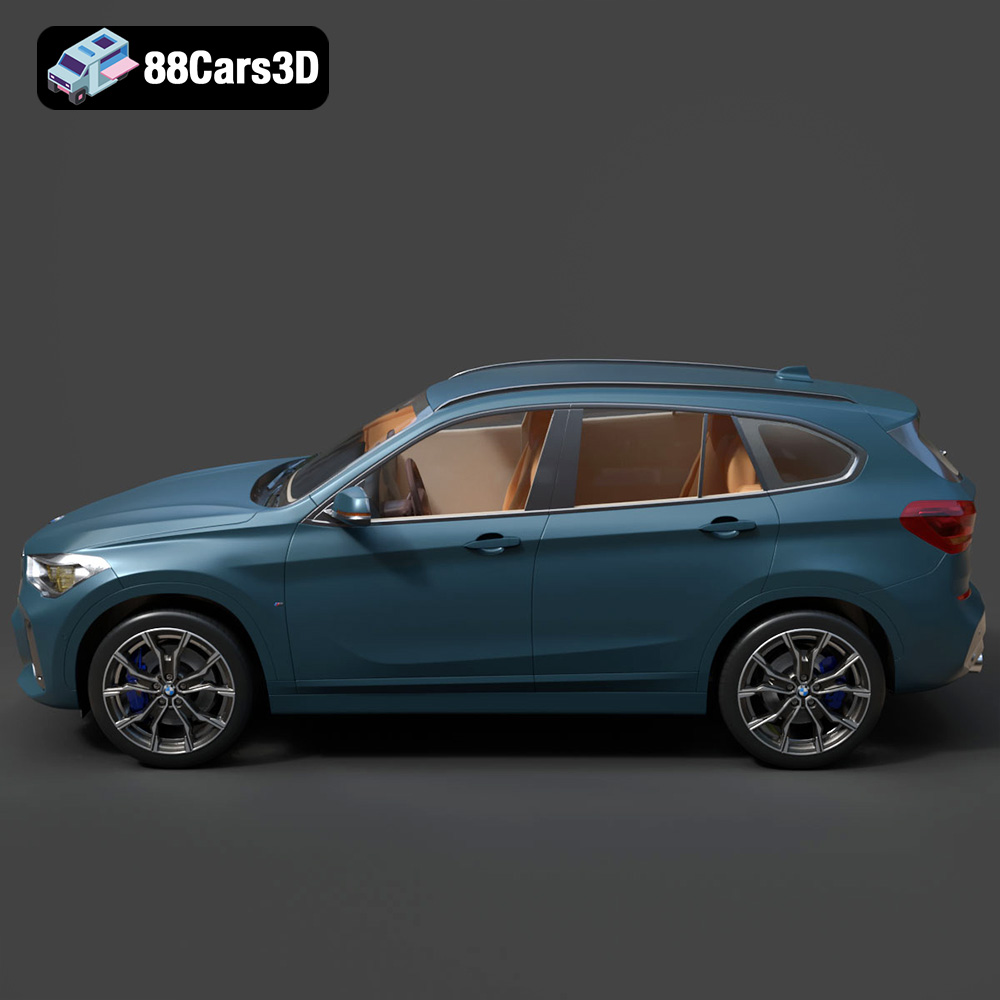
Achieving photorealism begins with accurate materials and sophisticated lighting. The BMW X1 M-Sport’s model is designed with an optimized topology (~500,000 triangles), ensuring smooth reflections and accurate shading crucial for convincing automotive finishes. In software like 3ds Max with V-Ray or Blender with Cycles, artists can leverage this clean mesh to apply advanced physically based rendering (PBR) materials. This includes creating highly reflective metallic paints, nuanced plastic trims, realistic glass with appropriate refraction, and intricate tire rubber. The accurate frame geometry and proportions, along with detailed M-Sport specific elements like the front bumper, exhaust system, and alloy wheels, allow for the capture of light in a way that truly mimics real-world physics. Crafting studio lighting setups or placing the vehicle within an HDR (High Dynamic Range) environment will immediately yield compelling results, showcasing the vehicle’s dynamic silhouette and sculpted bodywork with breathtaking precision.
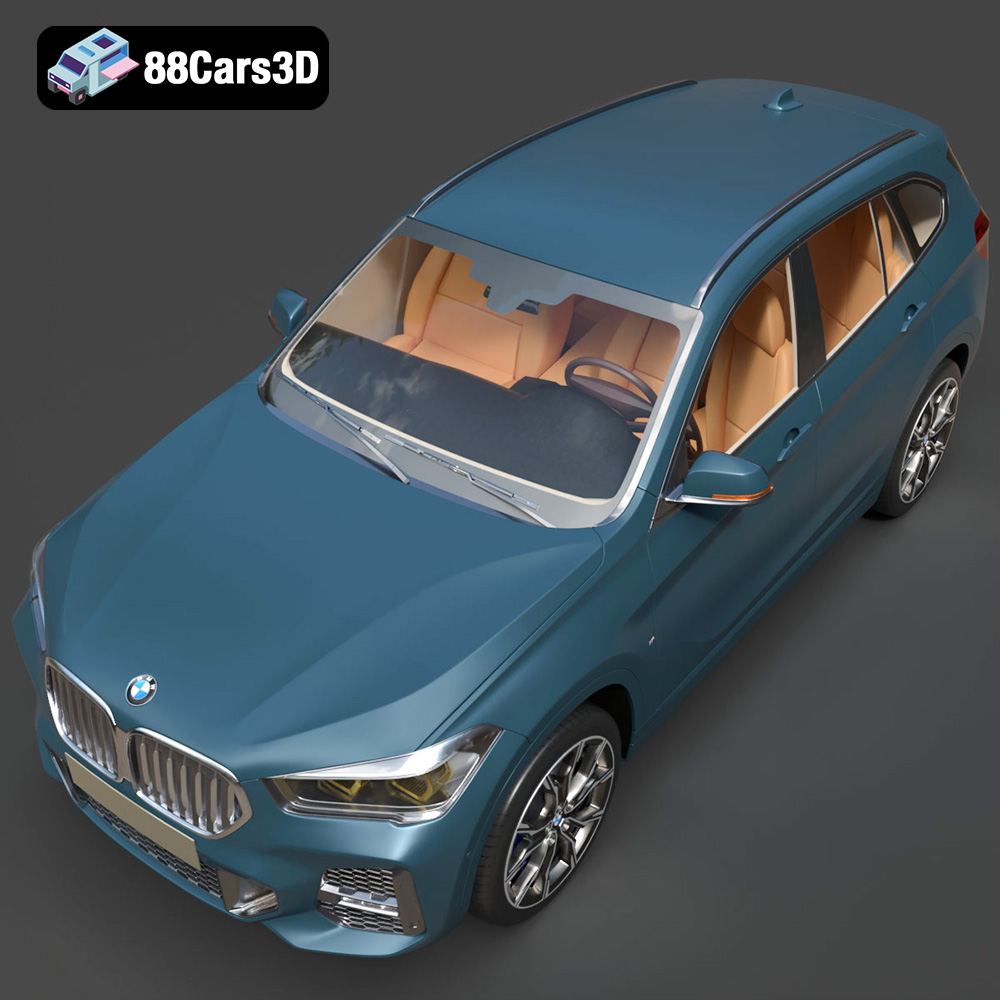
Beyond the exterior, the interior of a luxury vehicle like the BMW X1 M-Sport is equally important for comprehensive visualization. This 3D model features M-Sport specific sport seating with detailed stitching, an M leather steering wheel, and high-resolution digital displays for the instrument cluster and iDrive infotainment system. For interior shots, artists can focus on subtle details: the ambient light filtering through windows, the texture of the dashboard, the intricate reflections on chrome accents, and the tactile feel suggested by the material shaders. These interior elements are optimized, even for first-person POV in gaming, making them perfectly suitable for detailed close-up renders that highlight the premium feel and ergonomic design of the X1 M-Sport’s cockpit. Imagine rendering a serene sunset hitting the M-Sport steering wheel, highlighting every stitch and control – the model is built to facilitate such high-fidelity scenes.
In the realm of game development, balancing visual fidelity with performance is a constant challenge. Game-ready assets are a cornerstone of efficient production, and the BMW X1 M-Sport 2020 3D Model excels in this regard, making it a valuable asset for any studio.
The description highlights the model’s ~500,000 triangles, which is a meticulously chosen polycount that strikes an ideal balance for real-time engines like Unreal Engine and Unity. This isn’t “low-poly” in the traditional sense, but “optimized-poly” – high enough to maintain exceptional visual realism and smooth surfaces even up close, yet efficient enough to integrate into open-world environments or racing titles without significantly impacting frame rates. For game developers, this means less time spent on manual optimization and more time on gameplay and level design. The inclusion of the .fbx format, specifically designed for game engine interoperability, further simplifies the process of importing, setting up materials, and integrating the model into a game world. Its proper pivot setup for steering, wheel rotation, and suspension travel is crucial for realistic vehicle physics and animation, allowing for a dynamic driving experience right out of the box.
A static car model has limited use in a game; it needs to be interactive and animatable. The BMW X1 M-Sport model addresses this by having separate wheels, suspension, and steering components. This modularity is vital for implementing realistic vehicle dynamics. Developers can easily rig the wheels for rotation and steering, simulate suspension compression and rebound, and even animate door openings for immersive interactions. For racing games, this means dynamic handling; for open-world titles, it allows for player-controlled vehicles or AI traffic with believable movement. The optimized geometry for first-person POV in the interior further enhances immersion, allowing players to experience the M-Sport cockpit from a driver’s perspective, complete with interactive digital instrument clusters and infotainment displays.
The utility of high-quality 3D car models extends far beyond traditional rendering and game development. The BMW X1 M-Sport 2020 3D Model demonstrates remarkable versatility, making it suitable for emerging technologies like Augmented Reality (AR), Virtual Reality (VR), and even physical fabrication through 3D printing.
The .glb file format, explicitly included with this model, is a game-changer for AR/VR applications. .glb files are highly optimized for web-based delivery and quick loading, making them perfect for virtual showrooms, interactive configurators, and mobile AR experiences. Imagine a prospective buyer using their smartphone to place a life-sized BMW X1 M-Sport in their driveway via AR, rotating it, changing colors, and even peeking inside. In VR, the model’s detailed interior and exterior can create an incredibly immersive virtual test drive or a comprehensive exploration of the vehicle’s features. The optimized polycount, while high for visual fidelity, is carefully balanced to ensure smooth performance in VR environments, which demand exceptionally stable frame rates to prevent motion sickness. This allows for rich, interactive experiences that push the boundaries of automotive marketing and digital engagement.
The technical specifications of the BMW X1 M-Sport 2020 3D Model also cater to the growing hobbyist and professional demand for 3D printing. By providing an .stl format, the model becomes tangible. The product details offer explicit recommendations for 3D print settings:
These guidelines ensure that hobbyists can successfully translate the digital model into a high-quality physical replica, ready for post-processing like sanding, priming, and applying authentic factory colors with metallic finishes. This unique capability adds another layer of value, allowing enthusiasts to own a physical representation of this iconic SAV, directly from its digital counterpart available on 88cars3d.com.
A truly professional 3D asset is defined by its underlying technical craftsmanship as much as its aesthetic appeal. The BMW X1 M-Sport 2020 3D Model exemplifies this, with specifications that ensure both high-fidelity visuals and robust performance across various platforms.
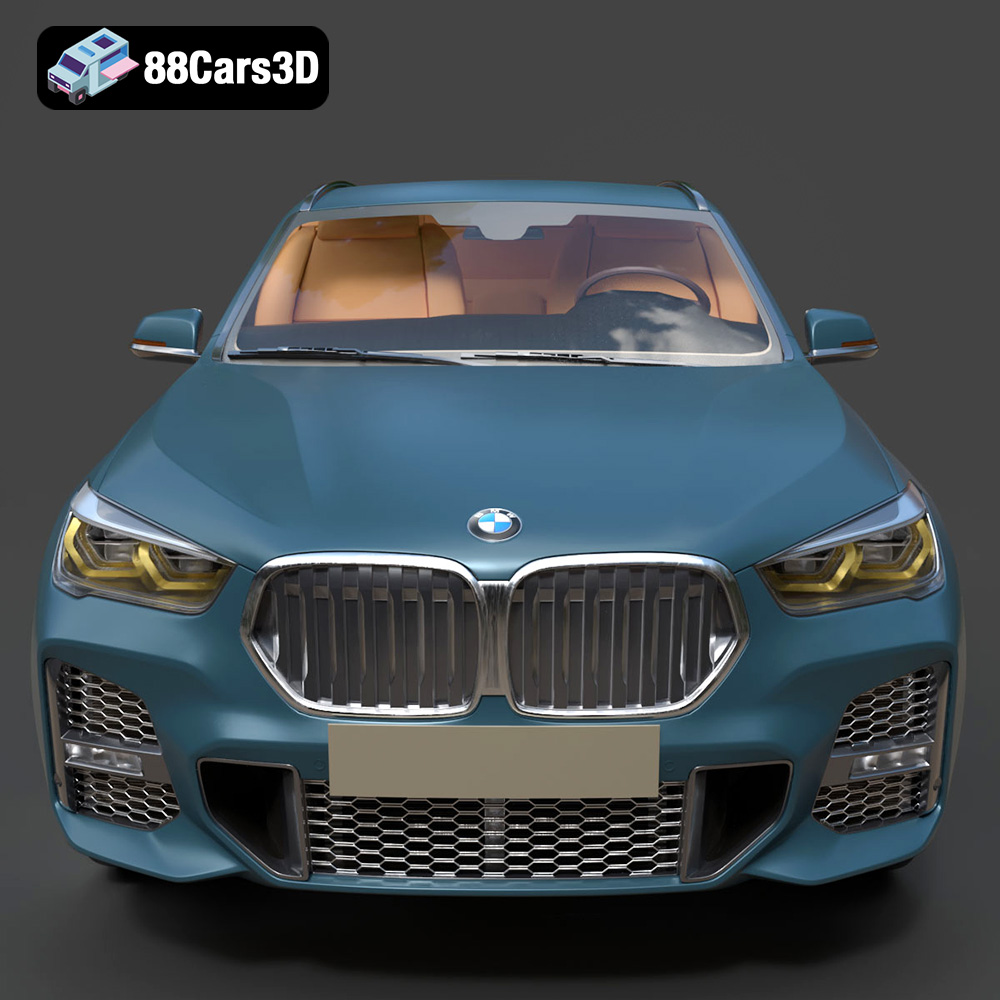
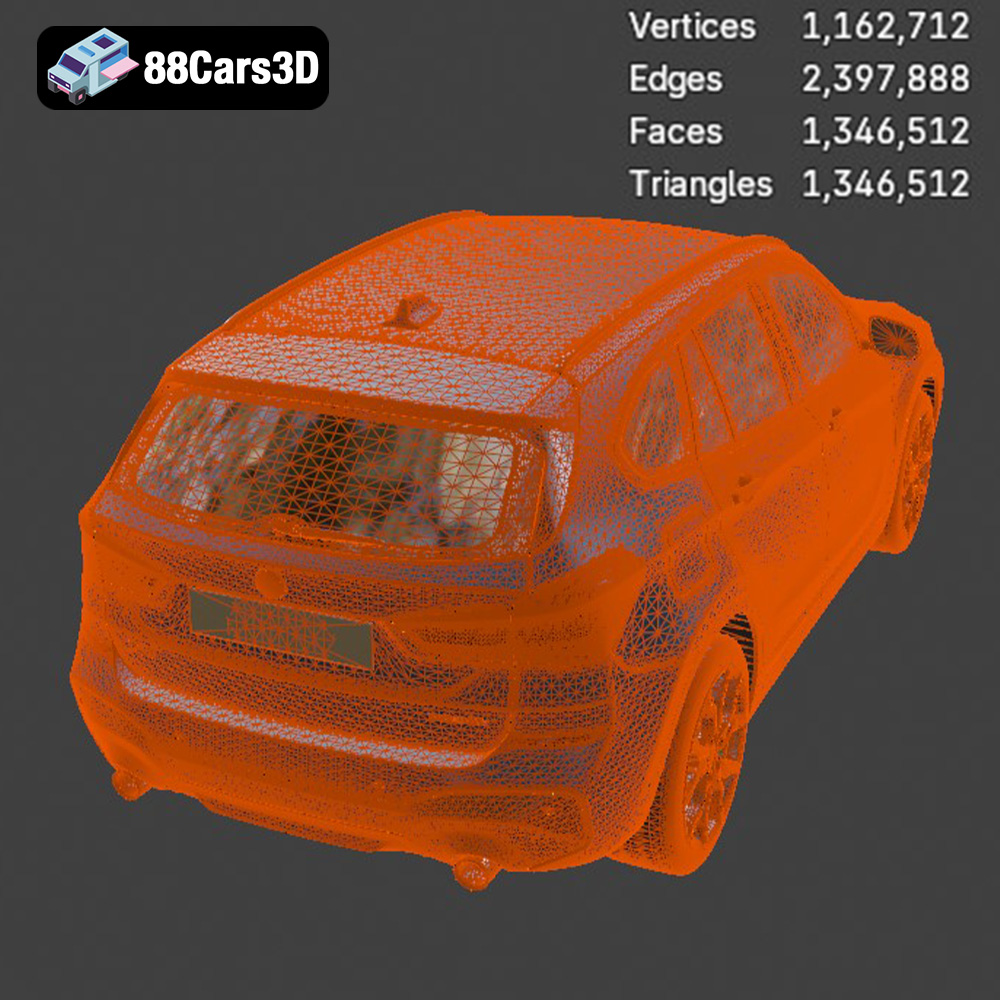
The model’s approximately 500,000 triangles represent a carefully considered polygon budget. This ensures that the vehicle’s complex curves, sharp edges, and detailed components – from the bold kidney grille to the aggressive M-Sport aerodynamic package – retain their smooth, accurate forms without appearing faceted or overly dense. For automotive rendering, this polycount allows for excellent sub-division capabilities if even finer detail is required, while remaining manageable for real-time applications. Furthermore, the model is built to real-world scale accuracy based on the actual vehicle chassis, which is critical for realistic lighting, physically accurate simulations, and seamless integration into architectural scenes or virtual environments where proportion is paramount. This adherence to real-world dimensions simplifies workflows for artists, eliminating guesswork and ensuring consistency.
A critical feature for dynamic applications is the proper pivot setup for steering, wheel rotation, and suspension travel. This attention to detail means that animators and game developers don’t have to spend valuable time manually configuring these essential points; the model is prepped for immediate animation and physics integration. This significantly accelerates development cycles for racing simulators or interactive vehicle experiences. Beyond geometry, the model offers extensive customization options. Users can easily change body colors to match factory hues or explore custom finishes, modify tire textures for different scenarios (e.g., off-road vs. street variants), and adjust material properties (matte, gloss, metallic) to achieve specific aesthetic goals. The ability to adapt lighting for different environments further enhances its versatility, ensuring the BMW X1 M-Sport always looks its best, whether under a studio spotlight or bathed in natural sunlight.
The comprehensive nature and flexible file formats of the BMW X1 M-Sport 2020 3D Model make it an ideal candidate for integration into a wide array of professional workflows.
For architectural visualization studios, integrating a premium vehicle like the BMW X1 M-Sport into exterior or interior renders of a luxury home or dealership setting adds instant prestige and realism. Using the .max or .blend files, artists can quickly import the car, apply advanced render settings (e.g., V-Ray, Corona, Cycles), and position it perfectly within their scene. The model’s high visual fidelity ensures that it stands up to close-up shots, enhancing the overall quality of the architectural presentation. For automotive marketing, this model is invaluable for creating engaging brand campaigns, lifestyle scenes, and studio lighting setups without the logistical challenges and costs associated with real-world photography or film shoots. Its customizability in terms of color and materials allows for rapid iteration on design concepts and marketing visuals.
Game developers will find the .fbx and .unreal formats particularly useful for streamlining their production pipeline. The “game-ready” optimization means less time converting and cleaning meshes, and more time focusing on level design, gameplay mechanics, and optimizing player experience. For an open-world driving game, the X1 M-Sport can serve as a primary player vehicle or a high-detail AI car. In VR, the .glb format facilitates the creation of immersive virtual showrooms where customers can explore the car in a 1:1 scale, interacting with its features and experiencing its design without leaving their home. This level of realism and optimization makes the model a cornerstone asset for any studio looking to create compelling real-time automotive experiences.
The digital landscape is continually evolving, demanding increasingly sophisticated and versatile 3D assets. The BMW X1 M-Sport 2020 3D Model stands as a testament to this demand, offering a meticulously crafted digital representation of a premium compact SUV that caters to a broad spectrum of professional applications. From the intricate details required for photorealistic architectural renderings and cutting-edge marketing campaigns to the optimized performance essential for immersive game development and interactive AR/VR experiences, this model delivers on all fronts.
Its comprehensive suite of file formats – including .blend, .fbx, .obj, .glb, .stl, .ply, .unreal, and .max – ensures unparalleled compatibility and flexibility, allowing artists and developers to seamlessly integrate the X1 M-Sport into their preferred workflows. The careful balance of high visual fidelity with game-ready optimization, coupled with features like accurate real-world scale, animated components, and extensive customization options, makes it an indispensable asset. Whether you’re envisioning a stunning showroom render, building a dynamic open-world game, or creating a tangible 3D-printed replica, this BMW X1 M-Sport model is engineered for excellence.
For those seeking to elevate their digital projects with top-tier automotive assets, the BMW X1 M-Sport 2020 3D Model is a compelling choice. Explore this and a wide range of other high-quality 3D car models available for instant download at 88cars3d.com, and unlock new possibilities for your creative endeavors.
The 2020 BMW X1 M-Sport is a premium compact SUV that perfectly blends everyday practicality with signature Bavarian athletic performance. Featuring the aggressive M-Sport aerodynamic package, a bold kidney grille, and sharp LED headlight styling, this SAV (Sports Activity Vehicle) stands out on any road. Its dynamic silhouette, prominent exhaust tailpipes, and sculpted bodywork make it a highly desirable vehicle in the luxury crossover segment. This premium 3D model offers exceptional visual fidelity and a meticulously optimized topology with approximately 500,000 triangles. It strikes the ideal balance between high-end detail and game-ready performance, making it an excellent asset for real-time engines like Unreal and Unity. The mesh provides smooth reflections and accurate shading, ensuring a photorealistic appearance right out of the box. Perfect for high-end architectural visualizations, driving simulators, open-world gaming environments, and immersive VR automotive showrooms.
$19.99
.2020
.blend
.bmw
.crossover
.fbx
.glb
.max
.obj
.ply
.rendering
.stl
.unreal
car-3d-model
game asset
game-ready
low-poly
m-sport
optimized
sav
SUV
VR/AR
x1