Get 20% OFF All Premium 3D & STL Models!

In the dynamic world of 3D modeling and digital content creation, certain vehicles possess an undeniable charm that transcends mere transportation. The Citroën Type H, with its distinctive corrugated bodywork and utilitarian aesthetic, is one such icon. It evokes a sense of timeless European street culture, making it a perfect candidate for diverse digital projects. When reimagined as a food truck, this classic van transforms into a vibrant, story-rich asset, capable of anchoring scenes in games, architectural visualizations, AR/VR experiences, and cinematic renders. The demand for high-quality, game-ready 3D car models that blend historical accuracy with modern optimization is greater than ever, and a meticulously crafted asset like the Citroën Type H Food Truck 3D Model fits this niche perfectly.
Whether you’re populating an open-world game, illustrating a bustling urban scene for a client presentation, or building an immersive virtual reality experience, the details matter. From the gleam of the vintage paintwork to the carefully arranged kitchen interior, a well-executed 3D model brings authenticity and life to your digital creations. This article will delve deep into the technical specifications, creative applications, and professional workflows enabled by such an asset, showcasing why models like the Citroën Type H Food Truck available on 88cars3d.com are indispensable tools for today’s 3D artists and developers.
The usability and versatility of any 3D model, especially complex automotive rendering assets like the Citroën Type H Food Truck, are heavily dependent on the file formats it supports. Each format is designed with specific use cases, software compatibilities, and data preservation priorities in mind. Understanding these distinctions is crucial for seamless integration into various professional pipelines, from game development to architectural visualization and 3D printing. The Citroën Type H Food Truck 3D Model comes with a comprehensive suite of formats, ensuring maximum flexibility.
The `.blend` file format is native to Blender, a powerful open-source 3D creation suite. When you receive a model in `.blend` format, you’re getting a fully editable Blender scene. This typically includes the mesh data, materials (configured for Cycles or Eevee), textures, lighting setups, cameras, and even animation data if present. For artists primarily working in Blender, this is often the preferred format as it offers the most complete and native editing experience, allowing for direct manipulation of modifiers, precise PBR material adjustments, and scene composition without any conversion artifacts. It’s ideal for in-depth customization, rendering high-fidelity images or animations directly within Blender, and further developing the asset’s visual appeal.
The Filmbox (`.fbx`) format, owned by Autodesk, has become the de facto standard for exchanging 3D data between different software applications and game engines. It’s a robust format capable of storing complex data, including mesh geometry, materials (though often simplified or requiring re-setup in the target application), textures, animation, rigging, and camera information. For game developers working with Unreal Engine or Unity, `.fbx` is typically the go-to format due to its excellent compatibility and support for real-time asset pipelines. When importing an `.fbx`, careful attention should be paid to scaling, pivot points, and material conversion to ensure a consistent look and behavior across platforms.
The Wavefront Object (`.obj`) format is one of the oldest and most widely supported 3D file formats. It’s a universal standard, compatible with almost every 3D software application. `.obj` files primarily store geometry (vertices, normals, UVs, faces) and can reference external `.mtl` (material) files for basic material properties and texture paths. While it’s excellent for geometry exchange due to its simplicity and broad compatibility, it doesn’t typically store complex PBR material networks, rigging, or animation data. It’s an ideal choice when you need a clean mesh that can be easily imported into any program for texturing or further processing.
GLB (`.glb`) is the binary version of the glTF (GL Transmission Format), designed for efficient transmission and loading of 3D scenes and models by applications. It packages geometry, materials, textures, and animation into a single file, making it incredibly convenient for web-based 3D viewers, augmented reality (AR), virtual reality (VR), and mobile applications. Its optimization for real-time rendering and small file size makes it perfect for interactive online experiences where performance is key. The Citroën Type H Food Truck in `.glb` format would be ready for immediate deployment in a WebGL viewer or an AR application.
The Stereolithography (`.stl`) format is specifically designed for 3D printing. It represents the surface geometry of a 3D object using a collection of interconnected triangles. `.stl` files do not contain color, texture, or material information, focusing solely on the object’s shape. When preparing models like the Citroën Type H Food Truck for physical fabrication, converting to `.stl` is the standard procedure. It requires careful consideration of scale, wall thickness, and manifold geometry to ensure a successful print, as detailed in the product’s 3D print settings.
The Polygon File Format (`.ply`), also known as the Stanford Triangle Format, is primarily used for storing 3D data from 3D scanners. It can store a variety of properties, including color, transparency, surface normals, and range data, alongside geometric information. While less common for general 3D asset exchange than `.fbx` or `.obj`, `.ply` is valued in scientific, CAD, and engineering applications for its precision and ability to represent complex point cloud and polygonal data. It provides a robust format for scenarios where mesh integrity and detailed attribute storage are paramount.
The `.unreal` format denotes a model specifically packaged or optimized for direct import into Unreal Engine projects. While often derived from `.fbx` imports, this designation implies that the asset has undergone engine-specific preparation, such as correct scale, pivot setup, collision meshes, and potentially even pre-configured materials suitable for Unreal’s PBR workflow. For game developers using Unreal Engine, an asset provided in `.unreal` format offers a significant head start, minimizing post-import setup and ensuring optimal performance within the engine’s real-time rendering pipeline.
The `.max` file format is the native scene file for Autodesk 3ds Max, a leading software for 3D modeling, animation, and rendering. Similar to `.blend`, a `.max` file contains the complete scene, including geometry, materials, textures, lighting, cameras, animation, and any modifiers or rigging applied within 3ds Max. This format is invaluable for users who rely on 3ds Max for their primary workflow, offering the highest level of editable control over the asset, making it perfect for complex animation setups, highly detailed architectural visualization, or further design iterations.
The inclusion of such a broad range of formats with the Citroën Type H Food Truck 3D Model ensures that users from various disciplines can integrate this high-quality asset into their specific pipelines with minimal friction, facilitating a truly professional and efficient workflow.
The quality of a 3D model isn’t just about its visual appeal; it’s deeply rooted in its technical execution. The Citroën Type H Food Truck 3D Model exemplifies this, offering a blend of artistic detail and technical optimization that makes it suitable for demanding professional use. From its geometry to its material fidelity, every aspect has been carefully considered.
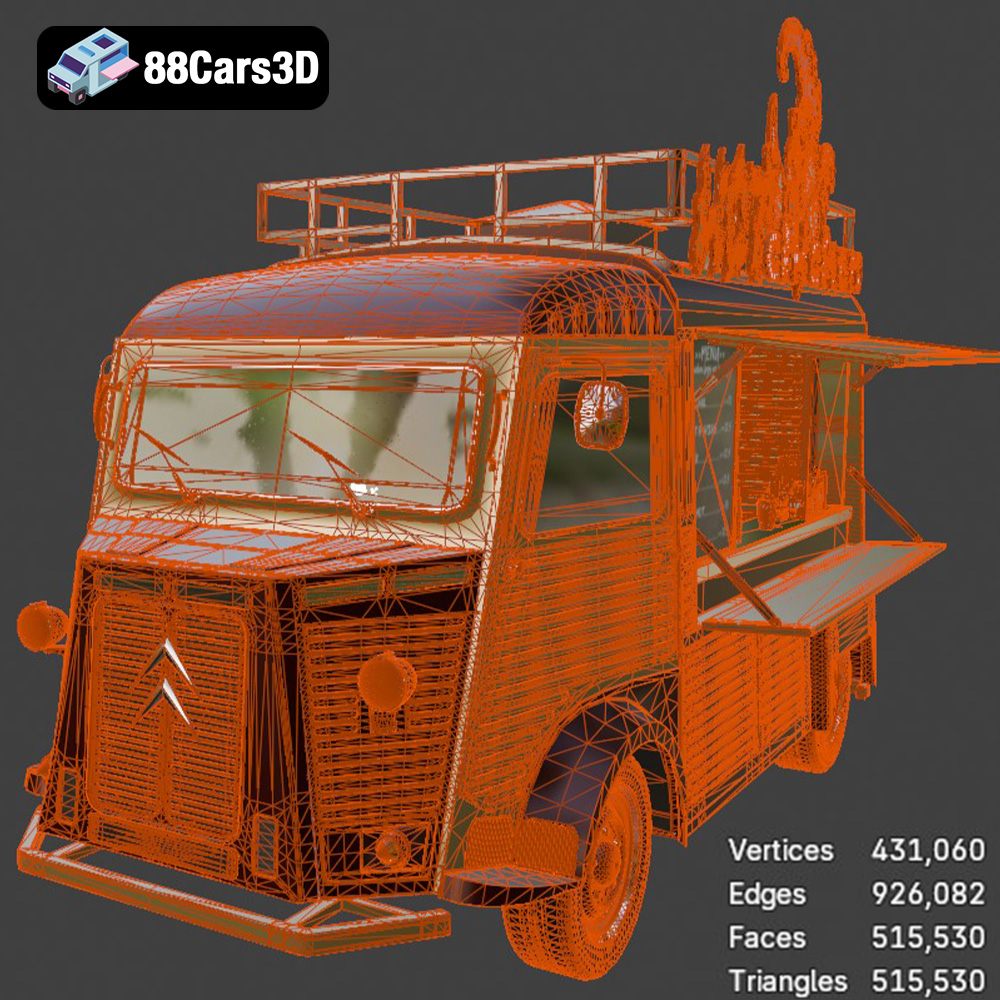
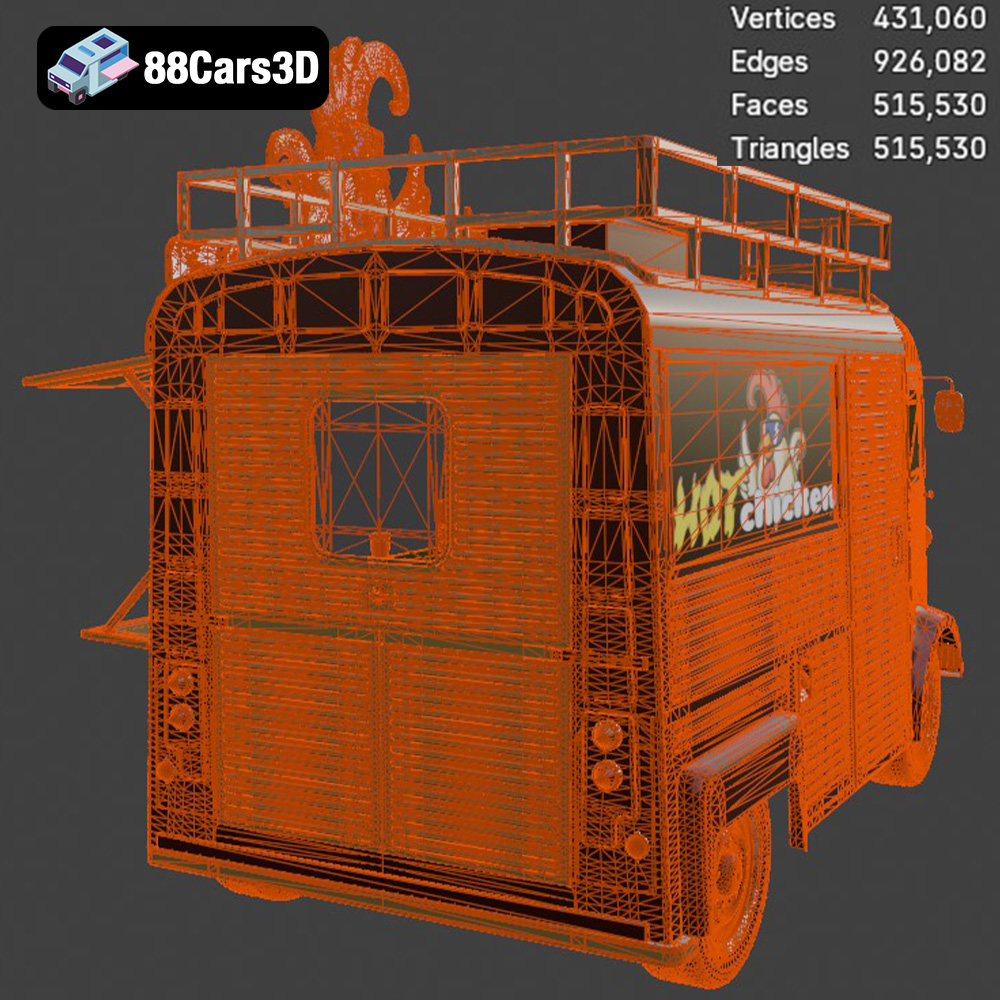
One of the standout features of this 3D car model is its optimized game-ready topology, featuring approximately 250,000 triangles. This poly count strikes an excellent balance: it’s sufficiently detailed to capture the iconic corrugated panels, the distinct “pig snout” grille, and the intricate interior kitchen setup, yet lean enough to perform efficiently in real-time environments like game engines. Such optimization is crucial for maintaining high frame rates in complex scenes, whether it’s an open-world game, an interactive architectural walkthrough, or a mobile AR application. The geometry is clean, ensuring smooth shading and minimizing rendering artifacts, a testament to meticulous modeling practices.
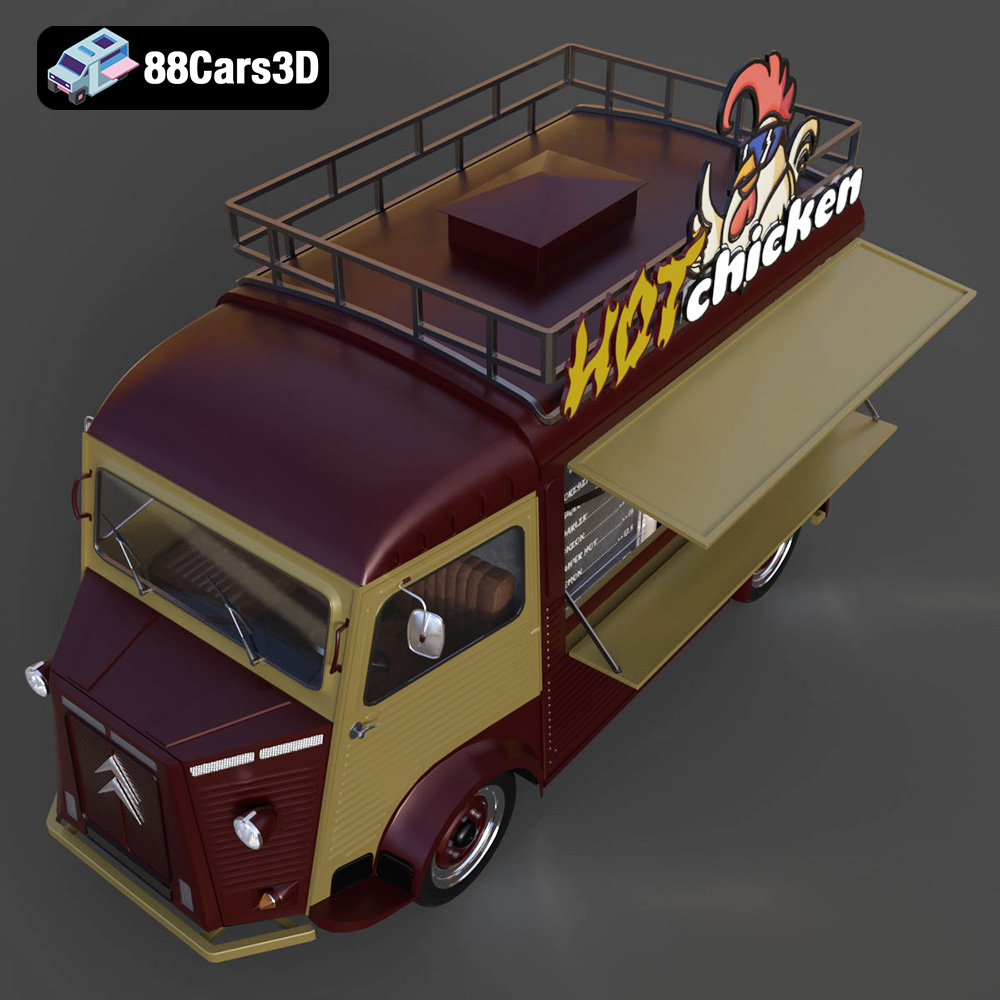
Visual realism in modern 3D rendering heavily relies on physically based rendering (PBR) materials. The Citroën Type H Food Truck 3D Model comes with crisp textures and realistic PBR materials that bring out the authentic weathering, metallic reflections, and vibrant paintwork of a classic vehicle. This means that when integrated into PBR-compatible renderers (like Unreal Engine’s PBR workflow, Blender’s Cycles, or V-Ray in 3ds Max), the model will react to light in a physically accurate manner, resulting in incredibly believable reflections, roughness, and color fidelity. The careful detailing extends to the separate wheels, doors, and serving hatch components, each designed for easy animation, enhancing the asset’s utility in dynamic scenes.
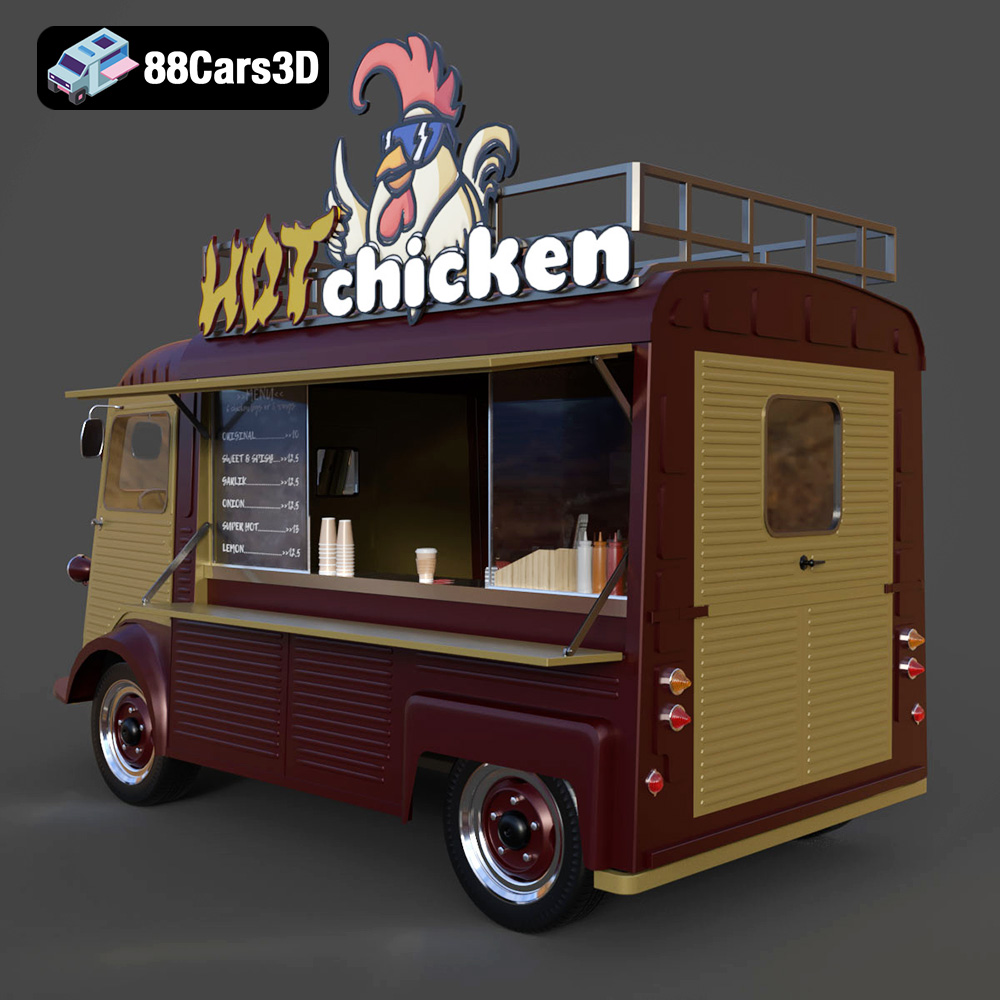
Beyond static renders, the true versatility of a high-quality 3D asset shines in its animation readiness. The Citroën Type H Food Truck 3D Model features proper pivot setups for steering, wheel rotation, door articulation, and the side-opening serving hatch. This means animators can quickly bring the model to life, creating realistic driving sequences, interactive elements for games, or dynamic reveals for architectural visualizations. The ability to easily open the serving hatch and reveal the fully detailed mobile kitchen setup inside adds an extra layer of narrative potential, inviting viewers to imagine the culinary delights being prepared within. This attention to functional detail elevates the model from a simple prop to a dynamic storytelling tool.
The true measure of a professional 3D asset lies in its seamless integration into various production pipelines. The Citroën Type H Food Truck 3D Model is designed with this principle at its core, offering flexibility across a spectrum of professional applications, from interactive experiences to high-fidelity static renders.
For game developers, the “game-ready” designation is paramount. With its optimized ~250,000 triangle count and inclusion of `.fbx` and `.unreal` formats, this 3D car model is primed for immediate import into leading game engines like Unreal Engine and Unity. The clean topology ensures efficient collision detection and LOD (Level of Detail) generation, crucial for performance in open-world games or detailed simulator environments.
* **Unreal Engine Workflow:** Importing the `.fbx` or `.unreal` file into Unreal Engine allows artists to quickly create a static mesh asset. The included PBR textures (Albedo, Normal, Roughness, Metallic, AO) can be easily plugged into a master material, ensuring physically accurate rendering within the engine. With correct pivot points, setting up vehicle blueprints for driving mechanics or animating the serving hatch is straightforward, offering a ready-made asset for populating urban street scenes or unique mission objectives.
* **Unity Workflow:** Similarly, importing the `.fbx` into Unity allows for quick setup. Unity’s material system, compatible with PBR workflows, makes applying the provided textures simple. The optimized mesh is ideal for mobile game development or high-performance PC titles, where unique game assets like this food truck can add significant character and gameplay opportunities.
Architectural visualization (ArchViz) often demands photo-realistic quality to convey a sense of place and atmosphere. The Citroën Type H Food Truck is an excellent asset for enhancing exterior architectural renders, lifestyle visualizations, and urban planning concepts.
* **3ds Max Workflow:** Artists using 3ds Max can leverage the native `.max` file for complete control. They can integrate the food truck into a scene, adjusting lighting, camera angles, and rendering with powerful engines like V-Ray or Corona Renderer. The model’s real-world scale ensures it fits naturally into existing architectural environments. The ability to customize colors and add branding allows architects and designers to tailor the truck to specific project themes or client requirements, making it a dynamic focal point in a street-level rendering.
* **Blender Workflow:** With the `.blend` file, Blender users have immediate access to the full model, complete with materials ready for Cycles or Eevee. This allows for rapid iteration and high-quality output, whether for still images or animated walkthroughs. The detailed interior kitchen provides excellent opportunities for close-up shots or even virtual tours within the food truck itself, adding depth and narrative to a visualization project.
The versatility extends to emerging technologies and physical creation. The `.glb` format makes this model ideal for AR/VR applications, offering an optimized, single-file solution for immersive experiences. Imagine a virtual street food festival where users can walk around and interact with this charming vehicle. For those interested in tangible outputs, the `.stl` format, combined with the detailed 3D print settings provided, allows hobbyists and professionals to bring this iconic van to life as a physical model. Resin printing, as recommended, would ensure that the corrugated panels and fine details are accurately reproduced, perfect for dioramas or display pieces. This multi-faceted utility underscores the thought put into this 3D asset from 88cars3d.com.
The Citroën Type H Food Truck 3D Model isn’t just a static object; it’s a catalyst for creative projects across numerous industries. Its unique character and detailed execution open up a wide array of practical applications, adding significant value to any digital production.
In game development, immersion is key, and environmental storytelling is crucial. A vintage food truck like the Citroën Type H can dramatically enhance the realism and character of a game world. Imagine it as:
* **A central hub in an open-world RPG:** Players could visit it for unique quests, item sales, or even as a mobile base.
* **A dynamic element in a city-building or management simulator:** Players could manage its menu, location, and sales, adding a layer of economic simulation.
* **Background dressing in a racing game:** Populating city tracks with iconic 3D car models like this food truck adds visual authenticity and European flair.
* **A focal point in a casual mobile game:** Serving as the player’s business in a “food truck tycoon” style game, with customization options for branding and upgrades.
Its game-ready optimization ensures that even multiple instances of this model won’t bog down game performance, making it a truly versatile asset for populating virtual worlds.
Augmented and Virtual Reality demand highly optimized yet visually appealing assets to deliver believable immersive experiences. The Citroën Type H Food Truck excels in this domain:
* **Virtual Showrooms:** Imagine a car enthusiast exploring a virtual exhibition of classic vehicles, where this food truck sits as a charming, interactive exhibit, allowing users to peek inside or even customize its paint job.
* **Street Food Festival Simulations:** Users could don VR headsets and walk through a bustling virtual food festival, interacting with vendors, ordering virtual food, and exploring the detailed interior of this truck.
* **Mobile AR Experiences:** Place the virtual food truck directly onto your physical street via a smartphone camera, using it as an interactive element for promotions, educational content, or simply as a fun digital overlay in your environment. The `.glb` format is perfectly suited for these types of lightweight, performance-critical applications.
Beyond games and interactive media, high-quality 3D assets are vital for compelling visualizations that capture attention and communicate ideas effectively.
* **Architectural Exterior Scenes:** An empty street in an architectural render can feel sterile. Adding a vibrant, detailed object like the Citroën Type H Food Truck instantly brings life, scale, and a sense of human activity to the scene. It helps prospective clients visualize their future buildings within a dynamic, relatable urban context.
* **Lifestyle Renders:** For marketing campaigns or product showcases, this food truck can serve as a fantastic prop to evoke a specific mood – urban cool, retro charm, or a bustling event atmosphere. It’s perfect for renders depicting outdoor events, festivals, or trendy city scenes.
* **Commercial Brand Campaigns:** Companies looking to create unique advertising content can leverage this model for digital commercials, print ads, or social media content. Its customizable elements allow for easy branding, turning it into a mobile billboard or a charming symbol for a product. The attention to detail, from the corrugated panels to the interior appliances, ensures a professional-grade output for demanding clients.
A truly valuable 3D asset offers more than just out-of-the-box utility; it provides avenues for customization and adaptation, ensuring its longevity across various projects and evolving creative needs. The Citroën Type H Food Truck 3D Model is built with flexibility in mind, offering artists and developers significant control to tailor it to specific visions.
The default presentation of the Citroën Type H Food Truck likely captures a specific aesthetic – perhaps a charmingly weathered, used appearance that reflects its vintage nature. However, projects often demand variations. The PBR material setup of this 3D model, combined with its well-organized texture sets, allows for extensive aesthetic customization.
* **Color Changes:** Easily swap out the base color of the bodywork to match a specific brand identity, a historical period, or simply to fit a scene’s palette. From a vibrant, modern food truck to a muted, vintage-accurate hue, the possibilities are vast.
* **Custom Decals and Branding:** The clean UV mapping of the model makes it straightforward to apply custom decals, logos, and intricate food truck brand graphics. This is crucial for game development where players might customize their own in-game vehicles, or for architectural visualizations needing specific tenant branding.
* **Material Finishes:** Beyond color, the material properties can be tweaked. Artists can adjust roughness and metallic values to transition from a matte, weathered rust appearance to a high-gloss, freshly restored finish. Imagine a pristine, showroom-quality food truck versus a well-worn veteran of countless street festivals – both looks are achievable with control over the PBR parameters.
The modularity and detailed interior of the Citroën Type H Food Truck also provide opportunities for functional adaptation:
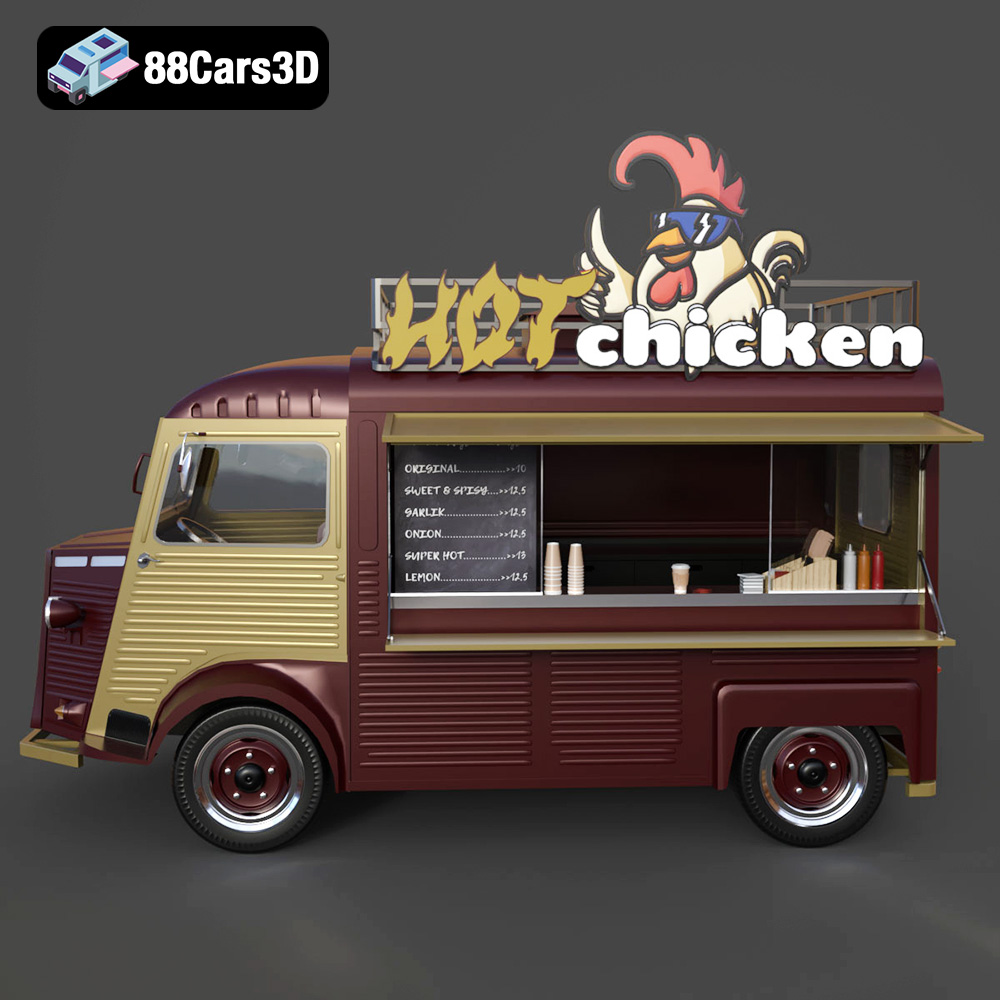
* **Menu Boards and Interior Layouts:** The included menu boards can be easily updated with custom text and graphics. Furthermore, the fully modeled rear food preparation area, complete with counters, shelving, grills, and fryers, can be reconfigured or customized. Perhaps a project needs a coffee truck instead of a burger truck; the interior appliances can be replaced or rearranged to suit.
* **Interior Lighting:** For nighttime scenes or moody renders, the interior lighting of the food truck can be adapted. Adding warm, inviting lights to the serving area can create a cozy ambiance, perfect for urban street scenes or cinematic shots.
* **Component Modularity:** With separate components for wheels, doors, and the serving hatch, artists can easily remove or modify parts if a specific project demands it. For instance, in a scene depicting a food truck under repair, these separate elements become invaluable.
This level of customization ensures that the Citroën Type H Food Truck 3D Model is not a one-time use asset but a long-term investment that can be continually adapted and integrated into a multitude of creative endeavors, extending its value far beyond its initial purpose. This flexibility is a hallmark of truly professional 3D car models.
The world of 3D content creation thrives on quality, versatility, and efficiency. The Citroën Type H Food Truck 3D Model stands as a prime example of an asset that delivers on all fronts. From its iconic, charming design to its meticulously optimized geometry and PBR materials, it provides a powerful foundation for a vast range of digital projects. Whether you are a game developer crafting immersive worlds, an architect visualizing vibrant urban spaces, or a designer creating compelling AR/VR experiences, this model offers the technical prowess and aesthetic appeal to elevate your work.
Its comprehensive file format support, including `.blend`, `.fbx`, `.obj`, `.glb`, `.stl`, `.ply`, `.unreal`, and `.max`, ensures seamless integration into virtually any professional workflow. This commitment to compatibility, combined with game-ready optimization and animation potential, makes it an invaluable addition to any 3D asset library. For artists seeking high-quality 3D car models that combine historical charm with modern technical excellence, the Citroën Type H Food Truck 3D Model from 88cars3d.com is an exceptional choice, ready to infuse character and authenticity into your next project. Explore the possibilities and bring this classic icon to life in your digital universe.
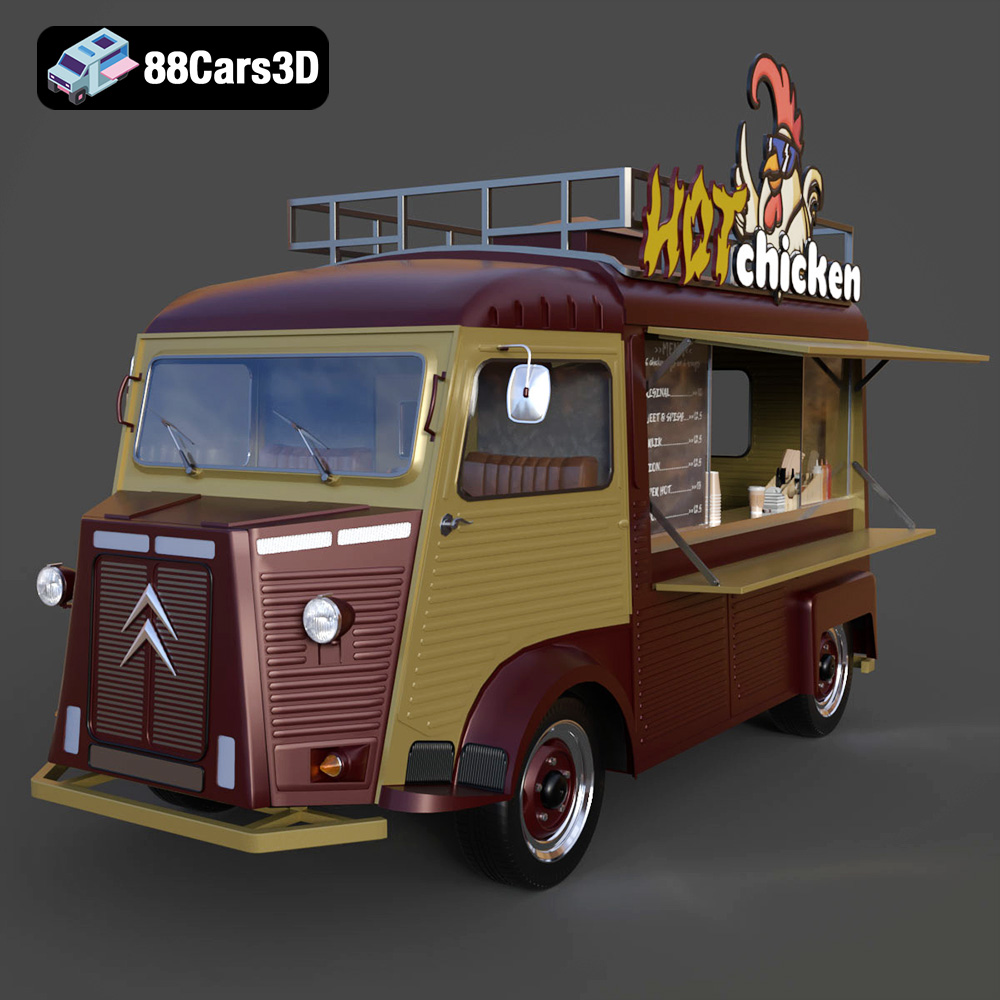
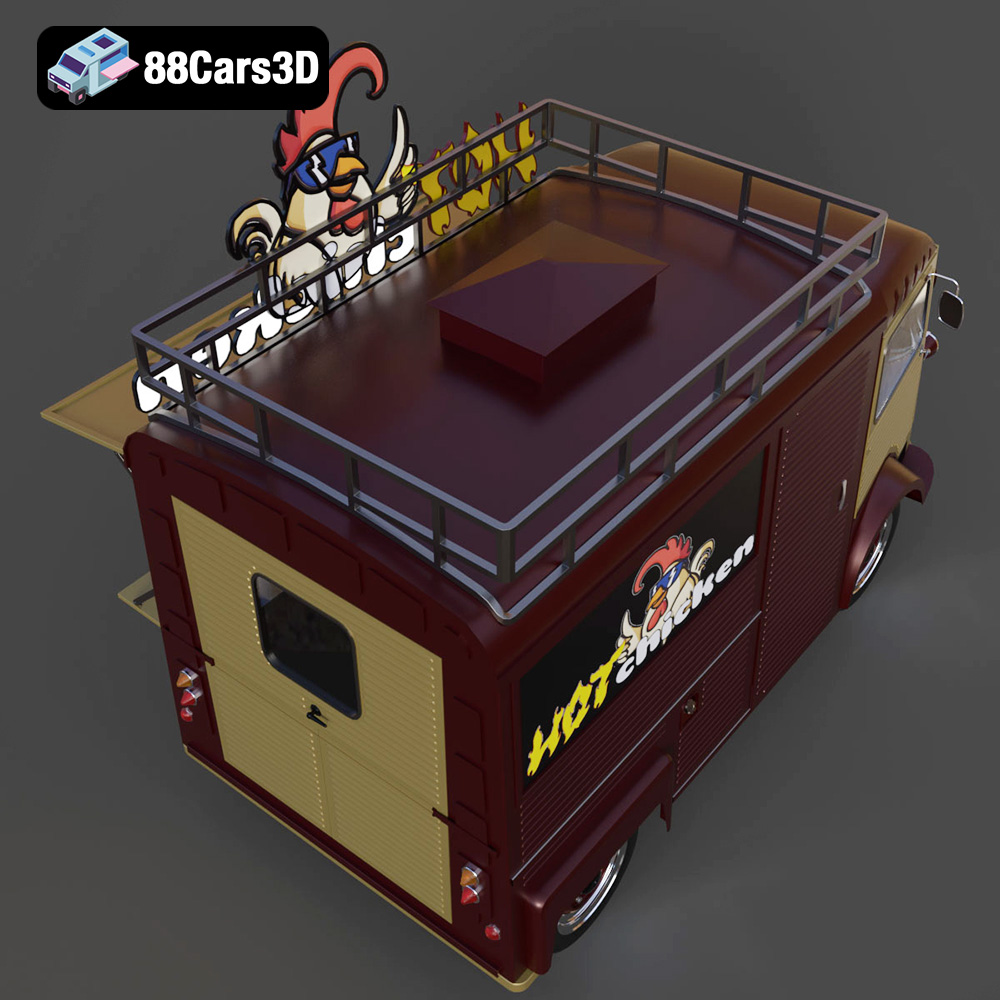
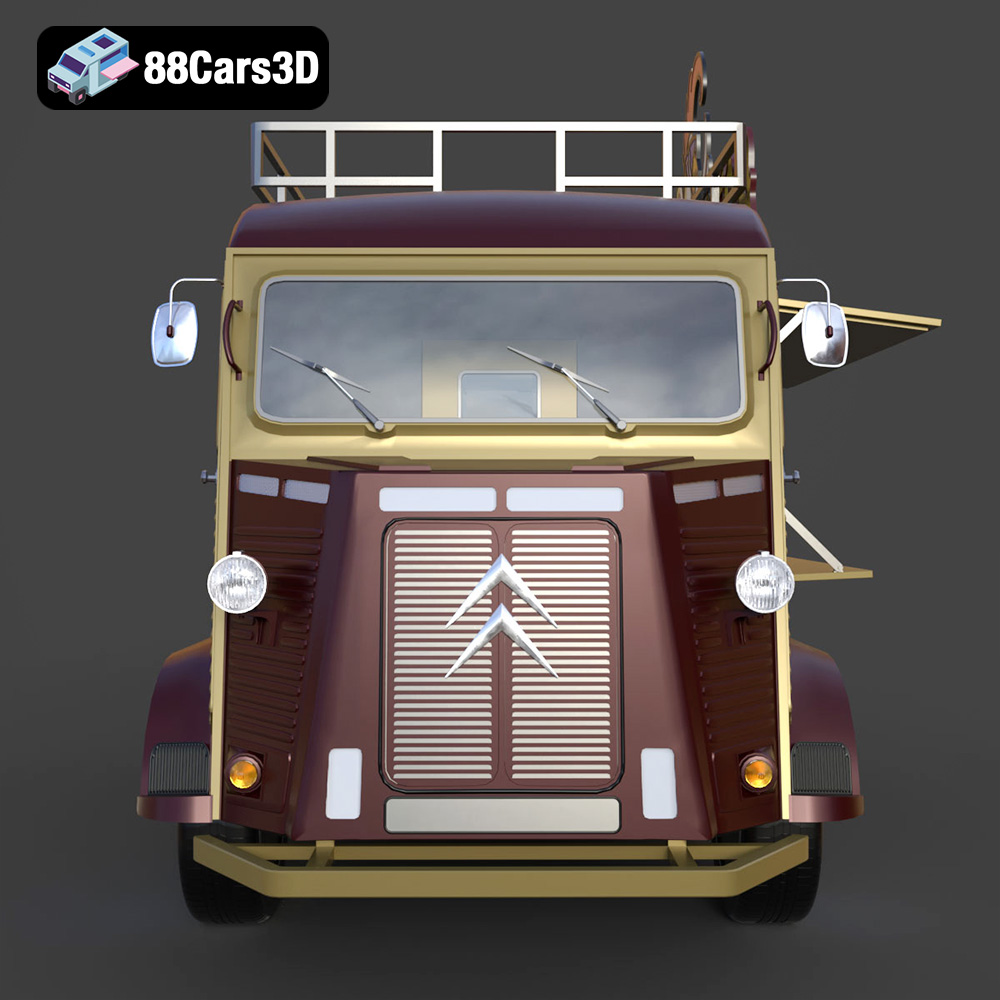
The Citroën Type H is an absolute icon of French automotive history, instantly recognizable by its distinctive corrugated steel bodywork and utilitarian charm. This specific 3D model transforms the classic light commercial van into a fully realized vintage food truck. It perfectly captures the nostalgic character of the original vehicle, featuring the signature “pig snout” front grille, prominent round headlights, and an expertly integrated side-opening serving hatch complete with a detailed mobile kitchen setup inside. Crafted with an optimized game-ready topology of approximately 250,000 triangles, this 3D model delivers high-end visual fidelity without compromising on real-time performance. The geometry is meticulously structured to ensure smooth shading across the complex corrugated panels, while crisp textures and realistic PBR materials bring out the authentic weathering, metallic reflections, and vibrant paintwork. It is an outstanding asset for populating modern or historical digital environments. Perfect for urban street scenes, restaurant management simulators, architectural visualizations, and immersive VR experiences.
$19.99
.blend
.citroen
.fbx
.glb
.max
.obj
.ply
.rendering
.stl
.unreal
car-3d-model
classic-van
commercial-vehicle
food-truck
game asset
game-ready
low-poly
optimized
type-h
van-3d-model
VR/AR