Get 20% OFF All Premium 3D & STL Models!

In the fast-paced world of digital creation, whether you’re crafting immersive video games, producing breathtaking automotive visualizations, or developing interactive AR/VR experiences, the quality of your 3D assets is paramount. A meticulously crafted 3D model isn’t just a visual representation; it’s a foundation upon which entire digital worlds are built. It dictates realism, performance, and ultimately, the impact of your project. Professional artists and developers understand that investing in high-quality assets significantly accelerates workflows and elevates the final product.
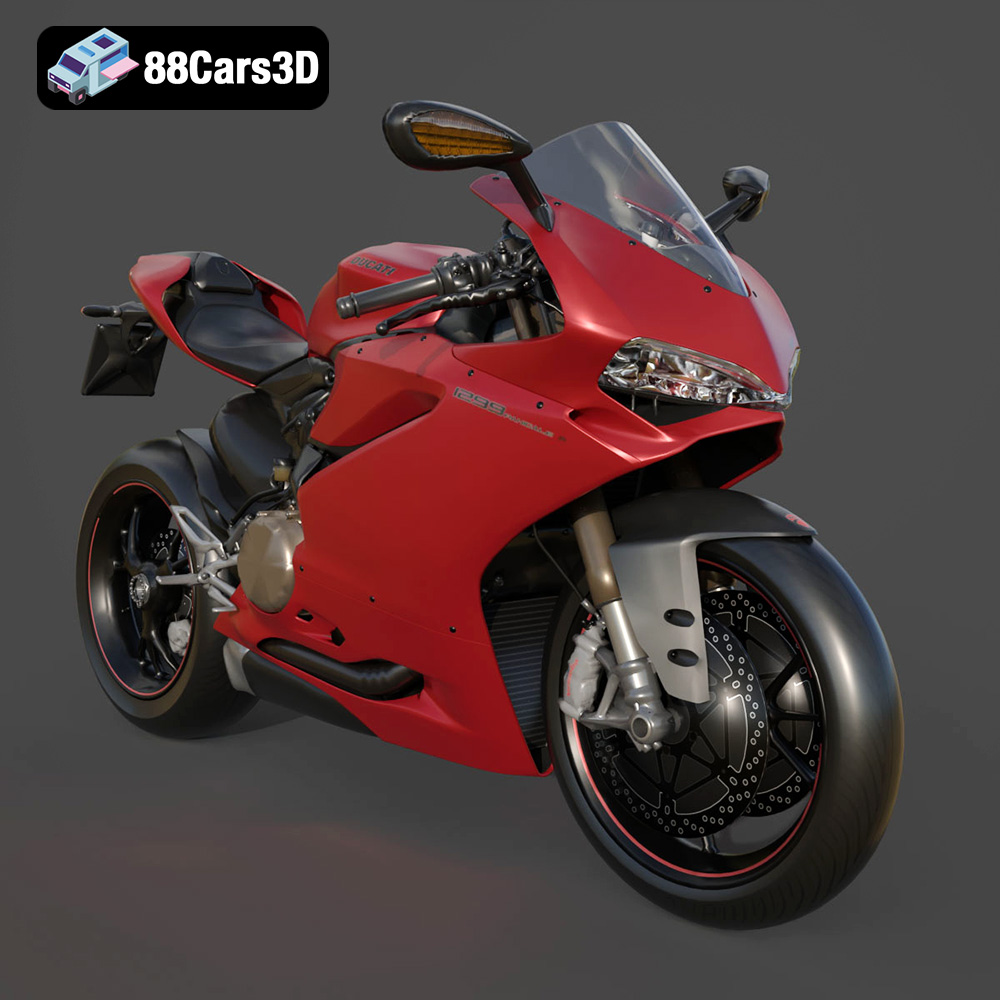
Today, we’re diving deep into an exceptional example of digital craftsmanship: the Ducati 1299 Panigale S 2017 3D Model, available on 88cars3d.com. This isn’t just any motorcycle model; it’s a testament to precision engineering, meticulously translated into a versatile digital asset designed to meet the rigorous demands of modern production pipelines. From its iconic L-twin engine to its aerodynamic fairings, every detail has been thoughtfully recreated to offer unparalleled realism and flexibility across diverse applications. Join us as we explore the technical intricacies and creative possibilities that such a premium 3D vehicle model unlocks for professionals and enthusiasts alike.
When acquiring a 3D model, especially one as detailed and versatile as the Ducati 1299 Panigale S 2017, understanding the various file formats it comes with is crucial. Each format serves a specific purpose, catering to different software, pipelines, and end-use scenarios. The ability to choose the right format for your project can significantly streamline your workflow, preserve data integrity, and ensure optimal performance.
The .blend format is the native file type for Blender, the popular open-source 3D creation suite. When you download a .blend file, you’re getting a complete, fully editable Blender scene. This typically includes not just the mesh data but also materials, textures, lighting setups, animation rigs, cameras, and even physics simulations. For artists working primarily in Blender, this format offers maximum flexibility. You can dissect the model, understand its construction, modify its topology, adjust its PBR (Physically Based Rendering) materials, and integrate it seamlessly into existing Blender projects. It’s the ideal choice for those who want full control and plan extensive customization within Blender.
.fbx (Filmbox) is a proprietary file format developed by Autodesk, widely recognized as an industry standard for 3D data interchange. It’s incredibly versatile, capable of storing not only mesh data but also complex scenes, hierarchical transformations, animations, materials, and sometimes even lighting and camera information. Its strength lies in its excellent compatibility with major 3D software like 3ds Max, Maya, Cinema 4D, and critically, real-time engines such as Unreal Engine and Unity. For game developers and animators, .fbx is often the go-to for exporting animated character rigs, detailed environments, and vehicle models like our Ducati for integration into game engines, making it an ideal choice for real-time pipelines.
The .obj (Wavefront OBJ) format is one of the oldest and most widely supported 3D file formats. It’s a universal format known for its simplicity and robustness, making it excellent for cross-software compatibility. An .obj file primarily stores geometric data – vertices, faces, and UV coordinates – and references external material files (.mtl) for color, texture maps, and reflectivity. While it doesn’t typically support animation or complex scene data, its widespread adoption ensures it can be imported into almost any 3D application. It’s particularly useful for static meshes and as a reliable fallback when other formats encounter compatibility issues.
.glb is the binary version of glTF (GL Transmission Format), a relatively newer format designed for the efficient transmission and loading of 3D scenes and models by applications. It packages textures and other assets directly into a single file, making it self-contained and highly optimized for web-based 3D, AR (Augmented Reality), and VR (Virtual Reality) applications. Its small file size and quick loading times make it perfect for interactive online viewers, virtual showrooms, and mobile AR experiences, allowing the Ducati model to be showcased in real-time on various devices with ease.
.stl (STereoLithography) is the standard file format for 3D printing. It represents a 3D model as a series of connected triangles, describing only the surface geometry without color or texture information. While simple, it’s universally accepted by 3D printers and slicing software. When preparing the Ducati 1299 Panigale S for physical fabrication, the .stl format ensures that the geometric data is accurately translated for additive manufacturing, enabling enthusiasts to bring a tangible version of the superbike into existence.
The .ply (Polygon File Format or Stanford Triangle Format) is another format primarily used for storing 3D data from 3D scanners, CAD software, and other precision applications. It can store a variety of properties including color, transparency, surface normals, and texture coordinates. While less common than .obj or .fbx for general 3D assets, its ability to retain fine geometric and attribute details makes it valuable for applications requiring high precision, such as scientific visualization, engineering analysis, or converting scans into clean meshes. For models like the Ducati, it provides an additional layer of data integrity for specialized uses.
The .unreal format, or more accurately, the optimized asset structure for Unreal Engine, implies that the model has been specifically prepared and potentially integrated into an Unreal Engine project. This often means textures are correctly linked, materials are set up with appropriate shaders (e.g., PBR), collision meshes might be included, and LODs (Levels of Detail) could be configured for optimal performance within the engine. When a model like the Ducati 1299 Panigale S comes with an “.unreal” designation, it signifies that much of the initial setup work for real-time environments has already been done, allowing for quick drag-and-drop integration and immediate use in projects.
Similar to .blend for Blender, .max is the native file format for Autodesk 3ds Max. This format provides the most comprehensive data for users of 3ds Max, including all scene elements such as geometry, materials, lighting, cameras, animation keyframes, and modifiers. For professionals who rely on 3ds Max for complex animation, rendering, or architectural visualization, the .max file offers complete editability and access to the original project structure, making it ideal for deep customization and high-end production rendering.
The inclusion of such a diverse array of formats with the Ducati 1299 Panigale S 2017 3D Model from 88cars3d.com underscores its incredible adaptability, ensuring that regardless of your software preference or project requirements, you have the right tool for the job.
The allure of a superbike like the Ducati 1299 Panigale S lies not just in its performance, but in its breathtaking design and engineering precision. Translating this physical masterpiece into a high-fidelity 3D model requires an obsessive attention to detail, balancing visual accuracy with technical optimization. The 3D model of the Ducati 1299 Panigale S 2017 achieves this delicate equilibrium, delivering a game-ready asset that sacrifices nothing in terms of visual impact.
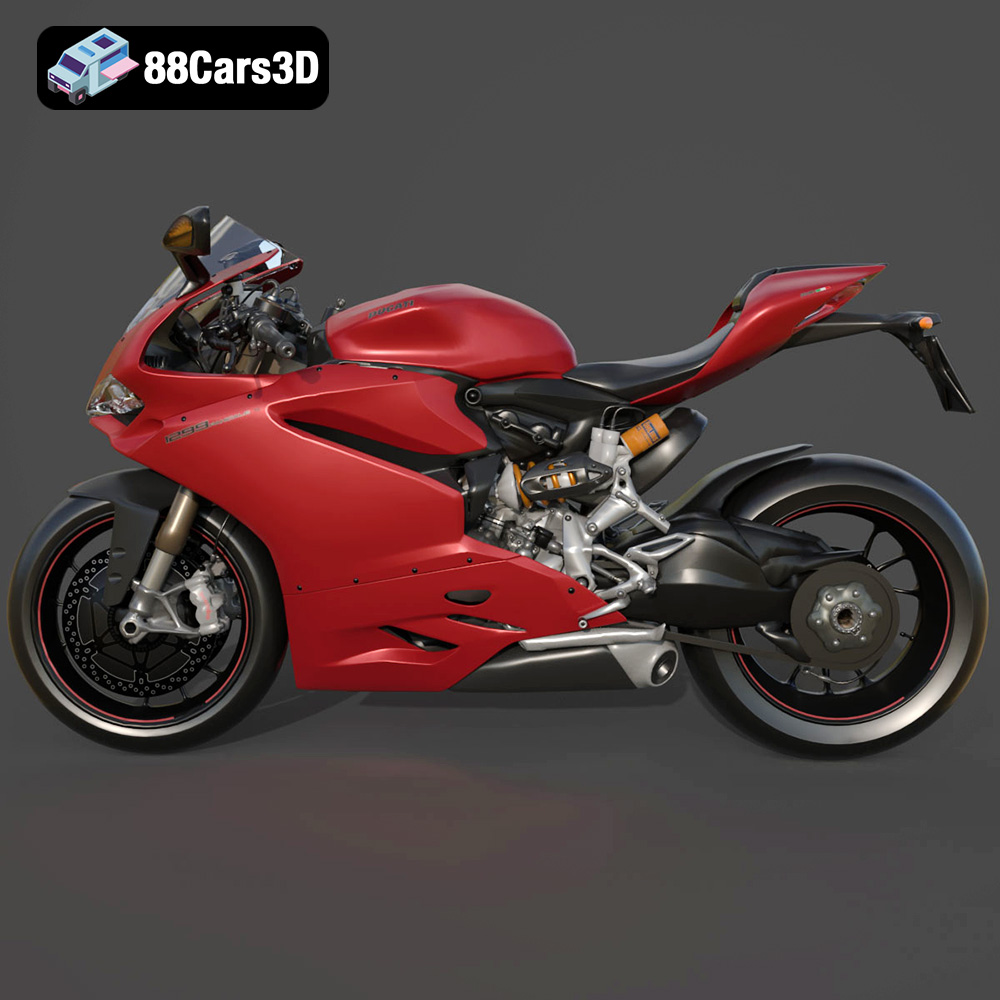
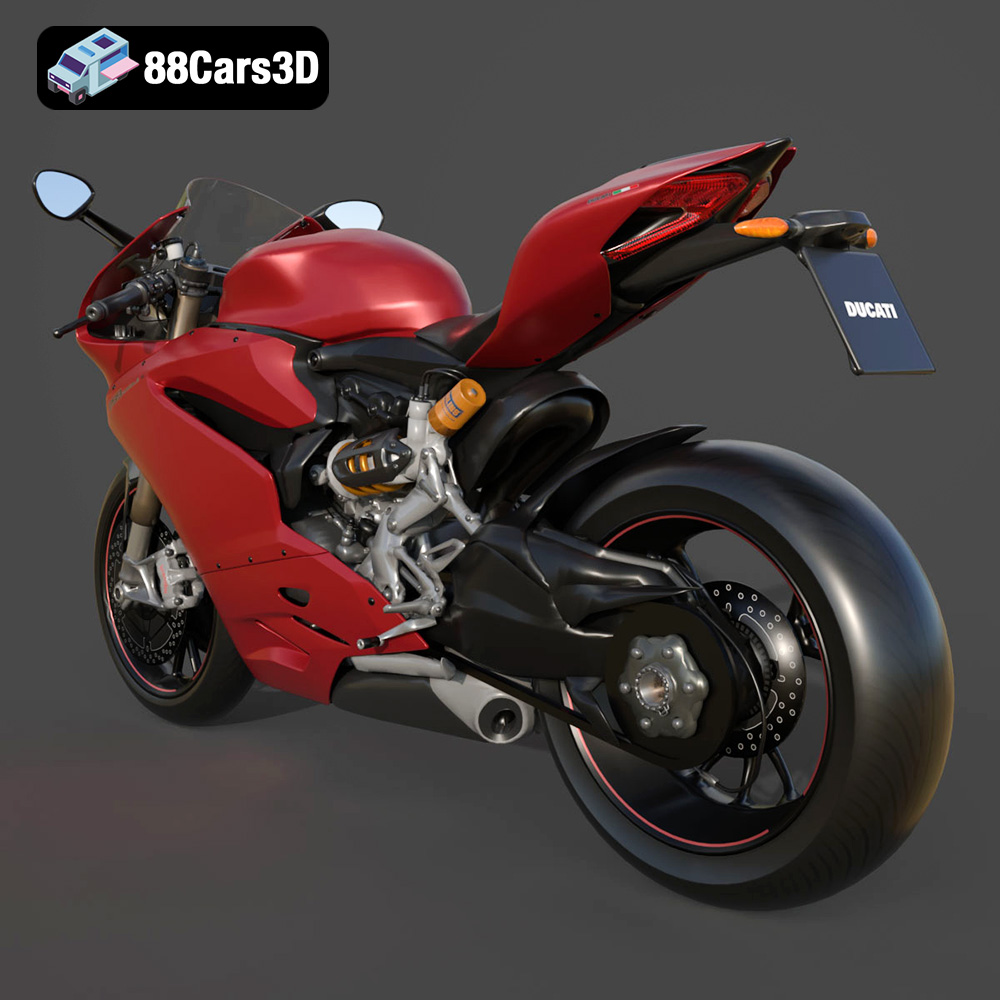
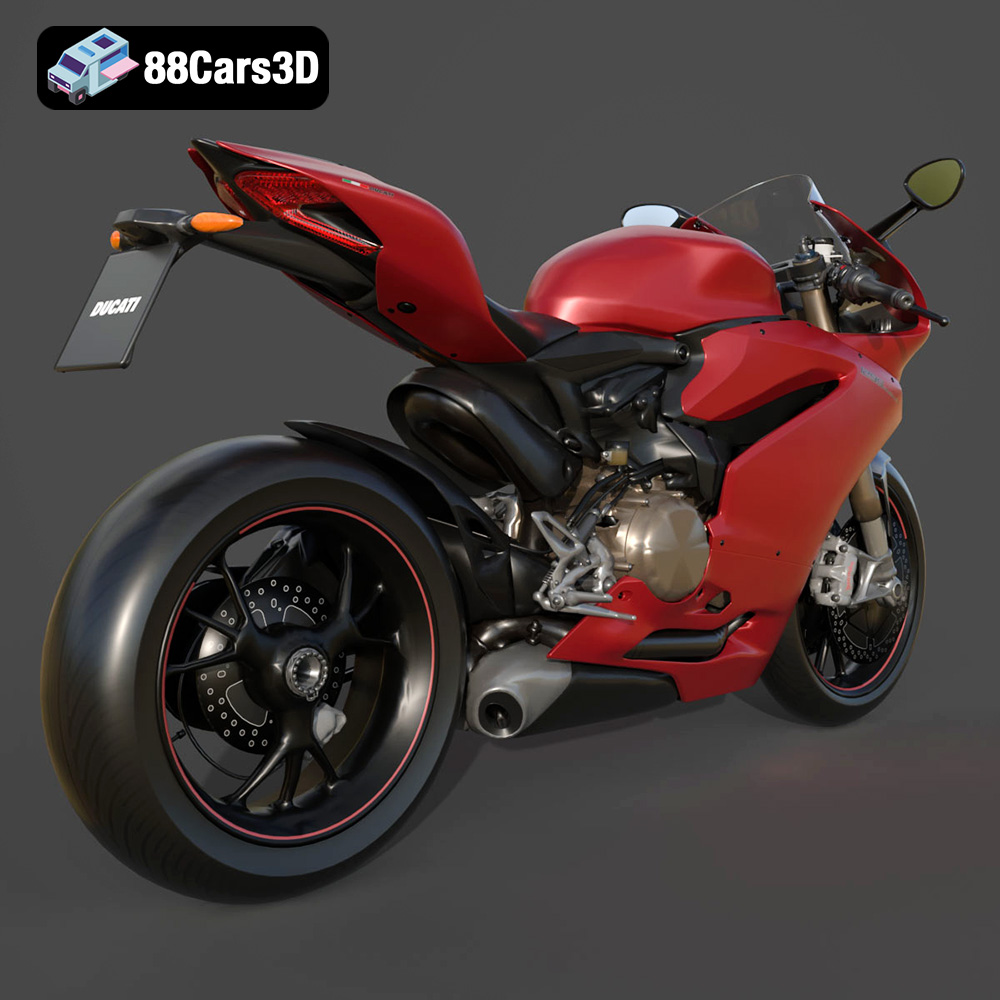
Every curve and component of the Ducati 1299 Panigale S has been meticulously modeled. The aerodynamic fairings, a signature of Ducati’s racing heritage, are accurately represented, reflecting their role in channeling airflow and defining the bike’s aggressive stance. Beneath these fairings lies the heart of the beast: the Superquadro L-twin engine block. The model meticulously renders its mechanical components, from the intricate cooling fins to the visible piping, offering a level of detail usually reserved for engineering schematics. The distinctive under-belly dual exhaust system, complete with heat shielding, adds to the authenticity, reflecting the real bike’s unique exhaust routing. Further enhancing the visual realism are the sharp, integrated taillights and the aggressive split LED headlights that give the Panigale S its unmistakable face. The forged alloy wheels, modeled after Marchesini designs, are wrapped in sport-profile tires, with highly detailed Öhlins electronic front forks and rear shock suspension providing both visual and technical accuracy. Importantly, components like the wheels, suspension, and steering assemblies are separated and configured, anticipating seamless animation for dynamic digital scenes.
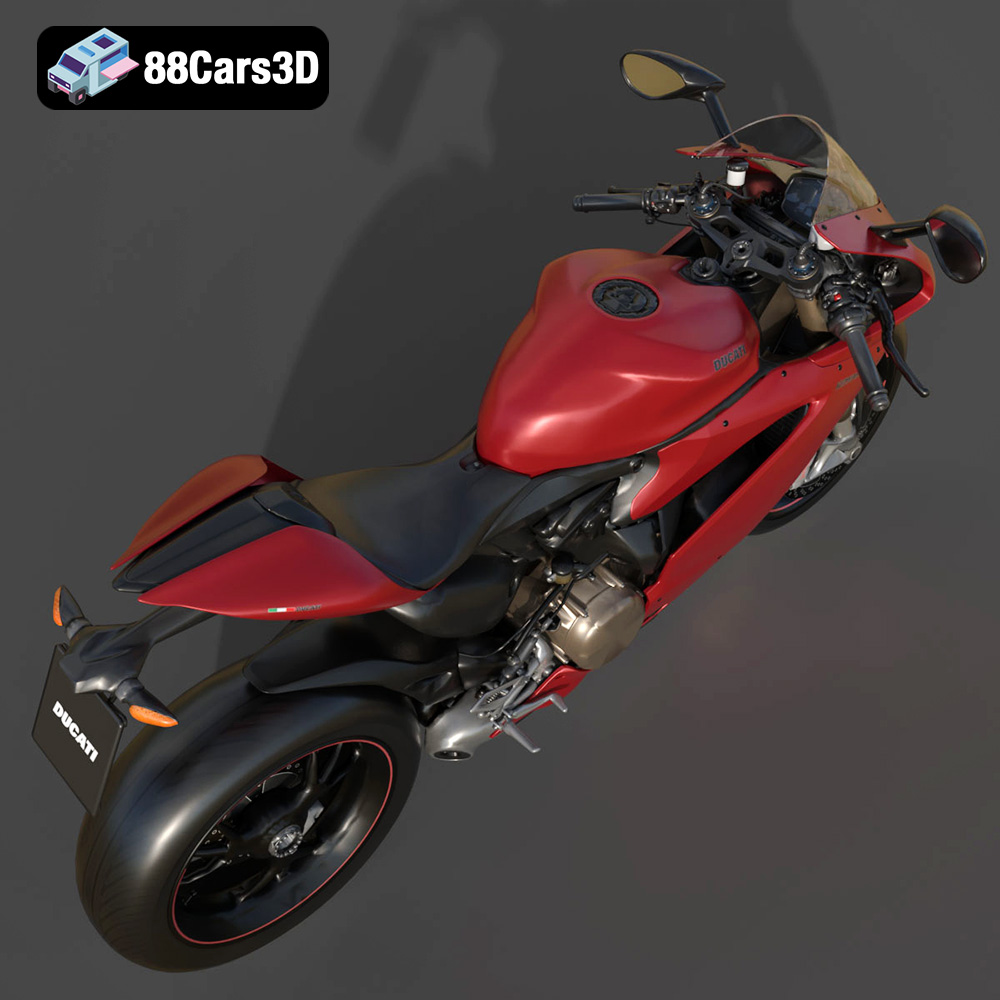
Beyond the exterior, the model extends its precision to the rider’s environment. The authentic contoured rider saddle features precise stitching details, a subtle but crucial element for realism. The track-oriented clip-on handlebars are rendered with highly detailed grips and switchgear, replicating the tactile feel of the physical controls. A replicated TFT full-color digital instrument cluster brings the cockpit to life, displaying the essential information a rider would see. Every control detail, including the clutch and brake levers, rearsets, and gear shifter, has been faithfully recreated. This level of cockpit detail is particularly critical for applications demanding an immersive first-person perspective, such as virtual reality experiences or racing simulations, ensuring that the rider’s view is as authentic as possible.
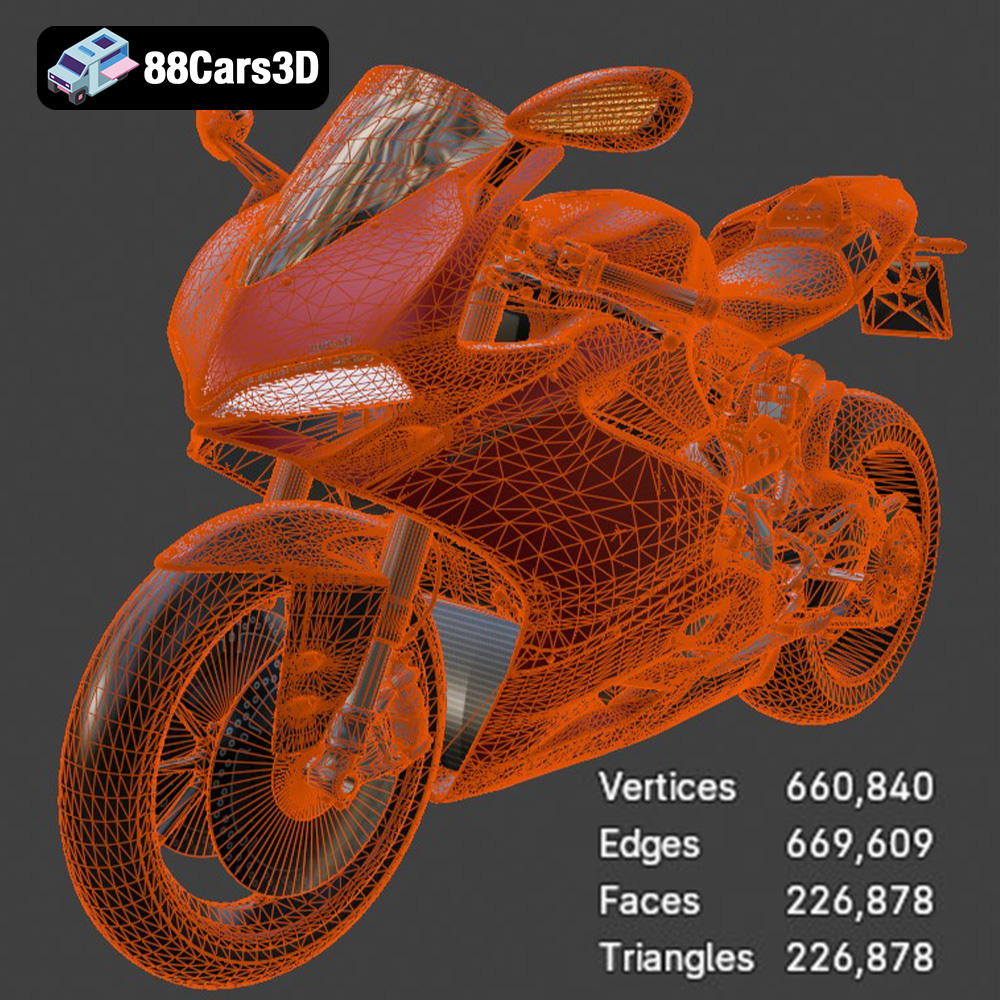
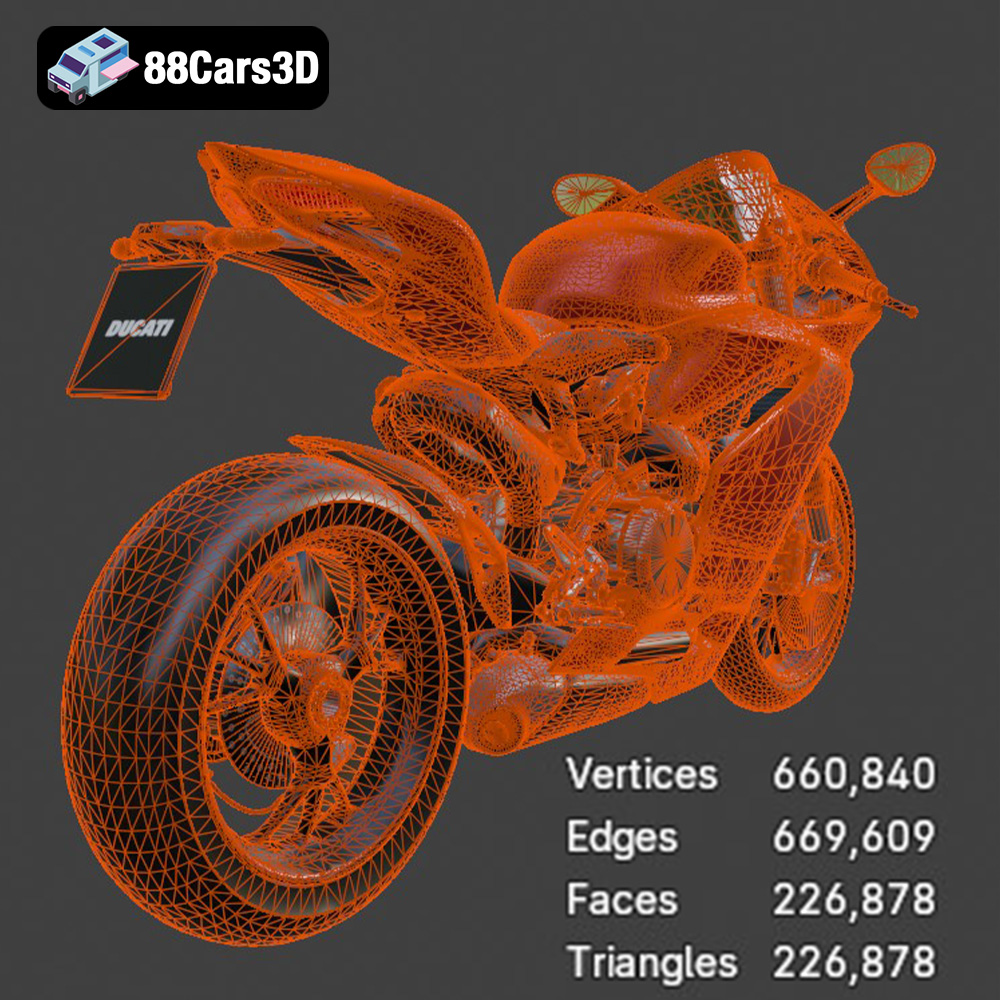
The Ducati 1299 Panigale S 2017 3D Model from 88cars3d.com is not just visually stunning; it’s engineered for performance. With an optimized topology of approximately 280,000 triangles, it strikes a perfect balance. This polycount is high enough to convey exquisite detail and realism for high-end rendering, yet optimized to be “game-ready” for demanding real-time engines like Unreal and Unity. This careful optimization ensures breathtaking visual fidelity without bogging down real-time performance, a common challenge in game development. Furthermore, the model adheres to real-world scale accuracy, based on the actual vehicle chassis and wheelbase. This precision is vital for integrating the model into existing virtual environments, ensuring correct proportions relative to characters and other assets. Proper pivot setups for steering, wheel rotation, and dynamic suspension travel are pre-configured, drastically reducing setup time for animators and ensuring realistic movement. This technical foresight makes the model fully compatible with major 3D software platforms and real-time rendering engines straight out of the box.
The true value of a premium 3D asset like the Ducati 1299 Panigale S 2017 lies in its seamless integration into various professional production pipelines. Its versatility and technical precision make it an indispensable tool for a wide range of creative and technical endeavors.
For game developers, the Ducati 1299 Panigale S 2017 3D Model is a dream asset. Its “game-ready” optimization, with a ~280k triangle count, ensures it can be dropped directly into popular engines like Unreal Engine and Unity without extensive optimization work. The inclusion of .fbx and .unreal formats specifically caters to these real-time environments. Developers can import the .fbx file, which typically contains clean mesh data and UVs, and then apply engine-specific PBR materials. The pre-configured pivot points for wheels, steering, and suspension travel are invaluable, allowing animators to quickly set up dynamic physics and realistic vehicle movement within the game engine. Imagine integrating this model into a high-octane racing simulator, an open-world action-adventure title, or a dedicated motorcycle simulation. Its high-resolution material separation also allows for intricate texture work, displaying every scratch, reflection, and wear pattern to enhance realism, crucial for next-gen gaming experiences.
In the world of automotive rendering and visualization, photorealism is the ultimate goal. The detailed geometry and optimized materials of the Ducati model make it exceptional for producing stunning marketing visuals, product showcases, and dramatic studio renders. Artists using 3ds Max or Blender can leverage the native .max or .blend files for full control over the scene, including lighting, camera angles, and advanced material customization. The .obj and .fbx formats also provide excellent foundations for importing into other rendering software like V-Ray, Corona, or Arnold. Visualizers can create striking lifestyle scenes, placing the Ducati in urban environments, scenic routes, or luxurious showrooms. The model’s real-world scale accuracy ensures that it interacts realistically with environmental elements and studio lighting setups, making it perfect for brand campaigns and architectural visualizations where a vehicle might be used to add scale or a touch of dynamic flair to an exterior render.
The burgeoning fields of Augmented Reality (AR) and Virtual Reality (VR) demand highly optimized yet visually rich 3D assets. The Ducati 1299 Panigale S 2017 3D Model is perfectly suited for these applications, particularly with the inclusion of the .glb format. This self-contained, web-optimized format allows for quick loading and display in AR/VR viewers, browser-based configurators, and mobile AR apps. Imagine a virtual showroom where potential buyers can walk around the Panigale S, zoom in on engine details, and even change its color in real-time. For VR experiences, the optimized geometry of the cockpit is tailored for immersive first-person POV, allowing users to virtually sit on the bike and interact with its controls. This model offers an unparalleled opportunity to create engaging, interactive experiences that push the boundaries of digital product showcases.
The versatility of the Ducati 1299 Panigale S 2017 3D Model extends beyond its initial digital presentation, offering extensive customization options and even the possibility of physical realization through 3D printing.
One of the most exciting aspects of working with a high-quality 3D asset is the ability to tailor it to specific creative visions. The Ducati model provides ample opportunities for customization. Artists can easily change body and fairing colors, transforming the iconic Ducati Red into custom liveries, sleek black variants, or even advanced carbon fiber finishes. This is typically achieved by manipulating the PBR material nodes within your chosen 3D software, adjusting base color, roughness, metallic, and normal maps. Tire textures can be modified to reflect different scenarios, from slick track tires for racing simulations to grooved street variants for everyday riding scenes. Material finishes can be adjusted, moving between matte, high gloss, or anodized metals for various components, adding depth and realism to renders. Furthermore, lighting arrays can be adapted for different digital environments, allowing the model to shine under studio lights, golden hour sunlight, or dramatic nighttime conditions. This level of customization ensures that the Ducati Panigale S can fit seamlessly into any artistic context, reflecting unique brand identities or creative narratives.
For enthusiasts and collectors, the ability to convert the digital model into a tangible object through 3D printing is a significant advantage. The inclusion of the .stl format specifically caters to this application. However, successful 3D printing, especially for a detailed model like the Ducati, requires careful consideration of settings. It’s recommended to print at scales like 1:12, 1:18, or 1:24 to capture adequate detail while remaining manageable. For intricate details such as the aerodynamic fairings, mechanical components, and small cockpit features, resin printing is highly recommended over FDM, as it allows for much finer layer heights (0.04–0.12 mm) and superior resolution. Wall thickness should typically be between 1.2–2.0 mm for structural integrity, with an infill of 20–30%. Supports will be required for delicate parts like the exhaust, mirrors, footpegs, and clip-on handlebars to prevent warping and ensure fidelity. For optimal results, printing the frame angled for structural integrity and printing wheels and the single-sided swingarm separately is advised, allowing for easier post-processing and assembly. After printing, sanding, priming, and applying authentic factory colors – such as Ducati Red with metallic clear coats – will bring the miniature superbike to life, making it a perfect display piece for any collector.
The Ducati 1299 Panigale S 2017 3D Model is a prime example of the exceptional quality and versatility offered by 88cars3d.com. As a specialized online marketplace for high-quality 3D car models and vehicle assets, 88cars3d.com understands the demanding needs of professionals in automotive design, game development, rendering, and immersive media. The convenience of acquiring pre-made, meticulously optimized assets like this Ducati model provides an invaluable advantage. It saves countless hours of modeling, texturing, and optimization, allowing creative teams to focus on design iteration, animation, and scene composition rather than building foundational assets from scratch. This efficiency translates directly into faster project turnaround times, reduced costs, and ultimately, higher quality output.
Whether you’re looking for iconic supercars, classic vehicles, or powerful motorcycles, 88cars3d.com offers a curated selection of 3D car models that are not only visually stunning but also technically robust and workflow-ready. The commitment to providing diverse file formats ensures maximum compatibility across various software and engines, empowering artists and developers with the flexibility they need to bring their visions to life across rendering, game assets, AR/VR, and 3D printing applications.
The digital landscape is continually evolving, demanding increasingly realistic and performant 3D assets. The Ducati 1299 Panigale S 2017 3D Model stands as an exemplary fusion of aesthetic perfection and technical prowess, making it an indispensable asset for a diverse range of professional applications. Its meticulous detailing, optimized topology, and extensive file format support empower creators in game development, automotive rendering, AR/VR experiences, and even 3D printing to achieve unparalleled results.
From the raw aggression of its aerodynamic fairings to the intricate precision of its Superquadro engine and cockpit, this model embodies the spirit of the real superbike, ready to accelerate your projects into the fast lane. By choosing high-quality 3D vehicle models like this from 88cars3d.com, you’re not just acquiring an asset; you’re investing in efficiency, realism, and creative freedom. Elevate your digital endeavors and experience the difference that truly professional 3D car models can make.
Experience the apex of Italian engineering with this highly detailed 3D model of the Ducati 1299 Panigale S 2017. Renowned for its stunning aesthetics and blistering track performance, this superbike boasts iconic visual elements such as its aerodynamic fairings, monocoque chassis structure, and the legendary Superquadro L-twin engine. Distinctive features like the aggressive split LED headlights, single-sided swingarm, and under-engine exhaust system have been meticulously modeled to capture the raw aggression and elegance of the physical motorcycle. Constructed with an optimized topology of approximately 280,000 triangles, this game-ready asset delivers breathtaking visual fidelity without compromising real-time performance. Designed specifically for next-gen workflows, the model features high-resolution material separation and precise real-world scaling, making it exceptionally suited for game development, AR/VR experiences, high-end animation, and architectural or studio visualization. Perfect for track day racing simulations, immersive virtual showrooms, high-octane gaming titles, and dynamic lifestyle rendering scenes.
$19.99
.2017
.blend
.ducati
.fbx
.glb
.max
.obj
.ply
.rendering
.sportbike
.stl
.superbike
.unreal
1299-panigale-s
game asset
game-ready
low-poly
motorcycle-3d-model
optimized
VR/AR