Get 20% OFF All Premium 3D & STL Models!

In the dynamic world of 3D visualization, game development, and interactive experiences, the demand for high-fidelity, performance-optimized assets is paramount. Automotive models, in particular, stand at the intersection of intricate design and powerful engineering, requiring a nuanced approach to digital recreation. For enthusiasts and professionals alike, a meticulously crafted 3D car model can transform a project from ordinary to extraordinary, serving as the cornerstone for everything from photorealistic renders to immersive virtual realities.
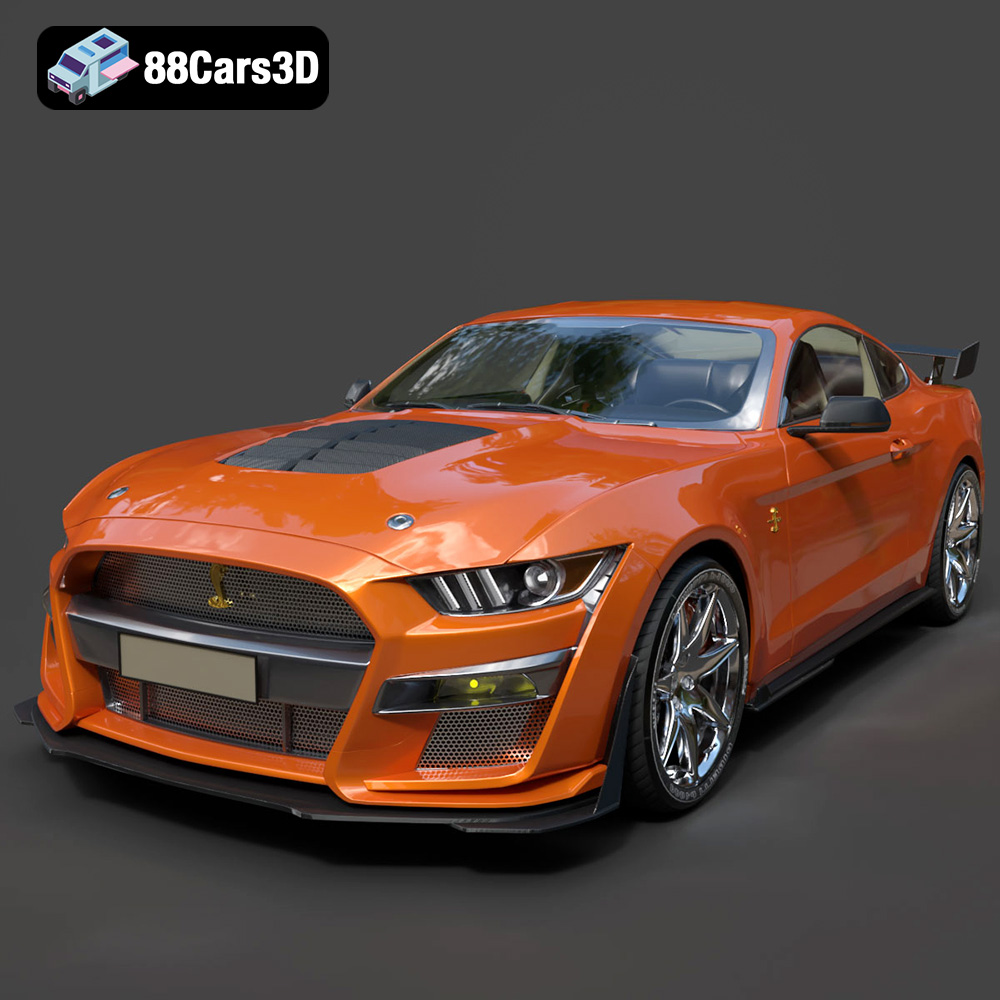
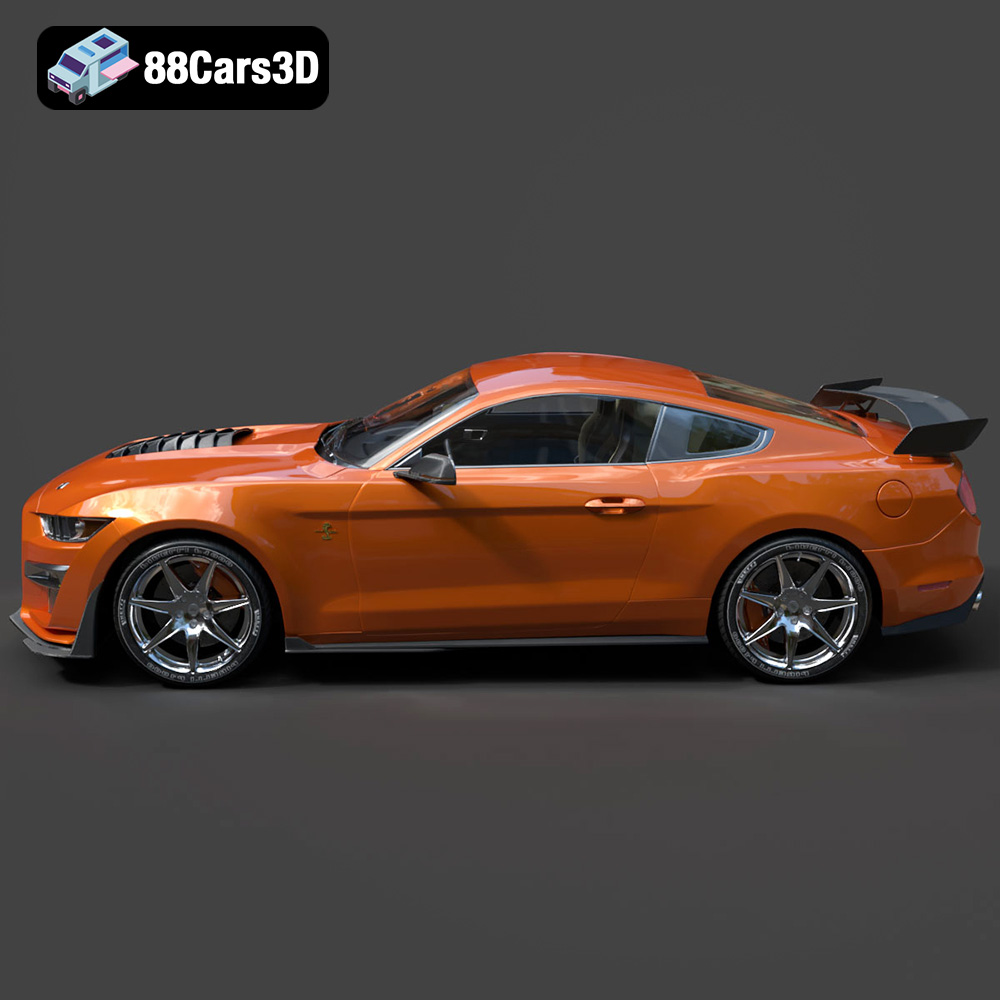
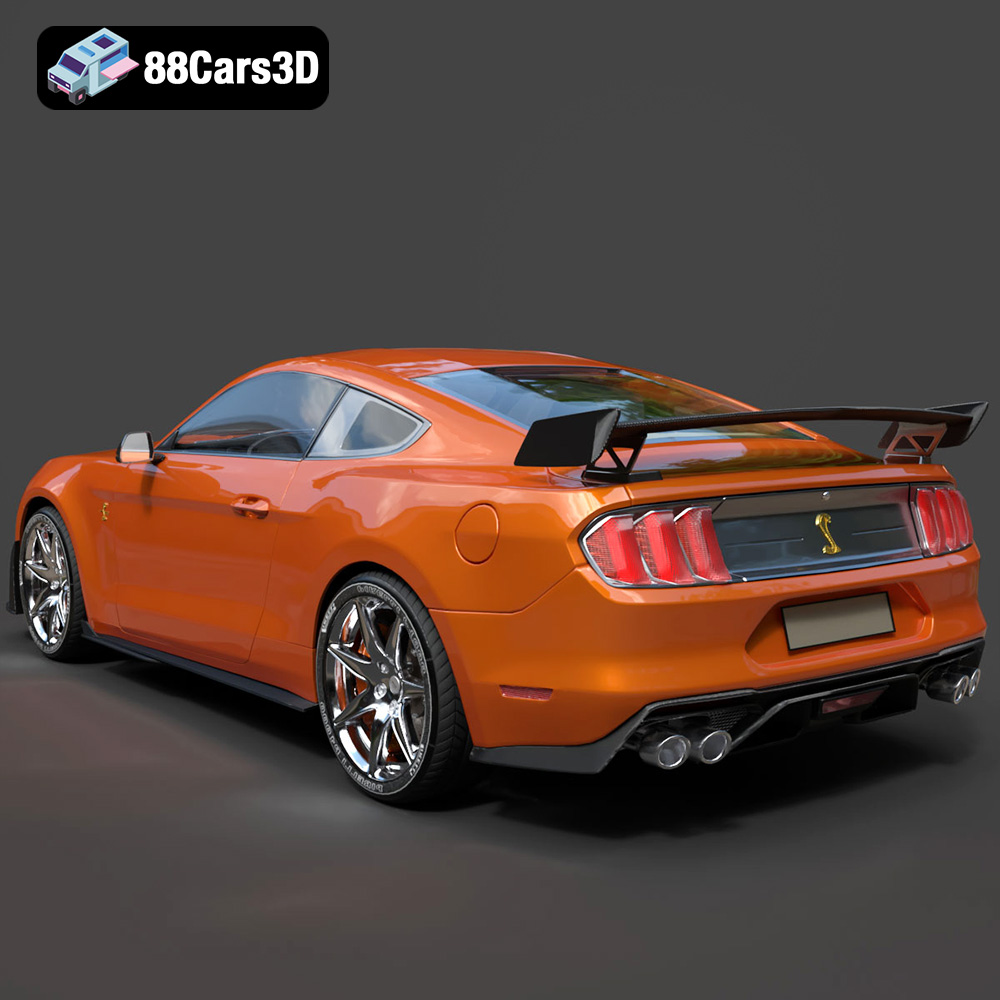
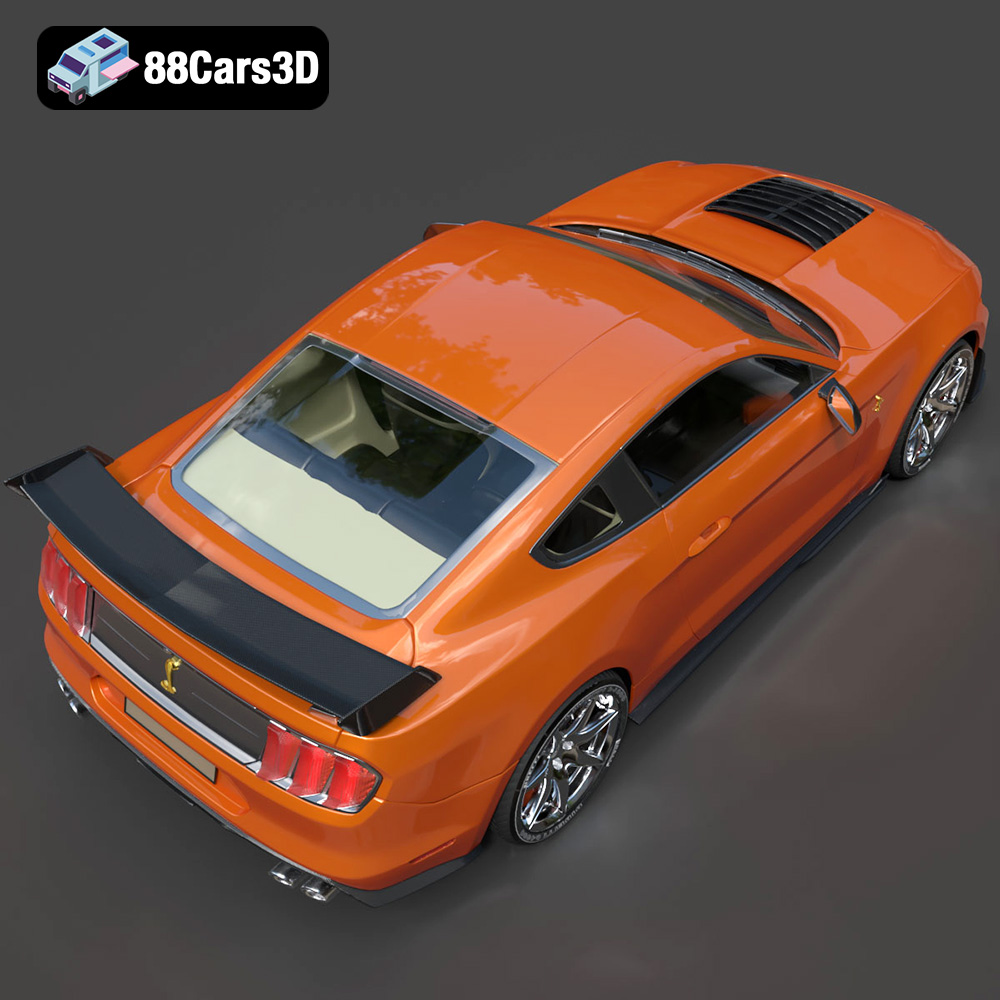
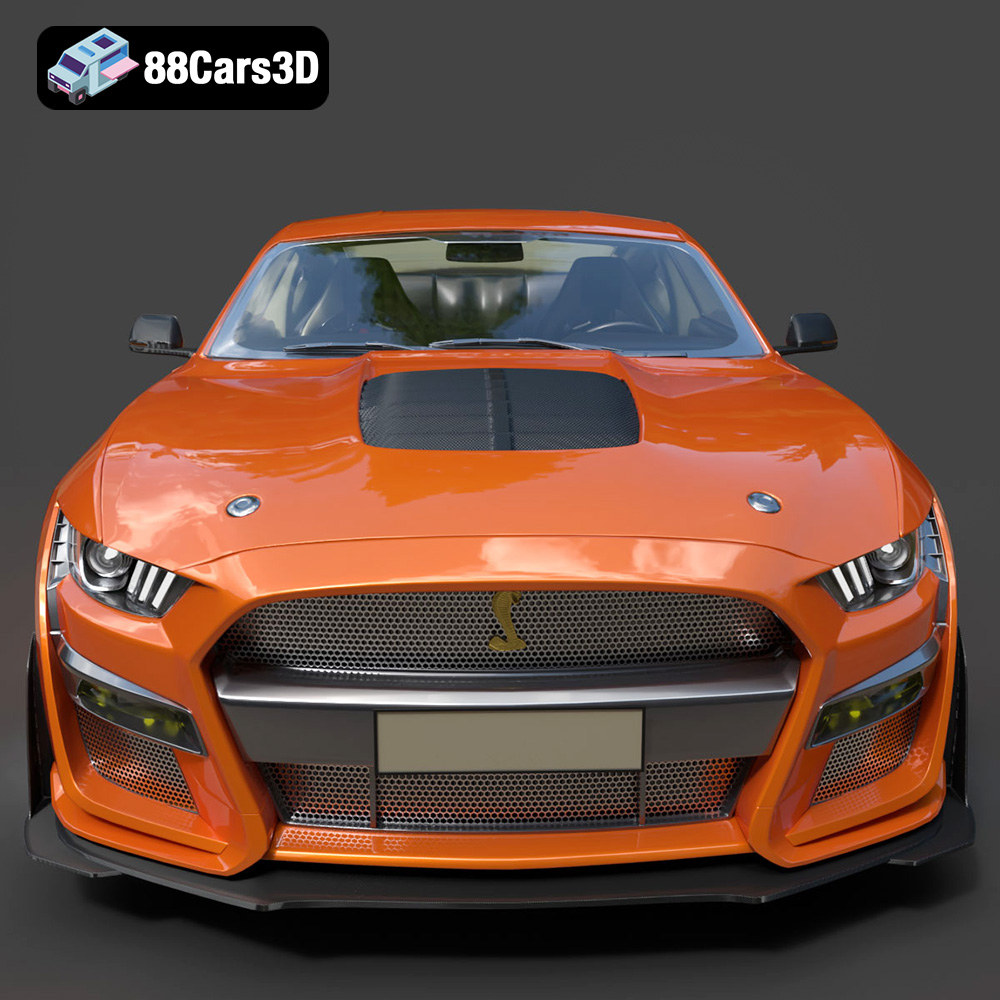
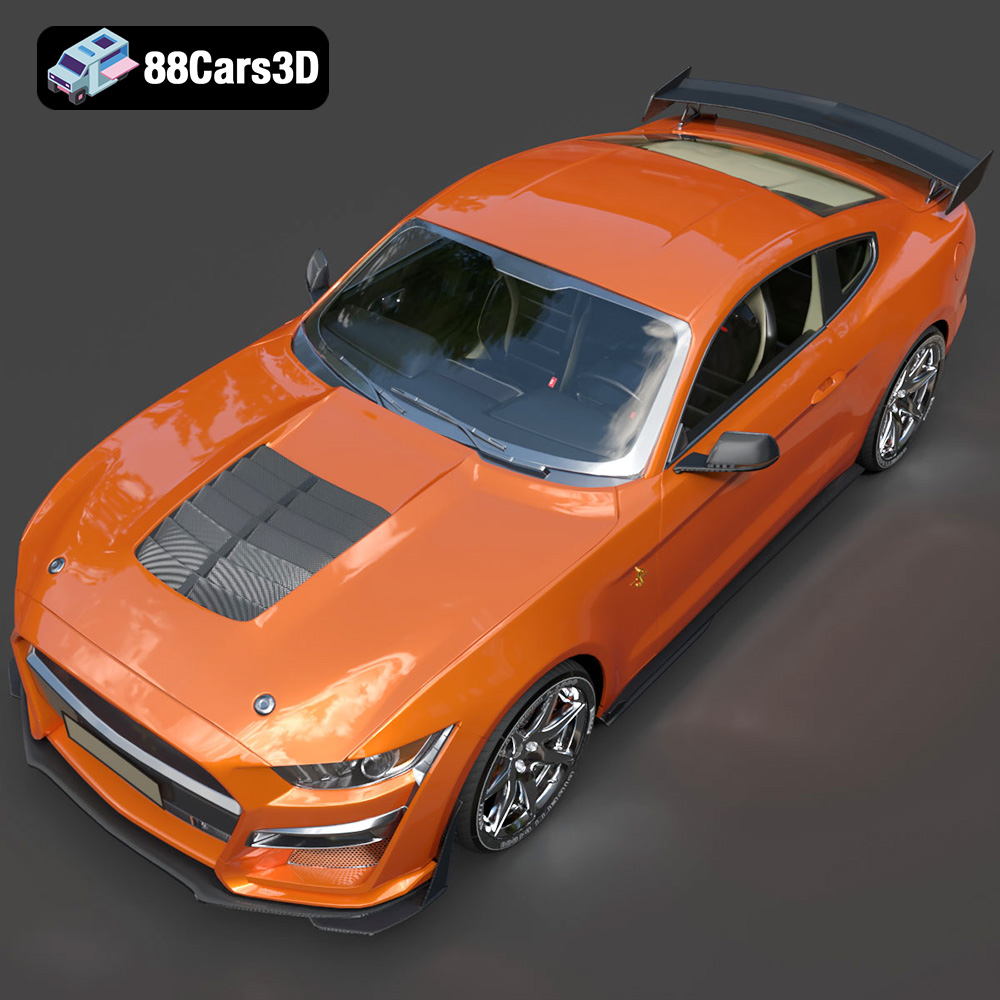
Today, we’re diving deep into an exceptional example of digital automotive mastery: the Ford Mustang Shelby GT500 2020 3D Model. This model, available through 88cars3d.com, encapsulates the raw power and aggressive elegance of America’s ultimate muscle car, meticulously translated into a versatile digital asset. Whether you’re a game developer seeking a high-octane racing machine, an architect looking to populate a modern scene, or an automotive designer creating a virtual showroom, this Shelby GT500 model offers a foundation of quality and adaptability.
We’ll explore the technical nuances that make this model stand out, from its optimized topology and PBR materials to its suitability across various platforms and workflows. Prepare to unlock the full potential of professional 3D car models and understand how assets like the Shelby GT500 can elevate your creative and technical endeavors.
The journey of a 3D model, from its creation to its final application, often involves a sophisticated interplay of various file formats. Each format serves a specific purpose, optimized for different software, engines, or end-use scenarios. Understanding these distinctions is crucial for anyone working with 3D assets, ensuring seamless integration and optimal performance. The Ford Mustang Shelby GT500 2020 3D Model exemplifies this versatility by offering a comprehensive suite of formats, empowering users across diverse pipelines.
The .blend file is the native format for Blender, a powerful and widely-used open-source 3D creation suite. A .blend file contains not just the raw mesh data, but an entire scene, including materials, textures, lighting, cameras, animation data, and even the viewport settings. This makes it an ideal choice for users who wish to fully edit, dissect, or build upon the original model within Blender. For the Shelby GT500, the .blend file provides access to the model’s clean mesh structure, detailed PBR material setups, and potentially the original modifier stacks, allowing for unparalleled customization and learning opportunities for aspiring 3D artists.
.fbx (Filmbox) is a proprietary file format developed by Autodesk, serving as one of the most widely adopted interchange formats in the 3D industry. It’s renowned for its ability to store not only geometry and UV data but also animation, rigging, materials, and even light and camera information. This makes .fbx invaluable for transferring assets between different 3D software applications (like 3ds Max, Maya, Cinema 4D, Blender) and, critically, into game engines such as Unreal Engine and Unity. For the Shelby GT500, the .fbx format ensures that all separate animatable components – wheels, suspension, steering – are correctly exported with their pivot points, ready for integration into a real-time environment without significant re-setup.
The .obj (Wavefront OBJ) format is one of the oldest and most universally compatible 3D file formats. It primarily stores geometric data, including vertices, normals, UV coordinates, and faces. While it can reference external material files (.mtl) for basic color and texture information, it typically does not store complex material setups, animations, or rigging. Its strength lies in its simplicity and widespread support across virtually all 3D software. For the Shelby GT500, the .obj version is excellent for cross-software compatibility, serving as a reliable fallback or for use in applications that might not support more advanced formats.
.glb (GL Transmission Format Binary) is the binary version of glTF, a royalty-free specification for the efficient transmission and loading of 3D scenes and models by applications. It’s specifically optimized for real-time applications, AR/VR experiences, and web-based 3D viewers due to its compact size and ability to embed all necessary data (geometry, materials, textures, animations) into a single file. For immersive virtual showrooms or web-based configurators featuring the Shelby GT500, the .glb format offers a streamlined, high-performance solution.
.stl (STereoLithography) is the de-facto standard file format for 3D printing. It represents a 3D model as a series of connected triangles, describing only the surface geometry of a 3D object without any color, texture, or material information. While less suitable for rendering, its simplicity makes it perfect for additive manufacturing. The availability of the Shelby GT500 in .stl format means enthusiasts can bring a physical replica of this iconic car to life, albeit with considerations for scale, supports, and print settings detailed in the product description.
The .ply (Polygon File Format, or Stanford Triangle Format) is another format that stores 3D data, often used in scientific and research applications for scanning data. It can store various properties beyond just geometry, such as color, transparency, normals, texture coordinates, and even reliability information. While less common for general asset exchange, its precision and extensibility make it valuable for specific niches like 3D scanning, CAD integration, or technical analysis of complex meshes like the Shelby GT500’s detailed suspension.
The .unreal file, often referring to a project or asset package specifically prepared for Unreal Engine, signifies a highly optimized and engine-ready asset. While not a singular file type in the same way .fbx or .obj are, it implies that the model has undergone specific preparation—texture compression, material setup, collision geometry, and LODs (Levels of Detail)—to seamlessly integrate into an Unreal Engine project. For the Shelby GT500, this means artists can expect a near plug-and-play experience, saving countless hours on conversion and setup within the engine for game development or cinematic sequences.
Similar to .blend for Blender, the .max file is the native format for Autodesk 3ds Max, a leading software for 3D modeling, animation, and rendering. A .max file encapsulates the entire 3ds Max scene, including all models, materials, textures, lights, cameras, animations, and scene settings. It allows for full editability within 3ds Max, providing access to original modifiers, hierarchies, and rigging setups. For users deeply integrated into the 3ds Max ecosystem, the .max file for the Shelby GT500 offers the ultimate flexibility for animation, rendering with V-Ray or Corona, and extensive customization.
The sheer breadth of file formats provided with the Ford Mustang Shelby GT500 2020 3D Model highlights its professional-grade status and commitment to supporting a wide array of creative and technical workflows. This versatility makes it an indispensable asset for anyone serious about 3D automotive content.
Automotive visualization is a specialized field that demands an unparalleled level of detail and realism. Whether for marketing campaigns, design reviews, or film production, the goal is to present vehicles in a way that is indistinguishable from reality. The Ford Mustang Shelby GT500 2020 3D Model is engineered precisely for this purpose, offering the foundation for stunning photorealistic renders.
At the heart of modern rendering lies Physically Based Rendering (PBR). This methodology simulates how light interacts with surfaces in the real world, resulting in highly accurate and consistent materials. The Shelby GT500 model leverages detailed PBR materials, meaning its paint, carbon fiber accents, glass, chrome, and rubber surfaces react to light precisely as they would in real life. This includes maps for albedo (base color), roughness, metallic, normal, and ambient occlusion, ensuring every curve and detail reflects its true material property. The “carbon-fiber style wheels” and “performance tire tread patterns” are not just textures but meticulously crafted PBR assets that catch the light with convincing depth and reflectivity.
Achieving photorealism extends beyond material quality; it requires masterful lighting. With a high-quality 3D car model like the Shelby GT500, artists can experiment with diverse studio lighting setups, high dynamic range imaging (HDRI) environments, and even physically accurate sun-and-sky systems. Imagine placing the GT500 in a sleek virtual showroom bathed in soft, diffused light, or on an open track under a harsh afternoon sun. The model’s accurate geometry and detailed PBR materials will respond flawlessly, producing reflections, highlights, and shadows that elevate the scene’s realism. The flexibility to “adapt lighting for different environments” further empowers artists to tell compelling visual stories.
The demands of real-time applications—gaming, AR/VR, interactive configurators—are fundamentally different from offline rendering. Here, the challenge is to maintain visual fidelity while adhering to strict performance budgets. The Ford Mustang Shelby GT500 2020 3D Model is explicitly designed as a game-ready asset, striking a delicate balance between detail and optimization.
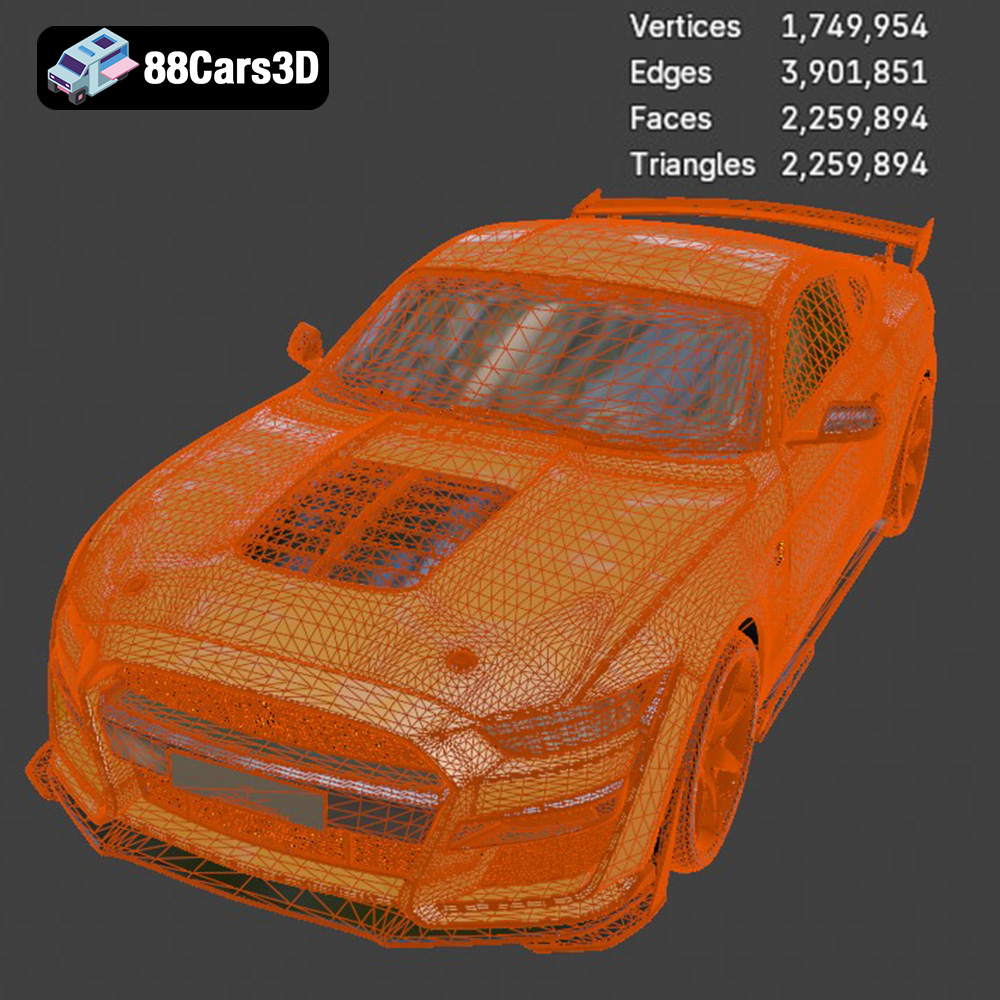
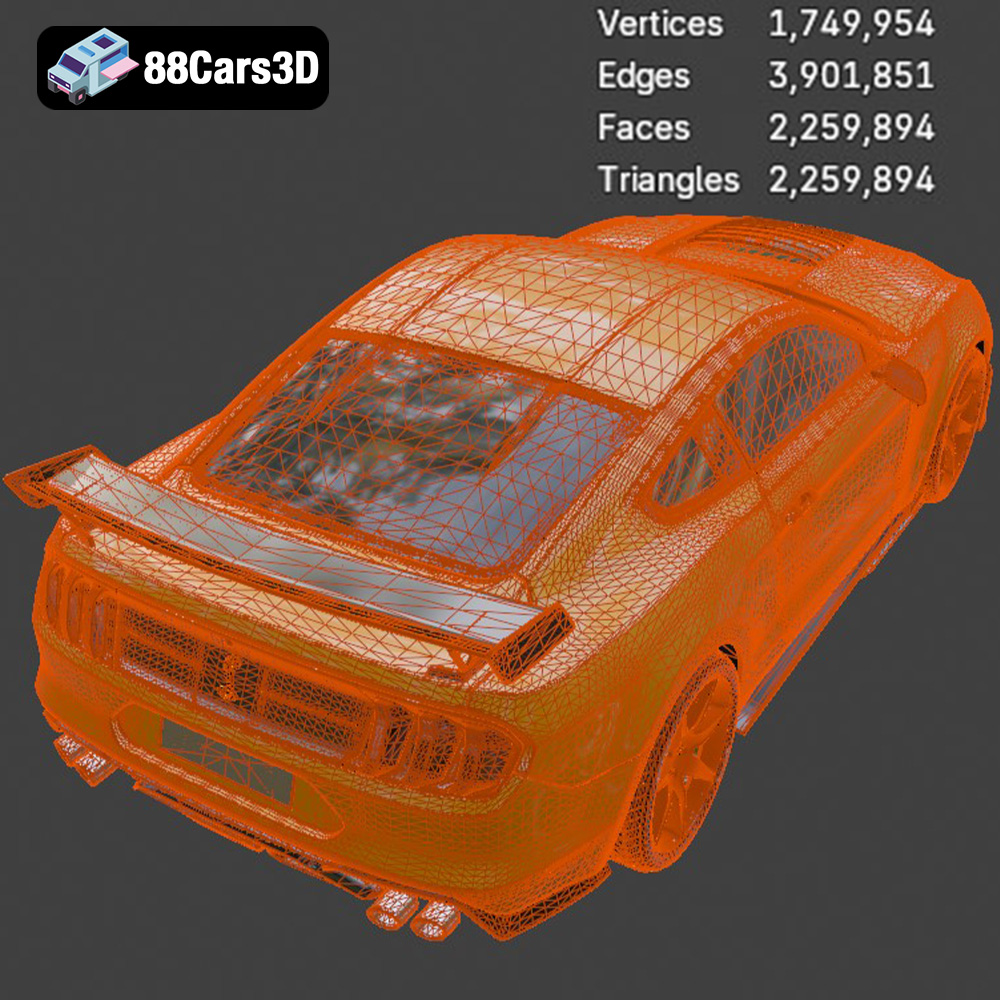
One of the most critical specifications for a real-time asset is its polygon count. The Shelby GT500 model features an “optimized topology of approximately 200,000 triangles.” This count is a sweet spot: high enough to capture the aggressive styling, detailed engine block, and intricate interior elements (like the “Recaro racing seats with accurate stitching” and “Alcantara-wrapped steering wheel”) without overwhelming the GPU. For modern racing games, open-world titles, or VR experiences, a 200k triangle vehicle can easily be rendered multiple times in a scene while maintaining smooth frame rates, proving it to be a truly professional game asset.
The “game-ready & Optimized” nature extends to its structural integrity for engine pipelines. The model comes with “proper pivot setup for steering, wheel rotation, and suspension travel.” This seemingly small detail saves countless hours for game developers, as it means the wheels, doors, and other animatable parts are correctly articulated out-of-the-box. Furthermore, with dedicated .fbx and .unreal formats, integrating the Shelby GT500 into Unreal Engine or Unity is a streamlined process, enabling developers to quickly set up physics, collision, and animation blueprints for dynamic gameplay or immersive AR/VR experiences. The “optimized geometry for first-person POV in gaming” ensures that even close-up interior shots maintain high visual quality.
The versatility of a well-made 3D model transcends digital screens. For enthusiasts and collectors, the ability to physically hold a replica of their favorite car is an exciting prospect. The Ford Mustang Shelby GT500 2020 3D Model offers this capability through its inclusion of the .stl format, opening doors to the world of 3D printing.
While the .stl format simplifies the model into a mesh of triangles, preparing a model for successful 3D printing involves more than just a file conversion. The product description provides crucial “3D Print Settings” that highlight the expertise behind this model. Recommendations like “Recommended scale: 1:12 / 1:18 / 1:24” guide users towards optimal display sizes. Specific instructions for “layer height: 0.04–0.12 mm (Resin printing recommended for fine details)” underscore the need for precision to capture elements such as the “massive front grille” and “quad exhaust system.”
Complex automotive shapes, with their overhangs and intricate details, often require careful planning for successful 3D printing. The guidance on “Supports: Required for detailed parts like exhaust, mirrors, spoiler” is invaluable. Similarly, the advice on “Print orientation: Frame printed angled for structural integrity; wheels printed separately” is a testament to thoughtful design for physical production. After printing, post-processing steps like “Sanding, primer, and authentic factory colors with metallic finishes” become the final artistic touch, allowing hobbyists to recreate the GT500’s iconic look, complete with “iconic Shelby racing stripes.”
A professional-grade 3D car model is not just a static asset; it’s a dynamic component designed to integrate seamlessly into diverse creative and technical workflows. The Ford Mustang Shelby GT500 2020 3D Model’s extensive file format support and optimized structure make it a cornerstone for various professional applications, from high-end visualization to interactive prototyping.
For artists working in industry-standard software like Autodesk 3ds Max or Blender, the provided .max and .blend files offer maximum flexibility. In 3ds Max, users can take advantage of the model’s clean topology to apply advanced modifiers, set up complex rigging for realistic suspension and steering animations, or integrate it into larger architectural visualization scenes. The PBR materials can be easily converted or adapted for render engines like V-Ray or Corona Renderer, unlocking photorealistic quality for automotive advertising or cinematic sequences. Similarly, Blender users can leverage the full scene data, modifying lighting, experimenting with Eevee for real-time renders or Cycles for production-quality output, and even exploring advanced procedural material creation to customize finishes like “matte, gloss, metallic, carbon fiber.” The “separate wheels, suspension, and steering components for animation” are particularly useful here, saving immense setup time for animators.
Unreal Engine stands at the forefront of real-time rendering, powering everything from AAA games to virtual production stages. The Ford Mustang Shelby GT500 2020 3D Model arrives “engine-ready” with the .unreal and .fbx formats, indicating thoughtful preparation for this environment. Importing the .fbx directly into Unreal allows for the quick creation of static meshes, with materials and textures often imported automatically. The optimized polycount ensures excellent performance, while the properly set pivots mean that vehicle blueprints and physics setups (e.g., Chaos Vehicle) can be implemented with minimal effort. Developers can then build immersive virtual showrooms, create interactive car configurators with real-time color changes and material adjustments, or populate open-world racing games with this iconic muscle car. The detailed “Magneride components and massive Brembo brake calipers” contribute to a high level of detail even within a real-time context, crucial for close-ups and dynamic camera work.
The .glb format makes the Shelby GT500 model perfectly suited for the burgeoning fields of Augmented Reality (AR), Virtual Reality (VR), and web-based 3D applications. This single, self-contained file can be easily dropped into AR apps for mobile devices, allowing users to “place” the car in their real-world environment. For VR, it becomes an integral part of virtual showrooms or interactive experiences, providing high visual fidelity within performance constraints. Web developers can embed the .glb model directly onto websites, enabling dynamic 3D views of the car that rotate, zoom, and even respond to user interaction without requiring extensive plugins or proprietary software. This capability opens new avenues for marketing, product demonstration, and engaging online experiences for the automotive industry.
While the Ford Mustang Shelby GT500 2020 3D Model is provided in a highly detailed and optimized state, its true power lies in the customization options it affords. A premium 3D car model isn’t just a static replica; it’s a canvas for artistic expression and specific project requirements.
The product description highlights several key customization capabilities: “Change body colors and adjust iconic Shelby racing stripes,” “Modify tire textures (track vs. street variants),” and “Adjust material finishes (matte, gloss, metallic, carbon fiber).” These options are critical for artists and designers. Imagine showcasing the GT500 in its classic Grabber Blue with white stripes for a retro feel, or in a sinister Shadow Black with matte finishes for a more aggressive, modern look. The ability to swap tire textures from a slick track setup to a more road-oriented pattern allows for contextual accuracy in game environments or promotional renders. These granular controls ensure that the model can fit any creative brief or narrative, maintaining its visual integrity while adapting to diverse aesthetic demands.
Beyond the car itself, the model’s adaptability extends to its environment. The option to “Adapt lighting for different environments” is crucial for storytelling. A Shelby GT500 under harsh desert sunlight evokes a different feeling than one gleaming under neon city lights or parked in a moody, rain-soaked garage. By manipulating lighting, artists can set the tone, emphasize specific design features, and create a powerful emotional connection with the audience. This flexibility, coupled with the model’s detailed geometry and PBR materials, empowers creators to build compelling visual narratives around this automotive icon.
The Ford Mustang Shelby GT500 2020 is more than just a car; it’s a statement of performance and design. And as we’ve explored, the Ford Mustang Shelby GT500 2020 3D Model available on 88cars3d.com is a digital embodiment of that legacy, crafted with precision and professional utility in mind. From its optimized 200k triangle count for real-time game development to its detailed PBR materials for photorealistic rendering, this model is a powerhouse asset for any 3D professional or enthusiast.
We’ve delved into the critical importance of understanding diverse 3D file formats like .blend, .fbx, .obj, .glb, .stl, .ply, .unreal, and .max, demonstrating how each serves a unique role in various workflows. We’ve seen how the GT500 model excels in automotive visualization, achieving stunning realism through meticulous material work and adaptable lighting. Its game-ready optimization ensures seamless integration into engines like Unreal and Unity, paving the way for immersive interactive experiences. And for those who appreciate tangible replicas, its 3D print readiness provides a path from screen to physical display.
Ultimately, investing in a high-quality 3D car model like this Shelby GT500 is an investment in efficiency, quality, and creative freedom. It minimizes development time, maximizes visual impact, and offers unparalleled flexibility for customization across virtually any 3D application. Whether you’re building the next great racing game, designing a cutting-edge virtual showroom, or producing captivating automotive renders, this Ford Mustang Shelby GT500 2020 3D Model from 88cars3d.com provides a robust and versatile foundation to bring your vision to life.
The 2020 Ford Mustang Shelby GT500 represents the pinnacle of modern American muscle, combining brute force with track-focused aerodynamics. This 3D model captures its iconic aggressive styling, from the massive front grille and louvered hood to the imposing rear wing and quad exhaust system, highlighting the legacy of the legendary supercharged 5.2L V8 engine. Crafted with a highly optimized topology of approximately 200,000 triangles, this game-ready asset ensures exceptional visual fidelity without compromising real-time performance. The clean mesh structure and detailed PBR materials make it perfectly suited for high-end gaming, interactive VR/AR experiences, and photorealistic cinematic animations.
$19.99
.2020
.blend
.fbx
.ford
.glb
.max
.obj
.ply
.rendering
.sports car
.stl
.unreal
car-3d-model
game asset
game-ready
low-poly
muscle-car
mustang-shelby-gt500
optimized
VR/AR