Get 20% OFF All Premium 3D & STL Models!

In the expansive realm of 3D modeling, few subjects hold as much enduring appeal as classic vehicles. These machines are not merely modes of transport; they are cultural touchstones, engineering marvels, and canvases for nostalgic artistry. For automotive designers, game developers, architects, and visualization artists, having access to meticulously crafted 3D car models of these iconic vehicles is invaluable. It’s about more than just replicating a shape; it’s about preserving a legacy and infusing digital projects with authentic character and historical depth.
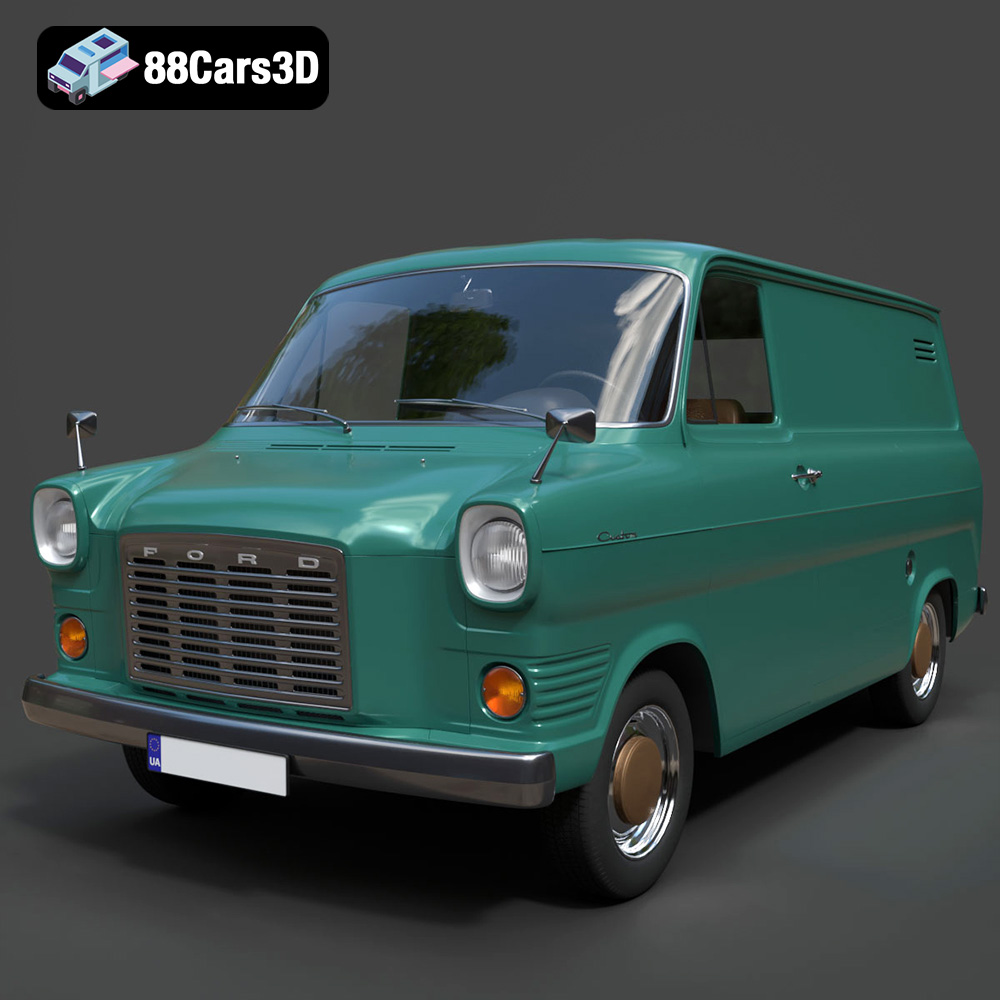
Among the pantheon of beloved classics, the 1965 Ford Transit Mk1 Panel Van stands as a true icon. Revolutionizing the European light commercial market upon its introduction, this van became synonymous with reliability, practicality, and a distinctive flat-front styling that is instantly recognizable. Its robust chassis, car-like handling, and classic V4 engine configuration cemented its place in history. Now, imagine bringing this legendary workhorse into your digital universe with unparalleled detail and optimization. This is precisely what the Ford Transit Mk1 Panel Van 1965 3D Model offers, providing a gateway to period-accurate scenes, immersive game environments, and breathtaking automotive rendering projects.
At 88cars3d.com, we understand the demand for high-fidelity assets that seamlessly integrate into diverse professional pipelines. This particular 3D model of the 1965 Ford Transit Mk1 is a testament to that commitment, engineered to deliver both visual realism and optimal performance across a spectrum of applications, from cutting-edge game development to sophisticated architectural visualizations and immersive AR/VR experiences.
The Ford Transit Mk1 wasn’t just a vehicle; it was a phenomenon that shaped countless businesses and daily lives across Europe. Its distinctive design and groundbreaking functionality set new standards for commercial vehicles. For 3D artists and developers, the opportunity to work with such a culturally significant model is exciting, opening up a world of creative possibilities.
Translating a real-world classic like the 1965 Ford Transit Mk1 Panel Van into a digital asset requires a deep understanding of its historical context and intricate design. The process involves meticulous research, referencing period photographs, blueprints, and actual vehicles to ensure every curve, panel, and component is accurately represented. This dedication to authenticity is what distinguishes a truly professional 3D car model. Beyond mere aesthetics, it ensures that the model can serve as a faithful digital twin, ready for historical reenactments, educational content, or even virtual museum exhibits.
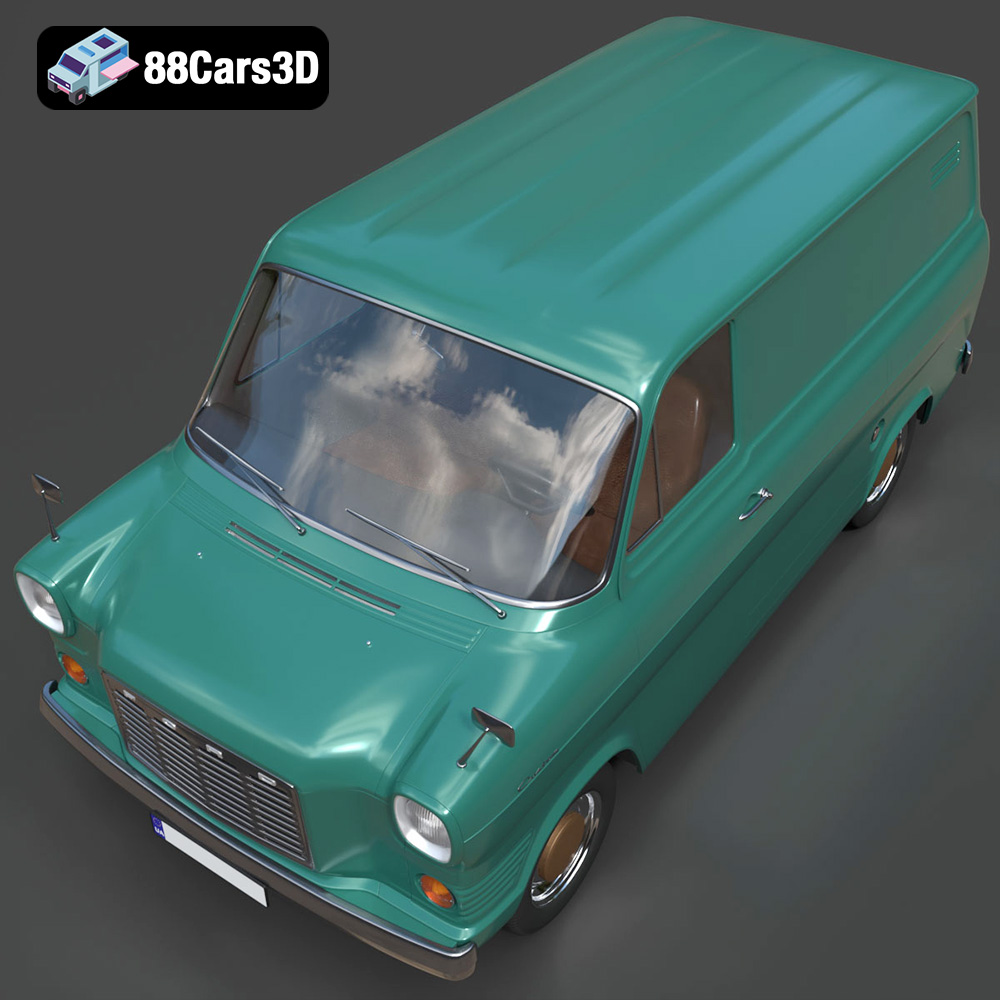
Capturing the essence of the Ford Transit Mk1 means detailing its unique features: the unmistakable flat-front, the period-correct circular halogen headlights, the classic steel wheels, and even the approximate V4 engine block and undercarriage components. These details bring the digital model to life, allowing artists to create scenes that resonate with historical accuracy and a touch of nostalgic charm.
While the aesthetic appeal of a classic like the Ford Transit Mk1 is undeniable, its value in a professional context extends far beyond nostalgia. Game developers often seek out such specific vintage models to populate open-world environments, racing titles, or historical simulations, where period accuracy is crucial for immersion. Architectural visualization studios might use it to anchor a retro urban street scene or to add character to a garage rendering. Even in advertising, a classic van can evoke a sense of heritage, reliability, or bespoke craftsmanship, making it a powerful visual tool for brand campaigns.
The versatility of a well-executed 3D car model, such as the Ford Transit Mk1 Panel Van 1965 model available on 88cars3d.com, lies in its ability to adapt. Whether you’re aiming for photorealistic renders or optimized real-time game assets, a quality model forms the foundation for countless creative endeavors, proving that classics never truly go out of style, especially in the digital realm.
Navigating the world of 3D modeling often involves choosing the right file format for your specific needs. Each format has its strengths, weaknesses, and preferred applications. Understanding these nuances is crucial for seamless integration into various software pipelines and achieving your desired output. The Ford Transit Mk1 Panel Van 1965 3D Model is offered in a comprehensive range of formats, ensuring maximum compatibility and flexibility for professionals across different industries.
The
.blend
format is native to Blender, the popular open-source 3D creation suite. When you download a
.blend
file, you receive a complete Blender scene, often including not just the model’s geometry but also its materials, textures, lighting, cameras, and even animation data if present. This format is ideal for users who primarily work within Blender, offering full editability. Artists can easily modify topology, adjust materials using Blender’s node-based shader editor, and integrate the Ford Transit Mk1 into larger Blender scenes with ease. It’s a robust format for artists who want to delve deep into the model’s structure and customize every aspect.
The
.fbx
(Filmbox) format, developed by Autodesk, is an industry-standard for exchanging 3D data between various software applications, especially for game development. It can store a wide array of 3D information, including models, materials, textures, animations, and skeletal rigging. Its binary nature makes it efficient for import and export, and it’s particularly favored by game engines like Unreal Engine and Unity due to its robust support for animations and hierarchical structures. For integrating the Ford Transit Mk1 into a game,
.fbx
is typically the go-to choice, ensuring that the model’s geometry, UVs, and pivot points (crucial for wheel rotation and steering) are correctly transferred.
The
.obj
(Wavefront OBJ) format is one of the oldest and most universally supported 3D file formats. It’s a simple, text-based format primarily used for transferring geometric data, including vertices, faces, and UV coordinates. While it’s excellent for mesh data and highly compatible across virtually all 3D software (such as 3ds Max, Blender, Maya, Cinema 4D), it does not typically store animation, rigging, or complex material definitions (though it can link to an accompanying
.mtl
file for basic material properties). For artists needing just the clean mesh of the Ford Transit Mk1 for sculpting, retopology, or import into less common software,
.obj
is a reliable choice.
The
.glb
(GLB File Format) is the binary version of the GL Transmission Format (glTF). It’s specifically designed for efficient transmission and loading of 3D scenes and models by applications, particularly those on the web, in augmented reality (AR), and virtual reality (VR).
.glb
packs all necessary data (geometry, materials, textures, animations) into a single file, making it incredibly compact and easy to share. For showcasing the Ford Transit Mk1 in a web-based configurator, a mobile AR experience, or a lightweight VR scene,
.glb
offers superior performance and integration capabilities.
The
.stl
(Stereolithography) format is the standard for 3D printing. It represents the surface geometry of a 3D object using a collection of interconnected triangles.
.stl
files do not contain color, texture, or material information, focusing solely on the object’s shape. When preparing the Ford Transit Mk1 for physical fabrication, converting it to
.stl
is the essential step. The model’s description specifically mentions recommendations for 3D printing, highlighting its suitability for hobbyists and model makers who wish to bring a tangible version of this classic van to life.
The
.ply
(Polygon File Format) is another popular format for storing 3D data, particularly useful for scanned data, point clouds, and mesh models. It supports both ASCII and binary representations and can store a variety of properties beyond just geometry, such as color, transparency, normals, texture coordinates, and even reliability information. While less common for general 3D model exchange compared to
.fbx
or
.obj
,
.ply
is valued in scientific, engineering, and CAD applications where precision and additional data attributes are critical for analysis or reconstruction of scanned objects.
While
.unreal
isn’t a single, universally recognized file extension in the same way
.fbx
or
.obj
are, its inclusion here typically signifies an asset package specifically prepared for Unreal Engine. This could mean a
.uasset
file (Unreal Engine’s native asset format) or a self-contained Unreal project file (.uproject) containing the Ford Transit Mk1 model with all its materials, textures, collision meshes, LODs, and perhaps even basic Blueprints for vehicle functionality, pre-configured and ready for direct import into an Unreal Engine project. This dramatically streamlines the workflow for game developers, reducing setup time and ensuring optimal performance within the engine.
The
.max
format is the native file type for Autodesk 3ds Max, one of the leading software packages for 3D modeling, animation, and rendering. A
.max
file contains all elements of a 3ds Max scene, including geometry, modifiers, materials, textures, lights, cameras, animations, and render settings. For professionals working in architectural visualization, automotive rendering, or complex animation sequences, having the Ford Transit Mk1 model in
.max
format offers complete creative control within a familiar environment, allowing for advanced rendering setups with V-Ray or Corona Renderer, detailed animation rigging, and seamless integration into existing 3ds Max projects.
Creating a 3D model that looks stunning is one thing; ensuring it performs flawlessly across diverse platforms is another. The Ford Transit Mk1 Panel Van 1965 3D model excels in striking this delicate balance, delivering exceptional visual fidelity without compromising real-time performance.
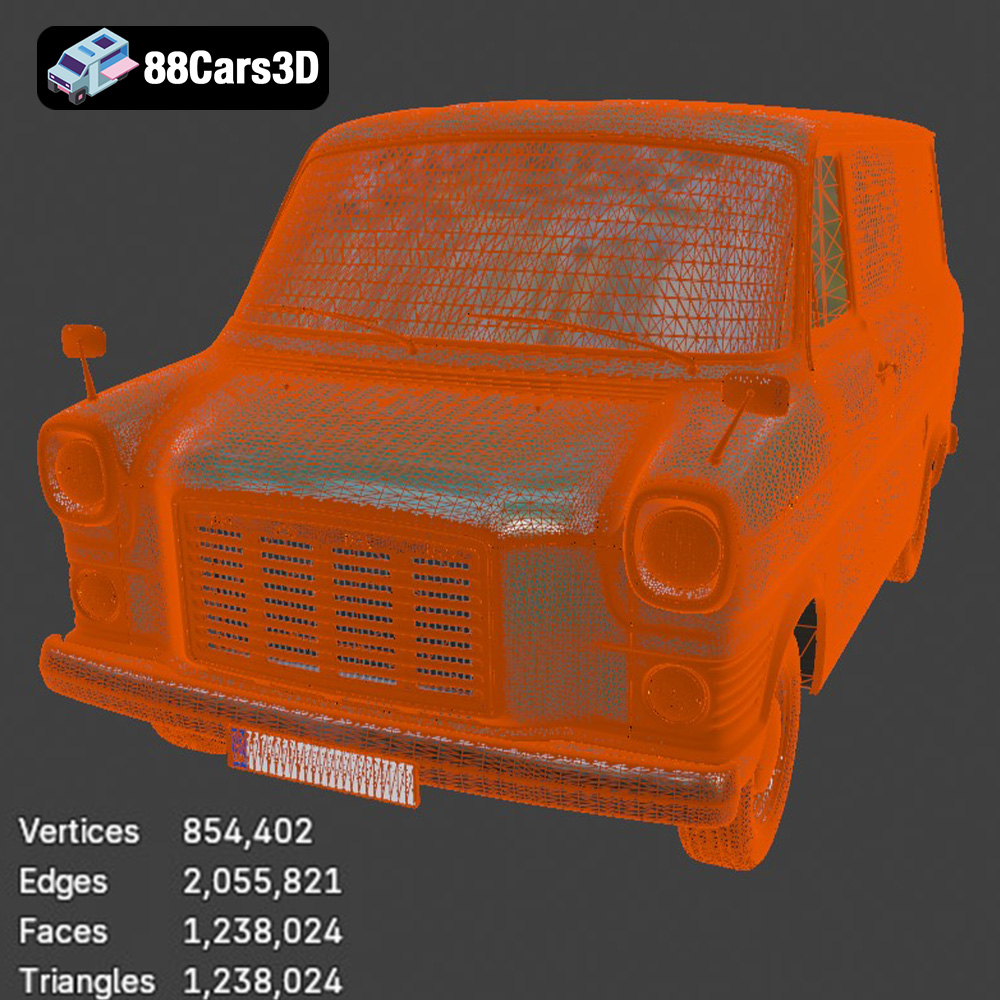
At approximately 180,000 triangles, this model achieves a perfect equilibrium for game-ready assets and high-end rendering. For game development, this polycount is robust enough to provide rich detail and smooth curves, avoiding the blocky appearance of excessively low-poly models, yet optimized enough to prevent performance bottlenecks in real-time engines like Unreal and Unity. For automotive rendering, this level of detail supports close-up shots and intricate lighting scenarios, where every reflection and shadow can enhance realism.
Key technical advantages include real-world scale accuracy, which is paramount for correct interaction with physics engines in games and for accurate placement in architectural visualizations. Furthermore, the model features proper pivot setups for crucial components: steering, wheel rotation, and suspension travel. This attention to detail means that the Ford Transit Mk1 is not just a static prop; it’s a dynamic asset ready for animation, making it ideal for vehicle simulators, cinematic sequences, or interactive experiences.
The authenticity of this Ford Transit Mk1 Panel Van 1965 3D model is a cornerstone of its quality. Every effort has been made to replicate the distinctive features that made the original vehicle so iconic.
The versatility of the Ford Transit Mk1 Panel Van 1965 3D model is amplified by its broad compatibility across industry-standard software and applications. Whether your focus is photorealistic rendering, interactive game development, or tangible 3D prints, this model is designed to streamline your creative process.
For high-fidelity automotive rendering and visualization, software like 3ds Max and Blender are industry leaders. The inclusion of the
.max
and
.blend
file formats directly caters to users of these powerful tools.
.max
file to immediately begin setting up advanced rendering scenes. This means integrating the Ford Transit Mk1 into studio lighting setups, applying V-Ray or Corona Renderer materials, and crafting cinematic animations. Imagine a beautifully lit garage scene showcasing the van, or a dynamic animation of it navigating a meticulously rendered city street. The full editability of the
.max
file allows for intricate adjustments to materials, textures, and even geometry, ensuring the highest level of photorealism.
.blend
file to great effect. With Cycles or Eevee render engines, the Ford Transit Mk1 can be rendered in stunning detail. Artists can explore advanced material customization using Blender’s powerful node-based shader editor, adjusting everything from paint reflectivity to tire wear. Combining the van with Blender’s extensive environmental creation tools allows for the rapid development of realistic backdrops, from rustic farmyards to bustling urban centers.
For game developers, the Ford Transit Mk1 Panel Van 1965 3D model is truly game-ready. The provision of
.fbx
and
.unreal
(asset package) formats makes integration into Unreal Engine particularly straightforward.
.fbx
file serves as a reliable conduit for importing the model’s geometry and UVs into Unreal Engine. Artists can then set up materials within Unreal’s robust material editor, ensuring the van looks its best in the game engine. Crucially, the model’s optimized polycount (~180,000 triangles) is ideal for real-time performance. Game developers can then generate appropriate collision meshes and implement Levels of Detail (LODs) to further optimize performance as the vehicle moves further from the camera.
The utility of this 3D car model extends beyond traditional screen-based applications, reaching into emerging technologies like Augmented Reality (AR) and Virtual Reality (VR), as well as the tangible world of 3D printing.
.glb
format, the Ford Transit Mk1 is perfectly suited for immersive AR/VR experiences. Imagine a virtual showroom where customers can walk around and inspect the vintage van, or an AR application that places the model realistically onto a real-world surface via a smartphone. The
.glb
format’s efficiency and single-file structure make it ideal for deployment in Unity, WebXR, and various mobile AR platforms, opening up new avenues for interactive visualization and historical exploration.
.stl
format is a significant benefit. The model can be converted and prepared for 3D printing at recommended scales (1:12, 1:18, 1:24). While the digital model allows for infinite reproductions, a physical print offers a tangible piece of automotive history. The product description provides excellent guidance for 3D print settings, including recommended layer height, infill, and crucial support placement for detailed parts, ensuring successful physical replication.
A high-quality 3D model isn’t just about static perfection; it’s about the flexibility it offers for customization. The Ford Transit Mk1 Panel Van 1965 3D Model provides extensive options for artists to tailor its appearance and integrate it seamlessly into diverse visual narratives.
The ability to manipulate materials and textures is fundamental for achieving desired aesthetics. With this model, artists have the freedom to:
The true power of a flexible 3D model lies in how well it adapts to its surroundings. The Ford Transit Mk1 can be integrated into virtually any environment:
In the fast-paced world of digital content creation, finding reliable, high-quality assets can significantly impact project timelines and final output. 88cars3d.com stands as a beacon for professionals and enthusiasts seeking premium 3D car models that meet rigorous industry standards.
Our commitment at 88cars3d.com is to provide a curated selection of truly premium 3D car models. Each product, like the Ford Transit Mk1 Panel Van 1965 3D Model, undergoes meticulous detailing and optimization to ensure it is “game-ready,” suitable for high-end “automotive rendering,” and adaptable for various “game assets” applications. This means artists and developers can trust that they are investing in assets that are not only visually impressive but also technically sound and production-ready. The convenience of having diverse file formats included with each purchase further solidifies our dedication to accessibility and workflow efficiency.
By offering detailed, optimized, and versatile models like this classic Ford Transit, 88cars3d.com empowers creators across numerous industries. Game developers can enrich their virtual worlds with authentic vehicles, architectural visualization artists can bring historical depth to their scenes, and AR/VR developers can craft immersive experiences without starting from scratch. Our marketplace streamlines the asset acquisition process, allowing professionals to focus more on creativity and less on the painstaking process of modeling complex vehicles from the ground up. The Ford Transit Mk1 is just one example of the quality and versatility you can expect, ready to inspire and facilitate your next groundbreaking project.
The 1965 Ford Transit Mk1 Panel Van is more than just a piece of automotive history; it’s a testament to timeless design and utilitarian brilliance. As a high-quality 3D model, it transcends its physical limitations, offering digital artists, game developers, and visualization specialists a powerful tool to infuse their projects with unparalleled realism and character. From its meticulously recreated exterior and interior features to its optimized topology and extensive file format support, this model is engineered for peak performance across all creative applications.
Whether you’re developing an open-world game, crafting a cinematic automotive rendering, designing an immersive AR/VR experience, or even bringing a tangible piece of history to life through 3D printing, the Ford Transit Mk1 Panel Van 1965 3D Model is an indispensable asset. Its adaptability for customization, combined with its technical integrity, makes it a valuable addition to any professional library. Explore the potential of this iconic classic and many other premium 3D car models by visiting 88cars3d.com today – your destination for excellence in digital automotive assets.
The iconic 1965 Ford Transit Mk1 Panel Van is a legendary commercial vehicle that revolutionized the European light commercial market. Known for its wide track, car-like handling, and unmistakable flat-front styling, this workhorse set the standard for modern vans. Its distinctive silhouette, robust chassis, and classic V4 engine configuration make it a highly sought-after vintage classic among enthusiasts and collectors. This highly detailed, game-ready 3D model boasts optimized topology, ensuring exceptional visual fidelity while maintaining excellent real-time performance. Designed meticulously for seamless integration into modern game engines, architectural visualizations, and immersive AR/VR environments, the model captures every nuance of the original 1960s commercial aesthetic. Perfect for vintage city environments, historical transport simulations, classic garage scenes, and period-accurate architectural renderings.
$19.99
.blend
.fbx
.ford
.glb
.max
.obj
.ply
.rendering
.stl
.unreal
1965
car-3d-model
classic-van
commercial-vehicle
game asset
game-ready
low-poly
optimized
panel-van
transit-mk1
VR/AR