Get 20% OFF All Premium 3D & STL Models!

In the rapidly evolving landscapes of game development, advanced visualization, and immersive AR/VR experiences, the demand for highly detailed, yet optimized, 3D models is constant. Whether crafting a hyper-realistic combat simulation, an engaging architectural fly-through, or a compelling product configurator, the quality of your foundational assets dictates the final output. Among the most challenging and rewarding assets to master are complex vehicles, particularly those with intricate mechanical details and robust structural integrity. This is where a meticulously crafted 3D car model, such as the Hawkei Protected Military Vehicle, becomes an indispensable tool for professionals seeking unparalleled realism and performance.
The Hawkei, a symbol of modern tactical mobility, translates into a fascinating challenge for 3D artists. Recreating its unique V-hull geometry, heavy-duty suspension, and tactical attachment points demands precision, technical understanding, and a keen eye for detail. When done right, such a model not only looks authentic but also functions flawlessly within diverse production pipelines, from high-fidelity renders to real-time game engines. The Hawkei Protected Military Vehicle 3D model, available on 88cars3d.com, exemplifies this mastery, offering a game-ready asset that balances intricate visual fidelity with optimal performance, making it a cornerstone for a multitude of digital projects.
Choosing the correct file format is a critical decision in any 3D workflow, directly impacting compatibility, functionality, and performance across different software and platforms. The Hawkei Protected Military Vehicle 3D model is provided in a comprehensive suite of formats, ensuring maximum flexibility for artists and developers. Understanding the nuances of each is key to leveraging your assets efficiently.
The .blend file format is native to Blender, the powerful open-source 3D creation suite. When you download a .blend file, you’re getting a fully editable Blender scene. This means not just the mesh, but also materials, textures, lighting setups, cameras, animation data, and even physics simulations can be stored within a single file. For the Hawkei model, this provides an artist with complete access to the model’s construction, allowing for easy modifications, re-texturing, rigging, or integration into existing Blender projects. Its primary advantage lies in its comprehensive nature and the freedom it offers for deep customization within the Blender environment, making it ideal for those who prefer an all-in-one solution for their creative endeavors.
Autodesk’s .fbx (Filmbox) format is arguably the most widely adopted interchange format in the 3D industry, especially within game development and animation. It excels at transferring 3D model data, including meshes, textures, materials, animations, and skeletal deformation, between different applications and engines like Unreal Engine, Unity, 3ds Max, Maya, and Blender. Its robust support for animation curves and hierarchical data makes it ideal for animated assets like vehicles with moving parts (wheels, suspension, steering). For the Hawkei, an .fbx file ensures seamless integration into real-time pipelines, maintaining PBR material assignments and preserving the model’s structural hierarchy for animation, making it a true workhorse for any serious game developer or animator.
The .obj (Wavefront OBJ) format is a venerable and highly compatible 3D model format. While simpler than .fbx, typically storing only geometry (vertices, normals, UVs) and material references (.mtl file), its universality is its strength. Almost every 3D software application can import and export .obj files, making it an excellent fallback or starting point for cross-software workflows where complex animation data isn’t required in the transfer. For the Hawkei, the .obj provides a clean, raw mesh that can be easily imported into any 3D package for immediate sculpting, retopology, or foundational rendering setups, offering unparalleled accessibility.
.glb (GLB format for glTF) is a relatively newer, yet rapidly adopted, format optimized for real-time applications, especially in augmented reality (AR), virtual reality (VR), and web-based 3D experiences. It is a binary version of the glTF (Graphics Language Transmission Format) standard, which packages all assets (geometry, textures, animations, PBR materials) into a single, compact file. This “all-in-one” characteristic makes .glb incredibly efficient for streaming and displaying 3D models online or on mobile devices. For displaying the Hawkei in a browser-based configurator, an AR app for military training, or a VR showroom, the .glb format offers superior performance and ease of deployment.
.stl (STereoLithography) is the de facto standard format for 3D printing. It describes only the surface geometry of a 3D object as a collection of unconnected triangular facets. While it lacks color, texture, or animation data, its simplicity is perfect for manufacturing processes. For hobbyists or defense engineers looking to create a physical prototype or a detailed display model of the Hawkei, the .stl file is essential. The Hawkei model, being convertible to .stl, allows for scaling and printing, bringing the digital asset into the physical realm.
The .ply (Polygon File Format, also Stanford Triangle Format) is another format primarily used for storing 3D data, particularly from 3D scanners or CAD applications. It can store a wider range of properties than .stl, including color, transparency, and even properties of the mesh elements (e.g., normal vectors, texture coordinates). While less common for general 3D asset exchange, it’s invaluable for applications requiring precise mesh data for analysis or direct use in certain engineering or CAD workflows. For highly technical applications involving the Hawkei’s geometry, the .ply offers a robust data foundation.
The inclusion of an .unreal file (or an Unreal Engine project file/asset package) signifies a model that is specifically prepared and optimized for direct use within Unreal Engine. This often means the asset has been properly imported, materials set up with Unreal’s PBR shaders, collision meshes generated, and potentially even LODs (Levels of Detail) or basic interactivity configured. For game developers working with the Hawkei in Unreal, this format dramatically reduces setup time, allowing for immediate integration into an interactive environment. It ensures that the model performs optimally and looks consistent with Unreal’s rendering pipeline from the outset.
The .max file format is native to Autodesk 3ds Max, one of the industry-standard software packages for 3D modeling, animation, and rendering. Similar to .blend for Blender, a .max file encapsulates the entire 3ds Max scene, including geometry, materials, textures, lighting, cameras, animation, and scene setup. This provides users with full editability within 3ds Max, allowing for complex rigging, advanced rendering with V-Ray or Corona, or deep customization. For artists who rely on 3ds Max for high-end automotive rendering or detailed cinematic sequences, the .max file of the Hawkei offers a complete and flexible starting point.
By offering this comprehensive range of formats, the Hawkei Protected Military Vehicle 3D model from 88cars3d.com ensures that it can seamlessly integrate into virtually any professional 3D pipeline, catering to diverse needs from game development to 3D printing.
The Hawkei Protected Military Vehicle is renowned for its innovative design, offering superior protection and mobility in challenging environments. Translating such a complex, purpose-built machine into a high-fidelity 3D model requires an exceptional understanding of both form and function. This particular 3D car model captures the essence of the Hawkei, making it a powerful asset for any project demanding authenticity.
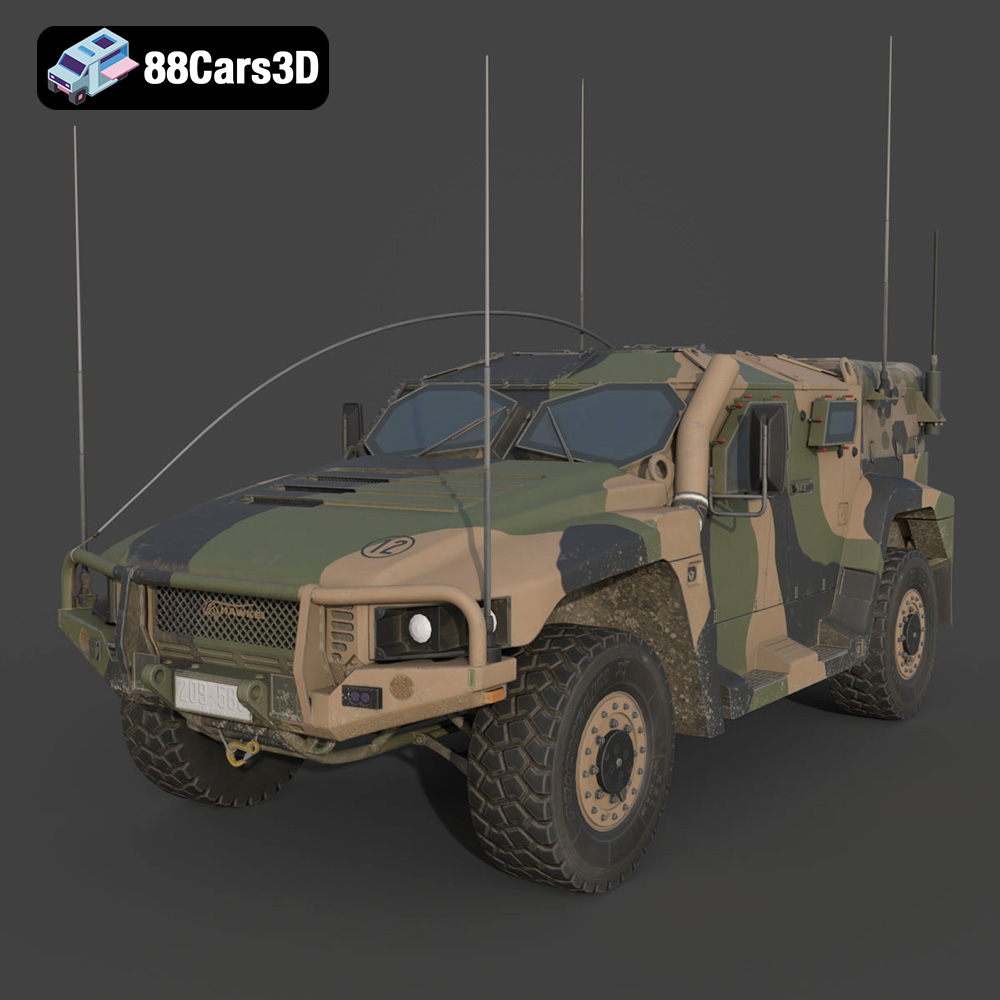
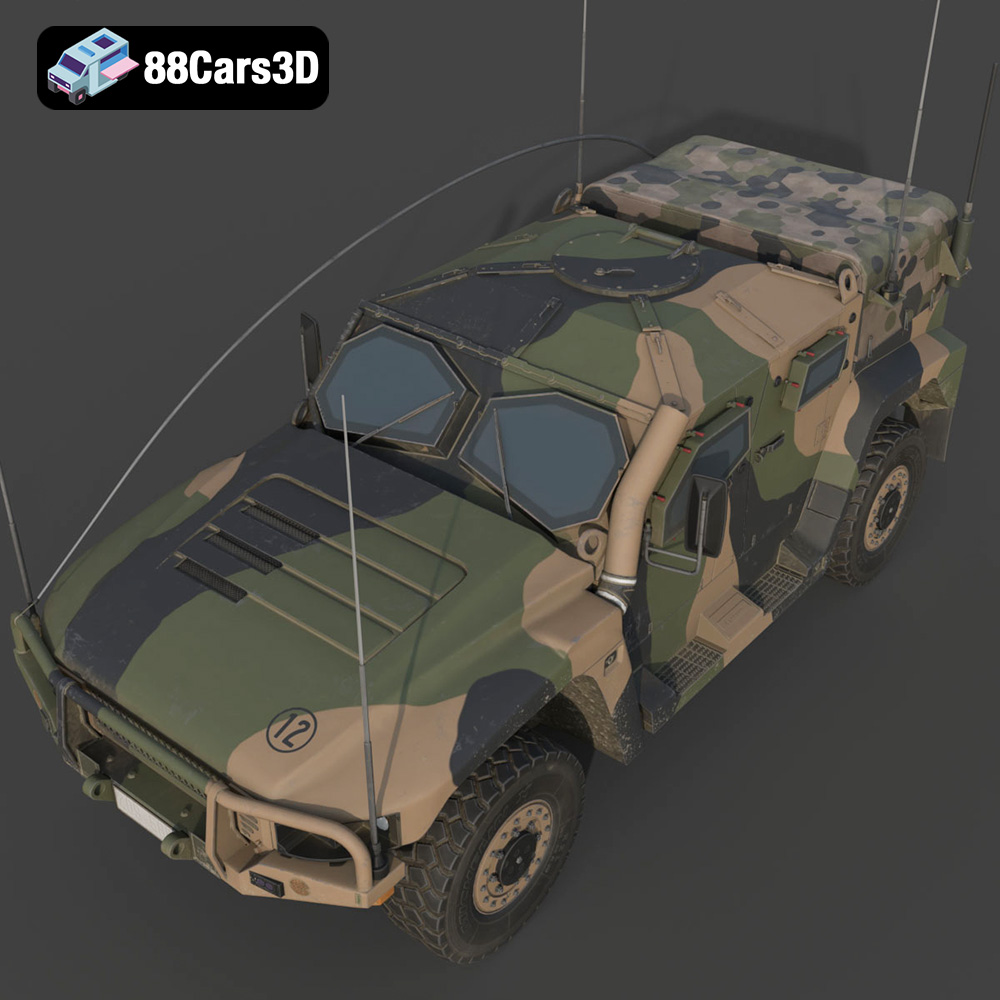
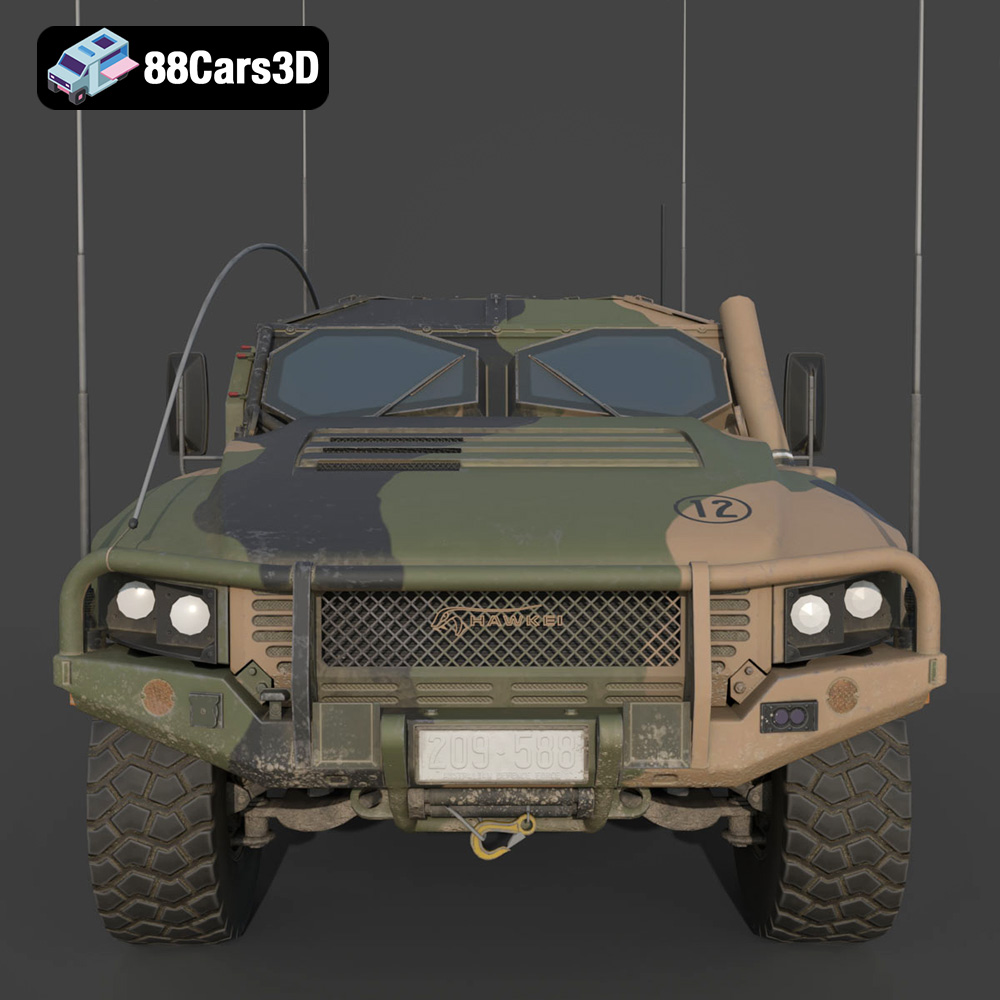
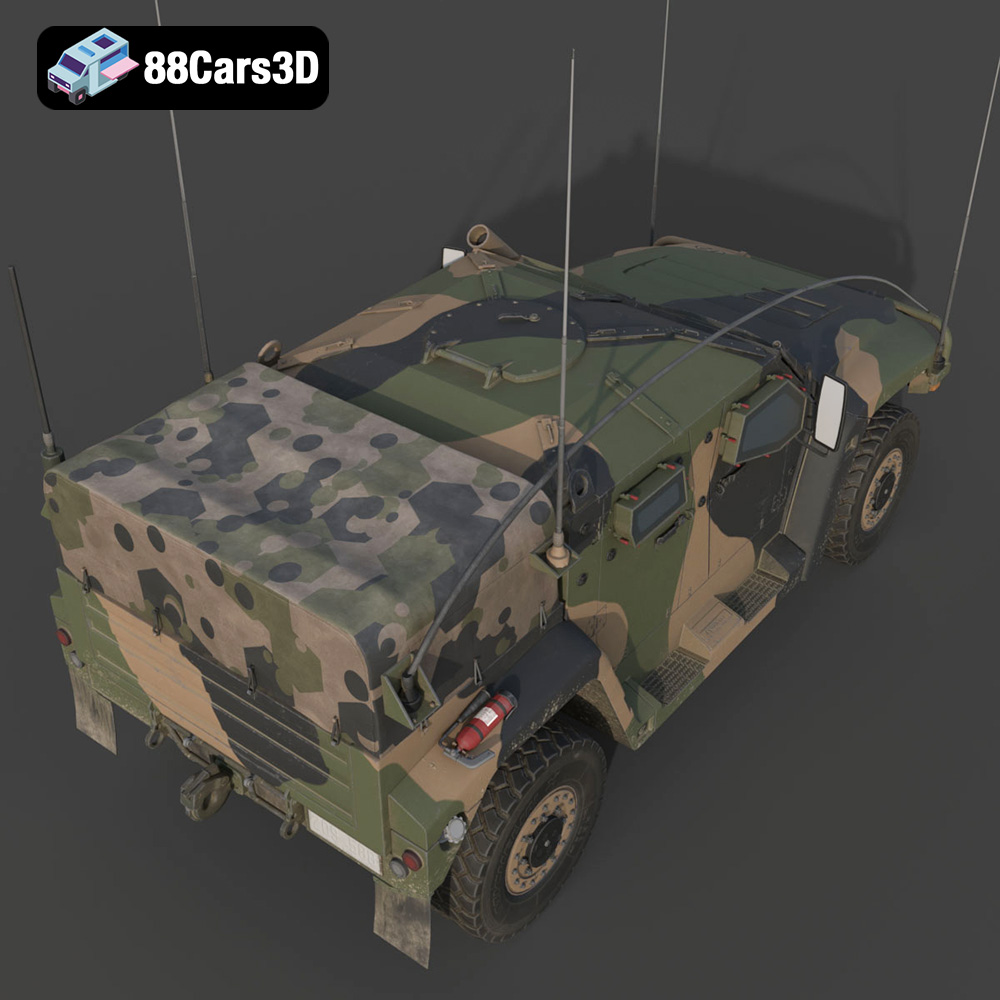
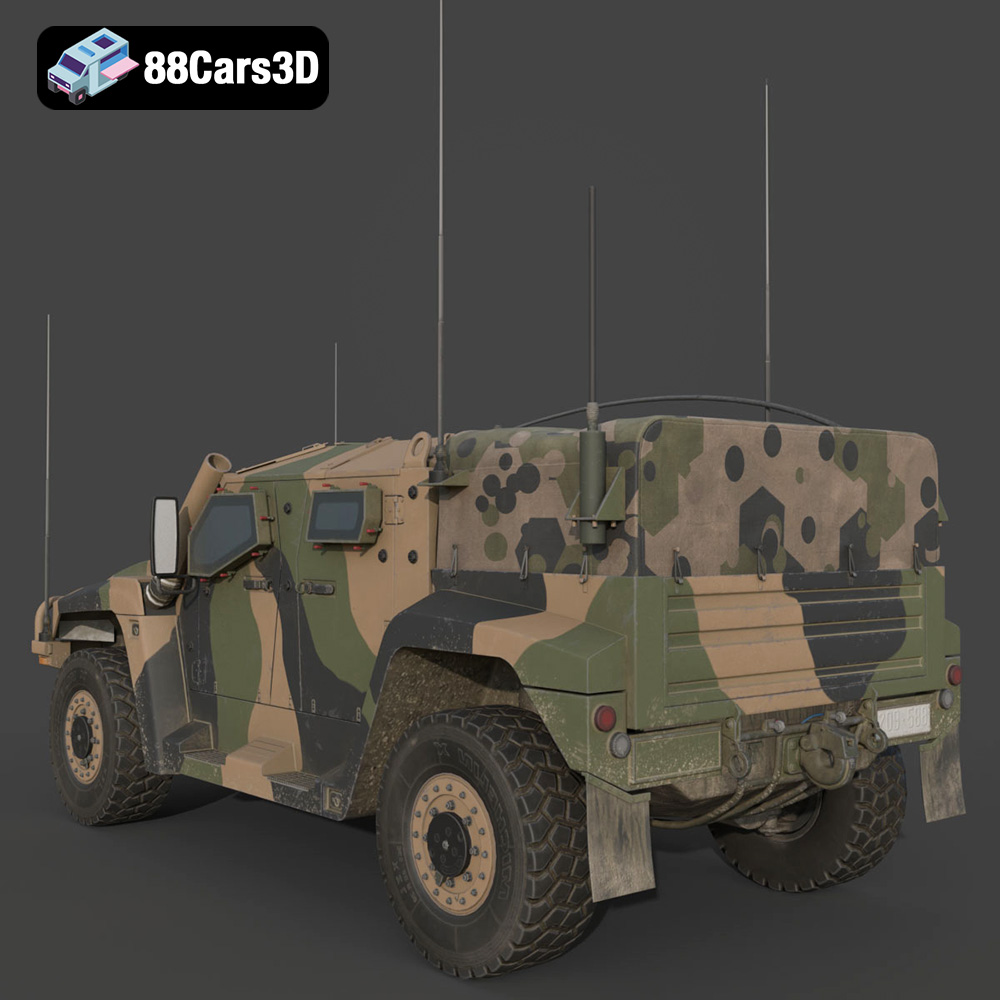
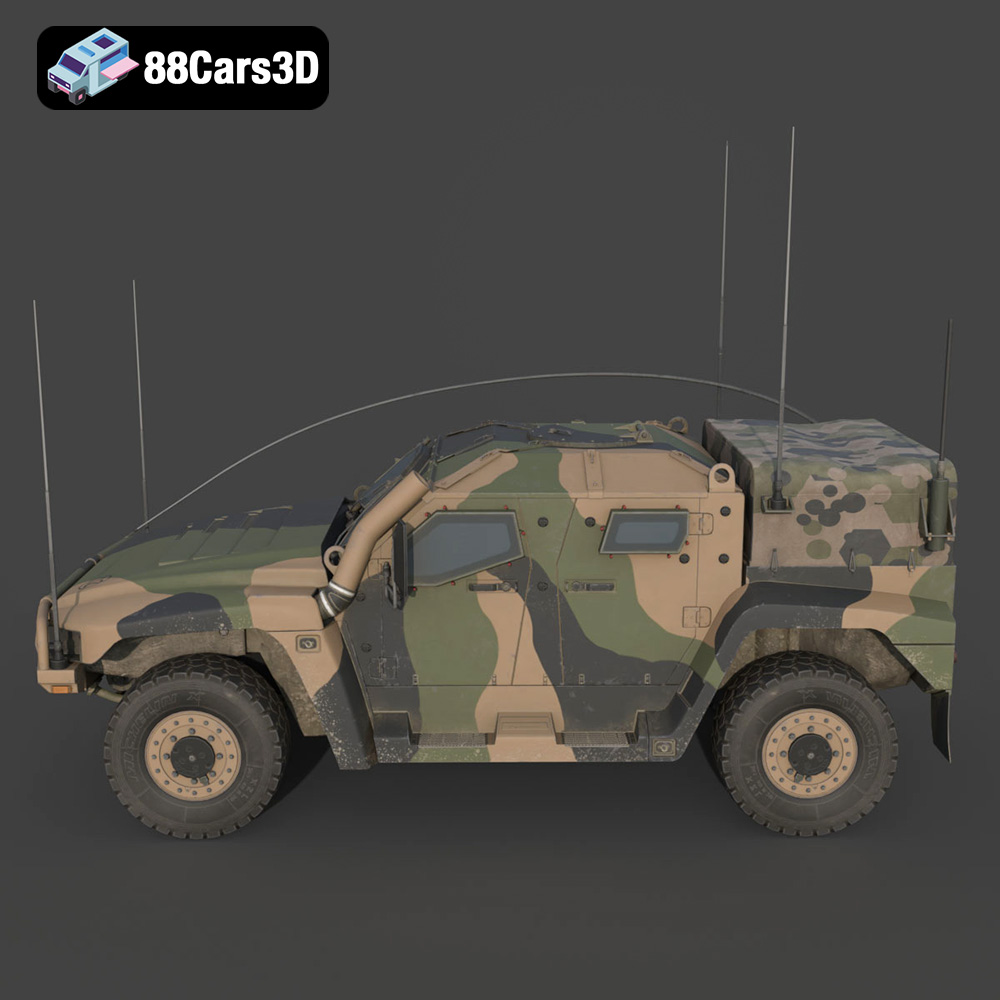
Every element of the digital Hawkei has been meticulously sculpted to reflect its real-world counterpart. The aggressive V-hull geometry, critical for blast deflection, is faithfully replicated, as are the heavy-duty off-road suspension components and fortified paneling. Details like the robust tactical grille, exterior engine vents, and the shielded exhaust system are not merely aesthetic; they contribute to the visual integrity and the believable functionality of the vehicle. This attention to detail extends to the military-grade lighting setup, including blackout lights and rugged taillights, ensuring that the model holds up under close scrutiny in high-resolution renders and demanding simulations.
A truly professional 3D model goes beyond just the exterior. The Hawkei model features a comprehensively detailed interior, optimized for both first-person perspectives in gaming and detailed visualization. The utilitarian blast-mitigating seat details, tactical steering column, heavy-duty dashboard geometry, and digital instrument cluster are all present. Military-spec controls, including heavy-duty pedals and transmission shifters, further enhance the immersive quality. This level of internal detail is crucial for projects like tactical driving simulators or VR training, where user interaction with the cockpit is paramount. Combined with separate elements for wheels, suspension, and steering, the model is fully prepped for realistic animation, bringing the vehicle to life in any scene.
For game developers and AR/VR creators, a visually stunning model is only half the equation; performance is equally critical. The Hawkei Protected Military Vehicle 3D model is specifically engineered to excel in real-time environments, offering an optimal balance between visual fidelity and computational efficiency.
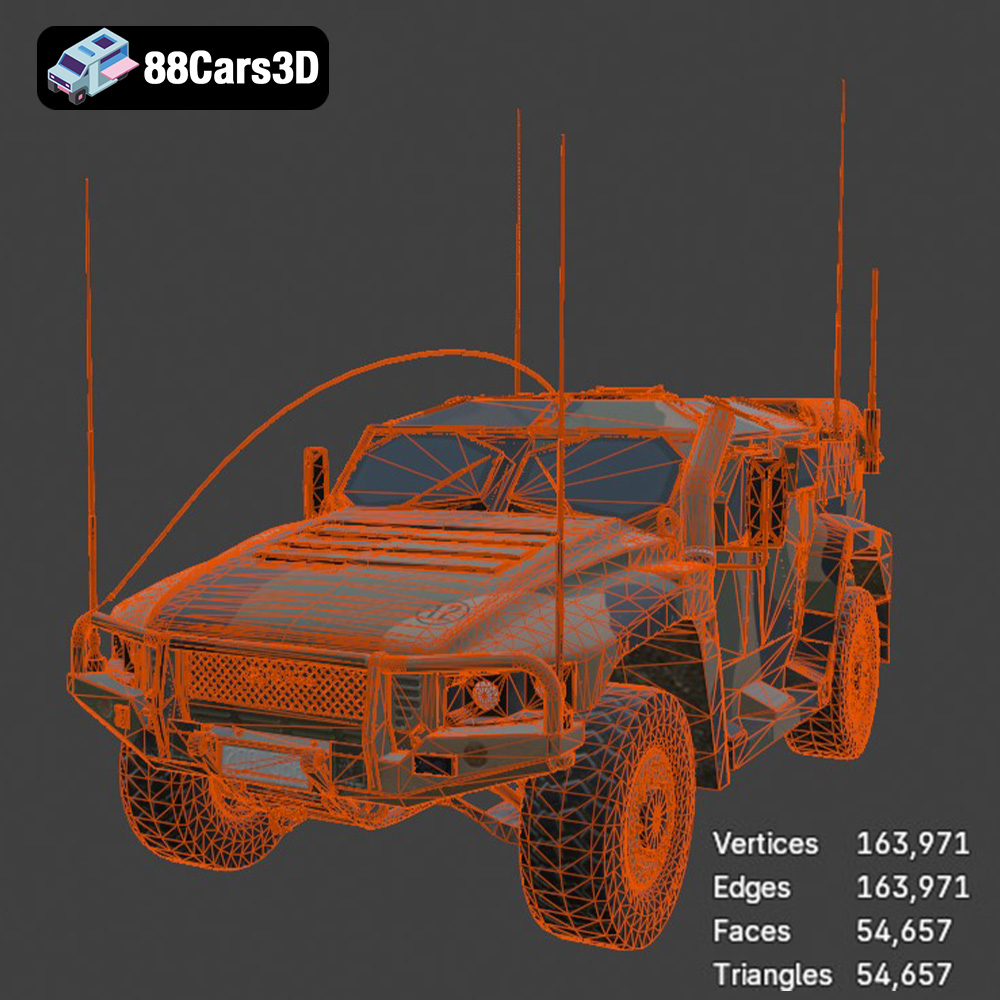
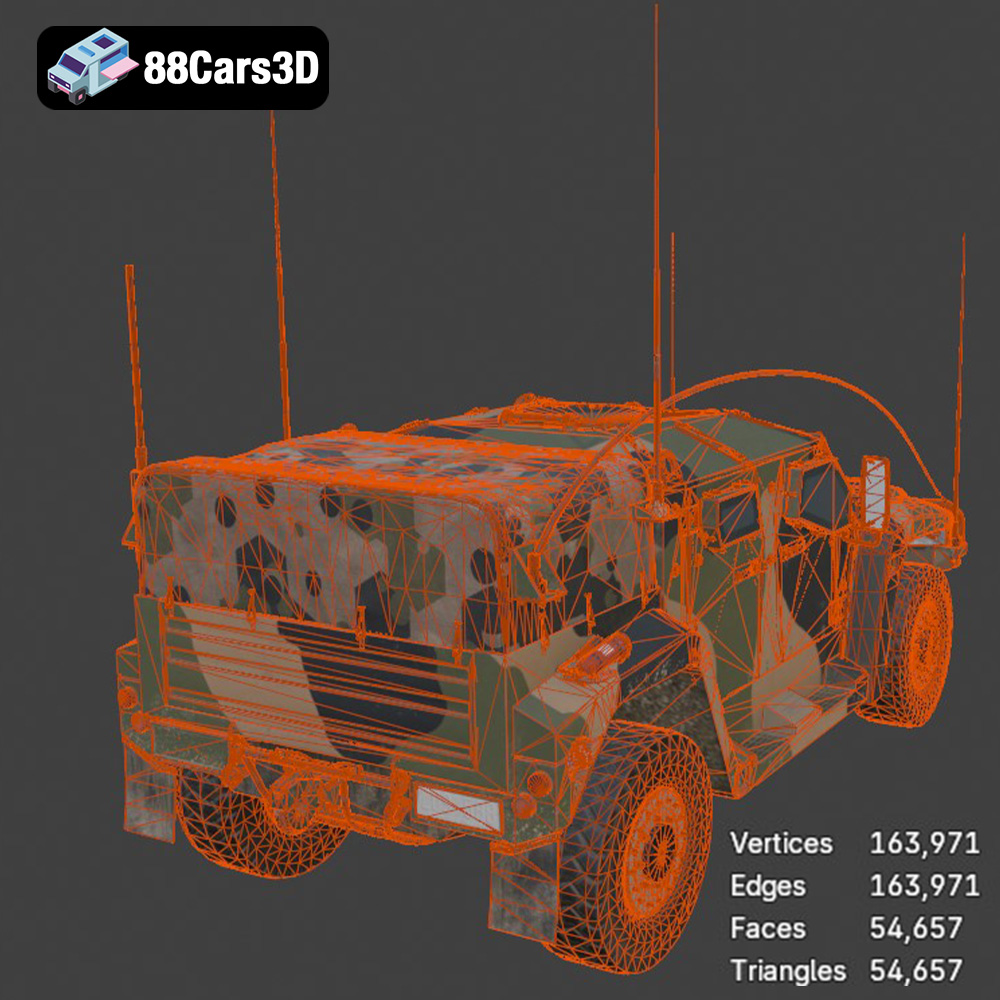
With an approximate triangle count of 150,000, this Hawkei model strikes a perfect equilibrium for game-ready deployment. This polycount is sufficiently high to retain intricate details like the rugged tire treads, suspension components, and the various tactical attachment points, preventing the model from appearing low-resolution. Simultaneously, it remains optimized enough to avoid significant performance bottlenecks in demanding real-time engines such as Unreal Engine and Unity. This careful optimization ensures smooth frame rates even when multiple instances of the vehicle are present or when integrated into complex scenes with other high-fidelity game assets.
The model utilizes PBR (Physically Based Rendering) ready material surfaces, which are essential for achieving photorealistic results in modern renderers and game engines. PBR materials accurately simulate how light interacts with surfaces, providing realistic reflections, refractions, and diffuse properties. This, combined with real-world scale accuracy, ensures that the Hawkei model integrates seamlessly with other assets in your scene, maintaining consistent lighting and physical realism. Proper pivot setup for steering, wheel rotation, and suspension travel further enhances its functionality, allowing for quick and accurate animation setup, a crucial feature for any automotive game asset.
The utility of a high-quality 3D car model like the Hawkei extends far beyond a single domain. Its robust design and versatile optimization make it suitable for a broad spectrum of professional applications, empowering creators across various industries.
The Hawkei model is a prime asset for game developers. Its optimized polycount and PBR materials make it ideal for integration into open-world combat games, tactical shooters, and realistic driving simulators. Imagine intense off-road chases or strategic military operations where players interact with this highly detailed vehicle. Its separate, animatable components (wheels, suspension, steering) allow for dynamic physics simulations and realistic driving mechanics, providing an immersive player experience. From being a playable vehicle to a background asset filling a sprawling military base, its versatility as a game asset is immense.
For augmented and virtual reality experiences, realism and performance are paramount. The Hawkei model excels in this arena, perfect for creating immersive virtual training simulations for military personnel. Imagine a VR scenario where trainees can inspect the vehicle from all angles, practice maintenance procedures, or even simulate driving through challenging terrain. Beyond training, it can be used in AR applications for defense industry presentations, allowing potential clients to virtually explore the vehicle in a real-world setting, highlighting its features and capabilities in an engaging, interactive manner. The .glb format, specifically, makes it ideal for these types of web and mobile AR/VR deployments.
When it comes to high-end rendering and visualization, the Hawkei model stands out. Its meticulous detailing and PBR textures lend themselves beautifully to cinematic warzone renders, promotional videos for defense contractors, or striking imagery for military equipment showcases. Architects visualizing a secure facility might include the Hawkei to add a layer of realism and context to their scene. From studio lighting setups highlighting its robust engineering to environmental renders depicting its prowess in rugged terrain, this model provides a solid foundation for captivating visual narratives and high-impact marketing campaigns for the defense sector or related industries. For those in automotive rendering specializing in defense vehicles, this model is a significant time-saver and quality enhancer.
A professional 3D model is not just about its visual quality; it’s about how effectively it can be integrated into existing production pipelines. The Hawkei Protected Military Vehicle 3D model is designed with workflow efficiency in mind, providing compatibility and flexibility for artists using industry-standard tools.
For artists starting their work in Blender or 3ds Max, the included .blend and .max files offer immediate access to the model’s full scene data. In Blender, users can leverage its powerful modeling, texturing, and rendering capabilities to customize the Hawkei. This could involve changing body colors, modifying tire textures, or adapting material finishes for specific visual styles. Similarly, 3ds Max users can take advantage of its extensive plugin ecosystem for advanced rendering engines like V-Ray or Corona, creating photorealistic images and animations. The full editability means artists have complete control over every aspect, from minor material tweaks to significant structural modifications, if required for a specific project.
The game-ready nature of the Hawkei model shines in real-time engines. Using the .fbx or even the dedicated .unreal asset, developers can swiftly import the vehicle into Unreal Engine or Unity. The model’s optimized topology and PBR material setup ensure it looks correct and performs well out of the box. Developers can then focus on implementing vehicle physics, adding interactive elements, scripting AI drivers, or integrating it into a larger game environment. The proper pivot setup for wheels and suspension is a major time-saver, simplifying the rigging and animation process for dynamic vehicle behavior, which is a cornerstone of realistic game assets.
The customization options for the Hawkei model are extensive. Beyond default factory colors, artists can easily apply custom finishes, from matte desert camouflage to glossy urban tactical schemes. Tire textures can be swapped between aggressive off-road variants and more streamlined street versions. Material properties like gloss, metallic, and roughness can be adjusted to match desired environmental conditions or stylistic choices. Furthermore, the model’s PBR setup allows for seamless adaptation of lighting for different environments – be it a moonlit desert, a sun-drenched urban street, or an enclosed military hangar. This adaptability is crucial for maintaining visual consistency across diverse scenes and projects requiring realistic automotive rendering.
Beyond digital screens, the Hawkei Protected Military Vehicle 3D model offers the exciting possibility of physical manifestation through 3D printing. This opens doors for hobbyists, collectors, and even defense industry professionals who require physical prototypes or display models.
The inclusion of the .stl file format is specifically tailored for 3D printing. While the digital model is rich with textures and materials, the .stl provides the raw geometric data necessary for a 3D printer to construct the object layer by layer. The recommended scales (1:12 / 1:18 / 1:24) offer practical print sizes for display and detailed reproduction. Hobbyists can print intricate scale models for collection or dioramas, while engineers might use it for rapid prototyping or ergonomic studies of components. The ability to transition from a digital 3D car model to a physical object is a powerful testament to the model’s versatility.
Achieving a high-quality 3D print requires careful attention to print settings. The recommendation for resin printing (SLA/DLP) with a low layer height (0.04–0.12 mm) is critical for capturing the Hawkei’s fine details, such as the grille, vents, and panel lines. Specific guidelines for wall thickness, infill, and supports ensure structural integrity and prevent print failures. Proper print orientation, like angling the frame and printing wheels separately, minimizes support material and optimizes surface quality. Post-processing, including sanding, priming, and painting with authentic factory colors and metallic finishes, transforms the raw print into a convincing replica, highlighting the effort invested in creating such a detailed 3D car model.
The world of 3D modeling demands assets that are not only visually captivating but also technically robust and adaptable. The Hawkei Protected Military Vehicle 3D model embodies these qualities, offering an exceptionally detailed, game-ready, and versatile asset for a wide range of professional applications. From its meticulous recreation of the V-hull geometry and intricate interior features to its optimized polycount and PBR material setup, this model is built for performance and realism across diverse pipelines.
Whether you are a game developer crafting the next immersive combat simulation, an AR/VR specialist building virtual training environments, a visualization artist producing cinematic renders, or a hobbyist seeking to 3D print a stunning replica, the Hawkei model provides the foundation you need. Its comprehensive suite of file formats – .blend, .fbx, .obj, .glb, .stl, .ply, .unreal, and .max – ensures seamless integration into virtually any workflow, empowering creators to achieve their vision with efficiency and excellence. For those seeking premium 3D car models and reliable game assets for their projects, 88cars3d.com is a trusted source for high-quality, production-ready content that truly elevates your digital creations. Invest in assets that perform as well as they look, and drive your projects to new heights.
The Hawkei Protected Military Vehicle represents the pinnacle of modern light armored tactical mobility, offering unparalleled protection, payload, and performance. Known for its distinct rugged V-hull geometry designed to deflect blast impacts, the Hawkei features heavy-duty off-road suspension, fortified paneling, and tactical attachment points. Every structural element, from the aggressive front grille to the robust exhaust system and utilitarian lighting, has been meticulously recreated to capture the imposing presence of this military powerhouse. This 3D model boasts exceptional game-ready optimization, balancing a manageable topology of approximately 150,000 triangles with high-fidelity visual detailing. It is built to serve flawlessly in real-time engines, providing exceptional realism without compromising frame rates. The model’s optimized mesh and PBR-ready material surfaces make it a versatile asset for high-end game development, architectural visualization, and immersive AR/VR training simulations. Perfect for military combat games, tactical driving simulators, cinematic warzone renders, and defense industry presentations.
$19.99
.blend
.fbx
.glb
.max
.military
.obj
.ply
.rendering
.stl
.tactical
.unreal
car-3d-model
game asset
game-ready
hawkei
low-poly
off-road
optimized
protected-military-vehicle
VR/AR