Get 20% OFF All Premium 3D & STL Models!

In the dynamic realm of 3D visualization, automotive design, and game development, the demand for highly detailed and functionally accurate vehicle models is perpetual. Whether crafting an immersive open-world game, simulating complex logistics operations, or producing photorealistic renders for a marketing campaign, the foundation of success lies in the quality of your digital assets. Generic models simply won’t cut it when authenticity and performance are paramount. Professionals understand that a well-crafted 3D car model not only saves invaluable development time but also elevates the entire project’s fidelity, providing a robust starting point for any creative endeavor.
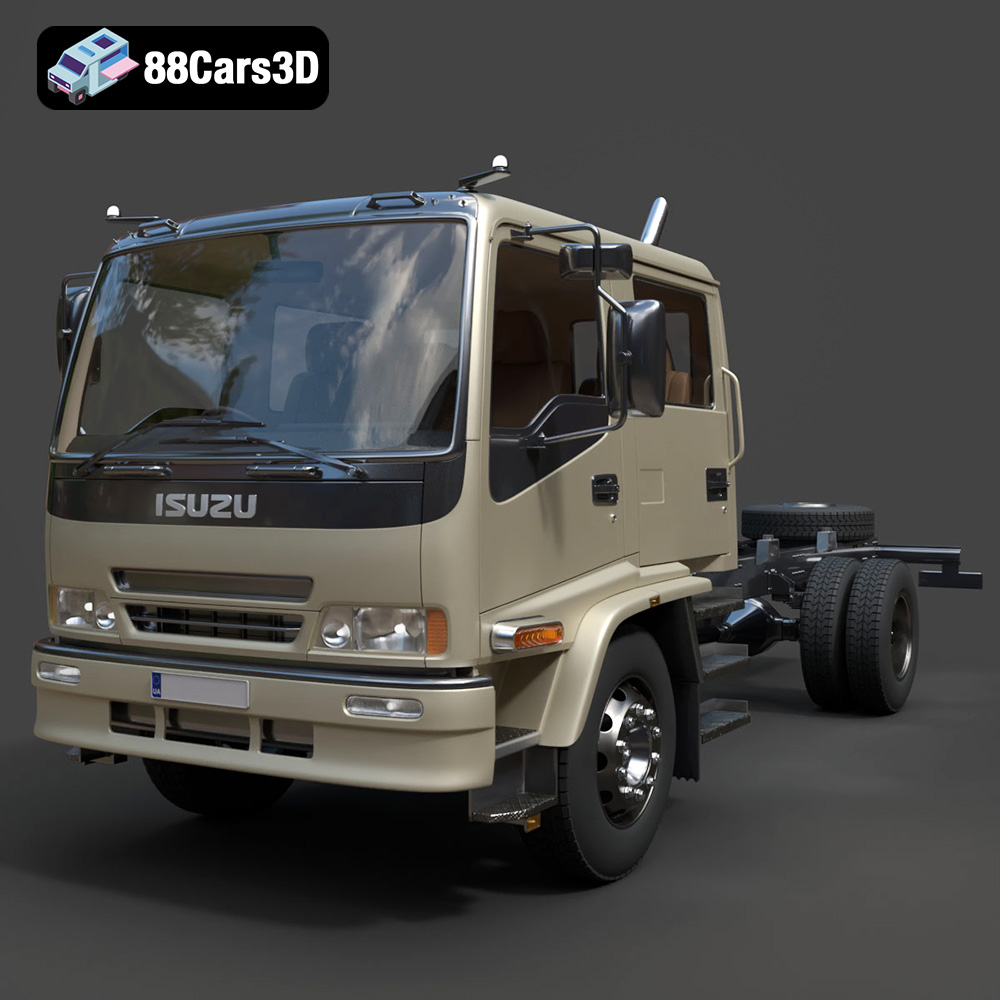
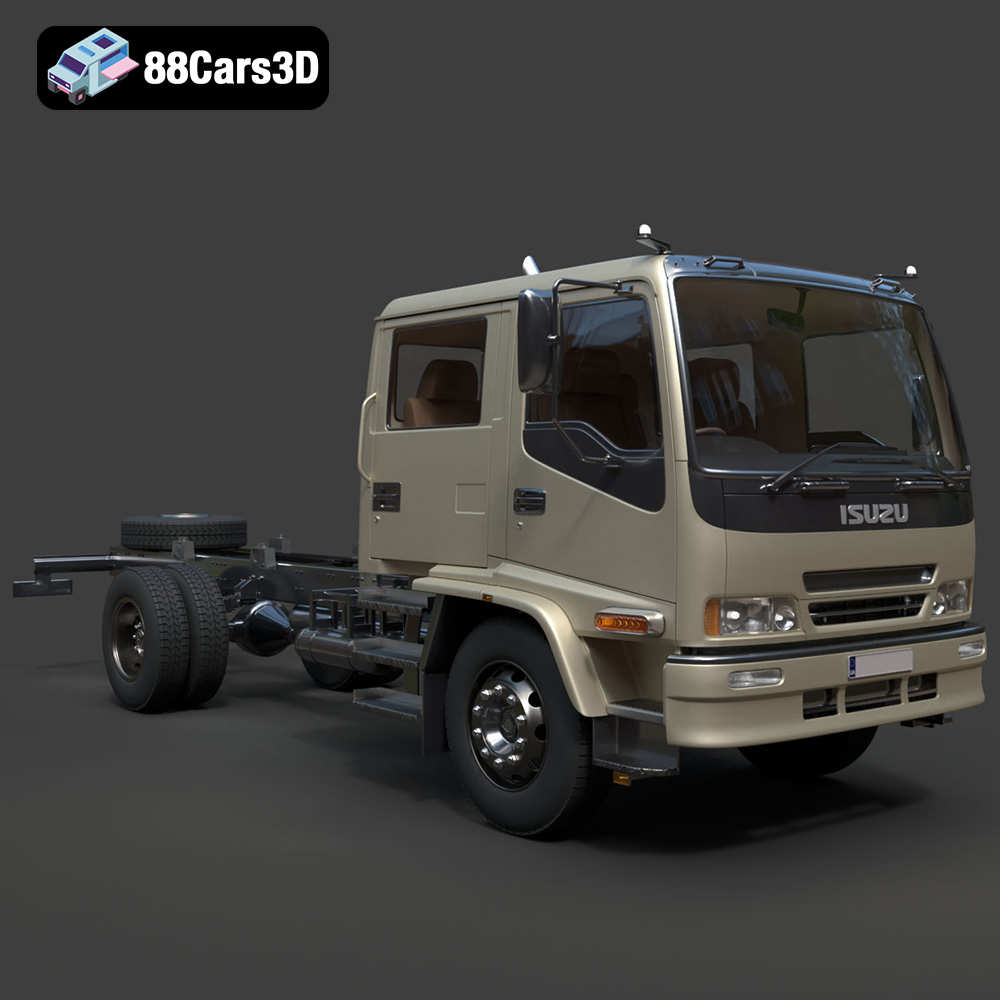
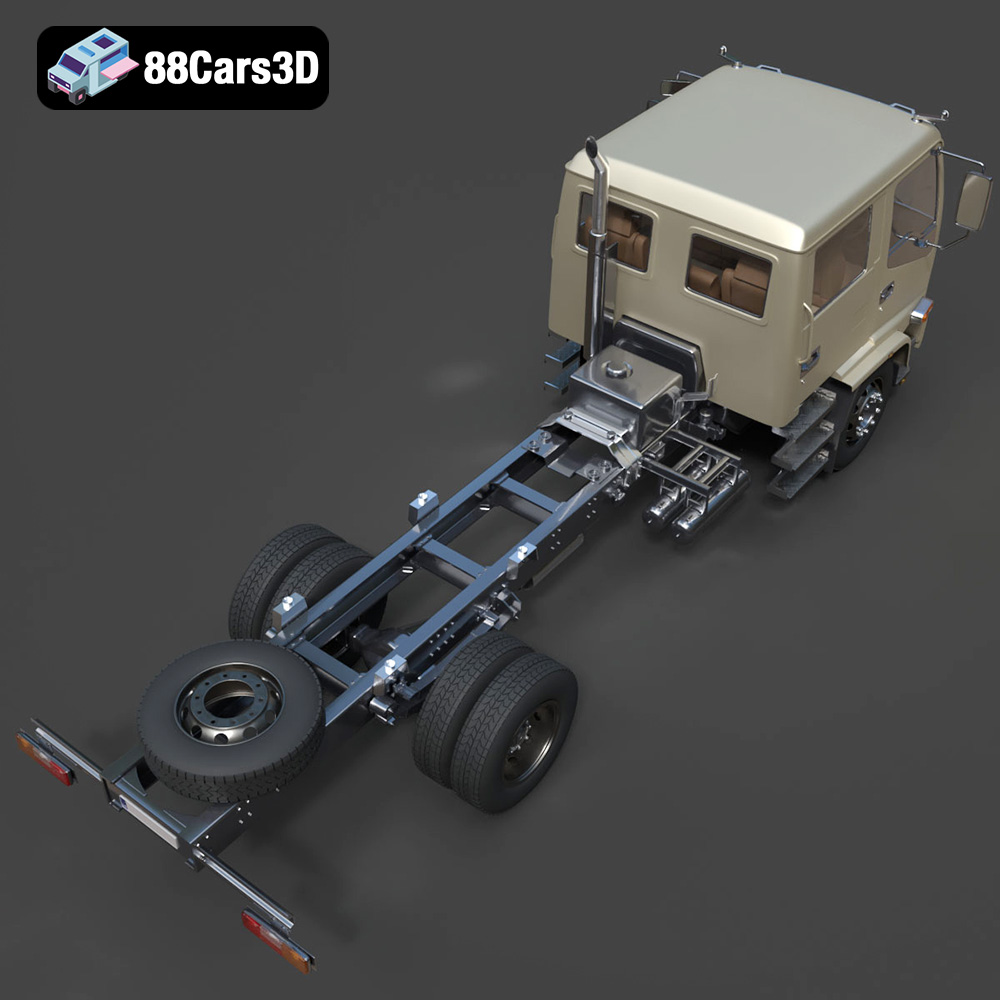
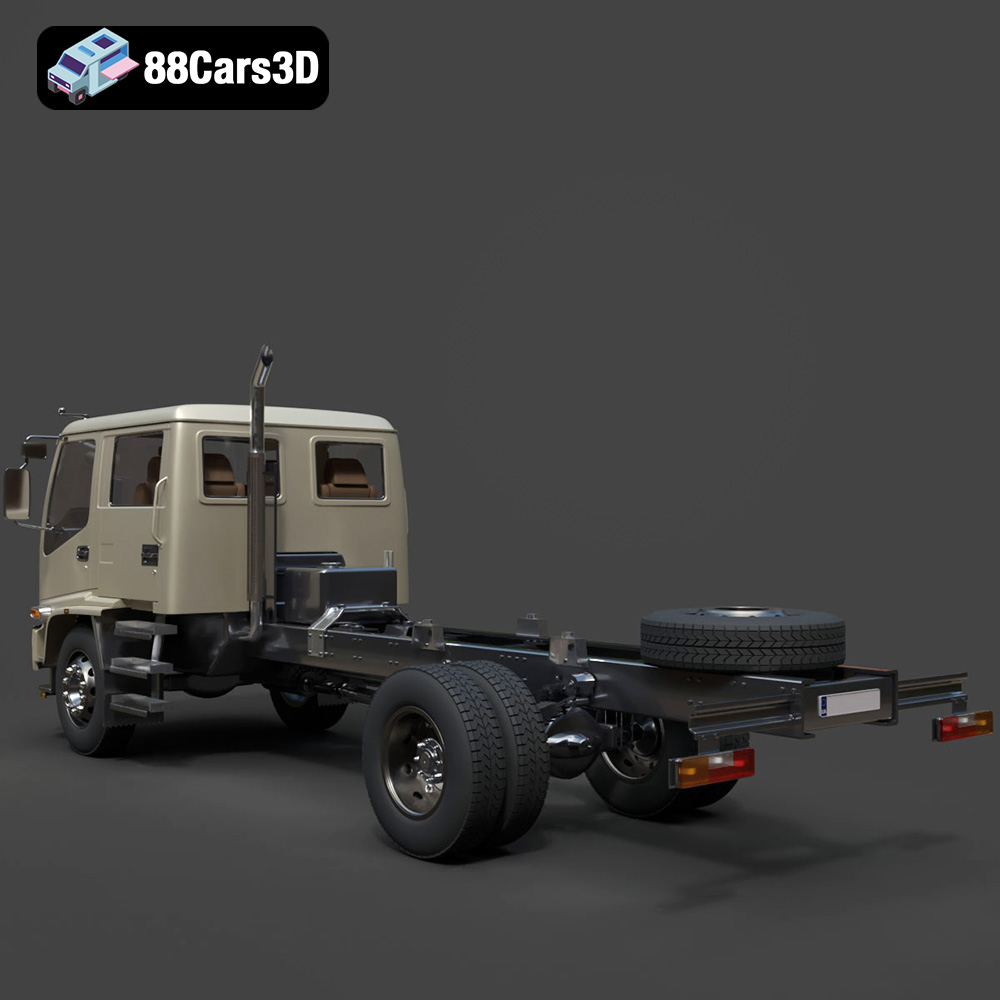
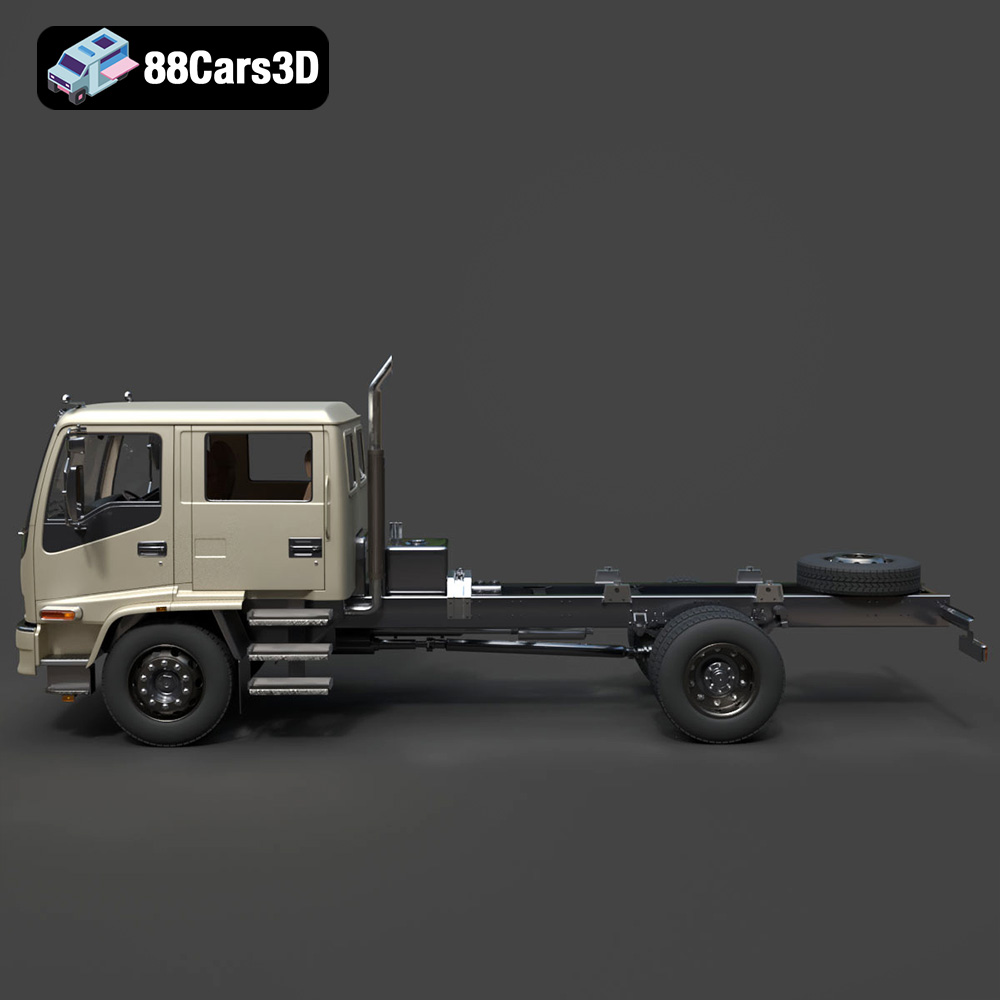
Today, we delve into the intricate world of commercial vehicle modeling, using a particularly compelling example: the Isuzu FTR 800 Crew Cab Chassis Truck (1997-08) 3D Model. This legendary medium-duty workhorse, known for its unwavering reliability and exceptional payload capacity, translates into a versatile and essential asset for countless digital applications. From its robust diesel engine block to its signature utilitarian design, this model exemplifies the meticulous detail and optimization required for professional-grade projects across industries.
Navigating the diverse landscape of 3D file formats is crucial for any digital artist or developer. Each format possesses unique characteristics, catering to specific workflows, software compatibilities, and end-use applications. Understanding these nuances ensures seamless integration and optimal performance for your 3D car models, preventing costly reworks and compatibility headaches. The Isuzu FTR 800 model, for instance, offers a comprehensive suite of formats, highlighting its adaptability.
The .blend format is the native file type for Blender, the powerful open-source 3D creation suite. A .blend file is a complete package, containing not just the mesh geometry but also all associated data: materials, textures, animations, rigging, lighting, cameras, and even scene layouts. This makes it incredibly convenient for Blender users, as it preserves the entire project context. For artists working primarily in Blender, directly utilizing a .blend file for the Isuzu FTR 800 ensures full editability and access to its original setup, allowing for complex modifications, re-texturing, or integrating it into a larger Blender-based scene.
Autodesk’s .fbx (Filmbox) is arguably the most prevalent interchange format in the 3D industry. Its strength lies in its ability to carry a vast amount of data beyond just geometry, including animation, rigging, PBR (Physically Based Rendering) materials, lights, and cameras. This makes .fbx indispensable for transferring complex animated 3D car models between different software packages like 3ds Max, Maya, Blender, and directly into real-time engines such as Unreal Engine and Unity. When integrating the Isuzu FTR 800 into a game development pipeline, the .fbx version is typically the go-to, offering a balance of fidelity and engine compatibility.
The .obj (Wavefront OBJ) format is a fundamental, universally supported geometry definition file. It excels in simplicity and broad compatibility across virtually all 3D software. An .obj file primarily defines the mesh’s vertices, faces, and UV coordinates, and can reference external .mtl (material) files for basic color and texture information. While it doesn’t support animation, rigging, or advanced material properties, its universality makes it excellent for sharing static meshes or as a fallback when other formats fail. For quick imports or when only the raw geometry of the Isuzu FTR 800 is needed, .obj is a reliable choice.
.glb (GLB, the binary variant of glTF) is a rapidly growing format optimized for efficient transmission and loading of 3D scenes and models, particularly in web browsers, augmented reality (AR), and virtual reality (VR) applications. It packs all necessary data – geometry, materials, textures, animations – into a single binary file, simplifying asset delivery. The Isuzu FTR 800 as a .glb model would be perfect for virtual showrooms, online configurators, or AR training simulations where file size and quick loading are critical.
The .stl (Stereolithography) format is the de facto standard for 3D printing. It represents a 3D model as a collection of unconnected triangular facets, without any color, texture, or material information. While simplistic, its robust nature ensures compatibility with almost every 3D printer and slicing software. The Isuzu FTR 800, available in .stl, opens up possibilities for physical prototyping or creating display-scale models, requiring careful consideration of scale, supports, and post-processing for optimal results.
The .ply (Polygon File Format, or Stanford Triangle Format) is often used to store 3D data from 3D scanners or for CAD applications. Unlike .stl, .ply can store a variety of properties including color, transparency, surface normals, and texture coordinates, often per vertex. It’s excellent for precise geometric analysis or when preserving highly detailed scan data is important, offering a richer dataset than .obj for certain applications.
The .unreal designation typically refers to assets that have been specifically prepared and packaged for direct import into Unreal Engine. This often means the .fbx has been optimized, materials are set up with Unreal-specific shaders (e.g., PBR), LODs (Levels of Detail) are configured, and collision meshes might be included. While not a native Unreal file type in the same sense as a .uasset, it signifies a model ready for drag-and-drop integration, saving significant time for developers. The Isuzu FTR 800 model in this format provides an immediate advantage for projects within Unreal Engine, promising quick setup and optimal performance.
Similar to .blend for Blender, the .max format is the native scene file for Autodesk 3ds Max, a leading software for 3D modeling, animation, and rendering. A .max file encapsulates the entire project, including geometry, modifiers, materials (V-Ray, Corona, Arnold), lighting, cameras, and animation curves. For professionals relying on 3ds Max for high-end automotive rendering or complex animation sequences, having the Isuzu FTR 800 in its native .max format offers maximum flexibility and control over every aspect of the model, enabling sophisticated studio setups and cinematic quality output.
The Isuzu FTR 800 Crew Cab Chassis Truck 3D model isn’t just a digital representation; it’s a meticulously crafted asset that embodies the spirit and functional design of its real-world counterpart. This attention to detail is paramount for any professional application where authenticity is key, whether for serious training simulations or visually striking advertisements.
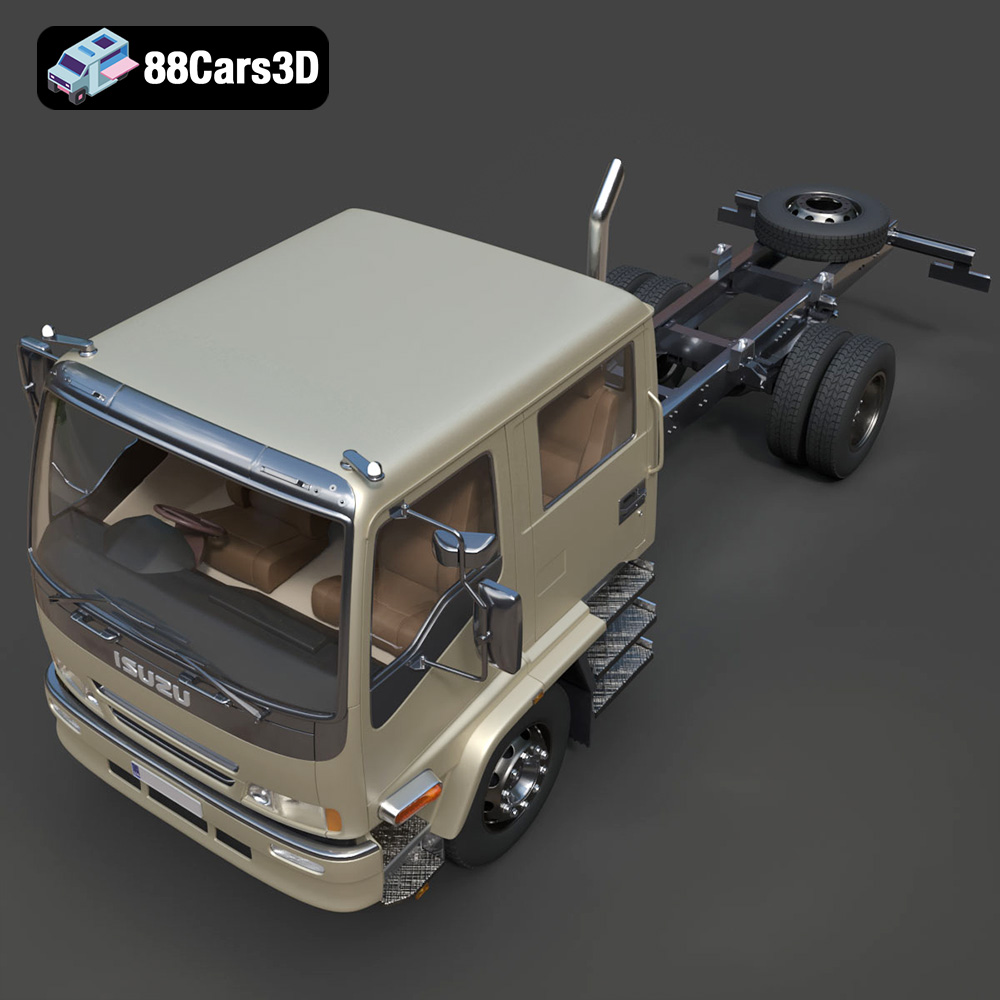
The product description highlights a “rugged, legendary medium-duty commercial vehicle renowned for its immense payload capacity, reliability, and versatility.” This ethos is perfectly translated into the 3D model. Every functional detail, from the robust diesel engine block and heavy-duty exhaust system to the signature rectangular halogen headlights and commercial front fascia, has been carefully reproduced. The extended crew cabin, a defining feature of this particular variant, is accurately modeled, including its utilitarian interior with a multi-seat bench configuration and a detailed commercial instrument cluster. Such precision ensures that the model can withstand close-up shots and detailed scrutiny, making it ideal for everything from industrial driving simulators to commercial fleet configurators.
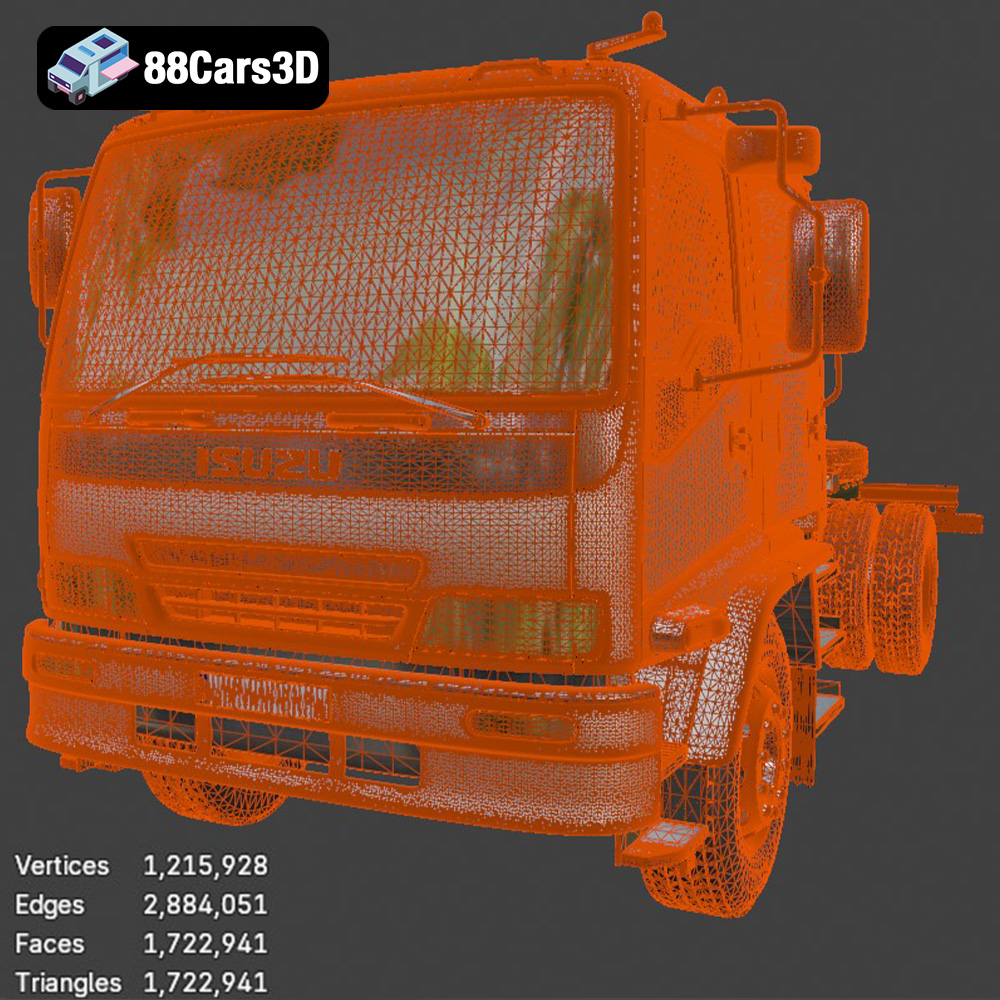
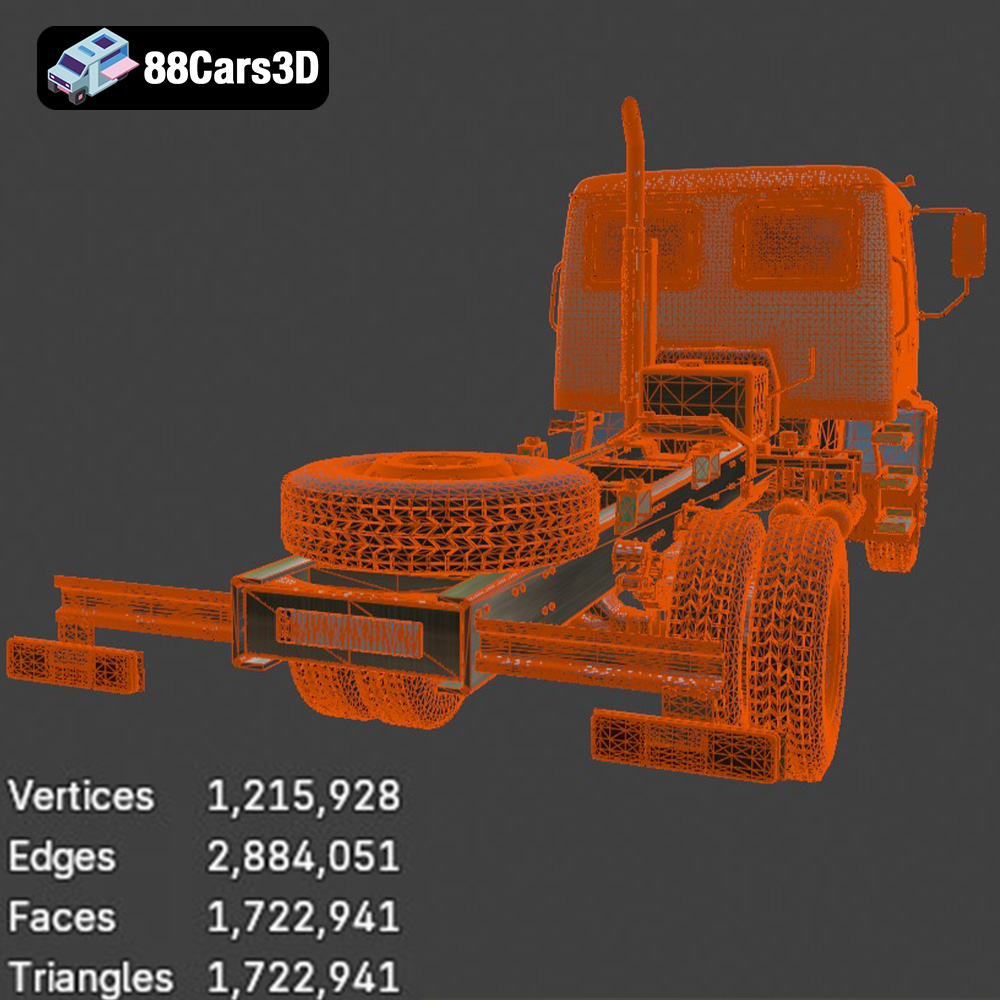
A key advantage of this Isuzu FTR 800 model is its “game-ready optimization.” With approximately 250,000 triangles, it strikes an optimal balance between visual fidelity and real-time performance. This polycount allows for high-end visual realism without burdening game engines like Unreal or Unity, ensuring smooth frame rates even in complex scenes. Furthermore, the model boasts real-world scale accuracy and proper pivot setups for crucial components like steering, wheel rotation, and suspension travel. These technical specifications are critical for realistic animation and physics simulations, making it an invaluable game asset for titles focusing on logistics, urban environments, or vehicle operations.
The versatility of a high-quality 3D car model like the Isuzu FTR 800 extends across numerous professional workflows, proving its worth in diverse industries. From hyper-realistic visualizations to interactive game worlds, these assets streamline production and enhance quality.
For architectural visualization (ArchViz) and high-end automotive rendering, accuracy and detail are non-negotiable. Imagine incorporating the Isuzu FTR 800 into a detailed render of a new logistics hub or an industrial complex. Using software like 3ds Max with V-Ray or Corona Renderer, artists can integrate this model seamlessly. The detailed chassis, engine components, and crew cab interior provide ample visual interest, allowing for compelling close-ups that showcase the vehicle’s robust nature. Professionals can experiment with various lighting scenarios – from a sun-drenched loading dock to a moody night-time depot – leveraging the model’s precise geometry and potential for PBR material setups to achieve photorealistic results that captivate clients.
Game developers, particularly those working on open-world titles, simulators, or realistic driving games, will find the Isuzu FTR 800 an exceptionally valuable game asset. The model’s “game-ready” optimization means less work in preparing it for real-time environments. Importing the .fbx or .unreal format into Unreal Engine or Unity is straightforward. Developers can quickly set up PBR materials, ensure accurate collision detection, and leverage the pre-configured pivot points for realistic steering, suspension, and wheel animations. The detailed interior is also optimized for first-person perspectives, enhancing player immersion in driver simulations or cinematic sequences. Implementing LODs (Levels of Detail) can further boost performance, allowing the engine to swap to lower-poly versions when the truck is viewed from a distance, maintaining optimal frame rates.
Augmented Reality (AR) and Virtual Reality (VR) are revolutionizing training and simulation across industries. The Isuzu FTR 800 Crew Cab Chassis Truck 3D model is perfectly suited for these immersive applications. Imagine a VR driving simulator where new drivers can learn to operate a medium-duty truck in a safe, controlled environment, or an AR app that overlays maintenance instructions onto a physical truck. The optimized polycount and real-world scale make it ideal for such performance-sensitive applications. Furthermore, its bare chassis configuration is excellent for demonstrating custom upfitting possibilities in an interactive AR configurator, allowing prospective buyers or trainees to visualize different body types directly on the virtual chassis.
The utility of a robust 3D model extends far beyond static renders or basic game integration. Its inherent flexibility allows for deep customization and deployment across a spectrum of practical applications, significantly enhancing project realism and engagement.
For industrial driving simulators, the Isuzu FTR 800 serves as an excellent foundation for a realistic training module. Simulators are crucial for logistics companies and driver training programs, providing a safe environment to practice complex maneuvers, assess reactions to hazardous conditions, and familiarize operators with vehicle specifics. The model’s detailed cockpit and accurate physical dimensions contribute to a highly immersive experience, enhancing skill transfer to real-world operations. Beyond driver training, it can be integrated into larger logistics management games, allowing players to manage fleets, plan routes, and simulate cargo delivery with realistic vehicle dynamics. Its versatility makes it a go-to asset for creating believable, functional, and engaging simulated environments.
One of the significant advantages of purchasing high-quality 3D car models from platforms like 88cars3d.com is the inherent flexibility for customization. The Isuzu FTR 800 model is no exception. Artists and developers can easily:
This level of adaptability means that a single base model can serve numerous purposes, reducing the need to create new assets from scratch and significantly accelerating production pipelines.
For hobbyists, educators, or design studios, the ability to physically manifest a digital model is a captivating prospect. The Isuzu FTR 800 3D model, provided in .stl format, is ready for 3D printing, enabling the creation of tangible display-scale replicas. The product specifications recommend scales like 1:12, 1:18, or 1:24, offering a good balance between detail and print size. For optimal results, resin printing is often recommended for finer details, with suggested layer heights between 0.04–0.12 mm. Proper supports are crucial for complex parts like the exhaust system, mirrors, and handlebars, and specific print orientations can enhance structural integrity. Post-processing, including sanding, priming, and applying authentic factory colors or metallic finishes, can transform a raw print into a stunning display piece, showcasing the intricate details of this industrial workhorse.
In a world where visual fidelity and efficiency dictate success, the choice of your 3D assets can make or break a project. The investment in professional-grade 3D car models like the Isuzu FTR 800 Crew Cab Chassis Truck provides an undeniable competitive edge.
Precision in 3D modeling isn’t just about aesthetics; it’s about functionality and realism. A model that accurately reflects real-world scale, proportions, and mechanical details allows for more believable animations, more accurate physics simulations, and more compelling visual narratives. Whether it’s the detailed leaf spring suspension on the Isuzu FTR 800, the specific layout of its instrument cluster, or the exact geometry of its heavy-duty wheels, these elements contribute to an authentic experience. This level of detail is particularly crucial for clients in automotive, industrial, and defense sectors, where accuracy is paramount for training, planning, and marketing purposes.
Time is a valuable commodity in any production pipeline. Creating complex 3D car models from scratch is a time-intensive process requiring specialized skills. By leveraging pre-optimized, game-ready assets available on marketplaces like 88cars3d.com, studios and individual artists can significantly cut down on development time and resources. The Isuzu FTR 800, with its optimal polycount, proper pivot setups, and multiple file formats, is designed to be integrated seamlessly and quickly into various projects, allowing teams to focus on creativity and other critical development tasks rather than the arduous process of asset creation from the ground up. This efficiency translates directly into faster project completion and reduced costs.
The journey from a conceptual idea to a fully realized 3D environment or immersive experience is paved with quality assets. The Isuzu FTR 800 Crew Cab Chassis Truck (1997-08) 3D Model stands as a testament to the power of detailed, optimized, and versatile 3D car models. Its meticulous design, game-ready specifications, and broad file format compatibility ensure it’s a valuable addition to any professional toolkit, whether for high-end automotive rendering, complex game development, cutting-edge AR/VR simulations, or even tangible 3D prints.
Understanding the nuances of various file formats and the technical advantages of expertly crafted models allows artists and developers to make informed decisions that elevate their projects. By choosing high-quality, pre-optimized assets from trusted sources like 88cars3d.com, you’re not just buying a model; you’re investing in efficiency, realism, and the ultimate success of your digital endeavors. Bring your virtual worlds to life with the reliability and authenticity of this industrial icon.
The Isuzu FTR 800 Crew Cab Chassis Truck (1997-08) is a rugged, legendary medium-duty commercial vehicle renowned for its immense payload capacity, reliability, and versatility. This 3D model meticulously captures its iconic boxy utilitarian design, extended crew cabin, robust diesel engine block, and bare chassis configuration ready for custom upfitting. Every functional detail, from the heavy-duty exhaust system to the signature commercial front fascia, has been carefully reproduced to reflect the authentic presence of this industrial workhorse.
Constructed with game-ready optimization in mind, this 3D model features a highly efficient topology with approximately 250,000 triangles, delivering outstanding visual fidelity without sacrificing real-time performance. Designed to seamlessly integrate into demanding game development environments, it is equally suited for high-end rendering, AR/VR training simulations, and immersive visualizations.
Perfect for industrial driving simulators, open-world urban environments, commercial fleet configurators, and logistics management games.
.blend, .fbx, .obj, .glb, .stl, .ply, .unreal, .max
Tags:
isuzu, ftr-800, crew-cab, chassis-truck, commercial-truck, medium-duty-truck, game-ready, low-poly, optimized, truck-3d-model, game-asset, rendering, vr-ar, blend, fbx, obj, glb, stl, ply, unreal, max
$19.99
.blend
.fbx
.glb
.isuzu
.max
.obj
.ply
.rendering
.stl
.unreal
chassis-truck
commercial-truck
crew-cab
ftr-800
game asset
game-ready
low-poly
medium-duty-truck
optimized
truck-3d-model
VR/AR