Get 20% OFF All Premium 3D & STL Models!

In the exhilarating world of automotive design, the Koenigsegg Jesko stands as a monumental achievement, pushing the boundaries of speed, aerodynamics, and engineering ingenuity. Named after the founder’s father, this hypercar is a symphony of raw power and elegant carbon-fiber artistry. For digital artists, game developers, and visualization specialists, capturing the essence of such a machine in a 3D model is both a challenge and an immense opportunity.
High-fidelity 3D car models are no longer a luxury but a necessity for creating compelling visual experiences. From breathtaking cinematic renders to immersive virtual reality (VR) showrooms and high-octane racing games, the quality of the digital asset dictates the realism and impact of the final product. The demand for meticulously crafted models that are both visually stunning and technically optimized has never been higher.
This is where premium resources, such as the Koenigsegg Jesko 2019 3D Model available at 88cars3d.com, become indispensable. This specific model exemplifies the pinnacle of digital craftsmanship, offering an unparalleled blend of aesthetic accuracy and performance-ready optimization. It’s designed not just to look good, but to integrate seamlessly into diverse professional workflows, providing a robust foundation for a myriad of creative projects. Let’s delve into the technical depths of why a model of this caliber is a game-changer for anyone serious about digital automotive artistry.
The world of 3D modeling is rich with various file formats, each designed for specific purposes, software compatibility, and workflow efficiencies. Understanding these formats is crucial for any professional working with 3D car models, as choosing the right one can significantly impact performance, fidelity, and project flexibility. The Koenigsegg Jesko 2019 3D Model, for instance, comes in a comprehensive suite of formats, ensuring its utility across a wide range of applications.
The .blend format is the native file type for Blender, the powerful open-source 3D creation suite. A .blend file encapsulates an entire Blender scene, including all 3D geometry, materials, textures, lighting, cameras, animations, rigging data, and even physics simulations. For Blender users, this format offers maximum flexibility and editability. If you need to dive deep into the model’s construction, tweak modifiers, adjust node-based materials, or utilize Blender’s extensive toolkit for further customization, the .blend file is your go-to. It’s ideal for artists who want full control over every aspect of the asset, from its initial mesh to its final render settings.
.fbx (Filmbox) is an Autodesk-owned proprietary file format that has become an industry standard for exchanging 3D data between various software applications and game engines. It supports a vast array of 3D elements, including mesh geometry, materials, textures, skeletal animation, rigging, cameras, and lights. For game development (Unreal, Unity) and complex animation pipelines, .fbx is often the preferred choice due to its robust support for animation and hierarchical object structures. When you need to move a detailed 3D car model, complete with pivots for wheels and animated components, between programs like 3ds Max, Maya, or Blender and into a real-time engine, .fbx ensures the most comprehensive data transfer.
.obj (Wavefront OBJ) is one of the oldest and most widely supported 3D file formats, making it a universal choice for basic geometry transfer. It stores 3D model data as vertices, faces, UV coordinates, and normals, often accompanied by a separate .mtl (Material Template Library) file that defines basic material properties and references texture maps. While .obj is excellent for transferring static meshes and their associated texture mappings across virtually any 3D software, it does not support animation, rigging, or complex material node setups. It’s a reliable workhorse for scenarios where pure mesh data and texture application are the primary concern, ensuring broad compatibility.
.glb (GL Transmission Format Binary) is the binary version of glTF, a royalty-free specification for the efficient transmission and loading of 3D scenes and models by engines and applications. .glb is specifically optimized for web-based 3D, AR (Augmented Reality), and VR (Virtual Reality) experiences. Unlike .obj, which often requires multiple associated files, a .glb file is a single, self-contained asset that includes geometry, materials, textures, and even animations. Its compact size and ease of integration make it perfect for interactive online viewers, mobile AR configurators, and low-latency XR applications, such as showcasing the Koenigsegg Jesko in a virtual showroom directly in a web browser.
.stl (Stereolithography) is the de facto standard file format for 3D printing. It represents a 3D model as a simple triangulated mesh, defining only the surface geometry without any color, texture, or material information. While rudimentary in terms of data, its simplicity and ubiquity make it ideal for additive manufacturing. The Koenigsegg Jesko 2019 3D Model’s availability in .stl allows enthusiasts and professionals to bring the digital hypercar into the physical world. .ply (Polygon File Format) is another precision mesh format often used for storing 3D data from optical scanners, CAD systems, or scientific analysis. It supports geometry, color, texture coordinates, and other properties, offering a more robust data set than .stl but generally less ubiquitous for pure artistic exchange than .fbx or .obj.
The inclusion of .unreal implies an asset specifically prepared or exported for the Unreal Engine environment. While not a standalone file extension like .fbx, it signifies that the 3D car model has likely been imported, optimized, had materials configured, and potentially collision meshes generated within an Unreal Engine project. This saves significant time for game developers, as it means less setup work to get the asset looking and performing correctly within the engine. Similarly, .max is the native file format for Autodesk 3ds Max, a leading software for 3D modeling, animation, and rendering. For those working within the 3ds Max ecosystem, the .max file provides the full project context, including render settings, scene hierarchy, and modifier stacks, ensuring maximum fidelity and flexibility for high-end automotive rendering and animation projects.
This extensive range of formats demonstrates the versatility and professional intent behind the Koenigsegg Jesko 2019 3D Model, making it a valuable investment for any digital artist or developer.
Creating a 3D model like the Koenigsegg Jesko that excels across various applications—from game development to cinematic rendering—requires a profound understanding of both artistic detail and technical optimization. It’s a delicate balance where every polygon counts, and every material choice impacts the final visual and performance outcome.
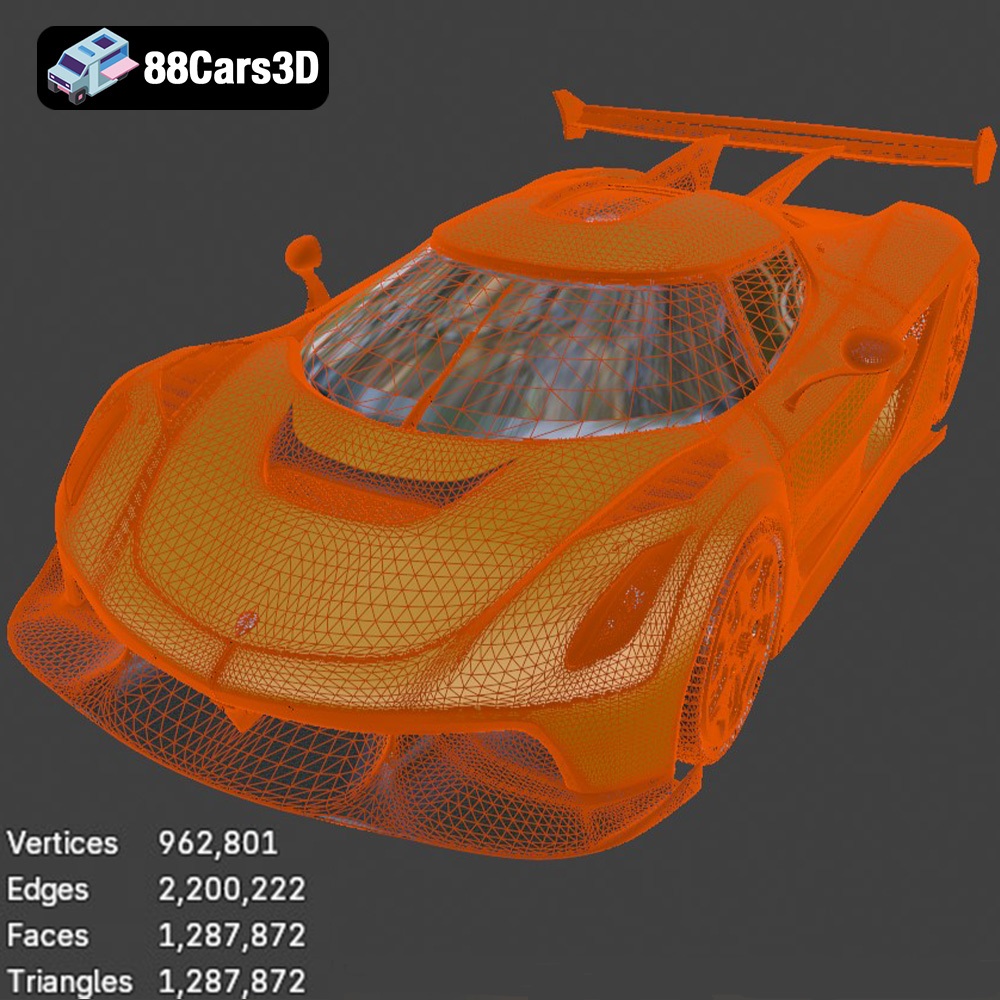
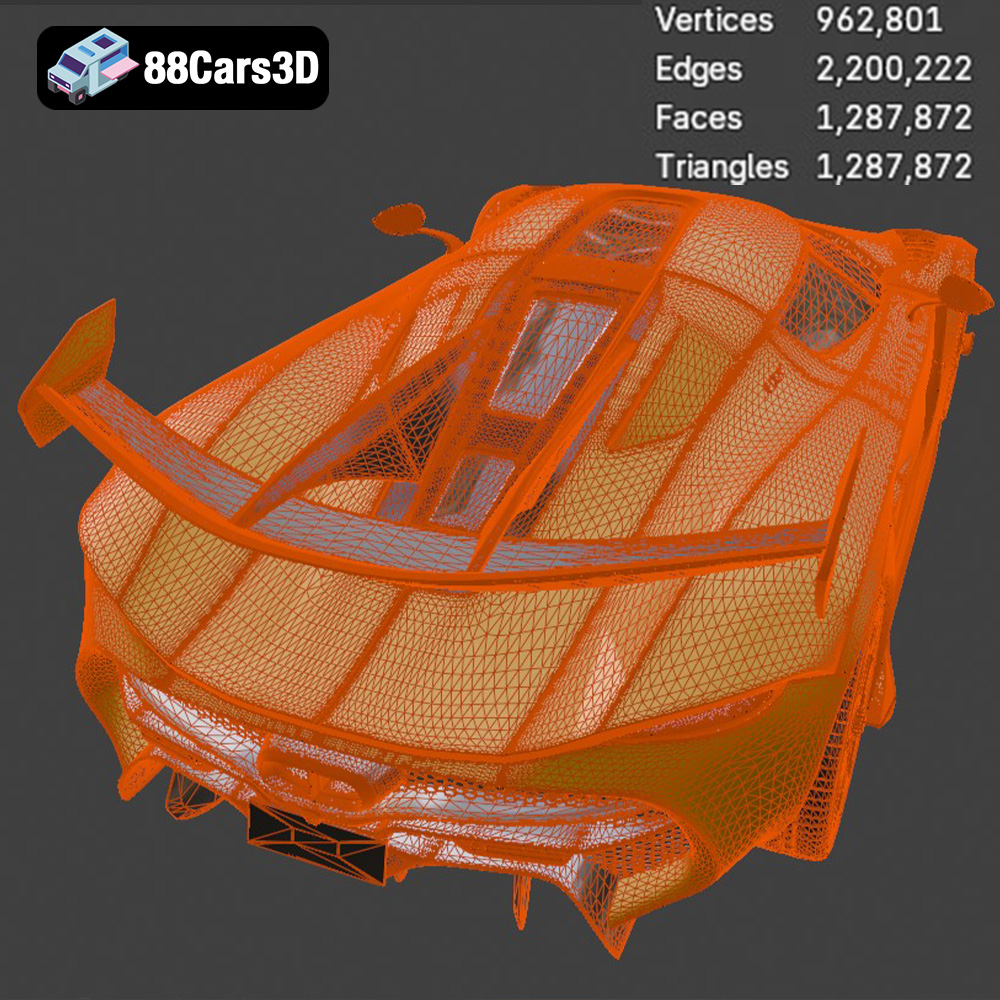
One of the standout features of the Koenigsegg Jesko 2019 3D Model from 88cars3d.com is its meticulously optimized topology. With a triangle count around ~650,000, this model strikes an exceptional balance. For real-time applications like Unreal Engine or Unity, this polycount is low enough to ensure smooth frame rates, even when multiple models are present on screen. Yet, it’s high enough to retain the intricate curves, sharp edges, and nuanced surfacing that define the Jesko’s hypercar aesthetic. This “game-ready” optimization means developers can drop the model directly into their projects with minimal additional work, saving precious development time. For rendering, this clean topology translates to smooth subdivision surfaces and efficient ray tracing, producing crisp reflections and realistic lighting interactions.
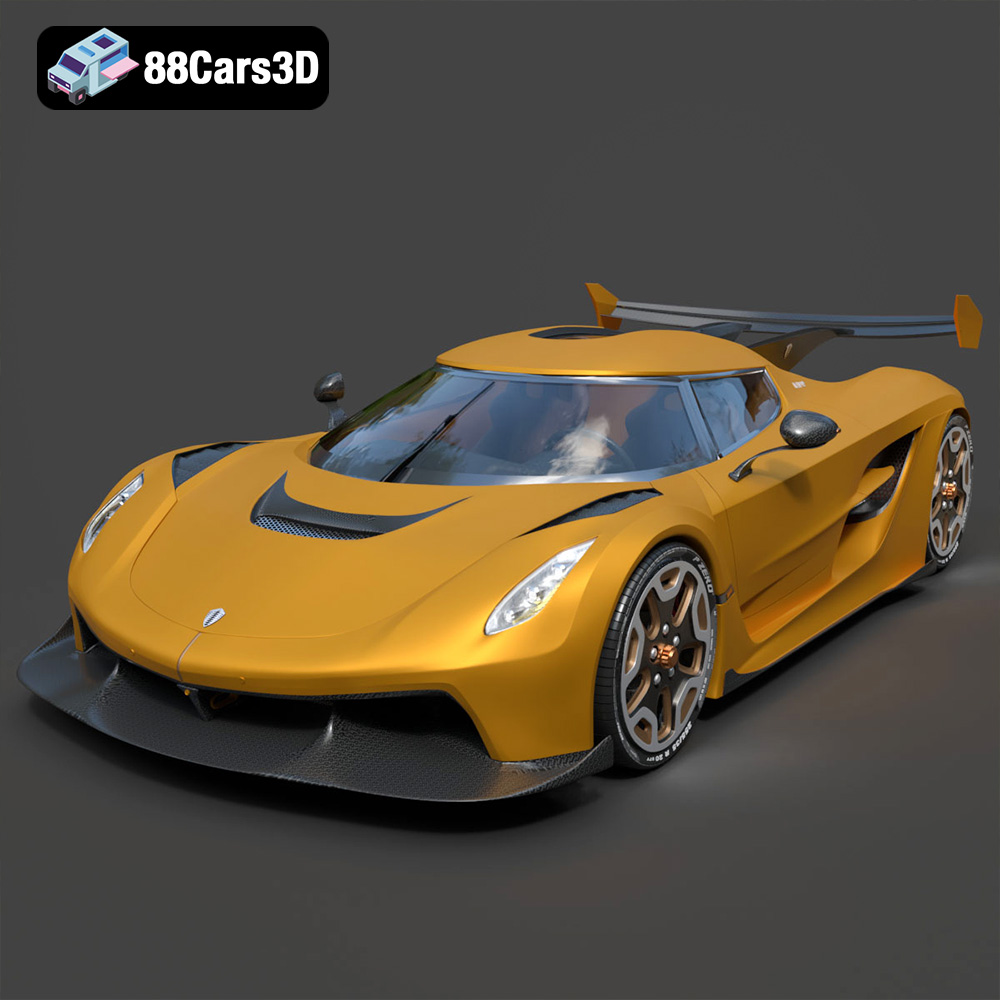
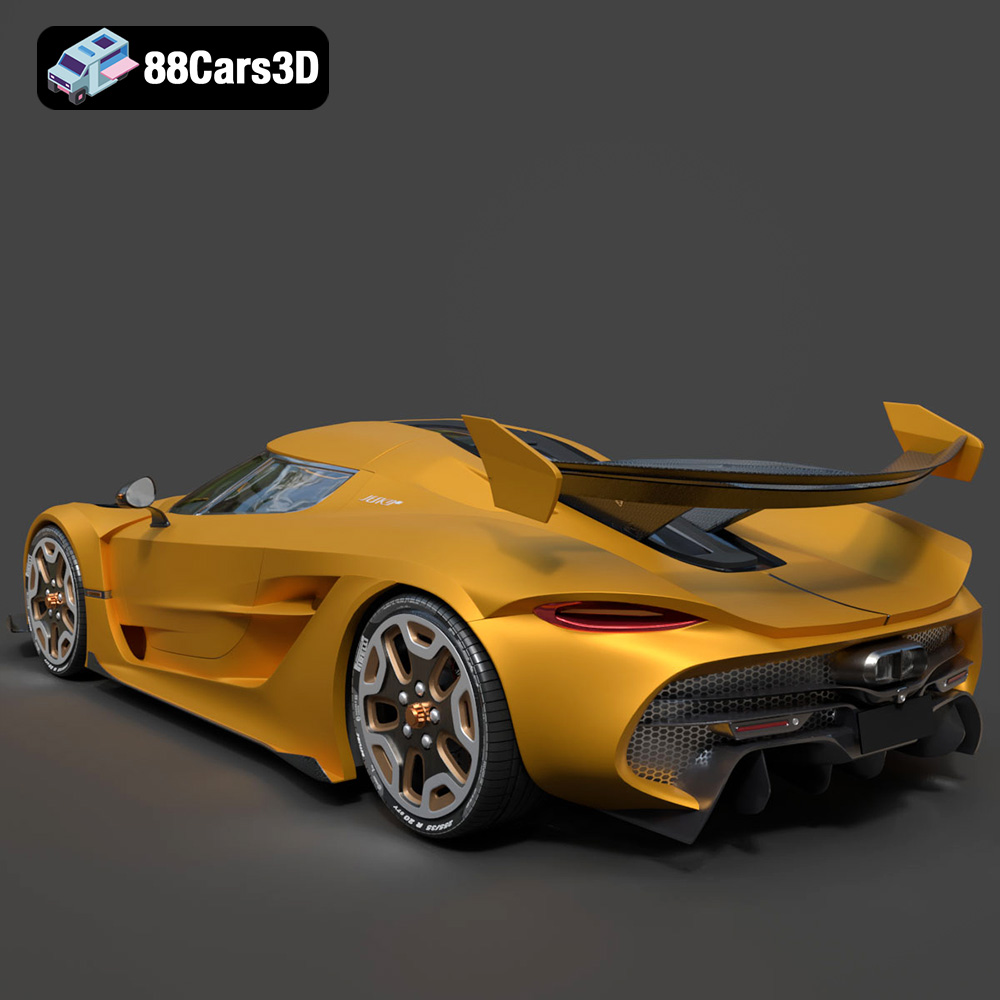
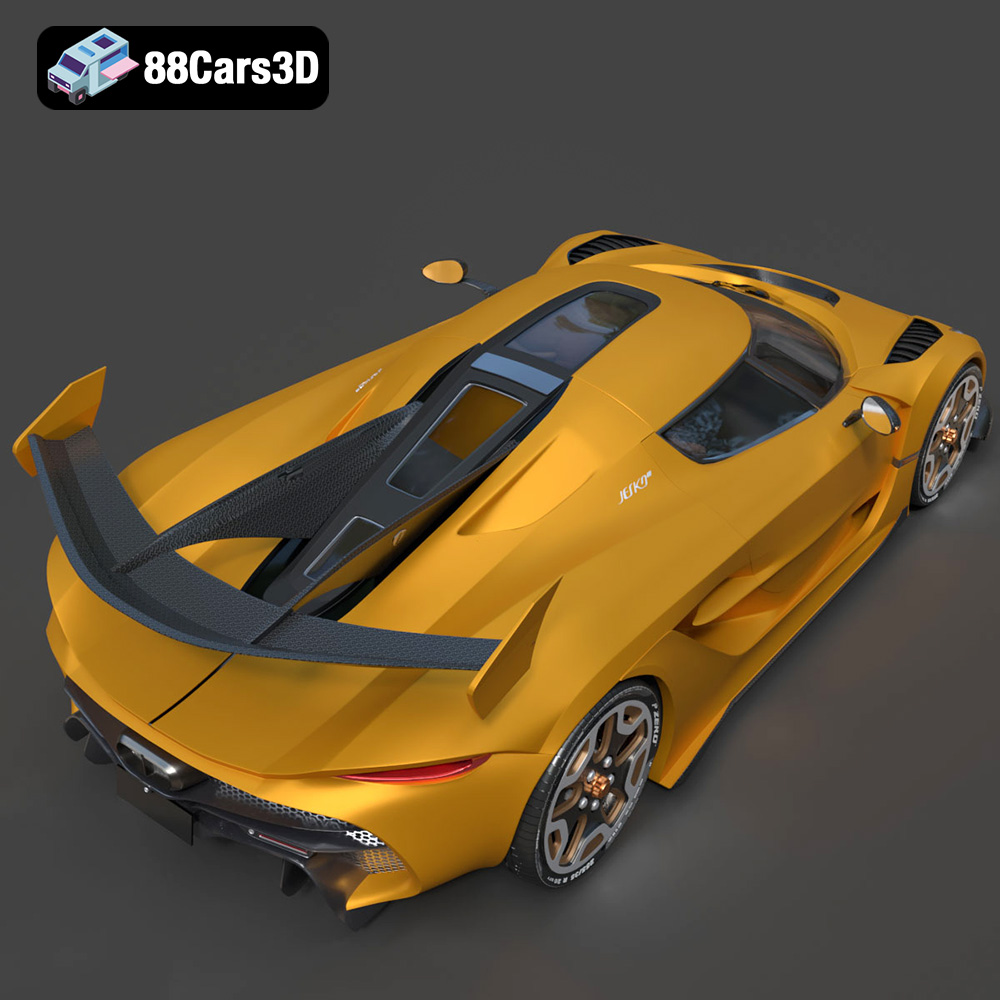
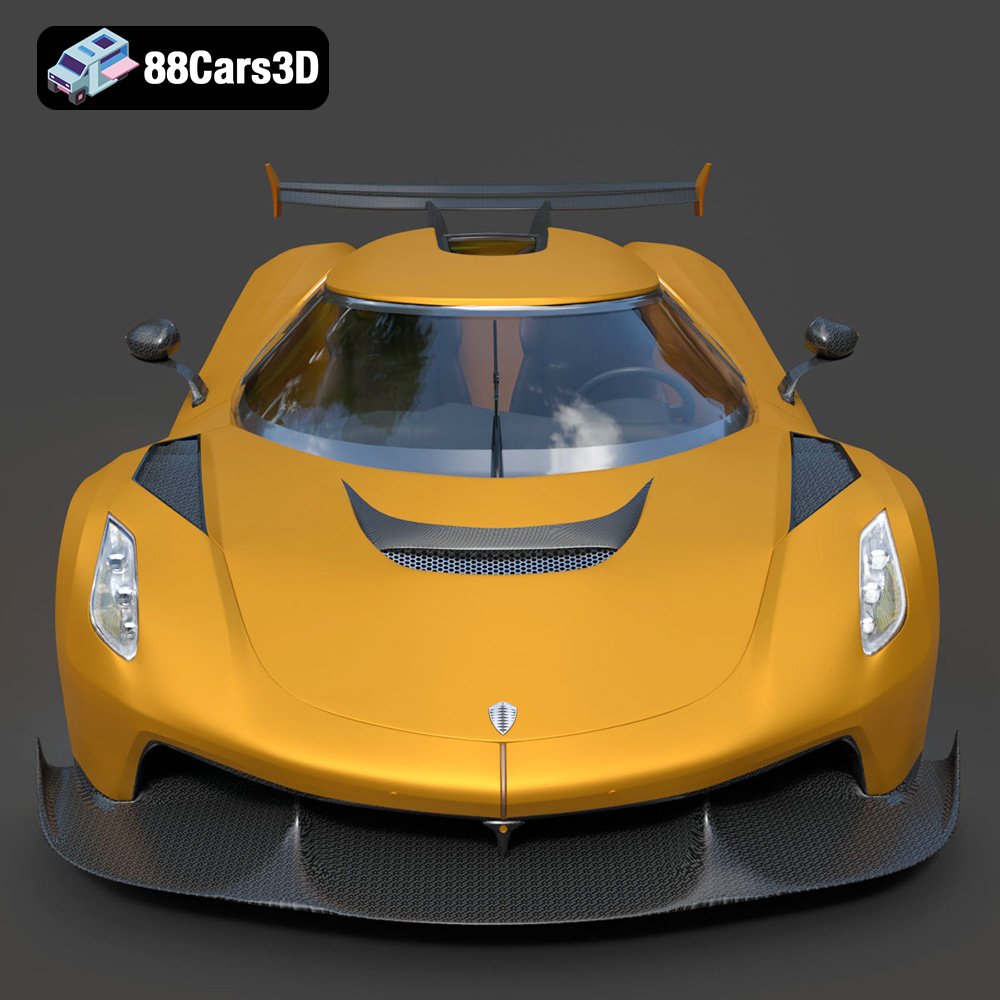
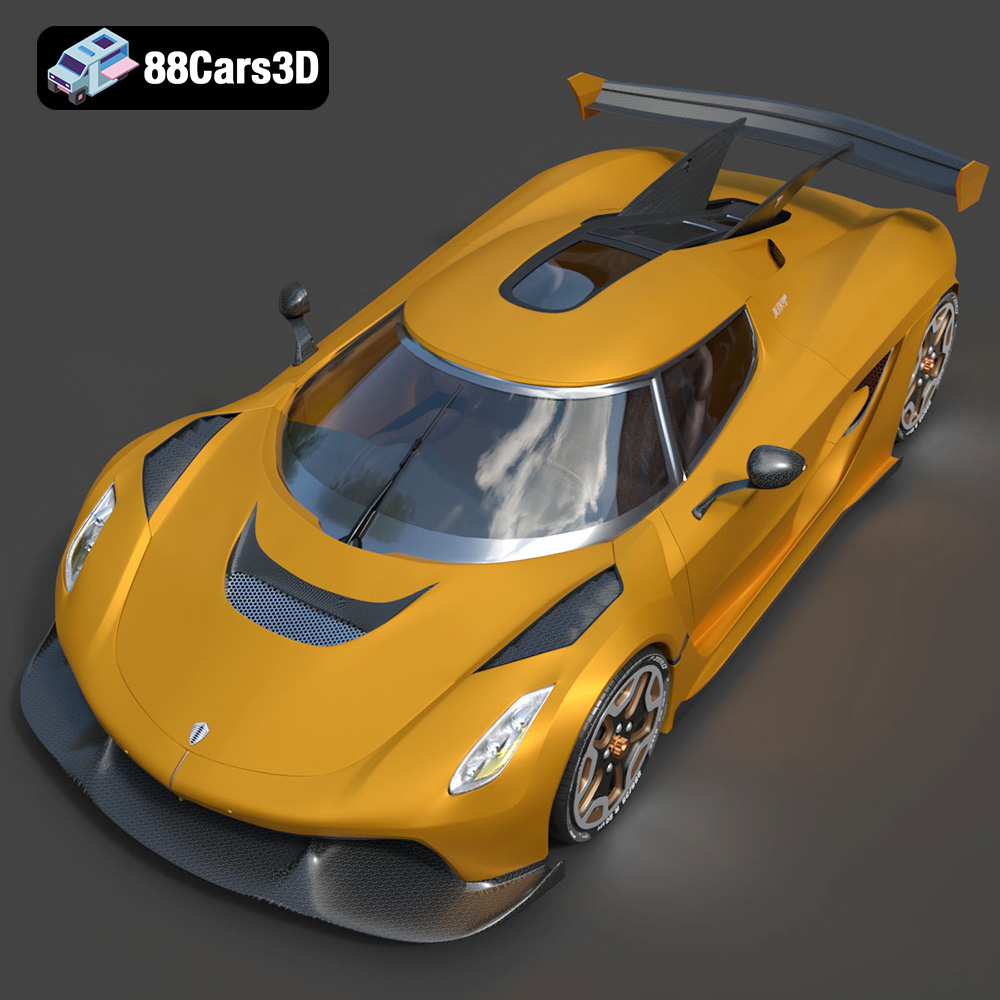
The devil is in the details, and this 3D car model embraces that adage wholeheartedly. The exterior boasts accurate aerodynamic carbon-fiber bodywork, precise proportions, and iconic features like the colossal active rear wing and the unique top-mounted center-exit exhaust system. Every element, from the precision-modeled LED headlights to the intricate carbon-ceramic brake calipers, is faithfully recreated. Beyond the sleek shell, the model features a beautifully detailed representation of the Jesko’s legendary 5.0L twin-turbo V8 engine bay, complete with surrounding heat shields. This level of detail ensures that even in extreme close-ups or engine bay showcases, the model holds up to scrutiny.
The interior is equally impressive. The cockpit features detailed carbon-fiber racing bucket seats with authentic upholstery stitching, an accurate SmartWheel racing steering wheel with integrated haptic touchscreens, and the distinctive steering-column mounted gyroscopic digital instrument cluster. This attention to interior detail is crucial for first-person POV in gaming, immersive AR/VR experiences, and high-end automotive rendering where the user expects nothing less than perfection.
Accuracy extends beyond visual fidelity to practical considerations. The Koenigsegg Jesko 2019 3D Model is built to real-world scale, based on actual vehicle chassis dimensions. This ensures correct proportions and seamless integration into scenes alongside other assets or architectural models. Furthermore, critical components like wheels, suspension, and steering are separated and feature proper pivot setups. This thoughtful engineering allows for easy animation of steering, wheel rotation, and realistic suspension travel, making the model ideal for racing simulators, cinematic sequences, and interactive configurators where dynamic movement is essential.
A truly professional 3D asset is one that seamlessly integrates into various industry-standard workflows. The Koenigsegg Jesko 2019 3D Model is designed with this versatility in mind, providing a robust foundation for projects ranging from cinematic visuals to interactive experiences.
For high-end automotive rendering, 3ds Max combined with renderers like V-Ray or Corona is a common industry standard. The inclusion of the .max file format for the Koenigsegg Jesko 3D Model is invaluable here. Artists can directly open the scene, leverage existing material setups, and apply advanced rendering techniques. The optimized geometry ensures efficient ray tracing, leading to faster render times without compromising visual quality. Professionals can easily set up studio lighting, apply high-dynamic-range imaging (HDRI) environments for realistic reflections, and achieve photorealistic results for marketing campaigns, product showcases, or design reviews. The detailed interior and exterior mean that close-up shots and dramatic camera angles will always look stunning, capturing the hypercar’s aggressive stance and luxurious details.
Game development demands performance and visual integrity. The game-ready optimization and appropriate polycount (~650,000 triangles) of this 3D car model make it an ideal asset for modern game engines. The .fbx format is perfect for importing into both Unreal Engine and Unity, allowing developers to transfer geometry, UVs, and basic material assignments efficiently. Furthermore, the explicit inclusion of a “.unreal” optimized asset means that for Unreal Engine users, much of the initial setup work – such as material instance creation, collision geometry generation, and LOD (Level of Detail) implementation – may already be streamlined or partially handled. This significantly reduces the time from asset acquisition to in-engine implementation, crucial for fast-paced production cycles in racing games, open-world titles, or vehicular simulators.
The immersive nature of Augmented Reality (AR) and Virtual Reality (VR) environments requires highly optimized, yet visually compelling assets. The Koenigsegg Jesko 3D Model is perfectly tailored for these applications. Its balanced polycount ensures smooth frame rates necessary to prevent motion sickness and provide a comfortable user experience. The .glb format is particularly beneficial for web-based AR/VR configurators and virtual showrooms, allowing for quick loading and interaction directly within a browser or mobile application. Imagine an interactive experience where potential buyers can explore the Jesko’s interior, customize its paint scheme, or view its legendary engine from any angle, all in real-time and high fidelity. This model provides the foundation for such cutting-edge digital experiences, empowering brands and creators to build compelling virtual product showcases.
The utility of high-quality 3D car models extends beyond purely digital realms. For enthusiasts, collectors, and automotive designers, bringing a virtual hypercar into the physical world through 3D printing offers a unique tactile connection to the machine. The Koenigsegg Jesko 2019 3D Model, with its inclusion of the .stl format, opens up this exciting avenue.
The .stl file format is the universal language for 3D printers, representing the model’s surface as a collection of triangles. While the initial digital model is highly detailed for rendering, preparing it for 3D printing involves a different set of considerations. The Jesko model’s clean mesh makes this transition smoother. For successful printing, careful attention must be paid to scale, wall thickness, and the generation of appropriate support structures. Hobbyists might print the car as a single shell, while professionals might separate components like the body, wheels, and interior for higher detail and easier post-processing, especially for larger, display-grade models. The provision of the .ply format also allows for more advanced analysis or remeshing if specific precision requirements are needed before final STL export for complex engineering prints.
To achieve the best results when 3D printing the Koenigsegg Jesko, several technical recommendations are critical. For fine details, resin printing (SLA/DLP) is highly recommended over filament-based (FDM) methods, especially with layer heights between 0.04-0.12 mm. Optimal wall thickness, typically 1.2-2.0 mm, ensures structural integrity without excessive material usage. Supports will be indispensable for complex overhangs such as the rear wing, mirrors, and exhaust system. Thoughtful print orientation, like printing the frame angled, can further enhance structural strength and reduce visible layer lines. Post-processing is where the model truly comes to life; meticulous sanding, primer application, and painting with authentic factory colors, perhaps even metallic finishes, will transform the 3D print into a stunning display piece that mirrors the digital original.
A premium 3D model serves as an excellent starting point, but its true value often lies in the creative freedom it offers. The Koenigsegg Jesko 2019 3D Model is built to be highly customizable, enabling artists to tailor it to specific project needs and artistic visions.
The fundamental structure of the model allows for effortless customization of materials and textures. Artists can easily change the body color to any factory hue or experiment with custom carbon-fiber weaves, matte finishes, or ultra-glossy reflections. The model provides the perfect canvas to simulate different paint types, from pearlescent to metallic flaked, dynamically responding to lighting setups. This flexibility is crucial for architectural visualization where the car needs to match a specific design aesthetic, or for marketing where branding colors might need to be integrated. Beyond the body, tire textures can be swapped between track slicks and street variants, or interior upholstery materials can be reconfigured to reflect different luxury specifications.
With its clean topology and optimized materials, the Koenigsegg Jesko 3D Model interacts beautifully with various lighting scenarios. Artists can experiment with studio lighting setups for dramatic product shots, place the car under a realistic outdoor HDRI for environmental realism, or even integrate it into a futuristic sci-fi scene with neon glows. The separate components, like the headlights and taillights, allow for independent lighting control, enabling realistic illumination effects. This dynamic adaptability ensures that the model remains a versatile asset, capable of fitting into diverse visual narratives and producing visually stunning results in any rendered or real-time environment.
The digital realm continues to expand, demanding increasingly sophisticated assets for everything from groundbreaking video games to highly immersive virtual experiences and compelling brand visualizations. The Koenigsegg Jesko 2019 3D Model stands as a prime example of a premium asset that meets these diverse needs with exceptional quality and technical robustness.
Its meticulously optimized topology, stunning interior and exterior fidelity, and thoughtful inclusion of animatable components make it an invaluable tool for professionals. Whether you are developing the next generation of racing simulators, crafting photorealistic automotive renders, building interactive AR/VR configurators, or even bringing this hypercar to life through 3D printing, this model offers a seamless and efficient workflow. The comprehensive range of included file formats—from .blend and .max for native software flexibility to .fbx and .glb for cross-platform and web-optimized deployment, and .stl for physical fabrication—ensures that it can be integrated into virtually any pipeline.
Investing in high-quality 3D car models like the Koenigsegg Jesko is an investment in efficiency, quality, and creative potential. For anyone seeking to elevate their digital automotive projects, the Koenigsegg Jesko 2019 3D Model available at 88cars3d.com represents an opportunity to leverage a meticulously crafted asset that empowers boundless creativity and delivers stunning results.
The 2019 Koenigsegg Jesko represents the absolute pinnacle of hypercar engineering, designed to dominate the track with unprecedented aerodynamic downforce and raw power. Named after the founder’s father, the Jesko features an unmistakable carbon-fiber silhouette, an aggressive front splitter with distinct dive planes, and a colossal dual-profile active rear wing. Under the rear clamshell lies a beautifully detailed representation of its legendary 5.0L twin-turbo V8 engine, paired with the revolutionary Light Speed Transmission design.
$19.99
.2019
.blend
.fbx
.glb
.hypercar
.jesko
.koenigsegg
.max
.obj
.ply
.rendering
.sports car
.stl
.supercar
.unreal
car-3d-model
game asset
game-ready
low-poly
optimized
VR/AR