Get 20% OFF All Premium 3D & STL Models!

In the fast-evolving world of digital content creation, the demand for high-quality, meticulously detailed 3D models is constant. Whether you’re crafting immersive game environments, producing photorealistic architectural visualizations, or animating cinematic sequences, the foundation of any compelling project lies in the assets you choose. Military history, in particular, offers a rich tapestry for digital exploration, bringing legendary machinery to life on screen. Among these iconic vehicles, the M31 Recovery Vehicle stands out – a true workhorse of World War II, built on the robust M3 Lee tank chassis, known for its strategic disguise and vital battlefield utility.
Today, such a powerful historical icon can be resurrected in stunning digital fidelity. A prime example is the M31 Recovery Vehicle 3D model, an expertly crafted asset designed to meet the rigorous demands of modern production pipelines. This model isn’t just a static representation; it’s a meticulously engineered digital twin, ready to be deployed across a spectrum of applications from high-fidelity rendering to real-time game engines. Its comprehensive design and multi-format availability make it an invaluable tool for professionals and enthusiasts alike, ensuring seamless integration into any creative endeavor.
Navigating the diverse landscape of 3D software and applications requires a solid understanding of file formats. Each format serves a specific purpose, optimized for different stages of the production pipeline, from initial modeling to final deployment. The M31 Recovery Vehicle 3D model, available on 88cars3d.com, exemplifies this versatility by offering a wide array of formats, each tailored for maximum compatibility and efficiency. Understanding when and why to use each one is crucial for a smooth workflow and successful project delivery.
The .blend format is the native file type for Blender, the powerful open-source 3D creation suite. When you download the M31 Recovery Vehicle in .blend format, you gain access to a fully editable scene, complete with materials, textures, lighting, and any rigging or animation setups. This format is ideal for users working primarily in Blender who need to make extensive modifications, re-texture the model, or integrate it deeply into existing Blender projects. It preserves all the scene data, making it a highly flexible option for artists who value an integrated workflow.
The Filmbox (.fbx) format, developed by Autodesk, is arguably the most widely adopted interchange format in the 3D industry. It’s a proprietary format designed to store a vast amount of 3D data, including geometry, materials, textures, animations, and rigs. For assets like the M31 Recovery Vehicle, .fbx is ideal for transferring models between different 3D software packages (like 3ds Max, Maya, Blender, Cinema 4D) and, critically, into game engines such as Unreal Engine and Unity. Its robust support for animations and hierarchical structures makes it the go-to choice for game development and real-time pipelines, ensuring that the model’s separate components (tracks, crane, wheels) are ready for dynamic interaction.
The Wavefront OBJ (.obj) format is a simple, universal 3D data format that describes only the geometry of a 3D object – its vertices, faces, and UV coordinates. It’s a highly compatible format, recognized by almost all 3D software, making it excellent for basic model transfers where material and animation data can be re-applied or are not needed. While it doesn’t store rigging or animation, its simplicity ensures broad cross-software compatibility for the M31 Recovery Vehicle’s core mesh, providing a reliable foundation for any project. Material definitions can be included in a separate .mtl file.
The GLB (.glb) format is the binary version of glTF (GL Transmission Format), a royalty-free specification for the efficient transmission and loading of 3D scenes and models by applications. Optimized for real-time applications, especially AR (Augmented Reality), VR (Virtual Reality), and web-based 3D viewers, .glb bundles the entire 3D model, textures, and animations into a single file. This makes the M31 Recovery Vehicle model highly efficient for displaying in web browsers, mobile AR apps, or compact VR experiences, offering a streamlined package for modern interactive platforms.
Stereolithography (.stl) is the standard file format for 3D printing. It describes only the surface geometry of a 3D object, represented as a collection of triangular facets. When preparing the M31 Recovery Vehicle for physical fabrication, the .stl format is essential. It ensures that the model is watertight and manifold, crucial for successful 3D prints. While it lacks color or texture information, its precision in defining external geometry makes it indispensable for hobbyists and professionals looking to bring the M31 to life on a display stand.
The Polygon File Format (.ply) is another format that describes a 3D object as a collection of polygons. It’s capable of storing more complex information than .obj, including color, transparency, and sometimes even normal vectors per vertex or face. While not as universally used as .fbx or .obj, it’s particularly valuable for models derived from 3D scanning or for applications requiring precise mesh data for CAD, scientific visualization, or detailed analysis. The .ply version of the M31 Recovery Vehicle offers an alternative for highly specific data handling needs.
The inclusion of an .unreal format implies a file specifically prepared or packaged for direct import and optimal performance within Unreal Engine. This often means the asset has been pre-configured with appropriate materials (like PBR setups), collision meshes, and LODs (Levels of Detail) to be game-ready right out of the box. For the M31 Recovery Vehicle, an .unreal file would significantly streamline the integration process for game developers aiming to populate their historical battlegrounds with authentic and performance-optimized assets.
Finally, the .max format is the native project file for Autodesk 3ds Max, a leading software for 3D modeling, animation, rendering, and visualization. Like .blend, it contains the entire scene data, including models, cameras, lights, materials, and animations. For professionals accustomed to the 3ds Max environment, the .max file for the M31 Recovery Vehicle offers the highest degree of editability and control, allowing for detailed adjustments, advanced rendering setups, and complex animation sequences within a familiar and robust platform.
The availability of these diverse formats ensures that the M31 Recovery Vehicle 3D model from 88cars3d.com is not just a digital asset, but a versatile solution adaptable to virtually any professional pipeline or creative vision.
The true measure of a high-quality 3D model lies in its technical specifications and attention to detail. For a historical vehicle like the M31 Recovery Vehicle, authenticity is paramount. This particular model excels by meticulously balancing historical accuracy with modern optimization techniques, making it suitable for both demanding cinematic renders and performance-critical real-time applications.
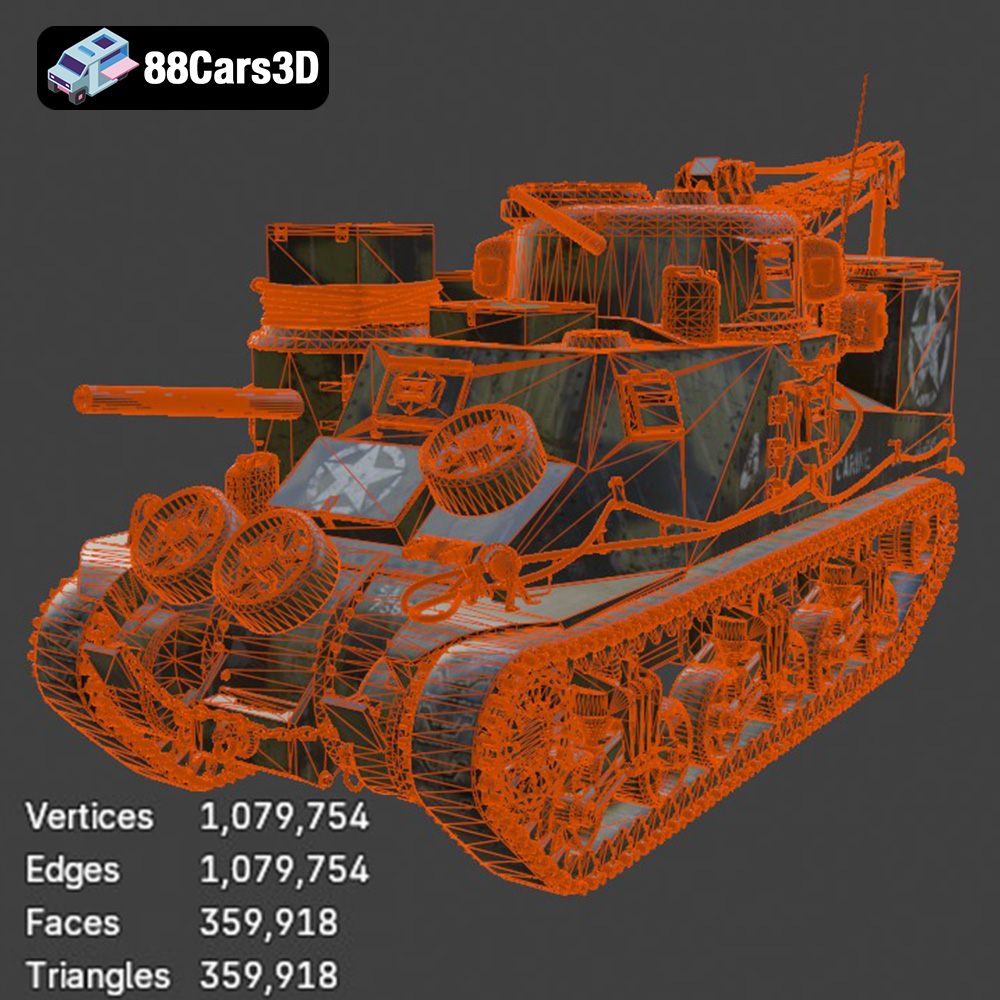
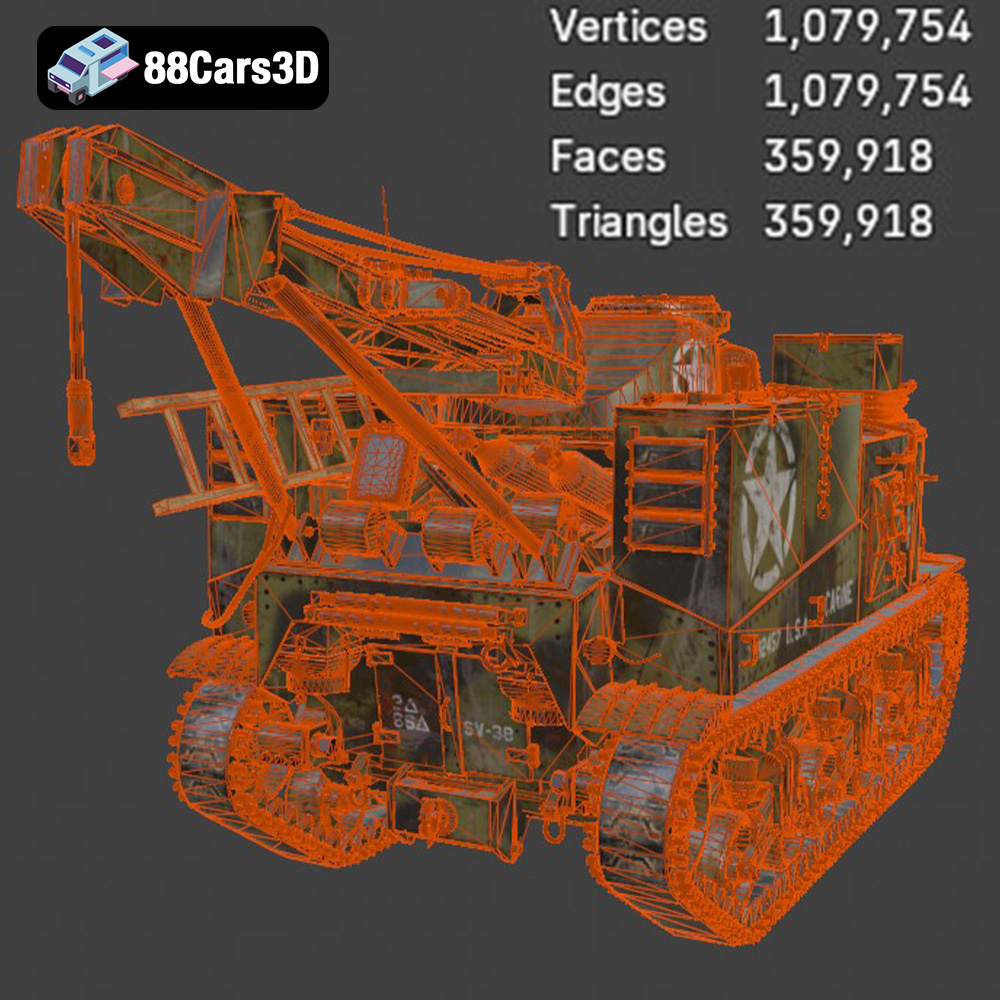
The M31 Recovery Vehicle model boasts an optimized topology with approximately 200,000 triangles. This figure represents a sweet spot for high-end visual realism without overwhelming game engines or rendering software. Good topology isn’t just about polycount; it’s about the clean flow of edges, ensuring smooth deformations if the model were to be animated, and efficient UV mapping. The model’s clean geometry guarantees stunning close-up rendering, allowing artists to capture every riveted panel and intricate mechanism without visual artifacts. For game developers, this optimized triangle count is critical, enabling multiple instances of such a detailed asset within a scene while maintaining playable frame rates. The emphasis on clean geometry also simplifies UV mapping, which is essential for applying high-resolution textures without distortion.
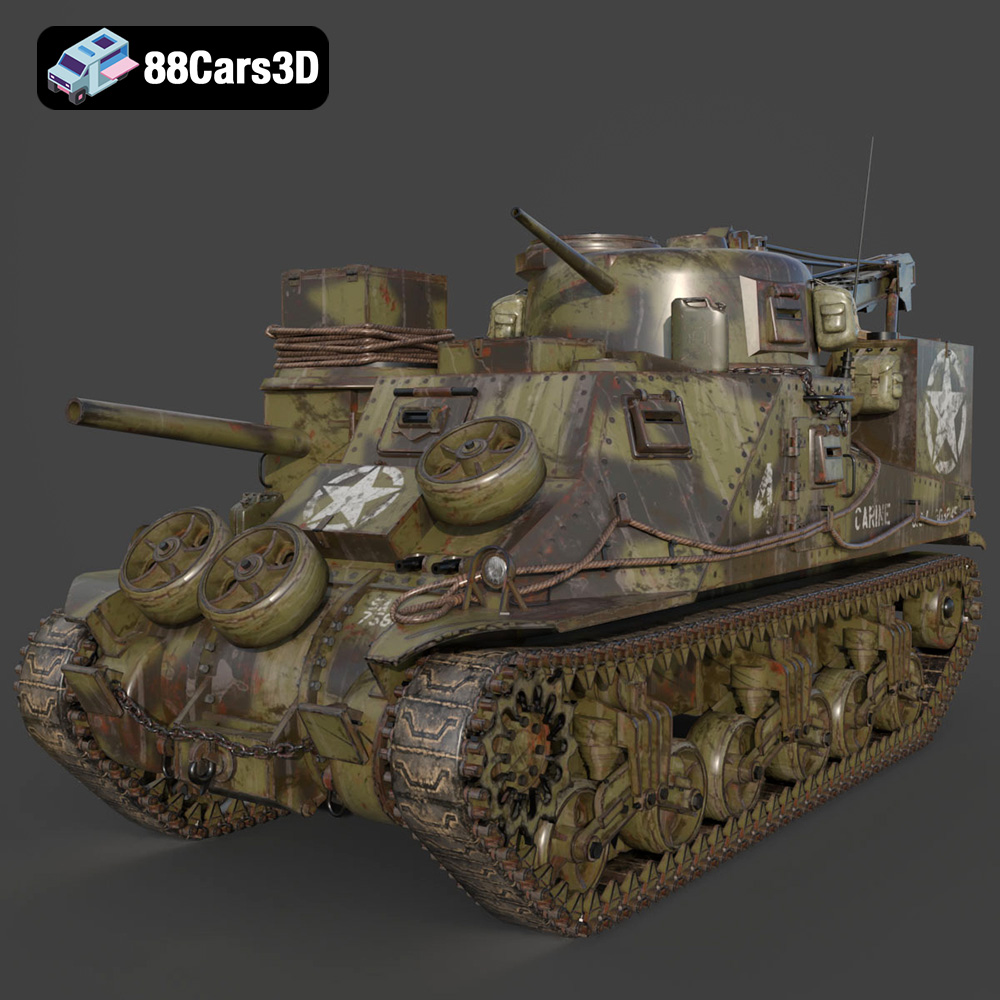
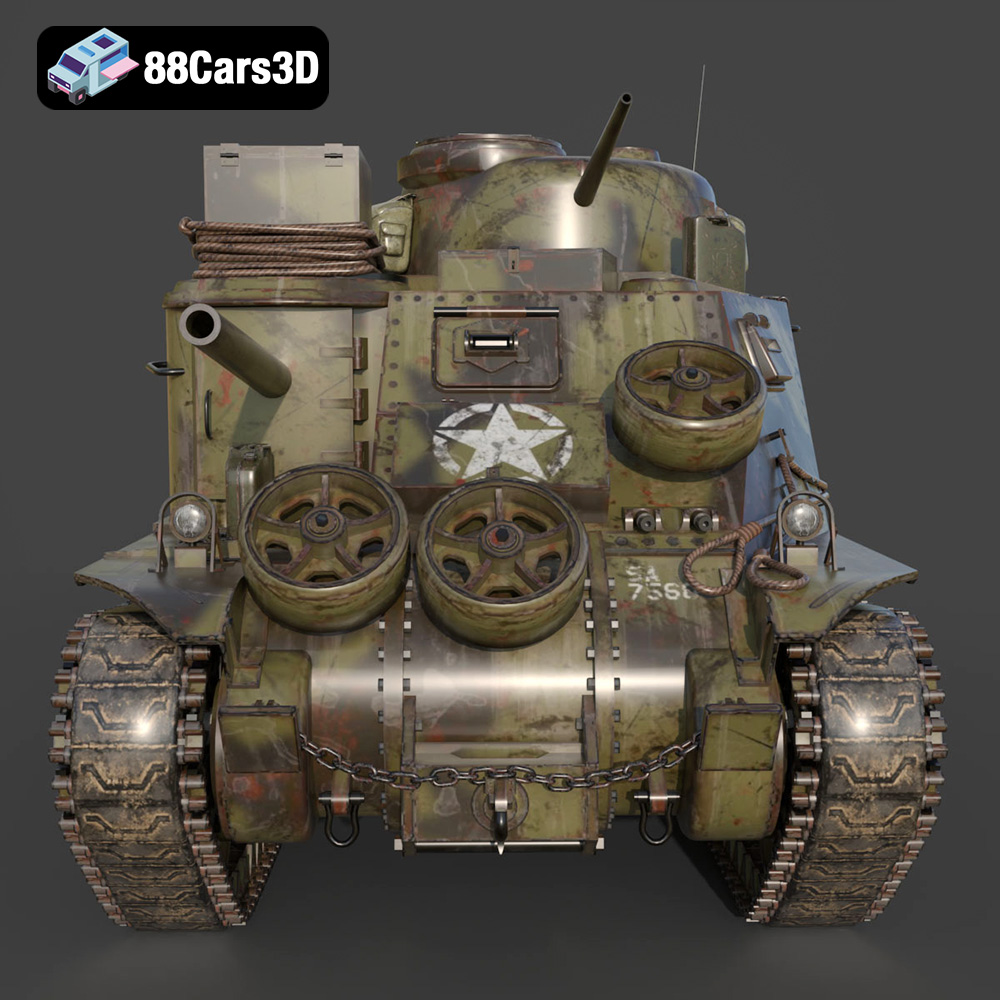
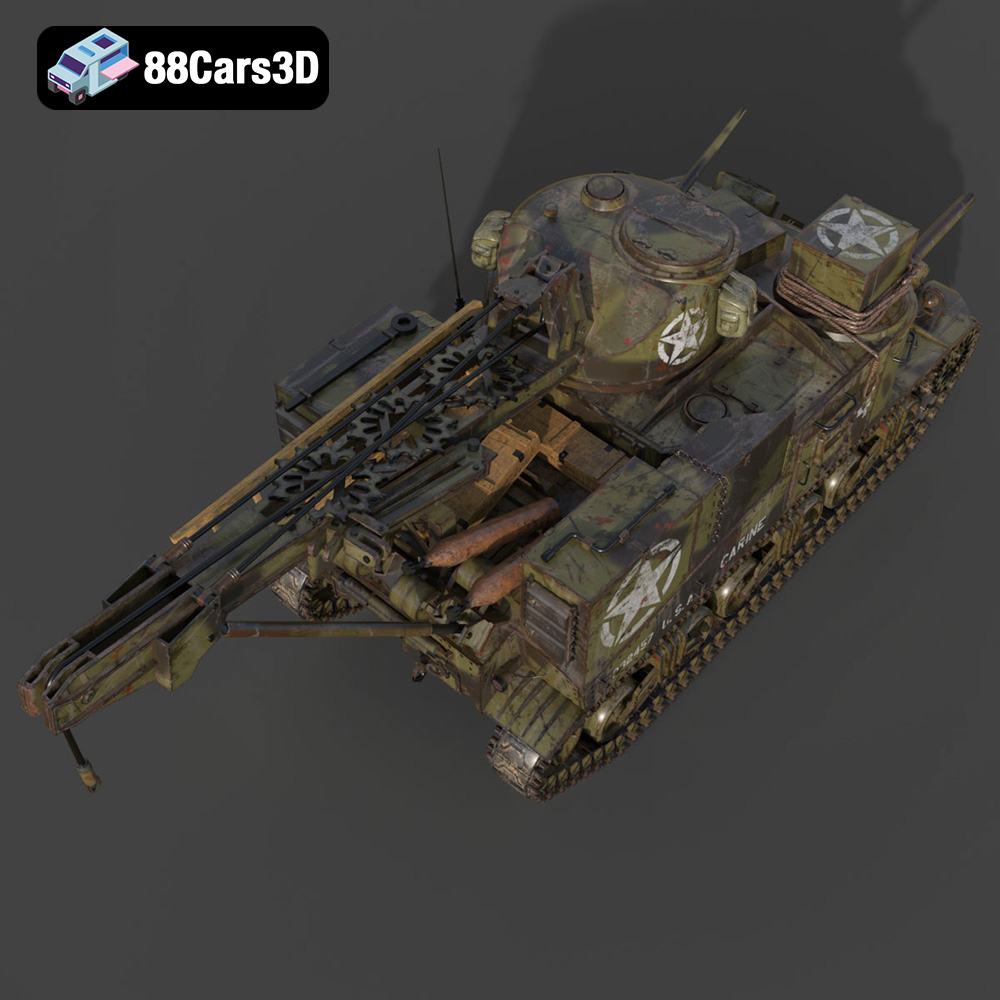
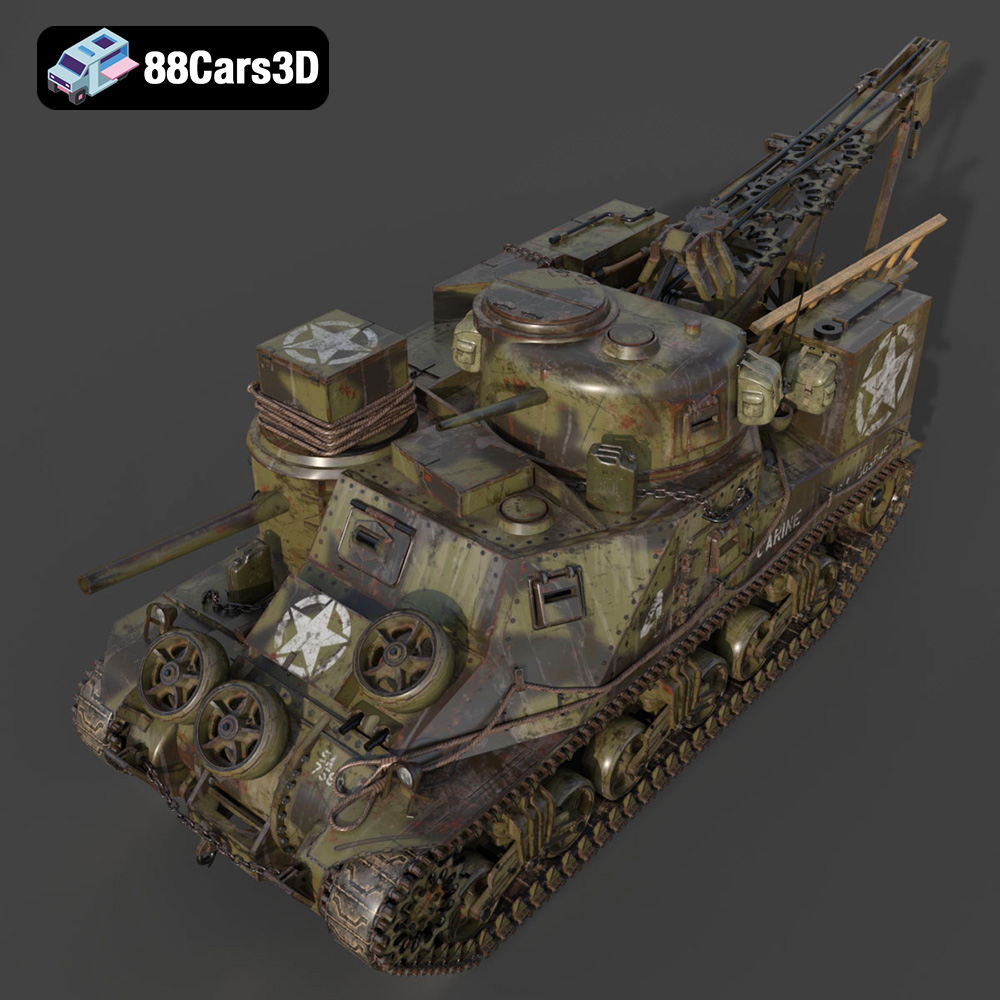
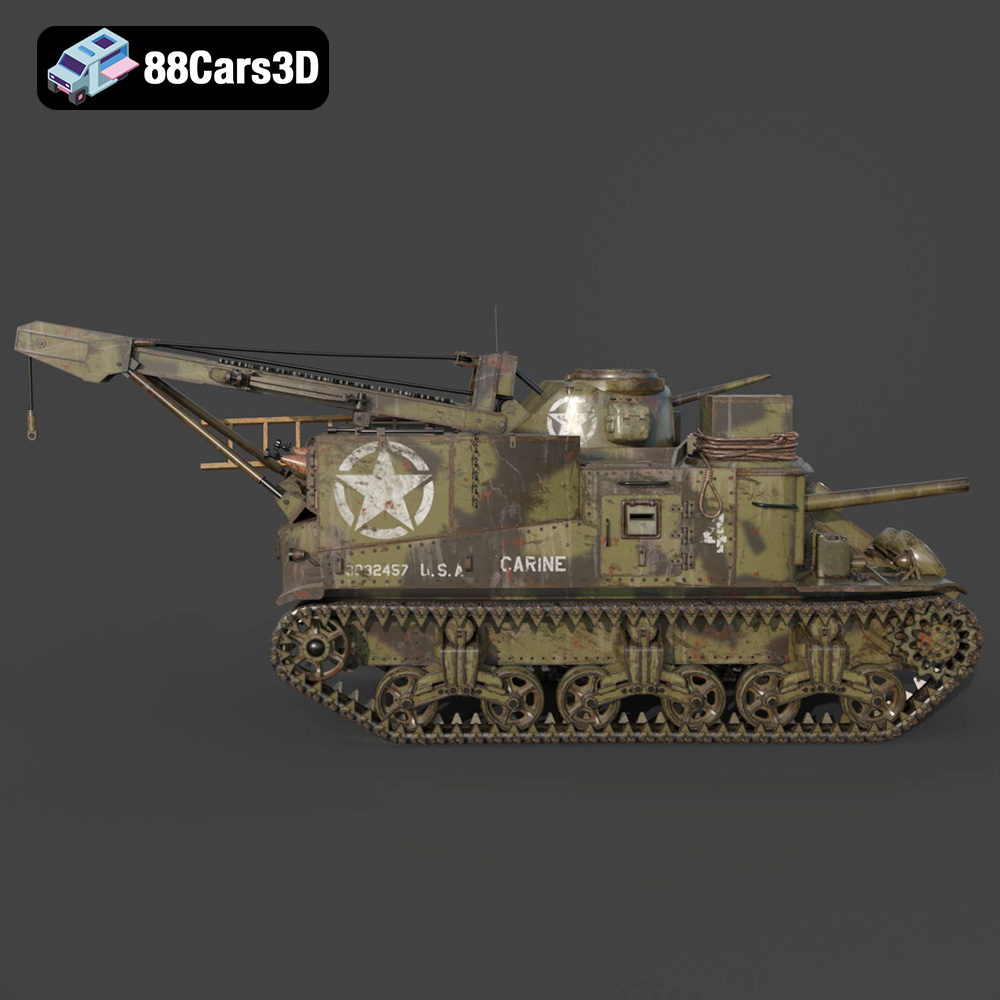
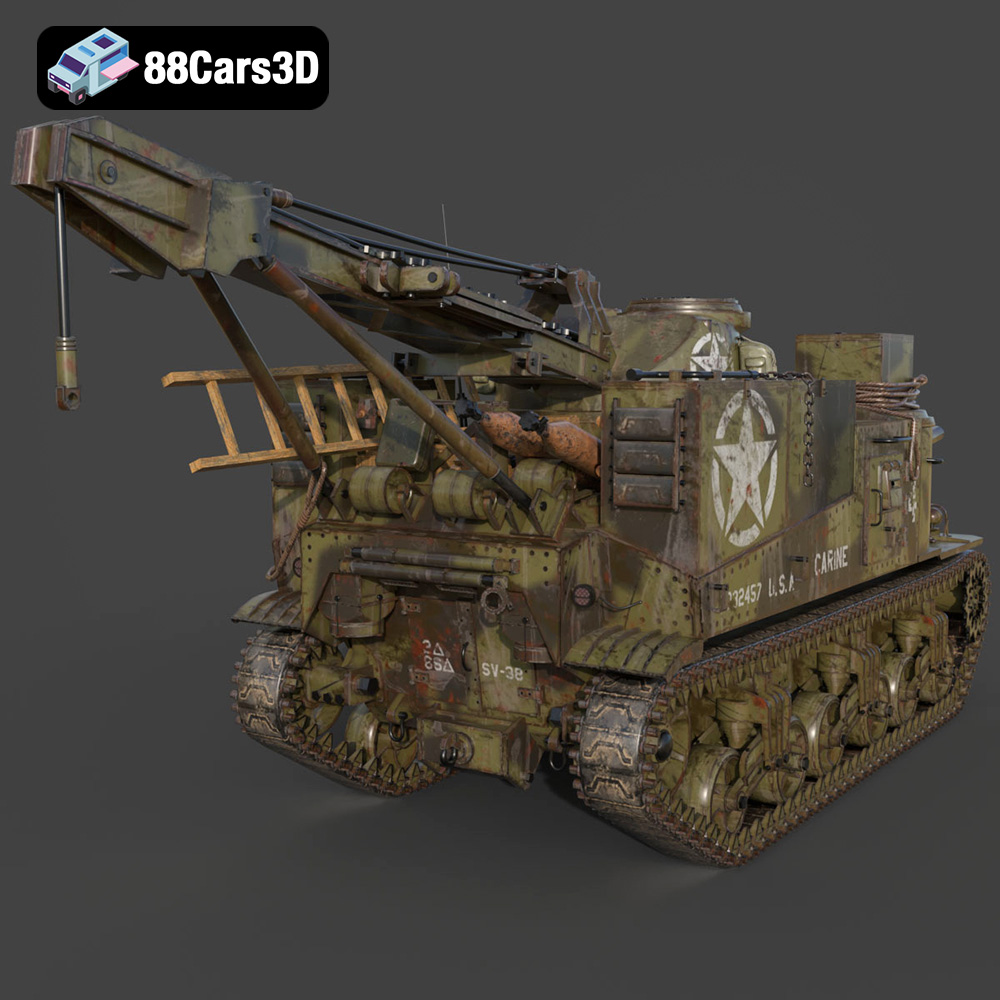
The product description highlights a deep commitment to historical accuracy. The model meticulously captures the M31’s iconic features: the rugged M3 Lee chassis, the heavy-duty crane boom, the functional rear-mounted Gar Wood winch assembly, and even the historically accurate dummy turret and 75mm gun barrel—designed to deceive enemy forces. Even the intricate VVSS (Vertical Volute Spring Suspension) bogies and authentic World War II era tracks and drive sprockets are faithfully recreated. This level of detail extends to the interior, with detailed commander and driver access hatches, authentic WW2-era dashboard gauges, and rugged military-grade control levers and pedals visible through open hatches. Such precision is crucial for historical simulators, documentaries, and immersive VR experiences where visual fidelity directly impacts user engagement and credibility.
A truly professional 3D model isn’t just static; it’s built for dynamic interaction. The M31 Recovery Vehicle model is designed with separate tracks, wheels, and crane components, explicitly for animation. This modularity, combined with a proper pivot setup for crane rotation, track movement, and suspension travel, makes the model animation-ready out of the box. Imagine a scene where the crane boom is deployed to recover a damaged tank, or the tracks realistically deform over uneven terrain. This foresight in design saves countless hours for animators and game developers, allowing them to focus on storytelling and interaction rather than complex rigging and setup.
The versatility of the M31 Recovery Vehicle 3D model makes it a cornerstone for various professional applications. Its technical excellence and multi-format support mean it seamlessly integrates into diverse production pipelines, from blockbuster games to high-fidelity marketing visuals.
In the realm of game development, assets like the M31 Recovery Vehicle are invaluable. With its game-ready optimization and approximately 200,000 triangles, it strikes an exceptional balance between visual realism and real-time performance. For historical open-world games or tank simulators built in Unreal Engine or Unity, this model provides an immediate, high-quality solution.
For Unreal Engine, the inclusion of a dedicated .unreal file or a well-structured .fbx ensures a smooth import process. Developers can easily drag-and-drop the M31 model, applying PBR (Physically Based Rendering) materials that react realistically to light. The separate, animatable components mean that the crane can function, tracks can roll, and suspension can react to terrain, adding a layer of authenticity crucial for player immersion. Collision meshes can be generated or imported to ensure proper physical interaction within the game world. Similarly, in Unity, the .fbx format facilitates straightforward integration, allowing for quick setup of materials, physics, and animation controllers. High-quality 3D car models or military vehicles are critical components in populating realistic game worlds, and the M31 model delivers on that front.
For cinematics, marketing campaigns, or detailed historical documentaries, photorealism is the ultimate goal. The M31 Recovery Vehicle model’s clean geometry and detailed features make it an excellent candidate for high-end rendering in software like 3ds Max or Blender.
Using the .max or .blend file, artists can leverage the full power of their chosen rendering engine (e.g., V-Ray, Corona, Cycles, Octane). They can customize hull colors, apply battle-damaged or factory-fresh textures, and adjust material finishes to achieve specific looks—from matte military paint to rusted metal. Complex lighting setups can highlight the riveted hull and the intricate mechanics of the crane. Imagine a dramatic scene featuring the M31 under an overcast sky, its metal reflecting the subdued light, or a close-up revealing the wear and tear of active service. Such detailed models are crucial for automotive rendering (even for military vehicles), bringing a level of realism that captivates viewers and enhances storytelling.
AR/VR experiences demand highly optimized assets for smooth performance and believable immersion. The M31 Recovery Vehicle model is perfectly suited for these emerging technologies.
The .glb format, in particular, is optimized for AR and VR, enabling the M31 to be easily integrated into interactive virtual showrooms or mobile AR applications. Users could “place” the recovery vehicle in their living room via their smartphone, walk around it, and inspect its details up close. In a VR environment, players could step inside the detailed interior, interact with the controls, or witness the crane in action. The model’s balanced polycount ensures that these immersive experiences run smoothly on various devices without sacrificing visual quality, offering a powerful tool for historical education or virtual exhibitions.
The utility of a high-quality 3D model extends beyond digital displays. For enthusiasts, collectors, and hobbyists, the ability to 3D print a physical replica of a revered vehicle like the M31 Recovery Vehicle is a compelling prospect. The M31 3D model explicitly supports this, providing details for successful fabrication.
The .stl format, included with the M31 model, is the industry standard for 3D printing. This format simplifies the complex polygonal mesh into a series of triangles, creating a solid, manifold object that 3D printers can interpret. When converting to .stl, ensuring the model is “watertight” – meaning it has no holes or gaps in its surface – is critical to prevent printing errors. The M31 model’s clean geometry simplifies this preparation, ensuring a robust output for physical creation.
To achieve the best results, the product description provides specific 3D print settings. Recommended scales (1:35, 1:48, 1:72) cater to common modeling scales, fitting into existing collections. For optimal detail, resin printing is recommended, especially for fine features like the crane boom, dummy gun, and suspension, which would require supports during printing. Layer heights between 0.04-0.12 mm ensure high resolution. After printing, post-processing steps like sanding, priming, and painting with authentic factory colors and metallic finishes are essential to bring the M31 to life, transforming a digital file into a tangible piece of history. The ability to separate the hull, tracks, and other components for printing allows for easier assembly and painting, mirroring the modularity found in the digital asset.
A truly valuable 3D asset provides a strong foundation but also allows for creative freedom. The M31 Recovery Vehicle 3D model is designed with customization in mind, empowering artists to tailor it to specific project needs and artistic visions.
The core of customization often lies in materials and textures. With the M31 model, artists can readily change hull colors—from classic Olive Drab to winter camouflage or desert schemes—to reflect different operational theaters or periods of WWII. Modifying track and mud textures allows for depicting a battle-damaged, weathered vehicle versus a factory-fresh one. Adjusting material finishes, such as shifting from matte military paint to heavily rusted metal or even a slightly polished look, provides immense artistic control. This is achieved by leveraging modern PBR (Physically Based Rendering) workflows, where separate texture maps (albedo, normal, roughness, metallic, ambient occlusion) accurately define how light interacts with the surface. These PBR principles are vital for achieving realistic visuals, whether in real-time game engines or offline renderers.
Beyond modifying the vehicle itself, its adaptability shines in how easily it can be integrated into various environments. Artists can adapt lighting for different scenarios—a gloomy battlefield, a sunny training ground, or a dramatic night recovery operation. Building entire scenes around the M31 Recovery Vehicle becomes straightforward when starting with such a high-quality base asset. Whether it’s placing the vehicle amidst destroyed buildings, in a muddy field, or within a bustling military camp, the model’s robust design ensures it looks authentic in any setting. This flexibility makes it not just a single asset but a foundational element for complex environmental storytelling and cinematic composition. The ability to customize and integrate the M31 into diverse settings underscores its value as a versatile game asset or rendering component.
In the dynamic world of 3D content creation, the difference between an average project and an outstanding one often comes down to the quality and versatility of its assets. The M31 Recovery Vehicle 3D model stands as a testament to this principle. From its meticulously recreated historical details and optimized geometry to its comprehensive file format support, this model is engineered to empower creators across game development, high-end rendering, AR/VR experiences, and even 3D printing.
Its game-ready optimization, coupled with features like separate animatable components and precise pivot setups, ensures a smooth integration into professional workflows. Whether you’re a game designer building an immersive historical simulator, a visualization artist crafting a cinematic masterpiece, or a hobbyist bringing history to life through 3D printing, the M31 Recovery Vehicle model offers a robust and adaptable foundation. It’s a prime example of how expertly crafted 3D models can accelerate production, enhance realism, and unlock new creative possibilities. For those seeking such high-caliber assets, be sure to explore the extensive collection available at 88cars3d.com.
The M31 Recovery Vehicle, also known as the T2 Tank Recovery Vehicle, is a legendary piece of World War II military engineering. Built upon the rugged and proven chassis of the M3 Lee medium tank, this specialized armored recovery vehicle (ARV) features its iconic dummy turret and dummy 75mm gun, deliberately designed to deceive enemy forces while functioning as a heavy-duty battlefield lifter. The 3D model meticulously captures its riveted hull, heavy crane boom mechanism, and distinctive rear winch setup.
$19.99
.blend
.fbx
.glb
.max
.obj
.ply
.rendering
.stl
.tank
.unreal
.ww2
game asset
game-ready
low-poly
m31
military-3d-model
military-vehicle
optimized
recovery-vehicle
VR/AR