Get 20% OFF All Premium 3D & STL Models!

In the expansive world of 3D visualization, from cinematic renders to immersive game environments and precise engineering simulations, the quality of your 3D assets is paramount. Whether you’re an independent game developer crafting the next flight simulator, an architect visualizing a heliport, or a digital artist producing a breathtaking aerial sequence, the demand for highly detailed, optimized, and versatile models is constant. High-fidelity 3D car models are a staple, but the realm of aviation presents its own unique challenges and opportunities for creators. This often involves capturing complex aerodynamics, intricate mechanical parts, and the distinctive visual character of iconic aircraft.
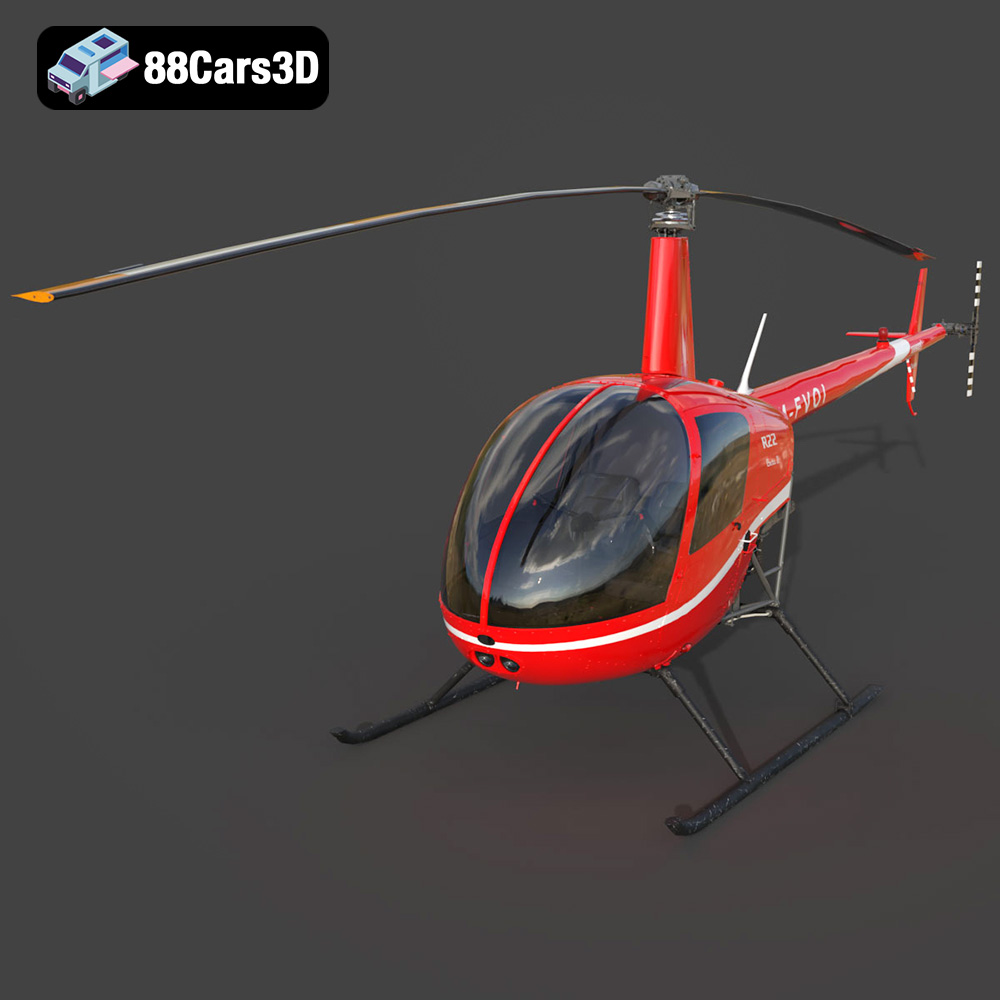
Today, we’re taking a closer look at what makes an exceptional aviation asset, exemplified by the stunning Robinson R22 Red 3D Model. This model isn’t just a digital representation; it’s a meticulously crafted tool designed to seamlessly integrate into professional workflows across various industries. From its game-ready optimization to its suitability for high-end rendering and even 3D printing, the Robinson R22 showcases the peak of modern 3D asset development, offering creators a robust foundation for their ambitious projects.
The versatility of a 3D model often hinges on the range and quality of its supported file formats. Each format serves a specific purpose, catering to different software ecosystems, project requirements, and stages of the production pipeline. Understanding these distinctions is critical for any professional working with 3D assets, ensuring smooth integration and optimal performance. The Robinson R22 Red 3D Model, for instance, comes packed with a comprehensive suite of formats, each optimized for a particular use case.
The .blend file is Blender’s native format, offering a fully editable scene with all associated data: meshes, materials, textures, lighting, cameras, animation data, and even physics simulations. For artists and studios primarily using Blender, this format provides the most flexibility for customization, rigging, and animation. It’s ideal for projects where you need to deeply integrate the model into a Blender-centric workflow, allowing for full control over every aspect of the asset.
Autodesk’s .fbx (Filmbox) format is arguably the most widely adopted interchange format in the 3D industry. It excels at transferring 3D model data, including geometry, materials, textures, animations, and skeletal systems, between different software applications like 3ds Max, Maya, Blender, Unreal Engine, and Unity. For real-time pipelines, especially game development, .fbx is the go-to choice due to its robust support for animation and skeletal data. The Robinson R22’s .fbx version is perfectly optimized for direct import into game engines, preserving pivots and hierarchies for easy animation.
The .obj (Wavefront Object) format is a universal standard for storing 3D geometry data, including vertices, normals, UV coordinates, and groups. While it’s excellent for mesh data and widely compatible across almost all 3D software, it typically stores material information separately in an accompanying .mtl file and does not natively support animations or rigging. It’s an excellent choice for static mesh transfer, archival, or when you need a clean mesh to start a new texturing or rigging process in a different software package.
.glb (GL Transmission Format Binary) is an increasingly important format, especially for web-based 3D, augmented reality (AR), and virtual reality (VR) applications. It’s a binary container format that bundles geometry, materials, textures, and animations into a single, compact file. This optimization makes .glb files incredibly efficient for streaming and displaying 3D content in real-time on various devices, including mobile and browsers. The Robinson R22’s .glb ensures a lightweight, visually rich experience for immersive AR/VR training or web configurators.
The .stl (STereoLithography) format is the standard for 3D printing. It represents a 3D model as a series of connected triangles, defining its surface geometry without color, texture, or animation data. While simple, its universal adoption by 3D printing software and hardware makes it indispensable. The Robinson R22 model’s .stl output allows aviation enthusiasts and professionals to bring the digital helicopter into the physical world, creating tangible replicas for display or functional prototyping.
The .ply (Polygon File Format) is a versatile format capable of storing a wide range of properties beyond just geometry, including color, transparency, normals, texture coordinates, and even reliability information. It’s often used in scientific and engineering applications, such as 3D scanning, CAD, and advanced data visualization, where precise mesh data and attribute storage are critical. For highly accurate analyses or specific industrial applications, the .ply version of the R22 offers a robust data foundation.
The .unreal format, or more accurately, the optimized export for Unreal Engine, typically refers to assets prepared specifically for the Unreal Editor. This might involve an .fbx file with specific naming conventions, material setup, or collision meshes that adhere to Unreal’s best practices. It signifies an asset that is truly “game-ready,” requiring minimal setup within the engine itself to achieve optimal visual fidelity and performance. The Robinson R22’s .unreal compatibility ensures drag-and-drop readiness for developing realistic flight simulators or interactive experiences.
Similar to .blend for Blender, the .max file is the native format for Autodesk 3ds Max. It contains the complete scene with all objects, modifiers, materials, textures, lighting, animation, and rigging data. For users of 3ds Max, this format offers the highest degree of control and editability, making it ideal for high-end rendering, complex animations, and integrating the model into existing 3ds Max projects. The .max version of the R22 provides a rich environment for detailed customization and advanced rendering techniques.
Creating a 3D model that looks fantastic in a still render is one thing; making it perform flawlessly and look equally stunning in a real-time game engine or VR environment is another challenge entirely. The Robinson R22 Red 3D Model exemplifies the meticulous craftsmanship required for such assets, balancing visual fidelity with performance optimization.
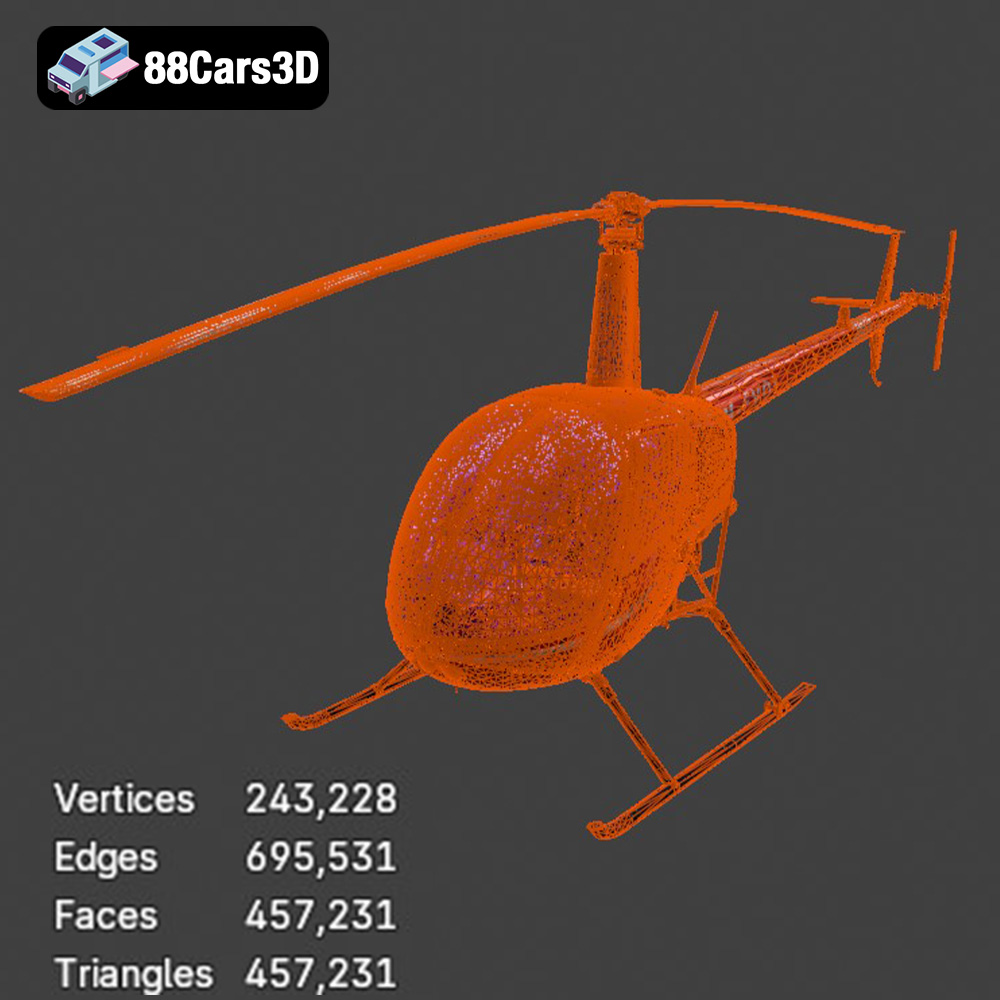
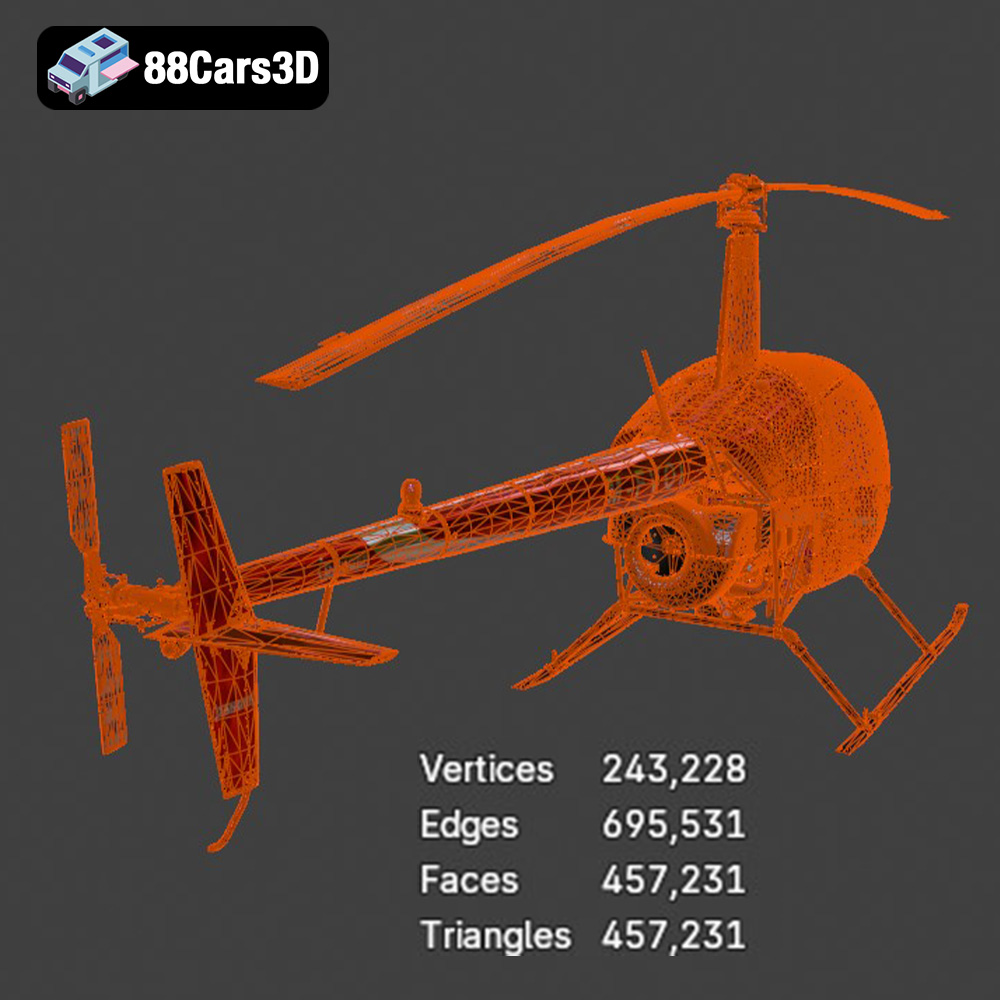
For game development, AR/VR, and other real-time applications, polygon count is a critical factor. Too many polygons can bog down performance, leading to low frame rates and a poor user experience. Too few, and the model lacks detail and realism. The Robinson R22 model strikes a perfect balance with approximately 150,000 triangles. This count is high enough to capture the intricate details of the iconic R22, including its engine housing, detailed cockpit instruments, and the structure of its main and tail rotors, without overwhelming a modern game engine. This optimized topology ensures clean edge flow, which is crucial for deformation (if animated) and subdivision, making it suitable for both real-time and high-resolution renders.
Beyond the mesh itself, the quality of UV mapping and textures dictates a model’s visual realism. The R22 model features expertly unwrapped UVs, which are essential for applying high-resolution textures without distortion. This allows for the inclusion of subtle details like panel lines, rivets, wear, and the vibrant red livery, all baked into efficient texture maps. Proper UVs also facilitate advanced material setups, enabling realistic PBR (Physically Based Rendering) workflows for metallic sheens, glass reflections, and surface imperfections. The clean UVs mean artists can easily apply custom liveries or PBR material sets, significantly enhancing the model’s versatility.
A static model is only half the story for an aircraft. The Robinson R22 model is designed with animation in mind, featuring proper pivot setups for its key moving parts. Separate main rotor, tail rotor, and doors mean that animators can effortlessly simulate startup sequences, flight dynamics, and cabin access. The T-bar cyclic, collective, and anti-torque pedals in the cockpit also have accurate pivot points, allowing for realistic input visualization in flight simulators. This pre-rigged foundation significantly reduces setup time for developers and animators, allowing them to focus on crafting compelling motion.
A truly professional 3D asset demonstrates its value through seamless integration into a variety of production pipelines. The Robinson R22 Red 3D Model, available on 88cars3d.com, is engineered to fit effortlessly into multiple industry-standard workflows, from cutting-edge game development to high-fidelity cinematic rendering.
For game developers, time is a precious commodity. The R22’s ‘game-ready’ optimization, including its balanced polycount and clean UVs, makes it an ideal candidate for engines like Unreal Engine and Unity. Importing the .fbx or .unreal formats allows developers to quickly integrate the helicopter into their projects. The proper pivot setups for rotors and doors mean that flight dynamics and interactive elements can be implemented with minimal fuss. Imagine this model populating an open-world action game, serving as a player’s primary mode of transport, or acting as the central feature in an immersive flight training simulator. Its optimized glass geometry also ensures clear first-person perspectives, crucial for VR flight experiences or intricate cockpit interactions.
Beyond real-time, the Robinson R22 excels in traditional rendering workflows for broadcast, advertising, and architectural visualization. The inclusion of .max and .blend files means artists using these powerful 3D packages have full native control over the model. They can leverage advanced rendering engines like V-Ray, Corona Renderer, Octane, Cycles, or Eevee to produce photorealistic images and animations. Customizing the vibrant red livery, adjusting the reflectivity of the bubble canopy, or setting up complex studio lighting scenarios becomes straightforward. This enables the creation of stunning marketing visuals for aviation companies, breathtaking cinematic sequences for documentaries, or even detailed architectural renders featuring the R22 landing on a rooftop heliport.
The burgeoning fields of Augmented Reality and Virtual Reality demand highly optimized assets that maintain visual quality across diverse hardware. The .glb format, included with the Robinson R22, is specifically designed for these applications. Developers can use it to create interactive AR experiences where the helicopter appears virtually in a real-world environment, or build immersive VR training modules for pilots. The optimized geometry and clear glass ensure that users experience a smooth and realistic interaction, whether they’re virtually walking around the R22 in a hangar or performing pre-flight checks in a simulated environment.
The versatility of a premium 3D model extends beyond digital displays. For enthusiasts, educators, or design professionals, the ability to transform a virtual asset into a physical object offers unique possibilities. The Robinson R22 Red 3D Model, with its inclusion of the .stl format, bridges this gap, enabling high-quality 3D prints.
3D printing requires careful preparation to ensure successful outcomes. The product description for the Robinson R22 provides specific recommendations, which are crucial for achieving an accurate physical replica. Starting with an appropriate scale (e.g., 1:24, 1:32, 1:48) is key to balancing detail with printability. Recommended layer heights (0.04–0.12 mm) suggest a focus on fine detail, especially important for capturing the R22’s smaller components and smooth fuselage curves.
The recommendation for resin printing, particularly for delicate parts like rotor blades and skids, highlights an important consideration. Resin (SLA/DLP) printers excel at producing highly detailed objects with smooth surfaces, making them ideal for capturing the thinness of rotor blades and the intricate structure of the landing gear. FDM (Fused Deposition Modeling) printers, while more common, might struggle with such fine details without significant layer lines. However, for the main fuselage, an FDM printer with optimized settings could still yield excellent results, especially if post-processing is planned.
Achieving a professional look often involves post-processing. The R22’s suggested workflow includes sanding, priming, and applying an authentic glossy red factory finish. Sanding removes layer lines and imperfections, primer creates a uniform surface for paint adhesion, and the final coat brings the model to life. This hands-on process allows model makers to truly own the physical representation of this iconic helicopter, making it a perfect project for aviation hobbyists or for creating prototypes in design studios.
A high-quality 3D asset isn’t just about ready-to-use perfection; it’s also about providing a robust foundation for creative exploration and customization. The Robinson R22 Red 3D Model offers extensive opportunities for artists and developers to tailor its appearance to specific project needs, transforming it from a standard asset into a bespoke creation.
The model’s clean topology and well-organized UVs mean that changing its exterior fuselage colors and livery patterns is a straightforward process. Artists can easily swap out the vibrant red for a sleek metallic blue, a military green, or a custom corporate branding. Similarly, modifying interior seat textures and panel materials allows for creating a more luxurious, utilitarian, or worn cockpit environment. Imagine customizing the R22 with different fabric patterns for the seats, changing the dashboard material from plastic to carbon fiber, or adding dirt and scratches for a battle-hardened look. The optimized glass geometry, with adjustable opacity and reflections, is perfect for simulating various weather conditions, time of day, or even a tinted privacy canopy.
Beyond material customization, the Robinson R22 model is designed to respond beautifully to different lighting setups. Artists can adapt the model for day, night, or specific hangar environments, enhancing the mood and realism of their scenes. The accurate lighting details, including navigation strobes and landing lights, can be animated and integrated into a scene’s lighting system to simulate active flight or parked conditions. This level of flexibility ensures that the R22 can seamlessly integrate into any digital environment, whether it’s a calm sunset render over a pristine lake or a dramatic night flight sequence in a dense city.
The journey through the intricacies of the Robinson R22 Red 3D Model reveals the profound impact that well-crafted, versatile 3D assets have across various industries. From the meticulous optimization for real-time engines to the comprehensive suite of file formats catering to every conceivable workflow, this model stands as a testament to the dedication of professional 3D artists. It’s an asset that not only looks exceptional but also empowers creators, saving invaluable time and accelerating production pipelines.
Whether you’re developing the next generation of flight simulators, producing cinematic visualizations, creating immersive AR/VR training programs, or even bringing digital designs to life through 3D printing, the Robinson R22 provides a robust and flexible foundation. Its attention to technical detail, from precise polycounts and clean UVs to proper pivot setups, ensures a seamless experience for professionals. Exploring assets like this on platforms such as 88cars3d.com offers a gateway to unlocking new creative possibilities and achieving unparalleled realism in your projects. Invest in quality 3D car models and aviation assets, and you invest in the success and visual impact of your work.
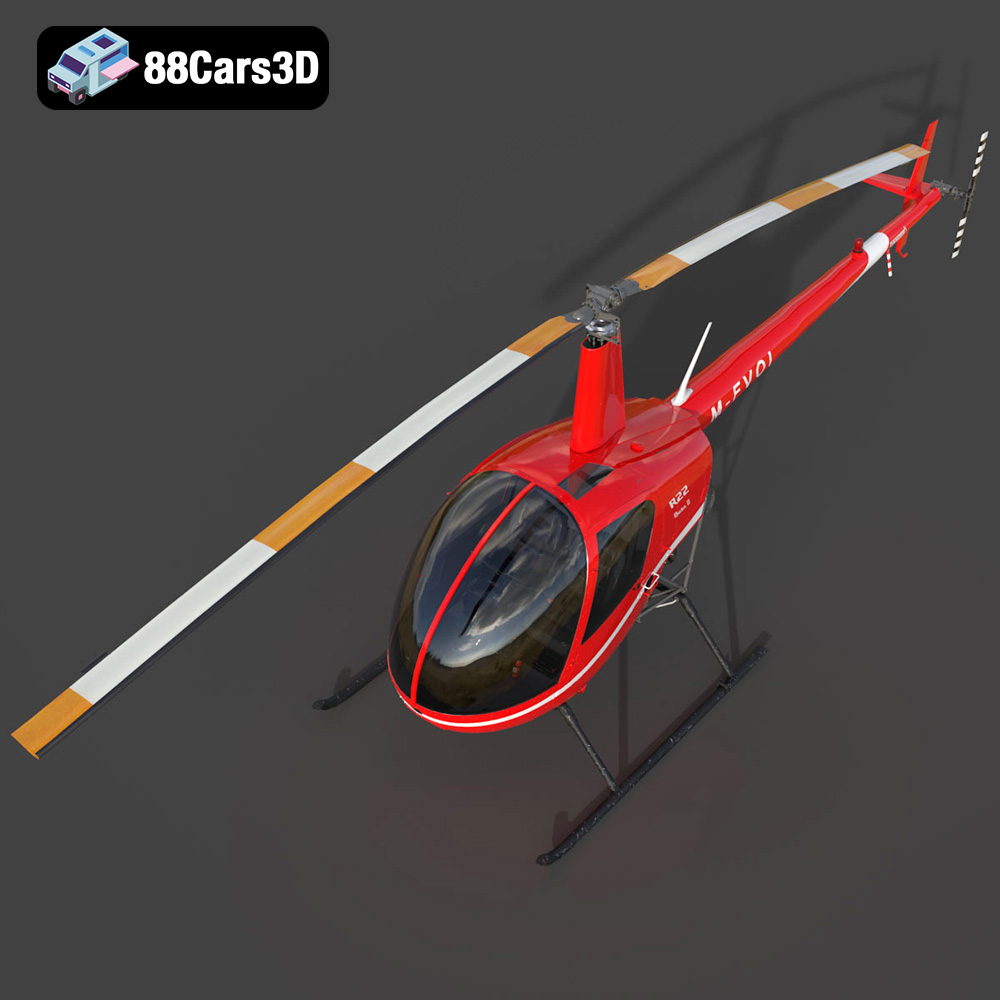
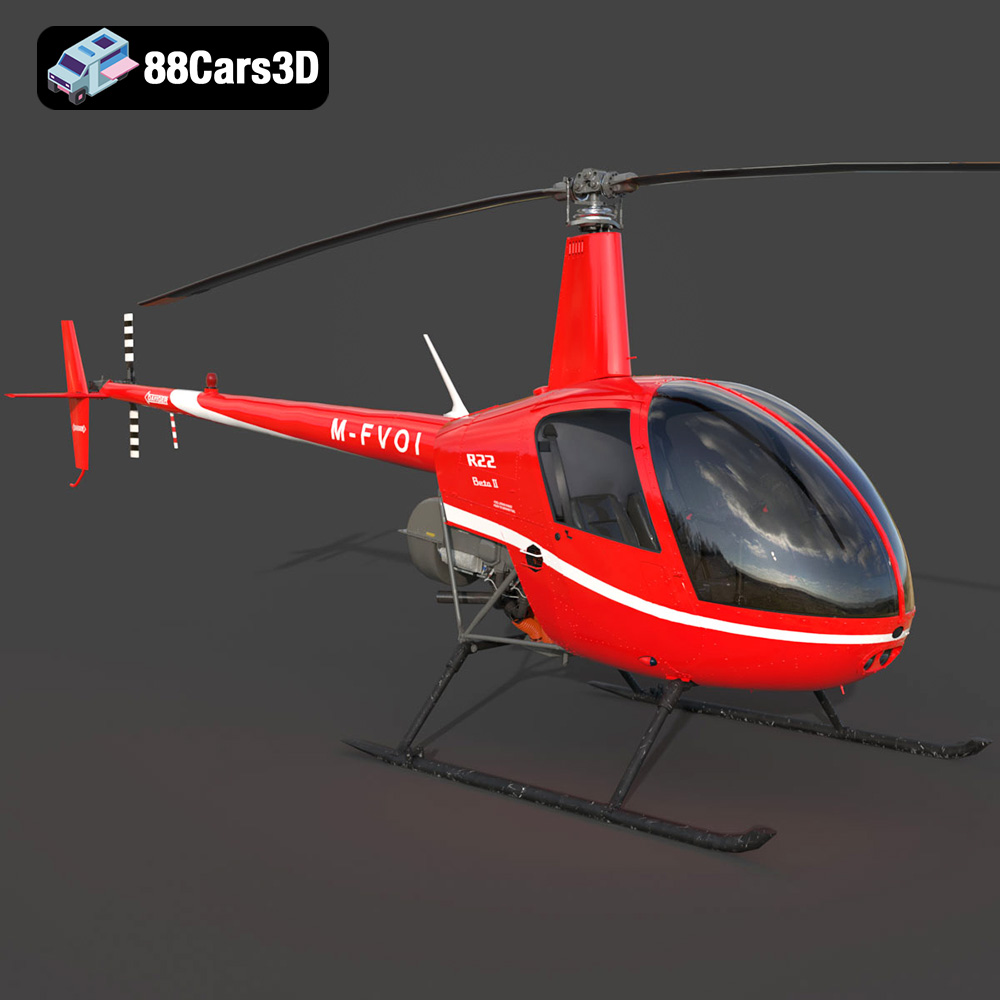
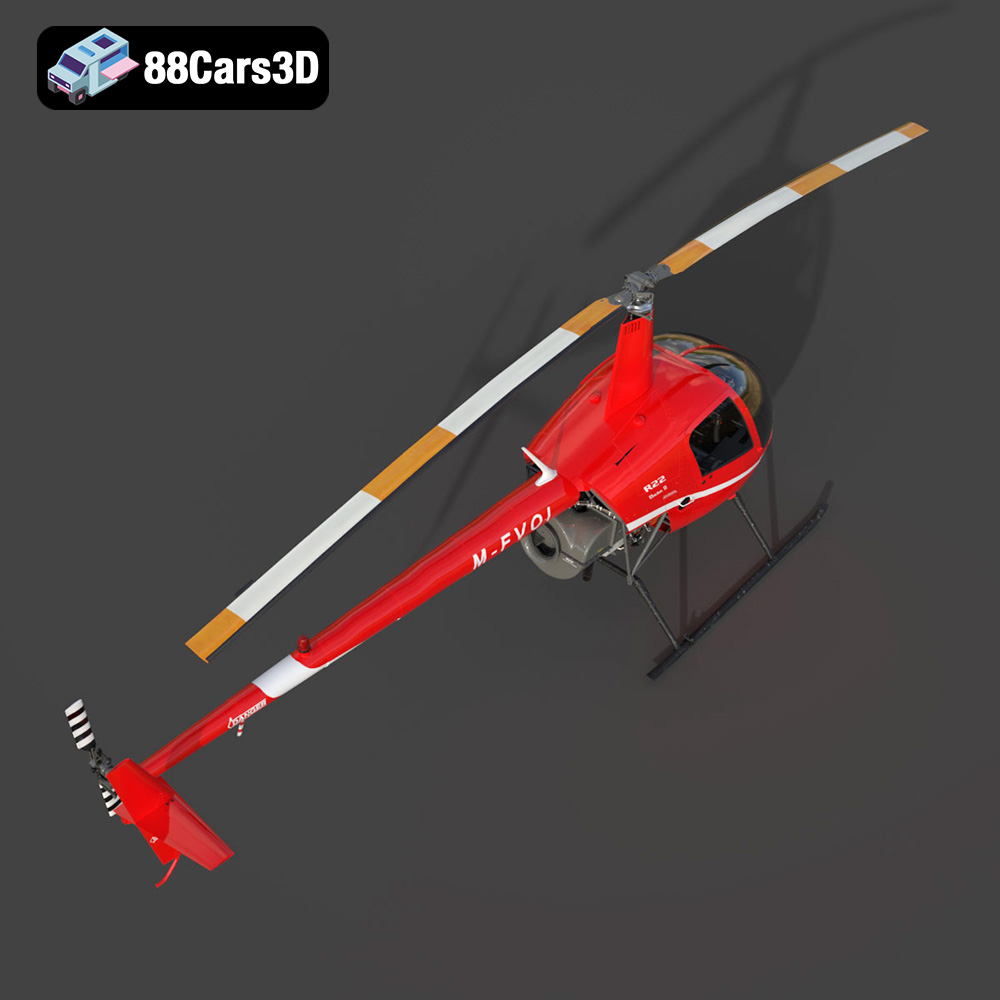
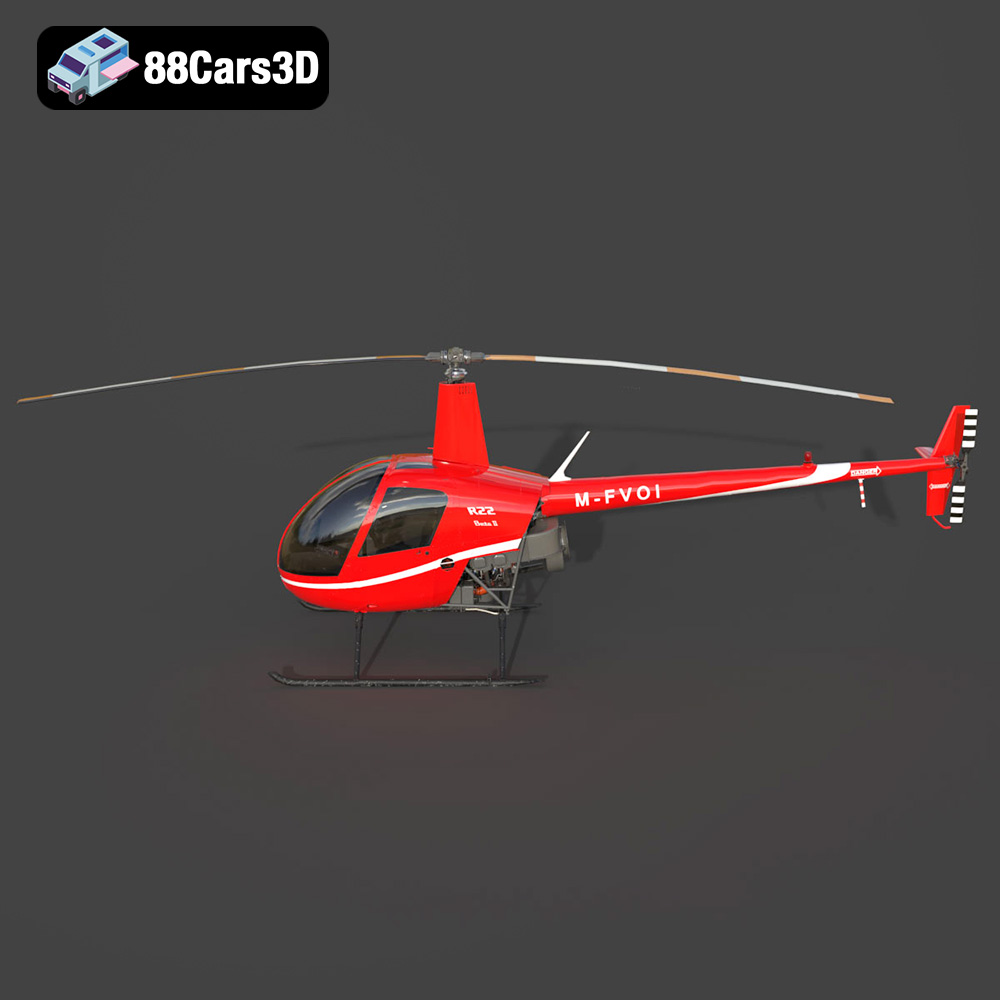
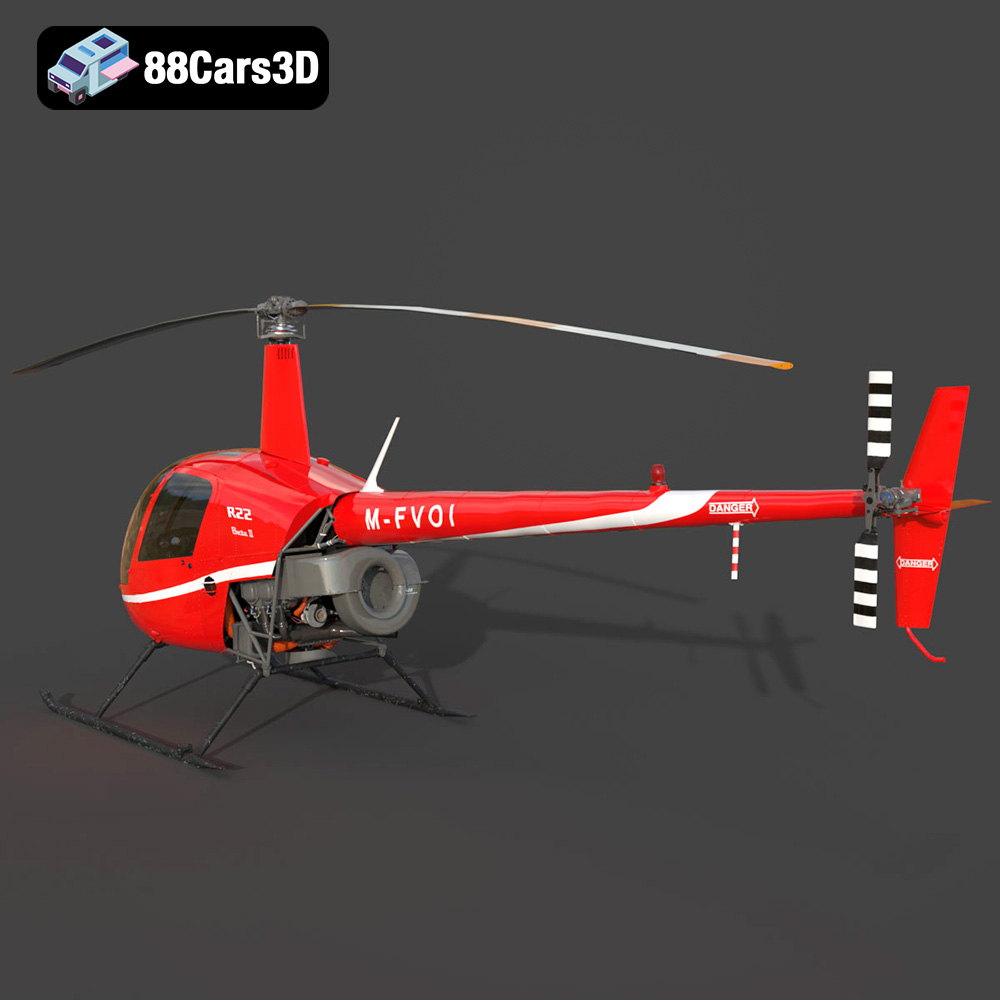
Experience the iconic Robinson R22, a legendary light utility and trainer helicopter renowned for its reliability and compact agility. This stunning 3D model features the recognizable lightweight airframe finished in a vibrant red livery, capturing the essence of general aviation. Every hallmark of the R22 design is faithfully recreated, from the distinctive two-bladed teetering main rotor to the exposed tail rotor structure and classic skid landing gear. Crafted with meticulous attention to detail, this game-ready 3D asset boasts an optimized topology of approximately 150,000 triangles, ensuring a perfect balance between high-end visual fidelity and real-time performance. The model features clean edge flow, unwrapped UVs, and high-resolution textures, making it an exceptional choice for modern game engines, immersive AR/VR applications, and high-quality CGI animations. Perfect for flight simulators, virtual aviation training environments, action-adventure games, and cinematic aerial visualizations.
$19.99
.aircraft
.blend
.fbx
.glb
.helicopter
.max
.obj
.ply
.rendering
.stl
.unreal
game asset
game-ready
helicopter-3d-model
light-helicopter
low-poly
optimized
r22
robinson
VR/AR