Get 20% OFF All Premium 3D & STL Models!

In the dynamic worlds of game development, automotive design, architectural visualization, and immersive AR/VR experiences, the demand for realistic and performant 3D assets has never been higher. Creating compelling digital environments often hinges on the quality and authenticity of its constituent elements, and few assets are as critical or as complex as vehicles. From the sleek lines of a supercar to the rugged utility of a classic sedan, a well-crafted 3D car model can elevate a project from ordinary to extraordinary, imbuing it with unparalleled realism and engagement.
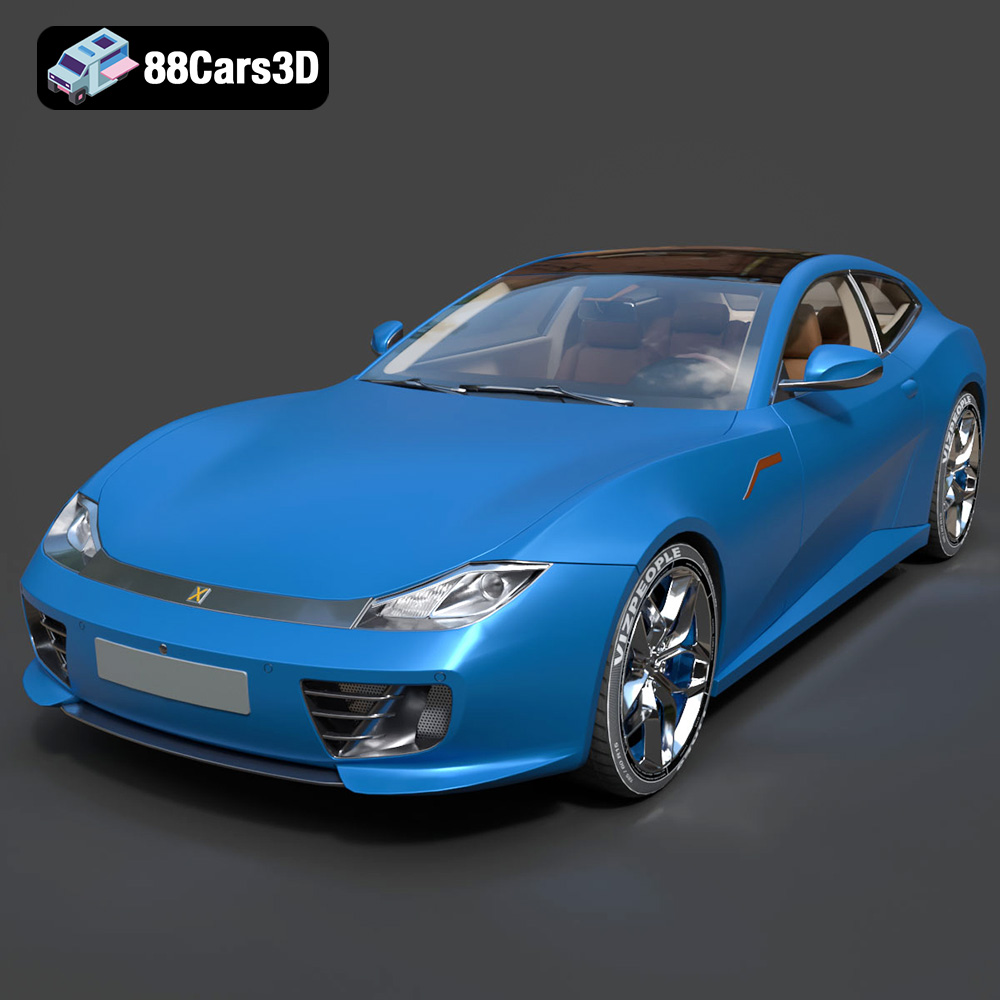
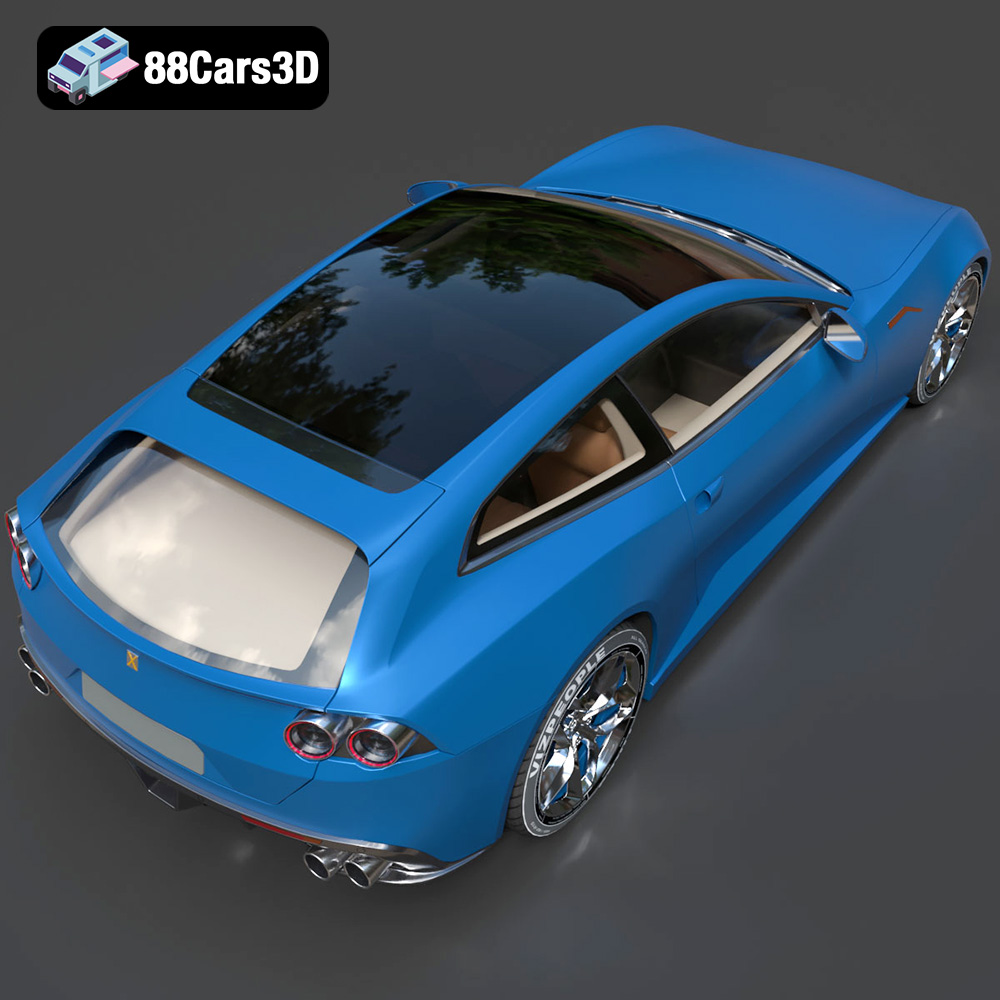
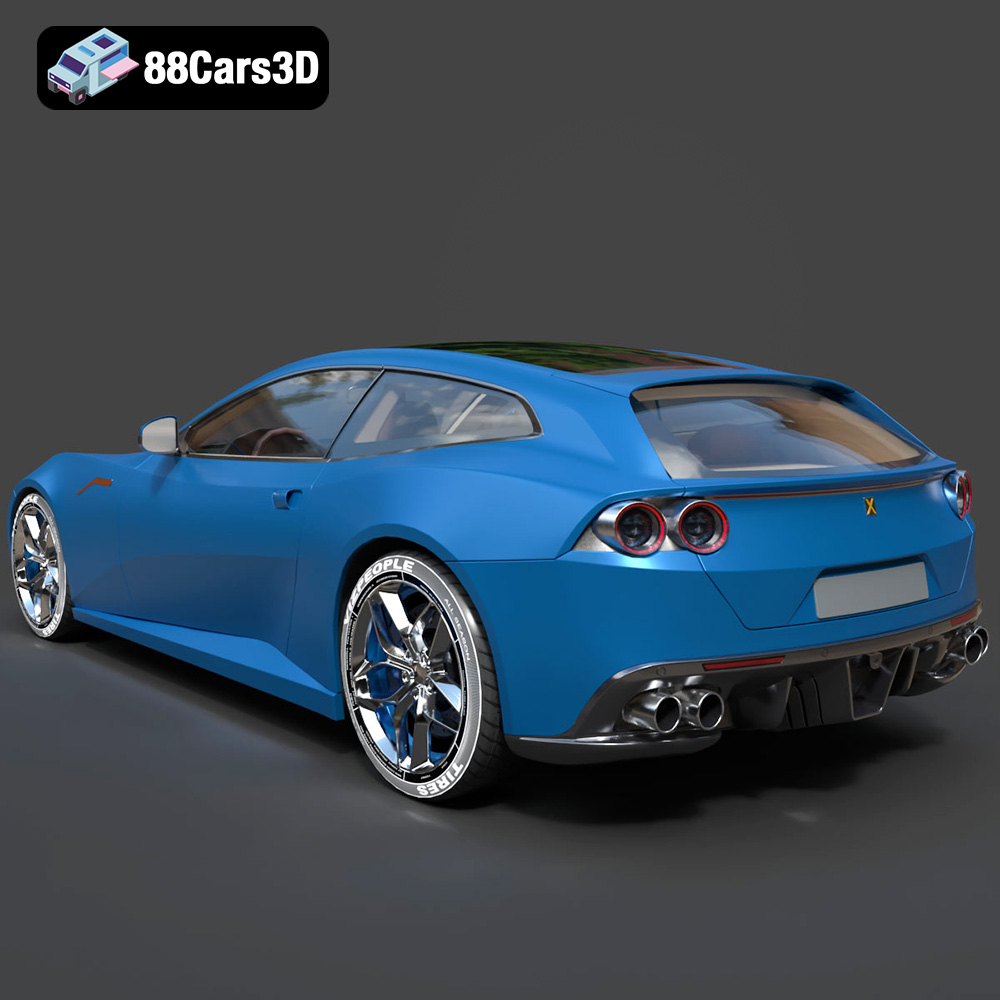
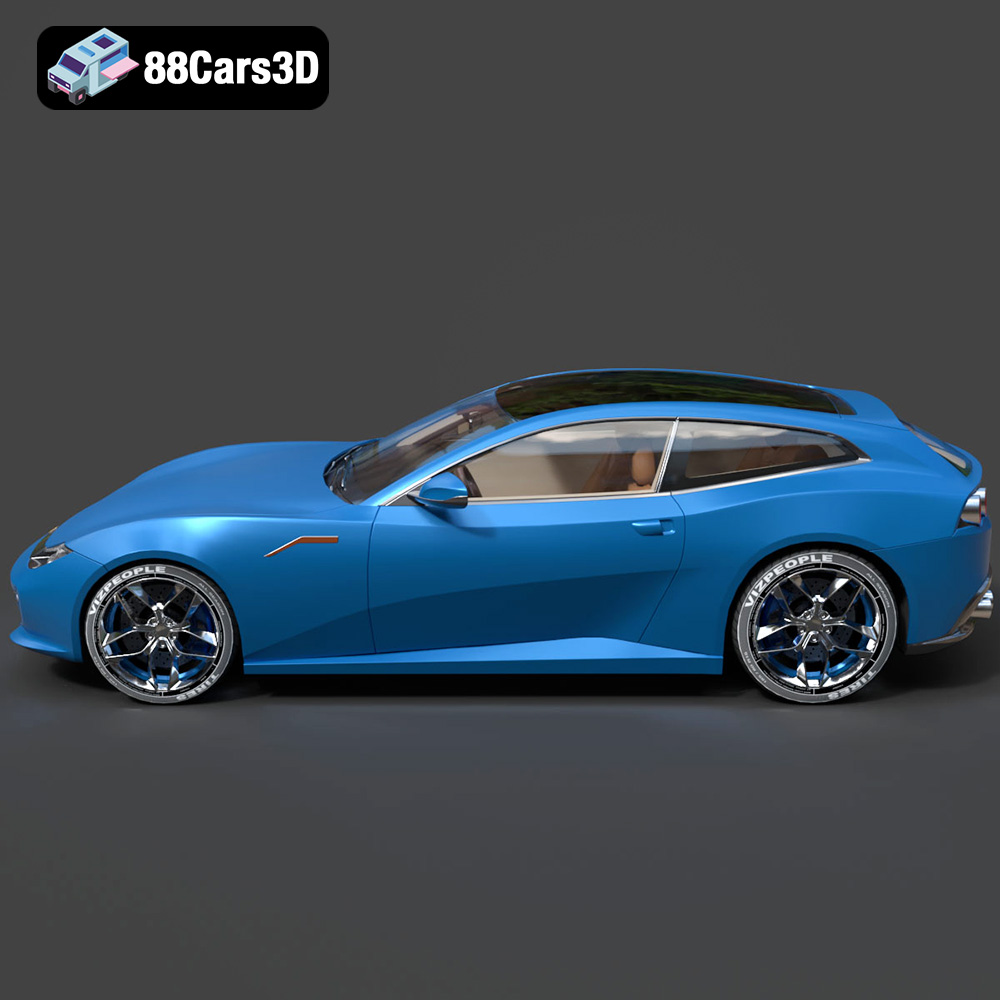
However, the meticulous process of modeling, texturing, rigging, and optimizing a vehicle from scratch is incredibly time-consuming and requires specialized expertise. This is where professional marketplaces like 88cars3d.com become indispensable, offering a curated selection of high-quality 3D car models ready for immediate integration. One exemplary model that perfectly encapsulates this blend of technical excellence and artistic fidelity is the Blue Coupe-Sedan 3D Model, the VM T3 031. This model doesn’t just look the part; it’s engineered for versatility and performance across a spectrum of demanding digital applications, making it an ideal asset for any professional workflow.
The true value of a premium 3D car model extends far beyond its visual appeal. It encompasses a careful balance of aesthetic accuracy, technical optimization, and inherent versatility, all meticulously crafted to meet the rigorous demands of professional production pipelines. The VM T3 031 Blue Coupe-Sedan serves as an excellent case study, showcasing how these elements converge to create a truly indispensable asset.
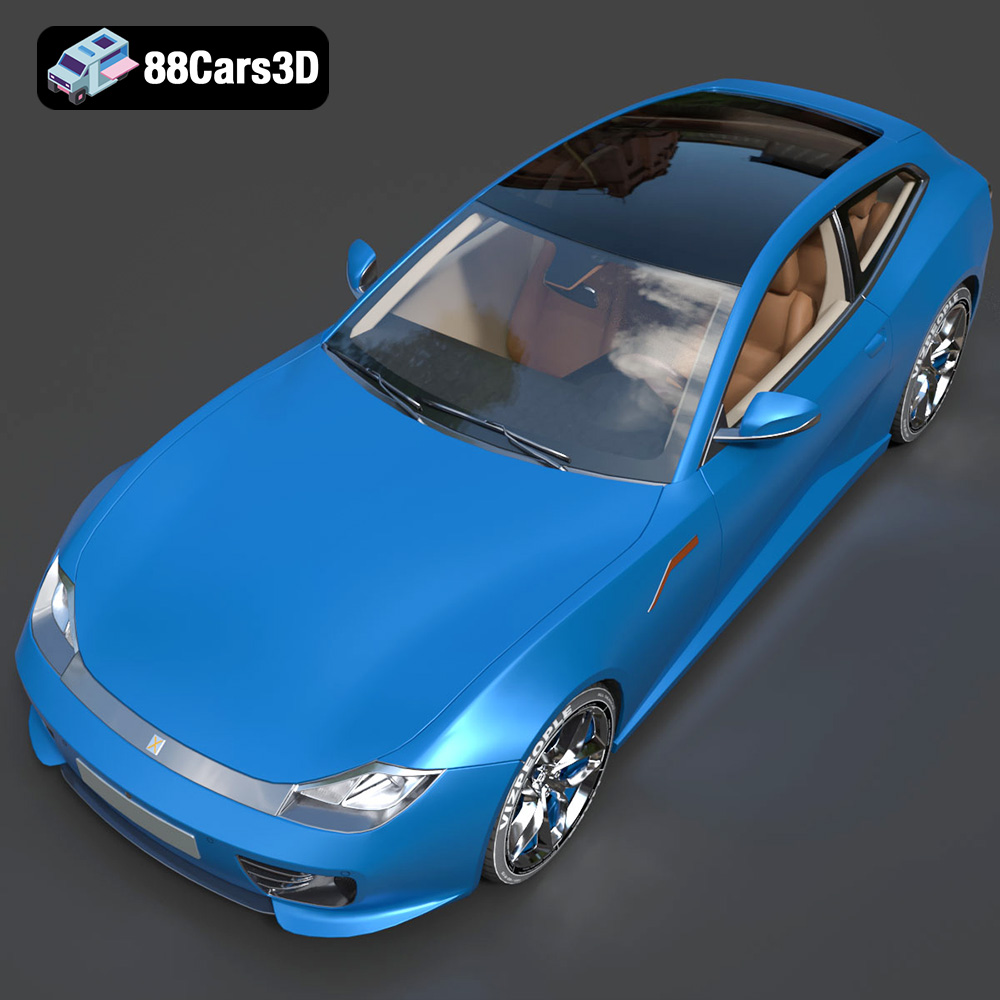
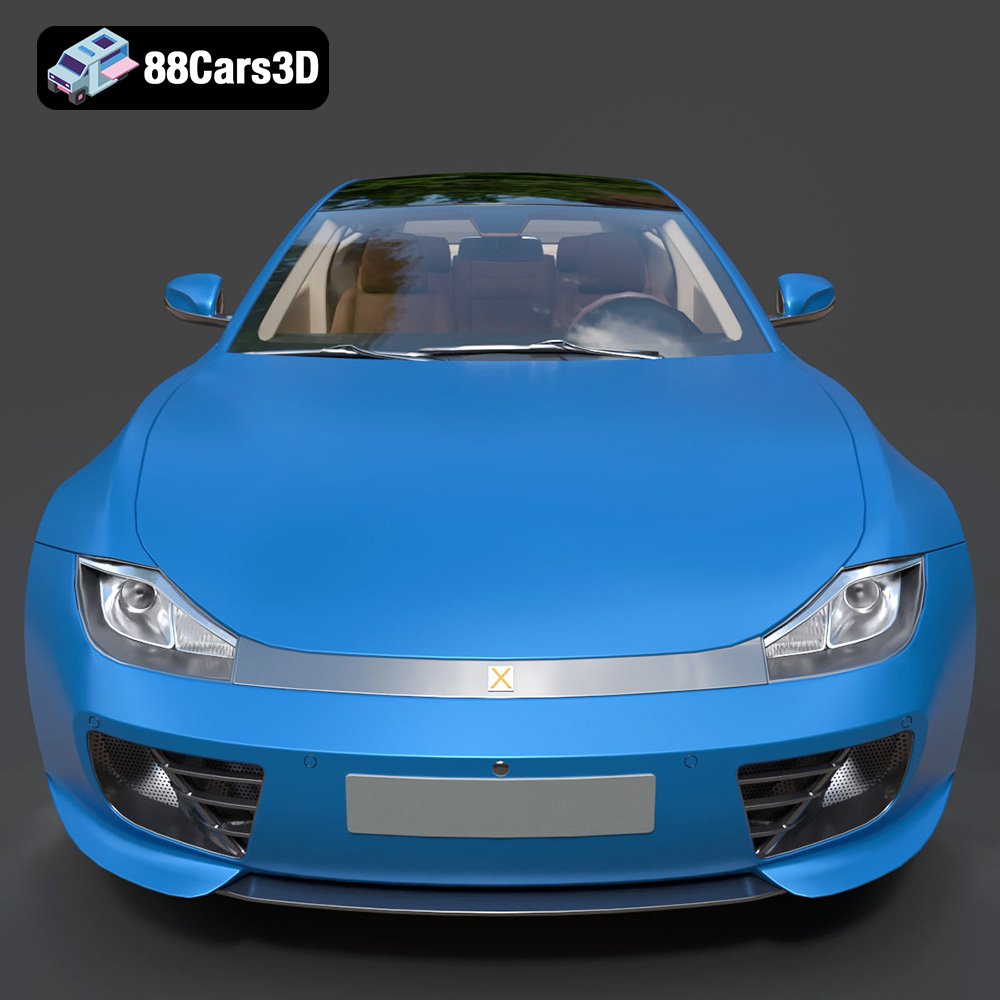
At its heart, the VM T3 031 model represents a classic utilitarian design with iconic proportions. This isn’t merely a rough approximation; it’s a meticulously recreated vehicle that captures the robust characteristics and heritage of timeless transport. Every exterior styling cue has been carefully considered, from the subtle curves of the body paneling to the precise alignment of the windows and doors. The commitment to realism extends to finer details often overlooked in lesser models, such as a highly detailed undercarriage, complete with suspension components, axle geometry, and brake systems. The engine block and mechanical components are accurately represented, as is the realistic exhaust system with its precise piping routes. Furthermore, the lighting setups—including headlights, indicators, and taillights—are designed to mimic their real-world counterparts, crucial for achieving authentic illumination in renders and real-time environments. High-resolution wheel and tire details, featuring accurate tread patterns, ensure that even close-up shots maintain an exceptional level of fidelity. For the interior, authentic seat configurations, a detailed instrument cluster with functional gauges, and accurate control details like pedals and shifters contribute to a fully immersive experience, particularly vital for first-person perspectives in gaming or virtual configurators.
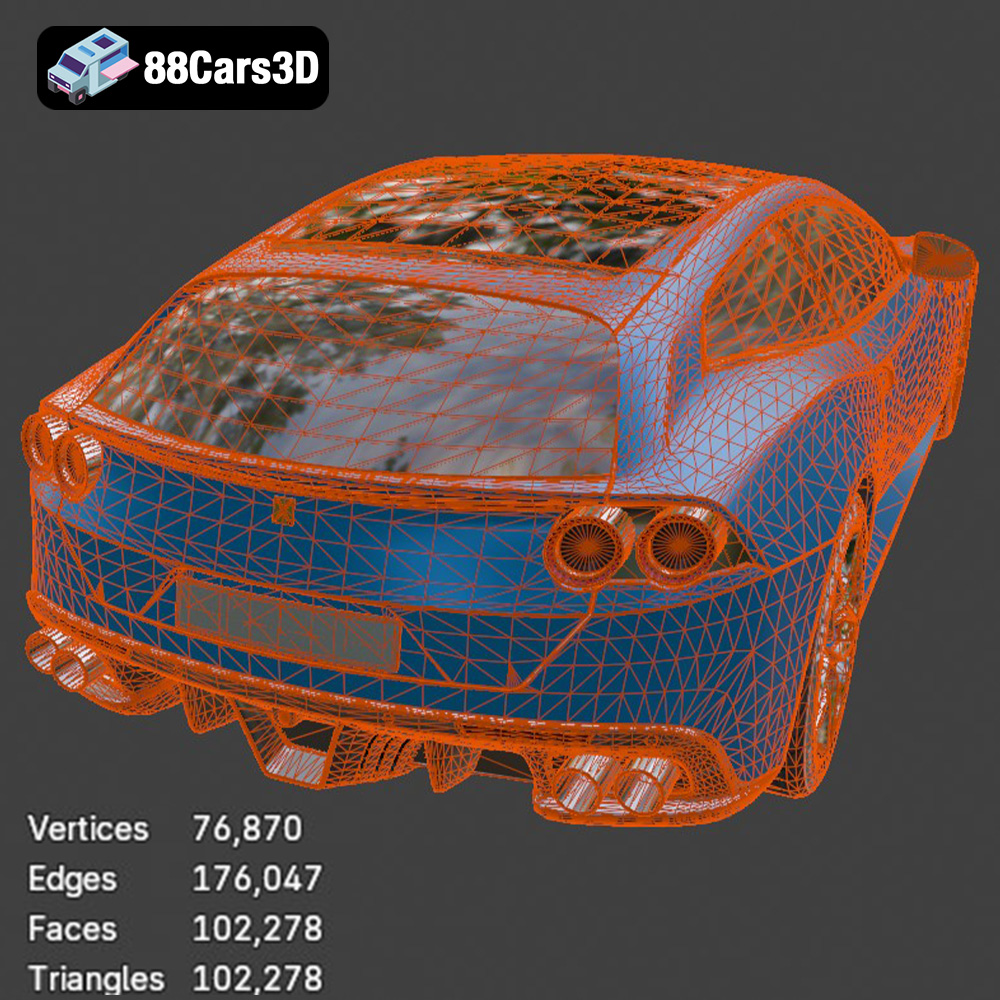
In today’s diverse digital landscape, a stunning model is only truly valuable if it performs efficiently. The VM T3 031 is a testament to this principle, designed with game-ready optimization as a core consideration. With approximately 150,000 triangles, it strikes an optimal balance, delivering stunning visual fidelity without compromising real-time performance. This polycount is perfectly suited for modern game engines like Unreal Engine and Unity, allowing developers to populate vast open-world environments or detailed racing simulations without bogging down frame rates. This careful optimization means less time spent by artists on asset refinement and more time dedicated to creative iteration and project development, directly translating to increased efficiency and faster project completion.
Beyond static beauty, a truly versatile 3D car model offers robust support for animation and interaction. The VM T3 031 excels in this area, featuring separate wheels, suspension, and steering components. This modularity is critical for creating dynamic vehicle animations, enabling realistic wheel rotation, independent suspension travel over uneven terrain, and authentic steering mechanisms. Crucially, the model includes proper pivot setups for these animated parts, eliminating the need for artists to spend valuable time adjusting origins and orientations. This “out-of-the-box” animation readiness makes the VM T3 031 an invaluable asset for racing simulations, cinematic sequences, and interactive experiences where vehicle movement is a central feature.
The ability to integrate a 3D model seamlessly into various software applications and engines is paramount for any professional workflow. This is why understanding the different file formats and their specific use cases is crucial. The VM T3 031 is provided in a comprehensive suite of formats, ensuring maximum compatibility and utility across diverse platforms. Each format serves a unique purpose, catering to different stages of the production pipeline, from initial modeling and texturing to real-time deployment and physical manufacturing.
The .blend format is native to Blender, a powerful open-source 3D creation suite. When a model like the VM T3 031 is provided as a .blend file, it means you’re getting a complete, fully editable scene. This includes the mesh geometry, materials, textures, lighting setups, animation data, and even camera configurations, all preserved within a single file. For users who primarily work in Blender, this is incredibly convenient, allowing direct access to every component of the model for modification, customization, or integration into existing Blender projects. It offers the highest degree of flexibility for artists who wish to delve deep into the model’s construction, adjust its shaders, or repurpose parts for other creations.
.fbx (Filmbox) is a proprietary file format developed by Autodesk, widely recognized as the industry standard for interoperability between 3D software applications. It excels at transferring not just geometry, but also materials, textures, rigging, animation, and even camera data. Its robust nature makes it the go-to format for exporting assets into game engines like Unreal Engine and Unity. For the VM T3 031, the .fbx version is optimized for these real-time environments, ensuring that the model’s hierarchy, pivots, and basic material assignments are correctly translated, making it game-ready upon import. It’s a cornerstone for efficient asset pipelines in game development and real-time visualization.
The .obj (Wavefront OBJ) format is one of the oldest and most universally supported 3D file formats. It’s a simple, text-based format primarily used to exchange 3D geometry data—vertices, normals, texture coordinates, and faces—between various 3D applications. While it doesn’t typically store animation or rigging data, it’s excellent for ensuring broad compatibility. When importing the VM T3 031 as an .obj, you can expect the core mesh to transfer flawlessly into almost any 3D software, often accompanied by a separate .mtl (material template library) file for basic material definitions. This makes it a reliable choice when working with software that may not support more advanced formats.
.glb (GL Transmission Format Binary) is an increasingly vital format, especially in the realms of Augmented Reality (AR), Virtual Reality (VR), and web-based 3D applications. It’s a binary version of the glTF format, designed for efficient transmission and loading of 3D scenes and models. A .glb file encapsulates not only the geometry but also textures, materials, and animations into a single, compact file. This optimization for runtime delivery makes the VM T3 031’s .glb version perfect for embedding in websites, mobile AR experiences, or light VR applications, ensuring fast loading times and smooth interactive performance across different devices and platforms.
The .stl (Stereolithography) format is the de facto standard for 3D printing. It represents a 3D model as a collection of unconnected triangular facets, defining only the surface geometry of an object without color, texture, or other CAD attributes. When considering the VM T3 031 for physical production, the .stl file is what you’d feed into your slicing software. The model’s availability in .stl signifies that it has been prepared with 3D printing in mind, often checked for manifold geometry and potential issues that could arise during manufacturing, making it suitable for display-scale hobbyists or prototyping.
.ply (Polygon File Format, or Stanford Triangle Format) is another format used for storing 3D data, particularly popular in academic and research settings for scanned data or precise mesh representations. Like .obj, it primarily describes geometry, but it can also store additional attributes like color, transparency, and normal vectors for each vertex or face. While less common for general 3D asset exchange than .fbx or .obj, its precision and ability to carry detailed per-vertex data make the VM T3 031’s .ply version valuable for certain scientific, engineering, or CAD analysis workflows where fine mesh details are critical.
The .unreal format (often referring to assets specifically packaged or directly integrated into an Unreal Engine project structure, or a specific export pipeline tailored for Unreal) signifies that the VM T3 031 is truly “engine-ready” for Unreal Engine. This could imply a pre-configured asset with specific material setups, collision meshes, LODs (Levels of Detail), and a proper skeletal hierarchy already optimized for Unreal’s rendering pipeline and tools. Using this format streamlines the import process significantly, allowing developers to drop the asset directly into their project with minimal post-import setup, guaranteeing consistent performance and visual fidelity within the Unreal ecosystem.
Finally, the .max format is the native file type for Autodesk 3ds Max, a leading 3D modeling, animation, rendering, and compositing software. Providing the VM T3 031 as a .max file offers the same level of deep editability and project completeness as the .blend file does for Blender users, but within the 3ds Max environment. This is invaluable for artists and studios that rely on 3ds Max for high-end rendering, complex animation, or detailed architectural visualization. It grants full control over every aspect of the model, from advanced material creation with V-Ray or Corona to sophisticated rigging and animation.
The true measure of a high-quality 3D asset lies in its seamless integration into diverse professional workflows. The VM T3 031 Blue Coupe-Sedan, with its optimized geometry and multi-format availability, is engineered precisely for this purpose. It serves as a versatile foundation, ready to be deployed across game development, architectural visualization, and immersive AR/VR experiences.
For game developers, performance is paramount without sacrificing visual appeal. The VM T3 031’s game-ready optimization, boasting approximately 150,000 triangles, hits that sweet spot perfectly. When working with Unreal Engine or Unity, developers can leverage the included .fbx or .unreal formats. Importing the .fbx file typically involves a straightforward process where the model’s mesh, basic materials, and skeletal hierarchy are brought into the engine. From there, artists can set up PBR (Physically Based Rendering) materials using texture maps, generate LODs (Levels of Detail) for efficient rendering at varying distances, and create custom collision meshes to ensure realistic physics interactions. The VM T3 031’s detailed interior is particularly beneficial for titles that feature first-person perspectives or require players to enter vehicles, enhancing immersion in open-world games, racing simulations, or military scenarios. Its separate, pivot-ready components for wheels, suspension, and steering facilitate easy rigging for drivable vehicles, saving countless hours of manual setup.
In the realm of automotive rendering and architectural visualization, the demand is for photorealism and artistic flexibility. Here, the .max or .blend files for the VM T3 031 are invaluable. Artists working in 3ds Max or Blender can import the respective native files and immediately begin working with the model’s full scene data, including its detailed geometry, material slots, and potentially even initial lighting setups. This allows for the creation of stunning high-resolution renders, suitable for marketing campaigns, product showcases, or lifestyle scenes. Imagine placing this classic coupe-sedan in a meticulously designed urban streetscape or a serene countryside setting, leveraging advanced rendering engines like V-Ray, Corona, or Cycles. The model’s real-world scale accuracy ensures it fits perfectly within architectural contexts, while its detailed components—from the engine block to the exhaust system—can be highlighted in close-up beauty shots, showcasing the quality and craftsmanship that 88cars3d.com provides.
The burgeoning fields of Augmented Reality, Virtual Reality, and web-based 3D experiences require models that are not only visually rich but also exceptionally optimized for real-time, often mobile, performance. The VM T3 031’s inclusion of the .glb format makes it perfectly suited for these applications. The .glb format packages geometry, materials, and textures into a single, compact file, designed for efficient loading and rendering across various devices and browsers. This enables the creation of immersive virtual showrooms where customers can explore the VM T3 031 from every angle, interactive configurators allowing users to customize its color and finishes in real-time, or engaging mobile AR experiences where the vehicle appears to materialize in the user’s physical environment. The optimized geometry ensures smooth frame rates even on less powerful hardware, delivering a seamless and captivating user experience.
A truly adaptable 3D car model provides more than just a static representation; it offers a canvas for boundless creativity and application. The VM T3 031 Blue Coupe-Sedan is designed with customization at its core, enabling artists and developers to tailor its appearance and integrate it into advanced, even niche, projects.
The ability to easily modify visual attributes is crucial for adapting a 3D asset to specific project requirements, brand guidelines, or artistic visions. The VM T3 031 offers extensive customization options, giving users complete control over its aesthetic. You can readily change body colors, experimenting with authentic factory hues, vibrant custom finishes, or even unique metallic paints to match a particular mood or brand identity. Furthermore, artists can modify tire textures, opting for robust off-road variants for a rugged appeal or sleek street-specific patterns for urban environments. Adjusting material finishes—from a classic matte look to a high-gloss sheen or a sophisticated metallic effect—allows for subtle yet significant changes in character. The model also allows for adaptation of lighting, enabling designers to match the vehicle’s illumination to different environments, whether it’s a sunny outdoor scene or a dramatic studio setup. These options empower artists to transform the VM T3 031 into a unique component of their digital narrative without the need for extensive re-modeling.
The journey of a 3D model can extend beyond the screen into the physical world through 3D printing. The VM T3 031, provided in the standard .stl format, is meticulously prepared for this transition, making it an excellent asset for hobbyists, collectors, or even designers creating physical prototypes. To ensure a successful print, specific settings are recommended. A scale of 1:12, 1:18, or 1:24 is suggested to capture the fine details while maintaining a manageable size. For optimal fidelity, especially for intricate components like the engine block or exhaust system, a layer height between 0.04–0.12 mm is recommended, with resin printing often preferred for its ability to produce smoother surfaces and sharper details. Wall thickness should ideally be between 1.2–2.0 mm for structural integrity. An infill of 20–30% provides a good balance of strength and material efficiency. Critically, supports will be required for detailed parts like the exhaust system, mirrors, and various undercarriage components to prevent sagging during printing. The recommended print orientation, such as printing the frame angled, is vital for structural integrity. Post-processing, including sanding, priming, and painting with authentic factory colors or metallic finishes, can further enhance the physical model, transforming a digital asset into a tangible display piece or a valuable prototype.
In the fast-paced world of digital content creation, the decision to purchase pre-made 3D assets is often a strategic one, balancing quality, cost, and time efficiency. Opting for premium 3D car models, such as the VM T3 031 available on 88cars3d.com, offers distinct advantages that can significantly impact project success.
The creation of a high-quality, game-ready 3D car model from scratch is an incredibly resource-intensive endeavor. It demands hundreds of hours from skilled 3D artists, encompassing modeling, UV unwrapping, texturing, rigging, and optimization. This translates directly into substantial financial costs and extended project timelines. By acquiring a meticulously crafted asset like the VM T3 031, studios and independent developers can bypass this arduous process entirely. The immediate availability of a production-ready model allows teams to allocate their valuable time and budget to other critical aspects of development, accelerating project completion and reducing overall expenditures. This efficiency is particularly vital for smaller studios or individual artists working with tight deadlines and limited resources, making high-end 3D car models accessible to a broader audience.
When purchasing a 3D model from a reputable marketplace like 88cars3d.com, you are investing in a product that meets professional industry standards. The VM T3 031 exemplifies this commitment to quality, featuring meticulously recreated details, game-ready optimization, and real-world scale accuracy. Such assets are typically created by experienced artists who adhere to best practices in mesh topology, material setup, and asset organization. This ensures not only visual fidelity but also technical robustness, meaning fewer headaches related to faulty geometry, incorrect scaling, or problematic materials upon import. The consistency in quality across a curated library of assets allows developers to maintain a cohesive visual style throughout their projects, enhancing the overall professionalism of their work.
The true mark of a valuable asset is its adaptability. The VM T3 031 is engineered for extraordinary versatility, making it suitable for a wide array of professional applications. Its optimized polycount and comprehensive file format support ensure seamless integration into game development pipelines, whether for open-world environments, racing titles, or simulations. For automotive rendering and architectural visualization, its detailed geometry and realistic material potential make it perfect for brand campaigns, lifestyle scenes, and high-fidelity studio renders. Furthermore, its lightweight .glb format unlocks possibilities for immersive AR/VR experiences, virtual showrooms, and interactive web-based configurators. The ability to convert to .stl for 3D printing even extends its utility into physical product visualization and hobbyist endeavors. This multi-faceted utility means a single investment can serve numerous purposes, maximizing its return on investment across different projects and industries.
In the relentless pursuit of digital excellence, high-quality 3D car models stand as foundational assets, capable of transforming a concept into a captivating reality. The VM T3 031 Blue Coupe-Sedan is a prime example of such an asset, meticulously designed and optimized to meet the diverse demands of modern creative pipelines. From its authentic exterior and interior details to its game-ready topology and comprehensive file format support, it offers an unparalleled blend of visual fidelity and technical performance. Whether you are building an immersive game world, crafting a photorealistic architectural visualization, developing an interactive AR experience, or even preparing a model for 3D printing, the VM T3 031 provides a robust, versatile, and high-quality solution.
Leveraging assets like this from trusted sources such as 88cars3d.com empowers artists and developers to streamline their workflows, save valuable time and resources, and consistently deliver professional-grade results. Investing in a premium 3D car model isn’t just about acquiring an object; it’s about unlocking creative potential and accelerating your journey toward crafting truly remarkable digital experiences.
The VM T3 031 represents a classic utilitarian design with iconic proportions, bringing a highly authentic and versatile vehicle presence to any digital environment. Featuring meticulously recreated exterior styling cues, a detailed undercarriage, and realistic lighting fixtures, this model captures the robust characteristics and heritage of timeless transport vehicles. Designed with game-ready optimization in mind, the 3D model boasts an efficient topology of approximately 150,000 triangles, delivering stunning visual fidelity without compromising real-time performance. It is perfectly suited for modern game engines, architectural visualizations, and immersive digital experiences.
$19.99
.blend
.fbx
.glb
.max
.obj
.ply
.rendering
.stl
.unreal
Blue Coupe-Sedan
car-3d-model
game asset
game-ready
low-poly
optimized
vehicle model
VR/AR