Get 20% OFF All Premium 3D & STL Models!

In the rapidly evolving digital landscape of game development, architectural visualization, AR/VR experiences, and high-fidelity rendering, the demand for exceptionally crafted 3D assets has never been higher. Automotive models, in particular, stand as a cornerstone of realism and immersion, often serving as the central focus of a scene or the primary vehicle for interaction. Creating these assets demands a blend of artistic vision and rigorous technical precision, from accurate historical detail to optimized polygon counts and meticulous material setup.
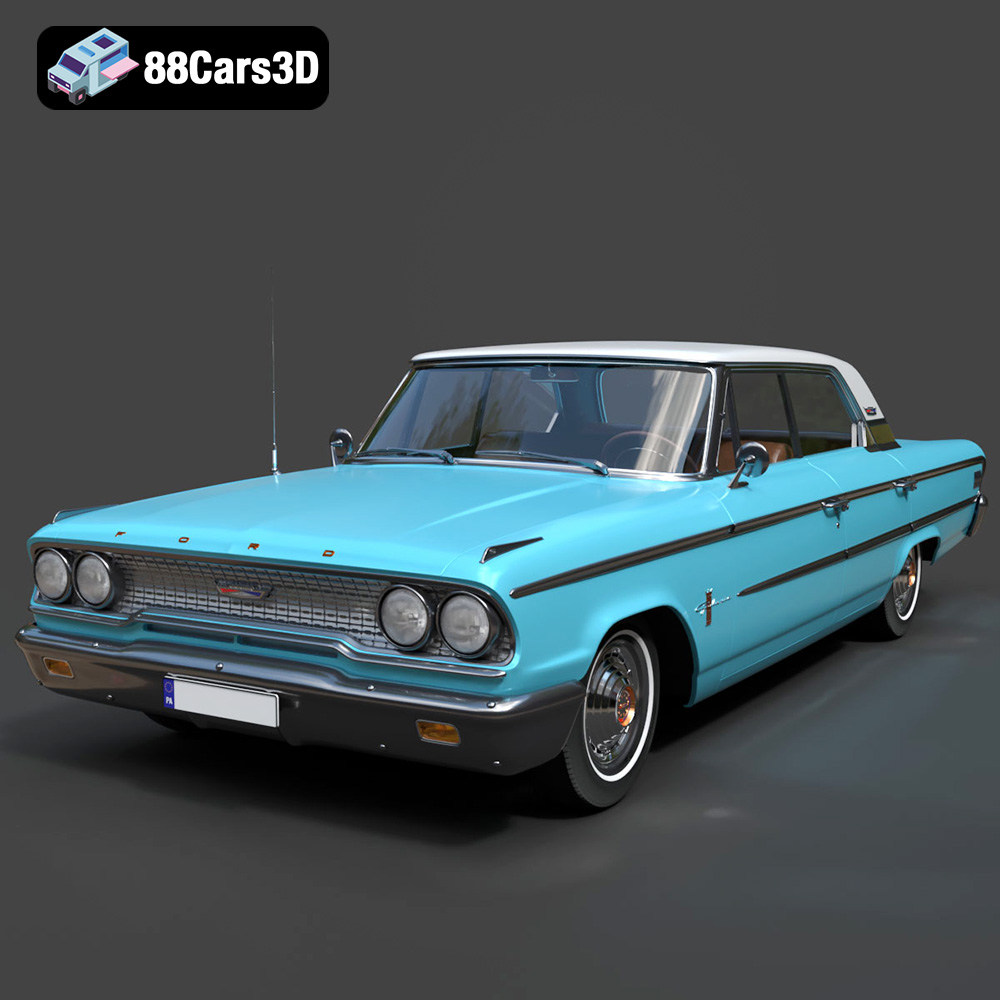
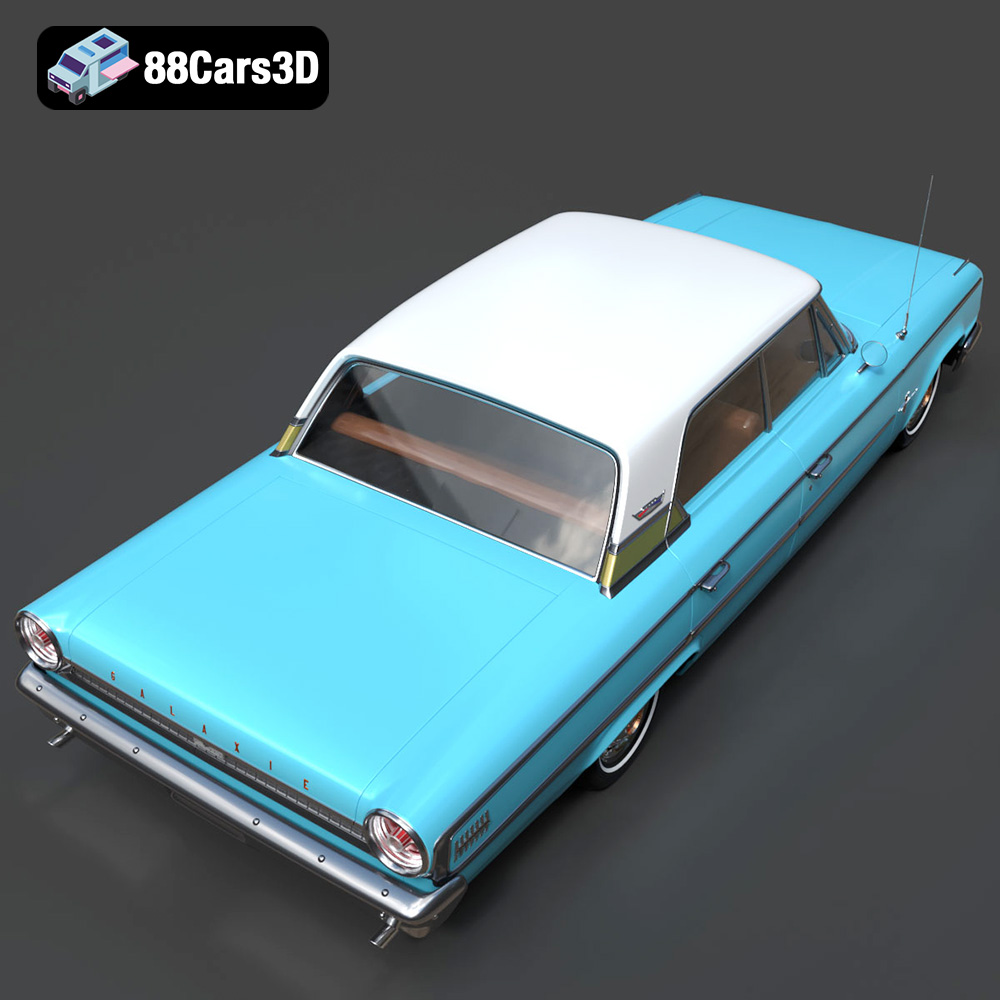
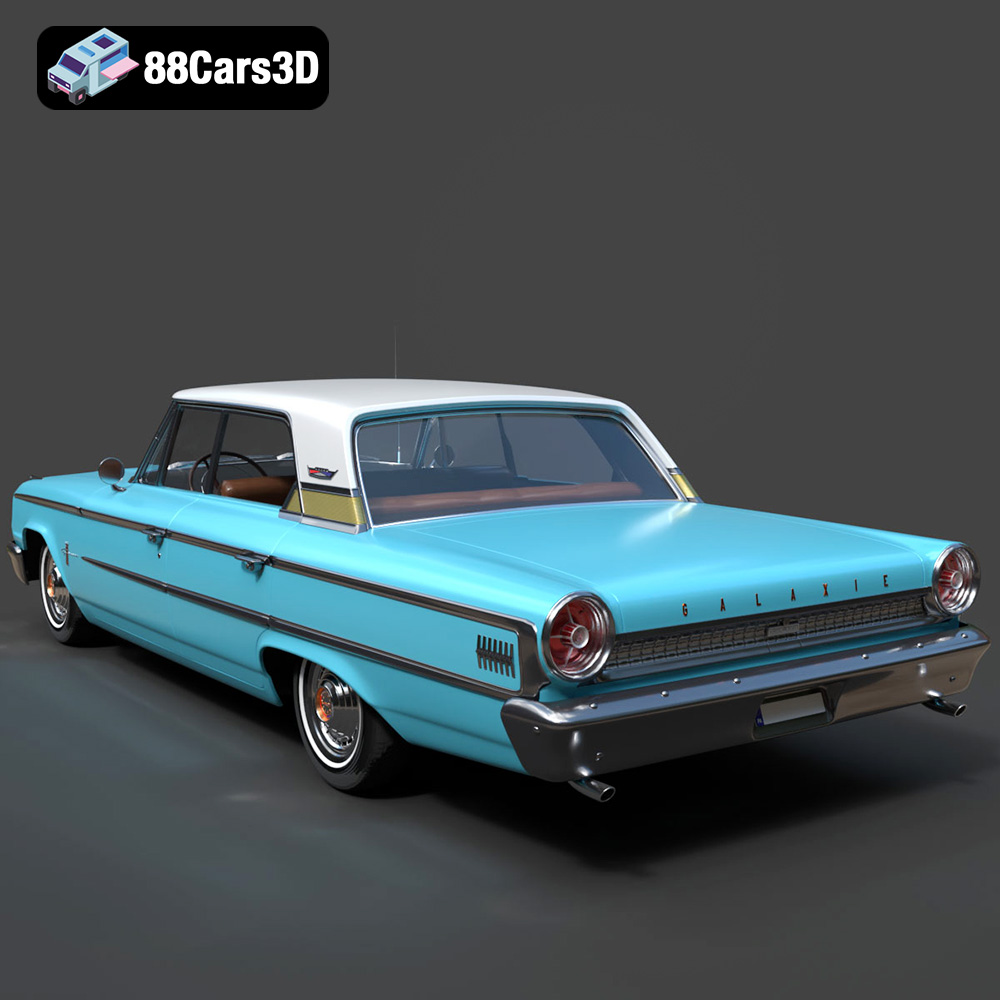
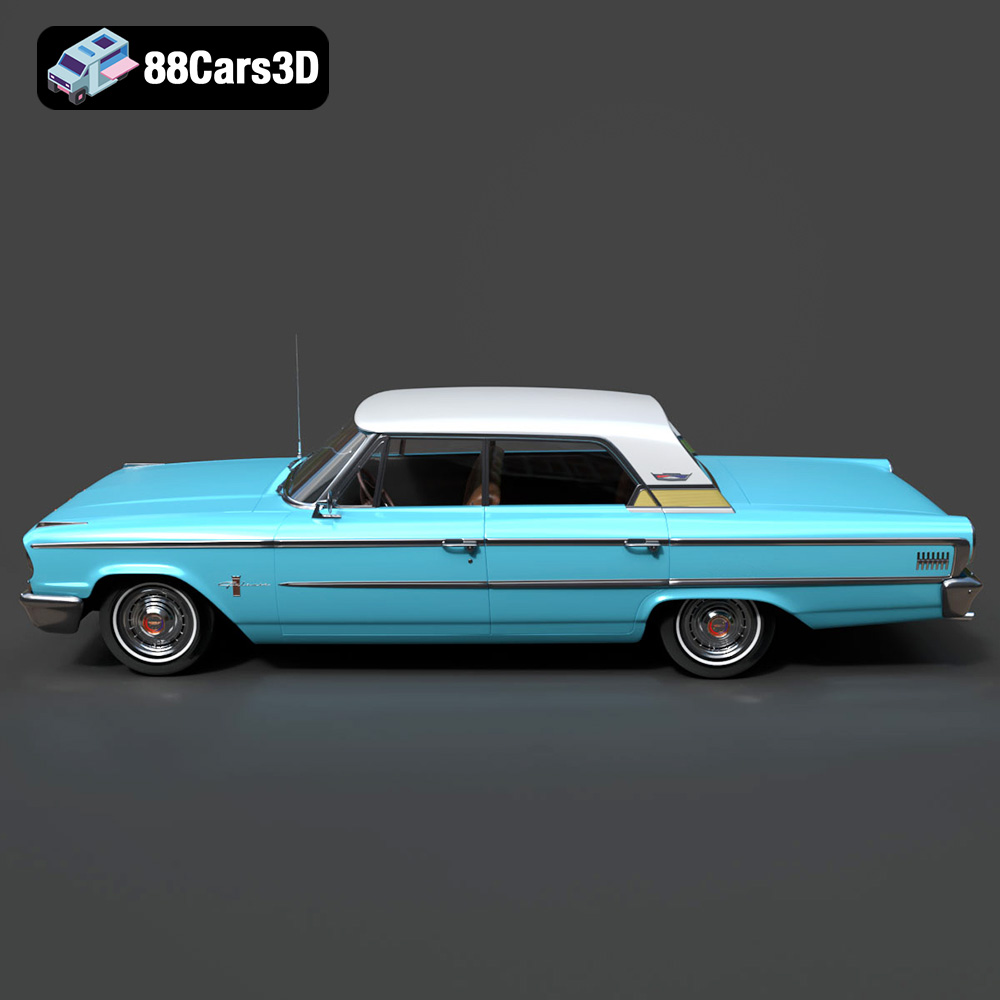
At 88cars3d.com, we understand this intricate balance. Our curated selection of professional-grade 3D car models is designed to meet the exacting standards of today’s digital creators. Take, for instance, the remarkable Ford Galaxie 500 Hardtop 1963 3D Model. This asset is more than just a digital representation; it’s a meticulously engineered piece of digital artistry, embodying the jet-age styling and raw power that defined an era. Its inclusion in your project isn’t merely about adding a vehicle; it’s about injecting authenticity and character, whether it’s navigating the virtual streets of a racing simulator or gracing a period-accurate visualization. This model exemplifies the level of detail and optimization that professional studios and independent creators alike seek for their most ambitious projects.
The choice of file format for a 3D model is a critical decision, dictating everything from software compatibility and ease of editing to real-time performance and application suitability. A single, high-quality 3D car model, such as the Ford Galaxie 500 Hardtop 1963 3D Model, is often provided in multiple formats to ensure maximum utility across diverse professional workflows. Understanding these formats is key to leveraging your assets effectively.
The .blend format is the native file type for Blender, the powerful open-source 3D creation suite. When you receive a model in .blend format, it typically means a fully editable Blender scene, complete with materials, textures packed or linked, lighting setups, and even animation rigs if present. For artists working primarily in Blender, this format offers the most flexibility for customization, material tweaks, scene integration, and direct rendering within Blender’s Cycles or Eevee engines. It’s the go-to for deep modification and integration into Blender-centric pipelines, allowing access to modifiers, node-based materials, and any specific Blender-only features used in its creation.
.fbx (Filmbox) is arguably the most widely adopted proprietary 3D interchange format, especially for animation and game development. Developed by Autodesk, it’s ideal for transferring 3D data between different software applications like Maya, 3ds Max, Cinema 4D, and most importantly, game engines like Unreal Engine and Unity. An .fbx file can encapsulate a vast amount of data beyond just geometry, including meshes, materials (often as basic properties that need re-linking in the destination software), textures, animations, bones, and even camera and light data. Its robust support for skeletal animations makes it indispensable for character and vehicle rigging in real-time pipelines. For the Galaxie 500, an .fbx would be perfect for importing directly into Unreal, retaining pivots for wheels and steering, and potentially even basic material assignments.
The .obj (Wavefront OBJ) format is a venerable and universally compatible standard for exchanging 3D geometry. While it’s older and doesn’t support animation or rigging, it excels at storing mesh data (vertices, normals, UV coordinates) and can reference external material (.mtl) files for basic color and texture information. Its simplicity ensures nearly every 3D software can import and export it, making it excellent for cross-software compatibility. If you need to bring the Galaxie 500 into a less common application or simply require clean geometry for a fresh start with materials, .obj is a reliable choice.
.glb (GL Transmission Format Binary) is an increasingly important format, particularly for modern web applications, AR/VR, and mobile experiences. It’s the binary version of glTF (GL Transmission Format), designed to be an efficient, compact, and “runtime-ready” format for 3D scenes and models. A .glb file packages everything into a single file: geometry, materials, textures, animations, and even scene hierarchy. This self-contained nature and optimization for quick loading make it perfect for displaying the Galaxie 500 in a browser-based configurator, an AR app on a smartphone, or within lightweight VR environments without complex external dependencies.
.stl (Stereolithography) is the de facto standard file format for 3D printing. It represents a 3D model as a collection of unconnected triangles, defining only the surface geometry without color, texture, or material information. While not suitable for rendering or animation, it’s essential for manufacturing. If you intend to 3D print a physical replica of the Ford Galaxie 500 Hardtop 1963 3D Model, the .stl version provides the necessary tessellated mesh for slicer software to prepare for printing, adhering to parameters like scale, layer height, and support structures.
.ply (Polygon File Format or Stanford Triangle Format) is a versatile format for storing 3D data, particularly known for its ability to store properties beyond just geometry, such as color, transparency, texture coordinates, and even confidence values. It’s often used in scientific applications, 3D scanning, and CAD/CAM for capturing and analyzing precise mesh data. While less common for general game or rendering pipelines, it provides a robust option for specific engineering or analytical tasks involving the Galaxie 500’s detailed structure.
While not a universal file extension in the same vein as .fbx, the inclusion of a proprietary .unreal or “Unreal-ready” asset typically signifies that the model has been specifically prepared and exported for optimal performance and integration within Unreal Engine. This often means the .fbx has been processed, materials have been set up in Unreal’s shader graph, textures are correctly linked, and collision meshes, LODs (Levels of Detail), and appropriate pivots are configured. For a model like the Galaxie 500, an “Unreal-ready” asset significantly reduces import and setup time, offering a drag-and-drop solution for developers.
Finally, the .max format is the native file type for Autodesk 3ds Max, a leading software for 3D modeling, animation, and rendering. Like .blend for Blender, a .max file offers a fully editable project, including all scene data: geometry, materials, textures, lighting, cameras, animation, and scene organization. For professionals using 3ds Max, this format provides the highest degree of control for further modification, re-texturing, rigging, or integrating into existing 3ds Max scenes, allowing direct access to all creation parameters used by the original artist.
Developing high-performance 3D car models for interactive applications like video games and real-time simulations is a specialized skill. It’s not enough to simply create a visually stunning model; it must also perform efficiently within strict engine budgets. The Ford Galaxie 500 Hardtop 1963 3D Model from 88cars3d.com is a prime example of an asset built with this philosophy in mind.
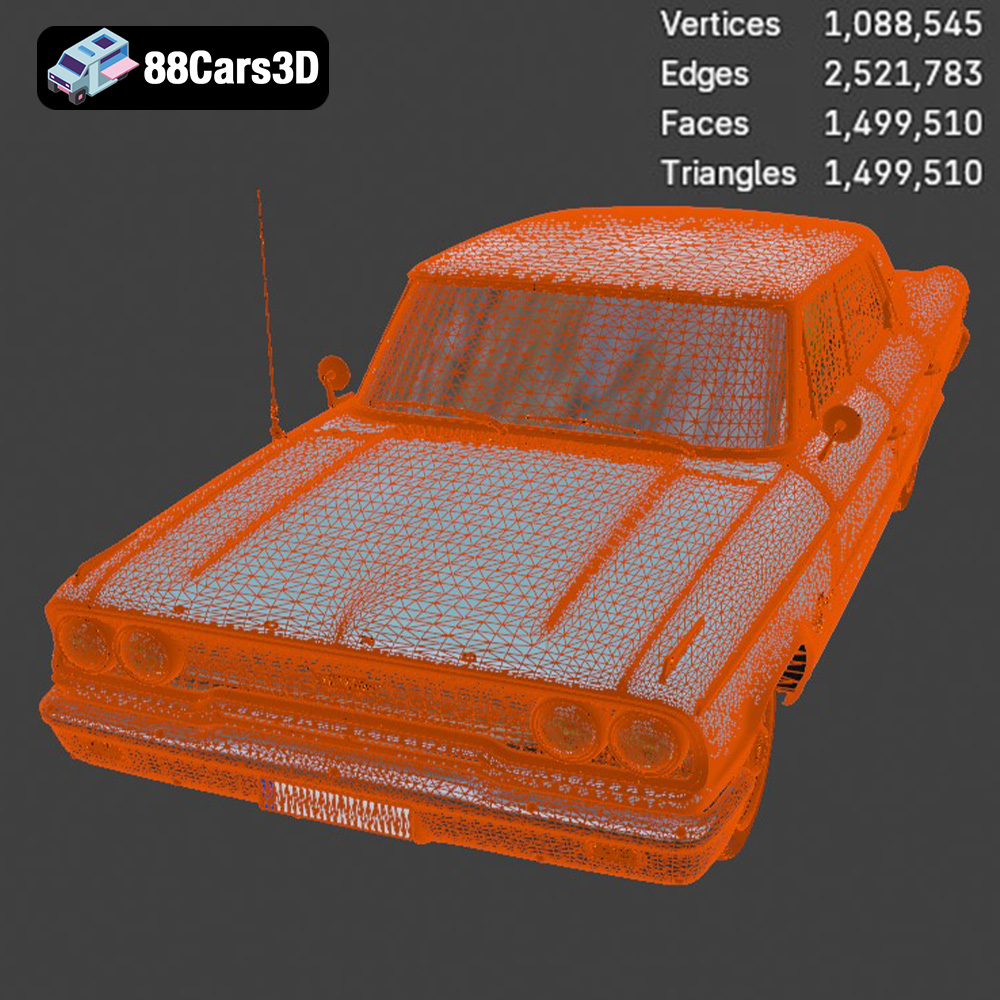
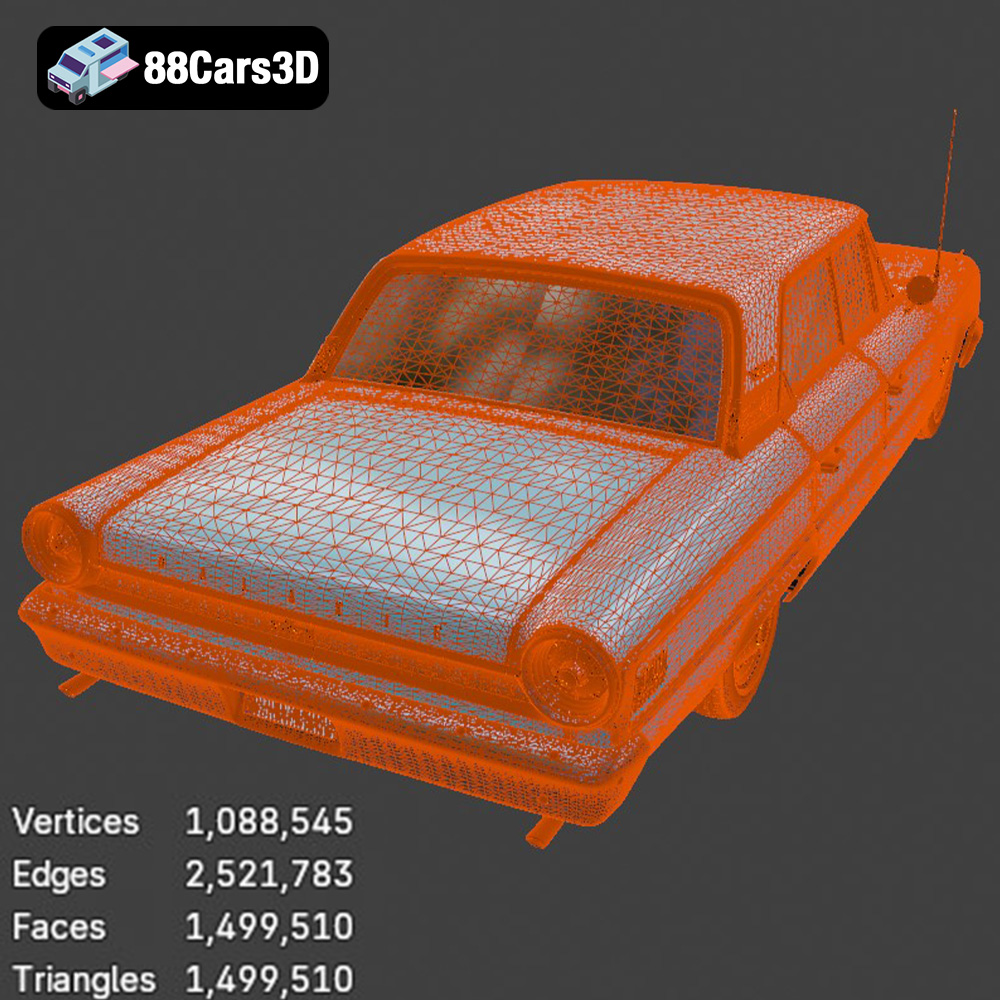
The foundation of a game-ready asset lies in its topology. The Galaxie 500 model boasts an optimized ~150,000 triangle count. This “sweet spot” ensures that the model looks incredibly detailed up close without bogging down the rendering pipeline of real-time engines like Unreal or Unity. Achieving this involves a careful balance: using enough polygons to capture the iconic curves and sharp lines of the 1963 Galaxie, but avoiding unnecessary density in flat areas. This is often accomplished through manual mesh optimization, efficient subdivision modeling, and the strategic use of normal maps to bake in fine details from higher-resolution meshes without adding actual geometry.
Once the geometry is solid, the materials and textures breathe life into the model. For a classic car like the Galaxie 500, authenticity is key. This involves PBR (Physically Based Rendering) workflows, where material properties like albedo (base color), roughness, metallic, and normal maps are meticulously crafted to simulate real-world surfaces. The product description highlights the “expansive metal surfaces,” suggesting a sophisticated PBR setup that reacts realistically to different lighting environments. This ensures the car’s paint, chrome, glass, and interior fabrics all look genuine, whether it’s under harsh sunlight or the soft glow of a virtual garage.
For any interactive automotive experience, the ability to animate a vehicle realistically is crucial. The Ford Galaxie 500 Hardtop 1963 3D Model comes with proper pivot setups for steering, wheel rotation, and suspension travel. This means that once imported into a game engine, developers don’t have to spend valuable time manually configuring these essential animation points. The separate wheels, suspension, and steering components facilitate easy rigging for:
Beyond game engines, high-quality 3D car models are indispensable for pre-rendered cinematics, marketing campaigns, and product visualization. The Ford Galaxie 500 Hardtop 1963 3D Model provides a robust foundation for stunning visual fidelity in these contexts.
For static renders or animated sequences, 3ds Max and Blender offer powerful rendering capabilities that can leverage the Galaxie 500’s detailed geometry and PBR materials. In 3ds Max, artists might use V-Ray or Corona Renderer to achieve photorealistic results. This involves setting up complex studio lighting, often with HDRI (High Dynamic Range Imaging) environments and strategically placed area lights to highlight the car’s contours and metallic sheen. The .max file format provides direct access to the model within its native environment, allowing seamless integration with advanced renderers.
Similarly, in Blender, Cycles is a highly capable production renderer. Artists can import the .blend file, which should already contain optimized materials, and then focus on lighting, camera angles, and depth of field to create captivating visuals. The clean geometry of the Galaxie 500 ensures that complex ray tracing calculations result in smooth reflections and accurate refractions through glass components.
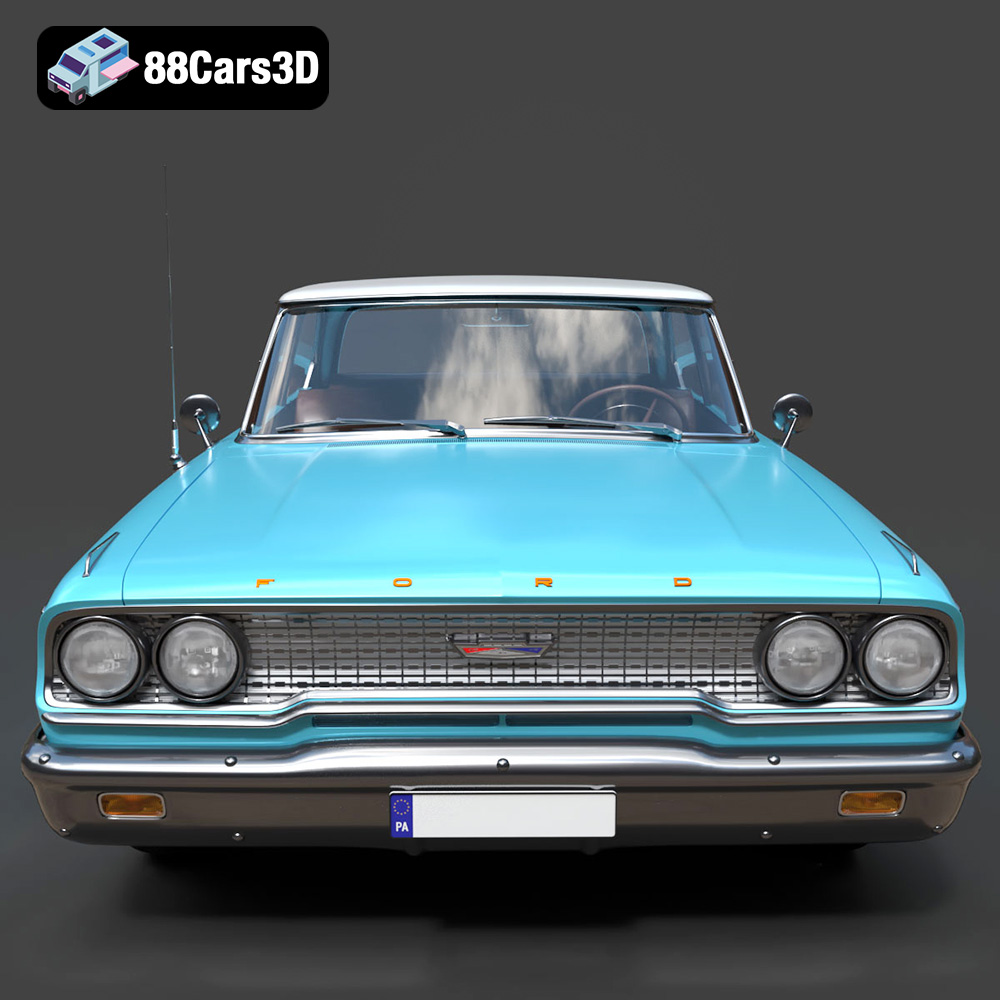
Automotive manufacturers and enthusiasts often require compelling visuals for marketing. The Galaxie 500 model is perfect for creating bespoke brand campaigns or incorporating into larger lifestyle scenes. Imagine the car parked against a retro diner, cruising down a scenic highway, or showcased in a futuristic virtual showroom. Its period-accurate details, from the iconic dual-headlight grille to the signature afterburner taillights, lend instant credibility to any historical or nostalgic visualization.
The utility of a high-quality 3D car model extends far beyond traditional screens. Augmented Reality (AR), Virtual Reality (VR), and 3D printing represent exciting new frontiers for digital assets, and the Ford Galaxie 500 Hardtop 1963 3D Model is well-equipped for these emerging applications.
For AR/VR, optimized models are non-negotiable due to the strict performance requirements of real-time rendering on various devices. The Galaxie 500’s ~150,000 triangle count makes it ideal for these platforms, allowing for smooth framerates without sacrificing visual fidelity. In AR, users could place a virtual Galaxie 500 in their driveway, walk around it, and inspect its details as if it were truly there. In VR, it could be the centerpiece of an immersive virtual showroom, allowing potential buyers or enthusiasts to ‘sit inside’ and experience the meticulously crafted interior.
The transition from digital asset to physical object is facilitated by the inclusion of the .stl format. Hobbyists, collectors, and model makers can take the Ford Galaxie 500 Hardtop 1963 3D Model and bring it into existence. The product description provides detailed 3D print settings, which are crucial for success:
The hallmark of a truly professional 3D asset, especially for automotive models, is its ability to deliver both stunning visuals and uncompromised performance. The Ford Galaxie 500 Hardtop 1963 3D Model exemplifies this balance through a combination of thoughtful design and technical prowess.
The stated ~150,000 triangle count is a carefully chosen figure. For high-fidelity games or real-time simulations, this allows for a rich level of detail that holds up even to close-up inspections, such as admiring the authentic vinyl bench seating or the mid-century instrument cluster. At the same time, it remains optimized enough to avoid becoming a performance bottleneck, particularly when multiple vehicles are present in a scene or when rendering on less powerful hardware, such as mobile AR/VR devices. This balance is critical for ensuring a smooth and immersive user experience, preventing frame rate drops and stuttering that can pull users out of the illusion.
Accuracy is paramount for any visualization or simulation. The Galaxie 500 model adheres to real-world scale based on actual vehicle chassis measurements. This isn’t just a detail; it’s a foundational requirement for believable interactions and realistic physics. In a driving simulator, correct scale ensures that the car feels appropriately weighty and handles realistically. In architectural visualization, it guarantees that the car fits naturally within a garage or on a street, without appearing oversized or miniature. This commitment to accuracy extends to all exterior and cockpit features, ensuring every curve, emblem, and dial is a faithful recreation of the 1963 classic.
A professional asset should offer flexibility. The customization options provided with the Galaxie 500 model — changing body colors, modifying tire textures, adjusting material finishes, and adapting lighting — highlight its inherent adaptability. This means designers and developers aren’t stuck with a single look; they can tailor the car to fit specific brand identities, game factions, or visualization requirements. This level of control reduces the need for extensive re-texturing or re-modeling, saving significant time and resources in production.
The market for 3D car models is vast, but discerning creators understand that quality and technical readiness are not universal. When selecting assets for critical projects, whether it’s for a triple-A game, a high-stakes marketing campaign, or a cutting-edge AR/VR application, several factors must be considered.
The first criterion is always quality. Does the model accurately represent the real-world vehicle? Does it capture the nuances of its design, from specific year-model variations to intricate badging and chrome details? The Ford Galaxie 500 Hardtop 1963 3D Model, with its detailed engine block, authentic interior features, and iconic proportions, demonstrates a commitment to capturing the essence of the original. High-resolution textures, clean topology, and realistic material responses are indicators of a superior asset that will hold up under scrutiny.
Beyond visual appeal, technical readiness is paramount, particularly for real-time applications. Look for models explicitly labeled as “game-ready” or “optimized.” This implies careful attention to polycount, efficient UVs, proper pivot points, and ideally, included LODs. The Galaxie 500’s ~150,000 triangle count strikes an excellent balance, making it suitable for direct integration into engines like Unreal and Unity. Assets that come in multiple file formats (like .blend, .fbx, .obj, .glb, .stl, .ply, .unreal, .max) also signal a professional-grade product designed for broad compatibility and ease of use across different pipelines.
Production pipelines are dynamic, and the ability to customize an asset can be a significant advantage. Models that offer options for changing colors, material finishes, or even minor component variations (like white-wall vs. standard tires) provide greater flexibility without requiring artists to start from scratch. This not only saves time but also allows for creative iteration and adaptation to evolving project requirements. The customization features of the Galaxie 500 model ensure it can be tailored to various aesthetic needs.
Finally, sourcing your 3D car models from a reputable marketplace like 88cars3d.com offers peace of mind. A reliable source typically guarantees a certain standard of quality, technical accuracy, and comprehensive file formats, minimizing potential issues down the line. Investing in professionally created assets allows your team to focus on innovation and project execution rather than spending valuable time on asset creation or extensive cleanup.
The journey from concept to a fully realized digital experience is paved with countless technical and creative decisions, none more impactful than the choice of your core assets. High-quality 3D car models are not just digital props; they are integral components that drive immersion, enhance realism, and elevate the overall production value of any project, be it a cutting-edge racing game, a photorealistic architectural visualization, or an interactive AR/VR experience.
The Ford Galaxie 500 Hardtop 1963 3D Model stands as a testament to what’s achievable when artistic detail meets technical excellence. Its optimized geometry, period-accurate features, flexible material options, and comprehensive file format support (.blend, .fbx, .obj, .glb, .stl, .ply, .unreal, .max) make it an invaluable asset for a diverse range of applications. Whether you’re aiming for a game-ready asset that performs flawlessly in real-time or a stunning model for high-end rendering and 3D printing, this Galaxie 500 model delivers on all fronts.
For professionals seeking to infuse their projects with authentic detail and robust performance, exploring the meticulously crafted 3D car models available at 88cars3d.com is a worthwhile endeavor. Investing in assets of this caliber means investing in the quality and efficiency of your creative workflow, ultimately delivering a superior final product that truly resonates with your audience.
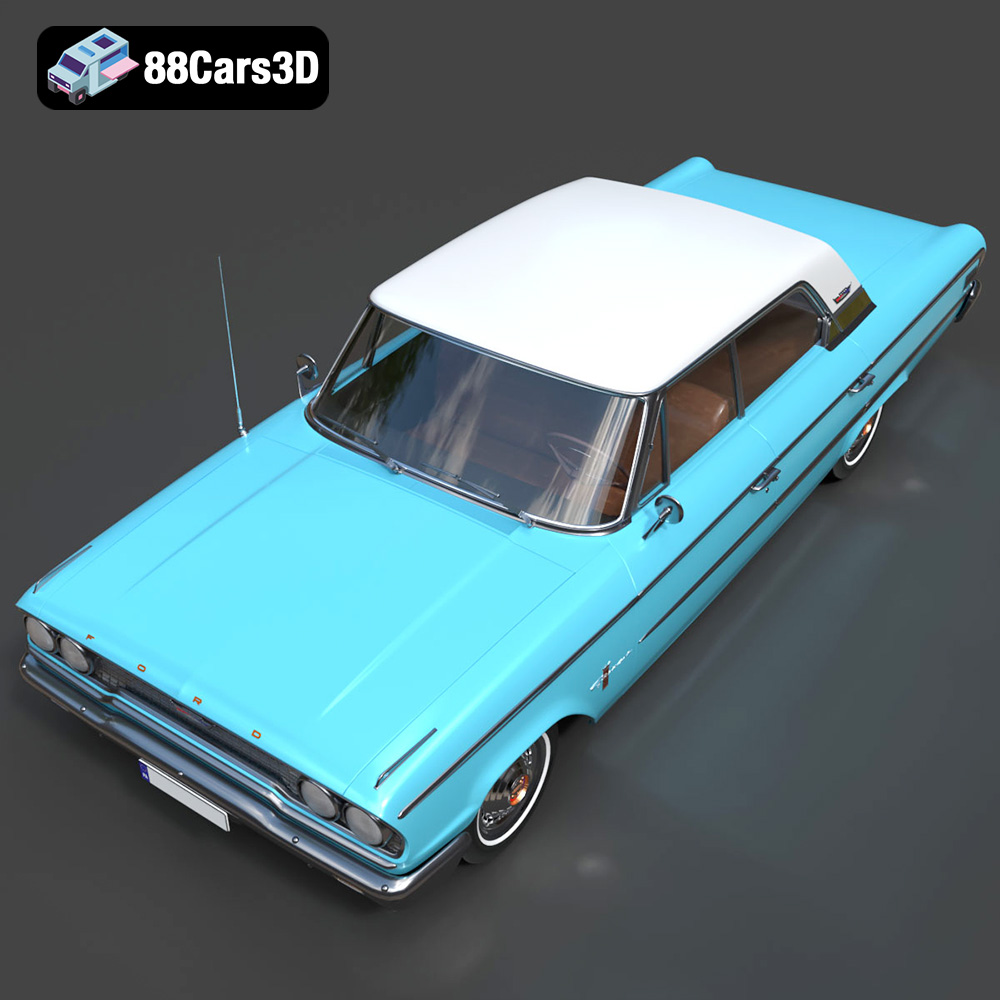
Experience the golden era of American automotive design with this highly detailed 1963 Ford Galaxie 500 Hardtop 3D model. Renowned for its jet-age styling and introduction of the aerodynamic sports hardtop fastback roofline, this classic full-size car dominated both the streets and NASCAR tracks. The model captures the iconic dual-headlight grille, signature afterburner taillights, and sweeping side trim, paired with a meticulously crafted engine bay to reflect its big-block V8 heritage. Constructed with optimized topology and an efficient triangle count, this model is fully game-ready without sacrificing visual fidelity. The clean geometry ensures flawless reflections and realistic lighting responses across its expansive metal surfaces. Whether deployed in a high-octane racing game or a sophisticated virtual showroom, this classic Ford delivers uncompromising quality. Perfect for classic car simulators, period-accurate film visualizations, vintage racing games, and immersive VR experiences.
$19.99
.1963
.blend
.fbx
.ford
.glb
.hardtop
.max
.obj
.ply
.rendering
.stl
.unreal
car-3d-model
classic-car
galaxie-500
game asset
game-ready
low-poly
muscle-car
optimized
vintage-car
VR/AR