Get 20% OFF All Premium 3D & STL Models!

The world of 3D modeling has transformed how we interact with design, engineering, and entertainment. From blockbuster visual effects to immersive gaming experiences and precise architectural visualizations, high-quality 3D assets are the backbone of digital creativity. Automotive 3D modeling, in particular, demands an intricate blend of artistic skill and technical precision to capture the essence of a vehicle, whether it’s a futuristic concept or a cherished classic. This pursuit of digital authenticity allows designers, developers, and enthusiasts to explore vehicles in unprecedented detail, driving innovation and preserving history.
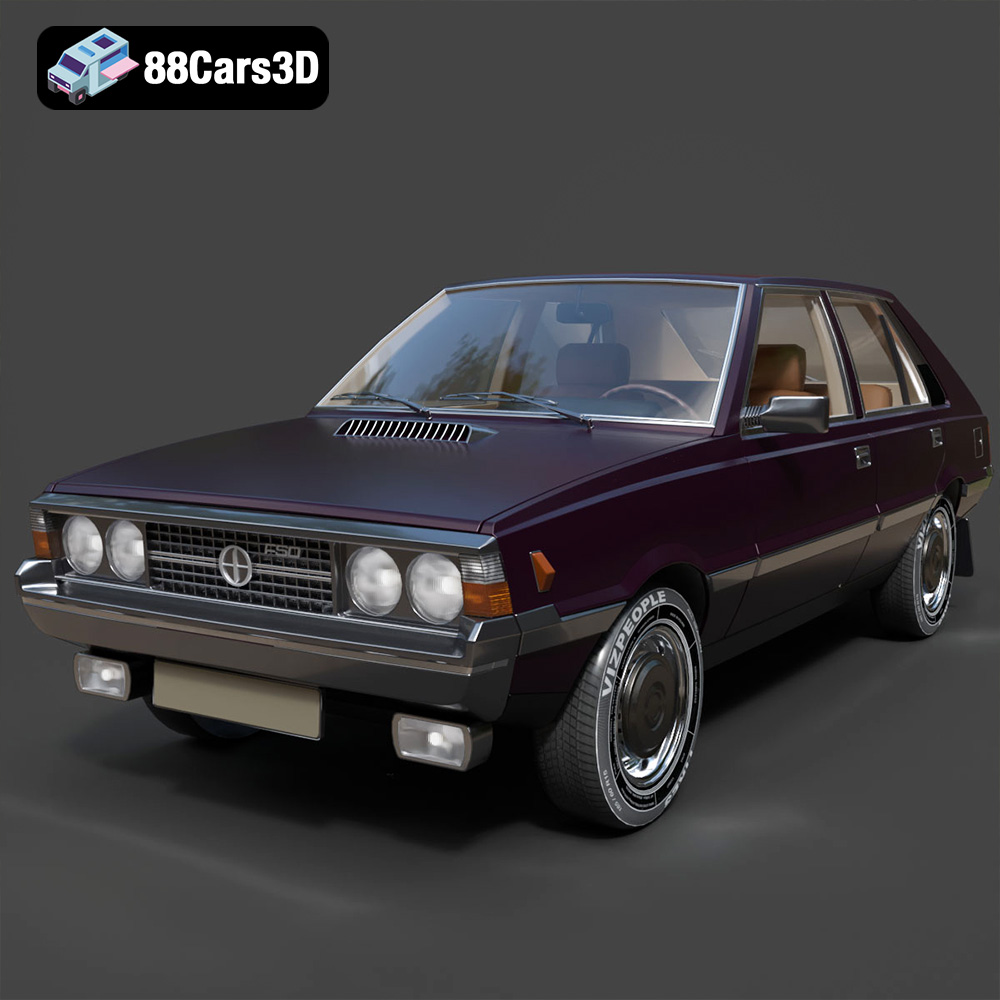
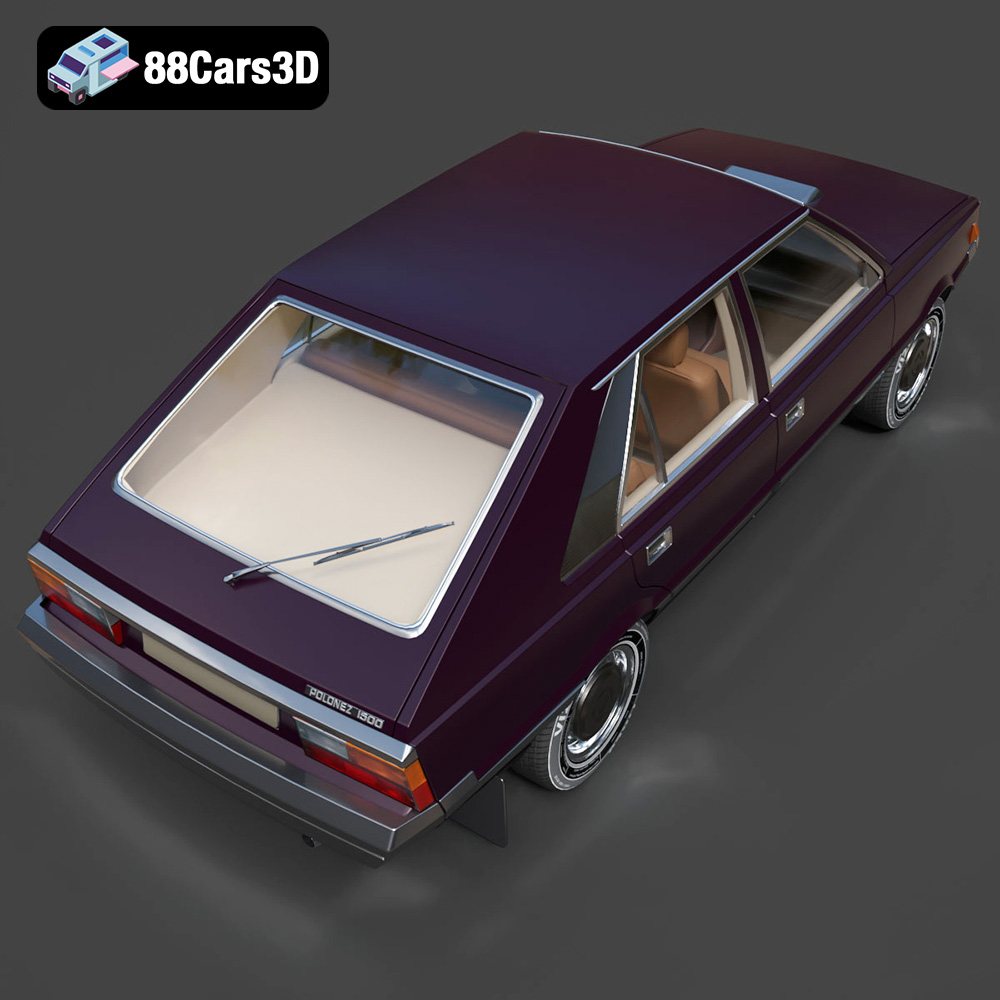
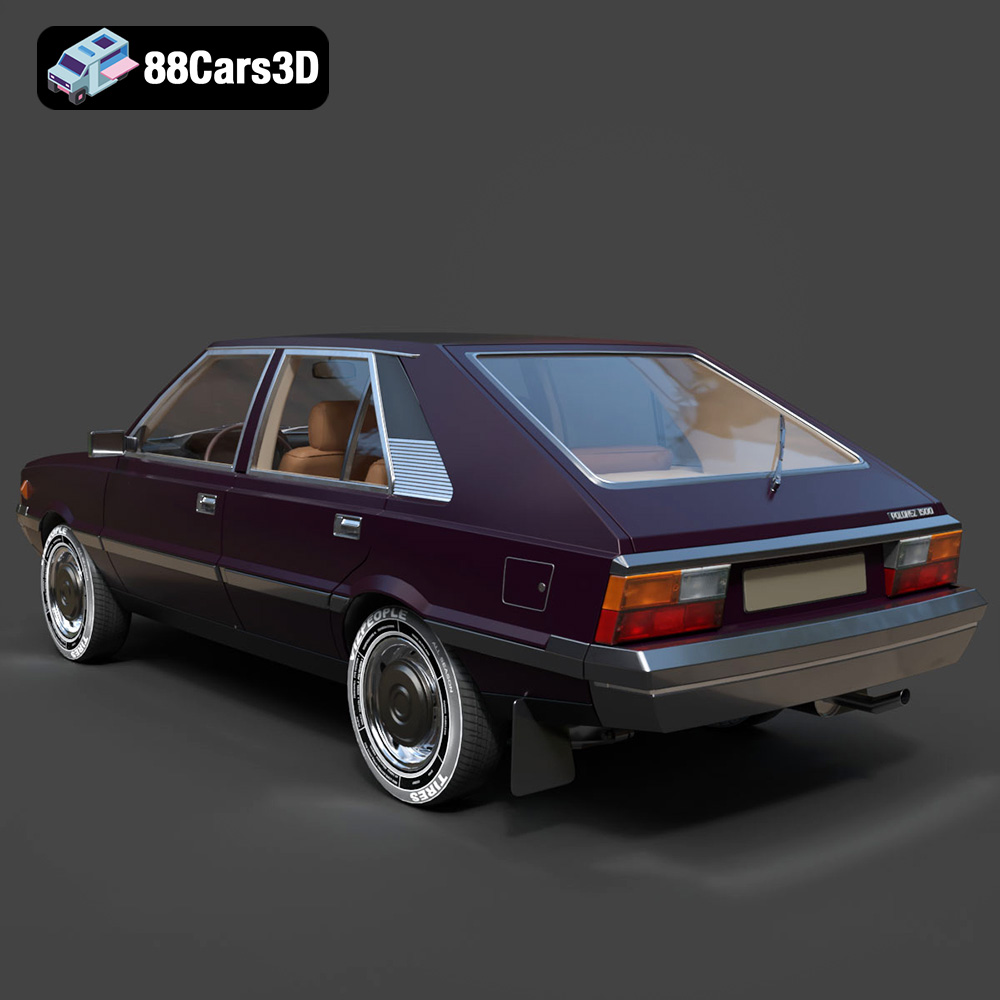
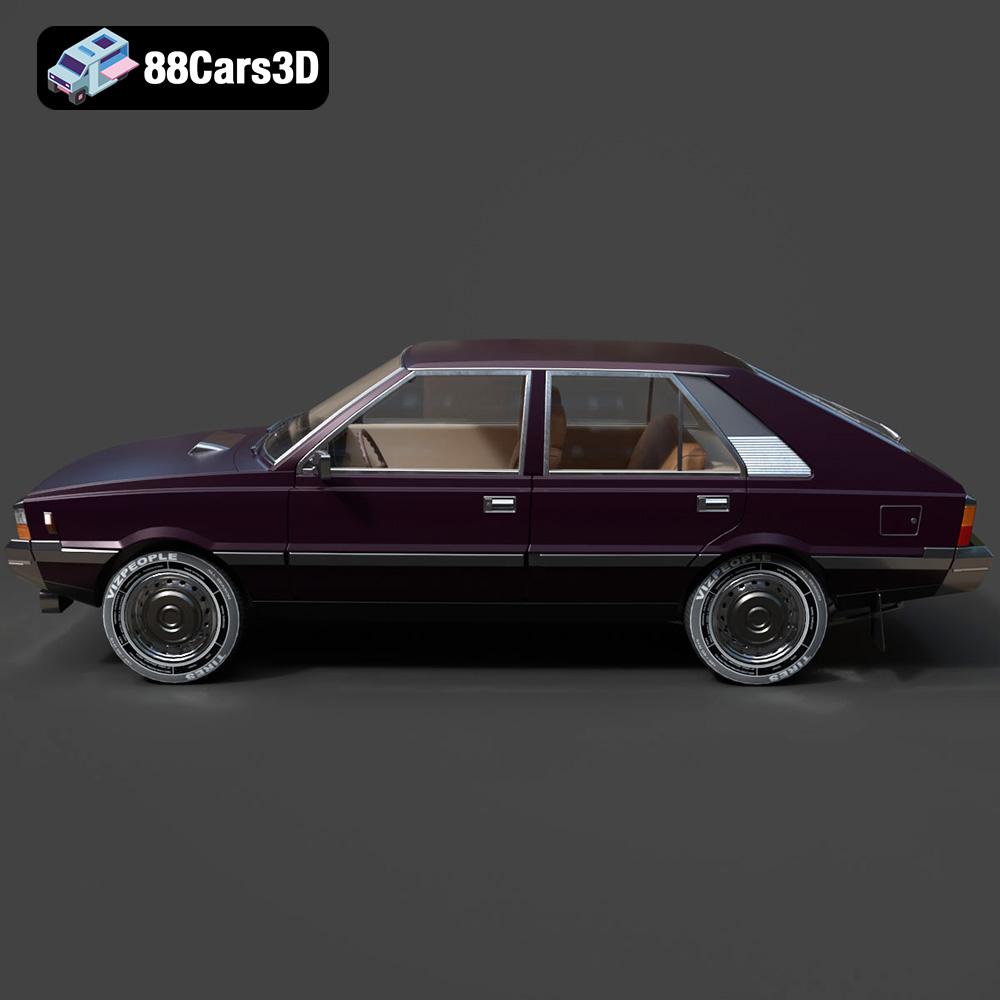
One such piece of history making a significant impact in the digital realm is the FSO Polonez 1500. This iconic Eastern European classic, renowned for its distinctive wedge-shaped fastback design, has been meticulously recreated as a versatile 3D model. More than just a static representation, this model embodies the detailed craftsmanship and technical optimization required for modern 3D pipelines. It serves as an excellent example of how vintage automotive design can be brought to life for a new generation of digital applications, from game development to AR/VR experiences, and even precise 3D printing. Let’s delve into the intricacies of automotive 3D modeling and how an asset like the FSO Polonez 1500 can elevate your projects.
When working with 3D assets, understanding the various file formats is crucial. Each format serves a specific purpose, offering unique advantages in terms of compatibility, data preservation, and application suitability. The FSO Polonez 1500 3D model, for instance, is offered in a wide array of formats, ensuring maximum flexibility for diverse project needs. Here’s a breakdown of the key formats included:
The native file format for Blender, a powerful open-source 3D creation suite. A .blend file preserves everything within your Blender scene: geometry, materials (with node setups), textures, lighting, cameras, animations, physics simulations, and even modifiers. It’s the ultimate format for artists who want to delve deep into the model, make extensive edits, explore its construction, or develop it further within Blender’s ecosystem. For the FSO Polonez 1500, the .blend file would provide the raw, editable project, allowing you to customize everything from paint shaders to interior fabric patterns and even animate specific components with ease.
Developed by Autodesk, FBX (Filmbox) is one of the most widely adopted interchange formats in the 3D industry. It’s particularly robust for transferring models with complex data, including meshes, textures, materials, animations, and hierarchies (e.g., parent-child relationships for car parts like wheels and axles). Its strength lies in its ability to maintain data integrity across different software packages and its optimization for real-time engines. For game developers using Unreal Engine or Unity, importing the FSO Polonez as an .fbx ensures that the model’s optimized geometry, material slots, and animation-ready pivots are correctly recognized, making it a go-to for game assets and interactive applications.
OBJ (or Wavefront OBJ) is a classic and highly universal 3D geometry definition file format. It’s renowned for its simplicity and broad compatibility across virtually all 3D software. An .obj file primarily stores geometric data: vertices, faces, UV coordinates, and normals. While it can reference external material (.mtl) files, it typically doesn’t encapsulate complex material setups or animation data. This makes it excellent for static mesh transfers, especially when you need a clean, unadorned model that can be easily imported into any 3D package for further texturing and rigging. The FSO Polonez 1500 in .obj format provides a foundational mesh for custom pipelines.
GLB is the binary version of the GL Transmission Format (glTF), an open standard for 3D scenes and models. What makes .glb exceptional is its “single-file” nature – it bundles all assets (geometry, materials, textures, animations) into one self-contained file. This optimization makes it incredibly efficient for web-based 3D viewers, augmented reality (AR), virtual reality (VR), and mobile applications where quick loading and compact file sizes are paramount. Using the FSO Polonez 1500 in .glb format would enable seamless integration into virtual showrooms, web configurators, or AR experiences, allowing users to interact with the classic car directly in their browsers or mobile devices.
STL (Stereolithography) is the standard file format for 3D printing. It represents a 3D model as a series of connected triangles, essentially describing the surface geometry without color, texture, or material information. While simplistic, this triangulated mesh is precisely what 3D printers need to interpret and build a physical object layer by layer. The FSO Polonez 1500, when converted to .stl, becomes a tangible item, perfect for hobbyists to print scale models. However, preparation for .stl often involves ensuring watertight meshes and considering structural integrity for printing, as detailed in the product’s 3D print settings.
PLY (Polygon File Format) is another format for storing 3D data, particularly popular for representing 3D scanned data. It supports properties like color per vertex, normals, and transparency, making it suitable for scientific data visualization, reverse engineering, and applications requiring highly detailed mesh information. While less common for general asset exchange than FBX or OBJ, its precision makes it valuable in CAD or analysis workflows where the exact geometric properties of the FSO Polonez 1500 might be crucial for simulations or engineering studies.
While “.unreal” isn’t a universally recognized file extension in the same way .fbx or .obj are, its inclusion signifies a package specifically prepared and optimized for Unreal Engine. This typically means an FBX model that has undergone a rigorous process: proper material assignments (often leveraging Unreal’s PBR workflow), UV mapping for textures and lightmaps, LODs (Levels of Detail) for performance optimization, collision meshes, and correct pivot points for animation. When you get an FSO Polonez 1500 marked as “.unreal,” you’re receiving an asset that’s designed for drag-and-drop integration, saving countless hours of setup and ensuring peak performance within an Unreal project.
Similar to .blend for Blender, .max is the native file format for Autodesk 3ds Max. It stores the entire 3ds Max scene, including geometry, materials, textures, lighting, camera setups, modifiers, and all animation data. This format is ideal for professionals working within the 3ds Max ecosystem who require full editability, advanced rendering capabilities (e.g., V-Ray, Corona), or complex animation sequences. The .max file for the FSO Polonez 1500 offers the most comprehensive control for high-fidelity architectural visualizations, cinematic rendering, and detailed automotive animations, allowing artists to fully leverage 3ds Max’s extensive toolset.
Creating a high-quality 3D car model is a fusion of artistic vision and rigorous technical execution. It goes beyond merely replicating shapes; it’s about capturing the soul of a vehicle, ensuring every curve, panel gap, and mechanical component contributes to an authentic digital representation. The FSO Polonez 1500 model from 88cars3d.com exemplifies this balance, offering both aesthetic accuracy and technical robustness.
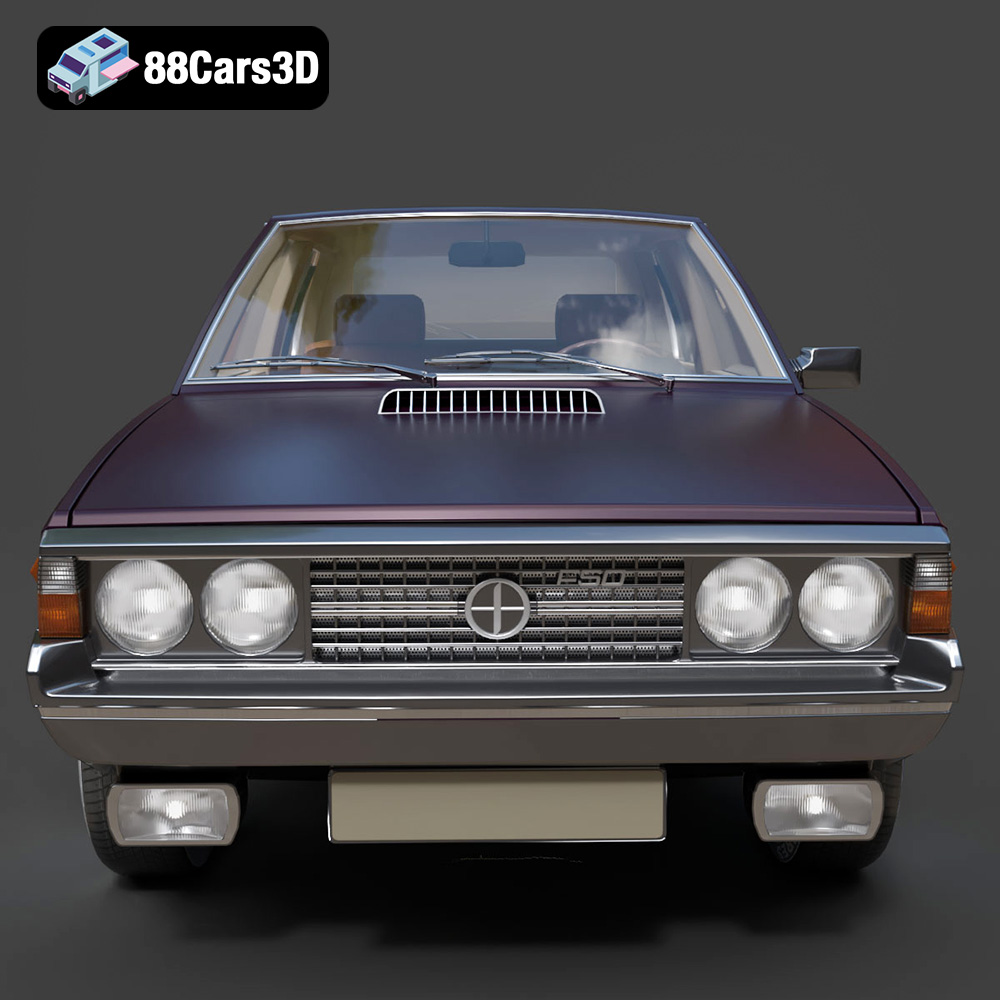
The journey begins with extensive research and reference gathering. For a classic car like the FSO Polonez 1500, this involves studying historical photographs, blueprints, and even physical inspections if possible. Artists meticulously analyze the distinctive wedge-shaped fastback design, the iconic quad headlights, ribbed plastic bumpers, and the precise proportions that defined its era. Every element, down to the 1.5-liter OHV engine block layout and period-correct exhaust system, must be accurately translated into 3D geometry. This attention to detail ensures that the model not only looks like the Polonez but feels like it, evoking the nostalgia and character of the original vehicle. The model’s accurate frame geometry and classic fastback proportions are a direct result of this meticulous approach.
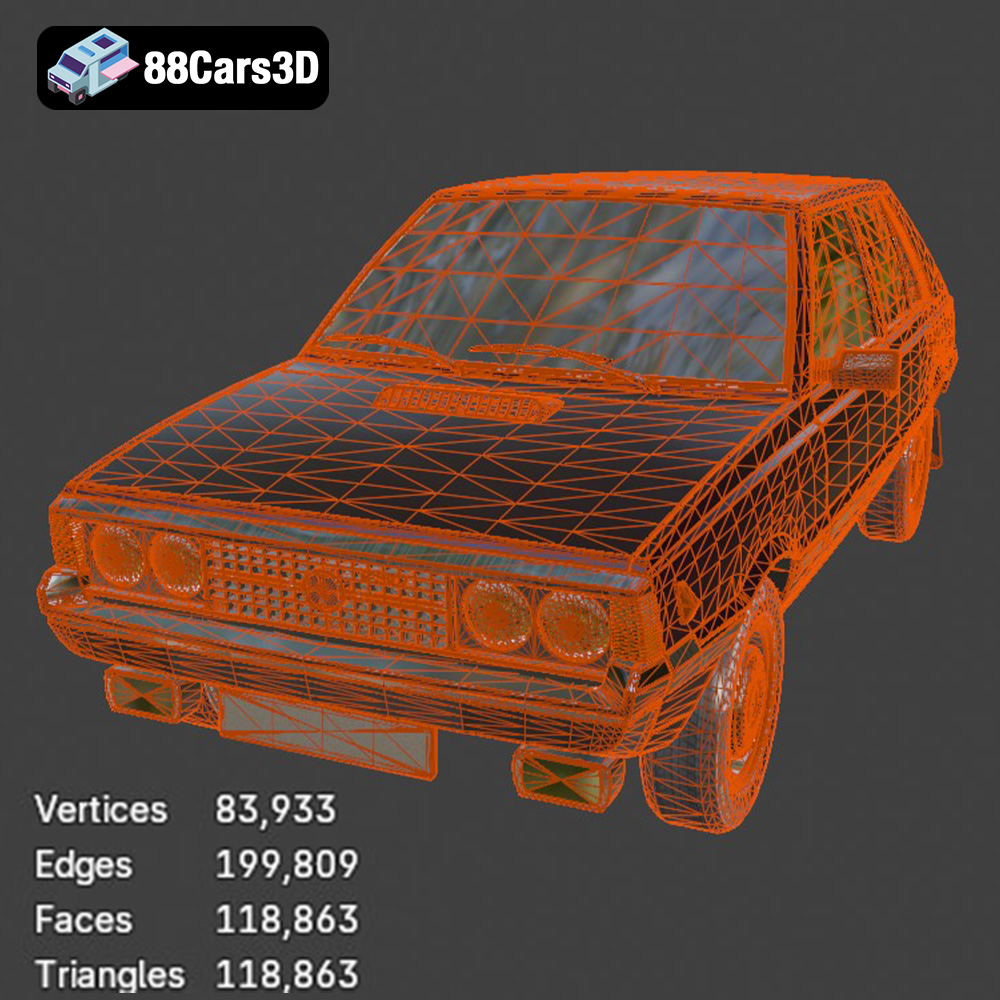
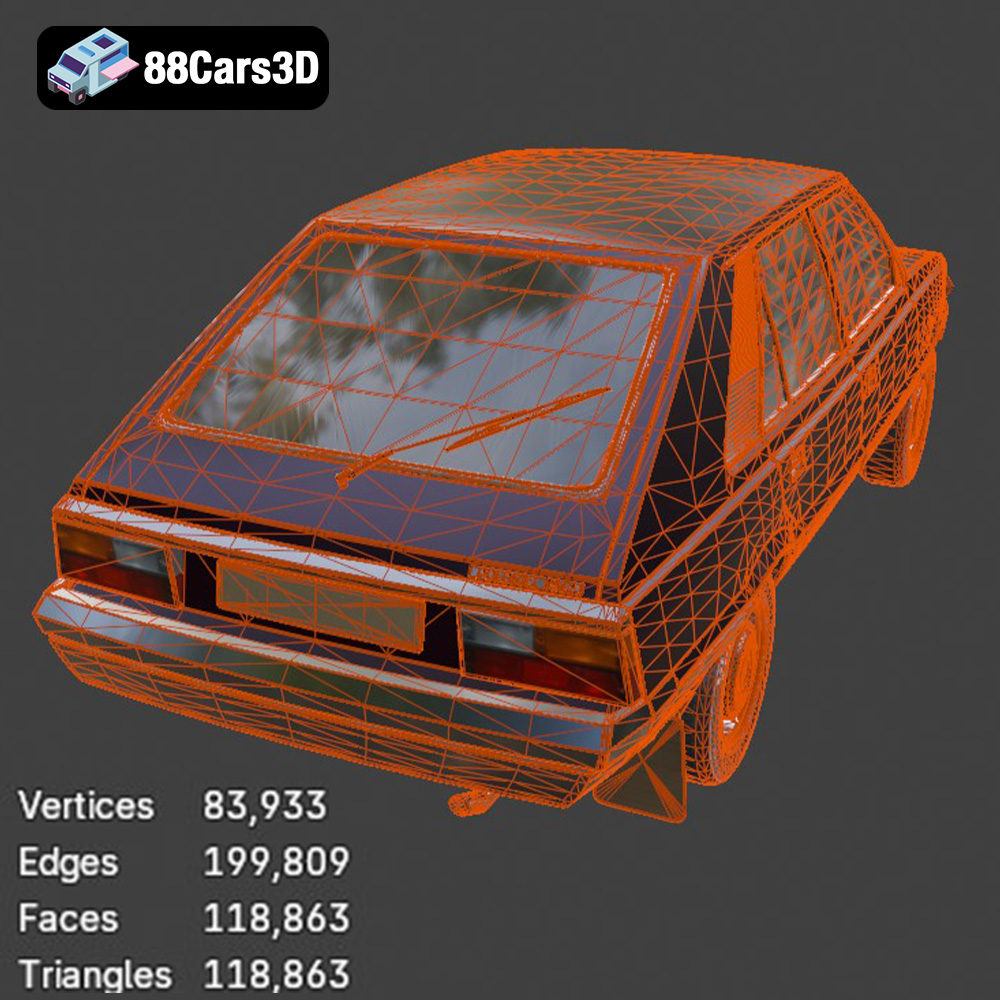
A beautiful model is only truly useful if it performs well across different applications. This is where topology optimization becomes critical. Good topology means efficient polygon distribution, clean edge flow, and minimal extraneous geometry. For the FSO Polonez 1500, boasting approximately 150,000 triangles, this represents a sweet spot: visually rich enough for close-up renders and interactive applications, yet optimized for real-time engines. This balance ensures crisp reflections, accurate shading, and detailed components without bogging down performance. Game-ready models like this one require careful UV mapping (though not explicitly listed, it’s implied for a game-ready asset) for texture application and light baking, along with proper pivot setups for animation (e.g., steering, wheel rotation, suspension travel). This technical finesse is what transforms a static mesh into a dynamic, usable asset.
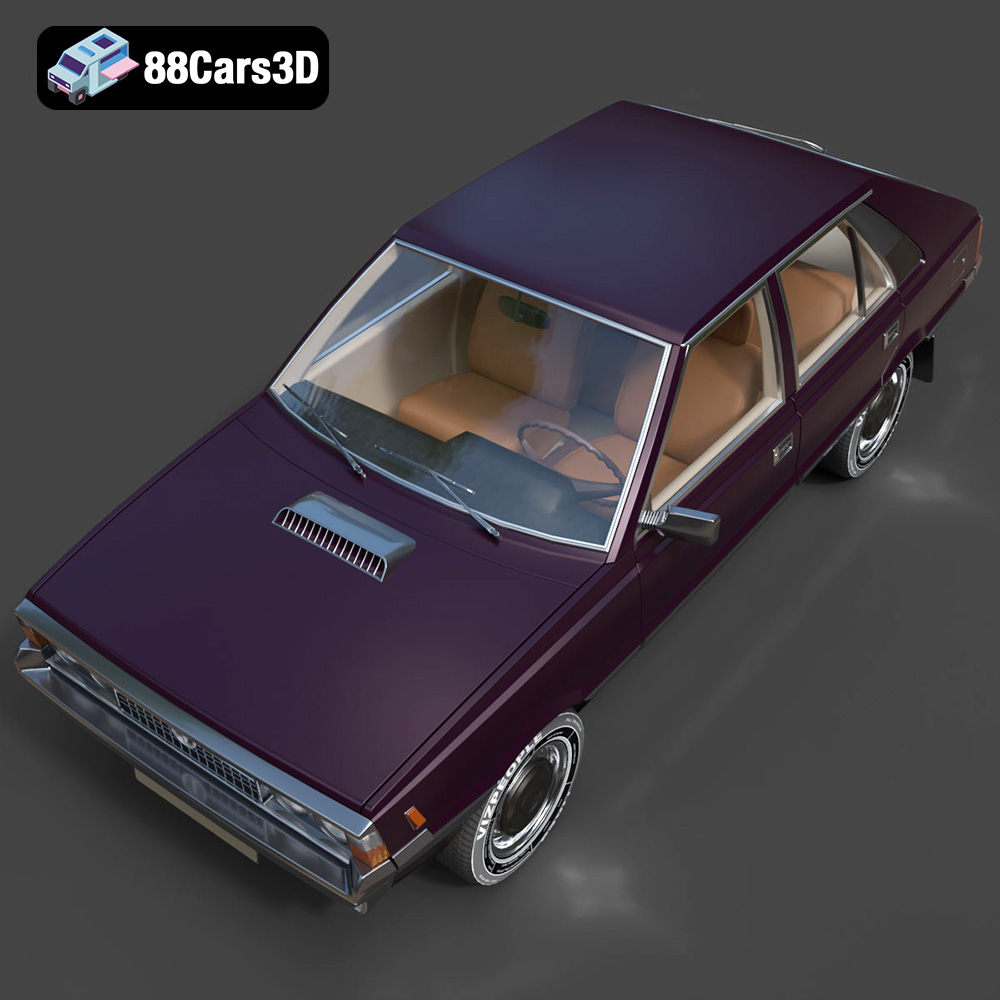
The exterior often grabs the initial attention, but a truly immersive 3D car model extends its fidelity to the interior. For the FSO Polonez 1500, the cockpit is a careful recreation of an 80s aesthetic. This includes classic cloth and vinyl seat textures with correct stitching, an accurate period-correct two-spoke steering wheel, and a detailed instrument cluster with analog dials and switches. Modeled foot pedals, a floor-mounted gear shifter, and a handbrake lever complete the experience. Such interior details are paramount for first-person POV in gaming, VR experiences, and automotive configurators, providing a sense of realism and immersion that elevates the overall model quality.
The versatility of a 3D model is often defined by how seamlessly it integrates into various professional pipelines. The FSO Polonez 1500 3D model, with its multiple file formats and optimized structure, is designed precisely for this purpose. Let’s explore how it fits into common 3D workflows.
For game developers, the FSO Polonez 1500 is a highly valuable asset, explicitly labeled as “game-ready.” Its approximately 150,000 triangle count is ideal for open-world games, racing titles, and simulators where performance is paramount without sacrificing visual realism. When integrating into Unreal Engine or Unity, developers typically import the .fbx or the dedicated “.unreal” package. The .fbx carries the mesh, UVs, and animation pivots, allowing for quick setup. In Unreal, artists would then create physically based rendering (PBR) materials, leveraging the engine’s powerful material editor to define paint reflectivity, tire roughness, and glass transparency. The model’s separate wheels, doors, hood, trunk, and steering components are crucial for rigging and animation, enabling realistic vehicle dynamics and interactive elements in-game. Imagine a post-apocalyptic open-world title where this Polonez, perhaps weathered and rusted, becomes a key drivable vehicle, its robust styling perfectly fitting the narrative.
High-fidelity rendering is where the aesthetic qualities of the FSO Polonez 1500 truly shine. For studio lighting setups, brand campaigns, or lifestyle scenes, artists can utilize the .max or .blend files. In 3ds Max, for example, the model can be imported, and advanced renderers like V-Ray or Corona can be employed to create stunning, photorealistic images. This involves setting up complex car paint shaders with metallic flakes and clear coat effects, realistic glass materials, and detailed tire textures. The ability to change body paint colors, modify tire textures, or adjust material finishes (matte, gloss, metallic, rust/patina) provides immense creative control. For Blender users, the .blend file provides a complete scene, ready for cycles or Eevee rendering, allowing for rapid iteration and artistic expression without extensive import/export hurdles. The detailed engine block and bay components, coupled with authentic steel wheels and classic hubcaps, become focal points in close-up renders, showcasing the model’s depth.
The demand for immersive, interactive experiences in AR, VR, and web environments is rapidly growing. The FSO Polonez 1500, particularly in .glb format, is perfectly suited for these applications. Its optimized geometry and single-file packaging ensure fast loading times and smooth performance on various devices. In AR, the Polonez could be virtually placed in a real-world environment via a smartphone, allowing users to “walk around” the car and inspect it as if it were physically present. For VR, it could populate a virtual showroom or museum, letting users explore its interior and exterior in a fully immersive 3D space. Web configurators built with technologies like Three.js or Babylon.js can also leverage the .glb format, enabling prospective buyers or enthusiasts to customize the car’s colors and features directly in their browser, providing a highly engaging digital experience.
The value of a meticulously crafted 3D model extends far beyond simple imagery. The FSO Polonez 1500 is a multi-faceted asset designed to serve a broad spectrum of digital and even physical applications, truly embodying the ethos of comprehensive 3D car models available at 88cars3d.com.
In game development, authenticity and immersion are key. The FSO Polonez 1500, with its highly optimized topology (approximately 150,000 triangles) and game-ready status, is an ideal candidate for populating virtual worlds. Its inclusion can inject a sense of realism and historical context into diverse game genres. Imagine a historical driving simulator set in 1980s Eastern Europe, where the Polonez is not just a background prop but a central, drivable vehicle. Its detailed 1.5-liter inline-four engine block, period-correct exhaust system, and authentic interior provide rich visual cues for players. Beyond historical accuracy, the model could serve in post-apocalyptic open-world games, its robust design lending itself to weathered, battle-scarred variants that fit a gritty narrative. The proper pivot setups for steering, wheel rotation, and suspension travel are critical for game physics, ensuring a believable driving experience.
Augmented Reality (AR) and Virtual Reality (VR) platforms are transforming how we interact with products and environments. The FSO Polonez 1500 excels in these immersive applications due to its optimized geometry and availability in formats like .glb. In AR, an automotive manufacturer or museum could offer an app allowing users to project the Polonez into their driveway, rotate it, open doors, and even peer inside, creating an interactive “virtual showroom.” For VR, the model could be integrated into virtual museums or educational experiences, letting users sit inside the classic cockpit, examine the detailed instrument cluster, and learn about the vehicle’s history in a truly engaging way. The optimized geometry for first-person POV in VR is a significant advantage, ensuring a smooth and comfortable user experience.
One of the most exciting capabilities of a well-structured 3D model is its potential for physical manifestation through 3D printing. The FSO Polonez 1500 model includes .stl and .ply formats, making it ready for hobbyists and collectors to bring this iconic car into the real world. The product’s detailed 3D print settings are invaluable, guiding users on recommended scales (1:12, 1:18, 1:24), layer heights, wall thickness, and infill percentages. For fine details like the exhaust, mirrors, or steering wheel, resin printing is recommended, highlighting the precision required. Post-processing instructions, such as sanding, priming, and painting with authentic factory colors, empower users to create high-quality display models. This bridge between the digital and physical realms offers a unique way to appreciate the FSO Polonez 1500 beyond the screen.
Every vehicle has a story, and the FSO Polonez 1500 is no exception. Its distinctive presence on Eastern European roads throughout the late 70s and 80s left an indelible mark. In the digital age, preserving and celebrating such automotive heritage is more important than ever. The creation of a high-fidelity 3D model allows this legacy to endure, reaching new audiences and finding new life in diverse contexts.
Digital twins, highly accurate 3D representations of real-world objects, are powerful tools for historical preservation. The FSO Polonez 1500 3D model acts as a digital twin, meticulously recreating its robust styling, classic quad headlights, and even the nuances of its interior. This level of detail ensures that future generations can interact with and study the vehicle in ways that physical museum exhibits might not allow. Educational institutions can use such models for automotive design courses, allowing students to dissect and analyze its structure without damaging a rare vintage car. Museums can leverage these models to create interactive exhibits, bringing history to life for visitors through touchscreens and VR experiences. This digital preservation ensures that the Polonez’s unique design and cultural significance are never lost.
Beyond mainstream appeal, classic cars often hold a special place in niche communities and creative projects. The FSO Polonez 1500, with its Eastern Bloc origins and distinctive aesthetic, offers a compelling backdrop for storytelling. Imagine a short film set in Cold War-era Poland, where the Polonez is a central character, requiring precise visual effects. Or consider independent game developers seeking authentic vehicles to set a particular mood or era. The model’s ability to be customized – changing body paint colors, modifying tire textures, or adding rust and patina – enables artists to adapt it to any narrative, from gritty realism to stylized fantasy. This adaptability makes it an invaluable asset for creative professionals looking to evoke a specific time, place, or atmosphere.
The FSO Polonez 1500 3D model is more than just a collection of polygons and textures; it’s a meticulously engineered digital asset that bridges the gap between automotive history and modern digital applications. From its accurately recreated exterior and detailed interior to its optimized topology and broad file format compatibility, this model stands as a testament to the power of advanced 3D modeling.
Whether you’re a game developer looking for a unique, game-ready vehicle, a visualization artist aiming for photorealistic renders, an AR/VR creator building immersive experiences, or a hobbyist venturing into 3D printing, the FSO Polonez 1500 offers exceptional versatility and quality. It demonstrates how a high-quality 3D car model can unlock creative possibilities across various industries, providing a reliable foundation for any project.
For those seeking professional-grade 3D car models that combine historical accuracy with technical excellence, exploring the offerings at 88cars3d.com is a worthwhile endeavor. The FSO Polonez 1500 is just one example of the detailed and optimized assets available, ready to elevate your next project to new heights. Its comprehensive design and diverse format support ensure that it’s not just a model, but a valuable tool for innovation in the ever-evolving landscape of 3D design and digital content creation.
The FSO Polonez 1500 stands as an iconic piece of Eastern European automotive history. Known for its distinctive wedge-shaped fastback design crafted in collaboration with legendary Italian designers, this 5-door hatchback captured the aesthetic of the late 70s and 80s. Our 3D model meticulously recreates its robust styling, featuring the classic quad headlights, ribbed black plastic bumpers, and the reliable 1.5-liter OHV engine block layout that powered a generation. This 3D model boasts a highly optimized topology with approximately 150,000 triangles, making it exceptionally game-ready without compromising on visual fidelity. Designed to seamlessly integrate into modern real-time engines like Unreal Engine and Unity, the mesh delivers crisp reflections, accurate shading, and highly detailed components perfect for close-up renders and interactive applications. Perfect for historical driving simulators, post-apocalyptic open-world games, architectural visualizations, and classic car virtual showrooms.
$19.99
.blend
.fbx
.glb
.hatchback
.max
.obj
.ply
.rendering
.stl
.unreal
car-3d-model
classic-car
eastern-bloc
fso
game asset
game-ready
low-poly
optimized
polonez-1500
VR/AR