Get 20% OFF All Premium 3D & STL Models!

In the dynamic worlds of automotive design, game development, cinematic rendering, and immersive AR/VR experiences, the quality of 3D assets is paramount. A meticulously crafted 3D model isn’t just a digital representation; it’s the foundation upon which compelling narratives, realistic simulations, and captivating visuals are built. Professional studios and independent creators alike are constantly seeking assets that combine aesthetic accuracy with technical optimization, ready to be deployed across a multitude of platforms and workflows.
The quest for photorealism and interactive performance often begins with the perfect vehicle model. Consider the distinctive charm of the Nissan Juke 2020, a compact crossover SUV celebrated for its bold design and rebellious styling. Bringing such a unique vehicle into the digital realm requires an extraordinary level of precision and technical foresight. The Nissan Juke 2020 3D Model exemplifies what a professional-grade automotive asset should be: a versatile, optimized, and visually stunning digital twin, perfectly suited for everything from urban driving simulators to high-resolution brand campaigns. This article will delve into the technical intricacies, diverse applications, and workflow advantages of incorporating such high-quality 3D car models into your projects, highlighting how assets found on platforms like 88cars3d.com empower creators to push the boundaries of digital reality.
The journey of any 3D asset, especially a complex one like a car model, often involves moving between different software applications, rendering engines, and deployment platforms. This necessitates a deep understanding of various 3D file formats, each with its own strengths, limitations, and specific use cases. The Nissan Juke 2020 3D Model comes equipped with an extensive range of these formats, ensuring maximum compatibility and flexibility for any professional workflow.
The .blend format is native to Blender, an incredibly powerful and widely used open-source 3D creation suite. A .blend file typically encapsulates the entire scene, including not just the mesh data of the 3D car model, but also its materials, textures, lighting setups, cameras, animations, rigging, and even custom scripts. This makes it an ideal choice for artists who primarily work within Blender and require full editability and access to all scene components. For the Nissan Juke 2020 model, the .blend file allows for extensive customization, from tweaking PBR materials to adjusting the vehicle’s suspension or opening doors if the rig allows. It’s the go-to for deep integration into a Blender-centric pipeline, offering unparalleled control over the asset’s attributes.
.fbx (Filmbox) is arguably the most common and robust exchange format in the 3D industry, particularly favored in game development and animation pipelines. Developed by Autodesk, FBX is excellent at preserving not only geometry but also complex data like skeletal animations, blend shapes, lights, cameras, and PBR materials across different software packages such as 3ds Max, Maya, Cinema 4D, and most importantly, game engines like Unreal Engine and Unity. When importing the Nissan Juke 2020 as an .fbx, you can expect its optimized geometry, high-resolution textures, and PBR material assignments to transfer seamlessly, making it ideal for immediate integration into real-time environments where performance and visual fidelity are critical.
The .obj (Wavefront OBJ) format is a widely adopted, near-universal standard primarily for transferring geometric data. It’s a plain text format that describes 3D geometry in terms of vertices, normals, UV coordinates, and faces. While it doesn’t typically store advanced features like animation, rigging, or complex material networks (though it can reference .mtl files for basic material properties), its simplicity makes it highly compatible across virtually all 3D software. For static renders or base geometry import where you plan to rebuild materials or rig within your target software, the Nissan Juke 2020 .obj file provides a clean, reliable foundation.
.glb (GL Transmission Format Binary) is an increasingly vital format, especially for web-based 3D, augmented reality (AR), and virtual reality (VR) applications. As the binary version of .gltf, .glb packs geometry, materials, textures, and even animations into a single, self-contained file. This makes it incredibly efficient for streaming and displaying 3D models directly in browsers or mobile AR/VR experiences without needing external texture files. For showcasing the Nissan Juke 2020 in a virtual showroom or an interactive web configurator, the .glb format offers unparalleled performance and ease of deployment.
.stl (Stereolithography) is the de facto standard format for 3D printing. It represents a 3D model as a series of connected triangles (a tessellated surface) without any color, texture, or material information. Its strength lies in describing the surface geometry for physical fabrication. The Nissan Juke 2020 .stl file would be used when you want to bring the digital model into the physical world, whether for scale models, prototypes, or hobbyist displays, often requiring specific slicing software to prepare it for a 3D printer.
The .ply (Polygon File Format) is another format for storing 3D data, particularly popular in scientific, CAD, and scanning applications. It can store not only polygonal geometry but also vertex properties like color, transparency, and even normal vectors. While less common for general 3D asset exchange than FBX or OBJ, its precision and ability to store rich per-vertex data make it valuable for specific tasks, especially when dealing with scanned data or requiring fine control over mesh attributes. For advanced analysis or CAD integration of the Nissan Juke 2020, .ply offers a robust data structure.
The .unreal format, or more accurately, engine-ready assets prepared specifically for Unreal Engine, typically refers to a collection of files (meshes, materials, textures, blueprints, etc.) meticulously set up within an Unreal project structure. While not a single file extension in the same way as .fbx, providing an “.unreal” package means the Nissan Juke 2020 3D model is pre-configured with Unreal-specific material graphs, collision meshes, LODs (Levels of Detail), and perhaps even basic vehicle blueprints. This significantly accelerates development time for projects targeting Unreal Engine, offering a plug-and-play solution right out of the box.
Finally, the .max format is the native file extension for Autodesk 3ds Max, a leading software for 3D modeling, animation, and rendering in professional visualization. Like .blend, a .max file contains the entire scene: geometry, lights, cameras, materials, modifiers, animation data, and plugins. It offers comprehensive control over the asset within the 3ds Max environment, making it perfect for high-end automotive rendering, complex animation sequences, or detailed architectural visualization scenes where 3ds Max is the primary tool. The Nissan Juke 2020 .max file provides the highest level of fidelity and manipulability for users of this powerful software.
Understanding these formats is crucial for any 3D professional. The comprehensive offering of file types for the Nissan Juke 2020 3D model ensures that creators can choose the exact format best suited for their specific project requirements, optimizing workflow and maximizing the asset’s utility across various professional applications.
Creating a high-quality 3D car model is a delicate balance between artistic interpretation and rigorous technical execution. It demands an eye for detail, an understanding of vehicle engineering, and proficiency in 3D software to translate a physical object into a usable digital asset. For automotive rendering and game assets, this process is even more critical, as realism and performance must coexist.
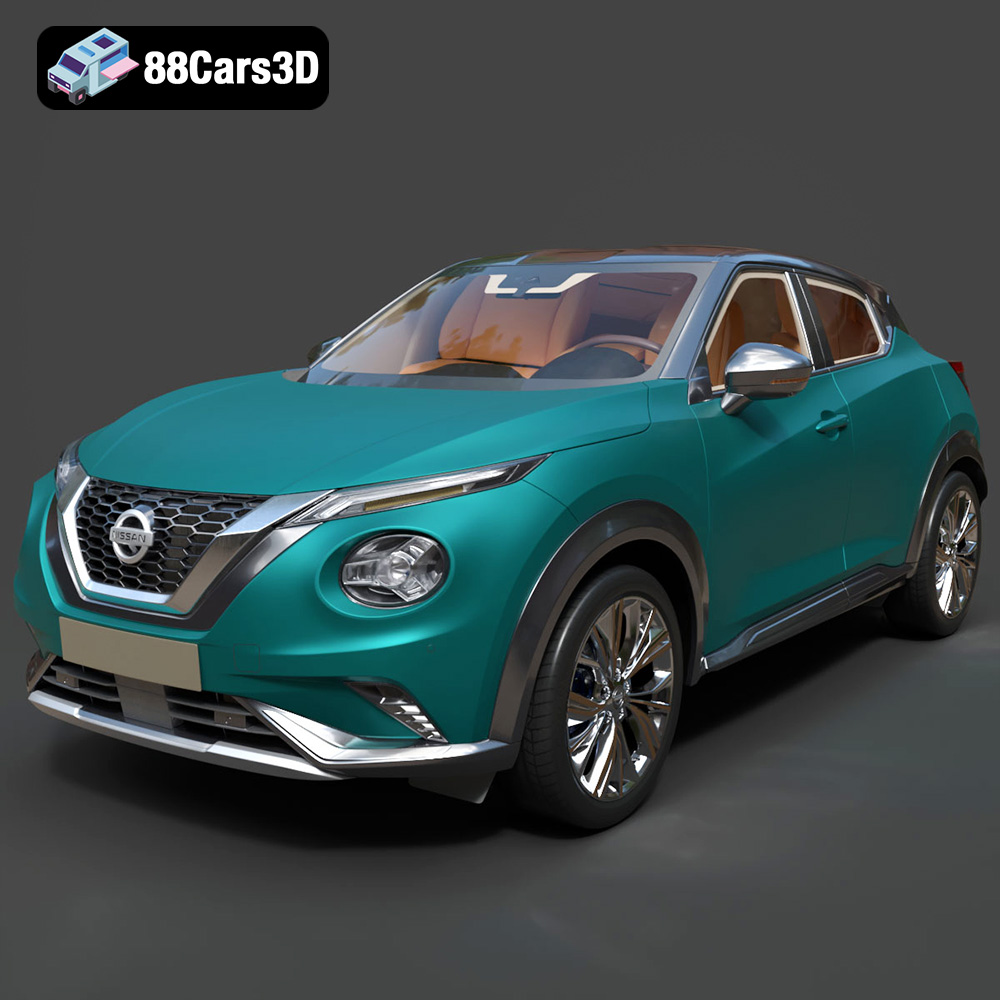
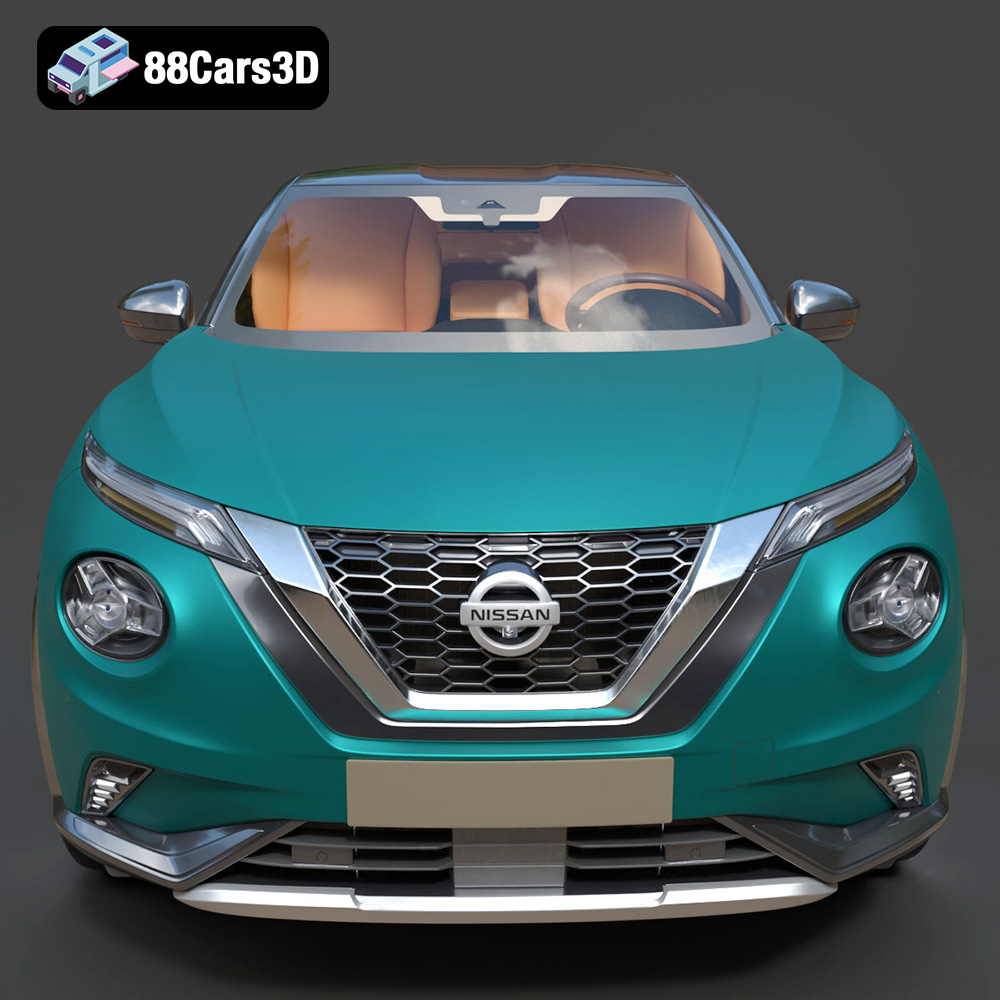
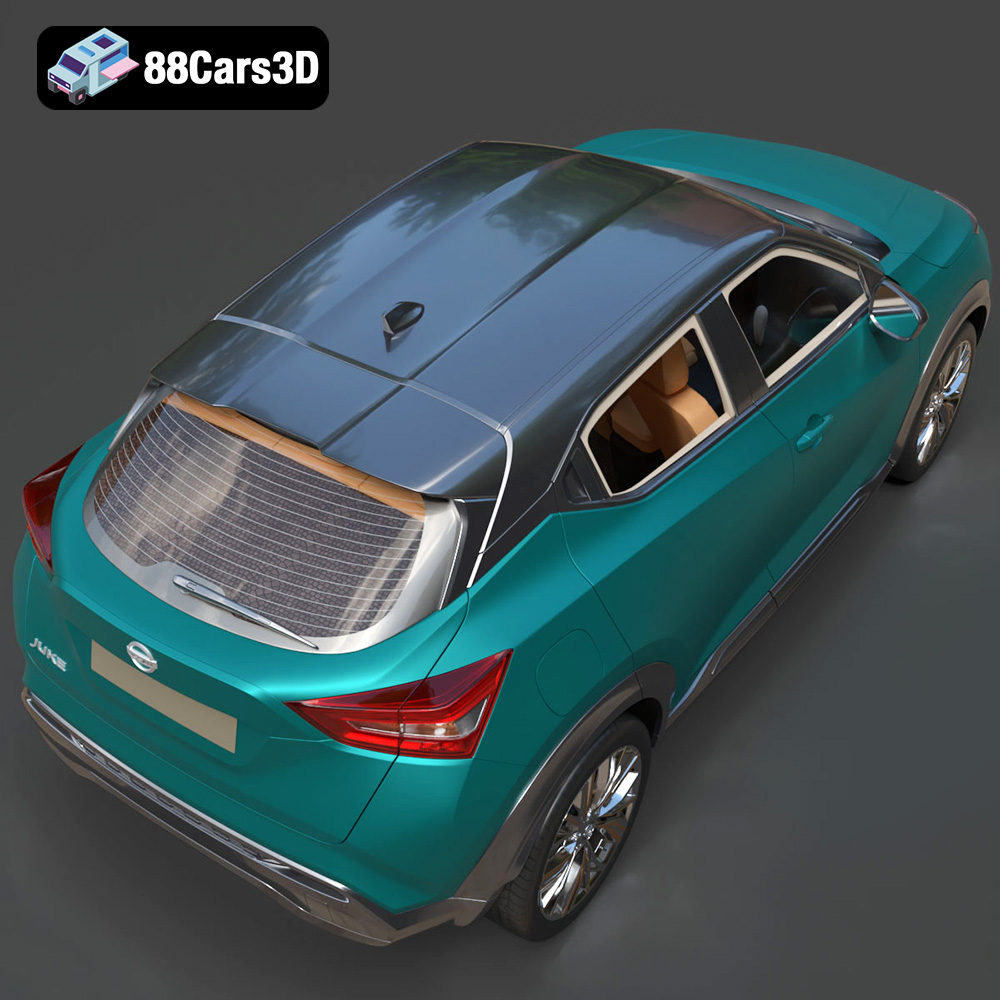
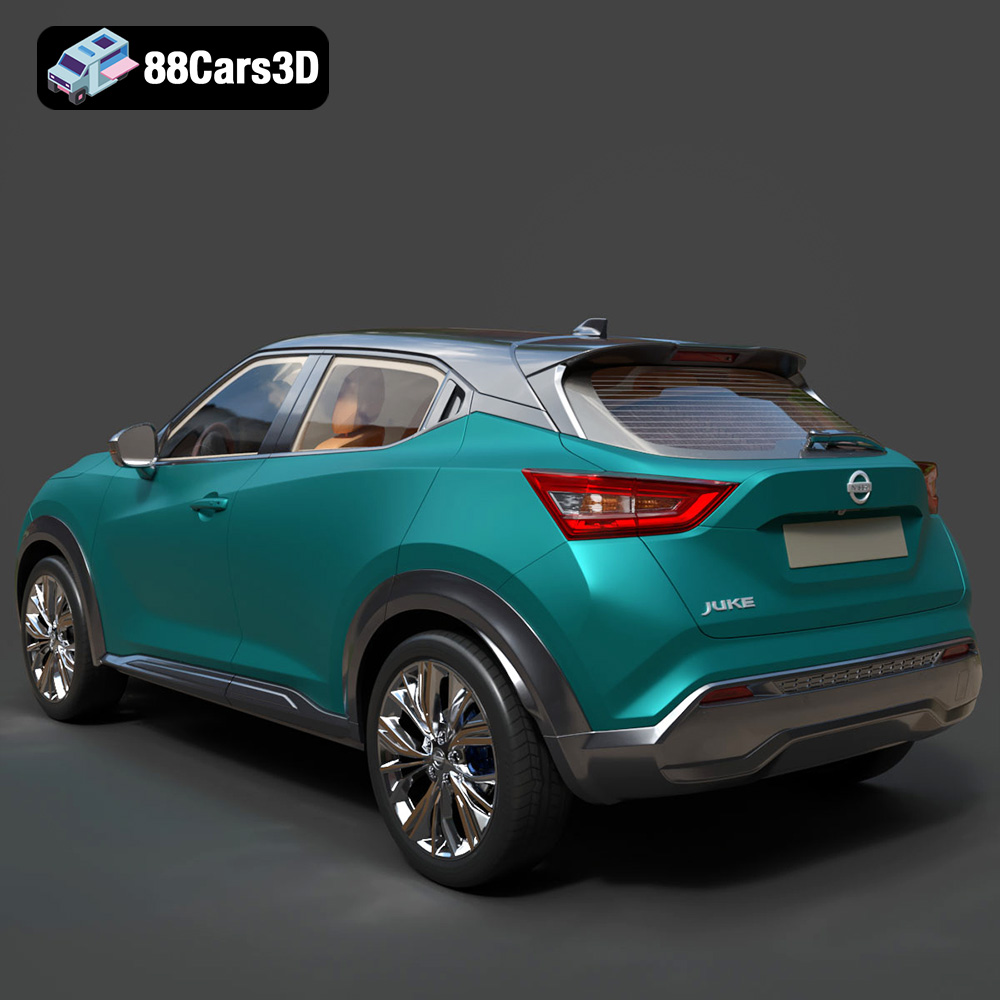
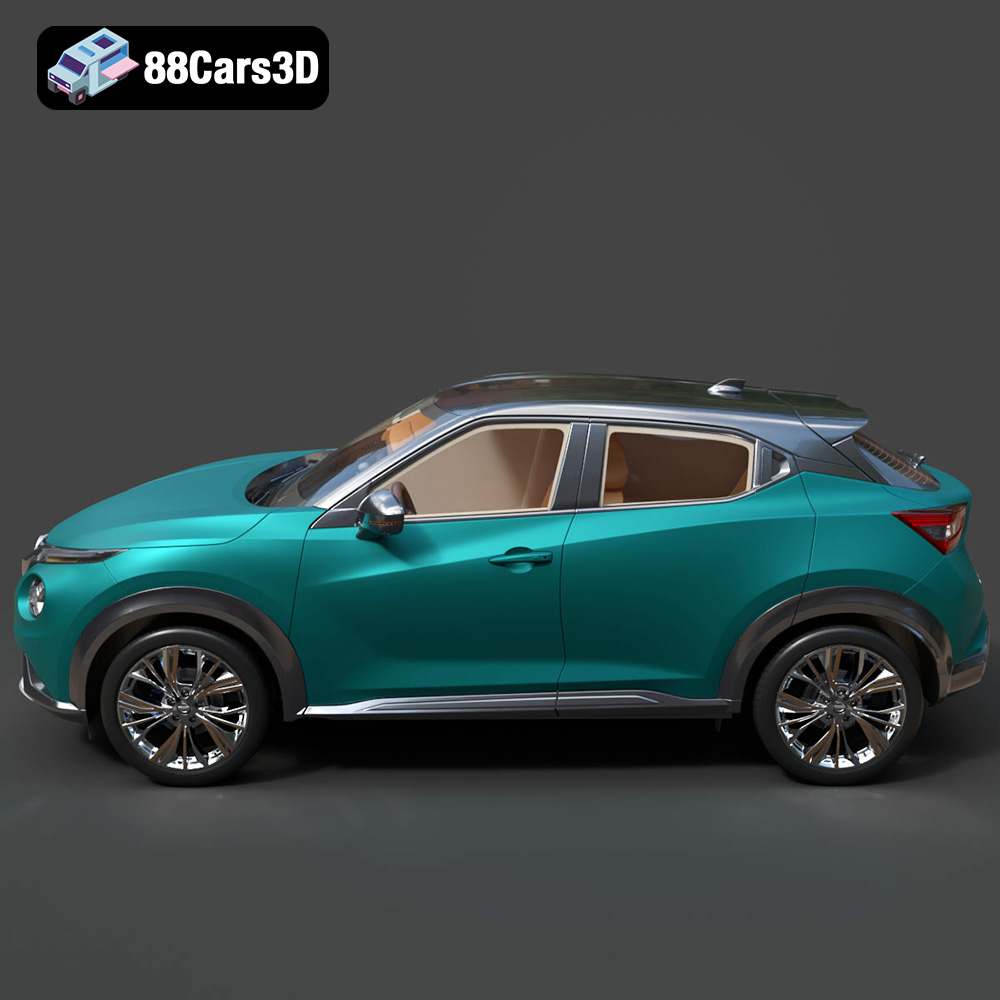
The first step in crafting an exceptional 3D car model is the meticulous replication of its real-world counterpart. This goes beyond mere shape; it’s about capturing the essence of the vehicle’s design language. The Nissan Juke 2020, for instance, is renowned for its “rebellious styling,” a distinctive aesthetic that must be faithfully translated into its 3D model. This includes its signature coupe-like floating roofline, the prominent V-Motion grille that defines the Nissan brand, and the striking split-lighting design with sharp daytime running lights positioned above bold circular LED headlamps.
Every exterior feature is crucial: precision-modeled alloy wheels with high-traction street tires, accurate suspension modeling to reflect realistic ride height, and a detailed dual-pipe exhaust system. These elements are not just visual; they are geometrically sound, ensuring that reflections behave correctly and the vehicle appears authentic from every angle. Such attention to detail is what elevates a standard model to a professional-grade automotive asset, suitable for even the most scrutinizing clients in advertising or visualization.
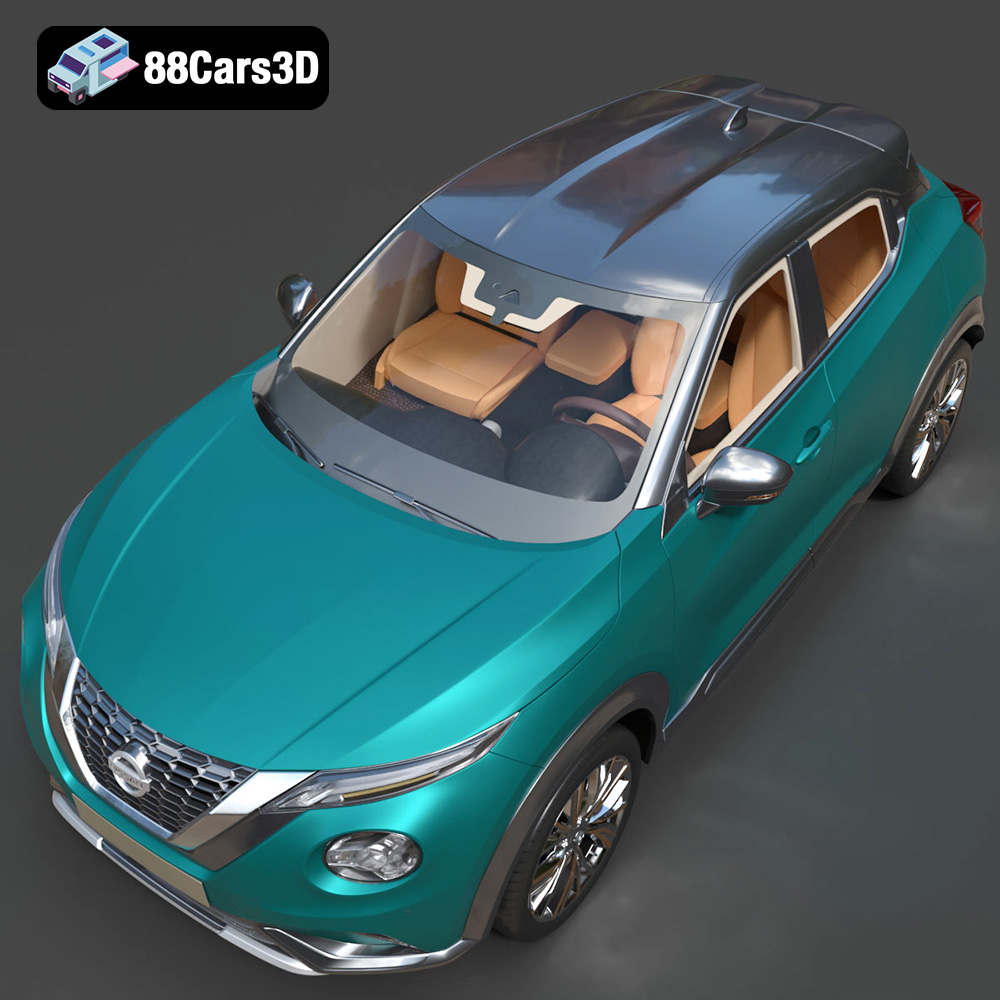
While the exterior often grabs initial attention, the interior of a 3D car model is equally vital, especially for applications demanding first-person perspectives like driving simulators, AR/VR experiences, or close-up cinematic shots. The Nissan Juke 2020 3D model meticulously recreates the sport-inspired monoform seats, complete with high-quality material details that suggest texture and comfort. A detailed D-shaped multifunction steering wheel, the accurate floating 8-inch infotainment display, and the driver instrument cluster contribute significantly to immersion. Even smaller elements like realistic interior controls, pedals, the gear shifter, and air vents are optimized. This ensures that whether the camera is outside admiring the silhouette or inside for a virtual test drive, the user’s experience is consistently high-fidelity and convincing.
A truly versatile 3D car model is one that can perform flawlessly across a spectrum of applications, from resource-intensive cinematic rendering to real-time interactive experiences. Optimization is key to achieving this balance, ensuring visual quality isn’t sacrificed for performance or vice-versa. The 88cars3d.com Nissan Juke 2020 3D Model is engineered with these technical advantages in mind.
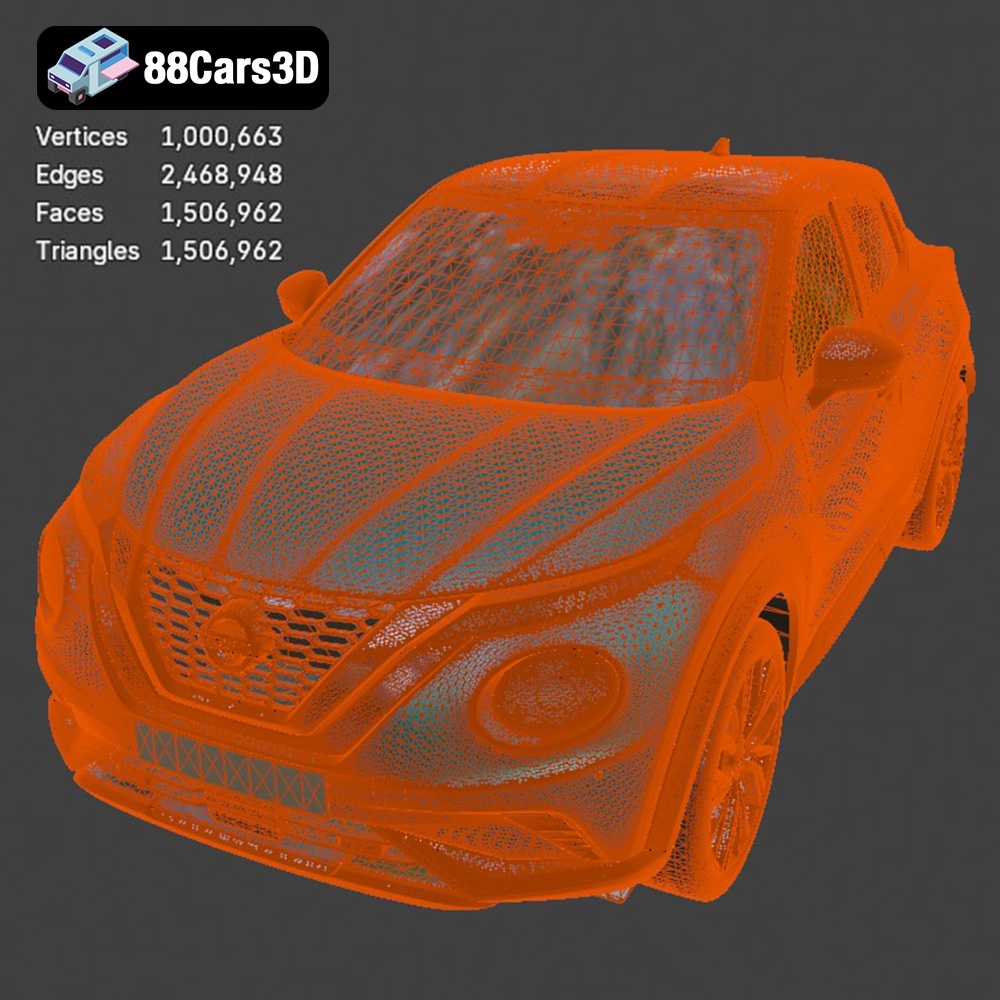
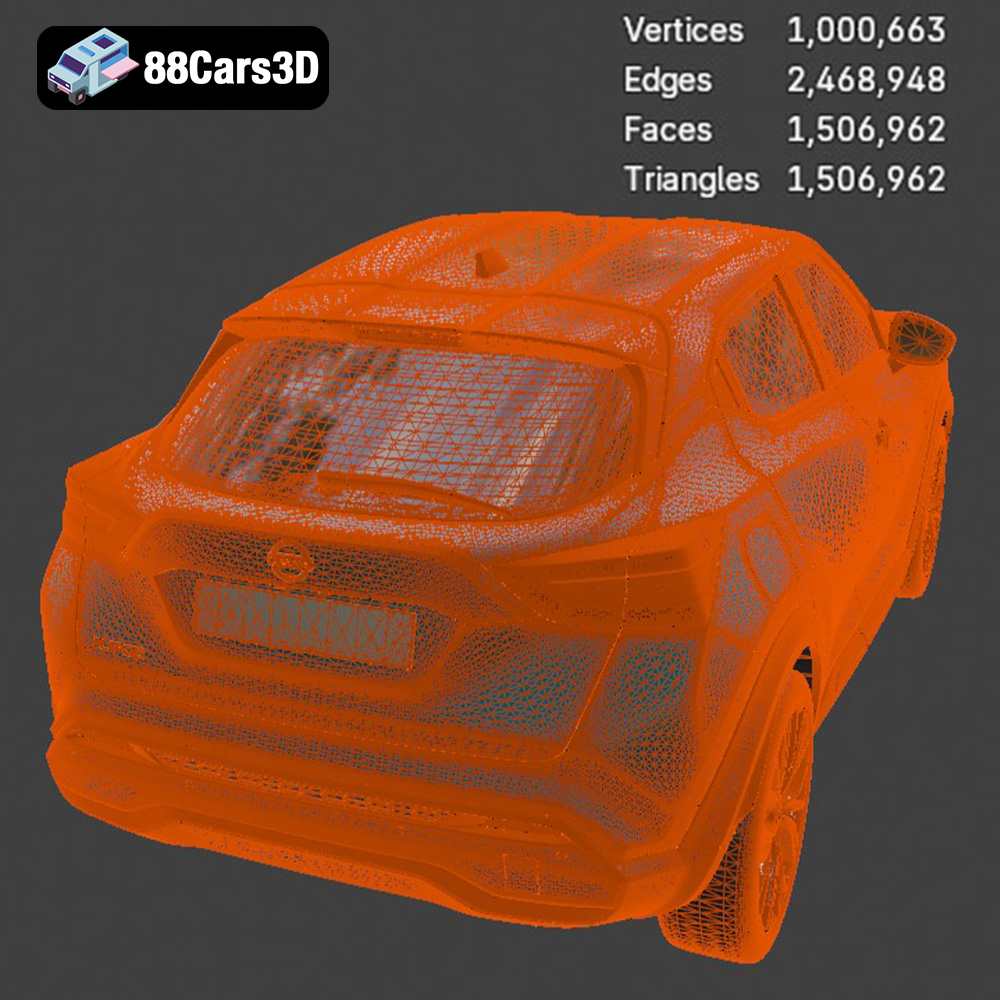
The “game-ready” designation of the Nissan Juke 2020 3D model signifies a commitment to optimized geometry and clean topology. With an approximate count of 200,000 triangles, the model strikes an excellent balance, offering significant visual detail without burdening real-time engines. Clean topology ensures that the mesh deforms predictably during animation and renders smoothly without artifacts. This is especially important for areas with complex curvature, like the Juke’s distinctive body panels and fender flares.
Equally vital are the UV maps. Properly unwrapped UVs are essential for applying high-resolution textures efficiently and without stretching or distortion. For the Juke model, this means that details like the V-Motion grille pattern, the fine textures of the interior upholstery, or the tread on the tires will appear crisp and accurate. Furthermore, the model is built to real-world scale accuracy, based on actual vehicle chassis dimensions, which is critical for realistic scene integration and compatibility with physics simulations in game development.
Physically Based Rendering (PBR) materials are the gold standard for achieving photorealistic results in modern 3D rendering and real-time engines. The Nissan Juke 2020 3D model comes equipped with PBR materials, meaning its surfaces respond dynamically and authentically to diverse lighting setups. This includes accurate reflections, realistic roughness, and metallic properties that truly simulate how light interacts with real-world car paint, glass, and plastic components.
This technical advantage allows artists to easily adjust material finishes (matte, gloss, metallic) and change body colors (e.g., to authentic factory colors or custom finishes) while maintaining visual integrity. Whether lit by a bright outdoor HDRi, a dramatic studio setup, or the dynamic lighting of a game engine, the PBR materials ensure the Juke model consistently looks its best, providing incredible flexibility for artists to adapt the vehicle to any environment or mood.
The true power of a professionally crafted 3D car model lies not just in its initial fidelity, but in its adaptability and the creative freedom it offers to the user. The Nissan Juke 2020 3D model is designed to be a highly customizable and versatile asset, empowering creators across various industries to realize their specific visions.
A key aspect of working with premium 3D models is the ability to tailor them to specific project needs. The Nissan Juke 2020 3D model provides extensive customization options. Artists can easily change body colors, experimenting with a range of factory colors or developing unique custom finishes to match a brand’s aesthetic or a client’s specific request. Beyond paint, tire textures can be modified, allowing for swaps between standard street variants and, hypothetically, off-road or performance versions, if desired. Material finishes, such as gloss, matte, or various metallic effects, can be fine-tuned to achieve different visual impacts, from a showroom shine to a more rugged, utilitarian look.
Furthermore, adapting lighting for different environments is seamless, thanks to the robust PBR materials. This allows the Juke to be convincingly placed in a sunny urban street, a moody night scene, or a sleek virtual studio, providing immense creative control for automotive rendering and visualization projects. This flexibility makes the model an invaluable tool for designers, marketers, and artists seeking to create unique and compelling visual content.
The utility of a high-quality 3D model extends far beyond digital screens. The inclusion of the .stl format for the Nissan Juke 2020 3D model means it’s ready for physical manifestation through 3D printing. This opens up exciting possibilities for hobbyists, collectors, and even professional designers looking to create tangible prototypes or display models.
To achieve the best results, specific 3D print settings are recommended. For fine details, resin printing is often preferred. Suggested scales like 1:12, 1:18, or 1:24 allow for various display sizes. Layer heights of 0.04–0.12 mm ensure smooth surfaces, while wall thicknesses of 1.2–2.0 mm provide structural integrity. Supports are typically required for delicate parts such as mirrors, exhaust systems, and undercarriage components to prevent warping during the printing process. Post-processing, including sanding, priming, and painting with authentic factory colors, can bring the printed model to life, replicating the Juke’s distinctive aesthetic in a physical form. This fusion of digital design with physical fabrication truly showcases the comprehensive nature of this 3D asset.
The journey through the creation, optimization, and diverse applications of high-quality 3D car models reveals their indispensable role in today’s digital landscape. From the intricate detailing required to capture the “rebellious styling” of the Nissan Juke 2020 to the strategic optimization for various platforms, every aspect of a professional-grade asset is meticulously considered. Whether you’re a game developer integrating a game-ready asset into Unreal Engine, an architectural visualizer crafting a photorealistic render in 3ds Max, an AR/VR designer building immersive experiences, or even a hobbyist eager to 3D print a detailed scale model, the right 3D car model can elevate your project significantly.
The Nissan Juke 2020 3D Model stands as a testament to this commitment to excellence, offering a robust, versatile, and visually stunning asset in a comprehensive suite of file formats. Investing in such meticulously crafted 3D car models ensures not only aesthetic superiority but also technical reliability, saving valuable time and resources. For professionals seeking to bring their visions to life with unparalleled realism and performance, trusted sources like 88cars3d.com continue to provide the essential building blocks for digital innovation.
Experience the bold and distinctive design of the Nissan Juke 2020, an iconic compact crossover SUV known for its rebellious styling. This model captures the vehicle’s signature coupe-like floating roofline, prominent V-Motion grille, and the striking split-lighting design featuring sharp daytime running lights above bold circular LED headlamps. It perfectly represents the athletic stance and modern aesthetics that make the Juke a standout in the urban jungle.
This premium 3D model is expertly crafted with optimized topology, featuring an approximate count of 200,000 triangles to ensure high-end visual fidelity without compromising real-time performance. It is meticulously prepared as a game-ready asset, boasting clean geometry, high-resolution textures, and PBR materials that respond dynamically to diverse lighting setups. It is exceptionally suited for game development, immersive AR/VR experiences, architectural visualization, and high-quality cinematic animations.
Perfect for urban driving simulators, modern city environmental scenes, virtual showrooms, and lifestyle rendering projects.
.blend, .fbx, .obj, .glb, .stl, .ply, .unreal, .max
Tags:
nissan, juke-2020, crossover, suv, compact-suv, game-ready, low-poly, optimized, car-3d-model, game-asset, rendering, vr-ar, blend, fbx, obj, glb, stl, ply, unreal, max
$19.99
.blend
.crossover
.fbx
.glb
.max
.nissan
.obj
.ply
.rendering
.stl
.unreal
car-3d-model
compact-suv
game asset
game-ready
juke-2020
low-poly
optimized
SUV
VR/AR