Get 20% OFF All Premium 3D & STL Models!

In the expansive and meticulously detailed realm of 3D visualization, the demand for high-fidelity, production-ready assets is ceaseless. From the intricate environments of AAA game titles to the photorealistic precision required for architectural visualization and high-end automotive configurators, the quality of a 3D model can define the success of an entire project. Nowhere is this more apparent than with luxury vehicles, where every curve, every material, and every minute detail contributes to an unmistakable aura of exclusivity and craftsmanship.
Today, we delve into the technical prowess and artistic fidelity encapsulated within an exceptional digital representation of automotive luxury: the 2018 Rolls-Royce Phantom 3D model. This isn’t merely a static mesh; it’s a meticulously engineered digital twin designed to integrate seamlessly into professional pipelines, offering unparalleled detail and versatility. Whether you’re a game developer seeking an optimized vehicle for your next open-world adventure, an architect visualizing a grand estate with a prestigious centerpiece, or a VR developer crafting an immersive showroom experience, this model provides the foundation for truly remarkable creations. It serves as a prime example of the high-quality 3D car models available at 88cars3d.com, tailored for discerning professionals.
The versatility of a 3D model often hinges on the range and quality of its included file formats. Each format serves a specific purpose, optimized for different software, engines, or end-use applications. Understanding these distinctions is crucial for seamless integration into various workflows and for maximizing the utility of your automotive 3D assets. The Rolls-Royce Phantom 2018 model thoughtfully includes a comprehensive suite of these formats, ensuring broad compatibility and professional-grade flexibility.
The .blend format is the native file type for Blender, a powerful open-source 3D creation suite. When you receive a .blend file, you’re getting a fully editable Blender scene. This means all the original modifiers, materials, textures, lighting, and camera setups are typically preserved. For artists working within Blender, this offers maximum flexibility for further customization, rigging, animation, or simply leveraging the existing scene structure as a starting point. It’s ideal for those who want to delve deep into the model’s construction or adapt it for specific Blender-centric projects, from stylized renders to complex animations.
.fbx (Filmbox) is arguably the most widely adopted interchange format in the 3D industry, particularly for game development and animation. Developed by Autodesk, FBX excels at preserving not just mesh data but also crucial animation data, skeletal rigs, textures, and even embedded materials. Its strength lies in its ability to transfer complex scene data between different 3D applications like 3ds Max, Maya, Blender, and directly into game engines like Unreal Engine and Unity. For a game-ready asset like the Phantom, an FBX file with proper pivot points and optimized geometry is invaluable for quick integration into real-time pipelines, ensuring that the model’s wheels, doors, and suspension can be animated correctly.
The .obj (Wavefront OBJ) format is a venerable and highly compatible format known for its simplicity and universality. It primarily stores geometric data (vertices, normals, texture coordinates) and references external material files (.mtl). While it doesn’t typically carry animation data or complex scene hierarchies, its widespread support makes it an excellent fallback or starting point for almost any 3D software. For the Rolls-Royce Phantom, the .obj file guarantees that the core mesh data is accessible to virtually any artist, regardless of their preferred software, providing a solid foundation for texturing and rendering in diverse environments.
.glb (GLB or Binary GL Transmission Format) is an increasingly popular format optimized for efficient transmission and loading of 3D scenes and models in web and AR/VR applications. It’s a binary container format that bundles 3D models, textures, animations, and PBR (Physically Based Rendering) materials into a single, compact file. This “all-in-one” nature makes it perfect for displaying the Phantom in interactive web viewers, mobile AR experiences, or light VR applications, where fast loading times and self-contained assets are paramount.
.stl (STereoLithography) is the de facto standard format for 3D printing. It represents a 3D model as a series of connected triangles (a triangulated surface mesh), defining only the surface geometry without color, texture, or other attributes. For enthusiasts or professionals looking to bring the Rolls-Royce Phantom into the physical world, the .stl file is essential. The model’s preparation for .stl output, including considerations for wall thickness and supports, is critical for a successful physical print.
.ply (Polygon File Format or Stanford Triangle Format) is another mesh format, often used in scientific and engineering applications, particularly for scanned data or models requiring precise geometric information. It can store not just vertices and faces, but also properties like color, transparency, and confidence values per vertex or face. While less common for general-purpose rendering than FBX or OBJ, its inclusion for the Phantom model suggests an emphasis on geometric accuracy, making it suitable for CAD integration or specific analytical tasks where mesh integrity is paramount.
The .unreal format, often referring to a package specifically prepared for Unreal Engine, signifies an asset that has been pre-optimized, configured, and potentially even packaged with Unreal Engine-specific materials, blueprints, or scene setups. This means minimal effort is required for integration into an Unreal Engine project. For the Phantom model, an .unreal file or package implies that the model’s materials are set up with PBR workflows, collision meshes are optimized, and LODs (Levels of Detail) are potentially configured, making it truly “game-ready” for high-performance real-time rendering within the engine.
Similar to .blend for Blender, .max is the native file format for Autodesk 3ds Max, a leading software for 3D modeling, animation, and rendering. A .max file contains the complete 3ds Max scene, including all geometry, textures, materials, lighting, cameras, animation data, and modifiers. For users of 3ds Max, this provides the highest level of control and editability, allowing full access to the original scene construction and parameters. It’s ideal for professional rendering studios that leverage 3ds Max for complex automotive visualizations and animations, offering the most flexibility for bespoke adjustments.
The availability of such a diverse range of formats for the Rolls-Royce Phantom 2018 3D model underscores its professional-grade nature and commitment to broad compatibility, making it a truly versatile asset for any creative pipeline.
The Rolls-Royce Phantom stands as an icon of automotive luxury, a testament to bespoke craftsmanship and timeless design. Replicating this majesty in 3D requires an extraordinary attention to detail, not just in form but in the very essence of its presence. The 2018 Rolls-Royce Phantom 3D model masterfully achieves this, transforming a physical masterpiece into a digital asset of exceptional quality, ideal for high-end automotive rendering and visualization projects.
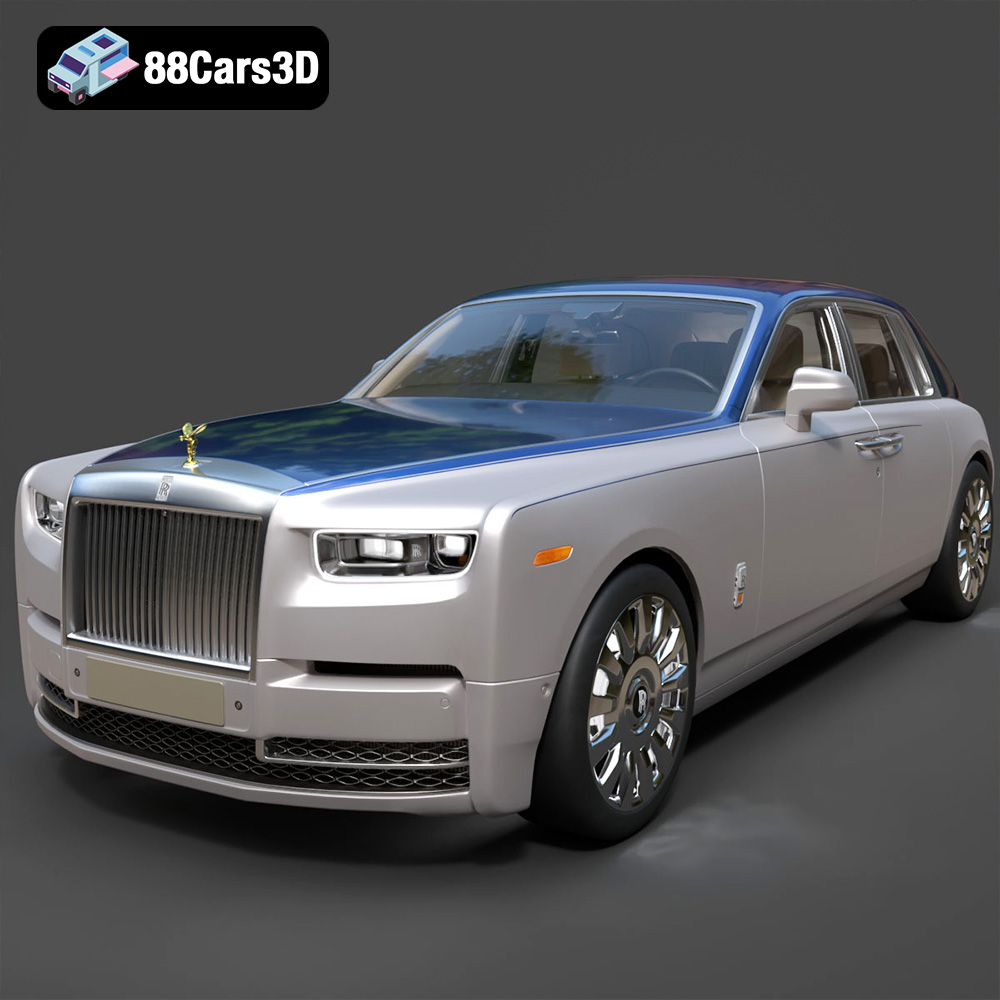
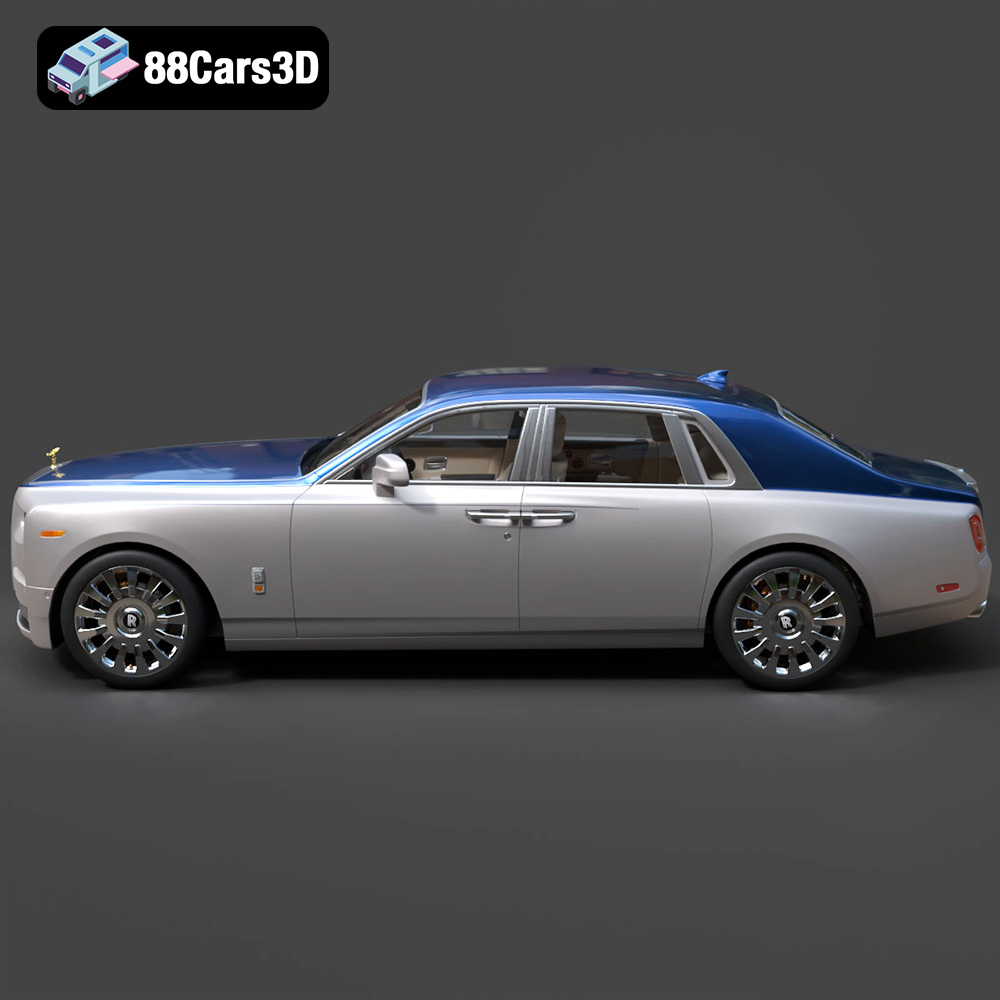
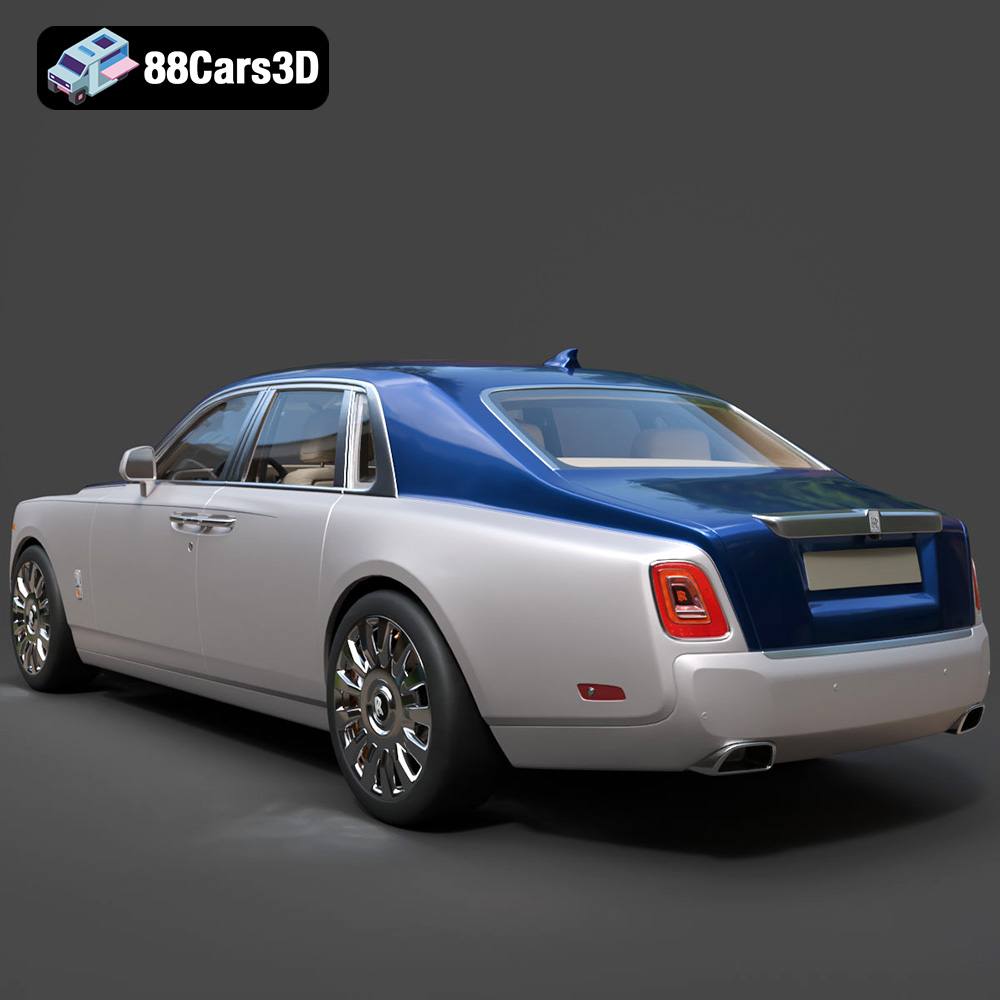
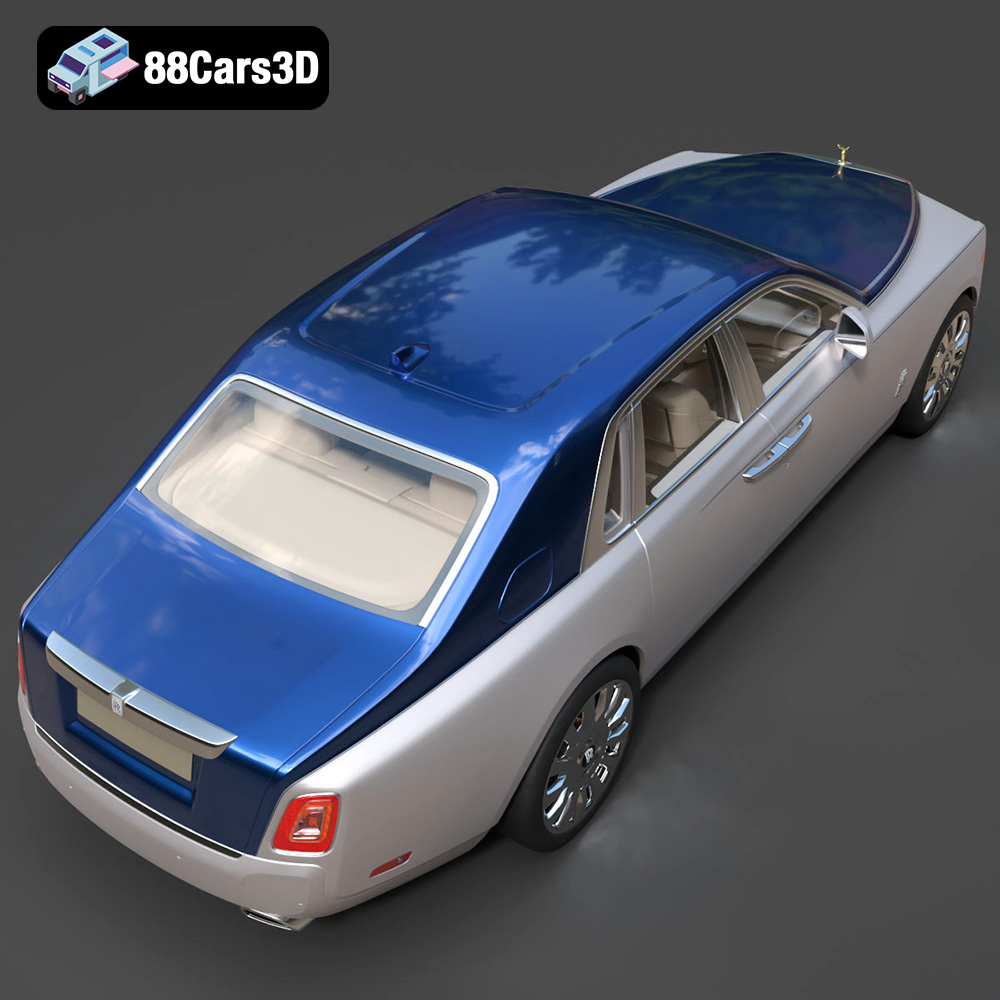
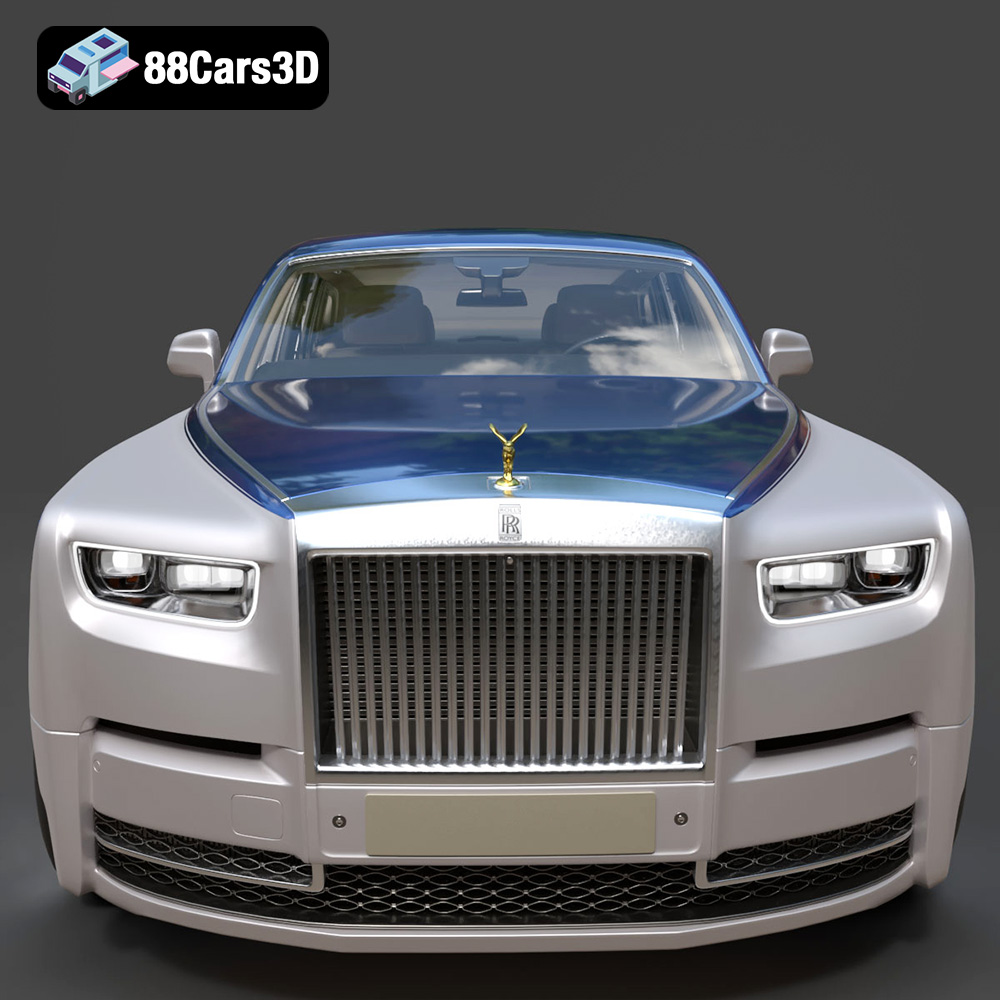
The exterior of the Phantom is defined by its monolithic Pantheon grille, elegant proportions, and the iconic Spirit of Ecstasy. This 3D model captures these elements with remarkable accuracy. The chassis geometry and stately proportions are meticulously recreated, ensuring that the digital model conveys the same commanding presence as its real-world counterpart. Details extend to the integrated dual exhaust system, the intricate design of the laser headlights and LED taillight clusters, and even the “magic carpet ride” suspension details that hint at the vehicle’s unparalleled comfort.
Crucially for dynamic scenes, the model features intricate alloy wheels with their signature self-leveling center caps and high-profile tires. The separation of wheels, suspension, and steering components, along with the iconic coach doors, provides animators with complete control. This allows for realistic wheel rotation, independent suspension travel, and the dramatic opening of the coach doors, adding layers of realism to any animation or interactive experience. Such granular control over components is a hallmark of professional 3D car models.
Stepping inside a Rolls-Royce Phantom is an experience in itself, characterized by unparalleled luxury and bespoke artistry. The 3D model endeavors to replicate this opulence within its digital cockpit. Luxurious bespoke seating with meticulous leather texture mapping ensures that the interior materials look and feel authentic, even under close scrutiny. The detailed steering wheel, classic Rolls-Royce dashboard layout, and accurate instrument cluster are all faithfully reproduced.
Special attention has been paid to ‘The Gallery’ dashboard glass fascia, a unique feature of the Phantom, which is represented with stunning clarity. Small yet crucial details like elegant chrome air vents and classic shifter stalks further enhance the realism. For applications such as gaming or VR simulations, the optimized geometry of the interior ensures smooth performance even in first-person perspectives, allowing users to immerse themselves fully in the Phantom’s lavish environment without compromising on visual fidelity.
The true value of a premium 3D asset lies in its seamless integration into diverse professional pipelines. The Rolls-Royce Phantom 2018 3D model is engineered to be a versatile tool, enhancing projects across various industries, from cinematic rendering to product visualization.
In architectural visualization, the context around a building is as important as the structure itself. Placing a luxury vehicle like the Rolls-Royce Phantom within an exterior or interior render instantly elevates the perceived value and sophistication of the scene. Imagine a grand mansion’s driveway, a high-rise penthouse parking space, or a sprawling estate with this magnificent car as a focal point. The model’s real-world scale accuracy ensures it fits perfectly into any scene, and its high-resolution textures and optimized geometry mean it stands up to the closest camera angles, providing that critical touch of realism. Artists can easily import the .max or .blend files into their respective software, set up studio lighting, and achieve stunning, photorealistic renders that define luxury lifestyle scenes for marketing and client presentations.
For advertising agencies, film production studios, or automotive marketing teams, high-quality animations are crucial. The Rolls-Royce Phantom model’s separate, animatable components – wheels, suspension, steering, and the iconic coach doors – make it an animator’s dream. Leveraging software like 3ds Max or Blender, artists can create dynamic shots showcasing the vehicle in motion, its suspension absorbing bumps, or the dramatic reveal of its opulent interior as a door glides open. Proper pivot setups ensure that these animations are fluid and mechanically accurate. The model’s robust topology is also built to handle subdivision surfacing, allowing for extremely smooth forms in high-fidelity renders without compromising initial performance for real-time applications.
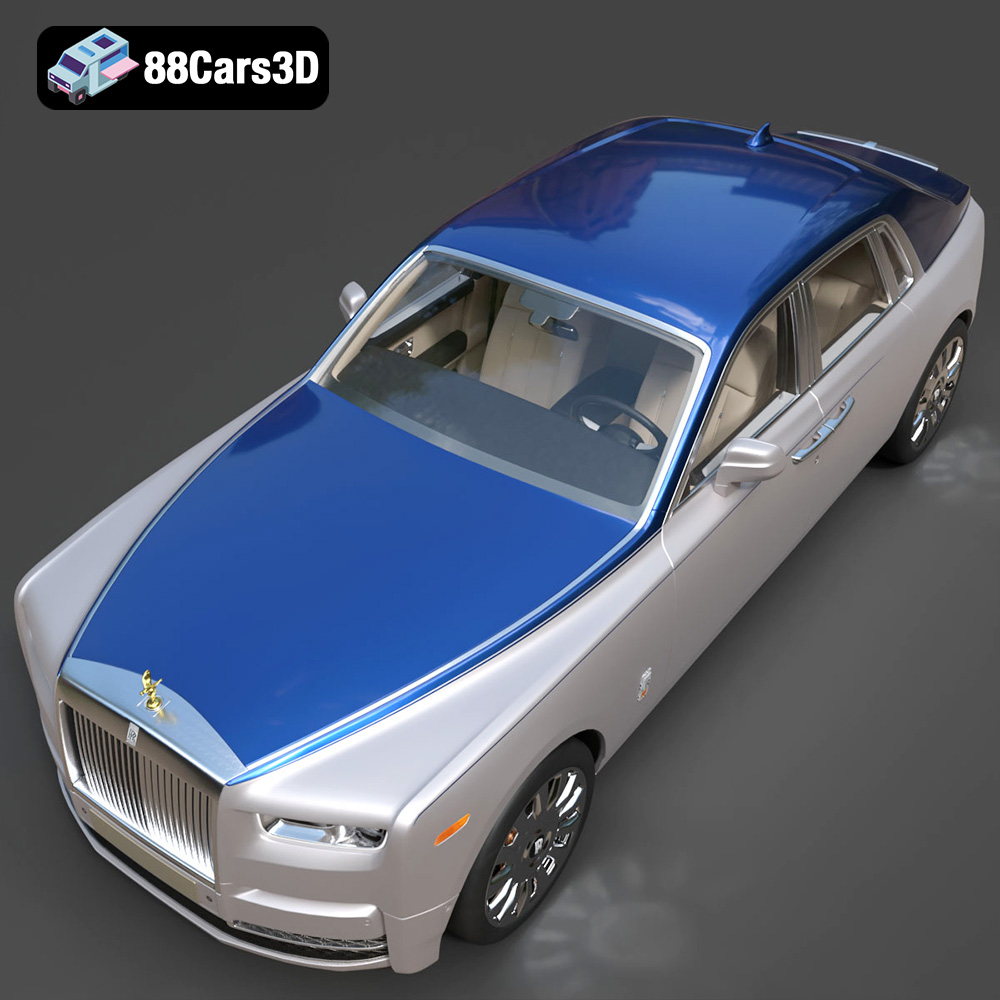
The automotive industry is increasingly moving towards interactive digital experiences. The Phantom model is perfectly suited for developing advanced product configurators or immersive virtual showrooms. Its optimized geometry and PBR material readiness mean it can be displayed in real-time engines, allowing potential customers to explore color options (like the factory two-tone finishes), material textures (matte, gloss, metallic, wood veneers), and even lighting conditions with instant feedback. The .glb format, in particular, facilitates easy integration into web-based configurators, enabling a broad audience to interact with this luxury vehicle in a browser without needing specialized software.
While the visual fidelity of the Rolls-Royce Phantom 2018 3D model is paramount for rendering, its design extends far into the interactive realm, making it an indispensable asset for game developers and AR/VR creators. Its “game-ready” optimization is a key differentiator, bridging the gap between artistic detail and real-time performance.
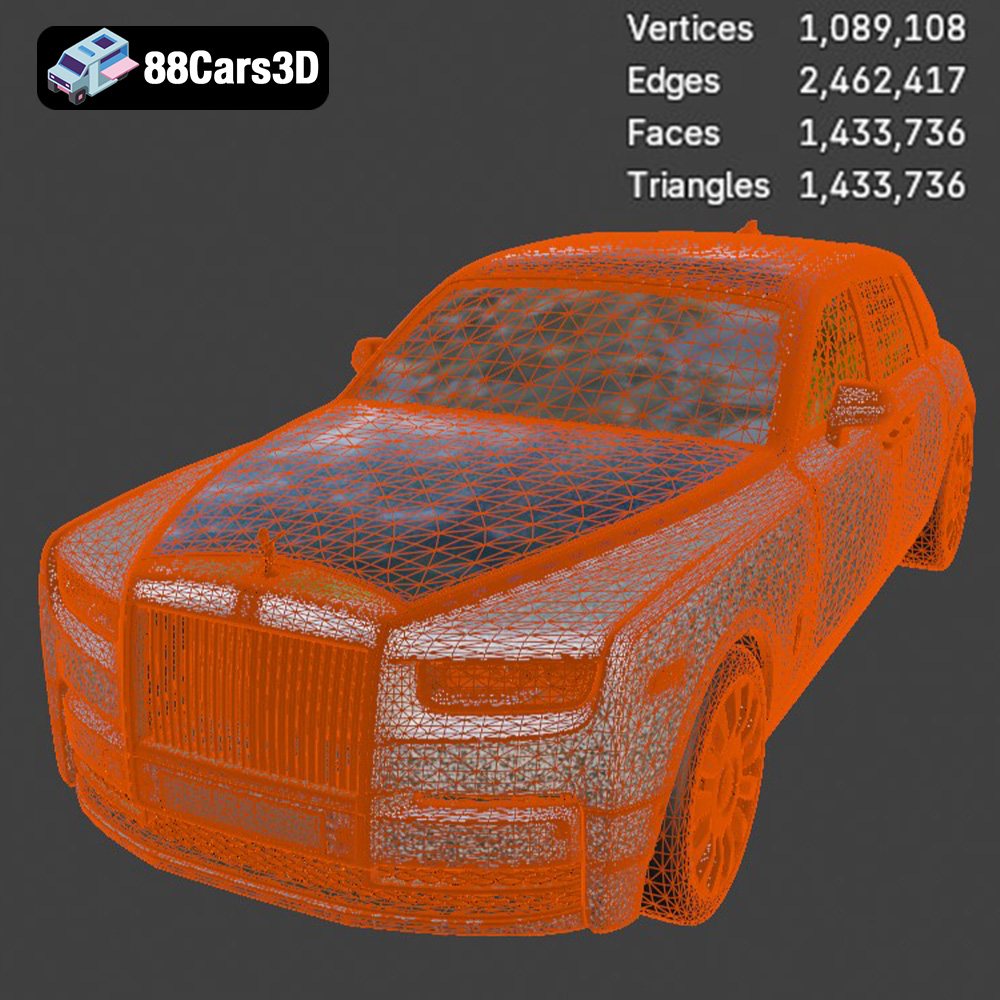
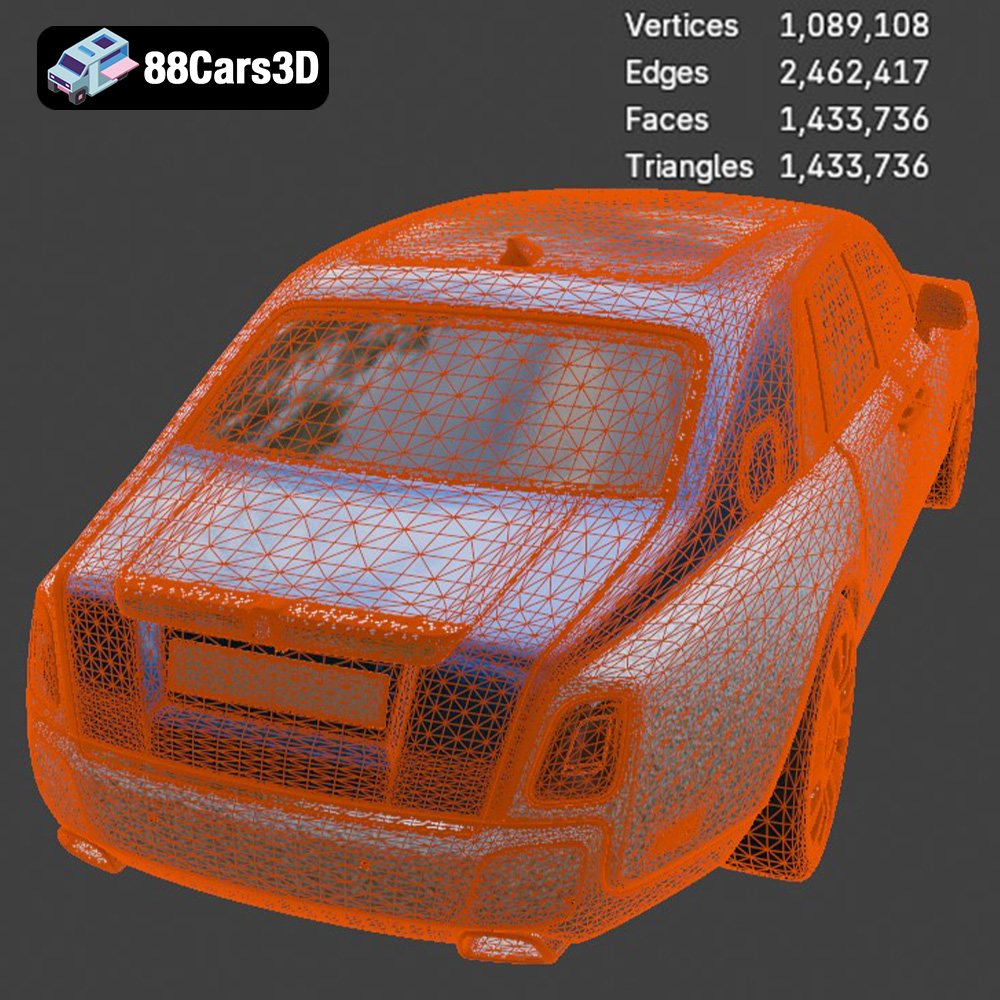
The core principle behind “game-ready” assets is the balance between visual quality and performance. The Phantom model achieves this with an efficient triangle count and optimized topology. This means it can be seamlessly integrated into demanding game engines like Unreal Engine and Unity without causing performance bottlenecks. For developers working on open-world games, racing titles, or even simulation experiences, this model provides a highly detailed yet performant vehicle. The included .fbx file, with its preserved hierarchy and pivot points, simplifies the import process, ensuring that steering, wheel rotation, and suspension travel can be implemented with minimal setup. Furthermore, the inclusion of an .unreal specific asset speaks directly to the ease of integration for projects leveraging Epic Games’ powerful engine.
For realistic gameplay, the model’s accurate real-world scale and proper pivot setups are critical. This allows for precise physics simulations, ensuring the car behaves realistically within the game environment. Whether it’s driving through a virtual city or showcasing its grandeur in a cinematic cutscene, the model is built to perform under the rigorous demands of real-time rendering.
The burgeoning fields of Augmented Reality (AR) and Virtual Reality (VR) offer new frontiers for showcasing luxury products. The Rolls-Royce Phantom 3D model is ideal for creating immersive virtual showrooms, configurators, and even mobile AR experiences. Imagine a customer using their smartphone to place a life-sized Phantom in their driveway, exploring its exterior and interior with stunning realism. The .glb format, specifically designed for efficient web and immersive display, makes this possible. Its compact, self-contained nature ensures fast loading times and smooth interaction on various devices.
In a VR showroom, the optimized geometry of the interior is particularly beneficial, allowing for fluid first-person navigation. Users can “sit” inside the car, admire ‘The Gallery’ fascia, and inspect the meticulous leather textures up close, creating a truly memorable and engaging brand experience. This capability allows manufacturers and dealerships to offer unique digital experiences that transcend geographical limitations, showcasing the pinnacle of automotive design globally.
Beyond digital screens, the Rolls-Royce Phantom 2018 3D model extends its utility into the tangible world through 3D printing. This capability caters to hobbyists, collectors, and designers who wish to hold a physical representation of this automotive masterpiece. Transforming a high-fidelity digital asset into a successful physical print requires careful consideration of specific technical parameters.
The inclusion of the .stl format is fundamental for 3D printing. This format strips away textures and materials, focusing solely on the triangulated surface geometry, which is what 3D printers understand. For optimal results, the model recommends scales of 1:12, 1:18, or 1:24. These scales strike a balance between manageable print size and the ability to retain crucial fine details like the grille mesh, the Spirit of Ecstasy, and intricate wheel designs. Larger scales allow for more detail but require more material and longer print times, while smaller scales might lose some of the model’s exquisite finesse.
Achieving a high-quality 3D print of a detailed automotive model like the Phantom demands precise printer settings. A recommended layer height of 0.04–0.12 mm is suggested, indicating that resin printing (SLA/DLP) is highly recommended over filament-based (FDM) printing. Resin printers offer superior resolution, crucial for capturing the smooth curves, sharp edges, and delicate features of a luxury car. Wall thickness is another critical factor, with 1.2–2.0 mm providing sufficient structural integrity without making the model excessively heavy or material-intensive. An infill of 20-30% typically provides a good balance between strength and material usage.
Due to the complex geometry of a car, supports are almost always required. The product specifies supports for detailed parts such as the exhaust system, mirrors, the intricate grille, and the slender Spirit of Ecstasy. Proper print orientation is also key; printing the frame angled can enhance structural integrity and minimize visible layer lines, while wheels are often printed separately to optimize their circular shape and detail. Post-processing, including sanding, priming, and applying authentic factory colors with metallic finishes, is essential to bring the printed model to life, mimicking the Phantom’s real-world allure.
A truly valuable 3D asset is not just a static representation; it’s a dynamic foundation for creative exploration and adaptation. The Rolls-Royce Phantom 2018 3D model offers extensive customization options, ensuring it remains relevant and adaptable for future projects and evolving aesthetic demands. This flexibility is what sets professional-grade 3D car models apart.
The ability to easily change body colors is paramount for any automotive asset. The Phantom model allows for this, enabling artists to render the car in its iconic factory two-tone finishes or experiment with custom hues and vibrant metallics to match specific brand campaigns or artistic visions. Beyond color, the capacity to modify tire textures allows for variations, from street-ready high-profile tires to potential concept or racing variants, adding depth to scene storytelling.
Material finishes are equally crucial for conveying luxury. The model allows for adjustment of finishes, whether you need a sleek matte look, a high-gloss sheen, or the subtle reflectivity of metallic paint. For the interior, altering wood veneers and leather types can completely transform the bespoke feel of the cabin, catering to diverse client preferences. This level of material customizability ensures that the Phantom can be re-imagined for countless scenarios without needing to remodel. All these options are readily accessible within the included .blend, .max, and .fbx files, allowing artists to leverage their preferred software’s material editors to achieve stunning results.
The flexibility extends to adapting lighting for different environments. Whether you’re placing the Phantom under the harsh sun of a desert landscape, the soft glow of a twilight cityscape, or the controlled reflections of a studio setup, the model’s robust material definitions respond realistically to various lighting conditions. This ensures consistent quality across all rendering scenarios.
Furthermore, the high-quality, optimized topology and PBR-ready materials future-proof this asset. As rendering technologies evolve, particularly in real-time engines, assets built on solid technical foundations like this Phantom model will continue to perform and integrate seamlessly. The attention to detail in its construction ensures that it can be easily updated with new shaders or rendering techniques without requiring extensive rework, making it a sustainable investment for any professional 3D artist or studio.
The 2018 Rolls-Royce Phantom 3D model is a testament to the power of meticulous digital craftsmanship. It’s more than just a model; it’s a versatile, high-fidelity asset engineered for the demands of modern professional workflows. From its accurate exterior and opulent interior details to its optimized geometry and extensive range of file formats, it empowers artists, developers, and designers to create stunning visualizations, immersive interactive experiences, and even tangible 3D prints.
Whether you’re pushing the boundaries of automotive rendering, developing the next generation of game assets, or crafting compelling AR/VR showrooms, this model provides the foundational quality and flexibility required for success. Its “game-ready” optimization, real-world scale accuracy, and animatable components ensure it integrates effortlessly into your projects, saving valuable production time while delivering exceptional visual results. For those seeking the pinnacle of digital automotive luxury, this Rolls-Royce Phantom model, available at 88cars3d.com, is an indispensable addition to any professional asset library. It embodies the precision and versatility that modern 3D projects demand, ensuring your creations truly stand out.
Experience the absolute pinnacle of luxury with this incredibly detailed 3D model of the 2018 Rolls-Royce Phantom. As the flagship of the Rolls-Royce marque, the Phantom represents over a century of bespoke craftsmanship and engineering excellence. This model faithfully captures the majestic presence of the real-world vehicle, featuring the iconic monolithic Pantheon grille, the elegantly sweeping roofline, and the unmistakable Spirit of Ecstasy adorning the hood. Underneath its regal exterior lies the representation of its silent but powerful 6.75-liter twin-turbocharged V12 engine.
This 3D model boasts exceptional quality with an optimized topology and triangle count, ensuring it is fully game-ready without sacrificing high-end visual fidelity. The meticulous geometry is designed to meet the rigorous standards of modern game development, AR/VR experiences, high-end animation, and architectural visualization.
Perfect for luxury lifestyle scenes, high-end automotive configurators, immersive virtual showrooms, and cinematic renders.
$19.99
.blend
.fbx
.glb
.max
.obj
.phantom
.ply
.rendering
.stl
.unreal
car-3d-model
game asset
game-ready
low-poly
luxury car
luxury-sedan
optimized
phantom-2018
rolls-royce
VR/AR