Get 20% OFF All Premium 3D & STL Models!

In the vast landscape of digital creation, certain vehicles hold an iconic status that transcends their utilitarian origins. They become symbols of resilience, adventure, and timeless design. The VAZ Lada Niva 4×4, in particular its elongated five-door 2131 variant from 2012, is a prime example of such a legend. Known for its rugged simplicity, robust unibody architecture, and permanent four-wheel-drive system, the Niva has carved out a unique niche, conquering some of the planet’s most unforgiving terrains. Its distinctive boxy silhouette, classic round headlights, and utilitarian charm make it instantly recognizable.
For 3D artists, game developers, automotive visualization specialists, and AR/VR creators, bringing such an icon to life in the digital realm requires precision, optimization, and versatility. A high-quality 3D model of the VAZ Lada Niva 4×4 2131 isn’t just an asset; it’s a foundation for countless creative applications, from photorealistic renders to immersive game environments. This article delves into the technical intricacies and creative opportunities afforded by expertly crafted 3D car models, using the VAZ Lada Niva 4×4 2131 (2012) 3D model as our exemplary subject. We will explore its utility across various professional workflows, from game development and architectural visualization to virtual reality and 3D printing, highlighting why a meticulously detailed and optimized asset is indispensable for achieving professional-grade results. You can find exceptional models like this on marketplaces such as 88cars3d.com, ensuring your projects start with the highest quality.
The versatility of a 3D model is often defined by the range of file formats it supports. Each format is engineered with specific use cases and software ecosystems in mind, offering distinct advantages for various stages of a project. When acquiring a sophisticated 3D car model like the VAZ Lada Niva 4×4 2131, understanding these formats is crucial for seamless integration into your preferred workflow. The availability of multiple formats ensures that the asset can be utilized across diverse platforms, from real-time game engines to high-fidelity rendering software and even physical reproduction through 3D printing.
The .blend file format is native to Blender, the powerful open-source 3D creation suite. A .blend file typically contains the entire scene data, including meshes, materials, textures, lighting, cameras, animation data, and even custom scripts. For artists primarily working in Blender, this is the most convenient format as it offers full editability and preserves all scene relationships. If you need to dissect the VAZ Lada Niva 4×4 2131 model, modify its topology, tweak materials down to the node level, or re-rig it for a specific animation, the .blend file provides the complete project environment. This is ideal for deep customization or adapting the model for highly specific animation sequences.
.fbx (Filmbox) is arguably the most widely adopted 3D file format for data exchange between different 3D software applications and game engines. Developed by Autodesk, FBX is excellent for transferring models, animations, cameras, and lights while maintaining crucial scene information. Its strength lies in its ability to encapsulate complex data, making it the go-to format for pipelines involving Unreal Engine, Unity, 3ds Max, Maya, and Blender alike. For real-time applications, the VAZ Lada Niva 4×4 2131’s .fbx version would be optimized for efficient import, often including embedded textures or material definitions that simplify setup in game engines, ensuring that its geometry, UVs, and hierarchical structure are preserved for optimal performance.
The .obj (Wavefront OBJ) format is a simple, widely supported geometry definition file. It stores vertex positions, UV coordinates, normals, and face information, often accompanied by an .mtl (material template library) file for basic material properties. While .obj doesn’t support animation or rigging, its universal compatibility makes it an excellent choice for static mesh interchange across virtually any 3D software. If your workflow requires a clean mesh for sculpting, retopology, or simply importing into a rendering engine for a static shot, the .obj version of the VAZ Lada Niva provides a robust and reliable foundation.
.glb (GL Transmission Format Binary) is a relatively newer format specifically designed for efficient transmission and loading of 3D scenes and models in web browsers, augmented reality (AR), and virtual reality (VR) applications. It’s a binary version of glTF, which packages textures, materials, and geometry into a single file, reducing load times and simplifying deployment. For interactive experiences featuring the VAZ Lada Niva 4×4 2131 in a web-based configurator or an AR app, the .glb format is indispensable due to its small file size and quick rendering capabilities.
The .stl (Stereolithography) format is the standard file type for 3D printing. It represents a 3D model as a series of connected triangles, defining only the surface geometry without color or texture information. While simple, its ubiquity in the additive manufacturing world makes it essential for physical reproduction. If you intend to 3D print a miniature VAZ Lada Niva 4×4 2131 model, the .stl file is what your slicing software will read to generate the print path, providing the necessary triangulated mesh data for accurate reproduction.
.ply (Polygon File Format or Stanford Triangle Format) is a format for storing graphical objects as a collection of polygons. It supports properties like color, transparency, and surface normals for each polygon, and can also store point clouds. While less common for general animation or rendering than FBX or OBJ, PLY is frequently used in scientific applications, 3D scanning, and CAD/CAM workflows where precision mesh data and additional per-vertex or per-face attributes are important. For intricate analysis or specific manufacturing processes beyond typical 3D printing, the .ply format offers a detailed representation of the VAZ Lada Niva’s geometry.
The .unreal format, or more accurately, assets packaged for Unreal Engine, typically refers to a pre-configured asset that includes not just the mesh, but also materials, textures, physics assets, and sometimes even basic blueprints, all set up within the Unreal Engine project structure. This provides an almost plug-and-play experience. When a 3D model like the VAZ Lada Niva is provided in an “.unreal” package, it means significant setup work has already been completed, ensuring optimal performance and visual fidelity within Unreal Engine, saving developers valuable time.
Similar to .blend for Blender, the .max file is the native project format for Autodesk 3ds Max. It stores all scene information, including complex modifiers, scene hierarchy, animation, lighting, and rendering settings. For professionals operating within the 3ds Max ecosystem, having the VAZ Lada Niva 4×4 2131 model in .max format allows for complete control over every aspect of the asset. This is especially useful for detailed architectural visualizations, broadcast animations, or high-end rendering projects where 3ds Max’s robust toolset is preferred.
The inclusion of all these diverse formats with the VAZ Lada Niva 4×4 2131 3D model underscores its adaptability and value, ensuring it can be a cornerstone asset for any digital project.
Creating 3D car models that perform flawlessly in real-time environments like video games is an art form that balances visual fidelity with computational efficiency. The VAZ Lada Niva 4×4 2131 model exemplifies this delicate balance, delivering stunning visuals without burdening the game engine. This optimization is crucial for maintaining high frame rates and ensuring a smooth user experience, especially in open-world games or demanding simulations.
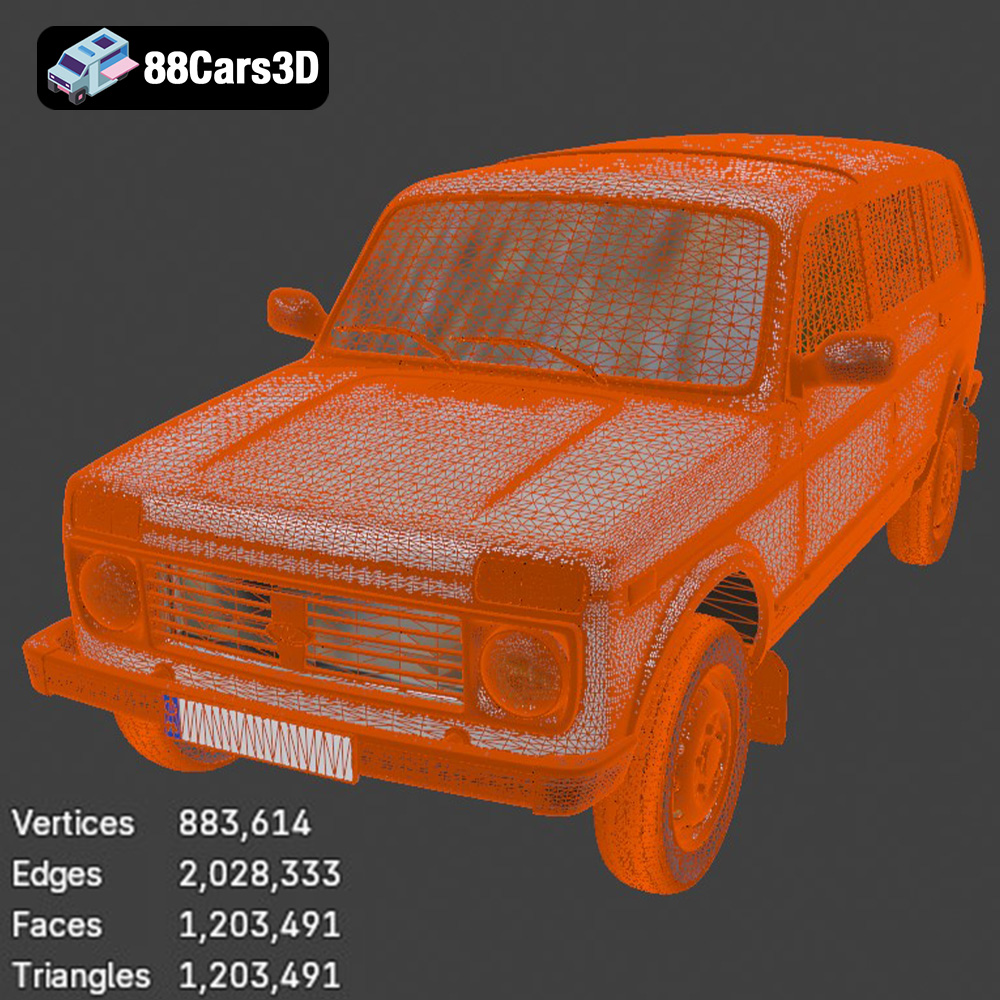
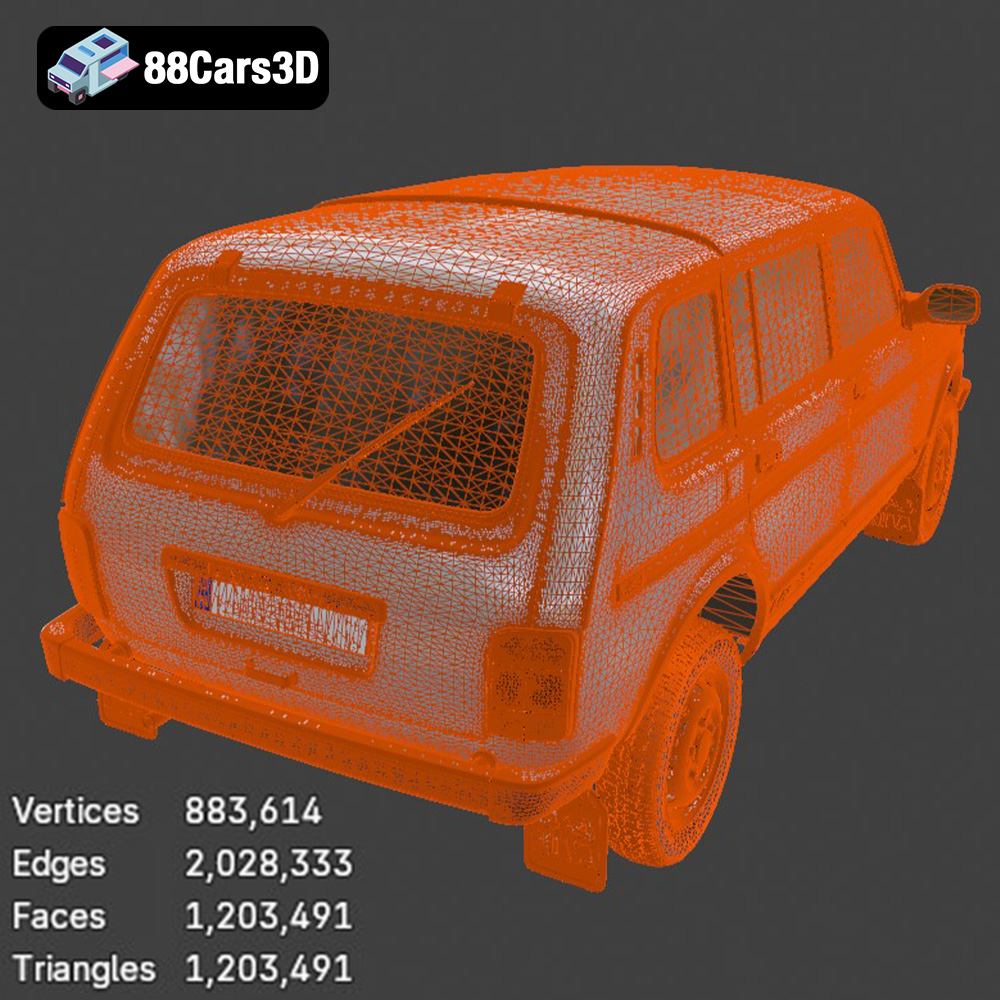
A fundamental aspect of game-ready assets is optimized topology. This refers to the clean, efficient arrangement of polygons (triangles and quads) that define the model’s surface. The VAZ Lada Niva 4×4 2131 model is lauded for its “optimized triangle count,” which means it retains the complex curves and distinct features of the actual vehicle while minimizing the number of polygons. High-end visual fidelity is achieved through careful sculpting and normal mapping, where high-detail information is baked into textures, allowing a lower-poly mesh to appear incredibly detailed. This technique is vital for game engines, which must render thousands of objects simultaneously without performance drops. The Niva’s classic boxy silhouette, while seemingly simple, still requires careful consideration to capture its rugged charm efficiently.
Accuracy in real-world scale and proportions is paramount for 3D car models, particularly for game development and architectural visualization. An incorrectly scaled vehicle can break immersion, disrupt physics simulations, and look out of place in any scene. The VAZ Lada Niva 4×4 2131 model is meticulously crafted to “real-world scale accuracy,” ensuring that when it’s dropped into a scene in Unreal Engine or 3ds Max, it fits perfectly alongside other assets and environments. This attention to detail extends to its “elongated five-door version” dimensions, maintaining the characteristic profile that defines the 2131 variant, which is critical for convincing scale and interaction within a virtual world.
For a vehicle to be truly game-ready, its components must be separated and properly pivoted for animation and interaction. The VAZ Lada Niva model features “separate wheels, suspension, and steering components for animation.” This modularity allows developers to easily rig the vehicle for dynamic movement: the wheels can rotate independently, the suspension can articulate realistically over uneven terrain, and the steering can respond precisely to player input. Furthermore, “proper pivot setup for steering, wheel rotation, and suspension travel” is explicitly mentioned, signifying that the model is already prepared for complex vehicle physics systems, dramatically reducing development time for game studios.
Beyond game development, premium 3D car models are indispensable tools for creating breathtaking visualizations. Whether it’s a photorealistic marketing campaign, a detailed architectural render, or an interactive AR/VR experience, the quality of the 3D asset forms the bedrock of visual excellence. The VAZ Lada Niva 4×4 2131 model, with its accurate geometry and optimized design, is perfectly suited for these demanding applications.
In the realm of automotive rendering, artists strive for photorealism that blurs the line between digital and physical. Software like 3ds Max, Blender, and Maya, paired with advanced renderers such as V-Ray, Corona, Octane, or Cycles, are used to achieve this. The VAZ Lada Niva model excels here due to its “excellent topology” and potential for “authentic cloth and vinyl textured seating.” Artists can load the model, apply sophisticated PBR (Physically Based Rendering) materials to mimic real-world surfaces (like its “utilitarian steel wheels with rugged off-road tire treads” or its “classic round headlights”), set up intricate lighting scenarios, and compose dramatic camera angles. The model’s “detailed engine block” and “authentic rear exhaust pipe and muffler configuration” also allow for close-up renders that showcase engineering detail, crucial for marketing and design reviews. These renders are perfect for brand campaigns, lifestyle scenes, and studio lighting setups, bringing the Niva’s rugged charm to any digital canvas.
Augmented Reality (AR) and Virtual Reality (VR) are transforming how we interact with 3D content, offering immersive and interactive experiences. High-quality, optimized 3D car models are central to these technologies. The VAZ Lada Niva 4×4 2131 model is “perfect for immersive virtual showrooms, configurators, and mobile AR experiences.” Its optimized geometry, especially in formats like .glb, ensures smooth performance even on less powerful mobile devices. Imagine a potential buyer exploring the Niva in AR, walking around its “classic boxy silhouette” in their driveway, or a VR user stepping inside its “authentic cloth and vinyl textured seating” to examine the “utilitarian analog instrument cluster.” The model’s “optimized geometry for first-person POV in gaming” also directly translates to superior VR interior experiences, making the user feel truly present inside the vehicle.
Architectural visualization (ArchViz) often requires more than just buildings; it needs contextual elements to bring a scene to life. Placing a realistic vehicle like the VAZ Lada Niva 4×4 2131 in front of a modern house, a rustic cabin, or an industrial building adds a layer of realism and storytelling. The Niva, known for its off-road prowess, is particularly well-suited for winter landscape renders or scenes depicting remote, rugged environments. Its real-world scale and accurate proportions ensure it integrates seamlessly with architectural models, enhancing the overall believability and narrative of the visualization. This level of detail elevates an architectural render from a mere structure to a living, breathing environment.
Game development is a demanding field where asset quality directly impacts player immersion and performance. A meticulously crafted 3D car model, such as the VAZ Lada Niva 4×4 2131, serves as a cornerstone for creating compelling vehicle mechanics and engaging gameplay. Its design and optimization cater directly to the rigorous requirements of modern game engines like Unreal and Unity.
Unreal Engine is renowned for its powerful rendering capabilities and extensive toolset for game development. Integrating the VAZ Lada Niva 4×4 2131 model into Unreal begins with importing the optimized .fbx file or utilizing the pre-packaged .unreal format for a truly seamless experience. Once imported, developers typically set up its materials using Unreal’s physically based shading system, recreating the textures for its “rugged off-road tire treads” and “authentic cloth and vinyl textured seating.” Next, a physics asset is created to define collision and physical interaction. The Niva’s “separate wheels, suspension, and steering components” allow for the implementation of advanced vehicle blueprints, enabling realistic driving physics, suspension travel, and precise steering controls. This process transforms a static model into a fully drivable, interactive vehicle, perfect for open-world games or off-road driving simulators.
Unity is another widely used game engine, particularly favored for its versatility and ease of use for indie developers and mobile games. The VAZ Lada Niva 4×4 2131 model can be imported into Unity via its .fbx format. Similar to Unreal, the material setup involves applying PBR textures and shaders. Colliders must be added to the vehicle’s body and wheels to ensure proper physical interactions within the game world. Unity’s scripting capabilities (C#) allow for the creation of intricate vehicle controllers, leveraging the Niva’s “proper pivot setup for steering, wheel rotation, and suspension travel” to simulate realistic handling. The model’s “optimized triangle count” makes it an excellent candidate for mobile game development, where performance is even more critical, ensuring smooth gameplay even on lower-spec devices. The Niva is ideally suited for racing titles, simulators, and adventure games built within the Unity ecosystem.
The choice of vehicle can profoundly impact the narrative and atmosphere of a game. The VAZ Lada Niva 4×4 2131, with its reputation for ruggedness and simplicity, fits perfectly into specific game genres. It’s “perfect for off-road driving simulators” where its 4×4 capabilities can be highlighted. In post-apocalyptic game environments, its utilitarian nature and enduring design make it a believable and iconic survivor vehicle. For open-world titles, it can serve as a reliable, go-anywhere transport, adding a distinct character to the game world. Whether traversing snowy landscapes or muddy trails, the Niva’s presence enriches the digital narrative, offering game designers a compelling asset to build their worlds around.
The utility of a high-quality 3D model extends far beyond digital screens. With the advent of accessible 3D printing technologies, artists and hobbyists can transform virtual assets into tangible objects. The VAZ Lada Niva 4×4 2131 3D model, specifically prepared in .stl format, opens up exciting possibilities for physical replication, allowing enthusiasts to hold a piece of automotive history in their hands.
The .stl file format is the universal language of 3D printers, representing a model’s surface as a mesh of triangles. When preparing the VAZ Lada Niva for 3D printing, the .stl version of the model is fed into a “slicer” software (e.g., Cura, PrusaSlicer, Chitubox). This software converts the 3D model into a series of thin layers, generating the toolpath instructions for the 3D printer. Key settings include “recommended scale: 1:12 / 1:18 / 1:24” which influences the final size and detail. “Layer height: 0.04–0.12 mm” is crucial for print quality, with finer layers (lower values) resulting in smoother surfaces, especially for resin printing. “Wall thickness: 1.2–2.0 mm” ensures structural integrity, while “infill: 20–30%” provides internal strength without excessive material use. For parts with overhangs or intricate details like the “exhaust, mirrors, handlebars,” supports are “required.” “Print orientation: Frame printed angled for structural integrity; wheels printed separately” is a practical recommendation to maximize success and detail capture.
The choice of 3D printing material significantly impacts the final look and feel of the physical VAZ Lada Niva model. “Resin printing recommended for fine details” suggests that SLA/DLP resin printers are ideal for capturing the intricate features of the Niva, such as its “detailed engine block” or the textures of its “utilitarian analog instrument cluster.” FDM (Fused Deposition Modeling) printers, while more common, might be suitable for larger scales or less detailed models, often requiring more extensive post-processing. After printing, “post-processing” steps are essential to achieve a professional finish. This typically involves “sanding” to remove layer lines or support marks, applying a “primer” to create a uniform surface for paint, and then painting with “authentic factory colors with metallic finishes” to bring the model to life. The ability to customize “body/tank colors” or “modify tire textures” digitally provides a blueprint for physical customization as well, allowing hobbyists to create unique, personalized models.
One of the most significant advantages of investing in high-quality 3D car models like the VAZ Lada Niva 4×4 2131 from 88cars3d.com is the extensive creative freedom they offer. These assets are not rigid, unchangeable objects; rather, they are flexible foundations upon which artists and developers can build unique visions, tailored to specific project requirements.
The ability to “change body/tank colors” is fundamental for any automotive visualization. From applying classic factory colors to experimenting with custom metallic, matte, or gloss finishes, artists can dramatically alter the vehicle’s appearance to suit a scene’s mood or a client’s branding. Furthermore, the option to “modify tire textures (off-road vs. street variants)” allows the Niva to adapt to different environments and narratives. Imagine the same Niva model, transformed from a rugged off-roader with aggressive tire treads, to a more subdued, street-legal version suitable for urban settings simply by swapping textures and adjusting material properties. This level of control ensures the model remains relevant across a wide array of visual contexts.
A 3D model’s appearance is profoundly influenced by its surrounding environment and lighting. A well-constructed asset like the VAZ Lada Niva 4×4 2131 thrives under various lighting conditions, allowing artists to “adapt lighting for different environments.” Whether it’s the harsh, direct sunlight of a desert scene, the soft, diffused light of an overcast winter day, or the dramatic studio lighting of a product showcase, the model’s PBR-ready materials will react realistically. Integrating the Niva into “winter landscape renders” or “post-apocalyptic game environments” becomes a seamless process, where the environment’s ambient lighting and reflections interact authentically with the vehicle’s surfaces, enhancing realism and mood. This adaptability makes the model a versatile tool for any rendering scenario.
The VAZ Lada Niva 4×4 2131 3D model serves as an excellent example of the value that premium 3D assets bring to creative professionals. Its comprehensive design, optimization for various platforms, and included customization options empower artists and developers to save time and achieve superior results. For those looking to populate their digital garages with diverse, high-quality 3D car models, exploring reputable marketplaces like 88cars3d.com is a crucial step. Such platforms provide access to a curated selection of vehicles, each meticulously crafted and ready for immediate deployment in ambitious projects, from game development to architectural visualization and immersive AR/VR experiences.
The VAZ Lada Niva 4×4 2131 (2012) stands as a testament to utilitarian design and rugged capability, both in the physical world and, increasingly, within digital realms. As we’ve explored, a high-quality 3D model of this iconic vehicle is far more than just a collection of polygons; it’s a versatile, optimized asset ready to drive innovation across numerous industries. From its meticulous real-world scale and optimized topology for game development in Unreal and Unity, to its suitability for stunning automotive rendering in 3ds Max and immersive AR/VR experiences, this model provides an unparalleled foundation. Its availability in a wide array of technical formats—from .blend and .fbx to .obj, .glb, .stl, .ply, .unreal, and .max—underscores its adaptability, ensuring seamless integration into virtually any professional workflow. Moreover, the inherent flexibility for customization, from altering paint finishes to modifying tire types, ensures that the VAZ Lada Niva can be perfectly tailored to any creative vision, whether for a realistic simulation, a captivating render, or a physical 3D print. For professionals seeking top-tier 3D car models that blend historical accuracy with modern technical excellence, assets like the VAZ Lada Niva 4×4 2131 are invaluable resources. They represent not just vehicles, but platforms for limitless digital creativity, all readily available at marketplaces like 88cars3d.com.
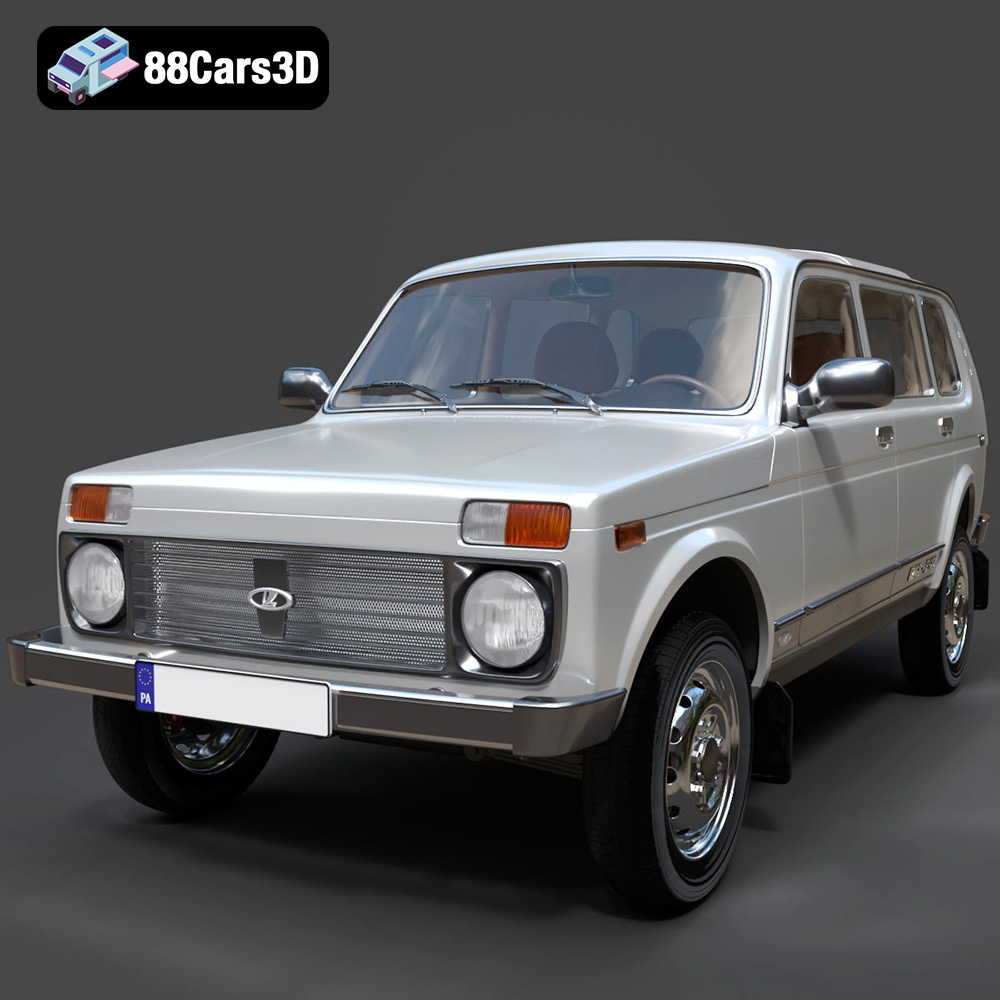
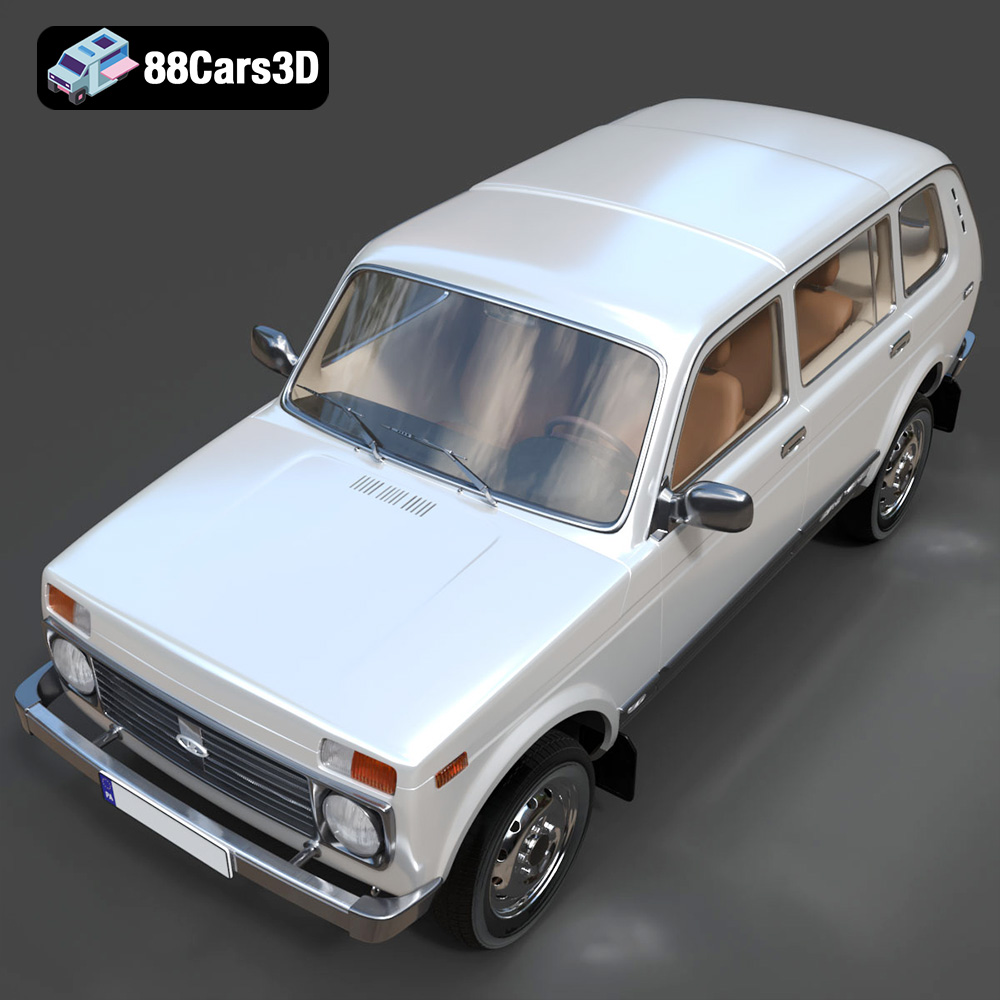
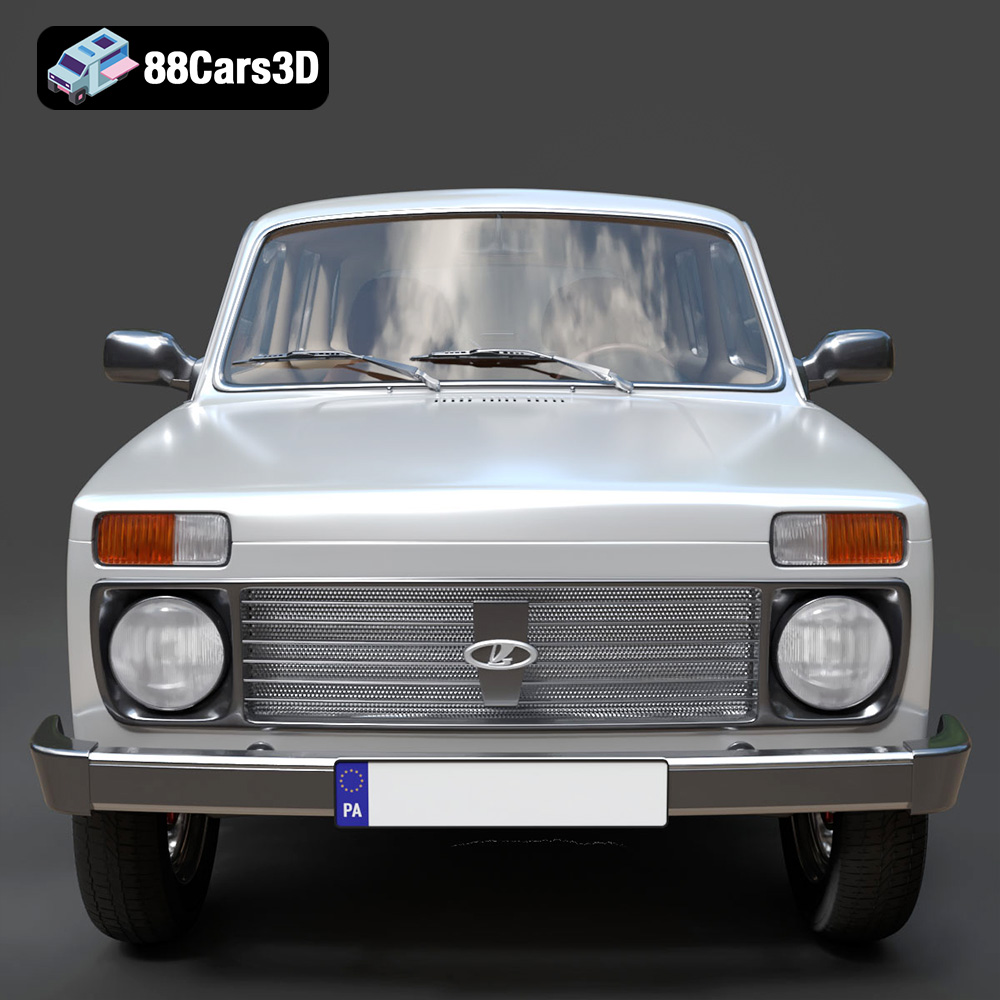
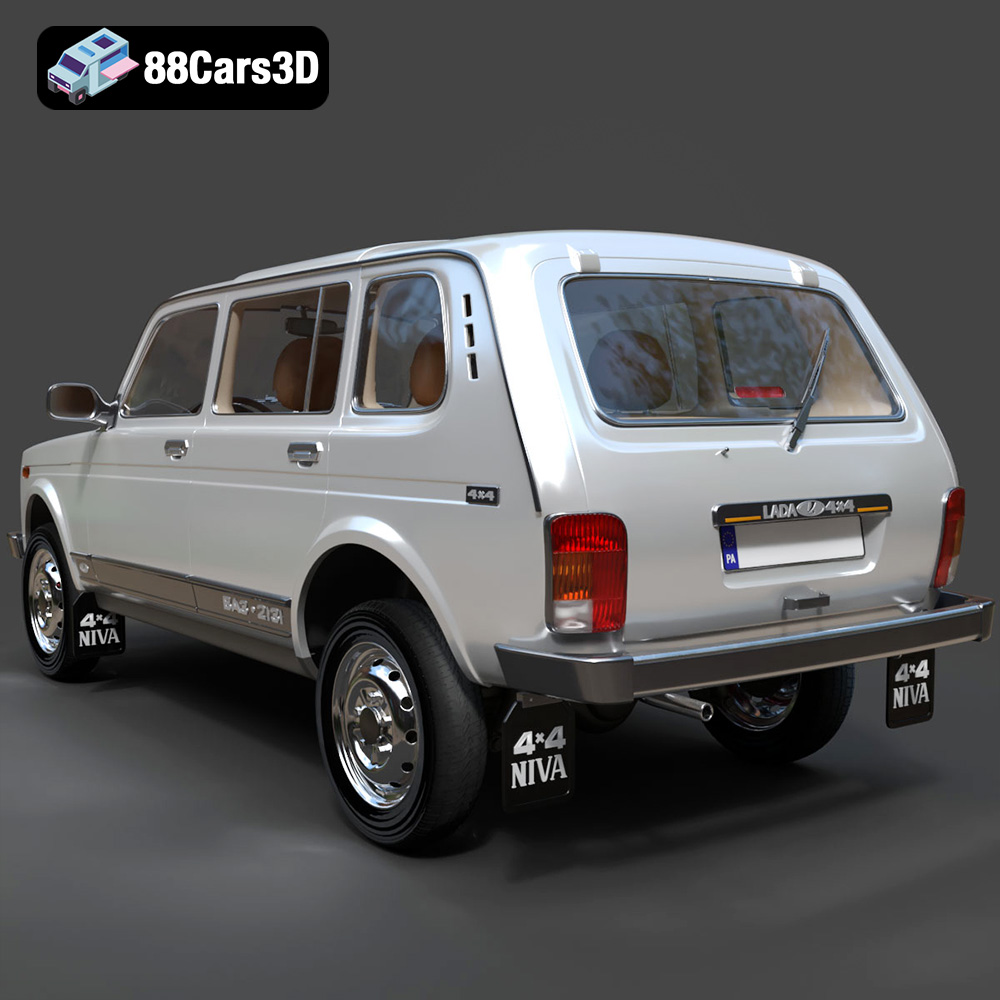
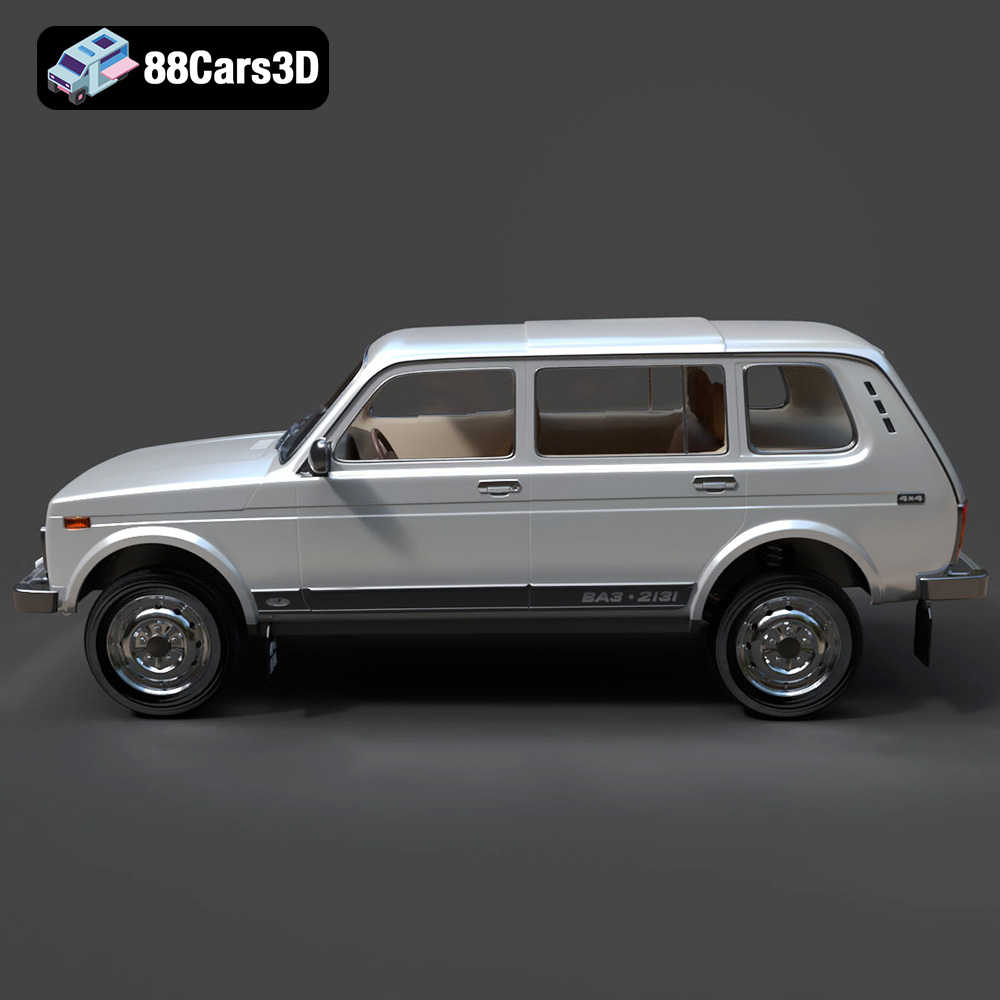
The VAZ Lada Niva 4×4 2131 (2012) is the iconic, elongated five-door version of the legendary Russian off-roader. Known for its rugged simplicity, unibody architecture, and full-time four-wheel-drive system, this legendary utilitarian vehicle boasts a rich heritage of conquering unforgiving terrains. Key visual elements include its classic boxy silhouette, distinct round headlights, prominent front grille, utilitarian steel wheels, and the extended wheelbase that defines the 2131 variant.
This 3D model features excellent topology with an optimized triangle count, striking the perfect balance between high-end visual fidelity and game-ready performance. Carefully crafted with accurate real-world dimensions, it is heavily suited for integration into game engines (Unreal, Unity), architectural visualizations, and immersive AR/VR simulations.
Perfect for off-road driving simulators, post-apocalyptic game environments, winter landscape renders, and automotive visualization scenes.
.blend, .fbx, .obj, .glb, .stl, .ply, .unreal, .max
Tags:
vaz, lada, niva, 4×4, 2131, suv, off-road, classic-car, game-ready, low-poly, optimized, car-3d-model, game-asset, rendering, vr-ar, blend, fbx, obj, glb, stl, ply, unreal, max
$19.99
.4×4
.blend
.fbx
.glb
.lada
.max
.niva
.obj
.ply
.rendering
.stl
.unreal
.vaz
2131
car-3d-model
classic-car
game asset
game-ready
low-poly
off-road
optimized
SUV
VR/AR