Get 20% OFF All Premium 3D & STL Models!

The allure of a hypercar extends far beyond its physical presence; it permeates the digital realm, captivating designers, game developers, and visualization artists alike. Crafting a truly authentic digital twin of such an engineering marvel is an intricate dance between artistic vision and technical precision. It demands an obsessive attention to detail, from the curve of a carbon-fiber panel to the intricate mechanics of a twin-turbo V8. When done correctly, a high-fidelity 3D model transforms from mere data into a versatile asset, ready to power the next generation of games, immersive experiences, and stunning visual campaigns.
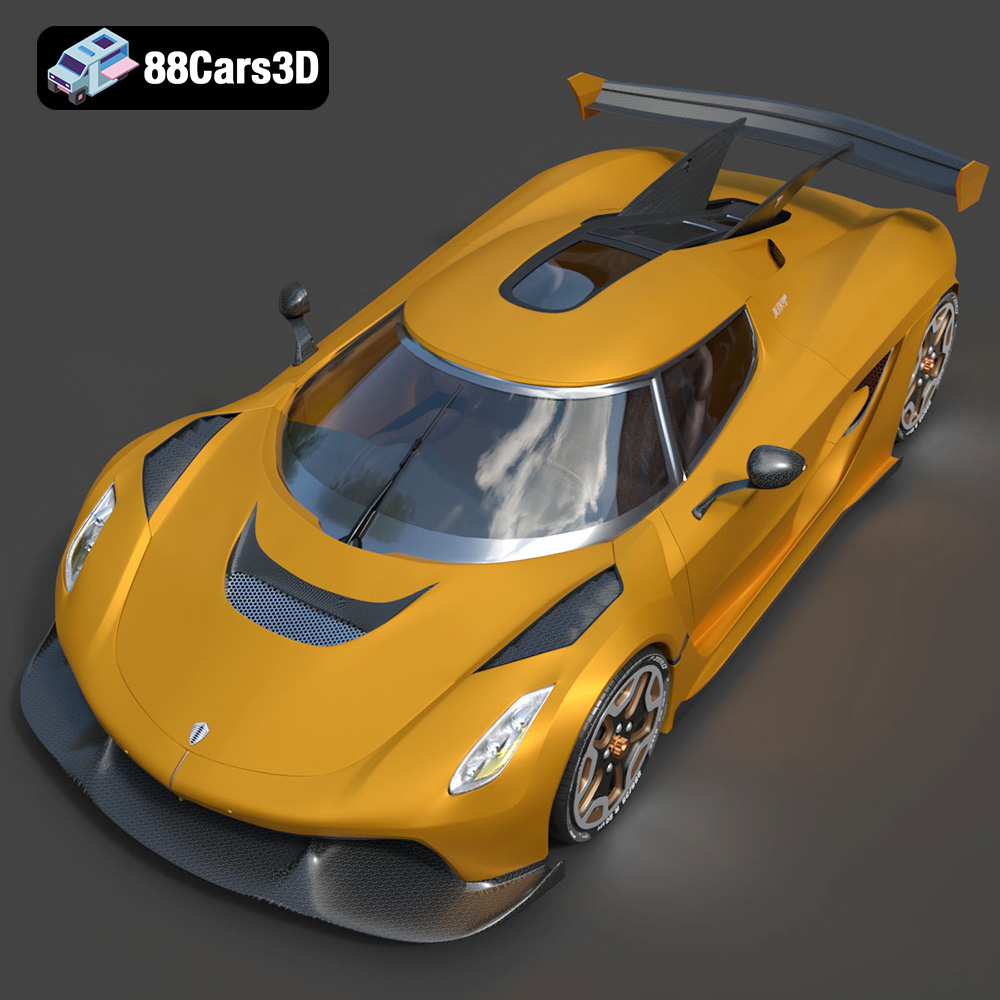
In this comprehensive guide, we’ll explore the sophisticated world of premium 3D car models, dissecting the technical considerations, workflow methodologies, and diverse applications that define excellence in digital automotive design. We’ll delve into the nuances of file formats, the intricacies of real-time engine integration, and the artistry of cinematic rendering. Throughout our exploration, we’ll spotlight an exceptional example of digital craftsmanship: the Koenigsegg Jesko 2019 3D Model, available at 88cars3d.com. This model encapsulates the pinnacle of what a professional-grade automotive asset should be, offering unparalleled detail and optimization for a multitude of professional uses.
Creating a 3D car model, especially one as complex and visually striking as the Koenigsegg Jesko, is a multidisciplinary endeavor. It marries the sculptor’s eye for form with the engineer’s precision for detail, all while adhering to the rigorous demands of digital performance. The goal is always to achieve a perfect balance between stunning visual fidelity and efficient resource utilization, ensuring the model performs flawlessly across various platforms and applications.
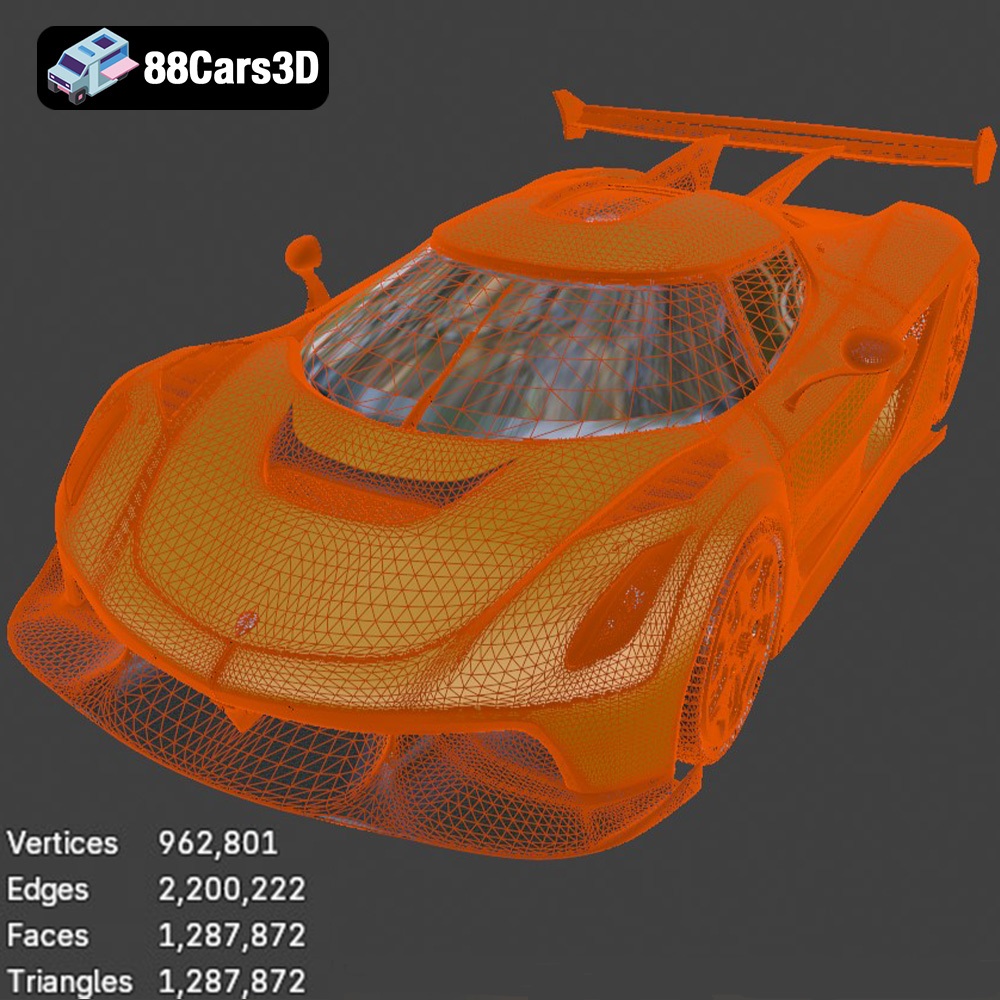
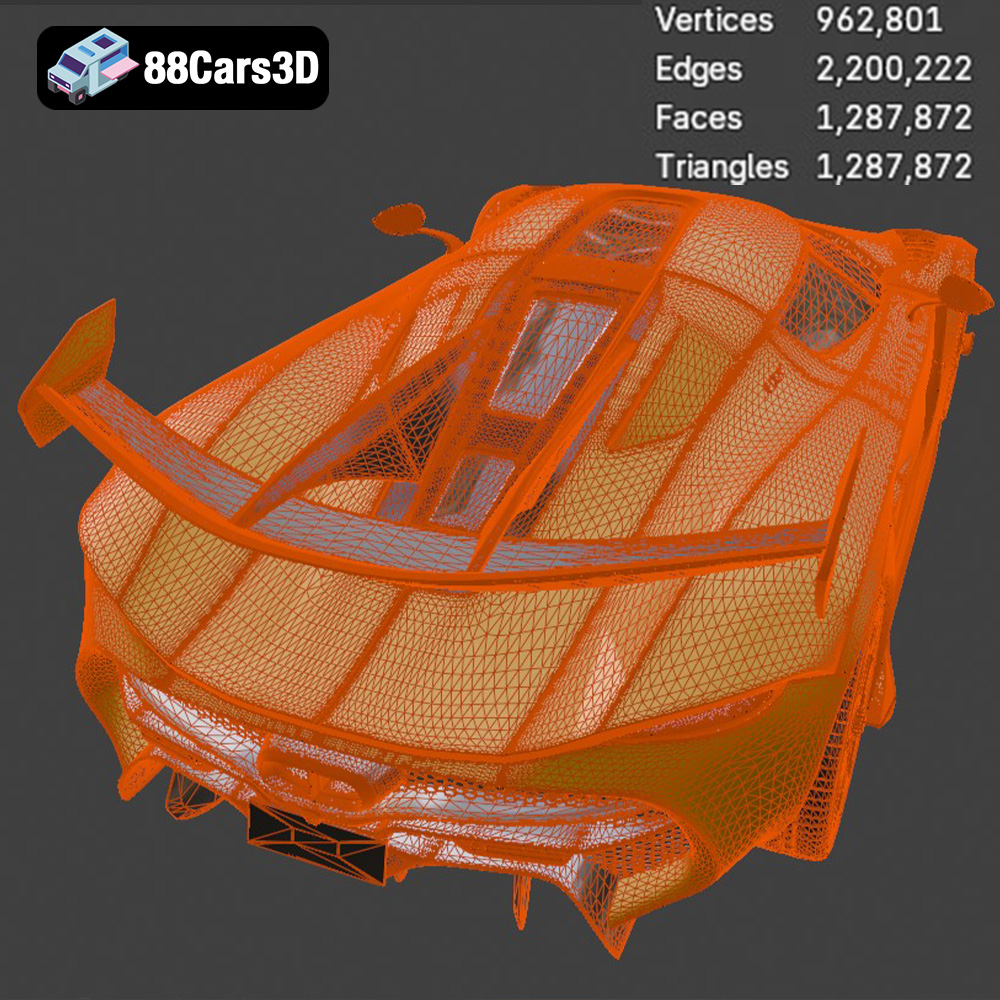
At the core of any professional 3D car model lies its topology – the arrangement of vertices, edges, and faces that define its shape. For a hypercar like the Koenigsegg Jesko, achieving accurate aerodynamic curves, intricate panel gaps, and complex mechanical elements requires a substantial polygon count. However, an excessively high poly count can cripple real-time performance in game engines or bog down rendering workflows. The challenge, therefore, is to meticulously optimize the mesh, often through techniques like retopology and judicious use of normal maps, to strike that critical balance. The Koenigsegg Jesko 2019 3D Model, for instance, boasts approximately 650,000 triangles. This figure represents a sweet spot: high enough to capture the Jesko’s distinctive carbon-fiber bodywork, detailed 5.0L twin-turbo V8 engine bay, and intricate interior features without overwhelming game engines like Unreal or Unity.
This optimization is crucial for game developers who need smooth frame rates and for AR/VR applications where every millisecond counts for immersion. It’s not just about reducing poly count, but about intelligent mesh construction – using quads where possible for deformation, optimizing UV layouts for efficient texturing, and ensuring clean, non-overlapping geometry.
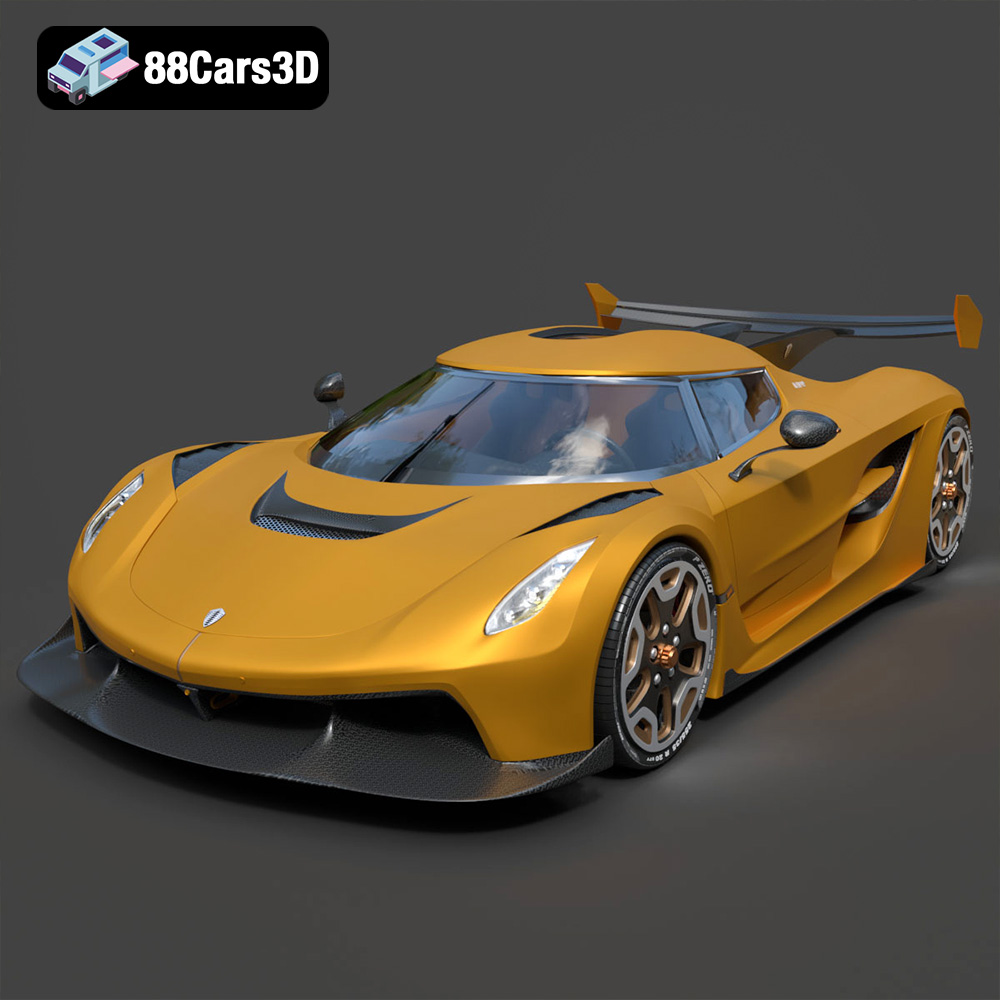
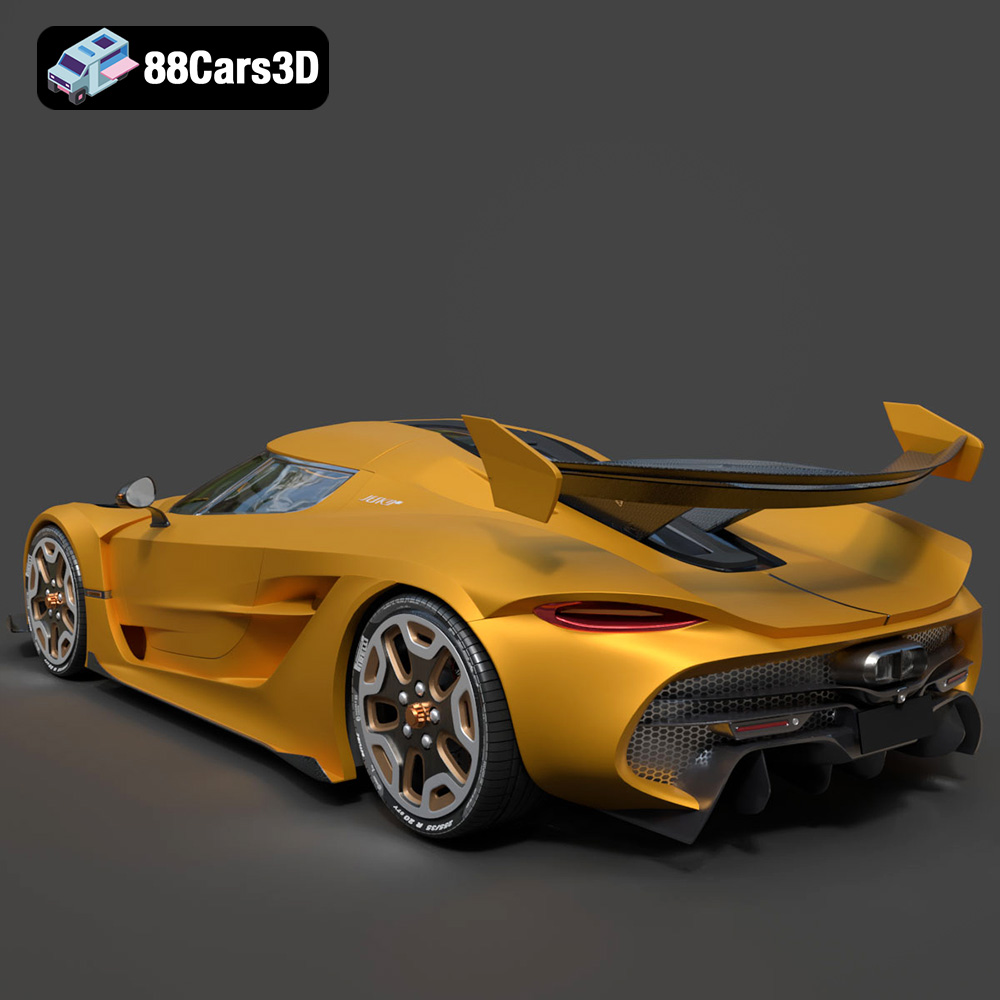
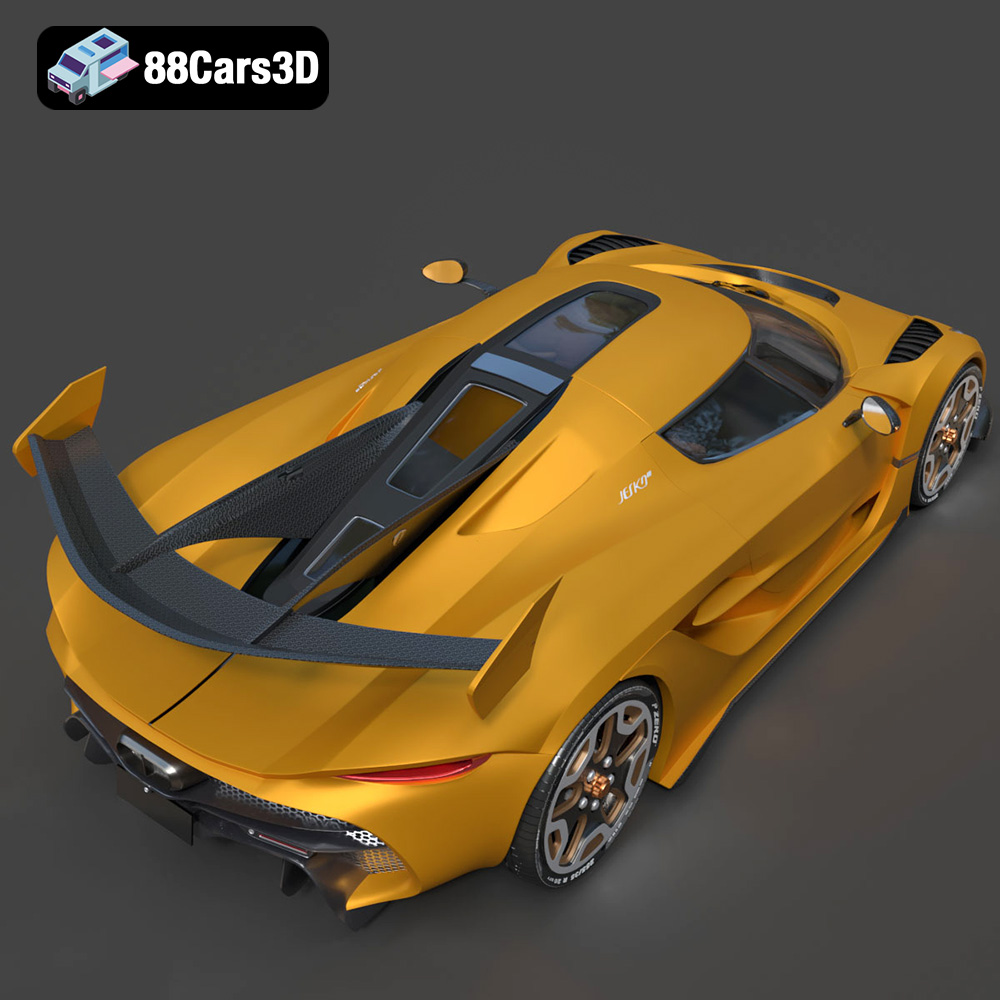
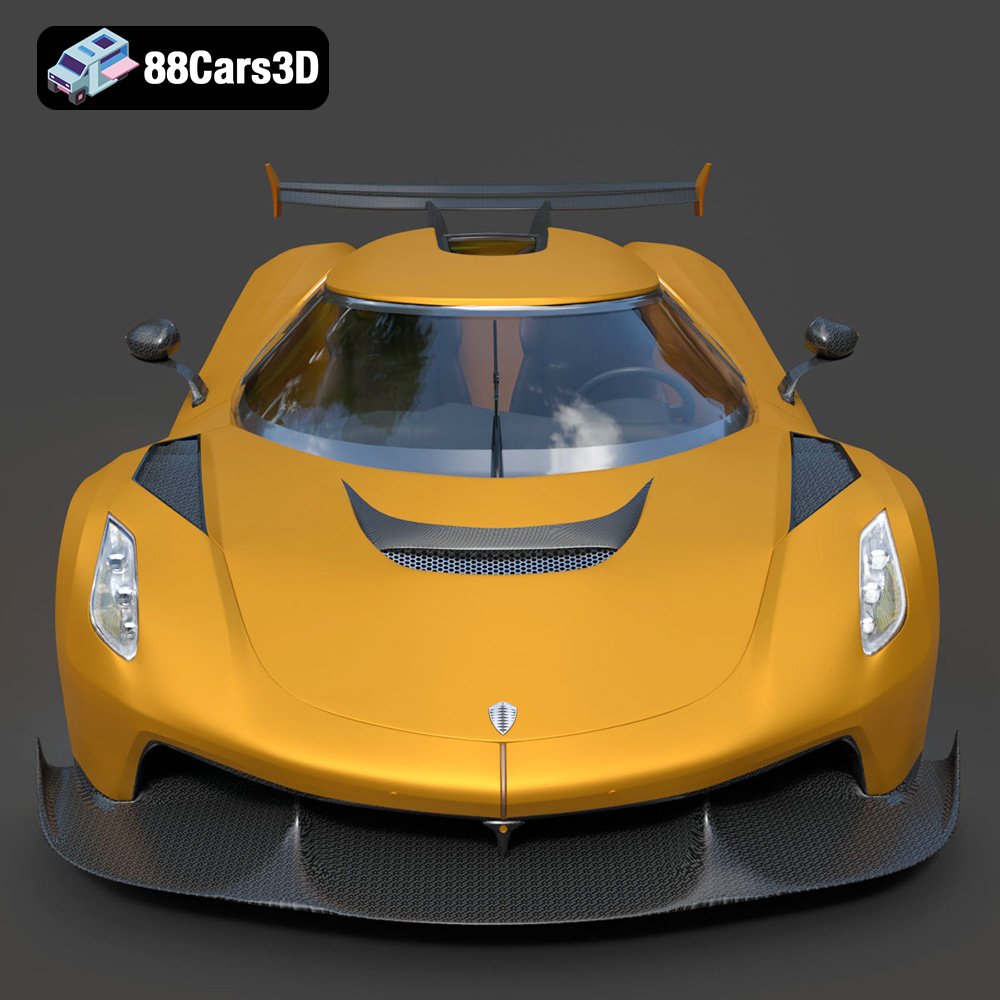
The journey of a 3D car model begins long before the first polygon is laid. It starts with comprehensive research, gathering blueprints, reference images, and technical specifications to ensure real-world scale accuracy and authentic proportions. Modeling typically involves a combination of techniques: hard-surface modeling for the body panels and mechanical components, subdivision modeling for smooth, organic curves, and often CAD data conversion for highly precise parts. The exterior of the Jesko, with its aggressive front splitter, distinct dive planes, and colossal dual-profile active rear wing, demands exacting attention to these details.
Once the base mesh is established, the process moves to detailing: adding accurate LED headlights, sweeping taillight signatures, lightweight forged alloy wheels, and intricate carbon-ceramic brake calipers. The interior is equally crucial, featuring detailed carbon-fiber racing bucket seats, an accurate SmartWheel, and a minimalist center console. Each component, from the separate wheels and suspension to the steering components, is modeled with animation in mind, ensuring proper pivot points and articulation. This meticulous approach is what elevates a basic model to a premium asset, ready for the most demanding professional projects.
The versatility of a professional 3D model is often defined by the range of file formats it offers. Each format is engineered for specific purposes, offering unique advantages in terms of compatibility, data integrity, and workflow integration. Choosing the correct format can significantly streamline a project, optimize performance, and ensure the integrity of the digital asset. The Koenigsegg Jesko 2019 3D Model, available at 88cars3d.com, is a prime example of a product that caters to a broad spectrum of professional needs by providing an extensive array of industry-standard formats.
The `.blend` format is native to Blender, a powerful open-source 3D creation suite. A `.blend` file is not merely a mesh; it’s a complete scene, containing geometry, materials, textures, lighting, cameras, animations, and even Blender-specific modifiers and nodes. For users deeply integrated into the Blender ecosystem, this format offers unparalleled flexibility. It allows for full editing of every aspect of the model, from adjusting shaders to modifying the mesh directly, making it ideal for custom rigging, complex animation setups, or intricate material adjustments that might be cumbersome in other applications. The Koenigsegg Jesko model in `.blend` format provides a fully editable studio setup, ready for custom rendering within Cycles or Eevee.
The Filmbox (`.fbx`) format, developed by Autodesk, is arguably the most ubiquitous format in 3D content creation, particularly favored in game development and animation pipelines. `.fbx` excels at storing a wide range of data, including geometry, skeletal animation, blend shapes, lights, cameras, and PBR (Physically Based Rendering) materials. Its strength lies in its ability to facilitate seamless data exchange between different 3D software (like 3ds Max, Maya, Blender) and, critically, into real-time game engines such as Unreal Engine and Unity. When downloading the Jesko model as `.fbx`, users can expect consistent import behavior and robust support for embedded textures and material definitions, making it the go-to choice for real-time projects.
The Wavefront OBJ (`.obj`) format is one of the oldest and most widely supported 3D file formats. It’s a simple, text-based format primarily used to define geometric data: vertices, vertex normals, texture coordinates, and faces. While it doesn’t typically store animation or rigging information, it’s exceptionally reliable for transferring static mesh data between virtually any 3D software. Accompanied by an `.mtl` (material library) file, it can also define basic material properties and reference texture maps. For users needing a clean mesh for sculpting, 3D printing preparation, or as a base for retopology in a new software, the `.obj` version of the Koenigsegg Jesko model provides a universally compatible foundation.
GL Transmission Format (`.glb`) is a compact, binary version of glTF (Graphics Language Transmission Format). It’s rapidly becoming the standard for 3D content delivery in web-based applications, AR (Augmented Reality), and VR (Virtual Reality) environments. `.glb` files package all necessary assets – geometry, textures, materials, and animations – into a single, self-contained file, making them highly efficient for streaming and display in browsers and mobile apps. Its optimization for real-time rendering and small file size makes the Jesko model in `.glb` format perfect for interactive virtual showrooms, mobile AR configurators, or integrating into browser-based experiences without extensive loading times.
Stereolithography (`.stl`) is the de facto standard file format for 3D printing. Unlike other formats that store material or color data, `.stl` describes only the surface geometry of a 3D object using a tessellated mesh of triangles. It defines the external surface without information about texture, color, or other CAD attributes. For hobbyists and professionals looking to bring the Koenigsegg Jesko into the physical world, the `.stl` version of the model is precisely what’s needed for slicer software to generate print paths. The provided Jesko model is convertible to `.stl` and comes with specific recommendations for scale, layer height, and support structures, ideal for resin printing to capture its fine details.
The Polygon File Format (`.ply`), also known as the Stanford Triangle Format, is primarily used to store 3D data from 3D scanners. It can store a wider range of properties than `.obj` or `.stl`, including color, transparency, and sometimes even confidence data for each vertex. While not as common for artistic asset exchange, `.ply` is valuable in scientific and engineering applications where precise capture data or complex mesh properties are crucial. For advanced analysis or specific CAD/CAM workflows involving the Jesko, `.ply` offers a robust, precision mesh representation.
While not a standalone general 3D format, `.unreal` refers to assets directly integrated and optimized within the Unreal Engine ecosystem. Often, this means the model (typically imported via `.fbx`) has been further processed and packaged into Unreal’s proprietary asset format. This includes optimized material graphs, collision meshes, LODs (Levels of Detail), and blueprint setups. The “unreal” option for the Koenigsegg Jesko model implies that it’s engine-ready, pre-configured for optimal performance and visual fidelity within Unreal Engine, allowing developers to drop it directly into their projects with minimal setup and immediate access to its high-quality PBR materials and realistic lighting responses.
The `.max` format is native to Autodesk 3ds Max, a leading software for 3D modeling, animation, rendering, and visualization. Similar to `.blend`, a `.max` file encapsulates the entire scene, including geometry, materials, textures, lighting, cameras, modifiers, and any animations or plugins used. For professionals whose pipelines are centered around 3ds Max, having the Jesko model in its native `.max` format provides complete access to its original construction, allowing for full parametric editing, integration with V-Ray or Corona renderers, and sophisticated animation workflows. It’s the ultimate format for those who require the deepest level of customization and integration within the 3ds Max environment for high-end rendering and animation projects.
The true test of an optimized 3D car model like the Koenigsegg Jesko lies in its performance and visual integrity within real-time game engines. These environments demand not only high-quality visuals but also efficient asset management to maintain smooth frame rates and immersive experiences.
Unreal Engine is a powerhouse for photorealistic real-time rendering, making it an ideal home for the Koenigsegg Jesko 2019 3D Model. The workflow typically begins with importing the `.fbx` file, which carries the optimized mesh, UV maps, and often basic material assignments. Key steps include setting up proper PBR (Physically Based Rendering) materials using Unreal’s robust material editor, linking textures for albedo, normal, roughness, metallic, and ambient occlusion maps. For the Jesko, this translates to accurately portraying its carbon-fiber weave, metallic paint finishes, and the unique textures of its interior. Developers will also establish collision meshes for realistic physics interactions, set up Levels of Detail (LODs) to optimize performance at varying distances, and configure vehicle blueprints for interactive driving mechanics. The separate wheels, suspension, and steering components of the Jesko model are critical here, allowing for precise animation and vehicle dynamics.
Unity, another dominant force in game development, also provides excellent tools for integrating high-quality assets. The `.fbx` format is again the preferred choice for importing the Koenigsegg Jesko model. In Unity, developers will focus on setting up high-quality standard or HDRP (High Definition Render Pipeline) materials, ensuring the PBR textures render accurately under various lighting conditions. Performance optimization for the Jesko model in Unity involves similar strategies to Unreal: creating efficient LODs, setting up accurate collider geometry, and utilizing Unity’s vehicle physics systems. The model’s optimized ~650,000 triangle count is a significant advantage, striking a perfect balance for exceptional game-ready performance without compromising on the hypercar’s stunning visual realism, whether it’s for a high-speed racing simulator or a detailed virtual showroom.
Augmented Reality (AR) and Virtual Reality (VR) represent the frontier of immersive interaction, and high-fidelity 3D car models are central to their success. The Koenigsegg Jesko is perfectly suited for these applications. For AR/VR, particularly on mobile platforms, the `.glb` format shines due to its optimized nature and single-file packaging, ensuring quick loading times and smooth performance. In AR, the Jesko can be placed realistically in real-world environments, allowing users to walk around, inspect details, and even configure colors. In VR, it creates hypercar virtual showrooms or driving experiences where users can sit inside the detailed cockpit, interacting with its SmartWheel and gyroscopic digital instrument cluster. The model’s real-world scale accuracy and proper pivot setups are paramount for these immersive environments, ensuring a believable and engaging experience.
Beyond interactive environments, premium 3D car models like the Koenigsegg Jesko are invaluable tools for static and animated rendering, used extensively in advertising, product visualization, and architectural integration. Here, the focus shifts entirely to achieving photographic realism and artistic expression.
For high-end automotive rendering, software like 3ds Max with V-Ray or Corona Renderer, or Blender with Cycles, are industry staples. The `.max` and `.blend` formats of the Jesko model offer full project data, allowing artists to leverage these powerful renderers. Studio lighting setups are crucial, often involving HDRI (High Dynamic Range Image) environments for realistic reflections and a combination of area lights and spotlights to sculpt the car’s form and highlight its intricate details. The Koenigsegg Jesko’s carbon-fiber bodywork and aggressive lines demand precise lighting to emphasize its contours. Material setup involves meticulously crafting physically accurate shaders for the paint, glass, carbon fiber, and tire rubber, ensuring they react believably to light.
Achieving truly photorealistic results requires more than just basic PBR materials. Advanced shading techniques can simulate subtle imperfections, clear coat effects, and anisotropic reflections on metallic paints. Texture maps for the Jesko model would include highly detailed normal maps to capture microscopic surface variations, roughness maps to define how light scatters, and metallic maps to dictate reflectivity. The interior’s authentic upholstery stitching and dashboard textures also play a vital role in grounding the model in reality. Artists can utilize the model’s customization options to change body colors, modify tire textures (track slicks vs. street variants), and adjust material finishes (matte, gloss, exposed carbon) to match specific visual briefs.
The Koenigsegg Jesko 2019 3D Model is perfectly suited for creating stunning visuals for brand campaigns and lifestyle scenes. Imagine a hyper-realistic render of the Jesko parked dramatically against a modern architectural masterpiece for a luxury real estate advertisement, or as the star of an animated commercial showcasing its design and power. In architectural visualization (Arch-Viz), integrating a high-fidelity car model adds a layer of realism and context, populating scenes with believable elements. The attention to detail in the Jesko model means it holds up to extreme close-ups, making it suitable for hero shots in print ads or high-resolution video productions where every reflection and curve matters.
The digital realm often inspires physical creation, and 3D printing offers an exciting avenue to bring a high-fidelity model like the Koenigsegg Jesko into tangible form. For display-scale hobbyists and professional model makers, a well-prepared 3D model is the foundation for an exquisite physical replica.
The `.stl` format is the cornerstone for 3D printing. While the base `.obj` or `.blend` files can be converted, preparing a model specifically for 3D printing involves more than just format conversion. It requires meticulous checks for manifold geometry, ensuring all surfaces are watertight and free of intersecting polygons, which could lead to printing errors. The Koenigsegg Jesko model is designed with 3D printing in mind, convertible to `.stl`, allowing users to scale it to popular sizes like 1:12, 1:18, or 1:24. Specific considerations include wall thickness (recommended 1.2–2.0 mm) and ensuring sufficient detail is retained at smaller scales without becoming too fragile.
The choice of 3D printing technology significantly impacts the final quality. For a hypercar like the Jesko, with its intricate details such as LED headlight signatures, exhaust system, and interior elements, resin (SLA/DLP) printing is often recommended. Resin printers achieve much finer layer heights (0.04–0.12 mm recommended) and smoother surface finishes compared to FDM (Fused Deposition Modeling) printers, which are better for larger, less detailed objects. Resin printing excels at capturing the delicate curves, sharp edges, and small features like brake calipers and interior buttons, providing a highly detailed foundation for post-processing.
Once printed, the journey continues with post-processing. This typically involves cleaning the print, removing supports (which are required for detailed parts like the exhaust, mirrors, and rear wing), sanding to smooth any layer lines, and then applying primer. The Koenigsegg Jesko model, once sanded and primed, is ready for painting. This is where authentic factory colors with metallic finishes, clear coats, and even custom decals can be applied to create a truly museum-quality display piece. The separation of components like the frame and wheels allows for independent printing and painting, facilitating assembly and achieving a higher degree of realism.
The value of a premium 3D asset lies not just in its initial quality but also in its adaptability and longevity. The Koenigsegg Jesko 2019 3D Model offers robust foundations for customization and integration into evolving pipelines.
Professional 3D models are built with flexibility in mind. The Jesko model allows for extensive customization of its aesthetics. Artists can effortlessly change body colors, experimenting with Koenigsegg’s iconic vivid hues or crafting entirely new custom carbon-fiber weaves. Tire textures can be swapped between track slicks and street variants, instantly altering the car’s persona. Furthermore, material finishes can be adjusted from a high-gloss show car sheen to a stealthy matte, or even an exposed, raw carbon look. This level of customization ensures the model remains relevant and visually fresh across diverse projects and artistic visions, without requiring a complete re-model.
A static model, however beautiful, only tells half the story. The Koenigsegg Jesko 2019 3D Model is meticulously prepared for animation, a critical feature for cinematic renders, game cinematics, and interactive experiences. The inclusion of separate wheels, suspension, and steering components, along with proper pivot setup for steering, wheel rotation, and suspension travel, means animators can quickly rig and bring the car to life. Imagine dynamic shots of the Jesko cornering at high speed, its active rear wing adjusting, or a detailed breakdown animation revealing its revolutionary Light Speed Transmission. This animation readiness future-proofs the asset, making it suitable for complex dynamic scenes and interactive showcases where movement and mechanical fidelity are paramount.
The journey from a hypercar concept to a high-fidelity digital twin is a testament to the blend of artistic skill and technical expertise in the 3D industry. A truly exceptional 3D car model, such as the Koenigsegg Jesko 2019 3D Model, stands out due to its optimized topology, meticulous detailing, real-world accuracy, and comprehensive file format support. Whether you’re a game developer pushing the boundaries of real-time graphics, an automotive designer crafting next-gen visualizations, an AR/VR enthusiast building immersive experiences, or a hobbyist bringing digital dreams to physical reality through 3D printing, the quality of your base asset determines the success and impact of your project.
Investing in a premium 3D model like the Koenigsegg Jesko from 88cars3d.com ensures you start with a foundation of excellence. Its game-ready optimization, detailed interior and exterior, and flexibility across multiple software and real-time engines make it an invaluable asset for any professional pipeline. Elevate your projects and unlock new creative possibilities with assets engineered for performance, precision, and unparalleled visual fidelity.
The 2019 Koenigsegg Jesko represents the absolute pinnacle of hypercar engineering, designed to dominate the track with unprecedented aerodynamic downforce and raw power. Named after the founder’s father, the Jesko features an unmistakable carbon-fiber silhouette, an aggressive front splitter with distinct dive planes, and a colossal dual-profile active rear wing. Under the rear clamshell lies a beautifully detailed representation of its legendary 5.0L twin-turbo V8 engine, paired with the revolutionary Light Speed Transmission design. This premium 3D model features meticulously optimized topology, offering a highly balanced triangle count that maintains breathtaking visual fidelity while ensuring exceptional game-ready performance. Whether used for up-close studio rendering or high-speed gameplay, the model retains crisp reflections, realistic material transitions, and sharp geometric accuracy. It is perfectly tailored for game development, AR/VR applications, high-end animation, and architectural visualization.
$19.99
.2019
.blend
.fbx
.glb
.hypercar
.jesko
.koenigsegg
.max
.obj
.ply
.rendering
.sports car
.stl
.supercar
.unreal
car-3d-model
game asset
game-ready
low-poly
optimized
VR/AR