Mastering the Digital Off-Road: A Deep Dive into Premium 3D Car Models
In the dynamic world of 3D visualization, game development, and interactive media, the demand for exceptionally detailed and technically sound 3D car models has never been higher. From crafting immersive open-world games to producing photorealistic automotive renders for marketing campaigns, the foundational quality of your digital assets dictates the final output. Artists and developers consistently seek models that strike a perfect balance between visual fidelity and performance optimization. This balance is crucial for maintaining frame rates in real-time engines while delivering stunning visuals that captivate audiences.
The pursuit of realism often leads creators down a path of intricate modeling and texturing, a time-consuming endeavor that can significantly extend project timelines. This is precisely where pre-optimized, high-quality assets become invaluable. Imagine having instant access to a meticulously crafted vehicle, ready to be dropped into your scene or engine, saving hundreds of hours of development time. This efficiency allows creative teams to focus on innovation, storytelling, and overall user experience rather than reinventing the wheel. Today, we’ll explore the technical intricacies and creative potential unlocked by such assets, focusing on a prime example: the Can-Am Maverick 2019 Buggy 3D Model. This particular model, available on 88cars3d.com, exemplifies what a professional-grade asset should offer, providing a robust foundation for a myriad of digital applications, from high-octane racing simulations to detailed virtual showrooms.
The Imperative of High-Fidelity 3D Car Models in Modern Design
The visual standard in automotive rendering and game development is constantly rising. Consumers and enthusiasts expect nothing less than photorealistic vehicles that respond dynamically to their virtual environments. For creators, this means every curve, every reflection, and every mechanical component must be rendered with impeccable accuracy. A high-fidelity 3D car model is not just about looking good; it’s about being technically prepared for diverse applications, ensuring seamless integration and superior performance.
Bridging Realism and Performance
Achieving realism in 3D car models involves meticulous attention to detail across multiple aspects. This includes accurate real-world scale, precise chassis geometry, authentic material definitions, and complex mechanical assemblies. For instance, the suspension system of a vehicle like the Can-Am Maverick 2019 Buggy is a critical element for both visual authenticity and animation realism. A truly high-fidelity model will feature separated components for wheels, suspension arms, and steering, allowing for realistic deformation and movement in animations or simulations. However, this level of detail must be carefully managed to prevent excessive polygon counts that can bog down real-time engines. Game-ready assets, such as the Can-Am Maverick model, skillfully balance this by optimizing polygon distribution, ensuring critical details remain sharp while less visible areas are streamlined. This strategic optimization is key to maintaining high frame rates without sacrificing visual integrity.
The Versatility of Premium Game Assets
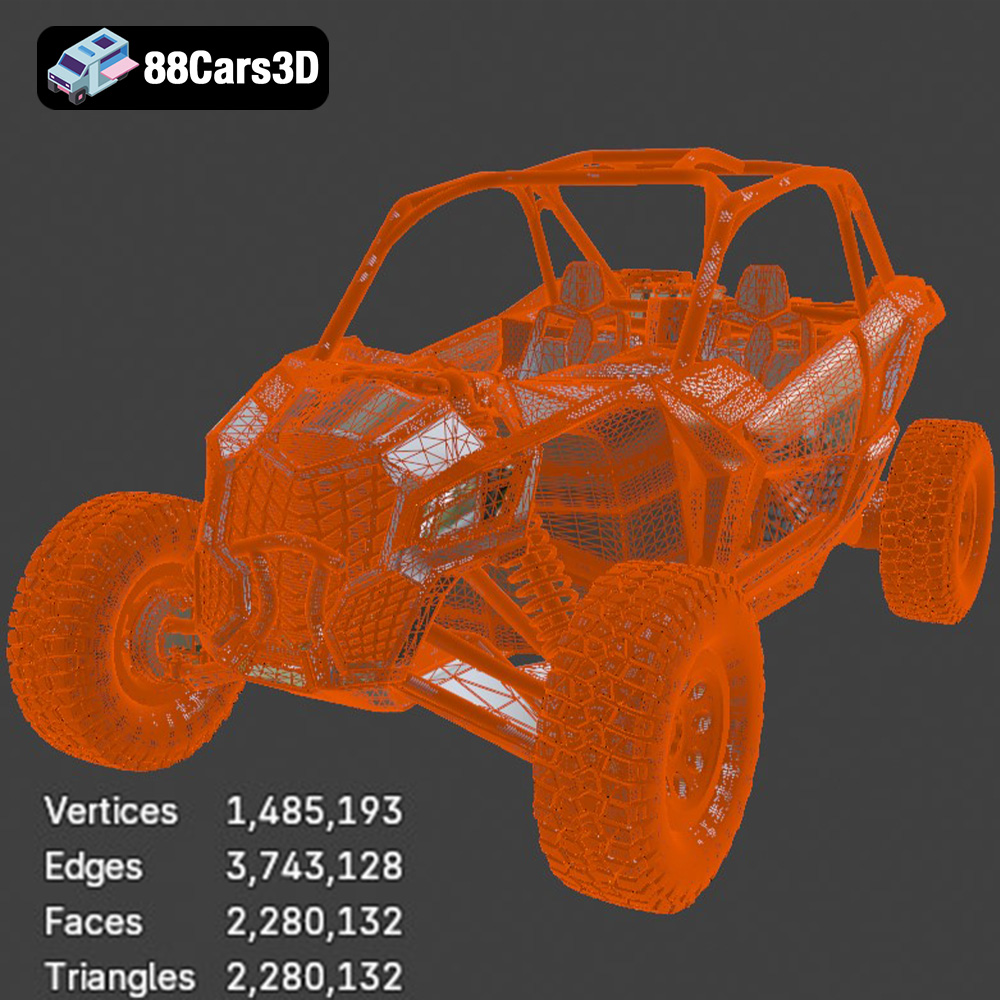
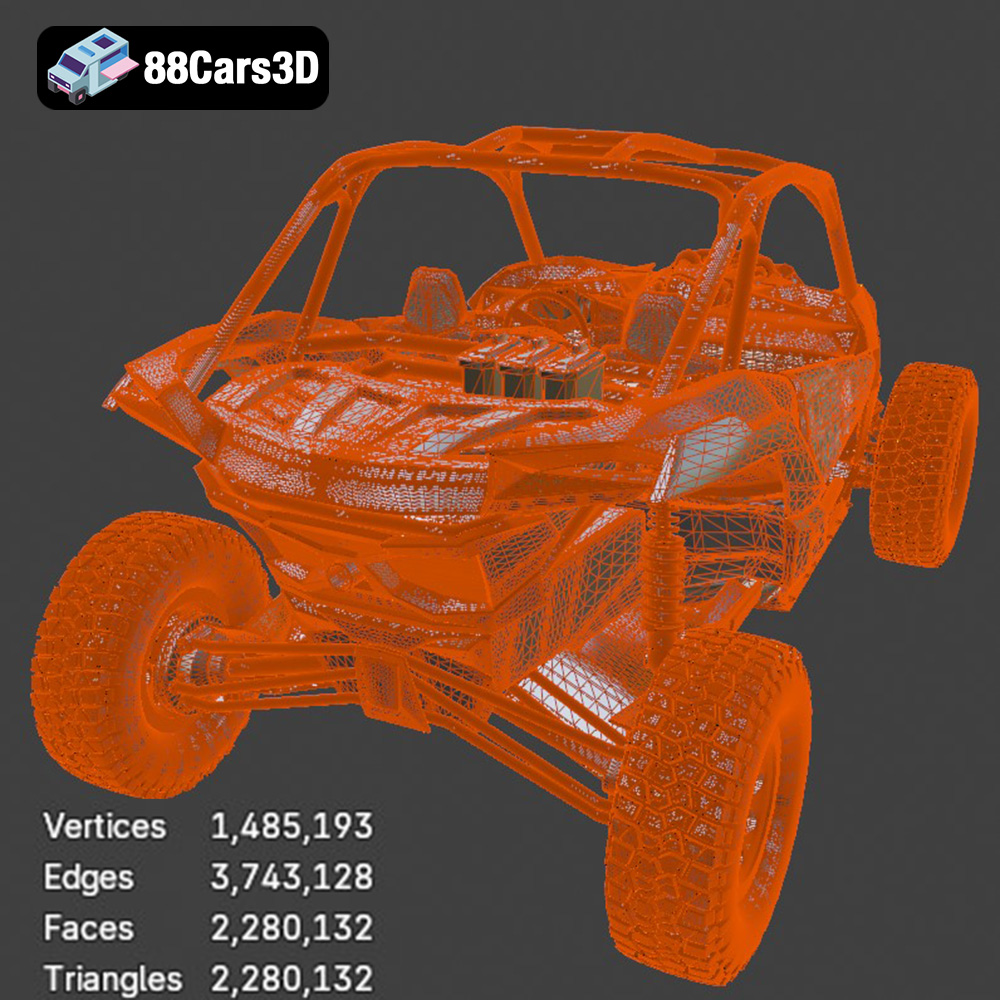
Premium 3D car models, especially those designed with game development in mind, offer unparalleled versatility. Their optimized topology and well-structured geometry make them suitable not only for games but also for architectural visualization, product configurators, AR/VR experiences, and even animated commercials. A model like the Can-Am Maverick 2019 Buggy, with its ~200,000 triangle count, is perfectly suited for real-time applications where every millisecond counts. This balance allows developers to populate vast open-world environments with numerous vehicles without compromising performance. Furthermore, the inclusion of proper pivot setups for animated parts like wheels and steering ensures that the model is ready for immediate integration into an engine’s physics and animation systems, dramatically reducing setup time and accelerating development cycles.
Understanding 3D Model File Formats: A Technical Deep Dive
The utility of a 3D model is often defined by its compatibility across various software and platforms, which is largely determined by the file formats it supports. Professional 3D assets, like those found on 88cars3d.com, are typically offered in multiple formats to cater to a broad spectrum of user needs and workflows. Choosing the correct format is crucial for maintaining data integrity, optimizing performance, and ensuring a smooth production pipeline. Each format has its strengths, weaknesses, and specific use cases.
Universal Compatibility for Diverse Workflows
When acquiring a 3D model, understanding the included file formats is paramount. The Can-Am Maverick 2019 Buggy model, for example, is supplied with a comprehensive suite of options:
- .blend (Blender): This is the native file format for Blender, a powerful open-source 3D creation suite. A .blend file typically includes the full scene setup: mesh data, materials, textures, lighting, cameras, and even animations. It’s ideal for users who wish to fully edit, customize, or dissect the model within Blender, leveraging its advanced node-based materials, procedural workflows, and extensive add-on ecosystem. For artists deeply integrated into the Blender pipeline, this format offers maximum flexibility and access to all original scene information.
- .fbx (Filmbox): Developed by Autodesk, FBX is widely regarded as the industry standard for 3D data exchange, particularly between different 3D software and real-time game engines like Unreal Engine and Unity. It efficiently stores models, materials, textures, animations, and skeletal data. Its robustness and widespread support make it the go-to format for exporting animated characters, complex scene hierarchies, and detailed static meshes into game engines, ensuring that pivot points, scale, and basic material assignments are preserved. For integrating the Can-Am Maverick into a real-time environment, .fbx is often the most recommended choice due to its optimized structure for game-ready assets.
- .obj (Wavefront Object): One of the oldest and most universally supported 3D file formats, .obj is a simple, text-based format primarily storing geometry (vertices, normals, UVs, faces) and references to external material files (.mtl). While it doesn’t support animation or rigging, its widespread compatibility across virtually all 3D software makes it excellent for basic mesh exchange when full scene data isn’t required. It’s a reliable fallback for cross-software compatibility, ensuring that the raw mesh data of the Can-Am Maverick is accessible even in niche applications.
- .max (3ds Max): This is the native project file format for Autodesk 3ds Max, a leading software for 3D modeling, animation, and rendering in architectural visualization, product design, and game asset creation. Similar to .blend, a .max file contains all scene information, including geometry, materials, lighting, cameras, and animation curves. For users working within a 3ds Max pipeline, this format offers full editability and access to the original project setup, allowing for advanced rendering configurations and complex animation sequences of the Can-Am Maverick.
Specialized Formats for Niche Applications
Beyond the universal formats, specialized options cater to very specific needs, extending the versatility of models like the Can-Am Maverick:
- .glb (GLB/glTF Binary): A relatively newer, open-standard format, glTF (Graphics Language Transmission Format) and its binary counterpart GLB are designed for efficient transmission and loading of 3D scenes and models by applications. GLB bundles all assets (geometry, materials, textures, animations) into a single binary file, making it incredibly optimized for web-based 3D viewers, AR (Augmented Reality), and VR (Virtual Reality) experiences. Its compact size and efficient parsing make it ideal for delivering the Can-Am Maverick model seamlessly across mobile devices and browsers, enhancing interactive applications.
- .stl (Stereolithography): This format is the de facto standard for 3D printing. It represents a 3D model as a series of connected triangles, defining only the surface geometry without color or texture information. While excellent for prototyping and physical reproduction, .stl files often require clean, watertight meshes to print successfully. The Can-Am Maverick 3D Model, when converted to .stl, becomes tangible, allowing hobbyists and professionals to produce physical scale models, though often requiring specific preparation for optimal print quality.
- .ply (Polygon File Format): Also known as the Stanford Triangle Format, .ply is a versatile format capable of storing a wide range of data including 3D coordinates, color, normals, and even texture coordinates. It’s often used in academic and research contexts for storing scanned data and dense point clouds or meshes. While less common for general 3D asset distribution, its precision makes it suitable for applications requiring accurate mesh representation for analysis or reverse engineering.
- .unreal (Unreal Engine Asset): This isn’t a standalone open format, but rather indicates that the asset has been specifically pre-processed and packaged as an Unreal Engine asset, typically within a `.uasset` file. This means the model is ready to be directly imported or dragged into an Unreal Engine project, often with materials and textures already configured for the engine’s rendering pipeline. This offers maximum convenience for Unreal developers, significantly reducing import and setup time for the Can-Am Maverick in a real-time game environment.
The availability of these diverse formats ensures that the Can-Am Maverick 2019 Buggy 3D Model is not just a digital object, but a flexible tool adaptable to virtually any professional 3D workflow.
Deconstructing the Can-Am Maverick 2019 Buggy: A Masterclass in Digital Detail
The quality of a 3D model is measured not just by its aesthetics, but by the underlying technical craftsmanship. The Can-Am Maverick 2019 Buggy 3D Model, available at 88cars3d.com, stands as a testament to this principle, meticulously engineered to serve demanding professional pipelines. Every element, from its iconic silhouette to its intricate internal mechanisms, has been thoughtfully recreated.
Exterior Precision: From Roll Cage to Suspension
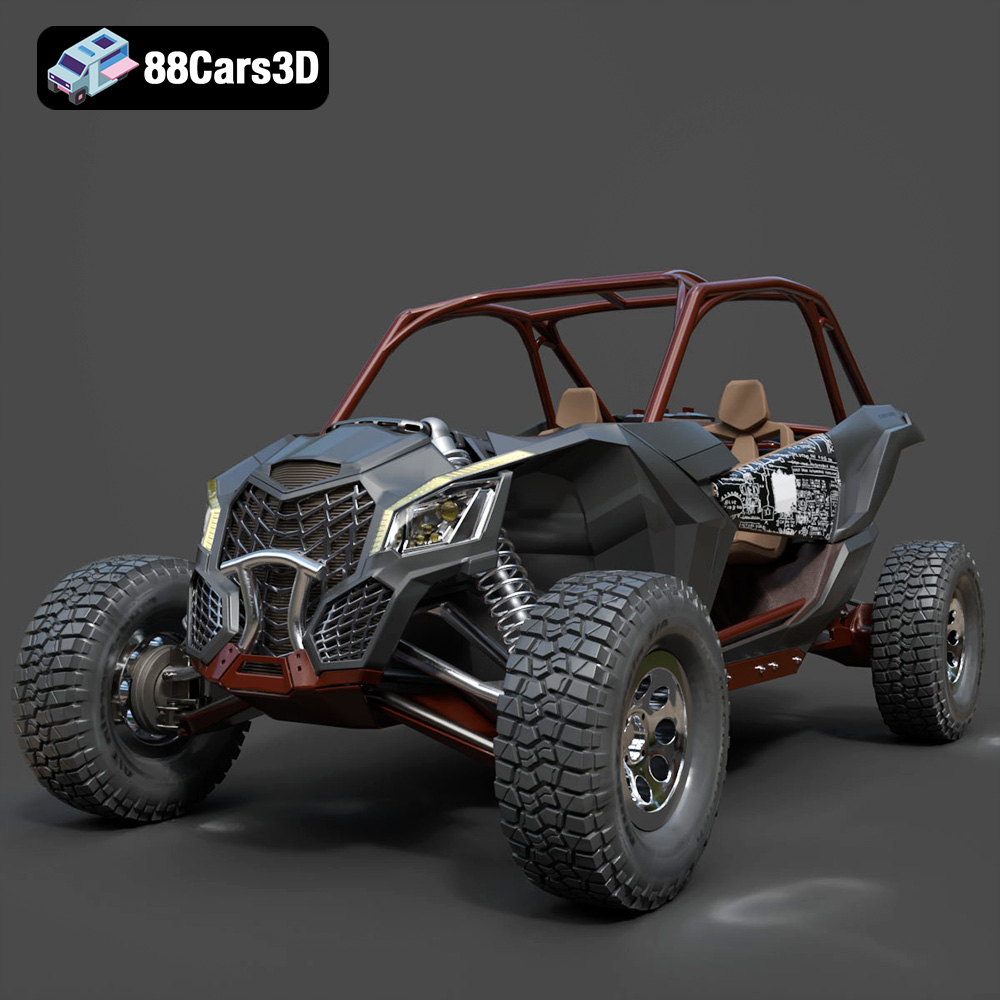
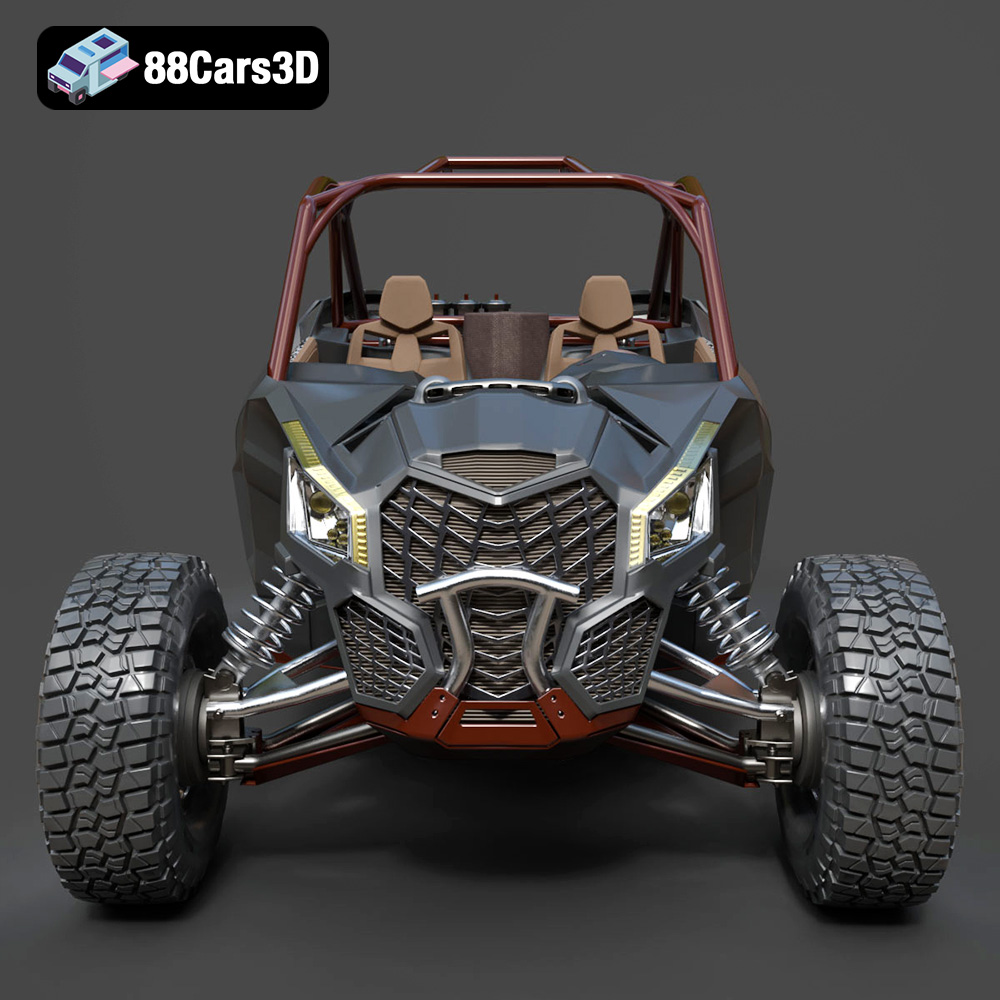
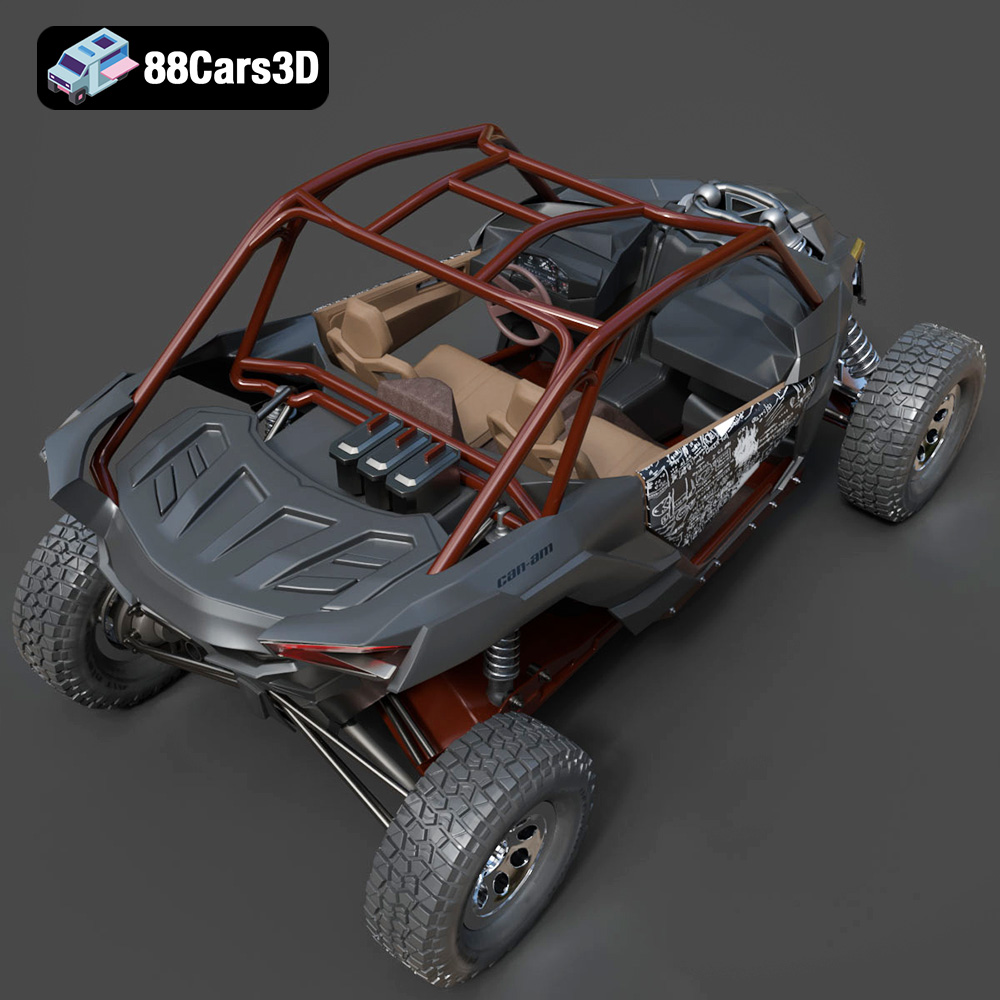
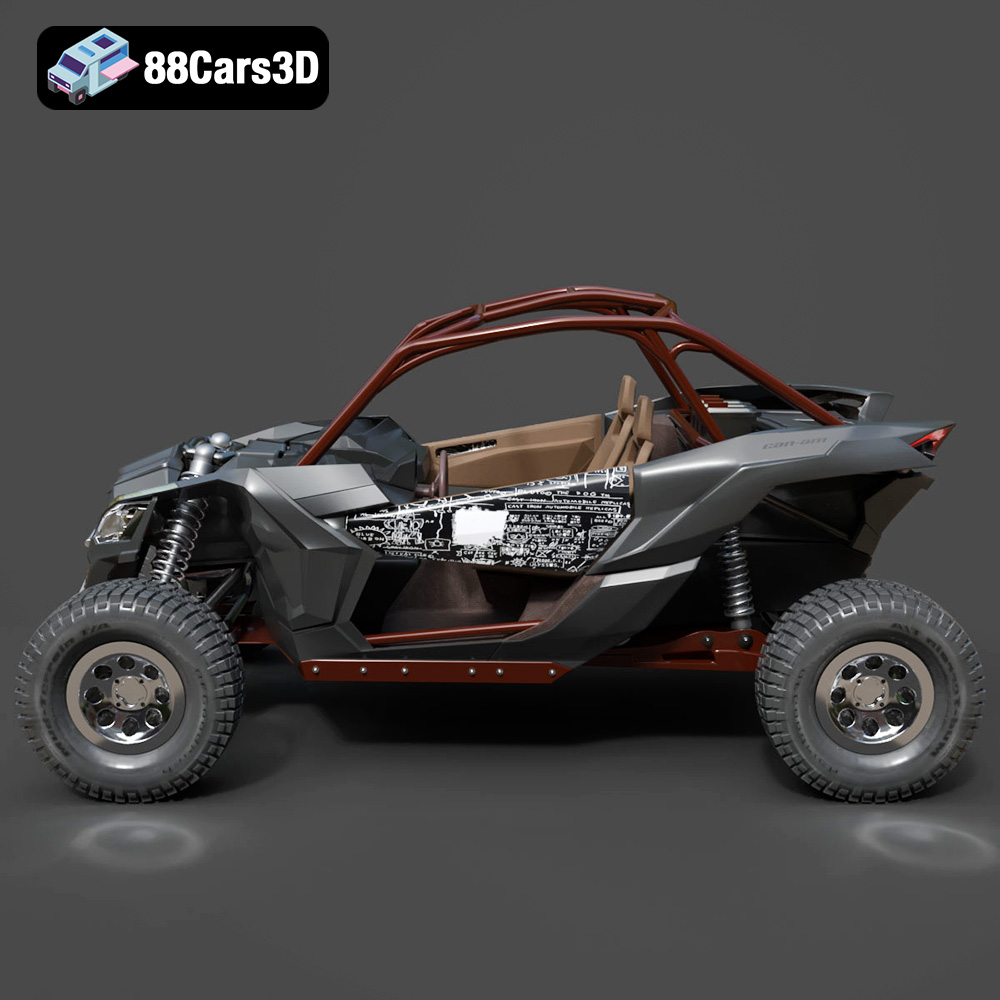
The Can-Am Maverick is synonymous with rugged performance and aggressive styling. The 3D model faithfully captures these characteristics, starting with the accurate frame geometry and signature exposed roll cage. These structural elements are not merely visual; they provide a strong foundation for any animation or simulation involving the vehicle. The aggressive front fascia, complete with detailed LED headlights and sculpted taillights, gives the model its unmistakable identity. Critical mechanical components are also rendered with high fidelity:
- Engine Block: Based on the powerful turbocharged Rotax ACE powerplant, the model includes detailed elements of the engine block, providing realism for close-up renders or under-the-hood views.
- Exhaust System: A performance-tuned dual exhaust system with authentic heat shields is present, adding another layer of realism to the rear of the vehicle.
- Wheels and Tires: Rugged beadlock wheels are equipped with deep-tread off-road tires, crucial for any off-road vehicle. These components are separate, allowing for independent rotation and realistic interaction with terrain.
- Suspension System: Perhaps one of the most vital exterior features for an off-road buggy is its suspension. The model includes an intricate long-travel suspension system, detailing A-arms, trailing arms, and shock absorbers. This separation of components is essential for advanced animation and physics simulations, enabling accurate representation of suspension travel and articulation.
Interior Immersion: The Cockpit Experience
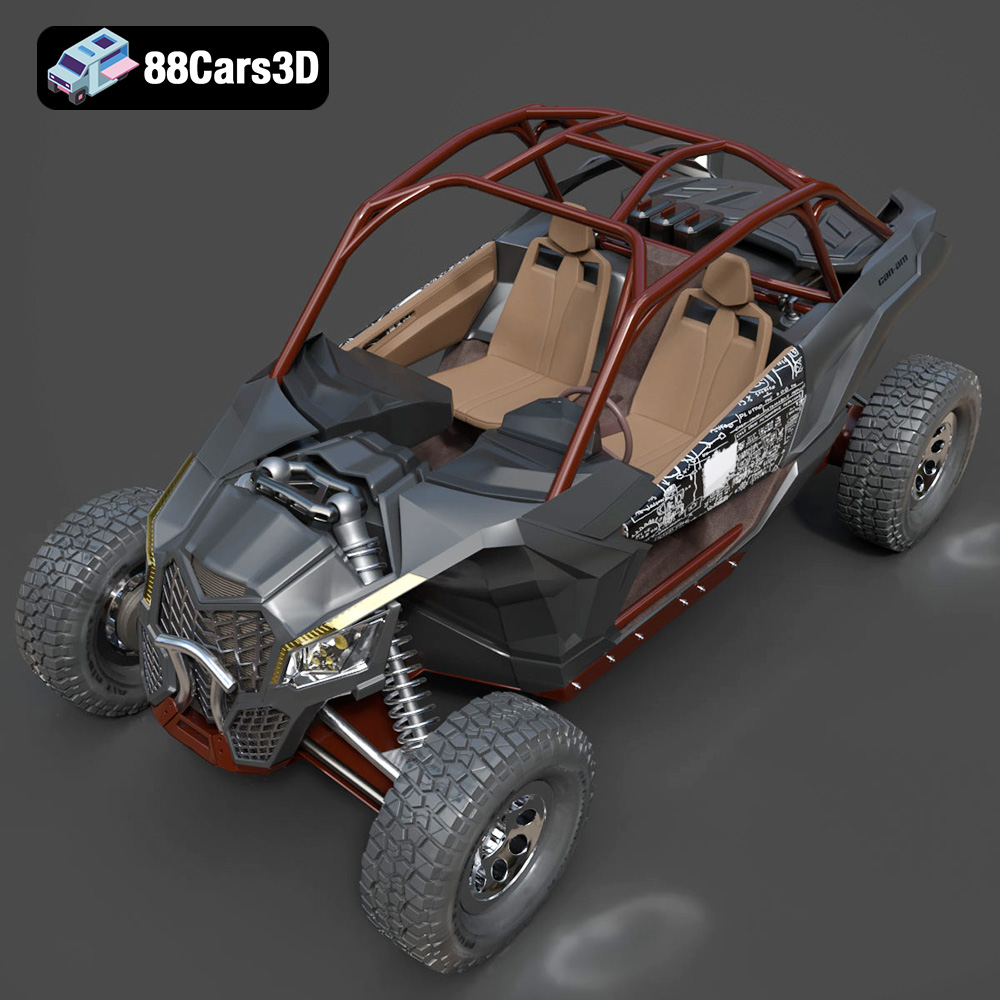
While the exterior commands attention, the interior of a vehicle 3D model is equally crucial, especially for first-person perspectives in games or immersive VR experiences. The Can-Am Maverick model does not disappoint, offering a highly detailed cockpit that invites interaction:
- Seating and Harnesses: Detailed Ergo-Lok bucket seats are present, complete with race-inspired multi-point harness details, enhancing the sense of safety and performance.
- Control Elements: A sport-grip steering wheel with an accurate center hub design, along with high-tech digital instrument cluster and center console interface, are all modeled with precision. Accurate foot pedals, a gear shifter, and passenger grab handles complete the interactive elements.
- Optimized for POV: The interior geometry is optimized for first-person point-of-view in gaming, ensuring that the player’s perspective is visually rich without excessive polygon overhead. This attention to optimization means the model performs smoothly even when the camera is inside the cabin.
Optimized Geometry for Peak Performance
Beyond visual detail, the technical specifications underpin the model’s professional utility. The Can-Am Maverick 2019 Buggy 3D Model boasts approximately 200,000 triangles. This specific polycount is a deliberate choice, striking a perfect balance for real-time engines like Unreal and Unity. It’s high enough to maintain incredible visual fidelity up close, showcasing intricate details, yet optimized to run smoothly and efficiently within complex game environments. Key technical advantages include:
- Game-Ready & Optimized: The ~200,000 triangle count is a sweet spot for modern game development, allowing for multiple instances of the vehicle in a scene without significant performance drops.
- Real-World Scale Accuracy: The model is built to real-world scale, based on actual vehicle chassis dimensions. This ensures that it integrates seamlessly into projects with established scale conventions, from architectural visualizations to realistic simulations.
- Proper Pivot Setup: Crucially, the model includes proper pivot setups for steering, individual wheel rotation, and suspension travel. This means animators and game developers can quickly set up physics and animation rigs without time-consuming manual adjustments.
- Cross-Platform Compatibility: With included file formats like .blend, .fbx, .obj, .glb, .stl, .ply, .unreal, and .max, the model guarantees compatibility across major 3D software and real-time rendering engines.
Professional Workflows: Integrating the Can-Am Maverick into Your Projects
A truly valuable 3D asset is one that can be seamlessly integrated into diverse professional workflows, accelerating production and enhancing creative output. The Can-Am Maverick 2019 Buggy 3D Model is engineered precisely for this purpose, offering robust solutions for game development, high-end rendering, and immersive AR/VR experiences.
Game Development with Unreal Engine and Unity
For game developers, time is a critical resource. The Can-Am Maverick 2019 Buggy is supplied as a game-ready asset, specifically optimized for real-time performance in engines like Unreal Engine and Unity. Its approximately 200,000 triangle count is ideal for ensuring high visual fidelity without compromising frame rates, even when multiple vehicles are present in an open-world environment.
Unreal Engine Workflow:
- Import: With the `.fbx` or `.unreal` format, developers can directly import the model into Unreal Engine. The `.unreal` package is particularly convenient, often arriving with pre-configured materials and textures, drastically reducing setup time.
- Physics & Animation: The properly set up pivots for wheels, steering, and suspension components simplify the integration of vehicle physics. Developers can assign physics constraints and animation blueprints to these elements, allowing for realistic driving mechanics, suspension compression, and steering articulation.
- Material System: Unreal Engine’s powerful material editor allows for further customization. Artists can adjust paint shaders, add dynamic dirt and damage effects, or implement advanced lighting reactions for headlights and taillights.
- Level Integration: The real-world scale of the Can-Am Maverick ensures it fits perfectly into existing game levels, whether it’s an extreme sports simulator, an open-world racing title, or an adventurous sandbox.
Unity Workflow:
- Import: Similar to Unreal, the `.fbx` file is the go-to for Unity. It efficiently transfers mesh data, UVs, and basic material assignments.
- Customization: Unity’s PBR (Physically Based Rendering) pipeline allows artists to fine-tune materials, enhancing the metallic sheen of body panels, the roughness of the tires, or the emissive properties of the lights.
- Scripting & Interactivity: Developers can attach scripts to the Can-Am Maverick to control its movement, implement UI interactions for custom configurators, or integrate it into complex mission objectives within the game.
High-End Automotive Rendering in 3ds Max and Blender
Beyond real-time applications, the Can-Am Maverick excels in pre-rendered cinematics, marketing visuals, and detailed studio shots. The inclusion of `.max` and `.blend` formats offers full project flexibility for users of Autodesk 3ds Max and Blender, respectively.
3ds Max Workflow:
- Scene Setup: Loading the `.max` file provides access to the original scene, complete with potential material setups and object hierarchies. Artists can leverage 3ds Max’s robust modeling tools for any desired modifications.
- V-Ray/Corona Rendering: With its detailed geometry and clean topology, the Can-Am Maverick is an excellent candidate for high-fidelity rendering with V-Ray or Corona Renderer. Artists can create studio lighting setups, add realistic environments, and produce photorealistic images for promotional materials or design reviews.
- Animation: The separated components and proper pivots facilitate advanced animation. Imagine a dynamic shot of the buggy traversing challenging terrain, with the suspension accurately compressing and extending, or a detailed fly-through highlighting the interior features.
Blender Workflow:
- Eevee/Cycles Rendering: Blender users can open the `.blend` file and immediately begin rendering with Cycles for photorealistic outputs or Eevee for fast, real-time feedback. The model’s clean mesh makes it easy to apply new materials or adjust existing ones using Blender’s powerful shader nodes.
- Customization: Blender’s non-destructive workflow allows for extensive customization, from changing body panel colors and adding decals to modifying environmental lighting and camera angles for artistic shots.
- Asset Library: The `.blend` file can be seamlessly integrated into a Blender asset library, making it easily reusable across multiple projects.
Expanding Horizons with AR/VR and 3D Printing
The versatility of the Can-Am Maverick 2019 Buggy extends into cutting-edge immersive technologies and physical manufacturing.
AR/VR Applications:
- The `.glb` format is specifically optimized for AR/VR and browser-based experiences. Its compact size and single-file structure make it ideal for delivering interactive virtual showrooms, where users can explore the Can-Am Maverick in augmented reality on their mobile devices or within a virtual reality headset. Imagine configuring the buggy’s colors and accessories in real-time, right in your living room or a virtual dealership.
3D Printing:
- For hobbyists and designers interested in physical prototypes, the model is convertible to the `.stl` format. This allows for 3D printing of the Can-Am Maverick at various scales (e.g., 1:12, 1:18, 1:24). The product description even provides specific 3D print settings, recommending resin printing for fine details and suggesting careful orientation and support structures for complex parts. This bridge from digital to physical showcases the model’s comprehensive utility, catering to diverse creative and manufacturing interests.
Customization and Adaptability: Tailoring Your Digital Maverick
One of the defining characteristics of a truly professional 3D asset is its capacity for customization. The Can-Am Maverick 2019 Buggy 3D Model is designed to be highly adaptable, allowing artists and developers to tailor it to specific project requirements, ensuring that it always fits the unique vision of their digital world.
Material and Texture Versatility
The visual impact of any 3D model heavily relies on its materials and textures. The Can-Am Maverick model offers extensive flexibility in this regard, enabling users to modify its appearance with ease.
- Color Customization: Artists can easily change body and tank colors, applying factory-accurate shades or experimenting with custom finishes. This is critical for brand campaigns that require specific color palettes or for game developers who wish to offer players a wide range of personalization options. Whether it’s a glossy metallic finish or a rugged matte, the model’s material setup supports these variations.
- Texture Adaptation: The tires, a key visual component of an off-road vehicle, can also be customized. Users can modify existing tire textures or replace them entirely to switch between off-road variants for aggressive terrain or smoother street variants for urban environments. This flexibility extends to other textured surfaces, allowing for the addition of dirt, wear, or unique graphical decals to enhance realism or fit a specific narrative.
- Material Finishes: Beyond color, the model allows for adjustment of material finishes. This means toggling between matte, gloss, or metallic properties for various parts of the vehicle, achieving the exact aesthetic desired for rendering or real-time display. The ability to fine-tune specularity and roughness maps ensures physically accurate reflections and interactions with light.
Animation Readiness and Rigging Considerations
For any vehicle intended for interactive or animated media, its readiness for motion is paramount. The Can-Am Maverick 2019 Buggy 3D Model is built with animation in mind, significantly streamlining the rigging process.
- Pre-Set Pivots: The most significant advantage is the proper pivot setup for steering, wheel rotation, and suspension travel. This means that each movable part already has its rotational center correctly positioned. Animators don’t need to spend tedious hours repositioning pivot points; they can immediately begin defining keyframes or connecting the model to a physics engine.
- Separated Components: The separation of wheels, suspension, and steering components ensures that each part can move independently. This allows for highly realistic and complex animations, such as the vehicle navigating uneven terrain where each wheel and suspension arm articulates individually, or a detailed breakdown animation showcasing the intricate mechanics.
- Game Physics Integration: For game developers, these separated components and correct pivots are a cornerstone for robust physics integration. They allow for the accurate application of forces, detection of collisions, and dynamic reactions to the environment, resulting in a believable driving experience in simulations and racing games.
This level of built-in adaptability and animation readiness means that the Can-Am Maverick model is not just a static visual asset but a dynamic tool, ready to be brought to life in any digital environment. Its comprehensive design considerations make it a highly valuable investment for professionals seeking efficiency without compromising on quality.
Conclusion: Powering Your Projects with Premium 3D Car Models
In the fast-evolving landscape of 3D visualization and interactive experiences, the underlying quality of your assets dictates the ultimate success of your projects. The need for models that are both visually stunning and technically optimized is more critical than ever. The Can-Am Maverick 2019 Buggy 3D Model perfectly embodies this synthesis, offering a robust, game-ready, and highly detailed digital asset that caters to a vast array of professional workflows.
We’ve explored how its meticulous exterior and interior detailing, coupled with an optimized triangle count of around 200,000, makes it an ideal choice for everything from high-octane game development in Unreal Engine and Unity to photorealistic automotive rendering in 3ds Max and Blender. Its comprehensive suite of file formats – .blend, .fbx, .obj, .glb, .stl, .ply, .unreal, and .max – ensures unparalleled compatibility and flexibility, allowing creators to seamlessly integrate it into virtually any pipeline. Whether you’re designing immersive AR/VR experiences, crafting precise 3D prints, or building the next generation of racing simulators, this model provides an exceptional foundation.
The Can-Am Maverick 2019 Buggy 3D Model stands out not just for its accurate representation of an iconic off-road vehicle, but for its thoughtful engineering designed to save development time and enhance creative possibilities. For those seeking top-tier 3D car models that deliver on both aesthetics and technical performance, exploring assets like this one on 88cars3d.com is a smart strategic move. Elevate your projects, streamline your workflows, and bring your digital visions to life with assets built for excellence.
Featured 3D Model
Can-Am Maverick 2019 Buggy 3D Model Download STL FBX OBJ GLB Blend
Experience the ultimate off-road thrill with our highly detailed 3D model of the Can-Am Maverick 2019 Buggy. Known for its industry-leading performance and aggressive side-by-side (SXS) heritage, this iconic UTV pushes the boundaries of off-road design. Our model captures every rugged detail, from the signature exposed roll cage and muscular body panels to the intricately modeled trailing-arm suspension and high-performance turbo engine elements. The aggressive stance and distinctive front fascia make it an unmistakable powerhouse in any off-road scenario. Engineered for premium performance in digital environments, this 3D model features exceptional topology and a highly optimized triangle count, making it completely game-ready. It maintains incredible visual fidelity up close while running smoothly in real-time engines. Whether you are developing an intense off-road racing game, creating an interactive VR configurator, or rendering high-end promotional animations, this Can-Am Maverick provides the perfect foundation for realistic visualizations.
$19.99
View This Model
Related Tags
.2019
.blend
.fbx
.glb
.maverick
.max
.obj
.ply
.rendering
.stl
.unreal
.utv
buggy
can-am
car-3d-model
game asset
game-ready
low-poly
off-road
optimized
side-by-side
VR/AR