Get 20% OFF All Premium 3D & STL Models!

In the dynamic world of 3D visualization, game development, and virtual experiences, the demand for high-quality, authentic automotive assets is ever-present. From the roar of a virtual engine in an open-world racer to the gleaming reflections in a luxury brand advertisement, the visual fidelity of a vehicle can make or break an immersive experience. At the heart of this demand lies the meticulous craft of 3D car models – digital replicas that blend artistic detail with technical precision.
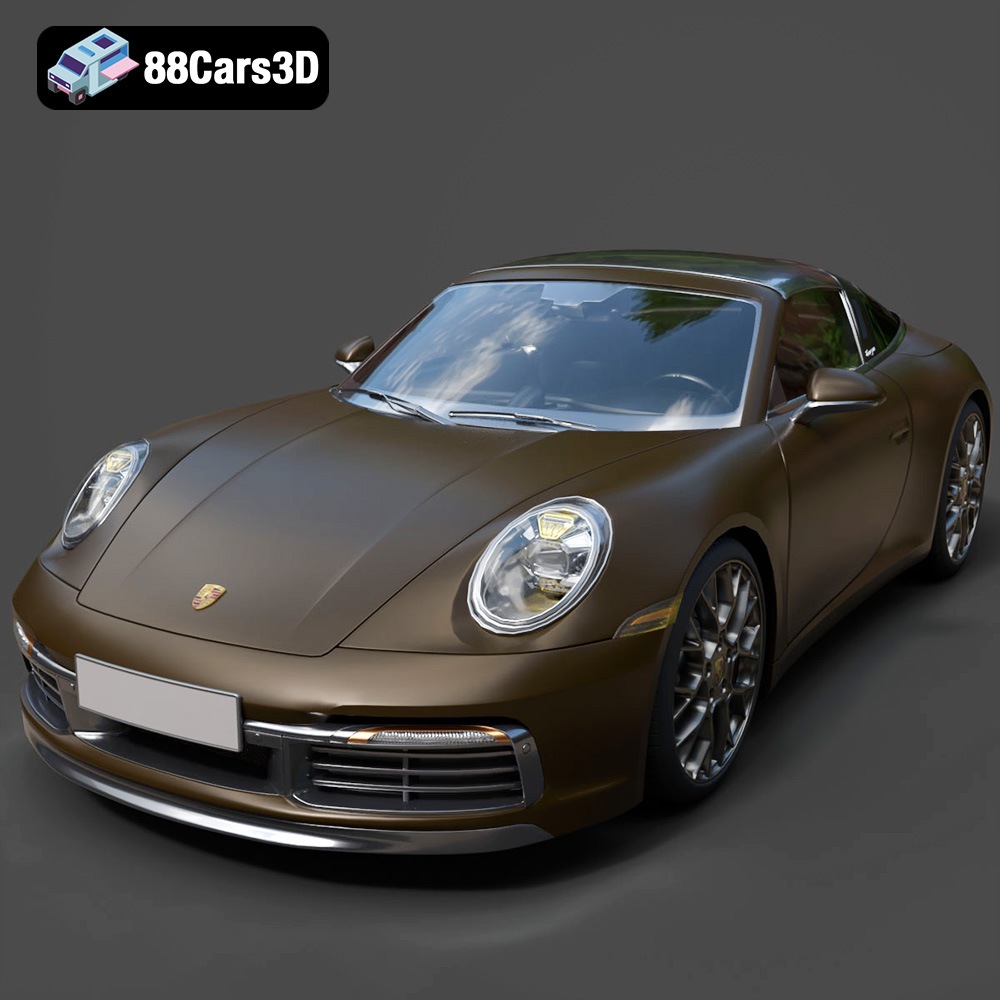
Few vehicles embody this blend of artistry and engineering quite like the Porsche 911 Targa. A true icon, it elegantly bridges the gap between the thrill of a convertible and the structural integrity of a coupe, celebrated for its distinctive Targa roof system, rear-engine heritage, and timeless silhouette. When translating such a legend into a 3D asset, every curve, every reflection, and every interior detail must be captured with impeccable accuracy to meet the rigorous standards of professional production. This is precisely what a premium asset like the Porsche 911 Targa 3D model from 88cars3d.com delivers, serving as a versatile foundation for everything from high-fidelity rendering to optimized real-time game environments.
Choosing the correct file format for your 3D car model is a critical decision that impacts workflow efficiency, compatibility, and ultimately, the success of your project. Each format is designed with specific use cases and technical advantages in mind, making it essential to understand their nuances. The Porsche 911 Targa 3D model, for instance, comes in a comprehensive suite of formats, ensuring maximum flexibility across various pipelines.
The .blend format is the native file type for Blender, a powerful and increasingly popular open-source 3D creation suite. When you acquire a .blend file, you’re not just getting the raw mesh; you’re receiving a fully editable Blender scene complete with materials, textures, lighting setups, and even animations if present. This format is ideal for users deeply integrated into the Blender ecosystem, allowing for seamless modification, customization, and rendering directly within the software. Artists can easily adjust topology, tweak materials, or re-rig components, making it invaluable for projects requiring extensive customization of a 3D car model.
.fbx (Filmbox) is arguably the most widely adopted proprietary file format for 3D data exchange, particularly between different software applications and real-time engines. Developed by Autodesk, FBX supports geometry, materials, textures, animations, and camera data. It is the go-to format for transferring assets into game engines like Unreal Engine and Unity, and for collaboration between artists using diverse software like 3ds Max, Maya, and Blender. Its robust support for skeletal animations and blend shapes makes it indispensable for character and vehicle rigging in game development pipelines. The optimized nature of .fbx ensures that assets like the Porsche 911 Targa 3D model integrate smoothly into real-time environments.
.obj (Wavefront OBJ) is a simple, universally recognized geometry definition file format. It’s a fundamental ASCII or binary format that describes the 3D geometry of an object, including vertices, normals, UV coordinates, and faces. While it doesn’t typically store animation or rigging data, its widespread support across virtually all 3D software makes it an excellent choice for basic cross-software compatibility. If you need a clean mesh to start from scratch with materials or rigging in a different application, .obj is a reliable foundation for any 3D car model.
.glb (GL Transmission Format Binary) is the binary version of glTF, a royalty-free specification for the efficient transmission and loading of 3D scenes and models by applications. It packages textures, animations, and other data into a single, compact file, making it perfectly optimized for AR/VR applications, web-based interactive experiences, and mobile platforms. Its efficient parsing and small file sizes make it a prime candidate for virtual showrooms or interactive configurators where rapid loading and display are paramount.
.stl (Stereolithography) is the standard file format for 3D printing. It represents a 3D object as a series of connected triangles (a tessellation) without color, material, or texture information. While simple, its universal acceptance by 3D printers and slicing software makes it crucial for physical prototyping or creating display models. For hobbyists looking to print a detailed replica of the Porsche 911 Targa, an optimized .stl version is essential, as detailed print settings provided by 88cars3d.com can guide successful physical production.
.ply (Polygon File Format or Stanford Triangle Format) is another format that stores 3D data, often used for scanned data, CAD, and scientific applications. It can store a wider range of properties than .obj, including color per vertex, transparency, and range data. While less common for typical game assets, its precision and ability to store complex mesh information make it valuable for specialized engineering or analytical workflows involving 3D car models.
The .unreal format refers to assets specifically configured and optimized for direct import into Unreal Engine projects. This often means the asset has been pre-processed, has appropriate collision meshes, optimized LODs (Levels of Detail), and a material setup that aligns with Unreal’s Physically Based Rendering (PBR) pipeline. Leveraging this format significantly reduces import and setup time, allowing developers to integrate high-quality game assets like the Porsche 911 Targa 3D model into their projects with minimal fuss.
.max is the native file format for Autodesk 3ds Max, a powerful 3D modeling, animation, rendering, and compositing software. Similar to .blend, a .max file contains the complete scene data, including geometry, materials, lights, cameras, modifiers, and animation curves. It offers full editability within 3ds Max, making it perfect for professionals who rely on the software for high-end rendering, complex animation sequences, or detailed architectural visualizations involving automotive rendering.
The art of creating a truly exceptional 3D car model lies in balancing artistic fidelity with technical optimization. For a vehicle as iconic as the Porsche 911 Targa, this means capturing its legendary design elements while ensuring it performs flawlessly across diverse applications. The model available on 88cars3d.com exemplifies this balance, offering a premium asset that stands out in any digital environment.
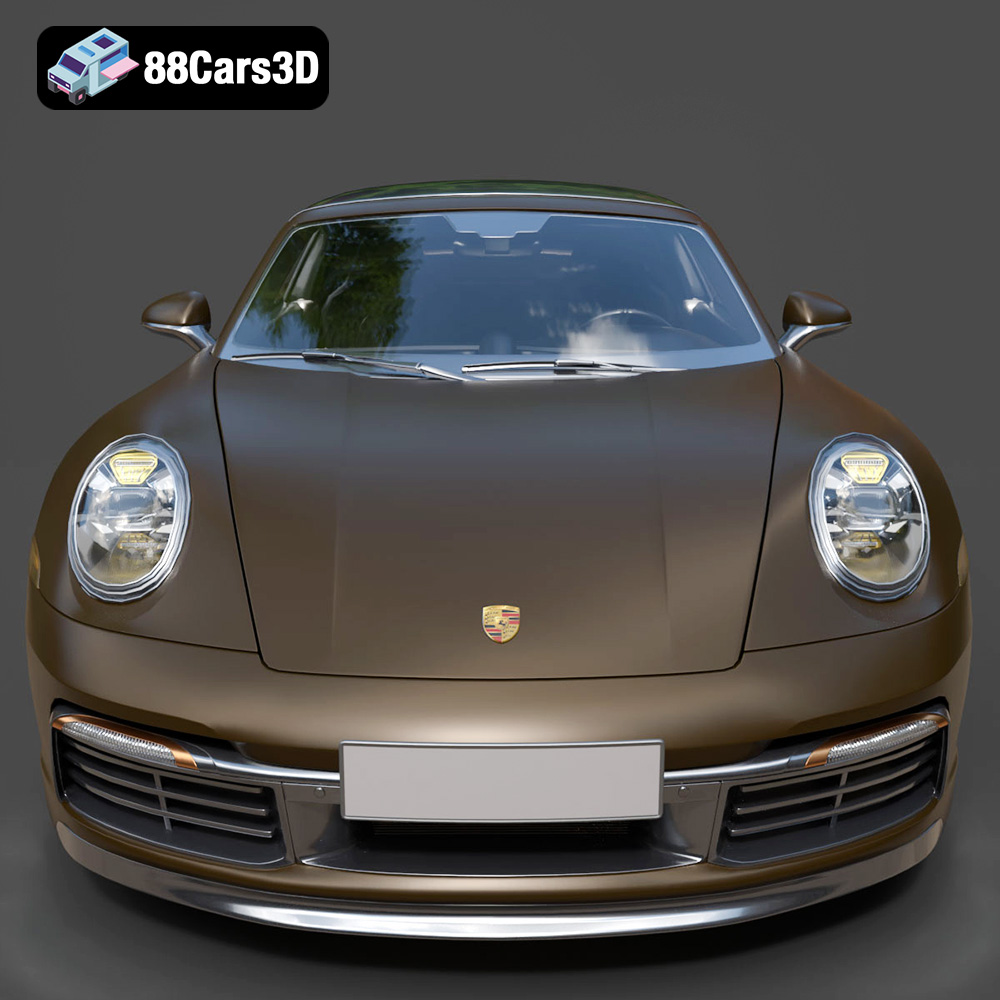
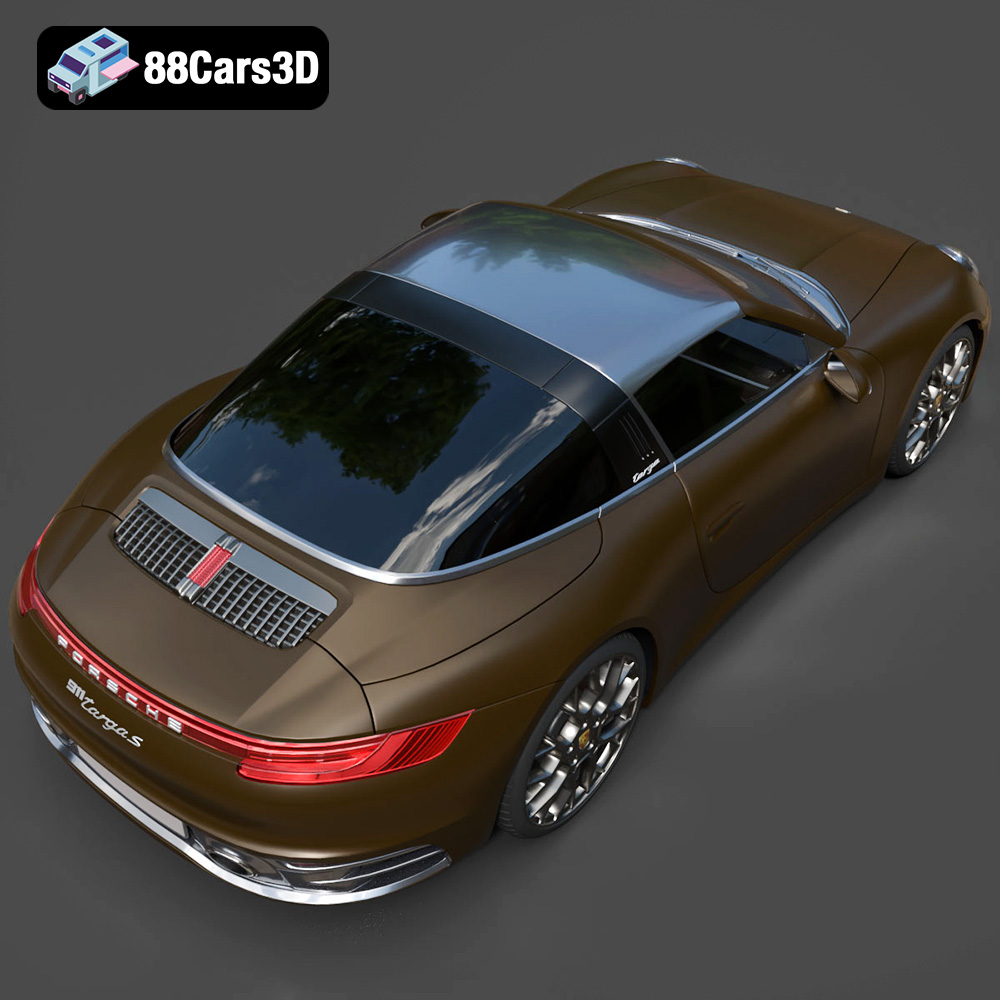
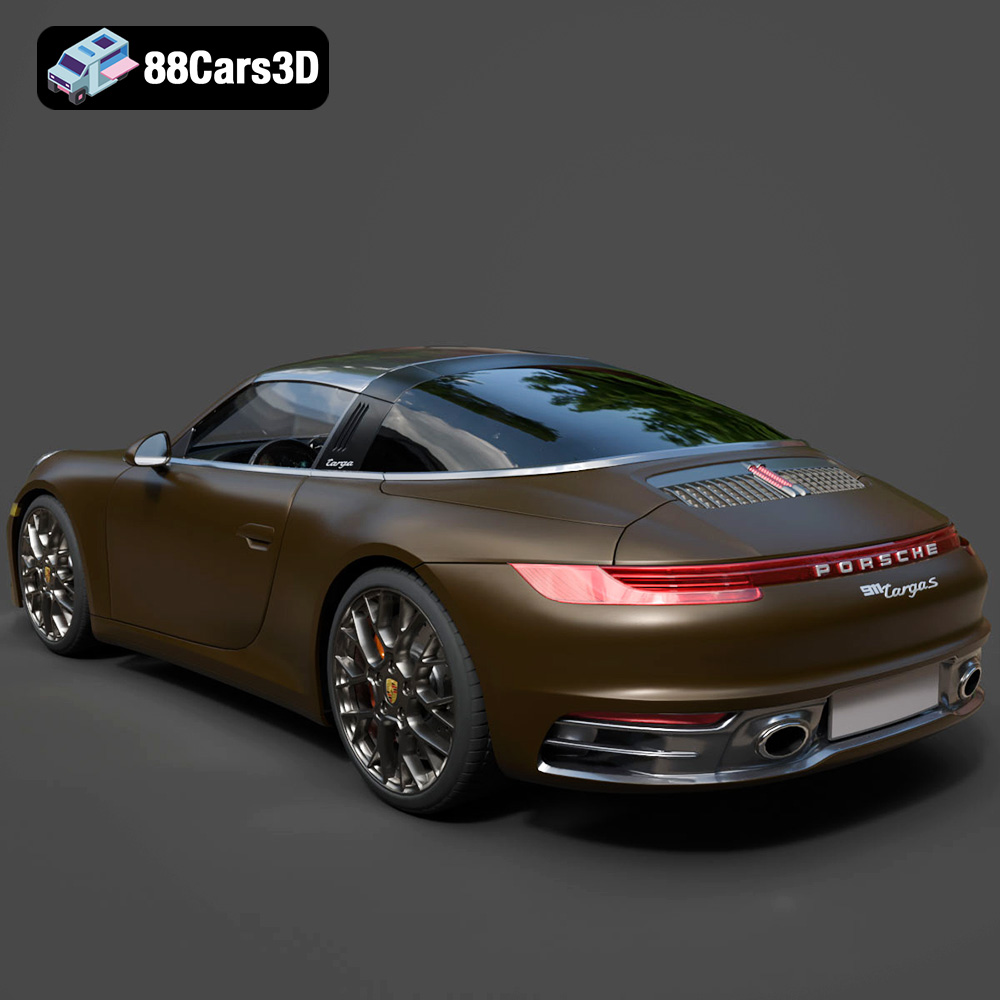
The exterior of the Porsche 911 Targa 3D model is a masterclass in automotive digital reproduction. It faithfully replicates the car’s unmistakable proportions and design cues, from the signature round LED headlights to the continuous rear taillight strip. The wide rear fenders, a hallmark of the 911, are meticulously modeled, giving the asset its aggressive, planted stance. Even subtle elements like the detailed flat-six engine block, visible from the rear deck, and the authentic dual exhaust system with its rear diffuser, showcase an extraordinary level of attention to detail. Furthermore, the high-resolution premium alloy wheels with branded brake calipers and a detailed suspension system underscore the model’s commitment to realism, ensuring accurate reflections and visual depth.
A truly comprehensive 3D car model extends beyond the surface. The interior, or cockpit, is where much of the user’s interaction and immersion happens, especially in games or VR experiences. The Porsche 911 Targa model excels here with premium sport seats featuring realistic leather textures and stitching. The authentic sport steering wheel, complete with integrated controls, the classic 5-dial instrument cluster, and the detailed center console with pedals, levers, and a PDK/manual shifter are all rendered with precision. This level of interior fidelity is crucial for first-person viewpoints in gaming, providing an authentic and engaging experience that truly transports the user into the virtual driver’s seat.
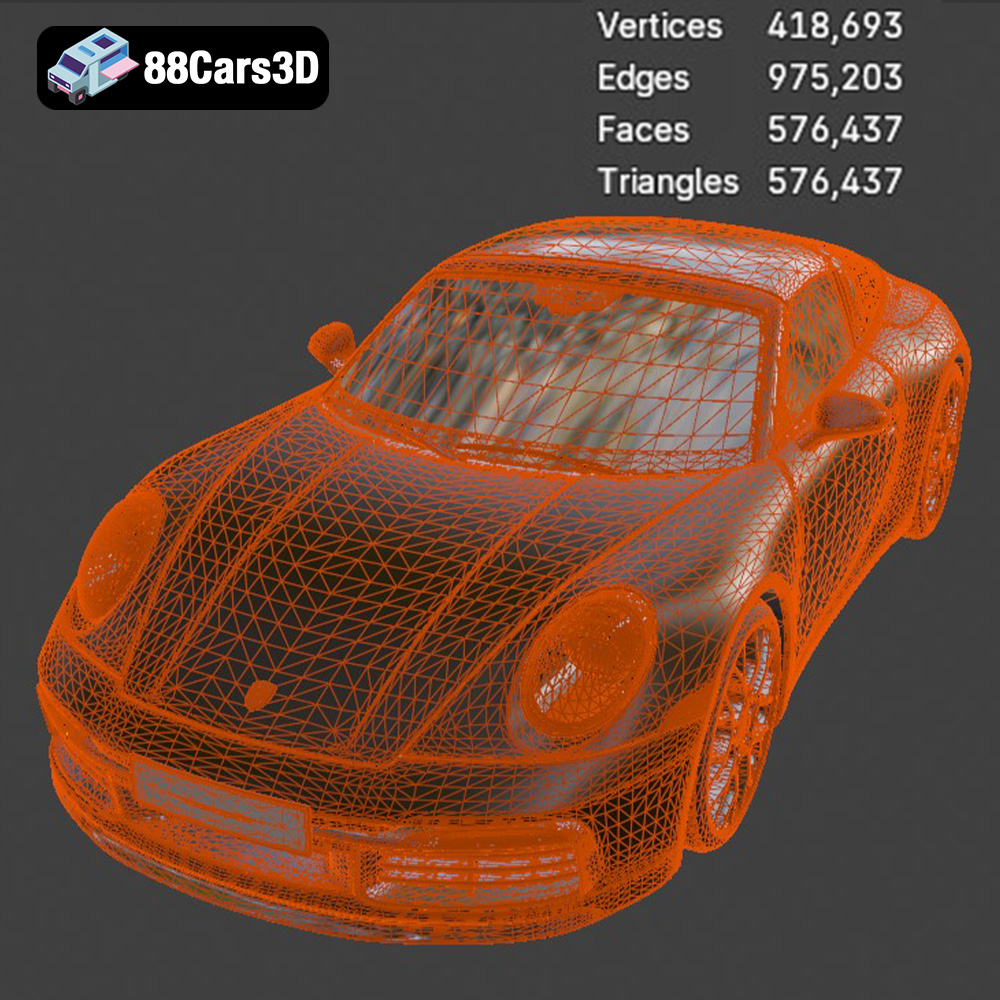
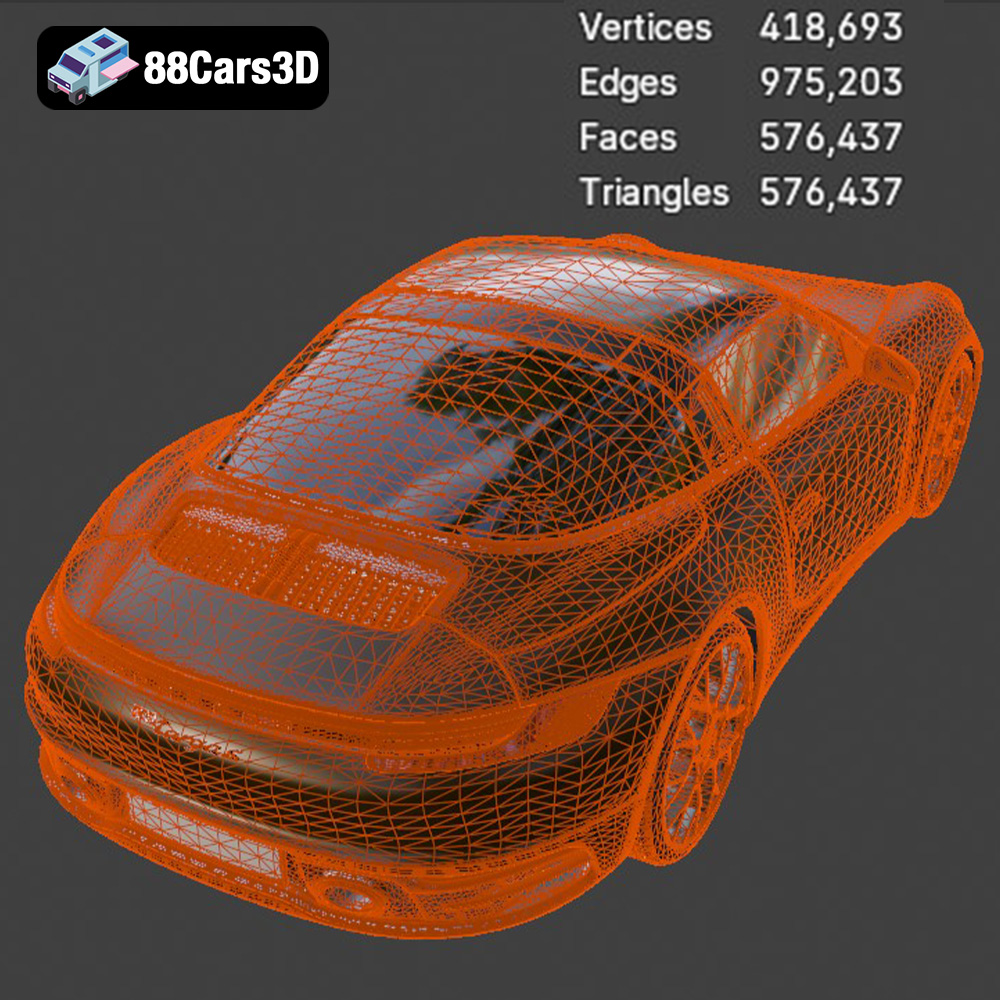
Beyond visual appeal, the technical underpinnings dictate a 3D model’s usability. This Porsche 911 Targa 3D model is optimized to be genuinely game-ready, boasting approximately 250,000 triangles. This poly count strikes an ideal balance, maintaining high-end visual realism without overburdening real-time engines like Unreal and Unity. Real-world scale accuracy ensures seamless integration into environments, while proper pivot setups for steering, wheel rotation, and suspension travel guarantee realistic animation potential. Such meticulous technical consideration positions this asset as a top choice for developers seeking high-performance game assets.
The true value of a high-quality 3D car model, like the Porsche 911 Targa from 88cars3d.com, becomes apparent in its seamless integration into diverse professional production pipelines. Whether for cutting-edge game development or photorealistic architectural visualization, versatility and optimization are key.
For game developers, an optimized 3D car model is an indispensable asset. The Porsche 911 Targa model, with its ~250,000 triangle count, is designed specifically for real-time engines. In titles like open-world racing games or driving simulators, performance is paramount. A well-optimized model means smoother frame rates, faster loading times, and a more responsive player experience. The included .fbx and .unreal formats are specifically tailored for rapid integration into Unreal Engine and Unity, often requiring minimal setup. Separated components like wheels, doors, hood, and steering elements facilitate easy rigging and animation, allowing developers to create dynamic interactions and vehicle physics that contribute to deep immersion.
Beyond games, automotive rendering is a cornerstone of marketing and visualization for architects, product designers, and luxury brands. Placing a beautifully rendered Porsche 911 Targa in an architectural scene instantly elevates its perceived value and realism. The meticulous surface details, flawless reflections, and high-resolution textures of this 3D model make it perfect for studio lighting setups and complex material shaders in rendering engines like V-Ray, Corona, or Cycles. Whether it’s showcasing a luxury garage design or a sprawling estate, integrating a high-fidelity car model adds a layer of aspirational lifestyle and realism that static props simply cannot achieve. The .max and .blend formats offer full control for artists to customize lighting, materials, and camera angles to achieve the desired photorealistic effect.
The burgeoning fields of augmented reality (AR) and virtual reality (VR) are transforming how consumers interact with products. An optimized 3D car model is the foundation for creating immersive virtual showrooms, interactive configurators, and mobile AR experiences. Imagine a customer exploring a Porsche 911 Targa in their driveway via AR, changing its color, wheels, or interior trim in real time. The .glb format, specifically designed for efficient web and AR/VR display, is crucial here. Its compact size and ease of loading make it perfect for streaming across devices and browsers, allowing brands to offer engaging, interactive previews of their vehicles, dramatically enhancing the customer journey and product engagement.
The utility of a versatile 3D car model extends far beyond digital screens. With advancements in 3D printing and the proliferation of augmented and virtual reality technologies, these assets are becoming tangible objects and interactive experiences that redefine how we engage with digital content.
For hobbyists, collectors, or even professional designers needing a physical prototype, 3D printing offers an exciting avenue. The Porsche 911 Targa 3D model, with its included .stl format, is convertible for physical output. Printing a scale model, such as 1:12, 1:18, or 1:24, allows enthusiasts to hold a meticulously detailed replica in their hands. The provided print settings from 88cars3d.com are invaluable here, recommending resin printing for fine details, specific layer heights, wall thicknesses, infill percentages, and crucial support structures for complex parts like exhaust systems and mirrors. Post-processing, including sanding, priming, and painting with authentic factory colors, can bring a truly lifelike miniature into existence. This fusion of digital design and physical fabrication opens up new possibilities for appreciation and customization.
Augmented Reality (AR) and Virtual Reality (VR) are revolutionizing product visualization, particularly in the automotive industry. Imagine prospective buyers donning a VR headset to sit inside the virtual cockpit of the Porsche 911 Targa, examining every stitch and control, or using their smartphone to place the car in their driveway via AR. High-quality 3D car models are the backbone of these experiences. The optimized geometry and clean topology of this model ensure smooth performance in real-time AR/VR environments, preventing motion sickness and maintaining visual fidelity. Its adaptability for changing body colors, tire textures, and material finishes allows for dynamic customization in virtual configurators, giving users an unparalleled sense of interaction and ownership before making a purchase. The .glb format, optimized for these platforms, makes deployment efficient and seamless.
Achieving a perfect equilibrium between breathtaking visual fidelity and robust real-time performance is the holy grail for any professional 3D car model. This balance is especially critical for game assets and interactive experiences, where every polygon and texture map contributes to the overall load. The Porsche 911 Targa 3D model has been meticulously crafted to achieve this delicate balance.
The model’s optimized geometry, boasting approximately 250,000 triangles, is not arbitrary. This number represents a careful consideration of visual detail versus performance impact. A model with excessive polygons might look stunning in a static render but would cripple frame rates in a game engine. Conversely, a model with too few polygons would lack the intricate curves and sharp edges expected of a luxury sports car. The topology is clean and efficient, ensuring smooth deformations if rigged for animation and facilitating easy unwrapping for UVs. This intelligent polycount management allows the Porsche 911 Targa to maintain its high-end visual realism in cinematic sequences while remaining fully game-ready for interactive environments.
Beyond the mesh, materials and textures play a pivotal role in visual fidelity. The Porsche 911 Targa model includes flawless reflections and meticulously modeled surface details, which are enhanced by its well-prepared material setup. This means that when imported into an engine like Unreal or Unity, the physically based rendering (PBR) materials will react realistically to lighting conditions, producing authentic metallic sheens, glossy paintwork, and textured interiors. Furthermore, the model offers extensive customization options: users can easily change body colors, modify tire textures for different scenarios (e.g., off-road vs. street), and adjust material finishes (matte, gloss, metallic). This flexibility is invaluable for tailoring the asset to specific project requirements, ensuring that the car looks perfect in any scene or environment.
In a marketplace filled with digital assets, selecting the appropriate 3D car model is paramount to the success and efficiency of your project. The decision hinges on understanding your specific needs—be it for high-end cinematic rendering, demanding game development, or innovative AR/VR applications. The Porsche 911 Targa 3D model from 88cars3d.com serves as an excellent benchmark for what to look for in a professional-grade asset.
Firstly, always prioritize quality. A model should exhibit accurate proportions, detailed features, and clean topology. As seen with the Porsche 911 Targa model’s detailed exterior, cockpit, and suspension, such attention to detail minimizes the need for post-purchase modification. Secondly, consider compatibility. A robust asset should offer a range of file formats to suit various software and engines. The comprehensive list of formats (.blend, .fbx, .obj, .glb, .stl, .ply, .unreal, .max) provided with this particular model ensures it can be integrated into virtually any professional pipeline. Lastly, optimization is non-negotiable for real-time applications. The ~250,000 triangle count for this model is a prime example of an asset optimized for game-readiness without compromising visual fidelity, ensuring smooth performance in demanding environments.
Investing in a high-quality 3D car model is about long-term value. An asset that is well-structured, easy to customize, and built to real-world scale will save countless hours in development time. The Porsche 911 Targa model offers extensive customization options, from changing body colors and tire textures to adapting material finishes and lighting. This flexibility ensures the asset remains relevant across multiple projects and can be seamlessly adapted to new creative visions. Whether you’re building a new game, crafting an architectural visualization, or developing an interactive AR experience, choosing a model that meets these stringent criteria, like those found on 88cars3d.com, is an investment in efficiency and excellence.
The world of 3D production thrives on precision, efficiency, and stunning visuals. High-quality 3D car models are not merely decorative elements; they are foundational assets that power engaging game experiences, captivating automotive rendering, and groundbreaking AR/VR applications. The meticulous creation of models that balance aesthetic authenticity with technical optimization is crucial for professionals seeking to push the boundaries of digital realism.
The Porsche 911 Targa 3D model stands as a testament to this commitment, offering unparalleled detail in its exterior, interior, and technical specifications. Its wide array of included file formats—from .blend for full editability to .fbx for game engines and .stl for 3D printing—ensures its adaptability across virtually any professional workflow. Whether you’re a game developer aiming for immersive gameplay, a visualization artist striving for photorealism, or an innovator creating interactive virtual showrooms, this model provides a robust and versatile solution. When quality and versatility are paramount, choosing assets from trusted sources like 88cars3d.com ensures you have the reliable foundation needed to bring your most ambitious projects to life.
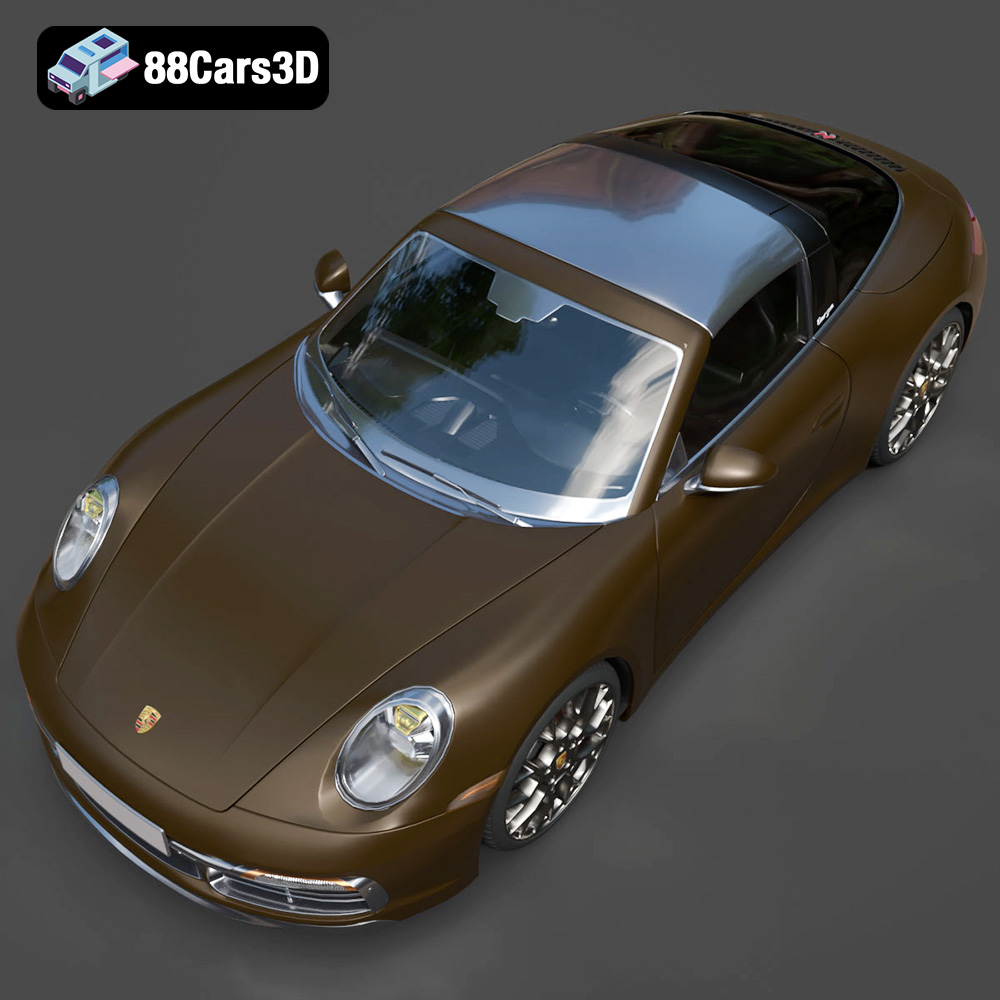
The Porsche 911 Targa is a legendary sports car that perfectly bridges the gap between a classic coupe and a full convertible. Renowned for its iconic Targa roof system, distinctive rear-engine layout, and timeless aerodynamic silhouette, this vehicle represents the pinnacle of German engineering. The 3D model captures its signature round headlights, wide rear fenders, sleek glass dome, and aggressive exhaust system with impeccable precision.
This Porsche 911 Targa 3D model is crafted with exceptional topology and a highly optimized triangle count, ensuring it is fully game-ready without sacrificing visual fidelity. The asset boasts flawless reflections and meticulously modeled surface details, making it an outstanding choice for professional 3D production. It is heavily optimized for seamless integration into game engines like Unreal Engine and Unity, as well as high-end CGI animations, VR showrooms, and interactive web experiences.
Perfect for open-world racing games, luxury lifestyle visualizations, interactive AR configurators, and architectural renders.
.blend, .fbx, .obj, .glb, .stl, .ply, .unreal, .max
Tags:
porsche, porsche-911-targa, sports-car, luxury-car, game-ready, low-poly, optimized, car-3d-model, game-asset, rendering, vr-ar, blend, fbx, obj, glb, stl, ply, unreal, max
$19.99
.blend
.fbx
.glb
.max
.obj
.ply
.porsche
.rendering
.sports car
.stl
.unreal
car-3d-model
game asset
game-ready
low-poly
luxury car
optimized
porsche-911-targa
VR/AR