Get 20% OFF All Premium 3D & STL Models!

In the vibrant world of digital creation, capturing the essence of historical vehicles presents a unique challenge and a rewarding opportunity. From blockbuster games set in bygone eras to architectural visualizations requiring period-accurate street scenes, the demand for meticulously crafted 3D car models is consistently high. These digital assets are more than just static objects; they are key components that breathe life into virtual environments, offer immersive experiences, and provide invaluable tools for designers and developers.
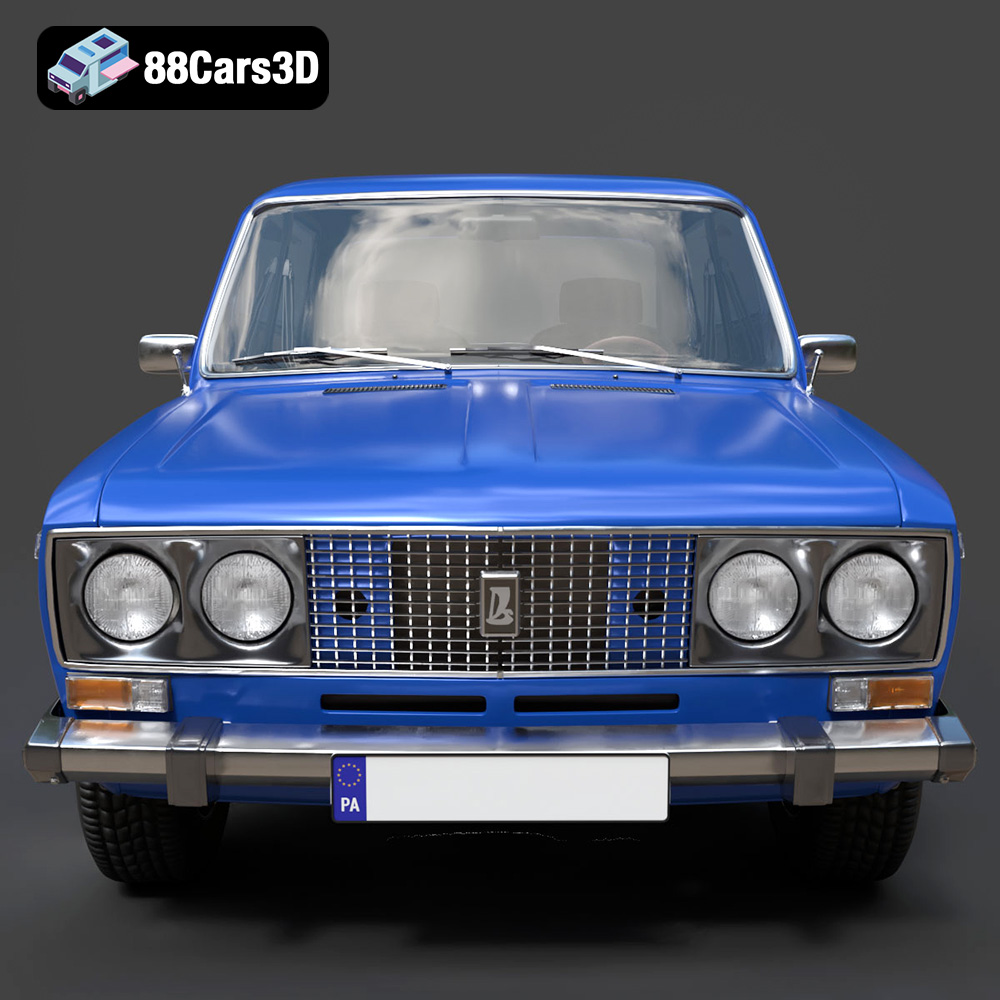
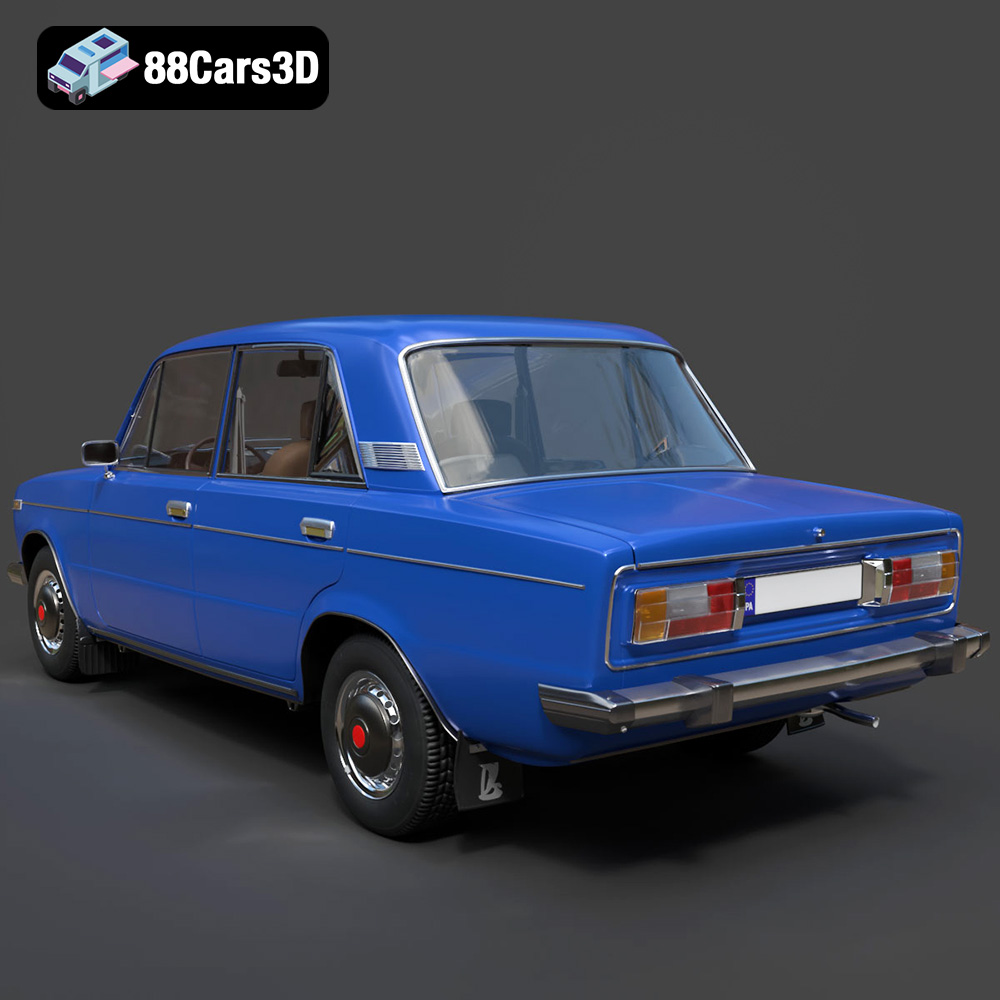
Today, we’re diving deep into the creation and application of such models, using a fantastic example that bridges the past and the present: the VAZ Lada 2106 1976 3D Model. This iconic Soviet-era sedan, a symbol of Eastern European motoring heritage, has been meticulously recreated for digital artists, game developers, and visualization specialists. With its recognizable quad-headlight grille, sharp boxy silhouette, and generous chrome detailing, this model offers a perfect blend of historical charm and modern technical optimization. Whether you’re building a retro racing simulator, an immersive urban environment, or a cinematic visual effects sequence, understanding the intricacies of high-quality 3D car models is paramount. Let’s explore the journey from concept to integration, and how assets like the VAZ Lada 2106 model from 88cars3d.com empower creators across various industries.
The versatility of a 3D model asset is often defined by the file formats it supports. Each format is designed with specific use cases in mind, offering different levels of compatibility, data retention, and optimization for various software and engines. Knowing which format to use and when is crucial for efficient workflow and successful project outcomes. The VAZ Lada 2106 1976 3D Model, for instance, comes equipped with a comprehensive suite of formats, ensuring its adaptability across virtually any professional pipeline.
The `.blend` format is native to Blender, a powerful open-source 3D creation suite. When you download a `.blend` file, you’re not just getting the mesh; you’re receiving a complete Blender scene. This includes the model’s geometry, all associated materials, textures, lighting setups, cameras, animation data, and even modifiers or rigging if present. For artists working primarily in Blender, this format offers the highest degree of editability and allows for seamless integration into existing Blender projects without any loss of data. It’s ideal for deep customization, retexturing, or further detailing, as you have access to the original scene’s full hierarchy and properties.
FBX (Filmbox) is a proprietary file format owned by Autodesk, but it has become the industry standard for exchanging 3D data between different software applications and especially for real-time game engines like Unreal Engine and Unity. An `.fbx` file can store not only models but also materials (though often simplified), textures, animations, skinning, and camera data. Its strength lies in its ability to encapsulate complex scene information in a robust, engine-friendly package. For assets like the VAZ Lada 2106, an `.fbx` file is often the go-to for game developers due to its efficient handling of optimized meshes and animation data, ensuring a smooth import and proper scaling within the engine environment.
The Wavefront `.obj` format is one of the oldest and most widely supported 3D file formats. It’s known for its simplicity and universality, making it an excellent choice for basic mesh exchange between almost any 3D software. An `.obj` file primarily stores geometry (vertices, normals, texture coordinates, and faces) and can reference external material (`.mtl`) files for basic color and texture information. While it doesn’t support advanced features like animation or rigging, its widespread compatibility makes it a reliable fallback for ensuring a model can be opened and worked with in diverse environments, from 3ds Max to ZBrush.
`.glb` is the binary version of glTF (GL Transmission Format), a relatively newer format designed for the efficient transmission and loading of 3D scenes and models by engines and applications. It’s often referred to as the “JPEG of 3D” due to its focus on web and real-time optimized delivery. A `.glb` file packs all assets (geometry, materials, textures, animations) into a single, self-contained binary file, making it incredibly easy to share and display in AR/VR experiences, web browsers (e.g., with Three.js), and mobile applications. For the VAZ Lada 2106, the `.glb` format is perfect for showcasing the model in a virtual showroom or integrating it into an AR app on a smartphone.
STL (Stereolithography) is the de facto standard file format for 3D printing. Unlike other formats that store complex mesh data, materials, and animations, an `.stl` file describes only the surface geometry of a 3D object using a collection of interconnected triangles. It lacks color, texture, or other CAD attributes. When preparing a model like the Lada 2106 for physical fabrication, converting it to `.stl` is the first step. This format ensures that 3D printers can accurately interpret the object’s shape for layer-by-layer deposition, making it invaluable for hobbyists wanting a tangible replica or for prototyping in automotive design.
PLY (Polygon File Format) is another format primarily used for storing 3D data from 3D scanners. It’s capable of storing not just the XYZ coordinates of vertices and faces, but also properties like color, transparency, surface normals, and texture coordinates for each vertex. While less common for general asset exchange than FBX or OBJ, `.ply` files are valuable in applications requiring high precision mesh data, such as scientific analysis, CAD software, or when working with point cloud data derived from real-world scans. For highly detailed models, `.ply` offers an alternative for precise geometric representation.
The `.unreal` format (often associated with Unreal Engine-specific asset packages or uassets) refers to content specifically formatted and optimized for direct import and use within Unreal Engine. While `.fbx` is the primary import method, having a pre-packaged `.unreal` asset means the model has likely gone through an optimization and setup process tailored for the engine. This might include proper collision meshes, LODs (Levels of Detail), materials converted to Unreal’s shader system, and blueprints for interactive elements. For game developers, this can significantly reduce setup time and ensure peak performance within an Unreal Engine project.
The `.max` format is the native file type for Autodesk 3ds Max, a professional 3D computer graphics program for making 3D animations, models, games, and images. Similar to `.blend` for Blender, a `.max` file contains a complete 3ds Max scene, including all geometry, materials, textures, lights, cameras, animations, and modifiers. It provides full editability and control over every aspect of the model within its native environment. For professionals heavily invested in the 3ds Max ecosystem, this format offers the ultimate flexibility for high-end rendering, complex animation sequences, or further detailed modifications to the VAZ Lada 2106 model.
The VAZ Lada 2106 1976 3D model is a testament to the power of digital artistry in preserving and celebrating automotive history. This asset goes beyond mere surface-level aesthetics, delving into the core characteristics that made the Lada 2106 such a distinctive vehicle. It’s a prime example of a ‘game-ready’ asset that doesn’t compromise on visual fidelity.
The exterior of this Lada model is a meticulous recreation of its 1976 counterpart. The iconic dual-round quad headlights and chrome grille, which immediately identify the vehicle, are faithfully rendered. Details extend to the authentic retro exhaust system and intricate undercarriage components, often overlooked in less detailed models. Period-correct taillight clusters, side marker lights, and the classic steel wheels with chrome hubcaps complete the look. Even the vintage tread patterns on the tires are accurately represented, providing that extra layer of realism essential for immersive experiences. Furthermore, the model’s geometry ensures accurate VAZ Lada 2106 body proportions and a classic sedan silhouette, crucial for both visual appeal and proper integration into simulations or games.
A truly compelling 3D car model doesn’t stop at the exterior. The VAZ Lada 2106 model boasts a detailed interior, critical for first-person perspectives in gaming, AR/VR applications, and high-fidelity visualizations. The cockpit features authentic classic vinyl and cloth-textured bench-style seating, replicating the feel of the era. A thin-rimmed steering wheel, detailed analog instrument cluster, and distinct wood-grain dashboard inserts transport the viewer straight into the 1970s. Accurate control elements, including the manual floor shifter, pedals, and classic dashboard switches, ensure that every interaction feels authentic. This optimized geometry is specifically designed for realistic first-person POV, making it an excellent asset for driving simulators or virtual tours.
One of the standout advantages of this VAZ Lada 2106 3D model is its balance between visual realism and technical optimization. With a well-structured topology of approximately 200,000 triangles, it strikes a perfect sweet spot for real-time engines like Unreal and Unity. This poly count is sufficient to maintain intricate detail without overburdening the rendering pipeline, ensuring smooth performance in demanding applications. The model is built to real-world scale, based on actual VAZ Lada 2106 chassis dimensions, guaranteeing accurate representation. Crucially, it features proper pivot setups for all animated components: steering, wheel rotation, doors, and suspension travel. This ‘game-ready’ status means less time spent on preparation and more time on creative implementation, making it an ideal choice for professional projects.
A high-quality 3D car model like the VAZ Lada 2106 is an invaluable asset across a spectrum of digital industries. Its meticulous detail and optimization make it a versatile tool for various professional workflows.
For game developers, the VAZ Lada 2106 is a dream asset. Its ~200,000 triangle count is perfectly optimized for modern game engines, allowing for excellent visual fidelity without compromising frame rates. In Unreal Engine, developers can import the `.fbx` or the `.unreal` package directly, taking advantage of its pre-configured pivots for immediate animation. This means wheels will spin correctly, doors will open on their proper axis, and suspension can react realistically to terrain. For an open-world game set in an Eastern European or Soviet-era landscape, this Lada can serve as a primary drivable vehicle, an AI traffic car, or a static environmental prop. The detailed interior makes it suitable for first-person driving mechanics, enhancing immersion for players. Similarly, in Unity, the `.fbx` format integrates seamlessly, ready for scripting physics, damage models, and interactive elements. Its authentic design makes it perfect for retro racing titles or simulators where historical accuracy is key.
Beyond gaming, the Lada 2106 model excels in high-fidelity rendering and visualization. Using the `.max` file in 3ds Max or the `.blend` file in Blender, artists have full control over materials, lighting, and camera angles to create stunning photorealistic images or animations. Imagine this classic car rendered in a moody, rain-swept street scene using Cycles in Blender, or showcased in a pristine studio environment with V-Ray in 3ds Max. Its detailed chrome accents, period-correct paint finishes (easily customizable), and intricate interior provide a rich canvas for showcasing rendering skills. Architectural visualization artists can drop this model into their scenes to add character and a sense of place, grounding modern buildings in a historical context or completing a retro-themed street. The accurate real-world scale ensures it fits perfectly into any scene without distortion.
The optimized nature and `.glb` format support make the VAZ Lada 2106 an ideal candidate for augmented and virtual reality experiences. Imagine a virtual showroom where customers can explore the Lada in 3D, changing colors, opening doors, and examining its interior from any angle. For educational or historical projects, the model can be placed in a real-world environment via AR, allowing users to walk around a virtual Lada on their desk or in a park. Its manageable polycount ensures smooth performance on mobile devices, which are often the target platforms for AR/VR applications. This interactivity offers a new dimension of engagement, moving beyond static images or videos to truly immersive brand campaigns or historical recreations.
The utility of this VAZ Lada 2106 3D model extends even further, into the tangible realm of 3D printing. For enthusiasts, collectors, or model makers, having a digital asset that can be transformed into a physical replica is incredibly exciting. The inclusion of the `.stl` format makes this a straightforward process.
While the `.stl` file provides the geometric data necessary for 3D printing, some preparation is typically required. The model’s complex geometry, with separate components for doors, wheels, and suspension, lends itself well to multi-part printing, which can enhance detail and allow for easier painting post-print. Before printing, users should import the `.stl` into a slicing software (like PrusaSlicer, Cura, or Lychee Slicer for resin). Here, scaling is crucial. The product description recommends scales like 1:12, 1:18, or 1:24, which are standard for model cars, providing a good balance between size and detail retention. Checking for watertightness and manifold geometry is essential to prevent printing errors; most slicing software can automatically repair minor issues, but a well-prepared model like this Lada should already be print-ready.
For a model with the intricate details of the Lada 2106, resin printing is highly recommended over FDM (Fused Deposition Modeling). Resin printers can achieve significantly finer layer heights (0.04–0.12 mm) and sharper details, capturing the chrome trim, grilles, and interior elements with greater accuracy. Supports will be necessary for overhangs and delicate parts such as the exhaust system, mirrors, steering wheel, and bumpers. Print orientation is also key: printing the main body frame at an angle can improve structural integrity and reduce visible layer lines. For wheels, printing them separately often yields better results. After printing, post-processing is where the model truly comes to life. This involves careful removal of supports, curing (for resin prints), sanding to smooth surfaces, applying primer, and finally, painting. Using authentic factory colors with metallic finishes can perfectly replicate the vintage aesthetic of the 1976 Lada, making it a prized display piece for any automotive enthusiast.
The true value of a professional-grade 3D model lies not just in its initial fidelity but also in the creative freedom it offers to artists. The VAZ Lada 2106 1976 3D Model is designed with customization in mind, allowing creators to adapt it to diverse artistic visions and technical requirements.
One of the most immediate ways to customize the Lada is through material and texture adjustments. Artists can easily change the body color, moving from classic retro pastels and factory shades to completely custom finishes like a modern matte wrap or a vibrant metallic flake. The separate components and well-defined UV mapping (implied by its game-ready status) mean that different parts can be textured independently. For example, you could modify tire textures to show weathered classic variants for a post-apocalyptic scene or pristine showroom versions for a museum display. Adjusting material finishes, such as making chrome detailing more reflective or adding subtle rust and wear, can dramatically alter the model’s narrative and integration into specific environments. This flexibility ensures the Lada 2106 can fit into any context, from a pristine collector’s item to a rugged workhorse.
The VAZ Lada 2106 model comes with proper pivot setups for its key animated components: wheels, doors, suspension, and steering. This is crucial for dynamic scenes and interactive applications. In game development, these pivots are essential for realistic driving physics and player interaction. For cinematic rendering, artists can animate the Lada driving down a road, turning corners, or even having its doors open for a character interaction. The separate suspension components allow for realistic compression and extension, making driving sequences more believable. Combined with material customization, animating this classic car can produce stunning visual narratives, bringing the charm of the 1976 Lada to life in motion graphics, commercials, or game cutscenes. The robust structure and careful rigging facilitate complex animations without breaking the model’s integrity.
From the intricate details of its quad-headlight grille to its game-ready optimization, the VAZ Lada 2106 1976 3D Model stands as a prime example of a high-quality digital asset. We’ve explored its meticulous recreation, delving into everything from its authentic exterior and detailed interior to its technical specifications like the ~200,000 triangle count and precise pivot setups. Its support for a wide array of file formats—including .blend, .fbx, .obj, .glb, .stl, .ply, .unreal, and .max—underscores its versatility and ensures seamless integration into any professional pipeline, be it for game development, automotive rendering, AR/VR experiences, or even 3D printing.
For creators seeking to infuse their projects with a touch of Soviet-era nostalgia or to build historically accurate virtual worlds, this Lada model offers an unparalleled foundation. Its balance of visual fidelity and performance optimization makes it a valuable asset for demanding real-time applications and cinematic renderings alike. Platforms like 88cars3d.com provide direct access to such expertly crafted 3D car models, empowering artists and developers to elevate their projects with assets that are both technically sound and artistically inspiring. Whether you’re a seasoned professional or an aspiring digital artist, investing in high-quality 3D car models like the VAZ Lada 2106 is a fundamental step towards creating truly immersive and captivating digital experiences.
Experience the charm of Soviet automotive history with this meticulously crafted VAZ Lada 2106 (1976) 3D model. Renowned as a symbol of Eastern European motoring heritage, this classic rear-wheel-drive sedan is immediately recognizable by its iconic quad-headlight grille, sharp boxy silhouette, and generous chrome detailing. Every signature element, from its classic 1.6-liter inline-four engine layout cues to the distinct tail light clusters and vintage exhaust system, has been faithfully recreated to capture the essence of 1970s automotive design.
$19.99
.blend
.fbx
.glb
.lada
.max
.obj
.ply
.rendering
.stl
.unreal
.vaz
1976
car-3d-model
classic-car
game asset
game-ready
lada-2106
low-poly
optimized
retro-sedan
soviet-car
VR/AR