Get 20% OFF All Premium 3D & STL Models!

The world of 3D modeling has evolved dramatically, allowing artists, developers, and designers to capture the essence of history and inject it into cutting-edge digital experiences. From high-fidelity cinematic renders to immersive game environments and interactive AR/VR applications, the demand for meticulously crafted 3D assets is insatiable. Among these, classic vehicles hold a special place, offering a unique blend of nostalgia, distinctive design, and engineering heritage. Today, we delve into one such iconic piece of automotive history: the VAZ Lada 21099 from 1990, and how a high-quality 3D model of this beloved sedan can become an indispensable asset in a professional workflow.
The Lada 21099 is more than just a car; it’s a symbol of an era, particularly in Eastern European motoring. Its utilitarian, boxy styling, robust engineering, and widespread presence have cemented its place in cultural memory. A premium 3D representation, such as the VAZ Lada 21099 1990 3D Model available at 88cars3d.com, doesn’t just replicate its form; it resurrects its spirit, making it accessible for a myriad of digital applications. This detailed model offers a blend of historical accuracy and technical optimization, making it suitable for everything from photorealistic renders to real-time interactive experiences.
Classic cars possess an undeniable charm, a nostalgic pull that transcends generations. When these vehicles are meticulously recreated in 3D, they become powerful tools for storytelling, historical preservation, and artistic expression within the digital realm. The VAZ Lada 21099 1990 3D Model exemplifies this, offering a gateway to explore specific cultural contexts and design philosophies.
Incorporating vintage vehicles into contemporary digital projects allows creators to bridge historical narratives with modern interactive experiences. Imagine a game set in a post-Soviet landscape; the presence of an accurate Lada 21099 instantly grounds the player in that specific time and place. For architectural visualization projects, placing a period-correct car like this Lada in a scene can significantly enhance the sense of realism and historical accuracy, making visualizations more compelling and believable. These 3D car models serve as historical anchors, enriching the digital tapestry.
In industries like film, game development, and advertising, authenticity is paramount. Audiences are discerning, and inaccuracies can quickly break immersion. A high-fidelity 3D model of a classic car, with its characteristic lines, period-correct details, and authentic material finishes, ensures that the digital representation holds true to its real-world counterpart. The VAZ Lada 21099 1990 3D Model, with its detailed exterior, engine block representation, and authentic interior features like retro cloth seats and an analogue instrument cluster, provides this level of authenticity, making it a valuable asset for any project striving for historical precision.
Beyond entertainment and commercial applications, 3D modeling plays a crucial role in digital preservation. Vehicles like the VAZ Lada 21099, which hold significant cultural and engineering value, can be digitally archived and studied in unprecedented detail. This 3D model acts as a digital artifact, allowing future generations to interact with and understand a piece of automotive history. Its optimized geometry and accurate real-world scale make it a prime candidate for virtual museums, educational simulations, and detailed technical analyses, ensuring its legacy endures digitally.
Navigating the diverse landscape of 3D software and applications requires a fundamental understanding of various file formats. Each format serves a specific purpose, offering unique advantages for different stages of the 3D pipeline, from native editing to real-time deployment and physical fabrication. The VAZ Lada 21099 1990 3D Model comes packaged with a comprehensive array of formats, ensuring maximum compatibility and utility for any professional workflow.
The `.blend` format is the native file type for Blender, an incredibly powerful and popular open-source 3D creation suite. When you download the Lada 21099 model in `.blend` format, you’re getting a fully editable Blender scene. This means all the original mesh data, materials (likely PBR setups within Blender’s Cycles or Eevee renderers), lighting, and scene organization are preserved. For users working primarily in Blender, this format offers the most flexibility for animation, further detailing, scene integration, or customizing the model’s look, such as changing body colors or adapting material finishes as suggested in the product description.
Autodesk’s `.fbx` (Filmbox) format has become the de facto industry standard for exchanging 3D data between various applications, especially in game development and animation. Its strength lies in its ability to store not just geometry, but also materials, textures, animations, rigging information, and even camera data in a single file. For the VAZ Lada 21099, the `.fbx` variant is ideal for importing into game engines like Unreal Engine and Unity, or other 3D software like Maya, 3ds Max, or Cinema 4D. It ensures that the model’s clean topology, proper pivot setup for animation (steering, wheel rotation, suspension), and PBR materials are transferred accurately, making it game-ready for real-time pipelines.
The `.obj` (Wavefront OBJ) format is one of the oldest and most widely supported universal 3D file formats. It’s excellent for geometry transfer between almost any 3D software, though it typically handles materials and textures through separate accompanying `.mtl` (material library) files. The Lada 21099 as an `.obj` provides a highly compatible mesh for cross-software integration where animation or complex scene data isn’t the primary concern. Similarly, `.ply` (Polygon File Format) is often used for raw scanned data or models where precision geometry, including vertex colors and normal information, is critical, making it suitable for CAD or analysis applications.
`.glb` (GLB File Format) is the binary version of glTF (GL Transmission Format), designed for efficient transmission and loading of 3D scenes and models by engines and applications. It’s particularly optimized for web-based 3D, AR (Augmented Reality), and VR (Virtual Reality) experiences due to its compact size and single-file nature (embedding textures and other assets). The Lada 21099 in `.glb` format is perfect for showcasing the model in a web viewer, integrating it into mobile AR applications, or developing immersive virtual showrooms, offering a balance of visual quality and performance.
`.stl` (Stereolithography) is the standard file format for 3D printing. It represents a 3D model as a series of connected triangles, defining its surface geometry without color or texture information. For hobbyists or professionals looking to bring the VAZ Lada 21099 into the physical world, the `.stl` format is crucial. The product description provides excellent 3D print settings, highlighting recommended scales, layer heights, infill, and support requirements, emphasizing that the model is convertible for display-scale fabrication, even suggesting resin printing for fine details. This opens up avenues for collectibles and physical prototypes.
The `.unreal` designation often implies an asset specifically packaged or optimized for direct import into Unreal Engine projects, potentially including specific material setups (like master materials or instances) and LODs (Levels of Detail) tailored for the engine’s rendering pipeline. This ensures a streamlined workflow for game developers. Lastly, `.max` is the native file format for Autodesk 3ds Max, a powerhouse for architectural visualization, animation, and rendering. Like `.blend`, the `.max` file for the Lada 21099 provides full editability within its native environment, preserving all scene data, materials, and potential rigging, making it ideal for those deeply embedded in the 3ds Max ecosystem for high-end rendering and animation tasks.
The availability of such a diverse range of formats for the VAZ Lada 21099 1990 3D Model underscores its versatility and the commitment of 88cars3d.com to provide assets that cater to every professional’s needs, regardless of their preferred software or final application.
Developing compelling video games, especially those featuring realistic vehicles, requires 3D assets that are not only visually impressive but also highly optimized for real-time performance. The VAZ Lada 21099 1990 3D Model is specifically engineered with game development in mind, striking a crucial balance between fidelity and efficiency.
A key aspect of creating game-ready assets is managing polygon count. The Lada 21099 model boasts an optimized ~250,000 triangle count, which is a sweet spot for modern real-time engines like Unreal and Unity. This polycount allows for significant visual detail without excessively burdening the GPU, ensuring smooth frame rates. For even greater optimization in open-world games or scenarios with many vehicles, developers would typically implement Level of Detail (LOD) strategies. This means creating multiple versions of the model, each with progressively lower polycounts, that automatically switch based on the camera’s distance. The well-structured base mesh of this 3D car model makes it an excellent foundation for generating these LODs, allowing it to perform flawlessly whether up close or far away.
Physically Based Rendering (PBR) is the industry standard for achieving realistic materials in real-time. The VAZ Lada 21099 3D model features accurate PBR materials, meaning its textures (albedo, normal, metallic, roughness, ambient occlusion, etc.) simulate how light interacts with surfaces in the real world. This ensures that the car looks authentic under various lighting conditions, from bright sunlight to moody nighttime scenes. The attention to detail extends to the retro cloth and vinyl seat textures, the metallic sheen of the body, and the specific rubber of the tires. The ability to customize these material finishes, such as applying weathered rust effects or classic factory shades, adds another layer of versatility for different game themes.
A static car model isn’t enough for a dynamic game. For a vehicle to be truly game-ready, it needs to be set up for animation and physics. The VAZ Lada 21099 model features cleanly separated components, including wheels, suspension, and steering components. Crucially, it has a proper pivot setup for steering, wheel rotation, and suspension travel. This foundational rigging simplifies the integration process, allowing game developers to easily apply vehicle physics and animation blueprints in engines like Unreal. Whether it’s driving mechanics in a racing game or environmental interactions in a survival title, the anatomical separation and correct pivot points make this model an ideal plug-and-play solution for interactive experiences.
Beyond the demands of real-time engines, the VAZ Lada 21099 1990 3D Model truly shines in high-fidelity rendering and visualization. For automotive advertising, product showcases, or architectural renders requiring period accuracy, achieving photorealism is paramount. This model provides the foundation for stunning visuals.
When working with a high-quality asset like the Lada 21099, the right software environment can unlock its full potential. In 3ds Max, artists can leverage powerful renderers like V-Ray or Corona. Starting with a studio lighting setup – perhaps a classic three-point light system or an HDRI (High Dynamic Range Image) environment for realistic reflections – one can quickly bring the car to life. In Blender, using Cycles or Eevee, a similar approach can be taken. The model’s optimized topology and PBR materials ensure that light interacts correctly with its surfaces, from the metallic body paint to the glass of the headlights. Artists can then experiment with camera angles, depth of field, and environmental backdrops to create compelling compositions. The `.blend` and `.max` file formats provided for this model directly support these native, high-fidelity rendering workflows.
Photorealism is a blend of accurate geometry, believable materials, sophisticated lighting, and meticulous post-production. The Lada 21099 3D model’s detailed frame geometry and authentic PBR materials are excellent starting points. To push realism further, artists can fine-tune shaders, adding subtle imperfections like scratches, dust, or fingerprint smudges on glass, all while maintaining the model’s core integrity. Lighting is critical; a studio setup might emphasize the car’s lines with softboxes and rim lights, while an exterior scene would use a sun-sky system combined with global illumination. Finally, post-production in software like Photoshop or Fusion enhances the raw render with color grading, bloom, lens flares, and subtle atmospherics to achieve that final, photographic look. The model’s high-resolution textures are designed to hold up under these demanding close-ups.
Imagine a marketing campaign for a retro-themed fashion line or a documentary needing to digitally reconstruct a 1990s Eastern European street. The VAZ Lada 21099 becomes the centerpiece. Its inclusion, coupled with accurately modeled surrounding architecture, period-correct props (streetlights, billboards, signage), and an appropriate atmosphere (fog, rain, specific time of day), can transport viewers instantly. The ability to easily change body colors, modify tire textures to appear worn, or adjust material finishes to show weathering provides immense flexibility. This is where a high-quality 3D asset from 88cars3d.com proves its value, allowing creators to craft believable, immersive historical visualizations without the expense and logistical challenges of physical production.
The utility of a detailed 3D model extends far beyond digital screens. The rise of affordable and high-quality 3D printing technology means that virtual assets can be brought into the physical world, creating tangible collectibles, prototypes, or educational models. The VAZ Lada 21099 1990 3D Model, with its `.stl` file format, is perfectly suited for this transition.
The `.stl` format is the backbone of 3D printing. When preparing the Lada 21099 for physical output, the first step involves opening the `.stl` file in a slicing software (e.g., Cura, PrusaSlicer, Chitubox). Here, specific print parameters are defined. The product description’s recommendations – such as recommended scales (1:12, 1:18, 1:24), layer height (0.04–0.12 mm), wall thickness (1.2–2.0 mm), and infill (20–30%) – are crucial for a successful print. For complex areas like the exhaust system, mirrors, or the steering wheel, supports will be necessary to prevent deformation during printing. The model’s clean mesh data ensures that it translates well into a manifold, watertight mesh required for 3D printing, minimizing errors and ensuring structural integrity.
The choice of 3D printing material significantly impacts the final physical model. For hobbyists seeking fine details, resin printing is often recommended, as noted in the product description. SLA (Stereolithography) or DLP (Digital Light Processing) resin printers can achieve extremely high resolution and smooth surfaces, perfect for capturing the intricate exterior features and even the subtle details of the classic steel wheels and tire treads of the Lada 21099. FDM (Fused Deposition Modeling) printers, using PLA or ABS filaments, are more accessible and robust, suitable for larger scales or functional prototypes, though they might require more post-processing for a smooth finish. The provided guidance on print orientation, such as printing the frame angled for structural integrity and wheels separately, further enhances the chances of a high-quality physical output.
Once printed, the physical Lada model requires careful post-processing to achieve a collectible-grade finish. This typically involves removing supports, sanding down any visible layer lines or imperfections, and then applying a primer to create a uniform surface for painting. For an authentic look, hobbyists can research period-correct factory colors for the VAZ Lada 21099, applying metallic or matte finishes as desired. Airbrushing techniques, detailed hand-painting for small elements like lights or window trim, and the application of clear coats can elevate the model from a raw print to a display-worthy replica. This fusion of digital design and physical craftsmanship truly brings the iconic Lada to life in a new dimension.
The true measure of a high-quality 3D asset lies in its seamless integration into diverse professional pipelines. The VAZ Lada 21099 1990 3D Model stands out due to its comprehensive file formats, optimized geometry, and detailed attributes, making it a highly adaptable asset for various industries.
For game studios, time is money. A pre-optimized, game-ready 3D car model like the Lada 21099 drastically cuts down development time. Instead of modeling from scratch, developers can immediately import the `.fbx` or `.unreal` file into Unity or Unreal Engine. The proper pivot setup for steering and wheels allows for rapid implementation of vehicle physics systems. Artists can focus on environmental design and gameplay mechanics rather than basic asset creation. The model’s ~250,000 triangle count provides excellent visual fidelity for a protagonist’s vehicle or a main environmental element without compromising performance, ideal for open-world games, racing titles, or even specific narrative-driven experiences where this iconic sedan would play a role.
In the burgeoning fields of Augmented Reality and Virtual Reality, interactive 3D content is key. The `.glb` format of the Lada 21099 is perfectly suited for web-based AR applications, allowing users to place a virtual Lada in their real-world environment via their smartphone. For VR, the optimized geometry and PBR materials enable smooth, high-quality rendering in virtual showrooms or configurators. Imagine a historical VR experience where users can virtually “sit inside” the Lada 21099, examining its authentic retro cockpit with optimized geometry for first-person POV. This model offers an immersive and engaging way to interact with automotive history, useful for museums, educational platforms, or even virtual tourism applications.
Architectural visualization (ArchViz) demands context. Placing the VAZ Lada 21099 1990 3D Model within an architectural render instantly adds realism, scale, and a specific temporal or cultural feel to a scene. For projects depicting urban environments, especially those with an Eastern European aesthetic or a retro theme, this car is an invaluable prop. Its detailed exterior and authentic design can elevate a generic street scene into a vibrant, believable snapshot of a particular place and time. The compatibility with major 3D software platforms like 3ds Max and Blender ensures that ArchViz artists can seamlessly integrate it into their existing scene files and rendering pipelines, enriching their visualizations with a touch of automotive history.
The VAZ Lada 21099 from 1990 is more than just a car; it’s a cultural touchstone. Its digital representation as a high-quality 3D model, such as the one offered at 88cars3d.com, transforms it into an incredibly versatile asset for a multitude of professional applications. From crafting compelling game environments and producing photorealistic renders for advertising to enabling immersive AR/VR experiences and even facilitating precise 3D prints, this model demonstrates the power of meticulously designed 3D car models.
With its optimized triangle count, accurate PBR materials, detailed interior and exterior features, and broad compatibility across various file formats like .blend, .fbx, .obj, .glb, .stl, .ply, .unreal, and .max, the Lada 21099 is a testament to what a premium 3D asset can offer. It empowers creators to focus on their artistic vision and technical implementation, confident that their foundational assets are of the highest quality. Whether you’re a game developer, an automotive renderer, or an AR/VR enthusiast, incorporating such a detailed and flexible 3D model into your workflow will undoubtedly elevate the quality and authenticity of your projects. Explore this and many other exceptional 3D car models on 88cars3d.com and bring your digital worlds to life.
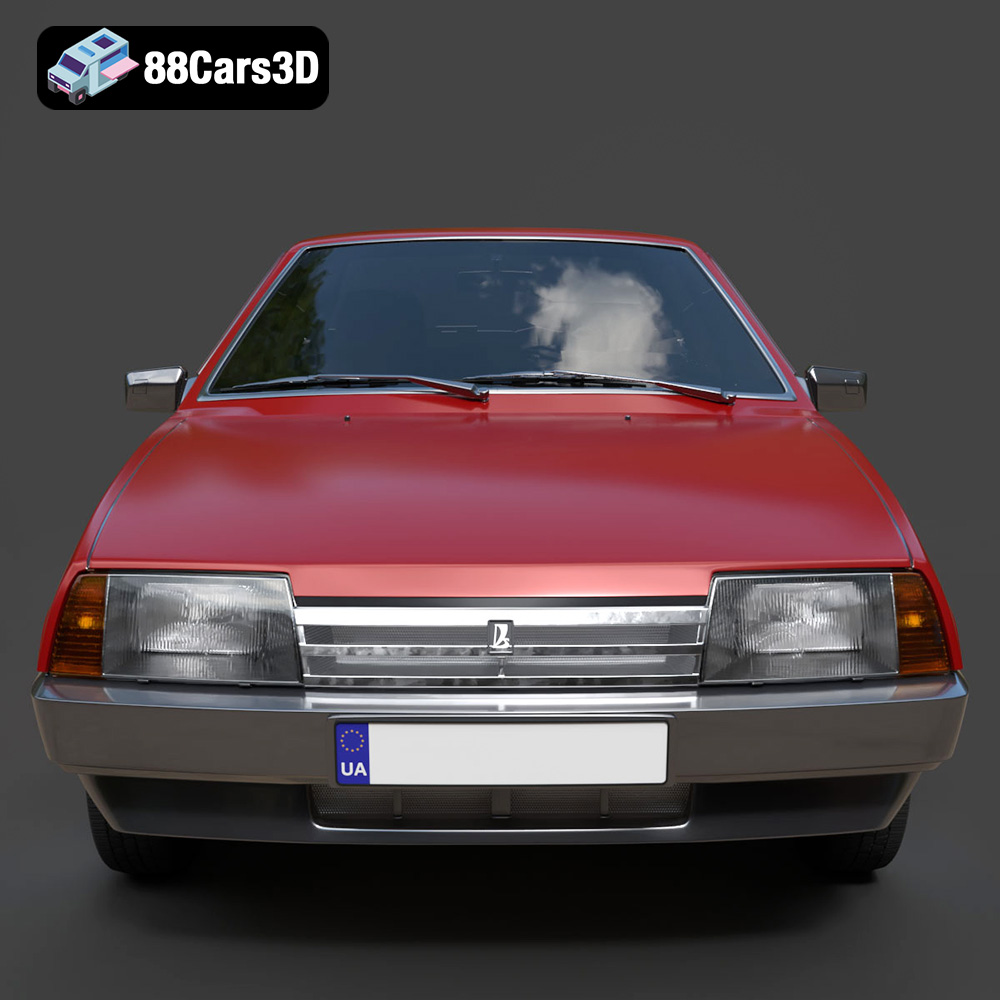
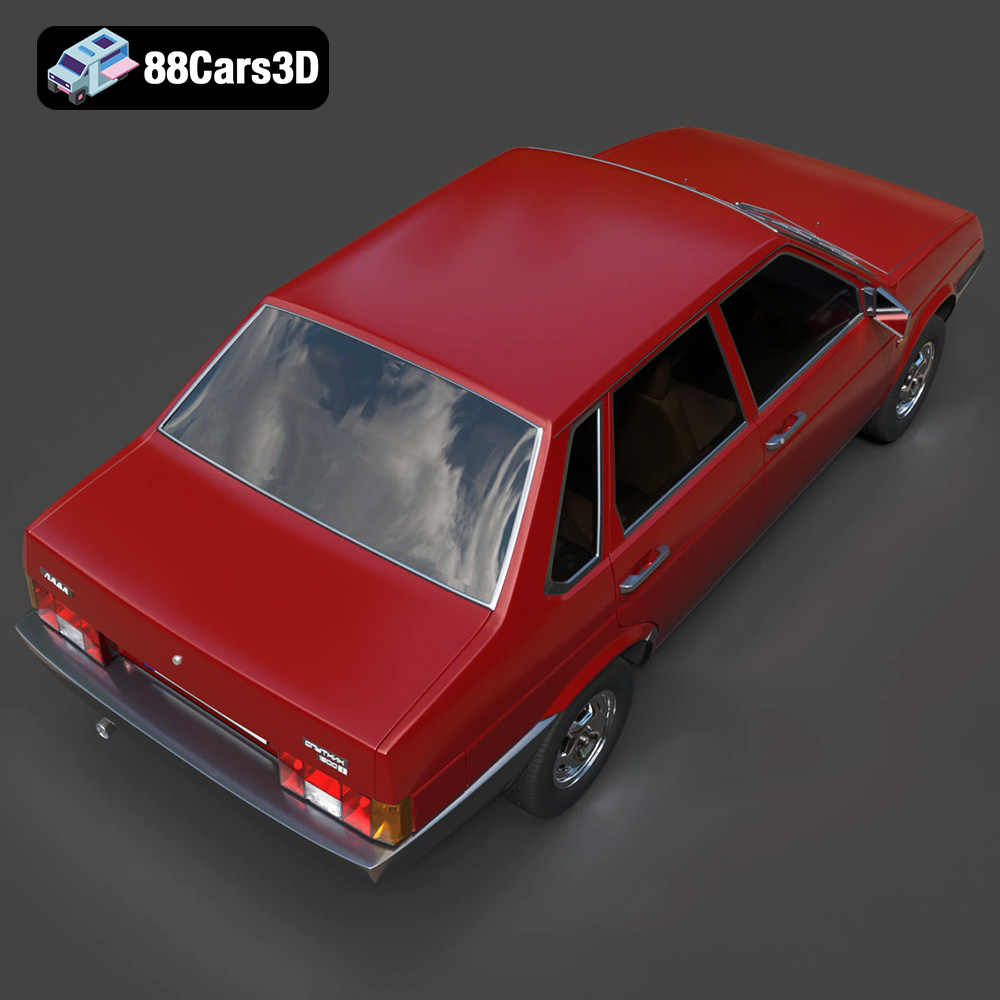
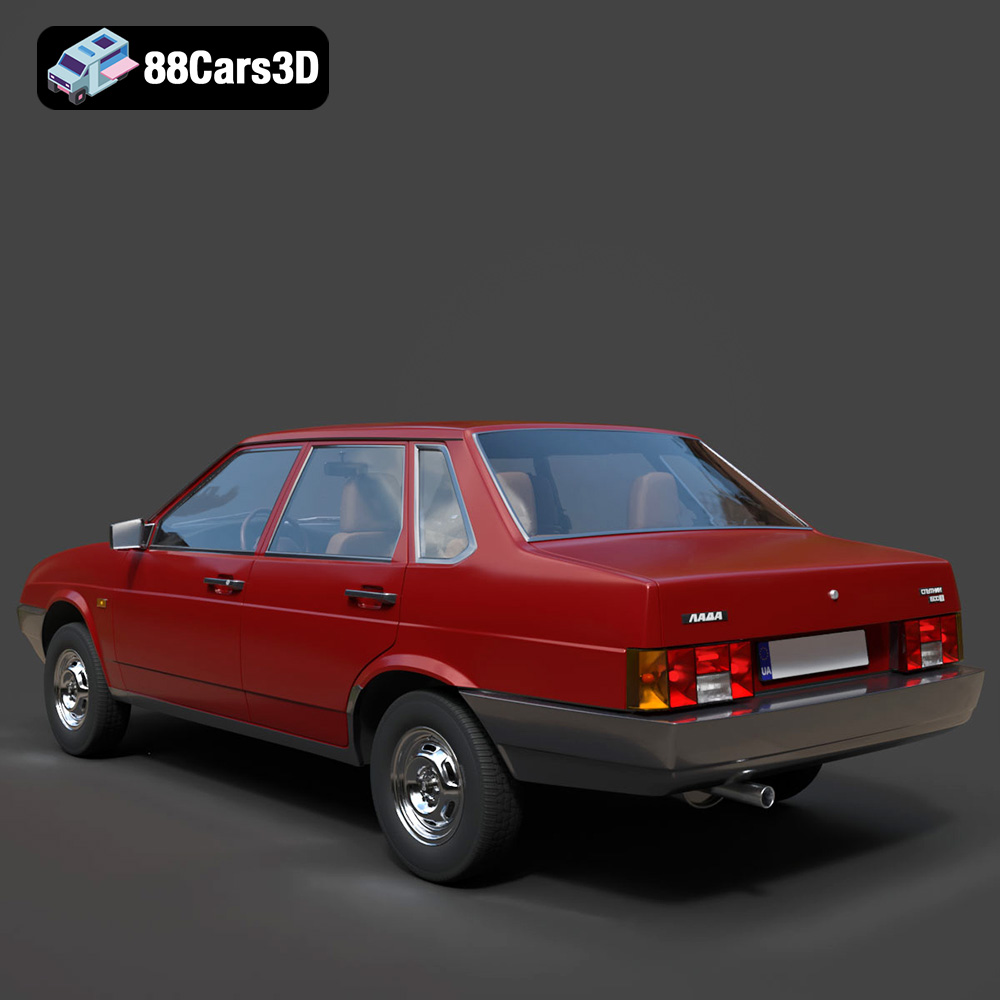
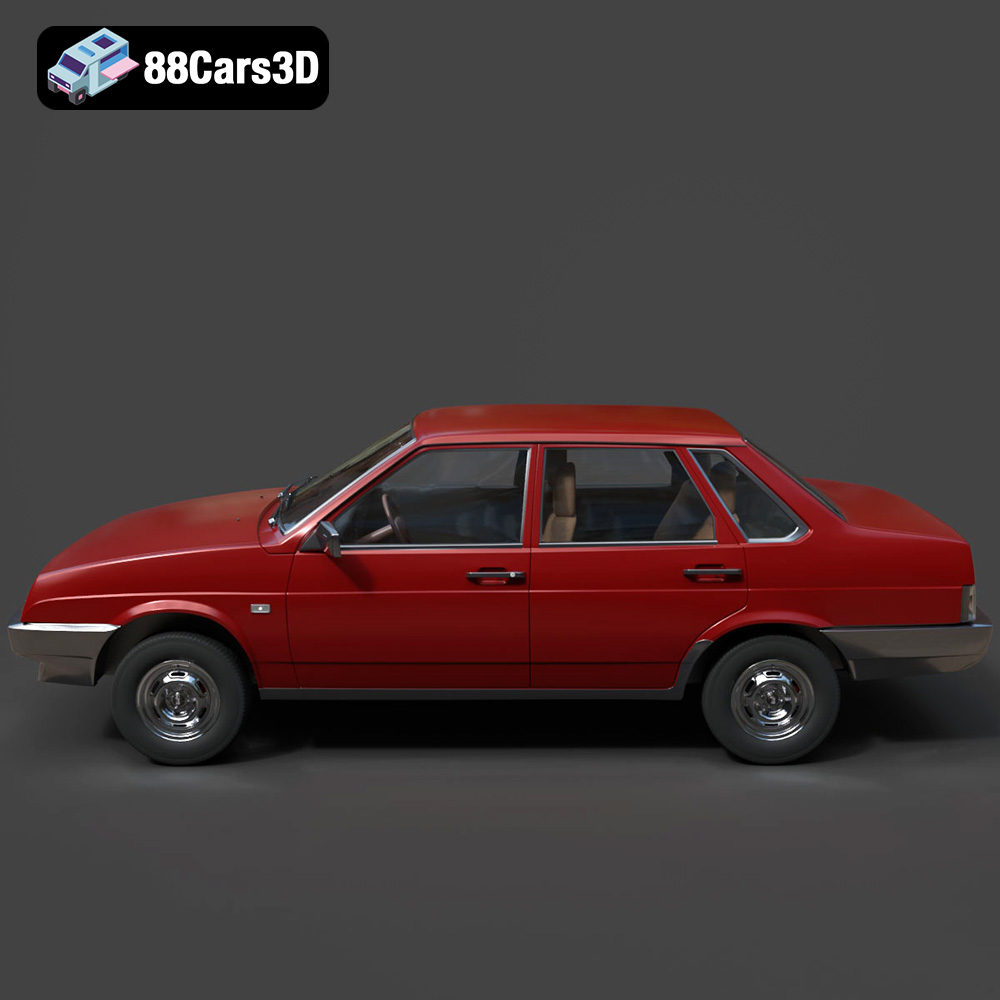
The VAZ Lada 21099 (1990) is an iconic four-door sedan that defined an era of Eastern European motoring. Born from the highly successful Samara family, this distinctive vehicle is celebrated for its utilitarian, boxy styling, robust engineering, and cultural significance. The 3D model meticulously captures its recognizable exterior, from the sharp, angular front grille and rectangular halogen headlights to the characteristic high rear deck and stark, pragmatic lines that make it instantly recognizable. This premium 3D model is built with high-quality topology and an optimized triangle count, ensuring it performs flawlessly in real-time engines while maintaining superb visual fidelity. Designed for maximum versatility, the model features cleanly separated components and accurate PBR materials, making it a perfect fit for game development, high-end rendering, animation, and immersive AR/VR experiences. Perfect for Eastern European street environments, post-apocalyptic scenes, retro driving games, and historical urban visualizations.
$19.99
.1990
.blend
.fbx
.glb
.lada
.max
.obj
.ply
.rendering
.sedan
.stl
.unreal
.vaz
21099
car-3d-model
classic-car
game asset
game-ready
low-poly
optimized
russian-car
soviet-car
VR/AR