Get 20% OFF All Premium 3D & STL Models!

The VAZ Lada 21099, a four-door sedan hailing from the 1990s, is more than just a car; it’s a cultural touchstone. For many, it represents a bygone era of Eastern European motoring, celebrated for its utilitarian design, robust engineering, and undeniable character. In the world of 3D modeling, capturing such an iconic vehicle presents both a challenge and an opportunity to preserve history and fuel creative projects. From immersive game environments to stunning architectural visualizations and even physical 3D prints, high-quality 3D car models like the VAZ Lada 21099 are indispensable assets for professionals across various industries. This article will delve into the technical intricacies, versatile applications, and professional workflows enabled by meticulously crafted assets, using the VAZ Lada 21099 1990 3D model available on 88cars3d.com as our prime example.
The appeal of the Lada 21099 lies in its distinct “boxy” aesthetics and its significant presence in countless real-world scenarios. Recreating this essence in a 3D model requires a deep understanding of its design philosophy and meticulous attention to detail, ensuring that the digital rendition carries the same weight and recognition as its physical counterpart.
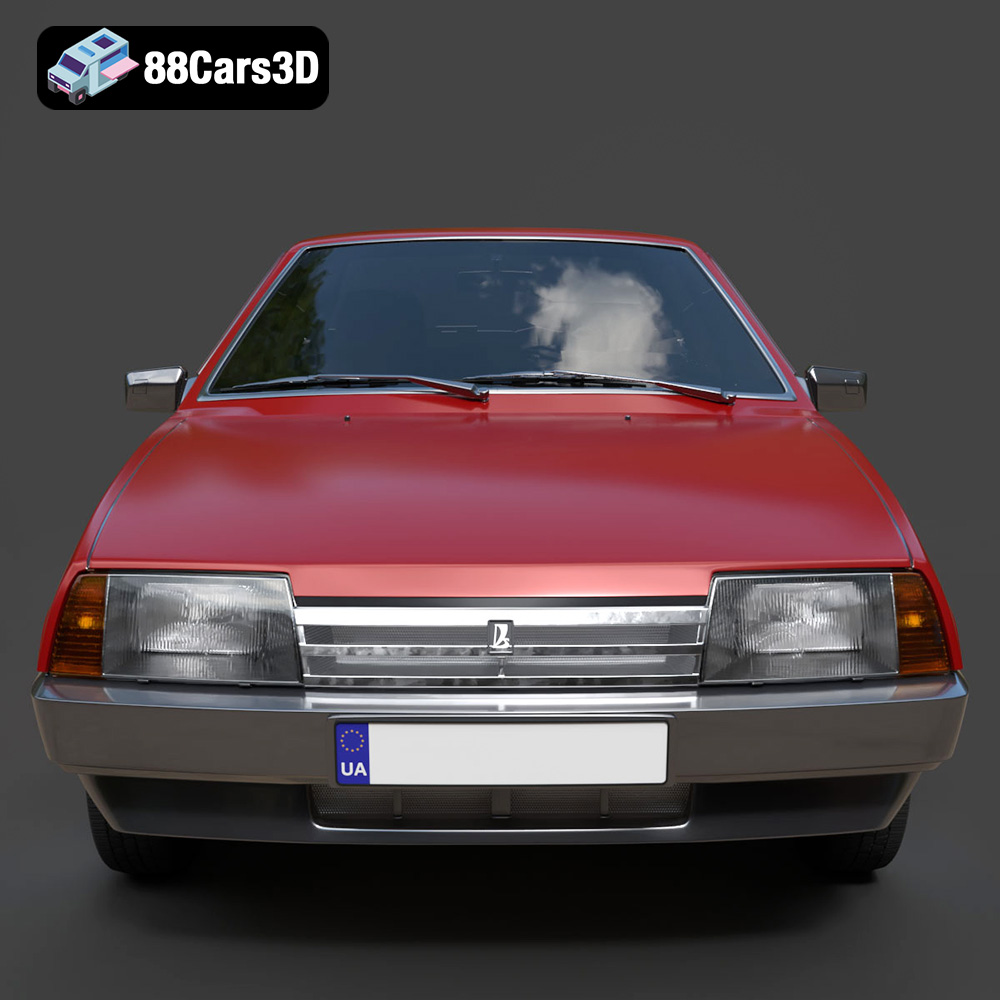
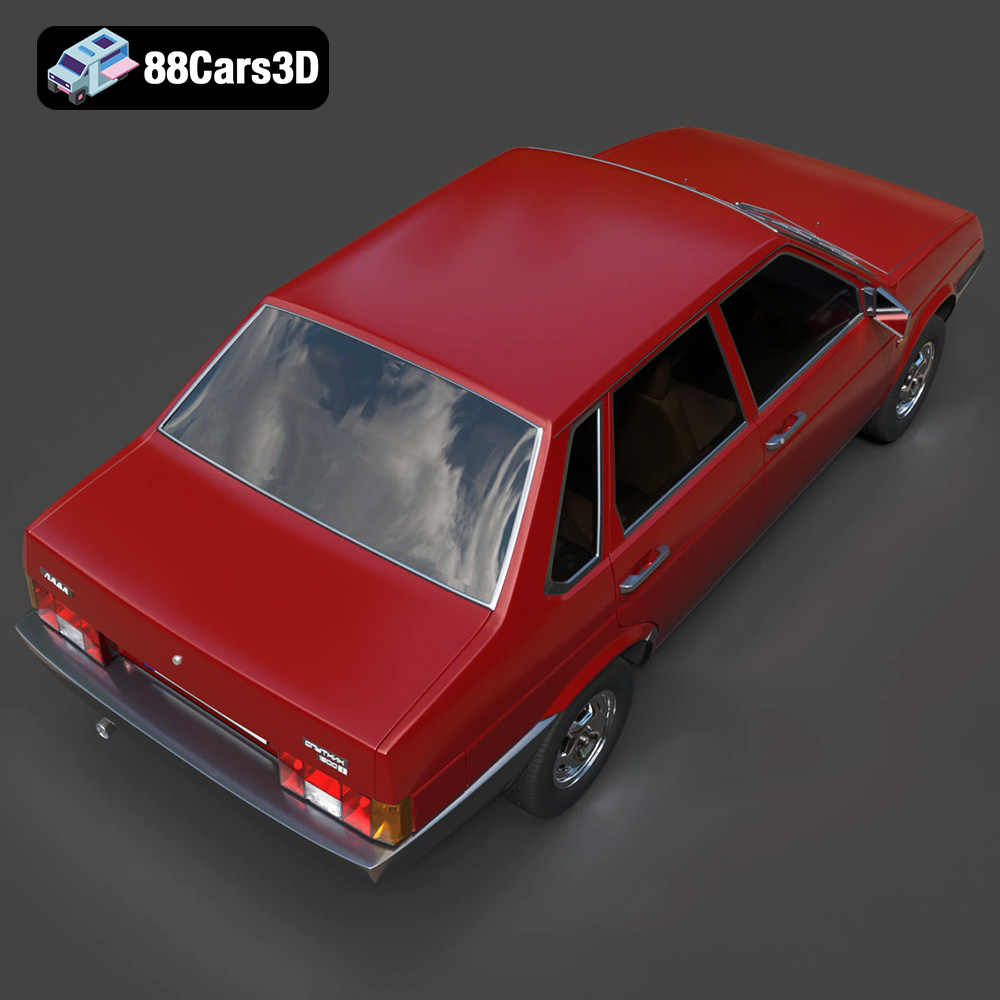
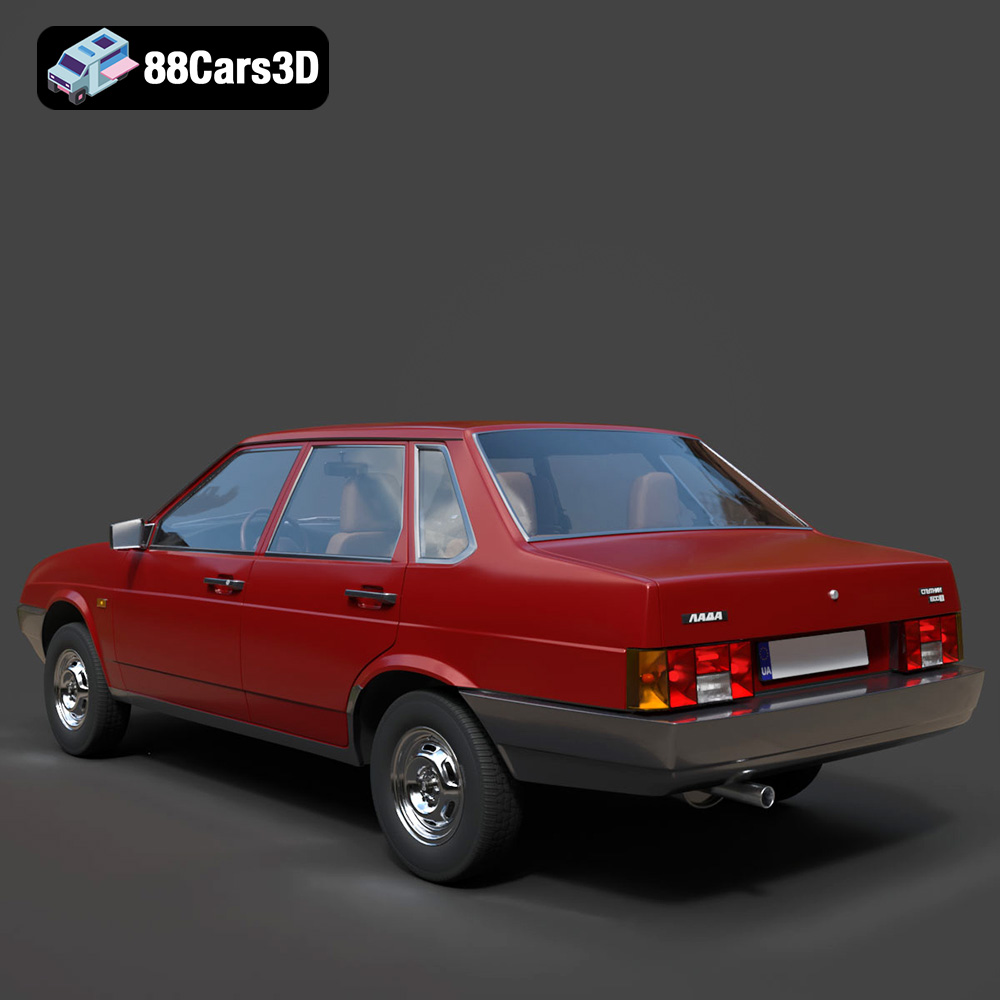
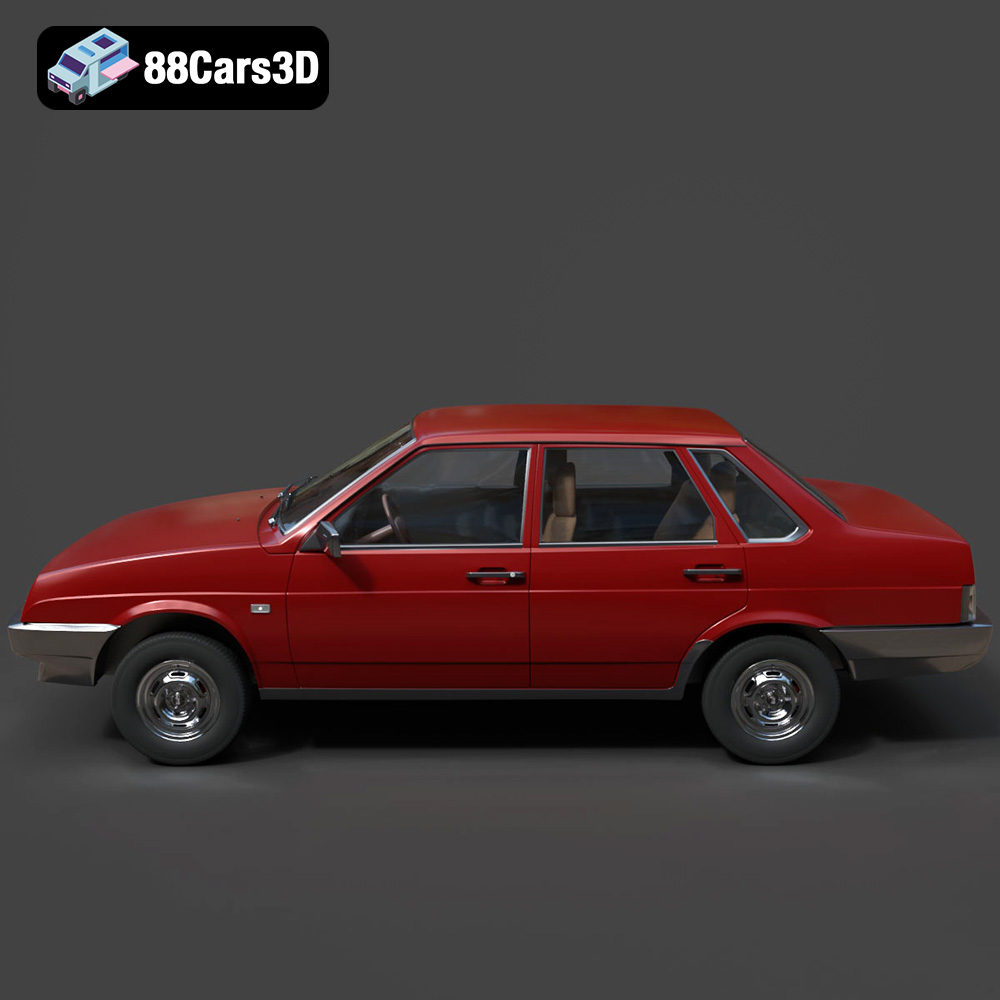
The VAZ Lada 21099’s exterior is a masterclass in pragmatic design. The featured 3D model meticulously recreates its sharp, angular front grille, the characteristic rectangular halogen headlights, and the distinct segmented taillights that immediately identify the vehicle. The high rear deck and the stark, pragmatic lines are all faithfully preserved, contributing to its instantly recognizable silhouette. Beyond the primary body, crucial details like the accurate exhaust system with its single tailpipe design and classic steel wheels, complete with period-correct tire treads and optional hubcaps, elevate the model’s realism. The inclusion of detailed front MacPherson strut and rear beam suspension components means the model isn’t just a shell; it’s engineered for accurate representation, allowing for realistic scene integration and even dynamic animations. For artists working on historical documentaries, retro games, or detailed urban environments, this level of fidelity is critical.
The interior of the VAZ Lada 21099 is just as iconic as its exterior, defined by its no-frills, functional approach. The 3D model captures this spirit with authentic retro cloth and vinyl seat details, the classic angular dashboard, and the characteristic steering wheel. The analogue instrument cluster, with its accurate dial layouts, along with the original manual shifter, handbrake, and basic pedal box, creates an immersive experience for anyone interacting with the model. Crucially, the geometry for the interior is optimized for first-person perspective (POV) in gaming. This isn’t merely about visual accuracy; it’s about providing a seamless experience for players or viewers who might find themselves virtually seated behind the wheel, making it an invaluable game asset for driving simulators or open-world titles where player interaction with the vehicle’s interior is expected.
Navigating the diverse landscape of 3D software and applications requires a solid understanding of various file formats. Each format is designed with specific use cases and technical advantages in mind, and the VAZ Lada 21099 3D model from 88cars3d.com is provided in a comprehensive array of formats to ensure maximum compatibility and utility. Knowing which format to use for a particular task is crucial for efficient workflow and optimal results.
The **.blend** file format is Blender’s native format. When you download a .blend file, you’re receiving a complete Blender scene, which typically includes the full 3D model, its materials (often set up with Blender’s powerful node-based shader editor), textures, lighting, camera setups, and even animations if present. This is the ideal format for Blender users because it preserves all project data, allowing for direct editing, further rigging, animation, and rendering within Blender. For the VAZ Lada 21099, the .blend file would contain all the vehicle’s components, PBR materials, and potentially pre-configured scenes, making it a powerful starting point for any Blender-centric project, from stylized renders to cinematic sequences. It offers the most flexibility for customization and advanced manipulation within the Blender environment.
The **.fbx** (Filmbox) format is perhaps the most widely supported proprietary 3D asset exchange format, developed by Autodesk. It’s an industry standard for transferring 3D data between various software applications like 3ds Max, Maya, Blender, and especially game engines such as Unreal Engine and Unity. FBX files can store not just geometry, but also materials, textures, animations, skinning, rigging, and camera information. Its robustness makes it ideal for real-time pipelines, ensuring that the VAZ Lada 21099 can be seamlessly imported into a game engine with its proper hierarchy, pivots, and material assignments largely intact.
The **.obj** (Wavefront OBJ) format is an older, simpler, and very universal open standard. It primarily stores geometry (vertices, normals, texture coordinates) and group information. Material definitions are typically handled in a companion `.mtl` (Material Template Library) file, which points to texture maps. While it doesn’t support animation or advanced scene data like FBX, its simplicity ensures near-universal compatibility across almost all 3D software. For the VAZ Lada 21099, an .obj file is excellent for scenarios where you need the core mesh and textures to be imported into a less common software, or for applications where you prefer to set up materials from scratch within your target application. It’s a reliable fallback for cross-software compatibility.
The **.glb** (GL Transmission Format Binary) is a relatively newer format gaining significant traction, especially for web-based 3D, augmented reality (AR), and virtual reality (VR) applications. It’s an optimized, self-contained format that bundles geometry, materials, textures, and animations into a single binary file. This makes .glb files incredibly efficient for transmission and rendering in real-time environments, particularly in browsers. For showcasing the VAZ Lada 21099 in an online virtual showroom or an AR mobile application, .glb is the format of choice due to its compact size and quick loading capabilities, ensuring a smooth interactive experience.
The **.stl** (Standard Tessellation Language or Stereolithography) format is synonymous with 3D printing. It represents a 3D model as a collection of interconnected triangles, defining only the surface geometry without color, texture, or other advanced properties. While basic, its simplicity makes it the universal language for 3D printers. The .stl version of the VAZ Lada 21099 is specifically prepared for physical fabrication, requiring careful consideration of scale, wall thickness, and print supports, as outlined in the product description.
The **.ply** (Polygon File Format) is another popular format for storing 3D data, particularly scan data and point clouds, but also polygon meshes. It can store a wide range of properties, including color, transparency, and normals, making it suitable for scientific visualization, CAD, or analysis where precision and attribute richness are key. While less common for general asset exchange than FBX or OBJ, it provides a robust option for specific engineering or archival purposes for the Lada model.
The **.unreal** format typically refers to asset packages or files specifically designed for Unreal Engine. This often implies assets that have been processed, optimized, and bundled into a native Unreal asset format, sometimes directly imported and saved within the engine, or exported from specific Unreal tools. Such a file would contain the VAZ Lada 21099 ready for direct integration into an Unreal Engine project, potentially with pre-configured materials, LODs (Levels of Detail), and even basic physics assets, significantly streamlining game development.
Finally, the **.max** format is Autodesk 3ds Max’s native project file. Similar to .blend for Blender, a .max file contains the complete 3ds Max scene, including the VAZ Lada 21099 model with its full hierarchy, materials, textures, lights, cameras, and any animation or modifiers applied. This offers the most complete and editable version of the model for users primarily working within 3ds Max, providing unparalleled flexibility for high-end rendering, animation, and design visualization projects.
This comprehensive array of formats ensures that the VAZ Lada 21099 1990 3D model is a truly versatile asset, adaptable to virtually any professional pipeline or creative endeavor.
A truly professional 3D car model doesn’t just look good; it performs flawlessly across diverse applications. This balance between visual fidelity and technical efficiency is paramount, especially for real-time engines and complex rendering scenes.
The VAZ Lada 21099 model boasts a ~250,000 triangle count. This figure represents a strategic balance: it’s high enough to capture the vehicle’s detailed geometry and distinct features without becoming overly cumbersome for real-time rendering. For game developers, this optimized polycount means the model can be integrated into open-world environments or racing titles without causing significant performance bottlenecks. For high-end cinematic rendering, it provides enough detail to hold up under close-up shots.
Accurate PBR (Physically Based Rendering) materials are crucial for achieving photorealism. PBR workflows ensure that materials react to light in a physically plausible way, regardless of the lighting environment. The model features cleanly separated components and accurate PBR materials, meaning each part – from the metallic body panels to the rubber tires and glass – has its own set of textures (Albedo/Base Color, Normal, Roughness, Metallic, Ambient Occlusion) that define its surface properties. This attention to detail allows the VAZ Lada 21099 to look stunningly realistic, whether illuminated by a studio HDRi, a harsh desert sun, or the neon glow of a city street.
Beyond static visuals, the model is engineered for dynamic interaction. Proper pivot setup for steering, wheel rotation, and suspension travel is a fundamental requirement for any drivable vehicle in games or animated sequences. The VAZ Lada 21099 model includes separate components for wheels, suspension, and steering, all correctly pivoted. This means animators can easily simulate steering wheel turns, suspension compression over bumps, and accurate wheel rotation, bringing the vehicle to life with minimal setup.
Real-world scale accuracy, based on the actual vehicle chassis, is equally vital. Integrating a model that matches real-world dimensions ensures that it fits seamlessly into environments created to scale, preventing visual inconsistencies and simplifying scene composition in architectural visualizations, simulations, or game worlds. This attention to foundational technical specifications sets this model apart as a high-value game asset and rendering component.
The versatility of this 3D car model truly shines in its application across various professional workflows. Whether you’re a game developer, an architectural visualizer, or an AR/VR content creator, the VAZ Lada 21099 offers robust integration capabilities.
For game developers, importing the VAZ Lada 21099 into engines like Unreal Engine or Unity is a streamlined process thanks to the included .fbx and .unreal (for specific engine-ready assets) formats. The optimized polycount and separate, correctly pivoted components are game-ready.
* **Unreal Engine Workflow:** Import the .fbx file, ensuring proper scale and pivot settings. Unreal’s material editor allows for easy connection of the included PBR texture maps (Albedo, Normal, Roughness, Metallic, AO) to create high-quality, realistic materials. Developers can then leverage Unreal’s vehicle blueprint system to set up physics, collision meshes (often automatically generated or created manually for precision), and integrate the separated wheels and suspension for fully drivable mechanics. LODs (Levels of Detail) can be automatically generated or manually configured to ensure optimal performance at varying distances from the player.
* **Unity Workflow:** Similar to Unreal, importing the .fbx into Unity allows for quick material setup using Unity’s Standard (PBR) shader. The clean mesh and pivot points facilitate the creation of wheel colliders, suspension joints, and vehicle physics scripts, enabling the Lada to become a fully interactive element within a game world. This model is perfectly suited for retro racing titles, open-world exploration, or even post-apocalyptic settings where a rugged, recognizable vehicle adds depth.
For cinematic shots, product visualizations, or architectural renders, the VAZ Lada 21099 model in .max or .blend format offers maximum flexibility.
* **3ds Max Workflow:** The native .max file provides a fully editable scene. Artists can leverage 3ds Max’s powerful modeling and animation tools, integrate advanced renderers like V-Ray or Corona, and fine-tune lighting setups to achieve photorealistic results. The separated components are ideal for animating door openings, hood lifts, or complex camera movements around the vehicle. Material customization, such as applying specific paint finishes (e.g., metallic flake, weathered rust) or adapting tire textures, is straightforward.
* **Blender Workflow:** The .blend file offers the same comprehensive control. Using Blender’s Cycles for path-traced realism or Eevee for real-time feedback, artists can create stunning visuals. Node-based materials provide infinite possibilities for customization. Imagine placing the Lada 21099 in a beautifully rendered Eastern European street scene, complete with realistic rain effects reflecting on its classic bodywork, or as the centerpiece of a vintage car advertisement. The model’s clean topology ensures smooth deformations for animation and excellent subdivision surface results for extreme close-ups.
The inclusion of the .glb format makes the VAZ Lada 21099 an excellent candidate for cutting-edge immersive experiences.
* **AR/VR Applications:** The optimized geometry and single-file nature of .glb are perfect for deployment on mobile AR platforms (like Apple’s ARKit or Google’s ARCore) or VR headsets. Users could place a virtual Lada 21099 in their real-world environment via a smartphone, exploring its details up close, or experience it within a virtual showroom. This capability is ideal for interactive product showcases, educational tools, or unique marketing campaigns.
* **Web-Based Display:** Embedding .glb models directly into websites allows for interactive 3D viewers, giving potential customers or enthusiasts a dynamic way to inspect the model without needing specialized software. This enhances user engagement and provides a richer understanding of the 3D car models offered on platforms like 88cars3d.com.
The utility of a premium 3D model extends beyond digital screens. For hobbyists, collectors, or even educational purposes, bringing the VAZ Lada 21099 into the physical realm through 3D printing offers a unique tactile experience. The included .stl format is specifically geared for this.
Converting the digital model into a physical object requires careful planning. The .stl format triangulates the surface geometry, making it universally readable by slicing software. Recommended scales (1:12, 1:18, 1:24) are suggested, allowing for various display sizes. Choosing the right scale impacts detail retention and print duration. For fine details, resin printing is often recommended over FDM, capable of achieving layer heights as low as 0.04-0.12 mm, crucial for capturing elements like the grille pattern or interior dashboards. Wall thickness (1.2–2.0 mm) is critical for structural integrity, ensuring the printed model isn’t too fragile.
Supports are almost always required for complex parts like the exhaust system, mirrors, and even the steering wheel, preventing overhangs from collapsing during printing. Print orientation also plays a significant role; printing the frame angled can improve structural integrity and reduce visible layer lines. Separating components like wheels for individual printing ensures better detail and allows for easier painting. After the print, post-processing is key. This includes careful removal of supports, sanding to smooth out layer lines, applying primer for an even surface, and finally, painting with authentic factory colors, perhaps with a metallic or matte finish, to achieve a display-quality collectible. This process allows enthusiasts to own a tangible piece of automotive history, scaled and finished to their preferences.
One of the most significant advantages of high-quality 3D car models is their inherent adaptability. The VAZ Lada 21099 is not just a static representation but a flexible canvas for endless creative possibilities.
The model’s clean material setup allows for easy aesthetic transformations. Artists can effortlessly change body colors, experimenting with classic factory shades that evoke nostalgia, or venturing into more stylized looks like weathered rust finishes for post-apocalyptic or derelict scenes. Modifying tire textures from pristine street tires to worn, deflated, or even off-road variants can drastically alter the vehicle’s narrative. Adjusting material finishes – from high-gloss metallic to matte or heavily weathered – gives the VAZ Lada 21099 a completely different character, suitable for diverse artistic visions. This level of customization ensures the model remains relevant across multiple project types and thematic requirements.
The model’s optimized nature and accurate scale facilitate seamless integration into various environments. Whether you’re placing it in a bustling Eastern European street environment, a desolate post-apocalyptic landscape, or a vibrant retro driving game, the Lada fits right in. Adjusting the lighting to match the mood of the environment – from bright daylight to a moody, rain-soaked evening – further enhances its realism and impact. This adaptability underscores the value of such 3D car models as foundational assets for storytellers, game designers, and visual artists who need realistic, versatile vehicles to populate their virtual worlds.
The VAZ Lada 21099 1990 3D model represents more than just a digital replica; it’s a meticulously crafted piece of automotive history, optimized for the demands of modern 3D production. From its authentic exterior and detailed interior to its game-ready optimization and comprehensive file format support, it serves as an exemplary asset for a wide range of applications. Whether you’re developing the next big racing title, rendering photorealistic architectural visualizations, creating immersive AR/VR experiences, or even 3D printing a physical collectible, this model offers the technical foundation and versatility required for professional success. The availability of such high-quality 3D car models on platforms like 88cars3d.com empowers creators to bring their visions to life, integrating iconic vehicles like the Lada 21099 into projects that demand both historical accuracy and cutting-edge performance.
The VAZ Lada 21099 (1990) is an iconic four-door sedan that defined an era of Eastern European motoring. Born from the highly successful Samara family, this distinctive vehicle is celebrated for its utilitarian, boxy styling, robust engineering, and cultural significance. The 3D model meticulously captures its recognizable exterior, from the sharp, angular front grille and rectangular halogen headlights to the characteristic high rear deck and stark, pragmatic lines that make it instantly recognizable. This premium 3D model is built with high-quality topology and an optimized triangle count, ensuring it performs flawlessly in real-time engines while maintaining superb visual fidelity. Designed for maximum versatility, the model features cleanly separated components and accurate PBR materials, making it a perfect fit for game development, high-end rendering, animation, and immersive AR/VR experiences. Perfect for Eastern European street environments, post-apocalyptic scenes, retro driving games, and historical urban visualizations.
$19.99
.1990
.blend
.fbx
.glb
.lada
.max
.obj
.ply
.rendering
.sedan
.stl
.unreal
.vaz
21099
car-3d-model
classic-car
game asset
game-ready
low-poly
optimized
russian-car
soviet-car
VR/AR