Get 20% OFF All Premium 3D & STL Models!

In the fast-paced world of digital creation, the demand for high-fidelity 3D assets is ever-growing. From blockbuster video games to cutting-edge automotive configurators and breathtaking architectural visualizations, the foundation of any immersive experience often lies in the quality of its core assets. Automotive models, in particular, require an unparalleled level of detail and technical precision to capture the essence of their real-world counterparts. It’s not enough for a model to merely look good; it must also be optimized for performance, compatible across various platforms, and flexible enough to adapt to diverse creative visions.
This pursuit of digital perfection is precisely where specialized marketplaces like 88cars3d.com excel, offering a curated selection of premium 3D car models designed to meet the rigorous standards of professional artists and developers. Today, we’re taking a deep dive into an exemplary asset that embodies these principles: the Mercedes AMG GT63 2019 3D Model. This isn’t just a digital representation; it’s a meticulously crafted asset built for versatility, ready to accelerate your projects from concept to stunning reality, whether you’re building a next-gen racing simulator, a virtual showroom, or a striking promotional render.
The choice of file format for a 3D model is far more than a mere technicality; it’s a critical decision that dictates compatibility, functionality, and workflow efficiency. For professional 3D artists, game developers, and visualization specialists, understanding the nuances of each format is paramount. The Mercedes AMG GT63 2019 3D Model, available on 88cars3d.com, is a prime example of an asset offered in a comprehensive range of formats, ensuring maximum utility across diverse pipelines.
The .blend format is Blender’s native file type, encompassing an entire Blender scene with all its components. This includes geometry, materials, textures, lighting, cameras, animation data, physics simulations, and modifiers. For artists whose primary DCC (Digital Content Creation) tool is Blender, the .blend file offers the highest degree of editability and flexibility. It allows for deep customization, tweaking of procedural materials, adjustment of subdivision levels, and direct access to the original scene setup, making it invaluable for iterative design and comprehensive artistic control.
Autodesk’s .fbx (Filmbox) format is arguably the most prevalent interchange format in the 3D industry, particularly within game development and animation. Its strength lies in its ability to encapsulate a wide array of data beyond just mesh geometry, including materials, textures, rigging, skinning, and animation data. This makes it ideal for transferring assets between different software packages like 3ds Max, Maya, Blender, and directly into game engines such as Unreal Engine and Unity. The .fbx format is highly optimized for real-time applications due to its efficient handling of complex scene data, ensuring that the Mercedes AMG GT63 2019 model transitions smoothly into game development pipelines.
The Wavefront .obj format is a universal geometry definition file, renowned for its wide compatibility across virtually all 3D software. An .obj file primarily stores geometric data such as vertices, UV coordinates, normals, and the faces that form the mesh. Material information is typically referenced in a separate .mtl (Material Template Library) file. While .obj is excellent for static mesh transfer and is often a reliable fallback for cross-software compatibility, it does not support advanced features like animation, rigging, or scene hierarchy. It’s a clean, straightforward format for pure mesh data, ensuring foundational compatibility for the Mercedes AMG GT63 2019 across any platform.
.glb is the binary version of the GL Transmission Format (glTF), an open standard for 3D scenes and models developed by the Khronos Group. Its primary advantage is its optimization for efficient transmission and loading of 3D assets on the web, in augmented reality (AR), and virtual reality (VR) environments. A .glb file is a self-contained single file that bundles geometry, materials, textures, animations, and scene graph information, leading to smaller file sizes and faster load times. For deploying the Mercedes AMG GT63 2019 in a web-based configurator or a mobile AR experience, .glb offers unmatched performance and ease of use.
The .stl (Stereolithography) format is the de facto standard for 3D printing. It represents a 3D model as a collection of unconnected triangular facets, defining only the surface geometry of an object. Crucially, .stl files do not contain color, texture, or material information, making them purely about form. When preparing the Mercedes AMG GT63 2019 for physical production via 3D printing, converting it to .stl is the first step. It often requires careful mesh preparation and scaling to ensure printability and structural integrity, as detailed in the product’s recommended print settings.
The .ply (Polygon File Format) is designed to store 3D data from 3D scanners, CAD applications, and other sources that require high precision. Unlike .stl, .ply can store a wider range of properties, including color, transparency, normals, texture coordinates, and confidence values for each vertex or face. This makes it particularly useful for scientific data visualization, reverse engineering, and applications where detailed surface properties derived from scans are critical. While less common for general 3D model distribution, its inclusion for the Mercedes AMG GT63 2019 caters to specialized applications demanding high fidelity and data integrity.
The .unreal format, while not a universal file type like FBX, signifies an asset specifically packaged and optimized for direct integration into Unreal Engine. This typically means the model comes as a .uasset file or an organized folder structure within an Unreal project, with materials already set up, textures linked, and possibly even collision meshes or LODs (Levels of Detail) pre-configured. This “engine-ready” state dramatically reduces the setup time for game developers, allowing them to drag and drop the Mercedes AMG GT63 2019 directly into their Unreal projects with minimal fuss, ensuring optimal performance and visual fidelity within the engine.
Finally, the .max format is the native file type for Autodesk 3ds Max. Similar to .blend for Blender, a .max file preserves an entire 3ds Max scene, including geometry, materials, textures, lighting, cameras, animation, modifiers, and rendering settings. For professionals working within the 3ds Max ecosystem for high-end rendering, animation, or architectural visualization, the .max file provides complete access to the original project, allowing for extensive modifications and leveraging all of 3ds Max’s powerful toolsets. This ensures that the Mercedes AMG GT63 2019 is fully editable and adaptable for complex rendering tasks within its native environment.
Capturing the essence of a high-performance luxury vehicle in the digital realm demands an obsessive attention to detail. The 2019 Mercedes AMG GT63 4-Door Coupe is a formidable machine, a harmonious blend of track prowess and opulent comfort. The Mercedes AMG GT63 2019 3D Model available on 88cars3d.com is a testament to this philosophy, meticulously designed to reflect every aggressive curve and luxurious appointment.
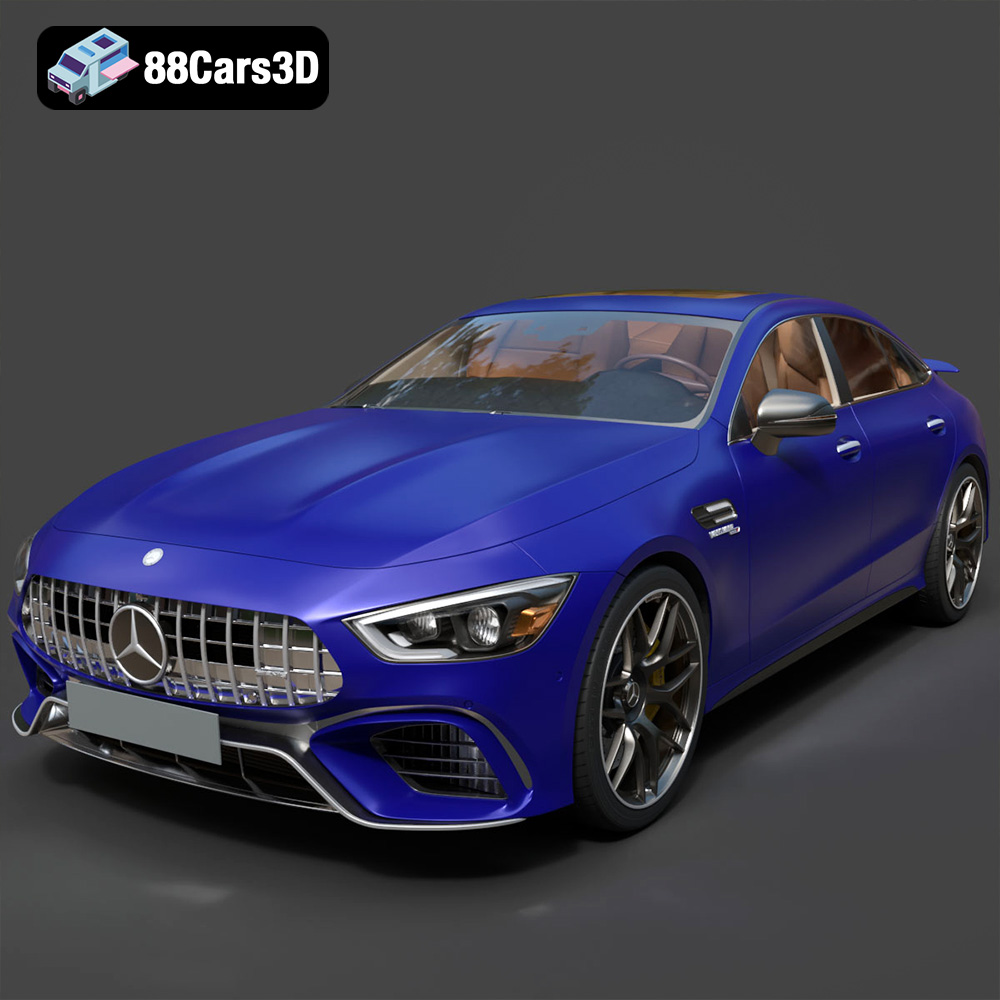
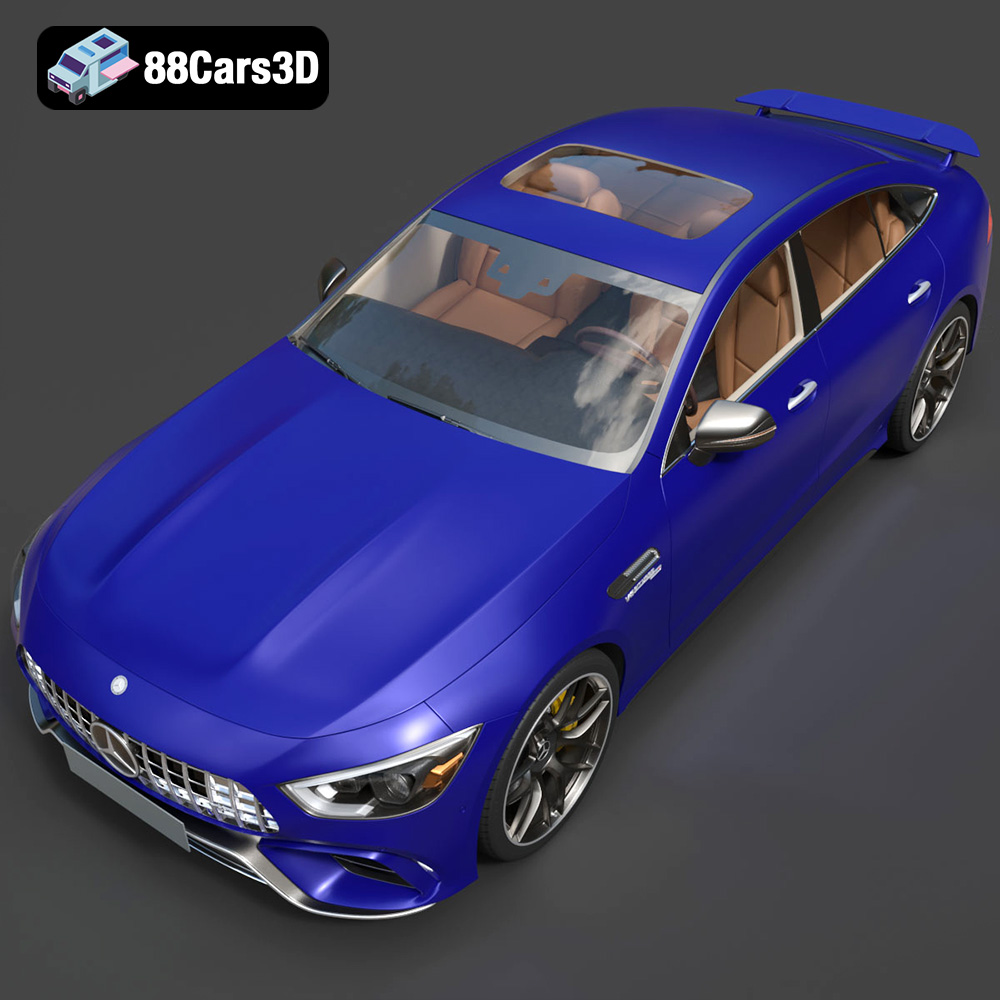
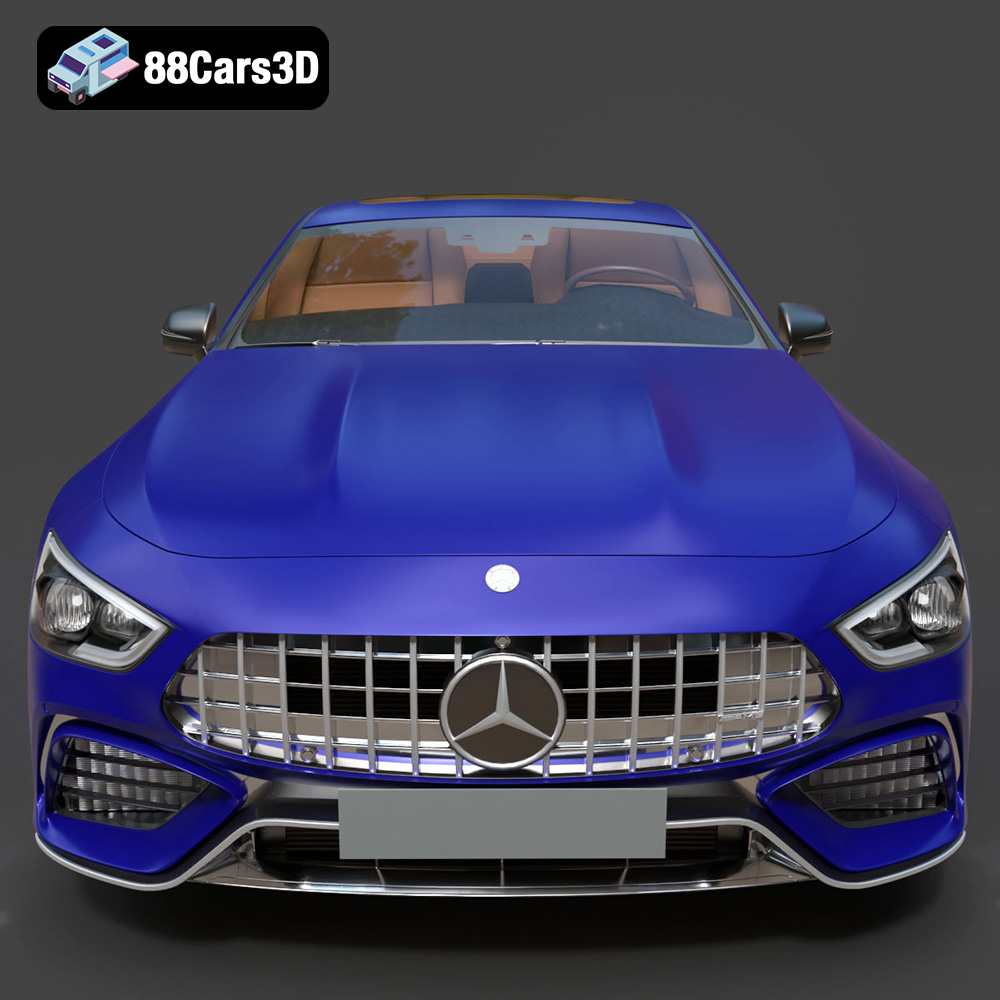
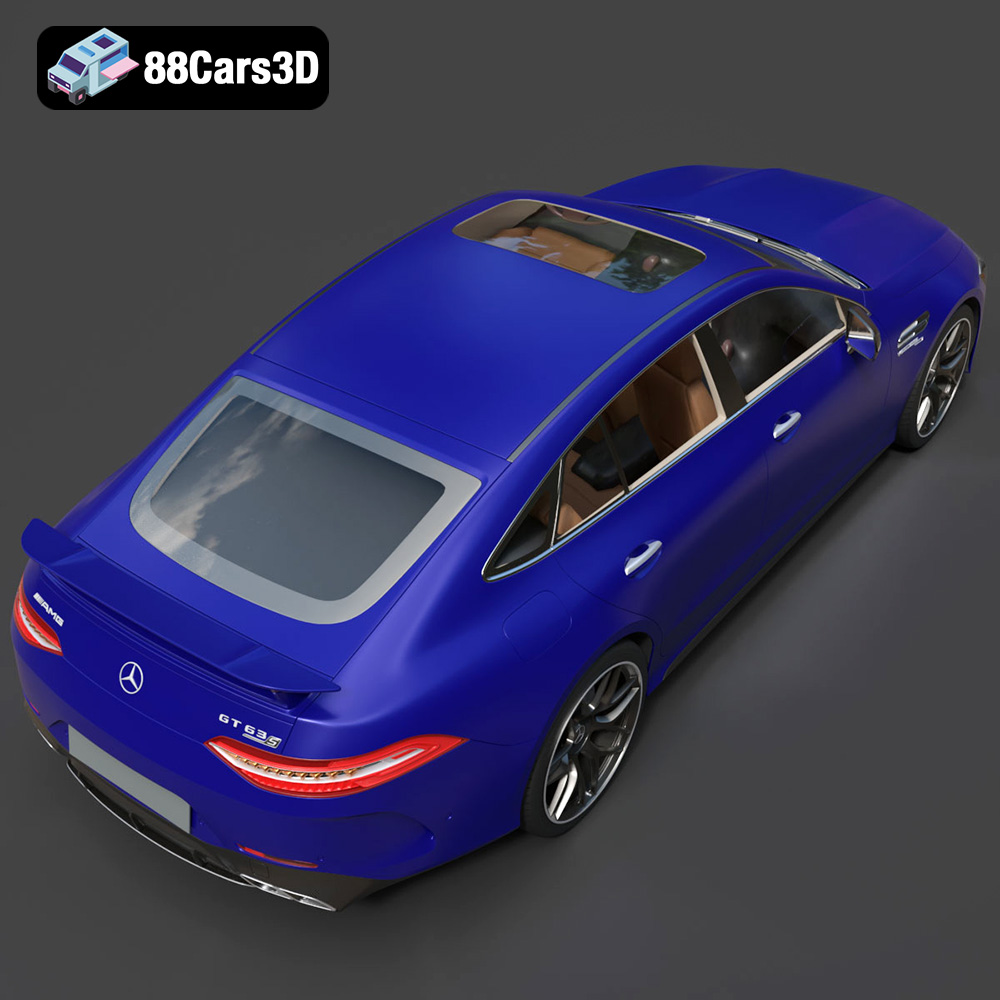
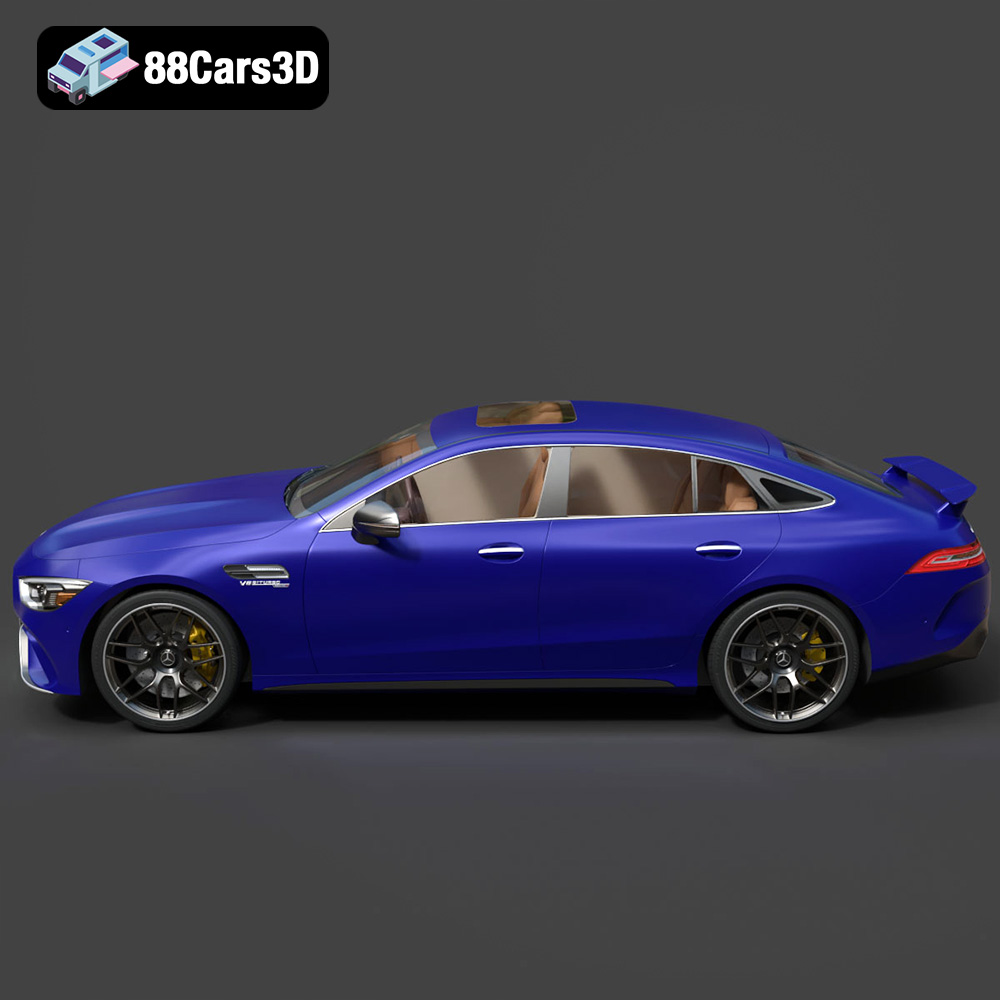
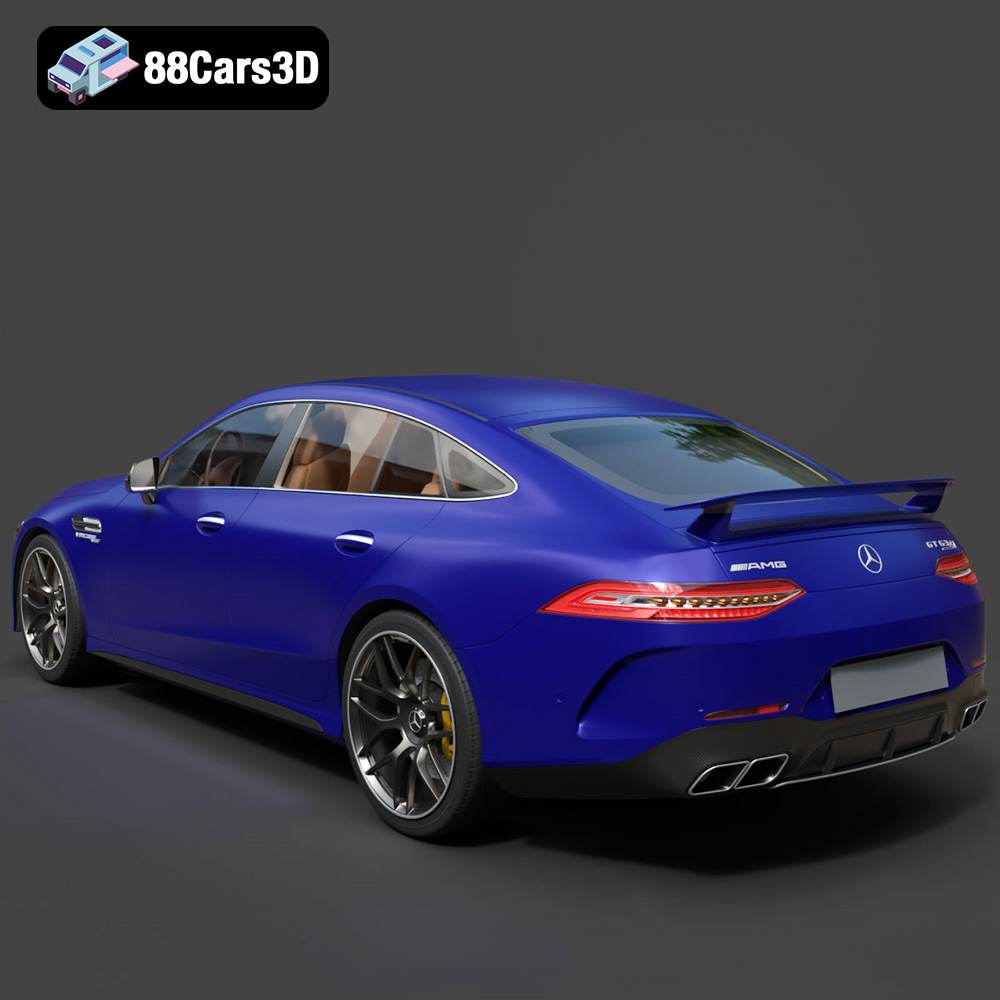
The exterior of this 3D model is a triumph of accurate geometry and proportion. From the iconic Panamericana front grille with its distinctive vertical slats to the aggressive aerodynamic front fascia, every detail that defines the GT63’s commanding presence is faithfully reproduced. The sculpted hood, housing the biturbo V8 in the real car, flows seamlessly into the muscular wide-body stance. At the rear, the model features the authentic active spoiler, the signature quad AMG exhaust tips, and the striking Multibeam LED headlights and slim LED taillights that give the car its unique digital signature. Furthermore, the inclusion of authentic AMG forged alloy wheels, low-profile performance tires, and detailed brake calipers with cross-drilled rotors elevate the realism, ensuring that the vehicle looks as stunning in a static render as it does in a dynamic simulation.
Beyond the impressive exterior, the interior of the Mercedes AMG GT63 2019 3D Model showcases an equally high level of detail, crucial for immersive experiences. The luxurious AMG Performance sport seats are replicated with their intricate stitching patterns, reflecting the craftsmanship of the real vehicle. The AMG Performance steering wheel, complete with its drive mode dials, offers a tactile sense of control even in a virtual setting. Dual high-resolution digital instrument clusters and infotainment screens are precisely modeled, allowing for realistic cockpit views. The center console, with its V8-styled control buttons and shifter, is optimized with clean geometry, making this model ideal for first-person perspective gameplay or interactive virtual tours where interior fidelity is paramount.
In the realm of interactive 3D, striking the perfect balance between visual fidelity and performance is critical. A model can be exquisitely detailed, but if it bogs down a game engine or an AR application, its utility is severely limited. The Mercedes AMG GT63 2019 3D Model has been engineered with this challenge in mind, making it a truly “game-ready” asset.
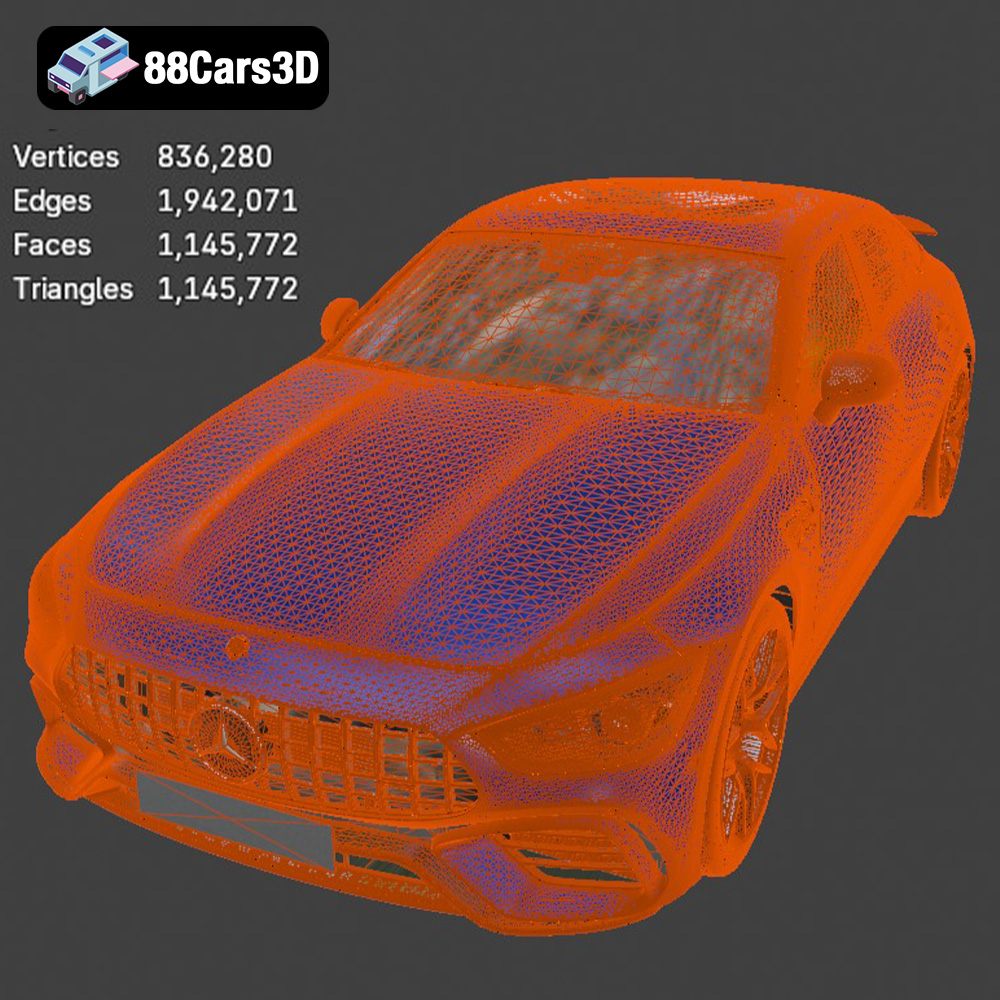
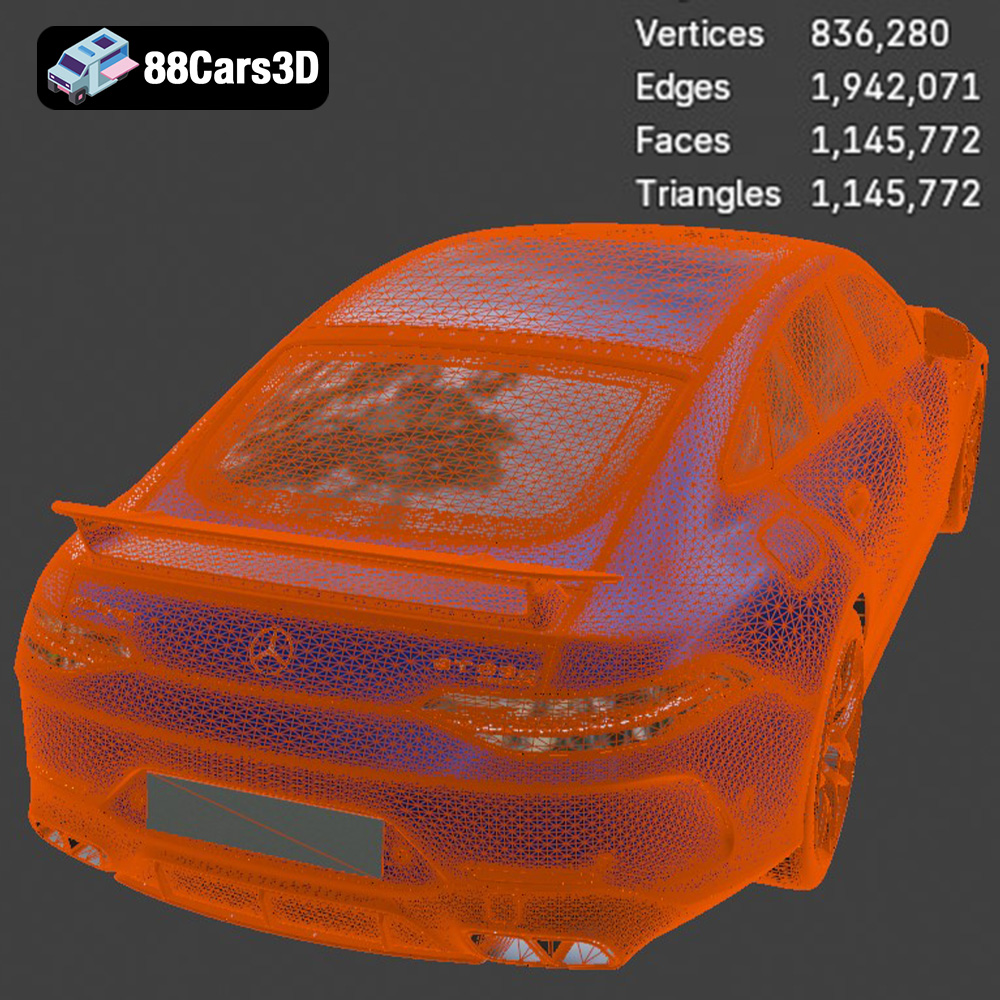
The model boasts a game-ready polygon count of approximately 250,000 triangles. This figure represents a sweet spot, providing ample detail for photorealistic results in modern real-time engines like Unreal Engine and Unity, without overburdening the rendering pipeline. While 250k triangles might seem substantial, it’s efficiently distributed to ensure visual richness where it matters most, such as the bodywork, grille, and interior. For even more demanding scenarios, such as open-world games with many vehicles, developers often implement LODs (Levels of Detail), where simpler versions of the model are rendered when the car is further away, reducing the computational load. The clean topology of this model facilitates easy creation of LODs.
Technical advantages extend beyond just polygon count. The Mercedes AMG GT63 2019 3D Model is built to real-world scale accuracy, ensuring it integrates seamlessly into virtual environments without requiring tedious resizing. Crucially, it features proper pivot setups for key animated components: steering, wheel rotation, and suspension travel. This means game developers can quickly integrate the model into their vehicle physics systems, allowing for realistic driving dynamics, turning, and suspension compression without extensive re-rigging. This attention to mechanical detail significantly reduces development time and ensures a more authentic driving experience.
While optimized for real-time applications, the Mercedes AMG GT63 2019 3D Model’s high-quality topology and attention to detail also make it an exceptional asset for non-real-time rendering and immersive visualization projects. Its versatility allows it to transition effortlessly between demanding interactive environments and stunning, pre-rendered cinematic sequences.
For automotive advertising, product showcases, or film and animation projects, the model truly shines. Its meticulously captured exterior and interior features mean it can stand up to extreme close-ups and dramatic lighting setups. Artists using software like 3ds Max (with V-Ray or Corona Renderer), Blender (with Cycles or Eevee), or even directly within Unreal Engine’s advanced cinematic tools, can leverage the model to create photorealistic images and animations. Imagine a stunning studio render highlighting the aggressive lines of the Panamericana grille or a dynamic sequence showcasing the active spoiler deploying – all achievable with this high-fidelity asset, perfect for brand campaigns and lifestyle scenes.
The rise of AR and VR technologies has opened new avenues for engaging with digital content. The Mercedes AMG GT63 2019 3D Model is perfectly suited for these immersive applications. Its optimized geometry and inclusion of formats like .glb mean it can be readily deployed in virtual showrooms, allowing prospective buyers to explore the car’s every detail in a 360-degree environment or even place it in their driveway via AR apps. Whether it’s a mobile AR experience where you can “walk around” the car in your living room, or a fully immersive VR configurator allowing users to customize colors and materials in real-time, this model provides the visual backbone for truly engaging interactive experiences.
The digital world often inspires tangible creations, and 3D printing offers an exciting bridge between virtual models and physical objects. The Mercedes AMG GT63 2019 3D Model, with its detailed geometry, is also designed to be convertible to the .stl format, opening up possibilities for hobbyists and professionals alike to bring this stunning vehicle into the physical realm.
Converting a high-detail rendering model into a successful 3D print requires careful consideration. The .stl format, while universally accepted for printing, often needs the mesh to be “manifold” (watertight) and free of errors to print correctly. The clean topology of this 3D car model helps ensure a smoother transition. The recommended print settings provided – such as scale (1:12, 1:18, 1:24), layer height (0.04–0.12 mm, with resin printing recommended for fine details), and wall thickness (1.2–2.0 mm) – are crucial guidelines. These settings ensure that intricate features like the grille, mirrors, and exhaust tips retain their fidelity and structural integrity during the printing process. Supports will almost certainly be required for overhangs and delicate parts, and proper print orientation is advised to enhance structural strength and minimize support marks.
Once printed, the journey from raw plastic or resin to a display-worthy model continues with post-processing. This typically involves sanding to smooth layer lines, applying primer to prepare the surface, and finally, painting. For a vehicle as iconic as the Mercedes AMG GT63, achieving authentic factory colors with metallic finishes can elevate a hobbyist print to a professional-grade display piece. The ability to create a physical representation of this luxurious sports coupe adds another layer of value and application for the 3D car model, making it not just a digital asset but a blueprint for tangible artistry.
Beyond raw detail and format compatibility, the true value of a premium 3D model lies in its adaptability and how it streamlines professional workflows. The Mercedes AMG GT63 2019 3D Model is designed with customization and efficiency at its core, empowering creators to bring their unique visions to life without starting from scratch.
One of the significant advantages of this asset is its compatibility with major 3D software platforms and real-time rendering engines. Whether your team primarily uses 3ds Max for architectural visualization, Blender for independent game development, or Unreal Engine for cinematic sequences, the availability of formats like .max, .blend, and .fbx ensures that the model can be imported and utilized with minimal friction. This cross-platform compatibility is a cornerstone of modern digital pipelines, allowing artists to work in their preferred environment while maintaining project consistency. The organized geometry and clear material IDs also simplify the process of adapting the model to different rendering engines, ensuring consistent visual output across various platforms.
The flexibility of the Mercedes AMG GT63 2019 3D Model extends to extensive customization options, critical for diverse projects. Artists can easily change body colors to match specific brand aesthetics, from factory metallic finishes to custom matte wraps, allowing for bespoke visual narratives. Modifying tire textures, perhaps switching between track-focused slicks and street-legal performance tires, adds another layer of realism and context. Furthermore, adjusting material finishes – gloss, matte, metallic, carbon fiber accents – can drastically alter the vehicle’s perceived luxury or performance characteristics. Lighting is also fully adaptable, enabling the car to be rendered convincingly in any environment, from a sun-drenched coastal road to a dramatic, neon-lit city scene. This level of control means the model isn’t a static asset, but a dynamic foundation for endless creative exploration, saving countless hours of modeling from scratch.
The journey through the intricate world of premium 3D car models reveals a profound blend of artistic precision and technical ingenuity. The Mercedes AMG GT63 2019 3D Model stands out as a prime example, embodying the qualities professionals seek: exceptional detail, intelligent optimization, and broad versatility across various applications. From its meticulously recreated Panamericana grille and luxurious interior to its game-ready polygon count and multi-format compatibility, this model is built to elevate any project.
Whether you’re developing the next big racing title, crafting an immersive AR/VR showroom, producing stunning automotive renders, or even bringing a physical replica to life through 3D printing, this asset provides a robust and reliable foundation. It demonstrates how high-quality 3D car models, like those available on 88cars3d.com, are not just commodities but essential tools that empower digital artists and developers to push the boundaries of realism and interactivity. Investing in such a comprehensive and flexible asset means investing in efficiency, quality, and the limitless potential of your creative endeavors.
The 2019 Mercedes AMG GT63 is a masterful blend of track-ready performance and luxurious four-door coupe grand touring. As the pinnacle of the AMG GT 4-Door lineup, it boasts aggressive aerodynamics, the iconic Panamericana grille with vertical slats, and a muscular wide-body stance. The sculpted hood hides a monstrous handcrafted biturbo V8, while the rear features an active spoiler, quad exhaust tips, and striking LED taillights. Every curve of this vehicle has been meticulously captured in 3D to reflect its commanding presence and aerodynamic efficiency. This premium 3D model is built with high-quality topology and a game-ready polygon count of approximately 250,000 triangles. Optimized for performance without sacrificing visual fidelity, it delivers photorealistic results in real-time engines. It is an ideal asset for game developers, automotive visualizers, and AR/VR creators demanding top-tier realism. Perfect for open-world racing games, high-end automotive configurators, virtual showrooms, and cinematic renders.
$19.99
.2019
.blend
.fbx
.glb
.gt63
.max
.mercedes
.obj
.ply
.rendering
.sports car
.stl
.unreal
4-door-coupe
car-3d-model
game asset
game-ready
low-poly
luxury car
mercedes-amg
optimized
VR/AR