Get 20% OFF All Premium 3D & STL Models!

In the dynamic world of digital content creation, high-quality 3D car models are more than just static objects; they are foundational assets that bring virtual worlds to life. Whether you’re a game developer crafting an immersive racing title, an architect visualizing urban environments, a designer creating stunning automotive renders, or an enthusiast bringing a classic vehicle to life through 3D printing, the demand for precise, optimized, and authentic vehicle models is constant. These digital replicas serve as the backbone for countless interactive experiences and visual masterpieces.
The allure of a classic car, even one renowned for its utilitarian charm, transcends time. The VAZ Lada Samara 2113, a staple of Eastern European roads from 1997 to 2008, embodies a unique blend of robust design and historical significance. Capturing this essence in a 3D model requires meticulous attention to detail, from its angular profile to its distinctive grille. A well-executed 3D model of such an iconic vehicle not only serves as a visual asset but also as a piece of digital heritage, ready for integration into modern workflows. The availability of a comprehensively prepared VAZ Lada Samara 2113 3D model, such as the one offered on 88cars3d.com, exemplifies the power of accessible, professional-grade assets in accelerating creative projects.
Selecting the correct 3D model file format is crucial for seamless integration into your project’s pipeline. Each format is designed with specific use cases, compatibility requirements, and technical advantages in mind. Understanding these nuances can save significant time and effort, ensuring your chosen 3D car models perform optimally across various software and platforms.
The .blend format is Blender’s native file type, offering a complete snapshot of your 3D scene. When you download a .blend file, you’re not just getting the mesh; you’re receiving the entire project, including materials, textures, lighting setups, cameras, animations, and even modifiers. This makes it an incredibly powerful format for artists working primarily within Blender, allowing for full editability and customization. For the VAZ Lada Samara 2113 model, having a .blend file means you can dive deep into its topology, adjust every material node, reconfigure lighting, or even modify the vehicle’s geometry directly within a familiar environment, making it perfect for bespoke rendering or animation projects.
.fbx (Filmbox) is a proprietary file format owned by Autodesk, widely recognized as the industry standard for interoperability between 3D software and game engines. Its strength lies in its ability to store not only geometry and UVs but also animations, rigs, skinning data, and PBR (Physically Based Rendering) materials. This makes .fbx indispensable for game development in engines like Unreal Engine and Unity, where efficiency and comprehensive data transfer are paramount. For game-ready assets like the VAZ Lada Samara 2113, an .fbx file ensures that the optimized mesh, correctly assigned materials, and animation pivots for wheels and suspension are all transferred accurately, making it a plug-and-play solution for real-time applications.
.obj (Wavefront OBJ) is one of the oldest and most widely supported 3D file formats. While it doesn’t typically store animation or rigging information, it excels at representing static geometry and UV coordinates. It’s a universal “fallback” format, incredibly useful for transferring mesh data between disparate 3D applications, from 3ds Max to ZBrush to Blender. The VAZ Lada Samara 2113 in .obj format would come with its geometry and UVs, often accompanied by an .mtl (material) file specifying basic material properties and texture references. This format is perfect when you need the core mesh to work across many platforms without worrying about complex scene data.
.glb (GLB file format) is the binary version of glTF (GL Transmission Format), a modern, open-standard format designed for efficient transmission and loading of 3D scenes and models by engines and applications. It’s particularly optimized for web-based 3D, augmented reality (AR), and virtual reality (VR) experiences due to its compact size and ability to embed all assets (geometry, materials, textures, animations) into a single file. For showcasing the VAZ Lada Samara 2113 in a web viewer, an AR app, or a VR showroom, the .glb format provides excellent performance and visual fidelity with minimal overhead, making immersive experiences readily accessible.
.stl (STereoLithography) is the de facto standard for 3D printing. It represents the surface geometry of a 3D object using a collection of interconnected triangles, without any color, texture, or material information. Its simplicity makes it ideal for rapid prototyping and manufacturing. When preparing the VAZ Lada Samara 2113 for 3D printing, the .stl format is essential. The model needs to be watertight (no holes in the mesh) and manifold (no self-intersecting geometry) to ensure a successful print. The product description’s specific print settings for scale, layer height, and supports highlight the preparation required for an optimal .stl output.
.ply (Polygon File Format or Stanford Triangle Format) is another widely used format for storing 3D data, particularly from 3D scanners. It can store a greater range of properties than .stl, including color, transparency, and even normal information for each vertex or face. This makes .ply suitable for applications requiring higher precision or more detailed visual information, such as CAD, scientific visualization, or detailed mesh analysis. While less common for direct game asset integration, a .ply version of the VAZ Lada Samara 2113 could be valuable for engineers or researchers needing highly accurate surface data or for use in advanced photogrammetry workflows.
The .unreal format refers to assets specifically configured and often packaged for direct import into Unreal Engine projects. While Unreal Engine primarily uses .fbx for initial import, .unreal signifies a file that is already optimized, has proper collision meshes, material instances, and possibly even blueprint configurations set up within the Unreal ecosystem. This format dramatically streamlines the workflow for Unreal developers, offering a truly “engine-ready” asset like the VAZ Lada Samara 2113, bypassing common import and setup hurdles and allowing immediate use in virtual environments.
Similar to .blend for Blender, .max is the native file format for Autodesk 3ds Max. It contains the complete scene data, including all objects, lights, cameras, materials, modifiers, and animation curves. For professionals who use 3ds Max for high-fidelity rendering, architectural visualization, or complex animation, the .max file of the VAZ Lada Samara 2113 provides full control. Artists can leverage 3ds Max’s robust toolset for advanced rendering with V-Ray or Corona, create custom vehicle animations, or integrate the model into larger, intricate scenes with unparalleled flexibility.
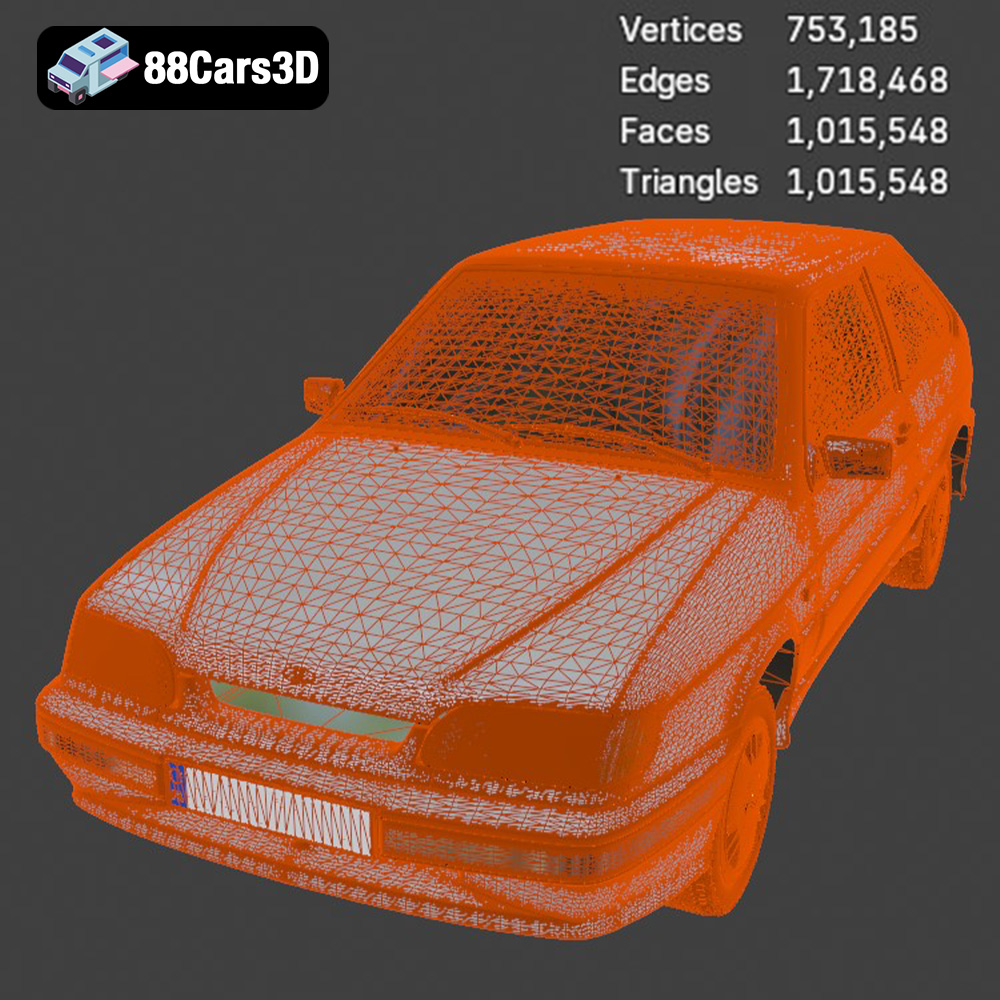
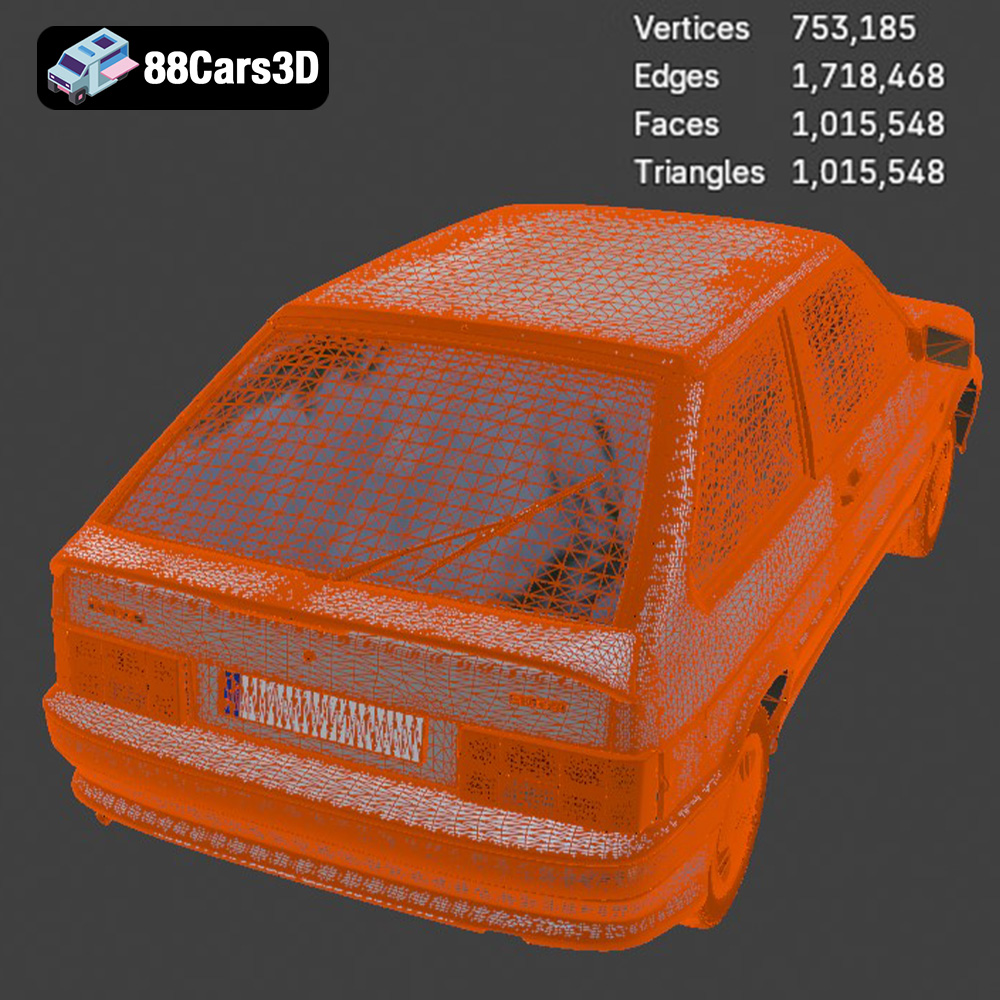
The journey from a detailed concept to a fully functional game asset is paved with technical considerations. For a 3D car model like the VAZ Lada Samara 2113, being “game-ready” means striking a delicate balance between visual fidelity and performance optimization. This particular model, with its approximately 250,000 triangles, exemplifies this crucial equilibrium.
The polygon count of 250,000 triangles for the VAZ Lada Samara 2113 is a testament to careful optimization. In real-time environments such as Unreal Engine and Unity, every triangle contributes to rendering cost. A model with an excessive polycount can cripple frame rates, while too few triangles can result in a blocky, unrealistic appearance. 250,000 triangles provides enough detail to capture the Lada’s distinctive angular yet slightly rounded aerodynamic front, the nuances of its grille, and the details of its suspension without overburdening the GPU. This optimization ensures that whether the Lada is a hero vehicle in a racing simulator or part of a bustling urban scene in an open-world game, it performs seamlessly.
The provision of .fbx and .unreal file formats for the VAZ Lada Samara 2113 directly addresses game development needs. The .fbx format facilitates smooth import into both Unreal and Unity, preserving crucial data like UV maps, material assignments, and crucially, pivot points. Proper pivot setup for steering, wheel rotation, and suspension travel is non-negotiable for interactive vehicles. This model is engineered with these pivots correctly established, allowing developers to quickly rig and animate the car’s components without extensive rework. Its real-world scale accuracy further ensures it fits naturally within virtual environments, interacting correctly with physics systems and level geometry.
While polycount is critical for performance, visual fidelity hinges on material quality. A game-ready model implies the use of Physically Based Rendering (PBR) materials, which accurately simulate how light interacts with surfaces. The product description’s mention of maintaining “pristine reflections and shading” suggests that the VAZ Lada Samara 2113 model utilizes robust PBR texture sets (Albedo/Base Color, Metallic, Roughness, Normal, Ambient Occlusion maps). These textures, combined with the optimized mesh, allow the car to look realistic under various lighting conditions, from the harsh glare of a desert race to the soft glow of a city street at dusk, enhancing immersion in any game environment.
The versatility of a well-crafted 3D car model extends far beyond the realm of interactive entertainment. Professional-grade assets like the VAZ Lada Samara 2113 from 88cars3d.com are invaluable tools for a broad spectrum of creative and technical applications, including high-fidelity rendering, immersive augmented and virtual reality experiences, and even physical fabrication through 3D printing.
For architectural visualization, product advertising, or cinematic production, stunning renders are paramount. The VAZ Lada Samara 2113 model, with its accurate geometry and detailed features such as the 1.5L inline-4 engine block representation, authentic exhaust system, and classic halogen headlights, provides an excellent foundation. In software like 3ds Max with V-Ray or Blender with Cycles, artists can leverage these details to create photorealistic scenes. The ability to easily change body/tank colors, modify tire textures, and adjust material finishes (matte, gloss, metallic) offers extensive customization for diverse visual narratives, from gritty urban scenes to pristine studio showcases. Imagine the Lada nestled in a meticulously crafted Eastern European street scene, its reflections accurately bouncing off wet pavement, all rendered with breathtaking realism.
The burgeoning fields of Augmented Reality (AR) and Virtual Reality (VR) demand highly optimized yet visually compelling 3D assets. The VAZ Lada Samara 2113 model’s game-ready optimization and support for formats like .glb make it ideal for AR/VR applications. Picture a virtual showroom where customers can explore the Lada in 360 degrees, customize its paint job in real-time, or even place a life-size digital model in their driveway using an AR app. For training simulations or historical recreations, placing users inside an accurately modeled cockpit with utilitarian fabric seats and an authentic analog instrument cluster provides an unparalleled level of immersion and authenticity that static images cannot match. The optimized geometry ensures smooth performance even on less powerful mobile AR devices.
The tactile satisfaction of holding a physical replica derived from a digital model is a unique experience. The VAZ Lada Samara 2113 3D model is convertible to .stl format, making it perfectly suitable for 3D printing. This opens up opportunities for hobbyists, collectors, and educators to create display-scale models. The provided 3D print settings – including recommended scales (1:12, 1:18, 1:24), layer height (0.04–0.12 mm for resin printing), wall thickness, infill, and support requirements – guide users toward successful fabrication. Printing the frame angled for structural integrity and separating wheels ensures higher quality and easier post-processing, allowing for sanding, priming, and painting with authentic factory colors to achieve a highly detailed miniature replica.
In any professional creative endeavor, efficiency and quality are paramount. Sourcing pre-made, high-quality 3D car models significantly streamlines the development process, allowing artists and developers to focus on creative execution rather than foundational asset creation. The VAZ Lada Samara 2113 model stands as a prime example of how such assets enhance various pipelines.
For game studios, time is a critical resource. Developing a highly detailed, optimized vehicle from scratch can consume hundreds of hours of artist time, involving modeling, UV unwrapping, texturing, rigging, and optimization. By leveraging a game-ready asset like the VAZ Lada Samara 2113, developers can drastically cut down on production time. The model’s optimized polygon structure, proper pivot setup, and compatibility with Unreal and Unity mean it can be imported and integrated almost immediately. This allows teams to allocate resources to other critical aspects of game design, such as gameplay mechanics, level design, or advanced scripting, ensuring a faster turnaround without compromising on visual quality for their automotive rendering needs.
Architectural visualization (ArchViz) often requires realistic environmental dressing, including vehicles, to add scale and realism to scenes. Instead of spending valuable time modeling a car, ArchViz artists can drop in a pre-made VAZ Lada Samara 2113 model. Its real-world scale accuracy and detailed exterior features make it perfect for populating Eastern European cityscapes or adding a touch of period authenticity to a scene. For product visualization, particularly in the automotive aftermarket, having a high-fidelity base model allows designers to quickly test accessories, custom paint jobs, or lighting setups. The customization options for materials and colors provided with the model further empower artists to tailor the car’s appearance to specific branding or aesthetic requirements, delivering compelling automotive rendering.
AR/VR content creation faces unique performance challenges, especially on mobile platforms. Assets must be highly optimized without sacrificing visual appeal. The VAZ Lada Samara 2113 model, with its balanced polycount and availability in formats like .glb, is perfectly suited for these environments. Developers can quickly integrate it into AR applications for virtual showrooms or configurators, allowing users to interact with a high-fidelity car model in their real-world surroundings. For VR training or simulation, the optimized interior geometry is crucial for a smooth first-person perspective, providing an authentic experience without performance bottlenecks. This significantly reduces the technical hurdles often associated with creating immersive experiences.
The true value of a premium 3D model lies in its authenticity and the level of detail it offers. The VAZ Lada Samara 2113 3D model is a testament to meticulous craftsmanship, capturing the essence of this iconic vehicle in every facet. From its external shell to its intricate interior, every element is designed to convey realism and historical accuracy.
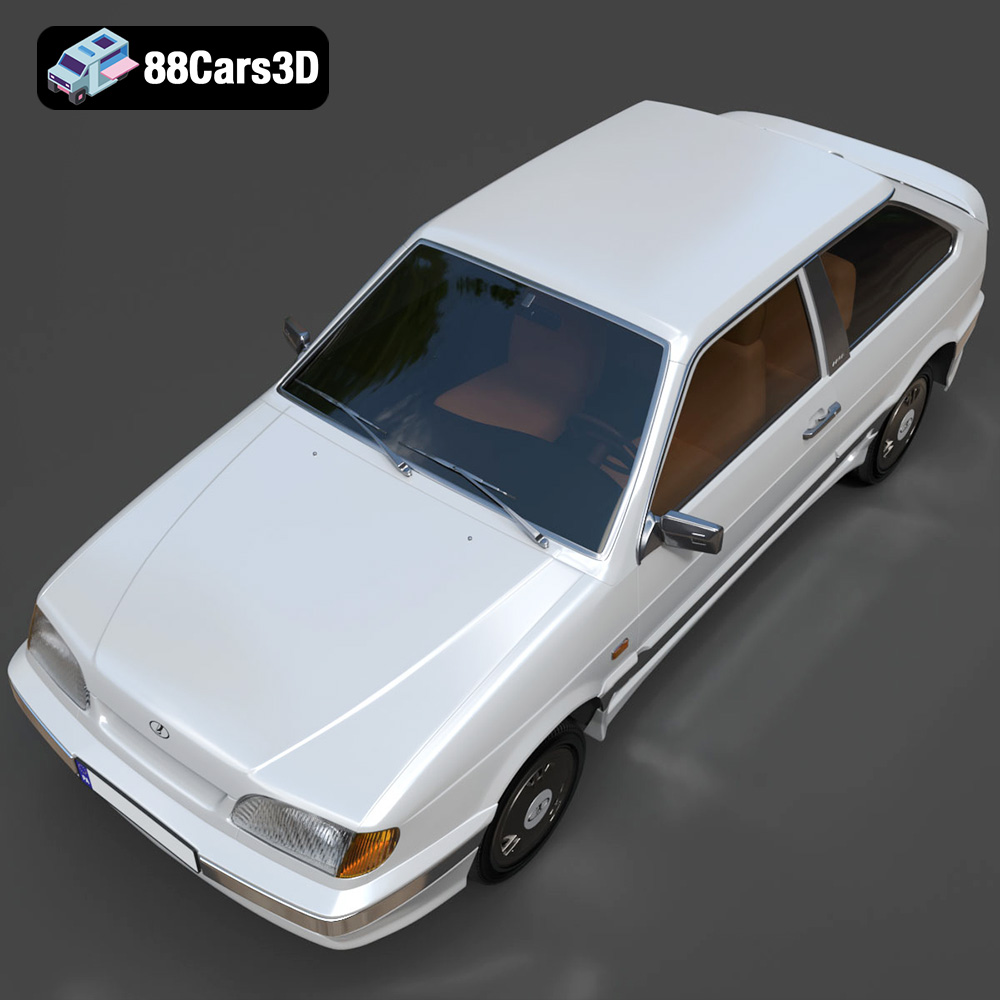
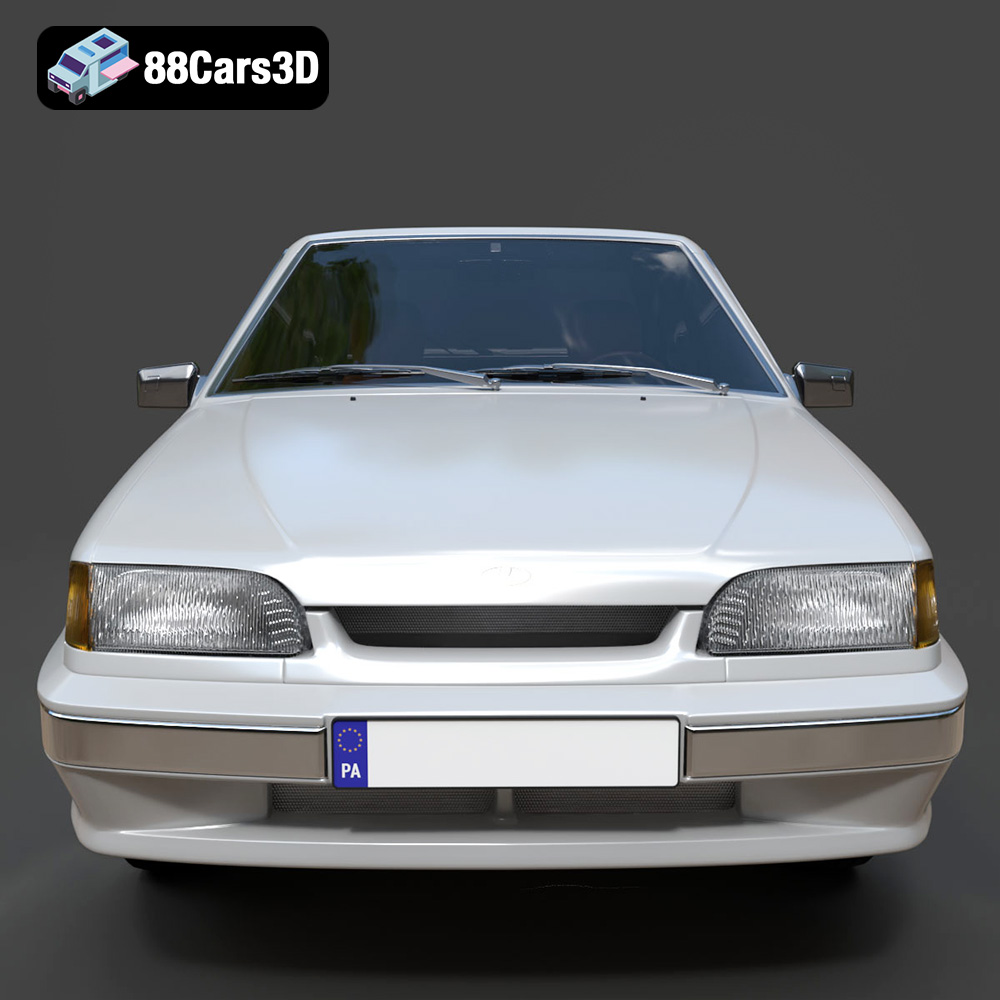
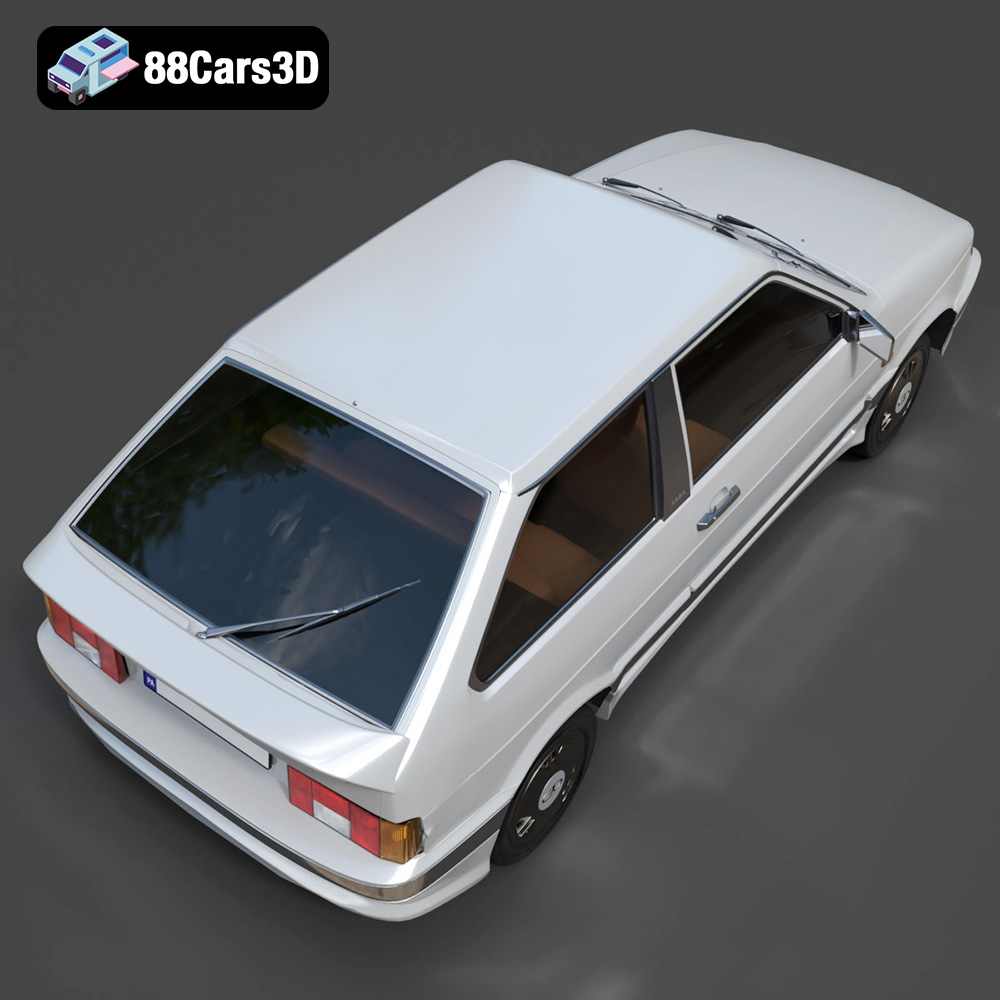
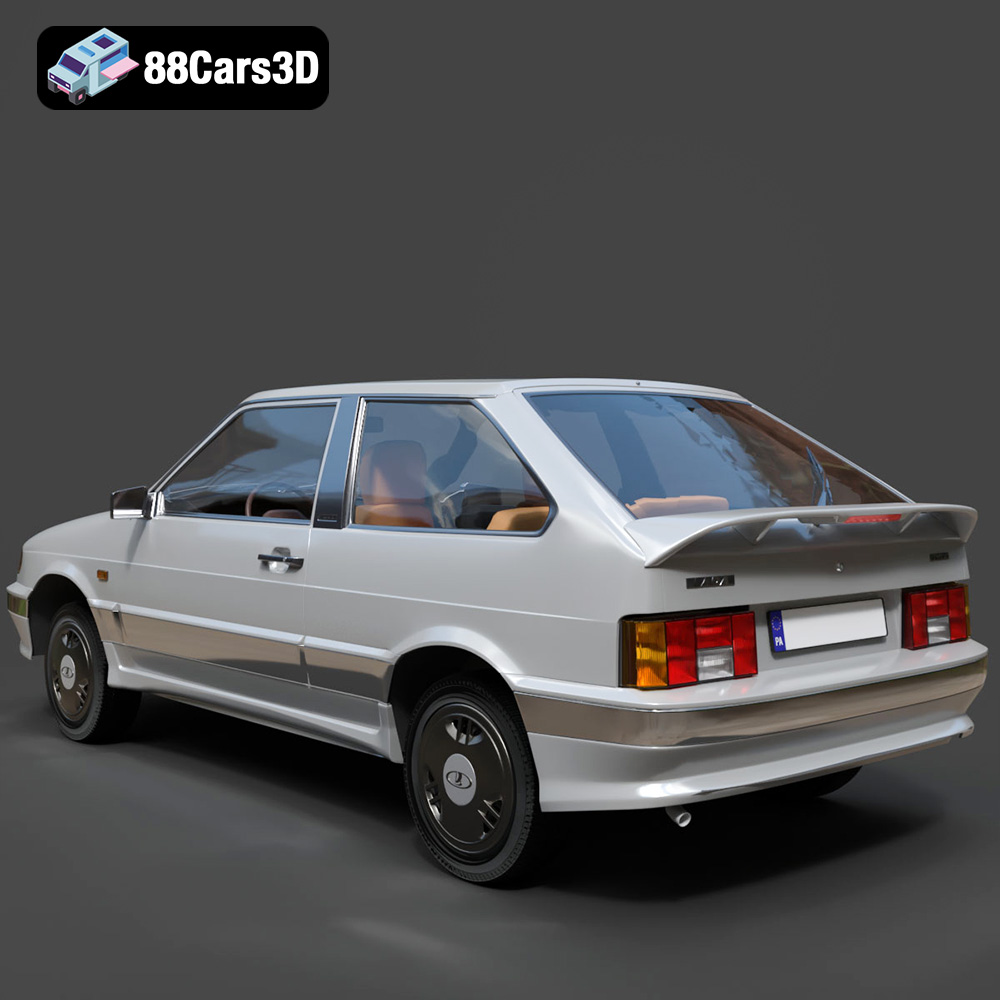
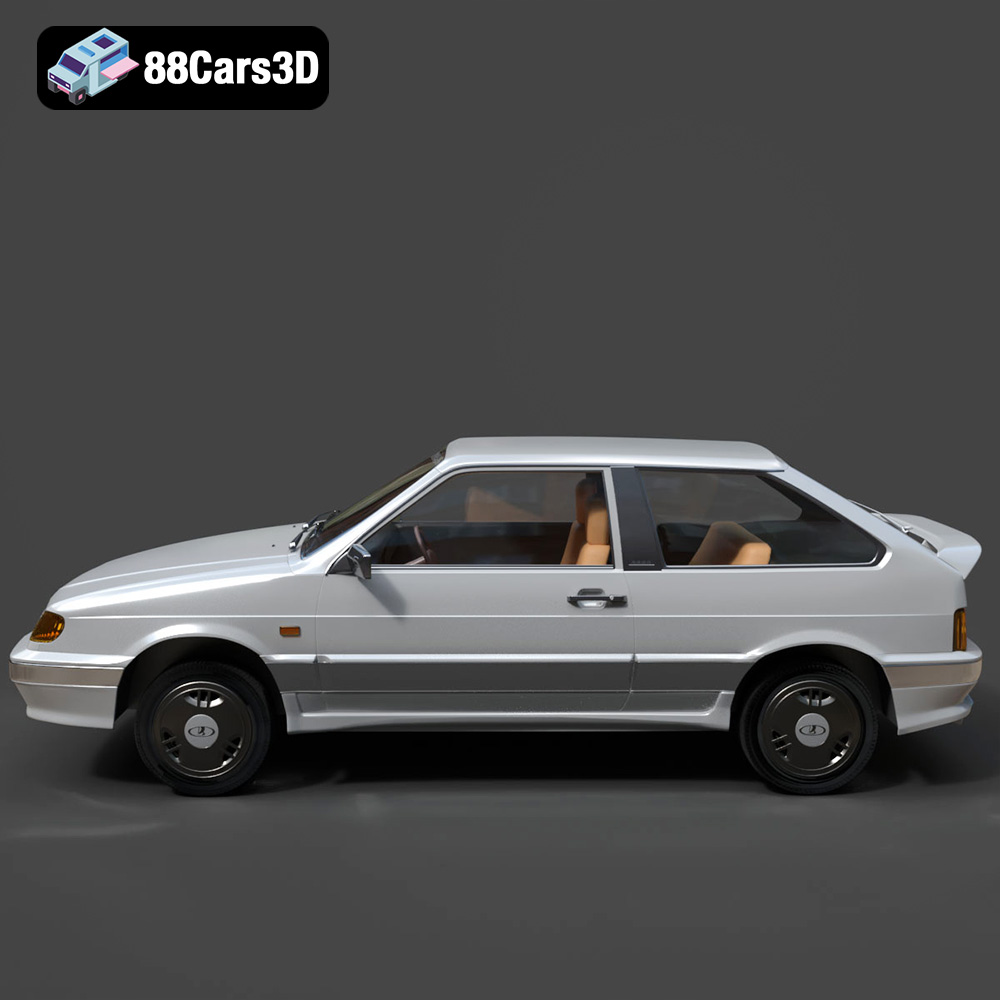
The exterior of the VAZ Lada Samara 2113 is a visual narrative of a specific automotive era. The model accurately reproduces the 3-door hatchback proportions and the distinctively angular yet slightly rounded aerodynamic front end that defined the ‘Samara-2’ family. Details extend to the classic blocky halogen headlights and the unique rear taillight clusters, instantly recognizable to enthusiasts. Beyond the bodywork, the model incorporates crucial mechanical components: a detailed 1.5L inline-4 engine block representation, an authentic factory-spec exhaust system and muffler, standard steel wheels with accurate tires and hubcaps, and even MacPherson strut front suspension details. The separation of wheels, suspension, and steering components isn’t just for show; it’s a critical technical feature that allows for realistic animation and interaction in game engines and simulation software. This level of external fidelity makes it an exceptional asset for automotive rendering and game asset development.
An automotive 3D model is incomplete without a faithfully recreated interior, especially for applications requiring first-person views or close-up shots. The VAZ Lada Samara 2113 model delivers with its utilitarian fabric front bucket seats and rear bench, reflecting the car’s practical nature. The authentic Lada steering wheel design, classic analog instrument cluster with speedometer and gauges, standard manual gear shifter, and precise pedal box layout all contribute to an immersive cockpit experience. This optimized interior geometry is crucial for game development, allowing players to feel genuinely present within the vehicle. For AR/VR experiences, it enables virtual tourists to step inside and examine the vehicle’s cabin with a high degree of realism, reinforcing the model’s suitability for visualization beyond mere external aesthetics.
Beyond visual accuracy, the model boasts significant technical advantages. Its game-ready optimization (approx. 250,000 triangles) ensures a perfect balance for real-time engines, while its real-world scale accuracy guarantees proper integration into any environment. The careful setup of pivot points for animating steering, wheel rotation, and suspension travel simplifies rigging and animation tasks. Furthermore, the model offers robust customization options: users can easily change body colors to match factory specifications or custom finishes, modify tire textures for off-road or street variants, and adjust material finishes from matte to metallic. The ability to adapt lighting for different environments allows artists to place the Lada in diverse settings, from a sun-drenched rural road to a neon-lit urban night scene, making it a highly adaptable resource for any project that needs premium 3D car models.
The world of 3D modeling for automotive design, game development, and visualization is one that constantly pushes the boundaries of realism and interactivity. High-quality 3D car models are the unsung heroes of this digital frontier, providing the fundamental building blocks for immersive experiences, captivating renders, and even physical prototypes. The journey from a conceptual idea to a fully integrated asset demands not only artistic skill but also a deep understanding of technical specifications, file formats, and optimization techniques.
The VAZ Lada Samara 2113 3D model is a prime example of an asset that meets these exacting demands. Its meticulously crafted details, from the iconic exterior to the functional interior, combined with its game-ready optimization and extensive file format compatibility, make it an incredibly versatile tool. Whether you’re a game developer seeking authentic game assets for an Eastern European setting, a visualization artist aiming for photorealistic automotive rendering, or an enthusiast wanting to 3D print a piece of automotive history, this model offers a compelling solution.
By investing in professionally prepared 3D car models, creators can significantly accelerate their workflows, achieve higher levels of realism, and focus their creative energy on bringing their unique visions to life. Platforms like 88cars3d.com serve as invaluable resources, offering a curated selection of high-quality assets that empower professionals and hobbyists alike to elevate their projects. The VAZ Lada Samara 2113 is more than just a model; it’s a gateway to recreating a piece of automotive culture, ready to be driven into your next digital masterpiece.
The VAZ Lada Samara 2113 is an iconic 3-door hatchback that defined a generation of Russian automotive history from 1997 to 2008. Serving as a crucial part of the modernized ‘Samara-2’ family, it features a distinctively angular yet slightly rounded aerodynamic front end, robust front-wheel-drive architecture, and a highly recognizable utilitarian profile. This meticulously crafted 3D model captures the essence of the classic Soviet-era evolved design, complete with its signature grille, blocky aesthetic, and practical stance. Engineered with a highly optimized topology of approximately 250,000 triangles, this model ensures top-tier performance without sacrificing high-end visual fidelity. It is fully game-ready, featuring an optimized polygon structure that flawlessly integrates into both real-time engines like Unreal and Unity, and high-fidelity rendering software. Whether used as a hero asset or a background vehicle, the model maintains pristine reflections and shading. Perfect for Eastern European city environments, retro racing games, automotive visualizers, and urban simulations.
$19.99
.blend
.fbx
.glb
.hatchback
.lada
.max
.obj
.ply
.rendering
.stl
.unreal
.vaz
car-3d-model
classic-car
game asset
game-ready
low-poly
optimized
russian-car
samara-2113
VR/AR